
Healthcare Software As A Service Market Report 2026
Global Outlook – By Type (Patient Portal, Telemedicine, Mobile Communication, ePrescribing, EHR Systems, ERP And HR Portal, Medical Billing), By Deployment Model (Private, Hybrid, Public), By Organization Size (Large Enterprise, Small And Medium Enterprises), By End-User (Provider, Payer) – Market Size, Trends, Strategies, and Forecast to 2030
Healthcare Software As A Service Market Overview
• Healthcare Software As A Service market size has reached to $27.53 billion in 2025 • Expected to grow to $71.33 billion in 2030 at a compound annual growth rate (CAGR) of 21.1% • Growth Driver: Rising Cloud Computing Adoption Drives Growth In Healthcare Software As A Service Market • Market Trend: Advanced SaaS Platforms Drive Competition In The Market • North America was the largest region in 2025 and Asia-Pacific is the fastest growing region.Market Gains By 2030 – Top Opportunities By Segment
Market Gain identifies the most promising market opportunities by highlighting the segments or products expected to generate the highest incremental revenue growth over the next five years.
What Is Covered Under Healthcare Software As A Service Market?
The healthcare software as a service refers to a service model in cloud computing where one or more vendors provide cloud-based remote software products to the healthcare industry. The SaaS application in healthcare can access multiple features to keep patient data secure. It allows healthcare firms to reduce unnecessary overhead costs. The main application of healthcare software as a service includes patient portal, telemedicine, mobile communication, eprescribing, HER systems, ERP systems, ERP & HR portal, and medical billing. The patient portal software or solutions provide secure access to medical records and services for the user by facilitating tasks such as scheduling appointments, requesting prescription refills, and making online bill payments. These software’s and solutions are deployed through public, private, and hybrid cloud models, and they are used by payers and providers in both large enterprises, and small-and medium enterprises.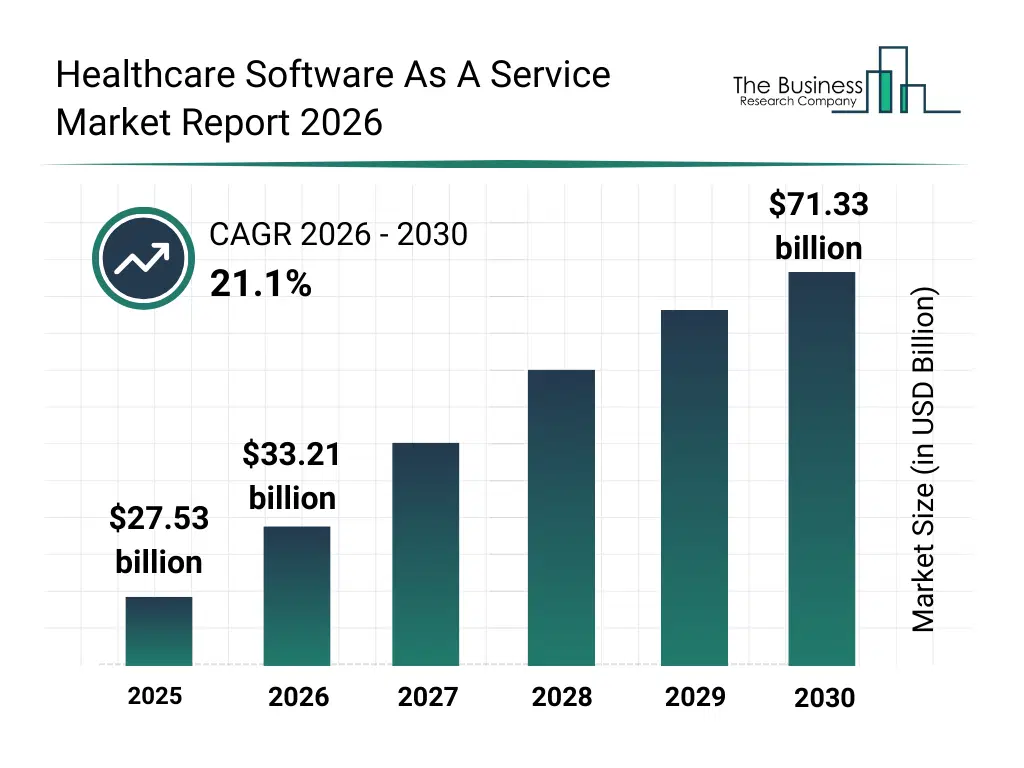
What Is The Healthcare Software As A Service Market Size and Share 2026?
The healthcare software as a service market size has grown exponentially in recent years. It will grow from $27.53 billion in 2025 to $33.21 billion in 2026 at a compound annual growth rate (CAGR) of 20.6%. The growth in the historic period can be attributed to increasing digitization of healthcare operations, adoption of electronic health records, rising use of telemedicine platforms, expansion of healthcare billing software, growing acceptance of cloud deployment models.What Is The Healthcare Software As A Service Market Growth Forecast?
The healthcare software as a service market size is expected to see exponential growth in the next few years. It will grow to $71.33 billion in 2030 at a compound annual growth rate (CAGR) of 21.1%. The growth in the forecast period can be attributed to increasing investments in cloud-native healthcare solutions, rising demand for interoperable saas platforms, expansion of ai-driven healthcare analytics, growing focus on cost-efficient it infrastructure, increasing regulatory compliance requirements. Major trends in the forecast period include increasing adoption of cloud-based healthcare applications, rising demand for scalable saas healthcare platforms, growing integration of ai-enabled clinical tools, expansion of remote care and telehealth software, enhanced focus on data security and compliance.
Global Healthcare Software As A Service Market Segmentation
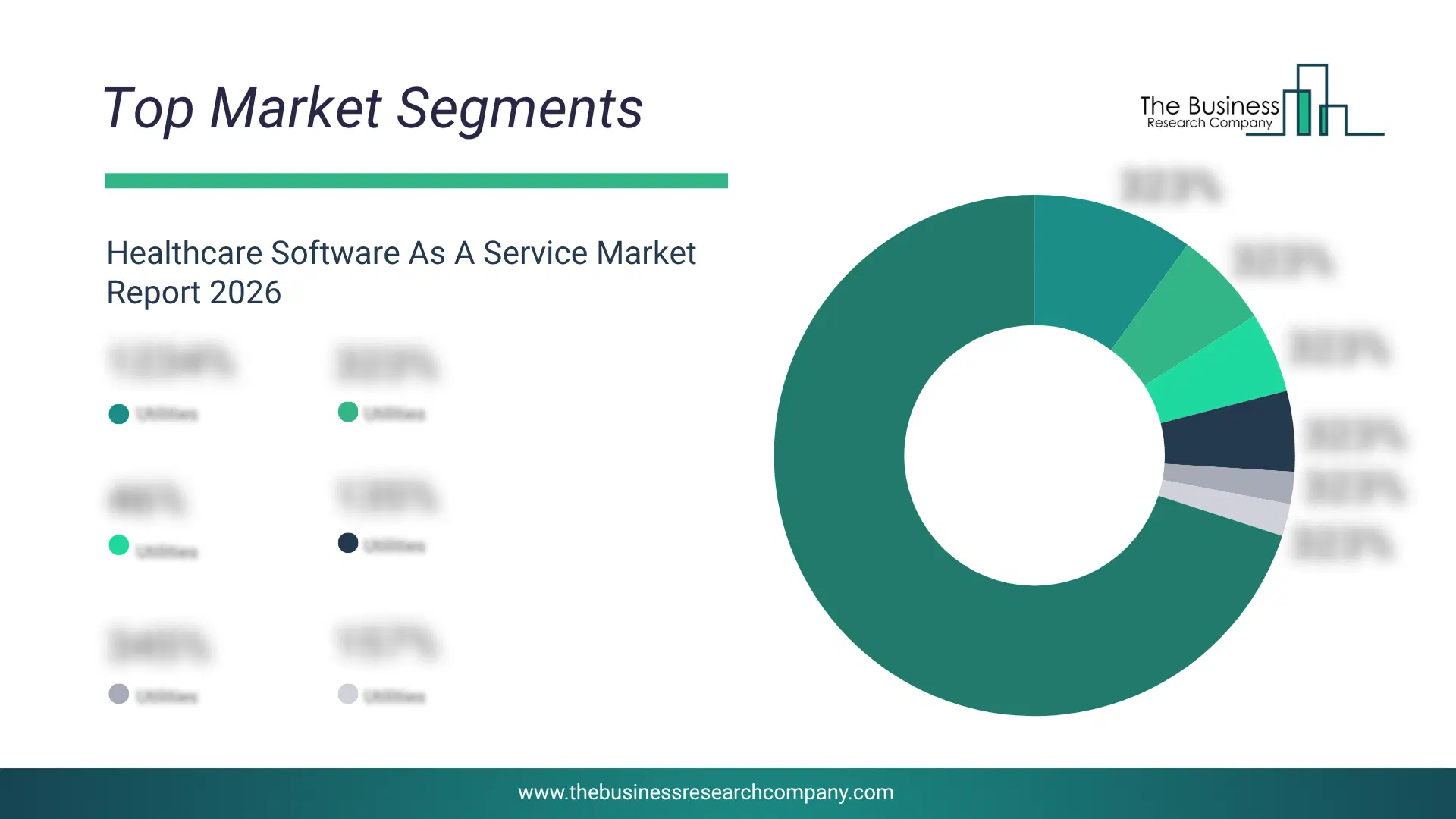
1) By Type: Patient Portal, Telemedicine, Mobile Communication, ePrescribing, EHR Systems, ERP And HR Portal, Medical Billing 2) By Deployment Model: Private, Hybrid, Public 3) By Organization Size: Large Enterprise, Small And Medium Enterprises 4) By End-User: Provider, Payer Subsegments: 1) By Patient Portal: Appointment Scheduling, Access To Medical Records, Communication With Healthcare Providers 2) By Telemedicine: Virtual Consultations, Remote Patient Monitoring, Telehealth Platforms 3) By Mobile Communication: Secure Messaging, Mobile Health Applications 4) By EPrescribing: Prescription Management, Drug Interaction Checks 5) By EHR Systems: Cloud-Based Electronic Health Records, Interoperability Features 6) By ERP & HR Portal: Human Resources Management, Financial Management Systems 7) By Medical Billing: Revenue Cycle Management, Claims Processing The top segments in the healthcare software as a service market will be: • EHR Systems will reach $20 Billion by 2030. • Telemedicine will reach $12 Billion by 2030. • Medical Billing will reach $12 Billion by 2030. • Patient Portal will reach $10 Billion by 2030. • ERP & HR Portal will reach $7 Billion by 2030.What Is The Driver Of The Healthcare Software As A Service Market?
The growing adoption of cloud computing is expected to propel the growth of the healthcare software as a service market. Healthcare organizations are adopting cloud computing as the current crisis has reinforced its benefits and put to rest fears related to privacy, security, and implementation. Healthcare organizations can achieve increased data security, assured system scalability, and enhanced flexibility to manage billings and streamline claims for significant cost savings with cloud computing. For instance, in March 2025, according to the Office for National Statistics, a UK-based government department, in 2023, artificial intelligence (AI) was adopted by 9% of firms, while cloud-based computing systems and applications were adopted by 69% of firms in the UK. Therefore, growing adoption of cloud computing is driving the healthcare software as a service industry growth.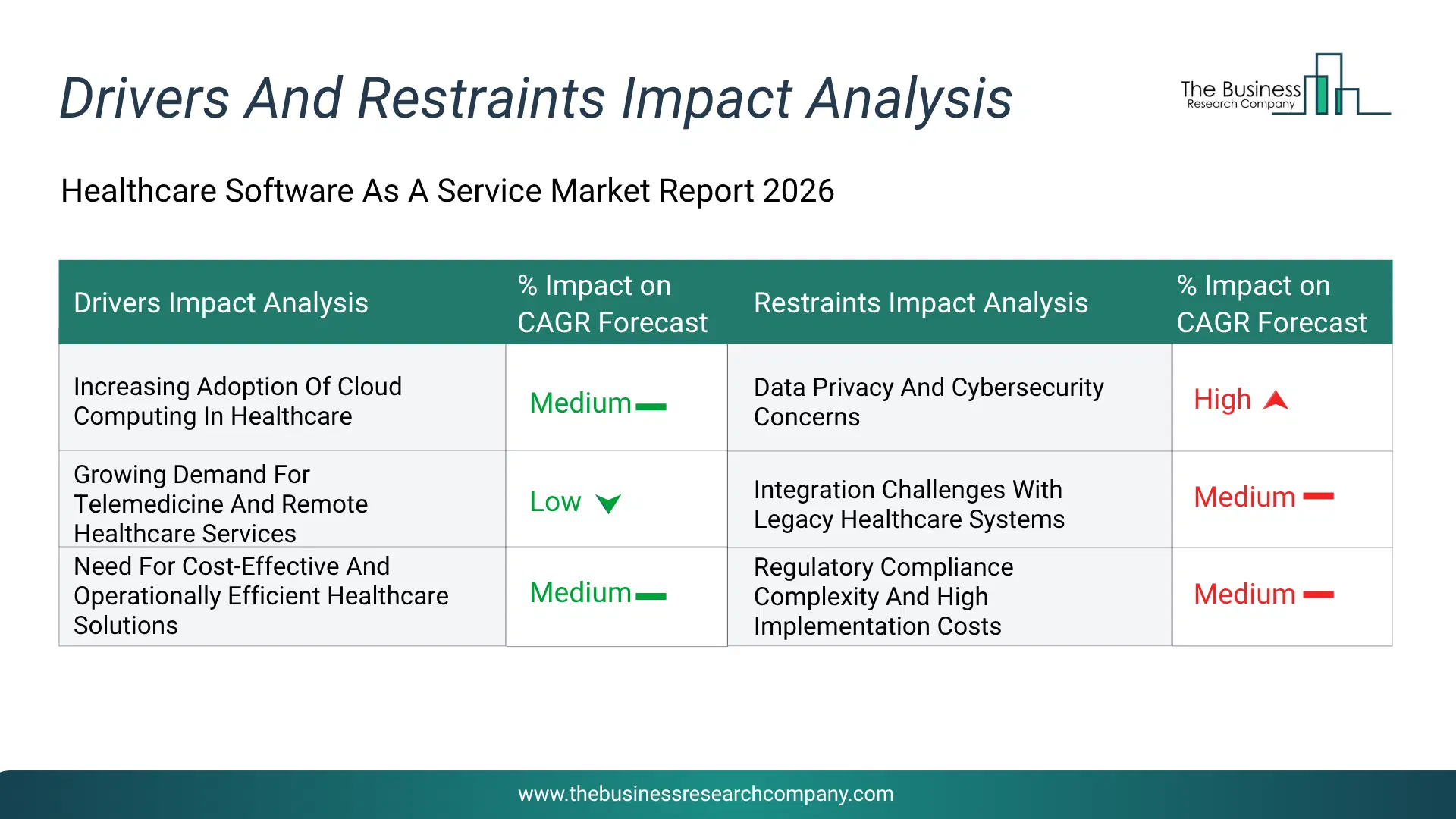
Infographic Chart Showing Key Market Drivers Analysis And Restraints For Healthcare Software As A Service Market
The chart presents an impact analysis of key drivers and restraints, quantifying their relative influence on the market's growth rate and helping assess the balance between growth enablers and limiting factors. This chart offers a high-level perspective; the full report contains more detailed insights.
How Will The Drivers Impact Growth In The Global Healthcare Software As A Service Market?
• Increasing Adoption Of Cloud Computing In Healthcare (Medium) – During the forecast period, the increasing adoption of cloud computing in healthcare is expected to become a key growth driver for the healthcare software as a service market by 2030. Increasing adoption of cloud computing in healthcare is one of the strongest drivers of the healthcare software as a service (SaaS) market because healthcare organizations are increasingly replacing traditional on-premise software with cloud-based platforms to improve operational efficiency and reduce IT expenditure. SaaS solutions eliminate the need for costly hardware infrastructure, software licensing, and ongoing maintenance while providing automatic updates, high system availability, and scalable storage. Cloud deployment also enables healthcare professionals to securely access patient information, clinical applications, and administrative systems from multiple locations, improving care coordination and decision-making. • Growing Demand For Telemedicine And Remote Healthcare Services (Low) – During the forecast period, the growing demand for telemedicine and remote healthcare services is expected to emerge as a major factor driving the expansion of the healthcare software as a service market by 2030. Growing demand for telemedicine and remote healthcare services is significantly accelerating the growth of the healthcare saas market as healthcare providers increasingly deliver care beyond traditional hospital settings. Cloud-based SaaS platforms support virtual consultations, remote patient monitoring, digital appointment scheduling, secure messaging, electronic prescriptions, and real-time sharing of medical records between physicians and patients. The growing prevalence of chronic diseases, aging populations, and demand for convenient healthcare services have encouraged hospitals and clinics to invest heavily in telehealth infrastructure. In addition, governments and healthcare organizations continue to promote digital healthcare initiatives that improve healthcare accessibility in rural and underserved regions, creating sustained demand for SaaS-enabled telemedicine solutions over the coming years. • Need For Cost-Effective And Operationally Efficient Healthcare Solutions (Medium) – During the forecast period, the need for cost-effective and operationally efficient healthcare solutions is expected to act as a key growth catalyst for the healthcare software as a service market by 2030. Need for cost-effective and operationally efficient healthcare solutions continues to drive healthcare SaaS adoption as healthcare providers face increasing pressure to improve patient outcomes while controlling operational costs. SaaS applications automate critical functions such as electronic health records, medical billing, appointment scheduling, workforce management, inventory control, revenue cycle management, and clinical documentation, significantly reducing manual administrative work and human errors. Subscription-based pricing models lower upfront investment requirements, making advanced healthcare software more affordable for small and medium-sized healthcare organizations.How Will The Restraints Impact Growth In The Global Healthcare Software As A Service Market?
• Data Privacy And Cybersecurity Concerns (Medium) – During the forecast period, the data privacy and cybersecurity concerns remain one of the most significant restraints for the healthcare SaaS market because healthcare organizations store highly sensitive patient information, including medical histories, diagnostic reports, insurance records, and financial data. As cyberattacks, ransomware incidents, phishing attacks, and data breaches continue to increase globally, healthcare providers remain cautious about migrating critical information to cloud-based environments. Vendors must continuously invest in advanced cybersecurity technologies such as encryption, identity and access management, multi-factor authentication, continuous monitoring, and threat detection systems to maintain trust and comply with healthcare privacy regulations. These additional security requirements increase implementation costs and may slow adoption among organizations that have strict data governance policies. • Integration Challenges With Legacy Healthcare Systems (Low) – During the forecast period, the integration challenges with legacy healthcare systems continue to limit the adoption of healthcare SaaS platforms because many hospitals and healthcare facilities still rely on outdated software and proprietary information systems that were not designed for cloud integration. Connecting SaaS applications with existing electronic health records, laboratory information systems, imaging platforms, pharmacy management systems, and financial applications often requires extensive customization and complex data migration processes. Inconsistent data formats, interoperability limitations, and workflow disruptions can delay implementation timelines and increase project costs. Healthcare providers may also experience temporary productivity losses during system migration, making organizations hesitant to replace long-established legacy infrastructure despite the long-term benefits offered by SaaS solutions. • Regulatory Compliance Complexity And High Implementation Costs (Medium) – During the forecast period, the regulatory compliance complexity and high implementation costs act as a major restraint because healthcare software vendors and providers must comply with numerous national and international regulations governing patient privacy, clinical documentation, electronic health records, cybersecurity, and data retention. Standards such as HIPAA, GDPR, and other regional healthcare regulations require continuous software validation, security updates, compliance audits, employee training, and documentation management. Maintaining compliance across multiple countries further increases operational complexity for global SaaS providers. In addition, implementation expenses related to system integration, data migration, workflow redesign, staff training, and ongoing compliance monitoring can discourage small hospitals and independent healthcare providers from adopting advanced SaaS platforms, particularly in cost-sensitive markets.Key Players In The Global Healthcare Software As A Service Market
Major companies operating in the healthcare software as a service market are Microsoft Corporation; Salesforce Inc.; SAP SE; Oracle Corporation; Google LLC; Cisco Systems Inc.; International Business Machines Corporation; ServiceNow Inc.; Workday Inc.; Zocdoc Inc.; Thrive Global Holdings Inc.; Talkspace Inc.; Pager Technologies Inc.; AiCure Technologies Inc.; Noom Inc.; Optum Inc.; Kareo Inc.; Madaket Health Inc.; SimplyVital Health Inc.; Tailoredcare India Private Limited; Health Data Vision Inc.; Veeva Systems Inc.; Cerner Corporation; Athenahealth Inc.; Allscripts Healthcare Solutions Inc.; NextGen Healthcare Inc.; eClinicalWorks LLC; Greenway Health LLC; AdvancedMD Inc.; drchrono Inc.; CareCloud Corporation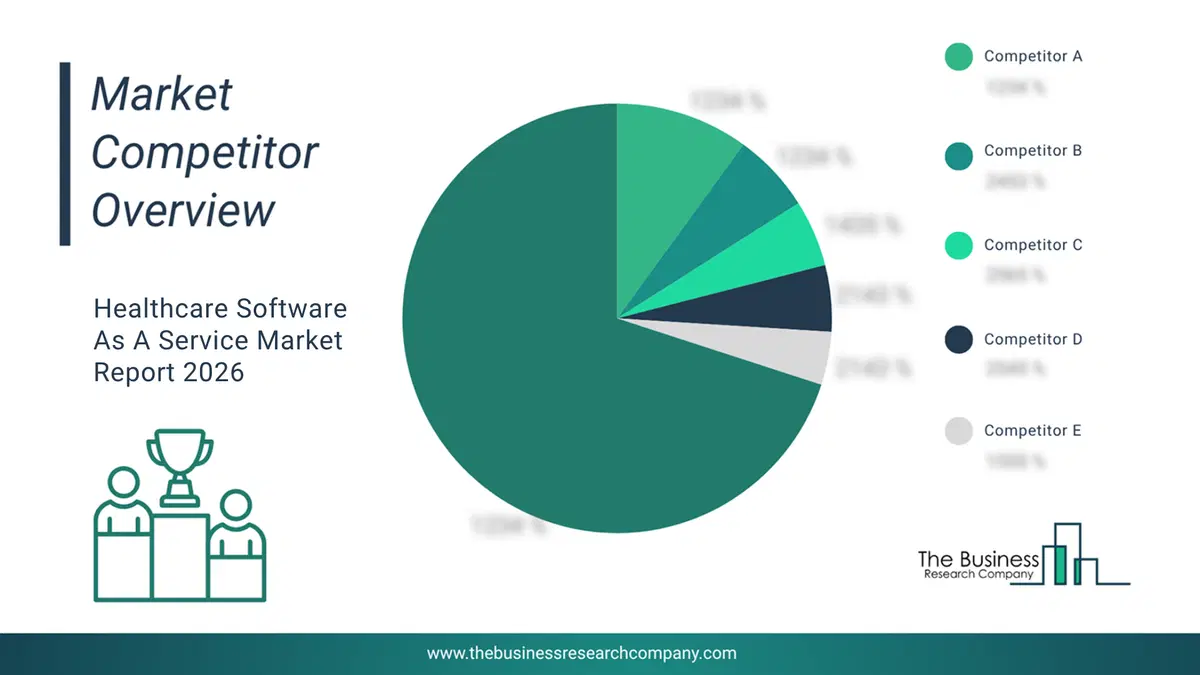
This chart is for illustrative purposes; the full report includes a detailed competitor analysis and comprehensive overview of the top 10 companies in the market.
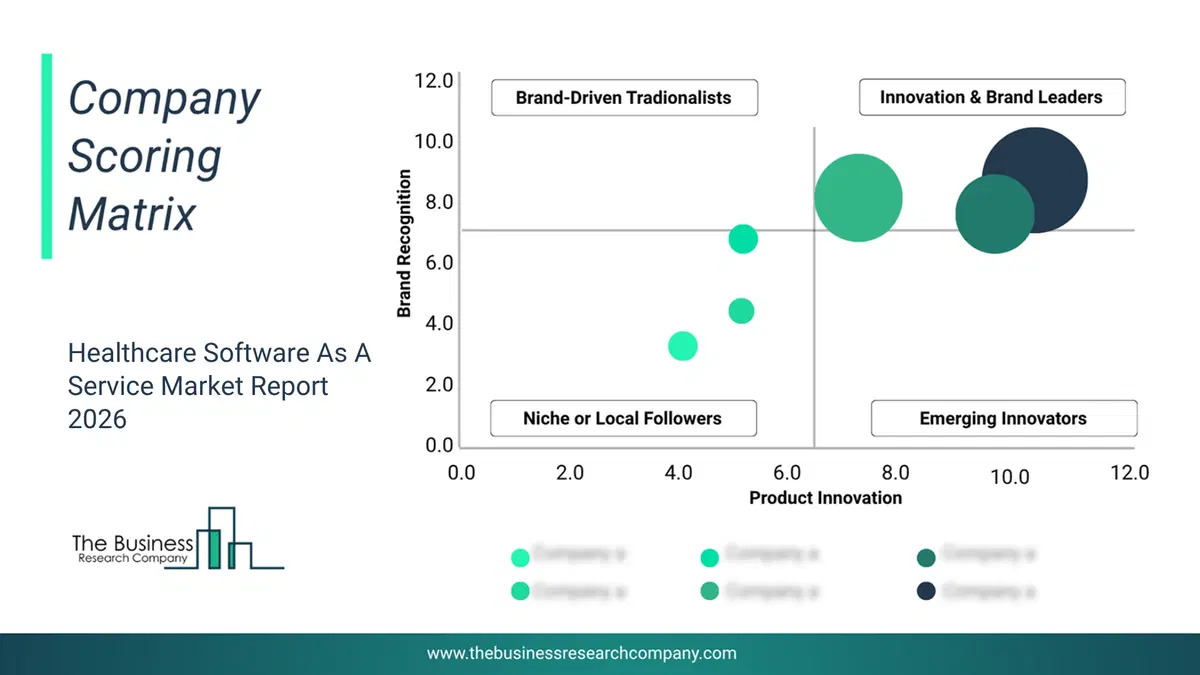
This chart maps companies by product innovation and brand strength, with bubble size indicating relative revenue, helping identify market leaders, challengers, and niche players. This is an illustrative chart; the full report provides a complete and accurate competitive analysis.
Global Healthcare Software As A Service Market Trends and Insights
Major companies operating in the healthcare software as a service market are focused on introducing advanced SaaS platforms for medical aesthetic businesses to gain a competitive edge in the market. These platforms provide sales acceleration and business automation features designed for dermatology, plastic surgery, and other aesthetic businesses. For instance, in May 2023, MedShift, a US-based medical technology company, launched the Velocity Technology Suite, a software-as-a-service (SaaS) solution for medical aesthetic businesses. It comprises features intended for dermatology, plastic surgery, and other aesthetic industries, such as business automation and sales acceleration. The platform also includes interaction with shipping carriers, automation for variable sales representative remuneration, payment automation, and subscription automation to further enhance company automation. Additionally, the SaaS solution can be tailored to match the user's workflows and processes and interface with already-existing software systems.What Are Latest Mergers And Acquisitions In The Healthcare Software As A Service Market?
In August 2024, Health Catalyst, a US-based healthcare data and analytics company, acquired Lumeon for an undisclosed amount. This acquisition is intended to enhance Health Catalyst’s ability to streamline operational workflows and improve care outcomes for healthcare providers by integrating advanced automation technologies. Lumeon is a UK-based company that offers healthcare software as a service.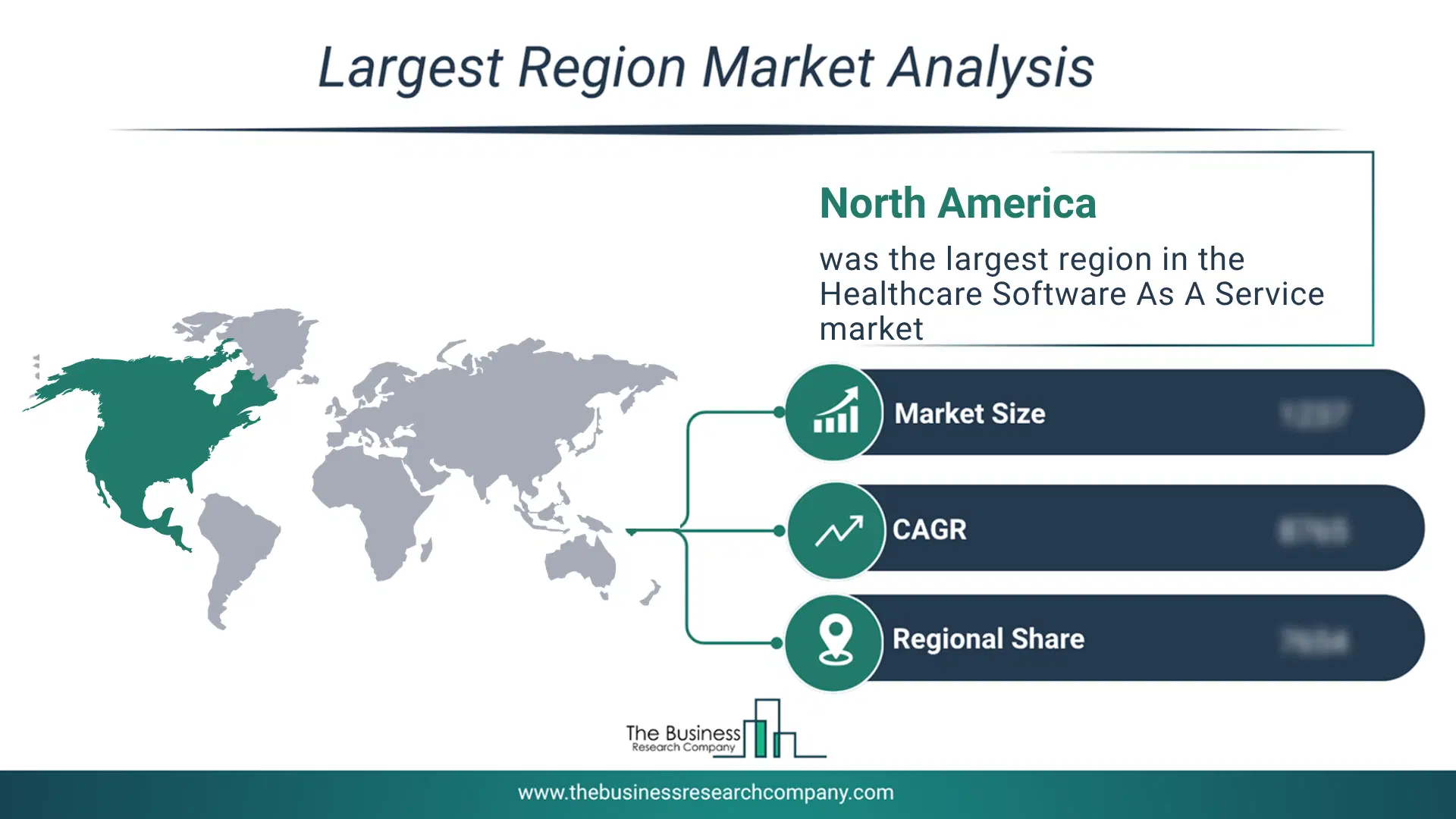
Regional Insights
North America was the largest region in the healthcare software as a service market in 2025. Asia-Pacific is expected to be the fastest-growing region in the forecast period. The regions covered in this market report are Asia-Pacific, South East Asia, Western Europe, Eastern Europe, North America, South America, Middle East, Africa. The countries covered in this market report are Australia, Brazil, China, France, Germany, India, Indonesia, Japan, Taiwan, Russia, South Korea, UK, USA, Canada, Italy, SpainWhat Defines the Healthcare Software As A Service Market?
The healthcare software as a service market includes revenues earned by entities by providing software development services, SaaS development, software consulting services, UI/UX design services, blockchain consulting services and AI consulting. The market value includes the value of related goods sold by the service provider or included within the service offering. Only goods and services traded between entities or sold to end consumers are included.How is Market Value Defined and Measured?
The market value is defined as the revenues that enterprises gain from the sale of goods and/or services within the specified market and geography through sales, grants, or donations in terms of the currency (in USD unless otherwise specified). The revenues for a specified geography are consumption values that are revenues generated by organizations in the specified geography within the market, irrespective of where they are produced. It does not include revenues from resales along the supply chain, either further along the supply chain or as part of other products.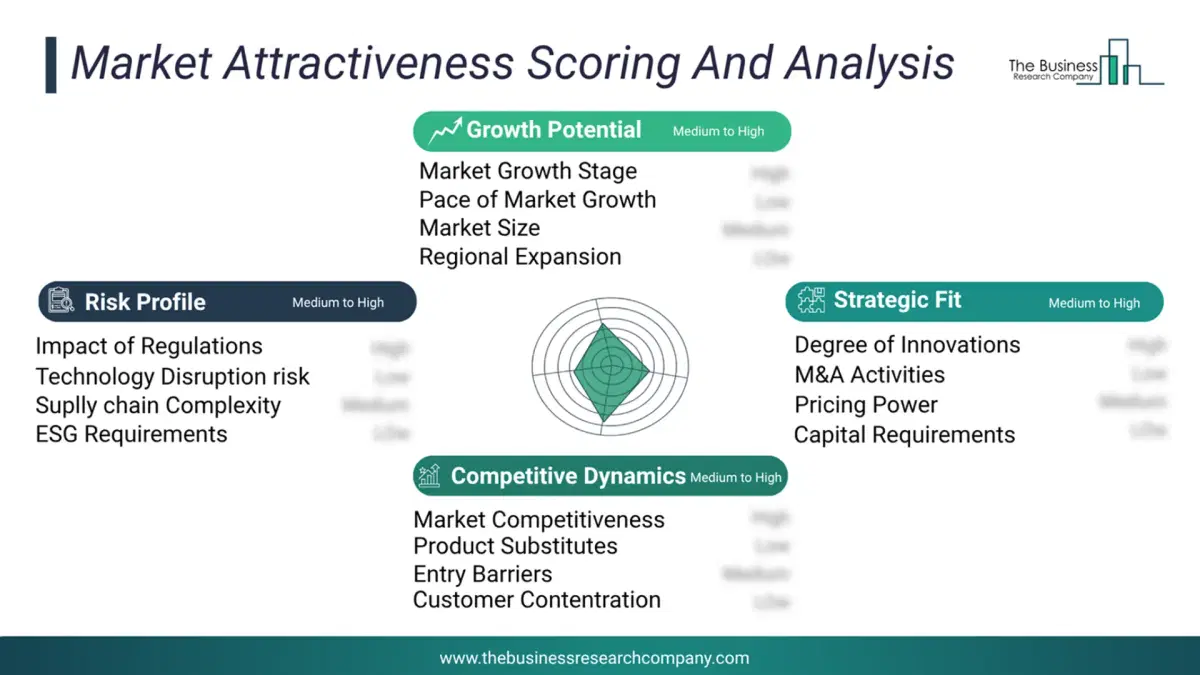
This chart presents market attractiveness based on a quantitative evaluation of growth, competition, strategic alignment, and risk, offering a clear view of opportunity areas for decision-making. This chart is for illustrative purposes; the full report contains the complete analysis.
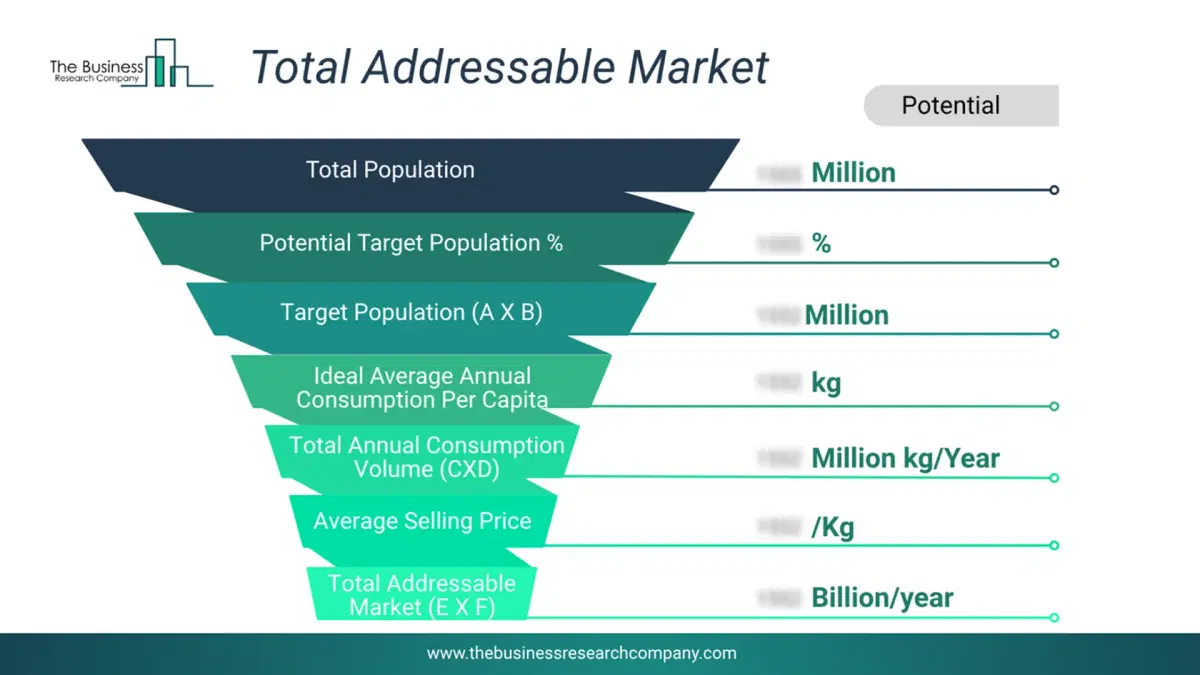
This chart highlights the Total Addressable Market (TAM) by estimating the maximum revenue opportunity using an assumption-driven approach, supporting strategic planning and opportunity sizing across markets. The chart is illustrative; the full report provides a more comprehensive analysis.
What Key Data and Analysis Are Included in the Healthcare Software As A Service Market Report 2026?
The healthcare software as a service market research report is one of a series of new reports from The Business Research Company that provides market statistics, including industry global market size, regional shares, competitors with the market share, detailed market segments, market trends and opportunities, and any further data you may need to thrive in the healthcare software as a service industry. The market research report delivers a complete perspective of everything you need, with an in-depth analysis of the current and future state of the industry.Healthcare Software As A Service Market Report Forecast Analysis
| Report Attribute | Details |
|---|---|
| Market Size Value In 2026 | $33.21 billion |
| Revenue Forecast In 2030 | $71.33 billion |
| Growth Rate | CAGR of 21.1% from 2026 to 2030 |
| Base Year For Estimation | 2025 |
| Actual Estimates/Historical Data | 2020-2025 |
| Forecast Period | 2026 - 2030 |
| Market Representation | Revenue in USD Billion and CAGR from 2026 to 2030 |
| Segments Covered | Type, Deployment Model, Organization Size, End-User |
| Regional Scope | Asia-Pacific, Western Europe, Eastern Europe, North America, South America, Middle East, Africa |
| Country Scope | The countries covered in the report are Australia, Brazil, China, France, Germany, India, Indonesia, Japan, Taiwan, Russia, South Korea, UK, USA, Canada, Italy, Spain. |
| Key Companies Profiled | Microsoft Corporation; Salesforce Inc.; SAP SE; Oracle Corporation; Google LLC; Cisco Systems Inc.; International Business Machines Corporation; ServiceNow Inc.; Workday Inc.; Zocdoc Inc.; Thrive Global Holdings Inc.; Talkspace Inc.; Pager Technologies Inc.; AiCure Technologies Inc.; Noom Inc.; Optum Inc.; Kareo Inc.; Madaket Health Inc.; SimplyVital Health Inc.; Tailoredcare India Private Limited; Health Data Vision Inc.; Veeva Systems Inc.; Cerner Corporation; Athenahealth Inc.; Allscripts Healthcare Solutions Inc.; NextGen Healthcare Inc.; eClinicalWorks LLC; Greenway Health LLC; AdvancedMD Inc.; drchrono Inc.; CareCloud Corporation |
| Customization Scope | Request for Customization |
| Pricing And Purchase Options | Explore Purchase Options |