
Home Automation Market Report 2026
Global Outlook – By Product (Lighting Control, Security And Access Control, HVAC Control, Entertainment, Other Products), By Technology (Wired Home Automation System, Wireless Home Automation System), By End User (Residential, Commercial, Other End Users) – Market Size, Trends, Strategies, and Forecast to 2030
Home Automation Market Overview
• Home Automation market size has reached to $77.08 billion in 2025 • Expected to grow to $134.89 billion in 2030 at a compound annual growth rate (CAGR) of 11.8% • Growth Driver: The Proliferation Of IOT Devices Is Driving Growth In The Home Automation Market • Market Trend: Increasing Focus On Product Innovations To Provide Reliable Services To Their Customers • North America was the largest region in 2025.Market Gains By 2030 – Top Opportunities By Segment
Market Gain identifies the most promising market opportunities by highlighting the segments or products expected to generate the highest incremental revenue growth over the next five years.
What Is Covered Under Home Automation Market?
Home automation refers to the electronic and automatic control of household activities, features, and equipment. is a network of hardware, communication, and electronic interfaces that enables the Internet-based integration of commonplace devices. Whether you are at home or thousands of miles away, you can handle each gadget from your smartphone or tablet because they each have sensors and are WiFi linked. Home automation is also referred to as domotics, and a home equipped with an automation system is referred to as a smart home. The main types of products in home automation are lighting control, security and access control, HVAC control, entertainment, and others. Lighting controls are a type of smart lighting gadget that allows users to adjust the amount, quality, and features of light in a specific area. These smart devices help to cut down on electricity waste while also promoting energy efficiency. The different technologies include wired home automation systems, and wireless home automation systems and are implemented in various areas such as residential, commercial, and others.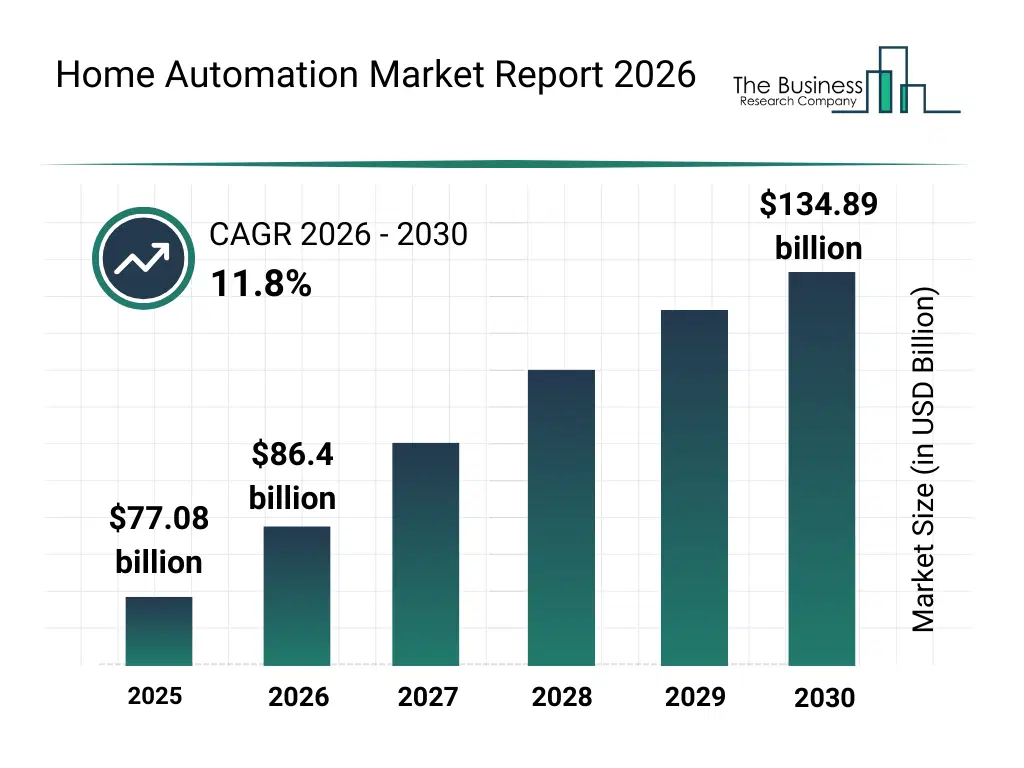
What Is The Home Automation Market Size and Share 2026?
The home automation market size has grown rapidly in recent years. It will grow from $77.08 billion in 2025 to $86.4 billion in 2026 at a compound annual growth rate (CAGR) of 12.1%. The growth in the historic period can be attributed to increasing penetration of smartphones and WiFi networks, rising consumer demand for convenience and comfort, growing adoption of connected home devices, expansion of residential broadband infrastructure, increasing awareness of smart home technologies.What Is The Home Automation Market Growth Forecast?
The home automation market size is expected to see rapid growth in the next few years. It will grow to $134.89 billion in 2030 at a compound annual growth rate (CAGR) of 11.8%. The growth in the forecast period can be attributed to increasing deployment of ai-enabled home assistants, rising investments in smart residential infrastructure, growing demand for integrated energy management systems, expansion of connected living concepts, increasing focus on personalized home automation solutions. Major trends in the forecast period include increasing adoption of voice-controlled smart devices, rising integration of centralized home automation platforms, growing demand for energy-efficient smart homes, expansion of app-based remote home management, enhanced focus on interoperability across devices.
Global Home Automation Market Segmentation
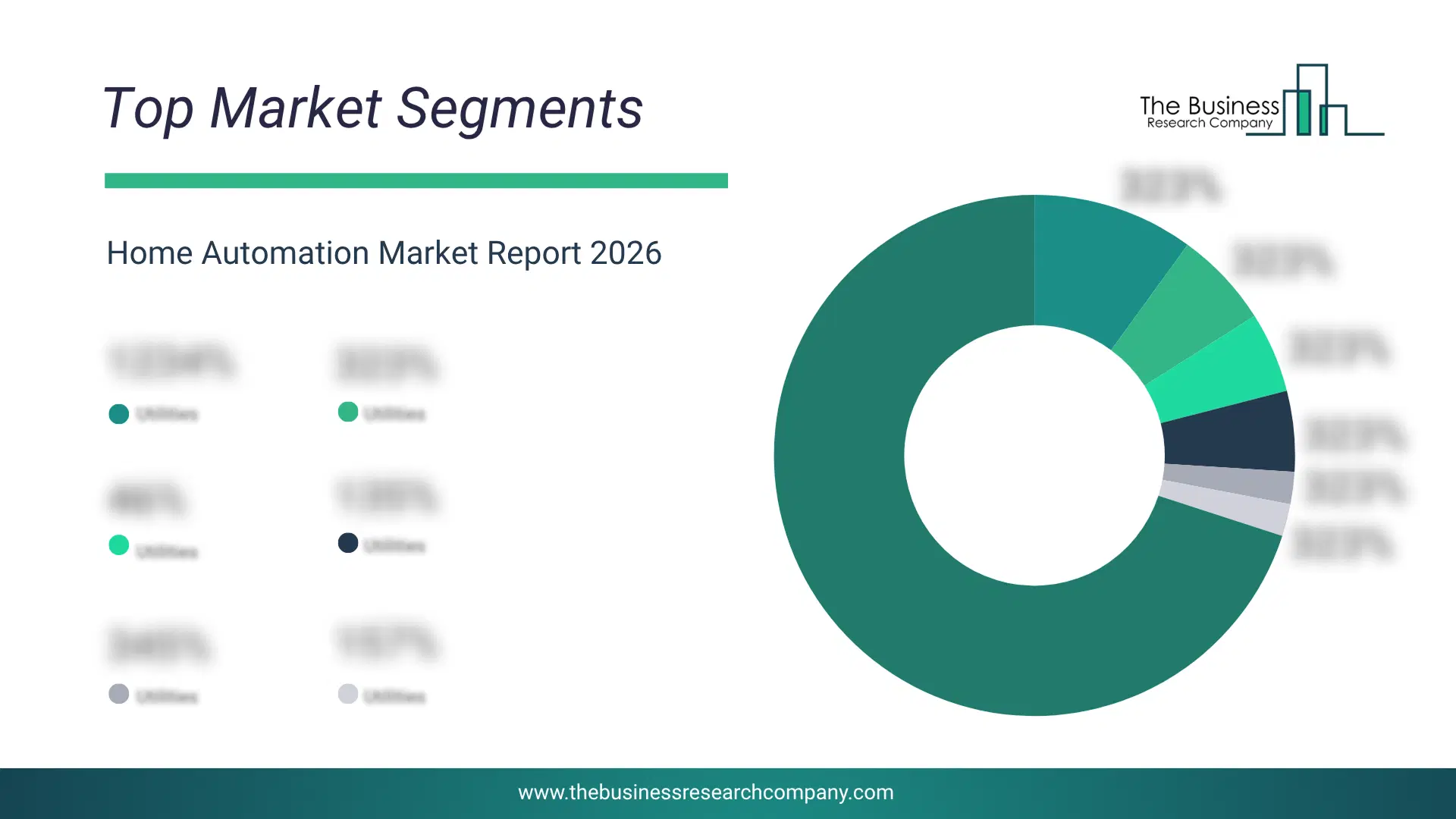
1) By Product: Lighting Control, Security And Access Control, HVAC Control, Entertainment, Other Products 2) By Technology: Wired Home Automation System, Wireless Home Automation System 3) By End User: Residential, Commercial, Other End Users Subsegments: 1) By Lighting Control: Smart Bulbs, Lighting Sensors, Dimmers And Switches 2) By Security And Access Control: Smart Locks, Surveillance Cameras, Alarm Systems 3) By HVAC Control: Smart Thermostats, HVAC Sensors, Zoning Systems 4) By Entertainment: Smart Speakers, Streaming Devices, Home Theater Systems 5) By Other Products: Smart Appliances, Energy Management Systems The top segments in the home automation market will be: • Security And Access Control will reach $45.62 Billion by 2030. • Entertainment will reach $30.19 Billion by 2030. • Lighting Control will reach $24.86 Billion by 2030. • HVAC Control will reach $19.41 Billion by 2030. • Other Products will reach $14.21 Billion by 2030.What Is The Driver Of The Home Automation Market?
The increasing use of internet of things (IoT) devices in a home automation system is expected to propel the growth of the home automation market in the forecast period. The Internet of Things (also known as IoT)-based home automation system uses internet protocols or cloud computing to operate all of the smart home's equipment. The IoT-based home automation system has numerous advantages over wired systems, including flexibility, ease of installation, avoidance of the complexity of flowing through wires or weak electrical wiring, easy problem detection and triggering, and, most of all, mobility. For instance, in March 2023, according to Exploding Topics, a US-based online platform that provides insights into emerging and trending topics, by 2030, it is anticipated that there will be 25.4 billion IoT devices. Therefore, the increasing use of internet of things (IoT) devices in home automation systems drives the home automation industry growth.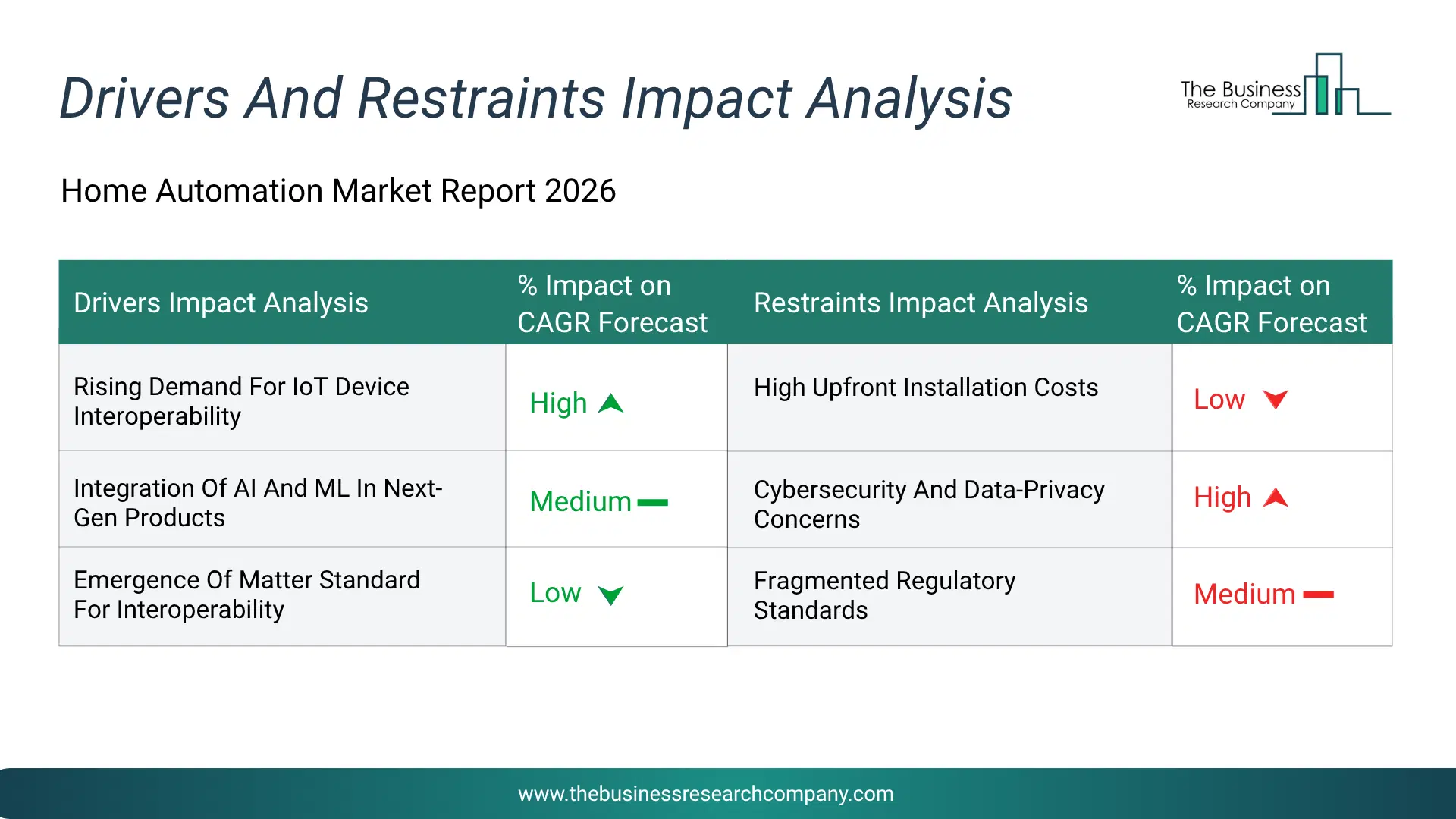
Infographic Chart Showing Key Market Drivers Analysis And Restraints For Home Automation Market
The chart presents an impact analysis of key drivers and restraints, quantifying their relative influence on the market's growth rate and helping assess the balance between growth enablers and limiting factors. This chart offers a high-level perspective; the full report contains more detailed insights.
How Will The Drivers Impact Growth In The Global Home Automation Market?
• Rising Demand For IoT Device Interoperability (High) – During the forecast period, the rising demand for IoT device interoperability is expected to become a key growth driver for the home automation market by 2030. Consumers are increasingly seeking seamless communication between smart lighting systems, thermostats, surveillance devices, entertainment platforms, and connected appliances within unified home ecosystems. Interoperability enhances user convenience by enabling centralized control through smartphones, voice assistants, and cloud-based platforms. Technology providers are therefore focusing on open communication protocols and cross-platform compatibility to improve connectivity and simplify installation processes. This transition toward integrated smart home environments is reinforcing steady market expansion. • Integration Of AI And ML In Next-Gen Products (Medium) – During the forecast period, the integration of AI and ML in next-gen products is expected to emerge as a major factor driving the expansion of the home automation market by 2030. The adoption of artificial intelligence and machine learning technologies is enabling smart devices to deliver predictive automation, adaptive energy management, behavioral learning, and personalized user experiences. AI-powered assistants and intelligent control systems are improving operational efficiency while enhancing security, comfort, and convenience within connected homes. Continuous advancements in edge computing and cloud analytics are further accelerating the deployment of intelligent automation products across residential and commercial environments. • Emergence Of Matter Standard For Interoperability (Low) – During the forecast period, the emergence of Matter standard for interoperability is expected to act as a key growth catalyst for the home automation market by 2030. The introduction of the Matter connectivity standard is simplifying integration between smart home devices from different manufacturers, reducing compatibility challenges and improving consumer confidence in connected technologies. Standardized communication protocols enable faster device setup, enhanced cybersecurity support, and reliable cross-platform operation across automation ecosystems. Manufacturers and technology companies are increasingly adopting Matter-enabled products to expand ecosystem compatibility and improve user accessibility. As interoperability standards gain wider adoption globally, deployment of smart home solutions is expected to accelerate significantly.How Will The Restraints Impact Growth In The Global Home Automation Market?
• High Upfront Installation Costs (High) – During the forecast period, the high upfront installation costs act as a major restraint in the home automation market by limiting adoption, especially among price-sensitive consumers. The cost of purchasing smart devices, sensors, hubs, and professional installation services can be significant, creating a financial barrier. Many consumers perceive home automation as a luxury rather than a necessity, delaying investment decisions. Additionally, retrofitting existing homes with automation systems can further increase expenses. Small and medium-income households often find it difficult to justify the initial expenditure despite long-term benefits. This slows down mass-market penetration and restricts growth primarily to premium segments. Moreover, lack of awareness about cost savings over time contributes to hesitation. Overall, high initial costs hinder widespread adoption and market expansion. • Cybersecurity And Data-Privacy Concerns (Medium) – During the forecast period, the cybersecurity and data-privacy concerns restrain the home automation market as connected devices are vulnerable to hacking and unauthorized access. Smart home systems collect and transmit sensitive user data, including personal habits and security information, raising privacy risks. Consumers are increasingly cautious about sharing data due to fear of breaches and misuse. Any security lapse can lead to loss of trust and discourage further adoption of smart technologies. Manufacturers must invest heavily in robust security protocols, increasing development costs. Additionally, frequent cyberattacks reported in connected ecosystems amplify consumer skepticism. Regulatory scrutiny regarding data protection also adds complexity for companies. These concerns collectively slow down the adoption rate of home automation solutions. • Fragmented Regulatory Standards (Low) – During the forecast period, the fragmented regulatory standards act as a restraint by creating inconsistencies across different regions and markets in the home automation industry. Varying compliance requirements make it difficult for manufacturers to design universally acceptable products. Companies must adapt their devices to meet multiple regulatory frameworks, increasing time and cost of development. This lack of uniformity hampers global scalability and slows down innovation. It also creates confusion among consumers regarding product compatibility and safety standards. Smaller companies face challenges in navigating complex regulations, limiting their market participation. Additionally, inconsistent policies can delay product launches and approvals. Overall, fragmented regulations restrict smooth market growth and hinder widespread adoption.Key Players In The Global Home Automation Market
Major companies operating in the home automation market are ABB; Crestron Electronics Inc.; Schneider Electric SE; Honeywell International Inc.; Johnson Controls Inc.; Siemens AG; Legrand Group; Control4; Home Brain; Savant Systems Inc.; Lutron Electronics Company; Sauter AG; Bosch Security and Safety Systems; Silvan Innovation Labs; Elan Home Systems LLC; Harman International; LG Electronics Inc.; August Inc.; HomeSeer Technologies LLC; Amazon Inc.; Google Nest; ADT Inc.; Vivint Smart Home Inc.; SimpliSafe; Ring LLC; Ecobee; Somfy; Netatmo; SmartThings Inc.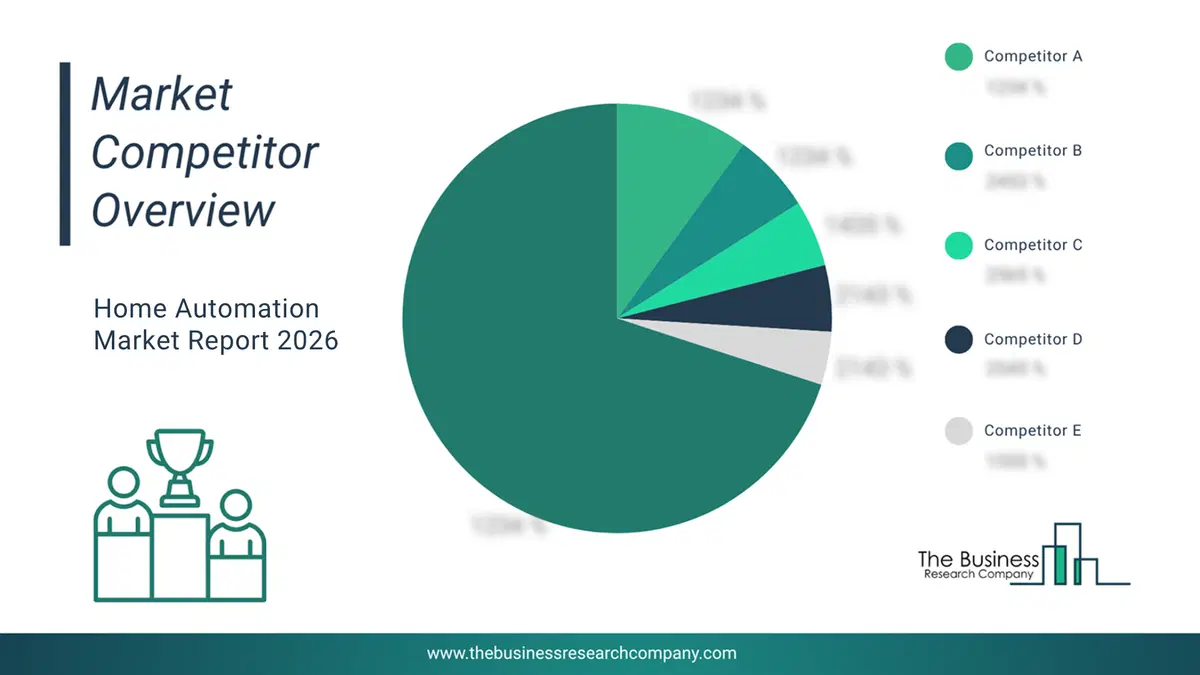
This chart is for illustrative purposes; the full report includes a detailed competitor analysis and comprehensive overview of the top 10 companies in the market.
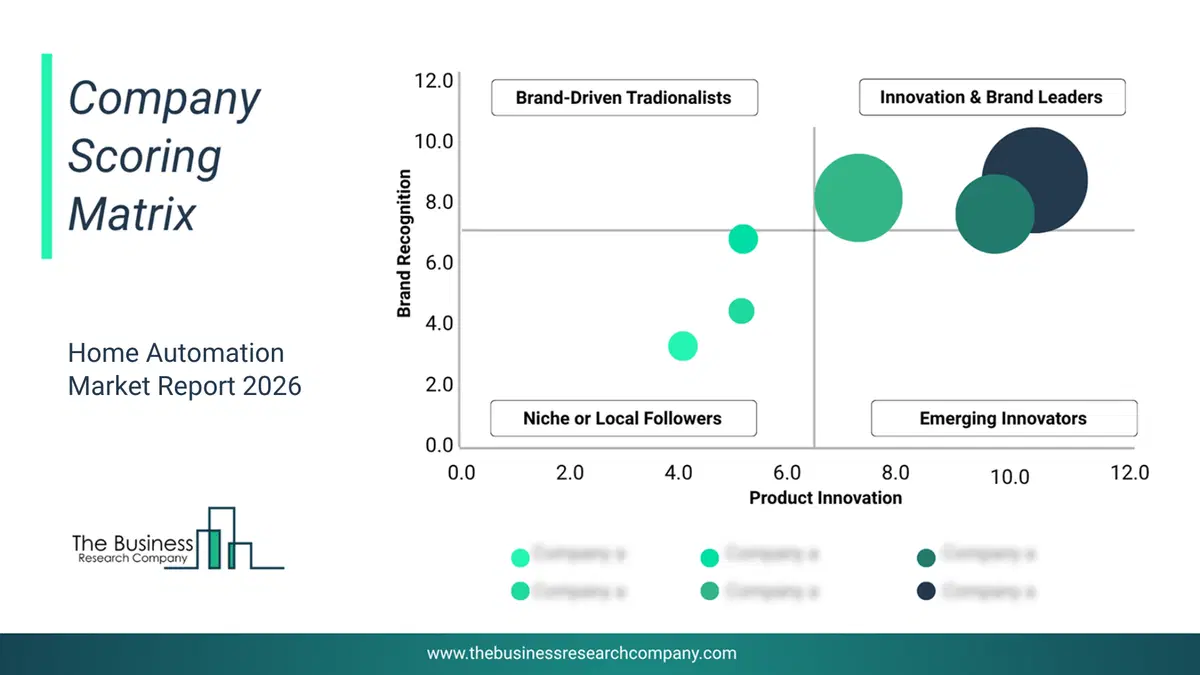
This chart maps companies by product innovation and brand strength, with bubble size indicating relative revenue, helping identify market leaders, challengers, and niche players. This is an illustrative chart; the full report provides a complete and accurate competitive analysis.
Global Home Automation Market Trends and Insights
Major companies operating in the home automation market are focusing on innovative products such as smart switches to drive revenues in their market. Smart switches are electrical switches equipped with wireless connectivity and advanced technology, allowing users to control and automate the operation of lighting and other electrical appliances remotely. For instance, in September 2023, Finolex Cables Ltd., an India-based company that manufactures smart devices for home automation, launched smart switches. Smart switches with WiFi capabilities that fit in perfectly with current electrical configurations. These switches give homeowners total control over their appliances and lighting. The smart switches offer easy convenience whether they are used manually, with a remote control, or with virtual assistants such as Google and Alexa. Additionally, the panels can be customized with 5,000 different LED background colors and finishes to match any designer's aesthetic preferences.What Are Latest Mergers And Acquisitions In The Home Automation Market?
In June 2023, ABB Ltd, a Switzerland-based company specializing in robotics, automation, electrical engineering, and power technology, acquired Eve Systems GmbH for an undisclosed amount. With this acquisition, ABB will become a market leader in smart home solutions built on the new wireless networking technology and Matter and Thread interoperating standards. This acquisition strengthens ABB's well-established reputation for providing essential home automation infrastructure based on KNX standards, enabling intelligent homes. Eve Systems GmbH is a Germany-based company that specializes in smart home and home automation products.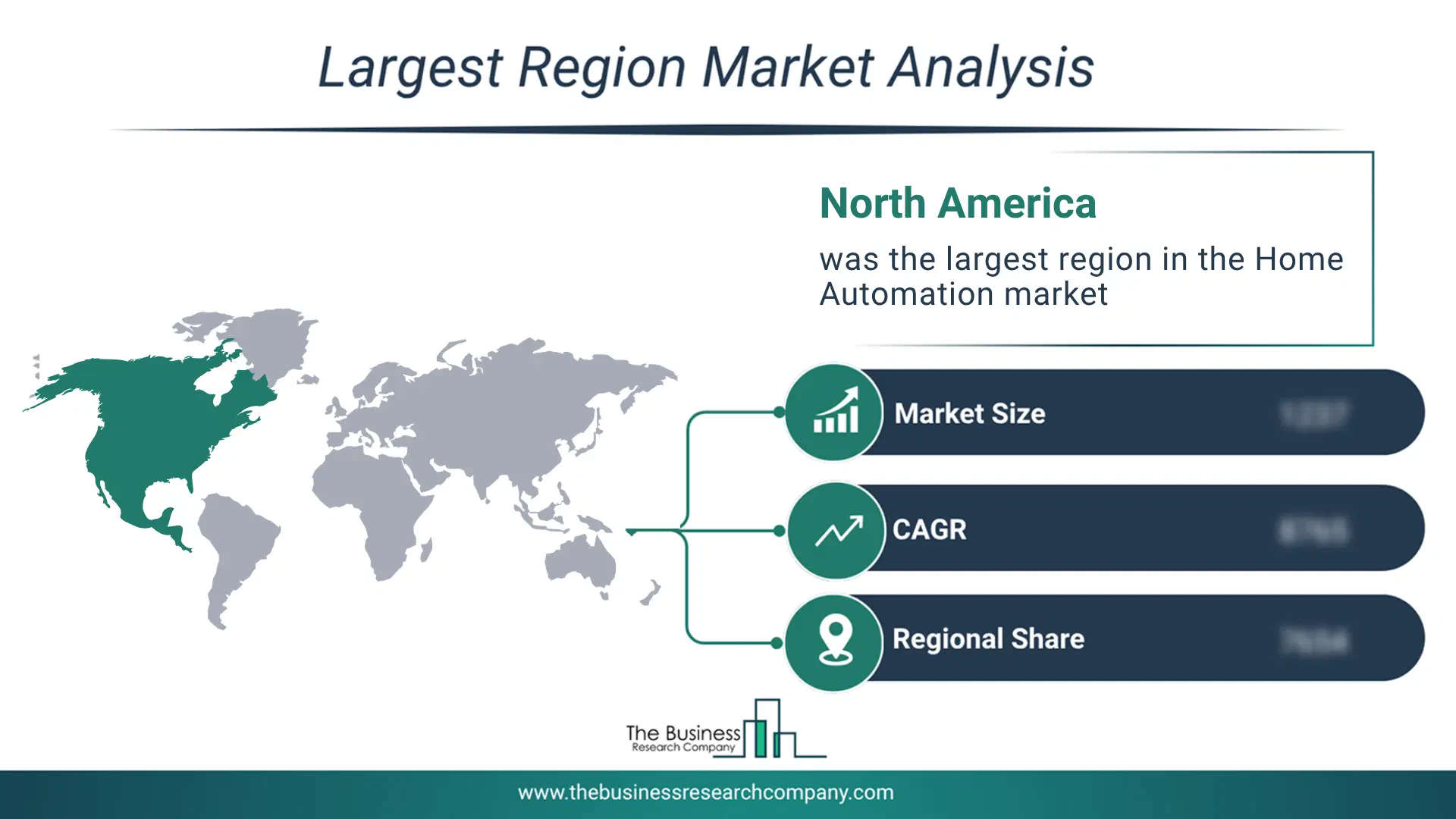
Regional Insights
North America was the largest region in the home automation market in 2025. The regions covered in this market report are Asia-Pacific, South East Asia, Western Europe, Eastern Europe, North America, South America, Middle East, Africa. The countries covered in this market report are Australia, Brazil, China, France, Germany, India, Indonesia, Japan, Taiwan, Russia, South Korea, UK, USA, Canada, Italy, SpainWhat Defines the Home Automation Market?
The home automation market includes revenues earned by entities by providing control of lighting, motorized curtains, security and surveillance. The market value includes the value of related goods sold by the service provider or included within the service offering. Only goods and services traded between entities or sold to end consumers are included.How is Market Value Defined and Measured?
The market value is defined as the revenues that enterprises gain from the sale of goods and/or services within the specified market and geography through sales, grants, or donations in terms of the currency (in USD unless otherwise specified). The revenues for a specified geography are consumption values that are revenues generated by organizations in the specified geography within the market, irrespective of where they are produced. It does not include revenues from resales along the supply chain, either further along the supply chain or as part of other products.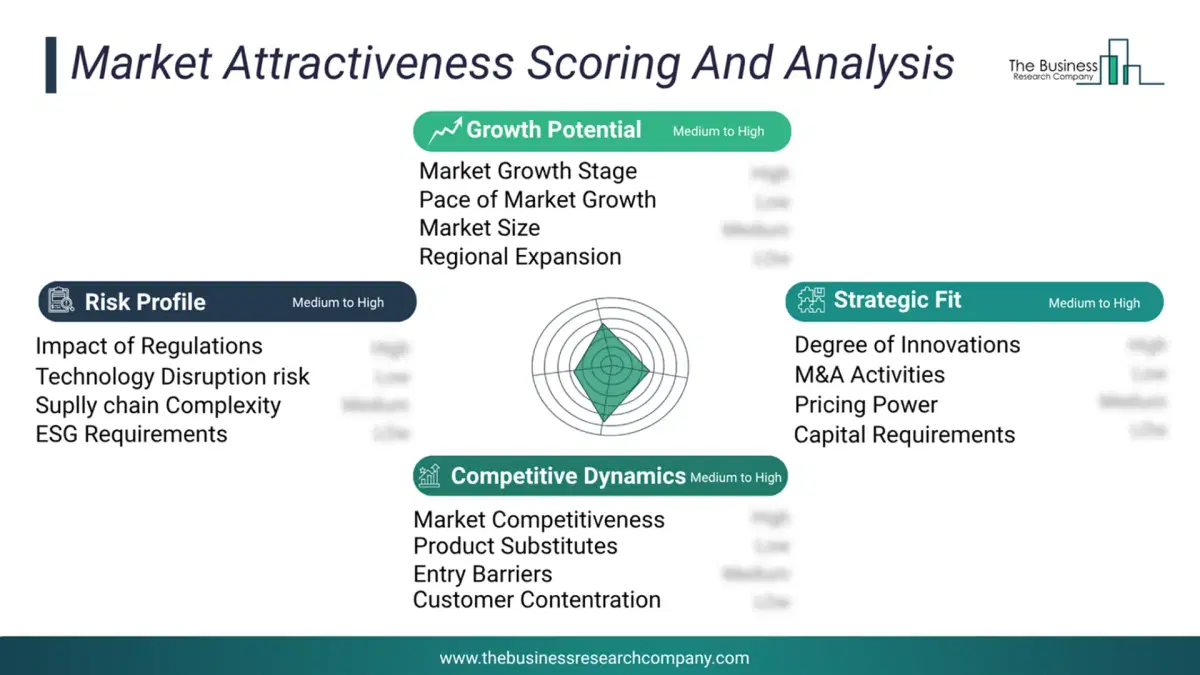
This chart presents market attractiveness based on a quantitative evaluation of growth, competition, strategic alignment, and risk, offering a clear view of opportunity areas for decision-making. This chart is for illustrative purposes; the full report contains the complete analysis.
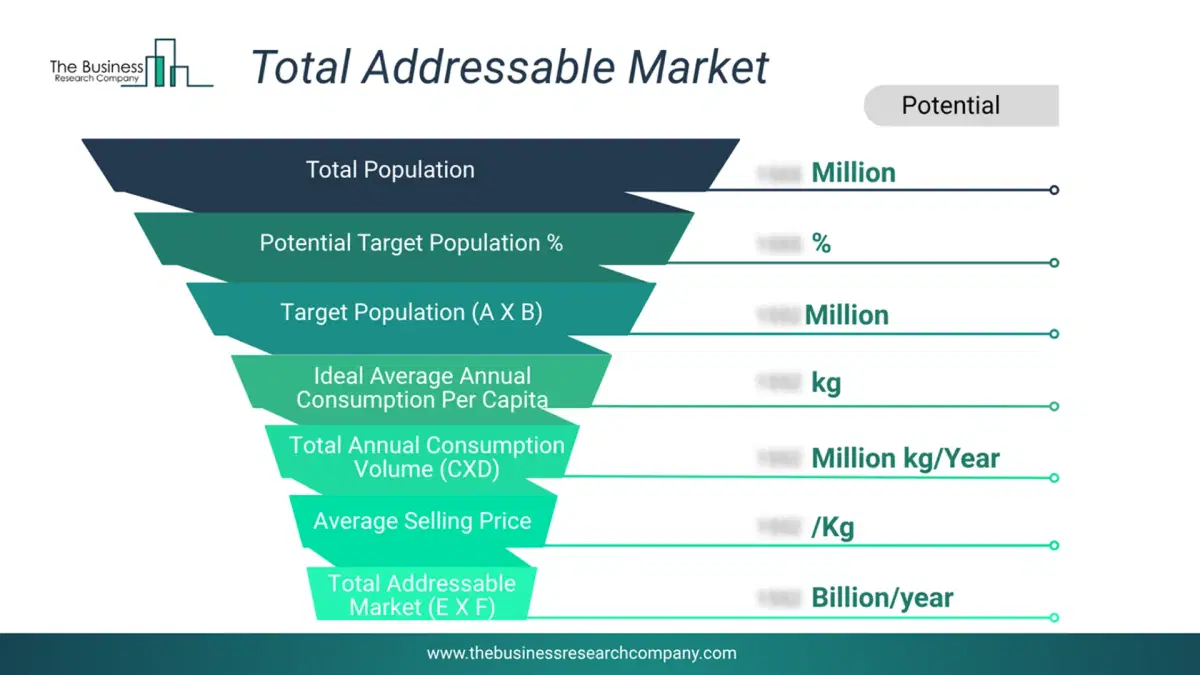
This chart highlights the Total Addressable Market (TAM) by estimating the maximum revenue opportunity using an assumption-driven approach, supporting strategic planning and opportunity sizing across markets. The chart is illustrative; the full report provides a more comprehensive analysis.
What Key Data and Analysis Are Included in the Home Automation Market Report 2026?
The home automation market research report is one of a series of new reports from The Business Research Company that provides market statistics, including industry global market size, regional shares, competitors with the market share, detailed market segments, market trends and opportunities, and any further data you may need to thrive in the home automation industry. The market research report delivers a complete perspective of everything you need, with an in-depth analysis of the current and future state of the industry.Home Automation Market Report Forecast Analysis
| Report Attribute | Details |
|---|---|
| Market Size Value In 2026 | $86.4 billion |
| Revenue Forecast In 2030 | $134.89 billion |
| Growth Rate | CAGR of 12.1% from 2026 to 2030 |
| Base Year For Estimation | 2025 |
| Actual Estimates/Historical Data | 2020-2025 |
| Forecast Period | 2026 - 2030 |
| Market Representation | Revenue in USD Billion and CAGR from 2026 to 2030 |
| Segments Covered | Product, Technology, End User |
| Regional Scope | Asia-Pacific, Western Europe, Eastern Europe, North America, South America, Middle East, Africa |
| Country Scope | The countries covered in the report are Australia, Brazil, China, France, Germany, India, Indonesia, Japan, Taiwan, Russia, South Korea, UK, USA, Canada, Italy, Spain. |
| Key Companies Profiled | ABB; Crestron Electronics Inc.; Schneider Electric SE; Honeywell International Inc.; Johnson Controls Inc.; Siemens AG; Legrand Group; Control4; Home Brain; Savant Systems Inc.; Lutron Electronics Company; Sauter AG; Bosch Security and Safety Systems; Silvan Innovation Labs; Elan Home Systems LLC; Harman International; LG Electronics Inc.; August Inc.; HomeSeer Technologies LLC; Amazon Inc.; Google Nest; ADT Inc.; Vivint Smart Home Inc.; SimpliSafe; Ring LLC; Ecobee; Somfy; Netatmo; SmartThings Inc. |
| Customization Scope | Request for Customization |
| Pricing And Purchase Options | Explore Purchase Options |