
House Dust Mite Allergy Market Report 2026
Global Outlook – By Product Type (Tablets, Nasal Drops, Injectable), By Diagnosis (Skin Prick Test (SPT), Specific Immunoglobulin E (IgE) Blood Test, Other Diagnosis), By Dosage Forms (Solid, Liquid), By End Users (Hospitals, Homecare, Specialty Clinics, Other End Users) – Market Size, Trends, Strategies, and Forecast to 2030
House Dust Mite Allergy Market Overview
• House Dust Mite Allergy market size has reached to $2.37 billion in 2025 • Expected to grow to $4.62 billion in 2030 at a compound annual growth rate (CAGR) of 14.3% • Growth Driver: Rising Prevalence Of Asthma Diseases To Drive Market Growth • Market Trend: Innovative Sublingual Tablet Solutions For House Dust Mite Allergies • North America was the largest region in 2025 and Asia-pacific is the fastest growing region.Market Gains By 2030 – Top Opportunities By Segment
Market Gain identifies the most promising market opportunities by highlighting the segments or products expected to generate the highest incremental revenue growth over the next five years.
What Is Covered Under House Dust Mite Allergy Market?
House dust mite allergy refers to an allergic reaction to small insects that frequently reside in household dust. This includes the treatment provided for allergic reactions such as sneezing and allergy-related conditions. The main product types for house dust mite allergy are tablets, nasal drops and injectable. Tablets are a compact, solid-dose form that can include medications with or without excipients. The various treatments include medication, immunotherapy, nasal irrigation and others. The various diagnosis includes skin prick test (SPT), specific immunoglobulin E (IgE) blood test and others with various dosage forms such as solid and liquid. These are used by various end-users such as hospitals, homecare, specialty clinics and others.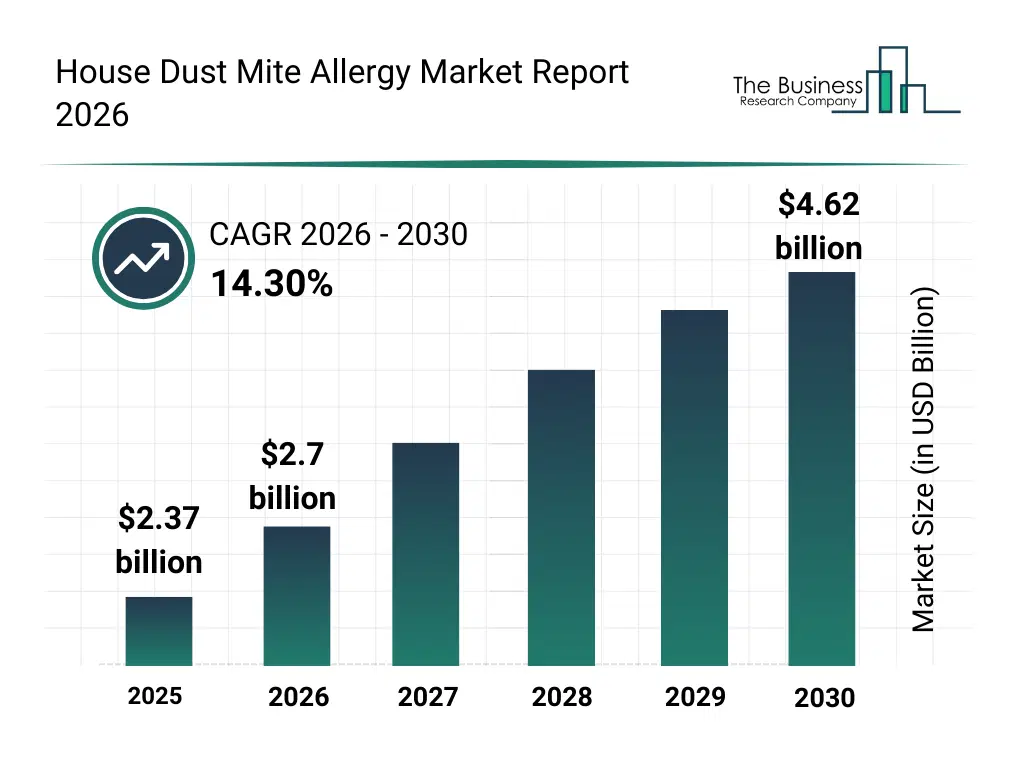
What Is The House Dust Mite Allergy Market Size and Share 2026?
The house dust mite allergy market size has grown rapidly in recent years. It will grow from $2.37 billion in 2025 to $2.7 billion in 2026 at a compound annual growth rate (CAGR) of 14.3%. The growth in the historic period can be attributed to rising prevalence of allergic conditions, increased awareness of respiratory allergies, expansion of diagnostic testing availability, growing use of antihistamine medications, improvements in allergy treatment protocols.What Is The House Dust Mite Allergy Market Growth Forecast?
The house dust mite allergy market size is expected to see rapid growth in the next few years. It will grow to $4.62 billion in 2030 at a compound annual growth rate (CAGR) of 14.3%. The growth in the forecast period can be attributed to increasing adoption of personalized immunotherapy, rising focus on preventive allergy care, expansion of home-based allergy management, growing demand for long-term symptom control, advancements in biologic allergy treatments. Major trends in the forecast period include increasing adoption of immunotherapy-based treatments, rising use of sublingual allergy tablets, growing demand for long-term allergy management solutions, expansion of early diagnostic testing adoption, enhanced focus on personalized allergy treatment.
Global House Dust Mite Allergy Market Segmentation
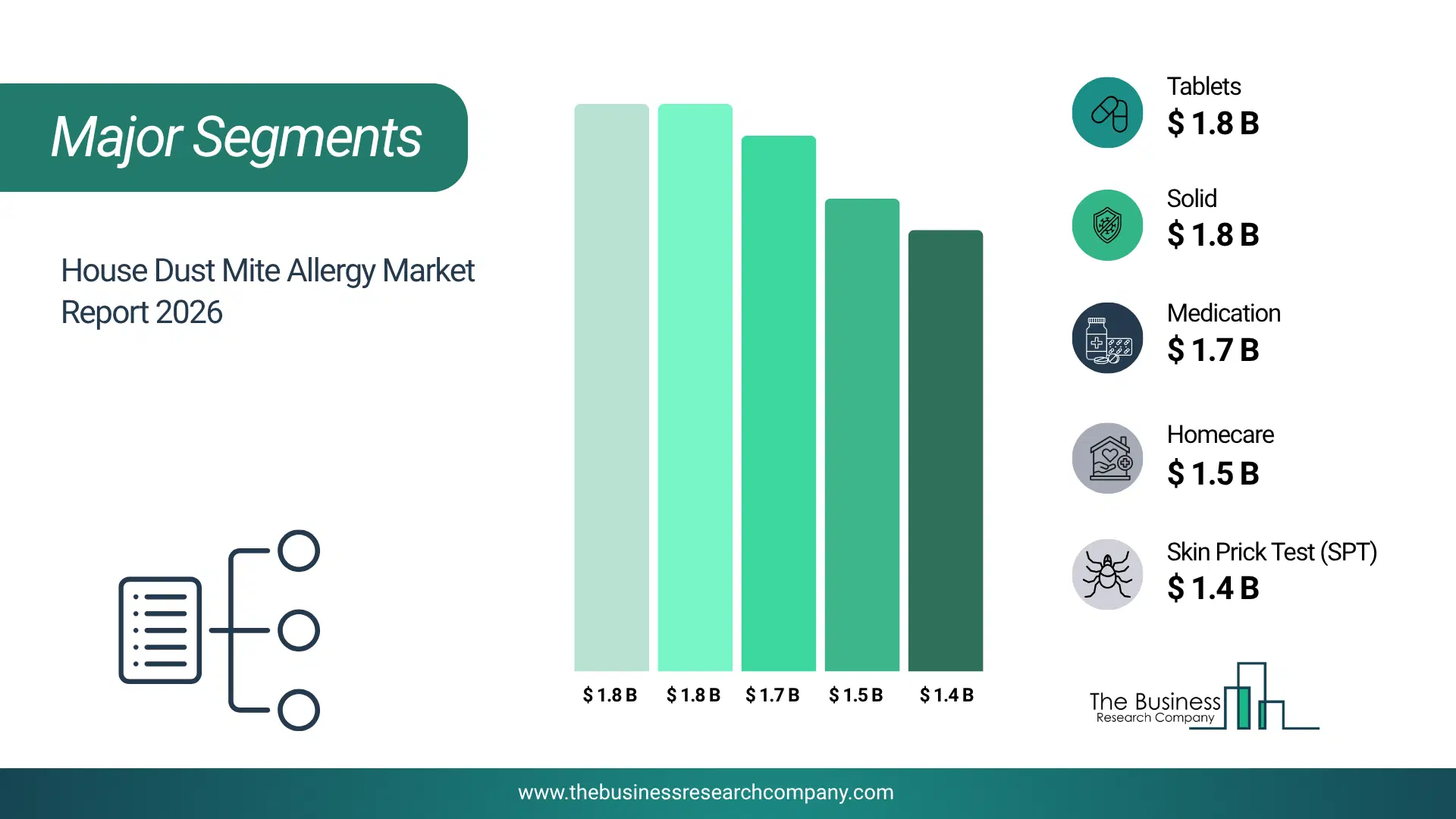
1) By Product Type: Tablets, Nasal Drops, Injectable 2) By Diagnosis: Skin Prick Test (SPT), Specific Immunoglobulin E (IgE) Blood Test, Other Diagnosis 3) By Dosage Forms: Solid, Liquid 4) By End Users: Hospitals, Homecare, Specialty Clinics, Other End Users Subsegments: 1) By Tablets: Sublingual Tablets, Oral Tablets 2) By Nasal Drops: Antihistamine Nasal Drops, Corticosteroid Nasal Drops 3) By Injectable: Allergen Immunotherapy Injections, Corticosteroid Injections The top segments in the house dust mite allergy market will be: • Tablets will reach $1809.36 Million by 2025. • Solid will reach $1809.36 Million by 2025. • Medication will reach $1773.7 Million by 2025. • Homecare will reach $1544.22 Million by 2025. • Skin Prick Test (SPT) will reach $1430.34 Million by 2025.What Is The Driver Of The House Dust Mite Allergy Market?
The prevalence of asthma diseases is expected to propel the growth of the house dust mite allergy market going forward. Asthma diseases refer to chronic inflammatory airway disorders characterized by recurring episodes of breathlessness, wheezing, chest tightness, and coughing. Asthma diseases are rising due to growing environmental pollution, which increases airway inflammation and heightens sensitivity to allergens. The house dust mite allergy market is witnessing increased demand as the rapid expansion of asthma diseases pushes companies to adopt solutions that reduce allergen exposure and support better respiratory health outcomes. For instance, in June 2025, according to the American Lung Association, a US-based nonprofit health organization, current asthma prevalence among adults showed substantial variation across US jurisdictions, ranging from 7.1% in Mississippi to 14.1% in Puerto Rico in 2023. Therefore, the prevalence of asthma diseases is driving the demand for the house dust mite allergy industry.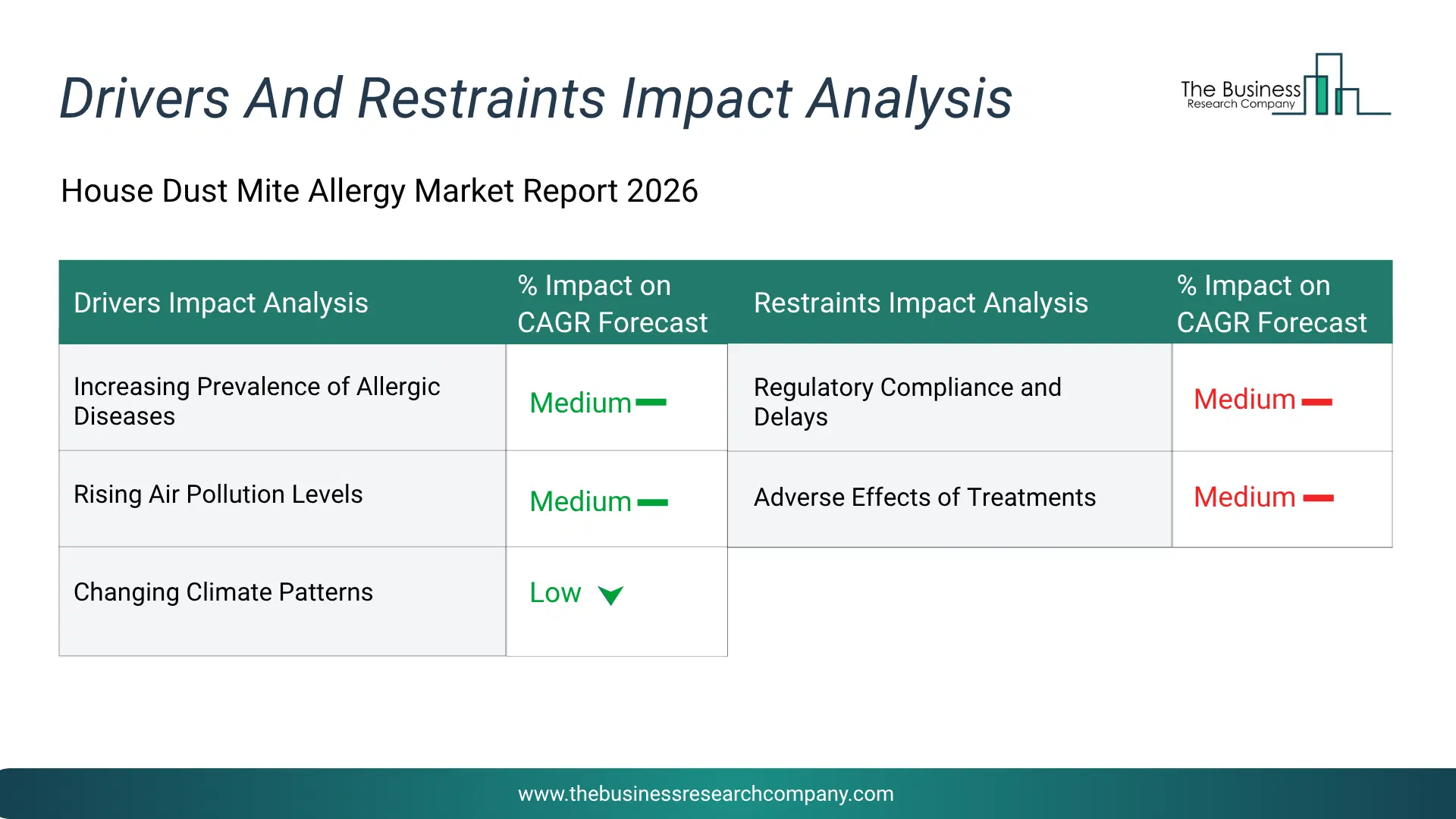
Infographic Chart Showing Key Market Drivers Analysis And Restraints For House Dust Mite Allergy Market
The chart presents an impact analysis of key drivers and restraints, quantifying their relative influence on the market's growth rate and helping assess the balance between growth enablers and limiting factors. This chart offers a high-level perspective; the full report contains more detailed insights.
How Will The Drivers Impact Growth In The Global House Dust Mite Allergy Market?
• Increasing Prevalence of Allergic Diseases (Medium) – The growing focus on allergic diseases will emerge as a major factor driving the expansion of the house dust mite allergy market by 2030. The increasing number of individuals suffering from allergic conditions related to house dust mites (HDM), such as allergic rhinitis, asthma and eczema, is driving demand for diagnostic tools and treatments like immunotherapy, antihistamines and nasal sprays. This uptick in allergies is prompting healthcare providers and companies to emphasize prevention and management strategies, including educational initiatives, lifestyle adjustments and the development of new therapies. Moreover, as allergies become more widespread, consumer demand for hypoallergenic products, such as dust mite sprays, air purifiers and bedding covers, is growing, further expanding the market for HDM-related solutions. Consequently, the accelerating adoption of allergic diseases capabilities is projected to contributing to a 1% annual growth in the market. • Rising Air Pollution Levels (Medium) – The increasing emphasis on air pollution levels will become a key driver of growth in the house dust mite allergy market by 2030. Air pollution, especially particulate matter (PM2.5 and PM10), can increase allergens by attaching to dust particles, which are carried indoors and mix with dust mites and their waste. In highly polluted areas, people often keep windows closed to block out outdoor contaminants, leading to a buildup of allergens indoors. Poor ventilation and rising humidity further promote dust mite growth. Additionally, air conditioning and heating systems, if not regularly cleaned or fitted with effective filters, circulate both pollutants and allergens, worsening allergy symptoms. As a result, the growing deployment of air pollution levels is anticipated to contributing to a 1.5% annual growth in the market. • Changing Climate Patterns (Low) – The expanding integration of climate patterns processes will serve as a key growth catalyst for the house dust mite allergy market by 2030. Climate change is driving higher temperatures and increased humidity, creating more favorable conditions for house dust mites. As these changes occur, regions previously inhospitable to mites, particularly in northern climates, are now seeing growing populations. This shift broadens the market for allergy treatments. Furthermore, extreme weather events like floods and heavy rainfall can elevate indoor humidity, fostering damp conditions ideal for dust mite proliferation. As a result, areas affected by frequent severe weather may experience a rise in allergies, increasing demand for related treatments. Therefore, this growing integration of climate patterns operations is projected to supporting to a 0.8% annual growth in the market. • Favorable Government Initiatives (Low) – The increasing emphasis on government initiatives will become a significant driver contributing to the growth of the house dust mite allergy market by 2030. Governments are investing in awareness campaigns to educate the public about house dust mite allergies, which increases demand for allergy treatments and healthcare services. They also fund research to improve diagnosis, treatment options and preventive measures. In emerging markets, investments in healthcare infrastructure provide greater access to medical services, resulting in higher diagnosis rates and an increased demand for allergy testing and treatments. Consequently, the rising adoption of government initiatives strategies is projected to contributing to a 0.5% annual growth in the market.How Will The Restraints Impact Growth In The Global House Dust Mite Allergy Market?
• Regulatory Compliance and Delays (Medium) – Regulatory Compliance and Delays will restrict the growth of the House Dust Mite Allergy market during the forecast period. House dust mite allergy products must comply with varying regulatory requirements for safety, efficacy, and labeling. The lengthy approval processes for new allergy treatments and diagnostics create barriers to market entry. Regulatory delays can affect product commercialization and limit the availability of innovative solutions, constraining market growth. • Adverse Effects of Treatments (Low) – Adverse Effects of Treatments will restrict the growth of the House Dust Mite Allergy market during the forecast period. Allergy treatments including medications and immunotherapy can have side effects such as drowsiness, dry mouth, and local reactions. The risk of adverse effects may deter some patients from seeking treatment or adhering to therapy. Patient concerns about side effects can limit treatment adoption and market growth, particularly for long-term therapies.Key Players In The Global House Dust Mite Allergy Market
Major companies operating in the house dust mite allergy market are Allergy Therapeutics Plc, Bayer AG, Catalent Inc., GSK Plc, Merz Pharma GmbH & Co KGaA, Sanofi S A, Shionogi & Co. Ltd., Stallergenes Greer International AG, Merck & Co. Inc., Torii Pharmaceutical Co. Ltd., Ergomed PLC, DMS Group, HAL Allergy Group, Trio Lifescience Private Limited, Teva Pharmaceutical Industries Ltd., Eli Lilly and Company, Johnson and Johnson Inc., Circassia Pharmaceuticals Plc, Biomay Ag, GlaxoSmithKline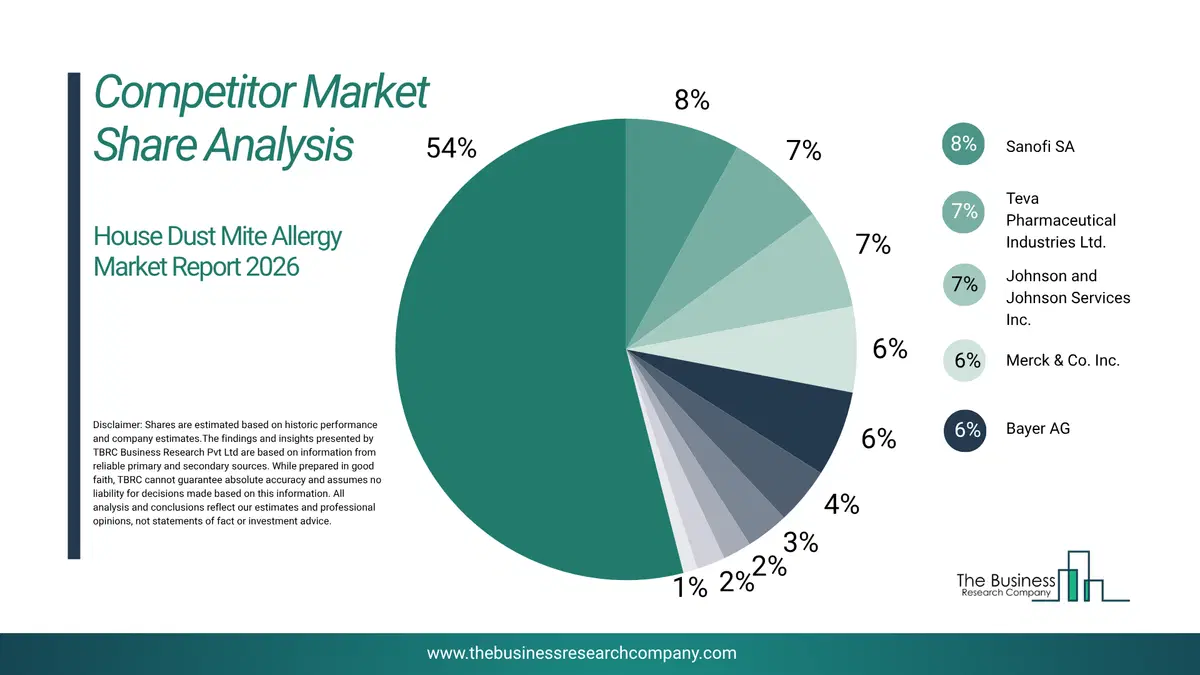
This chart is for illustrative purposes; the full report includes a detailed competitor analysis and comprehensive overview of the top 10 companies in the market.
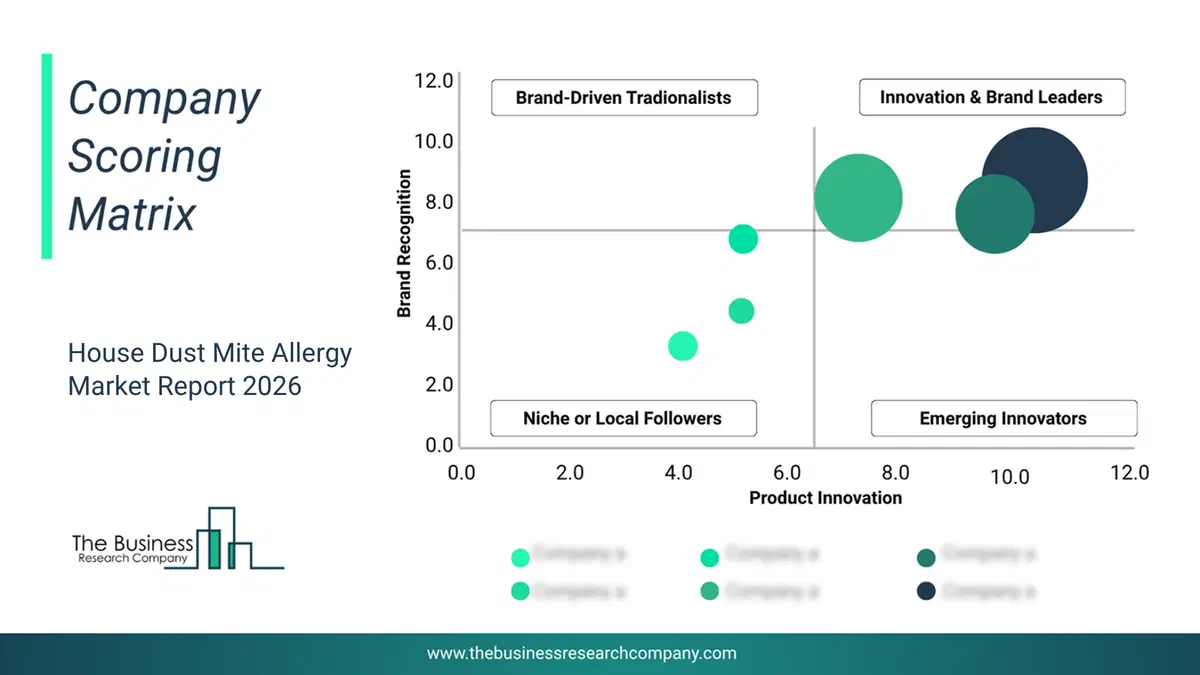
This chart maps companies by product innovation and brand strength, with bubble size indicating relative revenue, helping identify market leaders, challengers, and niche players. This is an illustrative chart; the full report provides a complete and accurate competitive analysis.
Global House Dust Mite Allergy Market Trends and Insights
Major companies operating in the house dust mite allergy market are focusing on developing innovative solutions, such as sublingual tablets designed to treat house dust mite allergies to address the increasing prevalence of allergies. A sublingual tablet designed to treat house dust mite allergies refers to a type of immunotherapy that involves placing a tablet under the tongue, where it dissolves and delivers small doses of the allergen responsible for triggering the allergy. For instance, in January 2023, ALK-Abelló A/S, a Denmark-based pharmaceutical company, received FDA approval for ODACTRA, a sublingual tablet designed to treat house dust mite allergies in adolescents aged 12 to 17, expanding its previous indication for adults. This approval addresses a significant need, as nearly 50% of allergy sufferers are sensitive to house dust mites. Clinical trials demonstrated that ODACTRA effectively reduced allergy symptoms, with a safety profile similar to that observed in adults. While the treatment is generally well-tolerated, patients are advised to have auto-injectable epinephrine on hand due to the potential for severe allergic reactions.What Are Latest Mergers And Acquisitions In The House Dust Mite Allergy Market?
In September 2025, Stallergenes Greer, a France-based biopharmaceutical company specializing in allergen immunotherapy, partnered with Nuance Pharma to expand the commercialization of its house-dust-mite sublingual immunotherapy tablet, Actair, across China. Through this partnership, the companies aim to increase access to evidence-based allergy treatments and strengthen the availability of advanced immunotherapy options for patients with house dust mite–induced allergic rhinitis. Nuance Pharma is a China-based biopharmaceutical company focused on respiratory, immunology, and specialty-care therapeutics.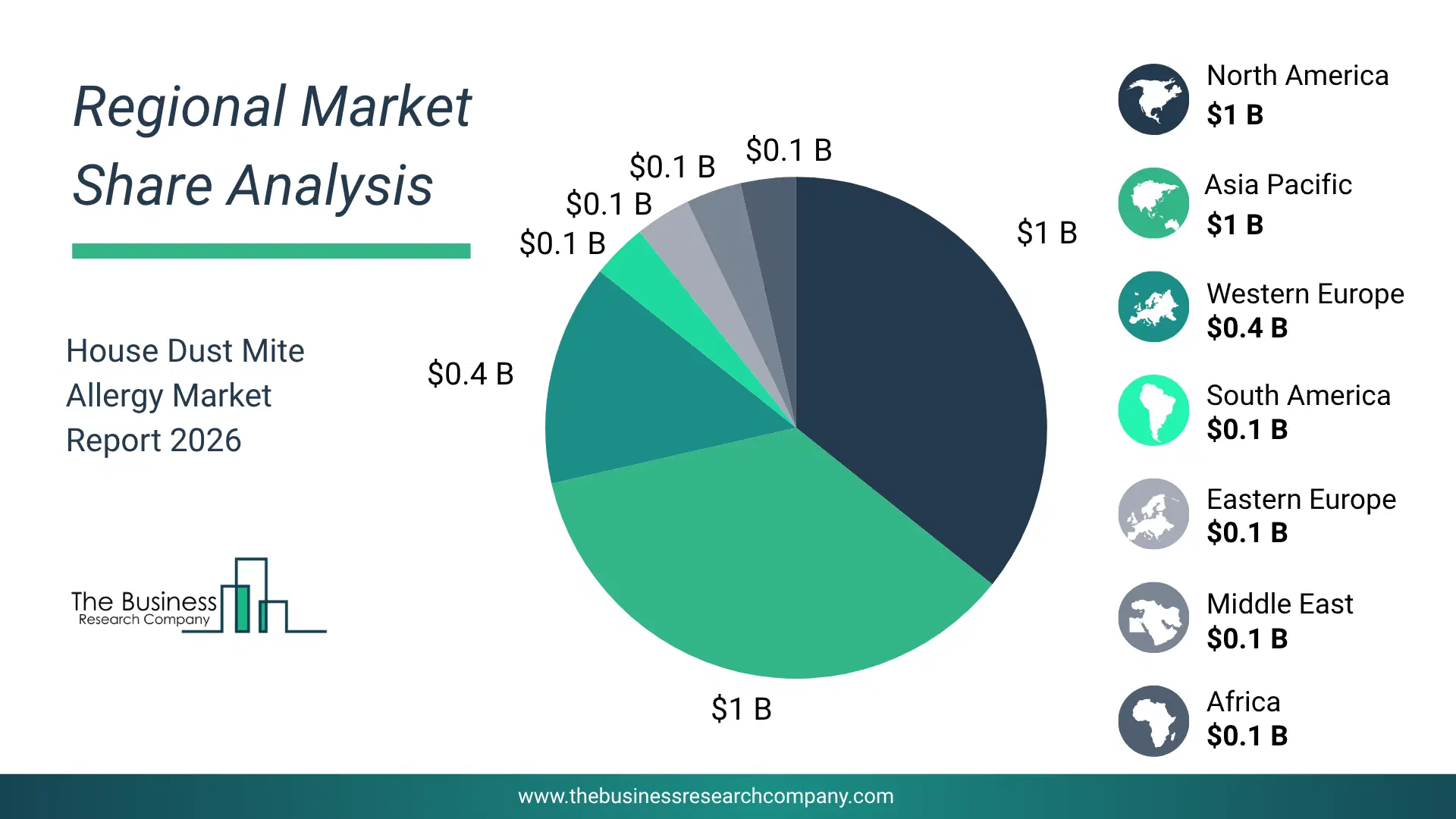
Regional Outlook
North America was the largest region in the house dust mite allergy market in 2025. Asia-pacific is expected to be the fastest-growing region in the house dust mite allergy market report during the forecast period. The regions covered in this market report are Asia-Pacific, South East Asia, Western Europe, Eastern Europe, North America, South America, Middle East, Africa. The countries covered in this market report are Australia, Brazil, China, France, Germany, India, Indonesia, Japan, Taiwan, Russia, South Korea, UK, USA, Canada, Italy, SpainWhat Defines the House Dust Mite Allergy Market?
The house dust mite allergy market consists of sales of prescription drugs and over-the-counter drugs. Values in this market are ‘factory gate’ values, that is the value of goods sold by the manufacturers or creators of the goods, whether to other entities (including downstream manufacturers, wholesalers, distributors and retailers) or directly to end customers. The value of goods in this market includes related services sold by the creators of the goods.How is Market Value Defined and Measured?
The market value is defined as the revenues that enterprises gain from the sale of goods and/or services within the specified market and geography through sales, grants, or donations in terms of the currency (in USD unless otherwise specified). The revenues for a specified geography are consumption values that are revenues generated by organizations in the specified geography within the market, irrespective of where they are produced. It does not include revenues from resales along the supply chain, either further along the supply chain or as part of other products.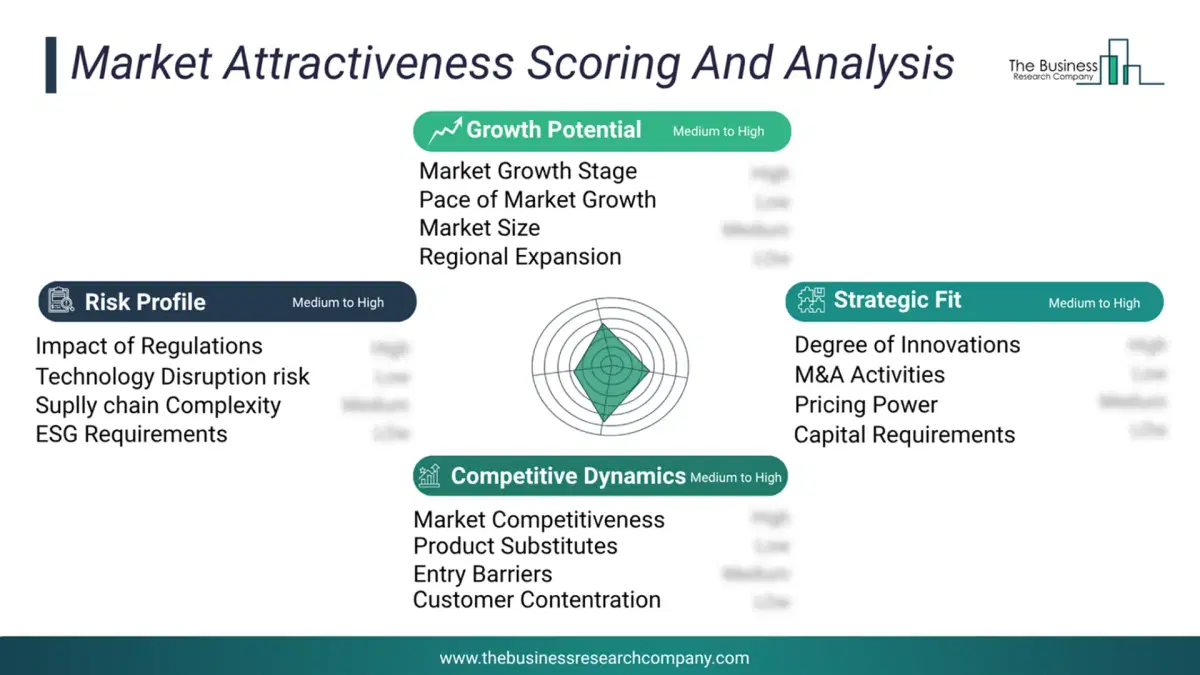
This chart presents market attractiveness based on a quantitative evaluation of growth, competition, strategic alignment, and risk, offering a clear view of opportunity areas for decision-making. This chart is for illustrative purposes; the full report contains the complete analysis.
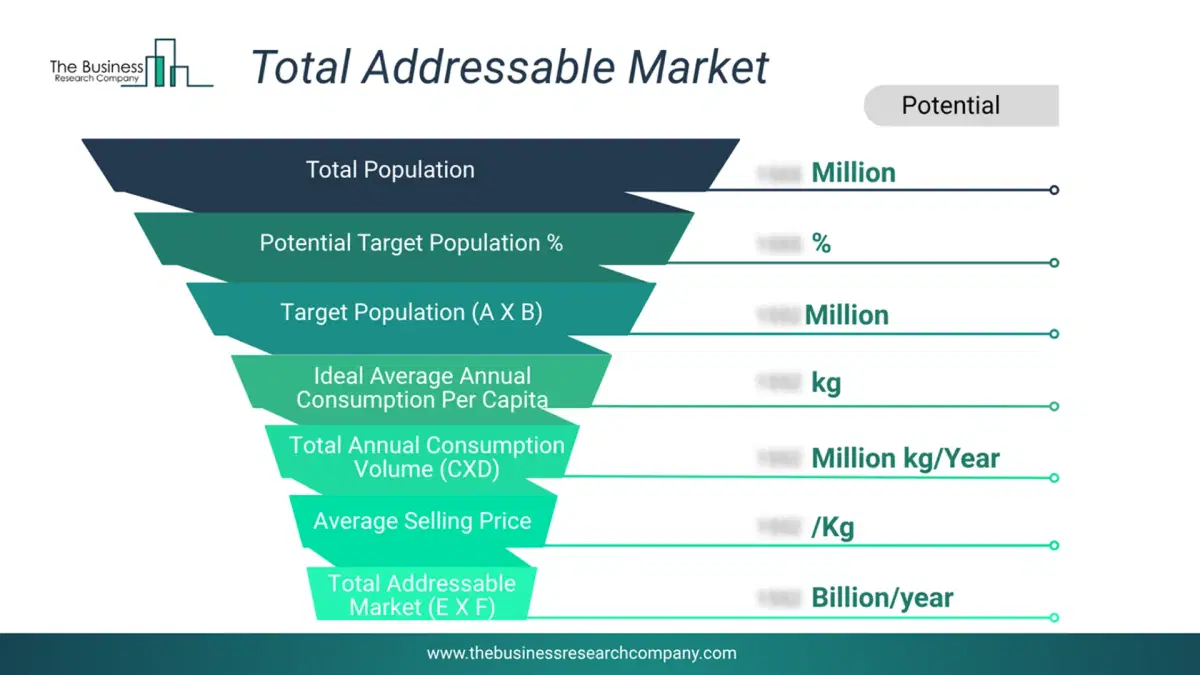
This chart highlights the Total Addressable Market (TAM) by estimating the maximum revenue opportunity using an assumption-driven approach, supporting strategic planning and opportunity sizing across markets. The chart is illustrative; the full report provides a more comprehensive analysis.
What Key Data and Analysis Are Included in the House Dust Mite Allergy Market Report 2026?
The house dust mite allergy market research report is one of a series of new reports from The Business Research Company that provides market statistics, including industry global market size, regional shares, competitors with the market share, detailed market segments, market trends and opportunities, and any further data you may need to thrive in the house dust mite allergy industry. The market research report delivers a complete perspective of everything you need, with an in-depth analysis of the current and future state of the industry.House Dust Mite Allergy Market Report Forecast Analysis
| Report Attribute | Details |
|---|---|
| Market Size Value In 2026 | $2.7 billion |
| Revenue Forecast In 2030 | $4.62 billion |
| Growth Rate | CAGR of 14.3% from 2026 to 2030 |
| Base Year For Estimation | 2025 |
| Actual Estimates/Historical Data | 2020-2025 |
| Forecast Period | 2026 - 2030 |
| Market Representation | Revenue in USD Billion and CAGR from 2026 to 2030 |
| Segments Covered | Product Type, Diagnosis, Dosage Forms, End Users |
| Regional Scope | Asia-Pacific, Western Europe, Eastern Europe, North America, South America, Middle East, Africa |
| Country Scope | The countries covered in the report are Australia, Brazil, China, France, Germany, India, Indonesia, Japan, Taiwan, Russia, South Korea, UK, USA, Canada, Italy, Spain. |
| Key Companies Profiled | Allergy Therapeutics Plc, Bayer AG, Catalent Inc., GSK Plc, Merz Pharma GmbH & Co KGaA, Sanofi S A, Shionogi & Co. Ltd., Stallergenes Greer International AG, Merck & Co. Inc., Torii Pharmaceutical Co. Ltd., Ergomed PLC, DMS Group, HAL Allergy Group, Trio Lifescience Private Limited, Teva Pharmaceutical Industries Ltd., Eli Lilly and Company, Johnson and Johnson Inc., Circassia Pharmaceuticals Plc, Biomay Ag, GlaxoSmithKline |
| Customization Scope | Request for Customization |
| Pricing And Purchase Options | Explore Purchase Options |