
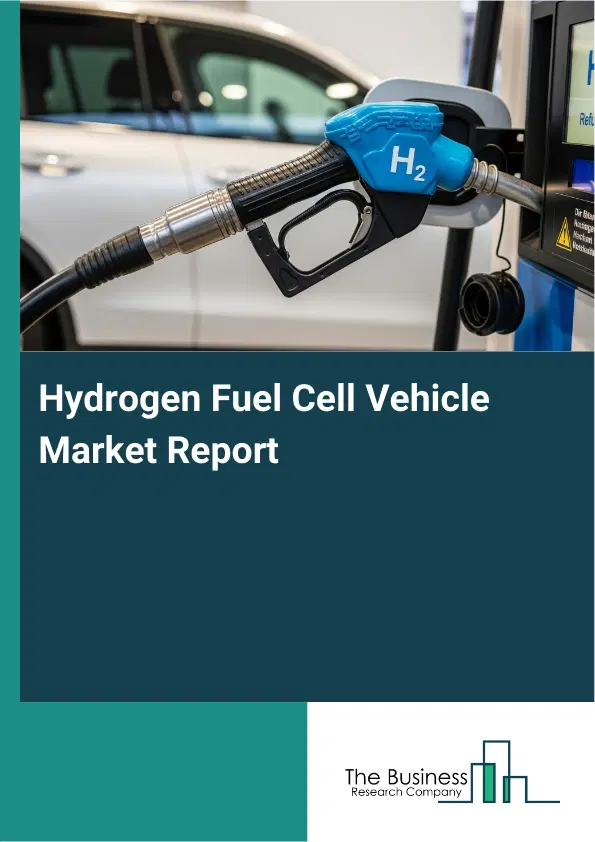
Hydrogen Fuel Cell Vehicle Market Report 2026
Global Outlook – By Vehicle Type (Commercial Vehicle, Passenger Cars), By Technology (Proton Exchange Membrane Fuel Cell, Alkaline Fuel cell, Solid Oxide Fuel Cell, Other Technologies), By End User (Private, Commercial) – Market Size, Trends, Strategies, and Forecast to 2030
Hydrogen Fuel Cell Vehicle Market Overview
• Hydrogen Fuel Cell Vehicle market size has reached to $11.48 billion in 2025 • Expected to grow to $28.23 billion in 2030 at a compound annual growth rate (CAGR) of 19.7% • Growth Driver: Electric Vehicle Adoption Fuels Hydrogen Fuel Cell Vehicle Market Growth • Market Trend: Revolutionizing Long-Distance Travel With Rapid Hydrogen Refueling • North America was the largest region in 2025.Market Gains By 2030 – Top Opportunities By Segment
Market Gain identifies the most promising market opportunities by highlighting the segments or products expected to generate the highest incremental revenue growth over the next five years.
What Is Covered Under Hydrogen Fuel Cell Vehicle Market?
The hydrogen fuel cell vehicle are vehicle that uses a hydrogen fuel cell to power its on-board electric motor. Hydrogen fuel cell vehicles convert chemical energy into mechanical energy for driving, and they utilize renewable energy sources that don't release greenhouse gases or precursors to ozone depletion. Vehicles powered by hydrogen fuel cells have no engine noise and a strong pickup and start. The main types of hydrogen fuel cell vehicles are commercial vehicle and passenger cars. The commercial vehicle are used to power commercial vehicles and trucks without releasing harmful emissions. A commercial vehicle is any motor vehicle used to transport goods or passengers. The various technologies are proton exchange membrane fuel cell, alkaline fuel cell, solid oxide fuel cell, and others, and are used for private and commercial purposes.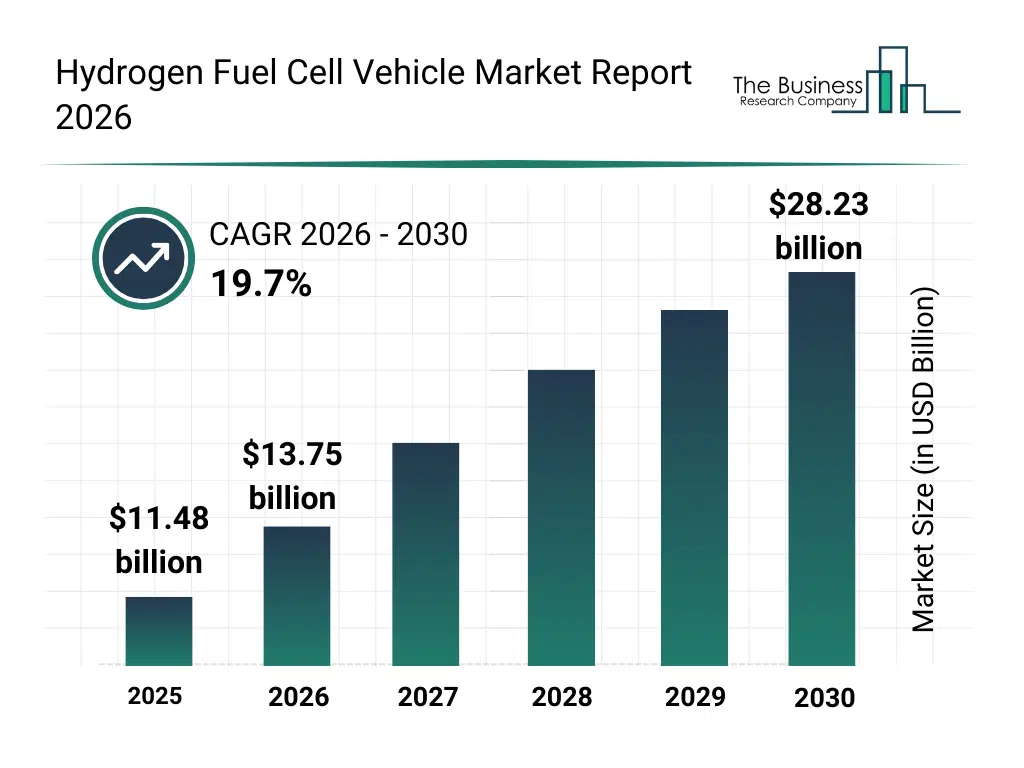
What Is The Hydrogen Fuel Cell Vehicle Market Size and Share 2026?
The hydrogen fuel cell vehicle market size has grown rapidly in recent years. It will grow from $11.48 billion in 2025 to $13.75 billion in 2026 at a compound annual growth rate (CAGR) of 19.8%. The growth in the historic period can be attributed to early fuel cell research programs, government hydrogen pilots, emission control regulations, advancements in PEM technology, automotive OEM investments.What Is The Hydrogen Fuel Cell Vehicle Market Growth Forecast?
The hydrogen fuel cell vehicle market size is expected to see rapid growth in the next few years. It will grow to $28.23 billion in 2030 at a compound annual growth rate (CAGR) of 19.7%. The growth in the forecast period can be attributed to scaling of hydrogen infrastructure, cost reduction in fuel cell systems, commercial vehicle electrification, public private hydrogen partnerships, long range mobility demand. Major trends in the forecast period include rising adoption of zero emission vehicles, expansion of hydrogen refueling networks, growing focus on long range mobility, increasing deployment in commercial fleets, improvement in fuel cell stack performance.
Global Hydrogen Fuel Cell Vehicle Market Segmentation
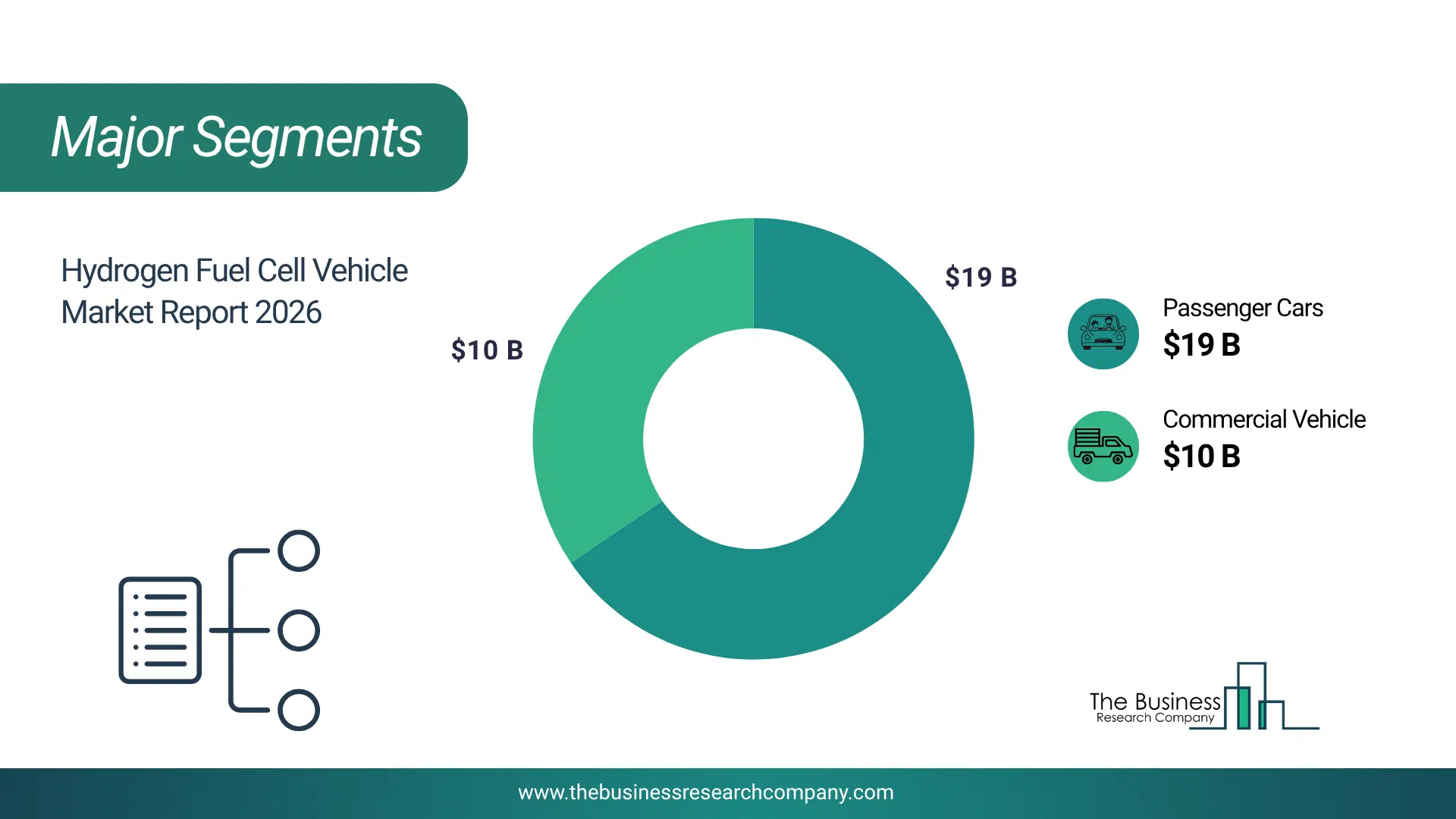
1) By Vehicle Type: Commercial Vehicle, Passenger Cars 2) By Technology: Proton Exchange Membrane Fuel Cell, Alkaline Fuel cell, Solid Oxide Fuel Cell, Other Technologies 3) By End User: Private, Commercial Subsegments: 1) By Commercial Vehicle: Heavy-Duty Trucks, Buses, Delivery Vans, Forklifts And Material Handling Equipment 2) By Passenger Cars: Fuel Cell Electric Vehicles (FCEVs), Hydrogen Hybrid Vehicles The top segments in the electronic contract manufacturing and design services market will be: • Designing will reach $345.65 Billion by 2030. • Manufacturing will reach $250.19 Billion by 2030. • Assembly will reach $217.18 Billion by 2030. • Other Types will reach $68.66 Billion by 2030. The top segments in the hydrogen fuel cell vehicle market will be: • Passenger Cars will reach $18.79 Billion by 2030. • Commercial Vehicle will reach $10.07 Billion by 2030.What Is The Driver Of The Hydrogen Fuel Cell Vehicle Market?
The increasing adoption of electric vehicles is driving the growth of the hydrogen fuel cell vehicle market. Electric vehicles work on an electric motor instead of an internal combustion engine. The increasing fuel prices and pollution has led to increased demand for electric vehicles. The electric vehicle uses a hydrogen fuel cell to power its on-board electric motor. EVs powered by hydrogen fuel cells transform chemical energy into mechanical energy for propulsion and employ sustainable energy sources that don't emit greenhouse gases or ozone-depleting precursors For instance, in April 2024, according to International Energy Agency (IEA), a France-based energy-analysis organisation, nearly 14 million new electric cars were registered globally in 2023, electric car sales in 2023 were 3.5 million higher than in 2022, a 35 % year-on-year increase, and electric cars made up about 18 % of all cars sold in 2023, up from 14% in 2022, bringing the total number of electric cars on the world’s roads to roughly 40 million. Therefore, the rising demand for electric vehicles is driving the growth of hydrogen fuel cell vehicle industry.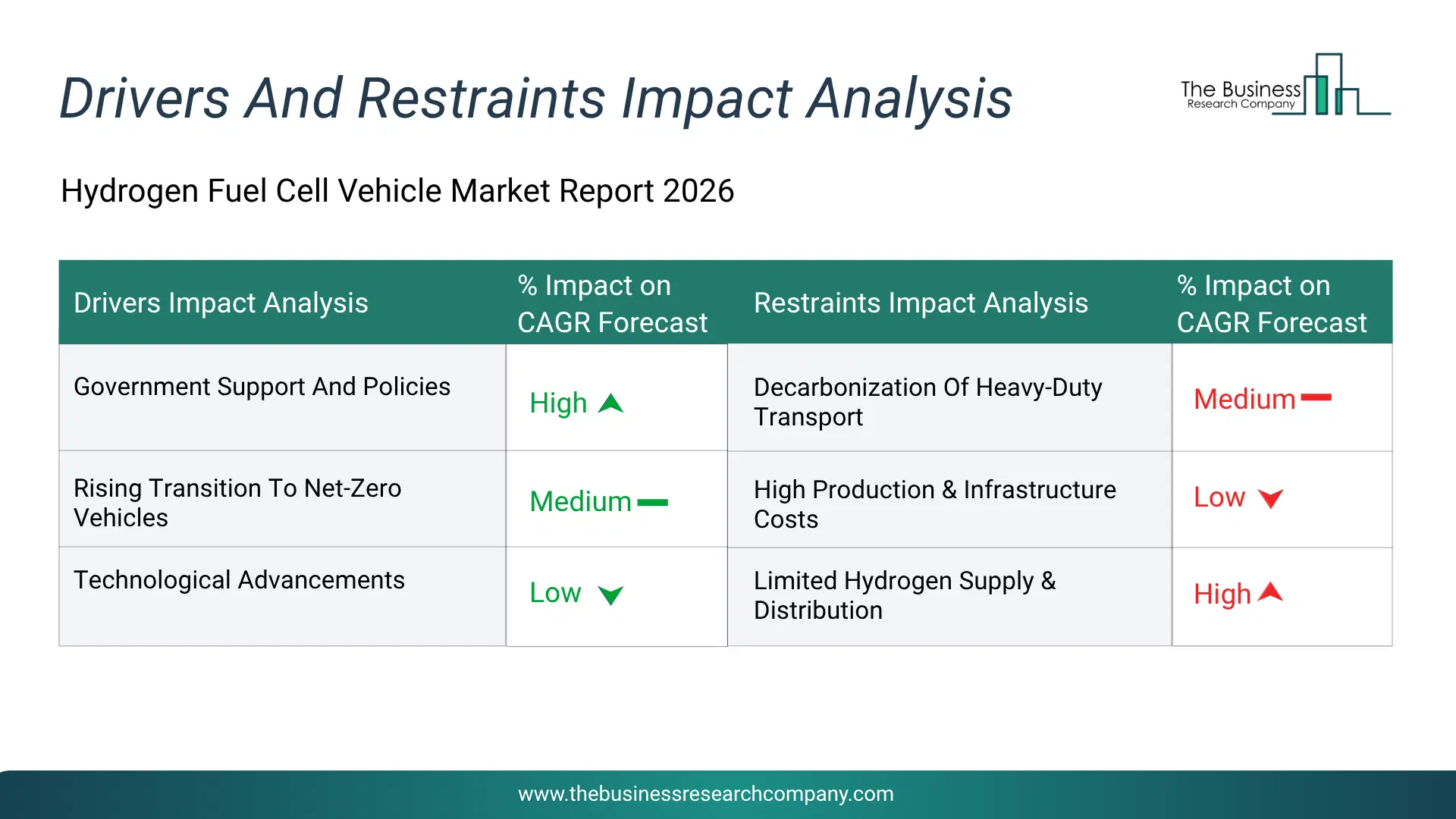
Infographic Chart Showing Key Market Drivers Analysis And Restraints For Hydrogen Fuel Cell Vehicle Market
The chart presents an impact analysis of key drivers and restraints, quantifying their relative influence on the market's growth rate and helping assess the balance between growth enablers and limiting factors. This chart offers a high-level perspective; the full report contains more detailed insights.
How Will The Drivers Impact Growth In The Global Hydrogen Fuel Cell Vehicle Market?
• Government Support And Policies (High) – During the forecast period, the government support and policies is expected to become a key growth driver for the hydrogen fuel cell vehicle market by 2030. Government support and policies act as a major driver for the hydrogen fuel cell vehicle market because various national and regional authorities are introducing subsidies, tax benefits, and funding programs to promote adoption. These policies reduce the overall cost burden for manufacturers and consumers, making hydrogen vehicles more accessible. Governments are also investing in hydrogen production and refueling infrastructure to support ecosystem development. Regulatory frameworks encourage automakers to meet emission standards through alternative fuel technologies. This strong institutional backing significantly boosts market expansion and investor confidence. • Rising Transition To Net-Zero Vehicles (Medium) – During the forecast period, the rising transition to net-zero vehicles is expected to emerge as a major factor driving the expansion of the hydrogen fuel cell vehicle market by 2030. Rising transition to net-zero vehicles acts as a major driver for the hydrogen fuel cell vehicle market because countries and industries are actively shifting toward zero-emission mobility solutions to meet climate targets. Hydrogen fuel cell vehicles offer a viable alternative to conventional internal combustion engines by producing only water as a byproduct. This transition encourages automakers to invest in hydrogen technologies and expand their product portfolios. Increasing demand for clean transportation solutions further strengthens the adoption of fuel cell vehicles across passenger and commercial segments. As a result, the market experiences accelerated growth supported by long-term sustainability commitments. • Technological Advancements (Low) – During the forecast period, the technological advancements are expected to act as a key growth catalyst for the hydrogen fuel cell vehicle market by 2030. Technological advancements acts as a major driver for the hydrogen fuel cell vehicle market because continuous innovation is improving efficiency, durability, and cost-effectiveness of fuel cell systems. Advancements in proton exchange membrane fuel cells and hydrogen storage technologies enhance vehicle performance and driving range. These improvements make hydrogen vehicles more competitive with battery electric and conventional vehicles. Ongoing research and development efforts also contribute to reducing production costs over time. Consequently, technological progress accelerates commercialization and widespread adoption of hydrogen fuel cell vehicles.How Will The Restraints Impact Growth In The Global Hydrogen Fuel Cell Vehicle Market?
• Decarbonization Of Heavy-Duty Transport (High) – During the forecast period, the decarbonization of heavy-duty transport acts as a major driver for the hydrogen fuel cell vehicle market because industries such as logistics, shipping, and freight are under increasing pressure to reduce emissions from long-haul operations. Hydrogen fuel cell vehicles are well-suited for heavy-duty applications due to their longer range, faster refueling time, and higher payload capacity compared to battery-powered alternatives. This makes them an attractive solution for trucks, buses, and commercial fleets aiming to meet strict emission regulations. Growing adoption of zero-emission transport solutions by fleet operators further accelerates demand for hydrogen-powered vehicles. As a result, the market gains strong momentum driven by the need for sustainable and efficient heavy transport systems. • High Production & Infrastructure Costs (Medium) – During the forecast period, the high production and infrastructure costs act as a major restraint in the hydrogen fuel cell vehicle market by significantly increasing the overall investment required for manufacturing and deployment. The production of fuel cell systems, including stacks and power electronics, involves expensive materials and advanced technologies, raising vehicle prices. Additionally, building hydrogen refueling stations and distribution networks requires substantial capital expenditure, limiting widespread adoption. These high costs make it difficult for manufacturers to achieve economies of scale and compete with conventional vehicles. As a result, market growth is slowed due to affordability challenges and limited infrastructure expansion. • Limited Hydrogen Supply & Distribution (Low) – During the forecast period, the limited hydrogen supply and distribution act as a critical restraint by restricting the availability of fuel for hydrogen-powered vehicles. The lack of a well-established hydrogen production and delivery network creates challenges in ensuring consistent and reliable fuel access. This limitation reduces consumer confidence, as users are concerned about fuel availability for long-distance travel. Inadequate distribution channels also hinder the expansion of refueling stations across regions. Consequently, the adoption of hydrogen fuel cell vehicles remains constrained due to supply chain inefficiencies and accessibility issues.Key Players In The Global Hydrogen Fuel Cell Vehicle Market
Major companies operating in the hydrogen fuel cell vehicle market report include Toyota Motor Corporation, Daimler AG, General Motors Company, BMW AG, Honda Motor Company Ltd, Hyundai Motor Company, Bosch, Ballard Power Systems Inc, Kia Motor Corporation, Groupe Renault, Volvo Group, Audi AG, Tata Motors Limited, SinoHytec, Faurecia, China National Heavy Duty Truck Group (CNHTC), Ashok Leyland Ltd, Man SE, Symbio, Wrightbus, Nel Hydrogen, Nikola Motor Company, GreenGT, Doosan Mobility Innovation, Riversimple, H2 Energy, Ulemco, Microcab Industries Ltd., GreenPower Motor Company, Hyzon Motors, Kawasaki Heavy Industries, Quantum Fuel Systems, Nuvera Fuel Cells, ElringKlinger AG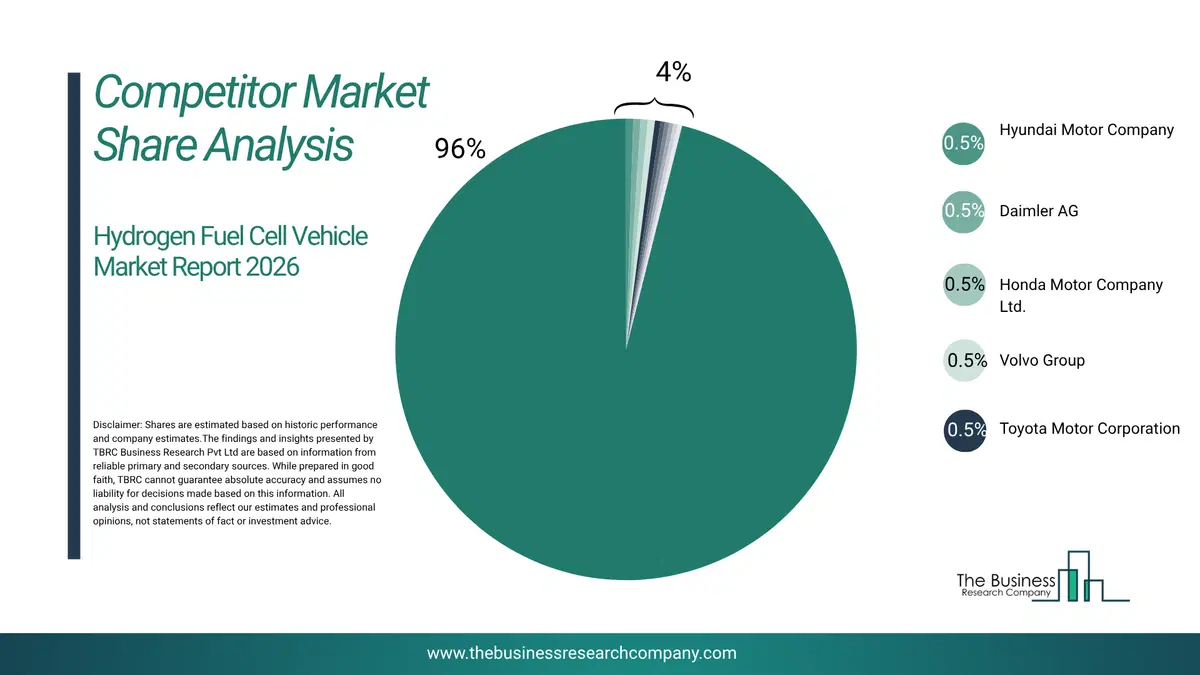
This chart is for illustrative purposes; the full report includes a detailed competitor analysis and comprehensive overview of the top 10 companies in the market.
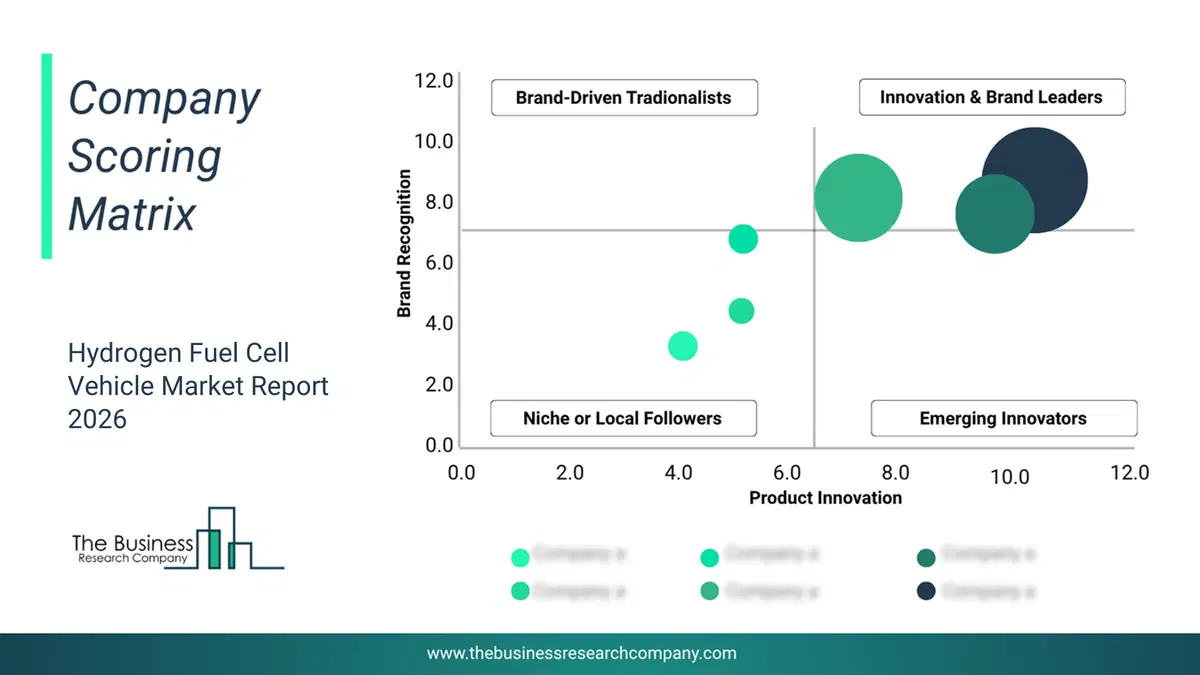
This chart maps companies by product innovation and brand strength, with bubble size indicating relative revenue, helping identify market leaders, challengers, and niche players. This is an illustrative chart; the full report provides a complete and accurate competitive analysis.
Global Hydrogen Fuel Cell Vehicle Market Trends and Insights
Major companies operating in the hydrogen fuel cell vehicle market are focusing on leveraging advanced technologies such as hydrogen fuel-cell powertrain technology to enhance driving range, refuelling speed, and zero-emission performance. Hydrogen fuel-cell powertrain technology is a clean-energy system that produces electricity through an electrochemical reaction between hydrogen and oxygen inside a fuel cell stack, enabling capabilities such as long-distance travel, fast refuelling, and quiet operation. For instance, in October 2025, Hyundai Motor Company, a South Korea-based automotive manufacturer, launched the all-new NEXO, a hydrogen fuel-cell electric vehicle designed to deliver extended range with a five-minute refuelling time, featuring improved fuel-cell efficiency, enhanced aerodynamics, and added practicality including towing capability. The all-new NEXO improves sustainability, user convenience, and wider adoption of hydrogen-powered mobility.What Are Latest Mergers And Acquisitions In The Hydrogen Fuel Cell Vehicle Market?
In August 2023, Hyundai Motor Company, a South Korea-based automotive manufacturing company acquired General Motors Company for an undisclosed amount. With this acquisition, the South Korean auto giant hopes to double the number of vehicles it can produce annually in the nation to 10 lakh manufacturing facilities and the factory will start producing goods in 2025. General Motors Company is a US-based automobile manufacturing company including hydrogen fuel cell vehicles.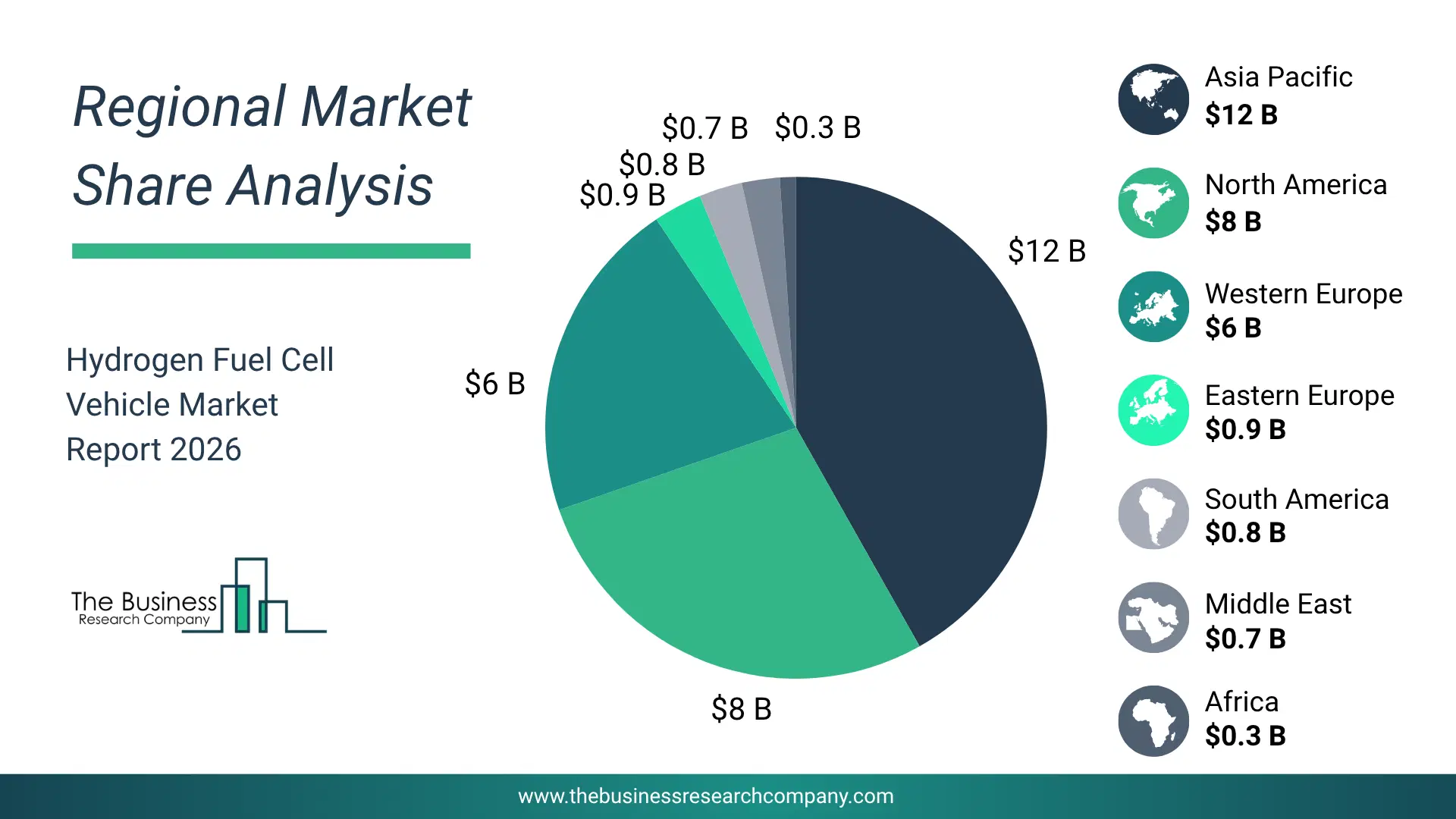
Regional Outlook
North America was the largest region in the hydrogen fuel cell vehicle market in 2025. The regions covered in this market report include Asia-Pacific, South East Asia, Western Europe, Eastern Europe, North America, South America, Middle East, Africa. The countries covered in this market report include Australia, Brazil, China, France, Germany, India, Indonesia, Japan, Taiwan, Russia, South Korea, UK, USA, Canada, Italy, SpainWhat Defines the Hydrogen Fuel Cell Vehicle Market?
The hydrogen fuel cell vehicle market consists of sales of battery, battery pack, fuel cell stack, fuel filler, power electronics controller (FCEV). Values in this market are ‘factory gate’ values, that is the value of goods sold by the manufacturers or creators of the goods, whether to other entities (including downstream manufacturers, wholesalers, distributors and retailers) or directly to end customers. The value of goods in this market includes related services sold by the creators of the goods.How is Market Value Defined and Measured?
The market value is defined as the revenues that enterprises gain from the sale of goods and/or services within the specified market and geography through sales, grants, or donations in terms of the currency (in USD unless otherwise specified). The revenues for a specified geography are consumption values that are revenues generated by organizations in the specified geography within the market, irrespective of where they are produced. It does not include revenues from resales along the supply chain, either further along the supply chain or as part of other products.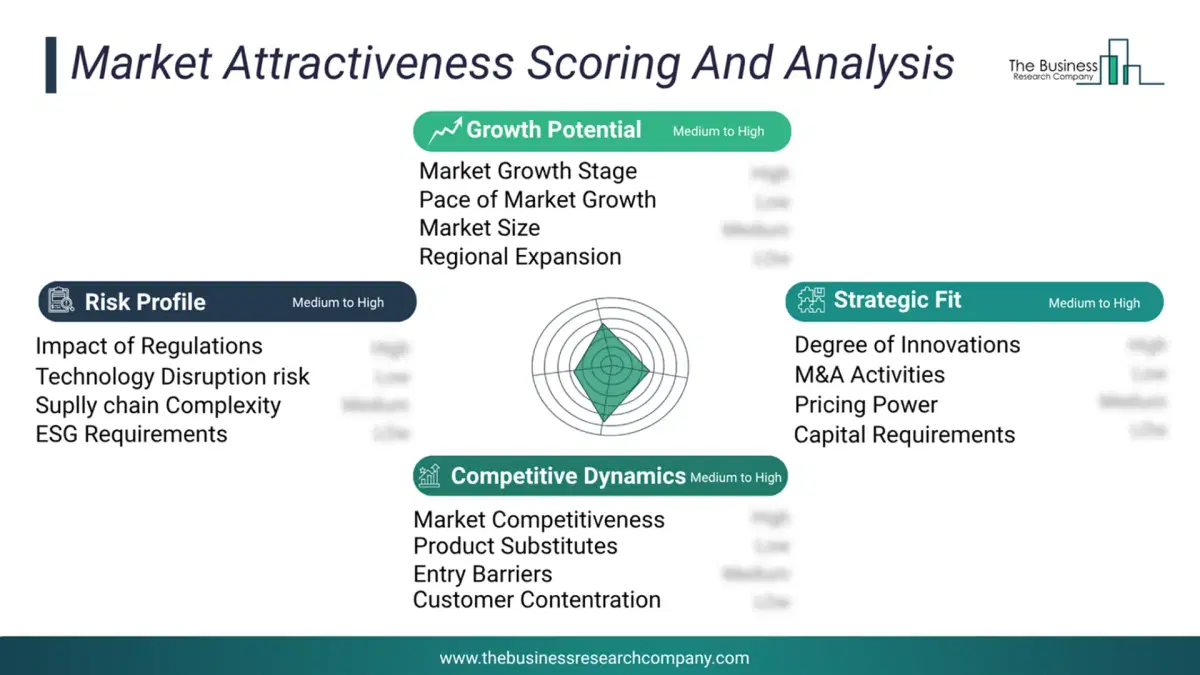
This chart presents market attractiveness based on a quantitative evaluation of growth, competition, strategic alignment, and risk, offering a clear view of opportunity areas for decision-making. This chart is for illustrative purposes; the full report contains the complete analysis.
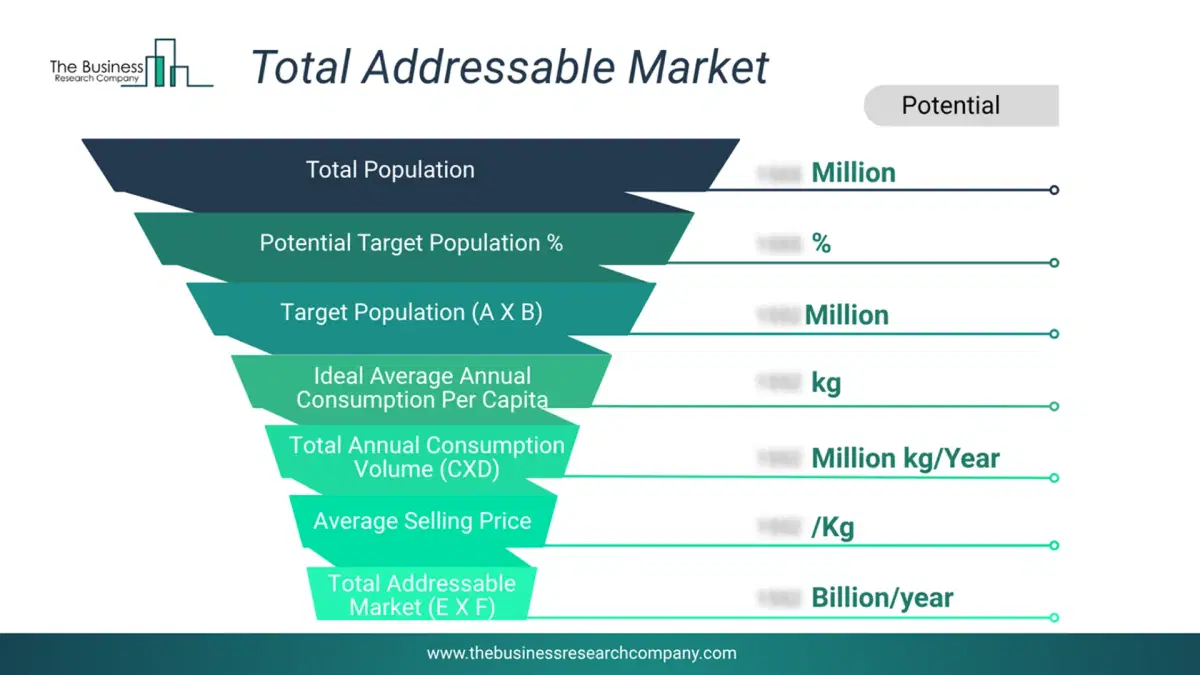
This chart highlights the Total Addressable Market (TAM) by estimating the maximum revenue opportunity using an assumption-driven approach, supporting strategic planning and opportunity sizing across markets. The chart is illustrative; the full report provides a more comprehensive analysis.
What Key Data and Analysis Are Included in the Hydrogen Fuel Cell Vehicle Market Report 2026?
The hydrogen fuel cell vehicle market research report is one of a series of new reports from The Business Research Company that provides market statistics, including industry global market size, regional shares, competitors with the market share, detailed market segments, market trends and opportunities, and any further data you may need to thrive in the hydrogen fuel cell vehicle industry. The market research report delivers a complete perspective of everything you need, with an in-depth analysis of the current and future state of the industry.Hydrogen Fuel Cell Vehicle Market Report Forecast Analysis
| Report Attribute | Details |
|---|---|
| Market Size Value In 2026 | $13.75 billion |
| Revenue Forecast In 2030 | $28.23 billion |
| Growth Rate | CAGR of 19.8% from 2026 to 2030 |
| Base Year For Estimation | 2025 |
| Actual Estimates/Historical Data | 2020-2025 |
| Forecast Period | 2026 - 2030 |
| Market Representation | Revenue in USD Billion and CAGR from 2026 to 2030 |
| Segments Covered | Vehicle Type, Technology, End User |
| Regional Scope | Asia-Pacific, Western Europe, Eastern Europe, North America, South America, Middle East, Africa |
| Country Scope | The countries covered in the report are Australia, Brazil, China, France, Germany, India, Indonesia, Japan, Taiwan, Russia, South Korea, UK, USA, Canada, Italy, Spain. |
| Key Companies Profiled | Toyota Motor Corporation, Daimler AG, General Motors Company, BMW AG, Honda Motor Company Ltd, Hyundai Motor Company, Bosch, Ballard Power Systems Inc, Kia Motor Corporation, Groupe Renault, Volvo Group, Audi AG, Tata Motors Limited, SinoHytec, Faurecia, China National Heavy Duty Truck Group (CNHTC), Ashok Leyland Ltd, Man SE, Symbio, Wrightbus, Nel Hydrogen, Nikola Motor Company, GreenGT, Doosan Mobility Innovation, Riversimple, H2 Energy, Ulemco, Microcab Industries Ltd., GreenPower Motor Company, Hyzon Motors, Kawasaki Heavy Industries, Quantum Fuel Systems, Nuvera Fuel Cells, ElringKlinger AG |
| Customization Scope | Request for Customization |
| Pricing And Purchase Options | Explore Purchase Options |