
Intracranial Stents Market Report 2026
Global Outlook – By Type (Self-Expanding Stents, Balloon-Expanding Stents), By Disease Indication (Brain Aneurysm, Intracranial Stenosis), By End-User (Hospitals, Ambulatory Surgery Centers, Other End-Users) – Market Size, Trends, Strategies, and Forecast to 2030
Intracranial Stents Market Overview
• Intracranial Stents market size has reached to $0.54 billion in 2025 • Expected to grow to $1.13 billion in 2030 at a compound annual growth rate (CAGR) of 15.6% • Growth Driver: Rising Incidence Of Brain Aneurysms Boosts Growth In The Intracranial Stents Market • Market Trend: Fluid Biomed Achieves First-in-Human Implantation of ReSolv Hybrid Stent Enhances The Intracranial Stents Market • North America was the largest region in 2025 and Asia-Pacific is the fastest growing region.What Is Covered Under Intracranial Stents Market?
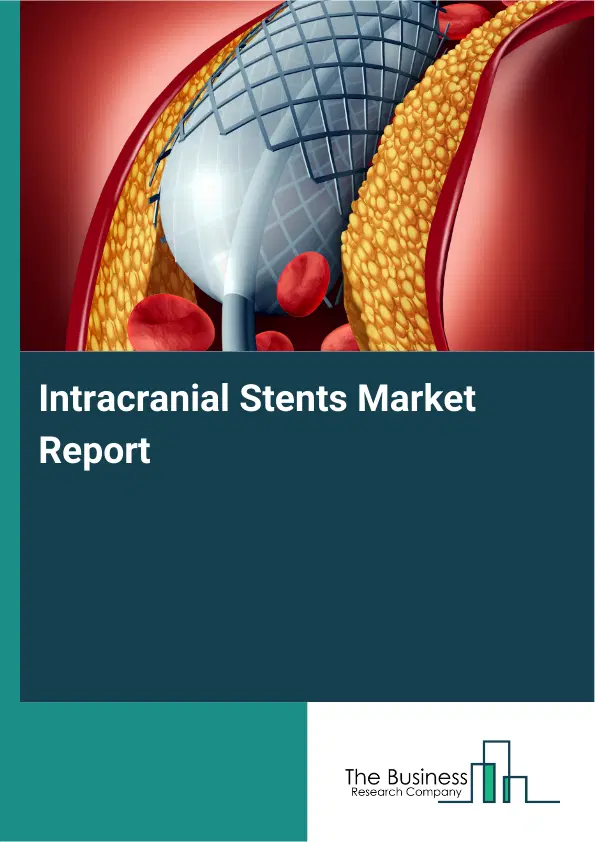
Intracranial stents are tubular device that is placed inside the blood vessel, canal, or duct. They are used for intracranial stenosis and brain aneurysms to open the blocked arteries. The main types of intracranial stents are self-expanding stents, balloon expanding stents, and stent-assisted coil embolization. A self-expanding stent expands on its own after being inserted into the lumen it is meant to occupy, such as a blood vessel, tube, or organ. Balloon expanding stents also known as balloon-expandable stents have higher radial stiffness and more accurate placement and are designed to treat restenosis in the iliac artery by opening clogged arteries and restoring blood flow. Stent-assisted coil embolization helps stabilize the coils within the aneurysm and provide a buttress that allows for coil deposition while preventing coil haerniation into the parent vessel lumen. The various indications of diseases include brain aneurysm, intracranial stenosis and are implemented in various sectors such as hospitals, ambulatory surgery centers, and others.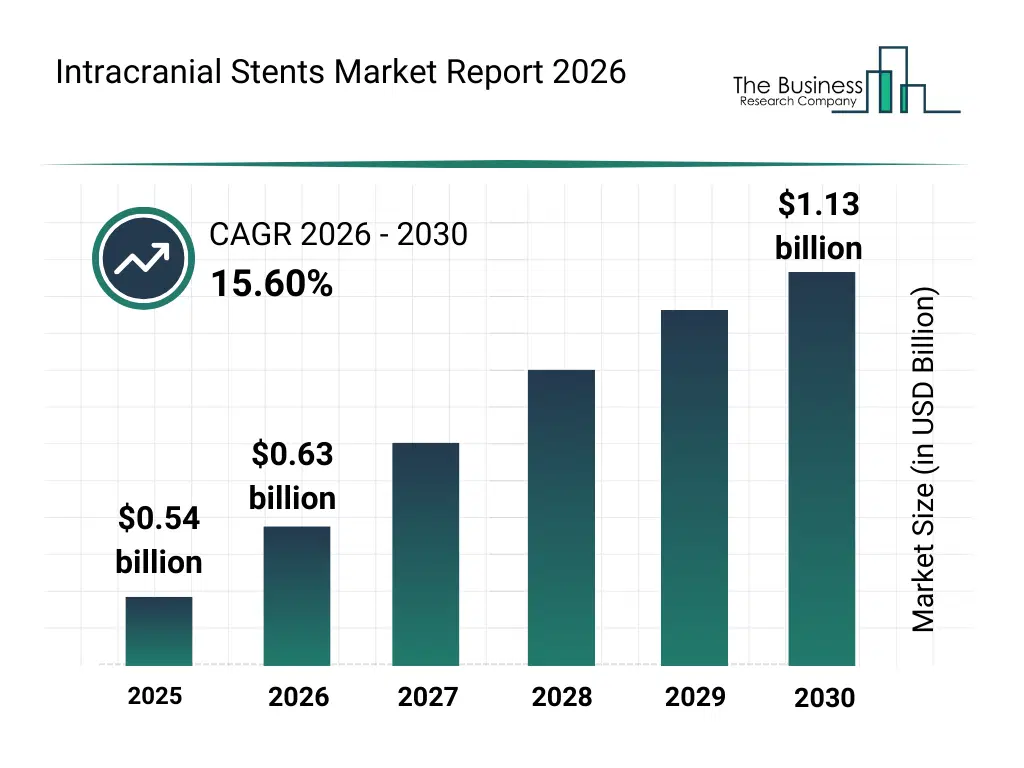
What Is The Intracranial Stents Market Size and Share 2026?
The intracranial stents market size has grown rapidly in recent years. It will grow from $0.54 billion in 2025 to $0.63 billion in 2026 at a compound annual growth rate (CAGR) of 16.1%. The growth in the historic period can be attributed to increasing incidence of intracranial aneurysms, rising prevalence of cerebrovascular diseases, improvements in endovascular treatment techniques, expansion of neurology specialty care centers, growing adoption of minimally invasive neurointerventions.What Is The Intracranial Stents Market Growth Forecast?
The intracranial stents market size is expected to see rapid growth in the next few years. It will grow to $1.13 billion in 2030 at a compound annual growth rate (CAGR) of 15.6%. The growth in the forecast period can be attributed to increasing demand for advanced neurovascular devices, rising focus on early stroke intervention, expansion of precision neurology treatments, growing investments in neurovascular R&D, increasing use of next-generation stent technologies. Major trends in the forecast period include increasing adoption of neurovascular stenting procedures, rising use of stent-assisted coil embolization, growing demand for biodegradable stent materials, expansion of advanced neuroimaging-guided interventions, enhanced focus on stroke and aneurysm management.
Global Intracranial Stents Market Segmentation
1) By Type: Self-Expanding Stents, Balloon-Expanding Stents 2) By Disease Indication: Brain Aneurysm, Intracranial Stenosis 3) By End-User: Hospitals, Ambulatory Surgery Centers, Other End-Users Subsegments: 1) By Self-Expanding Stents: Neurovascular Aneurysm Stents, Intracranial Stenosis Self-Expanding Stents, Flow-Diverting Stents 2) By Balloon Expanding Stents: Bare-Metal Balloon-Expanding Intracranial Stents, Drug-Eluting Balloon-Expanding Intracranial StentsWhat Is The Driver Of The Intracranial Stents Market?
The increase in incidence of a brain aneurysm is expected to propel the growth of the intracranial stents market in the coming years. A brain aneurysm is the development of a bulge in the blood vessels of the brain. This bulge may rupture or burst and can cause brain hemorrhage, which may lead to the death of the patient. Intracranial vessel stenting (IVS) is a minimally invasive treatment for treating serious cerebral artery stenosis. The weakening of the arteries that deliver blood to the brain is known as cerebral artery stenosis. For instance, in August 2023, according to the Brain Aneurysm Foundation, a U.S.-based nonprofit organization dedicated to raising awareness and supporting research on brain aneurysms, An estimated 6.7 million individuals in the United States approximately 1 in every 50 people are living with an unruptured brain aneurysm. Thus, the increasing incidence of a brain aneurysm will drive the intracranial stents industry growth.Key Players In The Global Intracranial Stents Market
Major companies operating in the intracranial stents market are Medtronic plc, Stryker Corporation, Boston Scientific Corporation, Abbott Laboratories, Terumo Corporation, Balt Extrusion, Acandis GmbH, Phenox GmbH, Rapid Medical Ltd, Penumbra Inc, MicroPort Scientific Corporation, Johnson & Johnson, Cook Medical LLC, Biotronik SE & Co KG, Cardionovum GmbH, InspireMD Inc, Admedes Schuessler GmbH, Kaneka Corporation, W L Gore & Associates Inc, Cerebral Stents
This chart is for illustrative purposes; the full report includes a detailed competitor analysis and comprehensive overview of the top 10 companies in the market.
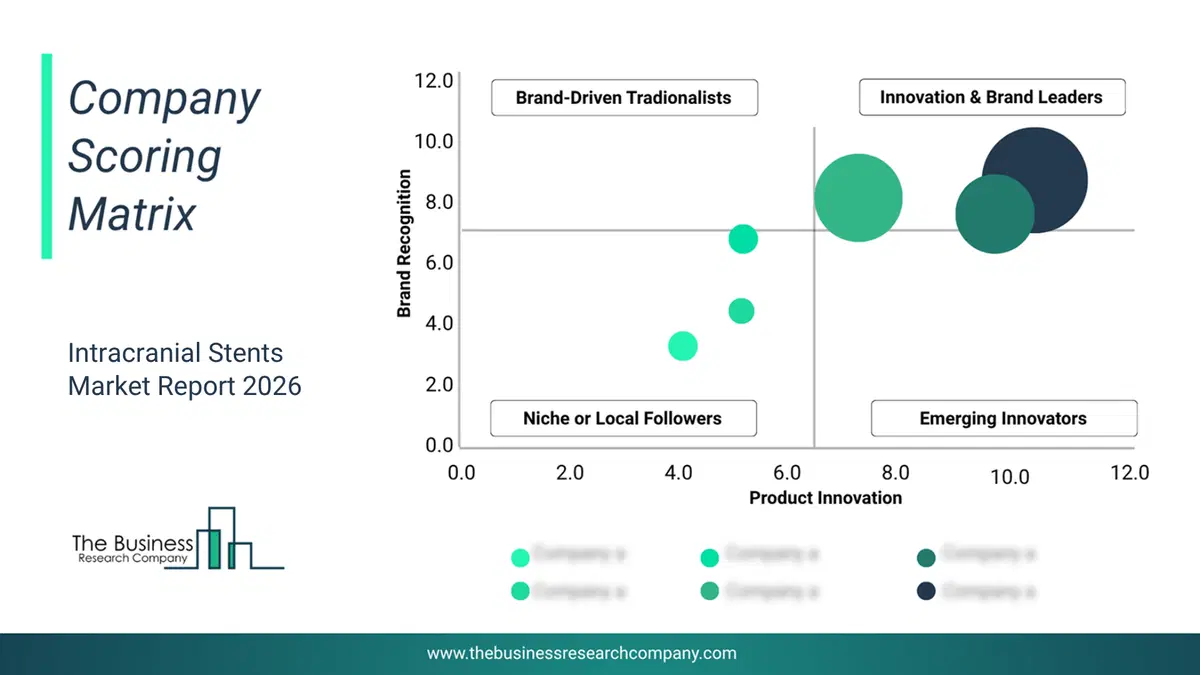
This chart maps companies by product innovation and brand strength, with bubble size indicating relative revenue, helping identify market leaders, challengers, and niche players. This is an illustrative chart; the full report provides a complete and accurate competitive analysis.
Global Intracranial Stents Market Trends and Insights
Major companies operating in the intracranial stents market are innovating new products such as the Pegasus HPC stent system to increase their profitability in the market. The Pegasus HPC stent system is a medical device used in patients with intracranial aneurysms and stenoses in intracranial atherosclerotic disease (ICAD) for endovascular repair of the neck and intracranial arteries. For instance, in June 2023, Fluid Biomed, a Canada‑based medical device company, performed the first human implantation of its ReSolv polymer‑metal hybrid flow‑diverting stent for treating intracranial aneurysms. According to the company, the device combines a bioabsorbable polymer scaffold with a metal frame, providing both structural support and vessel healing. This innovation represents a strong technological advancement in the intracranial stents market, as it aims to reduce long-term implant burden and improve patient outcomes compared to traditional permanent stents.What Are Latest Mergers And Acquisitions In The Intracranial Stents Market?
In October 2024, Grand Pharmaceutical Group Limited, a China-based pharmaceutical and medical device company, partnered with Nanjing Kainite Medical Technology Co., Ltd. to jointly develop an adjustable intracranial stent retriever product named “Luci.” With this partnership, the companies aim to advance stroke intervention technologies and strengthen their presence in the neurovascular device market. Nanjing Kainite Medical Technology Co., Ltd. is a China-based medical technology company specializing in the research and development of innovative neurointerventional devices.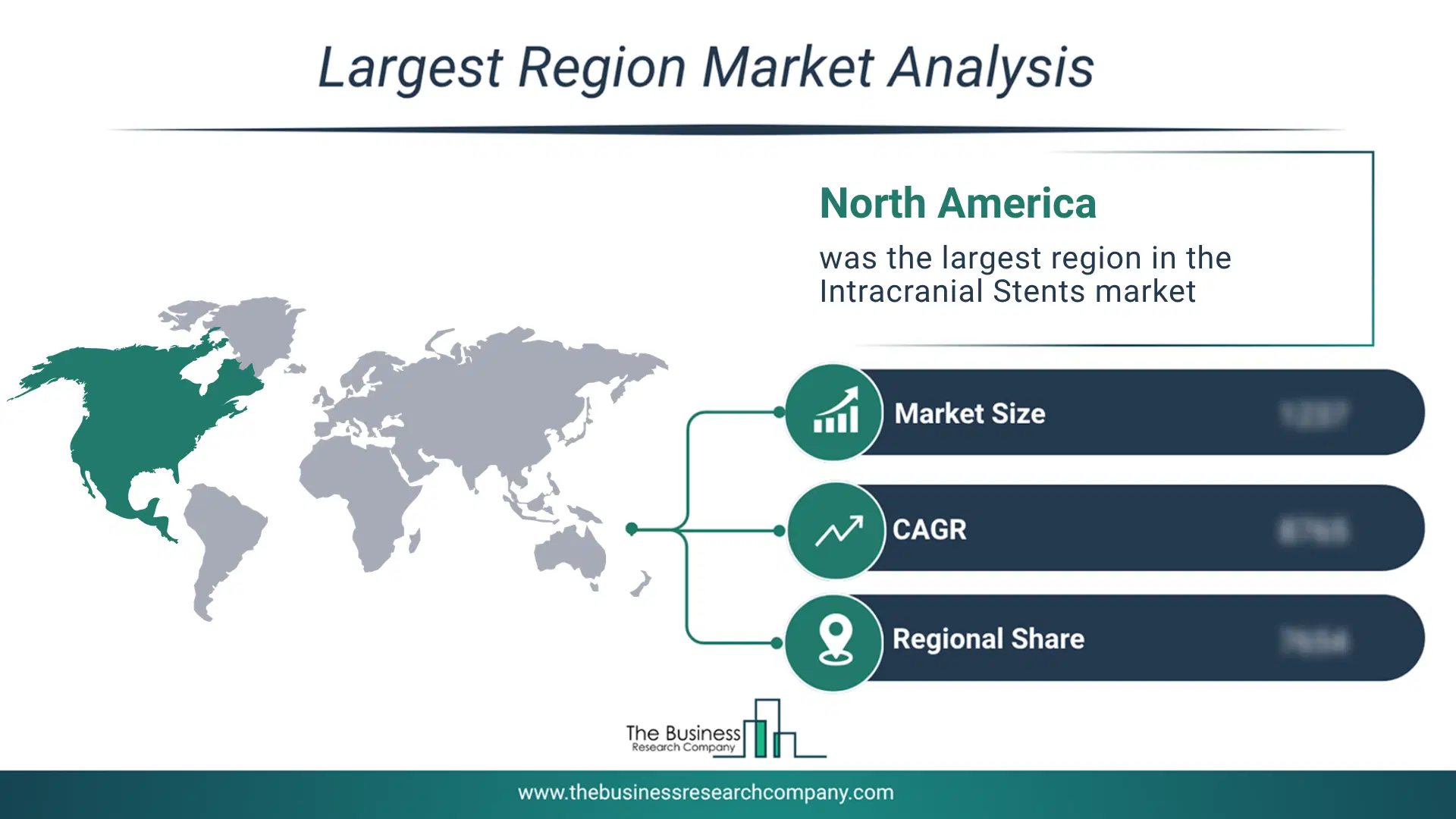
Regional Outlook
North America was the largest region in the intracranial stents market in 2025. Asia-Pacific is expected to be the fastest region in the intracranial stents market share during the forecast period. The regions covered in this market report are Asia-Pacific, South East Asia, Western Europe, Eastern Europe, North America, South America, Middle East, Africa. The countries covered in this market report are Australia, Brazil, China, France, Germany, India, Indonesia, Japan, Taiwan, Russia, South Korea, UK, USA, Canada, Italy, SpainWhat Defines the Intracranial Stents Market?
The intracranial stents market consists of sales of Neuroform stents, Solitaire, Enterprise, and Leo plus, and Wingspan stent. Values in this market are ‘factory gate’ values, that is the value of goods sold by the manufacturers or creators of the goods, whether to other entities (including downstream manufacturers, wholesalers, distributors and retailers) or directly to end customers. The value of goods in this market includes related services sold by the creators of the goods.How is Market Value Defined and Measured?
The market value is defined as the revenues that enterprises gain from the sale of goods and/or services within the specified market and geography through sales, grants, or donations in terms of the currency (in USD unless otherwise specified). The revenues for a specified geography are consumption values that are revenues generated by organizations in the specified geography within the market, irrespective of where they are produced. It does not include revenues from resales along the supply chain, either further along the supply chain or as part of other products.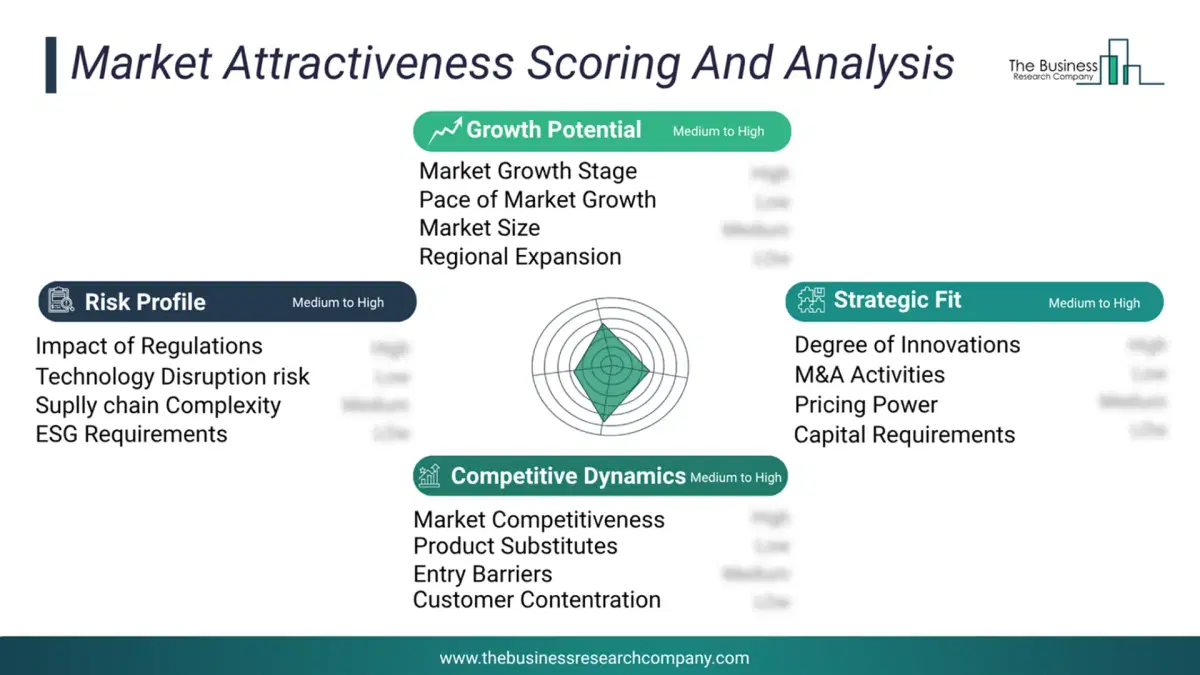
This chart presents market attractiveness based on a quantitative evaluation of growth, competition, strategic alignment, and risk, offering a clear view of opportunity areas for decision-making. This chart is for illustrative purposes; the full report contains the complete analysis.
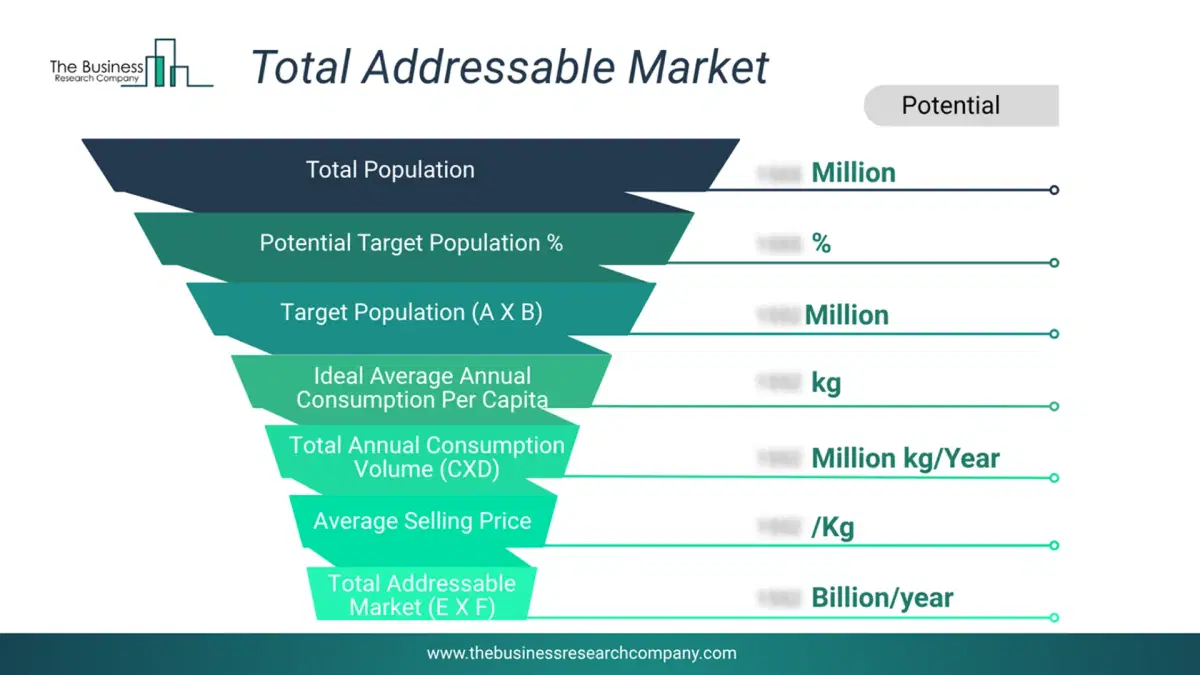
This chart highlights the Total Addressable Market (TAM) by estimating the maximum revenue opportunity using an assumption-driven approach, supporting strategic planning and opportunity sizing across markets. The chart is illustrative; the full report provides a more comprehensive analysis.
What Key Data and Analysis Are Included in the Intracranial Stents Market Report 2026?
The intracranial stents market research report is one of a series of new reports from The Business Research Company that provides market statistics, including industry global market size, regional shares, competitors with the market share, detailed market segments, market trends and opportunities, and any further data you may need to thrive in the intracranial stents industry. The market research report delivers a complete perspective of everything you need, with an in-depth analysis of the current and future state of the industry.Intracranial Stents Market Report Forecast Analysis
| Report Attribute | Details |
|---|---|
| Market Size Value In 2026 | $0.63 billion |
| Revenue Forecast In 2030 | $1.13 billion |
| Growth Rate | CAGR of 15.6% from 2026 to 2030 |
| Base Year For Estimation | 2025 |
| Actual Estimates/Historical Data | 2020-2025 |
| Forecast Period | 2026 - 2030 |
| Market Representation | Revenue in USD Billion and CAGR from 2026 to 2030 |
| Segments Covered | Type, Disease Indication, End-User |
| Regional Scope | Asia-Pacific, Western Europe, Eastern Europe, North America, South America, Middle East, Africa |
| Country Scope | The countries covered in the report are Australia, Brazil, China, France, Germany, India, Indonesia, Japan, Taiwan, Russia, South Korea, UK, USA, Canada, Italy, Spain. |
| Key Companies Profiled | Medtronic plc, Stryker Corporation, Boston Scientific Corporation, Abbott Laboratories, Terumo Corporation, Balt Extrusion, Acandis GmbH, Phenox GmbH, Rapid Medical Ltd, Penumbra Inc, MicroPort Scientific Corporation, Johnson & Johnson, Cook Medical LLC, Biotronik SE & Co KG, Cardionovum GmbH, InspireMD Inc, Admedes Schuessler GmbH, Kaneka Corporation, W L Gore & Associates Inc, Cerebral Stents |
| Customization Scope | Request for Customization |
| Pricing And Purchase Options | Explore Purchase Options |