
Lab Grown Diamonds Market Report 2026
Global Outlook – By Type (Polished, Rough), By Nature (Colorless, Colored), By Manufacturing Process (High Pressure High Temperature (HPHT), Chemical Vapor Deposition (CVD)), By Application (Construction And Mining, Jewelry, Healthcare, Electronics, Others Applications) – Market Size, Trends, Strategies, and Forecast to 2030
Lab Grown Diamonds Market Overview
• Lab Grown Diamonds market size has reached to $27.95 billion in 2025 • Expected to grow to $40.8 billion in 2030 at a compound annual growth rate (CAGR) of 7.8% • Growth Driver: Diamond Sales Surge Propels Growth In The Lab-Grown Diamonds Market • Market Trend: Lab-Grown Diamond Companies Introduce Colored Collections To Elevate Market Presence • Asia-Pacific was the largest region in 2025.Market Gains By 2030 – Top Opportunities By Segment
Market Gain identifies the most promising market opportunities by highlighting the segments or products expected to generate the highest incremental revenue growth over the next five years.
What Is Covered Under Lab Grown Diamonds Market?
Lab-grown diamonds, also known as synthetic or cultured diamonds, are created in a laboratory rather than being formed naturally within the Earth's mantle. These diamonds exhibit the same physical, chemical, and optical characteristics as natural diamonds and possess the same fire, scintillation, and brilliance. The main types of lab grown diamonds market are polished and rough. Polished refers to the process of refining the surface of the diamond to achieve a smooth and glass-like finish. The various natures of diamonds are colorless and colored. The various manufacturing processes are high pressure high temperature (HPHT), and chemical vapor deposition (CVD) and are used in various applications such as construction and mining, jewelry, healthcare, electronics, and others applications.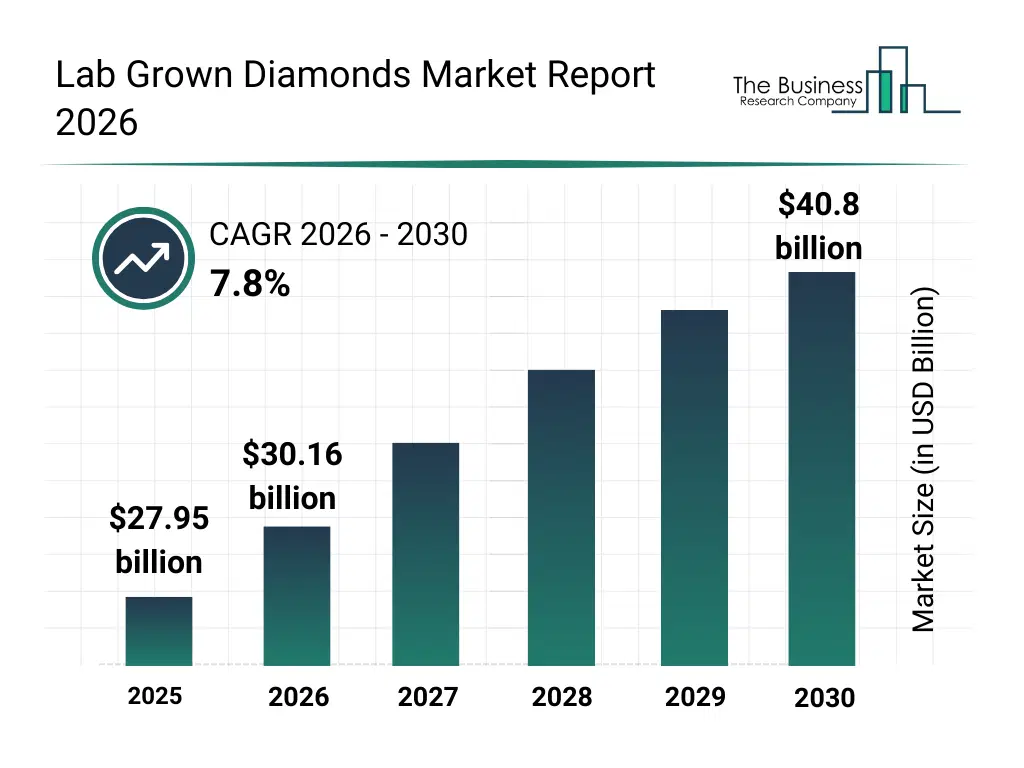
What Is The Lab Grown Diamonds Market Size and Share 2026?
The lab grown diamonds market size has grown strongly in recent years. It will grow from $27.95 billion in 2025 to $30.16 billion in 2026 at a compound annual growth rate (CAGR) of 7.9%. The growth in the historic period can be attributed to advancements in synthetic diamond production technology, rising demand for ethical jewelry, growth of luxury retail, increased awareness of environmental impact of natural diamonds, development of precision industrial tools.What Is The Lab Grown Diamonds Market Growth Forecast?
The lab grown diamonds market size is expected to see strong growth in the next few years. It will grow to $40.8 billion in 2030 at a compound annual growth rate (CAGR) of 7.8%. The growth in the forecast period can be attributed to expansion of jewelry and fashion markets, adoption of lab-grown diamonds in electronics, rising industrial applications, innovation in diamond cutting and finishing techniques, increasing consumer preference for sustainable alternatives. Major trends in the forecast period include high pressure high temperature (hpht) production, chemical vapor deposition (cvd) production, gem-quality polished diamonds, industrial-grade polished diamonds, gem-quality rough diamonds.
Global Lab Grown Diamonds Market Segmentation
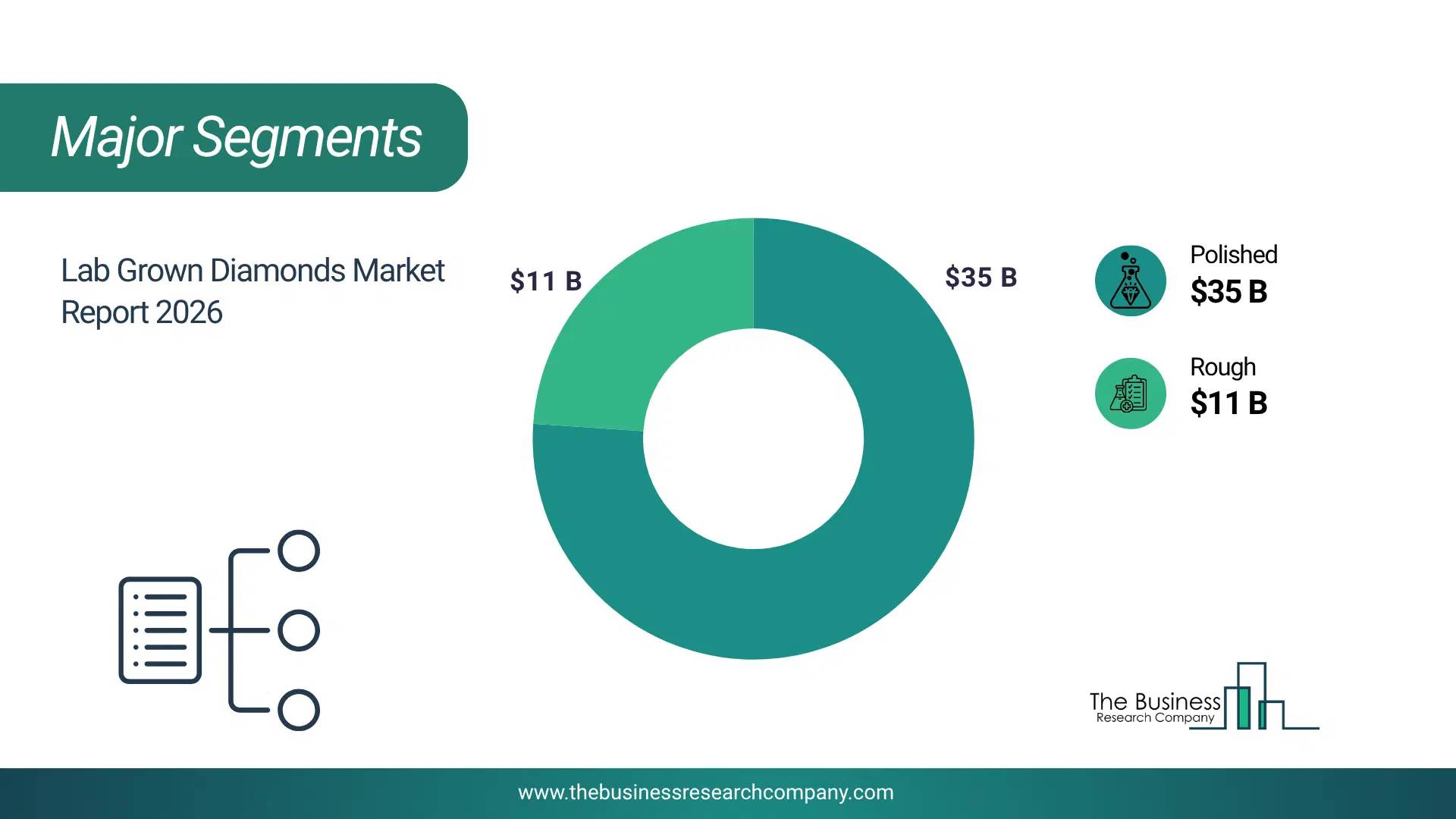
1) By Type: Polished, Rough 2) By Nature: Colorless, Colored 3) By Manufacturing Process: High Pressure High Temperature (HPHT), Chemical Vapor Deposition (CVD) 4) By Application: Construction And Mining, Jewelry, Healthcare, Electronics, Others Applications Subsegments: 1) By Polished: Gem-Quality Diamonds, Industrial-Grade Polished Diamonds 2) By Rough: Gem-Quality Rough Diamonds, Industrial-Grade Rough Diamonds The top segments in the lab grown diamonds market will be: • Polished will reach $34.69 Billion by 2030. • Rough will reach $11.18 Billion by 2030.What Is The Driver Of The Lab Grown Diamonds Market?
A rise in demand for diamonds is expected to propel the lab-grown diamond market going forward. Diamonds are precious gemstones with carbon atoms arranged in a crystal lattice structure. Lab-grown diamonds offer several practical uses and advantages across various industries, such as jewelry manufacturing, electronics, and healthcare. For instance, in January 2024, according to the United States Geological Survey, a US-based government agency, In 2023, the total domestic production of manufactured industrial diamond bort, grit, and dust and powder was estimated at 150 million carats, valued at $48 million, remaining essentially unchanged in both quantity and value compared to 2022. Therefore, the demand for diamonds is driving the lab-grown diamond market.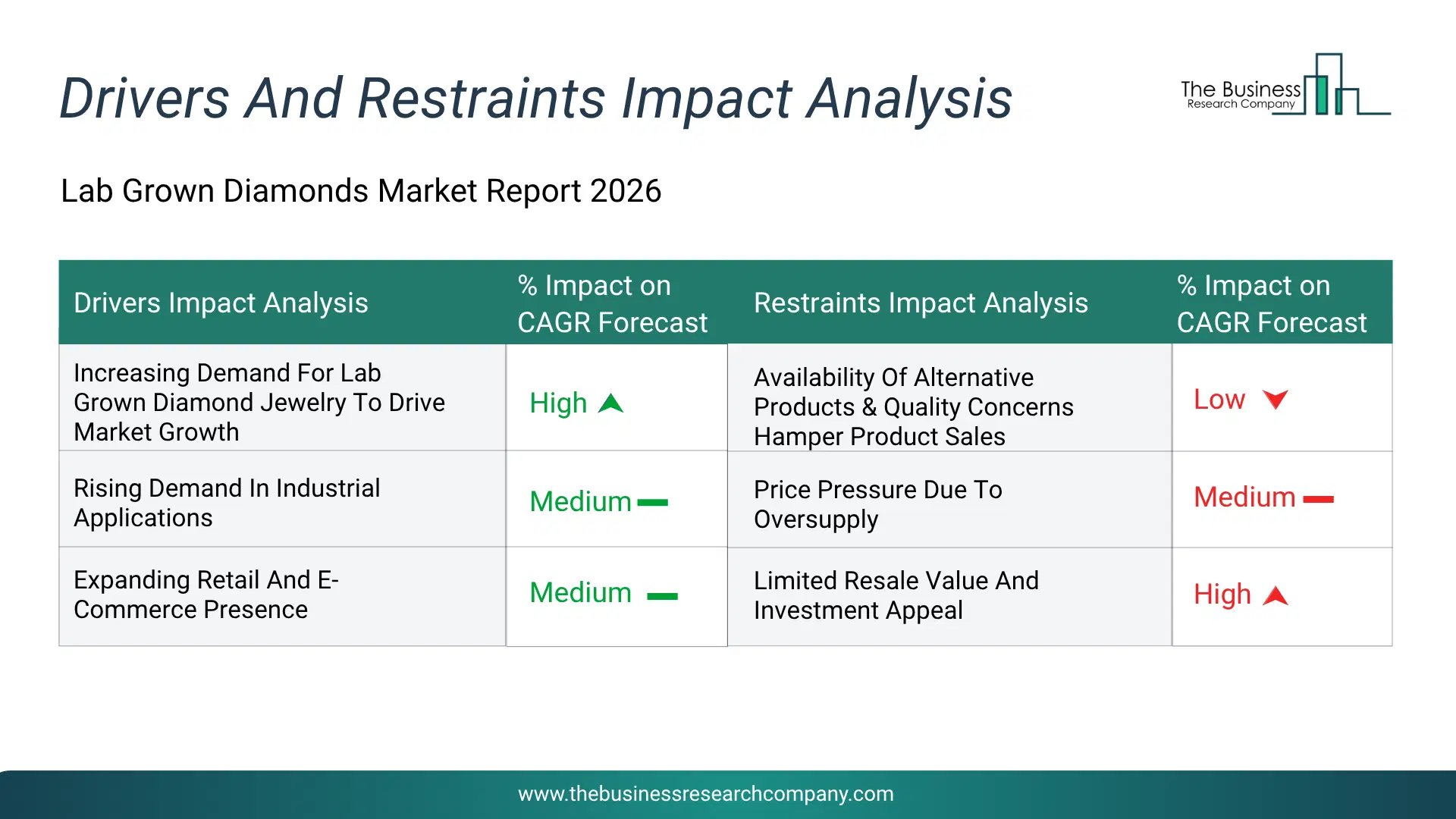
Infographic Chart Showing Key Market Drivers Analysis And Restraints For Lab Grown Diamonds Market
The chart presents an impact analysis of key drivers and restraints, quantifying their relative influence on the market's growth rate and helping assess the balance between growth enablers and limiting factors. This chart offers a high-level perspective; the full report contains more detailed insights.
How Will The Drivers Impact Growth In The Global Lab Grown Diamonds Market?
• Increasing Demand For Lab Grown Diamond Jewelry To Drive Market Growth (High) – During the forecast period, the increasing demand for lab grown diamond jewelry is expected to become a key growth driver for the lab grown diamonds market by 2030. Increasing demand for lab grown diamond jewelry is a major growth driver for the lab grown diamonds market. Consumers are increasingly choosing these diamonds because they offer the same visual appearance and physical properties as mined diamonds at a more affordable price. Growing awareness regarding sustainability and ethical sourcing further supports their adoption among environmentally conscious buyers. Jewelry manufacturers and retailers are expanding their collections to meet changing consumer preferences. Rising acceptance of lab grown diamonds in engagement rings, fashion jewelry, and luxury accessories is strengthening market demand. Strong marketing efforts and certification standards are also improving consumer confidence. • Rising Demand In Industrial Applications (Medium) – During the forecast period, the rising demand in industrial applications is expected to emerge as a major factor driving the expansion of the lab grown diamonds market by 2030. Rising demand in industrial applications is significantly driving the growth of the lab grown diamonds market. Lab grown diamonds possess exceptional hardness, thermal conductivity, and wear resistance, making them suitable for cutting, drilling, grinding, and polishing tools. Industries such as electronics, automotive, aerospace, and manufacturing increasingly rely on these materials for high-performance operations. Their consistent quality and customizable characteristics provide advantages over natural diamond alternatives in industrial processes. Growing industrial automation and precision manufacturing activities are further increasing demand. The expansion of semiconductor and advanced electronics production also supports wider utilization. • Expanding Retail And E-Commerce Presence (Medium) – During the forecast period, the expanding retail and e-commerce presence is expected to act as a key growth catalyst for the lab grown diamonds market by 2030. Expanding retail and e-commerce presence is accelerating the growth of the lab grown diamonds market by improving product accessibility and consumer reach. Online platforms allow customers to compare designs, prices, and certifications conveniently, increasing purchasing confidence. Retailers are investing in dedicated showrooms and digital channels to showcase a wider range of lab grown diamond products. The availability of virtual consultations and customization options further enhances the customer experience. E-commerce platforms help manufacturers access global markets without significant infrastructure investments. Increasing digital adoption among consumers is supporting higher online jewelry sales.How Will The Restraints Impact Growth In The Global Lab Grown Diamonds Market?
• Availability Of Alternative Products & Quality Concerns Hamper Product Sales (High) – During the forecast period, the availability of alternative products and quality concerns act as a significant restraint on the lab grown diamonds market. Consumers can choose from natural diamonds, moissanite, cubic zirconia, and other gemstone alternatives, creating intense competition across the jewelry segment. Many buyers still perceive natural diamonds as having greater rarity, prestige, and long-term value, which can limit adoption of lab grown options. In addition, variations in production standards among manufacturers may lead to concerns regarding consistency, certification, and product quality. Such concerns can affect consumer trust and purchasing decisions, particularly in premium jewelry categories. Retailers may also face challenges in educating customers about product differences and quality grades. As a result, the presence of competing alternatives and quality-related uncertainties can slow market growth and reduce sales potential. • Price Pressure Due To Oversupply (Medium) – During the forecast period, the price pressure due to oversupply is another major challenge restraining the growth of the lab grown diamonds market. Continuous advancements in manufacturing technologies have significantly increased production capacity, resulting in a larger supply of diamonds entering the market. When supply grows faster than demand, average selling prices tend to decline, reducing profit margins for producers and retailers. Falling prices can also create uncertainty among consumers regarding the future value of their purchases. Manufacturers may face difficulties in recovering investments made in production facilities and technological upgrades. Intense competition among market participants further accelerates pricing pressure and market saturation. Consequently, persistent oversupply can negatively impact revenue generation, profitability, and overall market expansion. • Limited Resale Value And Investment Appeal (Medium) – During the forecast period, the limited resale value and investment appeal restrain the growth of the Lab Grown Diamonds market by reducing consumer willingness to purchase these products for long-term value retention. Unlike natural diamonds, lab grown diamonds are generally perceived as having lower resale value due to increasing production capacity and declining market prices. Many consumers continue to view natural diamonds as a better store of value and a preferred choice for investment and heirloom purposes. This perception can discourage purchases, particularly for engagement rings and premium jewelry. Jewelers may also face challenges in communicating the value proposition of lab grown diamonds to investment-focused buyers. Consequently, limited resale potential acts as a significant restraint on the growth of the lab grown diamonds market.Key Players In The Global Lab Grown Diamonds Market
Major companies operating in the lab grown diamonds market are De Beers Group; Swarovski AG; Henan Huanghe Whirlwind Co. Ltd.; Diamond Foundry Inc.; Chatham Created Gems; New Diamond Technology; MiaDonna; IIa Technologies; Washington Diamonds Corporation; Clean Origin LLC.; WD Labs; Apollo Diamond Inc.; Ada Diamonds; ABD Diamonds Pvt. Ltd.; ALTR Created Diamonds; Scio Diamond Technology Corporation; Diam Concept; Applied Diamond Inc.; Mittal Diamonds; Pure Grown Diamonds; Renaissance Diamonds; M7D Corporation; Taidiam Technology; BDI - Brevard Diamonds Inc.; AOTC Group; Fenix Diamonds; Tolkowsky Diamonds; EcoStar Diamond; Tairus Created Diamonds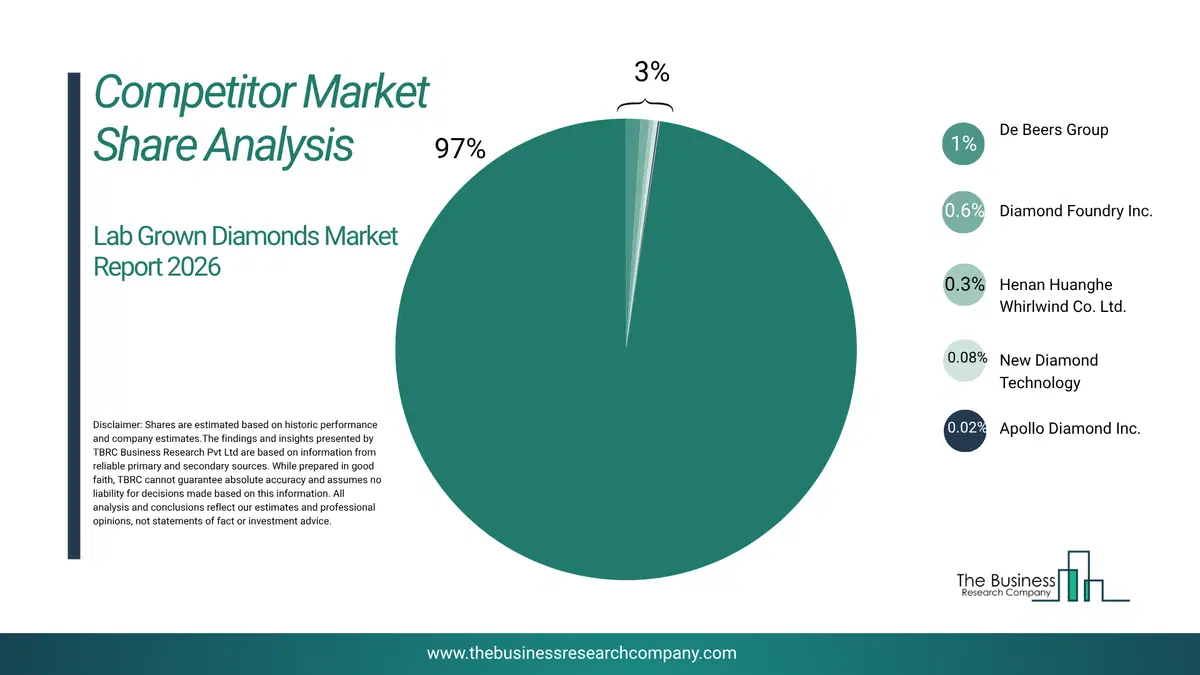
This chart is for illustrative purposes; the full report includes a detailed competitor analysis and comprehensive overview of the top 10 companies in the market.
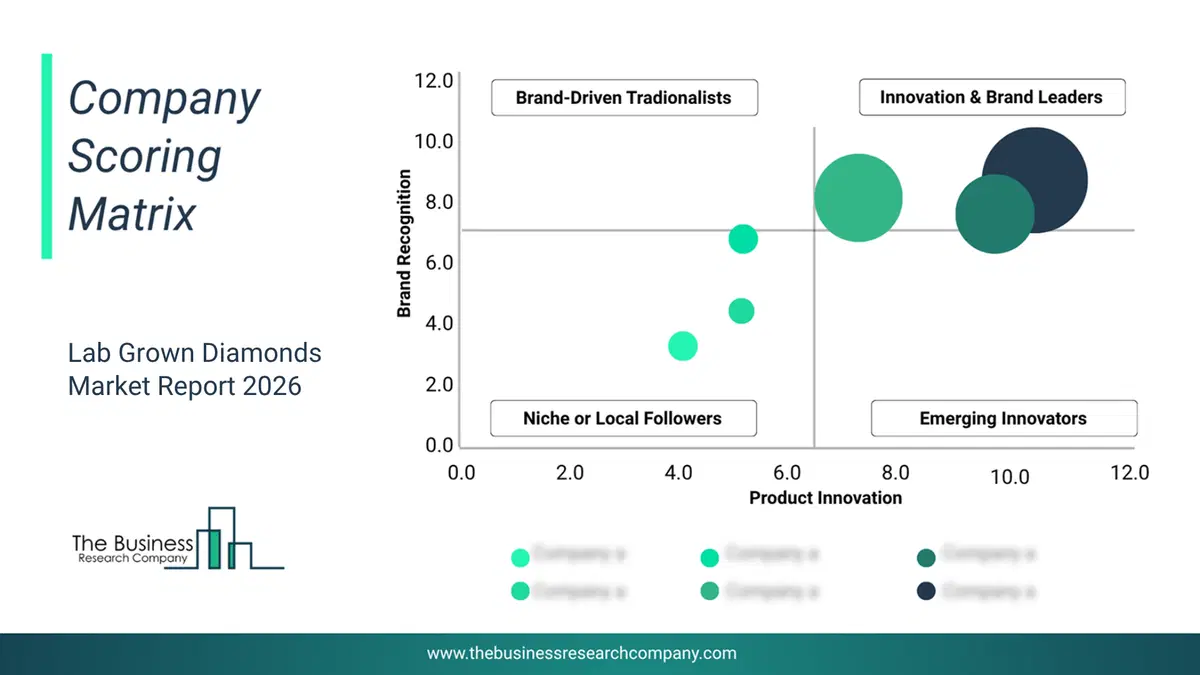
This chart maps companies by product innovation and brand strength, with bubble size indicating relative revenue, helping identify market leaders, challengers, and niche players. This is an illustrative chart; the full report provides a complete and accurate competitive analysis.
Global Lab Grown Diamonds Market Trends and Insights
Major companies operating in the lab-grown diamonds market are focused on developing innovative products, such as colored lab-grown diamonds, to strengthen their position in the market. Colored lab-grown diamonds are created through artificial processes in a laboratory setting and possess various colors due to certain trace elements, radiation, or other treatments during their formation. For instance, in August 2023, Cullen Jewelry, an Australian-based company specializing in fine jewelry, introduced its first-ever colored lab-grown diamonds collection, 'Love in Color,' featuring pink, yellow, and blue shades. The latest collection beautifully enhances the brand's current inventory of colored moissanite gemstones that have earned the Radiant Beauty certification, a symbol of excellence.What Are Latest Mergers And Acquisitions In The Lab Grown Diamonds Market?
In May 2023, Blackstone, a US-based company, provides investment management services, acquired International Gemological Institute for an undisclosed amount. This acquisition aims to strengthen Blackstone's position in the gemology industry and expand IGI's global footprint. By leveraging Blackstone's operational expertise, technological capabilities, and successful track record in building businesses, the acquisition seeks to enhance IGI's certification services for natural and lab-grown diamonds and gemstones. International Gemological Institute is a Belgium-based diamond, gem and jewelry certification and gemological education company.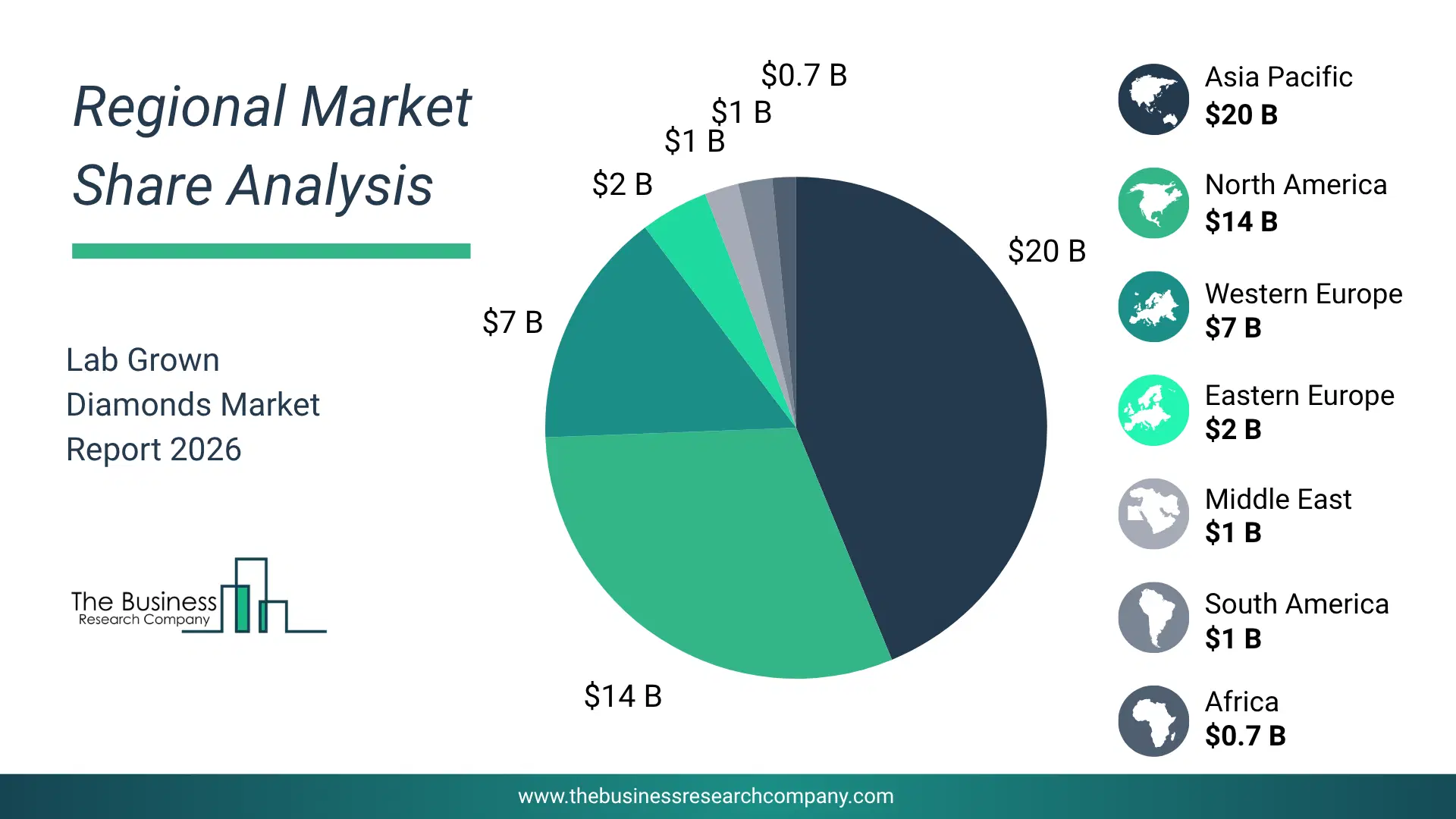
Regional Insights
Asia-Pacific was the largest region in the lab grown diamonds market in 2025. The regions covered in this market report are Asia-Pacific, South East Asia, Western Europe, Eastern Europe, North America, South America, Middle East, Africa. The countries covered in this market report are Australia, Brazil, China, France, Germany, India, Indonesia, Japan, Taiwan, Russia, South Korea, UK, USA, Canada, Italy, SpainWhat Defines the Lab Grown Diamonds Market?
The lab grown diamonds market consists of sales of grinding wheels, surgical tools, wedding bands, and optics for lasers. Values in this market are ‘factory gate’ values, that is the value of goods sold by the manufacturers or creators of the goods, whether to other entities (including downstream manufacturers, wholesalers, distributors and retailers) or directly to end customers. The value of goods in this market includes related services sold by the creators of the goods.How is Market Value Defined and Measured?
The market value is defined as the revenues that enterprises gain from the sale of goods and/or services within the specified market and geography through sales, grants, or donations in terms of the currency (in USD unless otherwise specified). The revenues for a specified geography are consumption values that are revenues generated by organizations in the specified geography within the market, irrespective of where they are produced. It does not include revenues from resales along the supply chain, either further along the supply chain or as part of other products.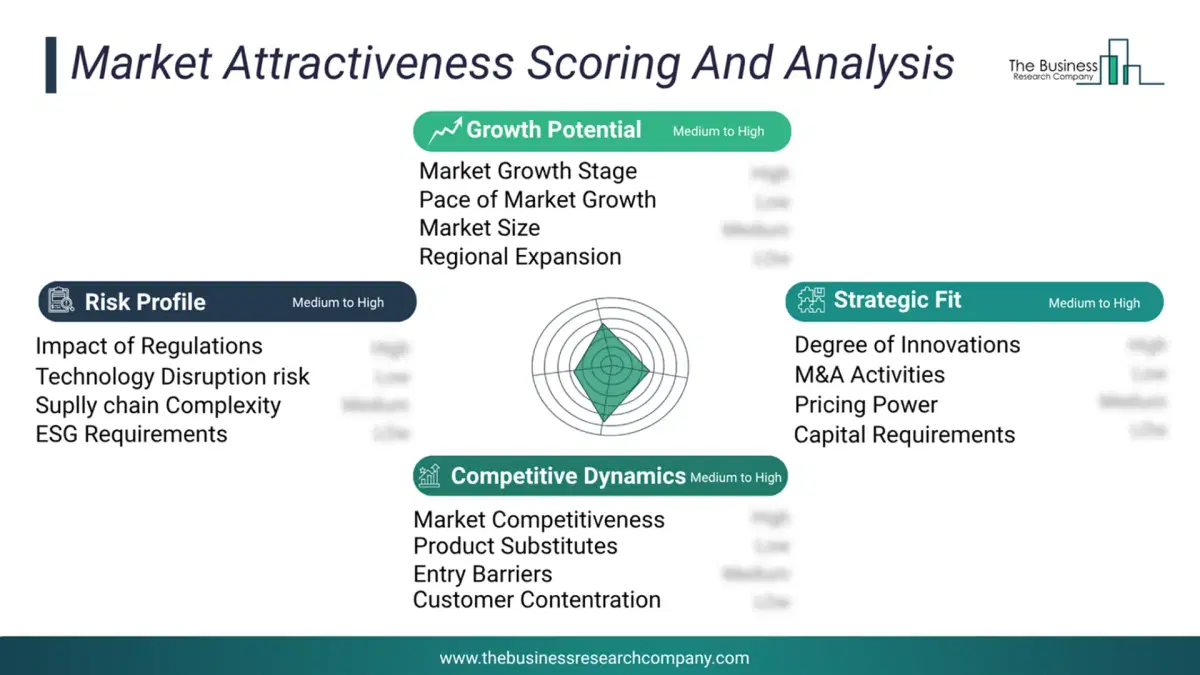
This chart presents market attractiveness based on a quantitative evaluation of growth, competition, strategic alignment, and risk, offering a clear view of opportunity areas for decision-making. This chart is for illustrative purposes; the full report contains the complete analysis.
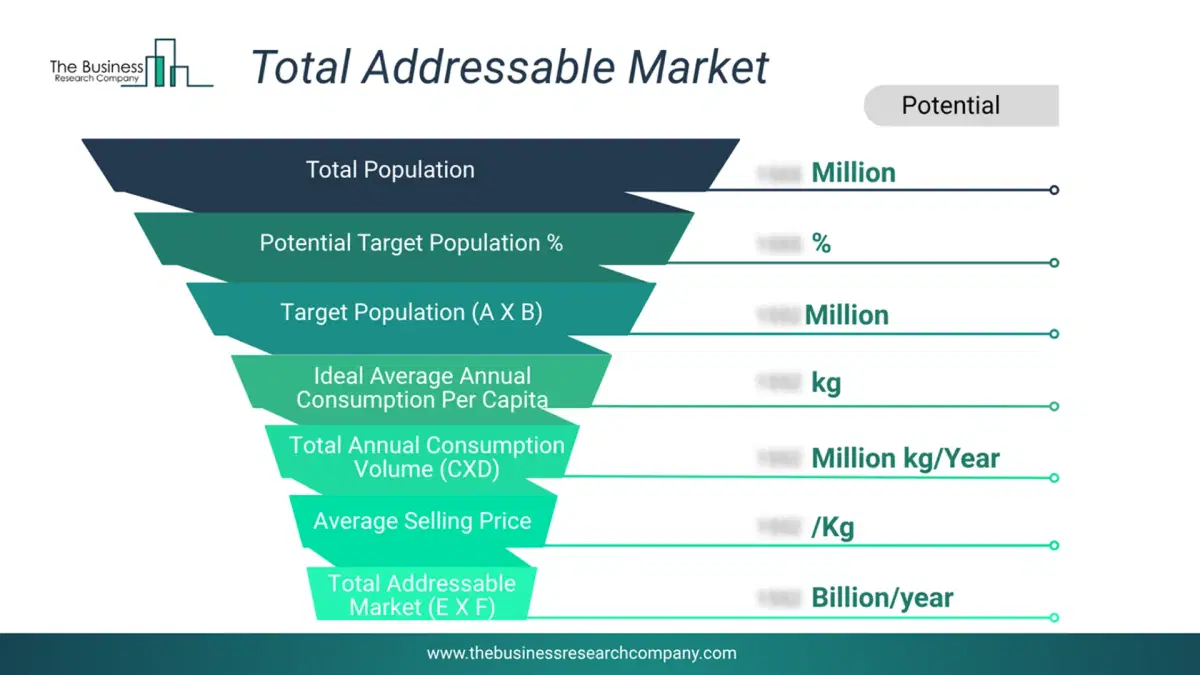
This chart highlights the Total Addressable Market (TAM) by estimating the maximum revenue opportunity using an assumption-driven approach, supporting strategic planning and opportunity sizing across markets. The chart is illustrative; the full report provides a more comprehensive analysis.
What Key Data and Analysis Are Included in the Lab Grown Diamonds Market Report 2026?
The lab grown diamonds market research report is one of a series of new reports from The Business Research Company that provides market statistics, including industry global market size, regional shares, competitors with the market share, detailed market segments, market trends and opportunities, and any further data you may need to thrive in the lab grown diamonds industry. The market research report delivers a complete perspective of everything you need, with an in-depth analysis of the current and future state of the industry.Lab Grown Diamonds Market Report Forecast Analysis
| Report Attribute | Details |
|---|---|
| Market Size Value In 2026 | $30.16 billion |
| Revenue Forecast In 2030 | $40.8 billion |
| Growth Rate | CAGR of 7.9% from 2026 to 2030 |
| Base Year For Estimation | 2025 |
| Actual Estimates/Historical Data | 2020-2025 |
| Forecast Period | 2026 - 2030 |
| Market Representation | Revenue in USD Billion and CAGR from 2026 to 2030 |
| Segments Covered | Type, Nature, Manufacturing Process, Application |
| Regional Scope | Asia-Pacific, Western Europe, Eastern Europe, North America, South America, Middle East, Africa |
| Country Scope | The countries covered in the report are Australia, Brazil, China, France, Germany, India, ... |
| Key Companies Profiled | De Beers Group; Swarovski AG; Henan Huanghe Whirlwind Co. Ltd.; Diamond Foundry Inc.; Chatham Created Gems; New Diamond Technology; MiaDonna; IIa Technologies; Washington Diamonds Corporation; Clean Origin LLC.; WD Labs; Apollo Diamond Inc.; Ada Diamonds; ABD Diamonds Pvt. Ltd.; ALTR Created Diamonds; Scio Diamond Technology Corporation; Diam Concept; Applied Diamond Inc.; Mittal Diamonds; Pure Grown Diamonds; Renaissance Diamonds; M7D Corporation; Taidiam Technology; BDI - Brevard Diamonds Inc.; AOTC Group; Fenix Diamonds; Tolkowsky Diamonds; EcoStar Diamond; Tairus Created Diamonds |
| Customization Scope | Request for Customization |
| Pricing And Purchase Options | Explore Purchase Options |