

Lifting Equipment Market Report 2026
Global Outlook – By Type (Trucks, Lifts, Cranes, Hoists, Jacks, Aerial Work Lift Platforms, Other Types), By Mechanism (Mechanical, Hydraulic, Pneumatic, Electric, Magnetic), By Application (Construction, Government, Power, Industrial, Telecommunication) – Market Size, Trends, Strategies, and Forecast to 2030
Lifting Equipment Market Overview
• Lifting Equipment market size has reached to $88.33 billion in 2025 • Expected to grow to $112.75 billion in 2030 at a compound annual growth rate (CAGR) of 4.9% • Growth Driver: Impact of Increasing Construction Activities on the Lifting Equipment Market • Market Trend: Lifttech Partners With Robustel ANZ To Launch Innovative All-In-One Elevator Technology Platform • North America was the largest region in 2025 and Asia-Pacific is the fastest growing region.Market Gains By 2030 – Top Opportunities By Segment
Market Gain identifies the most promising market opportunities by highlighting the segments or products expected to generate the highest incremental revenue growth over the next five years.
What Is Covered Under Lifting Equipment Market?
Lifting equipment refers to a range of machinery, tools, and devices designed to lift, lower, and move loads. This category encompasses a wide range of tools and machines designed to handle various weights and sizes of objects, ensuring safe and efficient movement within different environments. The main types of lifting equipment are trucks, lifts, cranes, hoists, jacks, aerial work lift platforms, and other types. Trucks in the lifting equipment market refer to vehicles designed for transporting goods and materials, often equipped with hydraulic systems to lift and unload cargo. The various mechanisms include mechanical, hydraulic, pneumatic, electric, and magnetic used by various applications such as construction, government, power, industrial, telecommunication, and other applications.
What Is The Lifting Equipment Market Size and Share 2026?
The lifting equipment market size has grown strongly in recent years. It will grow from $88.33 billion in 2025 to $93.08 billion in 2026 at a compound annual growth rate (CAGR) of 5.4%. The growth in the historic period can be attributed to infrastructure development, growth in construction activities, industrial expansion, demand for material handling solutions, urbanization trends.What Is The Lifting Equipment Market Growth Forecast?
The lifting equipment market size is expected to see steady growth in the next few years. It will grow to $112.75 billion in 2030 at a compound annual growth rate (CAGR) of 4.9%. The growth in the forecast period can be attributed to investments in smart construction, adoption of automated lifting systems, growth of renewable energy projects, demand for efficient load handling, digital fleet management. Major trends in the forecast period include integration of smart lifting equipment, growth of electric lifting systems, demand for heavy-duty construction equipment, expansion of rental equipment services, focus on workplace safety.
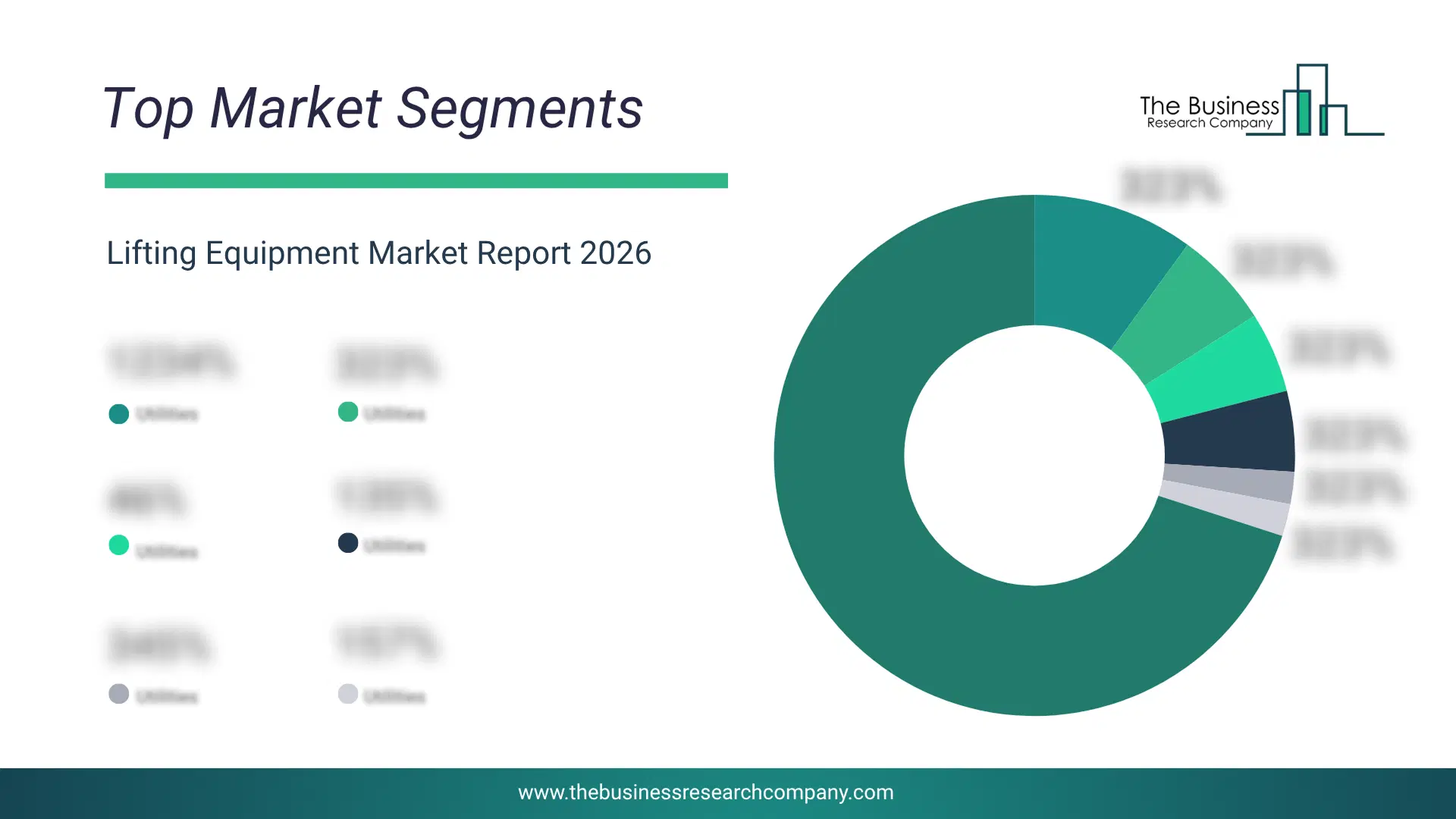
Global Lifting Equipment Market Segmentation
1) By Type: Trucks, Lifts, Cranes, Hoists, Jacks, Aerial Work Lift Platforms, Other Types 2) By Mechanism: Mechanical, Hydraulic, Pneumatic, Electric, Magnetic 3) By Application: Construction, Government, Power, Industrial, Telecommunication Subsegments: 1) By Trucks: Flatbed Trucks, Hydraulic Lifting Trucks, Crane Trucks 2) By Lifts: Scissor Lifts, Personnel Lifts, Platform Lifts 3) By Cranes: Mobile Cranes, Tower Cranes, Overhead Cranes, Crawler Cranes 4) By Hoists: Electric Hoists, Manual Hoists, Pneumatic Hoists 5) By Jacks: Hydraulic Jacks, Mechanical Jacks, Bottle Jacks 6) By Aerial Work Lift Platforms: Boom Lifts, Scissor Lifts, Vertical Mast Lifts 7) By Other Types: Conveyors, Winches, Forklifts The top segments in the lifting equipment market will be: • Trucks will reach $34 Billion by 2030. • Cranes will reach $26 Billion by 2030. • Lifts will reach $17 Billion by 2030. • Aerial Work Lift Platforms will reach $13 Billion by 2030. • Hoists will reach $10 Billion by 2030.What Is The Driver Of The Lifting Equipment Market?
The increasing construction activities are expected to propel the growth of the lifting equipment market going forward. Construction activities refer to a wide range of tasks and processes involved in planning, designing, building, renovating, and maintaining structures and infrastructure. These activities encompass various stages and disciplines within the construction industry, each contributing to completing construction projects. The increase in construction activities is fueled by the need for new buildings and infrastructure, increasing urbanization, and improvements in construction methods and materials. Lifting equipment is used in construction activities to safely move heavy materials and components, accelerate project timelines, and enhance worker efficiency and safety. For instance, in November 2024, according to the Office for National Statistics, a US-based government agency, reported that the value of construction new work in current prices in Great Britain in 2023 increased by 4.2% to a record high of £139,029 million; this was caused by growth in both private sector work of £2,050 million and in the public sector of £3,578 million. Therefore, the increasing construction activities will drive the lifting equipment industry.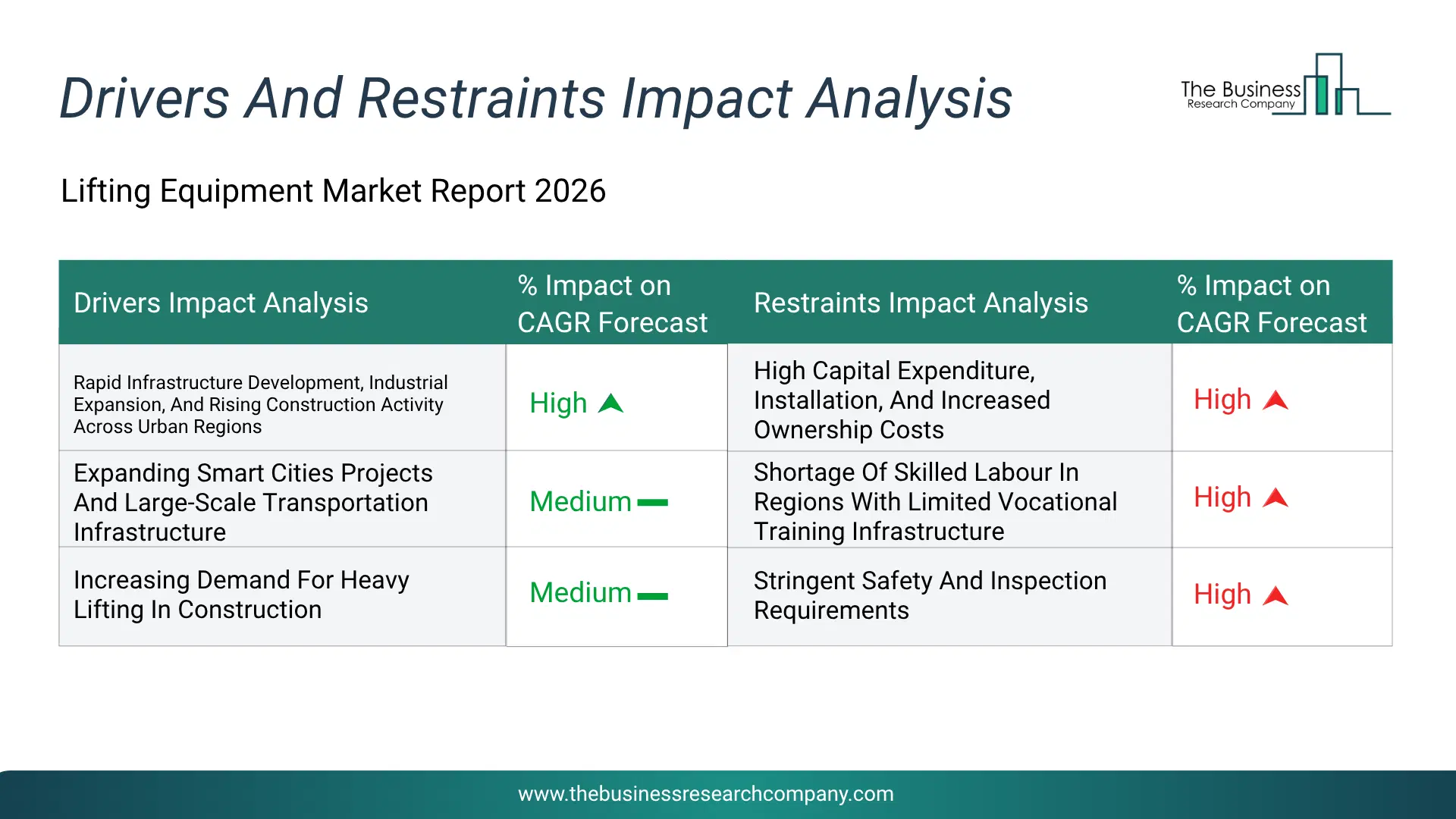
Infographic Chart Showing Key Market Drivers Analysis And Restraints For Lifting Equipment Market
The chart presents an impact analysis of key drivers and restraints, quantifying their relative influence on the market's growth rate and helping assess the balance between growth enablers and limiting factors. This chart offers a high-level perspective; the full report contains more detailed insights.
How Will The Drivers Impact Growth In The Global Lifting Equipment Market?
• Rapid Infrastructure Development, Industrial Expansion, And Rising Construction Activity Across Urban Regions (High) – During the forecast period, the rapid infrastructure development, industrial expansion, and rising construction activity across urban regions are expected to become key growth drivers for the lifting equipment market by 2030. large-scale construction projects including commercial complexes, residential developments, industrial plants, and public infrastructure facilities are increasing the demand for efficient lifting and material handling systems. lifting equipment enables faster movement of heavy materials, improves operational productivity, and supports safer project execution across complex worksites. growing industrialization is further driving the adoption of cranes, hoists, and lifting platforms across manufacturing and logistics environments. increasing urban development activities and demand for advanced equipment solutions are strengthening the adoption of modern lifting technologies. • Expanding Smart Cities Projects And Large-Scale Transportation Infrastructure (Medium) – During the forecast period, the expanding smart cities projects and large-scale transportation infrastructure are expected to emerge as major factors driving the expansion of the lifting equipment market by 2030. increasing development of airports, metro systems, highways, railway networks, and urban infrastructure projects is creating significant demand for reliable lifting solutions. advanced lifting machinery supports accurate placement of large structural components, improves construction efficiency, and enables execution of technically complex projects. rising government investments in infrastructure modernization and urban transformation programs are further accelerating equipment deployment. the growing scale of infrastructure projects is encouraging the use of high-capacity and technologically advanced lifting equipment. • Increasing Demand For Heavy Lifting In Construction (Medium) – During the forecast period, the increasing demand for heavy lifting in construction is expected to act as a key growth catalyst for the lifting equipment market by 2030. the rising complexity of construction projects requires equipment capable of handling heavy materials, prefabricated structures, and large machinery with greater safety and precision. contractors are increasingly adopting cranes, hoists, and lifting platforms to improve project speed, reduce manual dependency, and enhance operational performance. growth in high-rise buildings, industrial facilities, and large engineering projects is further increasing the need for advanced lifting solutions. equipment innovations focused on higher load capacity and improved reliability are supporting wider adoption across construction applications.How Will The Restraints Impact Growth In The Global Lifting Equipment Market?
• High Capital Expenditure, Installation, And Increased Ownership Costs (High) – During the forecast period, high capital expenditure and installation costs act as a significant restraint on the lifting equipment market, particularly for small and medium-sized businesses. Purchasing advanced cranes, hoists, and lifting systems requires substantial upfront investment, which can limit adoption among cost-sensitive end users. In addition to acquisition expenses, installation, maintenance, inspections, and operational costs further increase the total cost of ownership. Companies may delay equipment upgrades or rely on older machinery to reduce expenditures. The financial burden becomes more challenging during periods of economic uncertainty or fluctuating construction activity. High ownership costs can also encourage the use of rental services instead of direct purchases, affecting new equipment sales. As a result, elevated investment requirements may restrict the overall growth potential of the lifting equipment market. • Shortage Of Skilled Labour In Regions With Limited Vocational Training Infrastructure (Medium) – During the forecast period, the shortage of skilled labor is another major challenge affecting the growth of the lifting equipment market. Operating modern lifting equipment requires trained personnel with knowledge of safety procedures, load management, and equipment controls. In regions with limited vocational training infrastructure, companies often face difficulties in recruiting qualified operators and maintenance technicians. Insufficient expertise can increase the risk of workplace accidents, equipment damage, and operational inefficiencies. Employers may need to invest additional resources in training programs, raising overall operational costs. The lack of skilled workers can also delay project completion and reduce equipment utilization rates. Consequently, workforce shortages create barriers to the effective deployment and expansion of lifting equipment across various industries. • Stringent Safety And Inspection Requirements (Medium) – During the forecast period, stringent safety and inspection requirements can restrain the lifting equipment market by increasing the compliance burden for equipment owners and operators. Cranes, hoists, and other lifting systems require regular inspections, testing, certification, and maintenance to meet safety standards. These requirements increase operating costs and may result in equipment downtime during inspections or repairs. Smaller businesses may find it difficult to allocate resources for frequent compliance activities, which can delay equipment purchases and upgrades.Key Players In The Global Lifting Equipment Market
Major companies operating in the lifting equipment market are Komatsu Ltd., Toyota Industries Corporation, Anhui Heli Co. Ltd., Liebherr International AG, XCMG Group, Kion Group AG, Zoomlion Heavy Industry Science and Technology Co Ltd, Ingersoll Rand Inc., Mitsubishi Logisnext Co. Ltd., Jungheinrich AG, Terex Corporation, Cargotec Corporation, Daifuku Co. Ltd., Hyster-Yale Materials Handling Inc., Konecranes plc, Mammoet Holding BV, Palfinger AG, Columbus McKinnon Corporation, Haulotte Group, Kito Corporation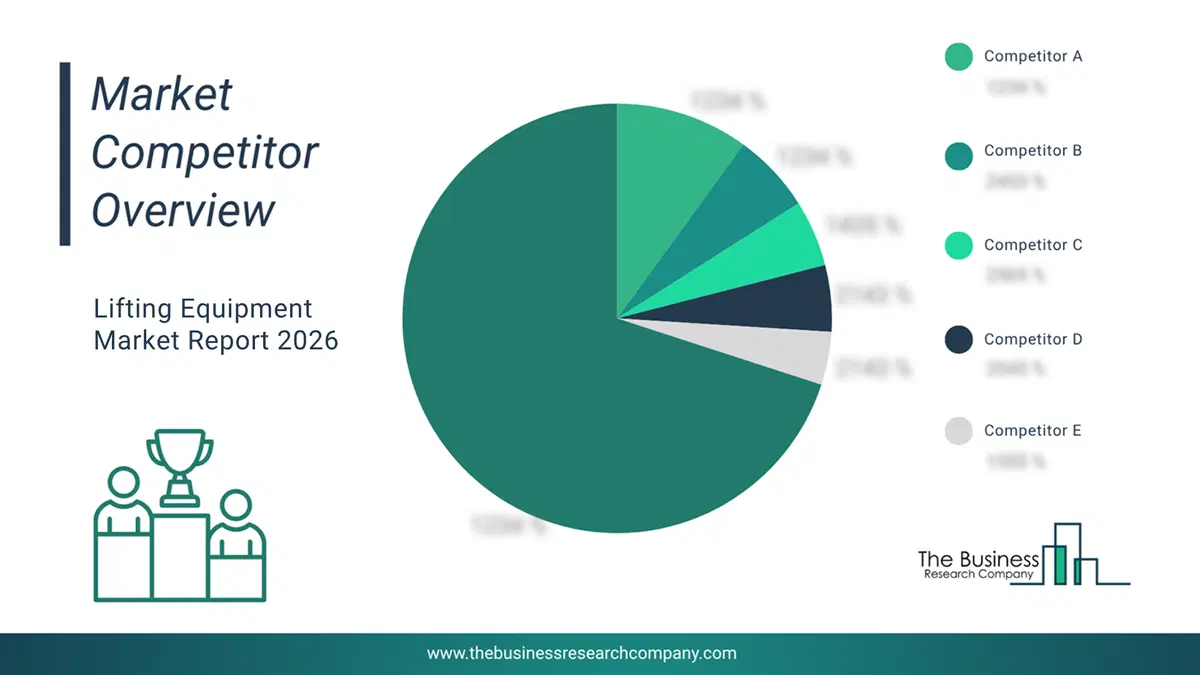
This chart is for illustrative purposes; the full report includes a detailed competitor analysis and comprehensive overview of the top 10 companies in the market.
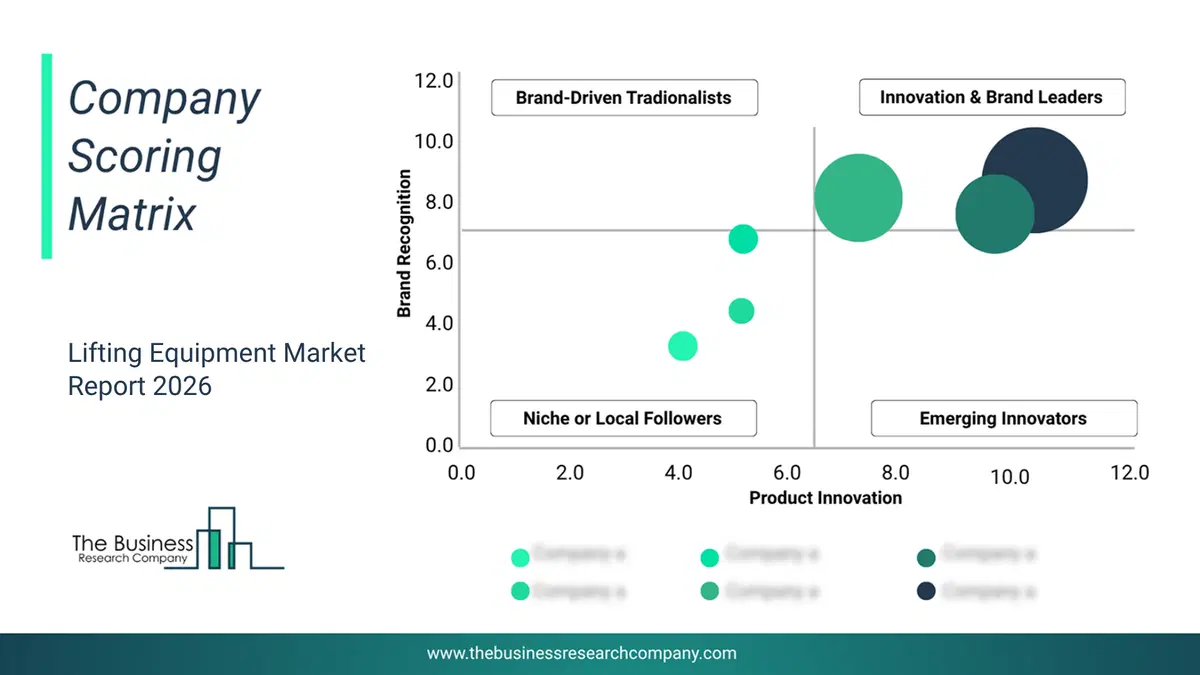
This chart maps companies by product innovation and brand strength, with bubble size indicating relative revenue, helping identify market leaders, challengers, and niche players. This is an illustrative chart; the full report provides a complete and accurate competitive analysis.
Global Lifting Equipment Market Trends and Insights
Major companies operating in the lifting equipment market are focused on developing innovative technologies, such as elevator technology, to sustain their position in the market. Elevator technology refers to advancements and improvements in elevator systems that enhance efficiency, safety, comfort, and sustainability. These technologies are designed to address the increasing demands of modern buildings, especially high-rise structures, and to improve the user experience. For instance, in November 2023, LiftTech, an Australia-based elevator parts manufacturer, partnered with Robustel ANZ, an Australia-based company that manufactures industrial-quality wireless IoT modems, to launch an all-in-one elevator technology platform. This all-in-one elevator platform includes real-time communication tools for users and maintenance staff, IoT connectivity for efficient data exchange and predictive maintenance, and digital signage for displaying announcements and advertisements. It also integrates closed-circuit television (CCTV)for enhanced security and a video management system to store and manage surveillance footage. This platform promises to increase safety, speed up elevator operations, and maximize maintenance by combining these technologies.What Are Latest Mergers And Acquisitions In The Lifting Equipment Market?
In December 2023, Veslatec Oy, a Finland-based machinery and equipment provider for various industries, acquired Nordlift Oy for an undisclosed amount. With this acquisition, Veslatec aims to expand its product offerings, increase market share, strengthen its presence in the lifting equipment sector, and potentially access new customer segments or geographic markets. Nordlift Oy is a Finland-based company that manufactures lifting equipment.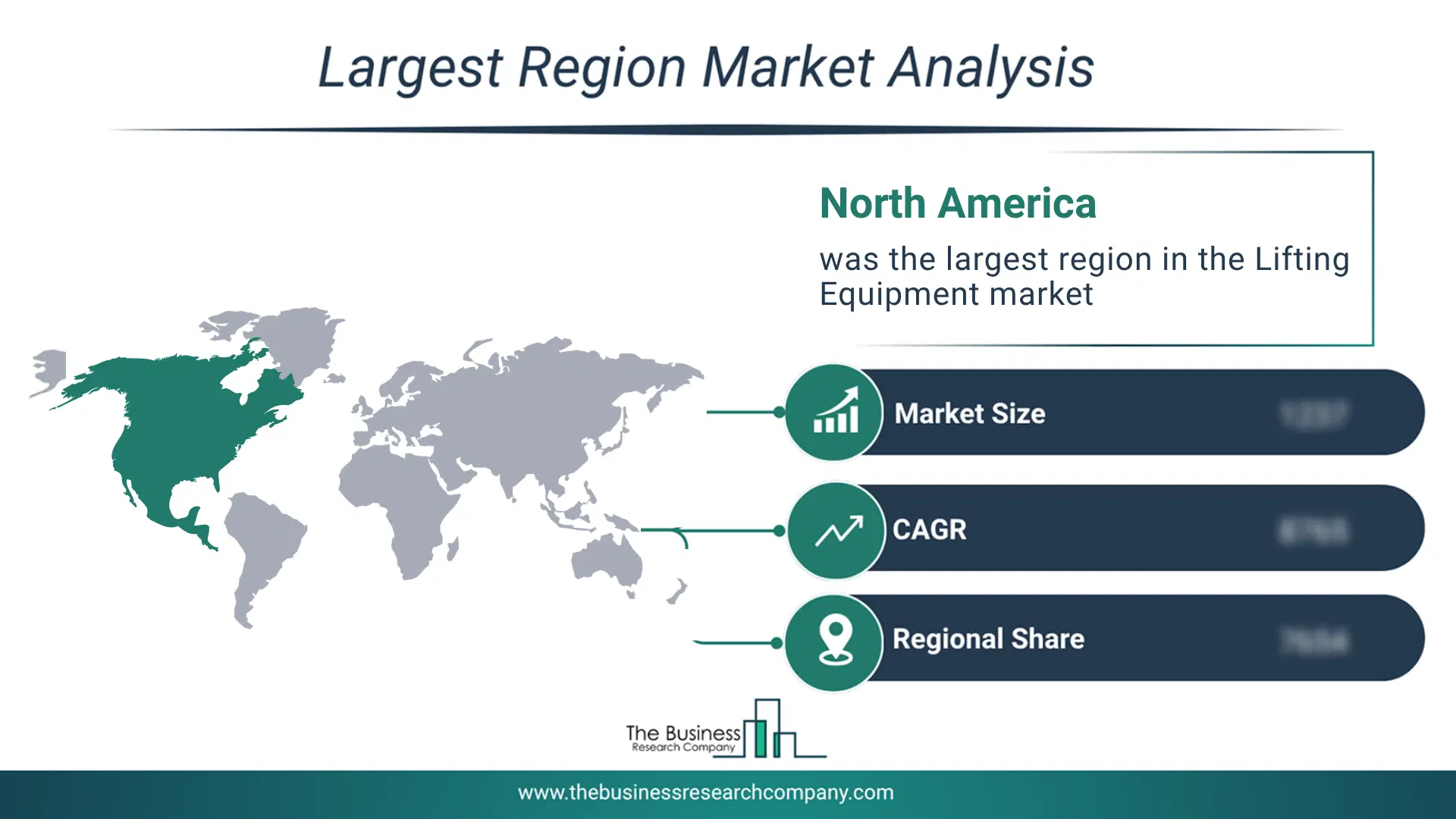
Regional Outlook
North America was the largest region in the lifting equipment market in 2025. Asia-Pacific is expected to be the fastest-growing region in the forecast period. The regions covered in this market report are Asia-Pacific, South East Asia, Western Europe, Eastern Europe, North America, South America, Middle East, Africa The countries covered in this market report are Australia, Brazil, China, France, Germany, India, Indonesia, Japan, Taiwan, Russia, South Korea, UK, USA, Canada, Italy, Spain.What Defines the Lifting Equipment Market?
The lifting equipment market consists of sales of forklifts, elevators, winches, scissor lifts, hydraulic lifts, aerial work platforms, and material handling equipment. Values in this market are ‘factory gate’ values, that is the value of goods sold by the manufacturers or creators of the goods, whether to other entities (including downstream manufacturers, wholesalers, distributors and retailers) or directly to end customers. The value of goods in this market includes related services sold by the creators of the goods.How is Market Value Defined and Measured?
The market value is defined as the revenues that enterprises gain from the sale of goods and/or services within the specified market and geography through sales, grants, or donations in terms of the currency (in USD unless otherwise specified). The revenues for a specified geography are consumption values that are revenues generated by organizations in the specified geography within the market, irrespective of where they are produced. It does not include revenues from resales along the supply chain, either further along the supply chain or as part of other products.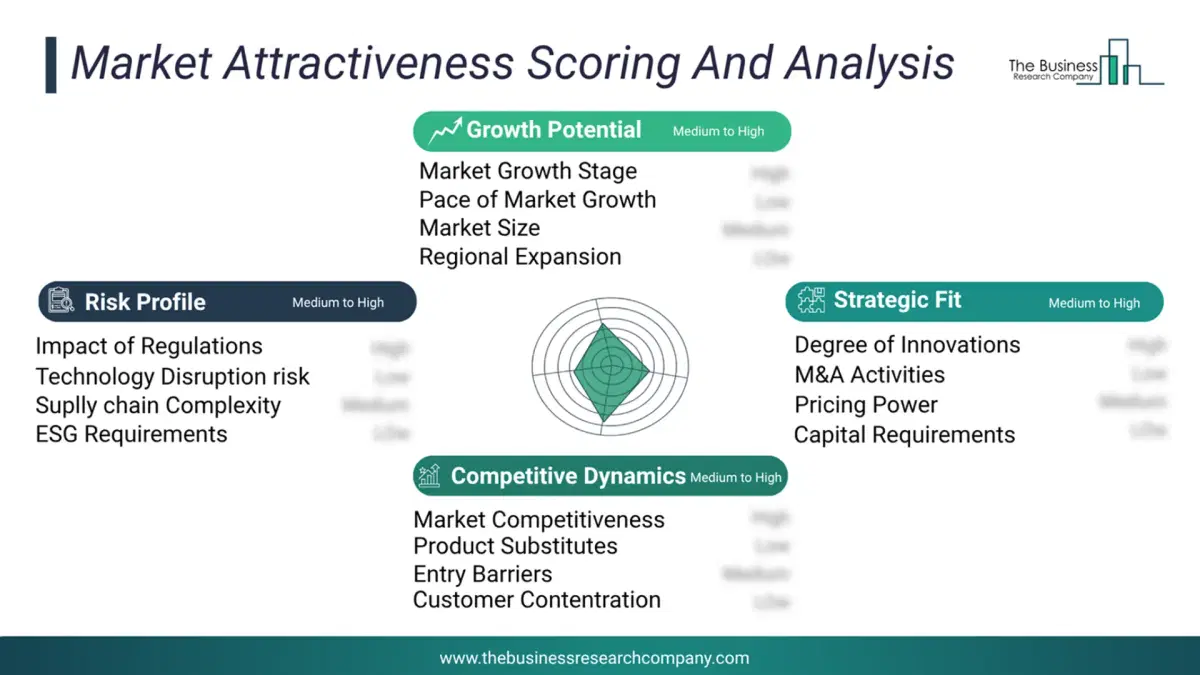
This chart presents market attractiveness based on a quantitative evaluation of growth, competition, strategic alignment, and risk, offering a clear view of opportunity areas for decision-making. This chart is for illustrative purposes; the full report contains the complete analysis.
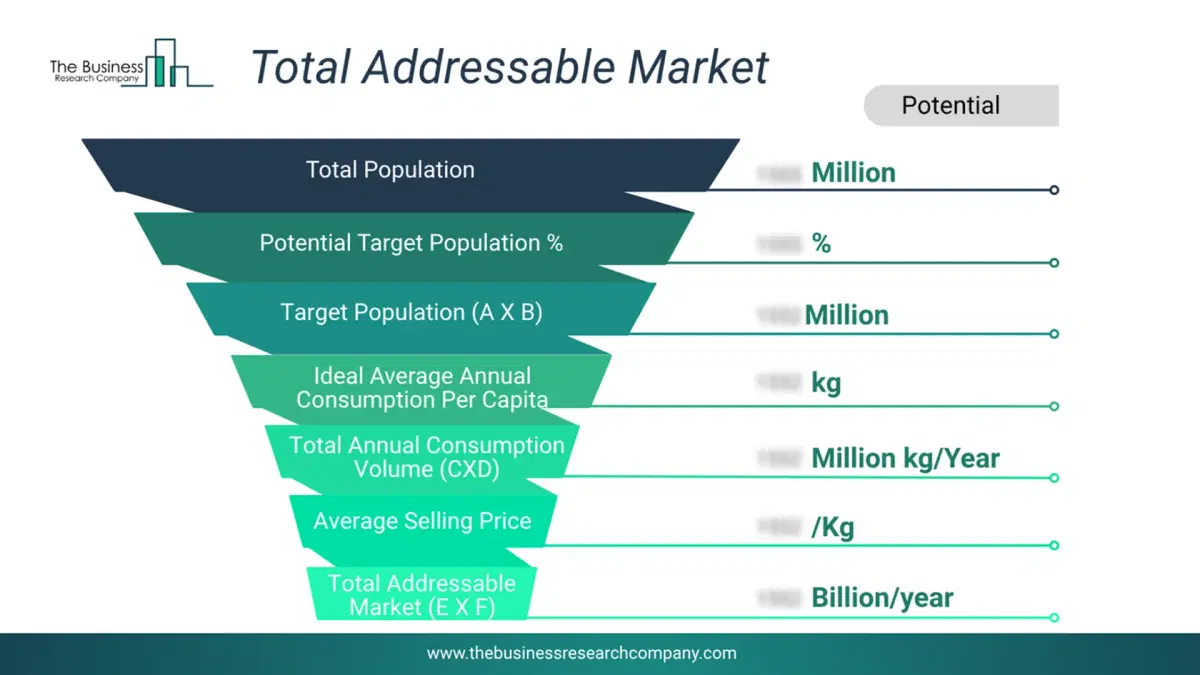
This chart highlights the Total Addressable Market (TAM) by estimating the maximum revenue opportunity using an assumption-driven approach, supporting strategic planning and opportunity sizing across markets. The chart is illustrative; the full report provides a more comprehensive analysis.
What Key Data and Analysis Are Included in the Lifting Equipment Market Report 2026?
The lifting equipment market research report is one of a series of new reports from The Business Research Company that provides market statistics, including industry global market size, regional shares, competitors with the market share, detailed market segments, market trends and opportunities, and any further data you may need to thrive in the lifting equipment industry. The market research report delivers a complete perspective of everything you need, with an in-depth analysis of the current and future state of the industry.Lifting Equipment Market Report Forecast Analysis
| Report Attribute | Details |
|---|---|
| Market Size Value In 2026 | $93.08 billion |
| Revenue Forecast In 2030 | $112.75 billion |
| Growth Rate | CAGR of 4.9% from 2026 to 2030 |
| Base Year For Estimation | 2025 |
| Actual Estimates/Historical Data | 2020-2025 |
| Forecast Period | 2026 - 2030 |
| Market Representation | Revenue in USD Billion and CAGR from 2026 to 2030 |
| Segments Covered | Type, Mechanism, Application |
| Regional Scope | Asia-Pacific, Western Europe, Eastern Europe, North America, South America, Middle East, Africa |
| Country Scope | The countries covered in the report are Australia, Brazil, China, France, Germany, India, Indonesia, Japan, Taiwan, Russia, South Korea, UK, USA, Canada, Italy, Spain. |
| Key Companies Profiled | Komatsu Ltd., Toyota Industries Corporation, Anhui Heli Co. Ltd., Liebherr International AG, XCMG Group, Kion Group AG, Zoomlion Heavy Industry Science and Technology Co Ltd, Ingersoll Rand Inc., Mitsubishi Logisnext Co. Ltd., Jungheinrich AG, Terex Corporation, Cargotec Corporation, Daifuku Co. Ltd., Hyster-Yale Materials Handling Inc., Konecranes plc, Mammoet Holding BV, Palfinger AG, Columbus McKinnon Corporation, Haulotte Group, Kito Corporation |
| Customization Scope | Request for Customization |
| Pricing And Purchase Options | Explore Purchase Options |