
Long Term Care Software Market Report 2026
Global Outlook – By Product (Clinical Software, Non-Clinical Solutions), By Deployment Type (Web-Based, On-Premises, Cloud-Based), By End-User (Home Healthcare Agencies, Hospice Care Facilities, Nursing Homes And Assisted Living Facilities) – Market Size, Trends, Strategies, and Forecast to 2030
Long Term Care Software Market Overview
• Long Term Care Software market size has reached to $5.23 billion in 2025 • Expected to grow to $10.31 billion in 2030 at a compound annual growth rate (CAGR) of 14.5% • Growth Driver: Surge In Chronic Diseases Drives Expansion Of The Long-Term Care Software Market • Market Trend: Technological Advancements Driving Efficiency and Personalization in Global Long Term Care Software Market • North America was the largest region in 2025.Market Gains By 2030 – Top Opportunities By Segment
Market Gain identifies the most promising market opportunities by highlighting the segments or products expected to generate the highest incremental revenue growth over the next five years.
What Is Covered Under Long Term Care Software Market?
Long-term care software is a tool that manages workflows, data, tracking, and administration of long-term care facilities, patients, and staff while offering insightful analytics and streamlined communication between patients and care providers. The main products of long-term care software are clinical software and non-clinical solutions. Clinical software refers to long-term care software services such as electronic health records, e-prescribing, clinical decision support systems, and other services. The various deployment types involved are web-based, on-premises and cloud-based which are used by home healthcare agencies, hospice care facilities, nursing homes and assisted living facilities.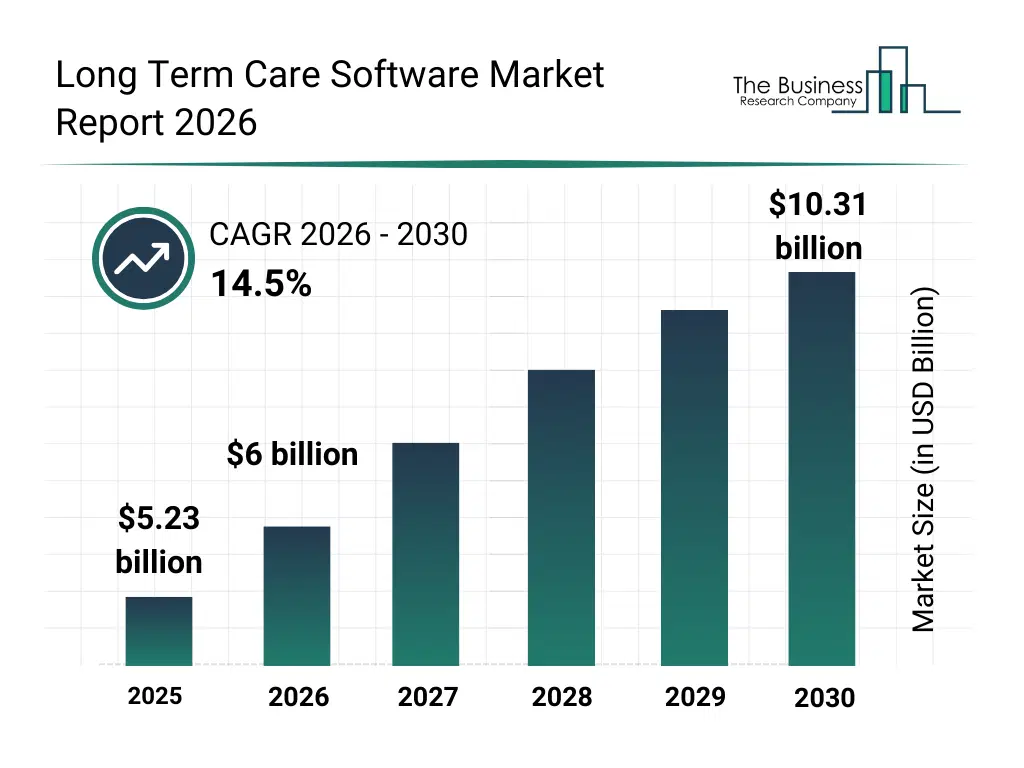
What Is The Long Term Care Software Market Size and Share 2026?
The long term care software market size has grown rapidly in recent years. It will grow from $5.23 billion in 2025 to $6 billion in 2026 at a compound annual growth rate (CAGR) of 14.7%. The growth in the historic period can be attributed to increasing elderly population, expansion of long-term care facilities, rising administrative complexity in care management, adoption of digital health records, growing demand for operational efficiency.What Is The Long Term Care Software Market Growth Forecast?
The long term care software market size is expected to see rapid growth in the next few years. It will grow to $10.31 billion in 2030 at a compound annual growth rate (CAGR) of 14.5%. The growth in the forecast period can be attributed to increasing shift toward value-based care models, rising investments in digital healthcare infrastructure, expansion of home-based long-term care services, growing focus on interoperability and analytics, increasing adoption of ai-enabled care management tools. Major trends in the forecast period include increasing adoption of cloud-based care management platforms, rising use of data-driven patient monitoring tools, growing integration of electronic health records, expansion of workflow automation in care facilities, enhanced focus on regulatory compliance solutions.
Global Long Term Care Software Market Segmentation
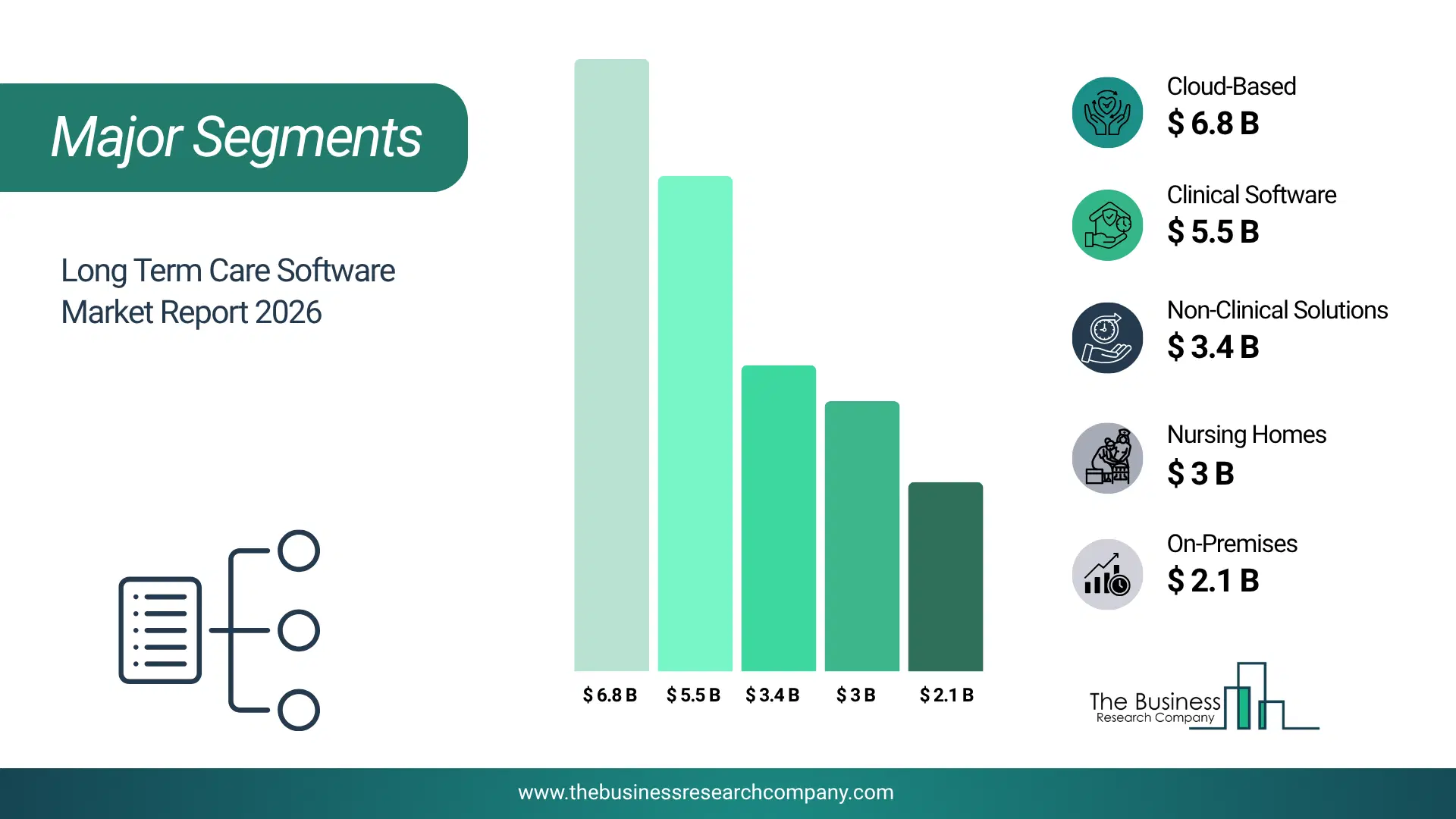
1) By Product: Clinical Software, Non-Clinical Solutions 2) By Deployment Type: Web-Based, On-Premises, Cloud-Based 3) By End-User: Home Healthcare Agencies, Hospice Care Facilities, Nursing Homes And Assisted Living Facilities Subsegments: 1) By Clinical Software: Electronic Health Records (EHR), Medication Management Systems, Care Planning Software, Assessment And Reporting Tools 2) By Non-Clinical Solutions: Billing And Revenue Cycle Management, Human Resource Management Systems, Facility Management Software, Compliance And Regulatory Solutions The top segments in the long term care software market will be: • Cloud-Based will reach $6874.19 Million by 2030. • Clinical Software will reach $5539.28 Million by 2030. • Non-Clinical Solutions will reach $3483.78 Million by 2030. • Nursing Homes will reach $3066.1 Million by 2030. • On-Premises will reach $2148.87 Million by 2030.What Is The Driver Of The Long Term Care Software Market?
The rising prevalence of chronic diseases is a primary driver propelling the long-term care software market. Chronic diseases are defined as conditions that last for a year or more and require ongoing medical attention or limit activities of daily living (ADL) or both. Long-term care (LTC) software can be a valuable tool for managing chronic diseases by tracking a patient's symptoms, progress, and medication adherence, which helps to identify potential problems early on and intervene before they become more serious. For instance, in February 2024, according to the World Health Organization, a Switzerland-based intergovernmental organization, by 2050, over 35 million new cancer cases were projected, representing a 77% increase compared to the estimated 20 million cases in 2022. Therefore, the rising prevalence of chronic diseases is expected to propel the growth of the long-term care software market.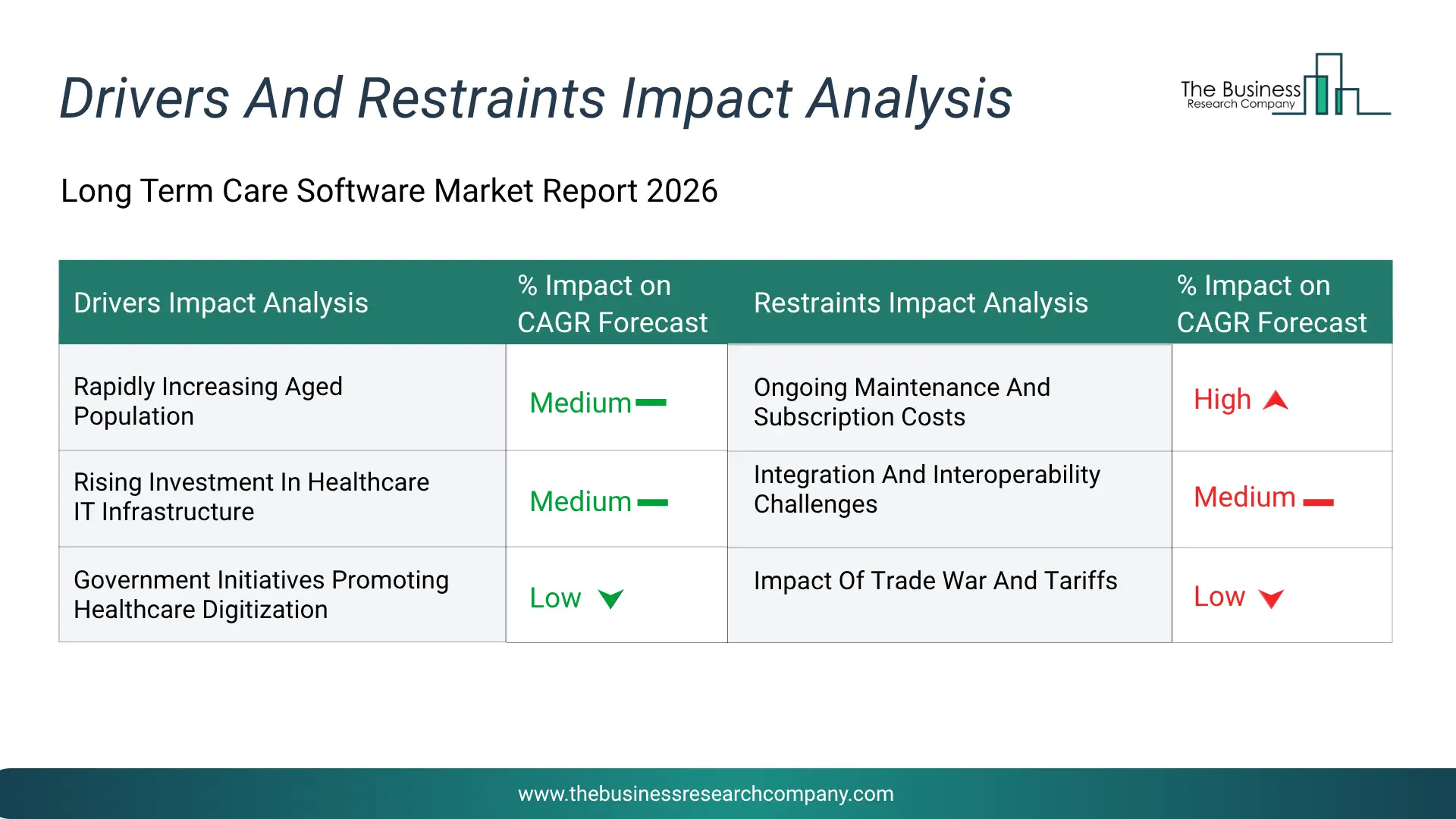
Infographic Chart Showing Key Market Drivers Analysis And Restraints For Long Term Care Software Market
The chart presents an impact analysis of key drivers and restraints, quantifying their relative influence on the market's growth rate and helping assess the balance between growth enablers and limiting factors. This chart offers a high-level perspective; the full report contains more detailed insights.
How Will The Drivers Impact Growth In The Global Long Term Care Software Market?
• Rapidly Increasing Aged Population (Medium) – During the forecast period, rapidly increasing aged population is expected to propel the growth of the long-term care software market. As the number of elderly individuals increases, healthcare providers and long-term care facilities face greater pressure to manage patient records, care coordination, compliance, and workforce efficiency more effectively. Advanced software solutions help streamline clinical workflows, monitor patient outcomes, and support data-driven decision-making. In addition, governments and healthcare organizations are investing more in digital health infrastructure to address rising care needs and operational complexity. As a result, long-term care software is becoming an essential tool for improving service quality, optimizing resource utilization, and ensuring scalable, cost-effective care delivery across aging populations. The rapidly increasing aged population growth contribution during the forecast period in 2025 is 1.3%. • Rising Investment In Healthcare IT Infrastructure (Medium) – During the forecast period, the rising investment in healthcare it infrastructure is expected to propel the growth of the long-term care software market in the forecast period. healthcare providers, governments, and private organizations are increasingly allocating funds to modernize digital systems, improve data management, and enhance patient care delivery. investments in electronic health records, cloud-based platforms, and integrated care management solutions are enabling long-term care facilities to streamline operations and ensure regulatory compliance. additionally, stronger it infrastructure supports real-time data sharing, analytics, and remote patient monitoring, which are critical for managing complex care needs. consequently, these investments are driving the adoption of advanced long-term care software, improving efficiency, scalability, and overall care quality. the rising investment in healthcare it infrastructure growth contribution during the forecast period in 2025 is 1.0%. • Government Initiatives Promoting Healthcare Digitization (Low) – During the forecast period, government initiatives promoting healthcare digitization are expected to propel the growth of the long-term care software market. Many governments are implementing policies, funding programs, and national digital health strategies to modernize healthcare systems and improve care delivery. These initiatives encourage the adoption of electronic health records, telehealth platforms, and integrated care management solutions within long-term care facilities. In addition, regulatory support and incentives are helping providers transition from manual processes to digital platforms, enhancing efficiency and data accuracy. As healthcare organizations align with these government-led digital transformation efforts, demand for advanced long-term care software is increasing, supporting better patient management, operational transparency, and improved care outcomes. The government initiatives promoting healthcare digitization growth contribution during the forecast period in 2025 is 0.8%. • Growth In Assisted Living And Senior Housing Communities (Low) – During the forecast period, the growth in assisted living and senior housing communities is expected to propel the growth of the long-term care software market in the forecast period. as the number of elderly individuals seeking supportive living environments increases, operators of assisted living facilities and senior housing communities are focusing on improving care coordination, resident management, and operational efficiency. long-term care software helps these organizations manage clinical records, medication tracking, staff scheduling, and regulatory compliance more effectively. additionally, rising competition among providers is encouraging the adoption of digital solutions to enhance service quality and resident experience. the growth in assisted living and senior housing communities growth contribution during the forecast period in 2025 is 0.5%.How Will The Restraints Impact Growth In The Global Long Term Care Software Market?
• Ongoing Maintenance And Subscription Costs (Medium) – During the forecast period, ongoing maintenance and subscription costs is expected to hinder the growth of the long term care software market. Many long-term care providers rely on cloud-based platforms and software-as-a-service models that require recurring payments for licensing, system upgrades, technical support, and security updates. These continuous expenses can place financial pressure on healthcare organizations, particularly smaller facilities with limited budgets. In addition, costs related to system customization, integration, and periodic training may further increase operational spending. Growth affected by the ongoing maintenance and subscription costs during the forecast period in 2025 is -2.0%. • Integration And Interoperability Challenges (Medium) – During the forecast period, integration and interoperability challenges are expected to hinder the growth of the long term care software market in forecast period. many healthcare providers operate with multiple legacy systems that are not fully compatible with modern digital platforms, making seamless data exchange difficult. this lack of standardized systems can lead to fragmented patient information, operational inefficiencies, and higher implementation costs. additionally, integrating long-term care software with electronic health records, hospital systems, and other healthcare applications often requires significant technical expertise and investment. these complexities may slow adoption among smaller facilities and resource-constrained providers. growth affected by the integration and interoperability challenges during the forecast period in 2025 is -1.5%. • Impact Of Trade War And Tariffs (Low) – During the forecast period, trade wars and tariffs are expected to restrain the growth of the long-term care software market during the forecast period by increasing the costs of imported it hardware, cloud infrastructure components, medical devices, and advanced computing systems required to support digital care platforms. many long-term care providers rely on imported it hardware, cloud infrastructure components, networking equipment, and data storage systems to implement and operate digital care platforms. when tariffs raise the prices of these technologies, healthcare organizations may face higher capital and operational expenditures. this can delay planned digital transformation initiatives and limit investments in advanced software solutions. growth affected by the trade wars and tariffs during the forecast period in 2025 is -0.3%.Key Players In The Global Long Term Care Software Market
Major companies operating in the long term care software market are McKesson Corporation; Optimus EMR Inc.; PointClickCare Corp.; Matrixcare Inc.; Allscripts Healthcare Solutions Inc.; AOD Software LLC; Netsmart Technologies Inc.; Yardi Systems Inc.; Eldermark LLC; ADL Data Systems Inc.; HealthMEDX LLC; Intellitec Solutions; BlueStrata EHR Software Inc.; Wellsky Corporation; Medtelligent Inc.; Computer Programs and Systems Inc.; Sanvis Health LLC; CareVoyant Inc.; Caremerge Inc.; CareSoft Inc.; CareTracker Inc.; Health Care Software Inc.; LifeLoop LLC; OnShift Inc.; RealPage Inc.; Senior Insight Inc.; Senior Living Technologies LLC; Seniorsoft Development Co.Ltd.; SimpleLTC; SmartLinx Solutions LLC; SoftWriters Inc.; Storii Limited; Team TSI Corporation Inc.; Vitals Software Inc.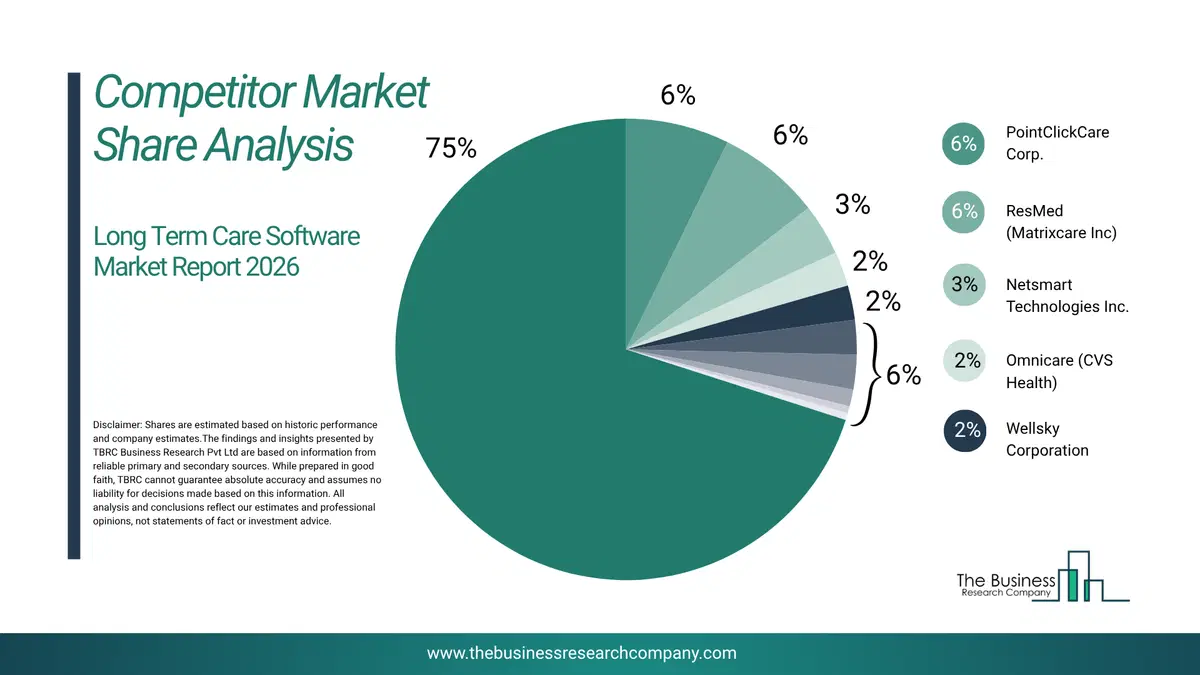
This chart is for illustrative purposes; the full report includes a detailed competitor analysis and comprehensive overview of the top 10 companies in the market.
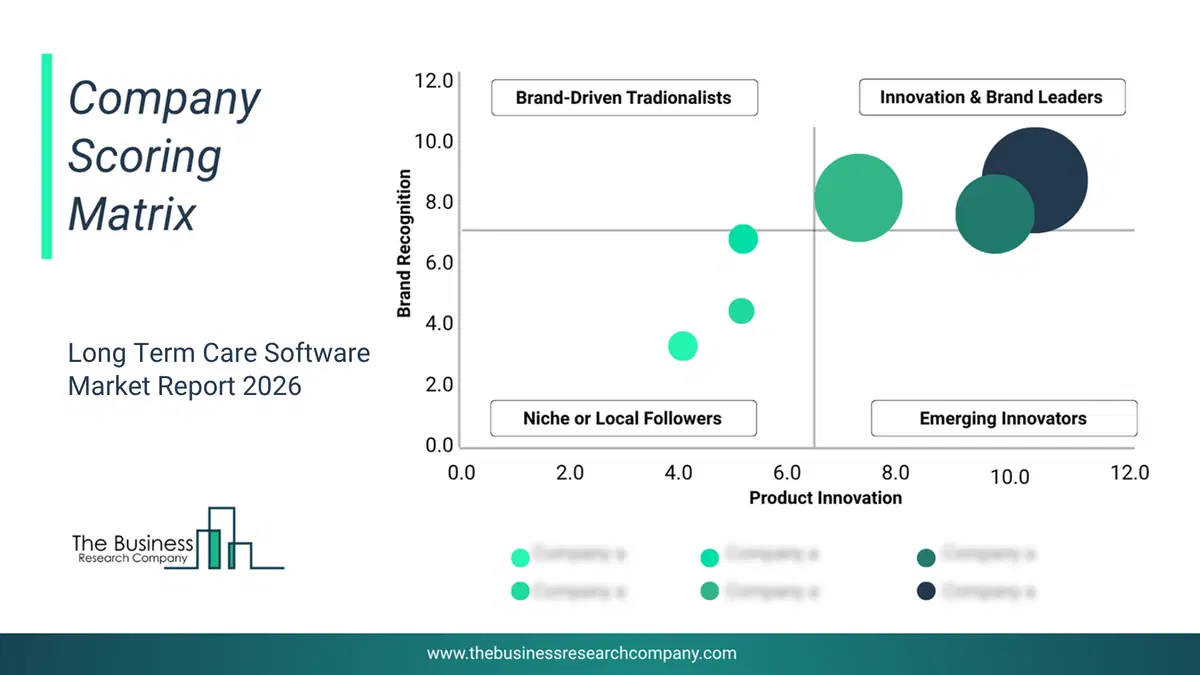
This chart maps companies by product innovation and brand strength, with bubble size indicating relative revenue, helping identify market leaders, challengers, and niche players. This is an illustrative chart; the full report provides a complete and accurate competitive analysis.
Global Long Term Care Software Market Trends and Insights
Major companies operating in the long term care software market are focusing on technological advancements such as AI-powered predictive analytics to gain a competitive advantage. AI-powered predictive analytics involve the use of advanced algorithms and data analytics to anticipate patient needs and enable proactive care management in long-term care settings. For instance, in March 2024, MatrixCare, a US-based healthcare technology provider, introduced an integrated software suite that combines Electronic Health Records (EHR), Revenue Cycle Management (RCM), and AI-driven analytics to enhance care coordination and operational efficiency. The platform offers features like real-time patient monitoring, predictive risk assessment, and streamlined revenue management. These advancements in technology enable long-term care providers to improve patient outcomes, optimize resource allocation, and ensure regulatory compliance.What Are Latest Mergers And Acquisitions In The Long Term Care Software Market?
In January 2024, Aline, a US-based provider of senior living software and solutions, acquired Vitals Software for an undisclosed amount. With this acquisition, Aline expanded its enterprise-scale solutions to VITALS customers while continuing to support their existing platform, aiming to strengthen its market presence and enhance technological capabilities in long-term care software. Vitals Software is a US-based provider of long term care software.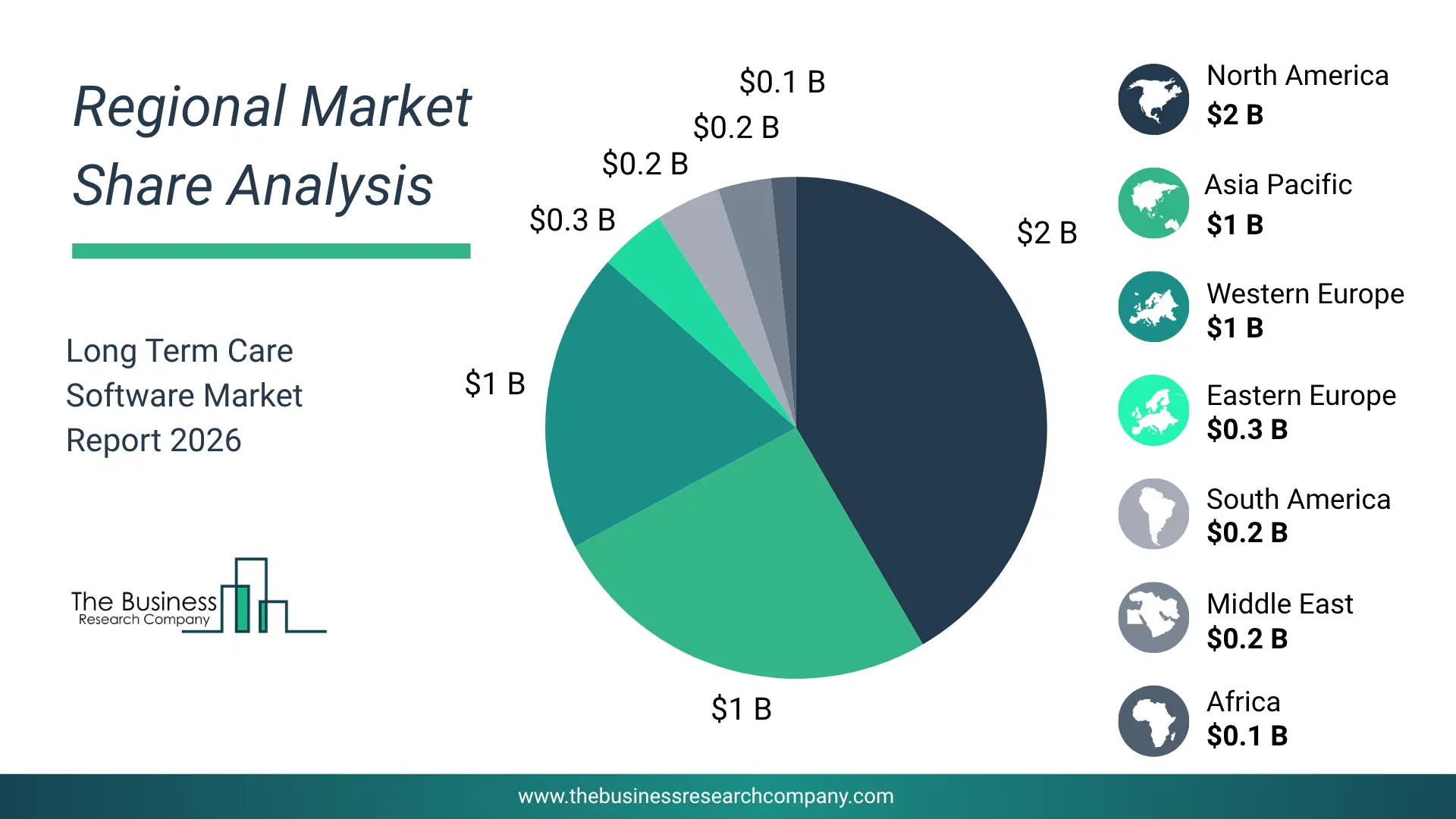
Regional Insights
North America was the largest region in the long term care software market in 2025. The regions covered in this market report are Asia-Pacific, South East Asia, Western Europe, Eastern Europe, North America, South America, Middle East, Africa. The countries covered in this market report are Australia, Brazil, China, France, Germany, India, Indonesia, Japan, Taiwan, Russia, South Korea, UK, USA, Canada, Italy, SpainWhat Defines the Long Term Care Software Market?
The long-term care software market includes revenues earned by entities by providing long-term care software services with features such as clinical or electronic medical records, point of care, billing and marketing. The market value includes the value of related goods sold by the service provider or included within the service offering. Only goods and services traded between entities or sold to end consumers are included.How is Market Value Defined and Measured?
The market value is defined as the revenues that enterprises gain from the sale of goods and/or services within the specified market and geography through sales, grants, or donations in terms of the currency (in USD unless otherwise specified). The revenues for a specified geography are consumption values that are revenues generated by organizations in the specified geography within the market, irrespective of where they are produced. It does not include revenues from resales along the supply chain, either further along the supply chain or as part of other products.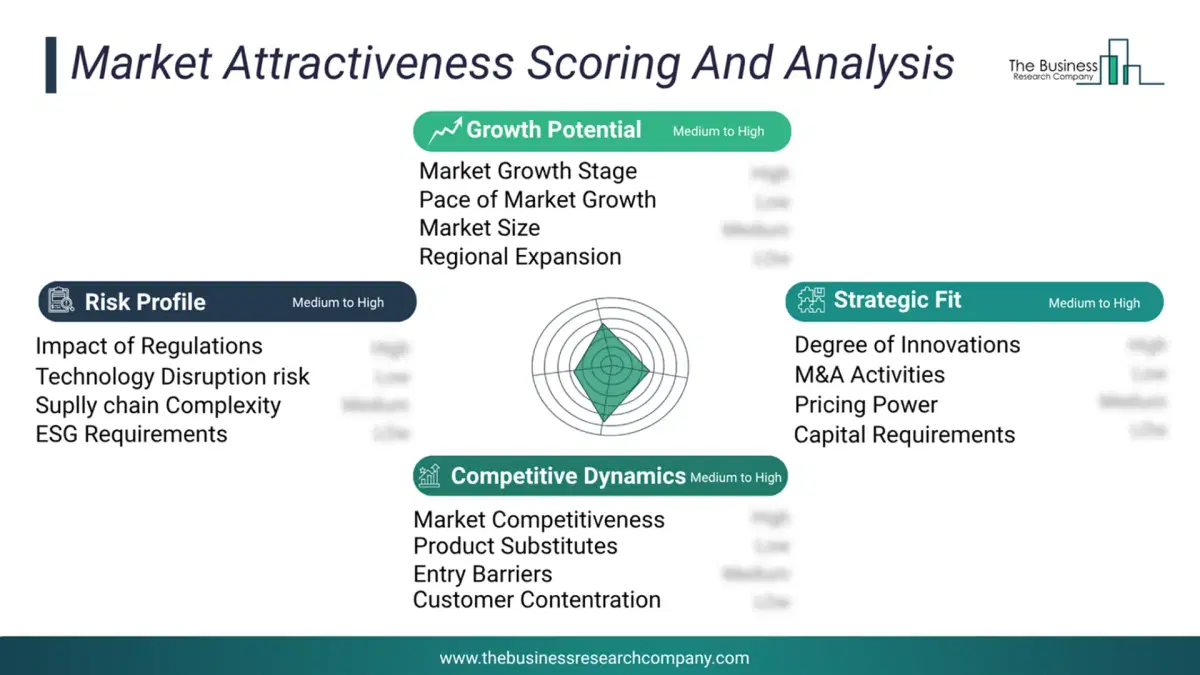
This chart presents market attractiveness based on a quantitative evaluation of growth, competition, strategic alignment, and risk, offering a clear view of opportunity areas for decision-making. This chart is for illustrative purposes; the full report contains the complete analysis.
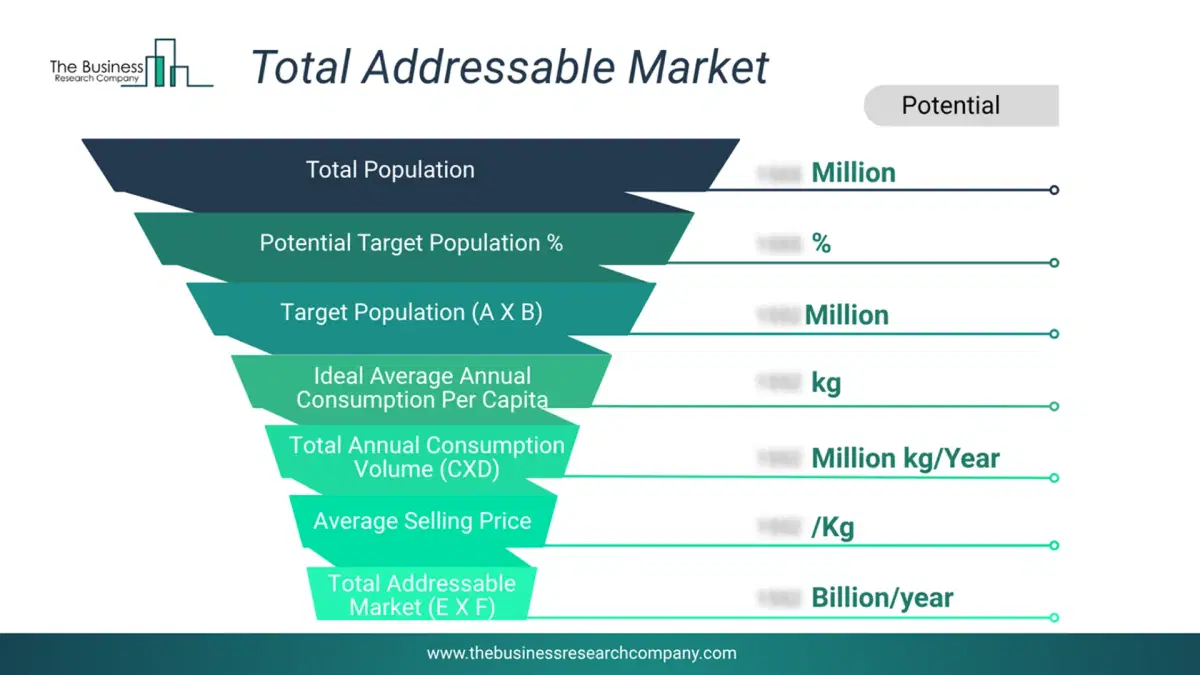
This chart highlights the Total Addressable Market (TAM) by estimating the maximum revenue opportunity using an assumption-driven approach, supporting strategic planning and opportunity sizing across markets. The chart is illustrative; the full report provides a more comprehensive analysis.
What Key Data and Analysis Are Included in the Long Term Care Software Market Report 2026?
The long term care software market research report is one of a series of new reports from The Business Research Company that provides market statistics, including industry global market size, regional shares, competitors with the market share, detailed market segments, market trends and opportunities, and any further data you may need to thrive in the long term care software industry. The market research report delivers a complete perspective of everything you need, with an in-depth analysis of the current and future state of the industry.Long Term Care Software Market Report Forecast Analysis
| Report Attribute | Details |
|---|---|
| Market Size Value In 2026 | $6 billion |
| Revenue Forecast In 2030 | $10.31 billion |
| Growth Rate | CAGR of 14.7% from 2026 to 2030 |
| Base Year For Estimation | 2025 |
| Actual Estimates/Historical Data | 2020-2025 |
| Forecast Period | 2026 - 2030 - 2035 |
| Market Representation | Revenue in USD Billion and CAGR from 2026 to 2030 |
| Segments Covered | Product, Deployment Type, End-User |
| Regional Scope | Asia-Pacific, Western Europe, Eastern Europe, North America, South America, Middle East, Africa |
| Country Scope | The countries covered in the report are Australia, Brazil, China, France, Germany, India, Indonesia, Japan, Taiwan, Russia, South Korea, UK, USA, Canada, Italy, Spain. |
| Key Companies Profiled | McKesson Corporation; Optimus EMR Inc.; PointClickCare Corp.; Matrixcare Inc.; Allscripts Healthcare Solutions Inc.; AOD Software LLC; Netsmart Technologies Inc.; Yardi Systems Inc.; Eldermark LLC; ADL Data Systems Inc.; HealthMEDX LLC; Intellitec Solutions; BlueStrata EHR Software Inc.; Wellsky Corporation; Medtelligent Inc.; Computer Programs and Systems Inc.; Sanvis Health LLC; CareVoyant Inc.; Caremerge Inc.; CareSoft Inc.; CareTracker Inc.; Health Care Software Inc.; LifeLoop LLC; OnShift Inc.; RealPage Inc.; Senior Insight Inc.; Senior Living Technologies LLC; Seniorsoft Development Co.Ltd.; SimpleLTC; SmartLinx Solutions LLC; SoftWriters Inc.; Storii Limited; Team TSI Corporation Inc.; Vitals Software Inc. |
| Customization Scope | Request for Customization |
| Pricing And Purchase Options | Explore Purchase Options |