
Low-Density Lipoprotein Test Market Report 2026
Global Outlook – By Product Type (Low-Density Lipoprotein Cholesterol (LDL-C), Low-Density Lipoprotein Particle Number (LDL-P), Low-Density Lipoprotein Particle Size (LDL-B), Other Product Types), By Component (Kits, Reagents, Devices, Other Components ), By Disease Type (Diabetes, Stroke, Atherosclerosis, Obesity, Dyslipidaemia, Carotid Artery Disease, Peripheral Arterial Disease, Angina, Other Disease Types), By Distribution Channel (Direct Tenders, Retail), By End User (Hospitals, Clinics, Ambulatory Care, Research Laboratory, Other End Users) - Market Size, Trends, Strategies, and Forecast to 2030
Low-Density Lipoprotein Test Market Overview
• Low-Density Lipoprotein Test market size has reached to $8.83 billion in 2025 • Expected to grow to $11.47 billion in 2030 at a compound annual growth rate (CAGR) of 5.3% • Growth Driver: Surge In Cardiovascular Diseases Propels Expansion Of Low-Density Lipoprotein Test Market • Market Trend: Innovative Breakthrough Transforming The Landscape Of Low-Density Lipoprotein Test Markets • North America was the largest region in 2025.What Is Covered Under Low-Density Lipoprotein Test Market?
The low-density lipoprotein (LDL) test refers to a type of blood test that doctors employ to gauge a patient's bloodstream's LDL cholesterol levels. LDL testing can assess LDL levels independently or as a component of a lipid panel test. Low-density lipoprotein is an accumulation of cholesterol in the arteries that can contribute to heart attacks and strokes. The main product types of low-density lipoprotein test are LDL-C, LDL-P, LDL-B, and other products. Low-density lipoprotein cholesterol (LDL-C) is referred to as bad cholesterol because it accumulates in the walls of your blood vessels, increasing your risk of health issues such as a heart attack or stroke. It's used to test for and measure the amount of low-density lipoprotein cholesterol (LDL-C) in the blood. The component used are kits, reagents, devices, and other components, that are used in diabetes, stroke, atherosclerosis, obesity, dyslipidemia, carotid artery disease, peripheral arterial disease, angina, and others. The distribution channel includes are direct tenders and retail, that are used by hospitals, clinics, ambulatory care, research laboratory and others.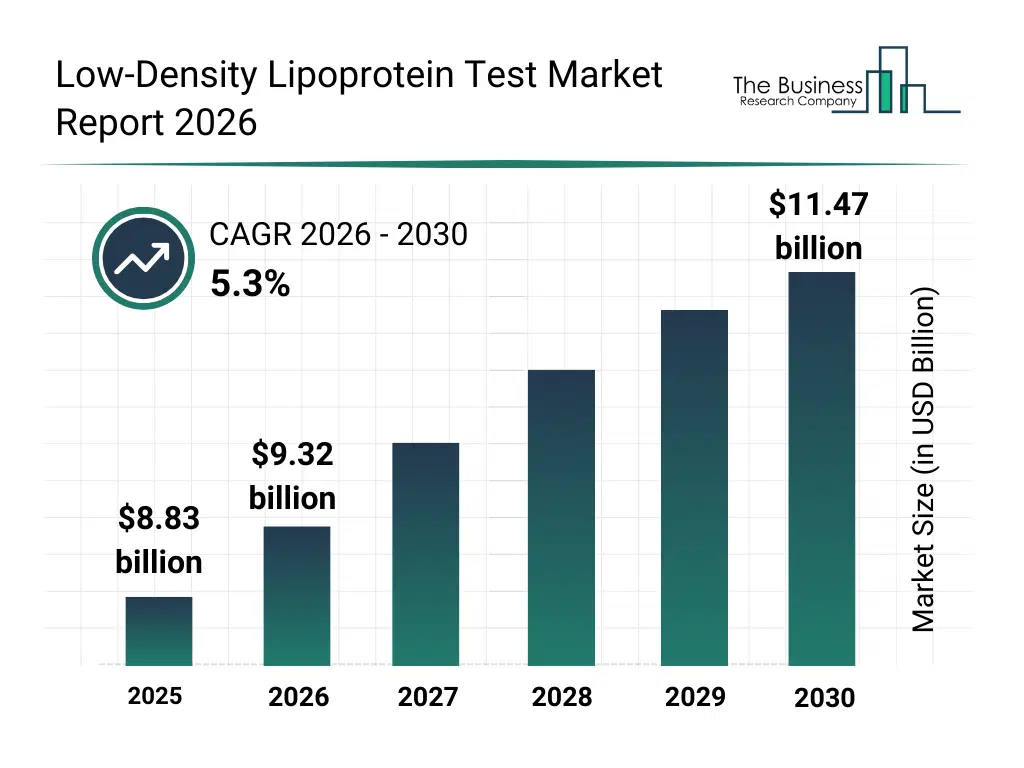
What Is The Low-Density Lipoprotein Test Market Size and Share 2026?
The low-density lipoprotein test market size has grown strongly in recent years. It will grow from $8.83 billion in 2025 to $9.32 billion in 2026 at a compound annual growth rate (CAGR) of 5.5%. The growth in the historic period can be attributed to increasing prevalence of cardiovascular diseases, early clinical reliance on ldl-c testing, rising incidence of obesity and diabetes, expansion of hospital-based diagnostic laboratories, growing awareness of cholesterol management.What Is The Low-Density Lipoprotein Test Market Growth Forecast?
The low-density lipoprotein test market size is expected to see strong growth in the next few years. It will grow to $11.47 billion in 2030 at a compound annual growth rate (CAGR) of 5.3%. The growth in the forecast period can be attributed to increasing focus on preventive healthcare, rising screening for dyslipidaemia, expanding use of advanced lipid testing methods, growing demand for early stroke and heart disease risk detection, higher healthcare spending on diagnostics. Major trends in the forecast period include rising emphasis on preventive cardiovascular screening, growing use of comprehensive lipid panel testing, increasing demand for routine cholesterol monitoring, expansion of ldl testing in metabolic disorders, rising adoption of point-of-care lipid testing.
Global Low-Density Lipoprotein Test Market Segmentation
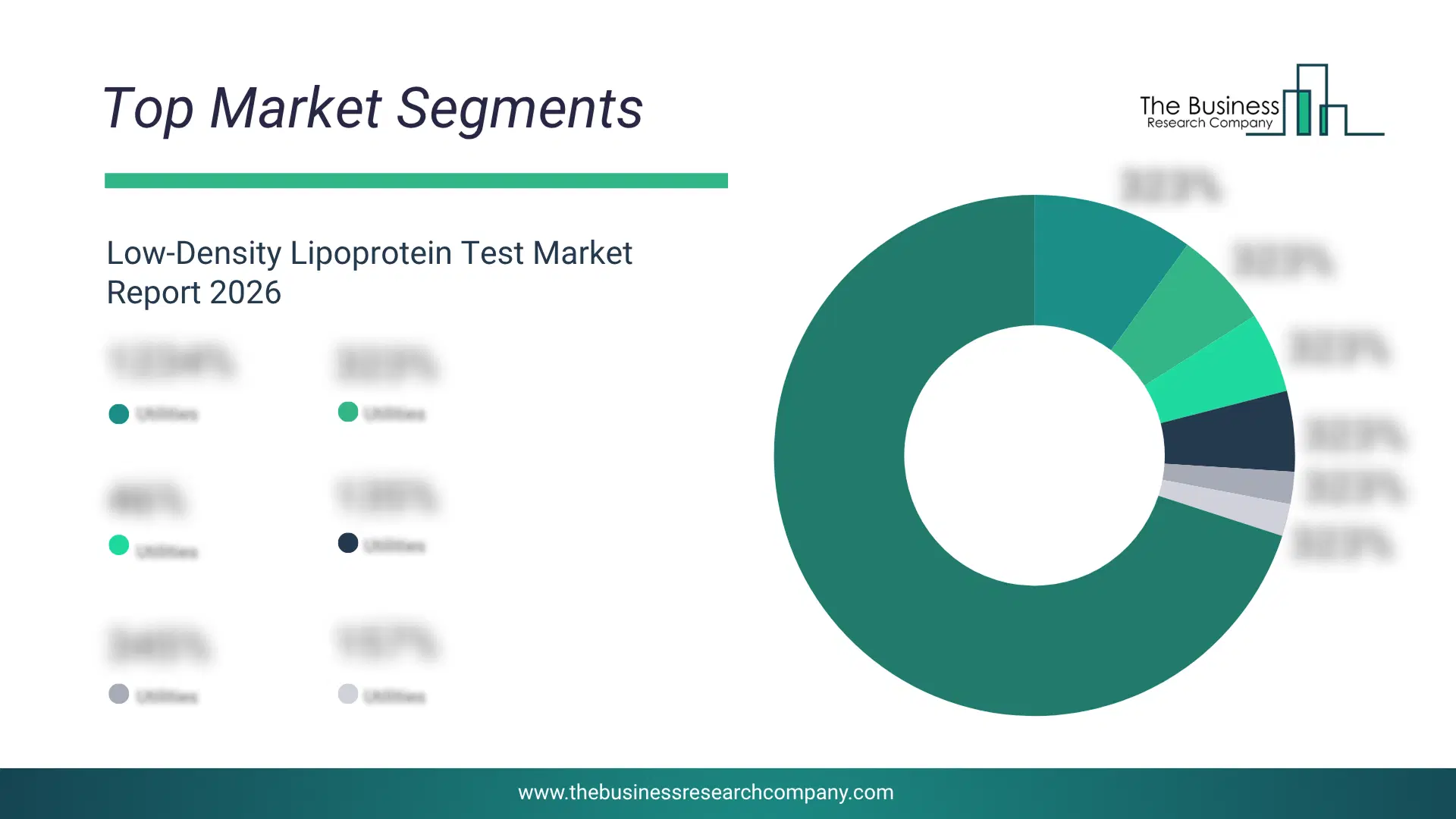
1) By Product Type: Low-Density Lipoprotein Cholesterol (LDL-C), Low-Density Lipoprotein Particle Number (LDL-P), Low-Density Lipoprotein Particle Size (LDL-B), Other Product Types 2) By Component: Kits, Reagents, Devices, Other Components 3) By Disease Type: Diabetes, Stroke, Atherosclerosis, Obesity, Dyslipidaemia, Carotid Artery Disease, Peripheral Arterial Disease, Angina, Other Disease Types 4) By Distribution Channel: Direct Tenders, Retail 5) By End User: Hospitals, Clinics, Ambulatory Care, Research Laboratory, Other End Users Subsegments: 1) By Low-Density Lipoprotein Cholesterol (LDL-C): Direct Measurement Tests, Calculated LDL-C Tests 2) By Low-Density Lipoprotein Particle Number (LDL-P): NMR (Nuclear Magnetic Resonance) Tests, Other Particle Counting Methods 3) By Low-Density Lipoprotein Particle Size (LDL-B): Gradient Gel Electrophoresis, Other Size Measurement Techniques 4) By Other Product Types: Lipid Panel Tests: Genetic Testing For Dyslipidemia, Point-Of-Care Testing DevicesWhat Is The Driver Of The Low-Density Lipoprotein Test Market?
The rise in the prevalence of cardiovascular diseases is expected to propel the growth of the low-density lipoprotein test market going forward. Cardiovascular diseases refer to a type of condition that affects the heart or blood vessels. The LDL test is used to treat cardiovascular diseases by directly measuring low-density lipoprotein levels in the heart. For instance, in February 2024, according to the UK Parliament, a UK-based governing body, heart, and circulatory diseases account for about 25% of all deaths in England, resulting in more than 140,000 fatalities annually and approximately 480 each day, or one death every three minutes. Therefore, the rise in the prevalence of cardiovascular diseases is driving the growth of the low-density lipoprotein test industry.Key Players In The Global Low-Density Lipoprotein Test Market
Major companies operating in the low-density lipoprotein test market are Abbott Laboratories, Siemens Healthineers, F Hoffmann La Roche Ltd, Danaher Corporation, Thermo Fisher Scientific Inc, Bio Rad Laboratories Inc, DiaSorin SpA, Randox Laboratories Ltd, Sekisui Diagnostics, DiaSys Diagnostic Systems GmbH, Eurolyser Diagnostica GmbH, Diazyme Laboratories Inc, OPKO Health Inc, Merck KGaA, Agilent Technologies Inc, Becton Dickinson and Company, Quest Diagnostics Incorporated, Laboratory Corporation of America Holdings, Eurofins Scientific SE, Home Access Health Corporation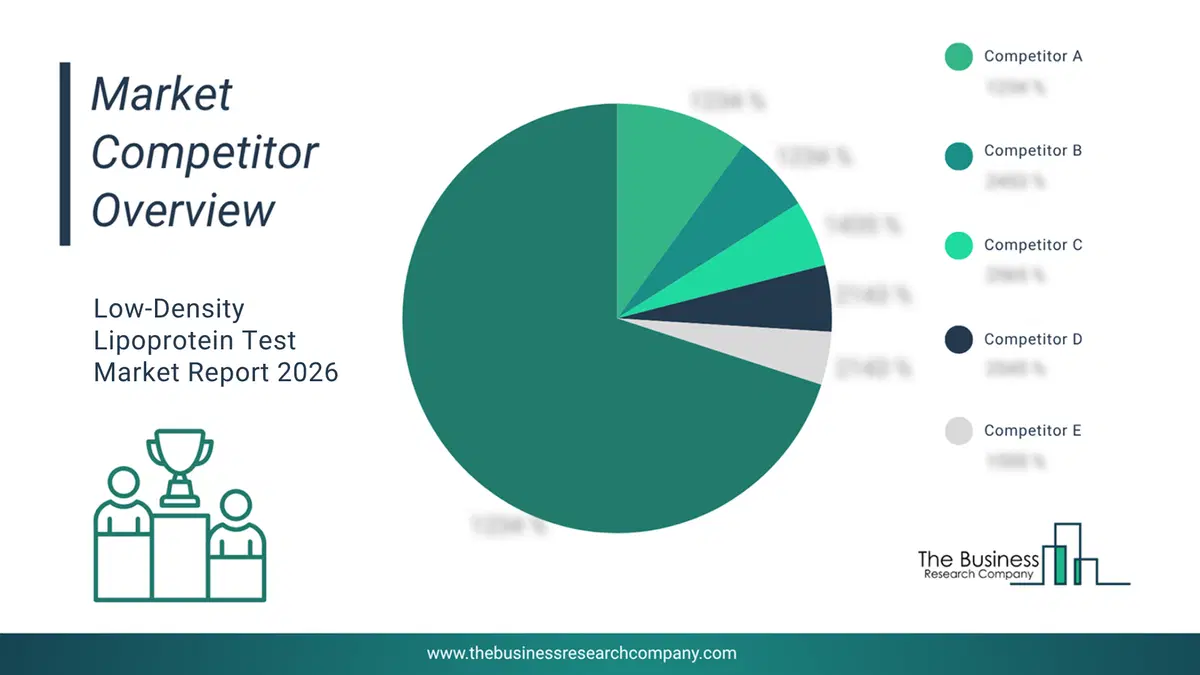
This chart is for illustrative purposes; the full report includes a detailed competitor analysis and comprehensive overview of the top 10 companies in the market.
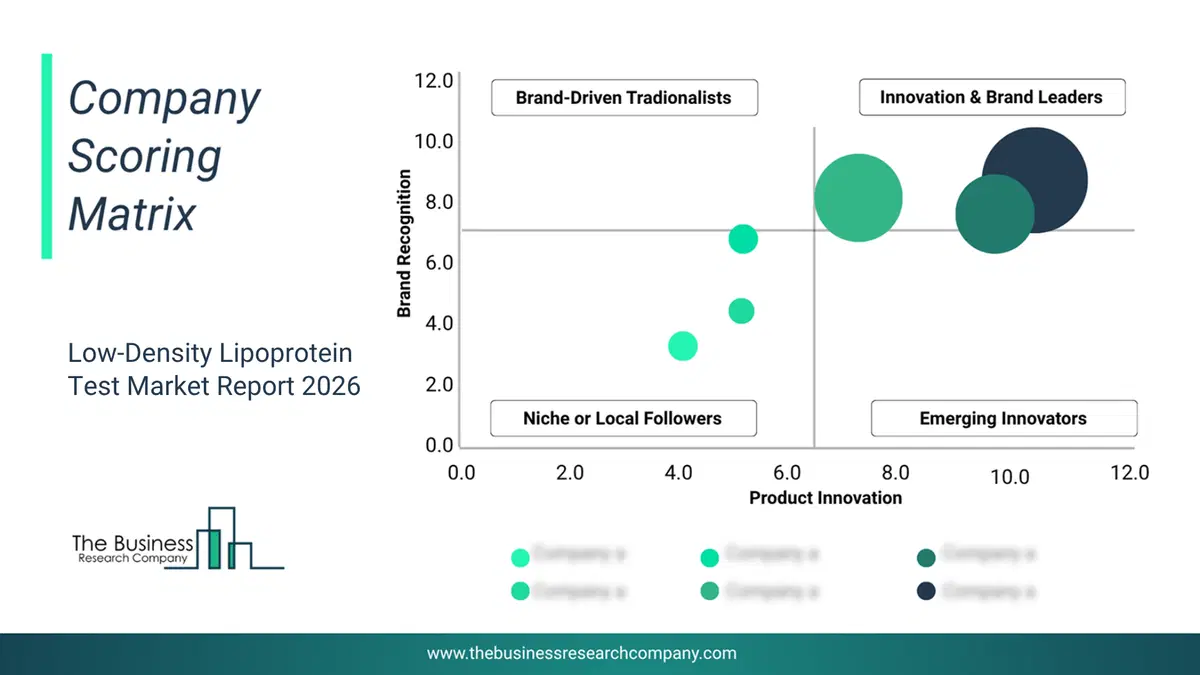
This chart maps companies by product innovation and brand strength, with bubble size indicating relative revenue, helping identify market leaders, challengers, and niche players. This is an illustrative chart; the full report provides a complete and accurate competitive analysis.
Global Low-Density Lipoprotein Test Market Trends and Insights
Major companies operating in the low-density lipoprotein (LDL) test market are focusing on introducing innovative diagnostic solutions such as advanced lipoprotein analysis systems to improve cardiovascular risk assessment, diagnostic accuracy, and patient management. Advanced lipoprotein analysis systems use technologies like nuclear magnetic resonance (NMR) spectroscopy and algorithm-driven interpretation to provide deeper insights into lipid profiles beyond standard LDL-C measurements, enhancing clinical decision-making for individuals with cardiometabolic risks. For instance, in July 2023, Numares Health, a Germany-based health diagnostic company launched the AXINON LDL-p Test System. It is an FDA-cleared diagnostic tool that provides a more detailed assessment of lipoproteins, offering insights into cardiac function beyond standard LDL-C measurements. Utilizing nuclear magnetic resonance (NMR) spectroscopy, the system incorporates advanced diagnostic algorithms to enhance accuracy. It helps physicians better manage patients at elevated risk for cardiovascular disease, particularly those with cardiometabolic risk factors.What Are Latest Mergers And Acquisitions In The Low-Density Lipoprotein Test Market?
In February 2023, AstraZeneca PLC, a UK-based pharmaceutical and biotechnology company, acquired CinCor Pharma Inc. for an undisclosed amount. With this acquisition, AstraZeneca is expected to strengthen its cardiorenal pipeline and expand it with Baxdrostat, a novel aldosterone synthase inhibitor (ASI). CinCor Pharma Inc. is a US-based clinical-last biotechnology company that develops therapies to lower LDL hypertension.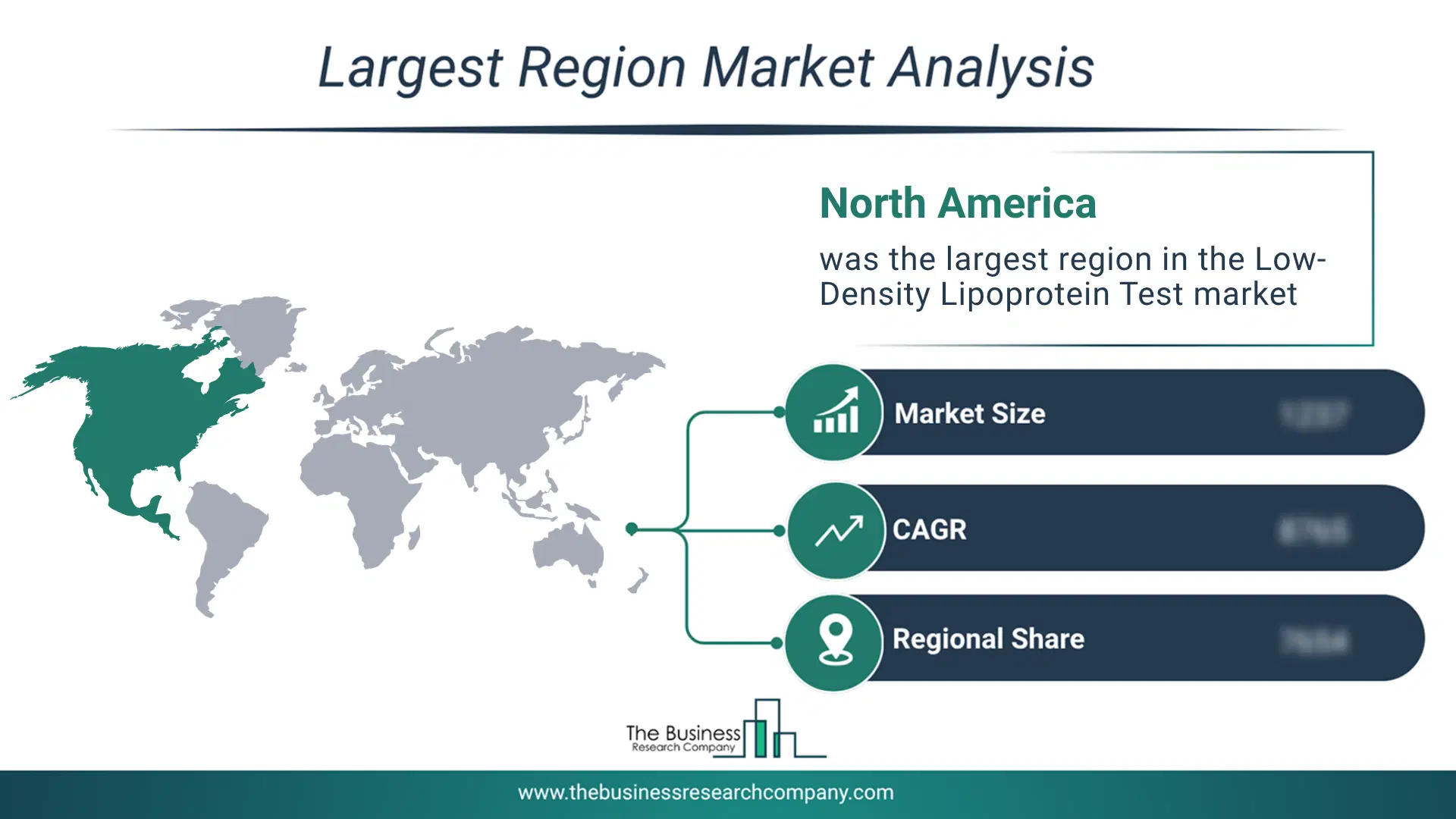
Regional Outlook
North America was the largest region in the Low-Density Lipoprotein Test market in 2025. The regions covered in this market report are Asia-Pacific, South East Asia, Western Europe, Eastern Europe, North America, South America, Middle East, Africa. The countries covered in this market report are Australia, Brazil, China, France, Germany, India, Indonesia, Japan, Taiwan, Russia, South Korea, UK, USA, Canada, Italy, Spain.What Defines the Low-Density Lipoprotein Test Market?
The low-density lipoprotein test market includes revenues earned by entities by measuring very low-density lipoprotein (VLDL) testing and ultra low-density lipoprotein (ULDL) testing services. The market value includes the value of related goods sold by the service provider or included within the service offering. Only goods and services traded between entities or sold to end consumers are included.How is Market Value Defined and Measured?
The market value is defined as the revenues that enterprises gain from the sale of goods and/or services within the specified market and geography through sales, grants, or donations in terms of the currency (in USD unless otherwise specified). The revenues for a specified geography are consumption values that are revenues generated by organizations in the specified geography within the market, irrespective of where they are produced. It does not include revenues from resales along the supply chain, either further along the supply chain or as part of other products.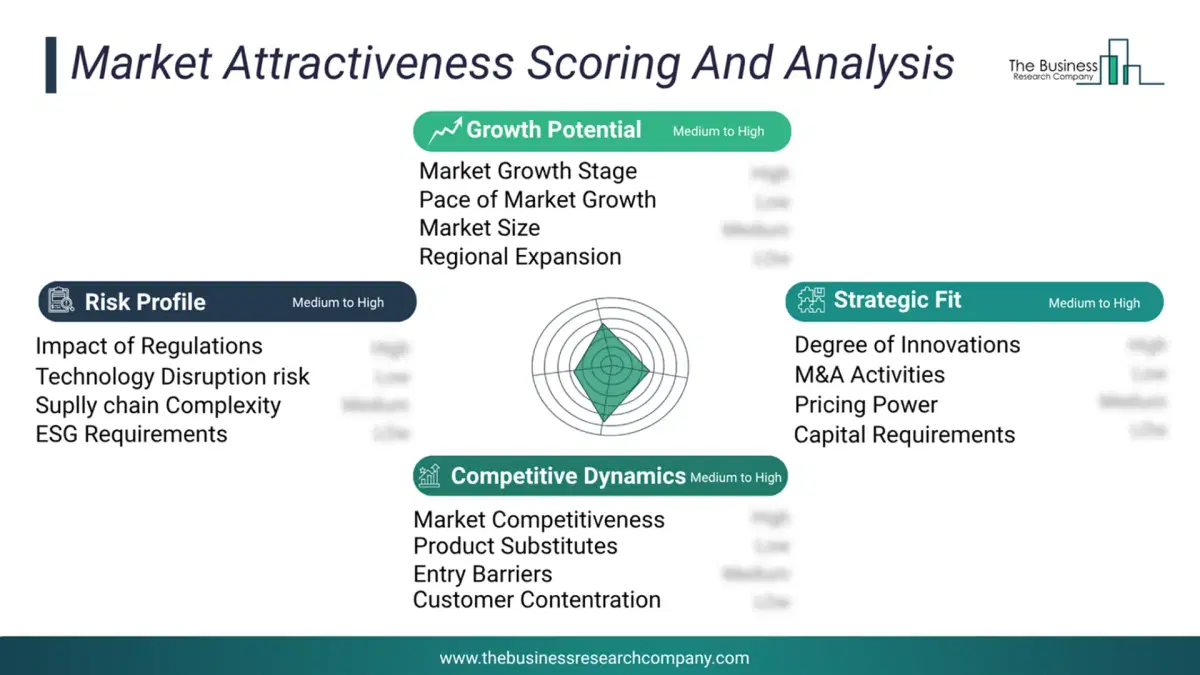
This chart presents market attractiveness based on a quantitative evaluation of growth, competition, strategic alignment, and risk, offering a clear view of opportunity areas for decision-making. This chart is for illustrative purposes; the full report contains the complete analysis.
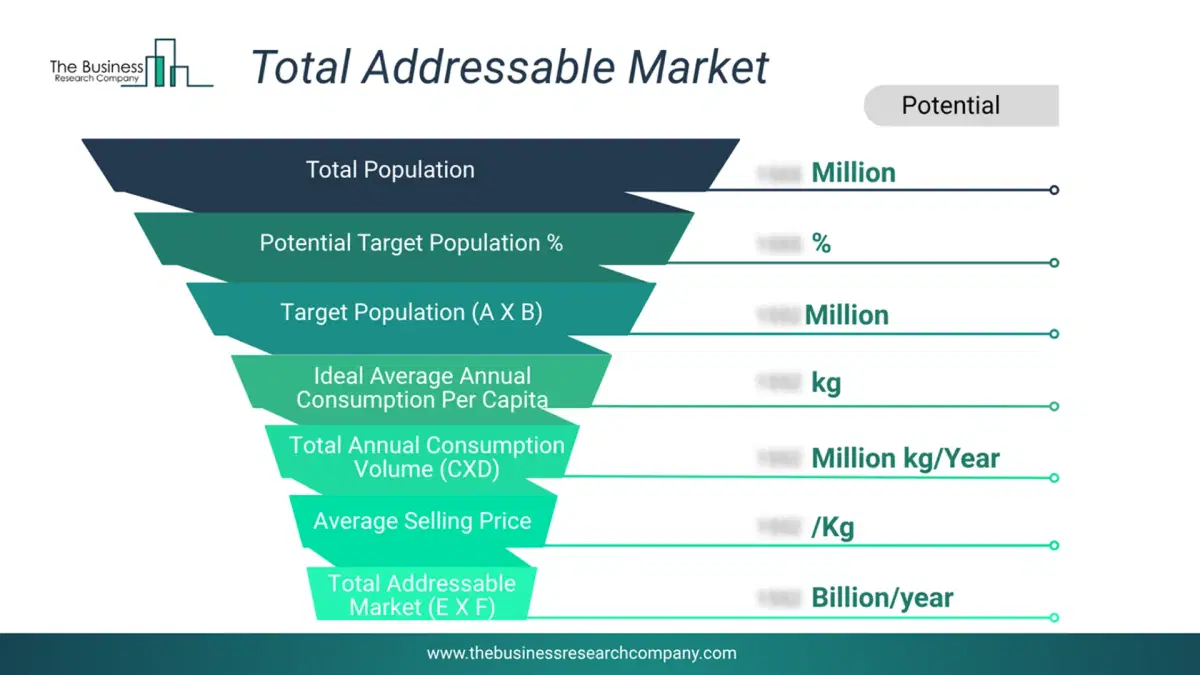
This chart highlights the Total Addressable Market (TAM) by estimating the maximum revenue opportunity using an assumption-driven approach, supporting strategic planning and opportunity sizing across markets. The chart is illustrative; the full report provides a more comprehensive analysis.
What Key Data and Analysis Are Included in the Low-Density Lipoprotein Test Market Report 2026?
The low-density lipoprotein test market research report is one of a series of new reports from The Business Research Company that provides market statistics, including industry global market size, regional shares, competitors with the market share, detailed market segments, market trends and opportunities, and any further data you may need to thrive in the low-density lipoprotein test industry. The market research report delivers a complete perspective of everything you need, with an in-depth analysis of the current and future state of the industry.Low-Density Lipoprotein Test Market Report Forecast Analysis
| Report Attribute | Details |
|---|---|
| Market Size Value In 2026 | $9.32 billion |
| Revenue Forecast In 2030 | $11.47 billion |
| Growth Rate | CAGR of 5.3% from 2026 to 2030 |
| Base Year For Estimation | 2025 |
| Actual Estimates/Historical Data | 2020-2025 |
| Forecast Period | 2026 - 2030 |
| Market Representation | Revenue in USD Billion and CAGR from 2026 to 2030 |
| Segments Covered | Product Type, Component, Disease Type, Distribution Channel, End User |
| Regional Scope | Asia-Pacific, Western Europe, Eastern Europe, North America, South America, Middle East, Africa |
| Country Scope | The countries covered in the report are Australia, Brazil, China, France, Germany, India, Indonesia, Japan, Taiwan, Russia, South Korea, UK, USA, Canada, Italy, Spain |
| Key Companies Profiled | Abbott Laboratories, Siemens Healthineers, F Hoffmann La Roche Ltd, Danaher Corporation, Thermo Fisher Scientific Inc, Bio Rad Laboratories Inc, DiaSorin SpA, Randox Laboratories Ltd, Sekisui Diagnostics, DiaSys Diagnostic Systems GmbH, Eurolyser Diagnostica GmbH, Diazyme Laboratories Inc, OPKO Health Inc, Merck KGaA, Agilent Technologies Inc, Becton Dickinson and Company, Quest Diagnostics Incorporated, Laboratory Corporation of America Holdings, Eurofins Scientific SE, Home Access Health Corporation |
| Customization Scope | Request for Customization |
| Pricing And Purchase Options | Explore Purchase Options |