
Lung Cancer Drugs Market Report 2026
Global Outlook – By Drugs (Gemzar, Paraplatin, Taxotere, Navelbine, Avastin, Tarceva, Iressa, Other Drugs), By Disease Type (Small cell lung cancer (SCLC), Non-small cell lung cancer (NSCLC)), By End User (Hospitals, Clinics, Other End-Users) – Market Size, Trends, Strategies, and Forecast to 2030
Lung Cancer Drugs Market Overview
• Lung Cancer Drugs market size has reached to $52.98 billion in 2025 • Expected to grow to $88.06 billion in 2030 at a compound annual growth rate (CAGR) of 10.9% • Growth Driver: Rising Prevalence Of Lung Cancer Driving Market Growth Due To Increased Need For Cost-Efficient And Advanced Therapeutic Options • Market Trend: Embedding First-Line Chemotherapy-Free Targeted Therapies For EGFR-Mutated Advanced Lung Cancer • North America was the largest region in 2025 and Middle East is the fastest growing region.What Is Covered Under Lung Cancer Drugs Market?
Lung cancer drugs refer to anti-angiogenic drugs that are used to treat lung cancer. Lung cancer is a type of cancer that decreases the ability of the lungs to supply oxygen to the bloodstream because of the uncontrolled growth of tissues in the lung. Some of the possible treatments for lung cancer include surgery, chemotherapy, radiation therapy, and targeted therapy. Based on the size of the tumor cells, lung cancer is broadly divided into small cell lung cancer (SCLC) and non-small cell lung cancer (NSCLC). The main types of diseases in lung cancer drugs are small cell lung cancer (SCLC) and non-small cell lung cancer (NSCLC). Small cell lung cancer is a type of lung cancer that grows quickly in the lungs' tissues. Small cell lung cancer has often expanded (metastasized) outside of the lungs by the time a person receives a diagnosis. This malignancy is also more likely to recur after therapy than other types of lung cancer. The different types of drugs include Gemzar, paraplatin, Taxotere, navelbine, avastin, Tarceva, Iressa, and others and are used in various sectors such as hospitals, clinics, and others.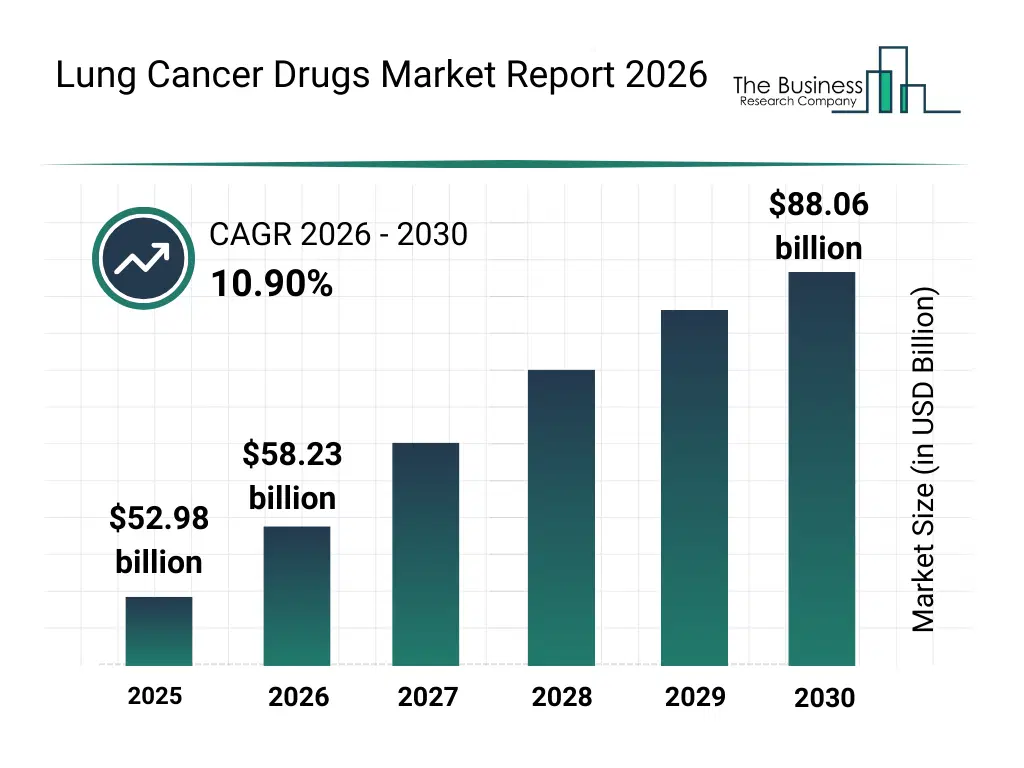
What Is The Lung Cancer Drugs Market Size and Share 2026?
The lung cancer drugs market size has grown strongly in recent years. It will grow from $52.98 billion in 2025 to $58.23 billion in 2026 at a compound annual growth rate (CAGR) of 9.9%. The growth in the historic period can be attributed to high smoking prevalence, rising lung cancer incidence, widespread chemotherapy adoption, expansion of oncology hospitals, increased availability of generic cancer drugs.What Is The Lung Cancer Drugs Market Growth Forecast?
The lung cancer drugs market size is expected to see rapid growth in the next few years. It will grow to $88.06 billion in 2030 at a compound annual growth rate (CAGR) of 10.9%. The growth in the forecast period can be attributed to growth in targeted and immunotherapy drugs, increasing lung cancer screening rates, rising healthcare expenditure in oncology, aging population, expansion of combination therapy approvals. Major trends in the forecast period include rising adoption of targeted lung cancer therapies, increased use of combination drug regimens, growing focus on early-stage lung cancer treatment, expansion of personalized treatment protocols, increasing hospital-based administration of oncology drugs.

Global Lung Cancer Drugs Market Segmentation
1) By Drugs: Gemzar, Paraplatin, Taxotere, Navelbine, Avastin, Tarceva, Iressa, Other Drugs 2) By Disease Type: Small cell lung cancer (SCLC), Non-small cell lung cancer (NSCLC) 3) By End User: Hospitals, Clinics, Other End-UsersWhat Is The Driver Of The Lung Cancer Drugs Market?
The rising prevalence rate of lung cancer is expected to drive the growth of the lung cancer drugs market going forward. Lung cancer is a life-threatening malignancy that requires timely and effective treatment, including chemotherapy, targeted therapies, immunotherapies, and combination regimens to improve survival outcomes. The rise in cases of lung cancer is primarily due to environmental pollution and exposure to carcinogens, alongside genetic predisposition, which collectively contribute to lung cell mutations even in non-smokers. The growing prevalence of lung cancer supports the lung cancer drugs by boosting demand for more effective treatment solutions capable of improving life expectancy, reducing tumor progression, and enhancing quality of life for patients. For instance, in January 2023, according to the American Cancer Society, a US-based voluntary health organization dedicated to eliminating cancer, about 238,340 new cases of lung cancer (117,550 in men and 120,790 in women) and about 127,070 deaths from lung cancer (67,160 in men and 59,910 in women) were estimated in 2023. Therefore, the rising prevalence rate of lung cancer is driving the growth of the lung cancer drugs industry.Key Players In The Global Lung Cancer Drugs Market
Major companies operating in the lung cancer drugs market are Bristol-Myers Squibb Company, Merck & Co. Inc., F. Hoffmann-La Roche Ltd., Novartis AG, Pfizer Inc., GlaxoSmithKline plc, Sanofi S.A., Sun Pharmaceutical Industries Ltd., Celgene Corporation, Mylan N.V., Ono Pharmaceutical Co. Ltd., Teva Pharmaceutical Industries Ltd., Takeda Pharmaceutical Company Limited, Ziopharm Oncology Inc., Menarini Group, AstraZeneca PLC, AbbVie Inc., Bayer AG, Boehringer Ingelheim International GmbH, Daiichi Sankyo Company Limited, Eli Lilly and Company Inc., Johnson & Johnson, Amgen Inc., Array BioPharma Inc., Astellas Pharma Inc., Clovis Oncology Inc., Eisai Co. Ltd., Exelixis Inc., Genentech Inc., Gilead Sciences Inc., Incyte Corporation, Ipsen Biopharmaceuticals Inc., Kyowa Kirin Co. Ltd., Loxo Oncology Inc., MedImmune LLC
This chart is for illustrative purposes; the full report includes a detailed competitor analysis and comprehensive overview of the top 10 companies in the market.

This chart maps companies by product innovation and brand strength, with bubble size indicating relative revenue, helping identify market leaders, challengers, and niche players. This is an illustrative chart; the full report provides a complete and accurate competitive analysis.
Global Lung Cancer Drugs Market Trends and Insights
Major companies operating in the lung cancer drugs market are focusing on product innovation and formulation such as chemotherapy-free combination therapies targeting EGFR mutations, to enhance treatment efficacy, reduce systemic toxicity, and improve quality of life for patients with advanced non-small cell lung cancer (NSCLC). These therapies enable precision oncology approaches, offering targeted inhibition of specific molecular pathways driving tumor growth. For instance, in August 2024, Johnson & Johnson, a US-based pharmaceutical company, received U.S. FDA approval for Rybrevant plus Lazcluze as a first-line, chemotherapy-free treatment for patients with EGFR-mutated advanced NSCLC. The combination therapy is designed to provide dual inhibition of EGFR and MET pathways, offering enhanced anti-tumor activity while minimizing exposure to traditional chemotherapy side effects. This approval reflects a growing trend in the lung cancer market toward personalized, targeted treatment regimens that improve outcomes and patient experience by reducing reliance on conventional chemotherapy.What Are Latest Mergers And Acquisitions In The Lung Cancer Drugs Market?
In January 2024, Bristol-Myers Squibb, a US-based biopharmaceutical company, acquired Mirati Therapeutics, for approximately $4.8 billion. Through this acquisition, Bristol-Myers Squibb aims to enhance its lung cancer drug portfolio by integrating Mirati’s targeted therapies, including KRAS G12C inhibitors, to provide innovative treatment options for patients with advanced and metastatic lung cancer. Mirati Therapeutics is a US-based biotechnology company, specializes in the development of precision oncology therapies with a strong track record in lung cancer drug development.
Regional Insights
North America was the largest region in the lung cancer drugs market in 2025. Middle East is expected to be the fastest-growing region in the lung cancer drugs market during the forecast period. The regions covered in this market report are Asia-Pacific, South East Asia, Western Europe, Eastern Europe, North America, South America, Middle East, Africa. The countries covered in this market report are Australia, Brazil, China, France, Germany, India, Indonesia, Japan, Taiwan, Russia, South Korea, UK, USA, Canada, Italy, Spain.What Defines the Lung Cancer Drugs Market?
The lung cancer drugs market consists of sales of bevacizumab, atezolizumab, and ramucirumab. Values in this market are factory gate values, that is the value of goods sold by the manufacturers or creators of the goods, whether to other entities (including downstream manufacturers, wholesalers, distributors and retailers) or directly to end customers. The value of goods in this market includes related services sold by the creators of the goods.How is Market Value Defined and Measured?
The market value is defined as the revenues that enterprises gain from the sale of goods and/or services within the specified market and geography through sales, grants, or donations in terms of the currency (in USD unless otherwise specified). The revenues for a specified geography are consumption values that are revenues generated by organizations in the specified geography within the market, irrespective of where they are produced. It does not include revenues from resales along the supply chain, either further along the supply chain or as part of other products.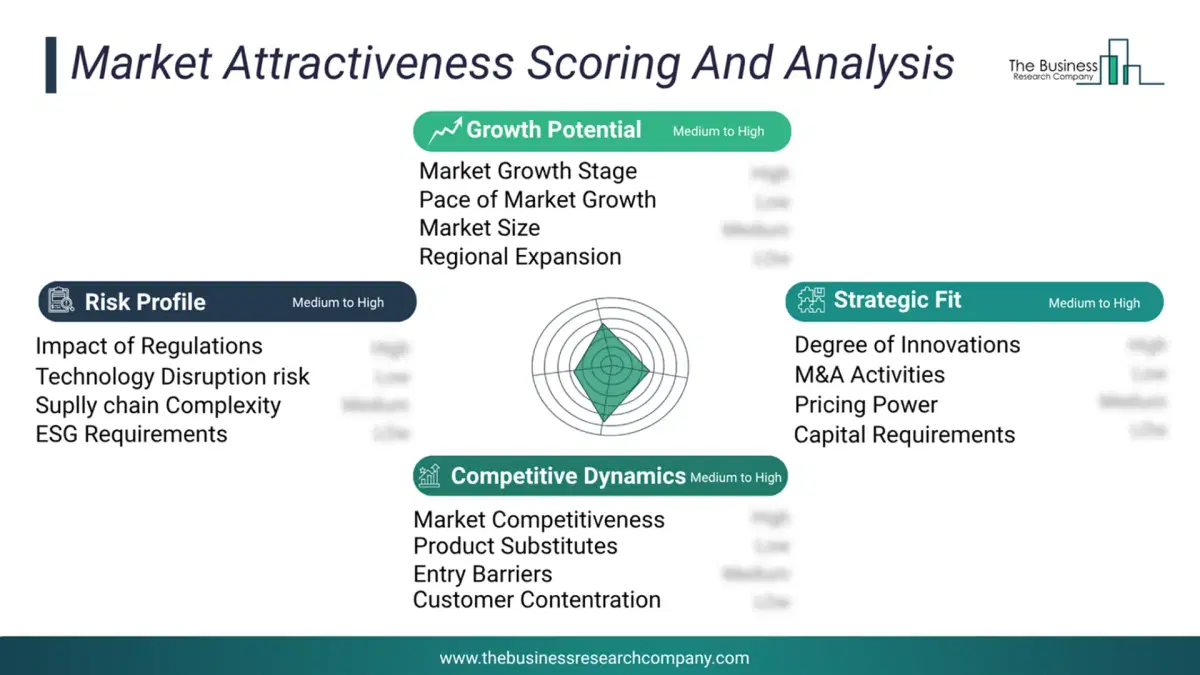
This chart presents market attractiveness based on a quantitative evaluation of growth, competition, strategic alignment, and risk, offering a clear view of opportunity areas for decision-making. This chart is for illustrative purposes; the full report contains the complete analysis.
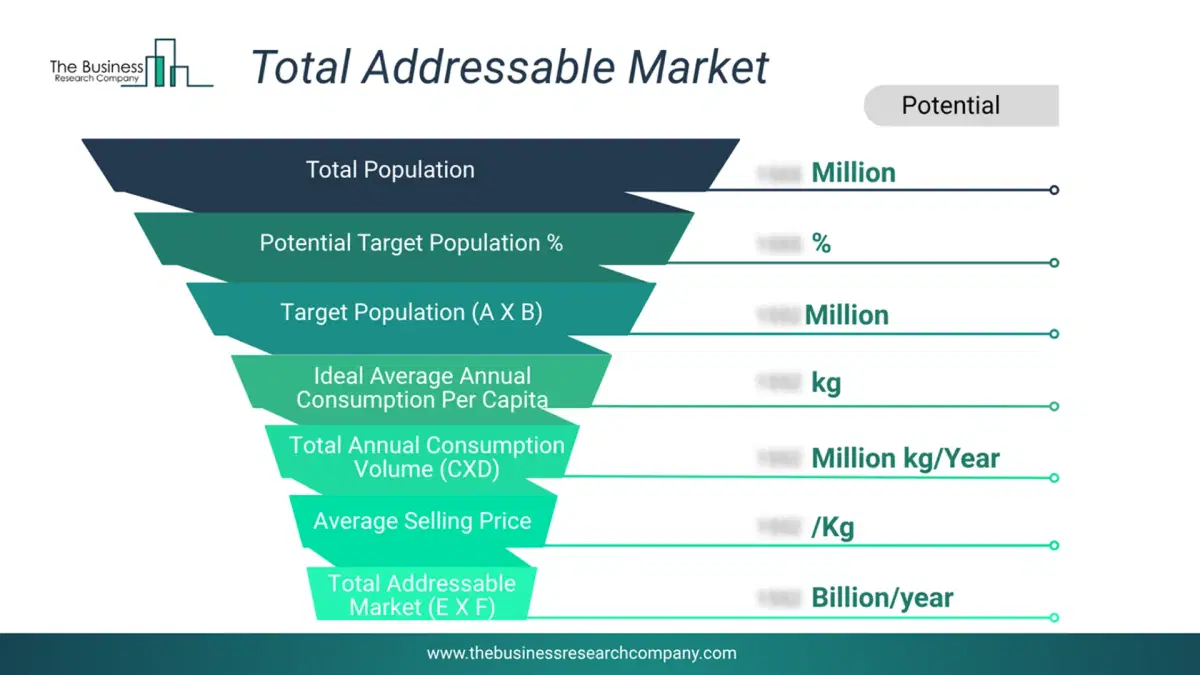
This chart highlights the Total Addressable Market (TAM) by estimating the maximum revenue opportunity using an assumption-driven approach, supporting strategic planning and opportunity sizing across markets. The chart is illustrative; the full report provides a more comprehensive analysis.
What Key Data and Analysis Are Included in the Lung Cancer Drugs Market Report 2026?
The lung cancer drugs market research report is one of a series of new reports from The Business Research Company that provides market statistics, including industry global market size, regional shares, competitors with the market share, detailed market segments, market trends and opportunities, and any further data you may need to thrive in the lung cancer drugs industry. The market research report delivers a complete perspective of everything you need, with an in-depth analysis of the current and future state of the industry.Lung Cancer Drugs Market Report Forecast Analysis
| Report Attribute | Details |
|---|---|
| Market Size Value In 2026 | $58.23 billion |
| Revenue Forecast In 2030 | $88.06 billion |
| Growth Rate | CAGR of 9.9% from 2026 to 2030 |
| Base Year For Estimation | 2025 |
| Actual Estimates/Historical Data | 2020-2025 |
| Forecast Period | 2026 - 2030 |
| Market Representation | Revenue in USD Billion and CAGR from 2026 to 2030 |
| Segments Covered | Drugs, Disease Type, End User |
| Regional Scope | Asia-Pacific, Western Europe, Eastern Europe, North America, South America, Middle East, Africa |
| Country Scope | The countries covered in the report are Australia, Brazil, China, France, Germany, India, Indonesia, Japan, Taiwan, Russia, South Korea, UK, USA, Canada, Italy, Spain. |
| Key Companies Profiled | Bristol-Myers Squibb Company, Merck & Co. Inc., F. Hoffmann-La Roche Ltd., Novartis AG, Pfizer Inc., GlaxoSmithKline plc, Sanofi S.A., Sun Pharmaceutical Industries Ltd., Celgene Corporation, Mylan N.V., Ono Pharmaceutical Co. Ltd., Teva Pharmaceutical Industries Ltd., Takeda Pharmaceutical Company Limited, Ziopharm Oncology Inc., Menarini Group, AstraZeneca PLC, AbbVie Inc., Bayer AG, Boehringer Ingelheim International GmbH, Daiichi Sankyo Company Limited, Eli Lilly and Company Inc., Johnson & Johnson, Amgen Inc., Array BioPharma Inc., Astellas Pharma Inc., Clovis Oncology Inc., Eisai Co. Ltd., Exelixis Inc., Genentech Inc., Gilead Sciences Inc., Incyte Corporation, Ipsen Biopharmaceuticals Inc., Kyowa Kirin Co. Ltd., Loxo Oncology Inc., MedImmune LLC |
| Customization Scope | Request for Customization |
| Pricing And Purchase Options | Explore Purchase Options |