

Machine Vision Market Report 2026
Global Outlook – By Product (PC-Based, Smart Camera-Based), By Offering (Hardware, Software, Service), By Deployment Type (General Machine Vision Systems, Robotic Cell), By Application (Quality Assurance and Inspection, Positioning and Guidance, Measurement, Identification, Predictive Maintenance), By End-User (Automotive, Pharmaceuticals and Chemicals, Electronics and Semiconductors, Pulp and Paper, Printing and Labeling, Food and Beverage, Postal and Logistics, Other End-Users) – Market Size, Trends, Strategies, and Forecast to 2035
Machine Vision Market Overview
• Machine Vision market size has reached to $21.12 billion in 2025 • Expected to grow to $35.43 billion in 2030 at a compound annual growth rate (CAGR) of 10.8% • Growth Driver: Surging Demand For Artificial Intelligence Drives Growth In The Machine Vision Market • Market Trend: Revolutionizing Asset Monitoring With Advanced Machine Vision Solutions • Asia-Pacific was the largest region in 2025.Market Gains By 2030 – Top Opportunities By Segment
Market Gain identifies the most promising market opportunities by highlighting the segments or products expected to generate the highest incremental revenue growth over the next five years.
What Is Covered Under Machine Vision Market?
Machine vision systems are a set of connected devices that are designed to automatically direct production and manufacturing procedures such as go/no assessments and quality control processes using information retrieved from digital images by examining, analyzing, and identifying static or moving images. The main types of products in machine vision are PC-based and smart camera-based. The PC-based machine vision system consists of a PC with an operating system. A-frame grabber or Ethernet card in the PC interfaces it to the connected cameras to import the images. Images are then analyzed with the help of a software package on the PC that makes decisions and sends data such as pass/fail information to another system. The different offerings include hardware, software, and service and are deployed in the general machine vision system and robotic cell. It is used in quality assurance and inspection, positioning and guidance, measurement, identification, and predictive maintenance and is implemented in various sectors such as automotive, pharmaceuticals and chemicals, electronics and semiconductors, pulp and paper, printing and labeling, food and beverage, postal and logistics, and others.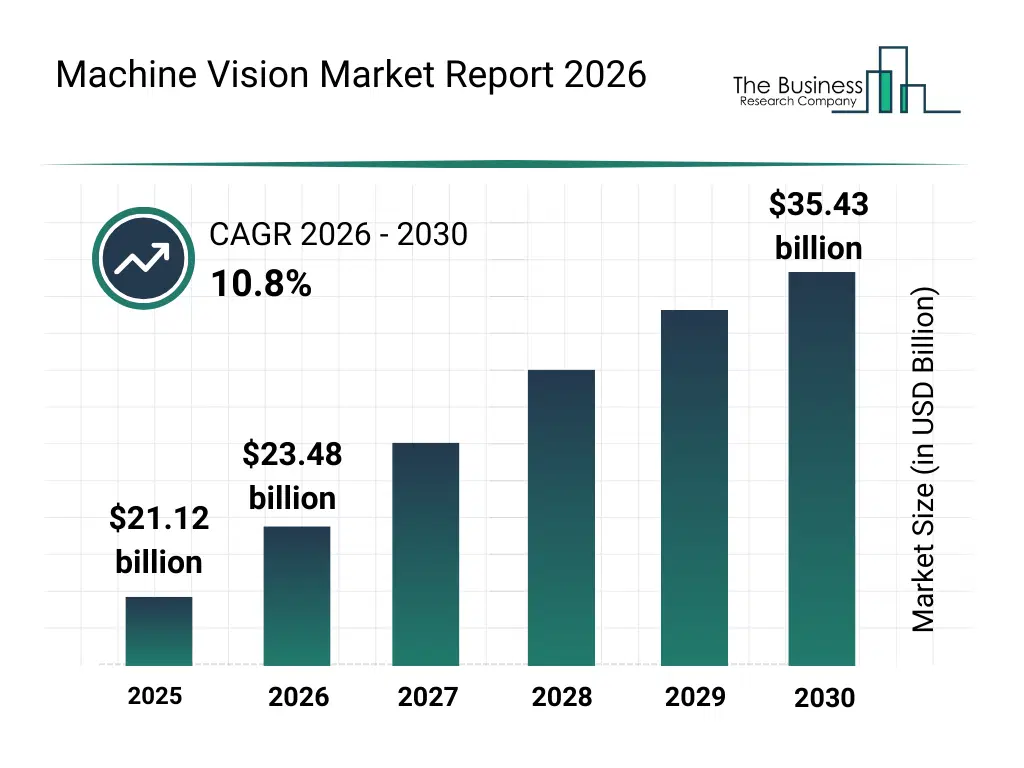
What Is The Machine Vision Market Size and Share 2026?
The machine vision market size has grown rapidly in recent years. It will grow from $21.12 billion in 2025 to $23.48 billion in 2026 at a compound annual growth rate (CAGR) of 11.2%. The growth in the historic period can be attributed to manufacturing automation growth, demand for quality assurance, reduction of human inspection errors, expansion of electronics manufacturing, cost reduction initiatives.What Is The Machine Vision Market Growth Forecast?
The machine vision market size is expected to see rapid growth in the next few years. It will grow to $35.43 billion in 2030 at a compound annual growth rate (CAGR) of 10.8%. The growth in the forecast period can be attributed to deep learning vision algorithms, adoption of smart factories, integration with industrial robots, demand for predictive maintenance, increased semiconductor production. Major trends in the forecast period include ai-based visual inspection, smart camera adoption, predictive quality control, robotic vision integration, high-speed image processing.
Global Machine Vision Market Segmentation
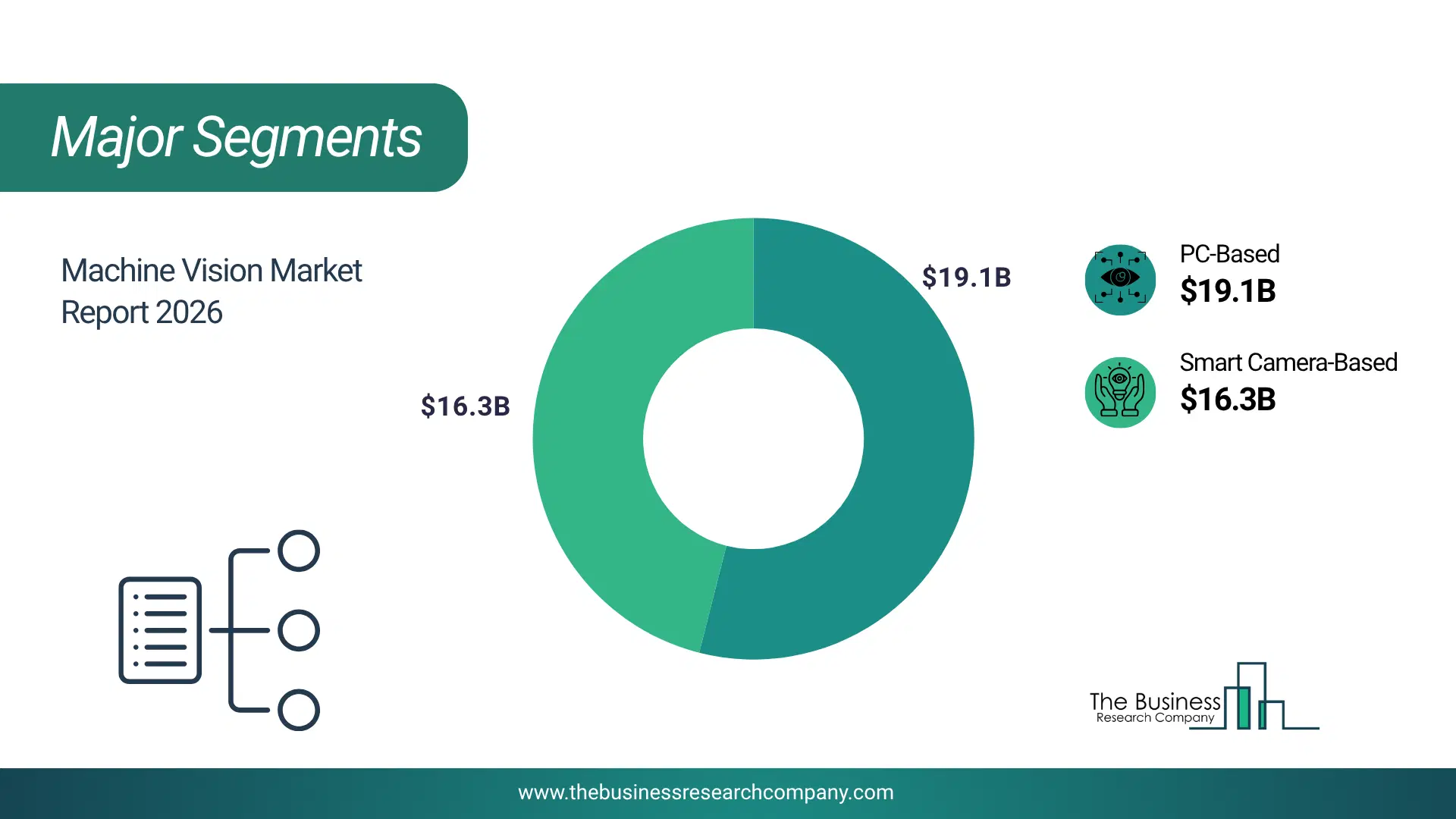
1) By Product: PC-Based, Smart Camera-Based 2) By Offering: Hardware, Software, Service 3) By Deployment Type: General Machine Vision Systems, Robotic Cell 4) By Application: Quality Assurance and Inspection, Positioning and Guidance, Measurement, Identification, Predictive Maintenance 5) By End-User: Automotive, Pharmaceuticals and Chemicals, Electronics and Semiconductors, Pulp and Paper, Printing and Labeling, Food and Beverage, Postal and Logistics, Other End-Users Subsegments: 1) By PC-Based: Frame Grabbers, Vision Processing Software, Industrial Cameras 2) By Smart Camera-Based: Integrated Smart Cameras, Embedded Vision Systems, All-in-One Machine Vision Solutions The top segments in the machine vision market will be: • General Machine Vision Systems will reach $15972.6 Million by 2025. • Hardware will reach $11800.4 Million by 2025. • PC-Based will reach $10498.6 Million by 2025. • Smart Camera-Based will reach $5145.1 Million by 2025. • Software will reach $4312.2 Million by 2025.What Is The Driver Of The Machine Vision Market?
The increasing demand for artificial intelligence is expected to propel the growth of the machine vision market going forward. Artificial Intelligence (AI) refers to the simulation of human intelligence processes by computer systems. Artificial intelligence (AI) plays a crucial role in enhancing the capabilities of machine vision, leading to improved accuracy, efficiency, and versatility. For instance, in May 2023, according to the report published by the Commonwealth Scientific and Industrial Research Organization (CSIRO), an Australia-based government agency, 68% of businesses in Australia have already adopted artificial intelligence (AI) technologies, while an additional 23% intend to implement them within the next year. Therefore, the increasing demand for artificial intelligence is driving the growth of the machine vision industry.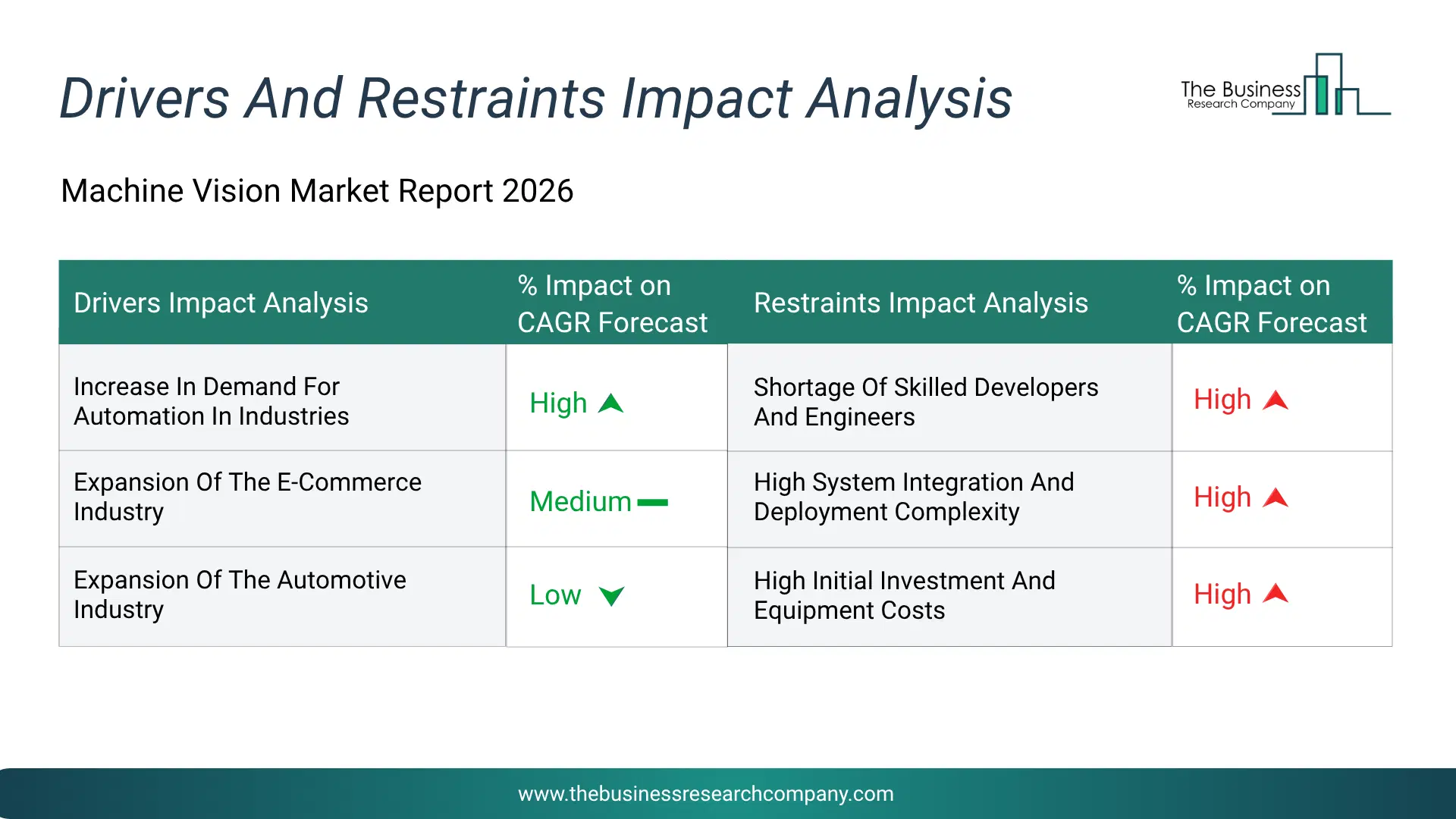
Infographic Chart Showing Key Market Drivers Analysis And Restraints For Machine Vision Market
The chart presents an impact analysis of key drivers and restraints, quantifying their relative influence on the market's growth rate and helping assess the balance between growth enablers and limiting factors. This chart offers a high-level perspective; the full report contains more detailed insights.
How Will The Drivers Impact Growth In The Global Machine Vision Market?
• Rising Industrial Automation (Medium) – The rising industrial automation will become a key driver of growth in the machine vision market by 2030. As manufacturers focus on enhancing productivity, precision, and operational efficiency, the integration of automated systems has become essential. Machine vision technologies enable real-time inspection, quality control, and defect detection, reducing human error and production downtime. Additionally, the growing use of robotics and smart manufacturing solutions across industries such as automotive, electronics, and pharmaceuticals further accelerates demand. This trend is supported by advancements in artificial intelligence and imaging technologies, making machine vision systems more accurate, scalable, and cost-effective for modern industrial applications. As a result, the rising industrial automation is anticipated to contributing to a 1.5% annual growth in the market. • Increasing Deep Learning And AI Integration (Medium) – The increasing deep learning and ai integration will emerge as a major factor driving the expansion of the machine vision market by 2030. Advanced AI-driven algorithms enable machine vision systems to perform complex image analysis, pattern recognition, and decision-making with greater accuracy and speed. Unlike traditional rule-based systems, deep learning models can continuously improve through data exposure, enhancing defect detection and predictive capabilities. This is particularly valuable in high-precision industries such as electronics, automotive, and healthcare. Furthermore, the adoption of AI-powered vision solutions supports smart manufacturing initiatives, reduces operational costs, and improves overall productivity. Consequently, the increasing deep learning and ai integration is projected to contributing to a 1.3% annual growth in the market. • Increasing Use In Semiconductor And Electronics Manufacturing (Medium) – The increasing semiconductor and electronics manufacturing will serve as a key growth catalyst for the machine vision market by 2030. These industries demand extremely high precision and defect-free production, where even minor errors can lead to substantial losses. Machine vision systems enable advanced inspection, alignment, and measurement processes, ensuring product quality and consistency at micro and nano levels. As the complexity of electronic components and integrated circuits continues to rise, manufacturers are increasingly adopting automated vision solutions to enhance yield and efficiency. Additionally, the rapid expansion of consumer electronics and semiconductor production further strengthens demand for reliable and high-performance machine vision technologies. Therefore, this increasing semiconductor and electronics manufacturing is projected to supporting to a 1.0% annual growth in the market. • Rise Of Edge Computing And Smart Cameras (Low) – The rise of edge computing and smart cameras will become a significant driver contributing to the growth of the machine vision market by 2030. Edge computing enables data processing closer to the source, reducing latency and bandwidth usage while allowing real-time decision-making. Smart cameras, equipped with built-in processing capabilities, eliminate the need for complex centralized systems and enhance operational efficiency. These technologies are particularly valuable in fast-paced industrial environments where immediate analysis and response are critical. Additionally, they support scalable and cost-effective deployments across manufacturing, logistics, and surveillance applications, thereby accelerating the adoption of advanced machine vision solutions. Consequently, the rise of edge computing and smart cameras is projected to contributing to a 0.8% annual growth in the market.How Will The Restraints Impact Growth In The Global Machine Vision Market?
• Integration Challenges With Existing Manufacturing Systems And Legacy Technologies (Medium) – Integration challenges with existing manufacturing systems and legacy technologies is expected to restrain market growth during the forecast period. It creates operational, financial, regulatory, or commercial challenges that can increase costs, delay projects, reduce investments, or discourage purchasing decisions depending on the market. These challenges can reduce product adoption, affect business confidence, and limit the ability of companies to expand efficiently across key regions. This can disrupt long-term growth strategies and reduce the ability of companies to capitalize on emerging market opportunities. • Limitations In Handling Unstructured Environments Or Variable Lighting Conditions (Medium) – During the forecast period, limitations in handling unstructured environments or variable lighting conditions is likely to limit market expansion. It creates operational, financial, regulatory, or commercial challenges that can increase costs, delay projects, reduce investments, or discourage purchasing decisions depending on the market. These challenges can reduce product adoption, affect business confidence, and limit the ability of companies to expand efficiently across key regions. As a result, organizations may postpone purchasing decisions, limiting demand across both established and emerging markets. • Trade War And Tariffs (Medium) – The market is expected to face challenges due to trade war and tariffs over the forecast period. It creates operational, financial, regulatory, or commercial challenges that can increase costs, delay projects, reduce investments, or discourage purchasing decisions depending on the market. These challenges can reduce product adoption, affect business confidence, and limit the ability of companies to expand efficiently across key regions. This may reduce production efficiency, extend project timelines, and create challenges in meeting evolving customer requirements.Key Players In The Global Machine Vision Market
Major companies operating in the machine vision market are Cognex Corporation; Keyence Corporation; Omron Corporation; Teledyne Technologies; Basler AG; SICK AG; ISRA Vision AG; IDS Imaging Development Systems; Datalogic; Baumer Group; Banner Engineering; Allied Vision Technologies; JAI A S; LMI Technologies; FLIR Systems; National Instruments; Optotune AG; Perceptron; Hikvision; Panasonic Corporation; Sony Corporation; Intel Corporation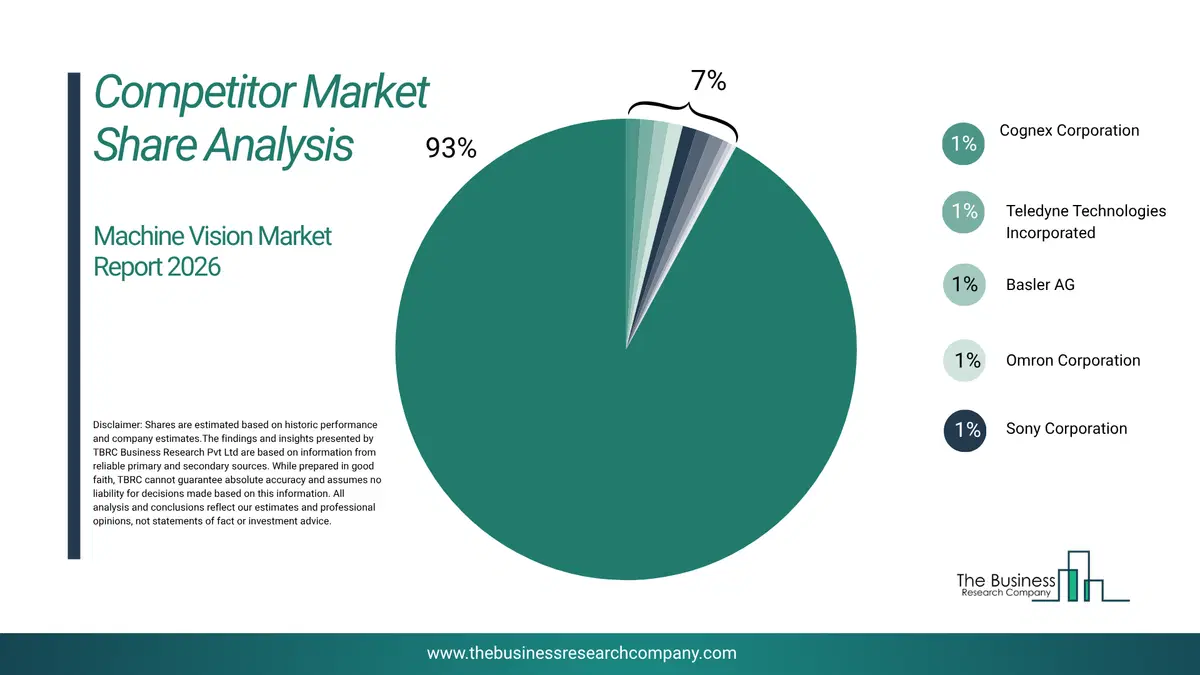
This chart is for illustrative purposes; the full report includes a detailed competitor analysis and comprehensive overview of the top 10 companies in the market.
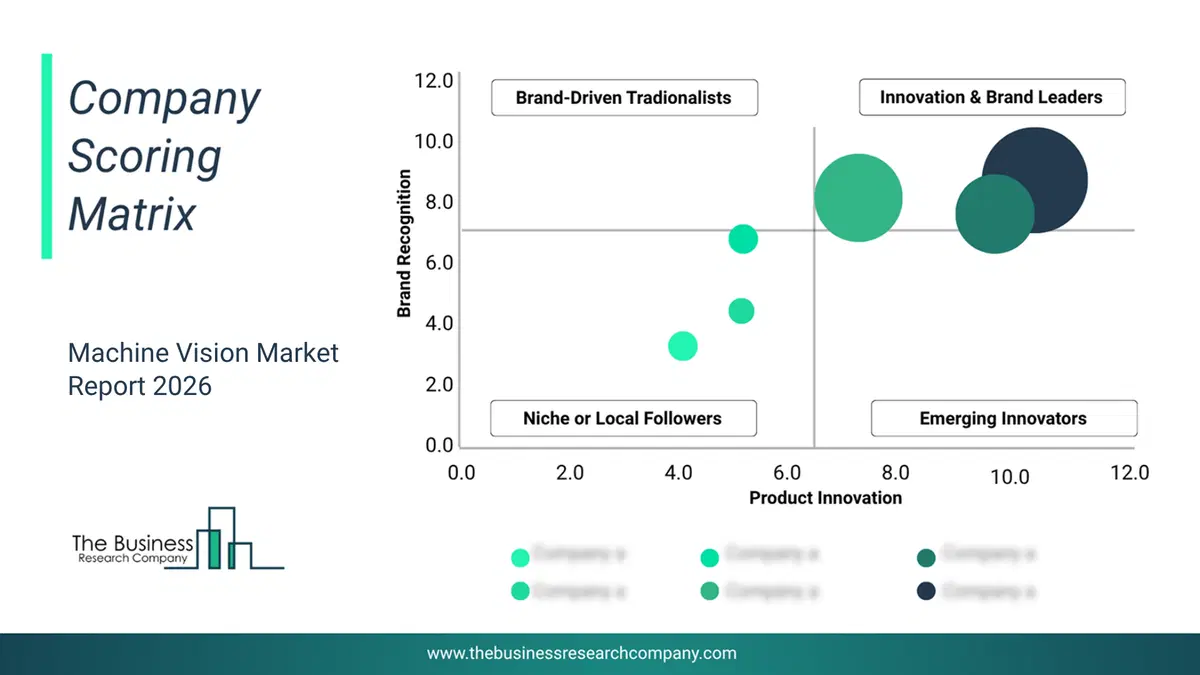
This chart maps companies by product innovation and brand strength, with bubble size indicating relative revenue, helping identify market leaders, challengers, and niche players. This is an illustrative chart; the full report provides a complete and accurate competitive analysis.
Global Machine Vision Market Trends and Insights
Major companies operating in the machine vision market are focusing on developing innovative products such as artificial intelligence (AI)-powered edge-computing vision solutions to enable real-time data analysis and improve operational efficiency. Artificial intelligence (AI)-powered edge-computing vision solutions are systems that use AI to process visual data locally at the edge, helping reduce latency, enable real-time decision-making, lower bandwidth usage, and improve operational efficiency in applications such as predictive maintenance, quality inspection, and smart monitoring. For instance, in January 2024, CGI Inc., a Canada-based information technology consulting firm, launched CGI Machine Vision. It is an advanced computer vision solution that harnesses AI and edge computing to improve asset and infrastructure monitoring. It processes real-time data from IoT sensors, cameras, and drones, providing organizations with immediate actionable insights. The solution allows for continuous remote monitoring, enhancing the identification of issues like foliage incursion and wear and tear while also improving worker safety by tracking compliance and threats. CGI Machine Vision effectively addresses diverse business challenges across various industries with flexible deployment options and tailored integration capabilities.What Are Latest Mergers And Acquisitions In The Machine Vision Market?
In October 2024, Exaktera, a US-based machine vision company acquired iiM GmbH for an undisclosed amount. This acquisition is anticipated to enhance Exaktera's ability to provide high-precision solutions by integrating iiM GmbH's specialized knowledge and technology. iiM GmbH is a Germany-based developer of LEDs for machine vision lighting.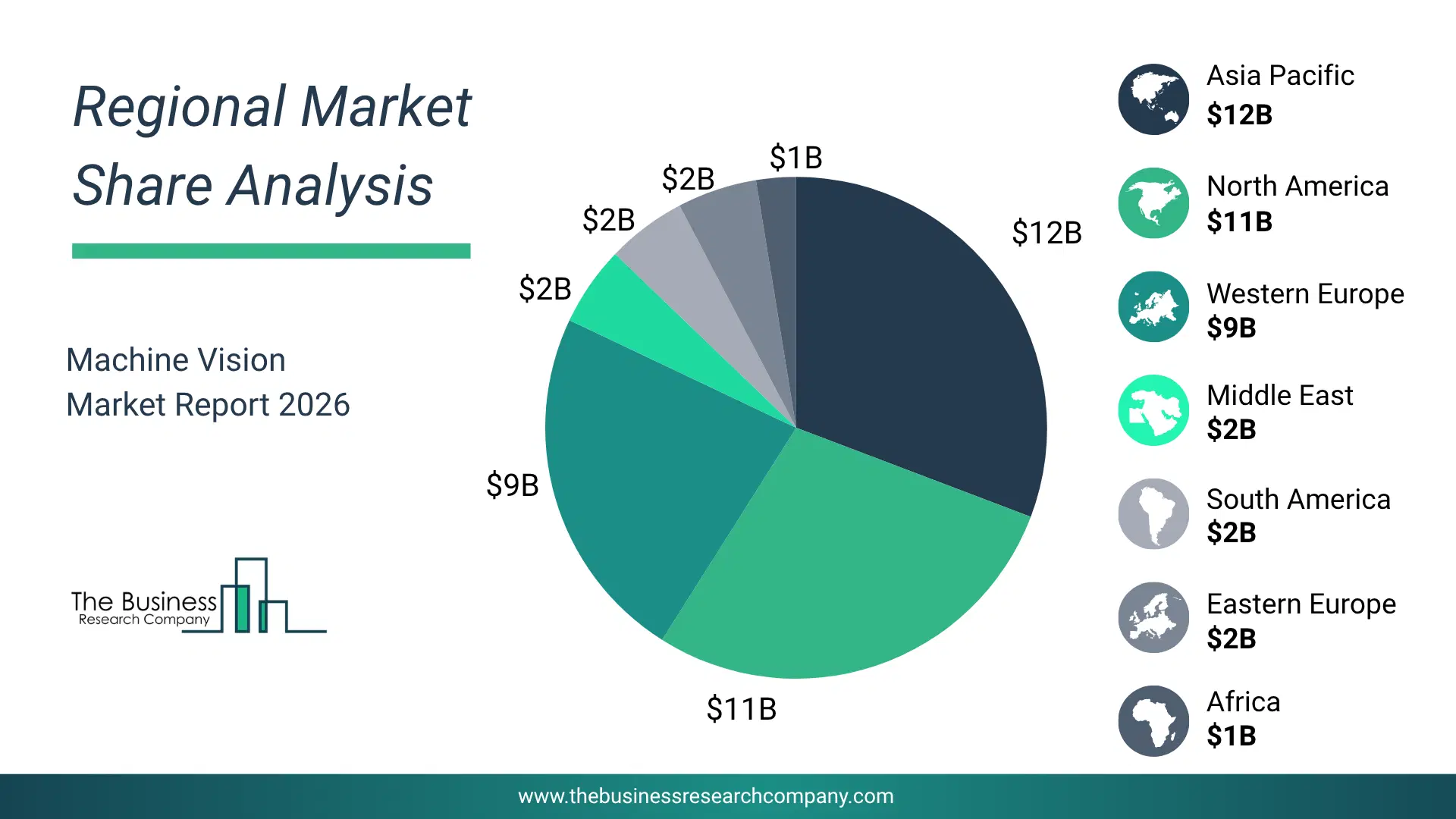
Regional Insights
Asia-Pacific was the largest region in the machine vision market in 2025. The regions covered in this market report are Asia-Pacific, South East Asia, Western Europe, Eastern Europe, North America, South America, Middle East, Africa. The countries covered in this market report are Australia, Brazil, China, France, Germany, India, Indonesia, Japan, Taiwan, Russia, South Korea, UK, USA, Canada, Italy, SpainWhat Defines the Machine Vision Market?
The machine vision market consists of revenues earned by entities by providing machine vision devices, software, and services such as presence inspection, binary processing, blob analysis, practical positioning, and flaw detection that enable manufacturers to realize the improved process and product quality and system performance. The market value includes the value of related goods sold by the service provider or included within the service offering. The machine market also includes sales of lighting and machine vision system, backlighting, defuse lighting, partial bright field lighting, dark field lighting, vision lens, image sensors, vision processing units, communication systems, and cameras. Values in this market are ‘factory gate’ values, that is the value of goods sold by the manufacturers or creators of the goods, whether to other entities (including downstream manufacturers, wholesalers, distributors, and retailers) or directly to end customers. The value of goods in this market includes related services sold by the creators of the goods.How is Market Value Defined and Measured?
The market value is defined as the revenues that enterprises gain from the sale of goods and/or services within the specified market and geography through sales, grants, or donations in terms of the currency (in USD unless otherwise specified). The revenues for a specified geography are consumption values that are revenues generated by organizations in the specified geography within the market, irrespective of where they are produced. It does not include revenues from resales along the supply chain, either further along the supply chain or as part of other products.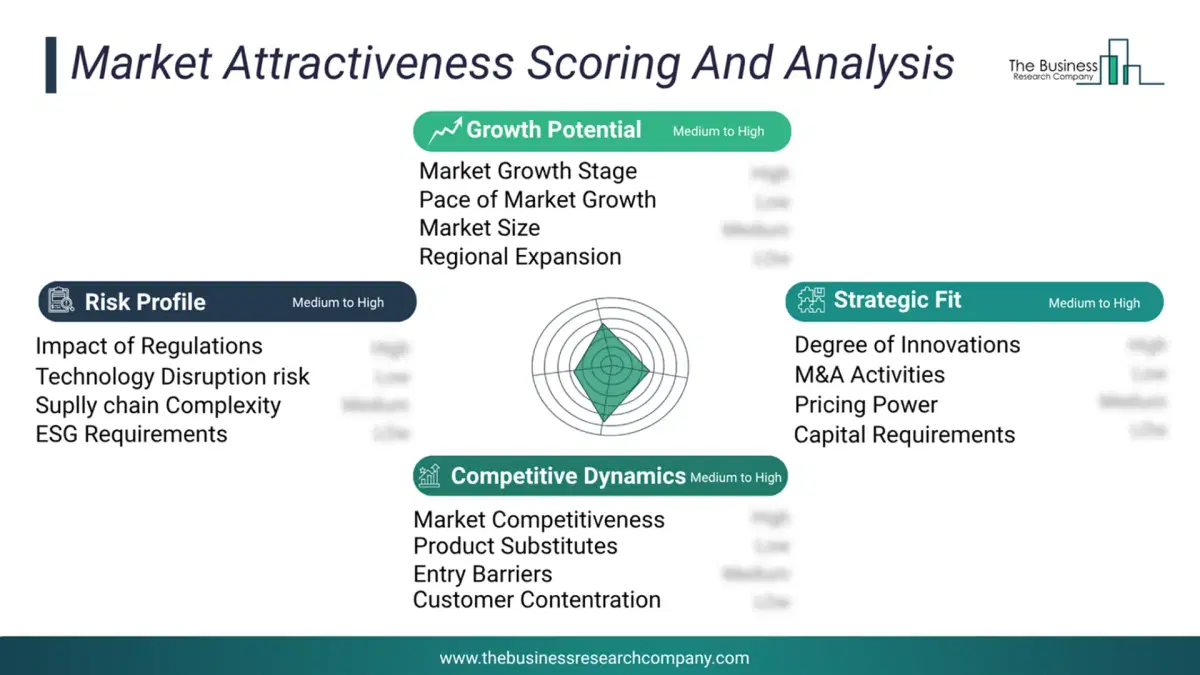
This chart presents market attractiveness based on a quantitative evaluation of growth, competition, strategic alignment, and risk, offering a clear view of opportunity areas for decision-making. This chart is for illustrative purposes; the full report contains the complete analysis.
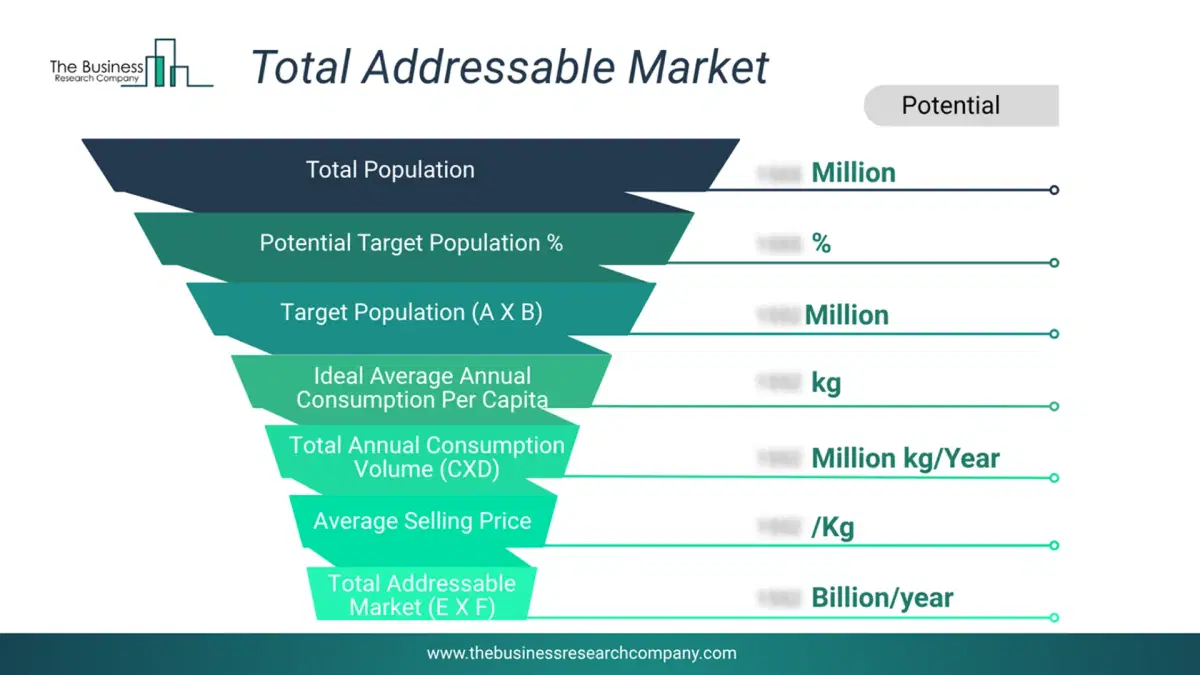
This chart highlights the Total Addressable Market (TAM) by estimating the maximum revenue opportunity using an assumption-driven approach, supporting strategic planning and opportunity sizing across markets. The chart is illustrative; the full report provides a more comprehensive analysis.
What Key Data and Analysis Are Included in the Machine Vision Market Report 2026?
The machine vision market research report is one of a series of new reports from The Business Research Company that provides market statistics, including industry global market size, regional shares, competitors with the market share, detailed market segments, market trends and opportunities, and any further data you may need to thrive in the machine vision industry. The market research report delivers a complete perspective of everything you need, with an in-depth analysis of the current and future state of the industry.Machine Vision Market Report Forecast Analysis
| Report Attribute | Details |
|---|---|
| Market Size Value In 2026 | $23.48 billion |
| Revenue Forecast In 2035 | $35.43 billion |
| Growth Rate | CAGR of 11.2% from 2026 to 2035 |
| Base Year For Estimation | 2025 |
| Actual Estimates/Historical Data | 2020-2025 |
| Forecast Period | 2026 - 2030 - 2035 |
| Market Representation | Revenue in USD Billion and CAGR from 2026 to 2035 |
| Segments Covered | Product, Offering, Deployment Type, Application, End-User |
| Regional Scope | Asia-Pacific, Western Europe, Eastern Europe, North America, South America, Middle East, Africa |
| Country Scope | The countries covered in the report are Australia, Brazil, China, France, Germany, India, ... |
| Key Companies Profiled | Cognex Corporation; Keyence Corporation; Omron Corporation; Teledyne Technologies; Basler AG; SICK AG; ISRA Vision AG; IDS Imaging Development Systems; Datalogic; Baumer Group; Banner Engineering; Allied Vision Technologies; JAI A S; LMI Technologies; FLIR Systems; National Instruments; Optotune AG; Perceptron; Hikvision; Panasonic Corporation; Sony Corporation; Intel Corporation |
| Customization Scope | Request for Customization |
| Pricing And Purchase Options | Explore Purchase Options |