
Master Data Management Market Report 2026
Global Outlook – By Component (Solution, Services), By Deployment Mode (Cloud, On-premises), By Organization Size (Small And Medium Enterprises (SMEs), Large Enterprises), By Application (Supplier Data, Product Data, Customer Data, Other Applications), By Verticals (Banking, Financial Services And Insurance(BFSI), Government, Retail, IT And Telecom, Manufacturing, Energy And Utilities, Healthcare, Other Verticals) – Market Size, Trends, Strategies, and Forecast to 2030
Master Data Management Market Overview
• Master Data Management market size has reached to $20.39 billion in 2025 • Expected to grow to $42.43 billion in 2030 at a compound annual growth rate (CAGR) of 15.6% • Growth Driver: Rising IOT Device Adoption Catalyzes Growth In The Master Data Management Market • Market Trend: Technological Advancements Accelerating Innovation and Efficiency in Master Data Management Market • North America was the largest region in 2025.Market Gains By 2030 – Top Opportunities By Segment
Market Gain identifies the most promising market opportunities by highlighting the segments or products expected to generate the highest incremental revenue growth over the next five years.
What Is Covered Under Master Data Management Market?
Master data management (MDM) refers to a practice that collects and creates a single record from each person, place, and thing in an organization from internal and external data sources and apps in order to improve business processes. It is used to improve the consistency and quality of data assets to carry out knowledge business decisions. The main components of master data management are solutions and services. Services are the non-physical, intangible parts of our economy, as opposed to goods, which we can touch or handle. The deployment modes are cloud and on-premises. The organization sizes are small and medium enterprises (SMEs) and large enterprises. The various applications involved supplier data, product data, customer data, and others, that are used in industry verticals such as Banking, Financial Services and Insurance (BFSI), government, retail, IT and telecom, manufacturing, energy and utilities, healthcare and others.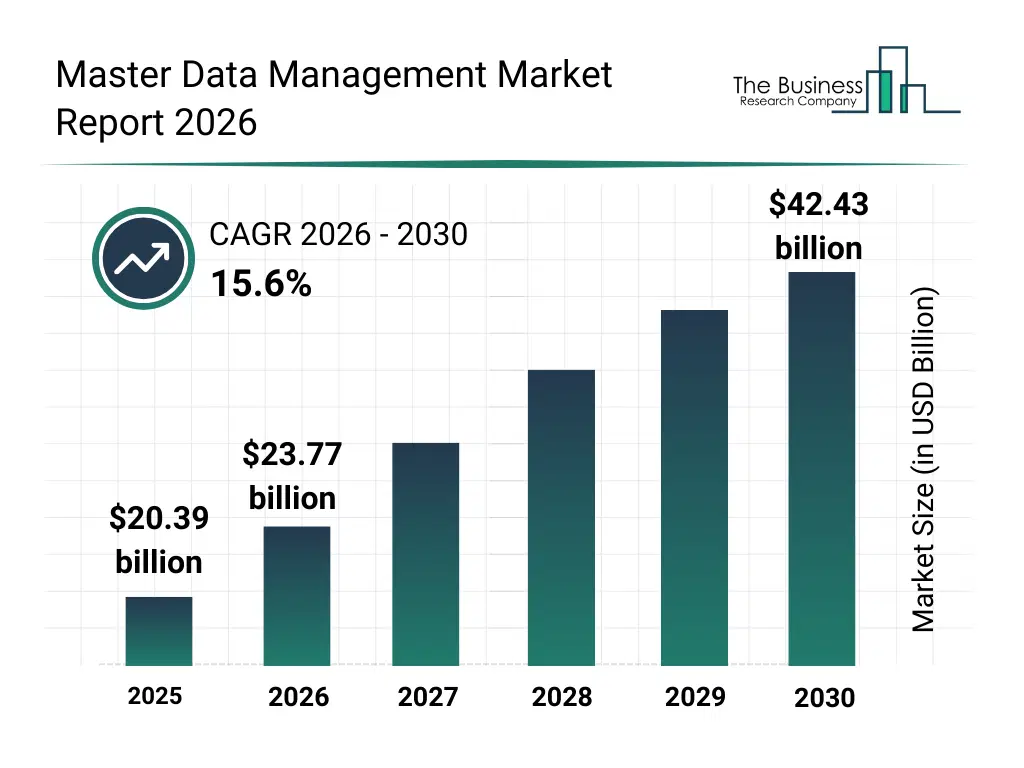
What Is The Master Data Management Market Size and Share 2026?
The master data management market size has grown rapidly in recent years. It will grow from $20.39 billion in 2025 to $23.77 billion in 2026 at a compound annual growth rate (CAGR) of 16.6%. The growth in the historic period can be attributed to increasing data volume across enterprises, rising need for single source of truth, adoption of enterprise resource planning systems, growing regulatory data compliance requirements, expansion of multi-system business environments.What Is The Master Data Management Market Growth Forecast?
The master data management market size is expected to see rapid growth in the next few years. It will grow to $42.43 billion in 2030 at a compound annual growth rate (CAGR) of 15.6%. The growth in the forecast period can be attributed to increasing adoption of ai-driven data management tools, rising cloud migration initiatives, growing focus on advanced analytics readiness, expansion of data governance frameworks, increasing investments in digital transformation programs. Major trends in the forecast period include increasing adoption of centralized data governance platforms, rising demand for real-time master data synchronization, growing focus on data quality and consistency management, expansion of cloud-based mdm deployments, enhanced integration with enterprise applications.
Global Master Data Management Market Segmentation
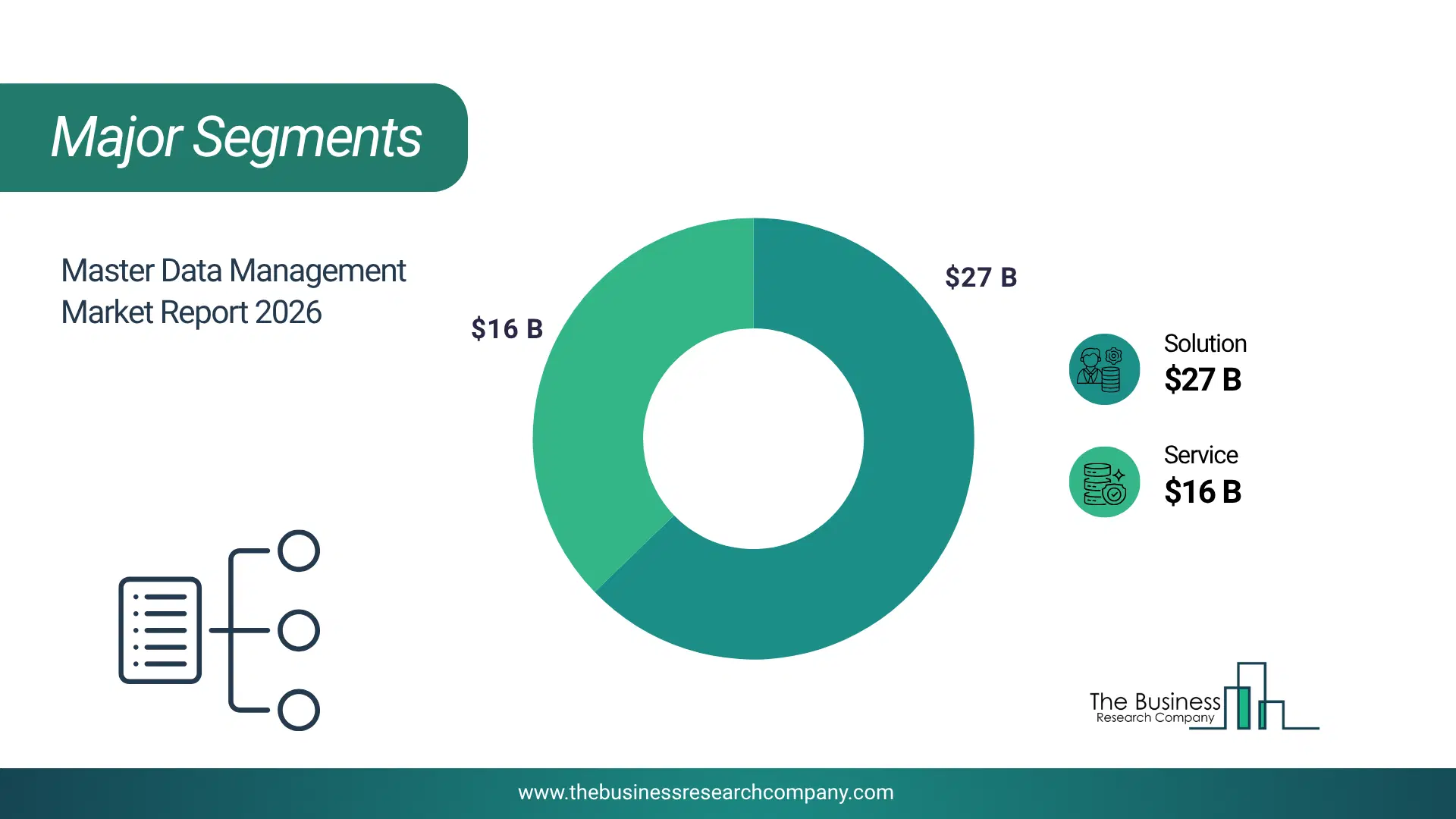
1) By Component: Solution, Services 2) By Deployment Mode: Cloud, On-premises 3) By Organization Size: Small And Medium Enterprises (SMEs), Large Enterprises 4) By Application: Supplier Data, Product Data, Customer Data, Other Applications 5) By Verticals: Banking, Financial Services And Insurance(BFSI), Government, Retail, IT And Telecom, Manufacturing, Energy And Utilities, Healthcare, Other Verticals Subsegments: 1) By Solution: Data Integration Tools, Data Quality Management, Master Data Hub, Data Governance 2) By Services: Consulting Services, Implementation Services, Support And Maintenance, Training And Education The top segments in the master data management market will be: • Solution will reach $26.68 Billion by 2030. • Service will reach $15.56 Billion by 2030.What Is The Driver Of The Master Data Management Market?
The increasing number of IoT-linked devices is expected to boost the growth of the master data management market going forward. IoT-linked devices refer to nonstandard computing devices that connect wirelessly to a network and have the ability to transmit data. The increasing number of IoT-linked devices presents opportunities for the master data management market to play a pivotal role in efficiently handling, integrating, and deriving value from the diverse and voluminous data generated by the IoT ecosystem. For instance, in September 2024, according to IoT Analytics, a Germany-based research firm focused on IoT market insights, the number of connected IoT devices reached 16.6 billion in 2023, reflecting a 15% increase from 14.4 billion in 2022. Therefore, the increasing number of IoT-linked devices is driving the growth of the master data management industry.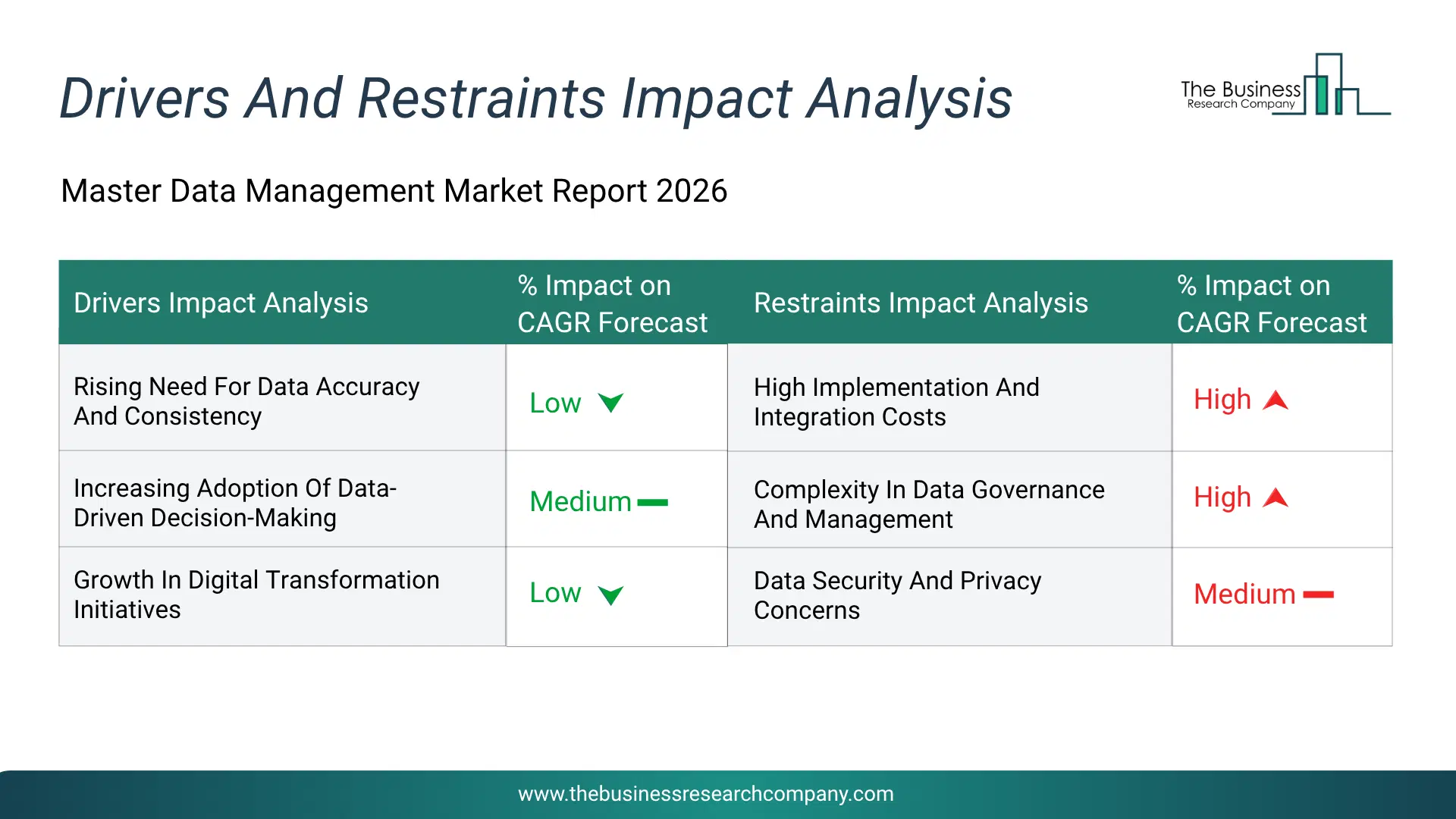
Infographic Chart Showing Key Market Drivers Analysis And Restraints For Master Data Management Market
The chart presents an impact analysis of key drivers and restraints, quantifying their relative influence on the market's growth rate and helping assess the balance between growth enablers and limiting factors. This chart offers a high-level perspective; the full report contains more detailed insights.
How Will The Drivers Impact Growth In The Global Master Data Management Market?
• Rising Need For Data Accuracy And Consistency (Low) – During the forecast period, the rising need for data accuracy and consistency is expected to become a key growth driver for the master data management market by 2030. Organizations increasingly rely on accurate and consistent data to ensure efficient operations and reliable decision-making. MDM enables the creation of a unified data source by eliminating duplication and inconsistencies across systems. As businesses expand and handle large volumes of data, maintaining data integrity becomes critical. Poor data quality can lead to operational inefficiencies and incorrect insights. MDM tools standardize and cleanse data, improving overall data reliability. This enhances reporting accuracy and supports better strategic planning. Therefore, the growing need for high-quality data significantly drives the adoption of MDM solutions. • Increasing Adoption Of Data-Driven Decision-Making (Medium) – During the forecast period, the increasing adoption of data-driven decision-making is expected to emerge as a major factor driving the expansion of the master data management market by 2030. Enterprises are shifting towards data-driven approaches where decisions are based on analytics and insights. MDM ensures that the data used for analysis is accurate, complete, and consistent across departments. Without reliable master data, analytics outputs may be flawed or misleading. Organizations investing in AI, business intelligence, and analytics platforms require structured and governed data. MDM provides a strong data foundation, enabling better forecasting and performance monitoring. It also improves risk management by ensuring data consistency. This growing reliance on data-driven strategies accelerates demand for MDM solutions. • Growth In Digital Transformation Initiatives (Low) – During the forecast period, the growth in digital transformation initiatives is expected to act as a key growth catalyst for the master data management market by 2030. Digital transformation is driving organizations to adopt modern technologies and integrate multiple data sources. This creates challenges in managing and unifying large volumes of data. MDM helps in consolidating data from various digital platforms into a single, consistent view. It ensures seamless integration between legacy systems and new applications. As companies adopt cloud computing and automation, the need for reliable and real-time data increases. MDM supports these initiatives by improving data accessibility and quality.How Will The Restraints Impact Growth In The Global Master Data Management Market?
• High Implementation And Integration Costs (Low) – During the forecast period, high implementation and integration costs are significantly restricting the growth of the master data management market. The substantial investment required for deploying MDM platforms, integrating them with existing IT systems, and maintaining ongoing data operations is limiting adoption, particularly among small and medium-sized enterprises. • Complexity In Data Governance And Management (Medium) – During the forecast period, complexity in data governance and management is significantly restricting the growth of the master data management market. Organizations face challenges in establishing standardized data policies, ensuring data quality across multiple sources, and managing cross-functional data ownership, which slows down MDM implementation. • Data Security And Privacy Concerns (Low) – During the forecast period, data security and privacy concerns are significantly restricting the growth of the master data management market. Increasing regulatory requirements and rising risks of data breaches are making organizations cautious about centralized data management systems, thereby limiting widespread adoption of MDM solutions.Key Players In The Global Master Data Management Market
Major companies operating in the master data management market are International Business Machines Corporation; Oracle Corporation; SAP SE; TIBCO Software Inc.; Informatica; Talend Data Integration Services Pvt. Ltd.; SyncForce; Stibo Group; Profisee; Reltio Inc.; Magnitude Software Inc; Ataccama Corp.; Collibra; Semarchy; Pimcore; Riversand (Syndigo) Technologies India Private Limited; EnterWorks; Agility Multichannel Limited; SAP Master Data Governance; Syniti; Contentserv Technologies Private Limited; Orchestra Networks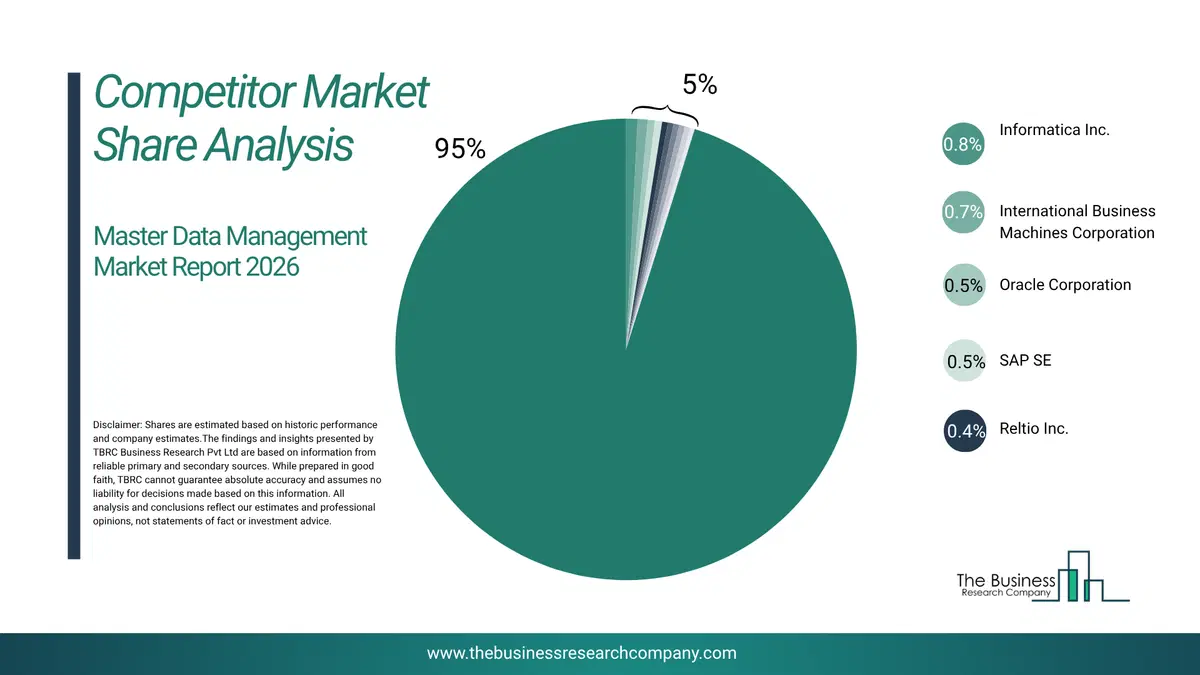
This chart is for illustrative purposes; the full report includes a detailed competitor analysis and comprehensive overview of the top 10 companies in the market.
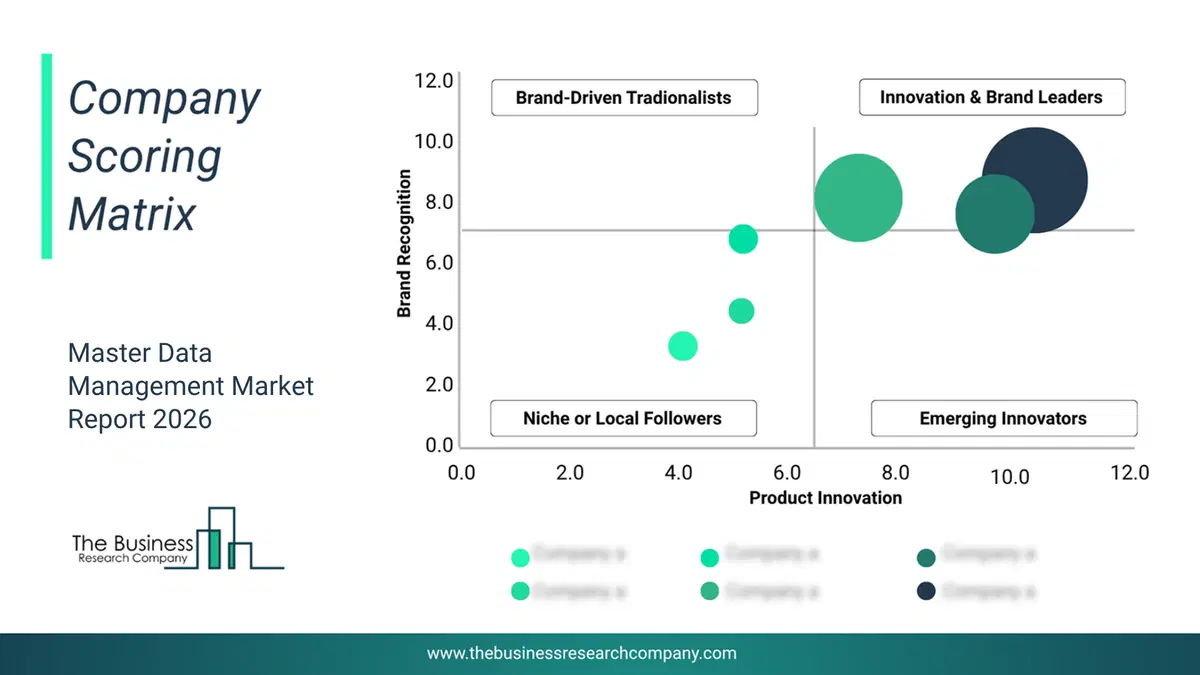
This chart maps companies by product innovation and brand strength, with bubble size indicating relative revenue, helping identify market leaders, challengers, and niche players. This is an illustrative chart; the full report provides a complete and accurate competitive analysis.
Global Master Data Management Market Trends and Insights
Major companies operating in the Global Master Data Management market are focusing on technological advancements, such as AI-powered automation, to gain a competitive advantage. AI-powered automation in MDM refers to using artificial intelligence technologies to streamline data management tasks, enhance data quality, and enable real-time insights. For instance, in September 2023, Reltio, a US-based cloud-native data management company, introduced AI-driven Master Data Management (MDM) solution. Key features include automated entity resolution, anomaly detection, and predictive analytics empowering businesses to drive better decision-making and customer insights. These advancements enable organizations to increase efficiency ten-fold and improve ongoing data governance and accuracy.What Are Latest Mergers And Acquisitions In The Master Data Management Market?
In December 2023, TimeXtender, a Denmark-based provider of data management and automation software, acquired Exmon for an undisclosed amount. With this acquisition, TimeXtender aimed to enhance its technological capabilities in data governance, master data management, and compliance solutions, strengthening its product portfolio to simplify data management through automation. Exmon is an Iceland-based company specializing in master data management.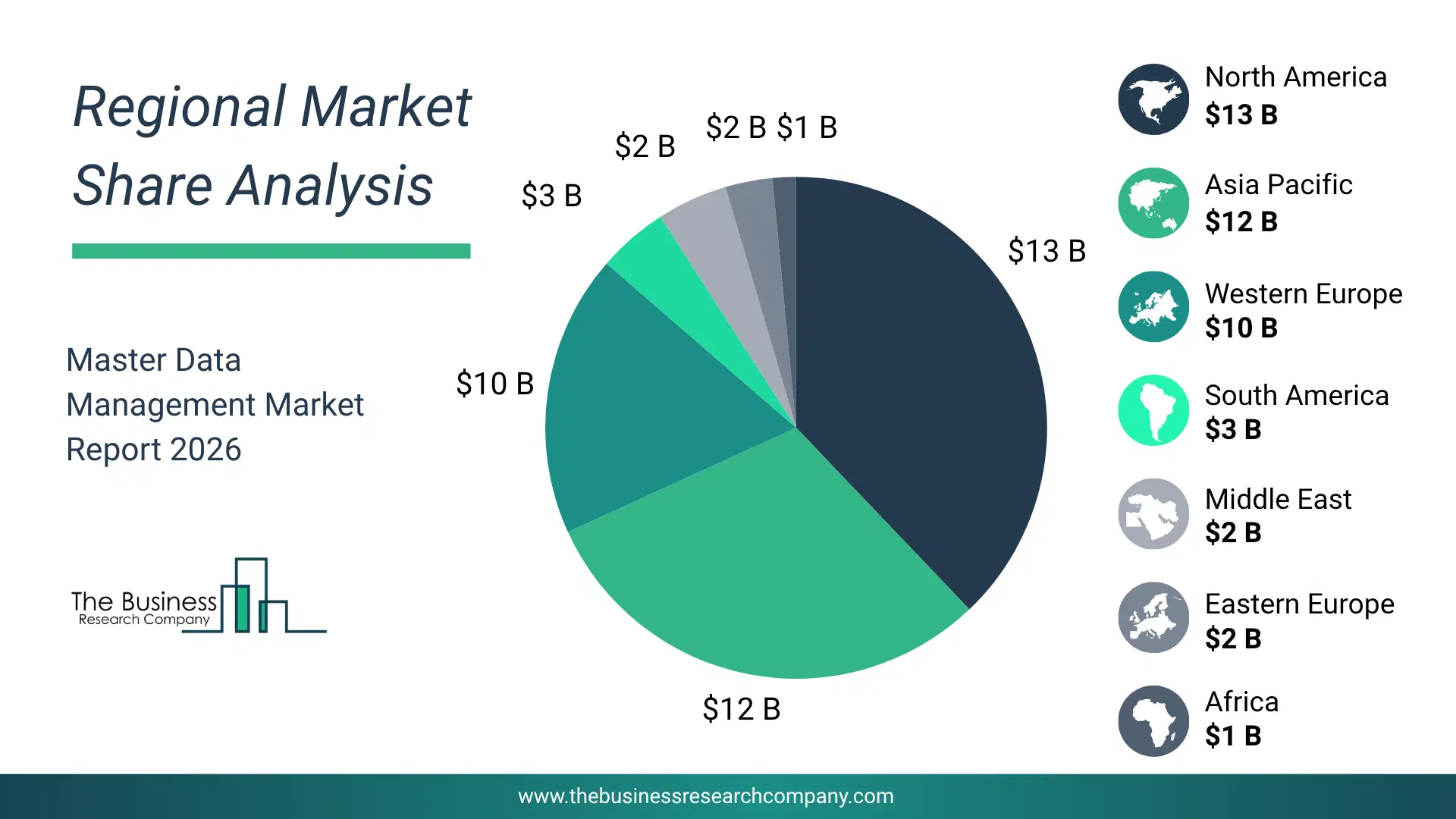
Regional Insights
North America was the largest region in the master data management (MDM) market analysis in 2025. The regions covered in this market report are Asia-Pacific, South East Asia, Western Europe, Eastern Europe, North America, South America, Middle East, Africa. The countries covered in this market report are Australia, Brazil, China, France, Germany, India, Indonesia, Japan, Taiwan, Russia, South Korea, UK, USA, Canada, Italy, SpainWhat Defines the Master Data Management Market?
The master data management (MDM) market includes revenues earned by entities by providing data quality management, covering advisory services, operation support, and delivering clear and unified data for enterprises. The market value includes the value of related goods sold by the service provider or included within the service offering. Only goods and services traded between entities or sold to end consumers are included.How is Market Value Defined and Measured?
The market value is defined as the revenues that enterprises gain from the sale of goods and/or services within the specified market and geography through sales, grants, or donations in terms of the currency (in USD unless otherwise specified). The revenues for a specified geography are consumption values that are revenues generated by organizations in the specified geography within the market, irrespective of where they are produced. It does not include revenues from resales along the supply chain, either further along the supply chain or as part of other products.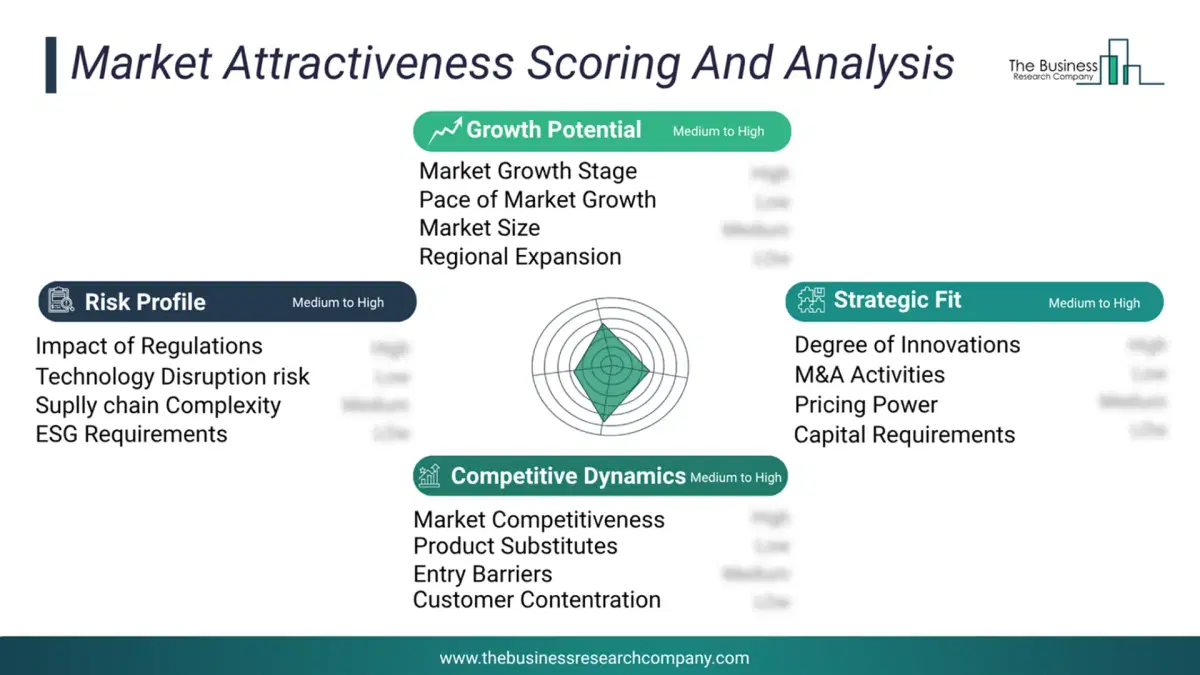
This chart presents market attractiveness based on a quantitative evaluation of growth, competition, strategic alignment, and risk, offering a clear view of opportunity areas for decision-making. This chart is for illustrative purposes; the full report contains the complete analysis.
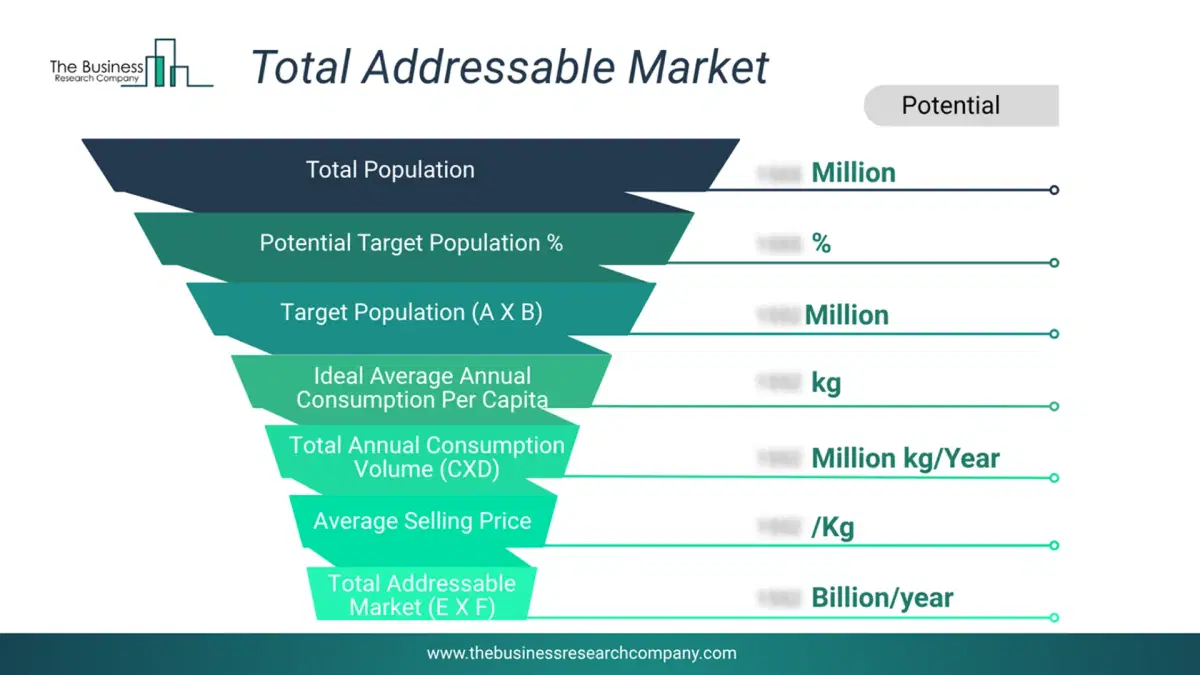
This chart highlights the Total Addressable Market (TAM) by estimating the maximum revenue opportunity using an assumption-driven approach, supporting strategic planning and opportunity sizing across markets. The chart is illustrative; the full report provides a more comprehensive analysis.
What Key Data and Analysis Are Included in the Master Data Management Market Report 2026?
The master data management market research report is one of a series of new reports from The Business Research Company that provides market statistics, including industry global market size, regional shares, competitors with the market share, detailed market segments, market trends and opportunities, and any further data you may need to thrive in the master data management industry. The market research report delivers a complete perspective of everything you need, with an in-depth analysis of the current and future state of the industry.Master Data Management Market Report Forecast Analysis
| Report Attribute | Details |
|---|---|
| Market Size Value In 2026 | $23.77 billion |
| Revenue Forecast In 2030 | $42.43 billion |
| Growth Rate | CAGR of 16.6% from 2026 to 2030 |
| Base Year For Estimation | 2025 |
| Actual Estimates/Historical Data | 2020-2025 |
| Forecast Period | 2026 - 2030 |
| Market Representation | Revenue in USD Billion and CAGR from 2026 to 2030 |
| Segments Covered | Component, Deployment Mode, Organization Size, Application, Verticals |
| Regional Scope | Asia-Pacific, Western Europe, Eastern Europe, North America, South America, Middle East, Africa |
| Country Scope | The countries covered in the report are Australia, Brazil, China, France, Germany, India, Indonesia, Japan, Taiwan, Russia, South Korea, UK, USA, Canada, Italy, Spain. |
| Key Companies Profiled | International Business Machines Corporation; Oracle Corporation; SAP SE; TIBCO Software Inc.; Informatica; Talend Data Integration Services Pvt. Ltd.; SyncForce; Stibo Group; Profisee; Reltio Inc.; Magnitude Software Inc; Ataccama Corp.; Collibra; Semarchy; Pimcore; Riversand (Syndigo) Technologies India Private Limited; EnterWorks; Agility Multichannel Limited; SAP Master Data Governance; Syniti; Contentserv Technologies Private Limited; Orchestra Networks |
| Customization Scope | Request for Customization |
| Pricing And Purchase Options | Explore Purchase Options |