
Medical Display Market Report 2026
Global Outlook – By Display Color (Monochrome Displays, Color Displays), By Technology (Light Emitting Diode (LED), Backlit Liquid Crystal Display, Organic Light Emitting Diode (OLED) Display, Cold Cathode Fluorescent Light (CCFL)), By Device (Desktop, Mobile, All In One), By Application (Digital Pathology, Multi-Modality, Surgical, Radiology, Mammography, Other Applications), By End User (Hospitals, Diagnostic Centers, Community Healthcare) – Market Size, Trends, Strategies, and Forecast to 2030
Medical Display Market Overview
• Medical Display market size has reached to $2.69 billion in 2025 • Expected to grow to $4.03 billion in 2030 at a compound annual growth rate (CAGR) of 8.5% • Growth Driver: Growth in Diagnostic Centers Drives Demand for Medical Displays • Market Trend: Revolutionizing Medical Imaging With The Emergence Of Led Technology In Display Solutions • North America was the largest region in 2025.Market Gains By 2030 – Top Opportunities By Segment
Market Gain identifies the most promising market opportunities by highlighting the segments or products expected to generate the highest incremental revenue growth over the next five years.
What Is Covered Under Medical Display Market?
A medical display refers to a high-resolution monitor specifically designed for viewing medical images such as X-rays, MRIs, and ultrasounds. It is used to provide accurate, clear visuals for diagnostic, surgical, and clinical purposes in healthcare settings. The main medical display color types are monochrome displays and color displays. Monochrome refers to a computer display system in which computer text and images are displayed in varying shades of only one color. The various technologies are light emitting diode (led), backlit liquid crystal display, organic light emitting diode (OLED) display, and cold cathode fluorescent light (CCFL), used through desktop, mobile, and all in one applied in digital pathology, multi-modality, surgical, radiology, mammography, and others. The end users are hospitals, diagnostic centers, and community healthcare.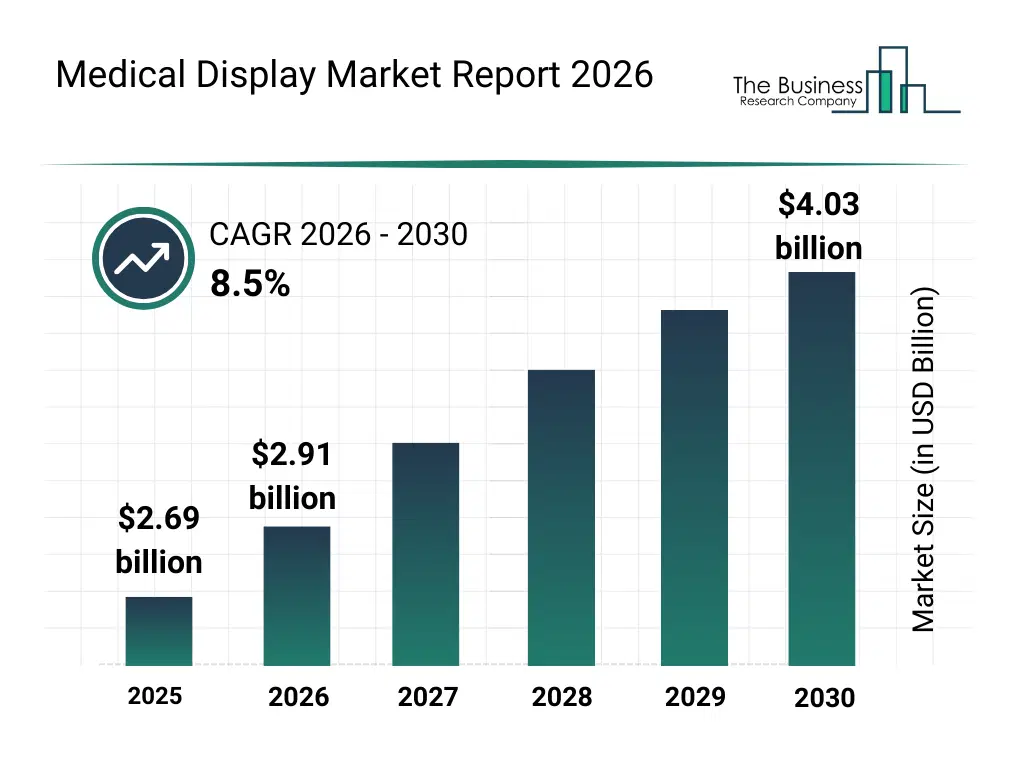
What Is The Medical Display Market Size and Share 2026?
The medical display market size has grown strongly in recent years. It will grow from $2.69 billion in 2025 to $2.91 billion in 2026 at a compound annual growth rate (CAGR) of 8.1%. The growth in the historic period can be attributed to increasing diagnostic imaging procedures, expansion of hospital infrastructure, rising adoption of digital radiology systems, growing use of minimally invasive surgeries, availability of advanced display technologies.What Is The Medical Display Market Growth Forecast?
The medical display market size is expected to see strong growth in the next few years. It will grow to $4.03 billion in 2030 at a compound annual growth rate (CAGR) of 8.5%. The growth in the forecast period can be attributed to increasing integration of ai-assisted diagnostics, rising demand for precision imaging, expansion of telemedicine and remote diagnostics, growing adoption of oled medical displays, increasing investments in digital healthcare infrastructure. Major trends in the forecast period include increasing adoption of high-resolution diagnostic displays, rising demand for color-accurate medical imaging screens, growing use of surgical and clinical displays, expansion of multi-modality viewing systems, enhanced focus on regulatory-compliant display performance.
Global Medical Display Market Segmentation
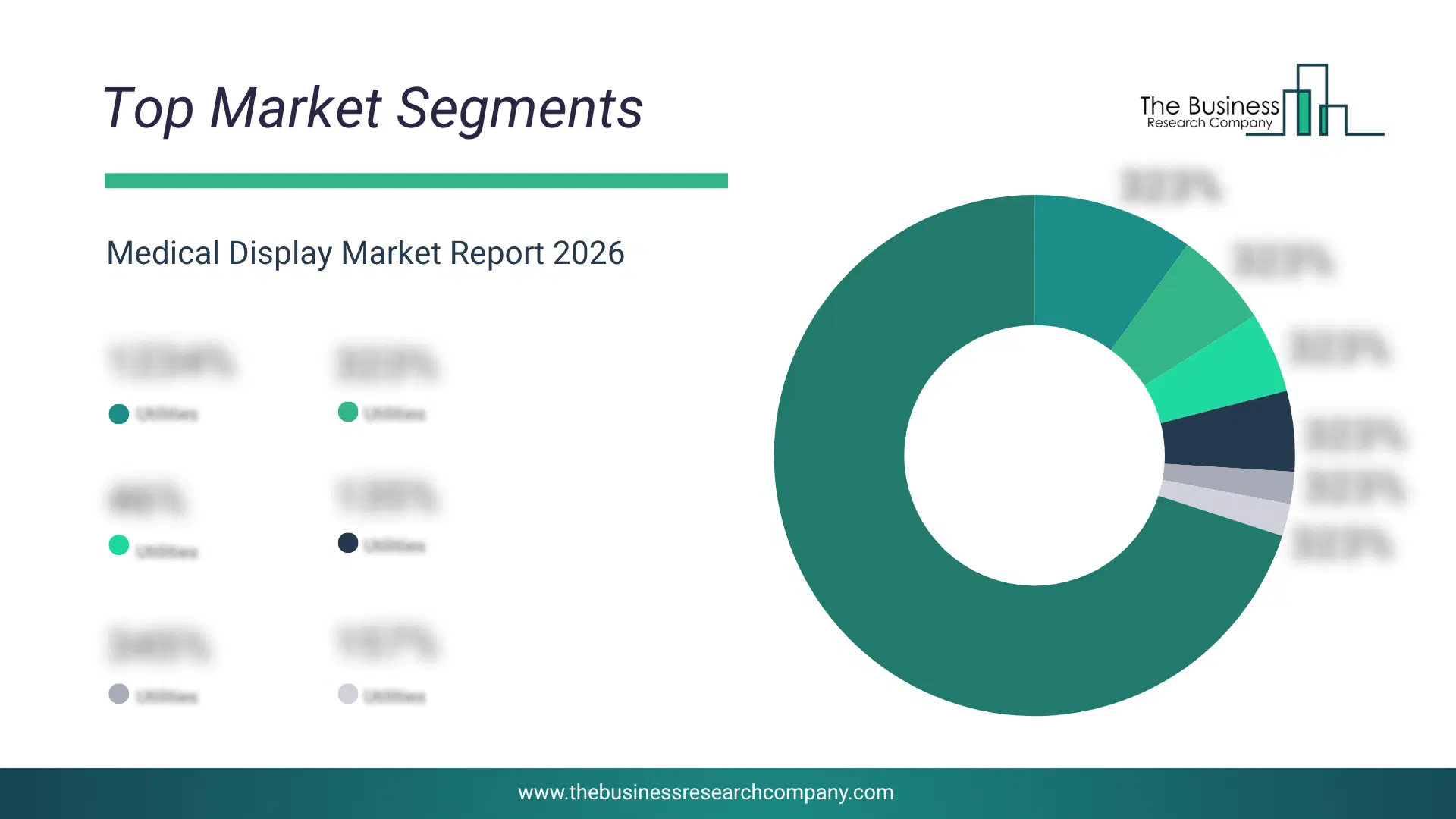
1) By Display Color: Monochrome Displays, Color Displays 2) By Technology: Light Emitting Diode (LED), Backlit Liquid Crystal Display, Organic Light Emitting Diode (OLED) Display, Cold Cathode Fluorescent Light (CCFL) 3) By Device: Desktop, Mobile, All In One 4) By Application: Digital Pathology, Multi-Modality, Surgical, Radiology, Mammography, Other Applications 5) By End User: Hospitals, Diagnostic Centers, Community Healthcare Subsegments: 1) By Monochrome Displays: Grayscale Displays, Black And White Displays 2) By Color Displays: Full-Color Displays, High-Definition Color Displays The top segments in the medical display market will be: • Monochrome Displays will reach $2.5 Billion by 2030. • Color Displays will reach $1.51 Billion by 2030.What Are The Drivers Of The Medical Display Market?
The growing number of diagnostic centers is expected to propel the growth of the medical display market going forward. A diagnostic center is a scientific clinical laboratory that detects and diagnoses diseases by testing blood, triglycerides, urine, cholesterol, and other bodily substances. Medical displays are required in the diagnostic centers to display the medical vital signs of the patient, such as the pulse rate, body temperature, and blood pressure, on a monitor, as well as to interpret and display the test results of the patient being tested. Therefore, the growing number of diagnostic centers is driving the growth of the medical display market. For instance, in April 2022, according to the GOV.UK website, a UK-based government website In England, up to 160 community diagnostic centers are set to be delivered by 2025, with 73 already operational. This initiative is supported by record levels of health and social care funding. The growing number of diagnostic centers is driving the medical display industry. The rising healthcare expenditure is anticipated to drive the expansion of the medical display market in the future. Healthcare expenditure refers to spending on healthcare costs and represents the total amount of money spent on healthcare-related goods and services within a given healthcare system or economy. Healthcare expenditure plays a crucial role in supporting the development, accessibility, and for medical display. For instance, in May 2024, according to the Office for National Statistics, a UK-based government agency, total healthcare spending rose by 5.6% between 2022 and 2023, a notable increase compared to the 0.9% growth recorded in 2022. Therefore, rising healthcare expenditure is driving the growth of the medical display industry.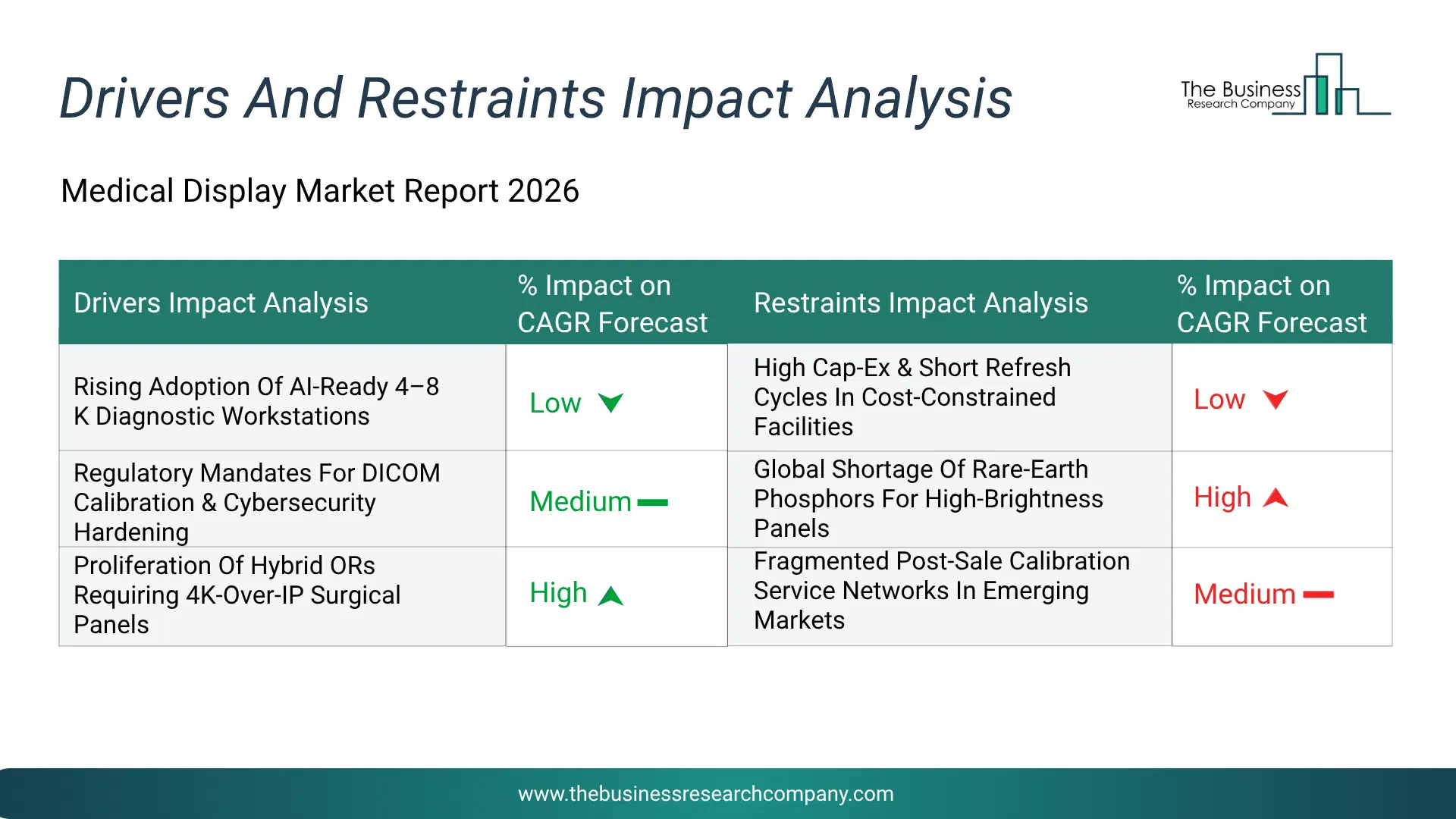
Infographic Chart Showing Key Market Drivers Analysis And Restraints For Medical Display Market
The chart presents an impact analysis of key drivers and restraints, quantifying their relative influence on the market's growth rate and helping assess the balance between growth enablers and limiting factors. This chart offers a high-level perspective; the full report contains more detailed insights.
How Will The Drivers Impact Growth In The Global Medical Display Market?
• Rising Adoption Of AI-Ready 4–8 K Diagnostic Workstations (Low) – During the forecast period, the rising adoption of AI-ready 4-8 k diagnostic workstations is expected to become a key growth driver for the medical display market by 2030. The rising adoption of AI-ready 4-8 K diagnostic workstations is driving growth in the medical display market by increasing demand for high-resolution and advanced visualization systems in healthcare facilities. Medical displays are essential for accurately showing electronic medical images and patient parameters such as scans, pulse rates, blood pressure, and other diagnostic data. AI-powered diagnostic tools require displays with superior brightness, color accuracy, and image clarity to support precise interpretation of medical images. The transition toward 4K and 8K displays improves the detection of small abnormalities and enhances clinical decision-making. Hospitals and diagnostic centers are increasingly investing in these advanced workstations to improve workflow efficiency and reduce diagnostic errors. In addition, the growing use of AI in radiology, pathology, and surgical planning further accelerates the need for technologically advanced medical displays. This trend significantly supports revenue generation for manufacturers of medical monitors, servers, and imaging display solutions. • Regulatory Mandates For DICOM Calibration & Cybersecurity Hardening (Medium) – During the forecast period, the regulatory mandates for DICOM calibration & cybersecurity hardening are expected to emerge as a major factor driving the expansion of the medical display market by 2030. Regulatory mandates for DICOM calibration and cybersecurity hardening are contributing to the expansion of the medical display market by encouraging healthcare providers to upgrade and standardize their display infrastructure. DICOM calibration ensures that medical displays maintain consistent grayscale and image quality, which is critical for accurate diagnosis and patient monitoring. Healthcare institutions are increasingly required to comply with strict imaging standards and cybersecurity regulations to protect sensitive medical data and ensure reliable system performance. These regulations create demand for modern displays equipped with advanced calibration technologies and secure software integration. Manufacturers are developing compliant products with enhanced security features, boosting product innovation and replacement demand. In addition, rising concerns regarding cyberattacks on healthcare systems are accelerating investments in secure and high-performance display technologies. The growing emphasis on regulatory compliance and patient safety continues to support the adoption of advanced medical display systems globally. • Proliferation Of Hybrid ORs Requiring 4K-Over-IP Surgical Panels (High) – During the forecast period, the proliferation of hybrid ORs requiring 4K-over-ip surgical panels is expected to act as a key growth catalyst for the medical display market by 2030. The proliferation of hybrid operating rooms requiring 4K-over-IP surgical panels is driving demand in the medical display market by increasing the need for real-time, ultra-high-definition visualization during complex procedures. Hybrid operating rooms combine advanced imaging systems, surgical equipment, and digital communication technologies, all of which rely heavily on high-performance medical displays. 4K-over-IP surgical panels enable surgeons and clinicians to view detailed medical images, patient vitals, and procedural information with enhanced clarity and accuracy. These displays improve surgical precision, support minimally invasive procedures, and facilitate better collaboration among medical teams. The growing adoption of image-guided surgeries and robotic-assisted procedures further strengthens the requirement for advanced display technologies. Hospitals are increasingly modernizing operating rooms to improve patient outcomes and operational efficiency, thereby boosting demand for surgical monitors and related display infrastructure. This trend is creating strong growth opportunities for manufacturers of medical display solutions worldwide.How Will The Restraints Impact Growth In The Global Medical Display Market?
• High Cap-Ex & Short Refresh Cycles In Cost-Constrained Facilities (Low) – During the forecast period, the high capital expenditure and short refresh cycles in cost-constrained facilities act as a restraint on the medical display market by limiting the purchasing ability of hospitals and healthcare centers with restricted budgets. Advanced medical displays, including 4K and AI-enabled monitors, require substantial upfront investment for procurement, installation, and integration with existing healthcare systems. Many small and mid-sized healthcare facilities, particularly in developing regions, struggle to allocate sufficient funds for frequent technology upgrades. Medical displays also require periodic replacement to maintain compliance with evolving imaging standards and performance requirements, which further increases operational costs. Short refresh cycles create financial pressure on healthcare providers as rapidly changing technologies make existing systems obsolete within a limited timeframe. In addition, maintenance, calibration, and software update expenses add to the overall ownership cost of these systems. Budget constraints often force healthcare institutions to delay upgrades or continue using outdated display equipment, reducing demand for new products. Economic instability and limited healthcare spending in several regions further intensify this challenge. As a result, high investment requirements and recurring replacement costs continue to hinder the broader adoption of advanced medical display technologies. • Global Shortage Of Rare-Earth Phosphors For High-Brightness Panels (Medium) – During the forecast period, the global shortage of rare-earth phosphors for high-brightness panels restrains the growth of the medical display market by disrupting the supply chain for critical display components. Rare-earth phosphors are essential materials used in manufacturing high-performance medical displays that deliver superior brightness, contrast, and color accuracy required for medical imaging applications. Supply shortages and fluctuating availability of these materials increase production costs for display manufacturers. Rising raw material prices reduce profit margins and often lead to higher product prices for end users such as hospitals and diagnostic centers. In addition, supply chain disruptions can delay manufacturing timelines and product deliveries, affecting healthcare infrastructure expansion projects. Dependence on limited geographic sources for rare-earth materials further increases supply risks and market uncertainty. Manufacturers may also face challenges in maintaining consistent product quality and performance standards during material shortages. These constraints can slow innovation and reduce the availability of advanced display technologies in the market. Consequently, the shortage of rare-earth phosphors creates a significant barrier to the steady growth of the medical display industry. • Fragmented Post-Sale Calibration Service Networks In Emerging Markets (High) – During the forecast period, the fragmented post-sale calibration service networks in emerging markets act as a restraint on the medical display market by limiting the efficiency and reliability of display maintenance services. Medical displays require regular calibration and performance monitoring to maintain image accuracy and comply with diagnostic standards such as DICOM requirements. In many emerging economies, the lack of organized service infrastructure and trained technical personnel creates difficulties in providing timely calibration and maintenance support. Healthcare providers often experience delays in servicing and repairs, which can disrupt clinical workflows and reduce equipment reliability. Limited access to authorized service centers also increases operational downtime and maintenance costs for hospitals and diagnostic facilities. In addition, inconsistent service quality may negatively affect the diagnostic accuracy of medical imaging systems, creating concerns among healthcare professionals. Smaller healthcare institutions may hesitate to invest in advanced display systems due to uncertainty regarding long-term technical support. Poor after-sales service coverage also weakens customer confidence and slows technology adoption in developing regions. As a result, fragmented calibration and maintenance networks continue to restrict the expansion of the medical display market in emerging economies.Key Players In The Global Medical Display Market
Major companies operating in the medical display market are Siemens AG; Sony Corporation; EIZO Corporation; Steris Corporation; Advantech Co Ltd.; LG Electronics; Barco; BenQ Medical Technology; Double Black Imaging Corporation; FSN Medical Technologies; Jusha Medical; Stryker Corporation; Ampronix LLC; Carl Zeiss Meditec AG; Hologic Inc.; Image Diagnostics Inc.; JVC Kenwood Corporation; Mediso Medical Imaging Systems; NDS Surgical Imaging LLC; NEC Display Solutions; Planar Systems Inc.; Shimadzu Corporation; Ziehm Imaging GmbH; Zonare Medical Systems Inc.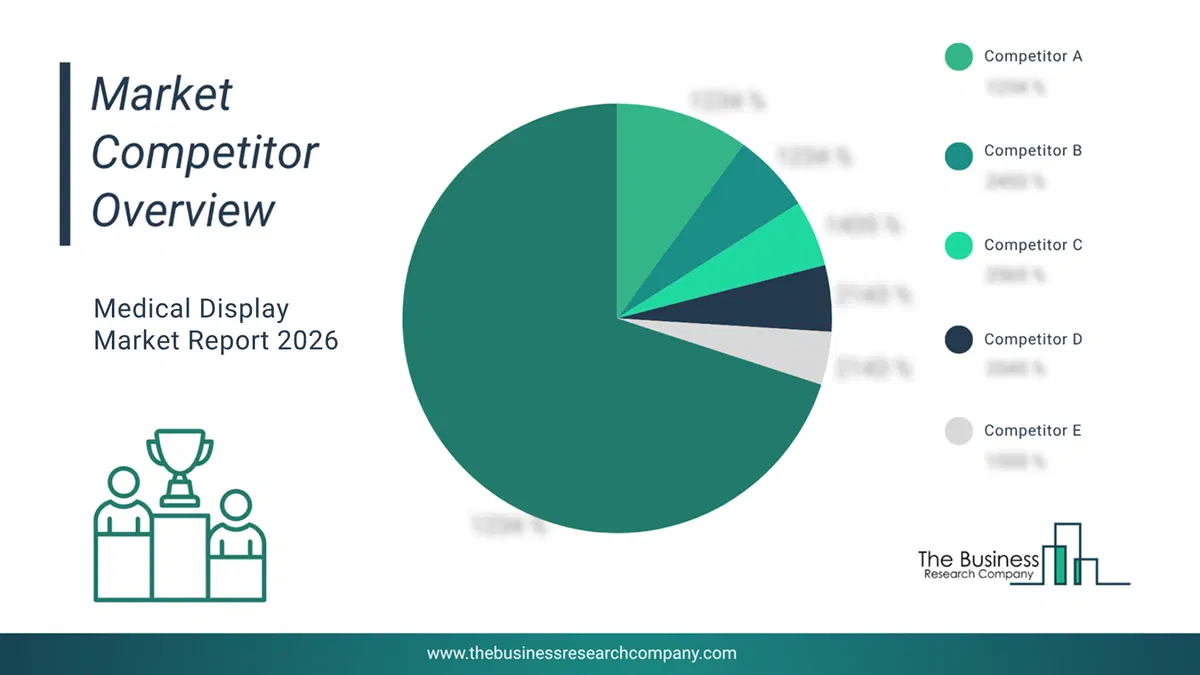
This chart is for illustrative purposes; the full report includes a detailed competitor analysis and comprehensive overview of the top 10 companies in the market.
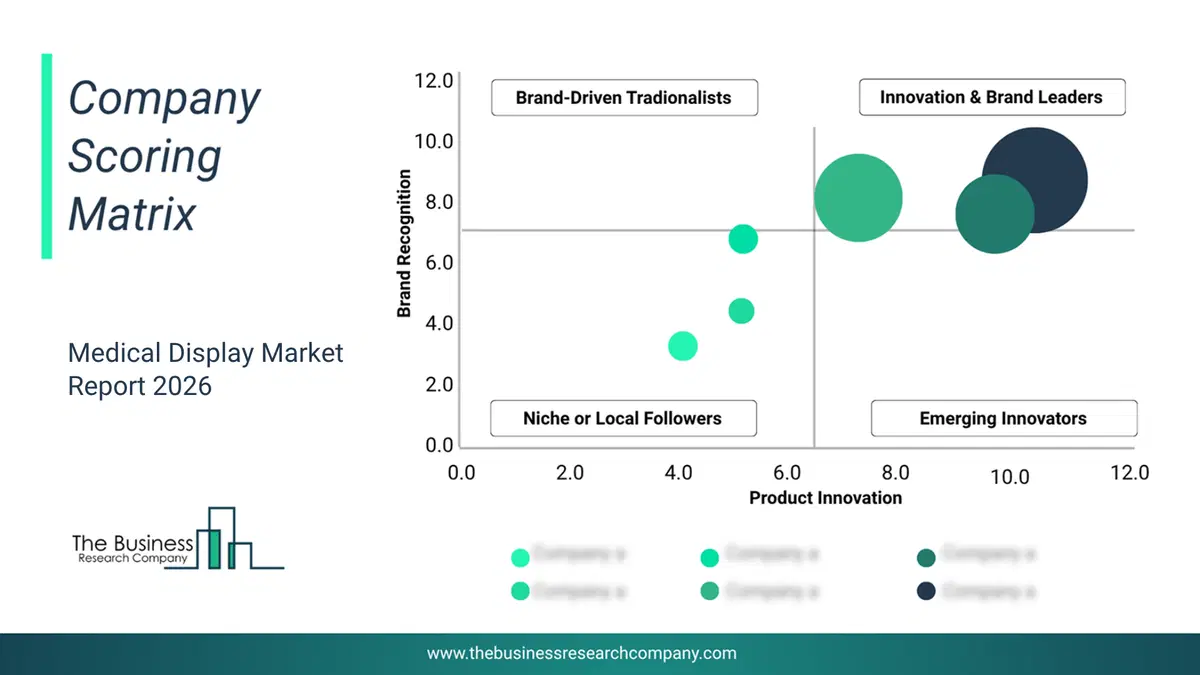
This chart maps companies by product innovation and brand strength, with bubble size indicating relative revenue, helping identify market leaders, challengers, and niche players. This is an illustrative chart; the full report provides a complete and accurate competitive analysis.
Global Medical Display Market Trends and Insights
Major companies operating in the medical display market are adopting new technologies, such as light-emitting diodes to gain a competitive edge in the market. A light-emitting diode (LED) is a semiconductor device that emits light when an electric current passes through it. This happens as electrons recombine with electron holes within the semiconductor, releasing energy in the form of photons, resulting in the emission of light. For instance, in January 2023, Barco, a Belgium-based technology company introduced a cutting-edge LED solution, expanding its next-gen LED lineup alongside TruePix. This latest series delivers exceptional image performance and top-notch color quality, driven by Barco's Infinipix Gen2 processing. Designed for LED video walls demanding impactful visuals, the NT series exceeds typical expectations.Regional Insights
North America was the largest region in the medical display market in 2025. The regions covered in this market report are Asia-Pacific, South East Asia, Western Europe, Eastern Europe, North America, South America, Middle East, Africa. The countries covered in this market report are Australia, Brazil, China, France, Germany, India, Indonesia, Japan, Taiwan, Russia, South Korea, UK, USA, Canada, Italy, SpainWhat Defines the Medical Display Market?
The medical display market consists of display sales of holography, surgical field cameras, monitors and servers. Values in this market are ‘factory gate’ values, that is, the value of goods sold by the manufacturers or creators of the goods, whether to other entities (including downstream manufacturers, wholesalers, distributors, and retailers) or directly to end customers. The value of goods in this market includes related services sold by the creators of the goods.How is Market Value Defined and Measured?
The market value is defined as the revenues that enterprises gain from the sale of goods and/or services within the specified market and geography through sales, grants, or donations in terms of the currency (in USD unless otherwise specified). The revenues for a specified geography are consumption values that are revenues generated by organizations in the specified geography within the market, irrespective of where they are produced. It does not include revenues from resales along the supply chain, either further along the supply chain or as part of other products.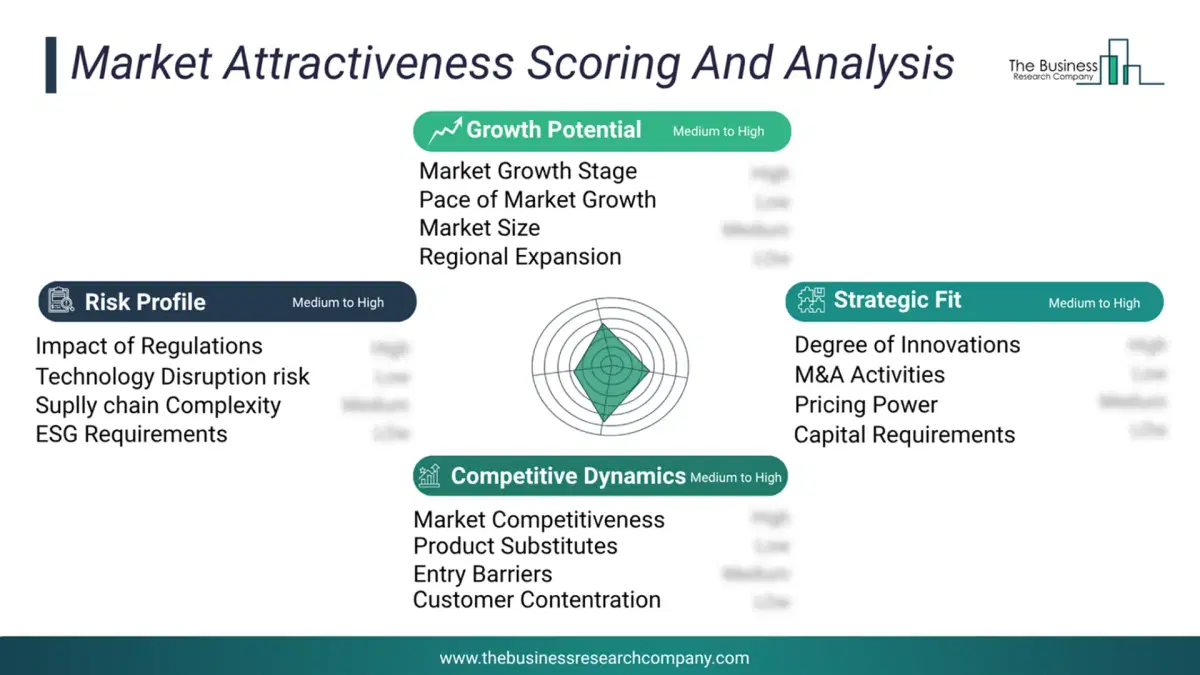
This chart presents market attractiveness based on a quantitative evaluation of growth, competition, strategic alignment, and risk, offering a clear view of opportunity areas for decision-making. This chart is for illustrative purposes; the full report contains the complete analysis.
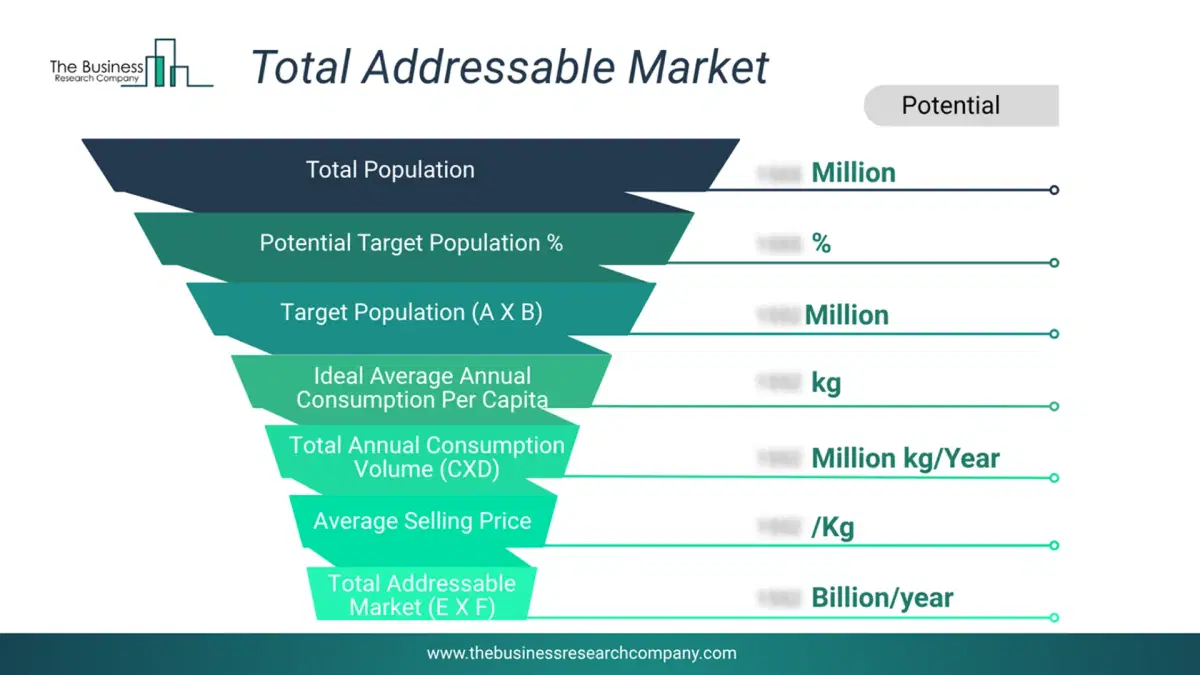
This chart highlights the Total Addressable Market (TAM) by estimating the maximum revenue opportunity using an assumption-driven approach, supporting strategic planning and opportunity sizing across markets. The chart is illustrative; the full report provides a more comprehensive analysis.
What Key Data and Analysis Are Included in the Medical Display Market Report 2026?
The medical display market research report is one of a series of new reports from The Business Research Company that provides market statistics, including industry global market size, regional shares, competitors with the market share, detailed market segments, market trends and opportunities, and any further data you may need to thrive in the medical display industry. The market research report delivers a complete perspective of everything you need, with an in-depth analysis of the current and future state of the industry.Medical Display Market Report Forecast Analysis
| Report Attribute | Details |
|---|---|
| Market Size Value In 2026 | $2.91 billion |
| Revenue Forecast In 2030 | $4.03 billion |
| Growth Rate | CAGR of 8.1% from 2026 to 2030 |
| Base Year For Estimation | 2025 |
| Actual Estimates/Historical Data | 2020-2025 |
| Forecast Period | 2026 - 2030 |
| Market Representation | Revenue in USD Billion and CAGR from 2026 to 2030 |
| Segments Covered | Display Color, Technology, Device, Application, End User |
| Regional Scope | Asia-Pacific, Western Europe, Eastern Europe, North America, South America, Middle East, Africa |
| Country Scope | The countries covered in the report are Australia, Brazil, China, France, Germany, India, Indonesia, Japan, Taiwan, Russia, South Korea, UK, USA, Canada, Italy, Spain. |
| Key Companies Profiled | Siemens AG; Sony Corporation; EIZO Corporation; Steris Corporation; Advantech Co Ltd.; LG Electronics; Barco; BenQ Medical Technology; Double Black Imaging Corporation; FSN Medical Technologies; Jusha Medical; Stryker Corporation; Ampronix LLC; Carl Zeiss Meditec AG; Hologic Inc.; Image Diagnostics Inc.; JVC Kenwood Corporation; Mediso Medical Imaging Systems; NDS Surgical Imaging LLC; NEC Display Solutions; Planar Systems Inc.; Shimadzu Corporation; Ziehm Imaging GmbH; Zonare Medical Systems Inc. |
| Customization Scope | Request for Customization |
| Pricing And Purchase Options | Explore Purchase Options |