

Mental Health Market Report 2026
Global Outlook – By Disorder (Schizophrenia, Alcohol Use Disorders, Bipolar Disorder, Depression, Anxiety, Post-Traumatic Stress Disorder, Substance Abuse Disorders, Eating Disorders, Other Disorders), By Services (Emergency Mental Health Services, Outpatient Counselling, Home-Based Treatment Services, Inpatient Hospital Treatment Services, Other Services), By Age Group (Pediatric, Adult, Geriatric) - Market Size, Trends, Strategies, and Forecast to 2030
Mental Health Market Overview
• Mental Health market size has reached to $439.52 billion in 2025 • Expected to grow to $512.77 billion in 2030 at a compound annual growth rate (CAGR) of 3.1% • Growth Driver: Rising Prevalence Of Mental Disorders Driving Growth In The Mental Health Market • Market Trend: Launch Of An Empathetic Artificial Intelligence Companion To Enhance Personalized Emotional Support • North America was the largest region in 2025 and Asia-Pacific is the fastest growing region.Market Gains By 2030 – Top Opportunities By Segment
Market Gain identifies the most promising market opportunities by highlighting the segments or products expected to generate the highest incremental revenue growth over the next five years.
What Is Covered Under Mental Health Market?
Mental health is a condition of psychological and emotional well-being that enables people to effectively handle life's obstacles, identify and use their skills, gain knowledge and efficiency, and actively participate in society. It also aids in figuring out how to manage stress, interact with people, and make wise decisions. The main types of disorders in the mental health market include schizophrenia, alcohol use disorders, bipolar disorder, depression, anxiety, post-traumatic stress disorder, substance abuse disorders, eating disorders, and others. They are treated with services including emergency mental health services, outpatient counselling, home-based treatment services, inpatient hospital treatment services, and others tailored for all age groups, such as pediatric, adult, and geriatric.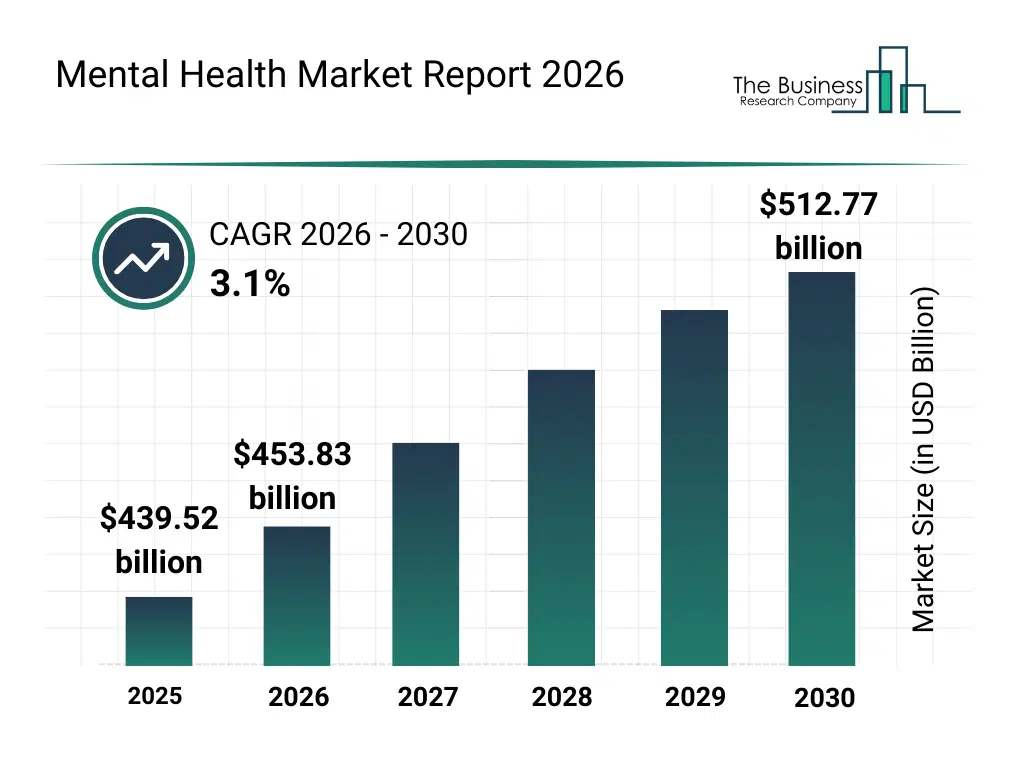
What Is The Mental Health Market Size and Share 2026?
The mental health market size has grown steadily in recent years. It will grow from $439.52 billion in 2025 to $453.83 billion in 2026 at a compound annual growth rate (CAGR) of 3.3%. The growth in the historic period can be attributed to rising prevalence of mental health disorders, increased public awareness and education campaigns, early adoption of digital therapy tools, expansion of community mental health programs, growth in government mental health funding.What Is The Mental Health Market Growth Forecast?
The mental health market size is expected to see steady growth in the next few years. It will grow to $512.77 billion in 2030 at a compound annual growth rate (CAGR) of 3.1%. The growth in the forecast period can be attributed to increasing demand for telehealth counseling, rising integration of wearable mental health tracking devices, corporate investments in employee wellness programs, growth in ai-driven mental health diagnostics, expansion of online therapy service providers. Major trends in the forecast period include AI-enabled mental health assessment and support tools, expansion of cloud-based mental health service platforms, integration of iot wearables for mood and stress tracking, adoption of ar/vr immersive therapy and well-being platforms, growth of precision medicine approaches in mental health care.
Global Mental Health Market Segmentation
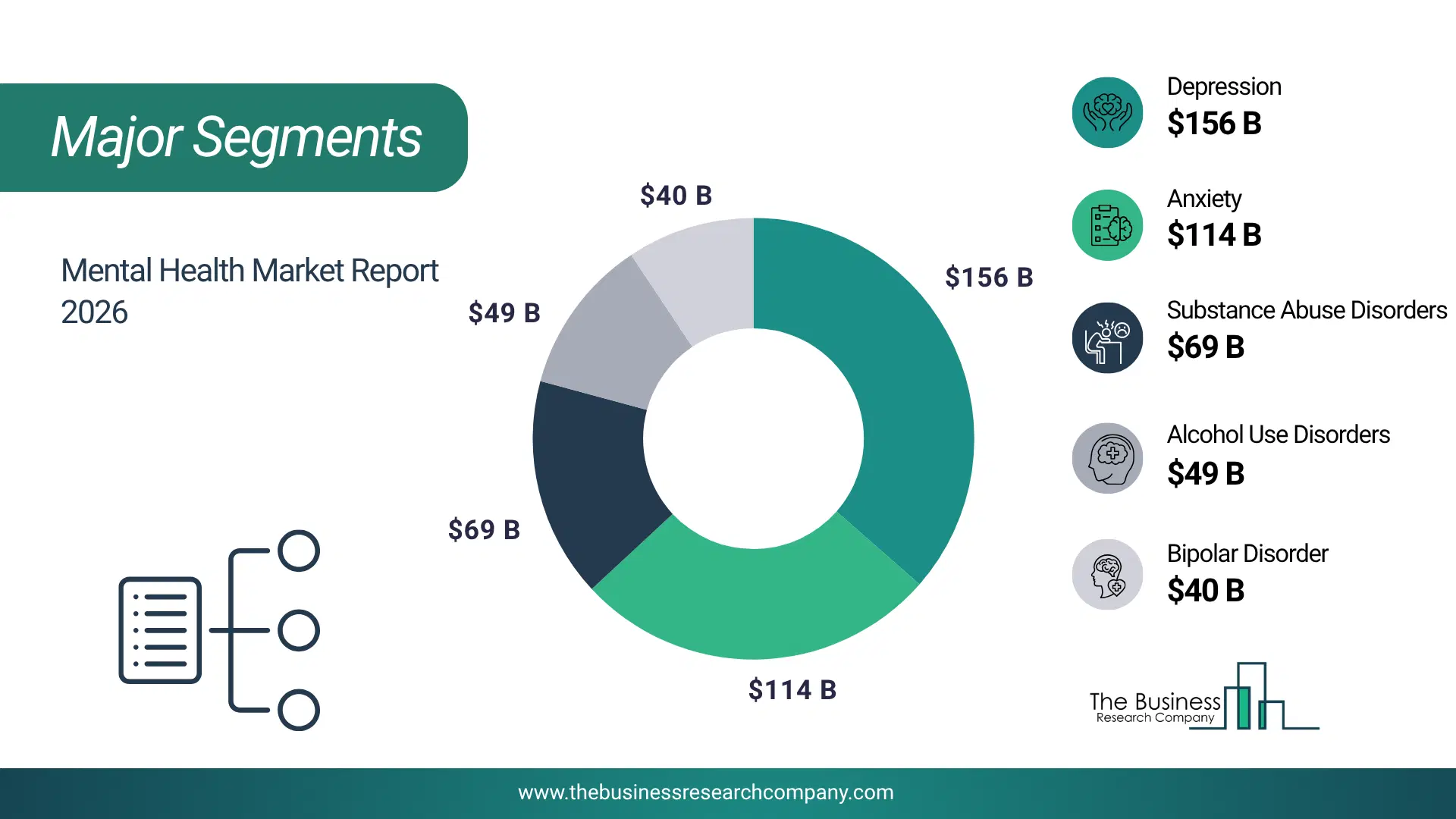
1) By Disorder: Schizophrenia, Alcohol Use Disorders, Bipolar Disorder, Depression, Anxiety, Post-Traumatic Stress Disorder, Substance Abuse Disorders, Eating Disorders, Other Disorders 2) By Services: Emergency Mental Health Services, Outpatient Counselling, Home-Based Treatment Services, Inpatient Hospital Treatment Services, Other Services 3) By Age Group: Pediatric, Adult, Geriatric Subsegments: 1) By Schizophrenia: Paranoid Schizophrenia, Catatonic Schizophrenia, Schizoaffective Disorder 2) By Alcohol Use Disorders: Alcohol Dependence, Alcohol Abuse 3) By Bipolar Disorder: Bipolar I Disorder, Bipolar II Disorder, Cyclothymic Disorder 4) By Depression: Major Depressive Disorder, Persistent Depressive Disorder (Dysthymia), Seasonal Affective Disorder 5) By Anxiety: Generalized Anxiety Disorder, Panic Disorder, Social Anxiety Disorder, Phobias 6) By Post-Traumatic Stress Disorder (PTSD): Acute PTSD, Chronic PTSD, Complex PTSD 7) By Substance Abuse Disorders: Opioid Use Disorder, Cannabis Use Disorder, Stimulant Use Disorder 8) By Eating Disorders: Anorexia Nervosa, Bulimia Nervosa, Binge-Eating Disorder 9) By Other Disorders: Obsessive-Compulsive Disorder (OCD), Attention Deficit Hyperactivity Disorder (ADHD), Personality Disorders The top segments in the mental health market will be: • Depression will reach $156 Billion by 2030. • Anxiety will reach $114 Billion by 2030. • Substance Abuse Disorders will reach $69 Billion by 2030. • Alcohol Use Disorders will reach $49 Billion by 2030. • Bipolar Disorder will reach $40 Billion by 2030.What Is The Driver Of The Mental Health Market?
An increase in the prevalence of mental disorders is expected to propel the growth of the mental health market in the coming future. A mental disorder is defined as a clinically significant impairment in an individual's cognition, emotional control, or behavior. Mental disorders play a significant role in mental health by enabling diagnosis, guiding treatment, informing public health efforts, and driving research. For instance, in May 2024, according to the American Psychiatric Association, a US-based non-profit organization, in 2024, 43% of adults report feeling more anxious compared to the previous year, a rise from 37% in 2023 and 32% in 2022. Therefore, the increase in the prevalence of mental disorders is driving the mental health industry.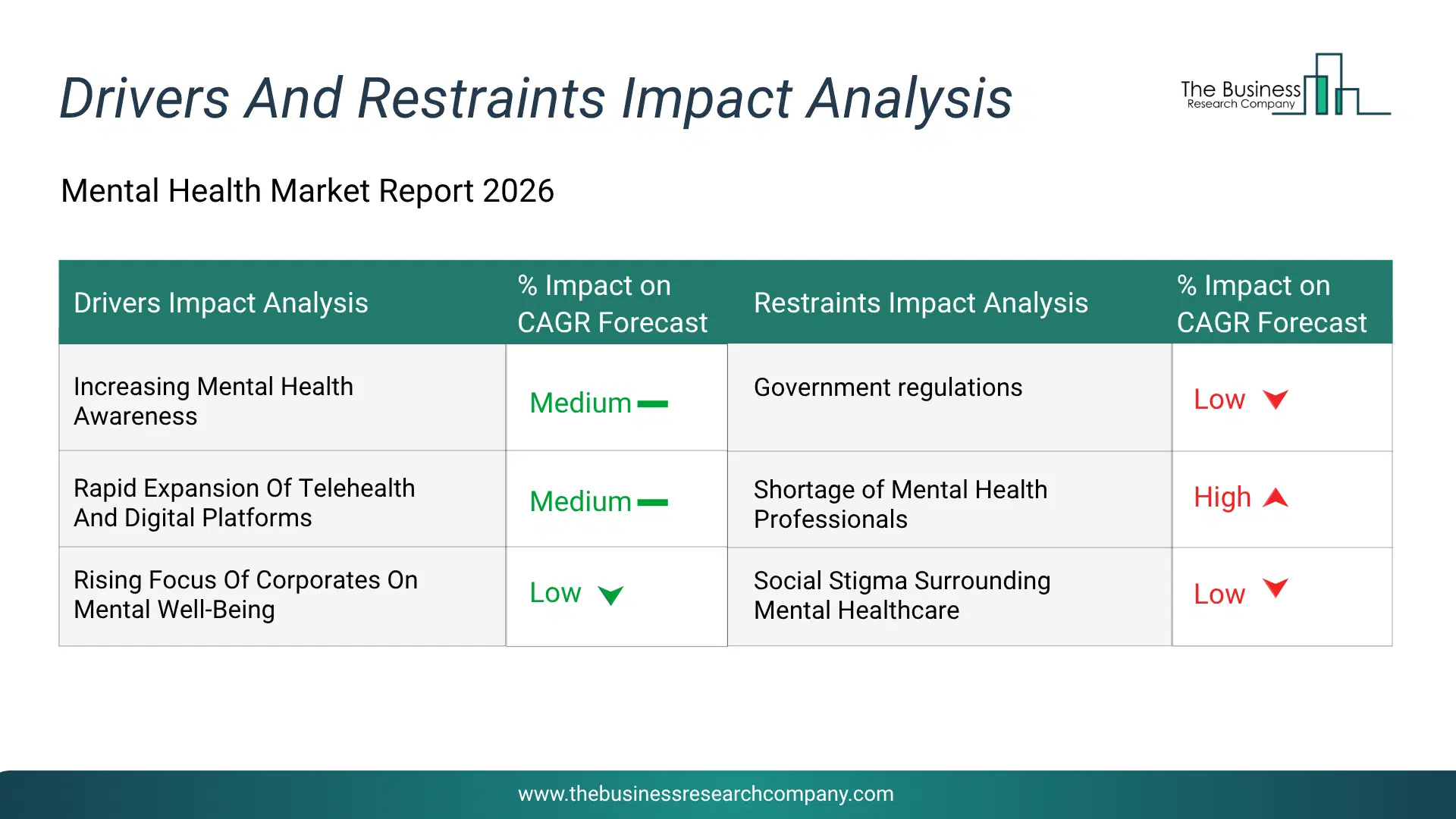
Infographic Chart Showing Key Market Drivers Analysis And Restraints For Mental Health Market
The chart presents an impact analysis of key drivers and restraints, quantifying their relative influence on the market's growth rate and helping assess the balance between growth enablers and limiting factors. This chart offers a high-level perspective; the full report contains more detailed insights.
How Will The Drivers Impact Growth In The Global Mental Health Market?
• Increasing Mental Health Awareness (Medium) – During the forecast period, the increasing mental health awareness is expected to become a key growth driver for the mental health market by 2030. growing public understanding of mental health conditions and reduced social stigma are encouraging more individuals to seek professional support and timely treatment. educational initiatives, awareness campaigns, and healthcare advocacy programs are improving recognition of symptoms and promoting early intervention. this shift is increasing the adoption of counseling services, psychiatric care, and behavioral health solutions across different age groups. rising awareness is also supporting the expansion of preventive and wellness-based mental healthcare services. • Rapid Expansion Of Telehealth And Digital Platforms (Medium) – During the forecast period, the rapid expansion of telehealth and digital platforms is expected to emerge as a major factor driving the growth of the mental health market by 2030. the increasing use of telepsychiatry, mobile applications, AI-enabled mental health tools, and digital therapeutics is improving access to care and overcoming geographical barriers. virtual counseling platforms are enabling patients to receive convenient, affordable, and continuous support from healthcare professionals. growing smartphone penetration and internet accessibility are further increasing the adoption of remote mental healthcare solutions worldwide. • Rising Focus Of Corporates On Mental Well-Being (Low) – During the forecast period, the rising focus of corporates on mental well-being is expected to act as a key growth catalyst for the mental health market by 2030. employers are increasingly investing in employee assistance programs, workplace wellness initiatives, stress management solutions, and mental health benefits to improve workforce productivity and employee satisfaction. growing concerns related to workplace stress, burnout, and work-life balance are encouraging organizations to adopt comprehensive mental well-being strategies. the expansion of hybrid work environments is further increasing demand for accessible mental health support services.How Will The Restraints Impact Growth In The Global Mental Health Market?
• Government regulations (Medium) – During the forecast period, government Regulations act as a restraint in the mental health market due to stringent requirements governing the approval, reimbursement, and delivery of mental health treatments and digital health solutions. Compliance with varying regulations related to patient privacy, data security, licensing, and clinical validation can increase operational costs and delay product launches. Differences in regulatory frameworks across countries also create challenges for market expansion and standardization of care. Additionally, complex reimbursement policies and approval processes may limit access to innovative therapies and digital mental health platforms, thereby slowing overall market growth. • Shortage of Mental Health Professionals (Medium) – During the forecast period, shortage of Mental Health Professionals is a significant restraint on the growth of the mental health market, as many countries face an inadequate supply of psychiatrists, psychologists, counselors, and other trained mental healthcare providers. This shortage leads to long waiting times, limited access to specialized care, and disparities in treatment availability, particularly in rural and underserved regions. The growing demand for mental health services often exceeds the capacity of existing healthcare systems, resulting in delayed diagnosis and treatment. Consequently, the lack of skilled professionals hampers the effective delivery and expansion of mental health services globally. • Social Stigma Surrounding Mental Healthcare (Low) – During the forecast period, social stigma surrounding mental health conditions can restrain the mental health market by discouraging individuals from seeking professional support. Concerns about social judgment, discrimination, or confidentiality may cause people to delay diagnosis and treatment or avoid mental health services altogether. This reduces the addressable demand for formal healthcare services and can particularly affect utilization in regions where mental health remains a sensitive social issue.Key Players In The Global Mental Health Market
Major companies operating in the mental health market are Evernorth Health Inc., Ascension Inc., Universal Health Services Inc., Sevita, Acadia Healthcare Co. Inc., Loma Linda University Health, Promises Behavioral Health, CareTech Holdings Plc, Pyramid Healthcare Inc., Crestwood Behavioral Health Inc., Behavioral Health Network Inc., Modern Health, North Range Behavioral Health, REM Minnesota Inc., Strategic Behavioral Health LLC, Kennebec Behavioral Health, Vita Health Group, Child Mind Institute, Unison Behavioral Health Group Inc., JED Foundation, Brain and Behaviour Foundation, International OCD Foundation, TEAMCare Behavioral Health LLC, The Jason Foundation Inc., Thrive Behavioral Health Inc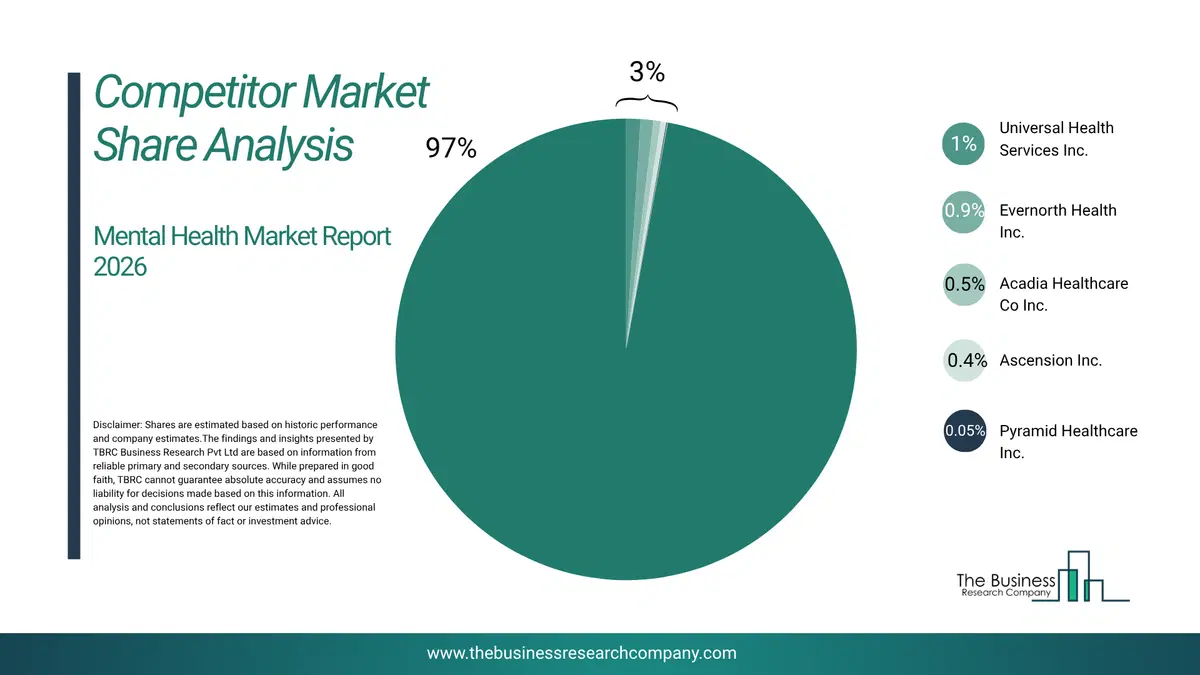
This chart is for illustrative purposes; the full report includes a detailed competitor analysis and comprehensive overview of the top 10 companies in the market.
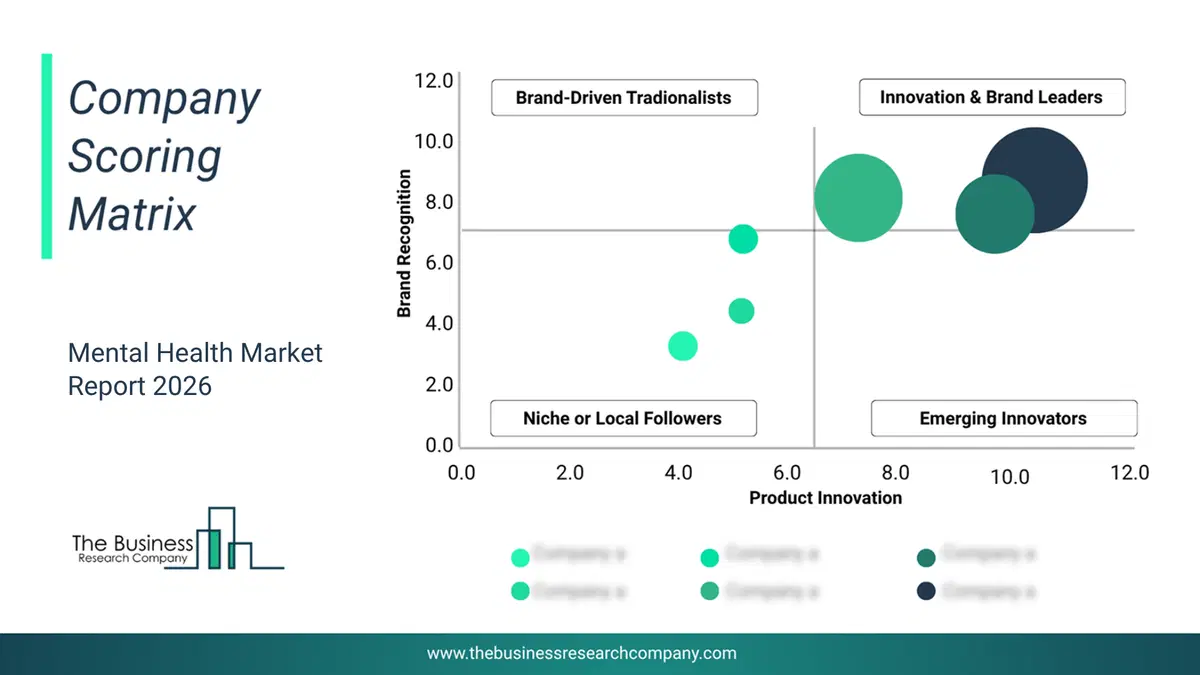
This chart maps companies by product innovation and brand strength, with bubble size indicating relative revenue, helping identify market leaders, challengers, and niche players. This is an illustrative chart; the full report provides a complete and accurate competitive analysis.
Global Mental Health Market Trends and Insights
Major companies operating in the mental health market are focusing on developing advanced solutions, such as empathetic AI companions, to enhance personalized emotional support and improve user engagement. An empathetic AI companion refers to an artificial intelligence–driven tool designed to provide supportive, human-like interactions by understanding user emotions, offering tailored guidance, and promoting overall mental well-being. For instance, in October 2024, Headspace Inc., a US-based mental health company, launched an empathetic AI companion called Ebb within its award-winning mindfulness and mental well-being platform. This innovation enhances traditional digital mental-health tools by delivering conversational support powered by generative AI, enabling users to engage in reflective dialogues, receive personalized content recommendations, and access emotional support anytime without requiring human intervention. It offers real-time assistance based on user needs while allowing Headspace to seamlessly integrate Ebb with its existing offerings, such as meditation content, coaching, and stress-reduction tools, without adding user complexity. Integrated within Headspace’s holistic mental-wellness ecosystem, Ebb provides a unified experience that simplifies user journeys, strengthens emotional resilience, and helps drive deeper engagement and improved outcomes.What Are Latest Mergers And Acquisitions In The Mental Health Market?
In July 2023, Big Health Inc., a US-based company that offers digital non-drug therapy for mental health, acquired Limbix Health Inc. for an undisclosed amount. Through the acquisition, Big Health Inc. grew its portfolio in adolescent mental health. Big Health's treatment portfolio now includes SparkRx for teenage depression and a teen anxiety product in progress, in addition to its flagship products for individuals aged 18 and above, Sleepio for sleeplessness and Daylight for anxiety. Limbix Health Inc. is a US-based mental healthcare company that provides mental health treatment for adolescents.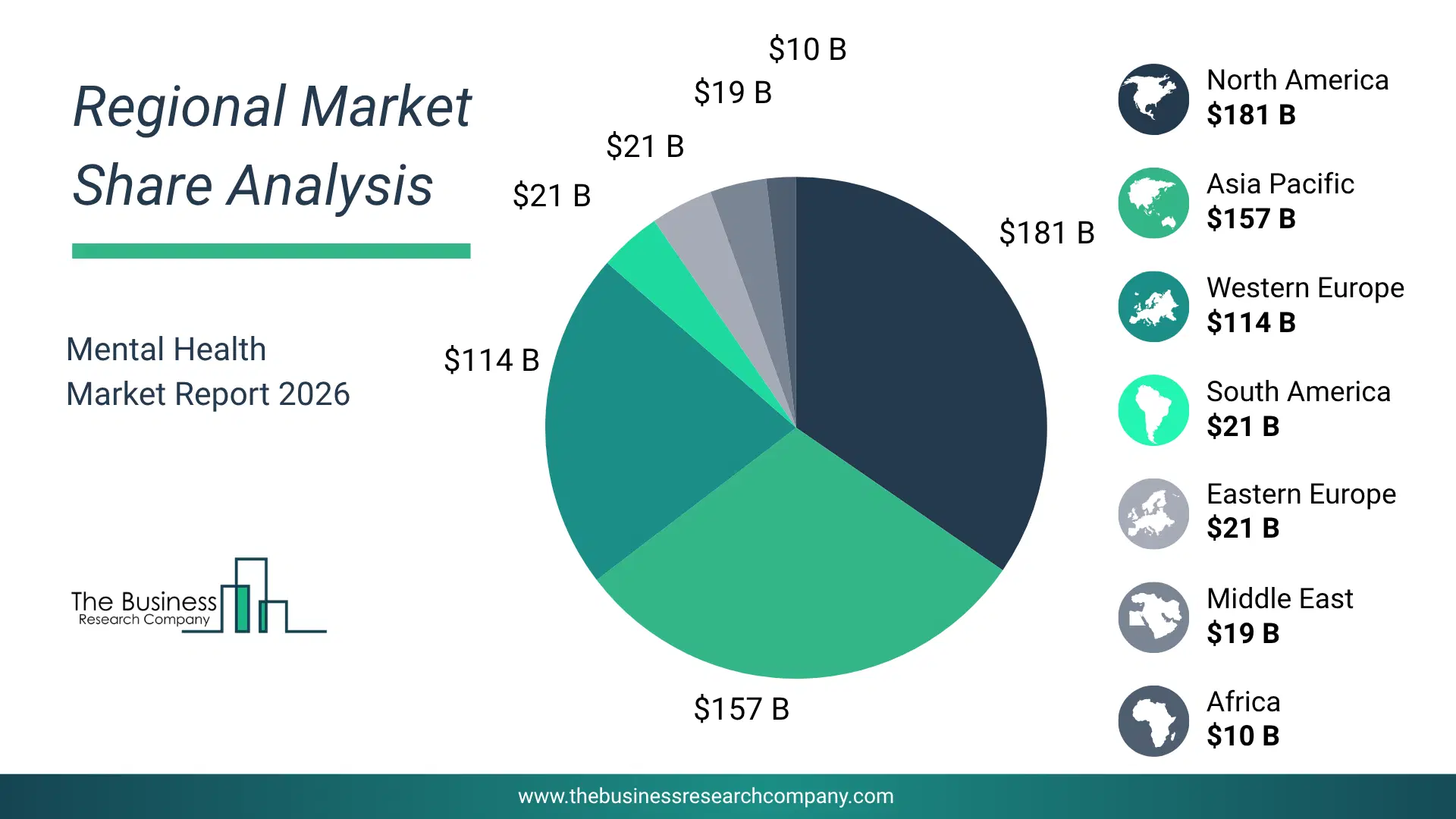
Regional Outlook
North America was the largest region in the mental health market in 2025. Asia-Pacific is expected to be the fastest-growing region in the forecast period. The regions covered in this market report are Asia-Pacific, South East Asia, Western Europe, Eastern Europe, North America, South America, Middle East, Africa. The countries covered in this market report are Australia, Brazil, China, France, Germany, India, Indonesia, Japan, Taiwan, Russia, South Korea, UK, USA, Canada, Italy, Spain.What Defines the Mental Health Market?
The mental health market includes revenues earned by entities through providing services such as counseling, group therapy, medication, recreational therapies, and medical supervision. The market value includes the value of related goods sold by the service provider or included within the service offering. Only goods and services traded between entities or sold to end consumers are included.How is Market Value Defined and Measured?
The market value is defined as the revenues that enterprises gain from the sale of goods and/or services within the specified market and geography through sales, grants, or donations in terms of the currency (in USD unless otherwise specified). The revenues for a specified geography are consumption values that are revenues generated by organizations in the specified geography within the market, irrespective of where they are produced. It does not include revenues from resales along the supply chain, either further along the supply chain or as part of other products.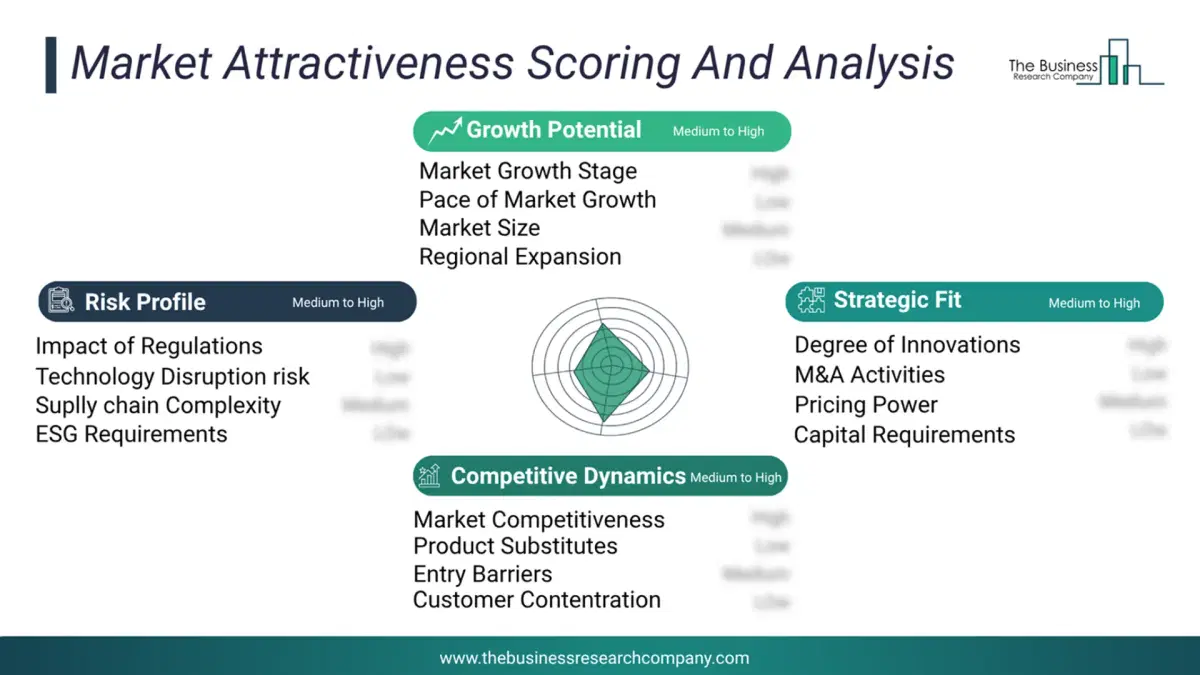
This chart presents market attractiveness based on a quantitative evaluation of growth, competition, strategic alignment, and risk, offering a clear view of opportunity areas for decision-making. This chart is for illustrative purposes; the full report contains the complete analysis.
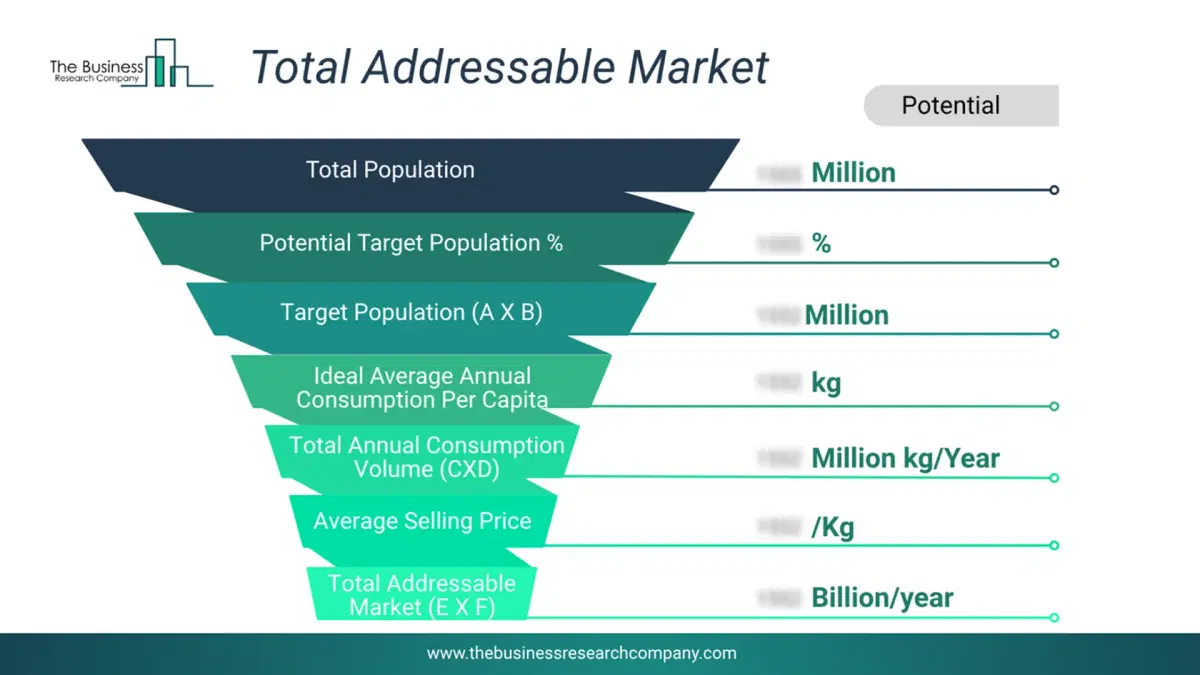
This chart highlights the Total Addressable Market (TAM) by estimating the maximum revenue opportunity using an assumption-driven approach, supporting strategic planning and opportunity sizing across markets. The chart is illustrative; the full report provides a more comprehensive analysis.
What Key Data and Analysis Are Included in the Mental Health Market Report 2026?
The mental health market research report is one of a series of new reports from The Business Research Company that provides market statistics, including industry global market size, regional shares, competitors with the market share, detailed market segments, market trends and opportunities, and any further data you may need to thrive in the mental health industry. The market research report delivers a complete perspective of everything you need, with an in-depth analysis of the current and future state of the industry.Mental Health Market Report Forecast Analysis
| Report Attribute | Details |
|---|---|
| Market Size Value In 2026 | $453.83 billion |
| Revenue Forecast In 2030 | $512.77 billion |
| Growth Rate | CAGR of 3.1% from 2026 to 2030 |
| Base Year For Estimation | 2025 |
| Actual Estimates/Historical Data | 2020-2025 |
| Forecast Period | 2026 - 2030 |
| Market Representation | Revenue in USD Billion and CAGR from 2026 to 2030 |
| Segments Covered | Disorder, Services, Age Group |
| Regional Scope | Asia-Pacific, Western Europe, Eastern Europe, North America, South America, Middle East, Africa |
| Country Scope | The countries covered in the report are Australia, Brazil, China, France, Germany, India, Indonesia, Japan, Taiwan, Russia, South Korea, UK, USA, Canada, Italy, Spain. |
| Key Companies Profiled | Evernorth Health Inc., Ascension Inc., Universal Health Services Inc., Sevita, Acadia Healthcare Co. Inc., Loma Linda University Health, Promises Behavioral Health, CareTech Holdings Plc, Pyramid Healthcare Inc., Crestwood Behavioral Health Inc., Behavioral Health Network Inc., Modern Health, North Range Behavioral Health, REM Minnesota Inc., Strategic Behavioral Health LLC, Kennebec Behavioral Health, Vita Health Group, Child Mind Institute, Unison Behavioral Health Group Inc., JED Foundation, Brain and Behaviour Foundation, International OCD Foundation, TEAMCare Behavioral Health LLC, The Jason Foundation Inc., Thrive Behavioral Health Inc |
| Customization Scope | Request for Customization |
| Pricing And Purchase Options | Explore Purchase Options |