

Microirrigation Systems Market Report 2026
Global Outlook – By Mechanism (Drip Irrigation System, Sprinkler Irrigation System, Other Micro-Irrigation Systems), By Crop Type (Plantation Crops, Field Crops, Orchard Crops, Other Crop Types), By Cultivation Technology (Open Field, Protected Cultivation ), By Application (Small Farming, Large And Corporate Farming, Government, Other Applications) – Market Size, Trends, Strategies, and Forecast to 2030
Microirrigation Systems Market Overview
• Microirrigation Systems market size has reached to $10.21 billion in 2025 • Expected to grow to $18.83 billion in 2030 at a compound annual growth rate (CAGR) of 13.1% • Growth Driver: Elevated Growth Of Micro Irrigation Systems Fueled By Increasing Awareness Of Micro-Sprinkler Irrigation • Market Trend: Increasing Focus On Product Innovations To Provide Reliable Services To Their Customers • Asia-Pacific was the largest region and fastest growing region.Market Gains By 2030 – Top Opportunities By Segment
Market Gain identifies the most promising market opportunities by highlighting the segments or products expected to generate the highest incremental revenue growth over the next five years.
What Is Covered Under Microirrigation Systems Market?
Micro-irrigation systems refer to a cutting-edge watering technique. With this technique, farmers can deliver water gradually, typically in the form of streams, droplets, or other discrete forms. This method is widely used because of its affordability and water efficiency. By using drippers, sprinklers, foggers, and other emitters on the surface or below the ground, water is watered using this approach. The main types of mechanisms in micro irrigation systems are drip irrigation system, sprinkler irrigation system, others. A drip irrigation system in a micro irrigation system's market is a technology that has the potential of saving and supplying water to the fields of cultivation. The different crop types include plantation crops, field crops, orchard crops, other crop types and involve various technologies such as open field, and protected cultivation. It is used in small farming, large and corporate farming, government, and other applications.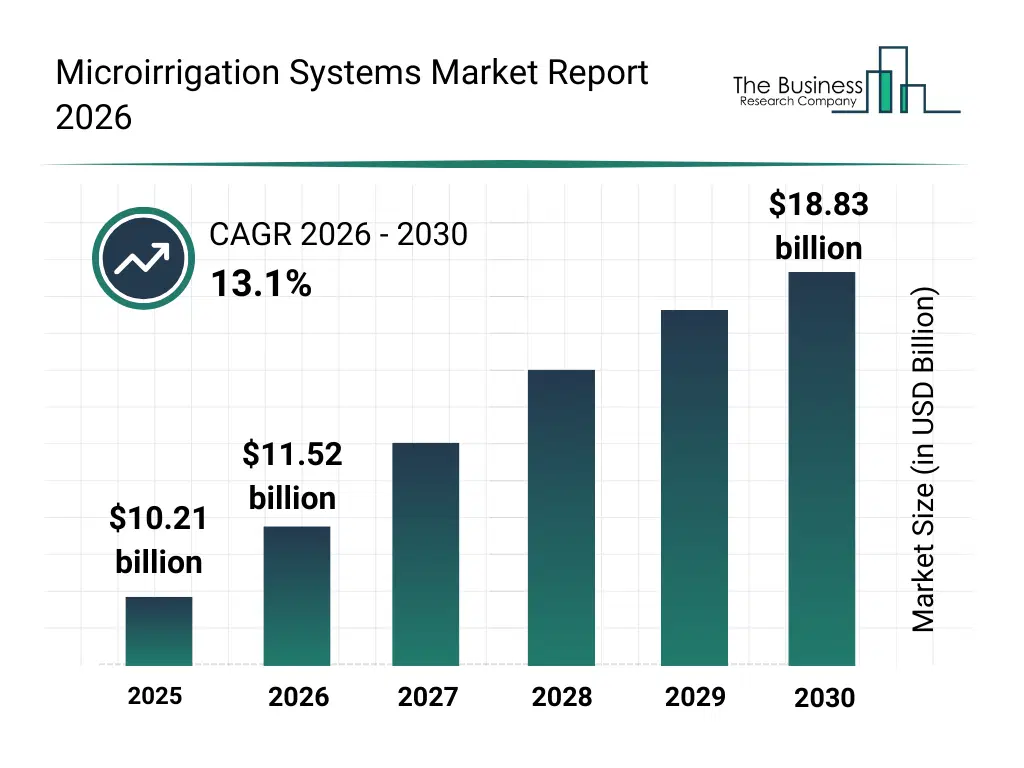
What Is The Microirrigation Systems Market Size and Share 2026?
The microirrigation systems market size has grown rapidly in recent years. It will grow from $10.21 billion in 2025 to $11.52 billion in 2026 at a compound annual growth rate (CAGR) of 12.8%. The growth in the historic period can be attributed to increasing awareness of water scarcity, rising adoption of drip and sprinkler systems, expansion of plantation and orchard crops, early government subsidies for irrigation systems, growing need for farm labor reduction.What Is The Microirrigation Systems Market Growth Forecast?
The microirrigation systems market size is expected to see rapid growth in the next few years. It will grow to $18.83 billion in 2030 at a compound annual growth rate (CAGR) of 13.1%. The growth in the forecast period can be attributed to rising demand for sustainable farming technologies, increasing adoption of protected cultivation, expanding investment in efficient water distribution systems, growing use of micro-irrigation in large-scale farming, higher emphasis on crop productivity enhancement. Major trends in the forecast period include increasing adoption of water-saving irrigation solutions, rising use of micro-irrigation in high-value crop cultivation, expansion of infrastructure for efficient farm water management, growing preference for low-pressure and energy-efficient irrigation, greater emphasis on precision water application techniques.
Global Microirrigation Systems Market Segmentation
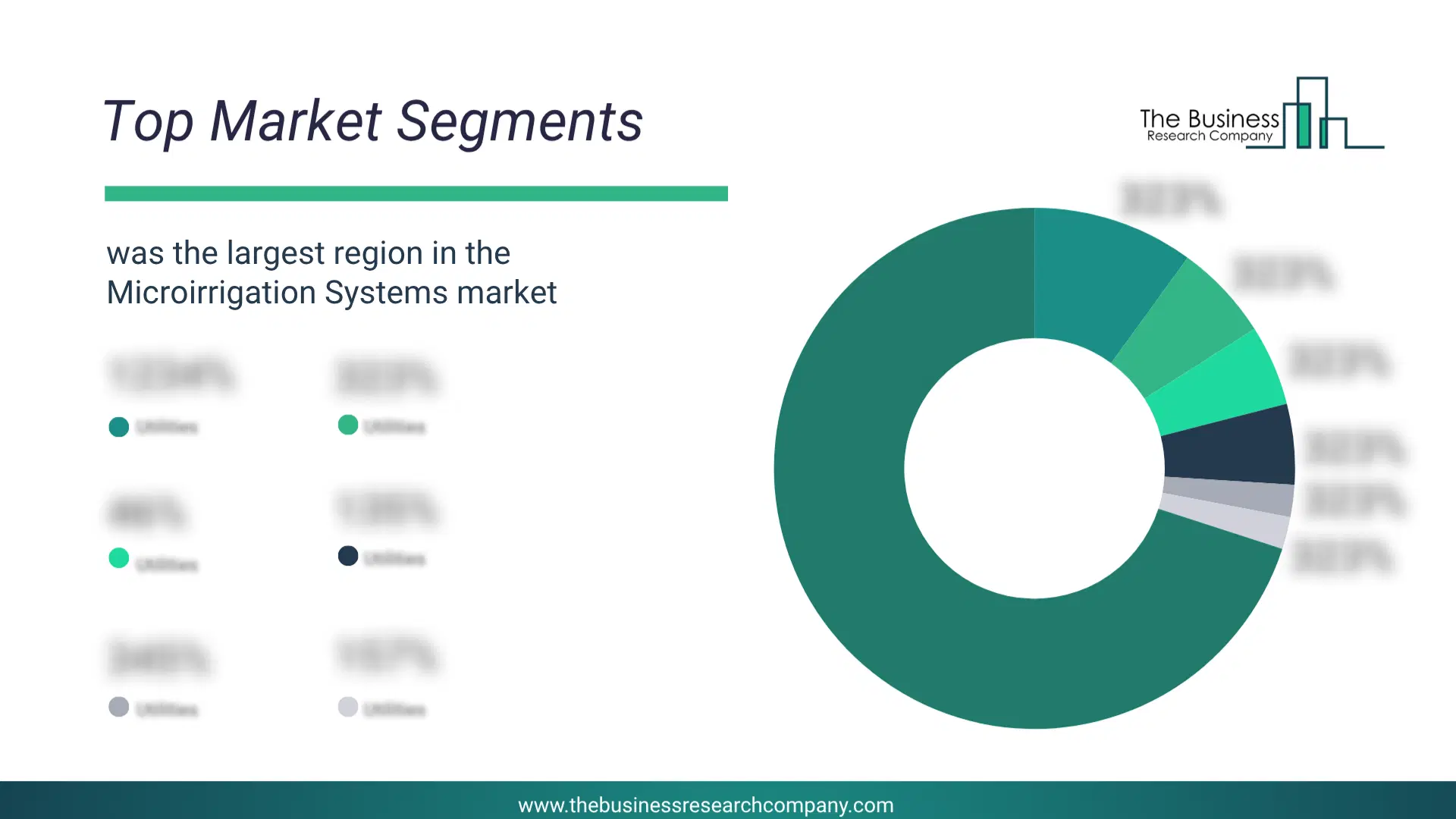
1) By Mechanism: Drip Irrigation System, Sprinkler Irrigation System, Other Micro-Irrigation Systems 2) By Crop Type: Plantation Crops, Field Crops, Orchard Crops, Other Crop Types 3) By Cultivation Technology: Open Field, Protected Cultivation 4) By Application: Small Farming, Large And Corporate Farming, Government, Other Applications Subsegments: 1) By Drip Irrigation System: Surface Drip Irrigation, Subsurface Drip Irrigation, Inline Drip Irrigation 2) By Sprinkler Irrigation System: Static Sprinkler Systems, Portable Sprinkler Systems, Pop-Up Sprinkler Systems 3) By Other Micro-Irrigation Systems: Fogging Systems, Misting Systems, Perforated Pipe Systems The top segments in the microirrigation systems market will be: • Drip Irrigation System will reach $11 Billion by 2030. • Sprinkler Irrigation System will reach $6 Billion by 2030. • Other Micro-Irrigation Systems will reach $1 Billion by 2030.What Is Driver Of The Microirrigation Systems Market?
Growing awareness about micro-sprinkler irrigation is expected to propel the growth of the micro irrigation systems market going forward. Micro-sprinkler irrigation refers to a modern method of irrigation that helps in distributing the water evenly all over the agricultural land. For instance, in October 2024, the U.S. Department of Agriculture, a US-based government agency, reported that, in 2023, irrigation data revealed that sprinkler systems were used on 12.6 million more acres than gravity irrigation methods. Therefore, growing awareness about micro irrigation is driving the growth of micro irrigation systems.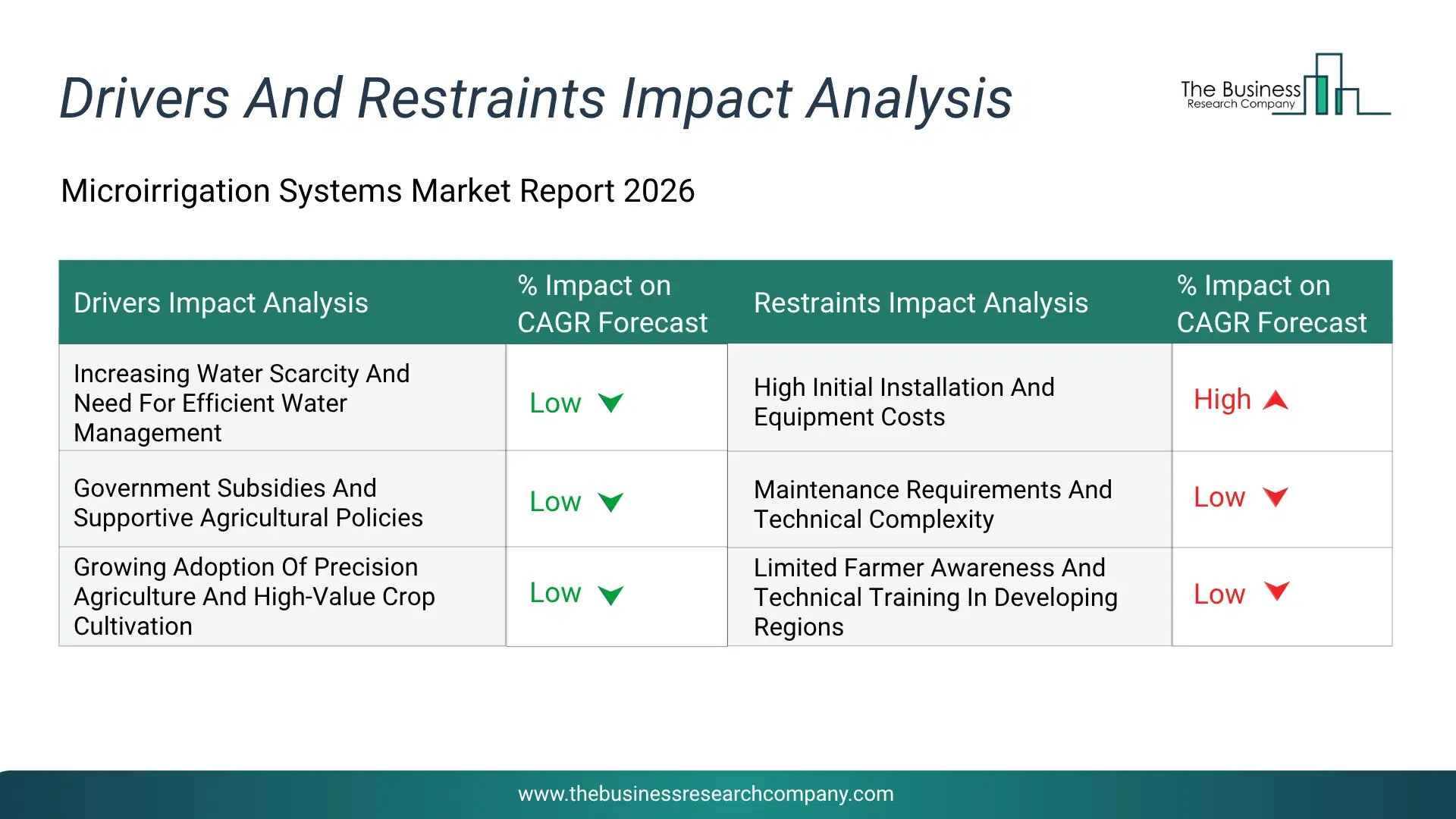
Infographic Chart Showing Key Market Drivers Analysis And Restraints For Microirrigation Systems Market
The chart presents an impact analysis of key drivers and restraints, quantifying their relative influence on the market's growth rate and helping assess the balance between growth enablers and limiting factors. This chart offers a high-level perspective; the full report contains more detailed insights.
How Will The Drivers Impact Growth In The Global Microirrigation Systems Market?
• Increasing Water Scarcity And Need For Efficient Water Management (Low) – During the forecast period, the increasing water scarcity and need for efficient water management is expected to emerge as a major factor driving the expansion of the microirrigation systems market by 2030. The increasing water scarcity and need for efficient water management is driving the microirrigation market as farmers increasingly adopt drip and sprinkler irrigation systems to optimize water utilization, minimize evaporation and runoff losses, and improve agricultural productivity while addressing declining freshwater availability and changing climatic conditions. • Government Subsidies And Supportive Agricultural Policies (Low) – During the forecast period, the government subsidies and supportive agricultural policies are expected to emerge as a major factor driving the expansion of the microirrigation systems market by 2030. This is because governments are introducing financial incentives, subsidy programs, low-interest agricultural loans, and technical support initiatives that reduce installation costs and encourage farmers to adopt advanced irrigation technologies for sustainable farming and improved food security. • Growing Adoption Of Precision Agriculture And High-Value Crop Cultivation (Low) – During the forecast period, the growing adoption of precision agriculture and high-value crop cultivation is expected to act as a key growth catalyst for the microirrigation systems market by 2030. This is supporting the microirrigation market as precision farming technologies, IoT-enabled irrigation systems, soil moisture monitoring, and fertigation solutions enable accurate water and nutrient delivery while improving the productivity and quality of fruits, vegetables, orchards, vineyards, and other high-value crops.How Will The Restraints Impact Growth In The Global Microirrigation Systems Market?
• High Initial Installation And Equipment Costs (Low) – During the forecast period, the high initial installation and equipment costs remain one of the primary challenges limiting the widespread adoption of microirrigation systems, particularly in developing countries. Establishing a complete microirrigation network requires significant investment in drip lines, sprinklers, emitters, filters, pumps, valves, pressure regulators, control units, automation equipment, and installation services. Although these systems provide long-term savings through improved water efficiency and higher crop productivity, the substantial upfront expenditure often discourages small and marginal farmers with limited financial resources. Access to agricultural credit and subsidy programs is also uneven across regions, preventing many growers from investing in advanced irrigation technologies. Furthermore, fluctuations in raw material prices and equipment costs can increase overall project expenses, delaying purchasing decisions and slowing market penetration in cost-sensitive agricultural markets. • Maintenance Requirements And Technical Complexity (Low) – During the forecast period, the maintenance requirements and technical complexity continue to restrain the growth of the microirrigation systems market. These irrigation systems require regular monitoring, cleaning, and maintenance to maintain optimal performance and ensure uniform water distribution. Drip emitters and sprinkler nozzles can become clogged due to sediment, dissolved minerals, algae, organic matter, or poor water quality, reducing irrigation efficiency and affecting crop performance if not properly maintained. In addition, automated irrigation systems require periodic calibration, pressure regulation, filter replacement, and technical troubleshooting, creating additional operational responsibilities for farmers. Many growers, particularly in rural and developing regions, lack adequate technical knowledge or access to skilled maintenance personnel, increasing the likelihood of system failures and reducing confidence in adopting advanced irrigation technologies. These ongoing maintenance requirements can increase operating costs and discourage long-term investment in microirrigation systems. • Limited Farmer Awareness And Technical Training In Developing Regions (Low) – During the forecast period, the limited farmer awareness and technical training in developing regions remains a significant obstacle to the expansion of the microirrigation systems market. Despite the proven advantages of water conservation, improved crop productivity, and higher input efficiency, many farmers continue to rely on conventional irrigation methods because they are unfamiliar with the long-term economic and agronomic benefits offered by microirrigation technologies. In several rural areas, insufficient agricultural extension services, limited demonstration farms, inadequate technical education, and poor access to professional guidance reduce farmers' confidence in adopting modern irrigation systems. Additionally, improper system design, installation, and operation resulting from inadequate training can lead to poor performance, reinforcing negative perceptions among potential users. Expanding farmer education programs, technical support services, and demonstration initiatives will therefore be essential to overcoming this restraint and increasing the adoption of microirrigation systems across developing agricultural markets.Key Players In The Global Microirrigation Systems Market
Major companies operating in the microirrigation systems market are Lindsay, Toro, Rain Bird, Jain Irrigation, Mahindra EPC, Hunter, Netafim, Irritec, Nelson Irrigation, Antelco, Drip Research Tech, DripWorks, Raindrip, Valmont, T-L Irrigation, Rivulis, Deere (some irrigation), AMADAS (partial), Amiad Water, Arkal Filtration, Batrow, Berkeley Pumps, Caprari, Cresline Pipe, Febco, Filter-Chem, Filtomat, Flowmatic, Franklin Electric, JCM Industries, Jaco Manufacturing, Lakos Filters, AlphaDisc, QuikSert, SeaMetrics, Sponsler, Total Control Systems, Soil moisture sensors, Solar Sync Sensors
This chart is for illustrative purposes; the full report includes a detailed competitor analysis and comprehensive overview of the top 10 companies in the market.
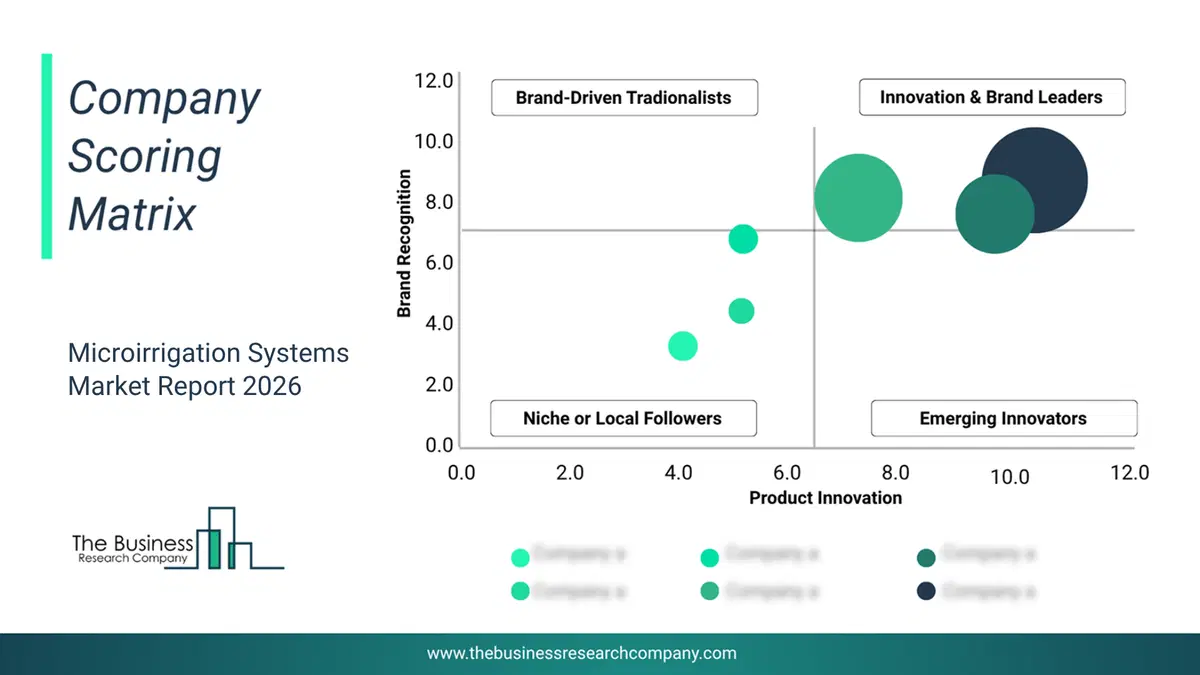
This chart maps companies by product innovation and brand strength, with bubble size indicating relative revenue, helping identify market leaders, challengers, and niche players. This is an illustrative chart; the full report provides a complete and accurate competitive analysis.
Global Microirrigation Systems Market Trends and Insights
Major companies operating in the micro irrigation systems market are focusing on developing innovative products such as fingerprint DFDA-7555 NT bimodal polyethylene resin to drive revenues in their market. Fingerprint DFDA-7555 NT bimodal polyethylene resin uses Unipol II process technology, a medium-density bimodal polyethylene resin is created which is employed in the microirrigation sector as a blending ingredient and processing assistance. For instance, in March 2023, The Dow Chemical Company, a US-based company that manufactures microirrigation systems, launched fingerprint DFDA-7555 NT bimodal polyethylene resin. This product meets the growing demand for materials that support dependable, efficient, and environmentally friendly microirrigation systems that can boost crop yields, conserve precious resources, and increase water productivity. For profile extrusion and thin wall microirrigation tape applications, fingerprint DFDA-7555 NT provides stronger and more effective tape.What Are Latest Mergers And Acquisitions In The Microirrigation Systems Market? Rivulis Acquires Jain Irrigation Systems, Accelerating Innovation In Microirrigation And Digital Farming
In April 2023, Rivulis Pte. Ltd, an Israel-based company that provides microirrigation solutions, acquired Jain Irrigation Systems for an undisclosed amount. This acquisition would enable Rivulis to spearhead growers' and business partners' widespread adoption of contemporary irrigation technologies and digital farming, establishing it as a global leader in both irrigation and climate change. Jain Irrigation Systems is an India-based manufacturer of irrigation systems and equipment.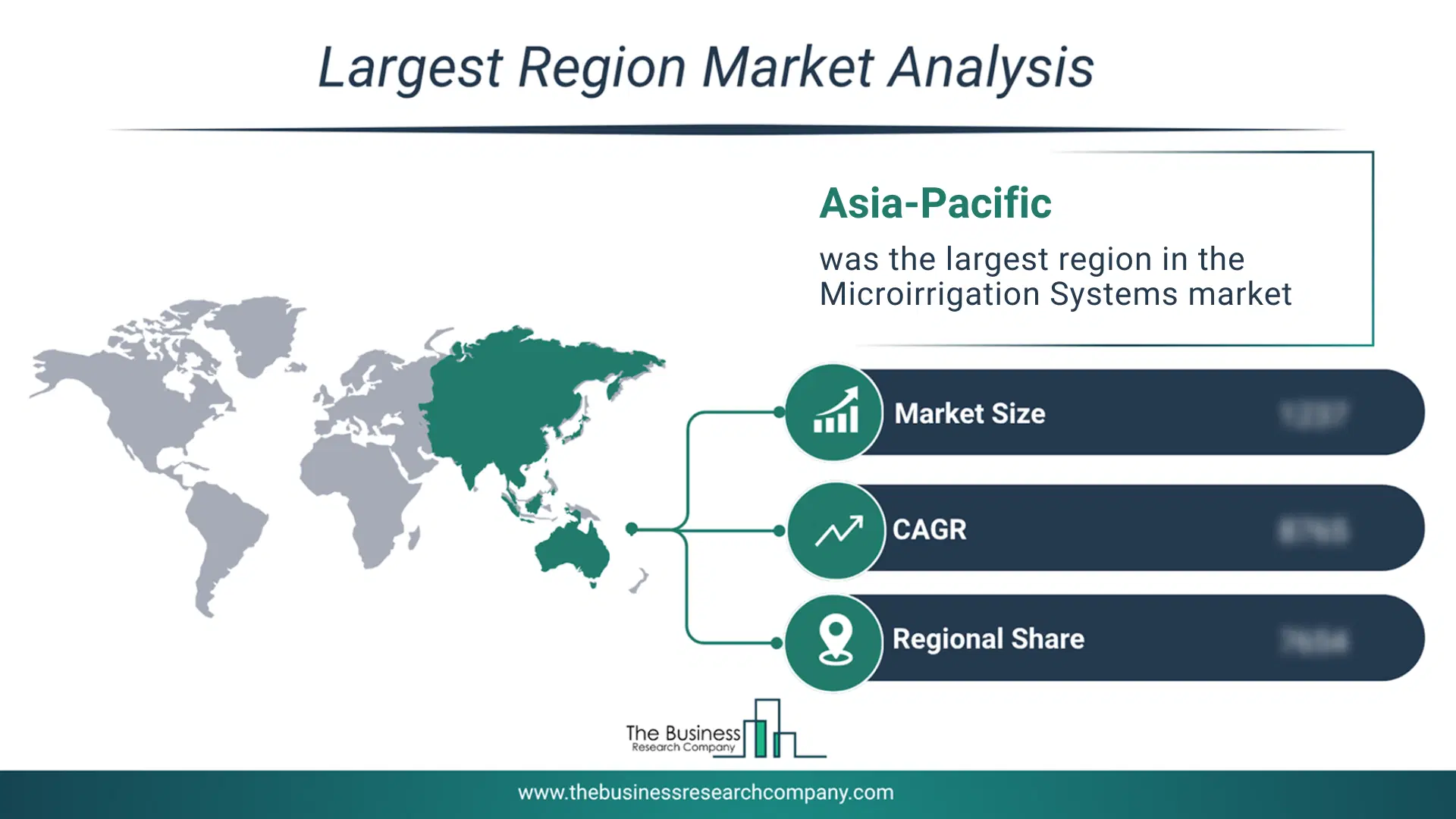
Regional Outlook
Asia-Pacific was the largest region in the microirrigation systems market in 2025.Asia-Pacific is expected to be the fastest-growing region in the forecast period. The regions covered in this market report are Asia-Pacific, South East Asia, Western Europe, Eastern Europe, North America, South America, Middle East, Africa. The countries covered in this market report are Australia, Brazil, China, France, Germany, India, Indonesia, Japan, Taiwan, Russia, South Korea, UK, USA, Canada, Italy, SpainWhat Defines the Microirrigation Systems Market?
The micro-irrigation systems market includes revenues earned by entities by spray irrigation, subsurface irrigation, bubbler irrigation, and manual irrigation. The market value includes the value of related goods sold by the service provider or included within the service offering. Only goods and services traded between entities or sold to end consumers are included.How is Market Value Defined and Measured?
The market value is defined as the revenues that enterprises gain from the sale of goods and/or services within the specified market and geography through sales, grants, or donations in terms of the currency (in USD unless otherwise specified). The revenues for a specified geography are consumption values that are revenues generated by organizations in the specified geography within the market, irrespective of where they are produced. It does not include revenues from resales along the supply chain, either further along the supply chain or as part of other products.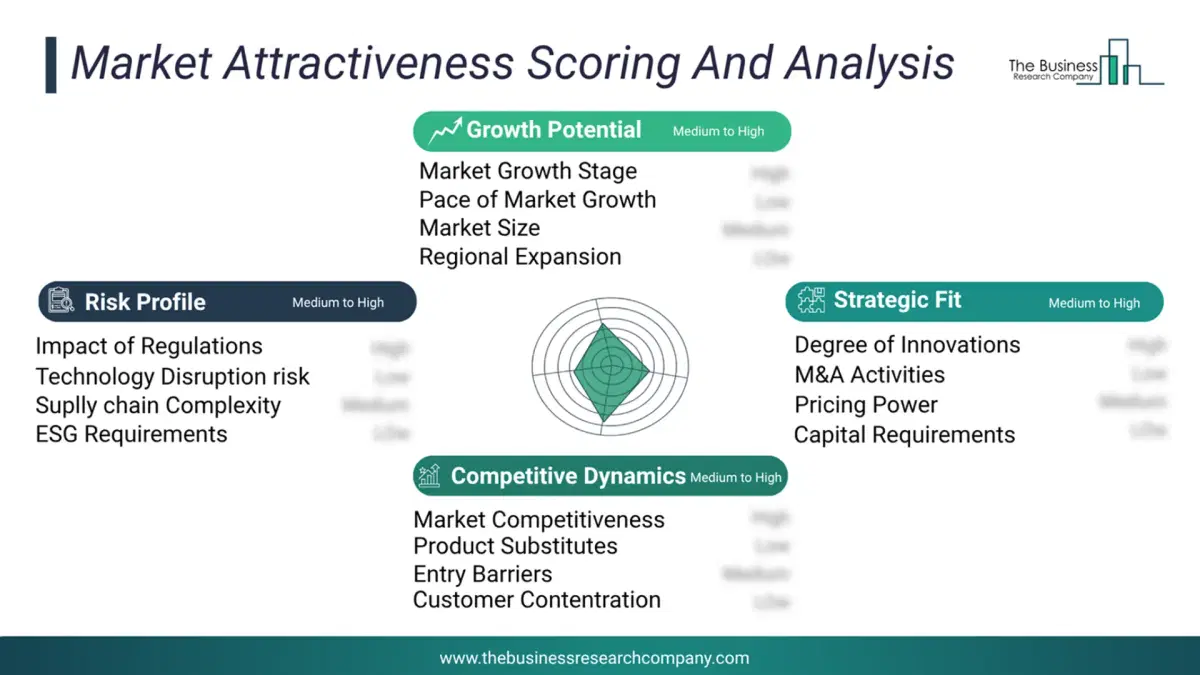
This chart presents market attractiveness based on a quantitative evaluation of growth, competition, strategic alignment, and risk, offering a clear view of opportunity areas for decision-making. This chart is for illustrative purposes; the full report contains the complete analysis.
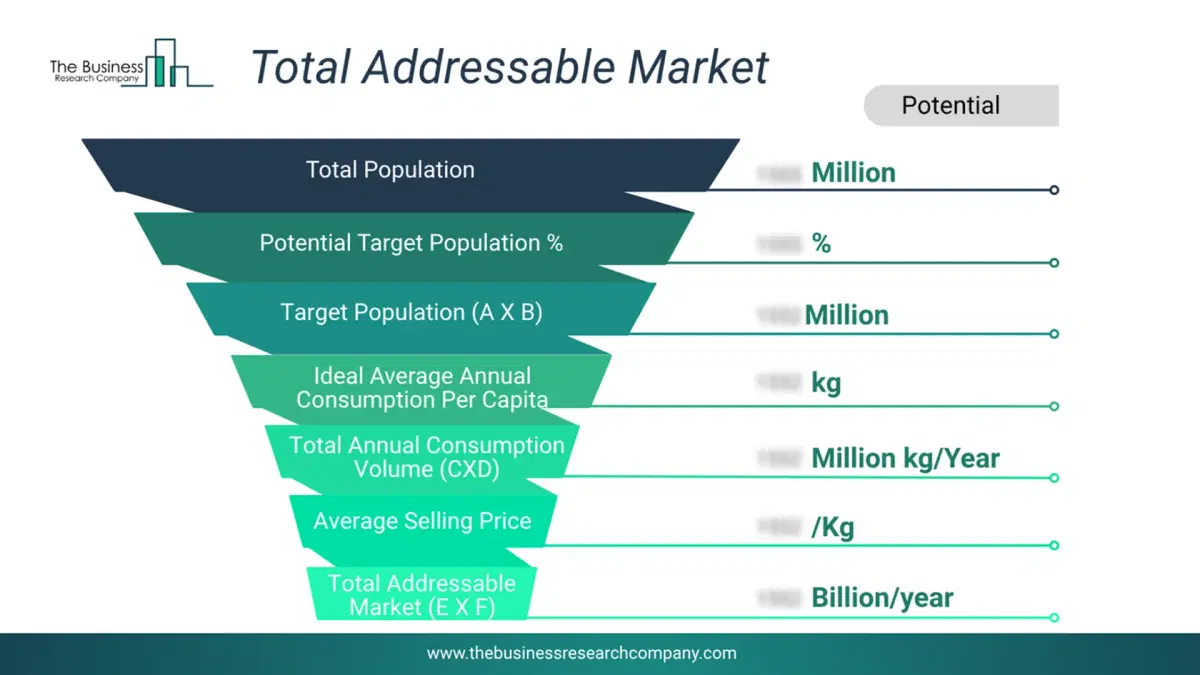
This chart highlights the Total Addressable Market (TAM) by estimating the maximum revenue opportunity using an assumption-driven approach, supporting strategic planning and opportunity sizing across markets. The chart is illustrative; the full report provides a more comprehensive analysis.
What Key Data and Analysis Are Included in the Microirrigation Systems Market Report 2026?
The microirrigation systems market research report is one of a series of new reports from The Business Research Company that provides market statistics, including industry global market size, regional shares, competitors with the market share, detailed market segments, market trends and opportunities, and any further data you may need to thrive in the microirrigation systems industry. The market research report delivers a complete perspective of everything you need, with an in-depth analysis of the current and future state of the industry.Microirrigation Systems Market Report Forecast Analysis
| Report Attribute | Details |
|---|---|
| Market Size Value In 2026 | $11.52 billion |
| Revenue Forecast In 2030 | $5.72 billion |
| Growth Rate | CAGR of 13.1% from 2026 to 2030 |
| Base Year For Estimation | 2025 |
| Actual Estimates/Historical Data | 2020-2025 |
| Forecast Period | 2026 - 2030 |
| Market Representation | Revenue in USD Billion and CAGR from 2026 to 2030 |
| Segments Covered | Mechanism, Crop Type, Cultivation Technology, Application |
| Regional Scope | Asia-Pacific, Western Europe, Eastern Europe, North America, South America, Middle East, Africa |
| Country Scope | The countries covered in the report are Australia, Brazil, China, France, Germany, India, Indonesia, Japan, Taiwan, Russia, South Korea, UK, USA, Canada, Italy, Spain. |
| Key Companies Profiled | Lindsay, Toro, Rain Bird, Jain Irrigation, Mahindra EPC, Hunter, Netafim, Irritec, Nelson Irrigation, Antelco, Drip Research Tech, DripWorks, Raindrip, Valmont, T-L Irrigation, Rivulis, Deere (some irrigation), AMADAS (partial), Amiad Water, Arkal Filtration, Batrow, Berkeley Pumps, Caprari, Cresline Pipe, Febco, Filter-Chem, Filtomat, Flowmatic, Franklin Electric, JCM Industries, Jaco Manufacturing, Lakos Filters, AlphaDisc, QuikSert, SeaMetrics, Sponsler, Total Control Systems, Soil moisture sensors, Solar Sync Sensors |
| Customization Scope | Request for Customization |
| Pricing And Purchase Options | Explore Purchase Options |