
Mobile Mapping Market Report 2026
Global Outlook – By Type (3D Mapping, Indoor Mapping), By Component (Hardware, Software, Services), By Application (Road Surveys, Topographic Mapping, 3D Modeling, Asset Management, Other Applications), By Industry Vertical (Oil And Gas, Telecommunication, Transportation And Logistics, Energy and Utilities, Other Industry Verticals) – Market Size, Trends, Strategies, and Forecast to 2030
Mobile Mapping Market Overview
• Mobile Mapping market size has reached to $54.08 billion in 2025 • Expected to grow to $138.17 billion in 2030 at a compound annual growth rate (CAGR) of 20.6% • Growth Driver: The Increase In Infrastructure Investment Fueling The Growth Of The Market Due To Rising Global Development And Modernization Needs • Market Trend: Interoperable 3D Standards Cut Costs and Speed Deployment in Mobile Mapping • North America was the largest region in 2025.Market Gains By 2030 – Top Opportunities By Segment
Market Gain identifies the most promising market opportunities by highlighting the segments or products expected to generate the highest incremental revenue growth over the next five years.
What Is Covered Under Mobile Mapping Market?
Mobile mapping is the process of collecting geographical data with a mobile vehicle equipped with a laser, GNSS, LiDAR-system, radar, photographic equipment, or any number of remote sensing devices. These georeferenced data points can also be utilized to construct accurate three-dimensional digital elevation models (DEMs) or digital terrain models of any environment when combined with positioning equipment. It is used to collect geospatial data from mobile vehicles such as cars, drones, and boats. The main types of mobile mapping are 3D mapping, licensing, indoor mapping, location-based services, and location-based search. 3D mapping is the profiling of objects in three dimensions to map the objects in the real world. The different components include hardware, software, and services, and are used for road surveys, topographic mapping, 3D modeling, asset management, and other applications. These are employed in oil and gas, real estate, telecommunication, manufacturing, transportation and logistics, energy and utilities, and other industry verticals.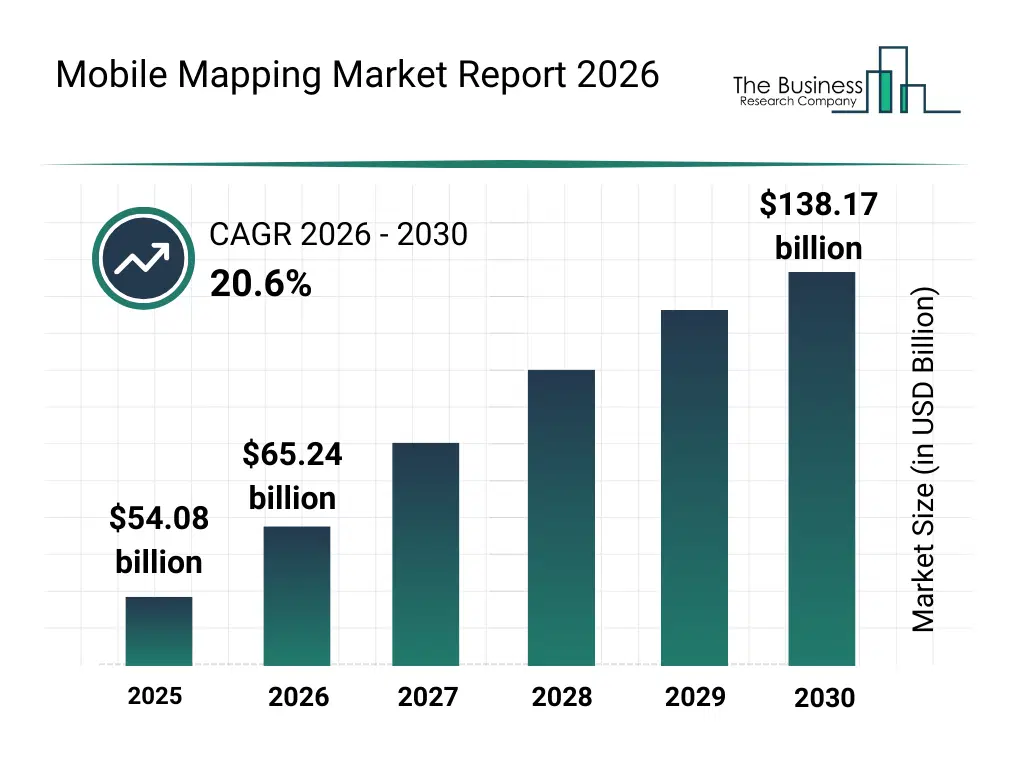
What Is The Mobile Mapping Market Size and Share 2026?
The mobile mapping market size has grown exponentially in recent years. It will grow from $54.08 billion in 2025 to $65.24 billion in 2026 at a compound annual growth rate (CAGR) of 20.6%. The growth in the historic period can be attributed to expansion of road and infrastructure surveys, growth in geospatial data applications, rising adoption of gps and gnss technologies, increased use of mapping for urban planning, availability of advanced sensing equipment.What Is The Mobile Mapping Market Growth Forecast?
The mobile mapping market size is expected to see exponential growth in the next few years. It will grow to $138.17 billion in 2030 at a compound annual growth rate (CAGR) of 20.6%. The growth in the forecast period can be attributed to increasing investments in smart city projects, rising demand for autonomous navigation data, expansion of digital twin applications, growing use of mapping in asset management, increasing integration of AI in geospatial analysis. Major trends in the forecast period include increasing adoption of lidar-based mobile mapping systems, rising use of drone and vehicle-mounted mapping solutions, growing demand for high-accuracy 3D spatial data, expansion of real-time geospatial analytics, enhanced focus on urban and infrastructure mapping.
Global Mobile Mapping Market Segmentation
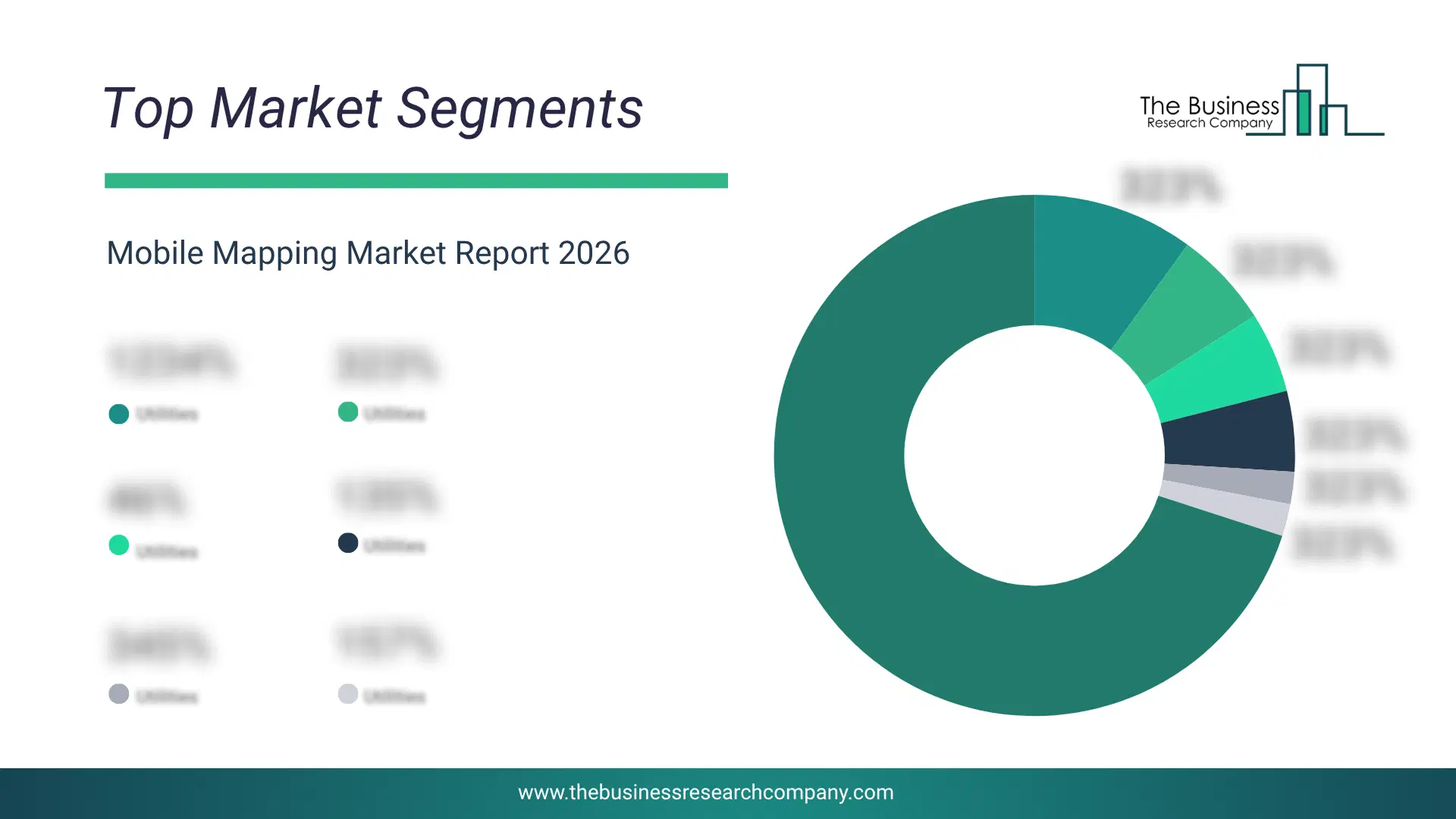
1) By Type: 3D Mapping, Indoor Mapping 2) By Component: Hardware, Software, Services 3) By Application: Road Surveys, Topographic Mapping, 3D Modeling, Asset Management, Other Applications 4) By Industry Vertical: Oil And Gas, Telecommunication, Transportation And Logistics, Energy and Utilities, Other Industry Verticals Subsegments: 1) By 3D Mapping: Point Clouds, Digital Elevation Models (DEMs), Digital Surface Models (DSMs), 3D Models For Urban Planning, 3D Models For Construction 2) By Indoor Mapping: Floor Plans, Navigation Solutions, Asset Tracking, Space Management Solutions The top segments in the mobile mapping market will be: • 3D Mapping will reach $107 Billion by 2030. • Indoor Mapping will reach $31 Billion by 2030.What Is The Driver Of The Mobile Mapping Market?
The increasing infrastructure investments are expected to propel the growth of the mobile mapping market in the coming years. Infrastructure refers to the essential facilities, processes, and structures required for a society or company to function properly. Mobile mapping technology is a diverse and strong tool for infrastructure-related operations as it delivers precise, up-to-date geographic information to help in the design, building, maintenance, and administration of numerous infrastructure project parts. For instance, in November 2023, according to the White House, a US-based federal government institution, the United States had already announced over USD 400 billion in infrastructure funding under the Bipartisan Infrastructure Law, compared with USD 300 billion announced in the previous year. Therefore, increasing infrastructure investments is driving the growth of the mobile mapping industry going forward.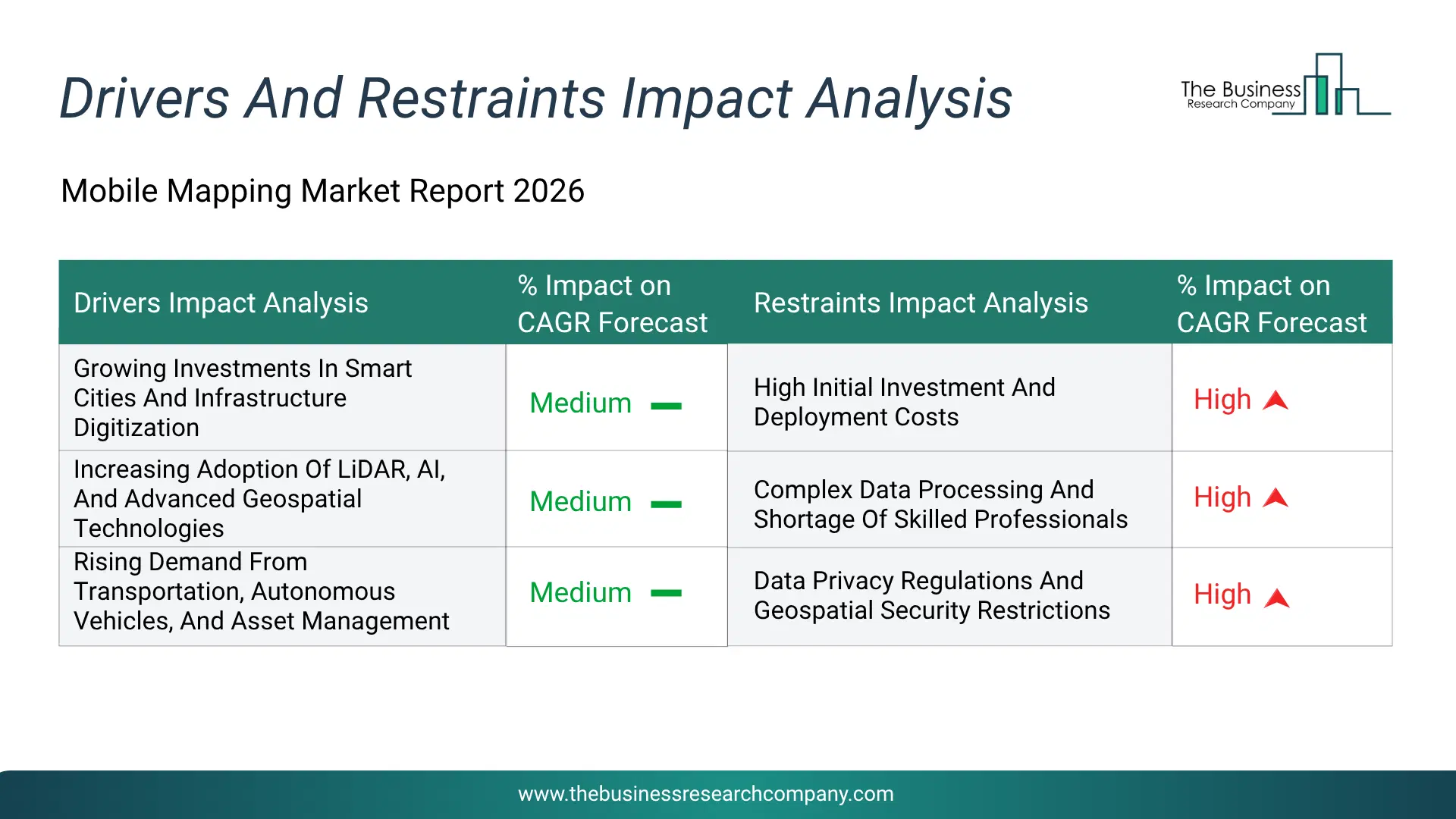
Infographic Chart Showing Key Market Drivers Analysis And Restraints For Mobile Mapping Market
The chart presents an impact analysis of key drivers and restraints, quantifying their relative influence on the market's growth rate and helping assess the balance between growth enablers and limiting factors. This chart offers a high-level perspective; the full report contains more detailed insights.
How Will The Drivers Impact Growth In The Global Mobile Mapping Market?
• Growing Investments In Smart Cities And Infrastructure Digitization (Medium) – During the forecast period, the growing investments in smart cities and infrastructure digitization are expected to emerge as a major factor driving the expansion of the mobile mapping market by 2030. governments and private organizations are increasingly utilizing mobile mapping systems to capture high-resolution geospatial data for road planning, utility management, transportation modernization, and digital twin development. these solutions enable faster, safer, and more cost-effective surveying while supporting real-time infrastructure monitoring and long-term urban planning initiatives. • Increasing Adoption Of LiDAR, AI, And Advanced Geospatial Technologies (Medium) – During the forecast period, the increasing adoption of LiDAR, AI, and advanced geospatial technologies is expected to emerge as a major factor driving the expansion of the mobile mapping market by 2030. the integration of intelligent sensors, artificial intelligence, cloud computing, and automated data processing enables organizations to generate highly accurate spatial information with greater speed and efficiency. continuous technological improvements are expanding the use of mobile mapping across construction, utilities, mining, forestry, telecommunications, and environmental monitoring applications. • Rising Demand From Transportation, Autonomous Vehicles, And Asset Management (Medium) – During the forecast period, the rising demand from transportation, autonomous vehicles, and asset management is expected to act as a key growth catalyst for the mobile mapping market by 2030. transportation authorities, infrastructure operators, and autonomous vehicle developers increasingly require continuously updated three-dimensional maps for navigation, infrastructure inspection, predictive maintenance, and operational planning. high-precision mobile mapping technologies provide the location intelligence needed to improve safety, optimize asset management, and support next-generation mobility solutions.How Will The Restraints Impact Growth In The Global Mobile Mapping Market?
• High Initial Investment And Deployment Costs (Medium) – During the forecast period, high Initial Investment And Deployment Costs remain a major challenge for the mobile mapping market because deploying advanced mapping systems requires substantial capital expenditure. Complete mobile mapping solutions involve expensive LiDAR scanners, high-resolution cameras, GNSS receivers, inertial navigation systems, specialized survey vehicles, data storage infrastructure, and advanced software platforms for processing and visualization. Beyond hardware costs, organizations must also invest in system integration, calibration, maintenance, software licensing, cloud computing resources, employee training, and ongoing equipment upgrades. Small and medium-sized surveying firms, municipalities, and organizations operating in developing regions often struggle to justify these significant upfront investments despite the long-term operational benefits. As a result, high deployment costs continue to slow adoption rates and limit market penetration, particularly among cost-sensitive end users. • Complex Data Processing And Shortage Of Skilled Professionals (Medium) – During the forecast period, complex Data Processing And Shortage Of Skilled Professionals act as an important restraint because mobile mapping systems generate extremely large volumes of LiDAR point clouds, panoramic imagery, radar data, and GNSS information that require advanced processing before becoming useful for decision-making. Organizations must employ experienced GIS analysts, surveyors, data scientists, and geospatial engineers to clean, classify, integrate, and validate the collected datasets. Processing these massive datasets demands high-performance computing infrastructure, sophisticated software, and considerable technical expertise. In many regions, the limited availability of skilled professionals increases labor costs and project timelines, while organizations also face challenges related to employee training and retaining specialized talent. These operational complexities make mobile mapping projects more expensive and difficult to implement, particularly for smaller organizations with limited technical resources. • Data Privacy Regulations And Geospatial Security Restrictions (Medium) – During the forecast period, data Privacy Regulations And Geospatial Security Restrictions are increasingly limiting the expansion of the mobile mapping market as governments introduce stricter regulations governing the collection, storage, processing, and sharing of location-based information. Mobile mapping vehicles often capture detailed images and three-dimensional representations of public infrastructure, buildings, roads, and surrounding environments, raising concerns regarding individual privacy, national security, and ownership of geospatial data. Many countries impose restrictions on mapping activities near military installations, government facilities, airports, and other sensitive infrastructure, requiring permits and regulatory approvals before surveys can be conducted. Furthermore, compliance with evolving cybersecurity standards, data localization laws, and privacy regulations increases operational complexity and administrative costs for service providers. These regulatory challenges can delay projects, restrict data accessibility, and reduce the speed of market expansion across several regions.Key Players In The Global Mobile Mapping Market
Major companies operating in the mobile mapping market are Trimble Inc.; Leica Geosystems; Hexagon AB; Topcon Positioning Systems Inc.; FARO Technologies Inc.; Teledyne Optech; IGI GmbH; Cyclomedia Technology BV; Imajing SAS; The Sanborn Map Company Inc.; Huron Geomatics Inc.; Esri; TomTom NV; Garmin Ltd.; Google LLC; Apple Inc.; NovAtel Inc.; Javad GNSS Inc.; Mapbox; HERE Technologies; Baidu Inc.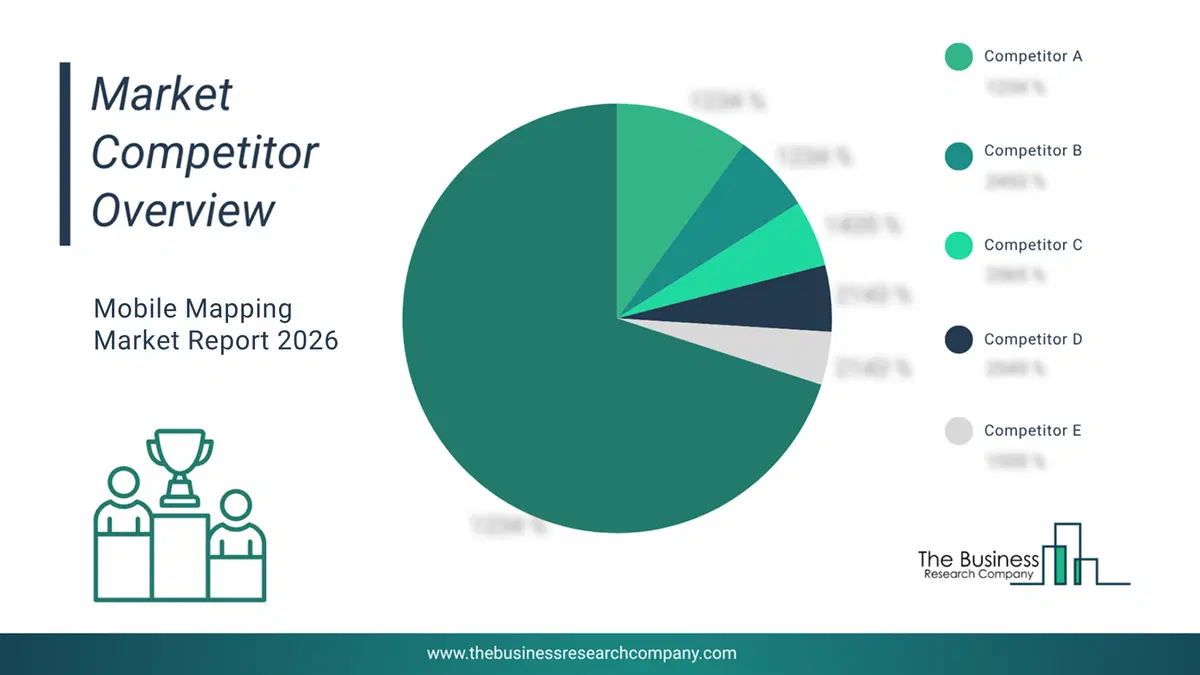
This chart is for illustrative purposes; the full report includes a detailed competitor analysis and comprehensive overview of the top 10 companies in the market.
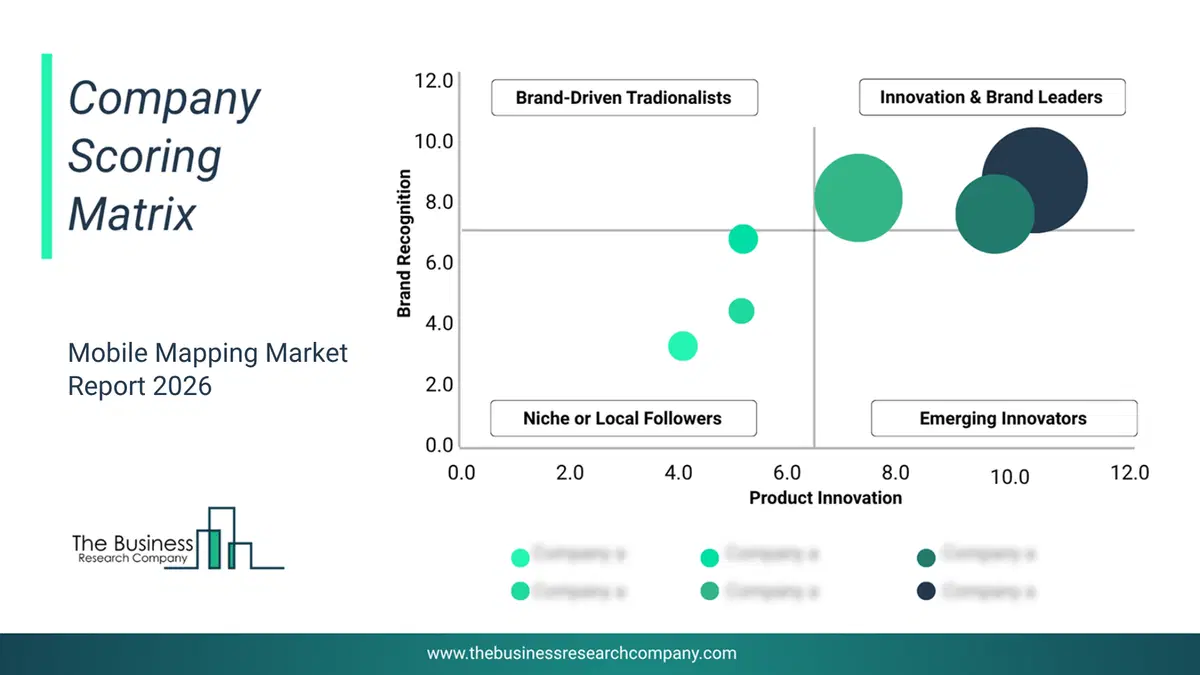
This chart maps companies by product innovation and brand strength, with bubble size indicating relative revenue, helping identify market leaders, challengers, and niche players. This is an illustrative chart; the full report provides a complete and accurate competitive analysis.
Global Mobile Mapping Market Trends and Insights
Major companies operating in the mobile mapping market are focused on new product innovations to enhance data accuracy, improve spatial analysis, and enable richer, more detailed 3D mapping experiences. Semantic metadata at multiple granularities refers to the structured labelling of 3D geospatial data at different levels of detail, enabling precise identification, analysis, and interaction with individual elements within complex 3D models. For instance, in May 2023, Open Geospatial Consortium (OGC) a US-based nonprofit standards organisation, Open Geospatial Consortium (OGC) adopted 3D Tiles v1.1 as a Community Standard, introducing features such as semantic metadata at multiple granularities, implicit tiling for faster random access, and multiple contents per tile with GL Transmission Format integration.What Are Latest Mergers And Acquisitions In The Mobile Mapping Market?
In August 2025, Cyclomedia Technology B.V., a Netherlands-based provider of geospatial data and street-level mobile mapping solutions, acquired Detekt for an undisclosed amount. Through this acquisition, Cyclomedia aims to enhance its mobile mapping capabilities by integrating Detekt’s AI-driven road-surface defect detection and asset-classification algorithms into its high-resolution imagery and LiDAR datasets. Detekt is a US-based artificial intelligence company that specialises in analysing mobile-mapping data to automatically identify and classify road-surface defects and infrastructure assets.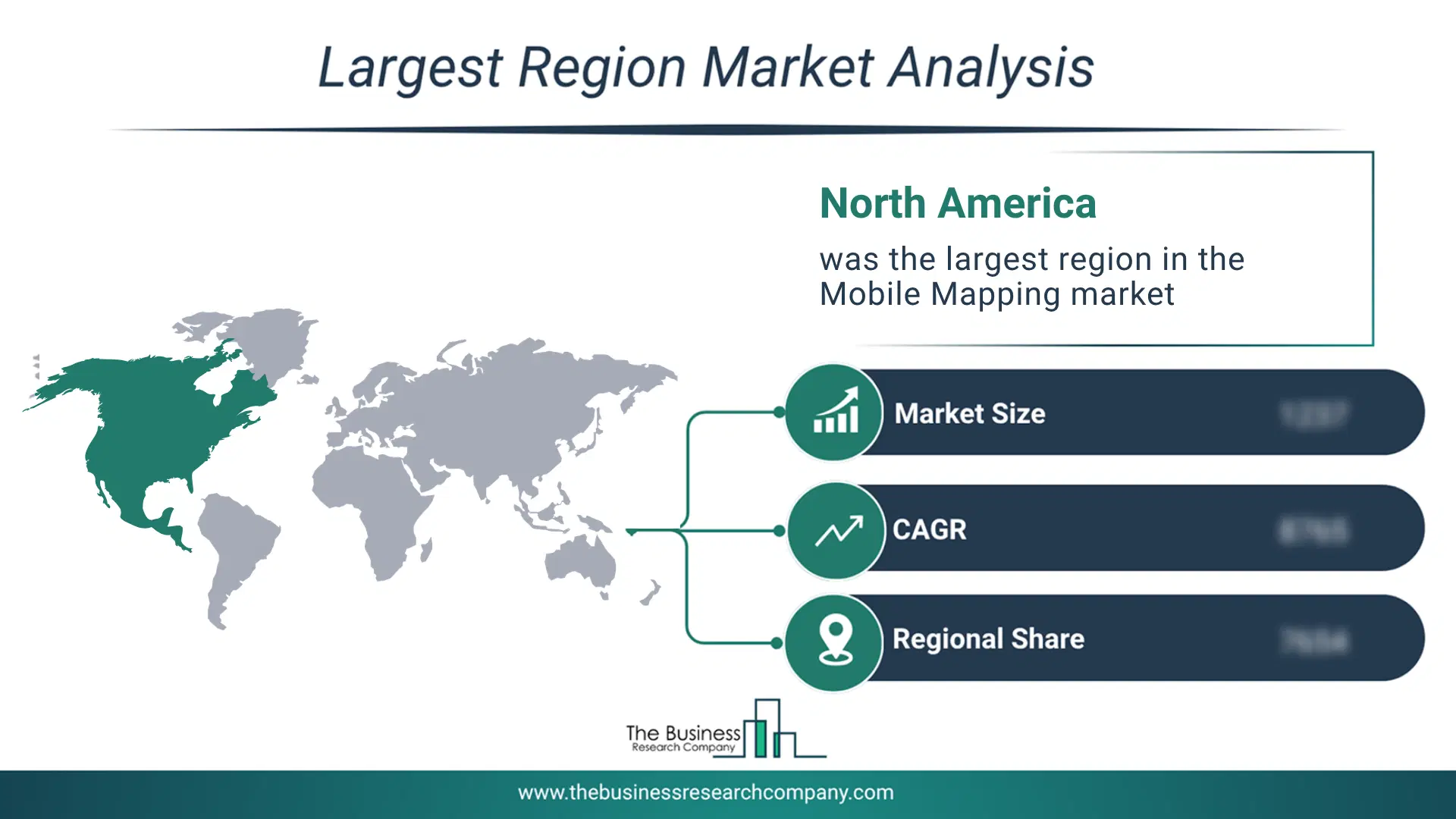
Regional Insights
North America was the largest region in the mobile mapping market in 2025. The regions covered in this market report are Asia-Pacific, South East Asia, Western Europe, Eastern Europe, North America, South America, Middle East, Africa. The countries covered in this market report are Australia, Brazil, China, France, Germany, India, Indonesia, Japan, Taiwan, Russia, South Korea, UK, USA, Canada, Italy, SpainWhat Defines the Mobile Mapping Market?
The mobile mapping market includes revenues earned by entities providing data acquisition, georeferencing, measurement, and GIS processing. The market value includes the value of related goods sold by the service provider or included within the service offering. Only goods and services traded between entities or sold to end consumers are included.How is Market Value Defined and Measured?
The market value is defined as the revenues that enterprises gain from the sale of goods and/or services within the specified market and geography through sales, grants, or donations in terms of the currency (in USD unless otherwise specified). The revenues for a specified geography are consumption values that are revenues generated by organizations in the specified geography within the market, irrespective of where they are produced. It does not include revenues from resales along the supply chain, either further along the supply chain or as part of other products.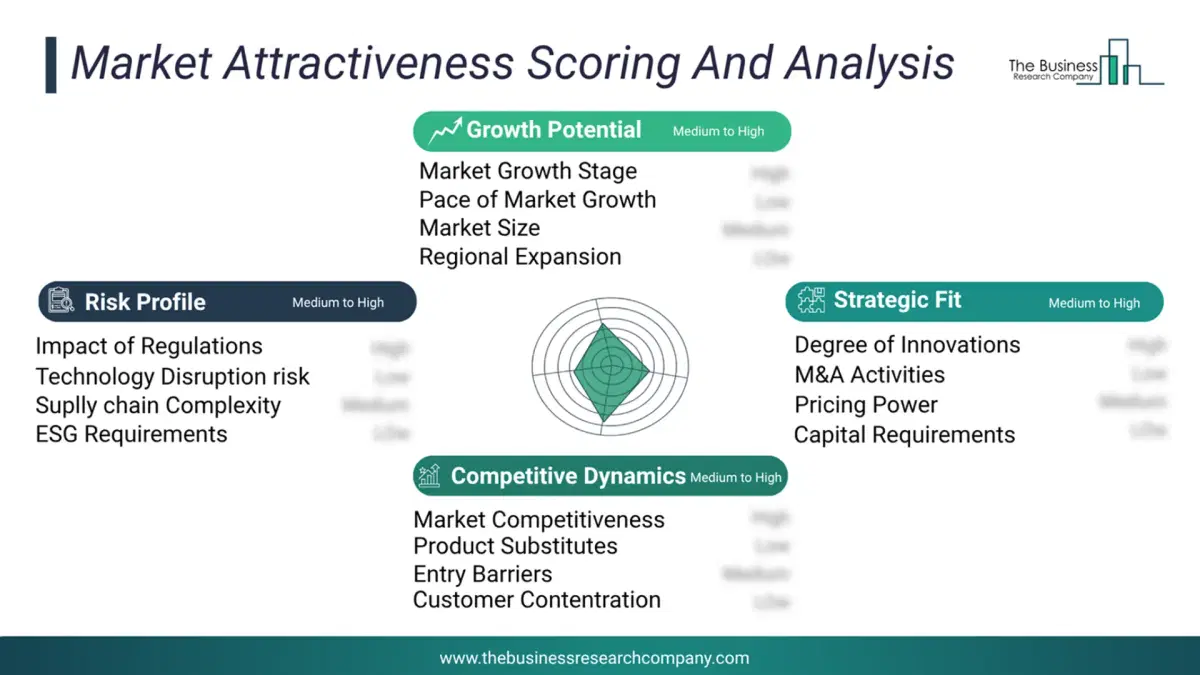
This chart presents market attractiveness based on a quantitative evaluation of growth, competition, strategic alignment, and risk, offering a clear view of opportunity areas for decision-making. This chart is for illustrative purposes; the full report contains the complete analysis.
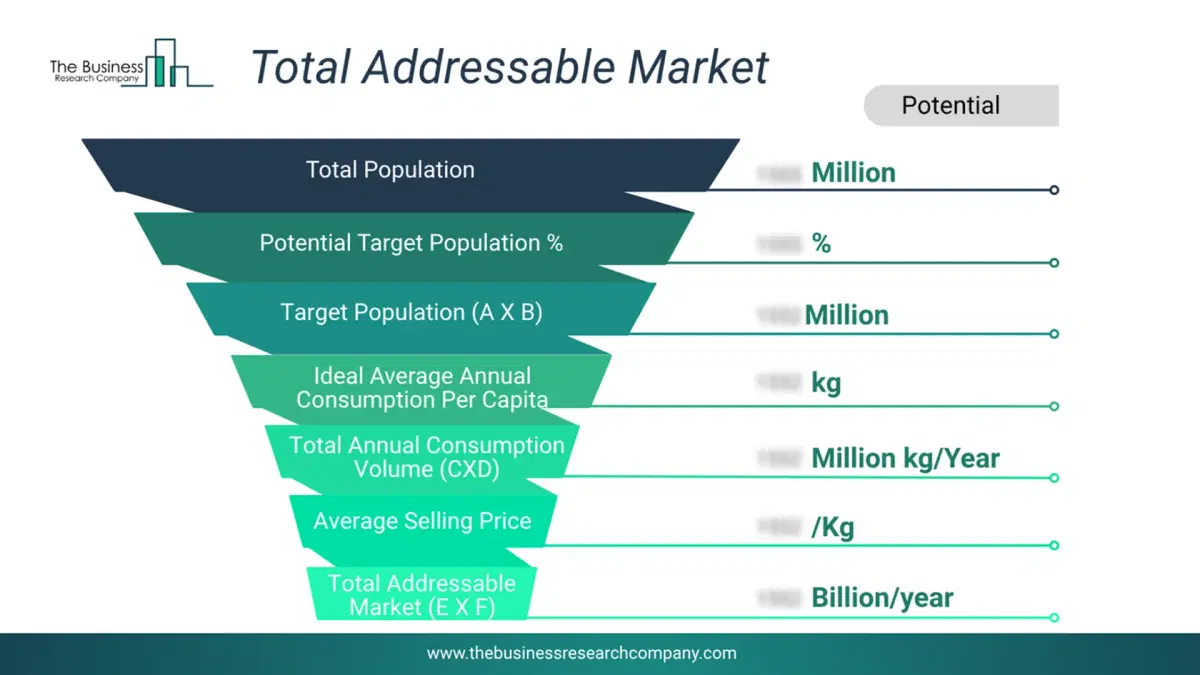
This chart highlights the Total Addressable Market (TAM) by estimating the maximum revenue opportunity using an assumption-driven approach, supporting strategic planning and opportunity sizing across markets. The chart is illustrative; the full report provides a more comprehensive analysis.
What Key Data and Analysis Are Included in the Mobile Mapping Market Report 2026?
The mobile mapping market research report is one of a series of new reports from The Business Research Company that provides market statistics, including industry global market size, regional shares, competitors with the market share, detailed market segments, market trends and opportunities, and any further data you may need to thrive in the mobile mapping industry. The market research report delivers a complete perspective of everything you need, with an in-depth analysis of the current and future state of the industry.Mobile Mapping Market Report Forecast Analysis
| Report Attribute | Details |
|---|---|
| Market Size Value In 2026 | $65.24 billion |
| Revenue Forecast In 2030 | $138.17 billion |
| Growth Rate | CAGR of 20.6% from 2026 to 2030 |
| Base Year For Estimation | 2025 |
| Actual Estimates/Historical Data | 2020-2025 |
| Forecast Period | 2026 - 2030 |
| Market Representation | Revenue in USD Billion and CAGR from 2026 to 2030 |
| Segments Covered | Type, Component, Application, Industry Vertical |
| Regional Scope | Asia-Pacific, Western Europe, Eastern Europe, North America, South America, Middle East, Africa |
| Country Scope | The countries covered in the report are Australia, Brazil, China, France, Germany, India, Indonesia, Japan, Taiwan, Russia, South Korea, UK, USA, Canada, Italy, Spain. |
| Key Companies Profiled | Trimble Inc.; Leica Geosystems; Hexagon AB; Topcon Positioning Systems Inc.; FARO Technologies Inc.; Teledyne Optech; IGI GmbH; Cyclomedia Technology BV; Imajing SAS; The Sanborn Map Company Inc.; Huron Geomatics Inc.; Esri; TomTom NV; Garmin Ltd.; Google LLC; Apple Inc.; NovAtel Inc.; Javad GNSS Inc.; Mapbox; HERE Technologies; Baidu Inc. |
| Customization Scope | Request for Customization |
| Pricing And Purchase Options | Explore Purchase Options |