
Multiple Myeloma Drugs Market Report 2026
Global Outlook – By Drug Type (Immunomodulatory Drugs, Proteasome Inhibitors, Histone Deacetylase Inhibitors, Monoclonal Antibody Drugs, Steroids, Other Drug Types), By Therapy (Targeted Therapy, Biologic Therapy, Chemotherapy, Other Therapies), By Distribution Channel (Hospital Pharmacies, Retail Pharmacies, Online Pharmacies, Other Distribution Channels), By End-User (Men, Women) – Market Size, Trends, Strategies, and Forecast to 2030
Multiple Myeloma Drugs Market Overview
• Multiple Myeloma Drugs market size has reached to $23.03 billion in 2025 • Expected to grow to $31.61 billion in 2030 at a compound annual growth rate (CAGR) of 6.7% • Growth Driver: Soaring Prevalence Of Hematological Cancer Fuels Expansion • Market Trend: Kite And Arcellx Deepen Strategic Collaboration On CAR-T Therapy • North America was the largest region in 2025.What Is Covered Under Multiple Myeloma Drugs Market?
Multiple myeloma drugs refer to medications utilized to treat multiple myeloma and cancer-impacting plasma cells (white blood cells found in the bone marrow). These drugs are employed to address bone-related issues such as myeloma, pamidronate (Aredia), and zoledronic acid (Zometa) in an individual. The main multiple myeloma drugs are immunomodulatory, proteasome inhibitors, histone deacetylase inhibitors, monoclonal antibody drugs, steroids, and others. Targeted therapy is a type of cancer treatment that focuses on employing medications or chemicals to directly target molecules critical for cancer cell survival and proliferation and it is used in treating multiple myeloma to specifically target certain molecules (such as proteins) on or within cancer cells, where these chemicals aid in the transmission of signals that instruct cells to grow or divide. The various therapies are targeted therapy, biologic therapy, chemotherapy, and others that are distributed by different distribution channels such as hospital pharmacies, retail pharmacies, online pharmacies, and others, which are used by men and women.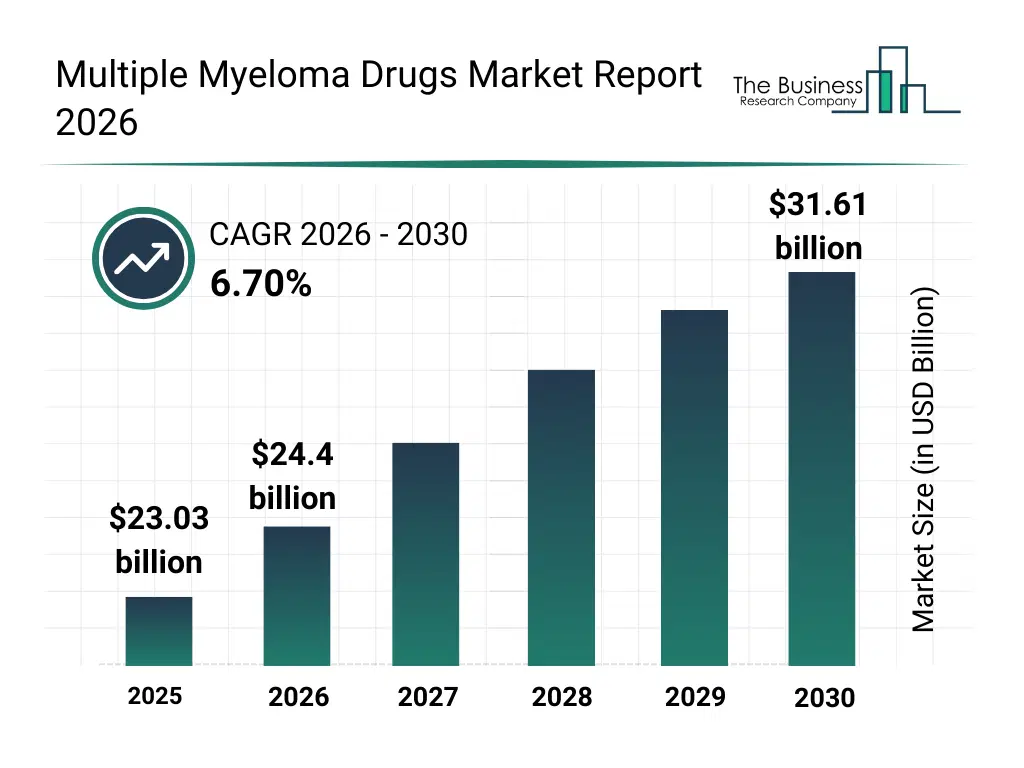
What Is The Multiple Myeloma Drugs Market Size and Share 2026?
The multiple myeloma drugs market size has grown strongly in recent years. It will grow from $23.03 billion in 2025 to $24.4 billion in 2026 at a compound annual growth rate (CAGR) of 6.0%. The growth in the historic period can be attributed to increasing prevalence of multiple myeloma, approval of novel immunomodulatory drugs, rising awareness about plasma cell cancers, development of proteasome inhibitors, expansion of hospital pharmacy networks.What Is The Multiple Myeloma Drugs Market Growth Forecast?
The multiple myeloma drugs market size is expected to see strong growth in the next few years. It will grow to $31.61 billion in 2030 at a compound annual growth rate (CAGR) of 6.7%. The growth in the forecast period can be attributed to growth in precision medicine adoption, rising investment in biologic therapies, increase in geriatric population, expansion of online pharmacy distribution, advancements in monoclonal antibody treatments. Major trends in the forecast period include personalized therapy development, combination drug regimens, bone health management in multiple myeloma, targeted drug delivery systems, clinical trial expansion.
Global Multiple Myeloma Drugs Market Segmentation
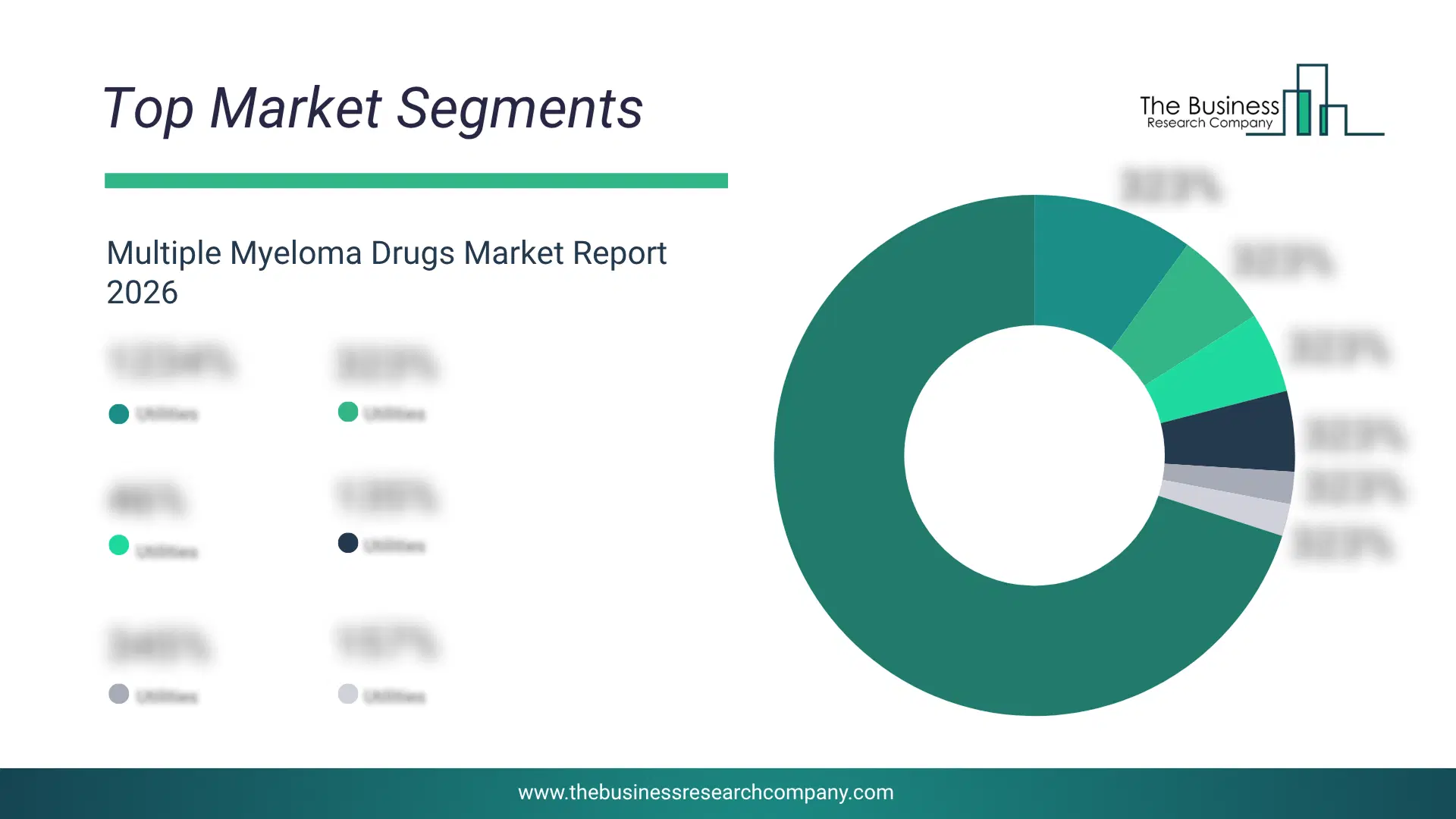
1) By Drug Type: Immunomodulatory Drugs, Proteasome Inhibitors, Histone Deacetylase Inhibitors, Monoclonal Antibody Drugs, Steroids, Other Drug Types 2) By Therapy: Targeted Therapy, Biologic Therapy, Chemotherapy, Other Therapies 3) By Distribution Channel: Hospital Pharmacies, Retail Pharmacies, Online Pharmacies, Other Distribution Channels 4) By End-User: Men, Women Subsegments: 1) By Immunomodulatory Drugs: Lenalidomide, Thalidomide, Pomalidomide 2) By Proteasome Inhibitors: Bortezomib, Carfilzomib, Ixazomib 3) By Histone Deacetylase Inhibitors: Panobinostat, Romidepsin 4) By Monoclonal Antibody Drugs: Daratumumab, Elotuzumab, Isatuximab 5) By Steroids: Dexamethasone, Prednisone 6) By Other Drug Types: Alkylating Agents, Antimetabolites, New Experimental DrugsWhat Is The Driver Of The Multiple Myeloma Drugs Market?
The increasing prevalence of hematological cancer is expected to drive the growth of the multiple myeloma drugs market going forward. Hematological cancers start in blood-forming tissue, such as bone marrow, or immune system cells, such as leukemia, lymphoma, multiple myeloma, and others. Multiple myeloma medications are often used to treat various myeloma by killing and limiting the growth of cancer cells by decreasing the process of cell division by stimulating numerous enzymatic actions and assisting bones to stay strong and reducing pain in the weakening bone. For instance, in January 2023, according to the American Cancer Society (ACS), a US-based health organization dedicated to eliminating cancer, there were approximately 59,610 newly diagnosed cases of leukemia and around 20,380 cases of acute myeloid leukemia (AML). Additionally, the total number of deaths attributed to leukemia amounted to 23,710. Therefore, the increasing prevalence of hematological cancer is driving the growth of multiple myeloma drugs industry.Key Players In The Global Multiple Myeloma Drugs Market
Major companies operating in the multiple myeloma drugs market are Pfizer Inc., Johnson & Johnson Pvt. Ltd, Merck & Co. Inc., AbbVie Inc., Roche Holding AG, Novartis AG, Bristol-Myers Squibb Company, Takeda Pharmaceutical Company Limited, Eli Lilly and Company, Kite Pharma Inc, Amgen Inc., Teva Pharmaceutical Industries Ltd., Cipla Ltd., ONO Pharmaceutical Co. Ltd., BieGene Ltd., Onyx Pharmaceuticals Inc., Karyopharm Therapeutics Inc., Poseida Therapeutics Inc., ImmunoGen Inc., PharmaMar SA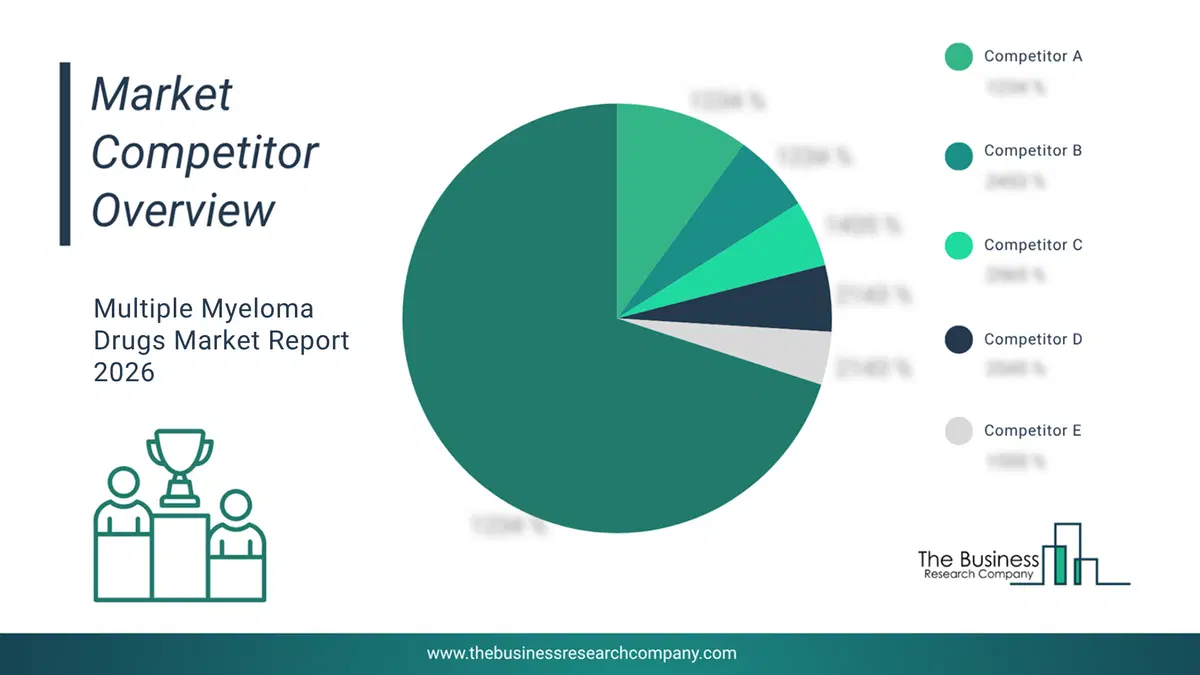
This chart is for illustrative purposes; the full report includes a detailed competitor analysis and comprehensive overview of the top 10 companies in the market.
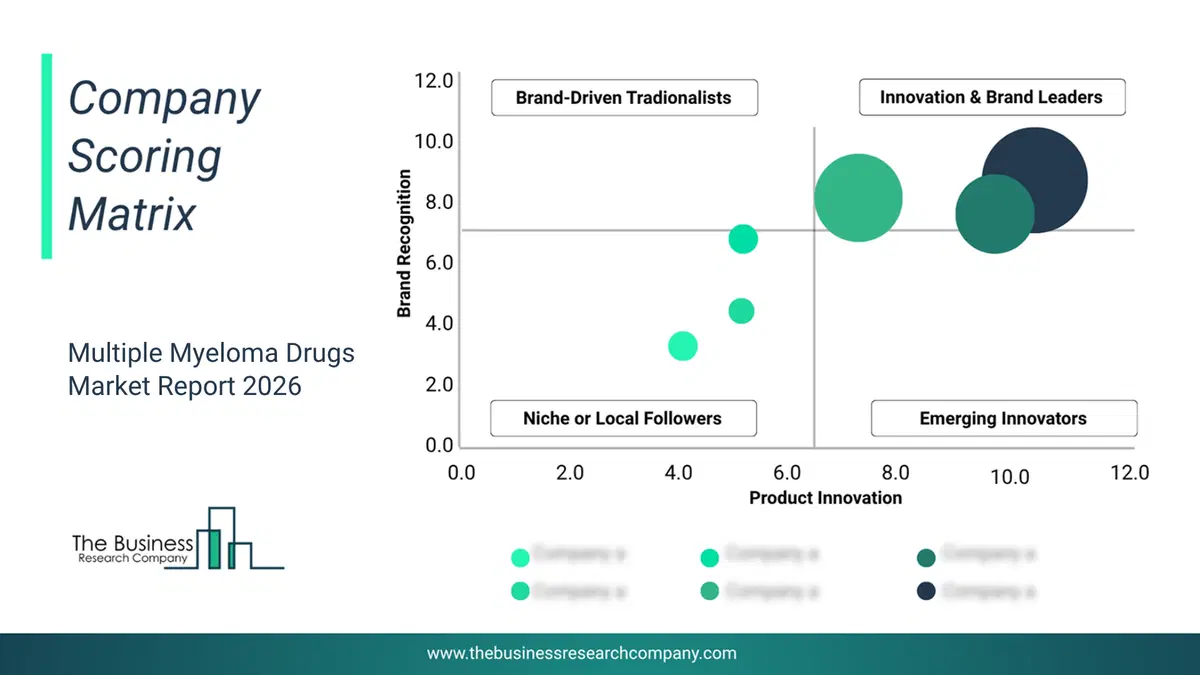
This chart maps companies by product innovation and brand strength, with bubble size indicating relative revenue, helping identify market leaders, challengers, and niche players. This is an illustrative chart; the full report provides a complete and accurate competitive analysis.
Global Multiple Myeloma Drugs Market Trends and Insights
Major companies operating in the multiple myeloma drug market are strengthening their partnership approach to co-develop cell therapies by expanding their collaboration to accelerate development and commercialization of next-generation CAR T products. Strategic partnerships enable joint resource sharing, risk mitigation, and faster scale-up for novel therapies. For instance, in May 2024, Kite Pharma, a US-based biopharmaceutical company, and Arcellx, Inc., a US-based clinical-stage biotechnology company, announced key operational updates for their partnered BCMA CAR T therapy, anitocabtagene autoleucel (anito cel). The companies shared the design of a global Phase 3 trial, named iMMagine 3, which will evaluate anito cel in patients with relapsed or refractory multiple myeloma who have been previously treated with both an immunomodulatory drug (IMiD) and an anti-CD38 monoclonal antibody. The trial is expected to enroll approximately 450 patients globally.What Are Latest Mergers And Acquisitions In The Multiple Myeloma Drugs Market?
In October 2024, the International Myeloma Foundation (IMF), a U.S.-based nonprofit patient advocacy and research organization, partnered with SparkCures to enhance clinical trial navigation and expand patient access to investigational multiple myeloma therapies. Through this collaboration, IMF aims to improve access to relevant multiple myeloma clinical trials by integrating SparkCures’ trial-matching engine into its platform and providing personalized trial discovery for patients based on their diagnosis, treatment history, and individual preferences. SparkCures is a U.S.-based company that offers a digital platform designed to match patients with suitable clinical trials and support informed participation.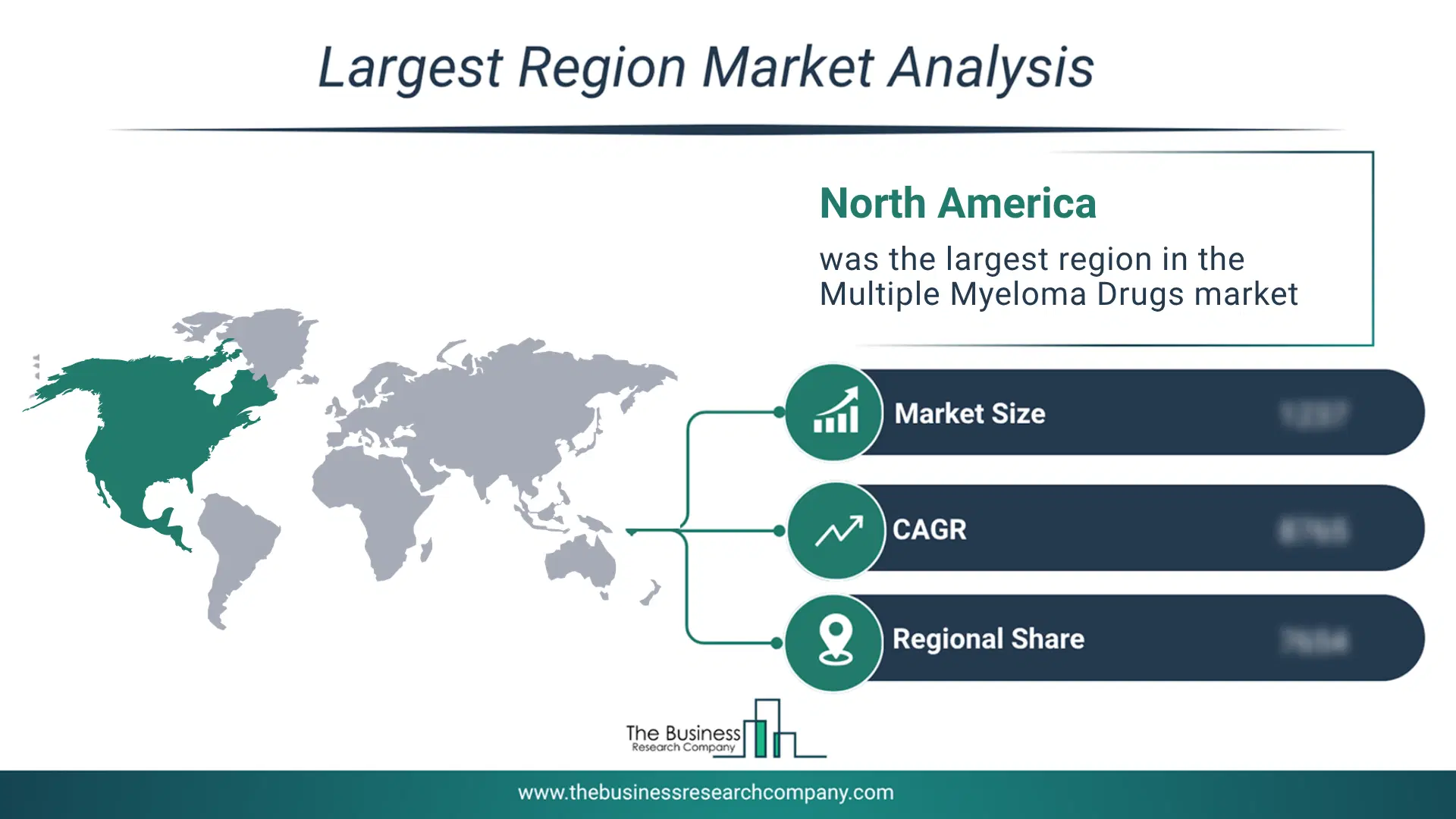
Regional Insights
North America was the largest region in the multiple myeloma drugs market in 2025. The regions covered in this market report are Asia-Pacific, South East Asia, Western Europe, Eastern Europe, North America, South America, Middle East, Africa. The countries covered in this market report are Australia, Brazil, China, France, Germany, India, Indonesia, Japan, Taiwan, Russia, South Korea, UK, USA, Canada, Italy, Spain.What Defines the Multiple Myeloma Drugs Market?
The multiple myeloma drugs market consists of revenues earned by entities by providing various therapies such radiation therapy, bone-marrow transplant, surgery and stem-cell transplant. The market value includes the value of related goods sold by the service provider or included within the service offering. The multiple myeloma drug market also includes sales of nuclear export inhibitors, bispecific T cell engager (BiTE), bisphosphonates, and alkylating agents. Values in this market are ‘factory gate’ values, that is the value of goods sold by the manufacturers or creators of the goods, whether to other entities (including downstream manufacturers, wholesalers, distributors and retailers) or directly to end customers. The value of goods in this market includes related services sold by the creators of the goods.How is Market Value Defined and Measured?
The market value is defined as the revenues that enterprises gain from the sale of goods and/or services within the specified market and geography through sales, grants, or donations in terms of the currency (in USD unless otherwise specified). The revenues for a specified geography are consumption values that are revenues generated by organizations in the specified geography within the market, irrespective of where they are produced. It does not include revenues from resales along the supply chain, either further along the supply chain or as part of other products.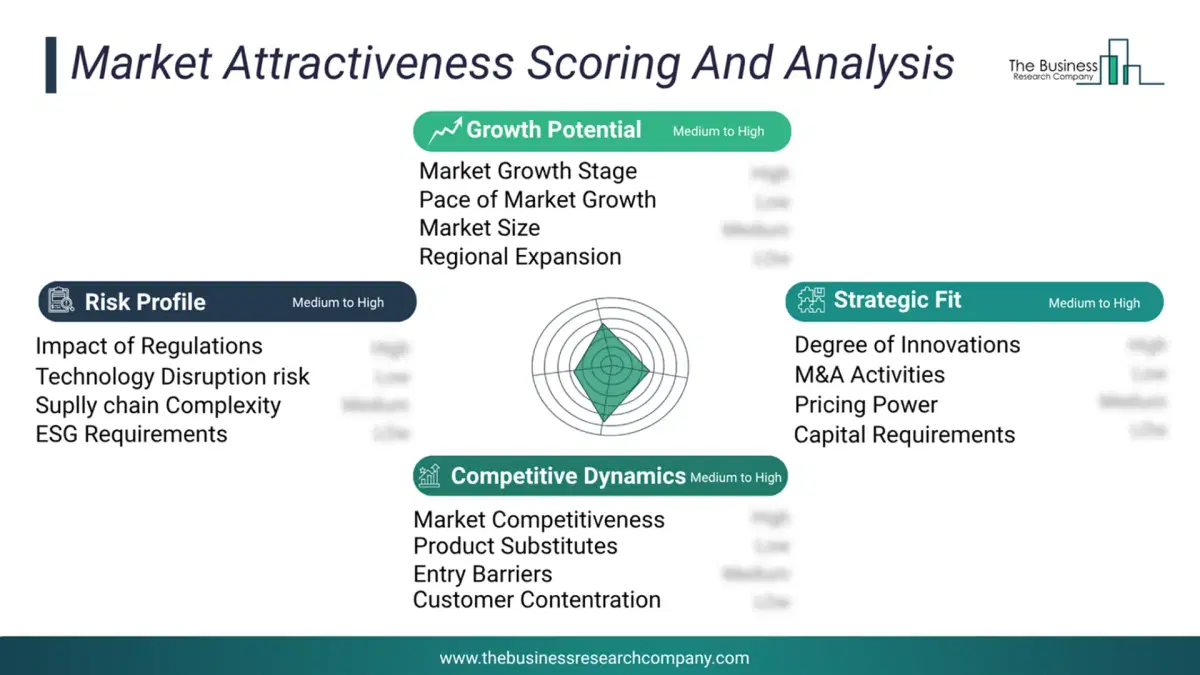
This chart presents market attractiveness based on a quantitative evaluation of growth, competition, strategic alignment, and risk, offering a clear view of opportunity areas for decision-making. This chart is for illustrative purposes; the full report contains the complete analysis.
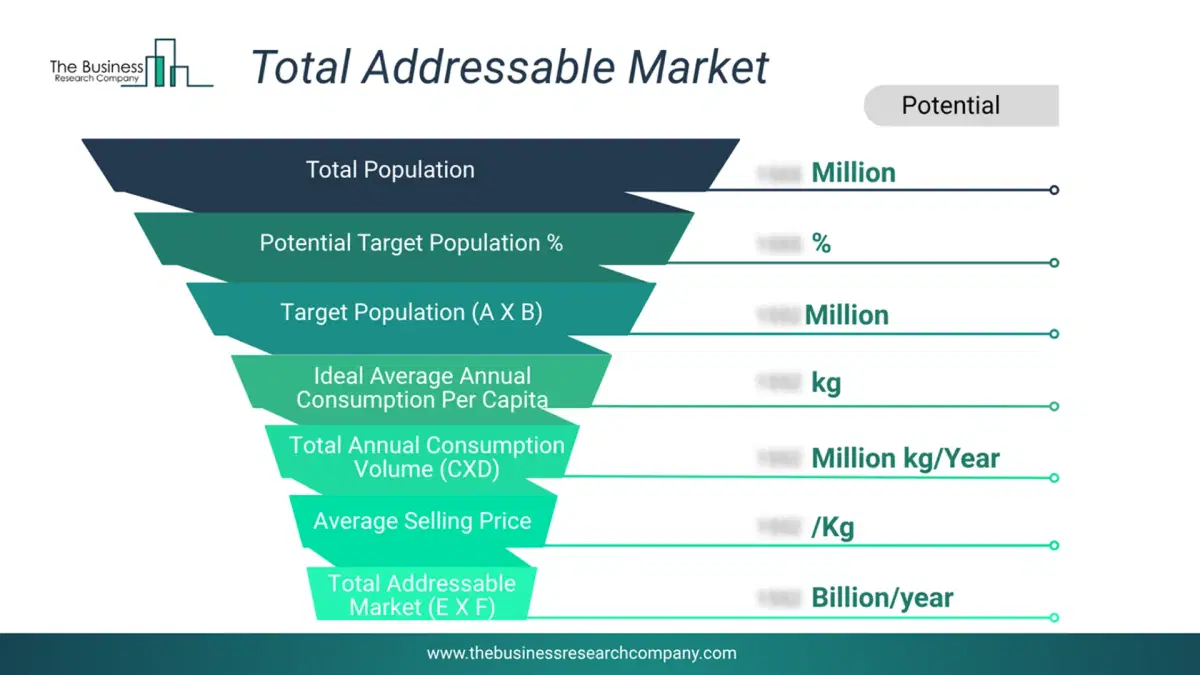
This chart highlights the Total Addressable Market (TAM) by estimating the maximum revenue opportunity using an assumption-driven approach, supporting strategic planning and opportunity sizing across markets. The chart is illustrative; the full report provides a more comprehensive analysis.
What Key Data and Analysis Are Included in the Multiple Myeloma Drugs Market Report 2026?
The multiple myeloma drugs market research report is one of a series of new reports from The Business Research Company that provides market statistics, including industry global market size, regional shares, competitors with the market share, detailed market segments, market trends and opportunities, and any further data you may need to thrive in the multiple myeloma drugs industry. The market research report delivers a complete perspective of everything you need, with an in-depth analysis of the current and future state of the industry.Multiple Myeloma Drugs Market Report Forecast Analysis
| Report Attribute | Details |
|---|---|
| Market Size Value In 2026 | $24.4 billion |
| Revenue Forecast In 2030 | $31.61 billion |
| Growth Rate | CAGR of 6.0% from 2026 to 2030 |
| Base Year For Estimation | 2025 |
| Actual Estimates/Historical Data | 2020-2025 |
| Forecast Period | 2026 - 2030 |
| Market Representation | Revenue in USD Billion and CAGR from 2026 to 2030 |
| Segments Covered | Drug Type, Therapy, Distribution Channel, End-User |
| Regional Scope | Asia-Pacific, Western Europe, Eastern Europe, North America, South America, Middle East, Africa |
| Country Scope | The countries covered in the report are Australia, Brazil, China, France, Germany, India, Indonesia, Japan, Taiwan, Russia, South Korea, UK, USA, Canada, Italy, Spain. |
| Key Companies Profiled | Pfizer Inc., Johnson & Johnson Pvt. Ltd, Merck & Co. Inc., AbbVie Inc., Roche Holding AG, Novartis AG, Bristol-Myers Squibb Company, Takeda Pharmaceutical Company Limited, Eli Lilly and Company, Kite Pharma Inc, Amgen Inc., Teva Pharmaceutical Industries Ltd., Cipla Ltd., ONO Pharmaceutical Co. Ltd., BieGene Ltd., Onyx Pharmaceuticals Inc., Karyopharm Therapeutics Inc., Poseida Therapeutics Inc., ImmunoGen Inc., PharmaMar SA |
| Customization Scope | Request for Customization |
| Pricing And Purchase Options | Explore Purchase Options |