

Muscarinic Acetylcholine Receptor Market Report 2026
Global Outlook – By Type (M1 Receptor, M4 Receptor, M5 Receptor, Other Types), By Distribution Channel (Hospitals, Clinics, Retail Pharmacies, Online Pharmacies, Specialty Centers), By Application (Chronic Obstructive Pulmonary Disease, Attention Deficit Hyperactivity Disorder, Alzheimer's Disease, Memory Impairment, Psychiatric Disorders, Other Applications) - Market Size, Trends, Strategies, and Forecast to 2030
Muscarinic Acetylcholine Receptor Market Overview
• Muscarinic Acetylcholine Receptor market size has reached to $1.89 billion in 2025 • Expected to grow to $2.51 billion in 2030 at a compound annual growth rate (CAGR) of 6% • Growth Driver: Muscarinic Acetylcholine Receptor Market Responds To Neurological Challenges • Market Trend: Market Leaders Redefine Schizophrenia Treatment Landscape • North America was the largest region in 2025 and Asia-Pacific is the fastest growing region.What Is Covered Under Muscarinic Acetylcholine Receptor Market?
Muscarinic acetylcholine receptors (mAChRs) are a class of G protein-coupled receptors (GPCRs) that are activated by the neurotransmitter acetylcholine. They are widely distributed throughout the body and play a crucial role in various physiological processes, particularly in the central and peripheral nervous systems. The main types of muscarinic acetylcholine receptors are M1, M4, M5, and others. The M1 type of muscarinic acetylcholine receptor is one of the five subtypes of muscarinic receptors, which are G protein-coupled receptors involved in mediating the effects of acetylcholine in the body. They are available through various distribution channels, such as hospitals, clinics, retail pharmacies, online pharmacies, and specialty centers. They are used in various applications such as chronic obstructive pulmonary disease, attention deficit hyperactivity disorder, Alzheimer’s disease, memory impairment, psychiatric disorders, and others.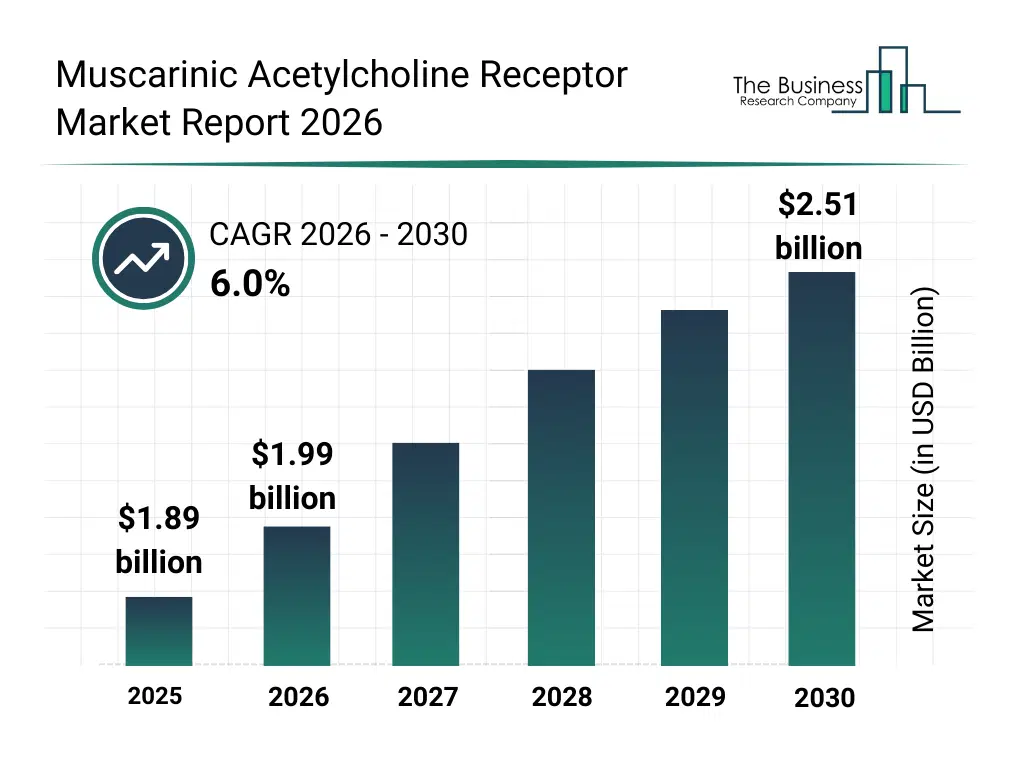
What Is The Muscarinic Acetylcholine Receptor Market Size and Share 2026?
The muscarinic acetylcholine receptor market size has grown strongly in recent years. It will grow from $1.89 billion in 2025 to $1.99 billion in 2026 at a compound annual growth rate (CAGR) of 5.5%. The growth in the historic period can be attributed to increased prevalence of nervous system disorders, early research on g protein pathways, rising demand for respiratory condition treatments, growth in pharmaceutical r&d, limited selective receptor targeting options.What Is The Muscarinic Acetylcholine Receptor Market Growth Forecast?
The muscarinic acetylcholine receptor market size is expected to see strong growth in the next few years. It will grow to $2.51 billion in 2030 at a compound annual growth rate (CAGR) of 6.0%. The growth in the forecast period can be attributed to advances in receptor-specific drug discovery, rising investment in neurodegenerative disease therapies, expansion of personalized medicine, development of combination receptor products, increasing focus on targeted molecular modulation. Major trends in the forecast period include increasing focus on selective receptor targeting, growing demand for neurological disorder therapies, rising research in g protein-coupled receptor modulation, expansion of drug development for memory impairment, growing interest in combination receptor modulators.
Global Muscarinic Acetylcholine Receptor Market Segmentation
1) By Type: M1 Receptor, M4 Receptor, M5 Receptor, Other Types 2) By Distribution Channel: Hospitals, Clinics, Retail Pharmacies, Online Pharmacies, Specialty Centers 3) By Application: Chronic Obstructive Pulmonary Disease, Attention Deficit Hyperactivity Disorder, Alzheimer's Disease, Memory Impairment, Psychiatric Disorders, Other Applications Subsegments: 1) By M1 Receptor: Centrally Acting Antagonists, Centrally Acting Agonists, Peripherally Acting Compounds 2) By M4 Receptor: Selective Agonists, Selective Antagonists, Non-Selective Agents 3) By M5 Receptor: Agonists, Antagonists 4) By Other Types: M2 Receptor, M3 Receptor, Combination Receptor ProductsWhat Is The Driver Of The Muscarinic Acetylcholine Receptor Market?
The increasing prevalence of neurological disorders is expected to propel the growth of the muscarinic acetylcholine receptor market going forward. Neurological disorders are medical conditions that affect the nervous system, including the brain, spinal cord, and peripheral nerves. Muscarinic acetylcholine receptors (mAChR) are critical in regulating complex behaviors, including cognition, locomotion, and reward, making them suitable therapeutic targets for treating various neurological illnesses. For instance, in October 2023, according to the World Federation of Neurology, a UK-based charity, reflecting an accelerating global health burden, neurological disorders now represent the second-leading cause of death and the primary cause of disability worldwide, with more than 40 percent of the global population affected in 2023 and the number of individuals living with brain disease projected to nearly double by 2050. Therefore, the increasing prevalence of neurological disorders is driving the growth of the muscarinic acetylcholine receptor industry.Key Players In The Global Muscarinic Acetylcholine Receptor Market
Major companies operating in the muscarinic acetylcholine receptor market are Heptares Therapeutics Ltd., Sumitomo Dainippon Pharma Co. Ltd., Anavex Life Sciences Corp., NeuroHealing Pharmaceuticals Inc., AstraZeneca plc, Karuna Pharmaceuticals Inc., Anven AlzDx Inc., Merck & Co Inc., Eli Lilly and Co., GlaxoSmithKline plc, Johnson & Johnson, Pfizer Inc., Novartis AG, AbbVie Inc., Boehringer Ingelheim International GmbH, Takeda Pharmaceutical Company Limited, Teva Pharmaceutical Industries Ltd., F. Hoffmann-La Roche Ltd., Eisai Co. Ltd., Astellas Pharma Inc., Sanofi SA, Sun Pharmaceutical Industries Ltd.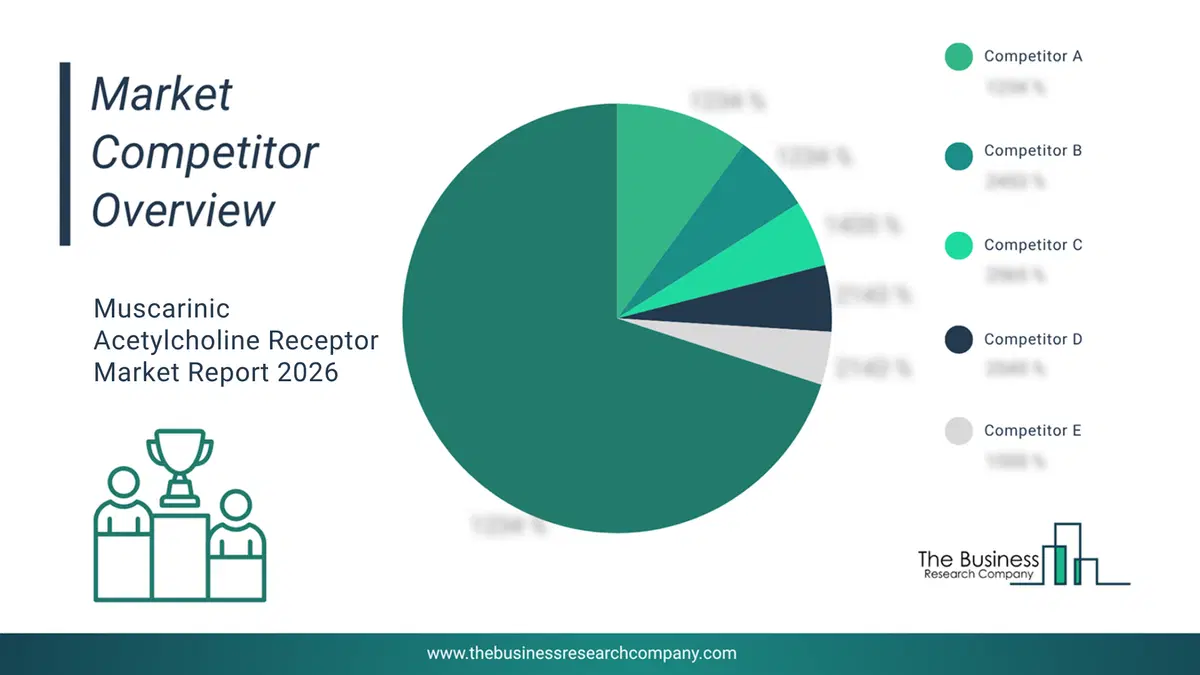
This chart is for illustrative purposes; the full report includes a detailed competitor analysis and comprehensive overview of the top 10 companies in the market.
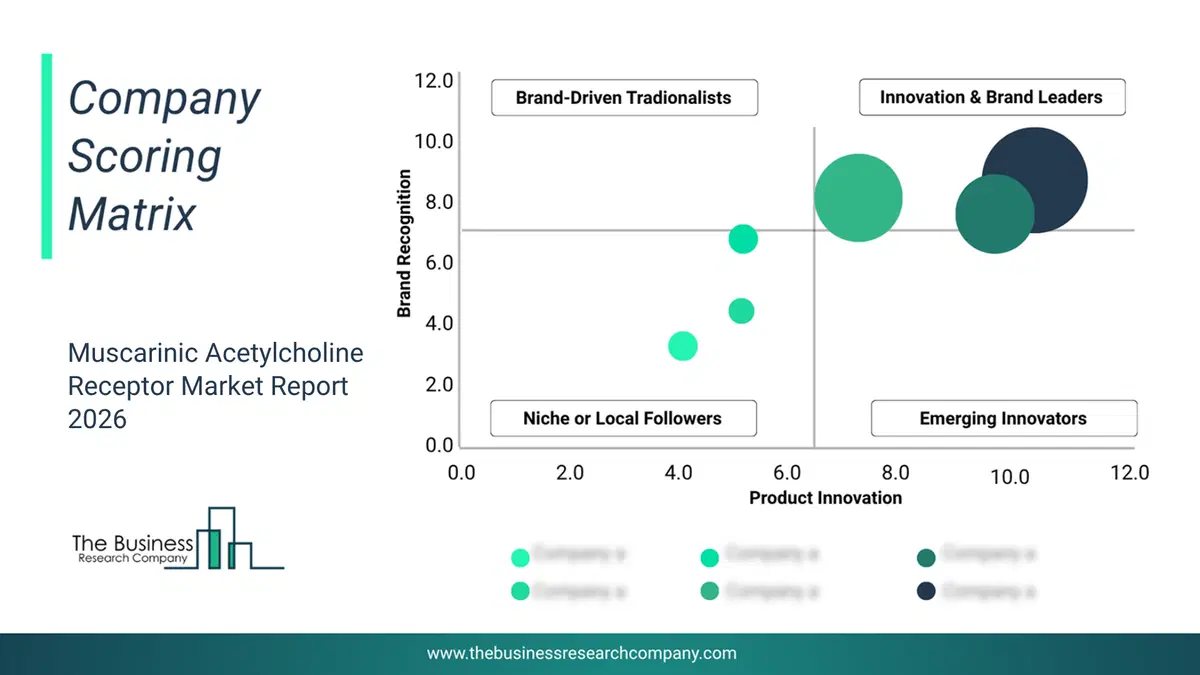
This chart maps companies by product innovation and brand strength, with bubble size indicating relative revenue, helping identify market leaders, challengers, and niche players. This is an illustrative chart; the full report provides a complete and accurate competitive analysis.
Global Muscarinic Acetylcholine Receptor Market Trends and Insights
Major companies working in the muscarinic acetylcholine receptor market are focused on innovating new products to strengthen their position in the market and get approval from regulatory agencies for the treatment of schizophrenia. The severe mental illness known as schizophrenia has an impact on a person's thoughts, feelings, and behavior. Schizophrenia patients may give off the impression that they are disconnected from reality, which can be upsetting to both them and their loved ones. For instance, in September 2023, Karuna Therapeutics, Inc., a US-based clinical-stage biopharmaceutical company, announced that it had submitted a New Drug Application (NDA) for KarXT (xanomeline-trospium) to the FDA, which is intended to treat schizophrenia. The company is committed to finding, developing, and providing innovative treatments for individuals with neurological and psychiatric illnesses.What Are Latest Mergers And Acquisitions In The Muscarinic Acetylcholine Receptor Market?
In August 2024, AbbVie, a US-based pharmaceutical company, acquired Cerevel Therapeutics for an undisclosed amount. Through this acquisition, AbbVie aims to strengthen its neuroscience portfolio, focusing on treatments for schizophrenia, Parkinson's disease, and other neurological conditions. Cerevel Therapeutics is a US-based company specializing in innovative therapies for neurological diseases, including schizophrenia, epilepsy, and Parkinson's disease, and it develops treatments targeting muscarinic acetylcholine receptors.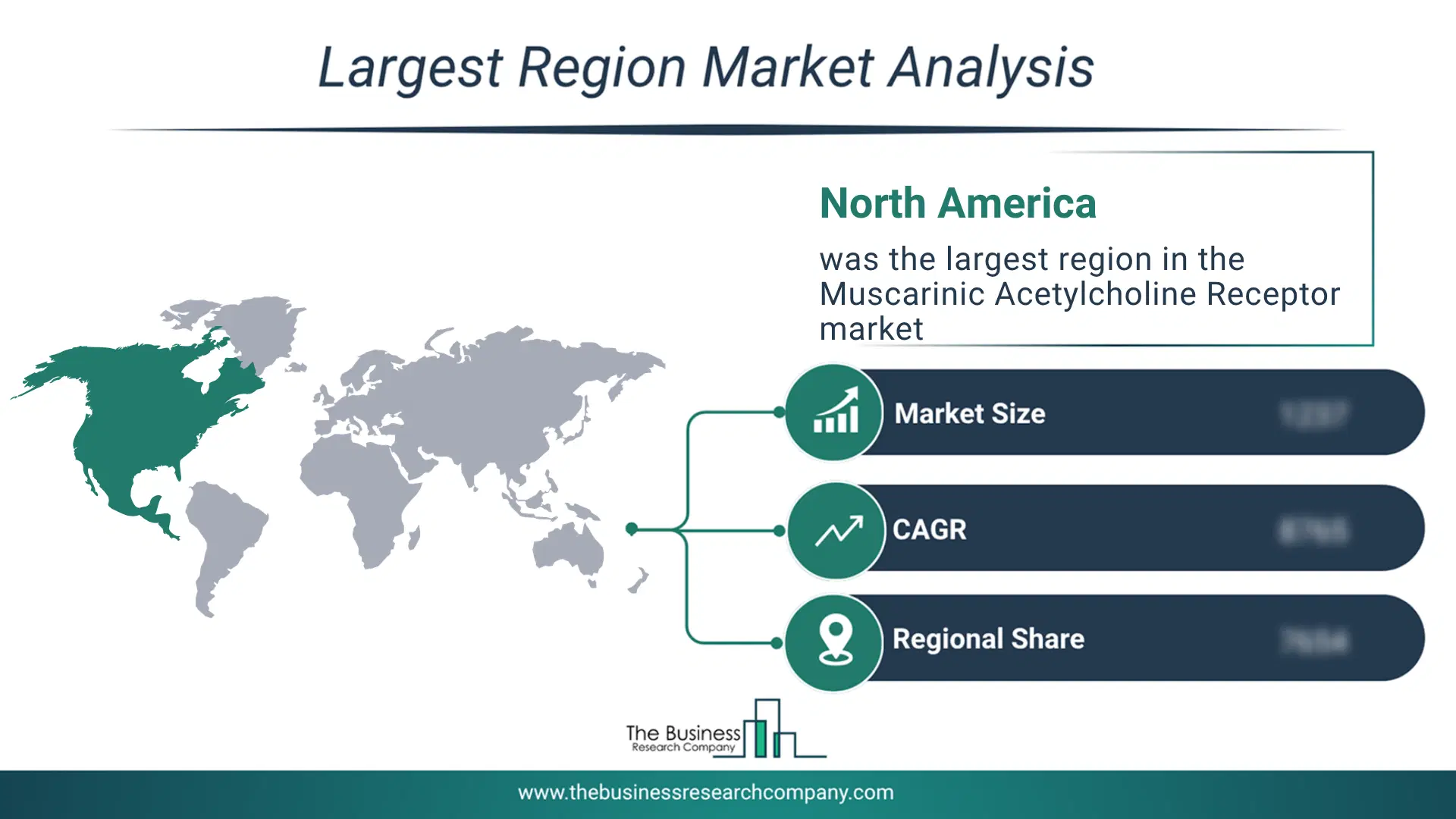
Regional Outlook
North America was the largest region in the muscarinic acetylcholine receptor market in 2025.Asia-Pacific is expected to be the fastest-growing region in the global muscarinic acetylcholine receptor market during the forecast period. The regions covered in this market report are Asia-Pacific, South East Asia, Western Europe, Eastern Europe, North America, South America, Middle East, Africa. The countries covered in this market report are Australia, Brazil, China, France, Germany, India, Indonesia, Japan, Taiwan, Russia, South Korea, UK, USA, Canada, Italy, Spain.What Defines the Muscarinic Acetylcholine Receptor Market?
The muscarinic acetylcholine receptors market consists of sales of extracellular N-terminal segment, transmembrane domains (TM1-TM7), intracellular loops (IL1-IL3), intracellular C-terminal segment. Values in this market are ‘factory gate’ values, that is the value of goods sold by the manufacturers or creators of the goods, whether to other entities (including downstream manufacturers, wholesalers, distributors, and retailers) or directly to end customers. The value of goods in this market includes related services sold by the creators of the goods.How is Market Value Defined and Measured?
The market value is defined as the revenues that enterprises gain from the sale of goods and/or services within the specified market and geography through sales, grants, or donations in terms of the currency (in USD unless otherwise specified). The revenues for a specified geography are consumption values that are revenues generated by organizations in the specified geography within the market, irrespective of where they are produced. It does not include revenues from resales along the supply chain, either further along the supply chain or as part of other products.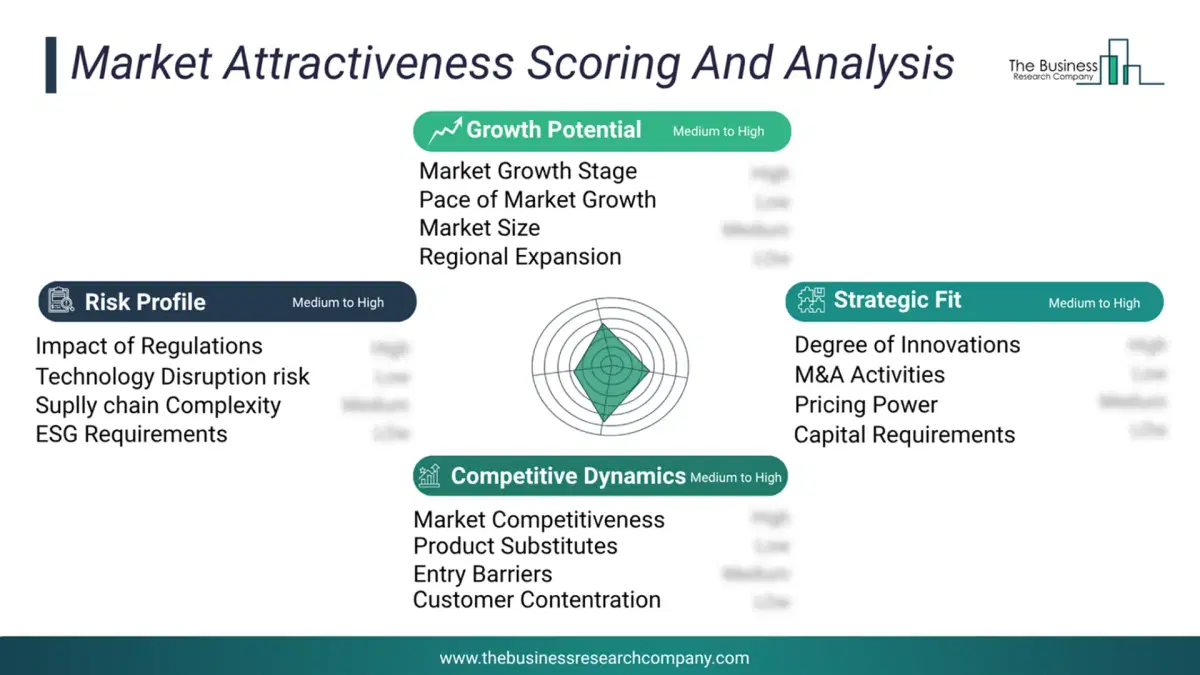
This chart presents market attractiveness based on a quantitative evaluation of growth, competition, strategic alignment, and risk, offering a clear view of opportunity areas for decision-making. This chart is for illustrative purposes; the full report contains the complete analysis.
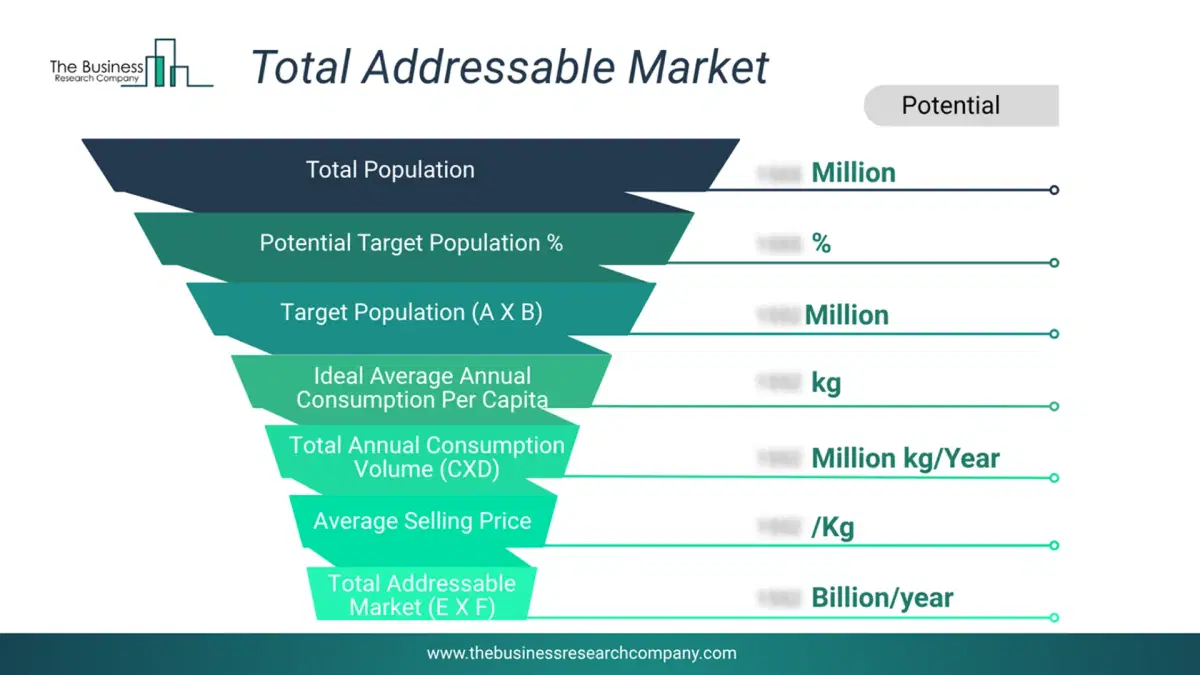
This chart highlights the Total Addressable Market (TAM) by estimating the maximum revenue opportunity using an assumption-driven approach, supporting strategic planning and opportunity sizing across markets. The chart is illustrative; the full report provides a more comprehensive analysis.
What Key Data and Analysis Are Included in the Muscarinic Acetylcholine Receptor Market Report 2026?
The muscarinic acetylcholine receptor market research report is one of a series of new reports from The Business Research Company that provides market statistics, including industry global market size, regional shares, competitors with the market share, detailed market segments, market trends and opportunities, and any further data you may need to thrive in the muscarinic acetylcholine receptor industry. The market research report delivers a complete perspective of everything you need, with an in-depth analysis of the current and future state of the industry.Muscarinic Acetylcholine Receptor Market Report Forecast Analysis
| Report Attribute | Details |
|---|---|
| Market Size Value In 2026 | $1.99 billion |
| Revenue Forecast In 2030 | $2.51 billion |
| Growth Rate | CAGR of 6% from 2026 to 2030 |
| Base Year For Estimation | 2025 |
| Actual Estimates/Historical Data | 2020-2025 |
| Forecast Period | 2026 - 2030 |
| Market Representation | Revenue in USD Billion and CAGR from 2026 to 2030 |
| Segments Covered | Type, Distribution Channel, Application |
| Regional Scope | Asia-Pacific, Western Europe, Eastern Europe, North America, South America, Middle East, Africa |
| Country Scope | The countries covered in the report are Australia, Brazil, China, France, Germany, India, Indonesia, Japan, Taiwan, Russia, South Korea, UK, USA, Canada, Italy, Spain |
| Key Companies Profiled | Heptares Therapeutics Ltd., Sumitomo Dainippon Pharma Co. Ltd., Anavex Life Sciences Corp., NeuroHealing Pharmaceuticals Inc., AstraZeneca plc, Karuna Pharmaceuticals Inc., Anven AlzDx Inc., Merck & Co Inc., Eli Lilly and Co., GlaxoSmithKline plc, Johnson & Johnson, Pfizer Inc., Novartis AG, AbbVie Inc., Boehringer Ingelheim International GmbH, Takeda Pharmaceutical Company Limited, Teva Pharmaceutical Industries Ltd., F. Hoffmann-La Roche Ltd., Eisai Co. Ltd., Astellas Pharma Inc., Sanofi SA, Sun Pharmaceutical Industries Ltd. |
| Customization Scope | Request for Customization |
| Pricing And Purchase Options | Explore Purchase Options |