

Music Streaming Market Report 2026
Global Outlook – By Service (On-Demand Streaming, Live Streaming), By Content (Audio, Video), By Platform (Application-Based, Web-Based), By Revenue Channels (Non-Subscription, Subscription), By End-Use (Individual, Commercial) – Market Size, Trends, Strategies, and Forecast to 2030
Music Streaming Market Overview
• Music Streaming market size has reached to $36.96 billion in 2025 • Expected to grow to $77.06 billion in 2030 at a compound annual growth rate (CAGR) of 15.8% • Growth Driver: The Proliferation Of High Speed Internet Connectivity Fueling The Growth Of The Music Streaming Market Due To Enhanced Streaming Experience And Accessibility • Market Trend: Music Streaming Giants Forge Strategic Partnership For Innovative Business Model • North America was the largest region in 2025.Market Gains By 2030 – Top Opportunities By Segment
Market Gain identifies the most promising market opportunities by highlighting the segments or products expected to generate the highest incremental revenue growth over the next five years.
What Is Covered Under Music Streaming Market?
The music streaming feed audio content directly into the device, personal computers (PC), or mobile devices, without the need of downloading files from the internet. It is offered through a web-based or application-based service. Users can also download music for offline listening and upload their soundtrack to the cloud using these services. The main types of services provided by music streaming are on-demand streaming and live streaming. The on-demand streaming are the service in which a consumer requests the music according to his convenience. In on-demand streaming, music can be rewind, fast-forwarded, or paused as per the consumer demands. Music streaming offers audio and video content through application-based platform or web-based platform. Music streaming services are provided by revenue channels such as non-subscription and subscription and are used for individual use or commercial use.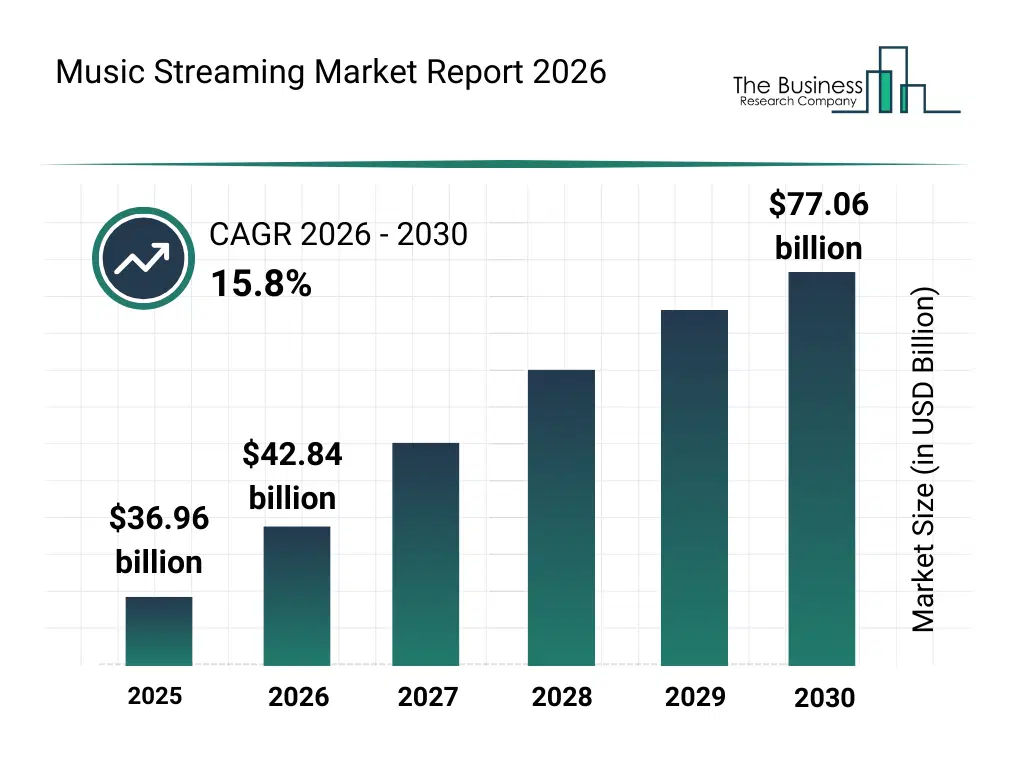
What Is The Music Streaming Market Size and Share 2026?
The music streaming market size has grown rapidly in recent years. It will grow from $36.96 billion in 2025 to $42.84 billion in 2026 at a compound annual growth rate (CAGR) of 15.9%. The growth in the historic period can be attributed to increasing adoption of smartphones, growth of high-speed internet, rising consumer demand for on-demand content, proliferation of mobile applications, decline in physical music sales.What Is The Music Streaming Market Growth Forecast?
The music streaming market size is expected to see rapid growth in the next few years. It will grow to $77.06 billion in 2030 at a compound annual growth rate (CAGR) of 15.8%. The growth in the forecast period can be attributed to expansion of subscription-based streaming, rise of AI-driven music curation, growth in live virtual concerts, integration with social media platforms, increasing adoption of connected devices. Major trends in the forecast period include personalized music recommendations, social listening and sharing features, high-quality audio streaming, cross-platform integration, cloud-based music libraries.
Global Music Streaming Market Segmentation
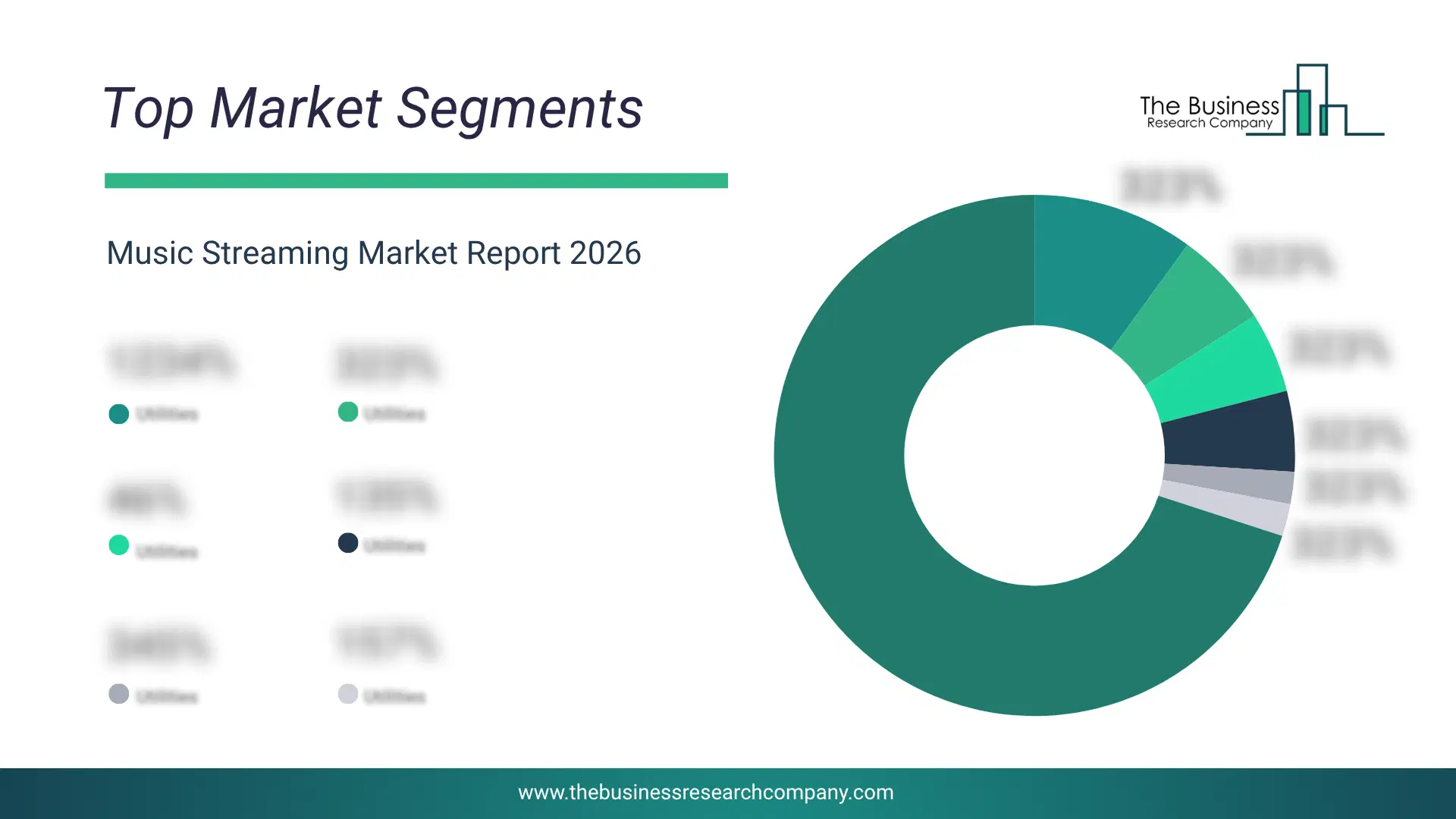
1) By Service: On-Demand Streaming, Live Streaming 2) By Content: Audio, Video 3) By Platform: Application-Based, Web-Based 4) By Revenue Channels: Non-Subscription, Subscription 5) By End-Use: Individual, Commercial Subsegments: 1) By On-Demand Streaming: Subscription-Based Streaming, Ad-Supported Streaming, Downloadable Music (Offline Listening) 2) By Live Streaming: Live Concerts and Events Streaming, Virtual Music Festivals, Artist Live Streams and Performances The top segments in the music streaming market will be: • On-Demand Streaming will reach $66 Billion by 2030. • Live Streaming will reach $10 Billion by 2030.What Is The Driver Of The Music Streaming Market?
The proliferation of high speed internet connectivity is expected to propel the growth of the music streaming market going forward. High speed internet connectivity refers to broadband network access with fast data transfer rates and low latency that enables users to quickly access and transmit digital content online. This connectivity facilitates seamless music streaming by reducing buffering, supporting higher audio quality, and ensuring smooth playback across devices, thereby improving the overall user experience. For instance, in January 2024, according to the Eurostat, a Luxembourg-based government agency, in 2023, 30% of EU internet users aged 16 to 74 reported engaging in an online course or using online learning materials within the past three months. This marks a 2-percentage point increase from 2022, when the figure was 28%. Overall, participation in online education saw an increase in 2023 compared to 2022. Therefore, the proliferation of high speed internet connectivity is driving the growth of the music streaming industry.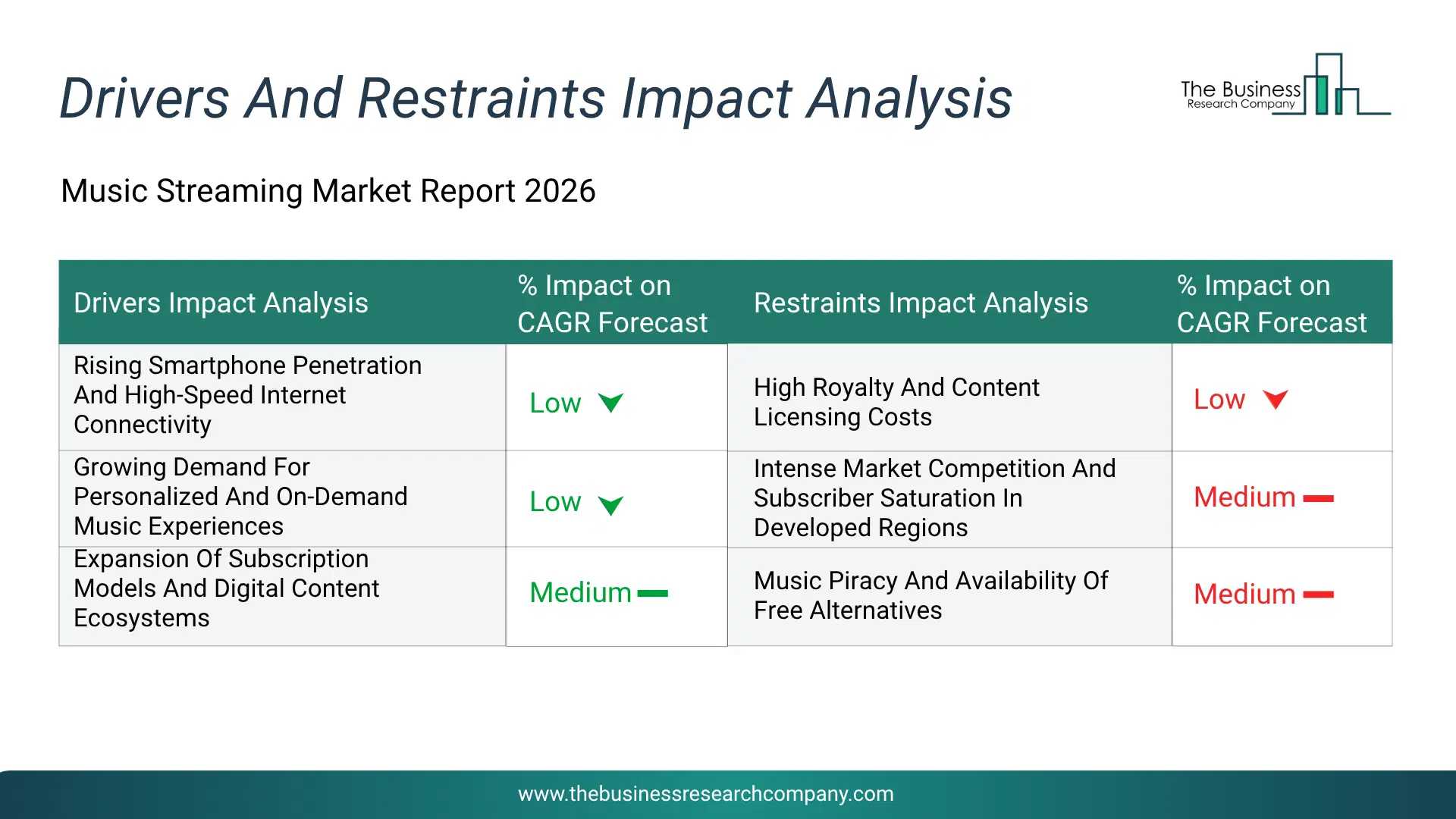
Infographic Chart Showing Key Market Drivers Analysis And Restraints For Music Streaming Market
The chart presents an impact analysis of key drivers and restraints, quantifying their relative influence on the market's growth rate and helping assess the balance between growth enablers and limiting factors. This chart offers a high-level perspective; the full report contains more detailed insights.
How Will The Drivers Impact Growth In The Global Music Streaming Market?
• Rising Smartphone Penetration And High-Speed Internet Connectivity (Low) – During the forecast period, the rising smartphone penetration and high-speed internet connectivity are expected to emerge as a major factor driving the expansion of the music streaming market by 2030. the growing availability of affordable smartphones, widespread deployment of 4G, 5G, and fiber broadband networks, and increasing use of connected devices are enabling consumers to access cloud-based music libraries anytime and anywhere. improved network speeds support uninterrupted playback of high-quality audio, while partnerships between telecom operators and streaming platforms are making premium services more accessible. • Growing Demand For Personalized And On-Demand Music Experiences (Low) – During the forecast period, the growing demand for personalized and on-demand music experiences is expected to emerge as a major factor driving the expansion of the music streaming market by 2030. artificial intelligence-powered recommendation engines, customized playlists, offline listening, and seamless multi-device access are enhancing user engagement and satisfaction. in addition, investments in exclusive music releases, podcasts, regional-language content, and premium listening features are encouraging higher subscriber retention and increasing conversion from free to paid services. • Expansion Of Subscription Models And Digital Content Ecosystems (Medium) – During the forecast period, the expansion of subscription models and digital content ecosystems is expected to act as a key growth catalyst for the music streaming market by 2030. freemium pricing strategies, premium subscription offerings, and integration of podcasts, audiobooks, live performances, and creator-focused content are broadening platform appeal and generating recurring revenue. strategic collaborations with smartphone manufacturers, automotive companies, gaming platforms, and smart device providers are further extending platform reach while localized pricing and multilingual content libraries strengthen adoption across emerging markets.How Will The Restraints Impact Growth In The Global Music Streaming Market?
• High Royalty And Content Licensing Costs (Low) – During the forecast period, high Royalty And Content Licensing Costs remain one of the biggest restraints for the Music Streaming market because streaming companies must pay substantial royalties to artists, record labels, music publishers, and copyright management organizations for every song streamed on their platforms. These royalty obligations represent one of the largest operating expenses and continue to increase as streaming volumes grow. Licensing agreements differ across countries and music catalogs, making negotiations both complex and expensive. Smaller streaming providers often struggle to secure favorable licensing agreements, limiting their competitiveness against established global platforms. In addition, ongoing debates regarding fair artist compensation have led to increasing pressure from musicians, governments, and industry organizations to improve royalty payments, potentially increasing operating costs even further. Since subscription prices remain highly competitive and consumers are sensitive to price increases, many streaming companies face challenges in maintaining healthy profit margins despite growing subscriber numbers. Consequently, high licensing expenses continue to restrict profitability and reduce the financial flexibility needed for innovation and market expansion. • Intense Market Competition And Subscriber Saturation In Developed Regions (Low) – During the forecast period, intense Market Competition And Subscriber Saturation In Developed Regions is slowing market growth as numerous global and regional streaming providers compete aggressively for the same customer base. Leading platforms continuously invest in exclusive music releases, podcasts, celebrity partnerships, artificial intelligence-driven recommendations, improved audio quality, and bundled subscription offerings to differentiate themselves. These competitive strategies require significant investments in technology development, marketing campaigns, and customer acquisition, increasing operational costs. Furthermore, mature markets such as North America and Western Europe already have high music streaming penetration, leaving limited opportunities to acquire first-time subscribers. As a result, companies increasingly compete by attracting customers from rival platforms, leading to price competition, promotional discounts, and reduced profitability. Maintaining long-term subscriber loyalty has also become more challenging as consumers can easily switch between platforms offering similar music libraries and subscription prices. These competitive pressures continue to limit revenue growth and reduce margins across the industry. • Music Piracy And Availability Of Free Alternatives (Medium) – During the forecast period, music Piracy And Availability Of Free Alternatives continue to restrain the Music Streaming market by reducing the willingness of consumers to purchase premium subscriptions. Although legal streaming services have significantly reduced piracy compared to previous decades, unauthorized websites, illegal music downloads, modified applications, and unlicensed streaming platforms remain prevalent in many regions. In addition, legitimate ad-supported free streaming services provide access to extensive music libraries without requiring paid subscriptions, particularly attracting price-sensitive users in emerging markets. This limits premium subscription growth and reduces overall revenue potential for streaming providers. To combat these challenges, companies must invest heavily in digital rights management technologies, copyright enforcement, cybersecurity measures, and continuous product innovation to offer additional value through exclusive content, superior audio quality, offline listening, and personalized recommendations. Despite these efforts, piracy and free alternatives continue to create pricing pressure and restrict the conversion of free users into paying subscribers, thereby acting as a persistent restraint on market growth.Key Players In The Global Music Streaming Market
Major companies operating in the music streaming market are Amazon.com Inc., Apple Inc., Google LLC, Spotify AB, Melon Corporation, Sirius XM Holdings Inc., Yandex Music, Tencent Music Entertainment Group, iHeartMedia Inc., Tidal Music LLC, Pandora Media Inc., Kugou Music, Kuwo Music, NetEase Cloud Music, SoundCloud Global Limited & Co KG, Deezer SAS, KKBOX Inc., LiveOne, Wynk Music, Hungama Digital Media Entertainment Private Limited, Anghami, Boomplay Music Africa, Gaana.com, JOOX Music, Saavn Media Pvt Ltd.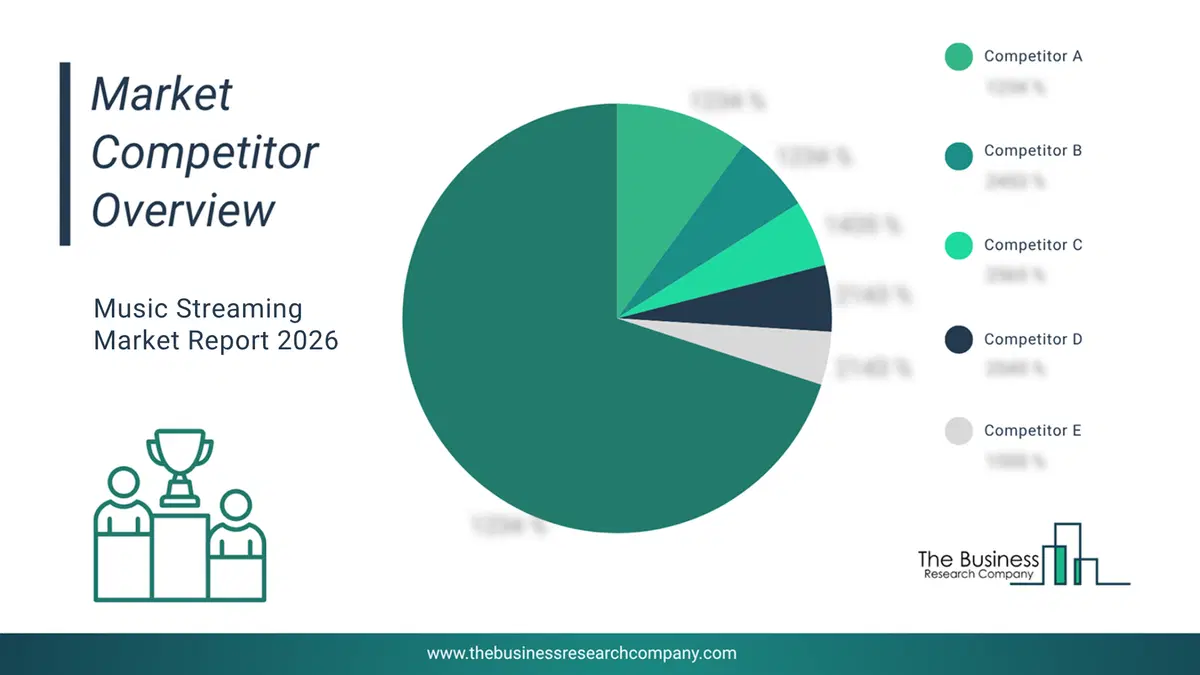
This chart is for illustrative purposes; the full report includes a detailed competitor analysis and comprehensive overview of the top 10 companies in the market.
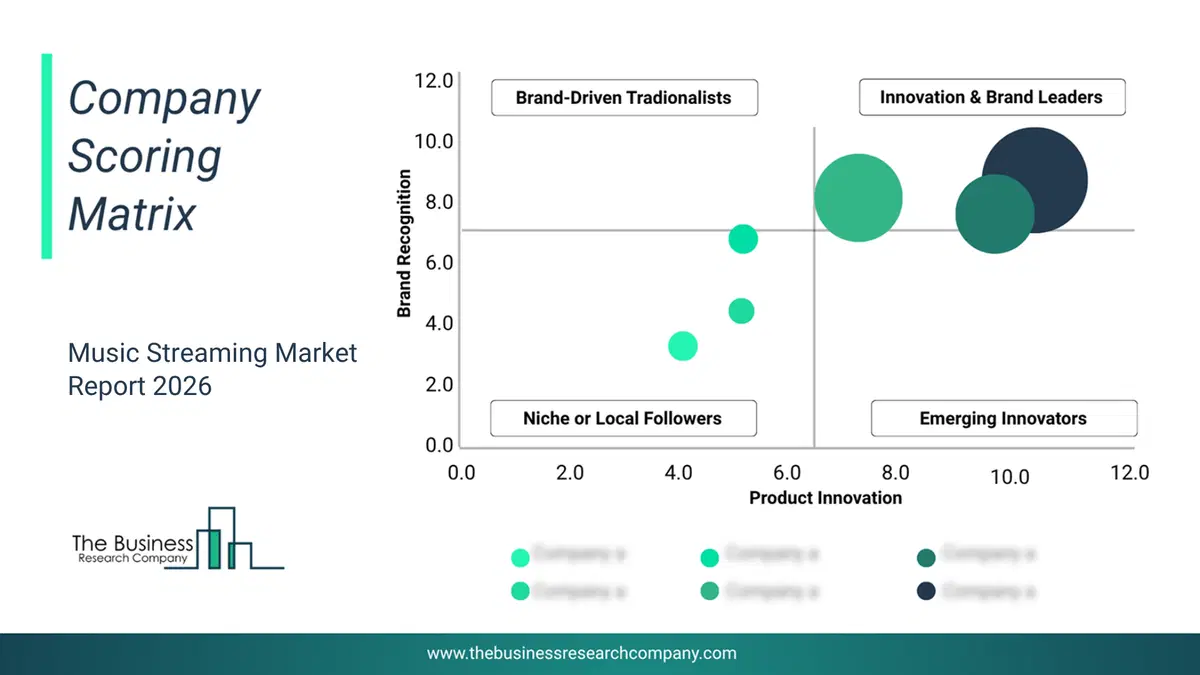
This chart maps companies by product innovation and brand strength, with bubble size indicating relative revenue, helping identify market leaders, challengers, and niche players. This is an illustrative chart; the full report provides a complete and accurate competitive analysis.
Global Music Streaming Market Trends and Insights
Major companies operating in the music streaming market are adopting a strategic partnership approach for a novel business model for music streaming. Strategic partnerships refer to a process in which companies leverage each other's strengths and resources to achieve mutual benefits and success. For instance, in January 2023, Tidal, a US-based music streaming service, announced a partnership with Universal Music Group N.V., a Netherlands-based music corporation, to investigate an innovative new economic framework for music streaming that may better reward the value supplied by artists and more closely represent TIDAL users' connection with the artists and music they enjoy. TIDAL and UMG will investigate how digital audio streaming services and platforms may increase financial value for all types of artists by using fan involvement. The study will look at how different financial approaches might help artists and the music community by accelerating subscriber growth, deepening retention, and better monetizing fans.What Are Latest Mergers And Acquisitions In The Music Streaming Market?
In April 2024, Orbit Showtime Network Plus. a UAE-based media platform, acquired a majority 55.45% stake in Anghami Inc. for an $50 million. Through this acquisition, OSN+ aims to strengthen its music streaming offerings and expand its presence across the Middle East and North Africa by integrating Anghami’s audio content and user base. Anghami Inc. is a UAE-based music streaming service that provides users with access to a wide catalog of Arabic and international music.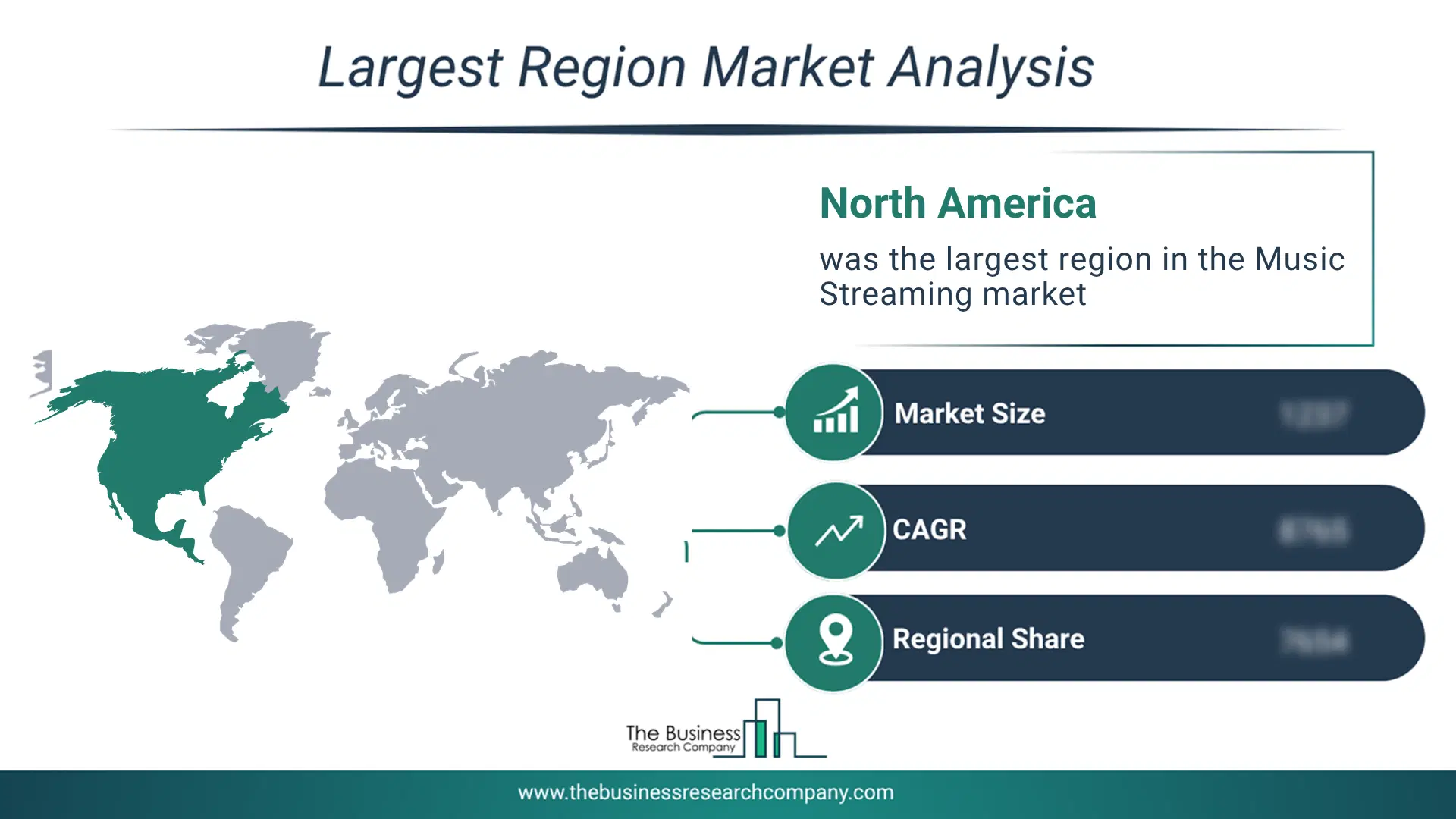
Regional Outlook
North America was the largest region in the music streaming market share in 2025. The regions covered in this market report are Asia-Pacific, South East Asia, Western Europe, Eastern Europe, North America, South America, Middle East, Africa. The countries covered in this market report are Australia, Brazil, China, France, Germany, India, Indonesia, Japan, Taiwan, Russia, South Korea, UK, USA, Canada, Italy, Spain.What Defines the Music Streaming Market?
The music streaming market includes revenues earned by entities by in-person, hybrid and virtual music streaming. The market value includes the value of related goods sold by the service provider or included within the service offering. Only goods and services traded between entities or sold to end consumers are included.How is Market Value Defined and Measured?
The market value is defined as the revenues that enterprises gain from the sale of goods and/or services within the specified market and geography through sales, grants, or donations in terms of the currency (in USD unless otherwise specified). The revenues for a specified geography are consumption values that are revenues generated by organizations in the specified geography within the market, irrespective of where they are produced. It does not include revenues from resales along the supply chain, either further along the supply chain or as part of other products.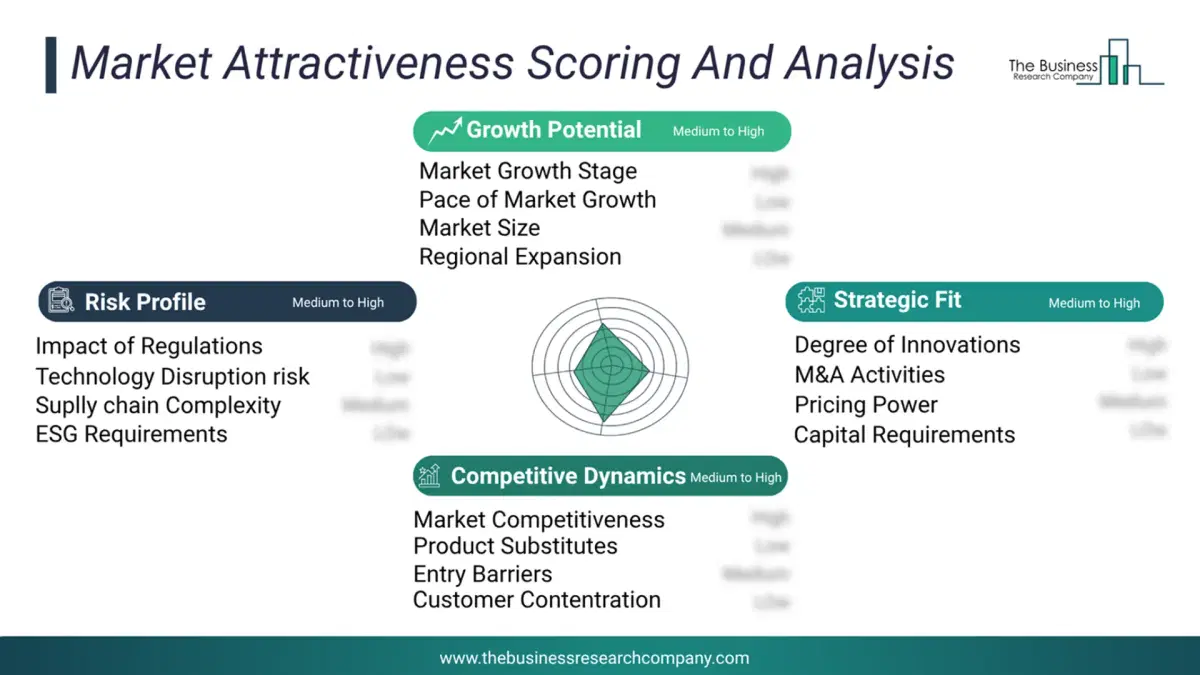
This chart presents market attractiveness based on a quantitative evaluation of growth, competition, strategic alignment, and risk, offering a clear view of opportunity areas for decision-making. This chart is for illustrative purposes; the full report contains the complete analysis.
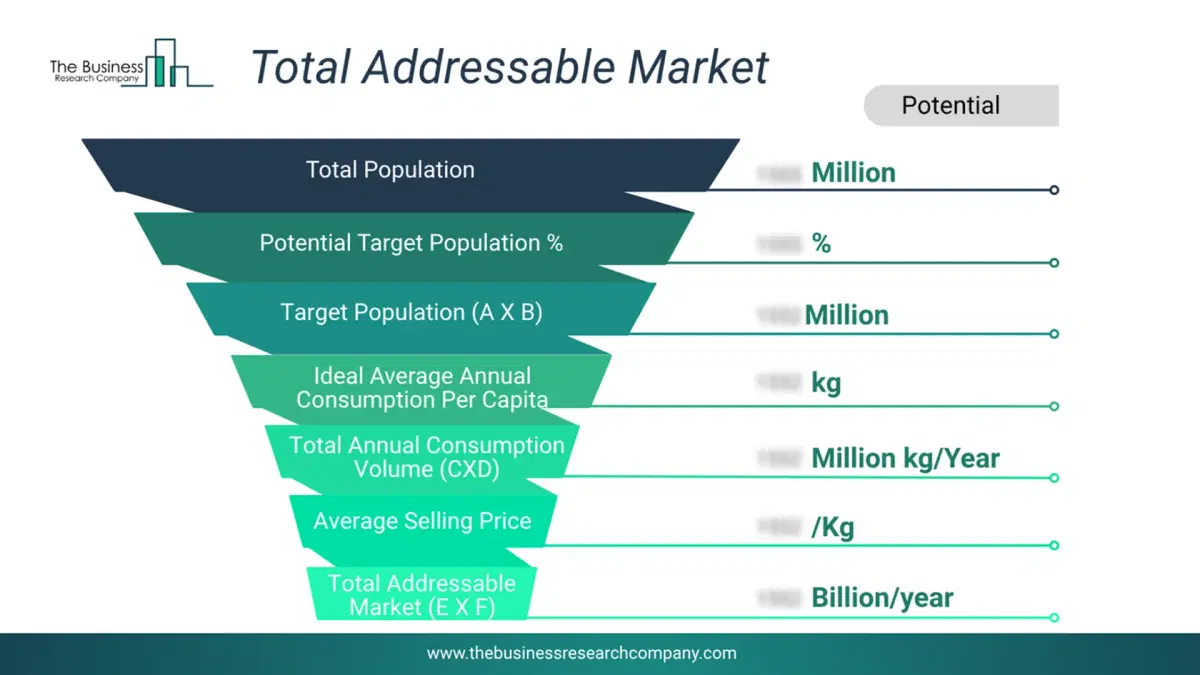
This chart highlights the Total Addressable Market (TAM) by estimating the maximum revenue opportunity using an assumption-driven approach, supporting strategic planning and opportunity sizing across markets. The chart is illustrative; the full report provides a more comprehensive analysis.
What Key Data and Analysis Are Included in the Music Streaming Market Report 2026?
The music streaming market research report is one of a series of new reports from The Business Research Company that provides market statistics, including industry global market size, regional shares, competitors with the market share, detailed market segments, market trends and opportunities, and any further data you may need to thrive in the music streaming industry. The market research report delivers a complete perspective of everything you need, with an in-depth analysis of the current and future state of the industry.Music Streaming Market Report Forecast Analysis
| Report Attribute | Details |
|---|---|
| Market Size Value In 2026 | $42.84 billion |
| Revenue Forecast In 2030 | $77.06 billion |
| Growth Rate | CAGR of 15.8% from 2026 to 2030 |
| Base Year For Estimation | 2025 |
| Actual Estimates/Historical Data | 2020-2025 |
| Forecast Period | 2026 - 2030 |
| Market Representation | Revenue in USD Billion and CAGR from 2026 to 2030 |
| Segments Covered | Service, Content, Platform, Revenue Channels, End-Use |
| Regional Scope | Asia-Pacific, Western Europe, Eastern Europe, North America, South America, Middle East, Africa |
| Country Scope | The countries covered in the report are Australia, Brazil, China, France, Germany, India, Indonesia, Japan, Taiwan, Russia, South Korea, UK, USA, Canada, Italy, Spain. |
| Key Companies Profiled | Amazon.com Inc., Apple Inc., Google LLC, Spotify AB, Melon Corporation, Sirius XM Holdings Inc., Yandex Music, Tencent Music Entertainment Group, iHeartMedia Inc., Tidal Music LLC, Pandora Media Inc., Kugou Music, Kuwo Music, NetEase Cloud Music, SoundCloud Global Limited & Co KG, Deezer SAS, KKBOX Inc., LiveOne, Wynk Music, Hungama Digital Media Entertainment Private Limited, Anghami, Boomplay Music Africa, Gaana.com, JOOX Music, Saavn Media Pvt Ltd. |
| Customization Scope | Request for Customization |
| Pricing And Purchase Options | Explore Purchase Options |