

No-Code Development Platforms Market Report 2026
Global Outlook – By Component (Platform, Services), By Deployment (On-Premise, Cloud), By Organization (Large Enterprises, Small And Medium-Sized Enterprises (SMEs)), By Application (Desktop And Server-Based, Mobile-Based, Web-Based), By End-Use (Construction, Oil And Gas, Manufacturing, Banking, Financial Services, And Insurance (BFSI), Retail And E-Commerce, Real Estate, Healthcare, Other End-Uses) – Market Size, Trends, Strategies, and Forecast to 2030
No-Code Development Platforms Market Overview
• No-Code Development Platforms market size has reached to $35.61 billion in 2025 • Expected to grow to $102.57 billion in 2030 at a compound annual growth rate (CAGR) of 22.7% • Growth Driver: Impact Of Digital Transformation On The No-Code Development Platforms Market Growth • Market Trend: Streamlining Workflow Automation With AI-Driven No-Code Platforms • North America was the largest region in 2025 and Asia-Pacific is the fastest growing region.Market Gains By 2030 – Top Opportunities By Segment
Market Gain identifies the most promising market opportunities by highlighting the segments or products expected to generate the highest incremental revenue growth over the next five years.
What Is Covered Under No-Code Development Platforms Market?
No-code development platforms are software tools that allow users to create apps or software solutions without using traditional programming code. These platforms aim to democratize software development by making it available to individuals and teams with different technical expertise. Also, it frequently speeds up the development process, lowers expenses, and allows firms to innovate and iterate more quickly. The main components of no-code development platforms include platforms and services. No-code development platforms provide customers with simple interfaces and tools for creating applications without writing code and they often include drag-and-drop capability, pre-built templates, and visual workflows to make creation easier. It can be deployed on-premises and in the cloud by several organizational sizes, such as large enterprises and small and medium-sized enterprises (SMEs). These are used for various applications, including desktop and server-based, mobile-based, and web-based, in several end-users, such as construction, oil and gas, manufacturing, banking, financial services, and insurance (BFSI), retail and e-commerce, real estate, healthcare, and others.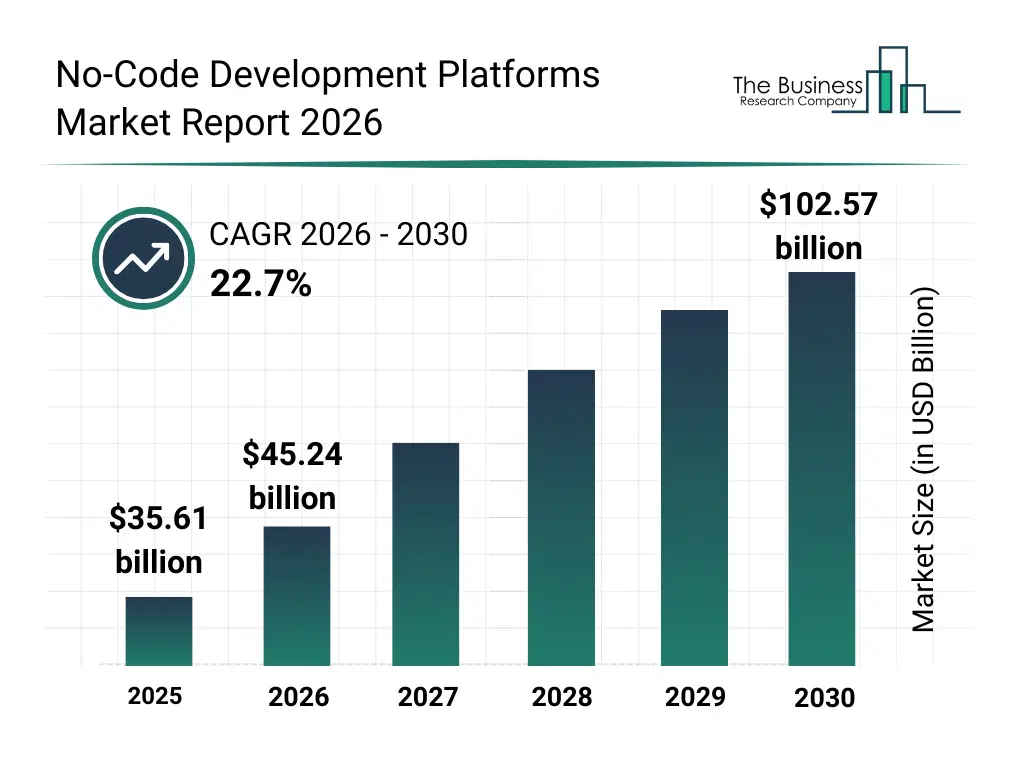
What Is The No-Code Development Platforms Market Size and Share 2026?
The no-code development platforms market size has grown exponentially in recent years. It will grow from $35.61 billion in 2025 to $45.24 billion in 2026 at a compound annual growth rate (CAGR) of 27.1%. The growth in the historic period can be attributed to increasing demand for faster software development cycles, shortage of skilled software developers, rising adoption of digital transformation initiatives, growth of enterprise process automation needs, increasing use of cloud computing.What Is The No-Code Development Platforms Market Growth Forecast?
The no-code development platforms market size is expected to see exponential growth in the next few years. It will grow to $102.57 billion in 2030 at a compound annual growth rate (CAGR) of 22.7%. The growth in the forecast period can be attributed to increasing enterprise adoption of low-code and no-code solutions, rising demand for business-led application development, expansion of automation across non-technical teams, growing focus on cost-efficient software deployment, increasing integration with enterprise IT ecosystems. Major trends in the forecast period include increasing adoption of citizen development platforms, rising use of drag-and-drop application builders, growing integration of workflow automation tools, expansion of cloud-based no-code platforms, enhanced focus on rapid application deployment.
Global No-Code Development Platforms Market Segmentation
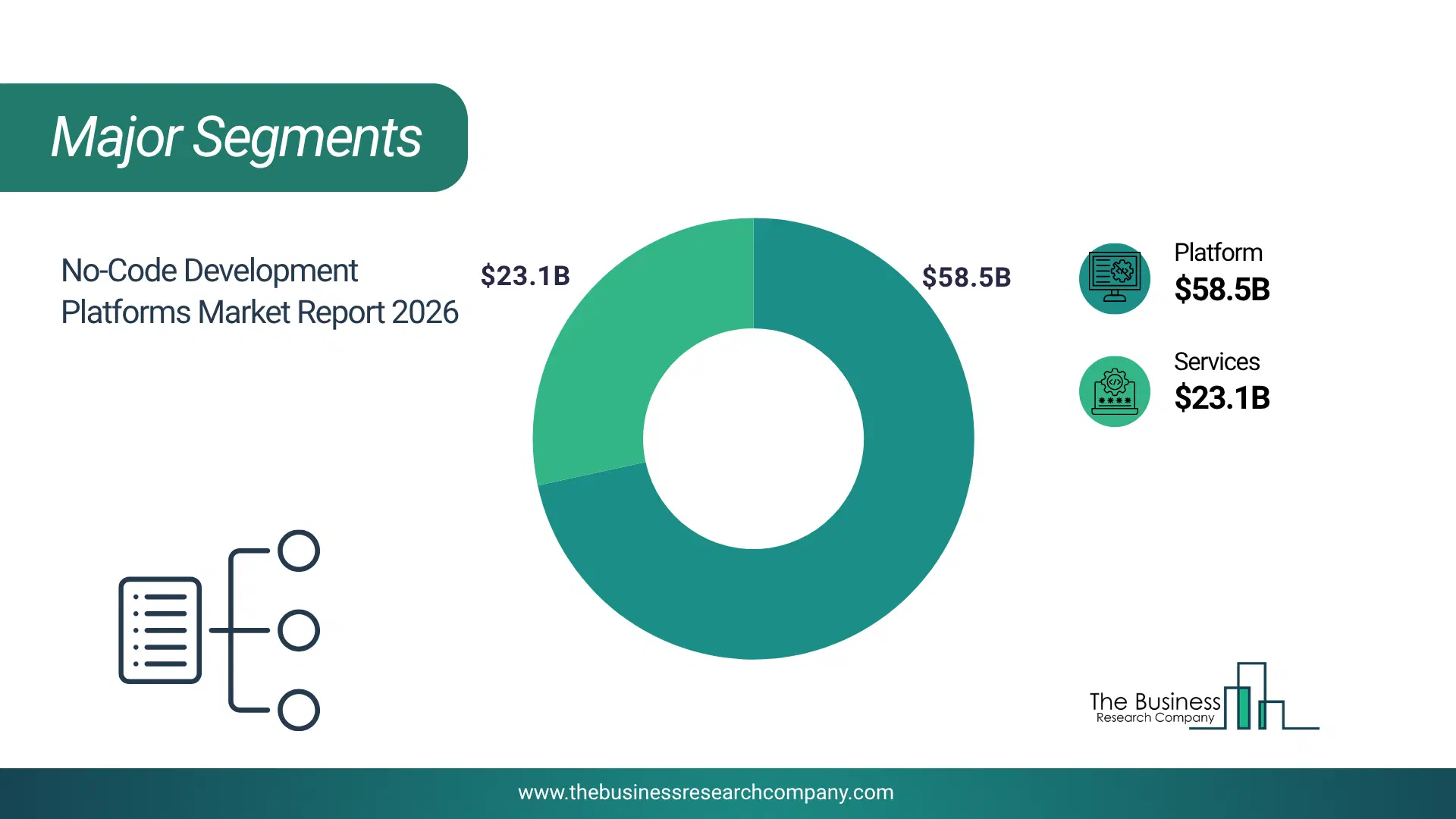
1) By Component: Platform, Services 2) By Deployment: On-Premise, Cloud 3) By Organization: Large Enterprises, Small And Medium-Sized Enterprises (SMEs) 4) By Application: Desktop And Server-Based, Mobile-Based, Web-Based 5) By End-Use: Construction, Oil And Gas, Manufacturing, Banking, Financial Services, And Insurance (BFSI), Retail And E-Commerce, Real Estate, Healthcare, Other End-Uses Subsegments: 1) By Platform: Application Development Platform, Workflow Automation Platform, Integration Platform, Data Management Platform, Low-Code Or No-Code App Builders 2) By Services: Consulting Services, Integration Services, Training And Support Services, Managed Services, Custom Development Services The top segments in the no-code development platforms market will be: • Platform will reach $58.41 billion by 2030. • Services will reach $23.05 billion by 2030.What Is The Driver Of The No-Code Development Platforms Market?
The rising need for digital transformation is expected to propel the growth of the no-code development platforms market going forward. Digital transformation is the integration of digital technology into all parts of a business, significantly altering how it operates and provides value to its consumers. The demand for digital transformation is due to remote work trends, data-driven decision-making, and operational efficiency. With businesses quickly react to shifting market demands through digital transformation, no-code platforms allow non-technical staff to easily create apps and automate operations without coding knowledge. This facilitates app development, fills the gap caused by an IT talent shortage, and is in line with the rapid pace of digital transformation. For instance, in November 2023, according to a report published by the Central Digital and Data Office, a UK-based government entity, the government’s focus on digital transformation has resulted in a 9% growth in the Government Digital and Data profession over the past six months, bringing the total number of professionals in this field to 28,337. Therefore, the rising need for digital transformation is driving the growth of the no-code development platforms industry.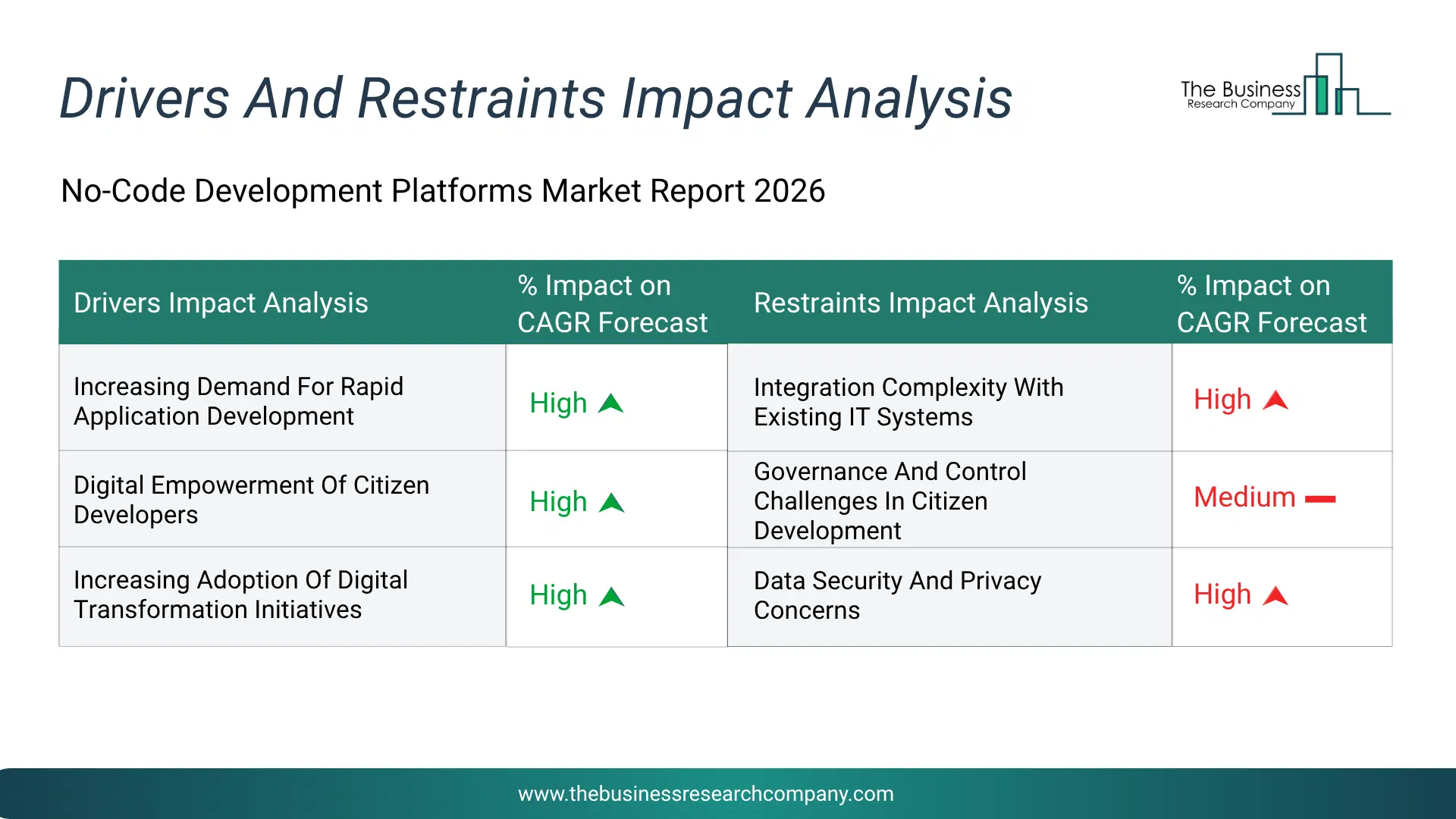
Infographic Chart Showing Key Market Drivers Analysis And Restraints For No-Code Development Platforms Market
The chart presents an impact analysis of key drivers and restraints, quantifying their relative influence on the market's growth rate and helping assess the balance between growth enablers and limiting factors. This chart offers a high-level perspective; the full report contains more detailed insights.
How Will The Drivers Impact Growth In The Global No-Code Development Platforms Market?
• Increasing Demand For Rapid Application Development (High) – During the forecast period, the increasing demand for rapid application development is expected to become a key growth driver for the no -code development platforms market by 2030. Organizations are increasingly prioritizing faster development cycles to respond to dynamic market conditions and evolving customer requirements. No -code platforms enable users to build, test, and deploy applications quickly using visual interfaces and pre -configured modules, significantly reducing time -to -market. This capability is particularly valuable in industries where agility and responsiveness are critical. As businesses continue to emphasize speed and efficiency in software development, the demand for no -code platforms is expected to accelerate. • Digital Empowerment Of Citizen Developers (High) – During the forecast period, the digital empowerment of citizen developers is expected to emerge as a major factor driving the expansion of the no-code development platforms market by 2030. Non-technical users across business functions are increasingly leveraging no-code tools to create applications that address specific operational needs without relying heavily on it teams. This democratization of software development is enabling organizations to enhance productivity, reduce development bottlenecks, and foster innovation at all levels. Companies are also investing in training and governance frameworks to support citizen development initiatives. • Increasing Adoption Of Digital Transformation Initiatives (High) – During the forecast period, the increasing adoption of digital transformation initiatives is expected to act as a key growth catalyst for the no-code development platforms market by 2030. Enterprises across industries are accelerating their digitalization efforts to improve operational efficiency, enhance customer experience, and enable data-driven decision-making. No-code platforms play a crucial role in supporting these initiatives by enabling rapid development of customized applications, workflow automation, and system integration. Additionally, the growing adoption of cloud computing and saas-based solutions is further reinforcing the demand for no-code tools. As digital transformation becomes a strategic priority for organizations globally, the adoption of no-code platforms is expected to rise significantly.How Will The Restraints Impact Growth In The Global No-Code Development Platforms Market?
• Integration Complexity With Existing IT Systems (High) – During the forecast period, the one of the major restraints limiting the broader adoption of no-code development platforms is the complexity associated with integrating them into existing enterprise it environments. Large organizations often operate with complex infrastructures that include legacy systems, enterprise databases, and various software applications developed over many years. Ensuring seamless connectivity between no-code platforms and these existing systems can require extensive configuration, third-party connectors, and middleware solutions. Establishing reliable data flows and maintaining interoperability across multiple systems can be time-consuming and resource-intensive. In industries with strict compliance and operational standards, integration challenges may slow deployment timelines and increase implementation costs. As a result, many enterprises hesitate to adopt no-code platforms on a large scale due to the technical difficulties associated with integrating them into established it ecosystems. • Governance And Control Challenges In Citizen Development (Medium) – During the forecast period, the another significant restraint arises from governance concerns associated with the growing use of citizen developers within organizations. While no-code platforms empower non-technical users to build applications, the rapid creation of apps without centralized oversight can lead to inconsistent standards and fragmented systems. Organizations may face challenges in maintaining data quality, ensuring application reliability, and enforcing internal it policies. Uncontrolled proliferation of citizen-developed applications may create issues such as duplicate systems, incompatible data structures, and inefficient workflows. Additionally, inconsistent design standards may result in poor user experiences and increased maintenance requirements. Without clear governance frameworks and monitoring mechanisms, companies may encounter operational risks. These governance challenges often cause it leaders to limit or carefully control the expansion of no-code initiatives, which can restrain overall market adoption. • Data Security And Privacy Concerns (High) – During the forecast period, the data security and privacy risks also represent a key barrier to the widespread adoption of no-code development platforms. Applications built using no-code tools may handle sensitive organizational data, including customer information, financial records, and internal operational data. When these applications are created outside traditional it development processes, organizations may have concerns regarding access control, data protection, and compliance with regulatory standards. Industries such as finance, healthcare, and government are particularly sensitive to these risks because they operate under strict data protection regulations. If security configurations are not properly implemented, there is a potential for vulnerabilities, unauthorized access, or data breaches. These concerns can cause organizations to approach no-code adoption cautiously until platforms provide stronger security controls, governance frameworks, and compliance support.Key Players In The Global No-Code Development Platforms Market
Major companies operating in the no-code development platforms market are Zoho Corporation, Quickbase Inc., Webflow Inc., Creatio, Caspio Inc., Glide, Appy Pie, Kissflow Inc., AppSheet, Airtable, Knack, Kintone Corporation, Bubble Group Inc., Betty Blocks, Thunkable Inc., Kianda Technologies, Bravo Studio, Landbot, Adalo, Clappia, Unqork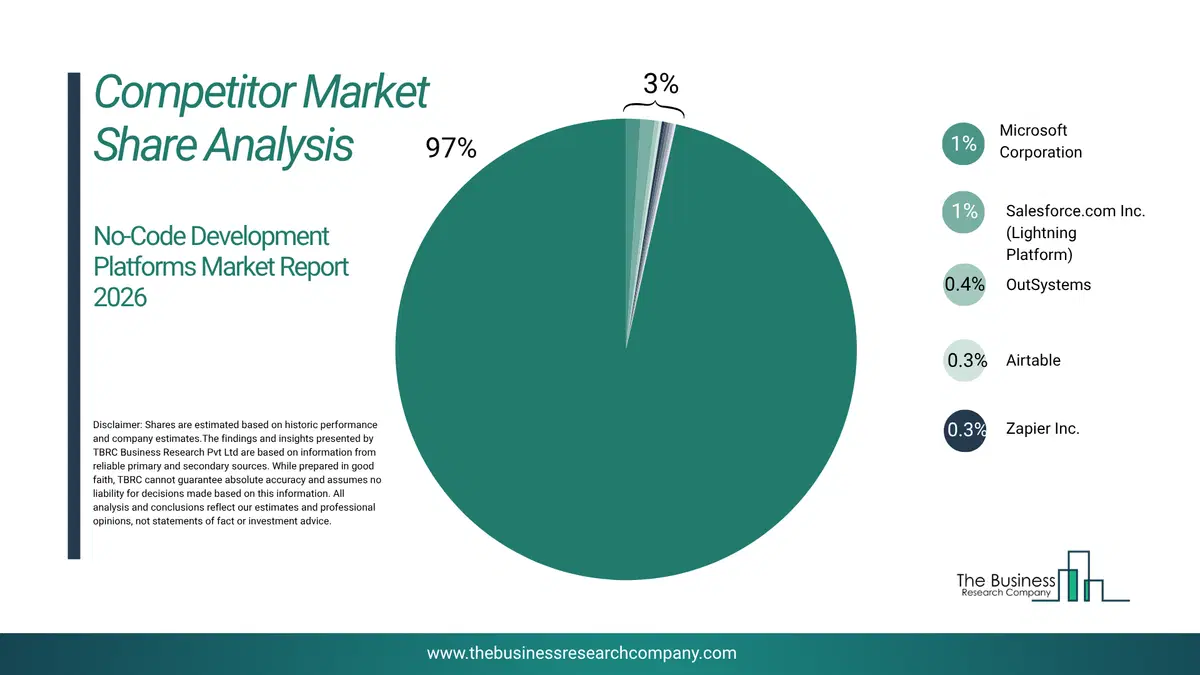
This chart is for illustrative purposes; the full report includes a detailed competitor analysis and comprehensive overview of the top 10 companies in the market.
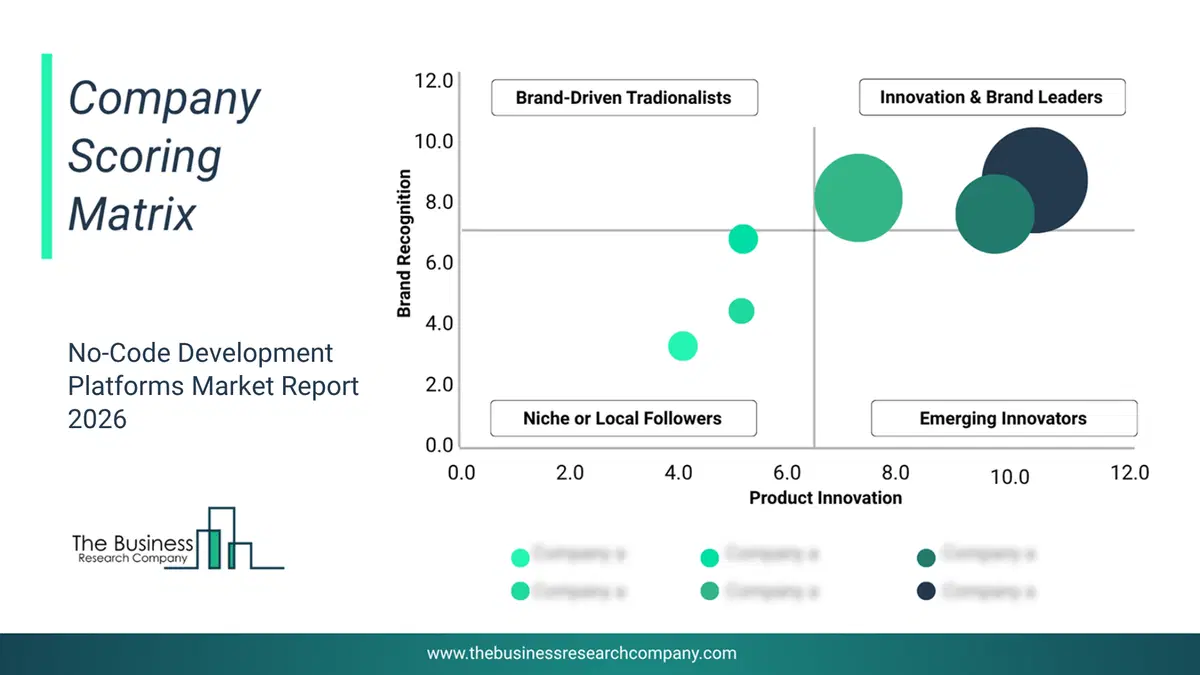
This chart maps companies by product innovation and brand strength, with bubble size indicating relative revenue, helping identify market leaders, challengers, and niche players. This is an illustrative chart; the full report provides a complete and accurate competitive analysis.
Global No-Code Development Platforms Market Trends and Insights
Major companies operating in the no-code development platform market are focused on developing innovative solutions, such as centralized workplaces, to easily create and customize AI-driven applications and workflows. A centralized workplace refers to a unified and integrated environment where users can access, collaborate, and manage all aspects of their application development projects from a single platform or dashboard. For instance, in March 2024, Creatio, a US-based vendor of software to automate workflows and a CRM with no-code development, launched Creatio Copilot. It provides simple, no-code interfaces that allow users to define workflows, automate processes, and design apps without requiring any coding expertise. It simplifies the complex procedure of campaign flow design by allowing users to offer a narrative of their intended campaign, which Copilot then organizes based on previous campaigns and best practices. Copilot helps companies generate rich content for emails and landing sites by updating text and visuals based on the descriptions provided, harmonizing with consumer preferences, and including personalized product recommendations.What Are Latest Mergers And Acquisitions In The No-Code Development Platforms Market?
In March 2023, Jitterbit, a US-based software company, acquired Zudy for an undisclosed amount. The acquisition strengthens Jitterbit’s no-code/low-code development capabilities, empowering faster, integrated app development and automation for businesses. This move solidifies Jitterbit's role as a top platform for scalable, rapid enterprise-level solutions. Zudy is a US-based provider of a no-code app development platform for enterprise organizations.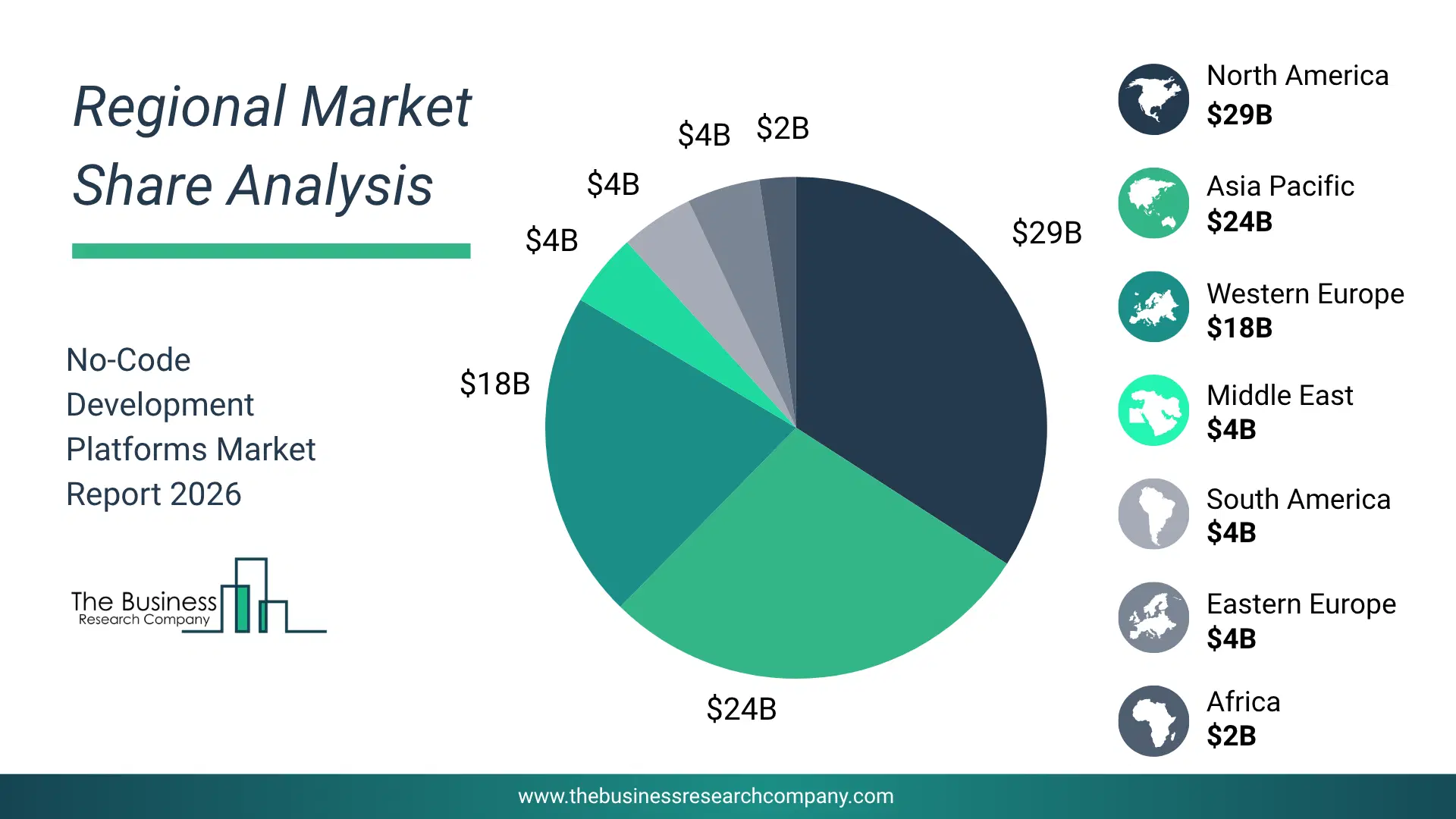
Regional Insights
North America was the largest region in the no-code development platforms market in 2025. Asia-Pacific is expected to be the fastest-growing region in the forecast period. The regions covered in this market report are Asia-Pacific, South East Asia, Western Europe, Eastern Europe, North America, South America, Middle East, Africa. The countries covered in this market report are Australia, Brazil, China, France, Germany, India, Indonesia, Japan, Taiwan, Russia, South Korea, UK, USA, Canada, Italy, Spain.What Defines the No-Code Development Platforms Market?
The no-code development platforms market includes revenues earned by entities by providing services such as app development, workflow automation, database integration, analytics and monitoring, training, and support. The market value includes the value of related goods sold by the service provider or included within the service offering. Only goods and services traded between entities or sold to end consumers are included.How is Market Value Defined and Measured?
The market value is defined as the revenues that enterprises gain from the sale of goods and/or services within the specified market and geography through sales, grants, or donations in terms of the currency (in USD unless otherwise specified). The revenues for a specified geography are consumption values that are revenues generated by organizations in the specified geography within the market, irrespective of where they are produced. It does not include revenues from resales along the supply chain, either further along the supply chain or as part of other products.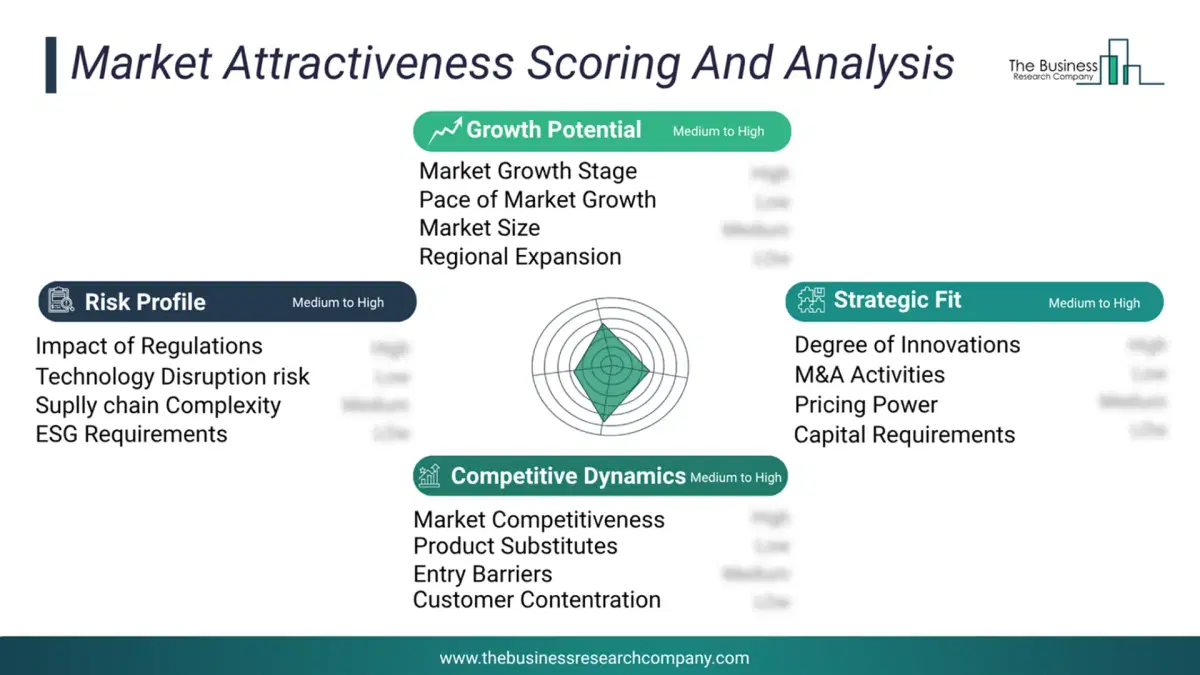
This chart presents market attractiveness based on a quantitative evaluation of growth, competition, strategic alignment, and risk, offering a clear view of opportunity areas for decision-making. This chart is for illustrative purposes; the full report contains the complete analysis.
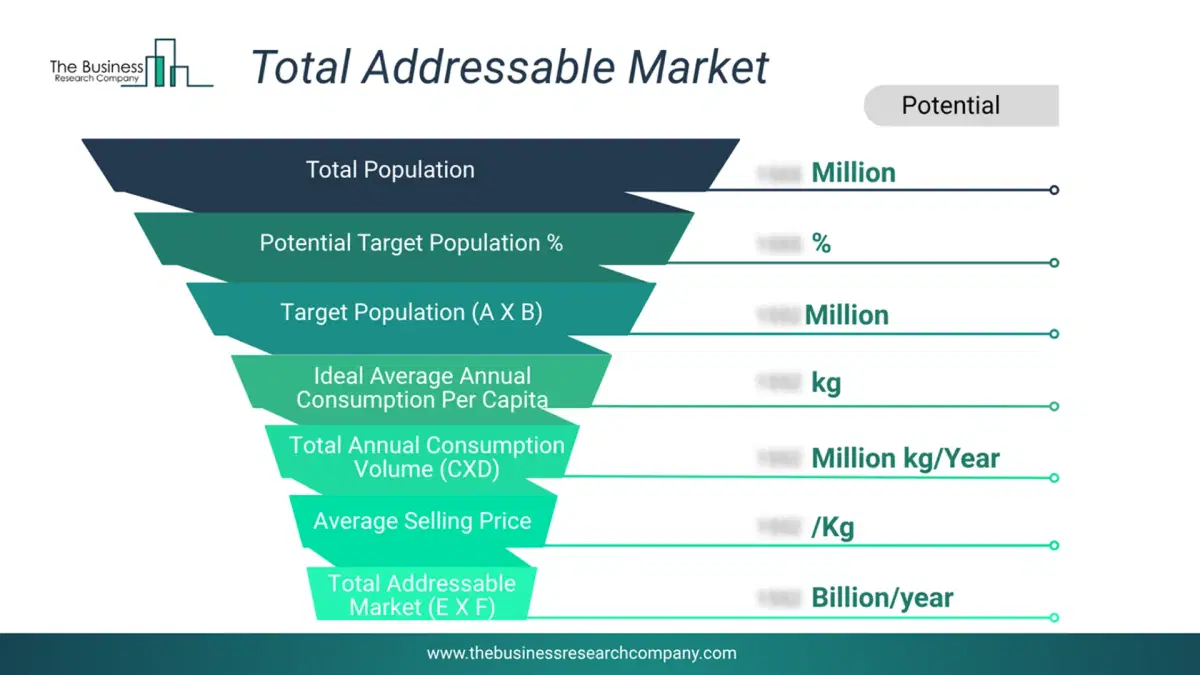
This chart highlights the Total Addressable Market (TAM) by estimating the maximum revenue opportunity using an assumption-driven approach, supporting strategic planning and opportunity sizing across markets. The chart is illustrative; the full report provides a more comprehensive analysis.
What Key Data and Analysis Are Included in the No-Code Development Platforms Market Report 2026?
The no-code development platforms market research report is one of a series of new reports from The Business Research Company that provides market statistics, including industry global market size, regional shares, competitors with the market share, detailed market segments, market trends and opportunities, and any further data you may need to thrive in the no-code development platforms industry. The market research report delivers a complete perspective of everything you need, with an in-depth analysis of the current and future state of the industry.No-Code Development Platforms Market Report Forecast Analysis
| Report Attribute | Details |
|---|---|
| Market Size Value In 2026 | $45.24 billion |
| Revenue Forecast In 2030 | $102.57 billion |
| Growth Rate | CAGR of 22.7% from 2026 to 2030 |
| Base Year For Estimation | 2025 |
| Actual Estimates/Historical Data | 2020-2025 |
| Forecast Period | 2026 - 2030 |
| Market Representation | Revenue in USD Billion and CAGR from 2026 to 2030 |
| Segments Covered | Component, Deployment, Organization, Application, End-Use |
| Regional Scope | Asia-Pacific, Western Europe, Eastern Europe, North America, South America, Middle East, Africa |
| Country Scope | The countries covered in the report are Australia, Brazil, China, France, Germany, India, ... |
| Key Companies Profiled | Zoho Corporation, Quickbase Inc., Webflow Inc., Creatio, Caspio Inc., Glide, Appy Pie, Kissflow Inc., AppSheet, Airtable, Knack, Kintone Corporation, Bubble Group Inc., Betty Blocks, Thunkable Inc., Kianda Technologies, Bravo Studio, Landbot, Adalo, Clappia, Unqork |
| Customization Scope | Request for Customization |
| Pricing And Purchase Options | Explore Purchase Options |