

Non-Steroidal Anti-inflammatory Drugs Market Report 2026
Global Outlook – By Route Of Administration (Oral, Topical, Other Route Of Administration), By Disease Indication (Arthritis, Migraine, Ophthalmic Diseases, Other Disease Indications), By Distribution Channel (Hospital Pharmacy, Retail Pharmacy, Online Pharmacy) – Market Size, Trends, Strategies, and Forecast to 2030
Non-Steroidal Anti-inflammatory Drugs Market Overview
• Non-Steroidal Anti-inflammatory Drugs market size has reached to $21.89 billion in 2025 • Expected to grow to $29.96 billion in 2030 at a compound annual growth rate (CAGR) of 6.5% • Growth Driver: Rising Prevalence Of Musculoskeletal Disorders To Drive Market Growth • Market Trend: Product Innovations Transforming The Non-Steroidal Anti-Inflammatory Drugs Market • North America was the largest region in 2025 and Asia-Pacific is the fastest growing region.What Is Covered Under Non-Steroidal Anti-inflammatory Drugs Market?
Non-steroidal anti-inflammatory drugs are medications that reduce inflammation and lower a fever. They are used to treat headaches, sprains and strains, painful periods, colds and flu, arthritis, and other long-term pain conditions, and to reduce inflammation, relieve pain, and bring down a high temperature. The main routes of administration are oral, topical, and other routes of administration. Topical is used to ease muscle pains, sprains, and strains. They can also help ease painful arthritis. The disease indications are arthritis, migraine, ophthalmic diseases, and other diseases, and they are used in hospital pharmacies, retail pharmacies, and online pharmacies.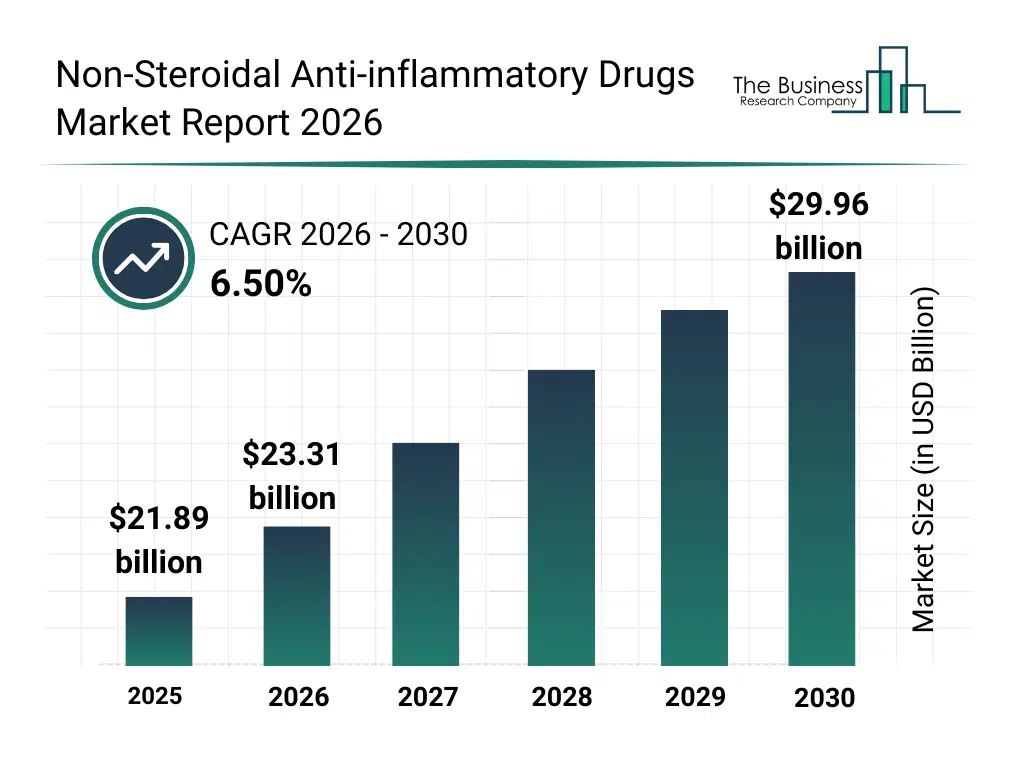
What Is The Non-Steroidal Anti-inflammatory Drugs Market Size and Share 2026?
The non-steroidal anti-inflammatory drugs market size has grown strongly in recent years. It will grow from $21.89 billion in 2025 to $23.31 billion in 2026 at a compound annual growth rate (CAGR) of 6.5%. The growth in the historic period can be attributed to increasing prevalence of arthritis and musculoskeletal disorders, rising awareness of pain management therapies, growth in geriatric population, expansion of retail pharmacies, advancements in drug formulation technologies.What Is The Non-Steroidal Anti-inflammatory Drugs Market Growth Forecast?
The non-steroidal anti-inflammatory drugs market size is expected to see strong growth in the next few years. It will grow to $29.96 billion in 2030 at a compound annual growth rate (CAGR) of 6.5%. The growth in the forecast period can be attributed to adoption of personalized medicine, growth of e-pharmacy platforms, increasing r&d in novel nsaid formulations, rising incidence of chronic inflammatory diseases, integration of digital health solutions for pain monitoring. Major trends in the forecast period include personalized pain management solutions, rising demand for otc anti-inflammatory drugs, development of rapid-acting formulations, focus on chronic pain and arthritis management, expansion of online pharmacy channels.
Global Non-Steroidal Anti-inflammatory Drugs Market Segmentation
1) By Route Of Administration: Oral, Topical, Other Route Of Administration 2) By Disease Indication: Arthritis, Migraine, Ophthalmic Diseases, Other Disease Indications 3) By Distribution Channel: Hospital Pharmacy, Retail Pharmacy, Online Pharmacy Subsegments: 1) By Oral: Tablets, Capsules, Liquids Or Solutions 2) By Topical: Gels, Creams, Patches 3) By Other Route Of Administration: Injectable (Intravenous And Intramuscular), SuppositoriesWhat Are The Drivers Of The Non-Steroidal Anti-inflammatory Drugs Market?
The increasing prevalence of musculoskeletal disorders is expected to propel the growth of the non-steroidal anti-inflammatory drug market going forward. Musculoskeletal disorders (MSDs) refer to a broad category of conditions that affect the musculoskeletal system, which includes the muscles, bones, tendons, ligaments, joints, and other connective tissues. Non-steroidal anti-inflammatory drugs (NSAIDs) play a crucial role in managing pain and inflammation associated with conditions like arthritis, osteoarthritis, and rheumatoid arthritis. Factors contributing to this growth include the aging population, increased awareness and diagnosis of musculoskeletal disorders, orthopedic procedures, sports injuries, and the chronic nature of these conditions. For instance, in January 2024, according to the GOV.UK, a UK-based government department, in 2023, 18.4% of individuals aged 16 and older reported having a long-term musculoskeletal (MSK) condition, marking an increase from the 17.6% prevalence recorded in 2022. Therefore, the increase in the increasing prevalence of musculoskeletal disorders is driving the growth of the non-steroidal anti-inflammatory drugs industry. The rising prevalence of chronic pain is expected to drive the growth of the non-steroidal anti-inflammatory drugs (NSAIDs) market and related pain management solutions going forward. Chronic pain refers to persistent or recurrent pain lasting for three months or longer, which can result from conditions such as arthritis, fibromyalgia, back pain, neuropathic pain, and other musculoskeletal disorders. These conditions significantly affect patients’ quality of life and often require long-term management, including medication, physical therapy, and supportive care. The increasing prevalence of chronic pain boosts the demand for effective pain relief therapies, such as NSAIDs and other analgesic formulations. For instance, in October 2024, according to the National Center for Biotechnology Information, a US-based federal government research and information organization, 24.3% of adults reported experiencing chronic pain, while 8.5% of adults reported high-impact chronic pain that limits daily activities. Therefore, the growing number of individuals suffering from chronic pain is expected to drive the demand for pain management therapies, thereby supporting the growth of the NSAIDs market and related products.Key Players In The Global Non-Steroidal Anti-inflammatory Drugs Market
Major companies operating in the non-steroidal anti-inflammatory drugs market are Pfizer Inc., Bayer AG, Johnson & Johnson, Sun Pharmaceutical Industries Ltd., Assertio Therapeutics Inc., Iroko Pharmaceuticals Inc., Perrigo Company PLC, Hikma Pharmaceuticals PLC, Glenmark Pharmaceuticals Limited, Aspen Pharmacare Holdings Limited, Sagent Pharmaceuticals Inc., Advanced Pharma Inc., Akorn Operating Company LLC, Alembic Pharmaceuticals Limited, Torrent Pharmaceuticals Limited, Lupin Limited, Cipla Limited, Zydus Cadila Healthcare Limited, Aurobindo Pharma Limited, Sanofi S.A., GlaxoSmithKline PLC, Horizon Therapeutics PLC, Novartis AG, Roche Holding AG, AbbVie Inc., Bristol-Myers Squibb Company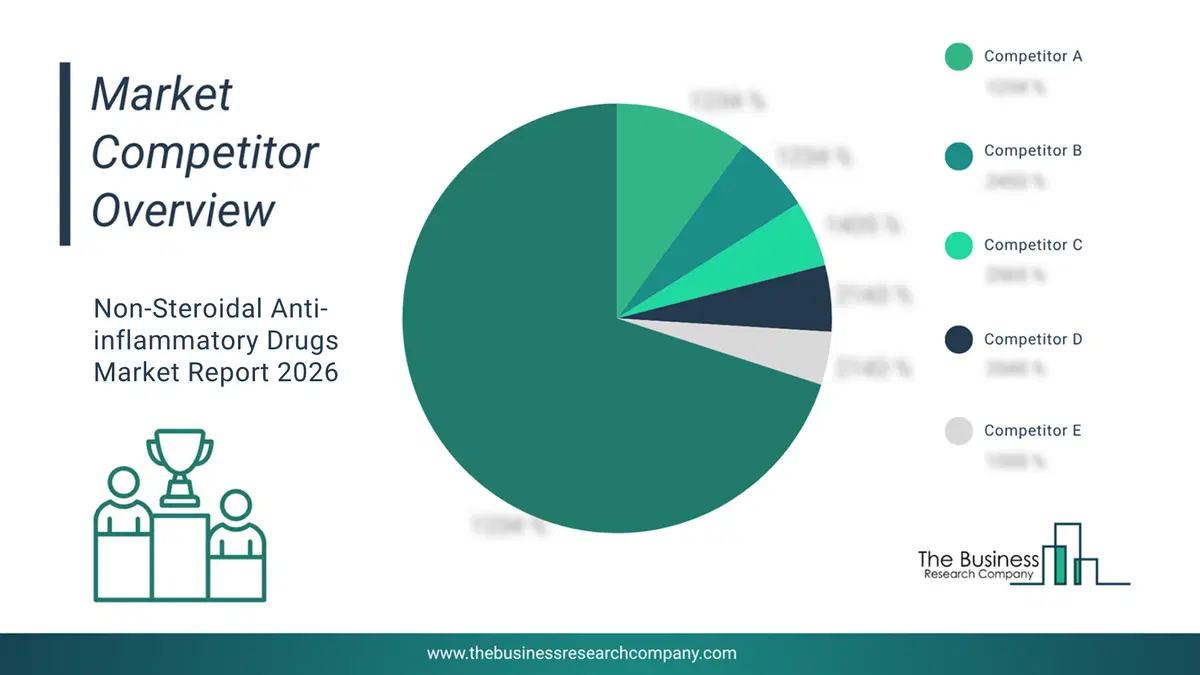
This chart is for illustrative purposes; the full report includes a detailed competitor analysis and comprehensive overview of the top 10 companies in the market.
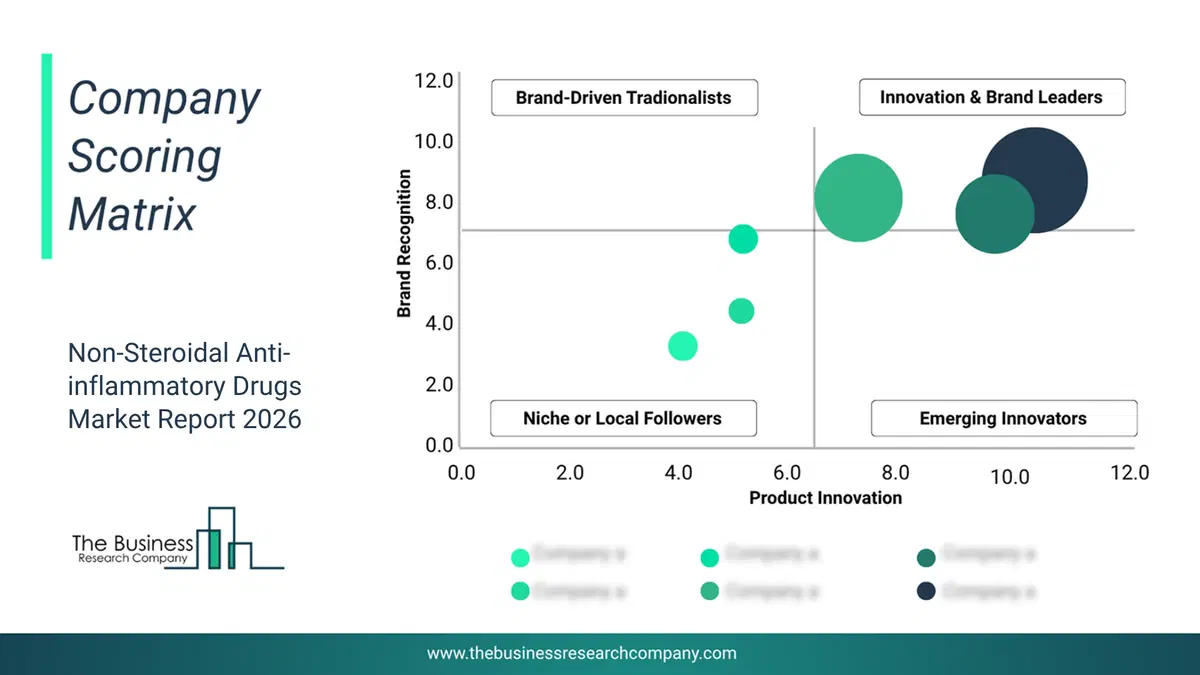
This chart maps companies by product innovation and brand strength, with bubble size indicating relative revenue, helping identify market leaders, challengers, and niche players. This is an illustrative chart; the full report provides a complete and accurate competitive analysis.
Global Non-Steroidal Anti-inflammatory Drugs Market Trends and Insights
Major companies operating in the non-steroidal anti-inflammatory drugs (NSAIDs) market are focusing on developing innovative solutions, such as combination analgesic–gastroprotective formulations, to meet the rising demand for effective pain relief with reduced gastrointestinal risks commonly associated with long-term NSAID use. These combination technologies pair an NSAID with a protective agent to maintain anti-inflammatory efficacy while preventing stomach irritation, offering a safer alternative to traditional single-agent NSAIDs. For instance, in March 2024, Endo International plc, an Ireland-based pharmaceutical company, launched ibuprofen-famotidine 800 mg/26.6 mg tablets, an advanced formulation combining the analgesic and anti-inflammatory effects of ibuprofen with the gastroprotective action of famotidine. This dual-action tablet is designed to relieve pain while minimizing gastrointestinal side effects such as ulcers or irritation that often occur with prolonged NSAID therapy, providing enhanced safety and improved patient adherence.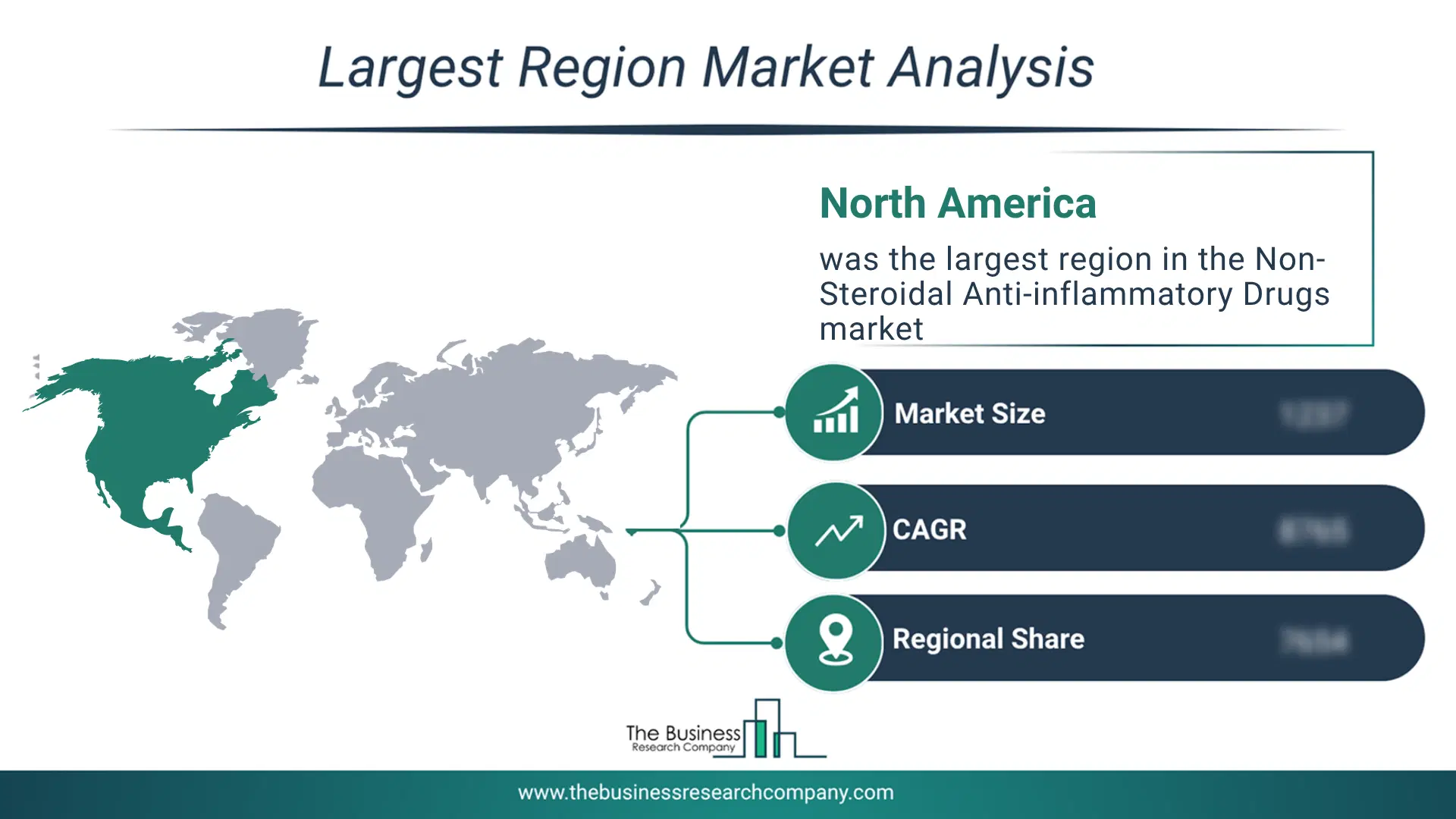
Regional Insights
North America was the largest region in the non-steroidal anti-inflammatory drugs market in 2025. Asia-Pacific is expected to be the fastest-growing region in the non-steroidal anti-inflammatory drugs market during the forecast period. The regions covered in this market report are Asia-Pacific, South East Asia, Western Europe, Eastern Europe, North America, South America, Middle East, Africa. The countries covered in this market report are Australia, Brazil, China, France, Germany, India, Indonesia, Japan, Taiwan, Russia, South Korea, UK, USA, Canada, Italy, Spain.What Defines the Non-Steroidal Anti-inflammatory Drugs Market?
The non-steroidal anti-inflammatory drugs market consists of sales of high-dose aspirin, indomethacin, mefenamic acid, celecoxib, and other types. Values in this market are ‘factory gate’ values, that is, the value of goods sold by the manufacturers or creators of the goods, whether to other entities (including downstream manufacturers, wholesalers, distributors, and retailers) or directly to end customers. The value of goods in this market includes related services sold by the creators of the goods.How is Market Value Defined and Measured?
The market value is defined as the revenues that enterprises gain from the sale of goods and/or services within the specified market and geography through sales, grants, or donations in terms of the currency (in USD unless otherwise specified). The revenues for a specified geography are consumption values that are revenues generated by organizations in the specified geography within the market, irrespective of where they are produced. It does not include revenues from resales along the supply chain, either further along the supply chain or as part of other products.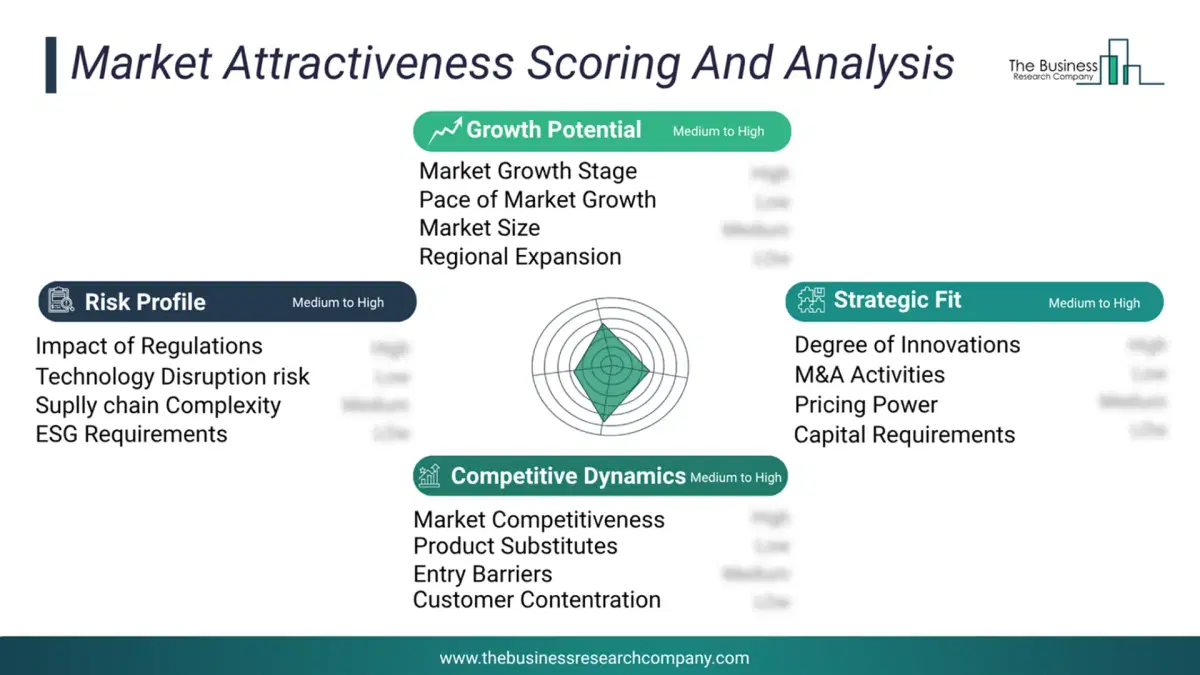
This chart presents market attractiveness based on a quantitative evaluation of growth, competition, strategic alignment, and risk, offering a clear view of opportunity areas for decision-making. This chart is for illustrative purposes; the full report contains the complete analysis.
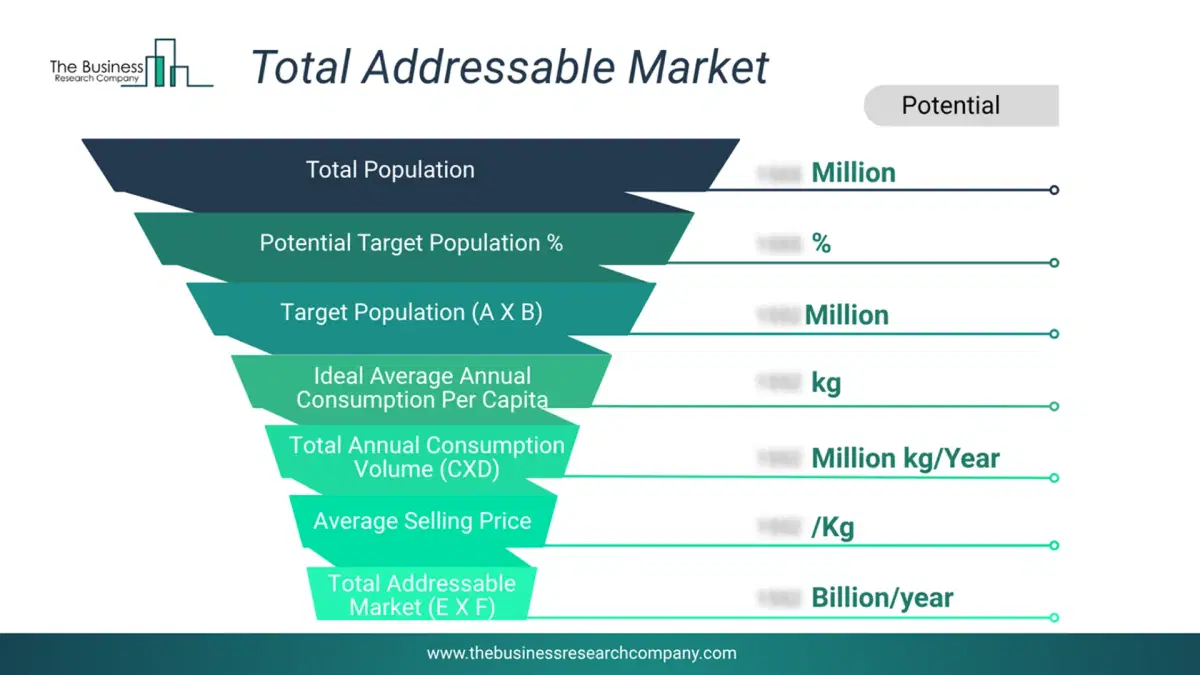
This chart highlights the Total Addressable Market (TAM) by estimating the maximum revenue opportunity using an assumption-driven approach, supporting strategic planning and opportunity sizing across markets. The chart is illustrative; the full report provides a more comprehensive analysis.
What Key Data and Analysis Are Included in the Non-Steroidal Anti-inflammatory Drugs Market Report 2026?
The non-steroidal anti-inflammatory drugs market research report is one of a series of new reports from The Business Research Company that provides market statistics, including industry global market size, regional shares, competitors with the market share, detailed market segments, market trends and opportunities, and any further data you may need to thrive in the non-steroidal anti-inflammatory drugs industry. The market research report delivers a complete perspective of everything you need, with an in-depth analysis of the current and future state of the industry.Non-Steroidal Anti-inflammatory Drugs Market Report Forecast Analysis
| Report Attribute | Details |
|---|---|
| Market Size Value In 2026 | $23.31 billion |
| Revenue Forecast In 2030 | $29.96 billion |
| Growth Rate | CAGR of 6.5% from 2026 to 2030 |
| Base Year For Estimation | 2025 |
| Actual Estimates/Historical Data | 2020-2025 |
| Forecast Period | 2026 - 2030 |
| Market Representation | Revenue in USD Billion and CAGR from 2026 to 2030 |
| Segments Covered | Route Of Administration, Disease Indication, Distribution Channel |
| Regional Scope | Asia-Pacific, Western Europe, Eastern Europe, North America, South America, Middle East, Africa |
| Country Scope | The countries covered in the report are Australia, Brazil, China, France, Germany, India, Indonesia, Japan, Taiwan, Russia, South Korea, UK, USA, Canada, Italy, Spain. |
| Key Companies Profiled | Pfizer Inc., Bayer AG, Johnson & Johnson, Sun Pharmaceutical Industries Ltd., Assertio Therapeutics Inc., Iroko Pharmaceuticals Inc., Perrigo Company PLC, Hikma Pharmaceuticals PLC, Glenmark Pharmaceuticals Limited, Aspen Pharmacare Holdings Limited, Sagent Pharmaceuticals Inc., Advanced Pharma Inc., Akorn Operating Company LLC, Alembic Pharmaceuticals Limited, Torrent Pharmaceuticals Limited, Lupin Limited, Cipla Limited, Zydus Cadila Healthcare Limited, Aurobindo Pharma Limited, Sanofi S.A., GlaxoSmithKline PLC, Horizon Therapeutics PLC, Novartis AG, Roche Holding AG, AbbVie Inc., Bristol-Myers Squibb Company |
| Customization Scope | Request for Customization |
| Pricing And Purchase Options | Explore Purchase Options |