
Online Food Delivery Services Market Report 2026
Global Outlook – By Type (Platform-To-Consumer; Restaurant-To-Consumer), By Channel Type (Websites; Mobile Applications), By Payment Method (Cash-On-Delivery; Online Payment) – Market Size, Trends, Strategies, and Forecast to 2030
Online Food Delivery Services Market Overview
• Online Food Delivery Services market size has reached to $177.9 billion in 2025 • Expected to grow to $314.84 billion in 2030 at a compound annual growth rate (CAGR) of 12.2% • Growth Driver: Increasing Digital Payments Boost Online Food Delivery • Market Trend: Innovations In Robotics Online Food Delivery Services Market • Western Europe was the largest region in 2025 and Asia-Pacific is the fastest growing region.What Is Covered Under Online Food Delivery Services Market?
Online food delivery services refer to a shipping service for food in which companies are involved in distributing the packages received from hospitality establishments and have an online portal or application for their sales. The food can be either ready-to-eat food or food that has to be specially prepared for direct consumption. The online food delivery services market covered in this report is segmented by type into platform-to-customer and restaurant-to-customer. Platform-to-Customer refers to the development of an online tool or a forum for businesses to enable two-way communication with their customers. The different channel types include websites and mobile applications and involve various payment methods, such as cash on delivery and online payment.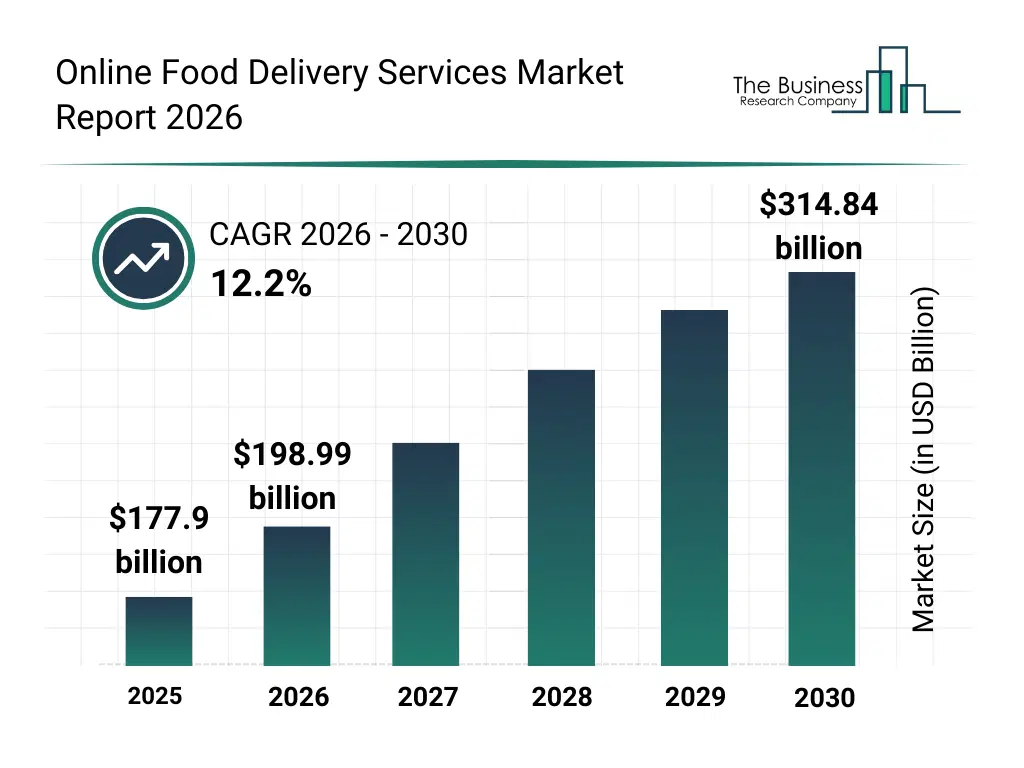
What Is The Online Food Delivery Services Market Size and Share 2026?
The online food delivery services market size has grown rapidly in recent years. It will grow from $177.9 billion in 2025 to $198.99 billion in 2026 at a compound annual growth rate (CAGR) of 11.9%. The growth in the historic period can be attributed to increasing smartphone penetration, growth of urban food consumption, expansion of restaurant digitization, rising demand for on-demand services, increasing availability of gig economy workforce.What Is The Online Food Delivery Services Market Growth Forecast?
The online food delivery services market size is expected to see rapid growth in the next few years. It will grow to $314.84 billion in 2030 at a compound annual growth rate (CAGR) of 12.2%. The growth in the forecast period can be attributed to expansion of hyperlocal delivery networks, rising investments in delivery automation, growing adoption of subscription-based food delivery, increasing focus on data-driven customer engagement, expansion of cloud kitchen ecosystems. Major trends in the forecast period include increasing adoption of mobile app-based food ordering, expansion of platform-to-consumer delivery models, rising integration of ai-based order optimization, growing use of digital payment systems, enhanced focus on faster delivery timelines.
Global Online Food Delivery Services Market Segmentation
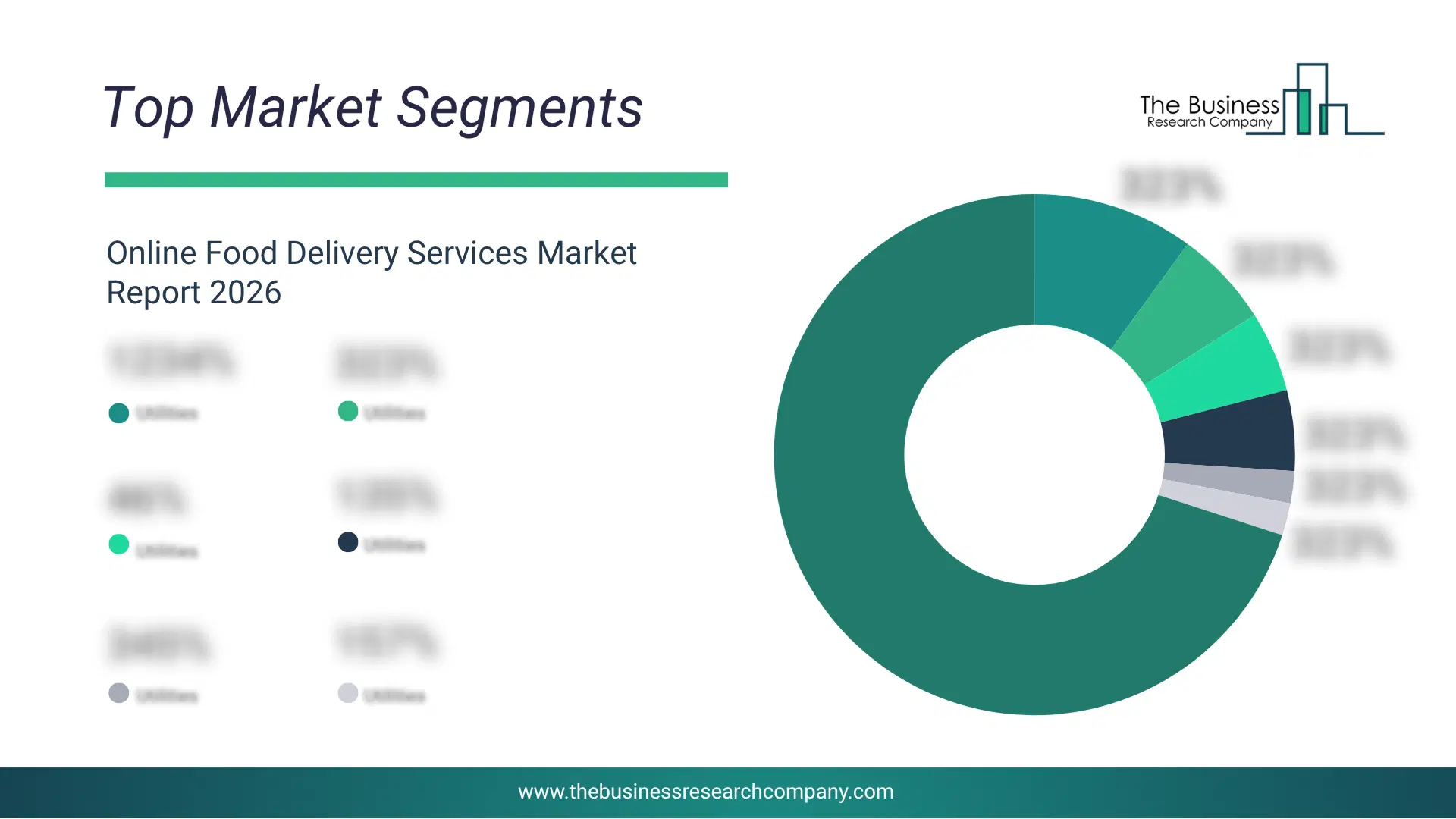
1) By Type: Platform-To-Consumer, Restaurant-To-Consumer 2) By Channel Type: Websites, Mobile Applications 3) By Payment Method: Cash-On-Delivery, Online Payment Subsegments: 1) By Platform-To-Consumer: Aggregator Platforms, Direct-To-Consumer Platforms 2) By Restaurant-To-Consumer: In-House Delivery Services, Third-Party Delivery Services, Subscription Meal ServicesThe top segments in the online food delivery services market will be: • Platform-To-Consumer will reach $228 Billion by 2030. • Restaurant-To-Consumer will reach $84 Billion by 2030.What Is The Driver Of The Online Food Delivery Services Market?
Increasing digital payment options is expected to propel the growth of the online food deliver services going forward. The increase in digital payment options is driven by convenience, security, and the growing adoption of smartphones and internet connectivity, making cashless transactions more accessible and efficient for consumers. Digital payment options streamline and secure the payment process for online food delivery services, enhancing convenience and encouraging more orders, as they offer efficient, contactless, and hassle-free transactions. For instance, in July 2024, according to the UK Finance Limited, a UK-based trade association, in 2023, the UK saw 18.3 billion contactless payments, marking a seven per cent rise from 17.0 billion in 2022. Overall, contactless transactions accounted for 38 per cent of all payments made in the country. Therefore, increasing digital payment options is driving the growth of online food deliver services market.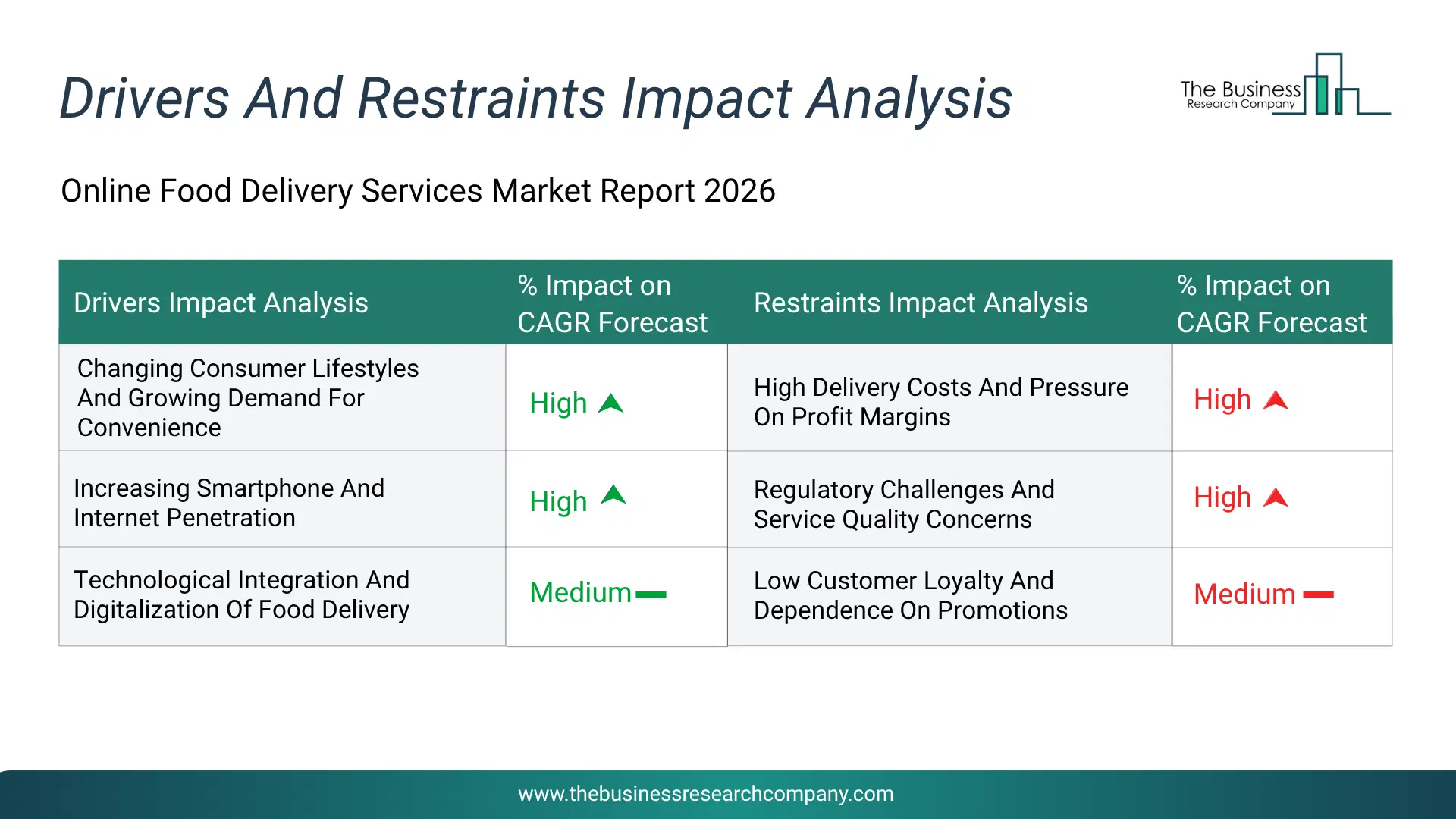
Infographic Chart Showing Key Market Drivers Analysis And Restraints For Online Food Delivery Services Market
The chart presents an impact analysis of key drivers and restraints, quantifying their relative influence on the market's growth rate and helping assess the balance between growth enablers and limiting factors. This chart offers a high-level perspective; the full report contains more detailed insights.
How Will The Drivers Impact Growth In The Global Online Food Delivery Services Market?
• Changing Consumer Lifestyles And Growing Demand For Convenience (High) – During the forecast period, the changing consumer lifestyles and growing demand for convenience is expected to become a key growth driver for the online food delivery services market by 2030. Urbanization, longer working hours, increasing participation of consumers in the workforce, and the growth of time-constrained households are reducing the time available for grocery shopping, meal preparation, and eating at traditional restaurants. Online food delivery platforms address this challenge by allowing customers to select meals, place orders, make payments, and receive food at their preferred location without physically visiting a restaurant. The ability to access multiple restaurants and cuisines through one application further increases convenience. In addition, scheduled ordering, home delivery, order tracking, promotional offers, and personalized recommendations make the overall experience easier and more attractive. As convenience becomes an increasingly important factor in consumers' purchasing decisions, customers are likely to order prepared food more frequently, increasing order volumes and supporting the expansion of online food delivery platforms across both developed and emerging markets. • Increasing Smartphone And Internet Penetration (High) – During the forecast period, the increasing smartphone and internet penetration is expected to emerge as a major factor driving the expansion of the online food delivery services market by 2030. Smartphones provide consumers with continuous access to food delivery applications, while affordable mobile internet allows them to browse menus, compare prices, view restaurant ratings, place orders, and monitor deliveries in real time. Mobile applications also make the ordering process considerably faster than traditional telephone-based ordering. Digital payment integration through cards, mobile wallets, bank transfers, and other electronic payment methods further simplifies transactions. Increasing internet connectivity in developing economies is particularly important because it allows food delivery companies to expand beyond major metropolitan areas into smaller cities and towns. As more consumers become comfortable with mobile commerce and digital transactions, online ordering can become part of their regular food-purchasing behavior. This growing digital consumer base provides delivery platforms with opportunities to increase customer acquisition, order frequency, and geographic coverage. • Technological Integration And Digitalization Of Food Delivery (Medium) – During the forecast period, the technological integration and digitalization of food delivery is expected to act as a key growth catalyst for the online food delivery services market by 2030. Technological integration and digitalization of food delivery are improving both the customer experience and operational capabilities of online food delivery companies. Modern delivery platforms increasingly use artificial intelligence, machine learning, data analytics, GPS tracking, automated notifications, digital payment systems, and recommendation technologies to streamline the ordering and delivery process. AI and data analytics can analyze previous orders, customer preferences, location information, and purchasing patterns to provide personalized restaurant and meal recommendations. Route optimization technologies can help delivery operators identify efficient routes and coordinate multiple orders, potentially reducing delivery times and improving fleet utilization. Real-time tracking also allows customers to monitor their orders and obtain more accurate delivery information, increasing transparency and confidence in the service. Chatbots and automated customer-service tools can provide faster responses to routine queries, while digital payment technologies reduce friction during checkout. These technological improvements make online food delivery more convenient and efficient, encourage repeat purchases, and allow platforms to manage larger order volumes, thereby supporting market growth.How Will The Restraints Impact Growth In The Global Online Food Delivery Services Market?
• High Delivery Costs And Pressure On Profit Margins (High) – During the forecast period, the high delivery costs and pressure on profit margins are expected to restrain the online food delivery services market. Last-mile delivery is operationally complex and expensive. Delivery providers must manage driver compensation, fuel or electricity costs, vehicle maintenance, insurance, technology infrastructure, customer support, order coordination, and other logistics expenses. These costs can become particularly challenging when restaurants and platforms operate with relatively low order values. At the same time, competition among delivery platforms encourages companies to provide discounts, free-delivery promotions, coupons, loyalty rewards, and other incentives to attract consumers. While these initiatives can increase order volumes, they can also reduce the revenue generated per transaction. Customers may also become accustomed to promotional pricing and resist higher delivery charges when companies attempt to improve margins. Rising operating expenses combined with competitive pricing pressure can therefore reduce profitability and make expansion into low-density or price-sensitive markets more difficult. Companies need efficient logistics, optimized delivery routes, appropriate pricing strategies, and higher order density to offset these cost pressures. • Regulatory Challenges And Service Quality Concerns (High) – During the forecast period, the regulatory challenges and service quality concerns are expected to restrain the online food delivery services market. Platforms operate across several interconnected areas, including restaurants, delivery workers, digital payments, consumer data, food safety, and transportation. Changes in labor regulations, worker classification requirements, taxation, food safety standards, and data protection rules can increase compliance responsibilities and operating expenses for delivery companies. At the same time, maintaining consistent service quality across thousands of restaurants and delivery personnel is difficult. Delayed deliveries, incorrect orders, poor packaging, food-temperature issues, damaged products, and inconsistent restaurant quality can negatively affect customer satisfaction. Since consumers can easily compare competing platforms and switch services, repeated service failures can lead to customer attrition. Environmental concerns surrounding single-use food packaging and increasing expectations for sustainable delivery practices can also require additional investments. Therefore, companies must continuously strengthen quality control, delivery-worker management, restaurant monitoring, customer support, food safety procedures, and regulatory compliance, which can increase costs and create operational challenges for market participants. • Low Customer Loyalty And Dependence On Promotions (Medium) – During the forecast period, the low customer loyalty and dependence on promotions are expected to restrain the online food delivery services market. Food delivery customers can compare multiple platforms and switch according to discounts, fees, and restaurant availability. Repeated promotions increase acquisition and retention expenses. Weak loyalty can make it difficult to grow revenue without continued discounting.Key Players In The Global Online Food Delivery Services Market
Major companies operating in the online food delivery services market are Uber Technologies Inc. (Uber Eats), Meituan Dianping, Just Eat Takeaway.com N.V., Delivery Hero SE, Domino's Pizza Inc., DoorDash Inc., Deliveroo, Swiggy, Zomato, Foodpanda, Ele.me, Baedal Minjok, Yogiyo, TESCO (UK), Morrisons (UK), Glovo, Tazz, Gurmandio, Yandex, LifeBox, Fit4you Delivery, Seamless, Gopuff, Instacart, SkipTheDishes, TimHortons, iFood, 99Food, Quero Delivery, Rappi, Menulog, Sampa Food Dublin, Foodak, Talabat, Crave App, Wishbox, Rafeeq, Carriage, Akly, Eateasy, Careem Now, Fingertips, SoFresh, Mr D Food, UCook, Orderin, Jumia Food, Yum Deliveries, Areachops, Homechow, The Flying Pan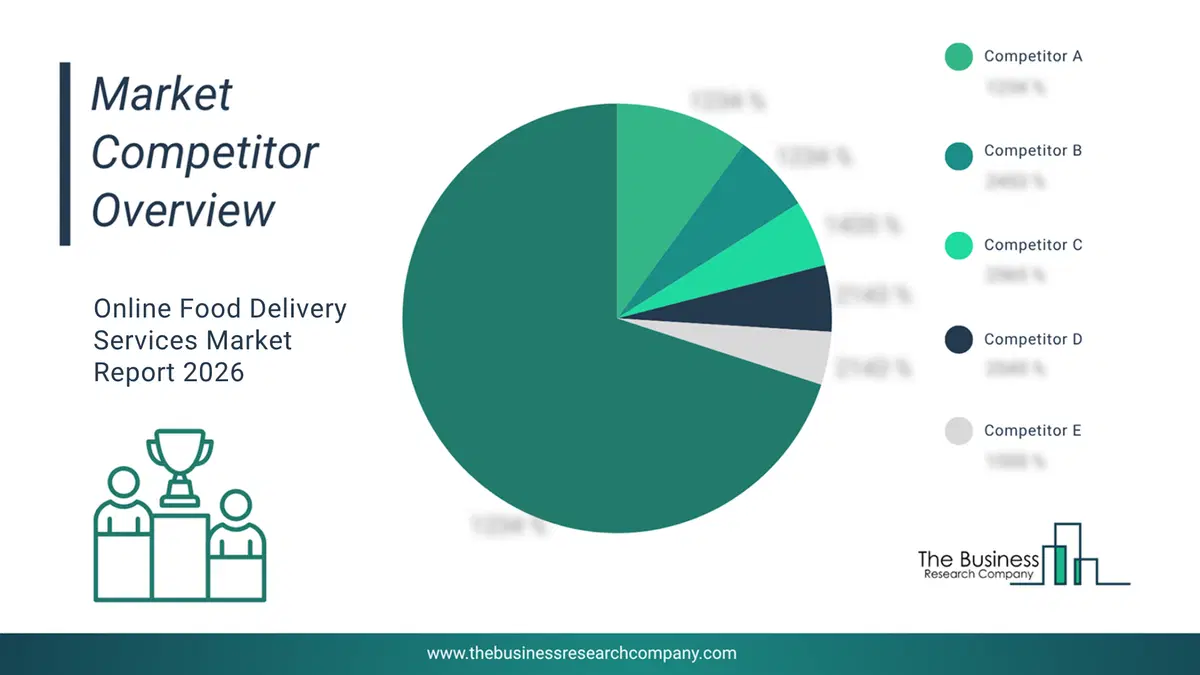
This chart is for illustrative purposes; the full report includes a detailed competitor analysis and comprehensive overview of the top 10 companies in the market.
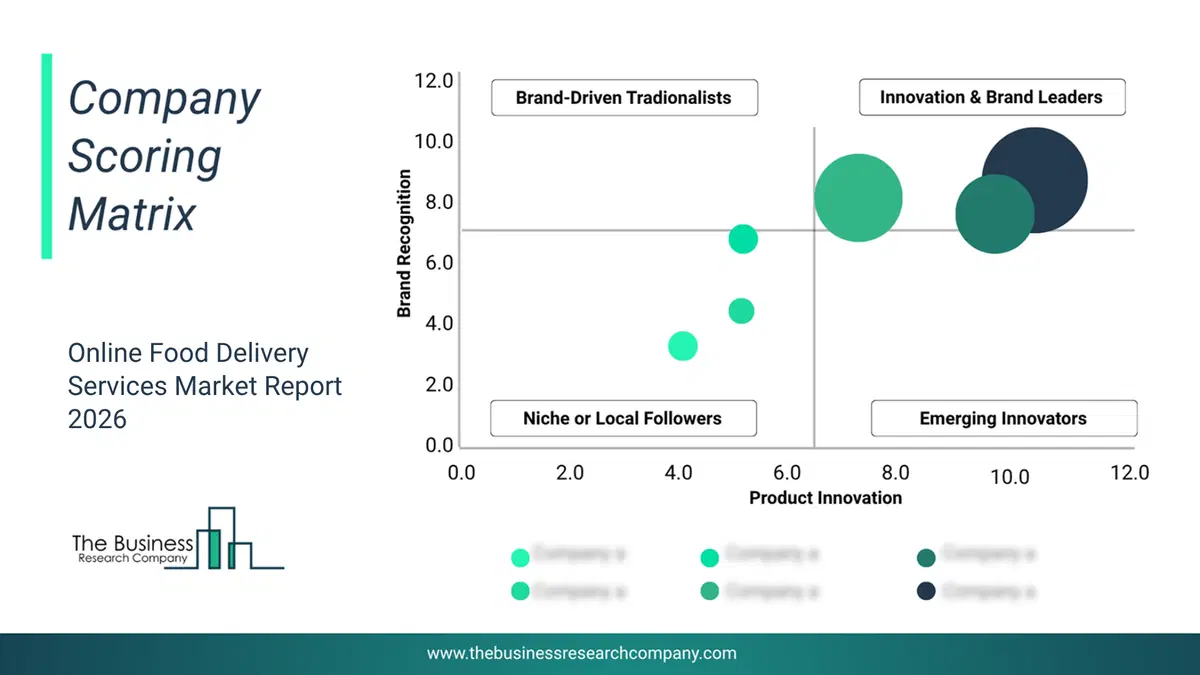
This chart maps companies by product innovation and brand strength, with bubble size indicating relative revenue, helping identify market leaders, challengers, and niche players. This is an illustrative chart; the full report provides a complete and accurate competitive analysis.
Global Online Food Delivery Services Market Trends and Insights
Major companies operating in the online food delivery services market are introducing innovative technology such as Robot food delivery to gain a competitive edge in the market. Robot food delivery is a service that uses autonomous robots to provide last mile delivery of food and packages. For instance, in February 2023, University of Notre Dame, a US-based university in collaboration with Grubhub (Online food delivery app) and Starship Technologies (an Estonian company developing autonomous delivery vehiclesz an Estonian company developing autonomous delivery vehicles), launched robot delivery on the Notre Dame University’s campus that will cater to 17,000 students, faculty, and staff. The users can initiate the Grubhub app, browse restaurants designated as 'Offers Robot Delivery,' and indicate their preferred delivery point. They can track the robot's route on an interactive map. Upon the robot's arrival, users receive a notification to meet and unlock it via the app. Each robot is capable of transporting approximately the contents of three shopping bags.What Are Latest Mergers And Acquisitions In The Online Food Delivery Services Market?
In May 2024, Uber Eats, a US-based online food ordering company, acquired FoodPanda for $950 million. Through this acquisition, Uber Eats aims to strengthen its market presence in the competitive food delivery sector by integrating Foodpanda's operations with Uber Eats, enhancing consumer choices, service quality, and delivery partner opportunities while expanding its footprint in Asia. Foodpanda is a Germany-based online food and grocery delivery platform.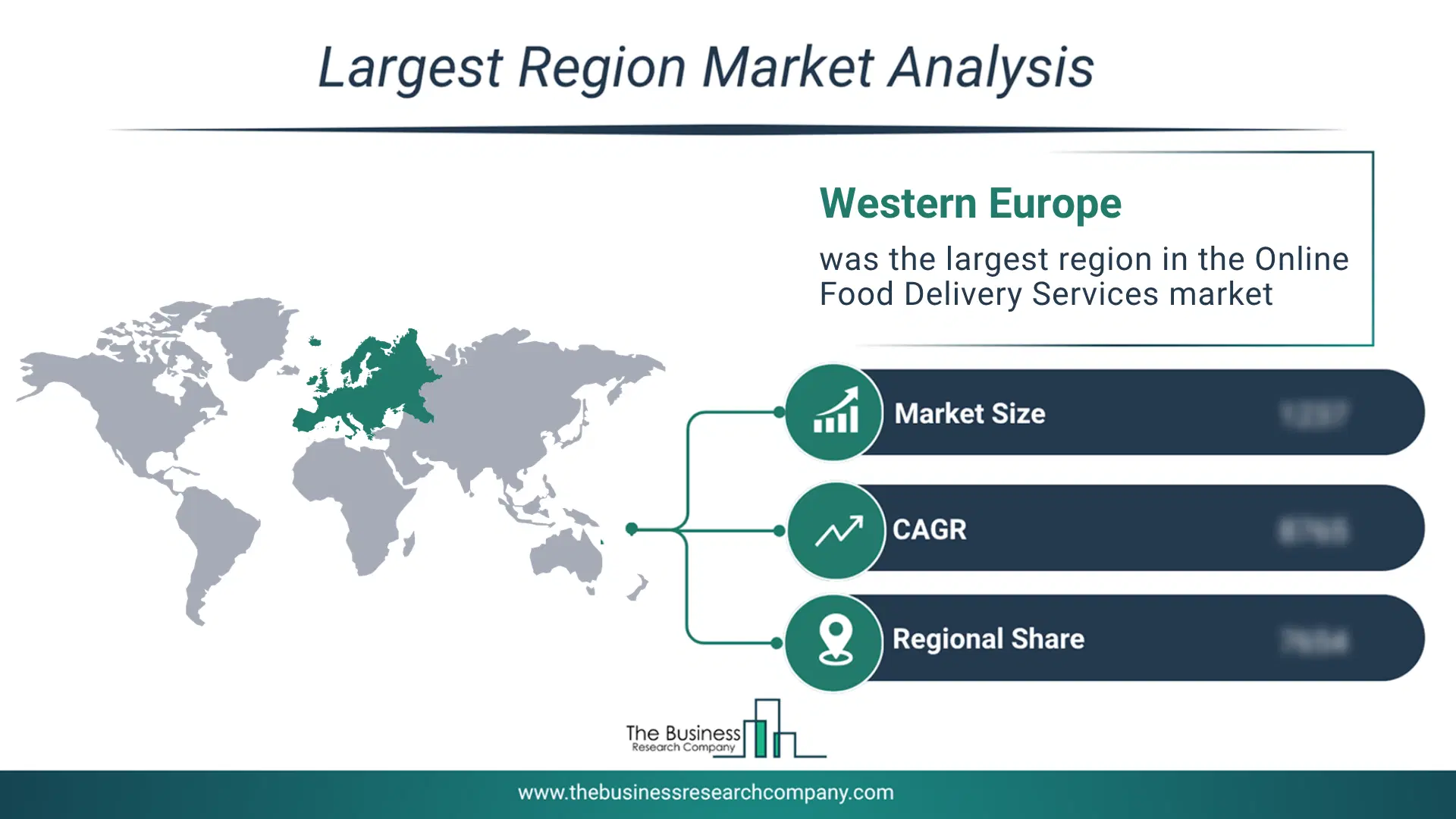
Regional Outlook
Western Europe was the largest region in the online food delivery services market in 2025. Asia-Pacific was the second largest region in the global online food delivery services market report. The regions covered in this market report are Asia-Pacific, South East Asia, Western Europe, Eastern Europe, North America, South America, Middle East, Africa. The countries covered in this market report are Australia; Brazil; China; France; Germany; India; Indonesia; Japan; Taiwan; Russia; South Korea; UK; USA; Canada; Italy; Spain.What Defines the Online Food Delivery Services Market?
The market for online food delivery services includes revenues earned by entities by providing shipping services for food and related products to customers. The market value includes the value of related goods sold by the service provider or included within the service offering. Only goods and services traded between entities or sold to end consumers are included.How is Market Value Defined and Measured?
The market value is defined as the revenues that enterprises gain from the sale of goods and/or services within the specified market and geography through sales, grants, or donations in terms of the currency (in USD unless otherwise specified). The revenues for a specified geography are consumption values that are revenues generated by organizations in the specified geography within the market, irrespective of where they are produced. It does not include revenues from resales along the supply chain, either further along the supply chain or as part of other products.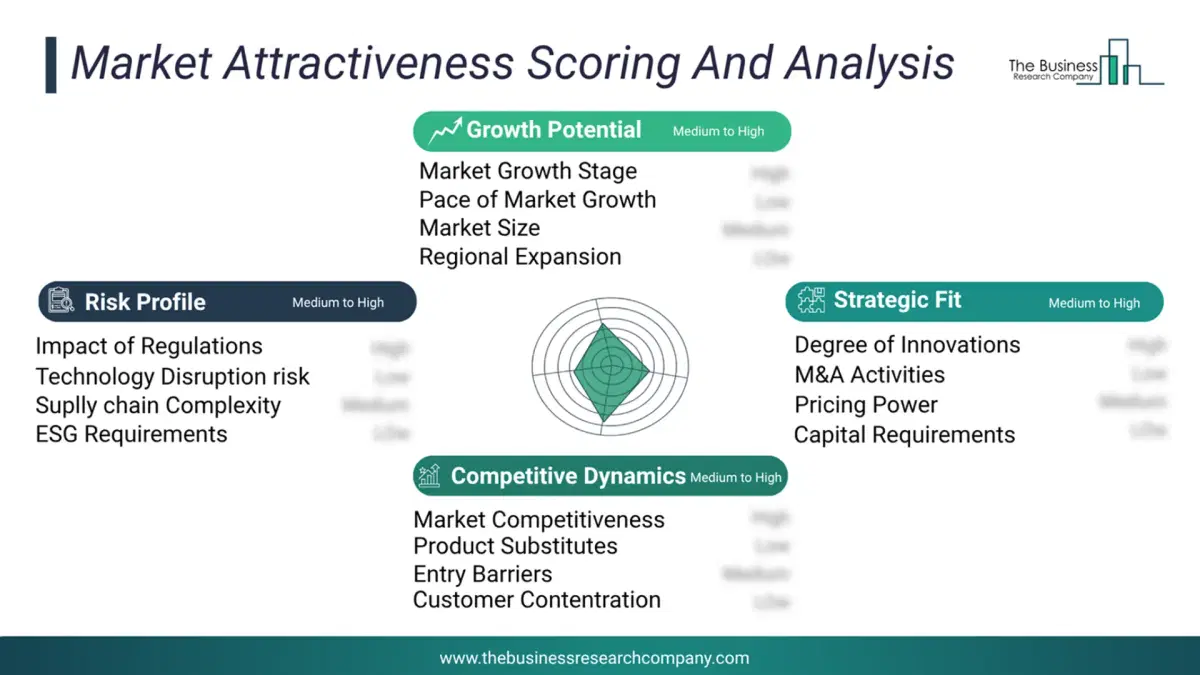
This chart presents market attractiveness based on a quantitative evaluation of growth, competition, strategic alignment, and risk, offering a clear view of opportunity areas for decision-making. This chart is for illustrative purposes; the full report contains the complete analysis.
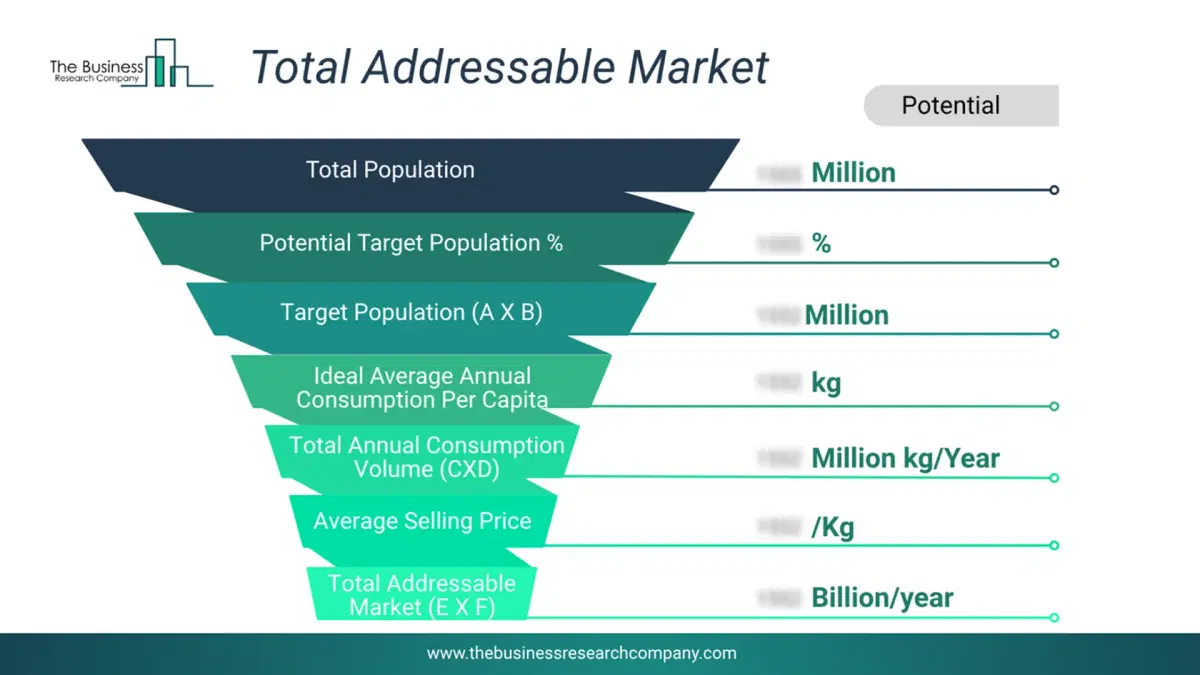
This chart highlights the Total Addressable Market (TAM) by estimating the maximum revenue opportunity using an assumption-driven approach, supporting strategic planning and opportunity sizing across markets. The chart is illustrative; the full report provides a more comprehensive analysis.
What Key Data and Analysis Are Included in the Online Food Delivery Services Market Report 2026?
The online food delivery services market research report is one of a series of new reports from The Business Research Company that provides market statistics, including Market Report 2026?global market size, regional shares, competitors with the market share, detailed market segments, market trends and opportunities, and any further data you may need to thrive in the online food delivery services Market Report 2026? The market research report delivers a complete perspective of everything you need, with an in-depth analysis of the current and future state of the Market Report 2026?Online Food Delivery Services Market Report Forecast Analysis
| Report Attribute | Details |
|---|---|
| Market Size Value In 2026 | $198.99 billion |
| Revenue Forecast In 2035 | $314.84 billion |
| Growth Rate | CAGR of 11.9% from 2026 to 2035 |
| Base Year For Estimation | 2025 |
| Actual Estimates/Historical Data | 2020-2025 |
| Forecast Period | 2026 - 2030 - 2035 |
| Market Representation | Revenue in USD Billion and CAGR from 2026 to 2035 |
| Segments Covered | Type, Channel Type, Payment Method |
| Regional Scope | Asia-Pacific, Western Europe, Eastern Europe, North America, South America, Middle East, Africa |
| Country Scope | The countries covered in the report are Australia, Brazil, China, France, Germany, India, ... |
| Key Companies Profiled | Uber Technologies Inc. (Uber Eats), Meituan Dianping, Just Eat Takeaway.com N.V., Delivery Hero SE, Domino's Pizza Inc., DoorDash Inc., Deliveroo, Swiggy, Zomato, Foodpanda, Ele.me, Baedal Minjok, Yogiyo, TESCO (UK), Morrisons (UK), Glovo, Tazz, Gurmandio, Yandex, LifeBox, Fit4you Delivery, Seamless, Gopuff, Instacart, SkipTheDishes, TimHortons, iFood, 99Food, Quero Delivery, Rappi, Menulog, Sampa Food Dublin, Foodak, Talabat, Crave App, Wishbox, Rafeeq, Carriage, Akly, Eateasy, Careem Now, Fingertips, SoFresh, Mr D Food, UCook, Orderin, Jumia Food, Yum Deliveries, Areachops, Homechow, The Flying Pan |
| Customization Scope | Request for Customization |
| Pricing And Purchase Options | Explore Purchase Options |