

Passenger Car Market Report 2026
Global Outlook – By Type (Hatchback, Sedan, Utility Vehicle ), By Fuel Type (Gasoline, Diesel, Other Fuel Types ), By Engine Capacity (<1000 cc, <1000-1500 cc, <1500-2000 cc, >2000 cc ), By Propulsion Type (IC Engine, Electric Vehicle ) – Market Size, Trends, Strategies, and Forecast to 2030
Passenger Car Market Overview
• Passenger Car market size has reached to $1644.2 billion in 2025 • Expected to grow to $2325.31 billion in 2030 at a compound annual growth rate (CAGR) of 7.4% • Growth Driver: Electric Vehicle Adoption Sparks Surge In Passenger Car Market Growth • Market Trend: Development Of Products To Drive The Revenues Of Passenger Cars Market • Asia-Pacific was the largest region in 2025 and Western Europe is the fastest growing region.Market Gains By 2030 – Top Opportunities By Segment
Market Gain identifies the most promising market opportunities by highlighting the segments or products expected to generate the highest incremental revenue growth over the next five years.
What Is Covered Under Passenger Car Market?
A passenger car refers to a motor vehicle designed primarily for transporting passengers, typically featuring two or four doors and seating for up to five people. It is used to provide personal transportation for individuals and families, facilitating travel for commuting, leisure, and other purposes. The main types in the passenger car market include hatchbacks, sedans, and utility vehicles. A hatchback is referred to as a car that is configured with a swing to provide access to a cargo area. The various fuel types include gasoline, diesel, and others. The various engine capacities are 1000 cc, 1000-1500 cc, 1500-2000 cc, and >2000 cc. The various propulsion types include IC engines and electric vehicles.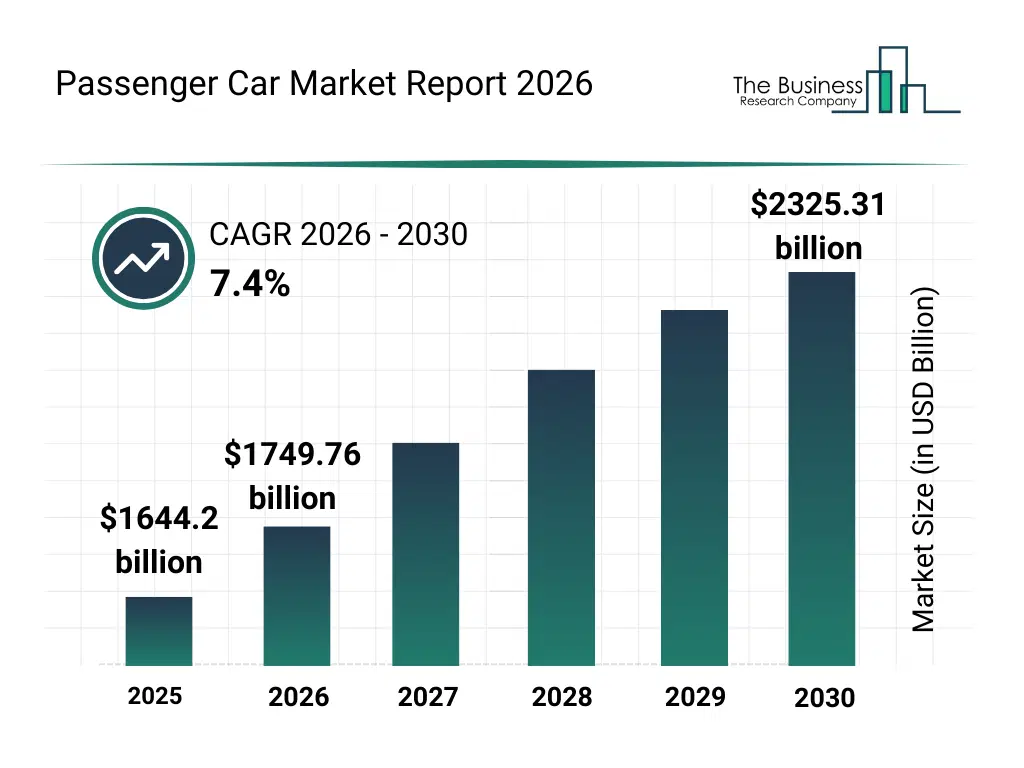
What Is The Passenger Car Market Size and Share 2026?
The passenger car market size has grown strongly in recent years. It will grow from $1644.2 billion in 2025 to $1749.76 billion in 2026 at a compound annual growth rate (CAGR) of 6.4%. The growth in the historic period can be attributed to urbanization growth, rising disposable income, expansion of road infrastructure, mass vehicle ownership trends, affordability of passenger cars.What Is The Passenger Car Market Growth Forecast?
The passenger car market size is expected to see strong growth in the next few years. It will grow to $2325.31 billion in 2030 at a compound annual growth rate (CAGR) of 7.4%. The growth in the forecast period can be attributed to electric vehicle incentives, autonomous driving adoption, emission reduction mandates, smart mobility ecosystems, consumer demand for connected features. Major trends in the forecast period include rising adoption of electric passenger cars, growing preference for utility vehicles, increasing integration of advanced safety features, higher demand for fuel efficient models, expansion of connected car technologies.
Global Passenger Car Market Segmentation
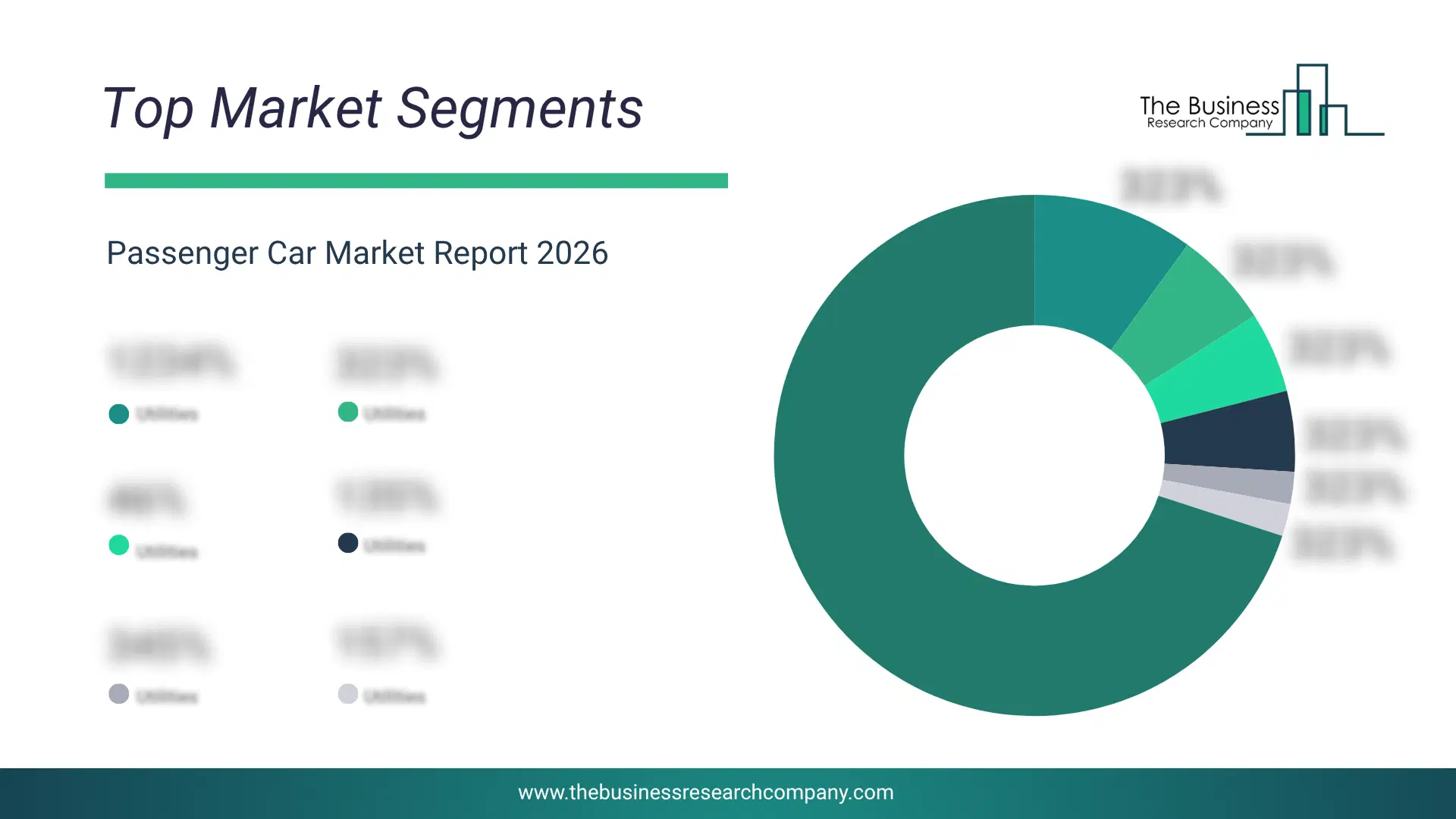
1) By Type: Hatchback, Sedan, Utility Vehicle 2) By Fuel Type: Gasoline, Diesel, Other Fuel Types 3) By Engine Capacity: <1000 cc, <1000-1500 cc, <1500-2000 cc, >2000 cc 4) By Propulsion Type: IC Engine, Electric Vehicle Subsegments: 1) By Hatchback: Compact Hatchback, Subcompact Hatchback 2) By Sedan: Compact Sedan, Midsize Sedan, Full-Size Sedan 3) By Utility Vehicle: Sport Utility Vehicle (SUV), Crossover Utility Vehicle (CUV), MinivanThe top segments in the passenger car market will be: • Utility Vehicle will reach $1922 Billion by 2030. • Hatchback will reach $279 Billion by 2030. • Sedan will reach $142 Billion by 2030.What Is The Driver Of The Passenger Car Market?
The growing adoption of electric vehicles is expected to boost the growth of the passenger car market going forward. An electric vehicle (EV) refers to a vehicle that can drive forward using an electric motor that is powered by a battery and can be externally charged. The rise in passenger car demand due to EVs is attributed to a combination of factors, including increasing affordability, government policies, environmental concerns, and technological advancements. Passenger cars play a pivotal role in supporting the adoption of electric vehicles by integrating advanced electrification technologies, improved battery systems, and efficient charging capabilities. For instance, in October 2024, according to Statistics Canada, the national data agency, in 2023 Electric Vehicle (EV) registrations accounted for 3.9% of all light duty vehicle registrations, up from 3.0% in 2022. Therefore, the growing adoption of electric vehicles is driving the growth of the passenger car industry.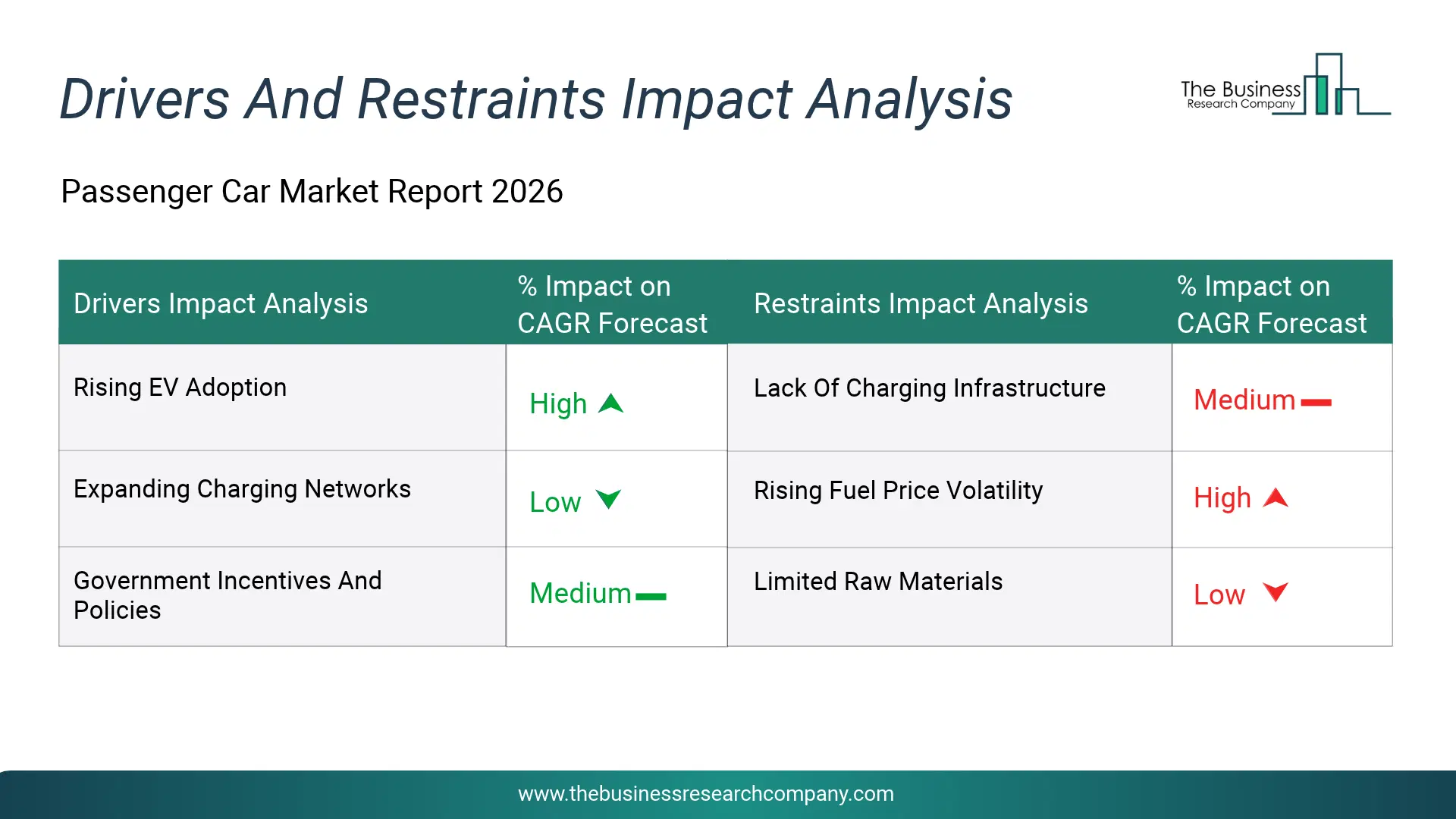
Infographic Chart Showing Key Market Drivers Analysis And Restraints For Passenger Car Market
The chart presents an impact analysis of key drivers and restraints, quantifying their relative influence on the market's growth rate and helping assess the balance between growth enablers and limiting factors. This chart offers a high-level perspective; the full report contains more detailed insights.
How Will The Drivers Impact Growth In The Global Passenger Car Market?
• Rising EV Adoption (High) – During the forecast period, the rising EV adoption is expected to become a key growth driver for the passenger car market by 2030. Rising ev adoption is driving the growth of the passenger car market by creating favorable conditions that support vehicle manufacturers and parts suppliers in serving consumers and fleet operators. This factor, linked to ev adoption, is influencing how consumers and fleet operators evaluate and select vehicles and related components, prompting vehicle manufacturers and parts suppliers to respond accordingly. This shift is expected to have a lasting effect on demand patterns within the automotive sector. As this trend continues, vehicle manufacturers and parts suppliers operating within the passenger car market are likely to see sustained benefits. • Expanding Charging Networks (Low) – During the forecast period, the expanding charging networks are expected to emerge as a major factor driving the expansion of the passenger car market by 2030. Expanding charging networks are driving the growth of the passenger car market by strengthening the case for vehicles and related components among consumers and fleet operators. As this factor gains momentum, vehicle manufacturers and parts suppliers are adapting offerings and operations to capture the resulting opportunities. This dynamic is also encouraging further investment and innovation within the automotive sector. This dynamic is expected to remain relevant to vehicle manufacturers and parts suppliers and consumers and fleet operators throughout the forecast period. • Government Incentives And Policies (Medium) – During the forecast period, the government incentives and policies are expected to act as a key growth catalyst for the passenger car market by 2030. Government incentives and policies are driving the growth of the passenger car market by creating a policy environment that encourages investment in vehicles and related components. Supportive measures tied to this factor reduce the cost and risk associated with adoption for both vehicle manufacturers and parts suppliers and consumers and fleet operators. Continued policy backing is expected to sustain investment and participation across the automotive sector. Over the forecast period, this trend is expected to remain an important factor supporting demand across the automotive sector.How Will The Restraints Impact Growth In The Global Passenger Car Market?
• Lack Of Charging Infrastructure (High) – During the forecast period, the lack of charging infrastructure is restraining the growth of the passenger car market by complicating conditions for vehicle manufacturers and parts suppliers. Addressing challenges tied to charging infrastructure requires vehicle manufacturers and parts suppliers to reassess operations, pricing, or strategy. This dynamic can weigh on overall performance across the automotive sector. This dynamic is expected to remain a relevant consideration for vehicle manufacturers and parts suppliers and consumers and fleet operators throughout the forecast period. Consequently, lack of charging infrastructure can increase costs and constrain the growth of the passenger car market. • Rising Fuel Price Volatility (Low) – During the forecast period, the rising fuel price volatility is restraining the growth of the passenger car market by creating uncertainty that affects planning and pricing for vehicle manufacturers and parts suppliers. Vehicle manufacturers and parts suppliers depend on a stable and cost-effective supply of key inputs to maintain consistent production levels and pricing. Volatility tied to fuel price volatility may compress margins or require price adjustments that affect demand among consumers and fleet operators. Over the forecast period, this factor is expected to remain an important consideration for vehicle manufacturers and parts suppliers operating in the automotive sector. Consequently, rising fuel price volatility is restraining the growth of the passenger car market. • Limited Raw Materials (Medium) – During the forecast period, the limited raw materials are restraining the growth of the passenger car market by adding pressure on vehicle manufacturers and parts suppliers and consumers and fleet operators. Addressing challenges tied to this challenge requires vehicle manufacturers and parts suppliers to reassess operations, pricing, or strategy. This dynamic can weigh on overall performance across the automotive sector. Vehicle manufacturers and parts suppliers operating within the passenger car market will need to continue monitoring this factor closely. Consequently, limited raw materials are restraining the growth of the passenger car market.Key Players In The Global Passenger Car Market
Major companies operating in the passenger car market report include Volkswagen AG, Toyoto Motor Corp, Daimler AG, Fiat Chrysler Automobiles NV, Ford Motor Co., General Motors Company, BMW AG, Honda Motor Co Ltd., Hyundai Motor Co. Ltd., SAIC Motor Co ltd., Groupe PSA, Tesla Inc., Nissan Motor Co Ltd., Kia Motors Corporation, BYD Company Limited, Renault SA, Jeep, Tata Motors Limited, Suzuki Motor Corporation, Subaru Corporation, Mazda Motor Corporation, FCA Italy S.p.A., Geely Automobile Holdings Limited, Great Wall Motor Company Limited, Mitsubishi Motors Corporation, Guangzhou Automobile Group Co. Ltd., Changan Automobile Co. Ltd., Dongfeng Motor Corporation, Maserati S.p.A., Brilliance China Automotive Holdings Limited
This chart is for illustrative purposes; the full report includes a detailed competitor analysis and comprehensive overview of the top 10 companies in the market.
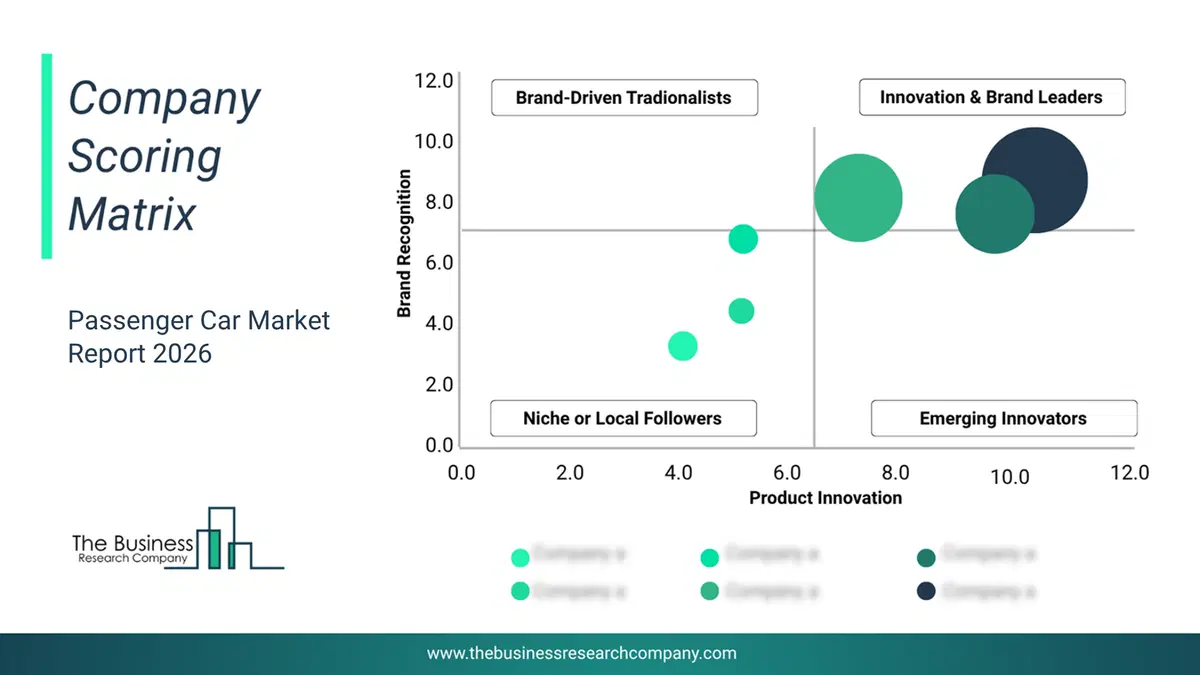
This chart maps companies by product innovation and brand strength, with bubble size indicating relative revenue, helping identify market leaders, challengers, and niche players. This is an illustrative chart; the full report provides a complete and accurate competitive analysis.
Global Passenger Car Market Trends and Insights
Major companies operating in the passenger car market are focusing on developing new products, such as battery electric compact crossover SUVs built on dedicated EV architectures, to gain a competitive advantage. These EV SUVs combine zero emission drivetrains with SUV practicality, offering an efficient alternative to conventional vehicles. For instance, in September 2024, Zeekr, a China-based automaker, launched Zeekr 7X, a five seat all electric SUV. The 7X offers dual battery pack options (75 kWh LFP or 100 kWh NMC), supports an 800 volt charging architecture allowing 10–80 % charge in ~10.5 minutes, and delivers rapid 0–100 km/h acceleration in ~3.8 seconds. This shift broadens the SUV segment to include clean energy vehicles, enhancing appeal to environmentally conscious buyers while leveraging the global SUV demand; however, it introduces challenges such as higher production complexity and increased demand for charging infrastructure.What Are Latest Mergers And Acquisitions In The Passenger Car Market?
In March 2024, Chery Automobile, a China-based manufacturer of passenger cars and electric vehicles, acquired Soueast Motor for an undisclosed amount. With this acquisition, Chery aims to expand its production capacity and strengthen its regional footprint by integrating Soueast’s manufacturing facilities, thereby enhancing its ability to meet growing demand and support its global expansion strategy. Soueast Motor is a China-based automobile manufacturer that produces passenger cars (SUVs and sedans) under its own brand and, after acquisition, will contribute manufacturing capacity and distribution infrastructure to Chery’s broader lineup.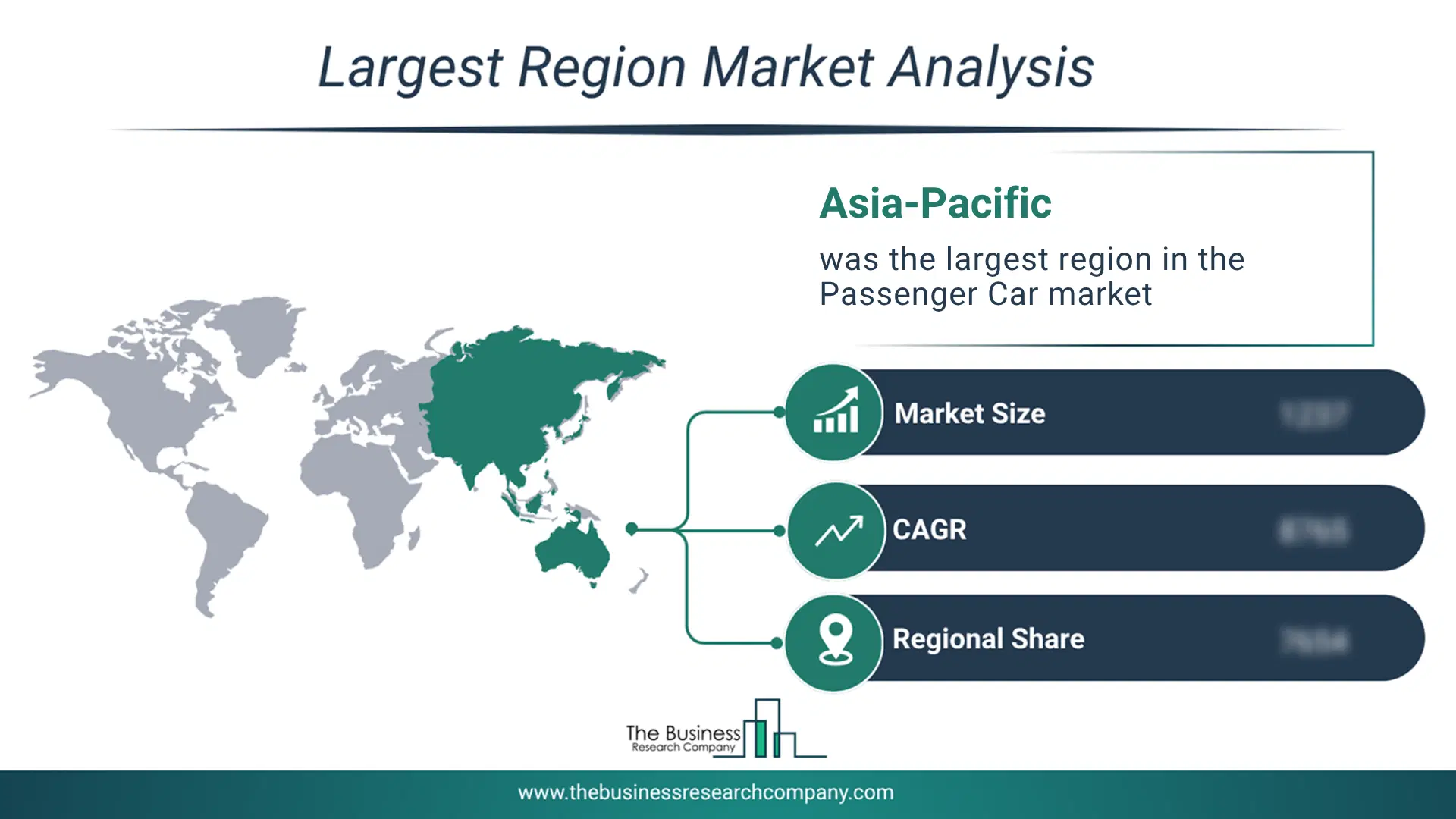
Regional Outlook
Asia-Pacific was the largest region in the passenger car market in 2025. Western Europe was the second-largest region in the passenger car market. The regions covered in this market report include Asia-Pacific, South East Asia, Western Europe, Eastern Europe, North America, South America, Middle East, Africa. The countries covered in this market report include China, India, Japan, Australia, Indonesia, South Korea, Bangladesh, Thailand, Vietnam, Malaysia, Singapore, Philippines, Hong Kong, Taiwan, New Zealand, UK, Germany, France, Italy, Spain, Austria, Belgium, Denmark, Finland, Ireland, Netherlands, Norway, Portugal, Sweden, Switzerland, Russia, Czech Republic, Poland, Romania, Ukraine, USA, Canada, Mexico, Brazil, Chile, Argentina, Colombia, Peru, Saudi Arabia, Israel, Iran, Turkey, UAE, Egypt, Nigeria, South Africa.What Defines the Passenger Car Market?
The passenger car market consists of sales of pickup trucks, compact cars, and minivans. Values in this market are ‘factory gate’ values, that is the value of goods sold by the manufacturers or creators of the goods, whether to other entities (including downstream manufacturers, wholesalers, distributors and retailers) or directly to end customers. The value of goods in this market includes related services sold by the creators of the goods.How is Market Value Defined and Measured?
The market value is defined as the revenues that enterprises gain from the sale of goods and/or services within the specified market and geography through sales, grants, or donations in terms of the currency (in USD unless otherwise specified). The revenues for a specified geography are consumption values that are revenues generated by organizations in the specified geography within the market, irrespective of where they are produced. It does not include revenues from resales along the supply chain, either further along the supply chain or as part of other products.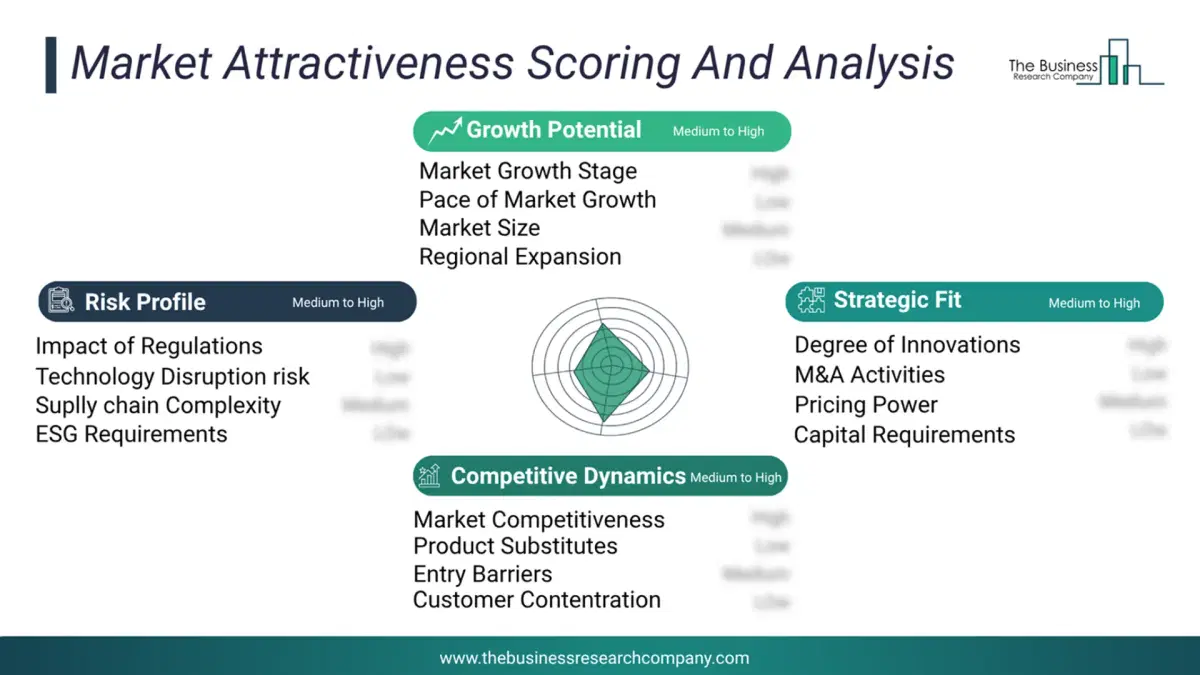
This chart presents market attractiveness based on a quantitative evaluation of growth, competition, strategic alignment, and risk, offering a clear view of opportunity areas for decision-making. This chart is for illustrative purposes; the full report contains the complete analysis.
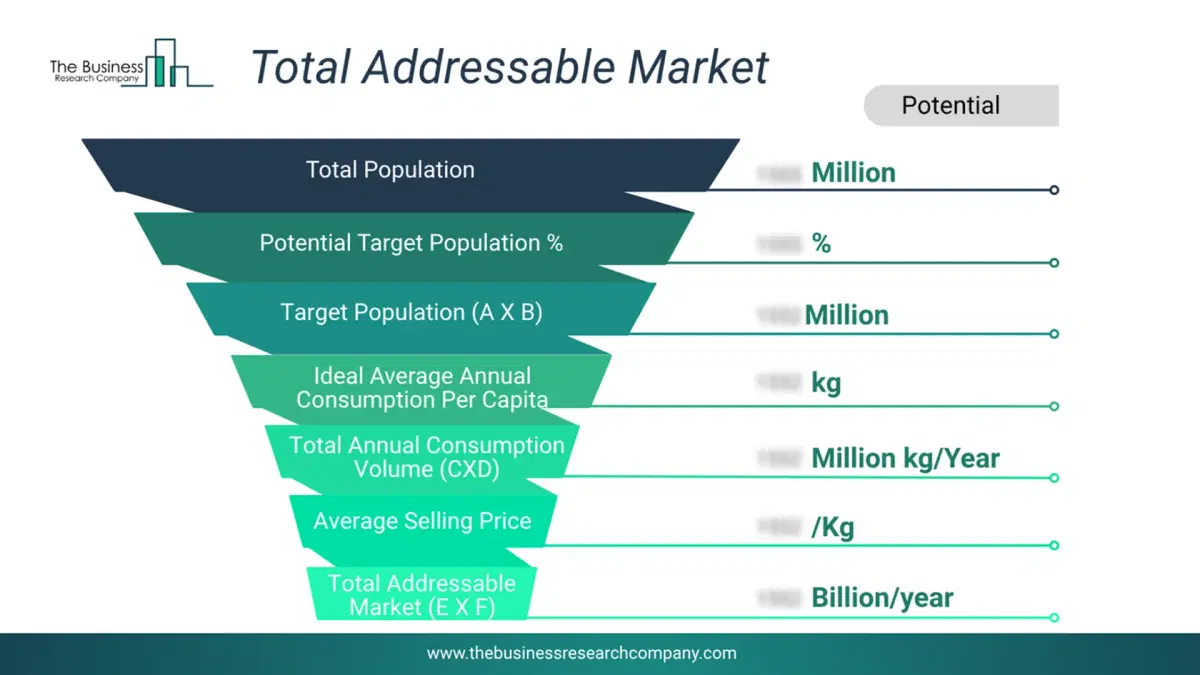
This chart highlights the Total Addressable Market (TAM) by estimating the maximum revenue opportunity using an assumption-driven approach, supporting strategic planning and opportunity sizing across markets. The chart is illustrative; the full report provides a more comprehensive analysis.
What Key Data and Analysis Are Included in the Passenger Car Market Report 2026?
The passenger car market research report is one of a series of new reports from The Business Research Company that provides market statistics, including industry global market size, regional shares, competitors with the market share, detailed market segments, market trends and opportunities, and any further data you may need to thrive in the passenger car industry. The market research report delivers a complete perspective of everything you need, with an in-depth analysis of the current and future state of the industry.Passenger Car Market Report Forecast Analysis
| Report Attribute | Details |
|---|---|
| Market Size Value In 2026 | $1749.76 billion |
| Revenue Forecast In 2035 | $2325.31 billion |
| Growth Rate | CAGR of 6.4% from 2026 to 2035 |
| Base Year For Estimation | 2025 |
| Actual Estimates/Historical Data | 2020-2025 |
| Forecast Period | 2026 - 2030 - 2035 |
| Market Representation | Revenue in USD Billion and CAGR from 2026 to 2035 |
| Segments Covered | Type, Fuel Type, Engine Capacity, Propulsion Type |
| Regional Scope | Asia-Pacific, Western Europe, Eastern Europe, North America, South America, Middle East, Africa |
| Country Scope | The countries covered in the report are Australia, Brazil, China, France, Germany, India, ... |
| Key Companies Profiled | Volkswagen AG, Toyoto Motor Corp, Daimler AG, Fiat Chrysler Automobiles NV, Ford Motor Co., General Motors Company, BMW AG, Honda Motor Co Ltd., Hyundai Motor Co. Ltd., SAIC Motor Co ltd., Groupe PSA, Tesla Inc., Nissan Motor Co Ltd., Kia Motors Corporation, BYD Company Limited, Renault SA, Jeep, Tata Motors Limited, Suzuki Motor Corporation, Subaru Corporation, Mazda Motor Corporation, FCA Italy S.p.A., Geely Automobile Holdings Limited, Great Wall Motor Company Limited, Mitsubishi Motors Corporation, Guangzhou Automobile Group Co. Ltd., Changan Automobile Co. Ltd., Dongfeng Motor Corporation, Maserati S.p.A., Brilliance China Automotive Holdings Limited |
| Customization Scope | Request for Customization |
| Pricing And Purchase Options | Explore Purchase Options |