
Photoelectric Sensor Market Report 2026
Global Outlook – By Type ( Proximity Photoelectric Sensor, Fiber Optic Photoelectric Sensor), By Technology ( Retro-Reflective, Through-Beam, Diffused, Other Technologies), By Range ( ≤100 mm, 100 to 1,000 mm, 1,000 to 10,000 mm, >10,000 mm), By Application ( Consumer Electronics, Industrial Manufacturing, Automotive and Transportation, Building Automation, Food and Beverages, Pharmaceuticals and Medical, Packaging, Other Applications) – Market Size, Trends, Strategies, and Forecast to 2030
Photoelectric Sensor Market Overview
• Photoelectric Sensor market size has reached to $2.18 billion in 2025 • Expected to grow to $3.24 billion in 2030 at a compound annual growth rate (CAGR) of 8.3% • Growth Driver: Rising Automotive Demand Fueling Photoelectric Sensor Market Growth • Market Trend: Enhancing Sensing Range To Elevate Detection Precision In The Photoelectric Sensor Market • Asia-Pacific was the largest region in 2025 and North America is the fastest growing region.Market Gains By 2030 – Top Opportunities By Segment
Market Gain identifies the most promising market opportunities by highlighting the segments or products expected to generate the highest incremental revenue growth over the next five years.
What Is Covered Under Photoelectric Sensor Market?
A photoelectric sensor refers to a sensor that emits a light beam from its light-emitting element. Photoelectric sensors are used in consumer electronics, industrial manufacturing, automotive and transportation, building automation, food and beverages, pharmaceuticals and medical, packaging, and other sectors. The main types of a photoelectric sensor are proximity photoelectric sensor and fiber optic photoelectric sensor. The proximity photoelectric sensor detects objects directly in front of them by detecting the sensor’s own transmitted light reflected from an object’s surface and the fiber optic photoelectric sensor detects mechanical strain or temperature, concentrations of chemical species, acceleration, rotations, pressure, vibrations, and displacements The technologies used in photoelectric sensors are retro-reflective, through-beam, and diffused, and the range of detection varies from being =100 mm, 100 to 1,000 mm, 1,000 to 10,000 mm, and >10,000 mm. The photoelectric sensors are used in various sectors including consumer electronics, industrial manufacturing, automotive and transportation, building automation, food and beverages, pharmaceuticals and medical, and packaging.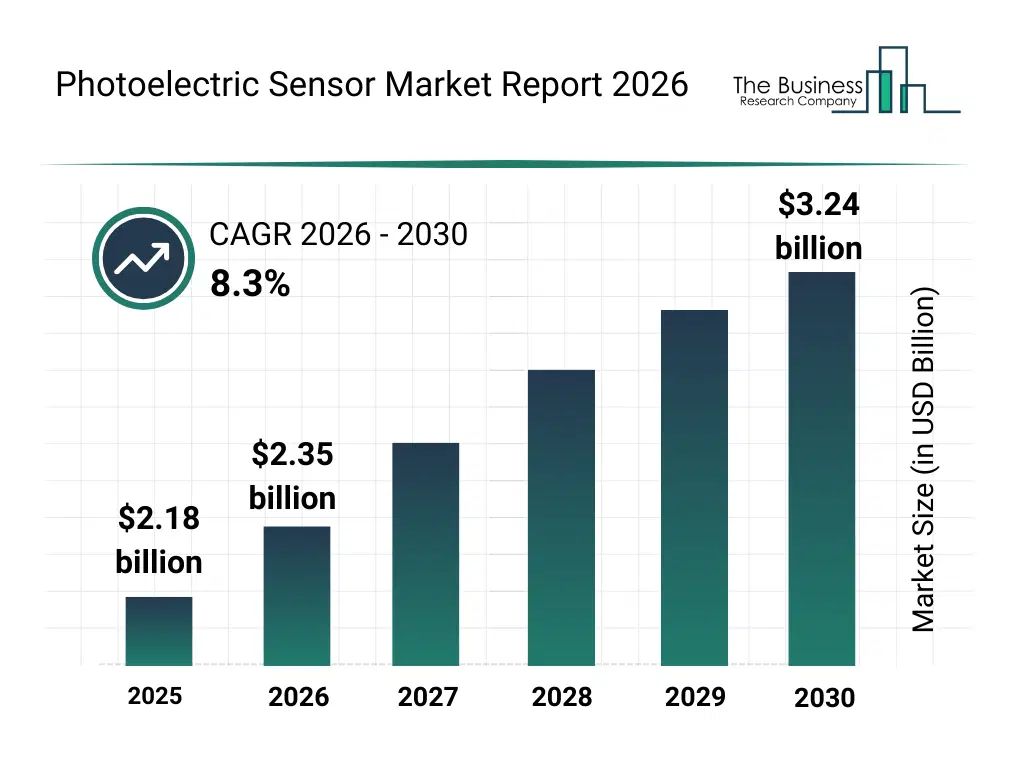
What Is The Photoelectric Sensor Market Size 2026 And Growth Rate?
The photoelectric sensor market size has grown strongly in recent years. It will grow from $2.18 billion in 2025 to $2.35 billion in 2026 at a compound annual growth rate (CAGR) of 8.2%. The growth in the historic period can be attributed to growth in early optical sensing applications, adoption in basic industrial automation, increasing use in consumer electronics manufacturing, expansion of transportation safety systems, reliance on standard photoelectric detection technologies.What Is The Photoelectric Sensor Market Growth Forecast?
The photoelectric sensor market size is expected to see strong growth in the next few years. It will grow to $3.24 billion in 2030 at a compound annual growth rate (CAGR) of 8.3%. The growth in the forecast period can be attributed to increasing demand for high-precision detection, expansion of automated production lines, rising adoption in packaging and food processing, growth in advanced building automation systems, development of compact long-range photoelectric sensors. Major trends in the forecast period include integration of intelligent industrial sensing, expansion of automated quality-control platforms, development of IoT-enabled detection systems, advancement of smart manufacturing environments, adoption of autonomous inspection technologies.
Global Photoelectric Sensor Market Segmentation
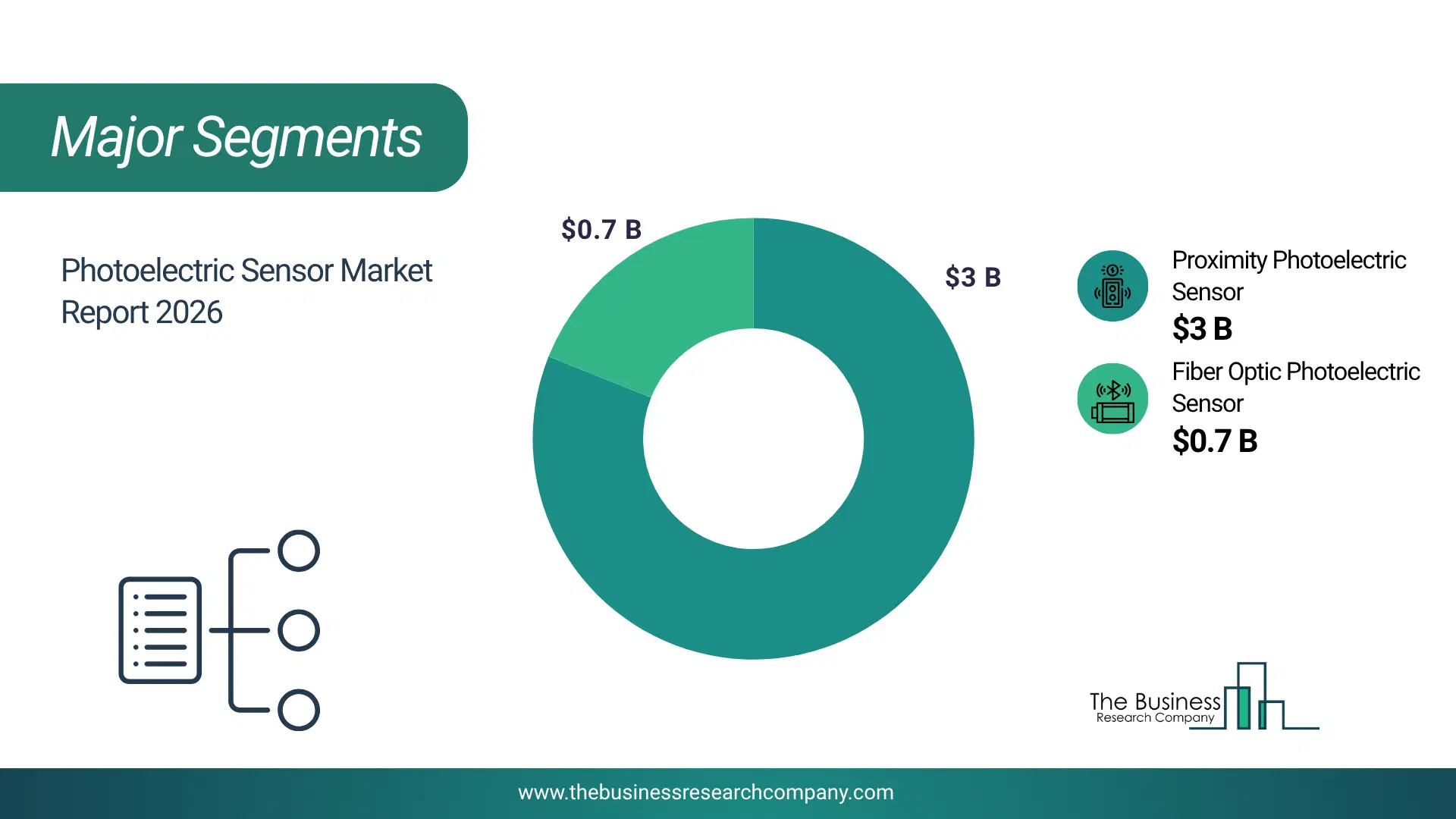
1) By Type: Proximity Photoelectric Sensor, Fiber Optic Photoelectric Sensor 2) By Technology: Retro-Reflective, Through-Beam, Diffused, Other Technologies 3) By Range: =100 mm, 100 to 1,000 mm, 1,000 to 10,000 mm, >10,000 mm 4) By Application: Consumer Electronics, Industrial Manufacturing, Automotive and Transportation, Building Automation, Food and Beverages, Pharmaceuticals and Medical, Packaging, Other Applications Subsegments: 1) By Proximity Photoelectric Sensor: Diffuse Reflective Sensors, Retro-Reflective Sensors, Through-Beam Sensors 2) By Fiber Optic Photoelectric Sensor: Standard Fiber Optic Sensors, Specialty Fiber Optic Sensors, Reflective Fiber Optic Sensors The top segments in the photoelectric sensor market will be: • Proximity Photoelectric Sensor will reach $3 Billion by 2030. • Fiber Optic Photoelectric Sensor will reach $0.71 Billion by 2030.What Is The Driver Of The Photoelectric Sensor Market?
The increasing demand for automobiles is expected to propel the growth of the photoelectric sensor market going forward. Automobiles are self-propelled motor vehicles designed for passenger transportation and the transportation of goods. Photoelectric sensors are used in automobiles to detect objects, monitor distances, and provide crucial data for safety and automation. For instance, in May 2023, according to the European Automobile Manufacturers Association, a Belgium-based automobile manufacturers association (EEA), global motor vehicle production reached approximately 93.9 million units in 2023, marking a comparison point for growth. Therefore, the increasing demand for automobiles is driving the growth of the photoelectric sensor industry.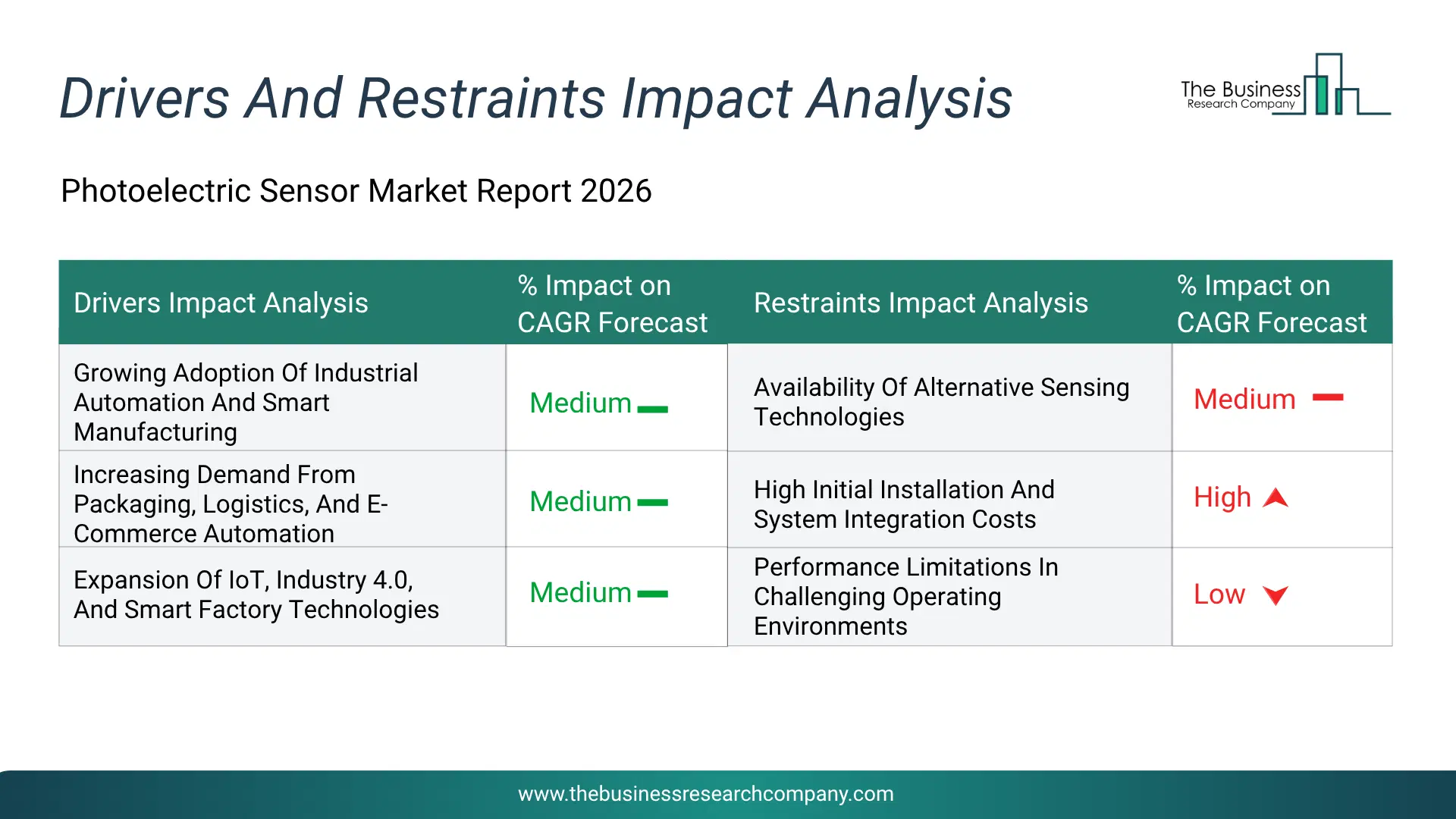
Infographic Chart Showing Key Market Drivers Analysis And Restraints For Photoelectric Sensor Market
The chart presents an impact analysis of key drivers and restraints, quantifying their relative influence on the market's growth rate and helping assess the balance between growth enablers and limiting factors. This chart offers a high-level perspective; the full report contains more detailed insights.
How Will The Drivers Impact Growth In The Global Photoelectric Sensor Market?
• Growing Adoption Of Industrial Automation And Smart Manufacturing (Medium) – During the forecast period, the growing adoption of industrial automation and smart manufacturing is expected to emerge as a major factor driving the expansion of the photoelectric sensor market by 2030. manufacturers are increasingly deploying non-contact sensing solutions for object detection, positioning, quality inspection, counting, and machine safety to improve production accuracy and operational efficiency. the rapid implementation of robotics, digital factories, and intelligent manufacturing systems is further increasing demand for reliable photoelectric sensors across automotive, electronics, food and beverage, pharmaceutical, and packaging industries. • Increasing Demand From Packaging, Logistics, And E-Commerce Automation (Medium) – During the forecast period, the increasing demand from packaging, logistics, and e-commerce automation is expected to emerge as a major factor driving the expansion of the photoelectric sensor market by 2030. automated warehouses, fulfillment centers, and distribution facilities increasingly rely on photoelectric sensors to support package detection, conveyor monitoring, product sorting, pallet handling, and inventory management. their ability to deliver fast, accurate, and contactless detection helps improve operational efficiency while supporting high-volume material handling operations. • Expansion Of IoT, Industry 4.0, And Smart Factory Technologies (Medium) – During the forecast period, the expansion of IoT, Industry 4.0, and smart factory technologies is expected to act as a key growth catalyst for the photoelectric sensor market by 2030. connected sensing solutions with digital communication capabilities enable real-time process monitoring, predictive maintenance, equipment diagnostics, and production optimization across advanced manufacturing environments. as industries continue integrating cloud computing, artificial intelligence, and industrial networking technologies into factory operations, demand for intelligent photoelectric sensors is expected to increase steadily.How Will The Restraints Impact Growth In The Global Photoelectric Sensor Market?
• Availability Of Alternative Sensing Technologies (Medium) – During the forecast period, availability Of Alternative Sensing Technologies acts as a significant restraint because industries have access to multiple sensor technologies that may be better suited for specific applications. Inductive sensors are preferred for metallic object detection, capacitive sensors perform well with liquids and non-metallic materials, ultrasonic sensors operate effectively in dusty or transparent environments, while machine vision and LiDAR systems offer advanced imaging and measurement capabilities. Depending on performance requirements, environmental conditions, and cost considerations, manufacturers often select these alternatives instead of photoelectric sensors. The presence of numerous competing technologies increases pricing pressure on photoelectric sensor manufacturers and limits market penetration in applications where other sensing technologies deliver superior performance or lower total ownership costs. • High Initial Installation And System Integration Costs (Medium) – During the forecast period, high Initial Installation And System Integration Costs continue to limit market growth, particularly among small and medium-sized enterprises with restricted automation budgets. Although photoelectric sensors provide long-term operational savings through improved efficiency and reduced maintenance, their implementation often requires substantial upfront investment in sensors, controllers, programmable logic controllers (PLCs), communication networks, software integration, calibration, and engineering services. Existing manufacturing plants may also require expensive modifications to integrate modern sensing technologies into legacy production systems. Additionally, skilled personnel are often needed for installation, configuration, and ongoing maintenance, further increasing deployment costs. These financial barriers may delay automation projects or encourage businesses to adopt lower-cost sensing alternatives, especially in price-sensitive industries and developing markets. • Performance Limitations In Challenging Operating Environments (Medium) – During the forecast period, performance Limitations In Challenging Operating Environments remain an important challenge for the photoelectric sensor market because their performance depends on unobstructed optical transmission. Industrial environments containing excessive dust, smoke, oil mist, moisture, vibration, steam, extreme temperatures, or highly reflective surfaces can interfere with emitted light beams, resulting in inaccurate detection, false triggering, or reduced sensing reliability. Applications involving transparent, glossy, or irregularly shaped objects may also require specialized sensor configurations to maintain detection accuracy. To overcome these issues, manufacturers often need protective housings, advanced optical filtering technologies, frequent cleaning, or higher-performance sensor models, increasing both installation complexity and operating costs. These environmental challenges encourage some industries to select alternative sensing technologies that perform more consistently under harsh operating conditions.Key Players In The Global Photoelectric Sensor Market
Major companies operating in the photoelectric sensor market are Schneider Electric SE, Panasonic Holdings Corporation, Omron Corp., Sick AG, Keyence Corporation., Rockwell Automation Inc., Balluff Inc., Banner Engineering Corp., Tri-Tronics, Baumer group, Hans Turck GmbH & Co., Pepperl+Fuchs SE, di-soric GmbH & Co. KG, Eaton Corporation plc., IFM Electronic GmbH, Autonics Corporation, Contrinex AG, Lumasense Technologies Inc., SensoPart Industriesensorik GmbH, Leuze electronic GmbH + Co. KG, Optex Group, Capella Microsensors LLC, Telco Sensors Inc., Riko Opto-Electronics Technology Co. Ltd., Senix Corporation, Hamamatsu Photonics, Laser Components GmbH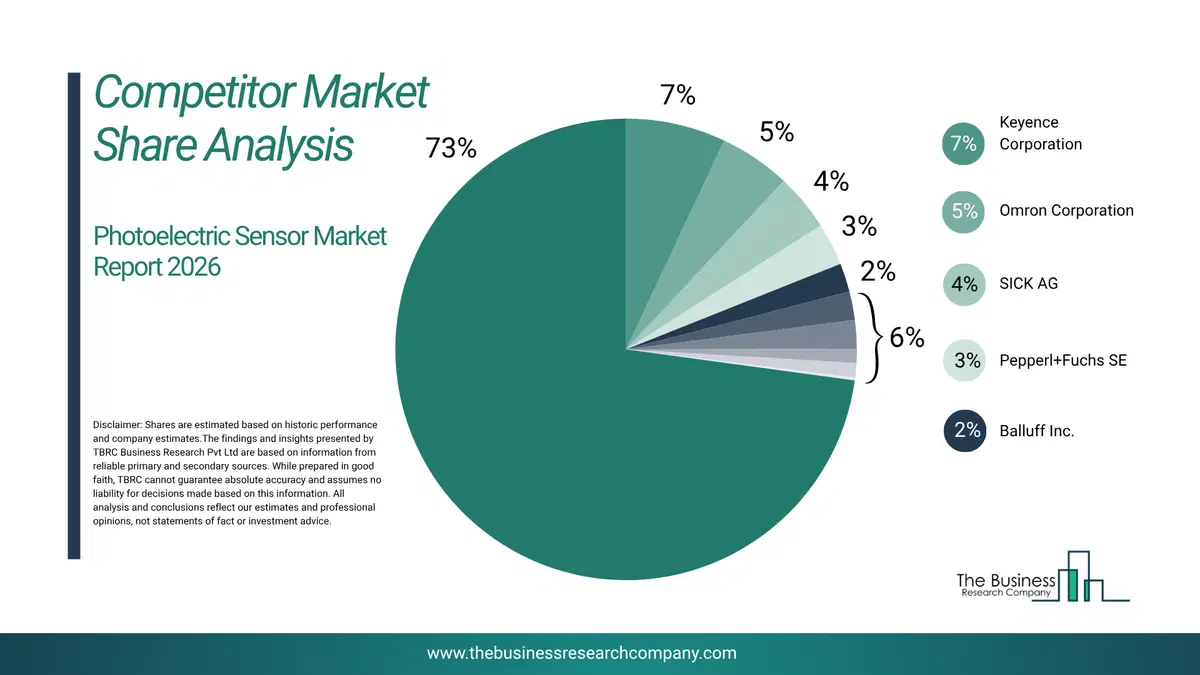
This chart is for illustrative purposes; the full report includes a detailed competitor analysis and comprehensive overview of the top 10 companies in the market.
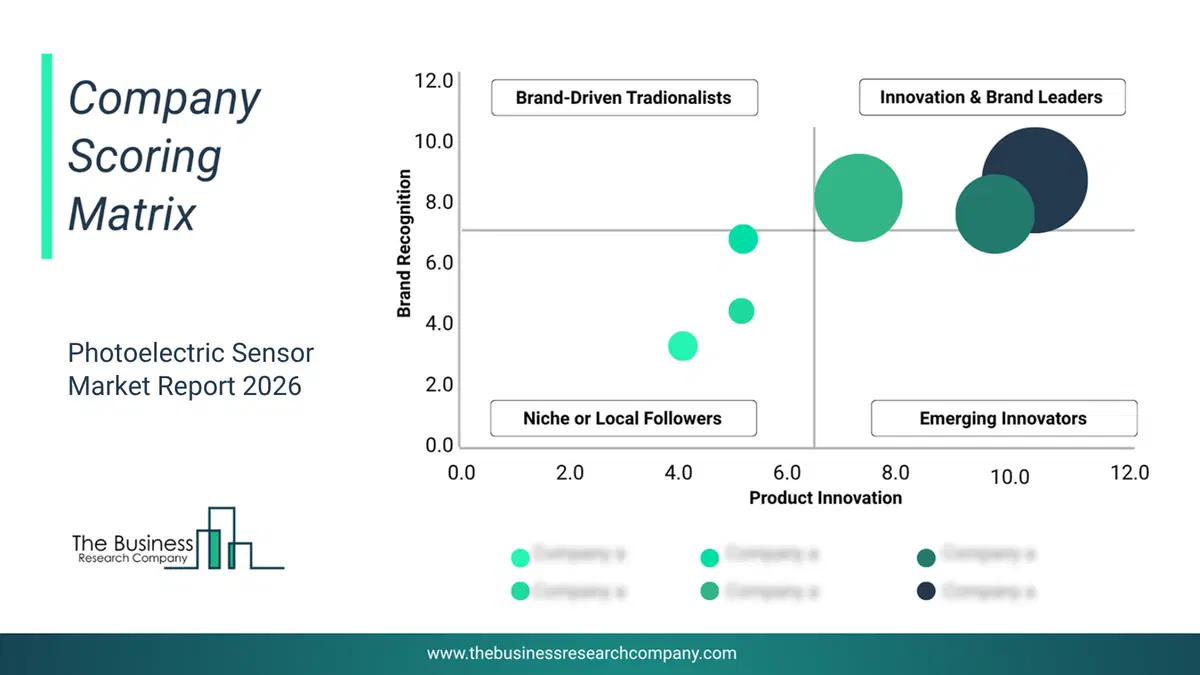
This chart maps companies by product innovation and brand strength, with bubble size indicating relative revenue, helping identify market leaders, challengers, and niche players. This is an illustrative chart; the full report provides a complete and accurate competitive analysis.
Global Photoelectric Sensor Market Trends and Insights
Major companies operating in the photoelectric sensor market are focusing on increasing the sensing range, such as with cubic-photoelectric-sensor design, to gain a competitive advantage. A cubic photoelectric sensor is a compact device that emits and receives light signals to detect objects at extended distances with high reliability. For instance, in August 2023, Pepperl+Fuchs, a Germany-based industrial sensor manufacturer, introduced the R202 series cubic photoelectric sensors, featuring clear-object detection for foil-wrapped pallets, integrated metal bushings for robust mounting, and AC/DC power supply variants (24–240 V) for flexibility in installation. This innovation enables more reliable object detection across logistics and material-handling applications while posing higher demands on system integration and calibration.What Are Latest Mergers And Acquisitions In The Photoelectric Sensor Market?
In October 2023, Emerson Electric Co., a US-based provider of automation technology and industrial software solutions, acquired National Instruments Corporation for $8.2 billion. With this acquisition, Emerson Electric Co. aimed to expand its digital automation capabilities and accelerate growth in high-value discrete markets through integration of National Instruments Corporation’s software-connected test and measurement systems. National Instruments Corporation is a US-based provider of automated test and measurement equipment and software for the semiconductor, electronics, transportation, and aerospace markets.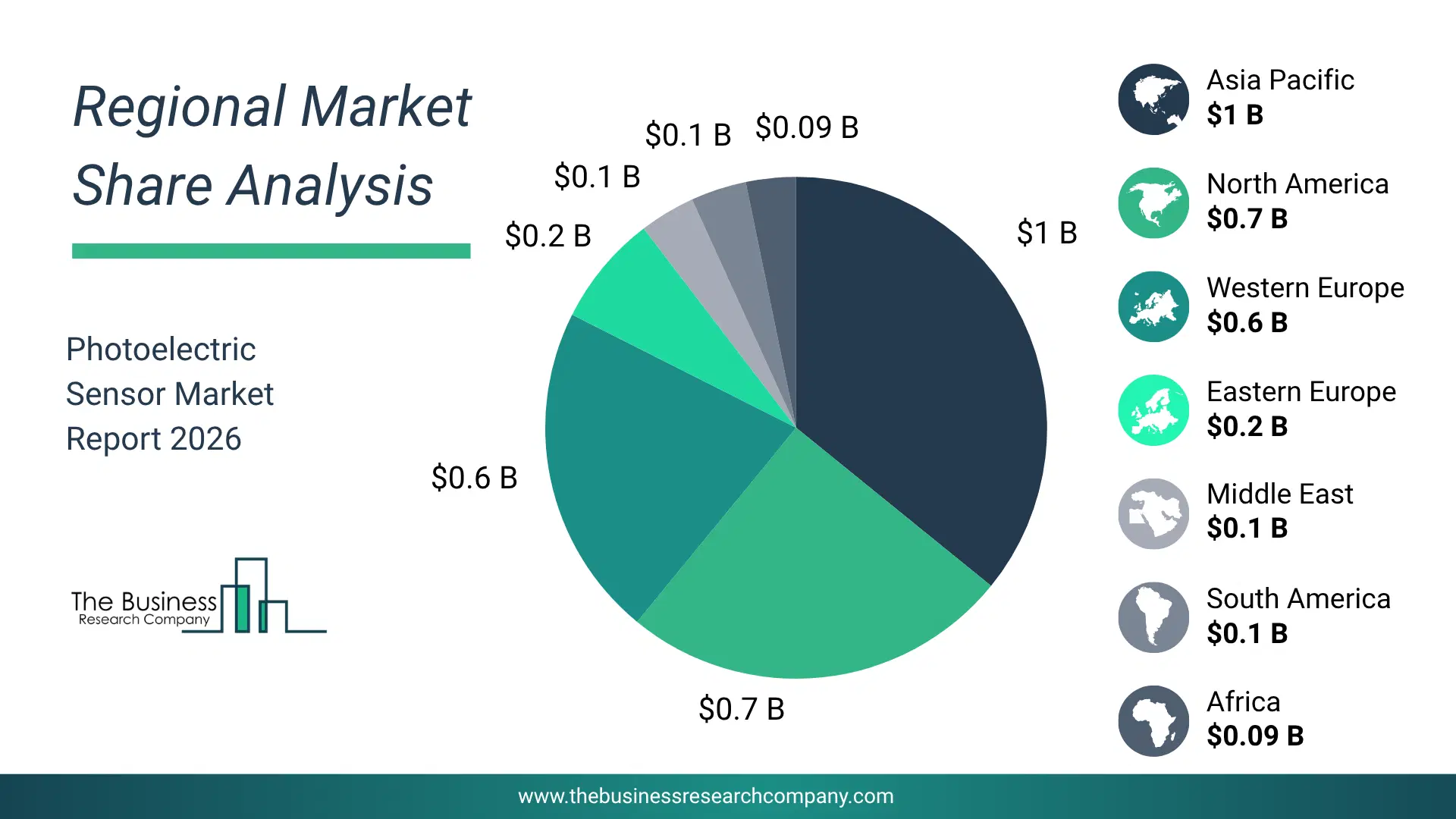
Regional Outlook
Asia-Pacific was the largest region in the photoelectric sensor market in 2025. North America is expected to be the fastest-growing region in the forecast period. The regions covered in this market report are Asia-Pacific, South East Asia, Western Europe, Eastern Europe, North America, South America, Middle East, Africa. The countries covered in this market report are Australia, Brazil, China, France, Germany, India, Indonesia, Japan, Taiwan, Russia, South Korea, UK, USA, Canada, Italy, Spain.What Defines the Photoelectric Sensor Market?
The photoelectric sensor market consists of sales of proximity photoelectric sensors and fiber optic photoelectric sensors. Values in this market are ‘factory gate’ values, that is the value of goods sold by the manufacturers or creators of the goods, whether to other entities (including downstream manufacturers, wholesalers, distributors and retailers) or directly to end customers. The value of goods in this market includes related services sold by the creators of the goods.How is Market Value Defined and Measured?
The market value is defined as the revenues that enterprises gain from the sale of goods and/or services within the specified market and geography through sales, grants, or donations in terms of the currency (in USD unless otherwise specified). The revenues for a specified geography are consumption values that are revenues generated by organizations in the specified geography within the market, irrespective of where they are produced. It does not include revenues from resales along the supply chain, either further along the supply chain or as part of other products.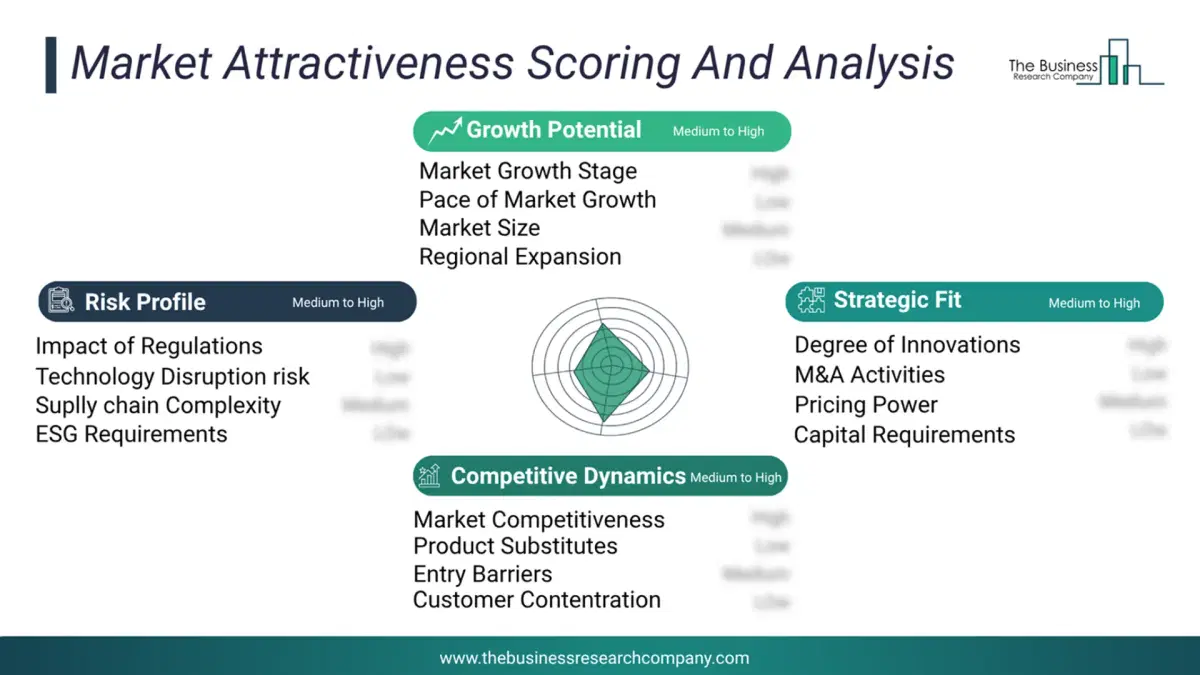
This chart presents market attractiveness based on a quantitative evaluation of growth, competition, strategic alignment, and risk, offering a clear view of opportunity areas for decision-making. This chart is for illustrative purposes; the full report contains the complete analysis.
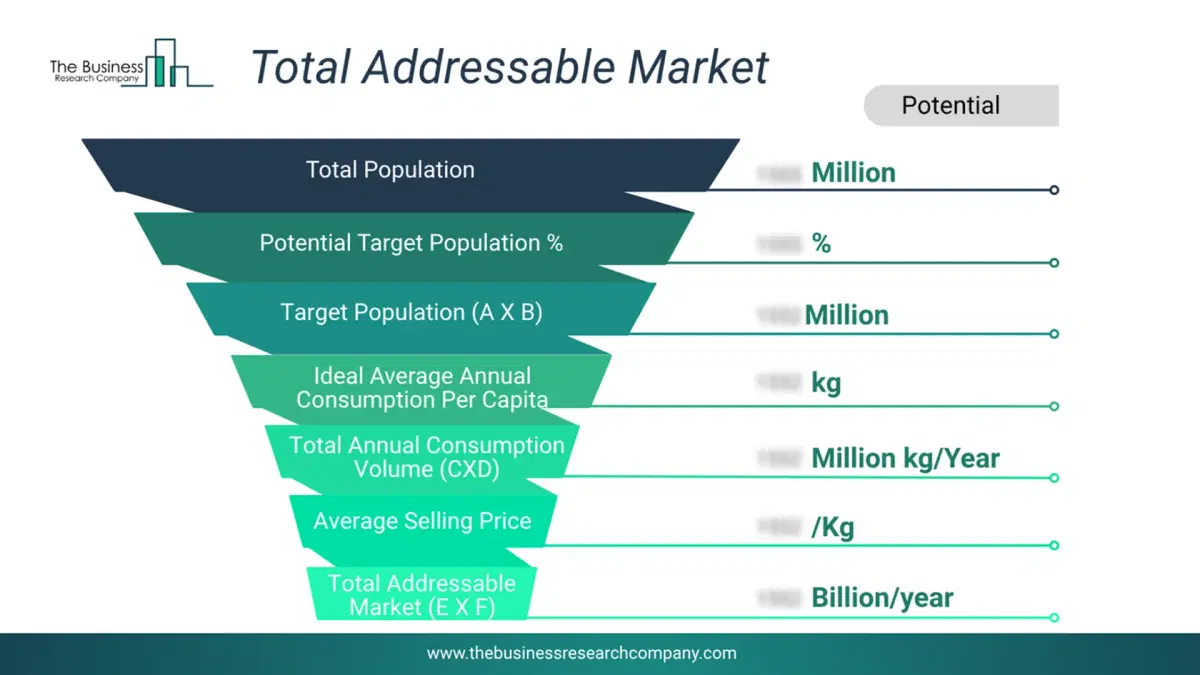
This chart highlights the Total Addressable Market (TAM) by estimating the maximum revenue opportunity using an assumption-driven approach, supporting strategic planning and opportunity sizing across markets. The chart is illustrative; the full report provides a more comprehensive analysis.
What Key Data and Analysis Are Included in the Photoelectric Sensor Market Report 2026?
The photoelectric sensor market research report is one of a series of new reports from The Business Research Company that provides market statistics, including industry global market size, regional shares, competitors with the market share, detailed market segments, market trends and opportunities, and any further data you may need to thrive in the photoelectric sensor industry. The market research report delivers a complete perspective of everything you need, with an in-depth analysis of the current and future state of the industry.Photoelectric Sensor Market Report 2026 Market Report Forecast Analysis
| Report Attribute | Details |
|---|---|
| Market Size Value In 2026 | $2.35 billion |
| Revenue Forecast In 2030 | $3.24 billion |
| Growth Rate | CAGR of 8.3% from 2026 to 2030 |
| Base Year For Estimation | 2025 |
| Actual Estimates/Historical Data | 2020-2025 |
| Forecast Period | 2026 - 2030 |
| Market Representation | Revenue in USD Billion and CAGR from 2026 to 2030 |
| Segments Covered | Type, Technology, Range, Application |
| Regional Scope | Asia-Pacific, Western Europe, Eastern Europe, North America, South America, Middle East, Africa |
| Country Scope | The countries covered in the report are Australia, Brazil, China, France, Germany, India, Indonesia, Japan, Taiwan, Russia, South Korea, UK, USA, Canada, Italy, Spain. |
| Key Companies Profiled | Schneider Electric SE, Panasonic Holdings Corporation, Omron Corp., Sick AG, Keyence Corporation., Rockwell Automation Inc., Balluff Inc., Banner Engineering Corp., Tri-Tronics, Baumer group, Hans Turck GmbH & Co., Pepperl+Fuchs SE, di-soric GmbH & Co. KG, Eaton Corporation plc., IFM Electronic GmbH, Autonics Corporation, Contrinex AG, Lumasense Technologies Inc., SensoPart Industriesensorik GmbH, Leuze electronic GmbH + Co. KG, Optex Group, Capella Microsensors LLC, Telco Sensors Inc., Riko Opto-Electronics Technology Co. Ltd., Senix Corporation, Hamamatsu Photonics, Laser Components GmbH |
| Customization Scope | Request for Customization |
| Pricing And Purchase Options | Explore Purchase Options |