
Photonic Integrated Circuit Market Report 2026
Global Outlook – By Component ( Lasers, Modulators, Detectors, Multiplexers Or De-Multiplexers, Attenuators, Other Components), By Integration Type ( Hybrid, Monolithic), By Material ( Indium Phosphide (Inp), Silicon-On-Insulator (Soi), Silicon Photonics, Gallium Arsenide (Gaas), Lithium Niobate, Other Materials), By Application ( Optical Communication, Sensing, Biophotonics, Optical Signal Processing, Quantum Computing, Other Applications), By End Use ( Telecommunications, Data Centers, Consumer Electronics, Healthcare And Life Sciences, Defense And Aerospace, Industrial, Automotive, Other End-Users) – Market Size, Trends, Strategies, and Forecast to 2030
Photonic Integrated Circuit Market Overview
• Photonic Integrated Circuit market size has reached to $15.25 billion in 2025 • Expected to grow to $42.21 billion in 2030 at a compound annual growth rate (CAGR) of 22.5% • Growth Driver: Rising Demand For High-Speed Internet Driving The Market Growth Due To Expanding Data-Intensive Applications • Market Trend: Innovative Photonic Integrated Circuit Solutions For High-Speed Optical Communication • North America was the largest region in 2025 and Asia-Pacific is the fastest growing region.Market Gains By 2030 – Top Opportunities By Segment
Market Gain identifies the most promising market opportunities by highlighting the segments or products expected to generate the highest incremental revenue growth over the next five years.
What Is Covered Under Photonic Integrated Circuit Market?
A photonic integrated circuit refers to a compact chip that integrates multiple optical components onto a single substrate, using photons instead of electrons to transmit and process information. It enables the generation, manipulation, and detection of optical signals for applications in telecommunications, data communications, and sensing. The main component types of photonic integrated circuits are lasers, modulators, detectors, multiplexers or de-multiplexers, attenuators, and others. A laser (light amplification by stimulated emission of radiation) is a device that produces a highly focused, coherent, and monochromatic beam of light by stimulating the emission of photons from energized atoms or molecules. These are fabricated through hybrid or monolithic integration techniques, utilizing materials such as indium phosphide (InP), silicon-on-insulator (SOI), silicon photonics, gallium arsenide (GaAs), lithium niobate, and others. These are applied in areas such as optical communication, sensing, biophotonics, optical signal processing, quantum computing, and others, catering to end-use sectors including telecommunications, data centers, consumer electronics, healthcare and life sciences, defense and aerospace, industrial, automotive, and others.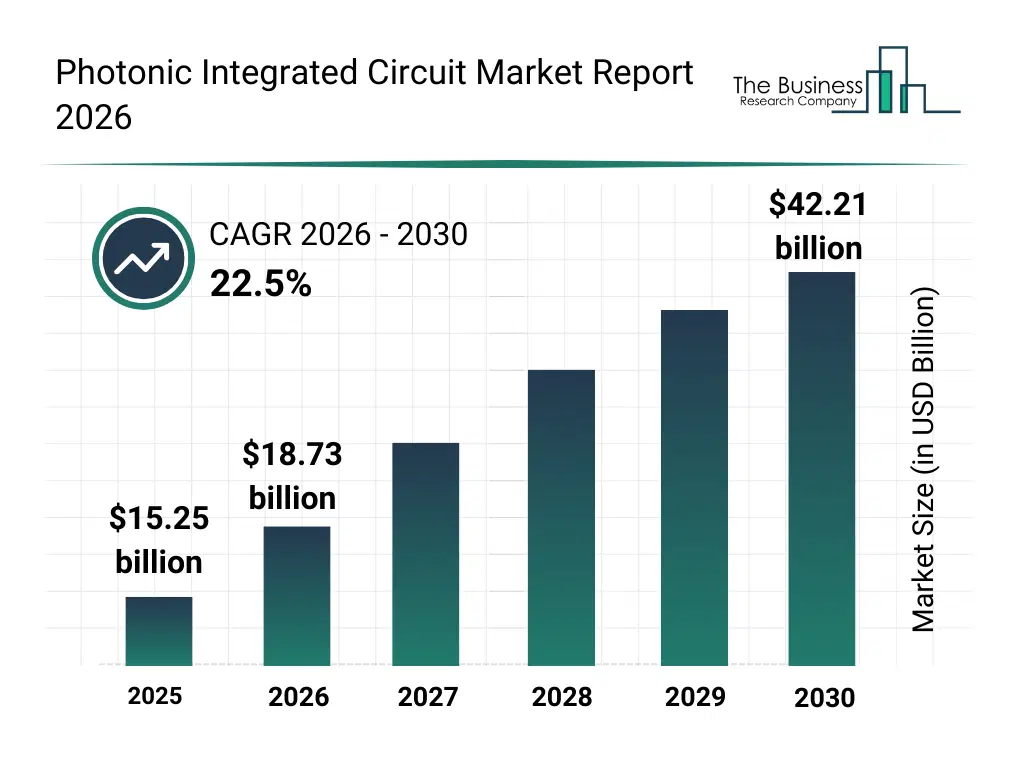
What Is The Photonic Integrated Circuit Market Size 2026 And Growth Rate?
The photonic integrated circuit market size has grown exponentially in recent years. It will grow from $15.25 billion in 2025 to $18.73 billion in 2026 at a compound annual growth rate (CAGR) of 22.8%. The growth in the historic period can be attributed to rising demand for high-speed data communication, advances in semiconductor fabrication technology, growth of optical fiber networks, increasing adoption in telecommunications infrastructure, early research in silicon photonics.What Is The Photonic Integrated Circuit Market Growth Forecast?
The photonic integrated circuit market size is expected to see exponential growth in the next few years. It will grow to $42.21 billion in 2030 at a compound annual growth rate (CAGR) of 22.5%. The growth in the forecast period can be attributed to expansion of data centers and cloud services, growing adoption in quantum computing, rising healthcare and life sciences applications, development of energy-efficient photonic systems, increased deployment in autonomous and smart vehicles. Major trends in the forecast period include integrated photonics for high-speed data transmission, compact optical sensors for sensing applications, quantum-ready photonic chips, energy-efficient optical signal processing, photonics-enabled healthcare diagnostics.
Global Photonic Integrated Circuit Market Segmentation
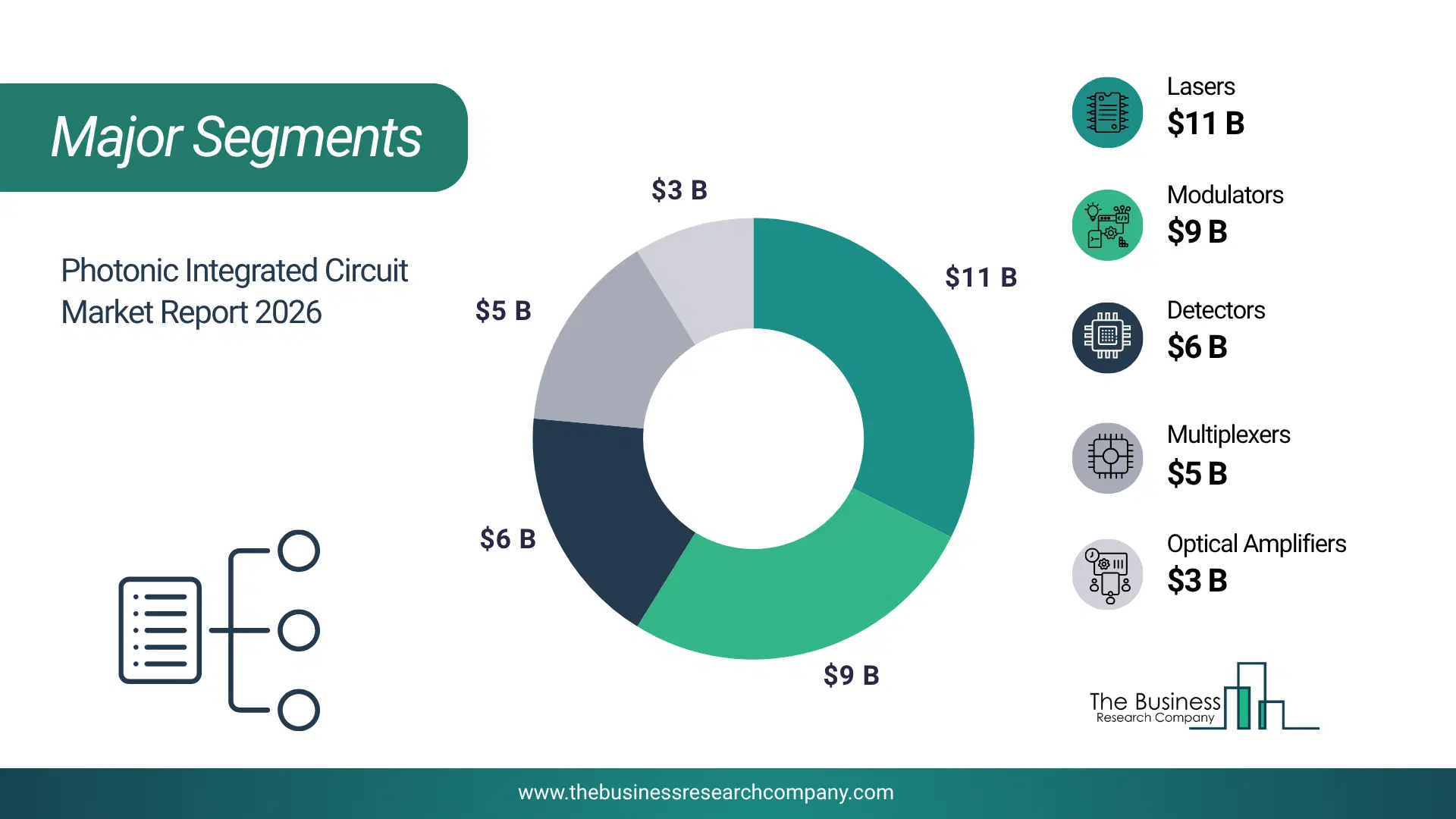
1) By Component: Lasers, Modulators, Detectors, Multiplexers Or De-Multiplexers, Attenuators, Other Components 2) By Integration Type: Hybrid, Monolithic 3) By Material: Indium Phosphide (Inp), Silicon-On-Insulator (Soi), Silicon Photonics, Gallium Arsenide (Gaas), Lithium Niobate, Other Materials 4) By Application: Optical Communication, Sensing, Biophotonics, Optical Signal Processing, Quantum Computing, Other Applications 5) By End Use: Telecommunications, Data Centers, Consumer Electronics, Healthcare And Life Sciences, Defense And Aerospace, Industrial, Automotive, Other End-Users Subsegments: 1) By Lasers: Distributed Feedback (DFB) Lasers, Distributed Bragg Reflector (DBR) Lasers, Fabry-Perot Lasers 2) By Modulators: Electro-Optic Modulators,Mach-Zehnder Modulators (MZM), Electro-Absorption Modulators (EAM) 3) By Detectors: PIN Photodiodes, Avalanche Photodiodes (APD), Germanium Photodetectors 4) By Multiplexers Or De-Multiplexers: Arrayed Waveguide Gratings (AWG), Planar Lightwave Circuits (PLC), Echelle Gratings 5) By Attenuators: Variable Optical Attenuators (VOA), Fixed Optical Attenuators, Micro-Electro-Mechanical Systems-Based Attenuators 6) By Other Components: Optical Amplifiers (SOA, EDFA), Waveguides, Couplers Or Splitters The top segments in the photonic integrated circuit market will be: • Lasers will reach $10.64 Billion by 2030. • Modulators will reach $8.97 Billion by 2030. • Detectors will reach $6.01 Billion by 2030. • Multiplexers will reach $4.7 Billion by 2030. • Optical Amplifiers will reach $3.13 Billion by 2030.What Is The Driver Of The Photonic Integrated Circuit Market?
The increasing demand for high-speed internet is expected to propel the growth of the photonic integrated circuit market going forward. High-speed internet refers to a broadband internet connection that provides fast data transmission, enabling quick downloads, smooth streaming, and efficient online communication. High-speed internet demand is rising because more people and businesses rely on data-intensive online activities such as streaming, cloud services, and remote work. Photonic integrated circuits (PICs) help high-speed internet by using light instead of electricity to transmit data, enabling faster, more efficient, and higher-capacity communication across networks. For instance, in July 2025, according to the Government of Canada, a Canada-based federal administration, by 2026, high-speed internet access in Canada is projected to reach 98% of the population. This will further increase to 100% by 2030, achieving full Internet penetration nationwide. Therefore, the increasing demand for high-speed internet is driving the growth of the photonic integrated circuit industry.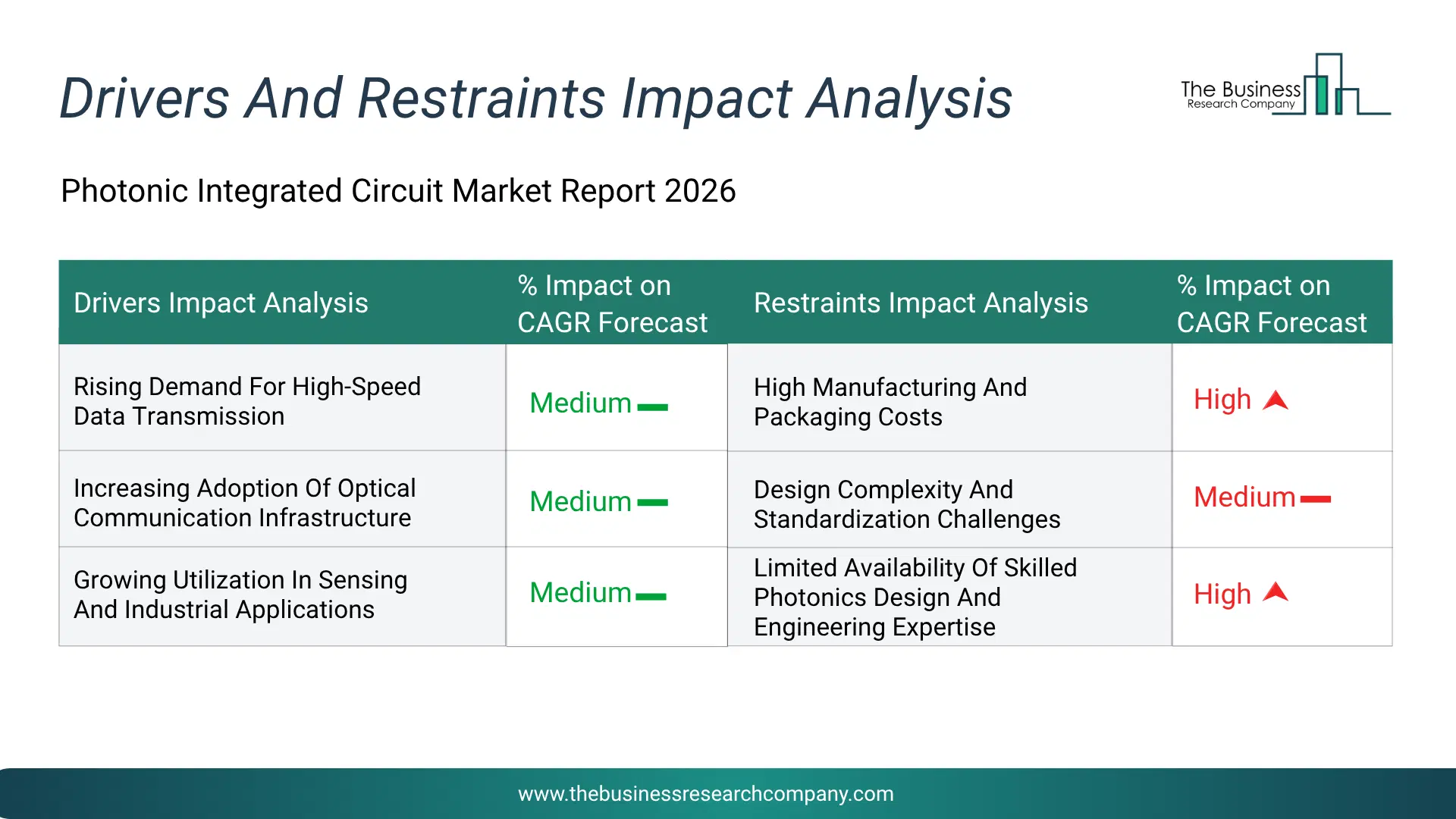
Infographic Chart Showing Key Market Drivers Analysis And Restraints For Photonic Integrated Circuit Market
The chart presents an impact analysis of key drivers and restraints, quantifying their relative influence on the market's growth rate and helping assess the balance between growth enablers and limiting factors. This chart offers a high-level perspective; the full report contains more detailed insights.
How Will The Drivers Impact Growth In The Global Photonic Integrated Circuit Market?
• Rising Demand For High-Speed Data Transmission (Medium) – During the forecast period, the rising demand for high-speed data transmission is expected to become a key growth driver for the photonic integrated circuit market by 2030. Rising demand for high-speed data transmission is significantly driving the growth of the photonic integrated circuit market due to increasing data traffic across telecommunications and data communication networks. Photonic integrated circuits support faster optical signal processing and transmission with lower latency compared to conventional electronic systems. Telecommunications operators and cloud service providers are increasingly deploying optical networking infrastructure to manage growing bandwidth requirements. The ability of photonic integrated circuits to integrate multiple optical functions onto a single chip also supports efficient network scalability and compact system architectures. • Increasing Adoption Of Optical Communication Infrastructure (Medium) – During the forecast period, the increasing adoption of optical communication infrastructure is expected to emerge as a major factor driving the expansion of the photonic integrated circuit market by 2030. Increasing adoption of optical communication infrastructure is accelerating the demand for photonic integrated circuits across long-haul communication, metro networks, and enterprise connectivity applications. Photonic integrated circuits enable efficient generation, manipulation, and detection of optical signals, making them essential for modern fiber-optic communication systems. Enterprises and network operators are investing heavily in optical infrastructure to improve network efficiency, transmission reliability, and operational performance. The integration capabilities of photonic integrated circuits also help reduce power consumption and space requirements in communication equipment. • Growing Utilization In Sensing And Industrial Applications (Medium) – During the forecast period, the growing utilization in sensing and industrial applications is expected to act as a key growth catalyst for the photonic integrated circuit market by 2030. Growing utilization in sensing and industrial applications is supporting market expansion as photonic integrated circuits are increasingly used in sensing, monitoring, and measurement systems. Industries such as healthcare, automotive, aerospace, and manufacturing are adopting optical sensing technologies for precision detection and real-time monitoring applications. Photonic integrated circuits offer compact size, high sensitivity, and improved signal accuracy, making them suitable for industrial and environmental sensing applications. The increasing deployment of optical sensors in autonomous systems and industrial automation is also contributing to higher product demand.How Will The Restraints Impact Growth In The Global Photonic Integrated Circuit Market?
• High Manufacturing And Packaging Costs (Medium) – During the forecast period, the high manufacturing and packaging costs are limiting the widespread adoption of photonic integrated circuits due to the complexity associated with optical component integration and precision fabrication processes. The development and packaging of photonic integrated circuits require specialized materials, advanced fabrication facilities, and highly controlled production environments, resulting in elevated operational costs. Small-scale manufacturers and emerging companies often face financial challenges in establishing production capabilities and achieving cost competitiveness. In addition, complex testing and alignment requirements increase overall product development expenses. These cost-related barriers can restrict adoption, particularly in price-sensitive applications and developing markets. • Design Complexity And Standardization Challenges (Medium) – During the forecast period, the design complexity and standardization challenges are restraining market growth because photonic integrated circuits involve the integration of multiple optical functions within highly compact chip architectures. Achieving compatibility between different materials, optical components, and fabrication processes remains a significant challenge for manufacturers and system integrators. The absence of universally accepted industry standards also creates interoperability issues across different platforms and applications. Design validation, performance optimization, and system integration often require extensive expertise and prolonged development cycles. These challenges can delay commercialization timelines and limit large-scale deployment across diverse industry sectors. • Limited Availability Of Skilled Photonics Design And Engineering Expertise (Medium) – During the forecast period, the limited availability of skilled photonics design and engineering expertise is expected to restrain the growth of the photonic integrated circuit market. The design, development, and commercialization of photonic integrated circuits require specialized knowledge in photonics, semiconductor fabrication, optical engineering, and integrated circuit design. However, the global supply of professionals with expertise in these multidisciplinary fields remains limited, creating workforce shortages across research institutions and manufacturing facilities. Companies often face challenges in recruiting and retaining qualified engineers capable of designing complex photonic architectures and optimizing fabrication processes. The shortage of skilled talent can extend product development timelines, increase research and development costs, and slow the commercialization of new photonic technologies. In addition, limited technical expertise may hinder innovation and reduce the ability of manufacturers to scale production efficiently. These workforce constraints are particularly significant for emerging companies and organizations entering the photonics industry. Consequently, the limited availability of skilled photonics design and engineering expertise remains a key restraint on the growth of the photonic integrated circuit market.Key Players In The Global Photonic Integrated Circuit Market
Major companies operating in the photonic integrated circuit market are Huawei Technologies Co. Ltd., Intel Corporation, IBM Corporation, Cisco Systems Inc., Fujitsu Limited, Nokia Corporation, Ciena Corporation, Coherent Corp., Ansys Inc., Lumentum Holdings Inc., Viavi Solutions Inc., Source Photonics Inc., POET Technologies Inc., Acacia Communications Inc., EFFECT Photonics B.V., Lightmatter Inc., ColorChip Ltd., LIGENTEC SA, AEPONYX Inc., Analog Photonics LLC, Bright Photonics BV, Dream Photonics Inc.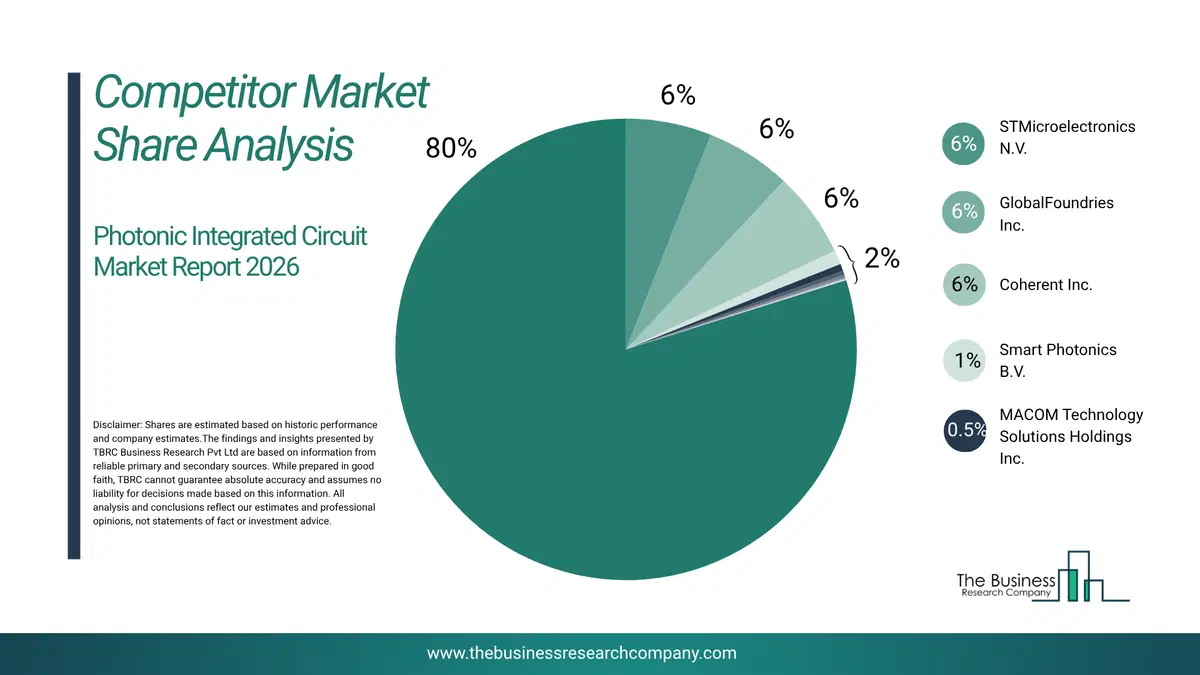
This chart is for illustrative purposes; the full report includes a detailed competitor analysis and comprehensive overview of the top 10 companies in the market.
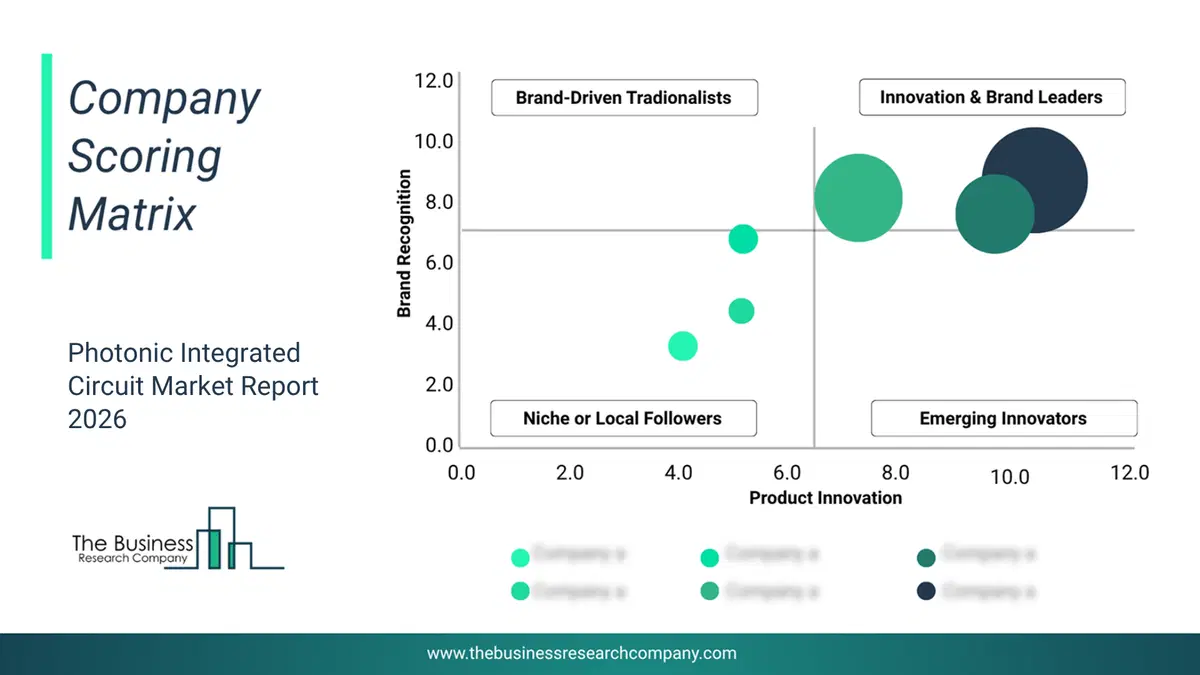
This chart maps companies by product innovation and brand strength, with bubble size indicating relative revenue, helping identify market leaders, challengers, and niche players. This is an illustrative chart; the full report provides a complete and accurate competitive analysis.
Global Photonic Integrated Circuit Market Trends and Insights
Major companies operating in the photonic integrated circuit market are focusing on developing innovative solutions such as photonic integrated circuits to enable faster, more energy-efficient data transmission and advanced optical communication systems. Photonic integrated circuit refers to a device that integrates multiple photonic functions, such as lasers, modulators, and detectors, onto a single chip to manipulate and transmit light signals for high-speed optical communication and sensing applications. For instance, in March 2025, Keysight Technologies Inc., a US-based manufacturing company, launched a Photonic Designer, a comprehensive tool for designing and simulating photonic integrated circuits. It streamlines photonic circuit design with accurate physics-based simulations and integrated real-world data, enabling faster, more reliable design-to-manufacturing workflows. It reduces development time and risk by ensuring design compliance and optimizing models for seamless fabrication.What Are Latest Mergers And Acquisitions In The Photonic Integrated Circuit Market?
In June 2025, Pasqal SAS, a France-based quantum computing company, acquired Aeponyx Inc. for an undisclosed amount. With this acquisition, Pasqal aims to strengthen its quantum computing hardware platform, enhance the precision and stability of qubit control, and accelerate the scaling of its systems from hundreds to thousands of qubits, leveraging Aeponyx’s compact and efficient light-control chips to simplify optical setups and advance toward fault-tolerant quantum computing. Aeponyx Inc. is a Canada-based fabless semiconductor company that offers photonic integrated circuits.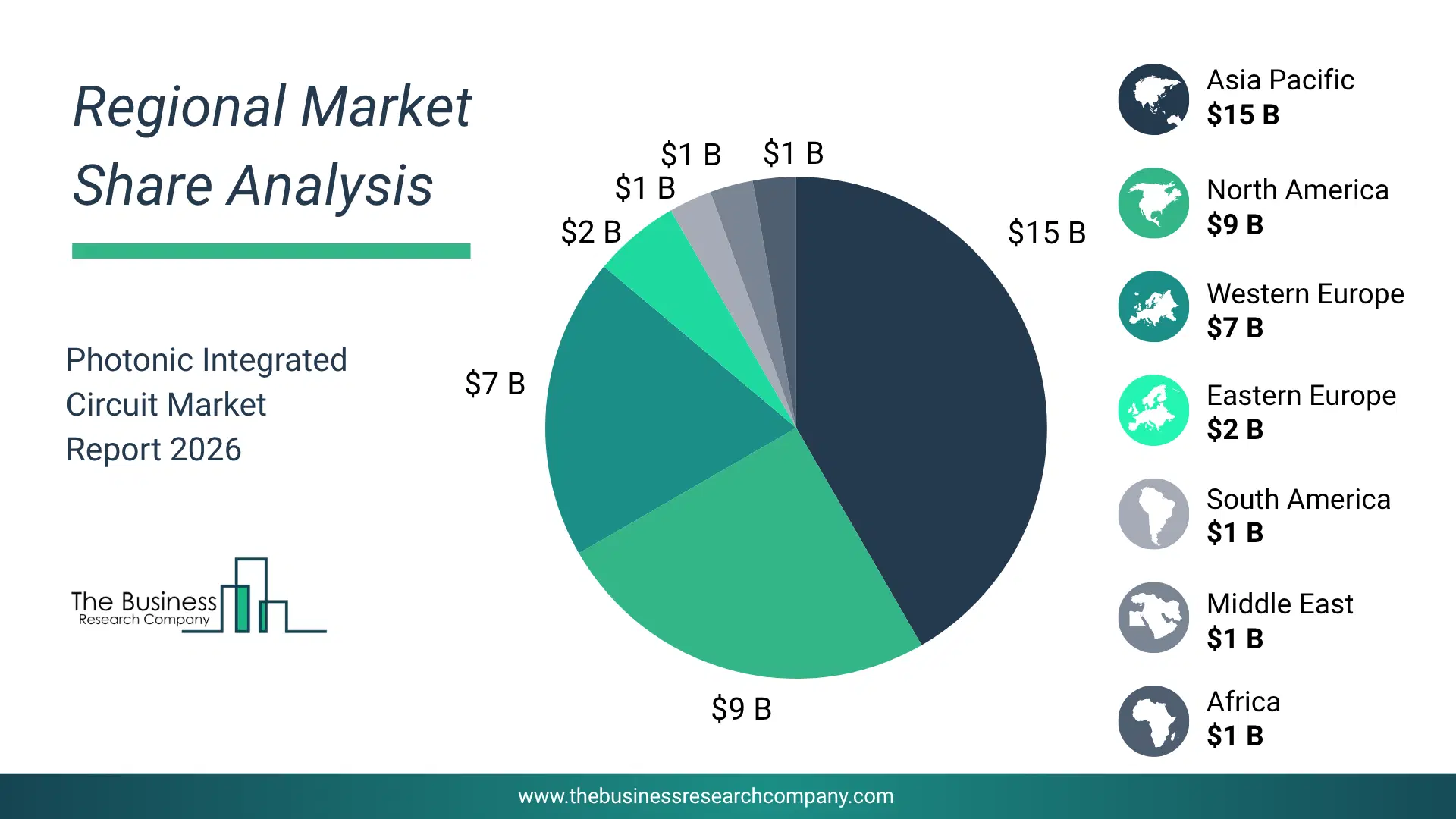
Regional Outlook
North America was the largest region in the photonic integrated circuit market in 2025. Asia-Pacific is expected to be the fastest-growing region in the forecast period. The regions covered in this market report are Asia-Pacific, South East Asia, Western Europe, Eastern Europe, North America, South America, Middle East, Africa. The countries covered in this market report are Australia, Brazil, China, France, Germany, India, Indonesia, Japan, Taiwan, Russia, South Korea, UK, USA, Canada, Italy, Spain.What Defines the Photonic Integrated Circuit Market?
The photonic integrated circuit market consists of revenues earned by entities by providing services such as design and simulation services, prototyping and fabrication services, foundry services, system integration support services, and consulting and design optimization services. The market value includes the value of related goods sold by the service provider or included within the service offering. The photonic integrated circuit market consists of sales of photodetectors, wavelength division multiplexers, amplifiers (SOAs or EDFAs), integrated waveguides, and couplers and splitters. Values in this market are ‘factory gate’ values; that is, the value of goods sold by the manufacturers or creators of the goods, whether to other entities (including downstream manufacturers, wholesalers, distributors, and retailers) or directly to end customers. The value of goods in this market includes related services sold by the creators of the goods.How is Market Value Defined and Measured?
The market value is defined as the revenues that enterprises gain from the sale of goods and/or services within the specified market and geography through sales, grants, or donations in terms of the currency (in USD unless otherwise specified). The revenues for a specified geography are consumption values that are revenues generated by organizations in the specified geography within the market, irrespective of where they are produced. It does not include revenues from resales along the supply chain, either further along the supply chain or as part of other products.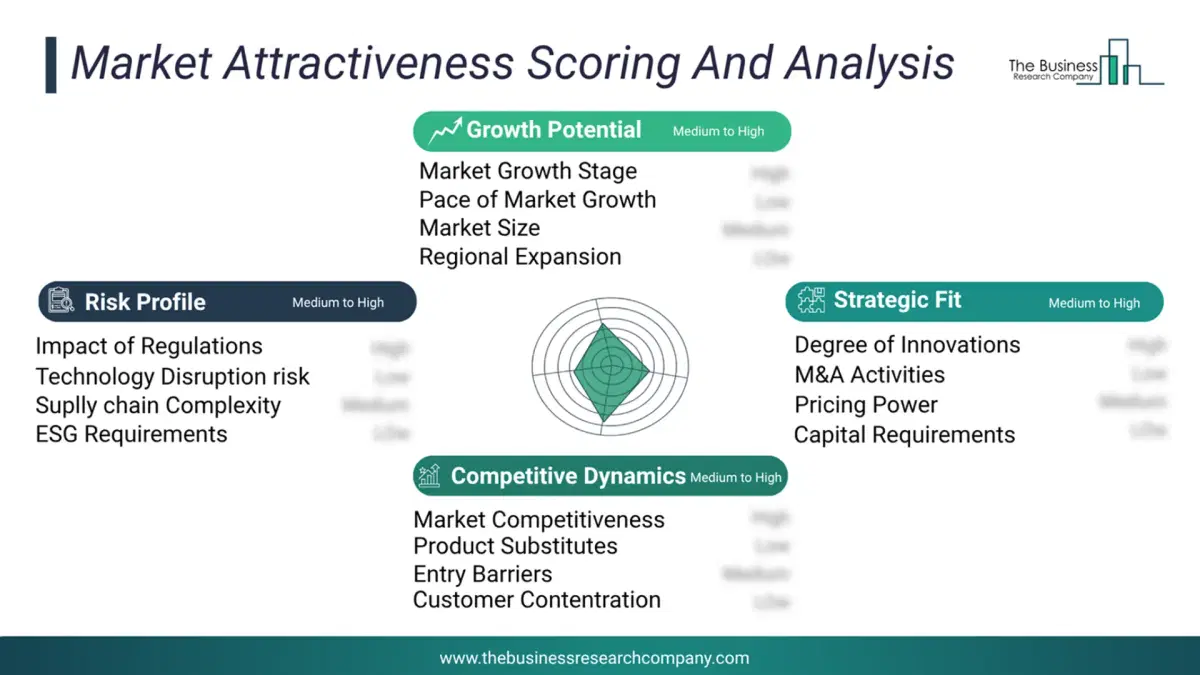
This chart presents market attractiveness based on a quantitative evaluation of growth, competition, strategic alignment, and risk, offering a clear view of opportunity areas for decision-making. This chart is for illustrative purposes; the full report contains the complete analysis.
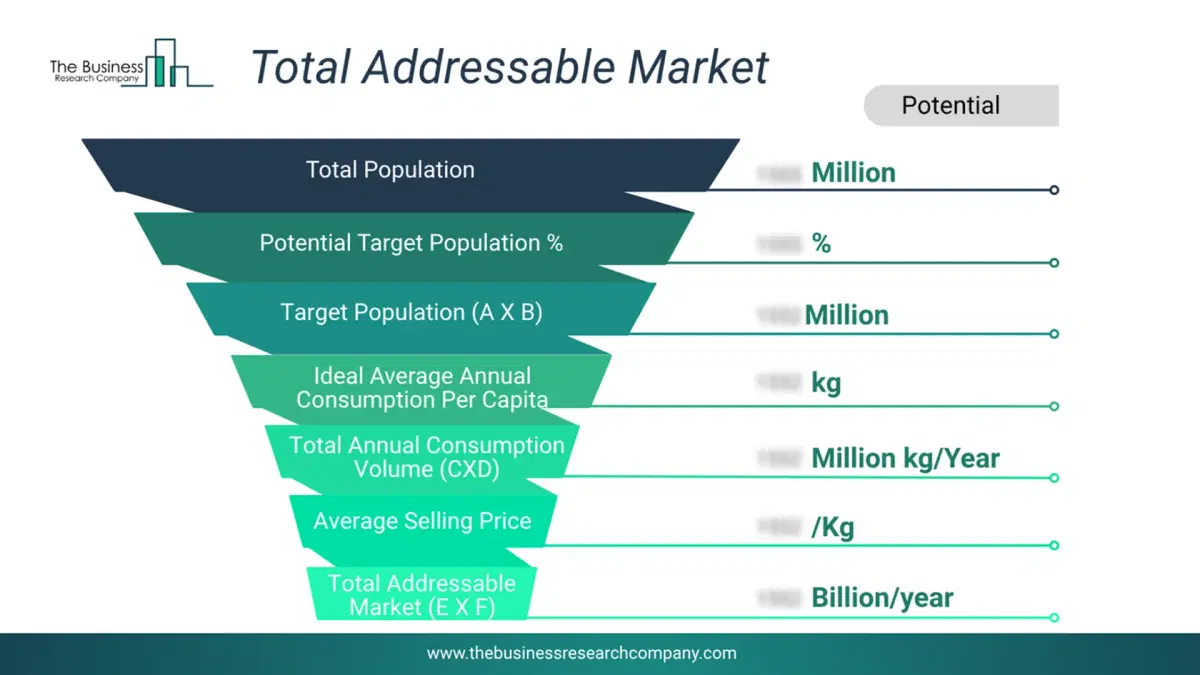
This chart highlights the Total Addressable Market (TAM) by estimating the maximum revenue opportunity using an assumption-driven approach, supporting strategic planning and opportunity sizing across markets. The chart is illustrative; the full report provides a more comprehensive analysis.
What Key Data and Analysis Are Included in the Photonic Integrated Circuit Market Report 2026?
The photonic integrated circuit market research report is one of a series of new reports from The Business Research Company that provides market statistics, including industry global market size, regional shares, competitors with the market share, detailed market segments, market trends and opportunities, and any further data you may need to thrive in the photonic integrated circuit industry. The market research report delivers a complete perspective of everything you need, with an in-depth analysis of the current and future state of the industry.Photonic Integrated Circuit Market Report 2026 Market Report Forecast Analysis
| Report Attribute | Details |
|---|---|
| Market Size Value In 2026 | $18.73 billion |
| Revenue Forecast In 2030 | $42.21 billion |
| Growth Rate | CAGR of 22.8% from 2026 to 2030 |
| Base Year For Estimation | 2025 |
| Actual Estimates/Historical Data | 2020-2025 |
| Forecast Period | 2026 - 2030 |
| Market Representation | Revenue in USD Billion and CAGR from 2026 to 2030 |
| Segments Covered | Component, Integration Type, Material, Application, End Use |
| Regional Scope | Asia-Pacific, Western Europe, Eastern Europe, North America, South America, Middle East, Africa |
| Country Scope | The countries covered in the report are Australia, Brazil, China, France, Germany, India, Indonesia, Japan, Taiwan, Russia, South Korea, UK, USA, Canada, Italy, Spain. |
| Key Companies Profiled | Huawei Technologies Co. Ltd., Intel Corporation, IBM Corporation, Cisco Systems Inc., Fujitsu Limited, Nokia Corporation, Ciena Corporation, Coherent Corp., Ansys Inc., Lumentum Holdings Inc., Viavi Solutions Inc., Source Photonics Inc., POET Technologies Inc., Acacia Communications Inc., EFFECT Photonics B.V., Lightmatter Inc., ColorChip Ltd., LIGENTEC SA, AEPONYX Inc., Analog Photonics LLC, Bright Photonics BV, Dream Photonics Inc. |
| Customization Scope | Request for Customization |
| Pricing And Purchase Options | Explore Purchase Options |