
Radiofrequency Identification (RFID) Tags Market Report 2026
Global Outlook – By Tag Type (Active RFID, Passive RFID), By Material (Plastic, Paper, Glass, Metal, Other Materials), By Frequency (Low Frequency, High Frequency, Ultra High Frequency), By Application (Industrial, Retail and Wholesale, Healthcare, BFSI, Transportation and Logistics, Government, Other Applications) – Market Size, Trends, Strategies, and Forecast to 2030
Radiofrequency Identification (RFID) Tags Market Overview
• Radiofrequency Identification (RFID) Tags market size has reached to $12.01 billion in 2025 • Expected to grow to $18.09 billion in 2030 at a compound annual growth rate (CAGR) of 8.5% • Growth Driver: RFID Tags Market Surges With The Soaring Growth Of Online Retail And Digital Sales • Market Trend: Innovative Industrial RFID Solutions Enhance Read Reliability And Supply Chain Efficiency • North America was the largest region in 2025.Market Gains By 2030 – Top Opportunities By Segment
Market Gain identifies the most promising market opportunities by highlighting the segments or products expected to generate the highest incremental revenue growth over the next five years.
What Is Covered Under Radiofrequency Identification (RFID) Tags Market?
Radiofrequency Identification (RFID) Tags are small devices with a chip and an antenna that may be used to wirelessly identify the objects they are attached to by using an RFID reader. RFID tags transmit their identification, track, and communicate information to adjacent readers through radio waves, and can store a variety of data ranging from a single serial number to multiple pages of information. It uses that use hardware and software technologies that allow users to receive, store, and transmit data through radio frequency waves. The main types of radio-frequency identification (RFID) tags are active RFID and passive RFID. The active RFID tags are battery-powered sensor tags that connect to various access points throughout an area (such as a building) and transfer data to the cloud. Active RFID is frequently used in real-time location tracking. The different materials include plastic, paper, glass, and others and operate in various frequencies such as low frequency, high frequency, and ultra-high frequency. It is used in several applications including industrial, retail and wholesale, healthcare, BFSI, transpiration and logistics, government, and others.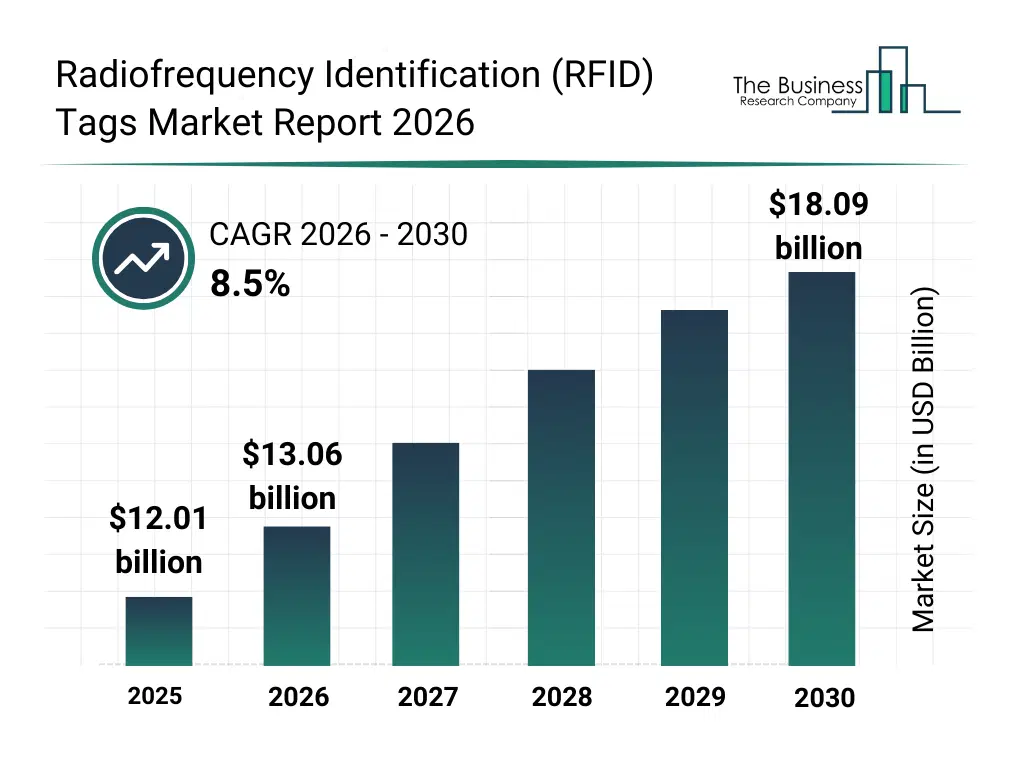
What Is The Radiofrequency Identification (RFID) Tags Market Size and Share 2026?
The radiofrequency identification (rfid) tags market size has grown strongly in recent years. It will grow from $12.01 billion in 2025 to $13.06 billion in 2026 at a compound annual growth rate (CAGR) of 8.7%. The growth in the historic period can be attributed to retail inventory management adoption, declining cost of RFID tags, government mandates for asset tracking, growth in logistics and warehousing, increased focus on theft prevention.What Is The Radiofrequency Identification (RFID) Tags Market Growth Forecast?
The radiofrequency identification (rfid) tags market size is expected to see strong growth in the next few years. It will grow to $18.09 billion in 2030 at a compound annual growth rate (CAGR) of 8.5%. The growth in the forecast period can be attributed to smart factory implementation, expansion of real-time location systems, rising adoption in healthcare asset tracking, demand for contactless identification, growth in smart transportation infrastructure. Major trends in the forecast period include increasing adoption of passive RFID tags, expansion of RFID in supply chain traceability, miniaturization and flexible RFID tag designs, growth of ultra-high frequency RFID deployment, rising demand for durable and on-metal RFID tags.
Global Radiofrequency Identification (RFID) Tags Market Segmentation
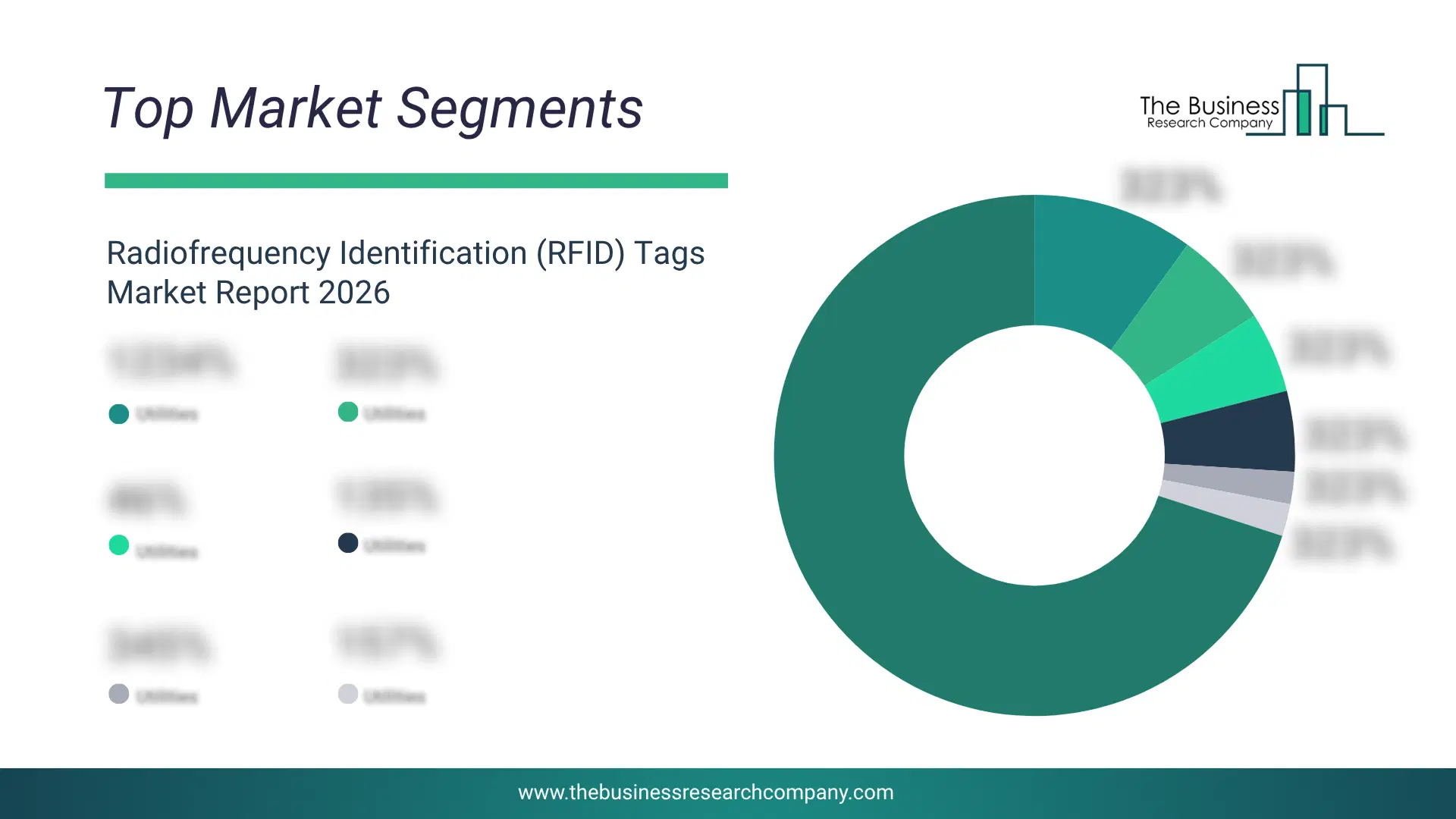
1) By Tag Type: Active RFID, Passive RFID 2) By Material: Plastic, Paper, Glass, Metal, Other Materials 3) By Frequency: Low Frequency, High Frequency, Ultra High Frequency 4) By Application: Industrial, Retail and Wholesale, Healthcare, BFSI, Transportation and Logistics, Government, Other Applications Subsegments: 1) By Active RFID: Battery-Powered Active RFID Tags, Semi-Passive RFID Tags (Battery-Assisted Passive Tags), Real-Time Location System (RTLS) Tags 2) By Passive RFID: High-Frequency (HF) Passive RFID Tags, Low-Frequency (LF) Passive RFID Tags, Ultra-High Frequency (UHF) Passive RFID Tags, NFC (Near Field Communication) Tags, On-Metal Passive RFID Tags The top segments in the radiofrequency identification (rfid) tags market will be: • Passive RFID will reach $15 Billion by 2030. • Active RFID will reach $3 Billion by 2030.What Is The Driver Of The Radiofrequency Identification (RFID) Tags Market?
The rising e-commerce and online retail sales are expected to propel the growth of the RFID tags market in the forecast period. E-commerce (electronic commerce) is the buying and marketing of goods and services over a computer network, most often the internet, as well as the exchange of payments and information. RFID technology gives e-commerce organizations a better picture of the supply chain, allowing them to find what they need to fulfill a customer's request. For instance, in August 2024, according to United States Census Bureau, a US-based government agency, U.S. retail e-commerce sales for the second quarter of 2024 reached an estimated $282.3 billion, marking a 5.3% increase compared to the first quarter of 2023. Therefore, the rising e-commerce and online retail sales drive the growth of the RFID tags market.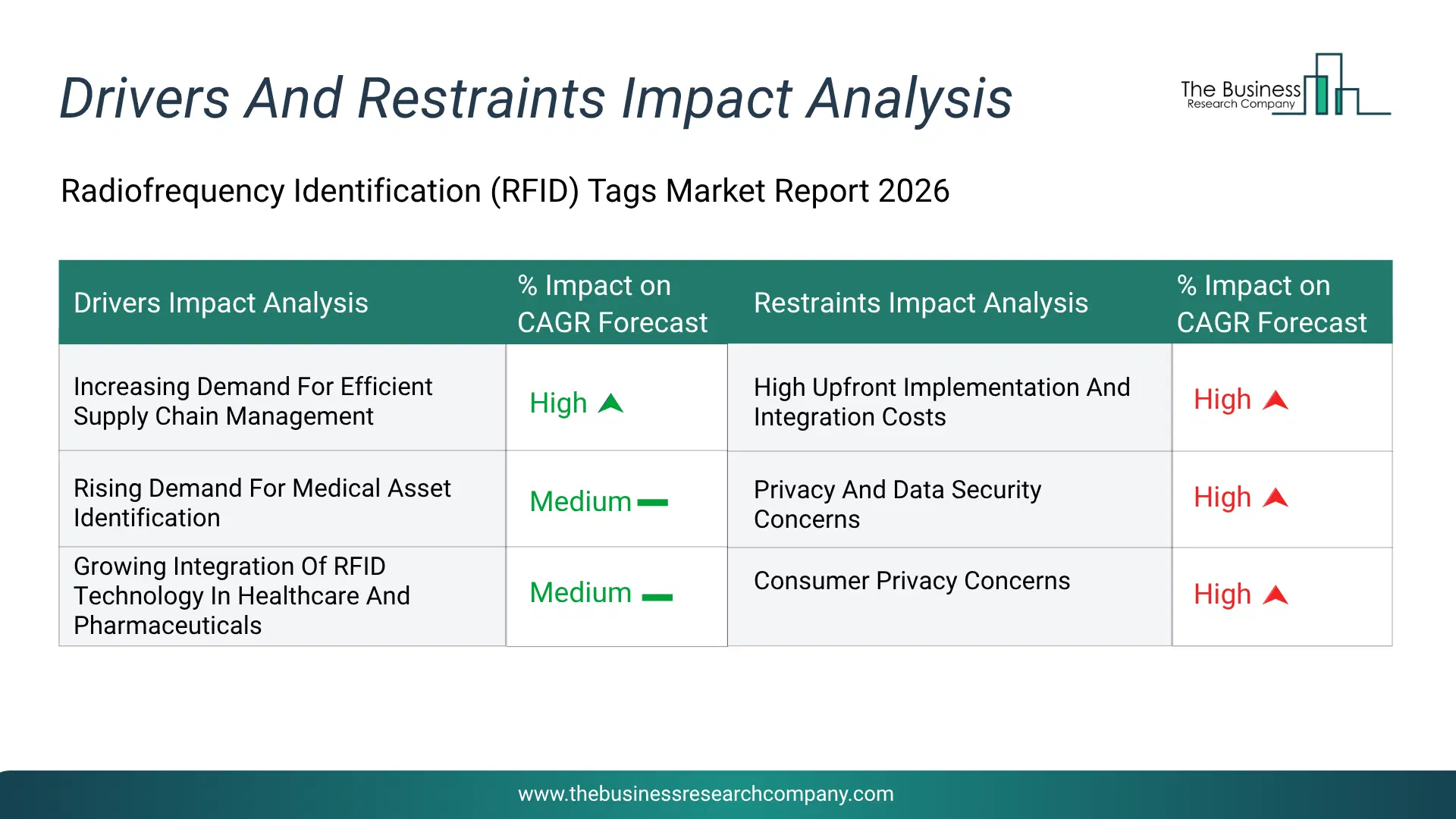
Infographic Chart Showing Key Market Drivers Analysis And Restraints For Radiofrequency Identification (Rfid) Tags Market
The chart presents an impact analysis of key drivers and restraints, quantifying their relative influence on the market's growth rate and helping assess the balance between growth enablers and limiting factors. This chart offers a high-level perspective; the full report contains more detailed insights.
How Will The Drivers Impact Growth In The Global Radiofrequency Identification (RFID) Tags Market?
• Increasing Demand For Efficient Supply Chain Management (High) – During the forecast period, the increasing demand for efficient supply chain management is expected to emerge as a major factor driving the expansion of the radiofrequency identification (RFID) tags market by 2030. organizations are increasingly deploying RFID technology to automate inventory tracking, improve warehouse efficiency, enhance shipment visibility, and reduce manual errors across logistics operations. real-time product identification and traceability help businesses optimize inventory levels, streamline distribution processes, and lower operating costs, supporting wider adoption across retail, manufacturing, and logistics sectors. • Rising Demand For Medical Asset Identification (Medium) – During the forecast period, the rising demand for medical asset identification is expected to emerge as a major factor driving the expansion of the radiofrequency identification (RFID) tags market by 2030. healthcare organizations are increasingly using RFID tags to monitor the location, utilization, and maintenance of critical medical equipment, improving asset availability while reducing equipment loss and operational inefficiencies. the technology also supports better resource management and enhances workflow efficiency within hospitals and healthcare facilities. • Growing Integration Of RFID Technology In Healthcare And Pharmaceuticals (Medium) – During the forecast period, the growing integration of RFID technology in healthcare and pharmaceuticals is expected to act as a key growth catalyst for the radiofrequency identification (RFID) tags market by 2030. rFID-enabled tracking systems improve traceability of medicines, vaccines, medical devices, and laboratory samples while supporting patient safety, counterfeit prevention, inventory automation, and regulatory compliance. the continued digitalization of healthcare infrastructure and pharmaceutical supply chains is further accelerating adoption of RFID-based identification solutions.How Will The Restraints Impact Growth In The Global Radiofrequency Identification (RFID) Tags Market?
• High Upfront Implementation And Integration Costs (High) – During the forecast period, high upfront implementation and integration costs act as a major restraint on the Radiofrequency Identification (RFID) Tags market because deploying an RFID system requires substantial investment in tags, readers, antennas, software platforms, and network infrastructure. Organizations must also integrate RFID solutions with existing enterprise systems such as inventory management and ERP platforms, which can increase implementation complexity and costs. In addition, expenses related to employee training, system maintenance, and periodic upgrades further raise the total cost of ownership. These financial barriers are particularly challenging for small and medium-sized enterprises with limited technology budgets. As a result, many organizations delay or limit RFID adoption, slowing overall market expansion. • Privacy And Data Security Concerns (Medium) – During the forecast period, privacy and data security concerns restrain the Radiofrequency Identification (RFID) Tags market because RFID systems continuously collect and transmit data through wireless communication, making them vulnerable to unauthorized access if not adequately protected. Concerns over data interception, cloning of RFID tags, and cyberattacks have increased as RFID deployments become more widespread. Organizations handling sensitive information must invest in encryption, authentication, and secure access controls to safeguard data, which adds complexity and cost. Regulatory requirements related to data protection also require businesses to implement strict security measures. These concerns can reduce user confidence and slow the adoption of RFID technology across industries. • Consumer Privacy Concerns (Medium) – During the forecast period, consumer privacy concerns are another significant restraint for the Radiofrequency Identification (RFID) Tags market because individuals may worry that RFID-enabled products could be tracked without their knowledge or consent after purchase. The ability of RFID tags to be remotely read raises concerns about unauthorized monitoring of consumer behavior, purchasing patterns, and personal information. These issues have led to increased public scrutiny and stricter regulations governing the use of RFID technology in retail and consumer applications. Businesses must therefore implement privacy safeguards, such as tag deactivation, consumer notifications, and transparent data handling policies. While these measures help build trust, they also increase implementation efforts and may discourage some organizations from adopting RFID solutions on a larger scale.Key Players In The Global Radiofrequency Identification (RFID) Tags Market
Major companies operating in the radiofrequency identification (rfid) tags market are Avery Dennison Corporation; Honeywell International Inc; NXP Semiconductors NV; Identiv Inc; Zebra Technologies Corporation; HID Global; Invengo Information Technology Co Ltd; Nedap; Omni-ID; GAO RFID Inc; Essen RFID; Asset Online Pvt Ltd; Raviraj Technologies; Chipsilicon; Copper Spiral RFID; CFI Global; Zhejiang Laxcen Information Technology Co Ltd; Shenzhen ZD Technology Co Ltd; Chengdu Mind Golden Card System Co Ltd; Guangzhou Qingsong Digital Technology Co Ltd; Shenzhen Udohow Electronics Co Ltd; Vantage Ear Tag RFID Technology Co Ltd; SALTO Systems; Suprema; Alien Technology Corporation; AMS AG; Atmel Corp; CipherLab Co Ltd; Confidex Ltd; Datalogic SPA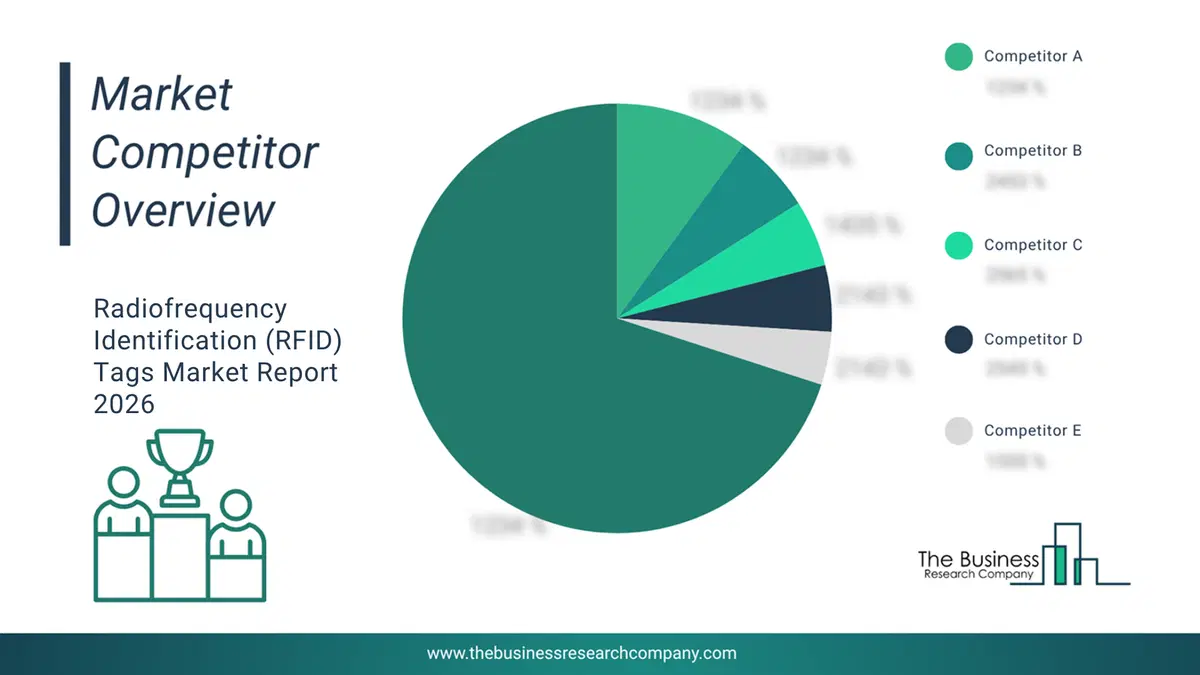
This chart is for illustrative purposes; the full report includes a detailed competitor analysis and comprehensive overview of the top 10 companies in the market.

This chart maps companies by product innovation and brand strength, with bubble size indicating relative revenue, helping identify market leaders, challengers, and niche players. This is an illustrative chart; the full report provides a complete and accurate competitive analysis.
Global Radiofrequency Identification (RFID) Tags Market Trends and Insights
Major companies operating in the Radiofrequency Identification (RFID) tags market are focusing on developing innovative solutions, such as high-performance industrial inlays and tags, to enhance read reliability, speed, and supply chain visibility. High-performance industrial inlays and tags are durable RFID components designed to reliably operate in harsh environments, offering long read ranges, fast scanning, and consistent performance on challenging surfaces like metal or dense packaging. For instance, in August 2024, Avery Dennison Corporation, a US-based materials science and digital identification solutions company, launched its first industrial Ultra High Frequency (UHF) RFID inlays and tags AD Dogbone and AD Squarewave featuring the Impinj M830 chip. Engineered for optimal performance in automotive, logistics, and industrial settings, these tags include 128-bit EPC memory and a 96-bit unique factory-locked TID number, ensuring high data integrity and traceability. Designed for industrial applications, they deliver strong global performance across various materials, support high-speed reading, and operate in the UHF frequency range (860–960 MHz), making them ideal for supply chain and logistics use cases.What Are Latest Mergers And Acquisitions In The Radiofrequency Identification (RFID) Tags Market?
In April 2023, CCL Industries Inc., a Canada‑based specialty packaging and labelling company, acquired eAgile Inc. for $54 million. With this acquisition, CCL Industries aimed to bolster its healthcare and pharmaceutical labeling offering by integrating advanced RFID‑inlay and data‑validation technology. EAgile Inc. is a US-based technology company that specializes in proprietary RFID hardware and software solutions embedded into labels for healthcare mark.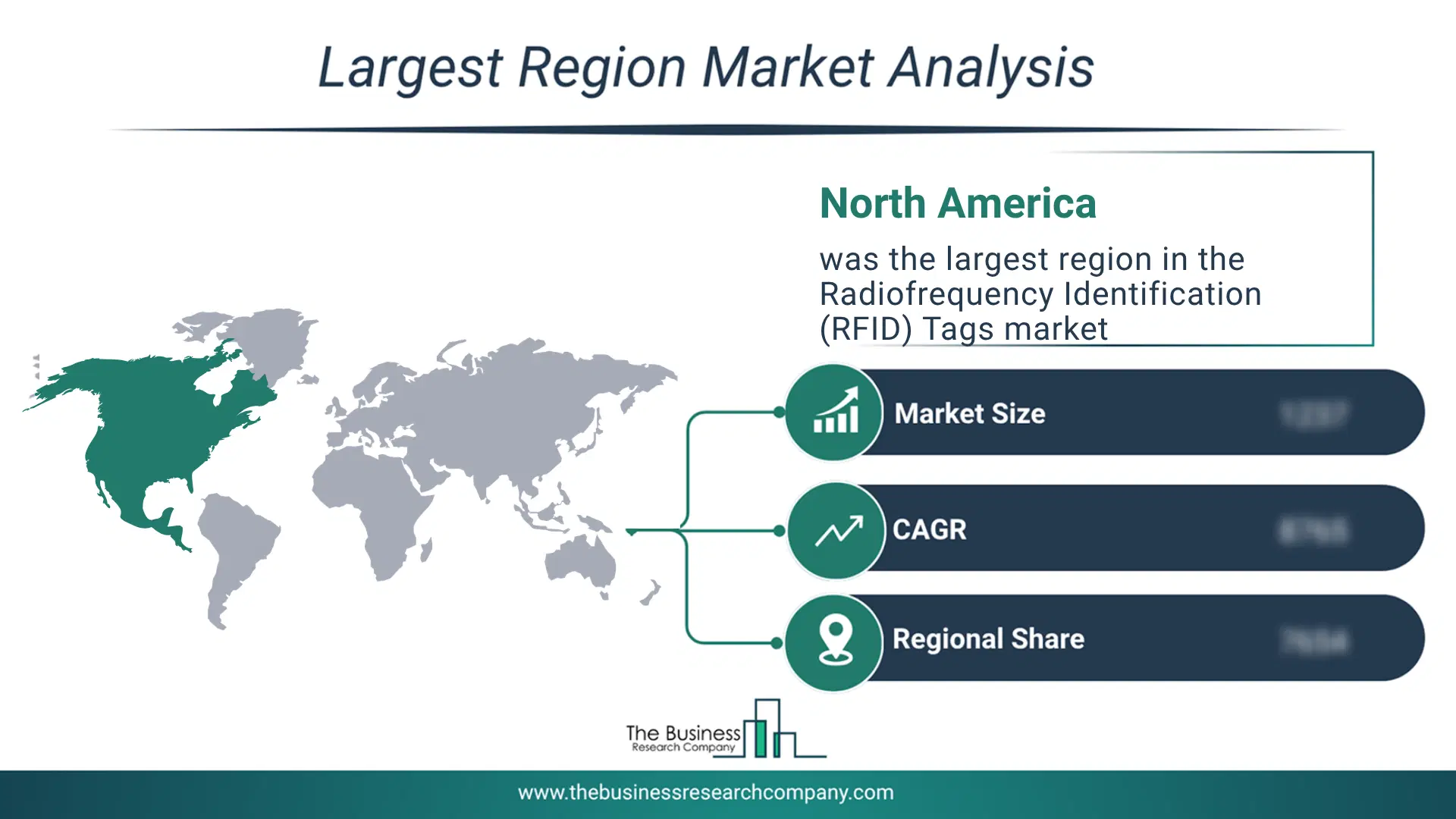
Regional Insights
North America was the largest region in the radio-frequency identification (RFID) tags market in 2025. The regions covered in this market report are Asia-Pacific, South East Asia, Western Europe, Eastern Europe, North America, South America, Middle East, Africa. The countries covered in this market report are Australia, Brazil, China, France, Germany, India, Indonesia, Japan, Taiwan, Russia, South Korea, UK, USA, Canada, Italy, SpainWhat Defines the Radiofrequency Identification (RFID) Tags Market?
The radiofrequency identification (RFID) tags market consists of sales scanning antenna, a transceiver and a transponder. Values in this market are 'factory gate' values, that is the value of goods sold by the manufacturers or creators of the goods, whether to other entities (including downstream manufacturers, wholesalers, distributors, and retailers) or directly to end customers. The value of goods in this market includes related services sold by the creators of the goods.How is Market Value Defined and Measured?
The market value is defined as the revenues that enterprises gain from the sale of goods and/or services within the specified market and geography through sales, grants, or donations in terms of the currency (in USD unless otherwise specified). The revenues for a specified geography are consumption values that are revenues generated by organizations in the specified geography within the market, irrespective of where they are produced. It does not include revenues from resales along the supply chain, either further along the supply chain or as part of other products.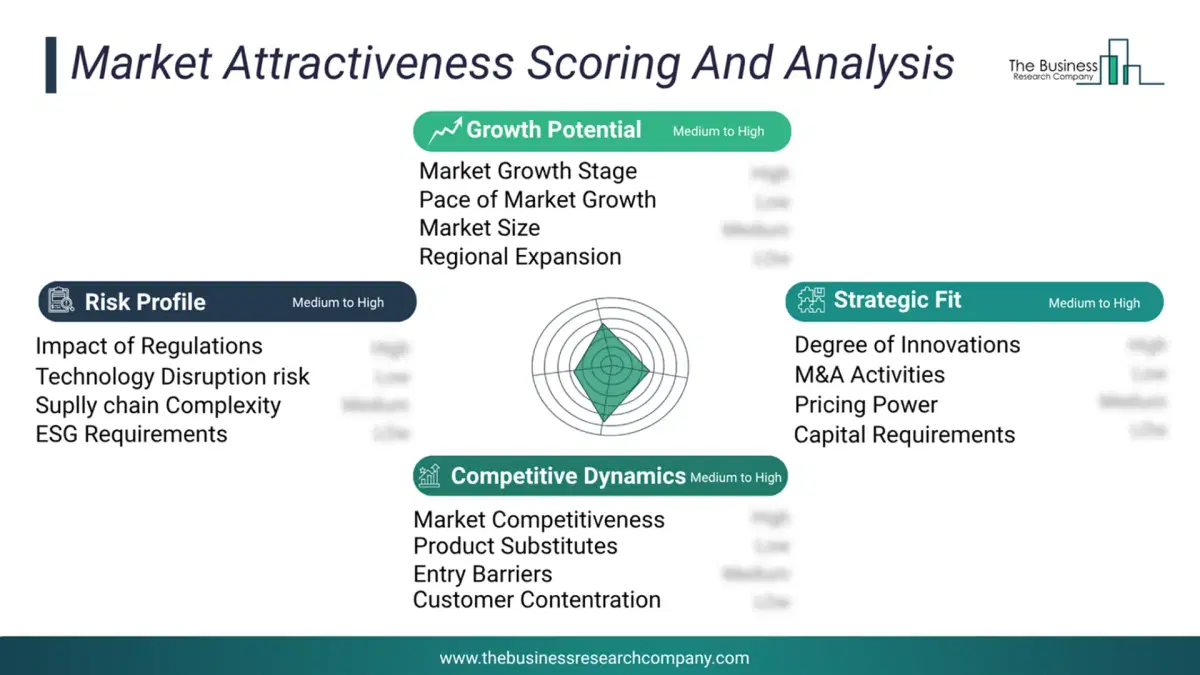
This chart presents market attractiveness based on a quantitative evaluation of growth, competition, strategic alignment, and risk, offering a clear view of opportunity areas for decision-making. This chart is for illustrative purposes; the full report contains the complete analysis.
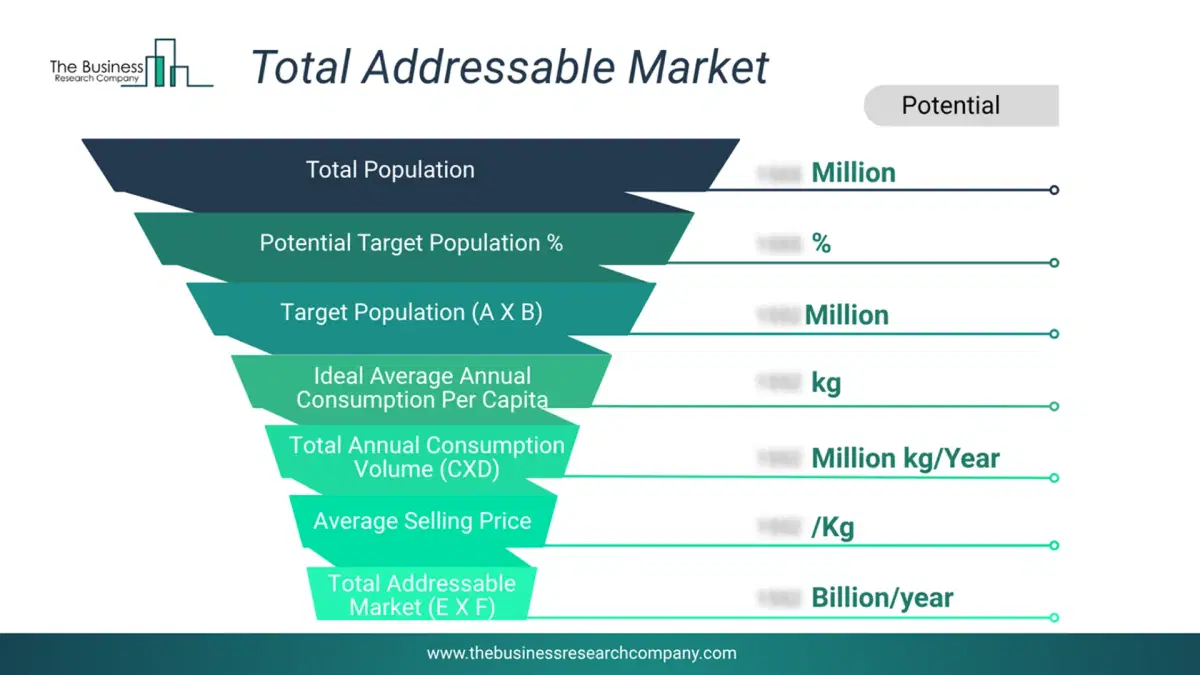
This chart highlights the Total Addressable Market (TAM) by estimating the maximum revenue opportunity using an assumption-driven approach, supporting strategic planning and opportunity sizing across markets. The chart is illustrative; the full report provides a more comprehensive analysis.
What Key Data and Analysis Are Included in the Radiofrequency Identification (RFID) Tags Market Report 2026?
The radiofrequency identification (rfid) tags market research report is one of a series of new reports from The Business Research Company that provides market statistics, including industry global market size, regional shares, competitors with the market share, detailed market segments, market trends and opportunities, and any further data you may need to thrive in the radiofrequency identification (rfid) tags industry. The market research report delivers a complete perspective of everything you need, with an in-depth analysis of the current and future state of the industry.Radiofrequency Identification (RFID) Tags Market Report Forecast Analysis
| Report Attribute | Details |
|---|---|
| Market Size Value In 2026 | $13.06 billion |
| Revenue Forecast In 2030 | $18.09 billion |
| Growth Rate | CAGR of 8.5% from 2026 to 2030 |
| Base Year For Estimation | 2025 |
| Actual Estimates/Historical Data | 2020-2025 |
| Forecast Period | 2026 - 2030 |
| Market Representation | Revenue in USD Billion and CAGR from 2026 to 2030 |
| Segments Covered | Tag Type, Material, Frequency, Application |
| Regional Scope | Asia-Pacific, Western Europe, Eastern Europe, North America, South America, Middle East, Africa |
| Country Scope | The countries covered in the report are Australia, Brazil, China, France, Germany, India, Indonesia, Japan, Taiwan, Russia, South Korea, UK, USA, Canada, Italy, Spain. |
| Key Companies Profiled | Avery Dennison Corporation; Honeywell International Inc; NXP Semiconductors NV; Identiv Inc; Zebra Technologies Corporation; HID Global; Invengo Information Technology Co Ltd; Nedap; Omni-ID; GAO RFID Inc; Essen RFID; Asset Online Pvt Ltd; Raviraj Technologies; Chipsilicon; Copper Spiral RFID; CFI Global; Zhejiang Laxcen Information Technology Co Ltd; Shenzhen ZD Technology Co Ltd; Chengdu Mind Golden Card System Co Ltd; Guangzhou Qingsong Digital Technology Co Ltd; Shenzhen Udohow Electronics Co Ltd; Vantage Ear Tag RFID Technology Co Ltd; SALTO Systems; Suprema; Alien Technology Corporation; AMS AG; Atmel Corp; CipherLab Co Ltd; Confidex Ltd; Datalogic SPA |
| Customization Scope | Request for Customization |
| Pricing And Purchase Options | Explore Purchase Options |