
Serverless Architecture Market Report 2026
Global Outlook – By Service (Automation And Integration, Application Programming Interfaces (APIs) Management, Monitoring, Security, Support And Maintenance, Training And Consulting, Other Services), By Deployment Model (Public Cloud, Private Cloud, Hybrid Cloud), By Organization (Large Enterprise, Small And Medium-Sized Enterprises (SMEs)), By Application (Real-Time File And Stream Processing, Web Application Development, IoT Backend), By Vertical (Information Technology (IT) And Telecommunications, Banking, Financial Services And Insurance (BFSI), Retail, Healthcare, Government, Manufacturing, Media And Entertainment, Other Verticals) – Market Size, Trends, Strategies, and Forecast to 2030
Serverless Architecture Market Overview
• Serverless Architecture market size has reached to $17.81 billion in 2025 • Expected to grow to $50.5 billion in 2030 at a compound annual growth rate (CAGR) of 23.2% • Growth Driver: Serverless Architecture Market Growth Fueled By Rising Demand For DevOps Practices And Cloud Computing • Market Trend: Adoption Of Serverless Vector Database Solutions To Enable Scalable Artificial Intelligence and Machine Learning Applications • North America was the largest region in 2025 and Asia-Pacific is the fastest growing region.What Is Covered Under Serverless Architecture Market?
Serverless architecture is a cloud computing model where the cloud provider manages the infrastructure and automatically allocates resources as needed to execute and scale applications. In a serverless architecture, developers do not need to worry about traditional server management tasks such as provisioning, scaling, and maintaining servers. The main types of services in serverless architecture are automation and integration, application programming interface (API) management, monitoring, security, support and maintenance, training and consulting, and others. Automation and integration involve streamlining processes and connecting systems to enhance operational efficiency and seamless data flow, and serverless architecture facilitates event-driven automation and integration, allowing for seamless execution of functions triggered by events. They are deployed in public cloud, private cloud, and hybrid cloud models in organizations of all sizes, including large enterprises and SMEs. The serverless architecture is used in several applications, such as real-time file and stream processing, web application development, and the IoT backend in end-user verticals such as IT and telecommunications, BFSI, retail, healthcare, government, manufacturing, media and entertainment, and others.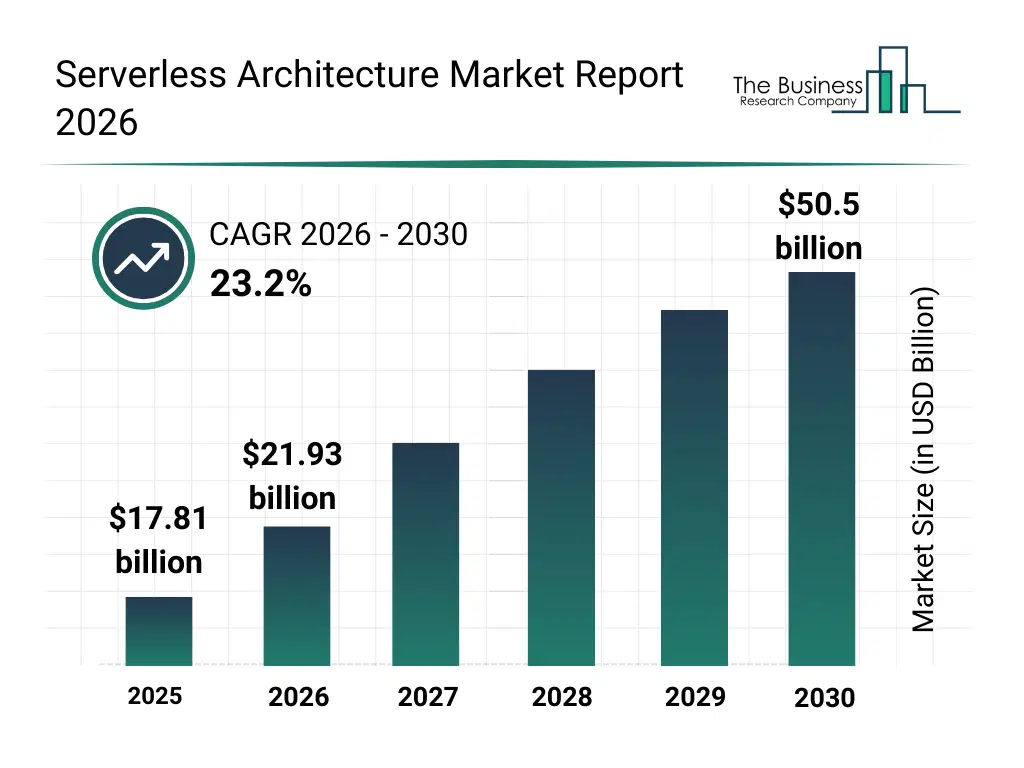
What Is The Serverless Architecture Market Size and Share 2026?
The serverless architecture market size has grown exponentially in recent years. It will grow from $17.81 billion in 2025 to $21.93 billion in 2026 at a compound annual growth rate (CAGR) of 23.1%. The growth in the historic period can be attributed to rapid growth of cloud computing adoption, expansion of web and mobile applications, increasing demand for scalable infrastructure, availability of managed cloud services, growth of microservices architectures.What Is The Serverless Architecture Market Growth Forecast?
The serverless architecture market size is expected to see exponential growth in the next few years. It will grow to $50.5 billion in 2030 at a compound annual growth rate (CAGR) of 23.2%. The growth in the forecast period can be attributed to increasing adoption of serverless frameworks, rising focus on application modernization, expansion of real-time data processing needs, growing demand for agile development environments, increasing investments in cloud-native security. Major trends in the forecast period include increasing adoption of event-driven application models, rising use of api-centric development, growing demand for scalable cloud-native applications, expansion of iot backend serverless deployments, enhanced focus on cost-optimized computing.
Global Serverless Architecture Market Segmentation
1) By Service: Automation And Integration, Application Programming Interfaces (APIs) Management, Monitoring, Security, Support And Maintenance, Training And Consulting, Other Services 2) By Deployment Model: Public Cloud, Private Cloud, Hybrid Cloud 3) By Organization: Large Enterprise, Small And Medium-Sized Enterprises (SMEs) 4) By Application: Real-Time File And Stream Processing, Web Application Development, IoT Backend 5) By Vertical: Information Technology (IT) And Telecommunications, Banking, Financial Services And Insurance (BFSI), Retail, Healthcare, Government, Manufacturing, Media And Entertainment, Other Verticals Subsegments: 1) By Automation And Integration: Workflow Automation, Event-Driven Automation 2) By Application Programming Interfaces (APIs) Management: API Gateway Services, API Lifecycle Management 3) By Monitoring: Performance Monitoring, Logging and Analytics 4) By Security: Access Control, Data Encryption 5) By Support And Maintenance: Technical Support, System Updates 6) By Training And Consulting: Implementation Consulting, Best Practices Training 7) By Other Services: Custom Development, Migration ServicesWhat Is The Driver Of The Serverless Architecture Market?
The rising need for serverless computing for DevOps practices is expected to propel the growth of the serverless architecture market going forward. Serverless computing is a cloud computing paradigm that enables developers to create and deploy applications on externally managed infrastructure. This eliminates concerns regarding capacity planning, configuration, management, maintenance, fault tolerance, or scaling of containers, virtual machines (VMs), or physical servers. Serverless cloud computing enhances DevOps practices by enabling automatic scaling, reducing operational complexity, and facilitating the rapid deployment of microservices. For instance, in January 2024, according to AAG IT, a UK-based IT services company, Infrastructure as a Service (IaaS) revenues increased by 29.7%, totaling $120.3 billion in 2022. Further, over 98% of organizations leverage cloud services, including SaaS applications and fully cloud-native networks. Furthermore, projections indicate a 23% growth in cloud infrastructure spending for 2023. Therefore, the rising need for serverless computing for DevOps practices is driving the growth of the serverless architecture industry.Key Players In The Global Serverless Architecture Market
Major companies operating in the serverless architecture market are Google LLC, Microsoft Corporation, Amazon Web Services Inc., International Business Machines Corporation, Cisco Systems Inc., Oracle Corporation, Broadcom Inc., Salesforce.com Inc, NTT Data Corporation, VMware Inc, Alibaba Cloud, Palo Alto Networks Inc, Twilio Inc, Red Hat Inc, Rackspace Technology Inc, Tibco Software, Cloudflare Inc, Dynatrace Inc., Auth0 Inc, Joyent Inc, Spotinst Ltd, Fiorano Software Inc., Platform9 Systems Inc, PubNub Inc, Iron.io Inc, Nimbella Corporation, Stackery Inc, OpenLegacy Inc
This chart is for illustrative purposes; the full report includes a detailed competitor analysis and comprehensive overview of the top 10 companies in the market.
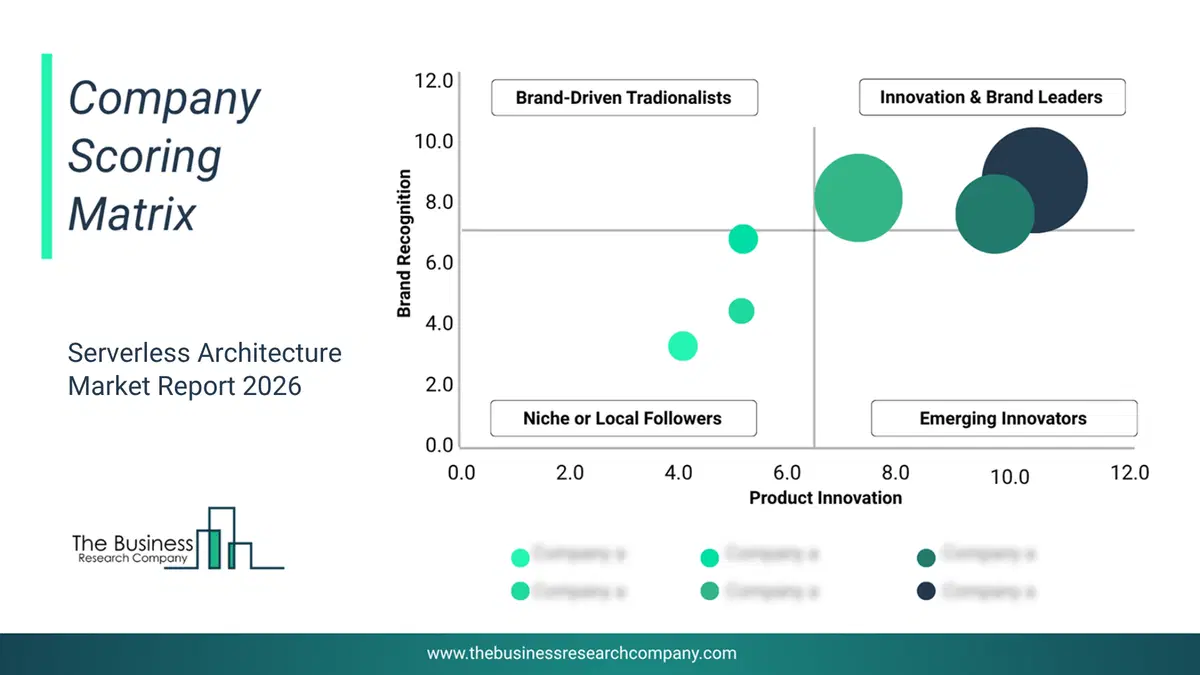
This chart maps companies by product innovation and brand strength, with bubble size indicating relative revenue, helping identify market leaders, challengers, and niche players. This is an illustrative chart; the full report provides a complete and accurate competitive analysis.
Global Serverless Architecture Market Trends and Insights
Major companies are operating in the serverless architecture market, focusing on developing technological advancements such as serverless vector-database platforms for scalable, cost-efficient, and real-time artificial intelligence and machine learning applications. A serverless vector-database platform abstracts away server infrastructure management, including provisioning, scaling, and maintenance, enabling developers to focus purely on application logic while paying only for resources consumed, unlike traditional server- or VM-based databases that require manual capacity planning. For instance, in January 2024, Pinecone Systems Inc., a US-based vector-database company, launched Pinecone Serverless, a serverless vector-database platform. The product separates compute and storage for cost efficiency, supports large-scale vector clustering and fast retrieval, provides multi-tenant architecture, and integrates with artificial intelligence and machine learning tools such as LangChain, Anthropic, and Cohere, enabling developers to build knowledge-driven applications faster while reducing operational overhead.What Are Latest Mergers And Acquisitions In The Serverless Architecture Market?
In April 2024, Cloudflare, a US-based technology company and cloud infrastructure provider, acquired Baselime for an undisclosed amount. The acquisition will also help integrate real-time logging, metrics, and tracing functionalities into Cloudflare's serverless platform, allowing for better insight and performance tracking of serverless workloads. Baselime is a UK-based platforms, specializes in serverless cloud application development, offering a robust framework for serverless computing, which aligns well with Cloudflare’s strategy to enhance its serverless architecture tools.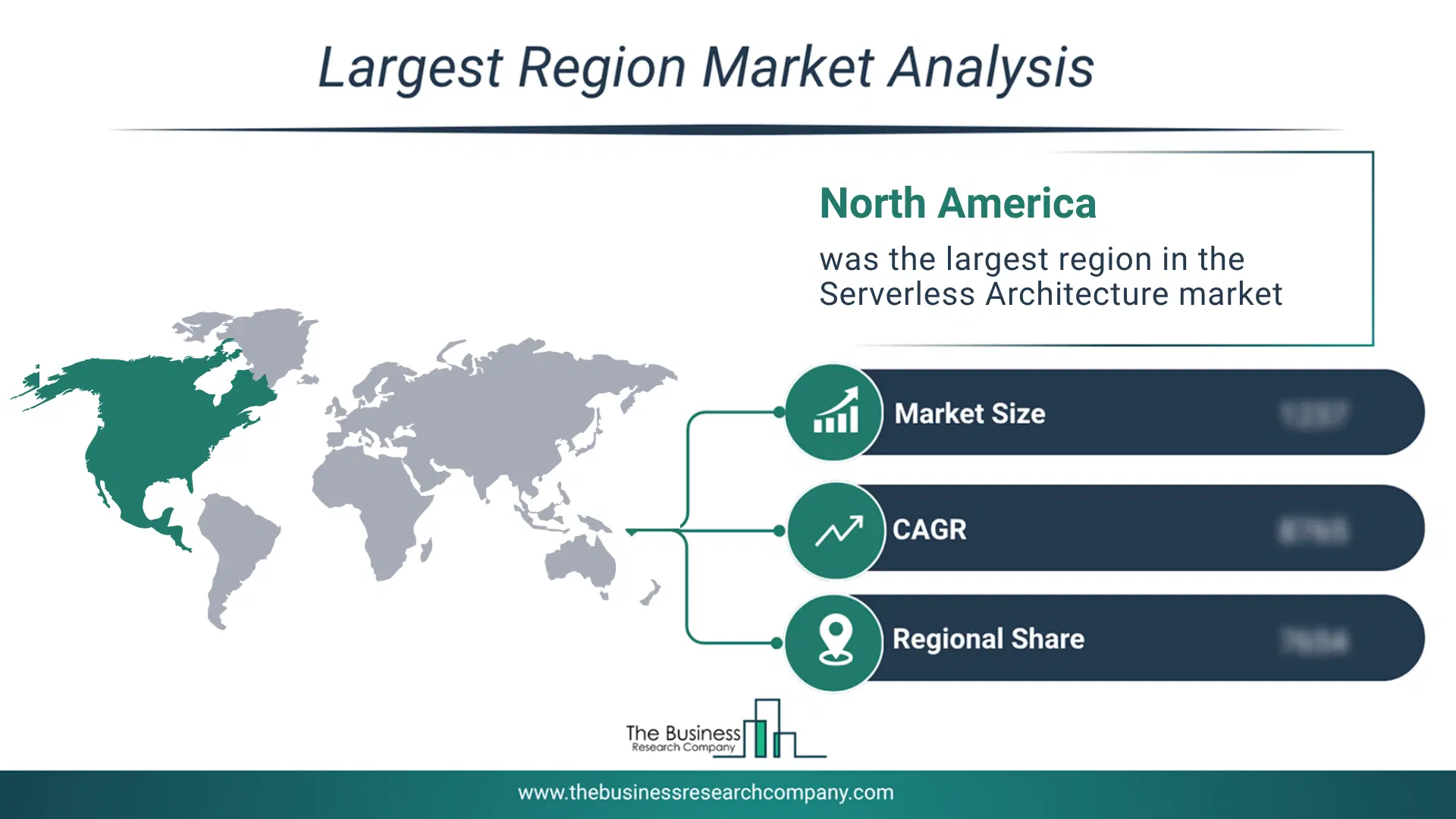
Regional Insights
North America was the largest region in the serverless architecture market in 2025. Asia-Pacific is expected to be the fastest-growing region in the forecast period. The regions covered in this market report are Asia-Pacific, South East Asia, Western Europe, Eastern Europe, North America, South America, Middle East, Africa. The countries covered in this market report are Australia, Brazil, China, France, Germany, India, Indonesia, Japan, Taiwan, Russia, South Korea, UK, USA, Canada, Italy, Spain.What Defines the Serverless Architecture Market?
The serverless architecture market includes revenues earned by entities through functions as a service (FaaS), automatic resource provisioning, identity and access management (IAM), monitoring and logging, and networking services. The market value includes the value of related goods sold by the service provider or included within the service offering. The serverless architecture market consists of sales of backend as a service (BaaS), event sources and triggers, serverless API gateways, serverless databases, and serverless containers. Values in this market are ‘factory gate’ values, that is the value of goods sold by the manufacturers or creators of the goods, whether to other entities (including downstream manufacturers, wholesalers, distributors and retailers) or directly to end customers. The value of goods in this market includes related services sold by the creators of the goods.How is Market Value Defined and Measured?
The market value is defined as the revenues that enterprises gain from the sale of goods and/or services within the specified market and geography through sales, grants, or donations in terms of the currency (in USD unless otherwise specified). The revenues for a specified geography are consumption values that are revenues generated by organizations in the specified geography within the market, irrespective of where they are produced. It does not include revenues from resales along the supply chain, either further along the supply chain or as part of other products.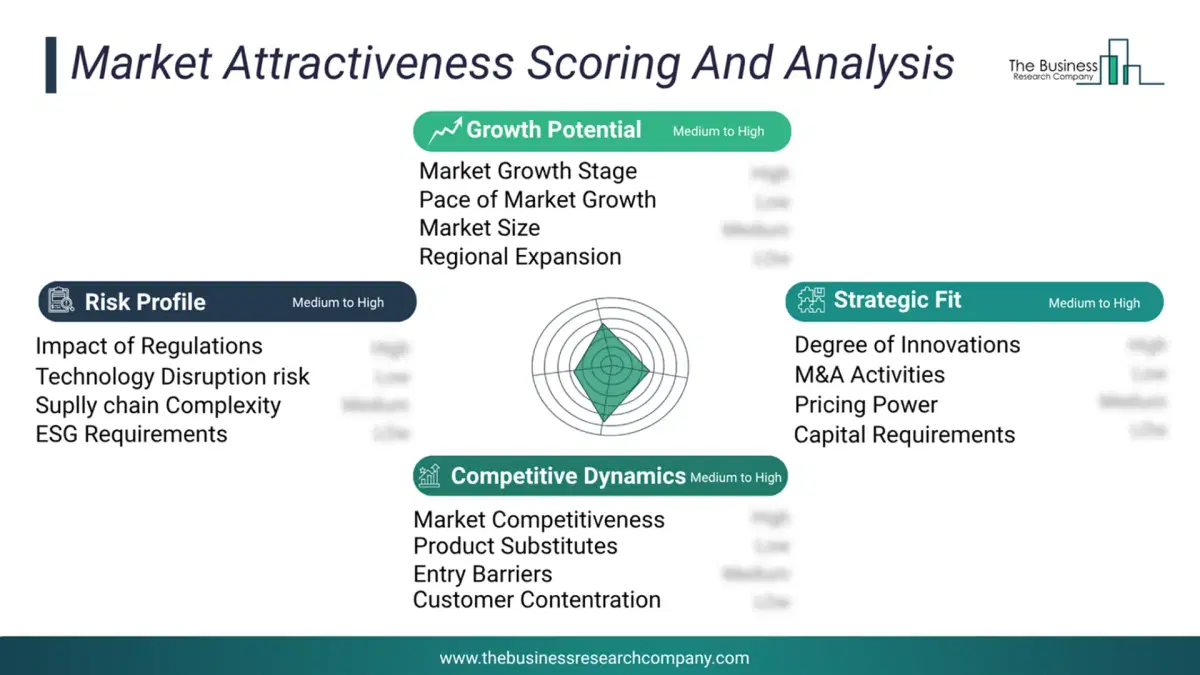
This chart presents market attractiveness based on a quantitative evaluation of growth, competition, strategic alignment, and risk, offering a clear view of opportunity areas for decision-making. This chart is for illustrative purposes; the full report contains the complete analysis.
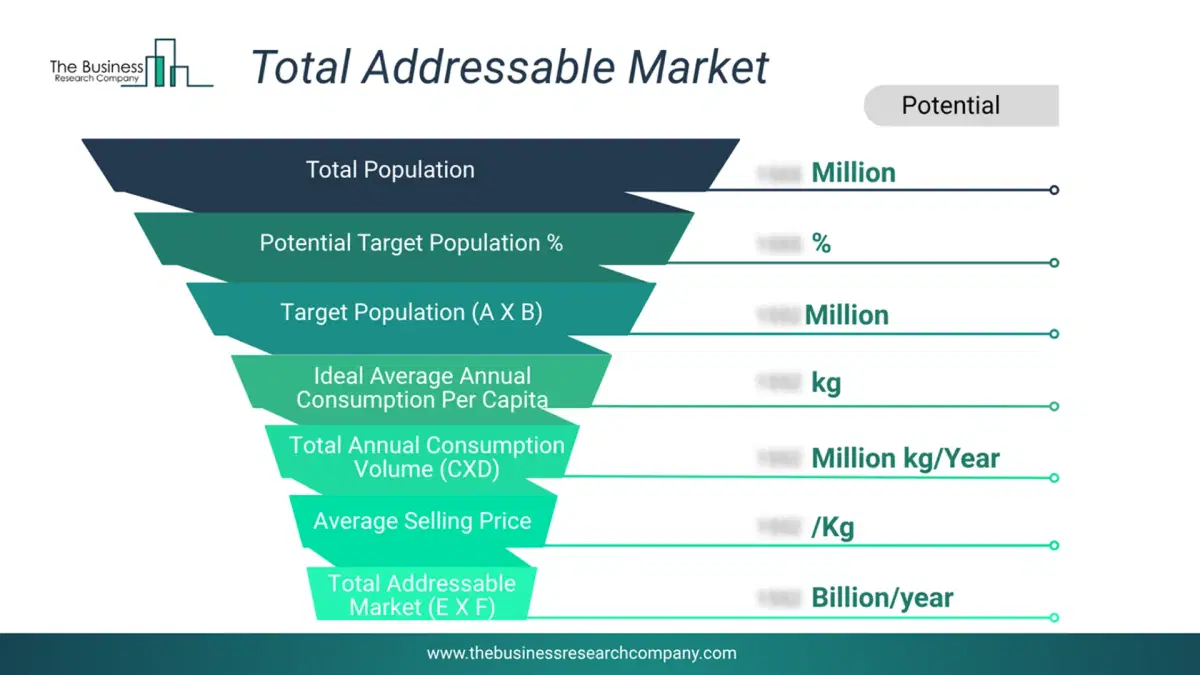
This chart highlights the Total Addressable Market (TAM) by estimating the maximum revenue opportunity using an assumption-driven approach, supporting strategic planning and opportunity sizing across markets. The chart is illustrative; the full report provides a more comprehensive analysis.
What Key Data and Analysis Are Included in the Serverless Architecture Market Report 2026?
The serverless architecture market research report is one of a series of new reports from The Business Research Company that provides market statistics, including industry global market size, regional shares, competitors with the market share, detailed market segments, market trends and opportunities, and any further data you may need to thrive in the serverless architecture industry. The market research report delivers a complete perspective of everything you need, with an in-depth analysis of the current and future state of the industry.Serverless Architecture Market Report Forecast Analysis
| Report Attribute | Details |
|---|---|
| Market Size Value In 2026 | $21.93 billion |
| Revenue Forecast In 2030 | $50.5 billion |
| Growth Rate | CAGR of 23.2% from 2026 to 2030 |
| Base Year For Estimation | 2025 |
| Actual Estimates/Historical Data | 2020-2025 |
| Forecast Period | 2026 - 2030 |
| Market Representation | Revenue in USD Billion and CAGR from 2026 to 2030 |
| Segments Covered | Service, Deployment Model, Organization, Application, Vertical |
| Regional Scope | Asia-Pacific, Western Europe, Eastern Europe, North America, South America, Middle East, Africa |
| Country Scope | The Countries Covered In This Market Report Are Australia, Brazil, China, France, Germany, India, Indonesia, Japan, Taiwan, Russia, South Korea, Uk, Usa, Canada, Italy, Spain. |
| Key Companies Profiled | Google LLC, Microsoft Corporation, Amazon Web Services Inc., International Business Machines Corporation, Cisco Systems Inc., Oracle Corporation, Broadcom Inc., Salesforce.com Inc, NTT Data Corporation, VMware Inc, Alibaba Cloud, Palo Alto Networks Inc, Twilio Inc, Red Hat Inc, Rackspace Technology Inc, Tibco Software, Cloudflare Inc, Dynatrace Inc., Auth0 Inc, Joyent Inc, Spotinst Ltd, Fiorano Software Inc., Platform9 Systems Inc, PubNub Inc, Iron.io Inc, Nimbella Corporation, Stackery Inc, OpenLegacy Inc |
| Customization Scope | Request for Customization |
| Pricing And Purchase Options | Explore Purchase Options |