
Smart Airport Market Report 2026
Global Outlook – By Services (Smart Transport And Parking Services, Smart Retail, Hospitality And Entertainment Services, Smart Workplace Services, Smart Airport Processes, Smart Business To Business Services), By Infrastructure (Endpoint Devices, Communication Systems, Passenger, Cargo and Baggage Ground Handling Control, Air/Ground Traffic Control, Security Systems, Other Infrastructures), By Location (Landside, Airside, Terminal Side) – Market Size, Trends, Strategies, and Forecast to 2030
Smart Airport Market Overview
• Smart Airport market size has reached to $9.48 billion in 2025 • Expected to grow to $17.62 billion in 2030 at a compound annual growth rate (CAGR) of 13% • Growth Driver: Increasing Aircraft Passenger Traffic Drives Growth Of The Smart Airport Market • Market Trend: Elevating Airport Performance Through Data-Driven Operational Intelligence • North America was the largest region in 2025 and Asia-Pacific is the fastest growing region.Market Gains By 2030 – Top Opportunities By Segment
Market Gain identifies the most promising market opportunities by highlighting the segments or products expected to generate the highest incremental revenue growth over the next five years.
What Is Covered Under Smart Airport Market?
Smart airports are airports that rely on the use of connected technologies such as intelligent building management, cyber security, GPS and sensor, Internet of Things (IoT), blockchain, and Artificial Intelligence (AI) to enable operational employees in performing planning and operational chores digitally while also optimizing passenger flows and staff activities around the airport. The main types of smart airport services include smart transport and parking services, smart retail, hospitality and entertainment services, smart workplace services, smart airport processes, smart business to business services. By infrastructure, types of smart airport products include endpoint devices, communication systems, passenger, cargo, and baggage ground handling control, air/ground traffic control, security systems, and others. Smart airport products and services are used in landside, airside, and terminal side locations. They are mainly used in core applications and business applications. Major end-users of smart airport are the implementation and upgrades and services industries.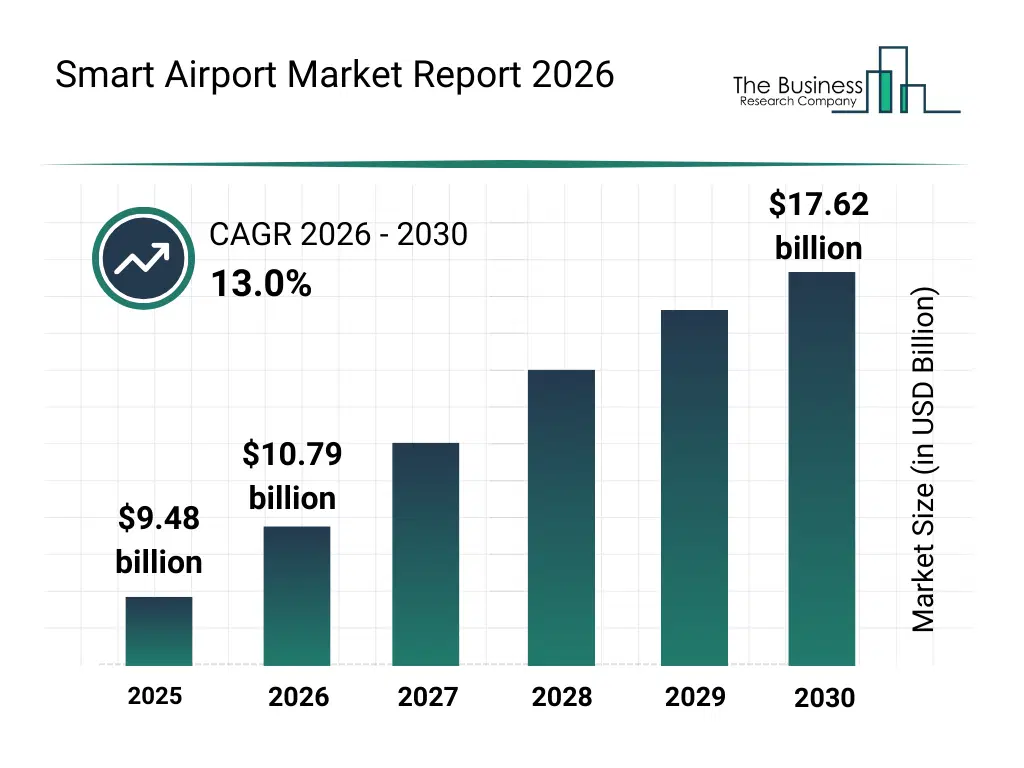
What Is The Smart Airport Market Size and Share 2026?
The smart airport market size has grown rapidly in recent years. It will grow from $9.48 billion in 2025 to $10.79 billion in 2026 at a compound annual growth rate (CAGR) of 13.8%. The growth in the historic period can be attributed to expansion of global air travel demand, modernization of airport infrastructure, increasing passenger traffic volumes, adoption of digital airport management systems, rising investments in aviation security.What Is The Smart Airport Market Growth Forecast?
The smart airport market size is expected to see rapid growth in the next few years. It will grow to $17.62 billion in 2030 at a compound annual growth rate (CAGR) of 13.0%. The growth in the forecast period can be attributed to increasing investments in smart airport ecosystems, rising demand for contactless passenger services, expansion of data-driven airport management platforms, growing focus on sustainability in airport operations, increasing adoption of autonomous ground handling systems. Major trends in the forecast period include increasing deployment of ai-enabled airport operations systems, rising adoption of smart passenger flow management solutions, growing integration of iot-based airport infrastructure, expansion of automated security and screening processes, enhanced focus on energy-efficient airport operations.
Global Smart Airport Market Segmentation
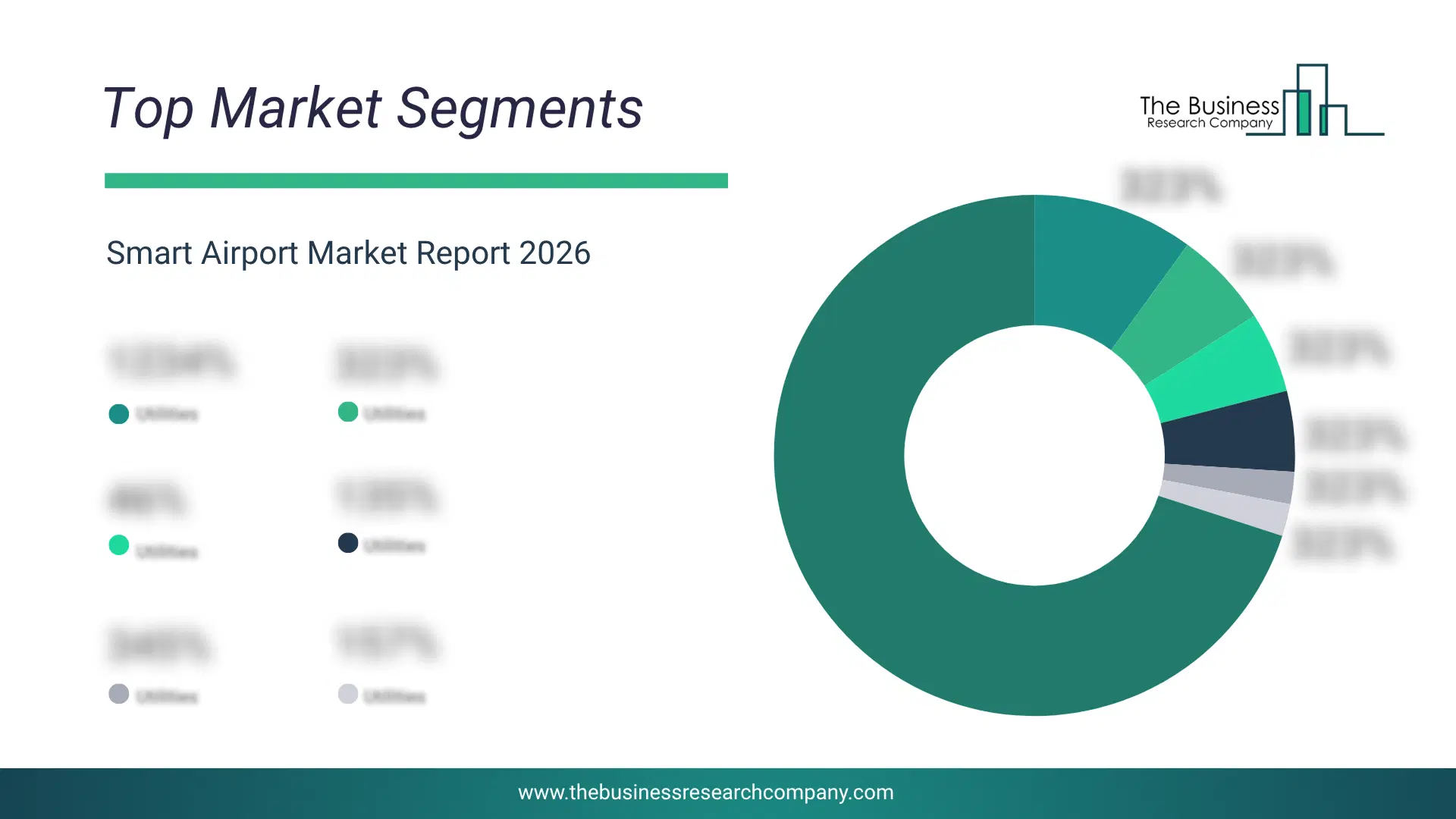
1) By Services: Smart Transport And Parking Services, Smart Retail, Hospitality And Entertainment Services, Smart Workplace Services, Smart Airport Processes, Smart Business To Business Services 2) By Infrastructure: Endpoint Devices, Communication Systems, Passenger, Cargo and Baggage Ground Handling Control, Air/Ground Traffic Control, Security Systems, Other Infrastructures 3) By Location: Landside, Airside, Terminal Side Subsegments: 1) By Smart Transport And Parking Services: Intelligent Transportation Systems (ITS), Smart Parking Solutions, Airport Shuttle Services 2) By Smart Retail, Hospitality And Entertainment Services: Mobile Retail Applications, Digital Signage And Advertising, Airport Lounges And Dining Options 3) By Smart Workplace Services: Employee Management Systems, Collaboration And Communication Tools, Security And Access Control Systems 4) By Smart Airport Processes: Automated Check-In Solutions, Baggage Tracking Systems, Security Screening Automation 5) By Smart Business To Business Services: Data Analytics Services, Operational Integration Solutions, Supply Chain Management Services The top segments in the smart airport market will be: • Smart Airport Processes will reach $7 Billion by 2030. • Smart Transport And Parking Services will reach $4 Billion by 2030. • Smart Retail, Hospitality And Entertainment Services will reach $3 Billion by 2030. • Smart Business To Business Services will reach $2 Billion by 2030. • Smart Workplace Services will reach $2 Billion by 2030.What Is The Driver Of The Smart Airport Market?
The increasing aircraft passenger traffic is significantly contributing to the growth of the smart airport market going forward. The term increasing aircraft passengers refers to the growing number of individuals traveling on airplanes. The increasing global passenger traffic and air travel demand are pushing airports to adopt smart solutions to enhance efficiency and passenger experience. For instance, in September 2023, according to the data released by the Airports Council International (ACI) a Canada-based airport authorities aimed at uniting industry practices for airport standards, the global passenger traffic in aviation is expected to increase to 9.4 billion passengers in 2024 from 8.6 billion passengers in 2023. Therefore, the increasing aircraft passenger traffic will drive the smart airport industry going forward.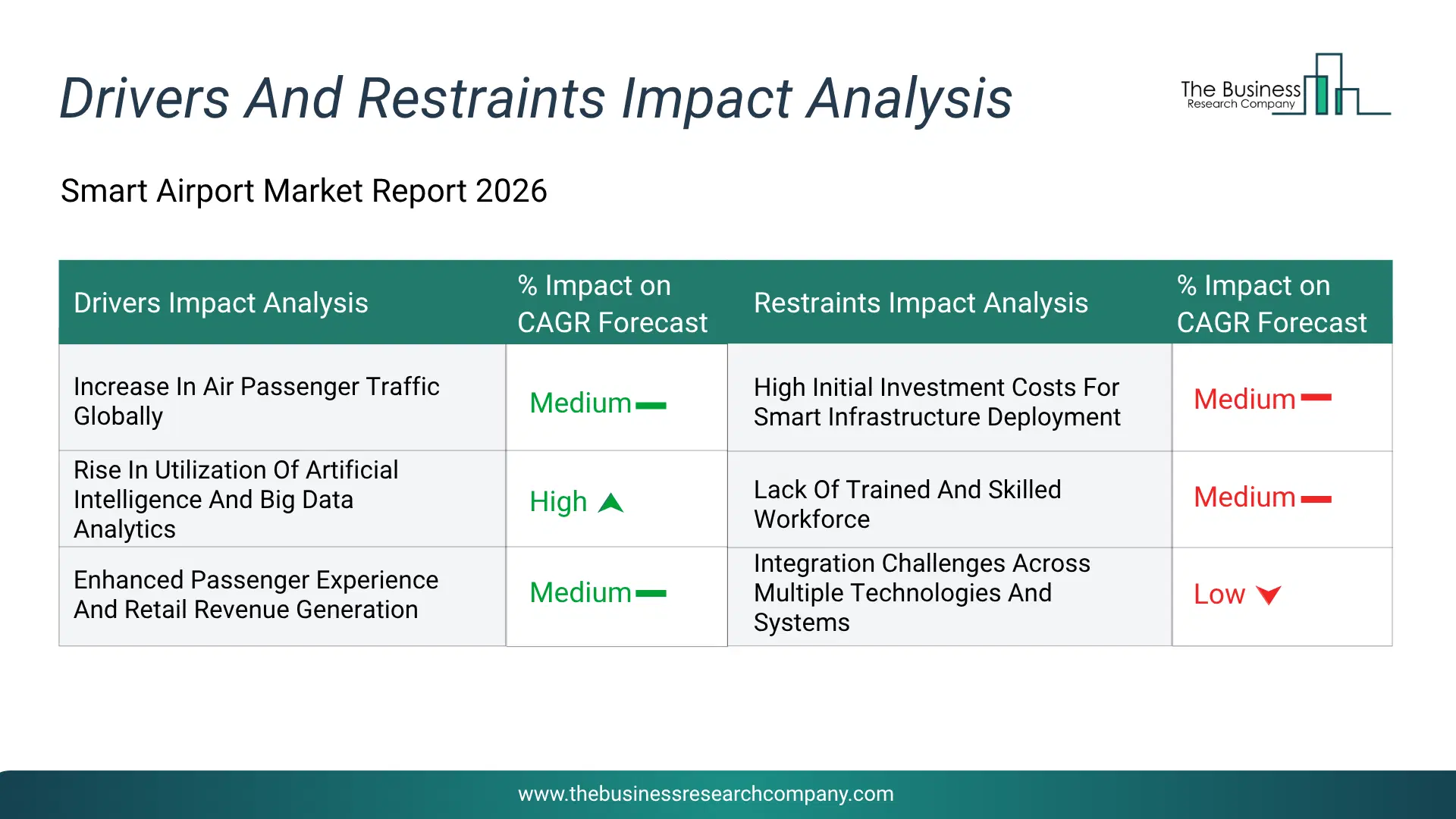
Infographic Chart Showing Key Market Drivers Analysis And Restraints For Smart Airport Market
The chart presents an impact analysis of key drivers and restraints, quantifying their relative influence on the market's growth rate and helping assess the balance between growth enablers and limiting factors. This chart offers a high-level perspective; the full report contains more detailed insights.
How Will The Drivers Impact Growth In The Global Smart Airport Market?
• Increase In Air Passenger Traffic Globally (Medium) – During the forecast period, the increase in air passenger traffic globally is expected to emerge as a major factor driving the expansion of the smart airport market by 2030. The increase in air passenger traffic globally is driving the smart airport market as airports increasingly adopt intelligent technologies to automate check-in, baggage handling, security screening, and boarding processes while improving passenger flow, maximizing terminal capacity, and reducing operational delays. • Rise In Utilization Of Artificial Intelligence And Big Data Analytics (High) – During the forecast period, the rise in utilization of artificial intelligence and big data analytics is expected to emerge as a major factor driving the expansion of the smart airport market by 2030. This is because AI-powered systems and advanced analytics optimize airport operations through predictive maintenance, intelligent security monitoring, flight scheduling, resource allocation, and data-driven decision-making, improving operational efficiency while minimizing disruptions and costs. • Enhanced Passenger Experience And Retail Revenue Generation (Medium) – During the forecast period, the enhanced passenger experience and retail revenue generation are expected to act as a key growth catalyst for the smart airport market by 2030. This is supporting the smart airport market as biometric identification, self-service kiosks, digital wayfinding, personalized mobile applications, and targeted retail engagement solutions create seamless passenger journeys while increasing commercial revenue opportunities across airport facilities.How Will The Restraints Impact Growth In The Global Smart Airport Market?
• High Initial Investment Costs For Smart Infrastructure Deployment (Medium) – During the forecast period, the high initial investment costs remain a significant restraint for the smart airport market because implementing advanced digital infrastructure requires substantial capital expenditure. Airports must invest in IoT sensors, AI platforms, biometric systems, cybersecurity solutions, smart communication networks, and integrated software platforms. The additional expenses associated with system integration, infrastructure upgrades, maintenance, and employee training further increase project costs. Smaller regional airports often face financial constraints that delay modernization initiatives. Long investment recovery periods can discourage stakeholders from adopting comprehensive smart airport solutions. These financial barriers slow technology deployment and limit market expansion, particularly in developing regions. • Lack Of Trained And Skilled Workforce (High) – During the forecast period, the lack of trained and skilled professionals restrains the smart airport market by limiting the effective deployment and management of advanced technologies. Smart airport ecosystems require expertise in artificial intelligence, cybersecurity, cloud computing, IoT, data analytics, and automated airport operations. Many airports struggle to recruit or retain personnel capable of operating and maintaining these complex digital systems. Insufficient technical knowledge can lead to implementation delays, operational inefficiencies, and increased cybersecurity risks. Continuous workforce training also demands additional financial and organizational resources. This shortage of specialized talent slows digital transformation and reduces the pace of smart airport adoption across many regions. • Integration Challenges Across Multiple Technologies And Systems (Medium) – During the forecast period, the integration challenges across multiple technologies and systems present a major obstacle to the smart airport market because airports operate numerous legacy platforms alongside newly deployed digital solutions. Combining systems for baggage handling, security, passenger processing, air traffic management, and facility operations requires seamless interoperability. Differences in communication protocols, software architectures, and vendor standards often create compatibility issues. Integration complexity can increase project timelines, implementation costs, and operational risks during system upgrades. Maintaining uninterrupted airport operations while introducing new technologies further complicates deployment. These technical challenges delay modernization efforts and hinder the widespread adoption of fully integrated smart airport ecosystems.Key Players In The Global Smart Airport Market
Major companies operating in the smart airport market are Amadeus IT Group SA; Cisco Systems Inc.; Collins Aerospace; Daifuku Co. Ltd.; Honeywell International Inc.; Huawei Technologies Co. Ltd.; International Business Machines Corporation; Indra Sistemas S.A.; L3Harris Technologies Inc.; Raytheon Technologies Corporation; Lufthansa Systems GmbH & Co. KG; Sabre Corporation; Siemens AG; Société Internationale de Télécommunications Aéronautiques (SITA); Thales Group; T-Systems International GmbH; Vision-Box Inc.; Wipro Limited; Zensors Inc.; ADELTE – The Boarding Company; Deerns Airport System Consultants; Gentrack Group Limited; Beumer Group GmbH & Co. KG; Bosch Security Systems GmbH; Schneider Electric SE.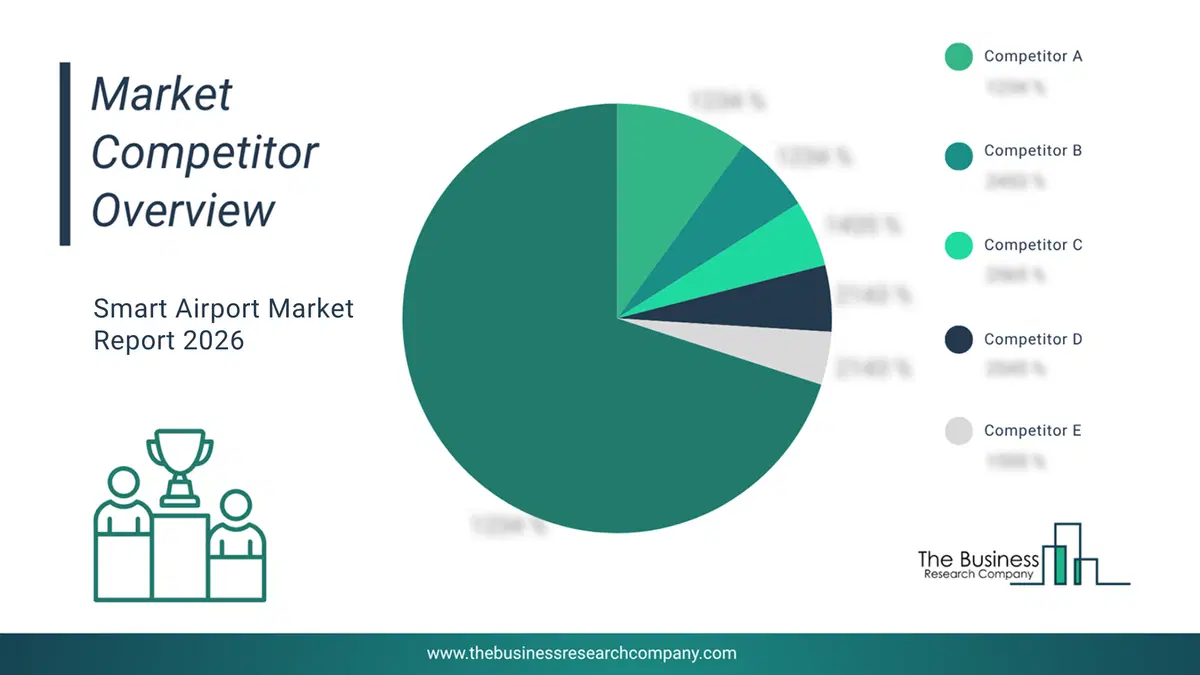
This chart is for illustrative purposes; the full report includes a detailed competitor analysis and comprehensive overview of the top 10 companies in the market.
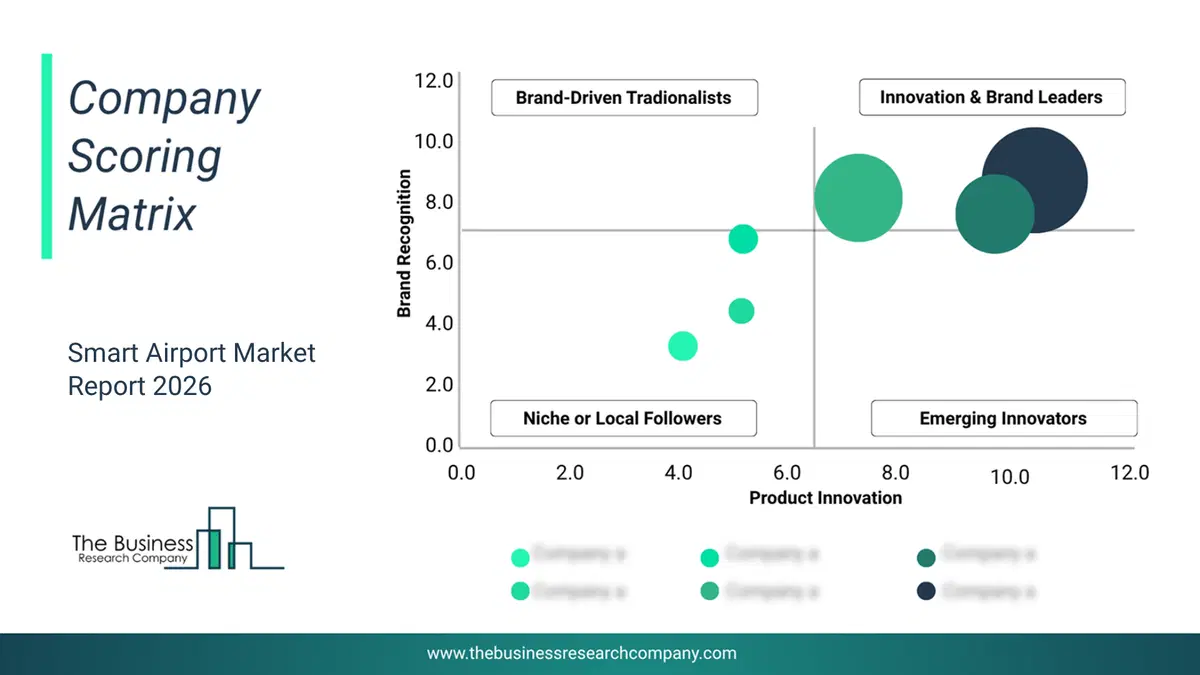
This chart maps companies by product innovation and brand strength, with bubble size indicating relative revenue, helping identify market leaders, challengers, and niche players. This is an illustrative chart; the full report provides a complete and accurate competitive analysis.
Global Smart Airport Market Trends and Insights
Major companies operating in the smart airport market are focusing on leveraging innovative technologies, such as intelligent operation centres (IOCs) for airport management, to enhance operational efficiency, safety, and passenger experience. Intelligent operation centres (IOCs) are integrated digital platforms that use AI, big data, and cloud computing to centralize and analyze airport operations in real time, helping airports improve decision-making, predict disruptions, optimize resource allocation, and ensure smoother, more efficient passenger and flight management. For instance, in April 2025, Huawei Technologies Co. Ltd., a China based technology company, launched its Smart Airport Intelligent Operation Center (IOC), an advanced solution designed after 2022. The IOC connects more than 30 airport production systems onto a single map, uses AI algorithms to predict aircraft docking times and optimise resource deployment, improves departure punctuality by about 5%, enables proactive disruption handling and strengthens security via integrated data and analytics.What Are Latest Mergers And Acquisitions In The Smart Airport Market?
In January 2024, TKH Group N.V., an Netherlands-based technology company, acquired JCAI Inc. (JCAII) for an undisclosed amount. The aim of the acquisition is to enhance and accelerate the development of smart airfield technologies and traffic guidance systems in the aviation sector, especially within the North American market. JCAI Inc. (JCAII) is a Canada-based technology company that specializes in designing, developing, manufacturing, and installing intelligent infrastructure for the commercial aircraft de-icing sector.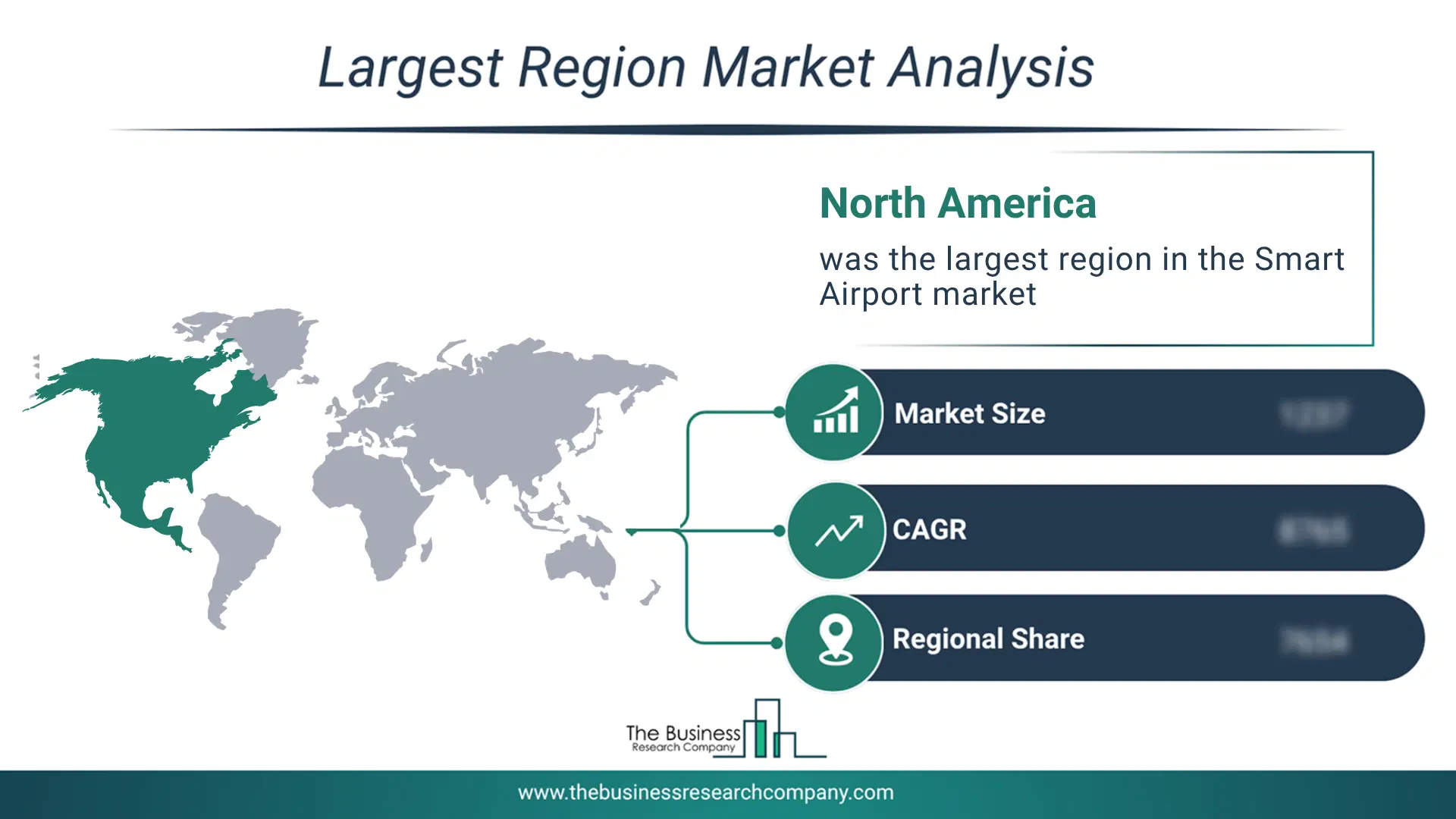
Regional Insights
North America was the largest region in the smart airport market in 2025. Asia-Pacific is expected to be the fastest-growing region in the forecast period. The regions covered in this market report are Asia-Pacific, South East Asia, Western Europe, Eastern Europe, North America, South America, Middle East, Africa. The countries covered in this market report are Australia, Brazil, China, France, Germany, India, Indonesia, Japan, Taiwan, Russia, South Korea, UK, USA, Canada, Italy, SpainWhat Defines the Smart Airport Market?
The smart airport market includes revenues earned by entities by providing products and related services that automate the processes for operational efficiency, ground services, digitalization of infrastructure, digitalization of commercial & passenger flow, enhancing security & surveillance, and handling services to solve and cover control and management needs in airports. The market value includes the value of related goods sold by the service provider or included within the service offering. Only goods and services traded between entities or sold to end consumers are included.How is Market Value Defined and Measured?
The market value is defined as the revenues that enterprises gain from the sale of goods and/or services within the specified market and geography through sales, grants, or donations in terms of the currency (in USD unless otherwise specified). The revenues for a specified geography are consumption values that are revenues generated by organizations in the specified geography within the market, irrespective of where they are produced. It does not include revenues from resales along the supply chain, either further along the supply chain or as part of other products.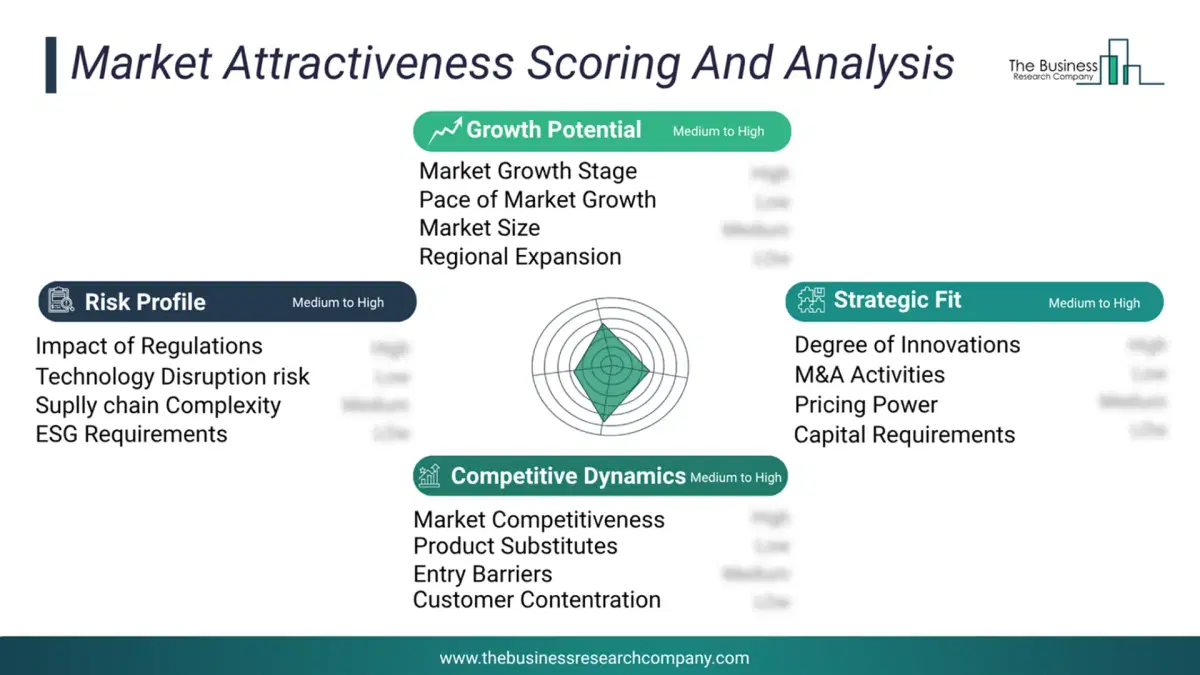
This chart presents market attractiveness based on a quantitative evaluation of growth, competition, strategic alignment, and risk, offering a clear view of opportunity areas for decision-making. This chart is for illustrative purposes; the full report contains the complete analysis.
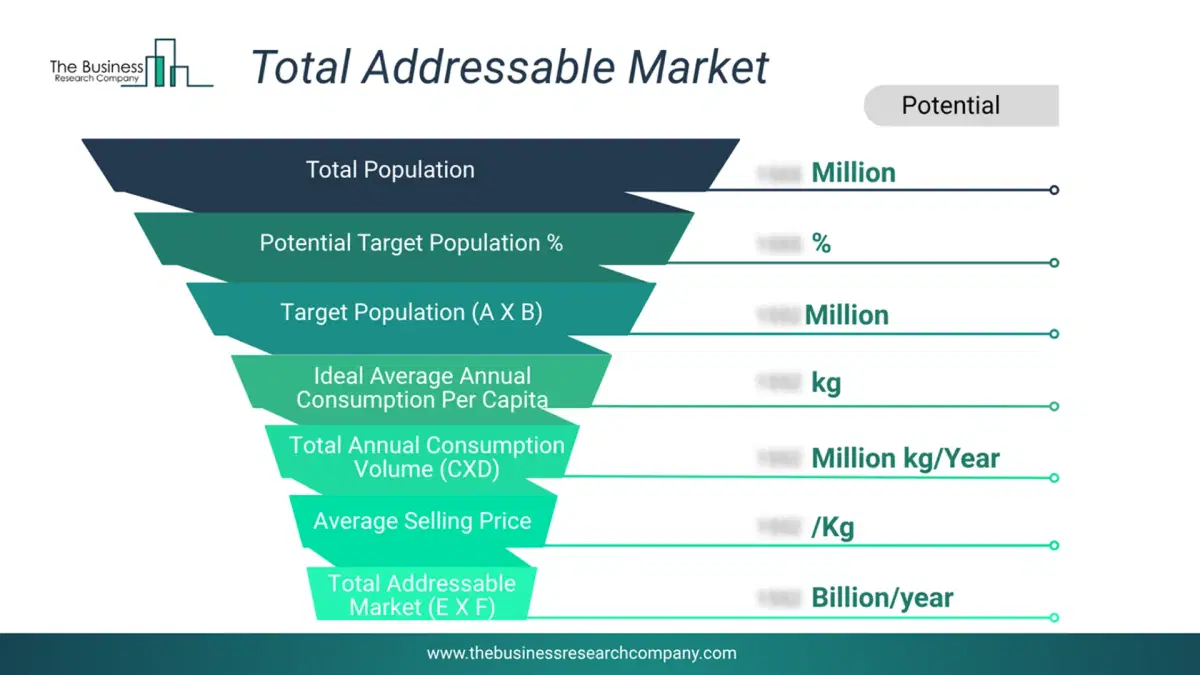
This chart highlights the Total Addressable Market (TAM) by estimating the maximum revenue opportunity using an assumption-driven approach, supporting strategic planning and opportunity sizing across markets. The chart is illustrative; the full report provides a more comprehensive analysis.
What Key Data and Analysis Are Included in the Smart Airport Market Report 2026?
The smart airport market research report is one of a series of new reports from The Business Research Company that provides market statistics, including industry global market size, regional shares, competitors with the market share, detailed market segments, market trends and opportunities, and any further data you may need to thrive in the smart airport industry. The market research report delivers a complete perspective of everything you need, with an in-depth analysis of the current and future state of the industry.Smart Airport Market Report Forecast Analysis
| Report Attribute | Details |
|---|---|
| Market Size Value In 2026 | $10.79 billion |
| Revenue Forecast In 2030 | $17.62 billion |
| Growth Rate | CAGR of 13% from 2026 to 2030 |
| Base Year For Estimation | 2025 |
| Actual Estimates/Historical Data | 2020-2025 |
| Forecast Period | 2026 - 2030 |
| Market Representation | Revenue in USD Billion and CAGR from 2026 to 2030 |
| Segments Covered | Services, Infrastructure, Location |
| Regional Scope | Asia-Pacific, Western Europe, Eastern Europe, North America, South America, Middle East, Africa |
| Country Scope | The countries covered in the report are Australia, Brazil, China, France, Germany, India, Indonesia, Japan, Taiwan, Russia, South Korea, UK, USA, Canada, Italy, Spain. |
| Key Companies Profiled | Amadeus IT Group SA; Cisco Systems Inc.; Collins Aerospace; Daifuku Co. Ltd.; Honeywell International Inc.; Huawei Technologies Co. Ltd.; International Business Machines Corporation; Indra Sistemas S.A.; L3Harris Technologies Inc.; Raytheon Technologies Corporation; Lufthansa Systems GmbH & Co. KG; Sabre Corporation; Siemens AG; Société Internationale de Télécommunications Aéronautiques (SITA); Thales Group; T-Systems International GmbH; Vision-Box Inc.; Wipro Limited; Zensors Inc.; ADELTE – The Boarding Company; Deerns Airport System Consultants; Gentrack Group Limited; Beumer Group GmbH & Co. KG; Bosch Security Systems GmbH; Schneider Electric SE. |
| Customization Scope | Request for Customization |
| Pricing And Purchase Options | Explore Purchase Options |