
Smart Cities Market Report 2026
Global Outlook – By Component (Solutions, Services), By Type (Roadways, Railways, Airways), By Application (Smart Governance, Smart Building, Smart Utilities, Smart Transportation, Smart Healthcare, Other Applications) – Market Size, Trends, Strategies, and Forecast to 2030
Smart Cities Market Overview
• Smart Cities market size has reached to $939.99 billion in 2025 • Expected to grow to $2242.44 billion in 2030 at a compound annual growth rate (CAGR) of 19.1% • Growth Driver: The Rise In Urbanization Driving The Growth Of The Market Due To Industrialization And Population Shift • Market Trend: Smart Cities Evolve With Advanced Traffic Management System • North America was the largest region in 2025.Market Gains By 2030 – Top Opportunities By Segment
Market Gain identifies the most promising market opportunities by highlighting the segments or products expected to generate the highest incremental revenue growth over the next five years.
What Is Covered Under Smart Cities Market?
A smart city employs information and communication technology (ICT) to boost operational performance, share data with the people, and enhance government service and citizen comfort. It employs technology to provide services and solve municipal issues. The main types of components in smart cities are solutions and services. The solution refers to smart solutions such as smart parking, smart utilities, smart metering, smart healthcare solutions, smart buildings, and smart governance solutions. These solutions are used for accelerating the growth of citizens. The different types include Residential, commercial, and industrial and involve several applications such as smart governance, smart building, smart utilities, smart transportation, smart healthcare, and others.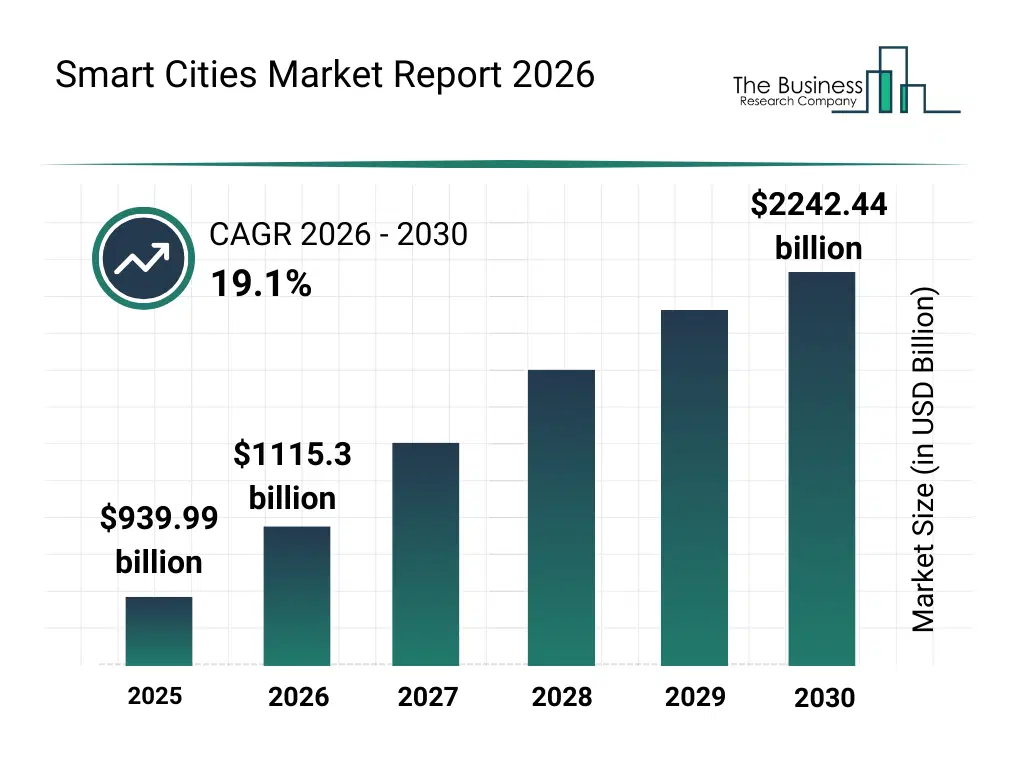
What Is The Smart Cities Market Size and Share 2026?
The smart cities market size has grown rapidly in recent years. It will grow from $939.99 billion in 2025 to $1115.3 billion in 2026 at a compound annual growth rate (CAGR) of 18.7%. The growth in the historic period can be attributed to rise in urban population, increased government investment in city infrastructure, adoption of basic ict systems, early smart transportation projects, demand for energy efficiency.What Is The Smart Cities Market Growth Forecast?
The smart cities market size is expected to see rapid growth in the next few years. It will grow to $2242.44 billion in 2030 at a compound annual growth rate (CAGR) of 19.1%. The growth in the forecast period can be attributed to expansion of digital services for citizens, integration of ai-driven traffic management, deployment of smart utilities, growth of sustainable city initiatives, adoption of advanced urban mobility solutions. Major trends in the forecast period include smart governance optimization, citizen engagement platforms, integrated urban planning solutions, public safety & emergency management, infrastructure asset monitoring.
Global Smart Cities Market Segmentation
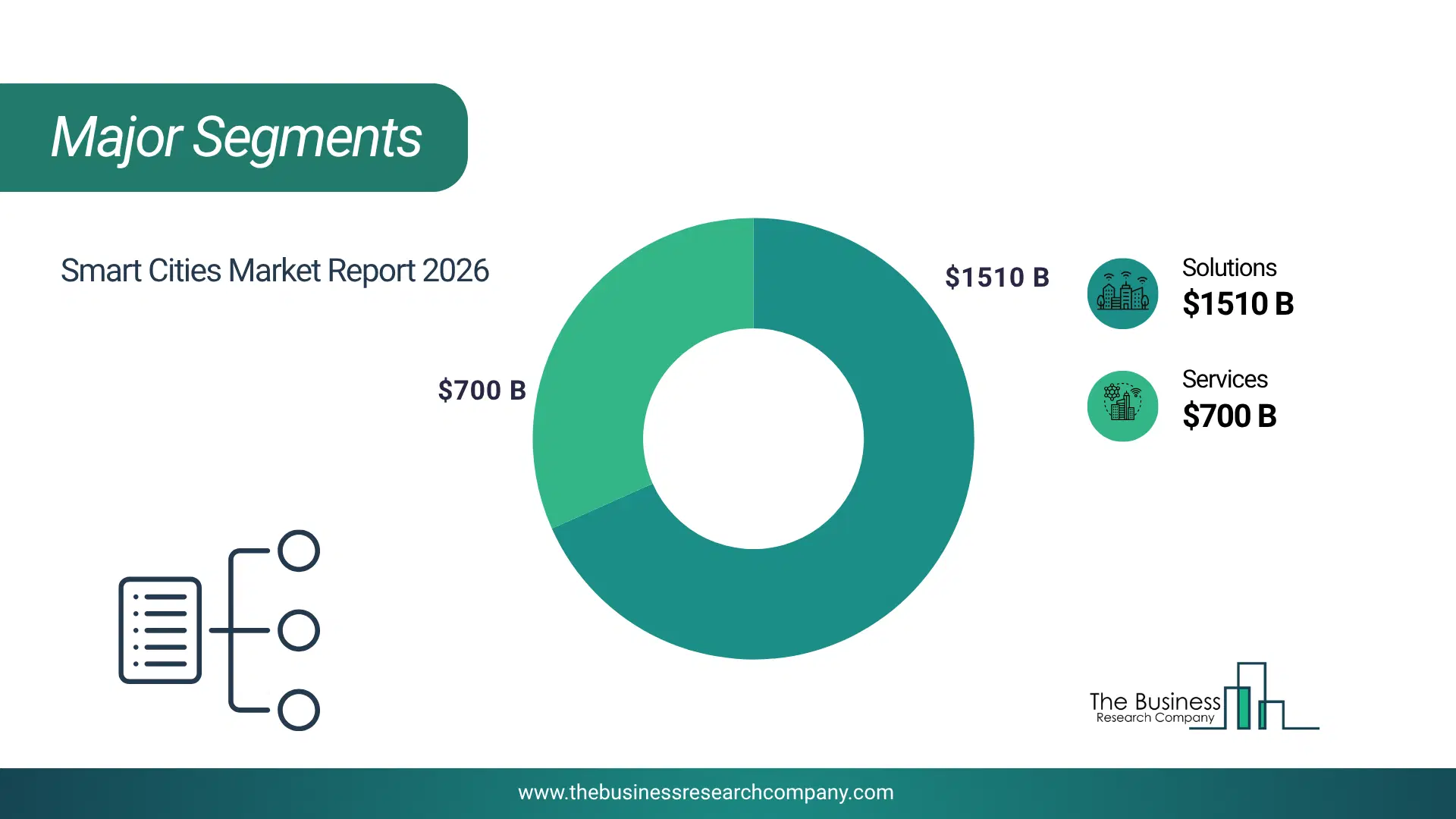
1) By Component: Solutions, Services 2) By Type: Roadways, Railways, Airways 3) By Application: Smart Governance, Smart Building, Smart Utilities, Smart Transportation, Smart Healthcare, Other Applications Subsegments: 1) By Solutions: Smart Lighting, Smart Transportation Systems, Smart Waste Management, Smart Water Management, Smart Energy Management, Smart Parking Solutions 2) By Services: Consulting Services, System Integration Services, Managed Services, Maintenance And Support Services The top segments in the smart cities market will be: • Solutions will reach $1509.76 Billion by 2030. • Services will reach $700.36 Billion by 2030.What Is The Driver Of The Smart Cities Market?
The rising urbanization is expected to propel the growth of the smart cities market going forward. Urbanization refers to the population movement from rural to urban settings and increasing human population densities in urban areas. Rising urbanization is primarily due to industrialization, as the growth of industries creates job opportunities in cities, attracting people from rural areas in search of employment and better living standards. A smart city is a technologically advanced urban area that gathers information using various electronic technologies, voice activation methods, and sensors. For instance, in 2025, according to the World Population Review, a US-based independent organization, in 2023, the global urbanization rate reached 57.5%, reflecting the growing proportion of people living in cities worldwide. Therefore, rising urbanization drives the growth of the smart cities industry.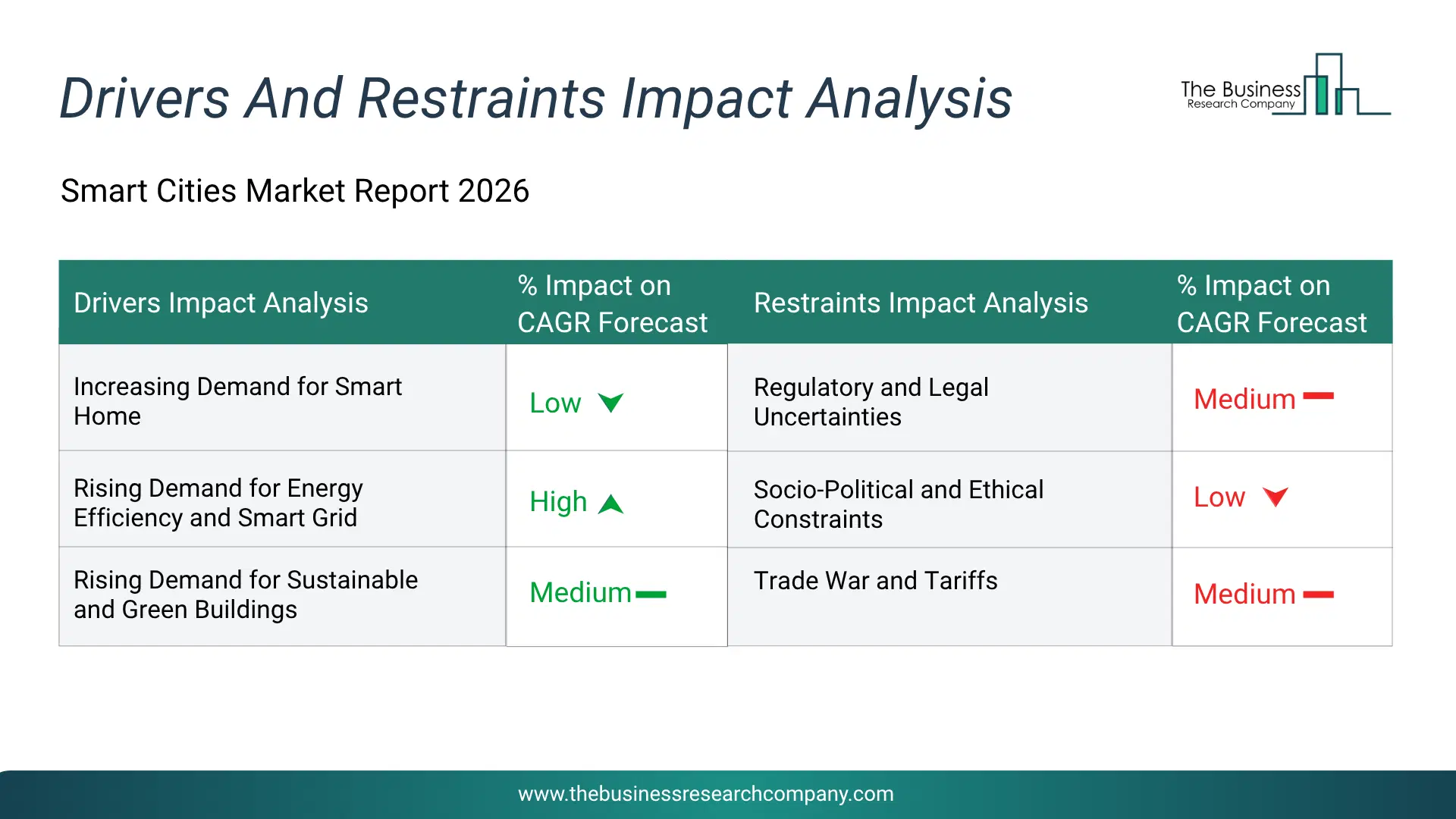
Infographic Chart Showing Key Market Drivers Analysis And Restraints For Smart Cities Market
The chart presents an impact analysis of key drivers and restraints, quantifying their relative influence on the market's growth rate and helping assess the balance between growth enablers and limiting factors. This chart offers a high-level perspective; the full report contains more detailed insights.
How Will The Drivers Impact Growth In The Global Smart Cities Market?
• Increasing Demand for Smart Home (Low) – During the forecast period, the increasing demand for smart home is expected to become a key growth driver for the smart cities market by 2030. Smart homes are the most immediate growth driver, fueled by urbanization, IoT devices, and demand for automation in lighting, security, and energy management. Voice assistants and integration with city infrastructure further accelerate adoption. • Rising Demand for Energy Efficiency and Smart Grid (High) – During the forecast period, the rising demand for energy efficiency and smart grid is expected to emerge as a major factor driving the expansion of the smart cities market by 2030. Energy efficiency is vital as governments and utilities invest in smart grids, advanced metering, and renewable integration. It directly cuts costs, enhances reliability, and supports decarbonization goals, making it a strong driver. • Rising Demand for Sustainable and Green Buildings (Medium) – During the forecast period, the rising demand for sustainable and green buildings is expected to act as a key growth catalyst for the smart cities market by 2030. Green buildings contribute to long-term sustainability with smart HVAC, water, and energy systems. Adoption is rising due to stricter regulations, though high upfront costs and slower retrofitting keep it below grids and homes.How Will The Restraints Impact Growth In The Global Smart Cities Market?
• Regulatory and Legal Uncertainties (Low) – During the forecast period, the lack of uniform policies, data laws, and tech standards discourages large-scale investments. This slows IoT, AI, and data-driven governance adoption, making it the most critical restraint. • Socio-Political and Ethical Constraints (High) – During the forecast period, the smart city projects face pushback over privacy, surveillance, and ethical concerns. Public resistance can delay projects, though evolving frameworks may gradually ease these barriers. • Trade War and Tariffs (Medium) – During the forecast period, the global trade conflicts raise costs of IoT devices, sensors, and materials. While disruptive, it ranks lower as cities can diversify suppliers or shift to local production over time.Key Players In The Global Smart Cities Market
Major companies operating in the smart cities market are Microsoft Corporation; AT&T Inc.; Huawei Technologies Co Ltd.; Hitachi Ltd.; Siemens AG; General Electric Company; Siemens Mobility GmbH; Accenture plc; Intel Corporation; International Business Machines Corporation; Cisco Systems Inc.; Schneider Electric SE; Honeywell International Inc.; ABB Ltd.; Nokia Corporation; Telefonaktiebolaget LM Ericsson; Koninklijke Philips N.V.; Emerson Electric Co; Xerox Holdings Corporation; Cubic Corporation; HID Global Corporation; Scheidt & Bachmann GmbH; Vix Technology Ltd.; Confidex Ltd.; Robert Bosch GmbH; Capgemini SE; Cognizant Technology Solutions Corporation; Dell Technologies Inc.; Fujitsu Limited; Infosys Limited; NEC Corporation; Oracle Corporation; SAP SE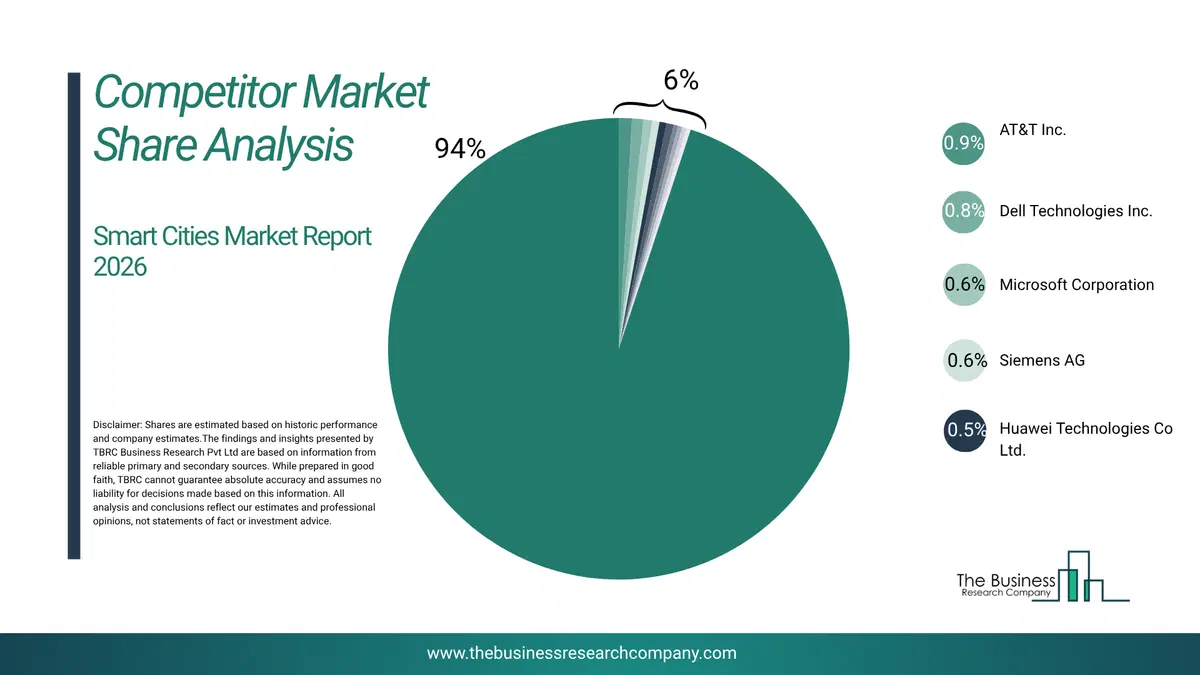
This chart is for illustrative purposes; the full report includes a detailed competitor analysis and comprehensive overview of the top 10 companies in the market.
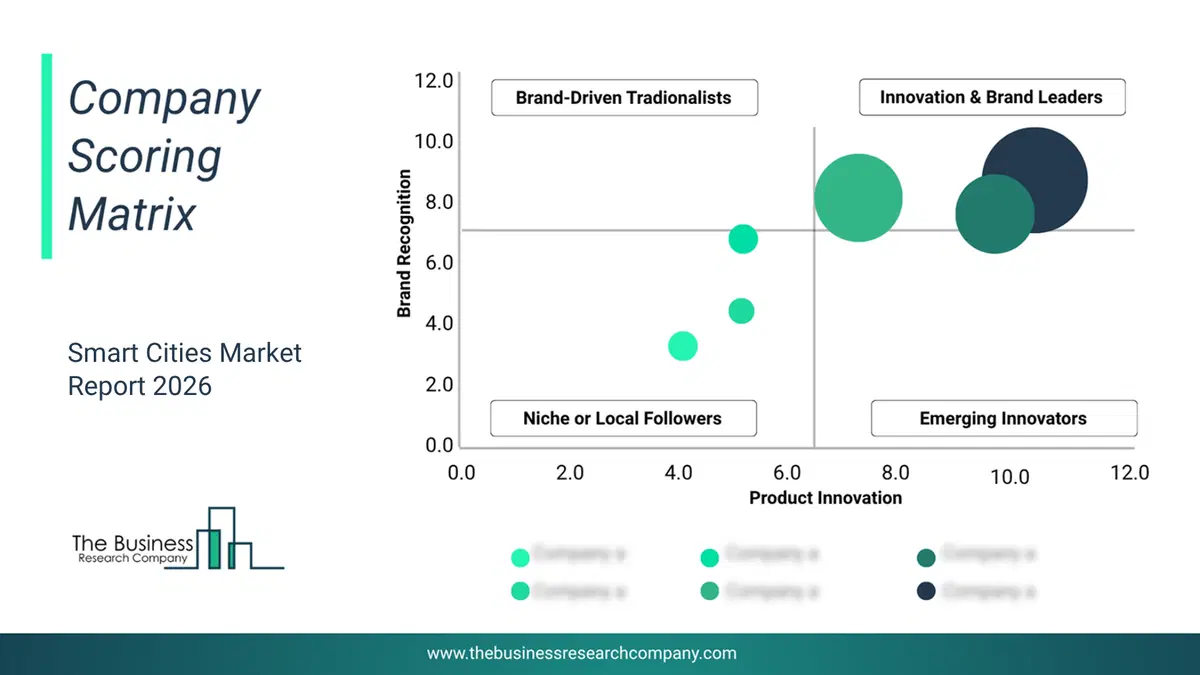
This chart maps companies by product innovation and brand strength, with bubble size indicating relative revenue, helping identify market leaders, challengers, and niche players. This is an illustrative chart; the full report provides a complete and accurate competitive analysis.
Global Smart Cities Market Trends and Insights
Major companies in the smart cities market are increasingly investing in innovative technologies, such as Real-time data from connected vehicles and AI-driven analytics, to enhance urban infrastructure, improve public services, and create sustainable environments that foster connectivity and quality of life for residents. Real-time data from connected vehicles is the immediate information gathered from vehicles that communicate their speed, location, and other traffic-related details, enabling traffic management systems to enhance traffic flow and safety in real-time. For instance, in December 2023, Yunex GmbH, a Germany-based IT service management company, launched Yutraffic Studio, a cloud-based Advanced Traffic Management System (ATMS) designed to address modern traffic challenges with advanced planning and monitoring tools. The platform incorporates real-time data from connected vehicles and offers modular, scalable solutions to meet the evolving needs of smart cities.What Are Latest Mergers And Acquisitions In The Smart Cities Market?
In June 2023, ABB Ltd., a Switzerland-based Automation company, acquired Eve Systems for an undisclosed amount. With this acquisition, ABB aims to enhance its position in the smart home market, thereby accelerating the development of energy-efficient and user-friendly smart home solutions that leverage the Matter and Thread connectivity standards. Eve Systems is a Germany-based company that produces smart home and home automation devices.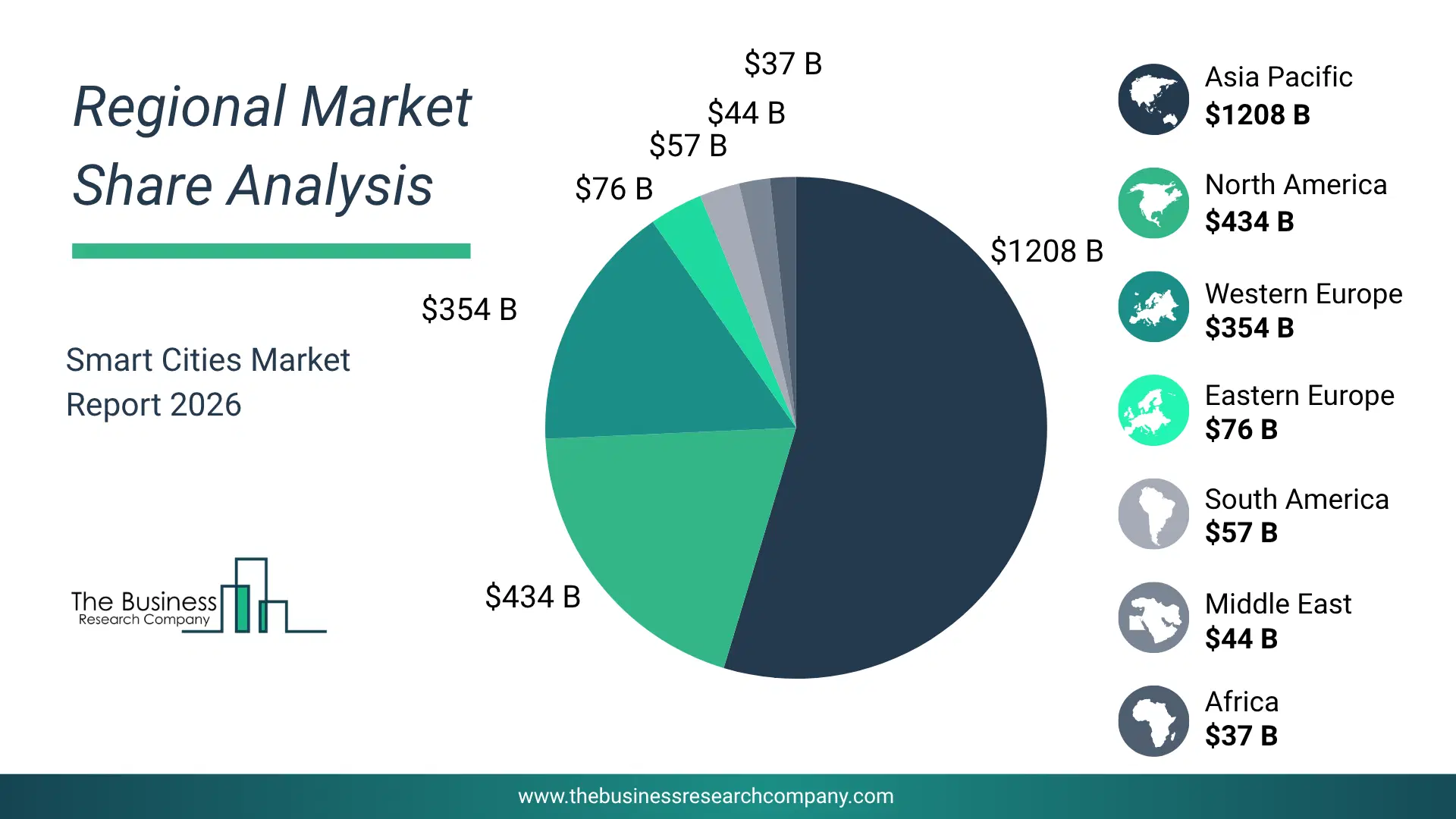
Regional Insights
North America was the largest region in the smart cities market in 2025. The regions covered in this market report are Asia-Pacific, South East Asia, Western Europe, Eastern Europe, North America, South America, Middle East, Africa. The countries covered in this market report are Australia, Brazil, China, France, Germany, India, Indonesia, Japan, Taiwan, Russia, South Korea, UK, USA, Canada, Italy, SpainWhat Defines the Smart Cities Market?
The smart cities market includes revenues earned by entities by providing solutions and services that automate the processes of energy management, street light monitoring, temperature monitoring, parking management, water resource management, smart metering solutions, and unified command & control platform to improve and optimize the operational efficiency of any city and making critical infrastructure elements such as energy, lighting, water work in a smart manner. The market value includes the value of related goods sold by the service provider or included within the service offering. Only goods and services traded between entities or sold to end consumers are included.How is Market Value Defined and Measured?
The market value is defined as the revenues that enterprises gain from the sale of goods and/or services within the specified market and geography through sales, grants, or donations in terms of the currency (in USD unless otherwise specified). The revenues for a specified geography are consumption values that are revenues generated by organizations in the specified geography within the market, irrespective of where they are produced. It does not include revenues from resales along the supply chain, either further along the supply chain or as part of other products.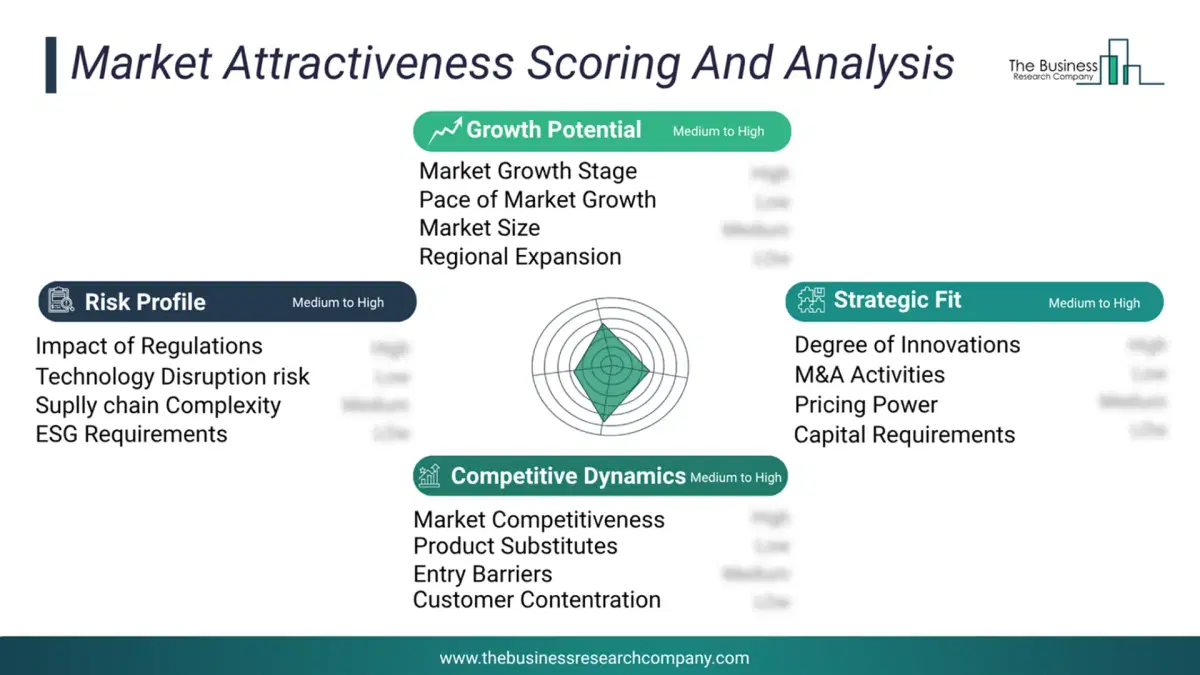
This chart presents market attractiveness based on a quantitative evaluation of growth, competition, strategic alignment, and risk, offering a clear view of opportunity areas for decision-making. This chart is for illustrative purposes; the full report contains the complete analysis.
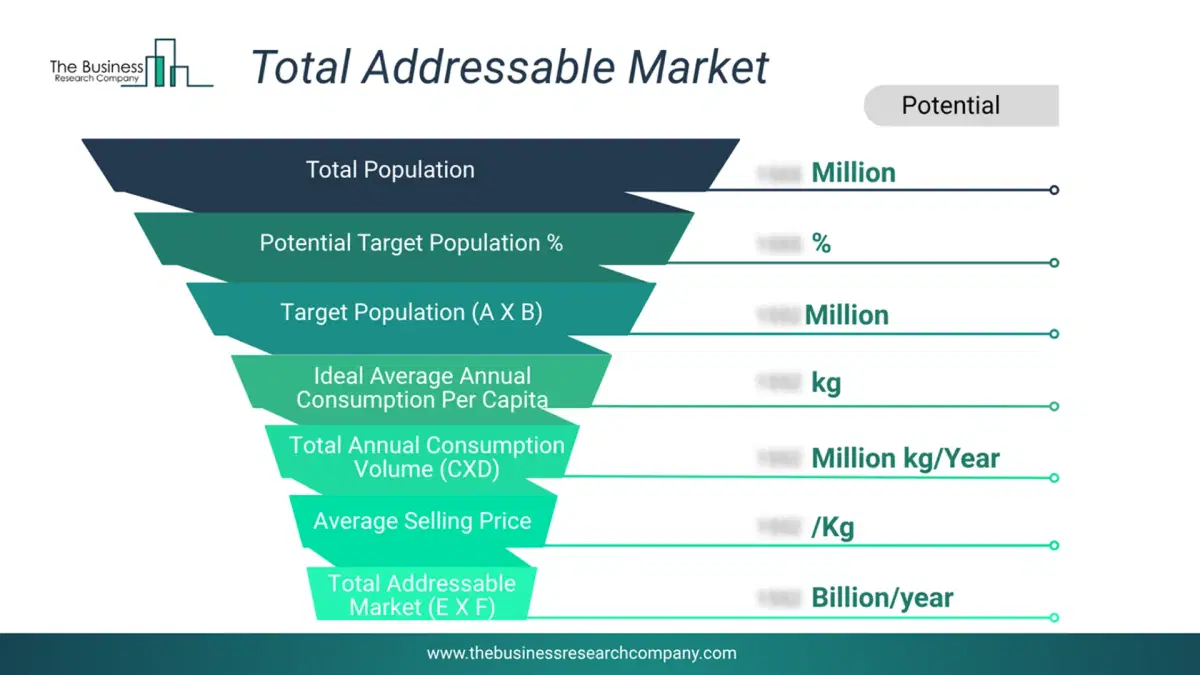
This chart highlights the Total Addressable Market (TAM) by estimating the maximum revenue opportunity using an assumption-driven approach, supporting strategic planning and opportunity sizing across markets. The chart is illustrative; the full report provides a more comprehensive analysis.
What Key Data and Analysis Are Included in the Smart Cities Market Report 2026?
The smart cities market research report is one of a series of new reports from The Business Research Company that provides market statistics, including industry global market size, regional shares, competitors with the market share, detailed market segments, market trends and opportunities, and any further data you may need to thrive in the smart cities industry. The market research report delivers a complete perspective of everything you need, with an in-depth analysis of the current and future state of the industry.Smart Cities Market Report Forecast Analysis
| Report Attribute | Details |
|---|---|
| Market Size Value In 2026 | $1115.3 billion |
| Revenue Forecast In 2030 | $2242.44 billion |
| Growth Rate | CAGR of 18.7% from 2026 to 2030 |
| Base Year For Estimation | 2025 |
| Actual Estimates/Historical Data | 2020-2025 |
| Forecast Period | 2026 - 2030 |
| Market Representation | Revenue in USD Billion and CAGR from 2026 to 2030 |
| Segments Covered | Component, Type, Application |
| Regional Scope | Asia-Pacific, Western Europe, Eastern Europe, North America, South America, Middle East, Africa |
| Country Scope | The countries covered in the report are Australia, Brazil, China, France, Germany, India, ... |
| Key Companies Profiled | Microsoft Corporation; AT&T Inc.; Huawei Technologies Co Ltd.; Hitachi Ltd.; Siemens AG; General Electric Company; Siemens Mobility GmbH; Accenture plc; Intel Corporation; International Business Machines Corporation; Cisco Systems Inc.; Schneider Electric SE; Honeywell International Inc.; ABB Ltd.; Nokia Corporation; Telefonaktiebolaget LM Ericsson; Koninklijke Philips N.V.; Emerson Electric Co; Xerox Holdings Corporation; Cubic Corporation; HID Global Corporation; Scheidt & Bachmann GmbH; Vix Technology Ltd.; Confidex Ltd.; Robert Bosch GmbH; Capgemini SE; Cognizant Technology Solutions Corporation; Dell Technologies Inc.; Fujitsu Limited; Infosys Limited; NEC Corporation; Oracle Corporation; SAP SE |
| Customization Scope | Request for Customization |
| Pricing And Purchase Options | Explore Purchase Options |