
Smart Meter Data Management Market Report 2026
Global Outlook – By Component (Software, Services), By Deployment Mode (On-Premise, Cloud), By Application (Electric Meters, Gas Meters, Water Meters) – Market Size, Trends, Strategies, and Forecast to 2035
Smart Meter Data Management Market Overview
• Smart Meter Data Management market size has reached to $2.48 billion in 2025 • Expected to grow to $5.4 billion in 2030 at a compound annual growth rate (CAGR) of 16.3% • Growth Driver: Increasing Energy Demand Driving Growth Of Smart Meter Data Management Market • Market Trend: Advancements In Smart Meter Data Management Market • North America was the largest region in 2025 and Asia-Pacific is the fastest growing region.Market Gains By 2030 – Top Opportunities By Segment
Market Gain identifies the most promising market opportunities by highlighting the segments or products expected to generate the highest incremental revenue growth over the next five years.
What Is Covered Under Smart Meter Data Management Market?
Smart meter data management involves the collection, storage, analysis, and utilization of data from smart meters, enabling utilities to optimize operations, improve energy efficiency, and enhance customer services through data-driven insights and decision-making. The main components of smart meter data management are software and services. Software in the smart meter data management market refers to the computer programs and applications used by utilities to collect, store, process, and analyze data from smart meters. They are deployed based on on-premise and cloud modes for electric meters, gas meters and water meter applications.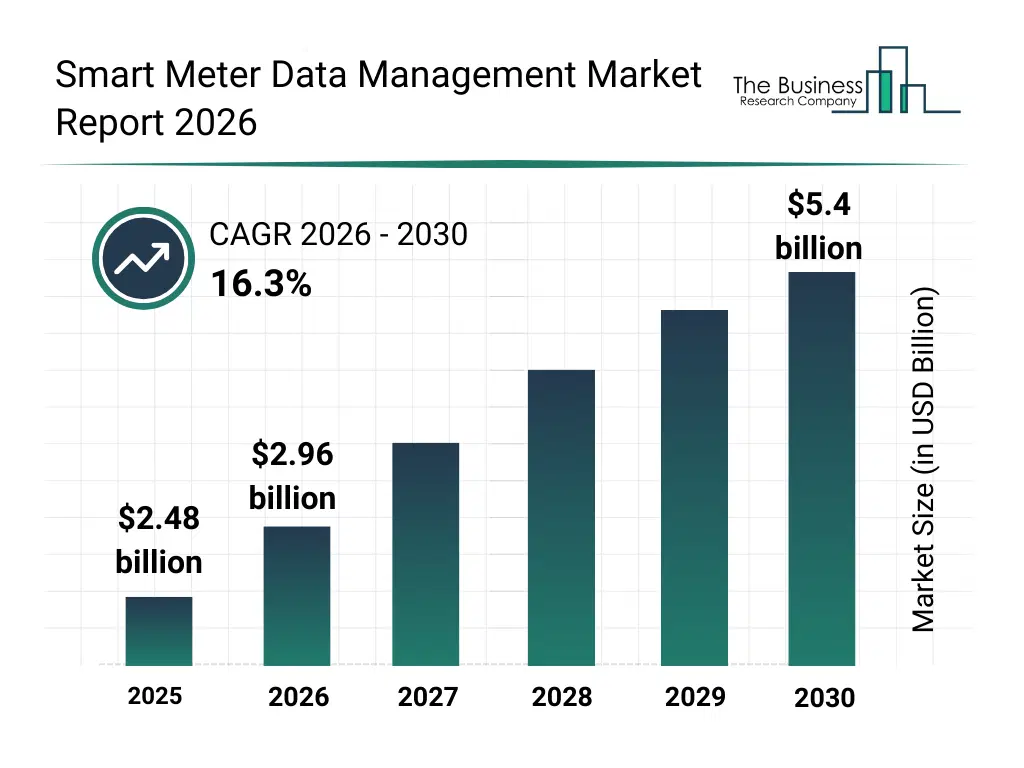
What Is The Smart Meter Data Management Market Size and Share 2026?
The smart meter data management market size has grown rapidly in recent years. It will grow from $2.48 billion in 2025 to $2.96 billion in 2026 at a compound annual growth rate (CAGR) of 19.3%. The growth in the historic period can be attributed to expansion of smart grid infrastructure, rollout of smart electricity meters, increasing regulatory focus on energy efficiency, growth of digital utility operations, rising investments in data-driven utility management.What Is The Smart Meter Data Management Market Growth Forecast?
The smart meter data management market size is expected to see rapid growth in the next few years. It will grow to $5.4 billion in 2030 at a compound annual growth rate (CAGR) of 16.3%. The growth in the forecast period can be attributed to increasing adoption of multi-utility smart metering, rising demand for real-time grid analytics, expansion of cloud-native utility platforms, growing focus on predictive energy management, increasing integration of AI-driven insights. Major trends in the forecast period include increasing adoption of advanced meter data analytics platforms, rising deployment of cloud-based meter data management systems, growing integration of multi-utility data platforms, expansion of real-time consumption monitoring capabilities, enhanced focus on data accuracy and interoperability.
Global Smart Meter Data Management Market Segmentation
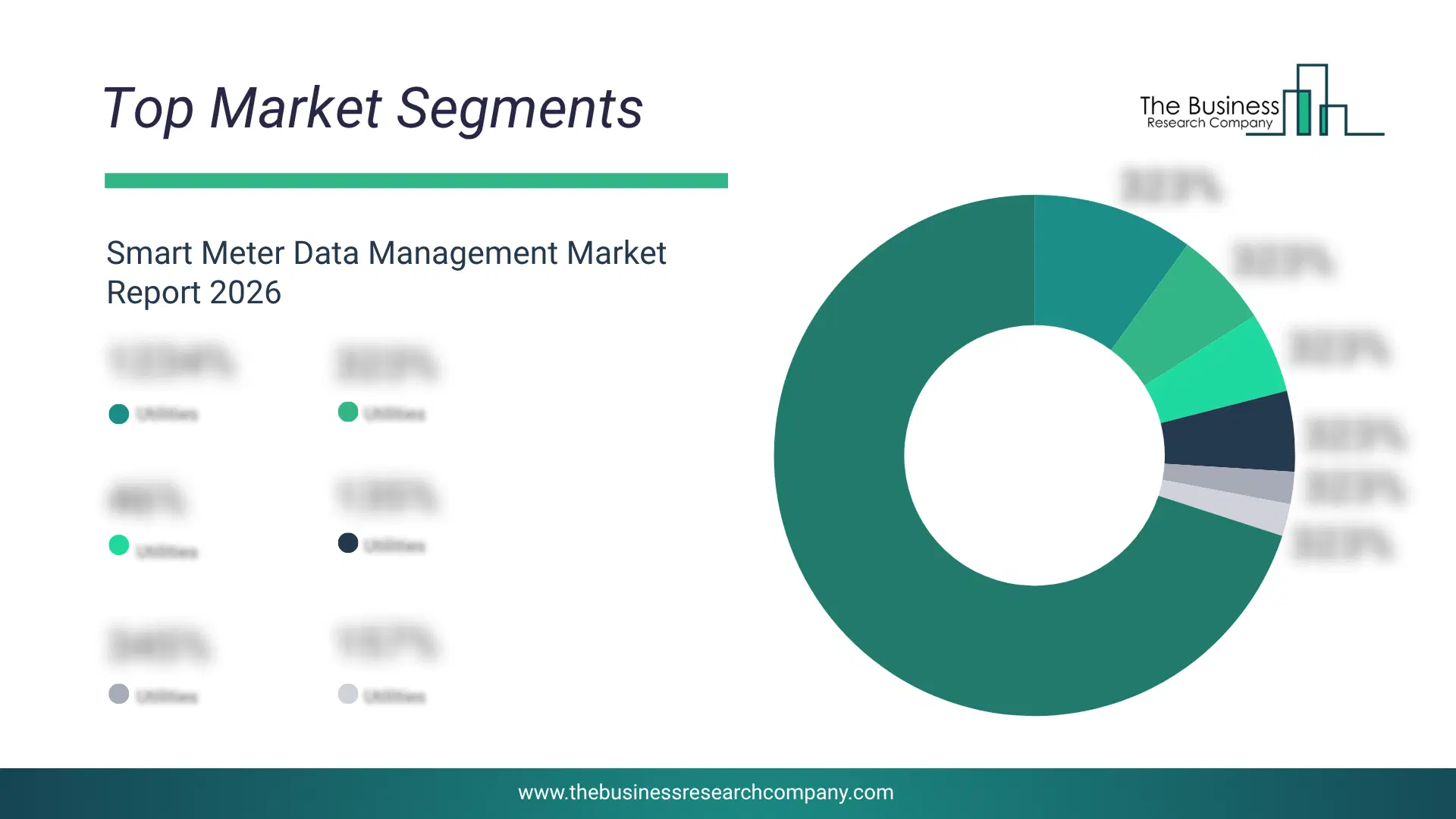
1) By Component: Software, Services 2) By Deployment Mode: On-Premise, Cloud 3) By Application: Electric Meters, Gas Meters, Water Meters Subsegments: 1) By Software: Data Analytics Software, Meter Data Management Software, Billing And Customer Information Software, Visualization Software, Integration And Middleware Software 2) By Services: Consulting Services, Implementation Services, Maintenance And Support Services, Managed Services The top segments in the smart meter data management market will be: • Software will reach $1656 Million by 2025. • Electric Meters will reach $1571.5 Million by 2025. • On-Premise will reach $1532.8 Million by 2025. • Cloud will reach $958.9 Million by 2025. • Services will reach $835.7 Million by 2025.What Is The Driver Of The Smart Meter Data Management Market?
An increase in energy demand is expected to propel the growth of the smart meter data management market going forward. Energy refers to the capability to perform tasks, observed in diverse forms such as heat, light, movement, or electricity. The rising energy demand is due to greater energy demand as cities become hubs for electricity-dependent activities such as transportation, heating, cooling, and the use of electronic devices. Smart meter data management aids in optimizing energy usage and improving grid efficiency through the provision of valuable insights into consumption patterns, facilitating informed decision-making processes. For instance, in June 2025, according to the Australian Energy Statistics, an Australia-based Department of Climate Change, Energy, the Environment, and Water, total electricity generation in Australia increased 3 percent in 2024 with an estimated 283,920 gigawatt hours (GWh) generated. Therefore, an increase in energy demand is driving the growth of the smart meter data management industry.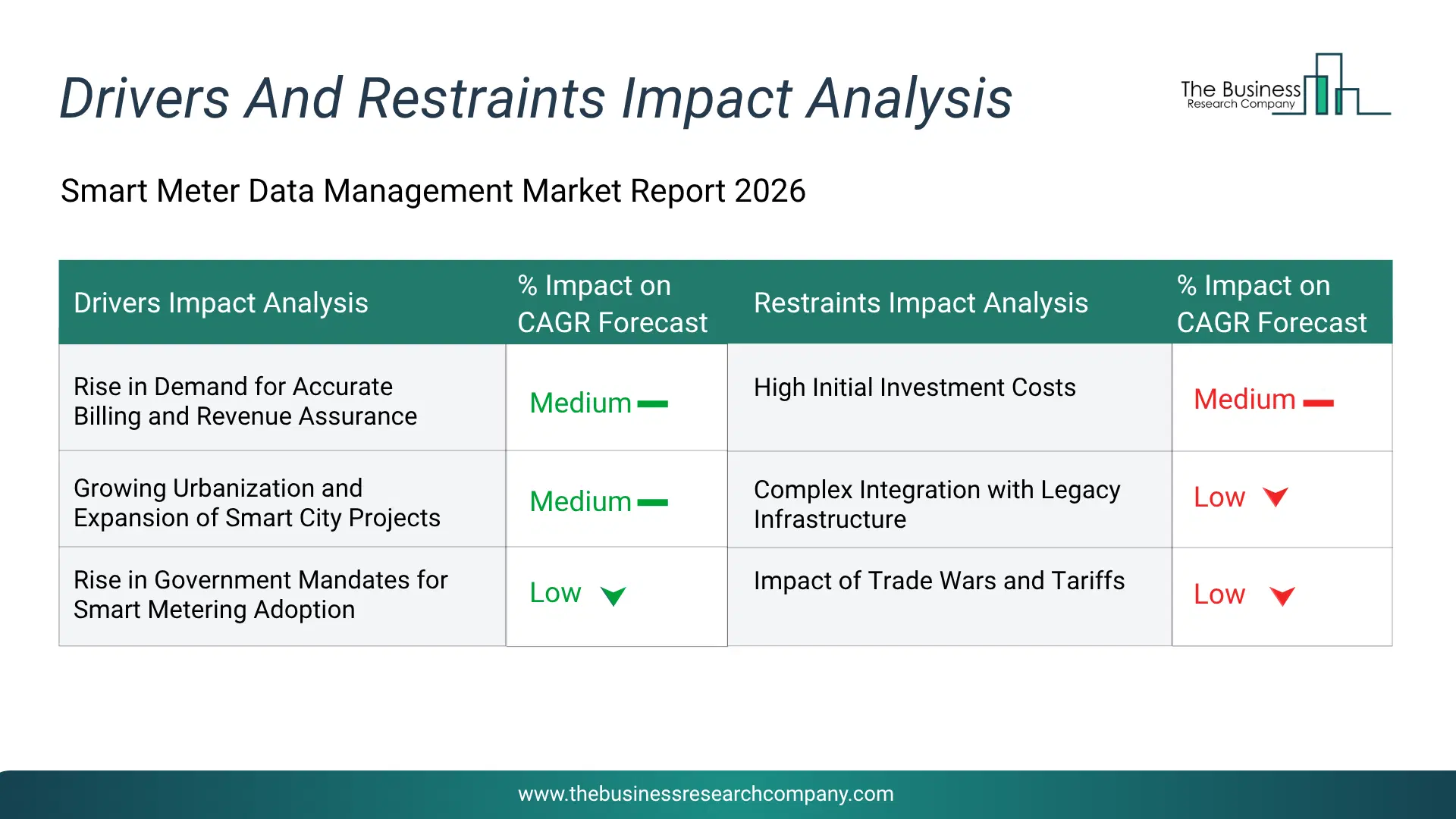
Infographic Chart Showing Key Market Drivers Analysis And Restraints For Smart Meter Data Management Market
The chart presents an impact analysis of key drivers and restraints, quantifying their relative influence on the market's growth rate and helping assess the balance between growth enablers and limiting factors. This chart offers a high-level perspective; the full report contains more detailed insights.
How Will The Drivers Impact Growth In The Global Smart Meter Data Management Market?
• Rise in Demand for Accurate Billing and Revenue Assurance (Medium) – The rise in demand for accurate billing and revenue assurance will become a key driver of growth in the smart meter data management market by 2030. Increasing pressure on utilities to reduce billing errors, prevent fraud, and improve cash flow is driving the need for advanced data processing systems. Smart meters generate high-frequency consumption data that enables precise billing and minimizes manual errors. Meter data management systems validate, clean, and process this data to ensure accurate invoicing and dispute reduction. Additionally, analytics tools help detect anomalies, theft, and non-technical losses, strengthening revenue assurance. These capabilities improve financial stability for utilities while enhancing transparency for consumers. As a result, the rise in demand for accurate billing and revenue assurance is anticipated to contributing to a 1.5% annual growth in the market. • Growing Urbanization and Expansion of Smart City Projects (Medium) – The growing urbanization and expansion of smart city projects will emerge as a major factor driving the expansion of the smart meter data management market by 2030. Rapid urbanization and the development of smart cities are increasing electricity demand and grid complexity, requiring more intelligent energy monitoring systems. Urban infrastructure depends on real-time data for efficient distribution, outage management, and demand forecasting. Smart meter data platforms help integrate distributed energy resources, manage peak loads, and support dynamic pricing models in dense urban environments. The need for scalable, automated systems to handle large volumes of consumption data is becoming essential. This expansion directly accelerates the adoption of advanced metering and data analytics solutions. Consequently, the growing urbanization and expansion of smart city projects is projected to contributing to a 1.0% annual growth in the market. • Rise in Government Mandates for Smart Metering Adoption (Low) – The rise in government mandates for smart metering adoption will serve as a key growth catalyst for the smart meter data management market by 2030. Government policies and regulatory frameworks are increasingly mandating the deployment of smart meters to improve billing efficiency, reduce losses, and modernize grid infrastructure. Large-scale national programs and targets are pushing utilities to replace traditional meters with digital ones. These mandates generate massive volumes of consumption and operational data that must be processed, stored, and analyzed effectively. As a result, utilities are compelled to invest in centralized platforms that manage meter data and ensure compliance with reporting and regulatory requirements. This regulatory push significantly accelerates system-wide digitization efforts. Therefore, this rise in government mandates for smart metering adoption is projected to supporting to a 0.8% annual growth in the market. • Expansion of Advanced Metering Infrastructure (AMI) (Low) – The expansion of advanced metering infrastructure (AMI) will become a significant driver contributing to the growth of the smart meter data management market by 2030. The widespread deployment of AMI is creating an ecosystem where smart meters, communication networks, and backend systems work together to enable two-way data flow. AMI continuously collects granular consumption and event data, which must be aggregated, validated, and analyzed for billing and operational insights. Meter data platforms act as the core layer that integrates with head-end systems and utility applications to manage this information efficiently. The growing scale of AMI deployments increases data volume, complexity, and processing requirements. This expansion drives the need for robust, scalable, and secure data management solutions. Consequently, the expansion of advanced metering infrastructure (AMI) is projected to contributing to a 0.5% annual growth in the market.How Will The Restraints Impact Growth In The Global Smart Meter Data Management Market?
• High Initial Investment Costs (Medium) – High initial investment costs is expected to restrain market growth during the forecast period. It creates operational, financial, regulatory, or commercial challenges that can increase costs, delay projects, reduce investments, or discourage purchasing decisions depending on the market. These challenges can reduce product adoption, affect business confidence, and limit the ability of companies to expand efficiently across key regions. This can reduce operational efficiency, delay expansion plans, and affect the ability of companies to achieve sustainable business growth. • Complex Integration with Legacy Infrastructure (Medium) – During the forecast period, complex integration with legacy infrastructure is likely to limit market expansion. It creates operational, financial, regulatory, or commercial challenges that can increase costs, delay projects, reduce investments, or discourage purchasing decisions depending on the market. These challenges can reduce product adoption, affect business confidence, and limit the ability of companies to expand efficiently across key regions. As a result, businesses may face increased cost pressures, slower commercial adoption, and reduced revenue opportunities. • Impact of Trade Wars and Tariffs (Low) – The market is expected to face challenges due to impact of trade wars and tariffs over the forecast period. It creates operational, financial, regulatory, or commercial challenges that can increase costs, delay projects, reduce investments, or discourage purchasing decisions depending on the market. These challenges can reduce product adoption, affect business confidence, and limit the ability of companies to expand efficiently across key regions. This may discourage new investments, delay strategic expansion initiatives, and weaken the overall competitive position of market participants.Key Players In The Global Smart Meter Data Management Market
Major companies operating in the smart meter data management market are Siemens AG, Oracle Corporation, Schneider Electric SE, Honeywell International Inc., ABB Group, Xylem Inc., El Sewedy Electric Company, Itron Inc., Landis+Gyr Group AG, Secure Meters Ltd., Wasion Group Holdings Limited, Holley Metering Limited, Jiangsu Linyang Electronics Co. Ltd., Badger Meter Inc., Aclara Technologies LLC, Neptune Technology Group Inc., EDMI Limited, Circutor S.A., Kamstrup A/S, Genus Power Infrastructures Limited, Nuri Telecom Company Limited, Zenner International GmbH & Co. KG, Iskraemeco d.d., Trilliant Holdings Inc., Elster Group GmbH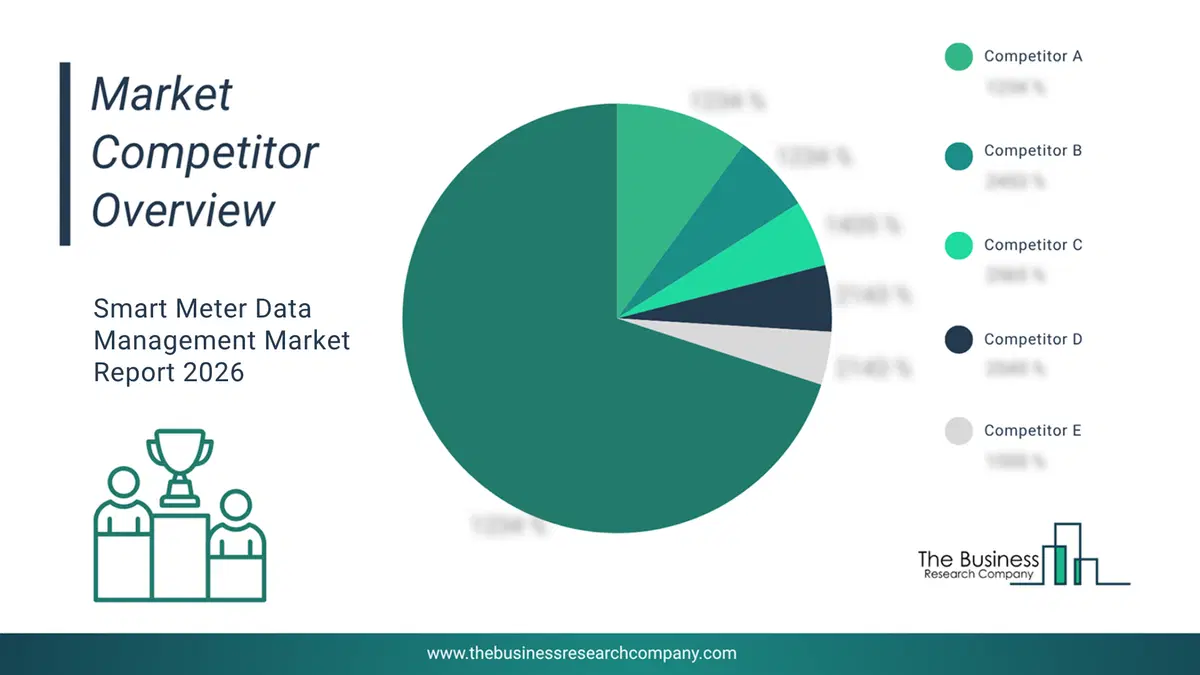
This chart is for illustrative purposes; the full report includes a detailed competitor analysis and comprehensive overview of the top 10 companies in the market.
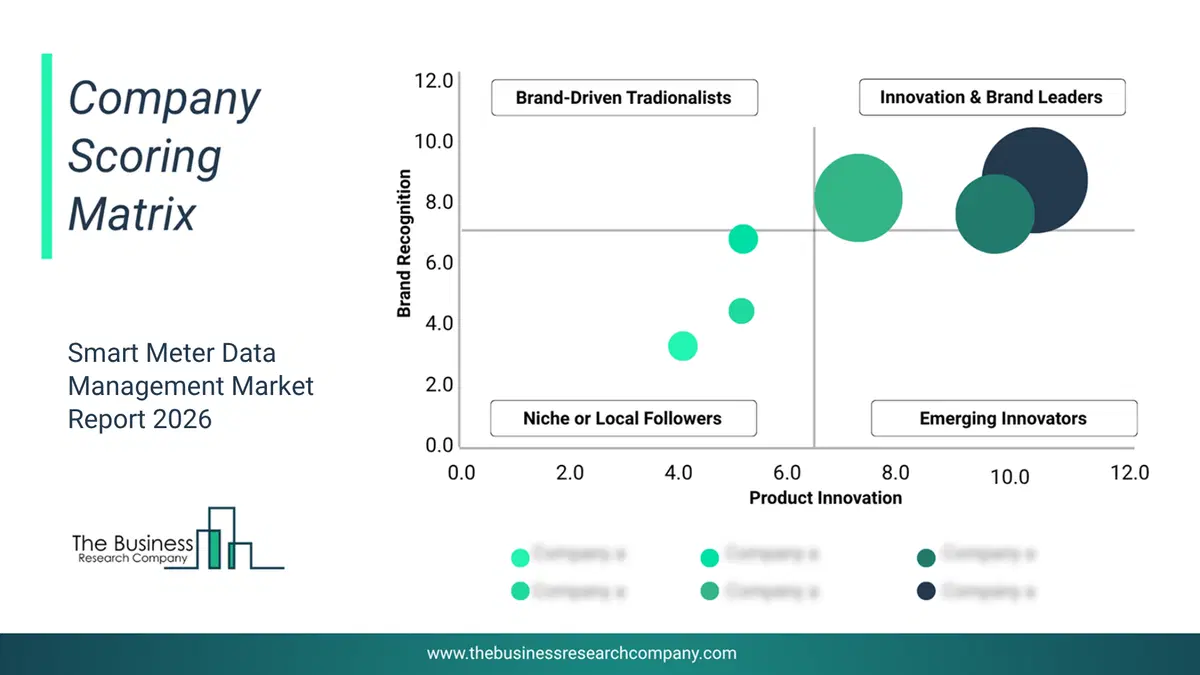
This chart maps companies by product innovation and brand strength, with bubble size indicating relative revenue, helping identify market leaders, challengers, and niche players. This is an illustrative chart; the full report provides a complete and accurate competitive analysis.
Global Smart Meter Data Management Market Trends and Insights
Major companies operating in the smart meter data management market are focused on developing innovative products such as the Stratus IQ+ electric meter to gain a competitive edge in the market. The Stratus IQ+ electric meter is designed to provide utilities with enhanced data visibility and control needed to adapt to the evolving smart grid environment. For instance, in December 2023, Xylem, a US-based water solutions and technology company specializing in data and technology, launched the Stratus IQ+ electricity meter with grid-edge capabilities. The innovative metering solution, the Stratus IQ+, aims to provide utilities with enhanced data collection capabilities, enabling the analysis of customer EV charging behaviors. This meter allows for near-real-time monitoring of energy consumption, making it easy to record, transmit, and receive data efficiently. With features such as software-defined metrology, the Stratus IQ+ offers flexibility and reliability, enhancing operational efficiency and empowering utilities to make informed decisions for contemporary grid management needs.What Are Latest Mergers And Acquisitions In The Smart Meter Data Management Market?
In September 2025, Gridspertise, an Italy-based provider of grid-intelligent devices and cloud and edge platform solutions for electricity distribution, acquired Energyworx for an undisclosed amount. Through this acquisition, Gridspertise aims to enhance its smart meter data management capabilities by integrating Energyworx’s cloud-native metering and sensor data management solutions, enabling high-volume real-time data processing for utilities. Energyworx is a Netherlands-based company that provides cloud-based energy and meter data management solutions for utilities.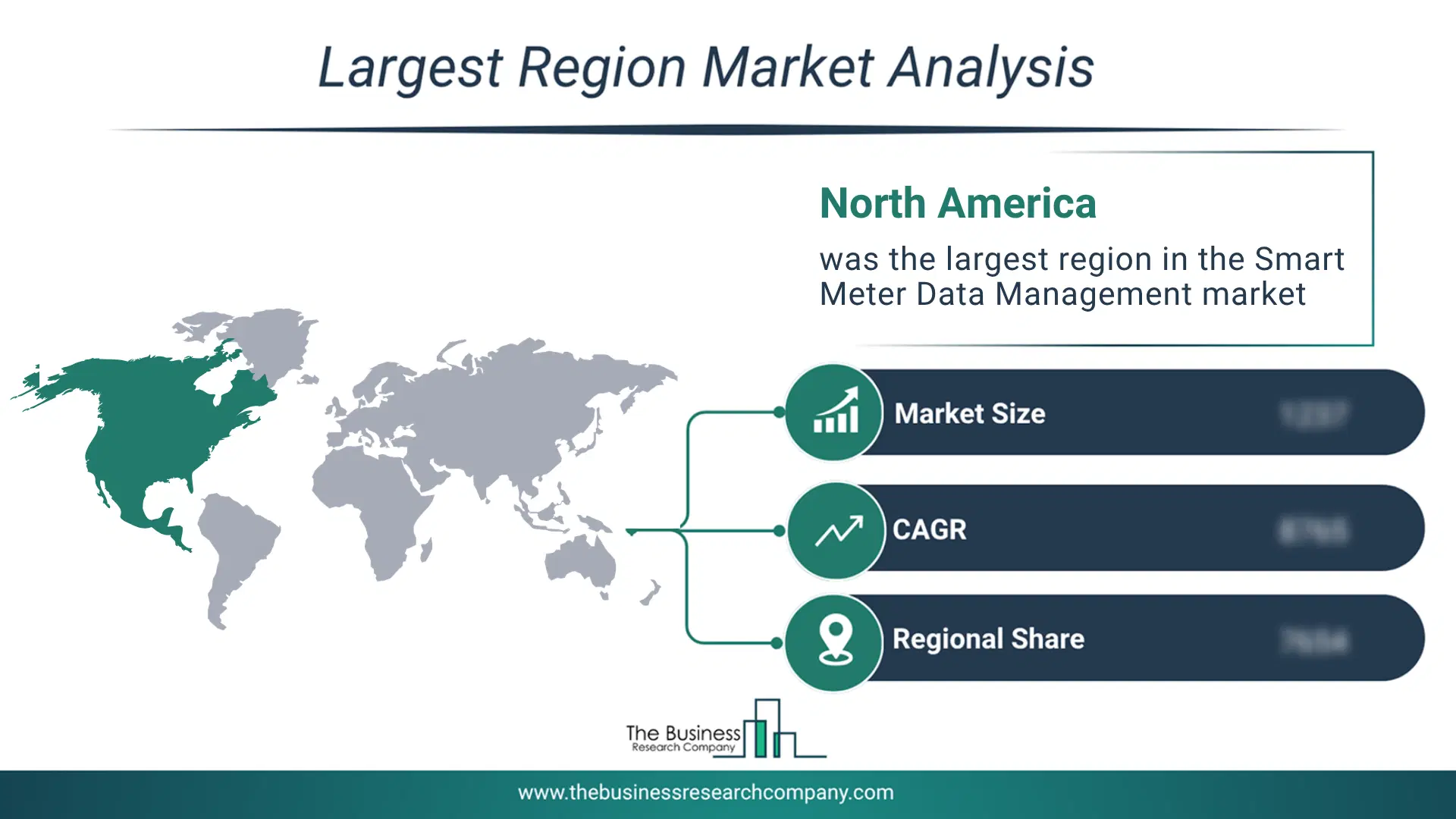
Regional Insights
North America was the largest region in the smart meter data management market in 2025. Asia-Pacific is expected to be the fastest-growing region in the forecast period. The regions covered in this market report are Asia-Pacific, South East Asia, Western Europe, Eastern Europe, North America, South America, Middle East, Africa. The countries covered in this market report are Australia, Brazil, China, France, Germany, India, Indonesia, Japan, Taiwan, Russia, South Korea, UK, USA, Canada, Italy, Spain.What Defines the Smart Meter Data Management Market?
The smart meter data management market consists of revenues earned by entities by providing services such as data collection, billing and revenue management, demand response support, and regulatory compliance. The market value includes the value of related goods sold by the service provider or included within the service offering. The smart meter data management market also includes sales of meter data aggregation devices, security devices, power supplies and backup systems, gateway devices, and data concentrators. Values in this market are ‘factory gate’ values, that is, the value of goods sold by the manufacturers or creators of the goods, whether to other entities (including downstream manufacturers, wholesalers, distributors, and retailers) or directly to end customers. The value of goods in this market includes related services sold by the creators of the goods.How is Market Value Defined and Measured?
The market value is defined as the revenues that enterprises gain from the sale of goods and/or services within the specified market and geography through sales, grants, or donations in terms of the currency (in USD unless otherwise specified). The revenues for a specified geography are consumption values that are revenues generated by organizations in the specified geography within the market, irrespective of where they are produced. It does not include revenues from resales along the supply chain, either further along the supply chain or as part of other products.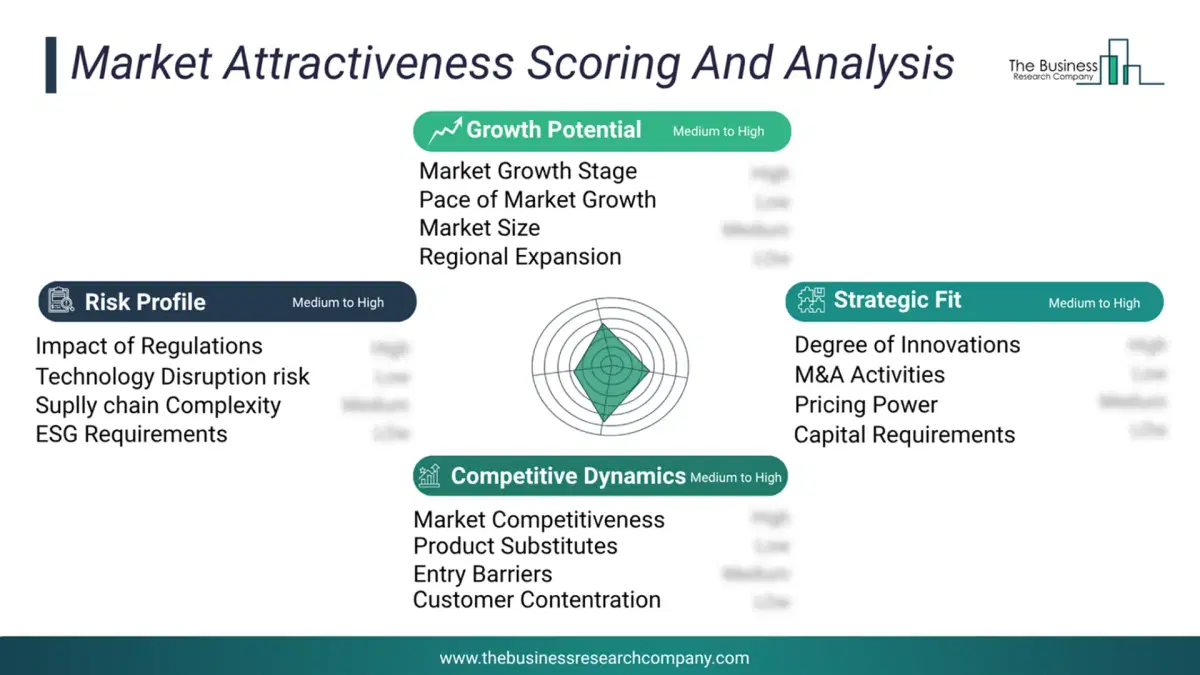
This chart presents market attractiveness based on a quantitative evaluation of growth, competition, strategic alignment, and risk, offering a clear view of opportunity areas for decision-making. This chart is for illustrative purposes; the full report contains the complete analysis.
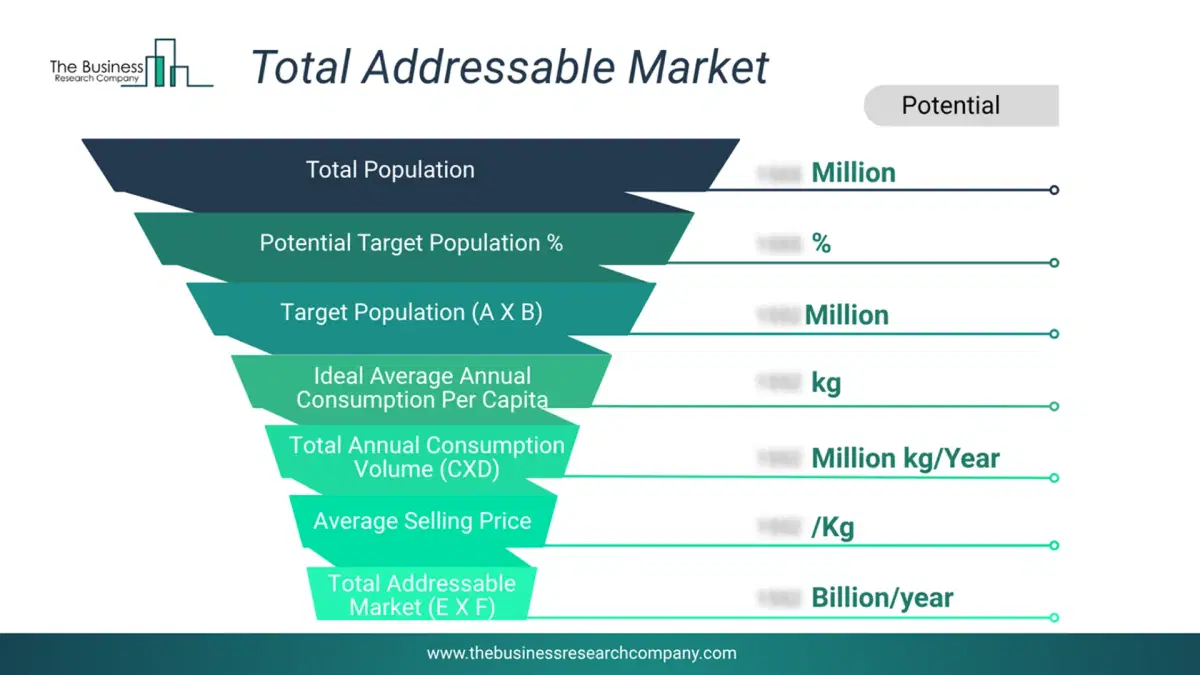
This chart highlights the Total Addressable Market (TAM) by estimating the maximum revenue opportunity using an assumption-driven approach, supporting strategic planning and opportunity sizing across markets. The chart is illustrative; the full report provides a more comprehensive analysis.
What Key Data and Analysis Are Included in the Smart Meter Data Management Market Report 2026?
The smart meter data management market research report is one of a series of new reports from The Business Research Company that provides market statistics, including industry global market size, regional shares, competitors with the market share, detailed market segments, market trends and opportunities, and any further data you may need to thrive in the smart meter data management industry. The market research report delivers a complete perspective of everything you need, with an in-depth analysis of the current and future state of the industry.Smart Meter Data Management Market Report Forecast Analysis
| Report Attribute | Details |
|---|---|
| Market Size Value In 2026 | $2.96 billion |
| Revenue Forecast In 2035 | $5.4 billion |
| Growth Rate | CAGR of 19.3% from 2026 to 2035 |
| Base Year For Estimation | 2025 |
| Actual Estimates/Historical Data | 2020-2025 |
| Forecast Period | 2026 - 2030 - 2035 |
| Market Representation | Revenue in USD Billion and CAGR from 2026 to 2035 |
| Segments Covered | Component, Deployment Mode, Application |
| Regional Scope | Asia-Pacific, Western Europe, Eastern Europe, North America, South America, Middle East, Africa |
| Country Scope | The countries covered in the report are Australia, Brazil, China, France, Germany, India, ... |
| Key Companies Profiled | Siemens AG, Oracle Corporation, Schneider Electric SE, Honeywell International Inc., ABB Group, Xylem Inc., El Sewedy Electric Company, Itron Inc., Landis+Gyr Group AG, Secure Meters Ltd., Wasion Group Holdings Limited, Holley Metering Limited, Jiangsu Linyang Electronics Co. Ltd., Badger Meter Inc., Aclara Technologies LLC, Neptune Technology Group Inc., EDMI Limited, Circutor S.A., Kamstrup A/S, Genus Power Infrastructures Limited, Nuri Telecom Company Limited, Zenner International GmbH & Co. KG, Iskraemeco d.d., Trilliant Holdings Inc., Elster Group GmbH |
| Customization Scope | Request for Customization |
| Pricing And Purchase Options | Explore Purchase Options |