
Smart Water Management Market Report 2026
Global Outlook – By Offering (Water Meters, Solutions, Services ), By Product Type (Advanced Water Meters, Meter Read Technology, Cellular Network), By End User (Residential, Commercial, Industrial) – Market Size, Trends, Strategies, and Forecast to 2030
Smart Water Management Market Overview
• Smart Water Management market size has reached to $19.9 billion in 2025 • Expected to grow to $40.67 billion in 2030 at a compound annual growth rate (CAGR) of 15.3% • Growth Driver: Water Scarcity Concerns Fueling Growth In The Smart Water Management Market • Market Trend: Strategic Collaborations Reshaping The Smart Water Management Market • North America was the largest region in 2025 and Asia-Pacific is the fastest growing region.Market Gains By 2030 – Top Opportunities By Segment
Market Gain identifies the most promising market opportunities by highlighting the segments or products expected to generate the highest incremental revenue growth over the next five years.
What Is Covered Under Smart Water Management Market?
Smart water management refers to the integration of systems and methods for monitoring, controlling, and regulating the usage and quality of water resources, as well as the maintenance of connected equipment. The main types of offerings in smart water management are water meters, solutions, and services. Smart water management solutions include enterprise asset management, network monitoring, advanced pressure management, supervisory control and data acquisition, advanced analytics, and others. The different types of products include advanced water meters, meter reading technology, cellular networks, and is used in various sectors such as residential, commercial, and industrial.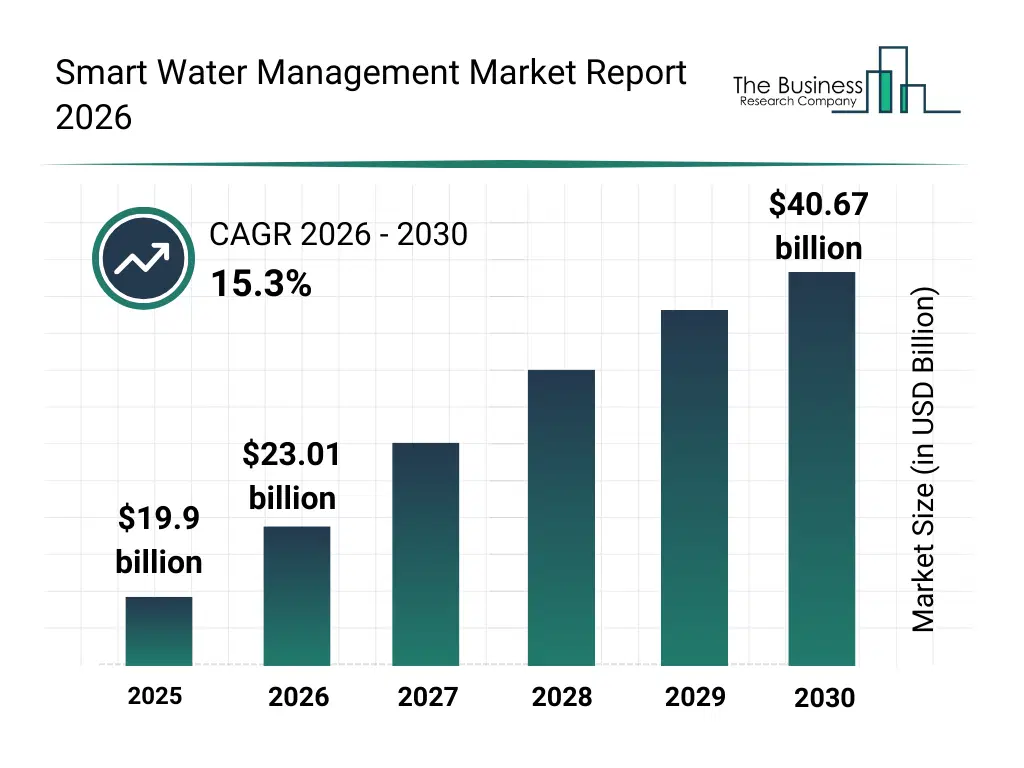
What Is The Smart Water Management Market Size and Share 2026?
The smart water management market size has grown rapidly in recent years. It will grow from $19.9 billion in 2025 to $23.01 billion in 2026 at a compound annual growth rate (CAGR) of 15.6%. The growth in the historic period can be attributed to urban population growth, aging water infrastructure, rising non revenue water losses, increasing regulatory oversight, growing public sector investments.What Is The Smart Water Management Market Growth Forecast?
The smart water management market size is expected to see rapid growth in the next few years. It will grow to $40.67 billion in 2030 at a compound annual growth rate (CAGR) of 15.3%. The growth in the forecast period can be attributed to water scarcity concerns, climate variability impacts, smart city development initiatives, demand for real time monitoring, increasing adoption of digital utilities. Major trends in the forecast period include deployment of smart water metering systems, expansion of leak detection and loss reduction programs, adoption of data driven water usage analytics, integration of remote monitoring and control platforms, rising focus on water quality and compliance monitoring.
Global Smart Water Management Market Segmentation
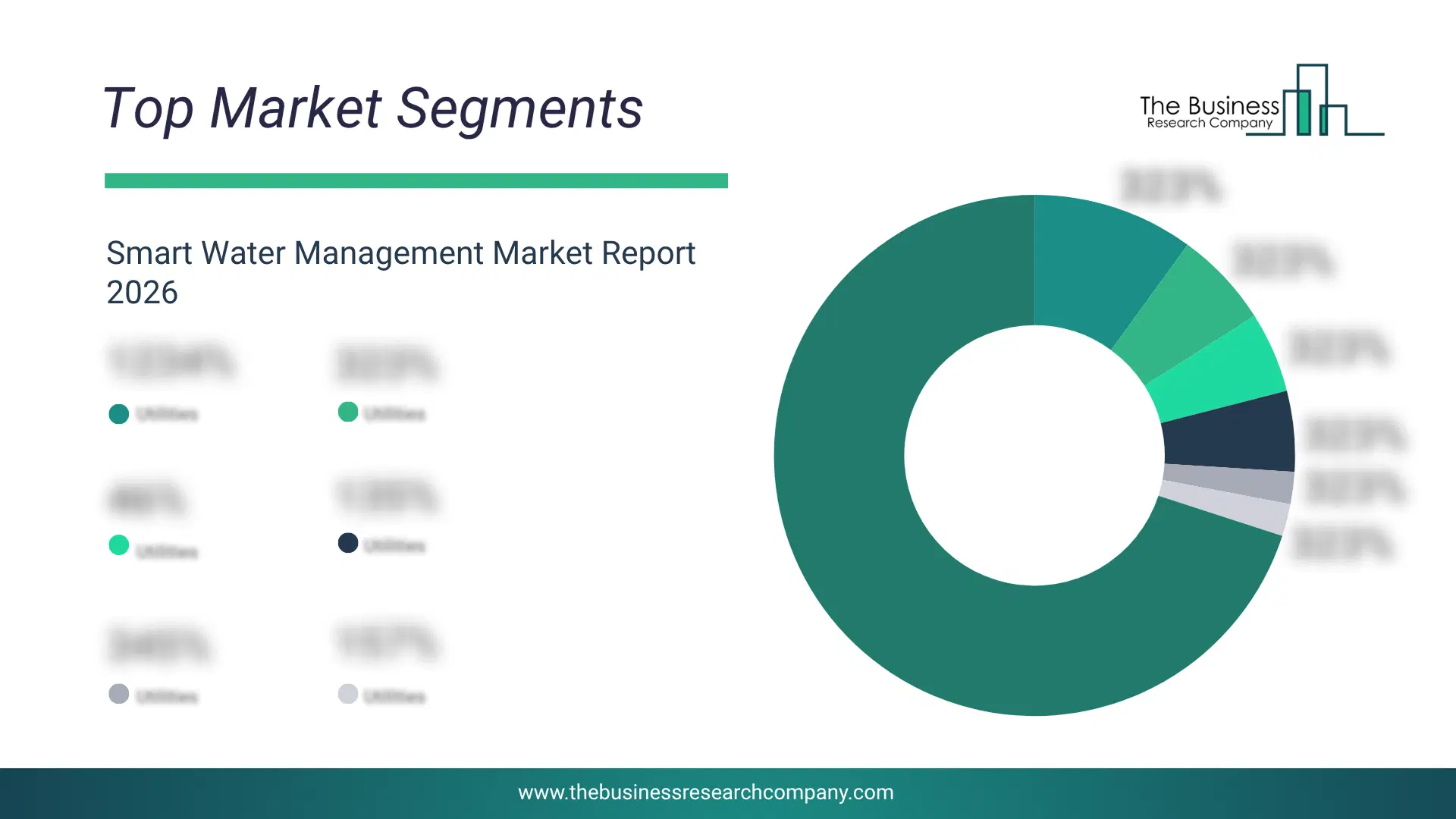
1) By Offering: Water Meters, Solutions, Services 2) By Product Type: Advanced Water Meters, Meter Read Technology, Cellular Network 3) By End User: Residential, Commercial, Industrial Subsegments: 1) By Water Meters: Smart Water Meters, Wireless Water Meters, Multi-Jet and Single-Jet Meters 2) By Solutions: Water Quality Monitoring Solutions, Leak Detection Solutions, Smart Irrigation Systems, Water Usage Analytics and Management Solutions 3) By Services: Installation and Integration Services, Maintenance and Support Services, Consulting Services for Water Management, Data Management and Analysis Services The top segments in the smart water management market will be: • Solutions will reach $16 Billion by 2030. • Water Meters will reach $15 Billion by 2030. • Services will reach $5 Billion by 2030.What Is The Driver Of The Smart Water Management Market?
The growing concerns over water scarcity are expected to boost the growth of the smart water management market going forward. Water scarcity refers to a condition in which there is an insufficient quantity of fresh, clean water available to meet the needs of a specific region's population or ecosystem. The awareness of water scarcity issues prompts governments, municipalities, industries, and individuals to take water conservation seriously. This, in turn, drives the adoption of smart water management solutions as a means to use water more efficiently and sustainably. For instance, in March 2023, according to a report published by the United Nations Educational, Scientific and Cultural organization, a France-based specialized agency, on a global scale, as of 2023, approximately 2 billion individuals, constituting 26% of the world's population, do not have access to safe drinking water, and a staggering 3.6 billion people, or 46% of the global population, lack proper access to well-managed sanitation facilities. Projections indicate that by the year 2050, the number of people in urban areas facing water scarcity is expected to increase twofold, reaching a range of 1.7 to 2.4 billion people. Therefore, the growing concerns over water scarcity are driving the growth of the smart water management industry.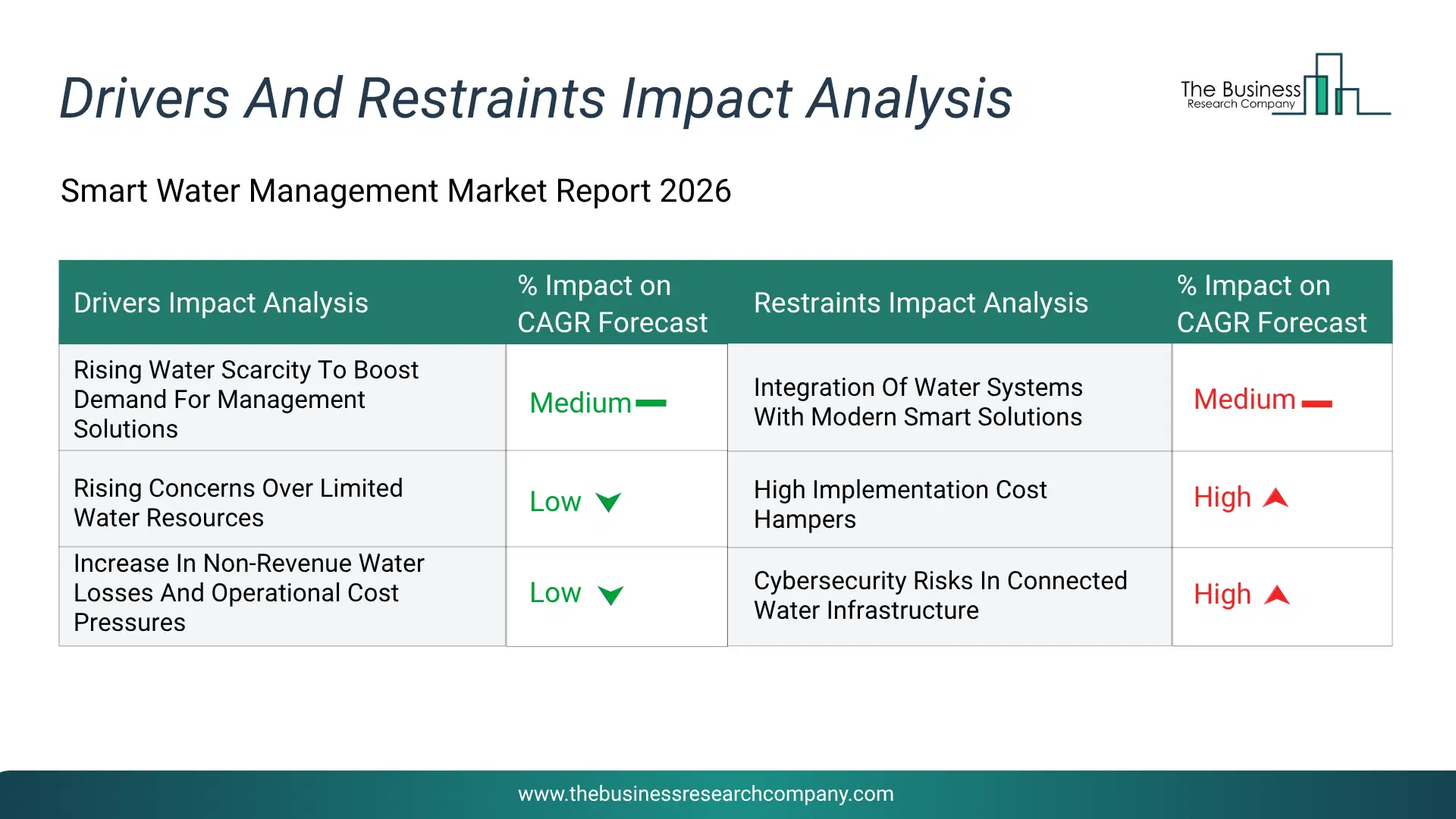
Infographic Chart Showing Key Market Drivers Analysis And Restraints For Smart Water Management Market
The chart presents an impact analysis of key drivers and restraints, quantifying their relative influence on the market's growth rate and helping assess the balance between growth enablers and limiting factors. This chart offers a high-level perspective; the full report contains more detailed insights.
How Will The Drivers Impact Growth In The Global Smart Water Management Market?
• Rising Water Scarcity To Boost Demand For Management Solutions (Medium) – During the forecast period, the rising water scarcity to boost demand for management solutions is expected to become a key growth driver for the smart water management market by 2030. rising water scarcity is a major driver of the smart water management market because governments, utilities, and industries are under increasing pressure to use available water resources more efficiently. growing populations, urbanization, climate change, and irregular rainfall patterns are reducing freshwater availability in many regions. smart water management solutions help organizations monitor water consumption, detect inefficiencies, and optimize distribution networks in real time. advanced sensors, analytics platforms, and automated control systems enable better allocation of limited water resources while minimizing wastage. • Rising Concerns Over Limited Water Resources (Low) – During the forecast period, the rising concerns over limited water resources is expected to emerge as a major factor driving the expansion of the smart water management market by 2030. increasing concerns about the depletion of water resources are encouraging investments in smart water management technologies. governments, regulatory bodies, and environmental organizations are promoting the adoption of digital solutions to ensure long-term water security. smart monitoring systems provide accurate data on water availability, consumption patterns, and quality, enabling informed decision-making and resource planning. these technologies help utilities and industries implement conservation strategies, improve operational efficiency, and comply with environmental regulations. • Increase In Non-Revenue Water Losses And Operational Cost Pressures (Low) – During the forecast period, the increase in non-revenue water losses and operational cost pressures is expected to act as a key growth catalyst for the smart water management market by 2030. the growing incidence of non-revenue water losses, including leaks, theft, metering inaccuracies, and unbilled consumption, is significantly driving the smart water management market. water utilities face substantial financial losses and rising operational expenses due to inefficient distribution systems. smart water management solutions use intelligent sensors, advanced metering infrastructure, and data analytics to identify leaks, monitor network performance, and reduce water losses. these technologies improve asset utilization, lower maintenance costs, and enhance operational efficiency.How Will The Restraints Impact Growth In The Global Smart Water Management Market?
• Integration Of Water Systems With Modern Smart Solutions (Medium) – During the forecast period, the integration of existing water infrastructure with modern smart water management technologies acts as a significant restraint on market growth because many water utilities operate with aging pipelines, meters, pumps, and monitoring systems that were not designed to support digital connectivity. Integrating smart sensors, IoT devices, analytics platforms, and automated control systems with legacy infrastructure often requires extensive modifications, technical expertise, and system upgrades. Utilities may face compatibility issues between old and new technologies, resulting in longer deployment timelines and increased project complexity. The lack of standardized communication protocols across different equipment vendors further complicates integration efforts. In addition, disruptions to ongoing water operations during system upgrades can create operational risks and discourage adoption. Smaller municipalities and water providers often lack the technical resources needed to manage complex integration projects effectively. Data migration, cybersecurity concerns, and the need for workforce training add further challenges. As a result, many organizations delay or scale back smart water initiatives, slowing the overall adoption of advanced water management solutions and limiting market expansion. • High Implementation Cost Hampers (Low) – During the forecast period, high implementation costs represent another major restraint for the smart water management market because deploying intelligent water management systems requires substantial upfront investment. Utilities and municipalities must invest in smart meters, sensors, communication networks, data management platforms, software solutions, and system integration services. In addition to hardware and software expenses, installation, maintenance, workforce training, and ongoing technical support contribute to the total cost of ownership. For many local governments and water utilities, especially those operating under tight budget constraints, securing the necessary funding can be difficult. The return on investment from smart water projects may take several years to materialize, making decision-makers hesitant to commit significant capital. Developing regions often face even greater financial barriers due to limited infrastructure budgets and competing public service priorities. Economic uncertainty and funding shortages can further delay modernization projects. Consequently, the high initial expenditure associated with smart water technologies reduces adoption rates, particularly among small and medium-sized utilities, thereby restraining the overall growth of the smart water management market. • Cybersecurity Risks In Connected Water Infrastructure (Low) – During the forecast period, cybersecurity risks can restrain the smart water management market because connected meters, sensors, control systems, and cloud platforms increase the number of digital entry points within water infrastructure. Utilities may be concerned about unauthorized access, data breaches, system manipulation, or disruption of essential water services. Addressing these risks requires continuous investment in cybersecurity infrastructure, monitoring, software updates, and skilled personnel. Such additional costs and security concerns may delay digital transformation projects.Key Players In The Global Smart Water Management Market
Major companies operating in the smart water management market are Honeywell International Inc., Siemens Aktiengesellschaft, ABB Ltd., International Business Machines Corporation, Itron Inc., Schneider Electric SE, SUEZ Group SA, Sensus USA Inc., HydroPoint Data Systems Inc., TaKaDu Ltd., AquamatiX Limited, Xylem Inc., Badger Meter Inc., Aclara Technologies LLC, IDEX Corporation, Mueller Water Products Inc., Kamstrup A/S, Elster Group SE, Landis+Gyr Group AG, Echologics Engineering Inc., Neptune Technology Group Inc., Innovyze Inc., Aquatic Informatics Inc., Syrinix Ltd., Zenner International GmbH & Co. KG, WaterSmart Software Inc., Utilis Corp.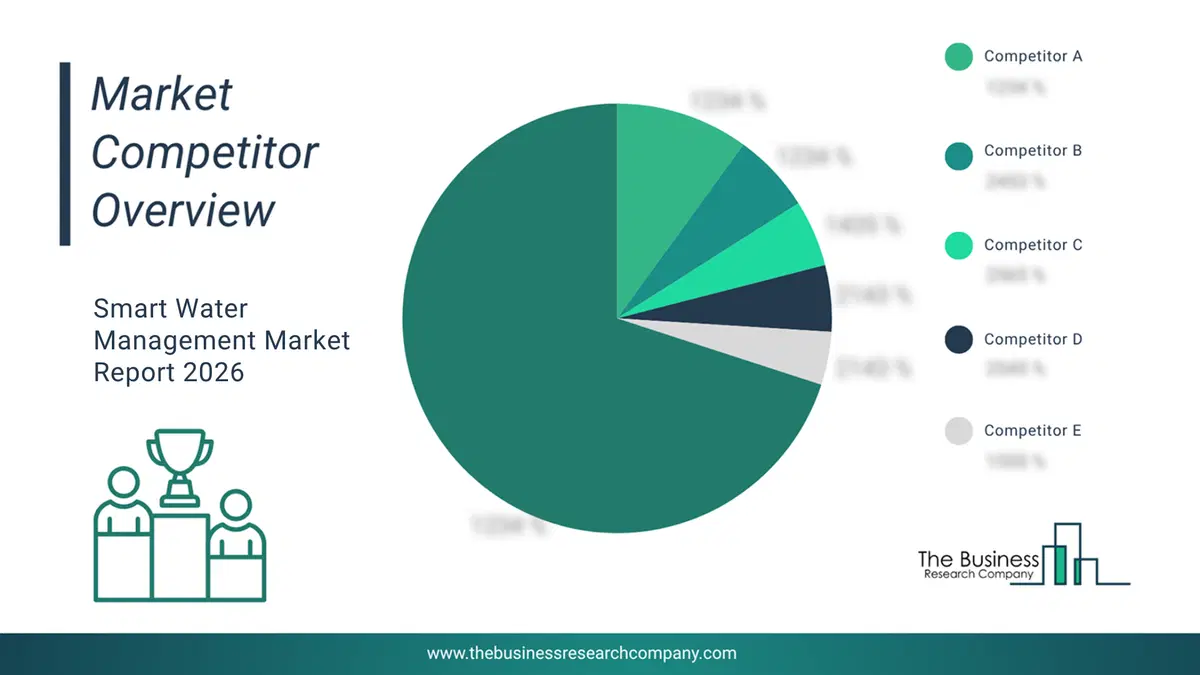
This chart is for illustrative purposes; the full report includes a detailed competitor analysis and comprehensive overview of the top 10 companies in the market.
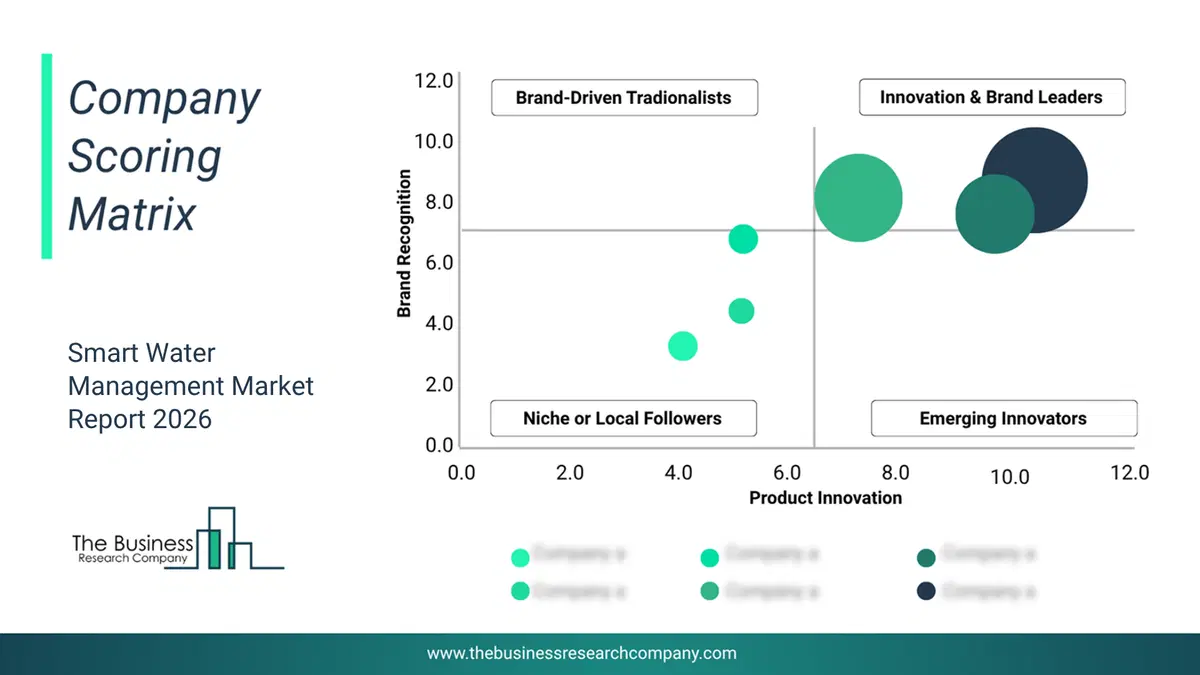
This chart maps companies by product innovation and brand strength, with bubble size indicating relative revenue, helping identify market leaders, challengers, and niche players. This is an illustrative chart; the full report provides a complete and accurate competitive analysis.
Global Smart Water Management Market Trends and Insights
Major companies operating in global smart water management are focusing on developing innovative technologies, such as hybrid cloud and artificial intelligence, and an ecosystem of experts to enhance and scale projects focused on populations vulnerable to environmental threats. Hybrid cloud is a computing environment that combines on-premises infrastructure with public and private cloud services for greater flexibility and scalability, while artificial intelligence (AI) simulates human intelligence processes in machines, enabling them to learn, reason, and make data-driven decisions. For instance, in March 2023, International Business Machines Corporation, a US-based technology company, launched Request for Proposals (RFP) aimed at accelerating global water management solutions specifically targeting vulnerable populations. The focus is on integrating smart technologies, such as IoT and AI, to monitor and optimize water resources, ultimately promoting resilience in vulnerable areas affected by climate change and other pressures.What Are Latest Mergers And Acquisitions In The Smart Water Management Market?
In January 2024, ABB Ltd., a Switzerland-based global engineering company that specializes in automation and electrification technologies, acquired Realtech for an undisclosed amount. With this acquisition, ABB Ltd. aims to enhance its smart water management solutions by integrating advanced optical sensor technology and AI-driven data analytics to improve real-time water quality monitoring and address global sustainability challenges. enhance its smart water management solutions by integrating advanced optical sensor technology and AI-driven data analytics to improve real-time water quality monitoring and address global sustainability challenges.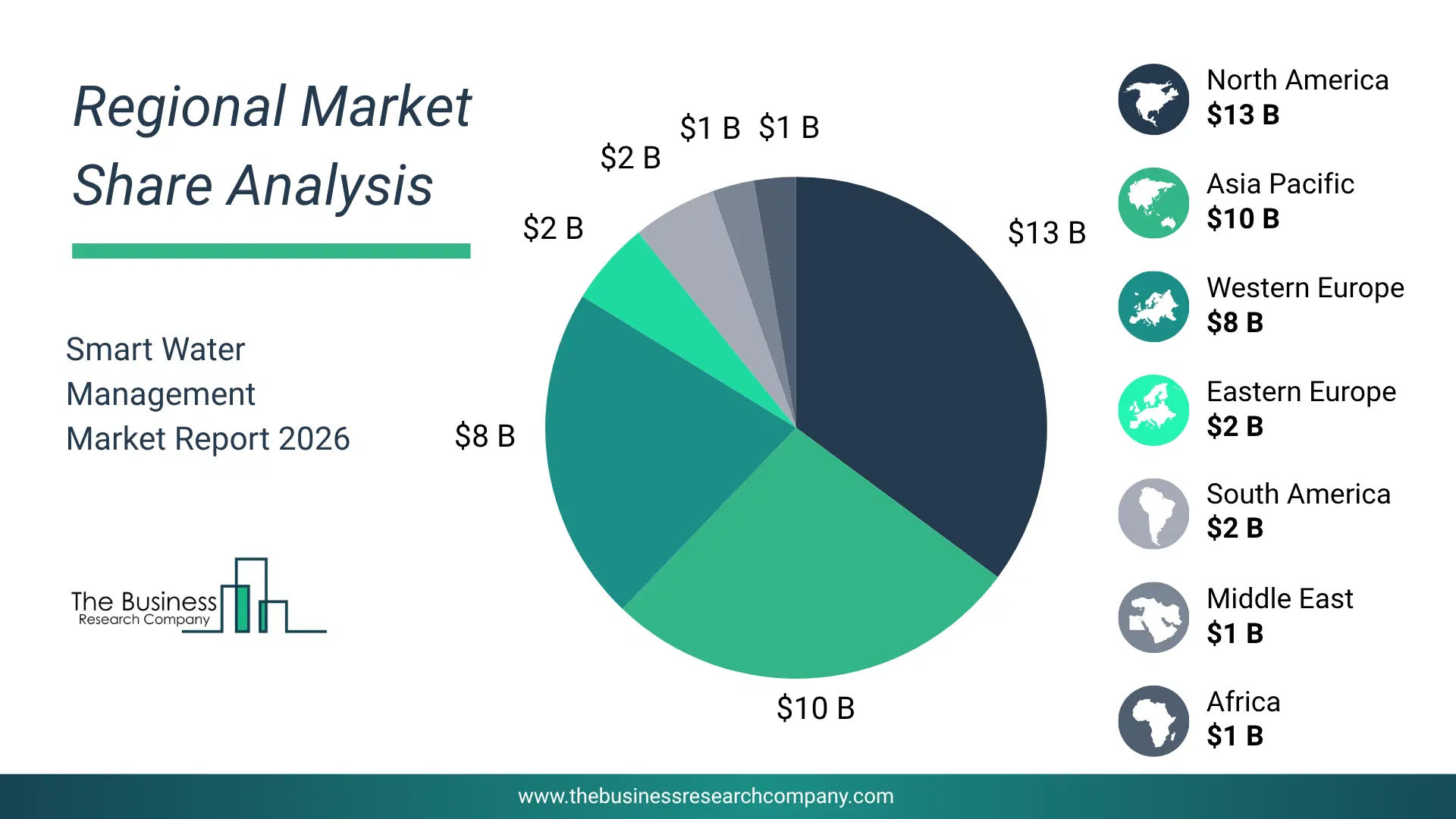
Regional Outlook
North America was the largest region in the smart water management market in 2025. Asia-Pacific is expected to be the fastest-growing region in the forecast period. The regions covered in this market report are Asia-Pacific, South East Asia, Western Europe, Eastern Europe, North America, South America, Middle East, Africa The countries covered in this market report are Australia, Brazil, China, France, Germany, India, Indonesia, Japan, Taiwan, Russia, South Korea, UK, USA, Canada, Italy, Spain.What Defines the Smart Water Management Market?
The smart water management market includes revenues earned by providing smart water management systems, pressure management, better leakage techniques for water networks, smart network operations and water cycle maintenance, smart water meter technologies, and smart water quality monitoring. The market value includes the value of related goods sold by the service provider or included within the service offering. Only goods and services traded between entities or sold to end consumers are included.How is Market Value Defined and Measured?
The market value is defined as the revenues that enterprises gain from the sale of goods and/or services within the specified market and geography through sales, grants, or donations in terms of the currency (in USD unless otherwise specified). The revenues for a specified geography are consumption values that are revenues generated by organizations in the specified geography within the market, irrespective of where they are produced. It does not include revenues from resales along the supply chain, either further along the supply chain or as part of other products.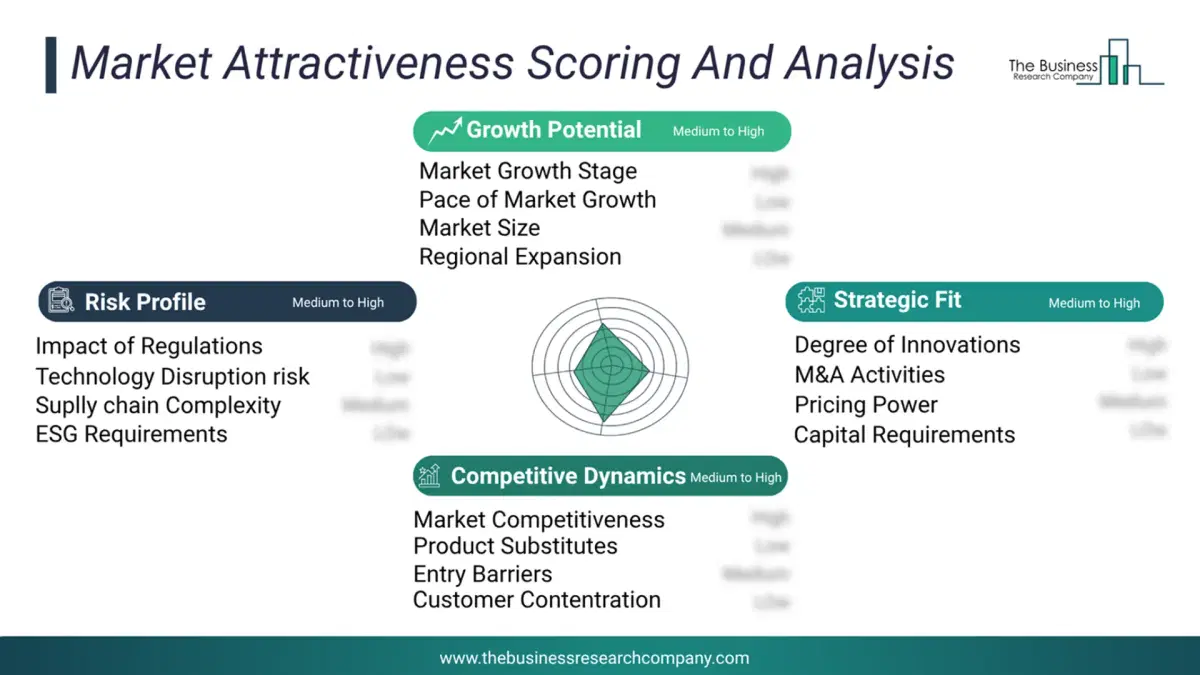
This chart presents market attractiveness based on a quantitative evaluation of growth, competition, strategic alignment, and risk, offering a clear view of opportunity areas for decision-making. This chart is for illustrative purposes; the full report contains the complete analysis.
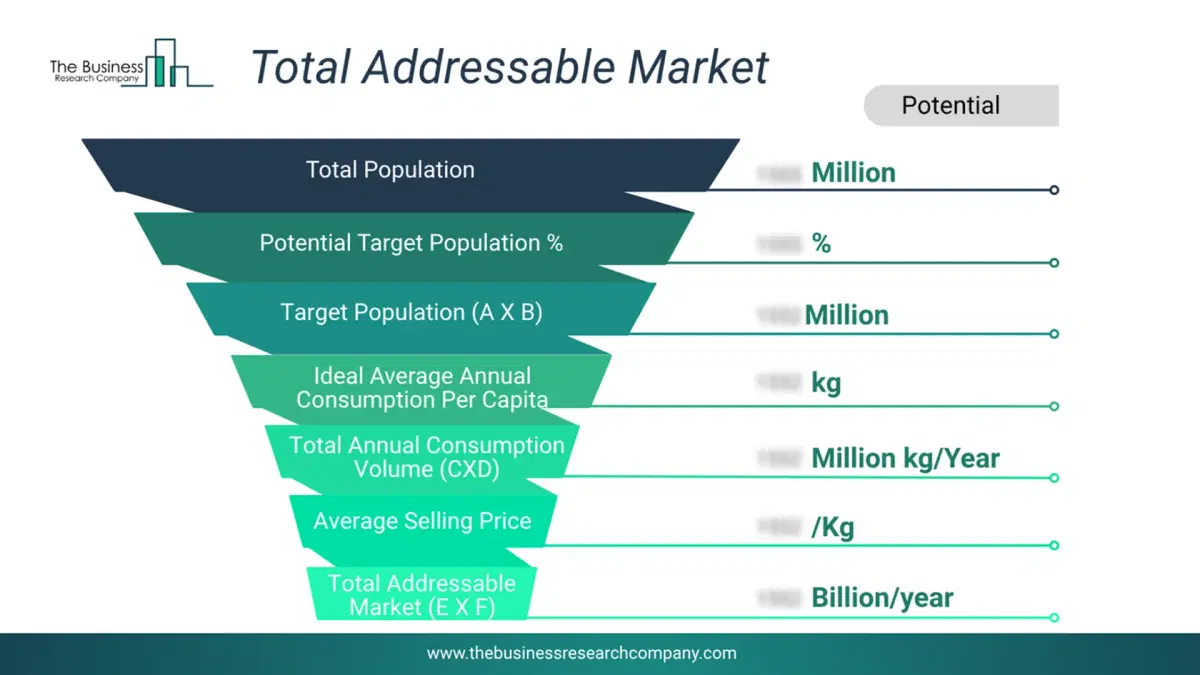
This chart highlights the Total Addressable Market (TAM) by estimating the maximum revenue opportunity using an assumption-driven approach, supporting strategic planning and opportunity sizing across markets. The chart is illustrative; the full report provides a more comprehensive analysis.
What Key Data and Analysis Are Included in the Smart Water Management Market Report 2026?
The smart water management market research report is one of a series of new reports from The Business Research Company that provides market statistics, including industry global market size, regional shares, competitors with the market share, detailed market segments, market trends and opportunities, and any further data you may need to thrive in the smart water management industry. The market research report delivers a complete perspective of everything you need, with an in-depth analysis of the current and future state of the industry.Smart Water Management Market Report Forecast Analysis
| Report Attribute | Details |
|---|---|
| Market Size Value In 2026 | $23.01 billion |
| Revenue Forecast In 2030 | $40.67 billion |
| Growth Rate | CAGR of 15.3% from 2026 to 2030 |
| Base Year For Estimation | 2025 |
| Actual Estimates/Historical Data | 2020-2025 |
| Forecast Period | 2026 - 2030 |
| Market Representation | Revenue in USD Billion and CAGR from 2026 to 2030 |
| Segments Covered | Offering, Product Type, End User |
| Regional Scope | Asia-Pacific, Western Europe, Eastern Europe, North America, South America, Middle East, Africa |
| Country Scope | The countries covered in the report are Australia, Brazil, China, France, Germany, India, Indonesia, Japan, Taiwan, Russia, South Korea, UK, USA, Canada, Italy, Spain. |
| Key Companies Profiled | Honeywell International Inc., Siemens Aktiengesellschaft, ABB Ltd., International Business Machines Corporation, Itron Inc., Schneider Electric SE, SUEZ Group SA, Sensus USA Inc., HydroPoint Data Systems Inc., TaKaDu Ltd., AquamatiX Limited, Xylem Inc., Badger Meter Inc., Aclara Technologies LLC, IDEX Corporation, Mueller Water Products Inc., Kamstrup A/S, Elster Group SE, Landis+Gyr Group AG, Echologics Engineering Inc., Neptune Technology Group Inc., Innovyze Inc., Aquatic Informatics Inc., Syrinix Ltd., Zenner International GmbH & Co. KG, WaterSmart Software Inc., Utilis Corp. |
| Customization Scope | Request for Customization |
| Pricing And Purchase Options | Explore Purchase Options |