
Solar District Heating Market Report 2026
Global Outlook – By System (Small System, Large System), By Technology (Flat-Plate Collectors, Evacuated Tube Collectors, Concentrated Solar Thermal Systems), By Application (Residential, Commercial, Industrial) – Market Size, Trends, Strategies, and Forecast to 2030
Solar District Heating Market Overview
• Solar District Heating market size has reached to $4.15 billion in 2025 • Expected to grow to $7.01 billion in 2030 at a compound annual growth rate (CAGR) of 10.9% • Growth Driver: Fostering Solar District Heating Market Growth Through Sustainable Energy Adoption • Market Trend: Record-Breaking Solar Thermal System To Power Thousands Of Homes In Pristina • Western Europe was the largest region in 2025 and Asia-Pacific is the fastest growing region.Market Gains By 2030 – Top Opportunities By Segment
Market Gain identifies the most promising market opportunities by highlighting the segments or products expected to generate the highest incremental revenue growth over the next five years.
What Is Covered Under Solar District Heating Market?
Solar district heating refers to systems, which consist of thermal collectors that capture solar heat to generate hot water. The thermal collector captures energy from the sun into thermal transfer fluid, which is transferred to the mechanical room. In the mechanical room, the heated water is circulated using pipes to transfer heat as the utility to customers, residents, and others. The different types of systems in solar district heating include small systems and large systems. The small solar heating district system refers to systems with less than 1000 m2 of solar collector area and less than 1000 m3 of seasonal thermal energy storage volume. Solar district heating systems are widely used in residential, commercial, and industrial applications.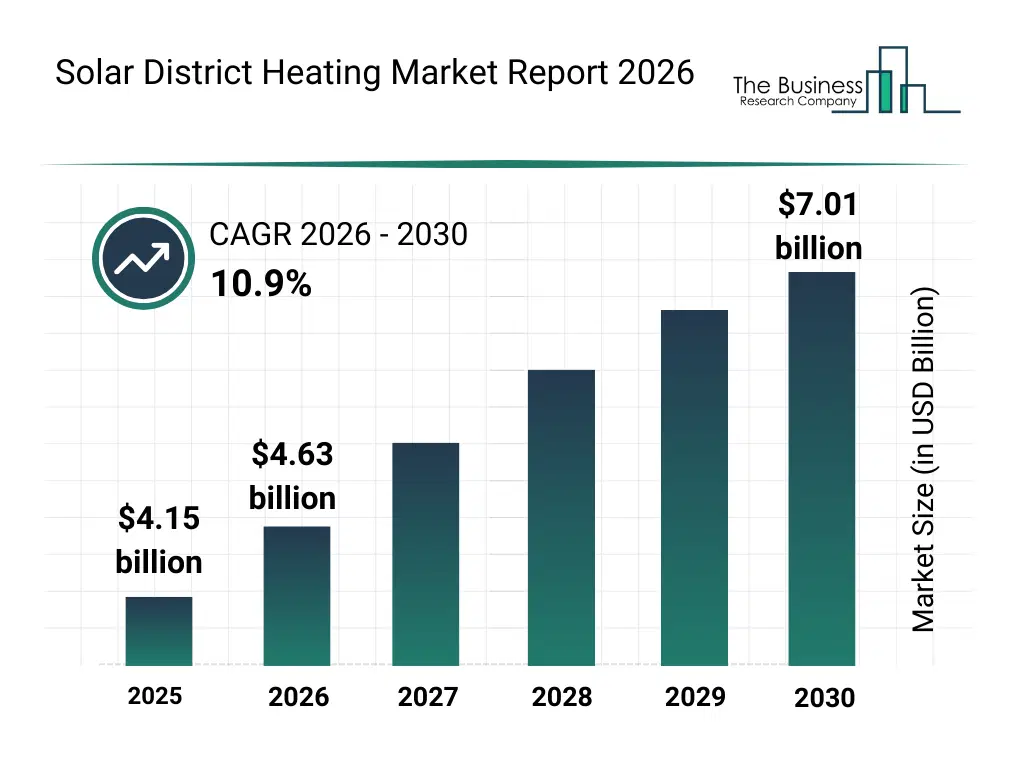
What Is The Solar District Heating Market Size and Share 2026?
The solar district heating market size has grown rapidly in recent years. It will grow from $4.15 billion in 2025 to $4.63 billion in 2026 at a compound annual growth rate (CAGR) of 11.6%. The growth in the historic period can be attributed to early adoption of centralized heating infrastructure, expansion of urban district heating networks, availability of solar thermal collector technologies, rising fossil fuel heating costs, public sector renewable heating initiatives.What Is The Solar District Heating Market Growth Forecast?
The solar district heating market size is expected to see rapid growth in the next few years. It will grow to $7.01 billion in 2030 at a compound annual growth rate (CAGR) of 10.9%. The growth in the forecast period can be attributed to increasing investments in low-carbon district heating, rising energy efficiency regulations, expansion of renewable heating mandates, growing deployment of large-scale thermal storage, increasing focus on urban decarbonization. Major trends in the forecast period include expansion of large-scale solar thermal collector fields, increasing integration with district heating networks, rising deployment of seasonal thermal energy storage, growing use of hybrid solar heating systems, enhanced focus on heat loss reduction.
Global Solar District Heating Market Segmentation
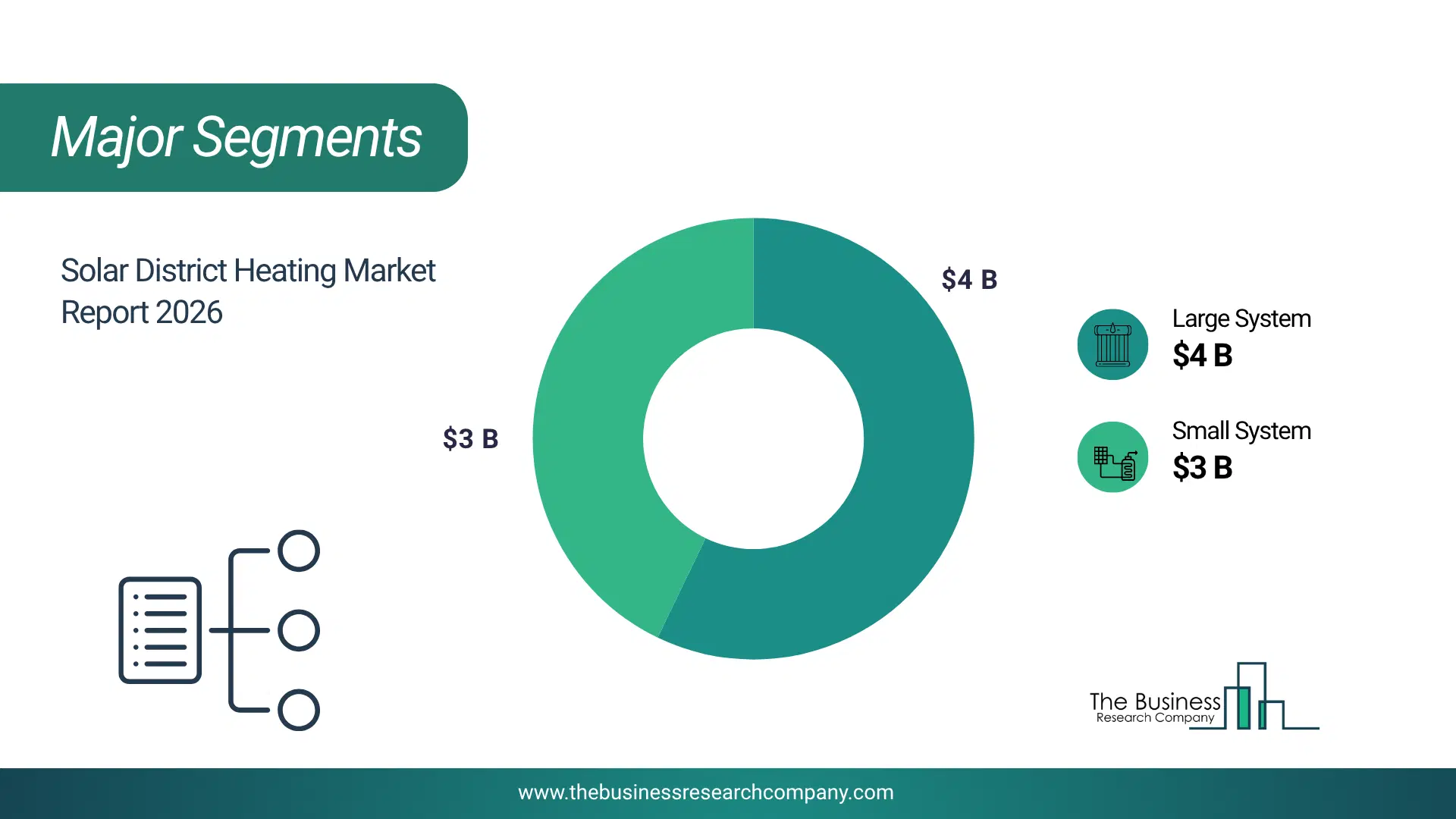
1) By System: Small System, Large System 2) By Technology: Flat-Plate Collectors, Evacuated Tube Collectors, Concentrated Solar Thermal Systems 3) By Application: Residential, Commercial, Industrial Subsegments: 1) By Small System: Residential Solar District Heating, Community Solar Heating Systems 2) By Large System: Industrial Solar District Heating, District Heating Networks, Combined Heat And Power (CHP) Systems The top segments in the solar district heating market will be: • Large System will reach $4 Billion by 2030. • Small System will reach $3 Billion by 2030.What Is The Driver Of The Solar District Heating Market?
The growing adoption of sustainable energy is driving the growth of the solar district heating market. Governments, residents and industries across the globe are focusing on adopting sustainable energy to decrease the dependency on conventional energy consumption and increase the utilization of clean energy such as solar, wind, hydropower, and bioenergy. The growing adoption of sustainable energy is expected to boost the utilization of solar district heating systems, as they offer the most cost-effective heating solutions to commercial, residential, and industrial customers, over the existing heating solutions. For instance, in April 2023, according to a report published by the National Renewable Energy Laboratory (NREL), a US-based research institution dedicated to advancing renewable energy and energy efficiency technologies, global photovoltaic (PV) installations reached 231 gigawatts of direct current (GWdc), totaling 1.2 terawatts of direct current (TWdc) cumulatively in 2022, while annual installations are forecast to exceed 300 GW by 2023 and surpass 400 GW by 2025. Thus, the growing adoption of sustainable energy is expected to boost the utilization of solar district heating during the forecast period.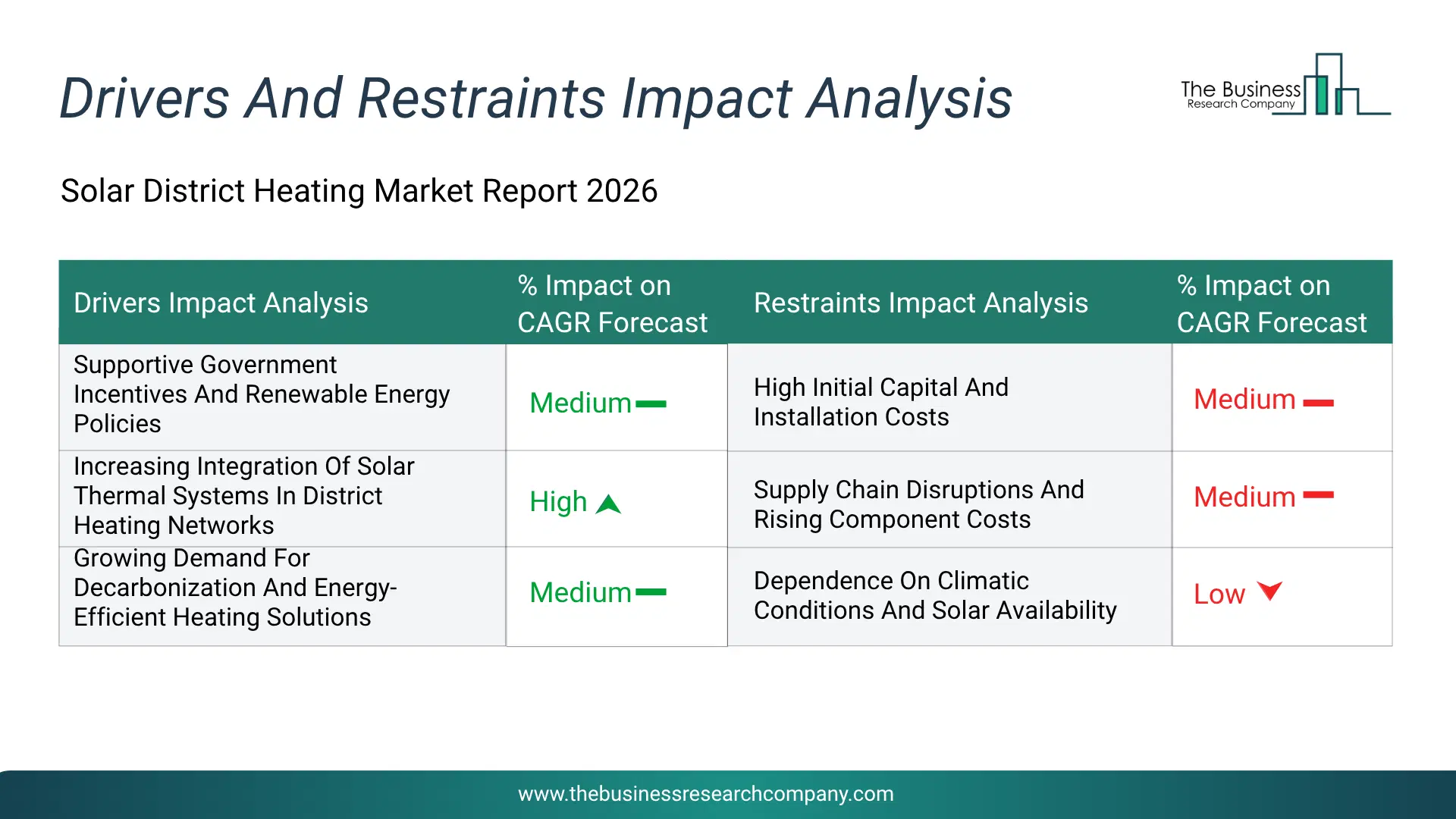
Infographic Chart Showing Key Market Drivers Analysis And Restraints For Solar District Heating Market
The chart presents an impact analysis of key drivers and restraints, quantifying their relative influence on the market's growth rate and helping assess the balance between growth enablers and limiting factors. This chart offers a high-level perspective; the full report contains more detailed insights.
How Will The Drivers Impact Growth In The Global Solar District Heating Market?
• Supportive Government Incentives And Renewable Energy Policies (Medium) – During the forecast period, the supportive government incentives and renewable energy policies are expected to emerge as a major factor driving the expansion of the solar district heating market by 2030. The supportive government incentives and renewable energy policies are driving the solar district heating market as subsidies, tax incentives, grants, renewable energy transition programs, and stringent carbon reduction regulations encourage utilities and municipalities to invest in large-scale solar thermal district heating infrastructure. • Increasing Integration Of Solar Thermal Systems In District Heating Networks (High) – During the forecast period, the increasing integration of solar thermal systems in district heating networks is expected to emerge as a major factor driving the expansion of the solar district heating market by 2030. This is because utilities are increasingly incorporating solar thermal technologies into centralized heating infrastructure, supported by advancements in thermal energy storage, modernization of district heating networks, and growing investments in renewable heat generation projects. • Growing Demand For Decarbonization And Energy-Efficient Heating Solutions (Medium) – During the forecast period, the growing demand for decarbonization and energy-efficient heating solutions is expected to act as a key growth catalyst for the solar district heating market by 2030. This is supporting the solar district heating market as the transition toward low-carbon heating infrastructure, stricter emission reduction targets, expanding smart city developments, and increasing adoption of renewable heating technologies accelerate the deployment of sustainable district heating systems.How Will The Restraints Impact Growth In The Global Solar District Heating Market?
• High Initial Capital And Installation Costs (Medium) – During the forecast period, the high initial capital and installation costs act as a major restraint for the solar district heating market because the development of large-scale solar thermal plants, heat distribution pipelines, thermal storage systems, and associated infrastructure requires substantial upfront investment. The costs related to land acquisition, system integration, engineering, and installation can be significantly higher compared to conventional heating systems, creating financial barriers for municipalities and utility providers. In addition, long project payback periods and funding limitations in developing regions further restrict large-scale deployment. Although government incentives and renewable energy subsidies help offset some expenses, the high capital requirement continues to challenge widespread adoption of solar district heating systems • Supply Chain Disruptions And Rising Component Costs (High) – During the forecast period, the supply chain disruptions and rising component costs act as a significant restraint for the solar district heating market because the industry depends heavily on the timely availability of solar collectors, thermal storage units, piping systems, control equipment, and other specialized components. Fluctuations in raw material prices, transportation delays, and global supply chain bottlenecks can increase overall project costs and extend installation timelines. In addition, rising costs of metals, insulation materials, and energy equipment can reduce project profitability and discourage investments in large-scale solar district heating infrastructure. These challenges are particularly impactful for long-term utility projects that require stable procurement and cost predictability for successful deployment. • Dependence On Climatic Conditions And Solar Availability (Medium) – During the forecast period, the dependence on climatic conditions and solar availability acts as a key restraint for the solar district heating market because the efficiency and heat generation capacity of solar thermal systems are directly influenced by sunlight intensity and weather conditions. Regions with prolonged winters, frequent cloud cover, or limited solar irradiation may experience reduced thermal energy production, affecting the reliability and consistency of district heating supply. Seasonal variations in solar energy availability can also create challenges in maintaining continuous heating demand, particularly during peak cold periods when heat requirements are highest. In addition, the need for supplementary heating systems and thermal energy storage infrastructure increases overall system complexity and operational costs, limiting broader market adoption in certain geographic regions.Key Players In The Global Solar District Heating Market
Major companies operating in the solar district heating market are DESMI A/S, Göteborg Energi AB, Keppel District Heating and Cooling Services Pte. Ltd., Korea District Heating Corporation, LOGSTOR A/S, Arcon-Sunmark A/S, Savosolar Oyj, Solvis GmbH, S. O. L. I. D. GmbH, Sunamp Ltd., WOLF GmbH, Aalborg CSP A/S, Absolicon Solar Collector AB, Institut für Nachhaltige Technologien, BrightSource Energy Inc., CitrinSolar GmbH, Energie Solaire SA, Frenell GmbH, Heliodyne Inc., Industrial Solar GmbH, Sunlumo Technology GmbH, Sunoptimo SA, Suntrix Company Limited, TSK Flagsol Engineering GmbH, TVP Solar SA, Viessmann Werke GmbH & Co. KG, Wagner Solar GmbH, Institute for Sustainable Technologies, KBB Kollektorbau GmbH, Alfa Laval AB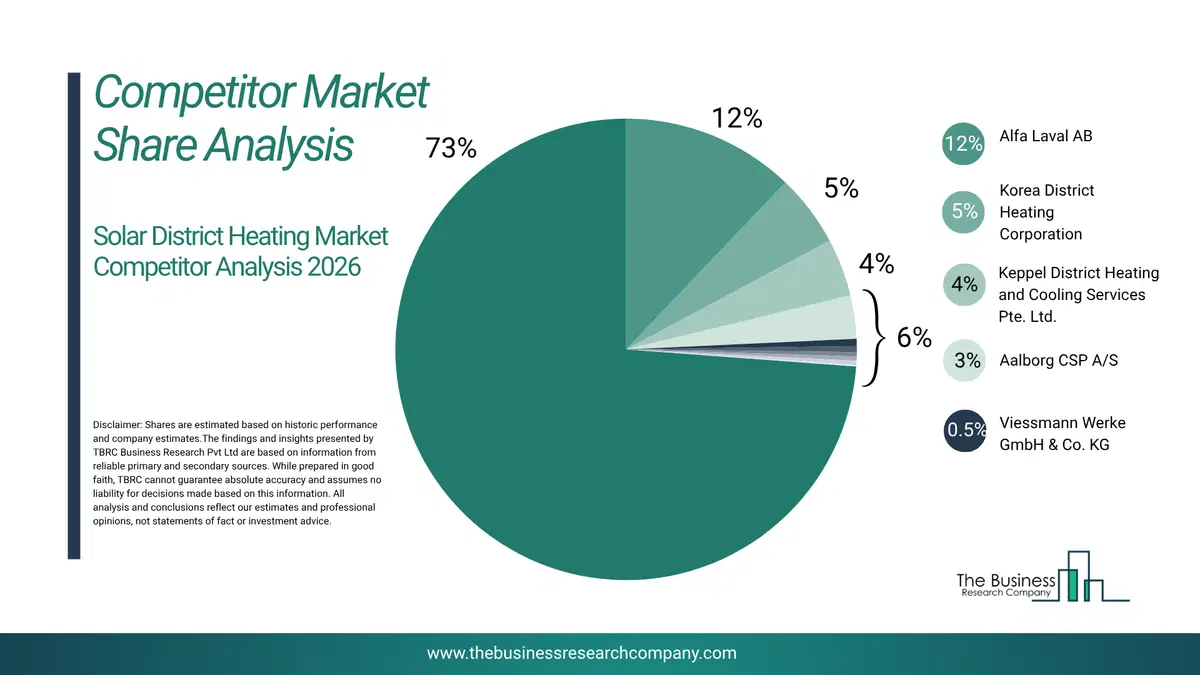
This chart is for illustrative purposes; the full report includes a detailed competitor analysis and comprehensive overview of the top 10 companies in the market.
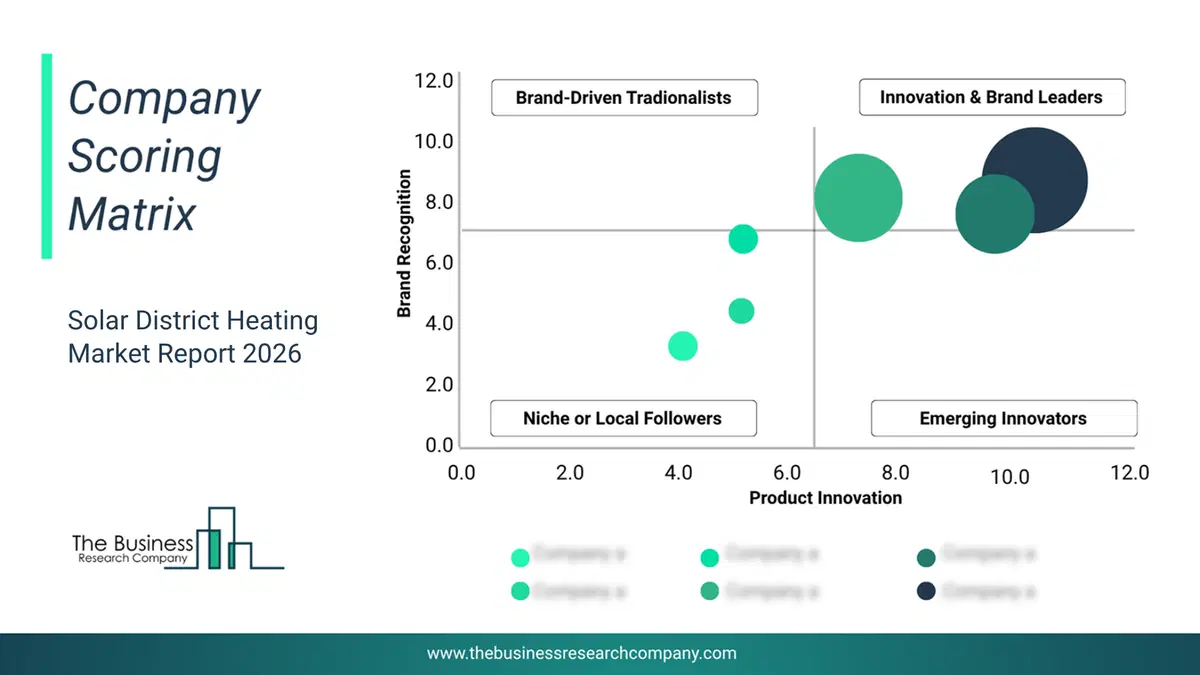
This chart maps companies by product innovation and brand strength, with bubble size indicating relative revenue, helping identify market leaders, challengers, and niche players. This is an illustrative chart; the full report provides a complete and accurate competitive analysis.
Global Solar District Heating Market Trends and Insights
Major companies operating in the solar district heating market are focusing on developing large-scale solar thermal solutions to decarbonize heating, reduce reliance on fossil fuels, and improve energy efficiency in urban environments. Large-scale solar thermal solutions are systems that use extensive solar collector fields to capture and store heat from the sun for centralized district heating or industrial processes, providing renewable and efficient thermal energy on a city or industrial scale. For instance, in December 2025, Kosovo Energy Corporation j.s.c.a., a Kosovo-based energy company, launched the largest solar thermal district heating project in the Western Balkans. The project features a 40.6 MW solar collector field paired with a 408,000 m³ seasonal heat storage facility, enabling solar heat captured in summer to be stored and used during winter. The system will serve around 38,000 residential consumers in Pristina, reducing reliance on coal-based heating and cutting approximately 47,000 tonnes of CO₂ emissions annually.What Are Latest Mergers And Acquisitions In The Solar District Heating Market?
In March 2023, Solar, a Europe-based company, acquired 51% of ThermoNova A/S for an undisclosed amount. The acquisition is expected to accelerate the green transition of both small and large companies, particularly in the industrial sector, by providing energy-efficient heating solutions that can replace traditional gas and oil-based systems. ThermoNova A/S is a Denmark-based company that specializes in producing high-capacity heat pumps, including air/water and air/air systems for heating buildings.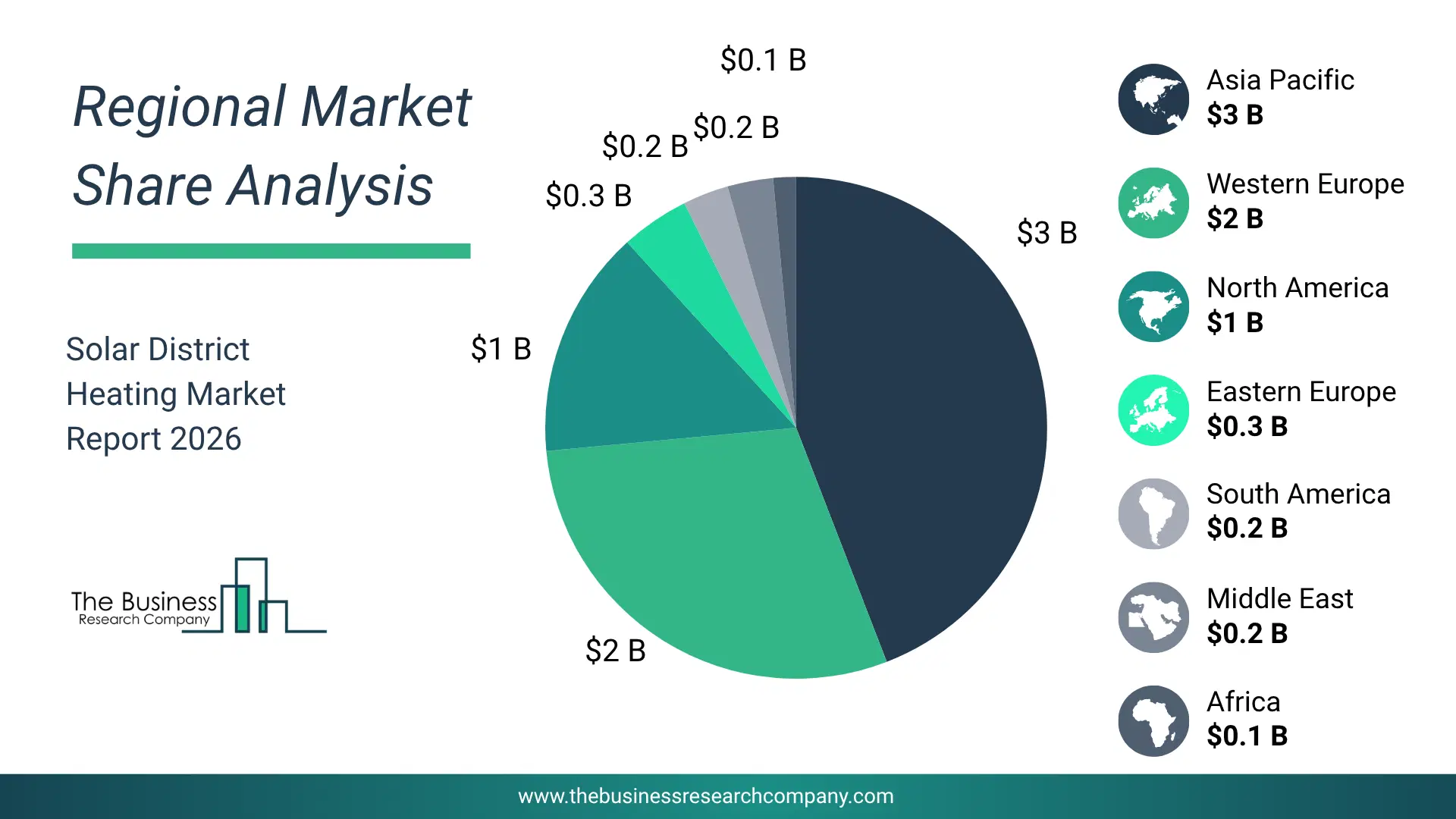
Regional Outlook
Western Europe was the largest region in the solar district heating market in 2025.Asia-Pacific is expected to be the fastest-growing region in the solar district heating market share during the forecast period. The regions covered in this market report are Asia-Pacific, South East Asia, Western Europe, Eastern Europe, North America, South America, Middle East, Africa. The countries covered in this market report are Australia, Brazil, China, France, Germany, India, Indonesia, Japan, Taiwan, Russia, South Korea, UK, USA, Canada, Italy, SpainWhat Defines the Solar District Heating Market?
The solar district heating market includes revenues earned by entities by providing services such as thermal energy storage, district heating system, and seasonal storage with the aid of solar thermal collectors and flat-plate collectors. The market value includes the value of related goods sold by the service provider or included within the service offering. Only goods and services traded between entities or sold to end consumers are included.How is Market Value Defined and Measured?
The market value is defined as the revenues that enterprises gain from the sale of goods and/or services within the specified market and geography through sales, grants, or donations in terms of the currency (in USD unless otherwise specified). The revenues for a specified geography are consumption values that are revenues generated by organizations in the specified geography within the market, irrespective of where they are produced. It does not include revenues from resales along the supply chain, either further along the supply chain or as part of other products.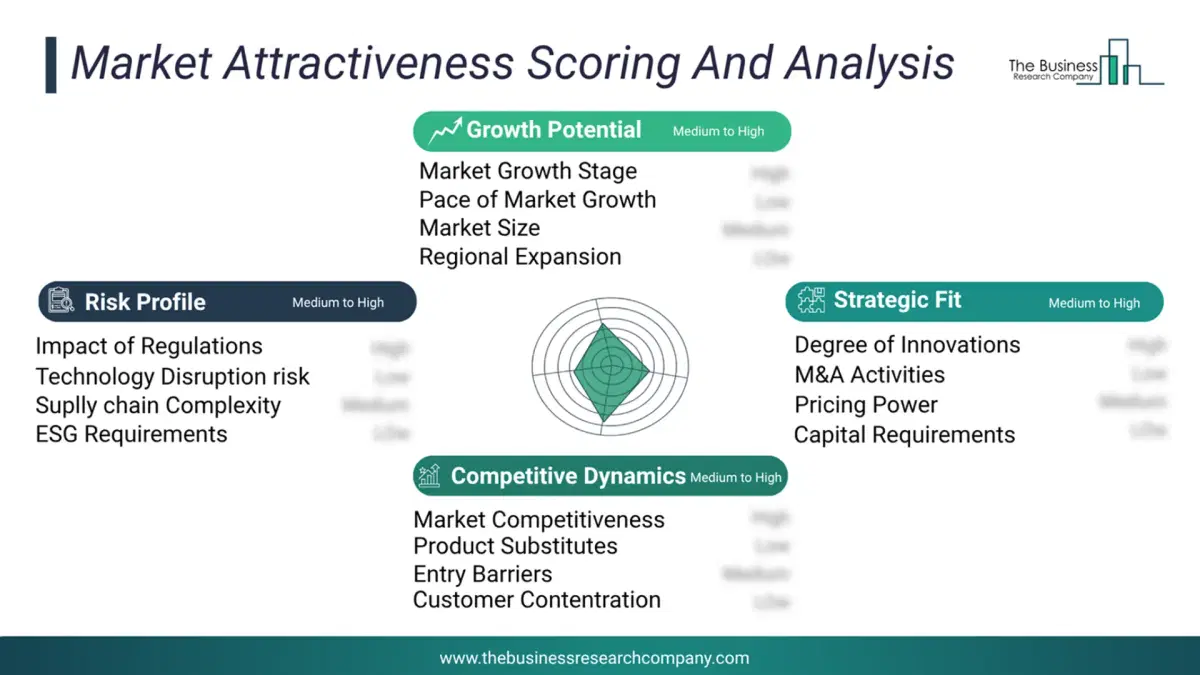
This chart presents market attractiveness based on a quantitative evaluation of growth, competition, strategic alignment, and risk, offering a clear view of opportunity areas for decision-making. This chart is for illustrative purposes; the full report contains the complete analysis.
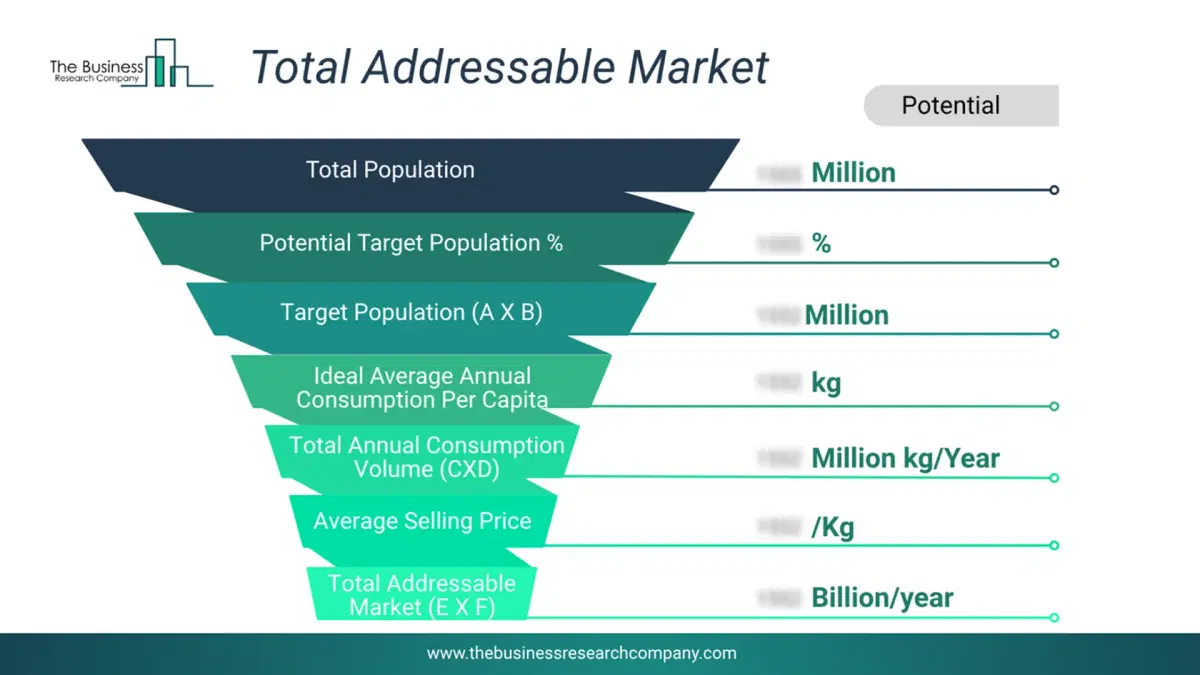
This chart highlights the Total Addressable Market (TAM) by estimating the maximum revenue opportunity using an assumption-driven approach, supporting strategic planning and opportunity sizing across markets. The chart is illustrative; the full report provides a more comprehensive analysis.
What Key Data and Analysis Are Included in the Solar District Heating Market Report 2026?
The solar district heating market research report is one of a series of new reports from The Business Research Company that provides market statistics, including Market Report 2026?global market size, regional shares, competitors with the market share, detailed market segments, market trends and opportunities, and any further data you may need to thrive in the solar district heating Market Report 2026? The market research report delivers a complete perspective of everything you need, with an in-depth analysis of the current and future state of the Market Report 2026?Solar District Heating Market Report Forecast Analysis
| Report Attribute | Details |
|---|---|
| Market Size Value In 2026 | $4.63 billion |
| Revenue Forecast In 2030 | $7.01 billion |
| Growth Rate | CAGR of 10.9% from 2026 to 2030 |
| Base Year For Estimation | 2025 |
| Actual Estimates/Historical Data | 2020-2025 |
| Forecast Period | 2026 - 2030 |
| Market Representation | Revenue in USD Billion and CAGR from 2026 to 2030 |
| Segments Covered | System, Technology, Application |
| Regional Scope | Asia-Pacific, Western Europe, Eastern Europe, North America, South America, Middle East, Africa |
| Country Scope | The countries covered in the report are Australia, Brazil, China, France, Germany, India, Indonesia, Japan, Taiwan, Russia, South Korea, UK, USA, Canada, Italy, Spain. |
| Key Companies Profiled | DESMI A/S, Göteborg Energi AB, Keppel District Heating and Cooling Services Pte. Ltd., Korea District Heating Corporation, LOGSTOR A/S, Arcon-Sunmark A/S, Savosolar Oyj, Solvis GmbH, S. O. L. I. D. GmbH, Sunamp Ltd., WOLF GmbH, Aalborg CSP A/S, Absolicon Solar Collector AB, Institut für Nachhaltige Technologien, BrightSource Energy Inc., CitrinSolar GmbH, Energie Solaire SA, Frenell GmbH, Heliodyne Inc., Industrial Solar GmbH, Sunlumo Technology GmbH, Sunoptimo SA, Suntrix Company Limited, TSK Flagsol Engineering GmbH, TVP Solar SA, Viessmann Werke GmbH & Co. KG, Wagner Solar GmbH, Institute for Sustainable Technologies, KBB Kollektorbau GmbH, Alfa Laval AB |
| Customization Scope | Request for Customization |
| Pricing And Purchase Options | Explore Purchase Options |