
Swimwear Market Report 2026
Global Outlook – By Type (Women's Swimwear, Men's Swimwear, Goggles And Swim Caps), By Fabric Type (Nylon, Polyester, Spandex, Other Fabric Types), By Distribution Channel (Online Stores, Offline Stores), By End-User (Men, Women, Kids) – Market Size, Trends, Strategies, and Forecast to 2030
Swimwear Market Overview
• Swimwear market size has reached to $25.77 billion in 2025 • Expected to grow to $36.19 billion in 2030 at a compound annual growth rate (CAGR) of 6.9% • Growth Driver: Growing Consumer Inclination Towards Water Activities Fuels Swimwear Market Expansion • Market Trend: Advancements In Swimwear Fabrics With Eco-Conscious Material Innovation • Asia-Pacific was the largest region in 2025.Market Gains By 2030 – Top Opportunities By Segment
Market Gain identifies the most promising market opportunities by highlighting the segments or products expected to generate the highest incremental revenue growth over the next five years.
What Is Covered Under Swimwear Market?
Swimwear refers to garments and accessories worn by those who participate in water-based activities or sports such as swimming, beach volleyball, surfing, jet skiing, and leisure activities such as sunbathing and others. Swimwear is worn not only while swimming but also for pool parties and other outdoor places such as resorts, beaches, and others. The main type of swimwear includes women’s swim wear, men’s swimwear, and googles and swim caps. The women’s swimwear refers to garments and accessories worn by women during water-based activities. The fabrics used in the manufacturing of swimwear includes nylon, polyester, spandex, and others, and they are worn by men, women and kids. These products are distributed through online and offline channels.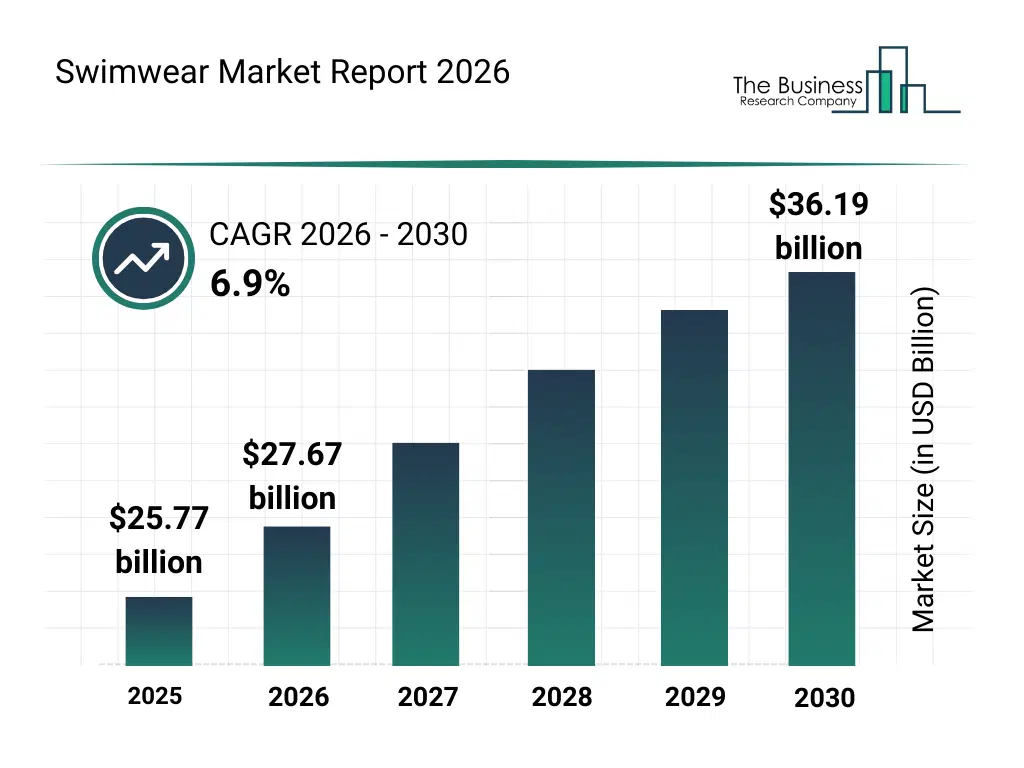
What Is The Swimwear Market Size and Share 2026?
The swimwear market size has grown strongly in recent years. It will grow from $25.77 billion in 2025 to $27.67 billion in 2026 at a compound annual growth rate (CAGR) of 7.4%. The growth in the historic period can be attributed to rising participation in swimming and water sports, growth of beach tourism and resorts, increasing disposable income, fashion-driven consumer behavior, expansion of online retail channels.What Is The Swimwear Market Growth Forecast?
The swimwear market size is expected to see strong growth in the next few years. It will grow to $36.19 billion in 2030 at a compound annual growth rate (CAGR) of 6.9%. The growth in the forecast period can be attributed to growing demand for sustainable and eco-friendly swimwear, increasing adoption of smart textiles, rising popularity of personalized and custom swimwear, expansion of direct-to-consumer (DTC) online platforms, innovation in performance-enhancing fabrics. Major trends in the forecast period include eco-friendly swimwear materials, customized & personalized swimwear, rapid fashion cycles & seasonal collections, online swimwear retail growth, functional & performance-enhanced swimwear.
Global Swimwear Market Segmentation
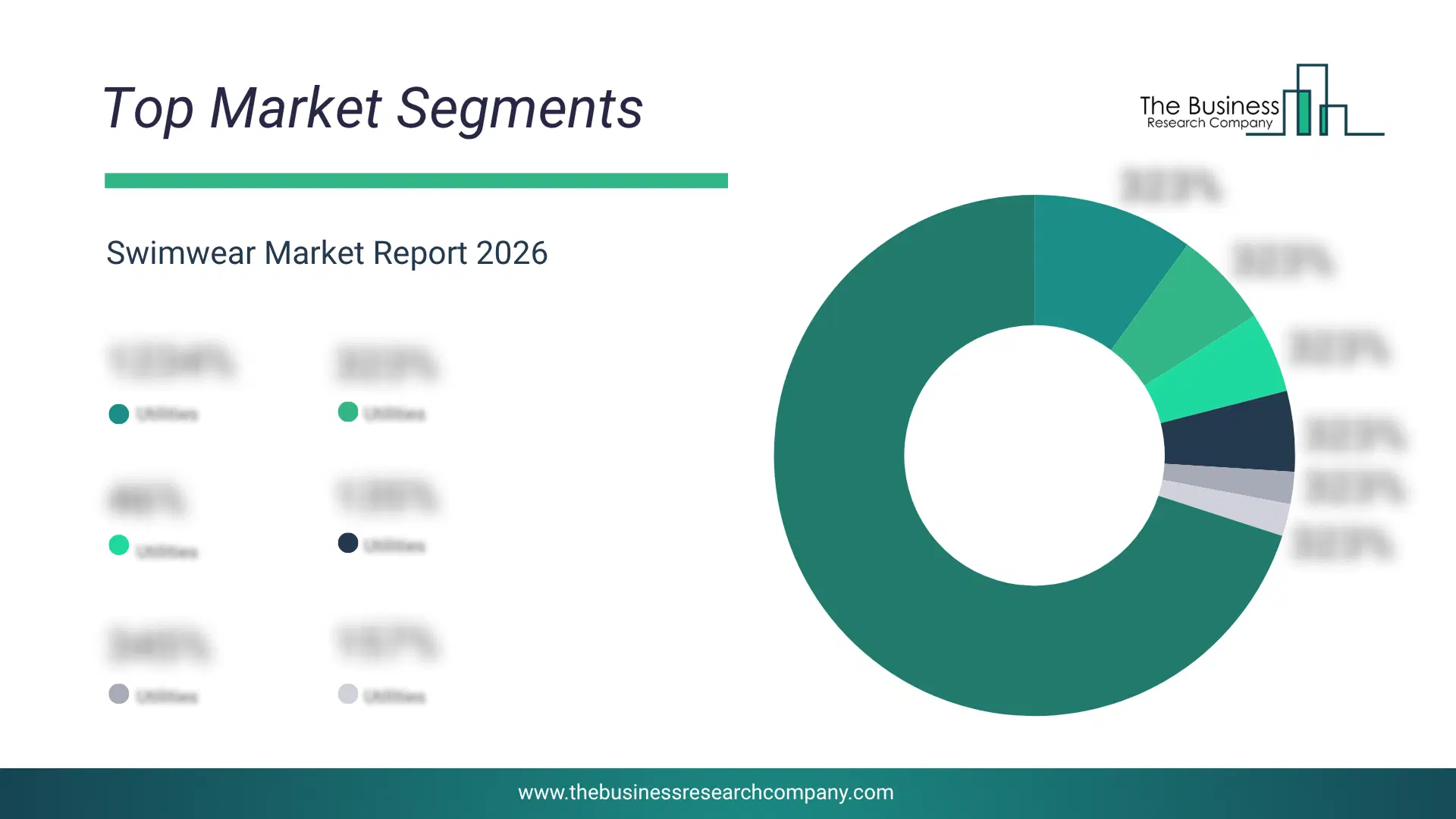
1) By Type: Women's Swimwear, Men's Swimwear, Goggles And Swim Caps 2) By Fabric Type: Nylon, Polyester, Spandex, Other Fabric Types 3) By Distribution Channel: Online Stores, Offline Stores 4) By End-User: Men, Women, Kids Subsegments: 1) By Women's Swimwear: One-Piece Swimsuits, Bikinis, Tankinis, Swim Dresses, Rash Guards 2) By Men's Swimwear: Swim Trunks, Board Shorts, Jammers, Briefs, Swim Shirts 3) By Goggles And Swim Caps: Competitive Swim Goggles, Recreational Swim Goggles, Silicone Swim Caps, Latex Swim Caps, Specialty Swim Caps The top segments in the swimwear market will be: • Women's Swimwear will reach $23 Billion by 2030. • Men's Swimwear will reach $10 Billion by 2030. • Goggles And Swim Caps will reach $3 Billion by 2030.What Is The Driver Of The Swimwear Market?
Growing consumer inclination towards water activities is expected to propel the growth of the swimwear market. The rising popularity of sports activities, particularly for health reasons and the growing number of international water sporting events, are pushing consumers to participate in water sports and recreational activities. For instance, in October 2023, according to the Livestrong Foundation, a US-based nonprofit organization, every year, over 91 million Americans, or 31% of the population, swim in lakes, rivers, and oceans. 36 % of kids aged 7 to 17 years swim at least six times a year and 15% of adults swim 6 times or more a year on average. Overall, there has been an upsurge in outdoor swimming owing to health and recreational benefits, and equally contributing to the growth of the swimwear industry.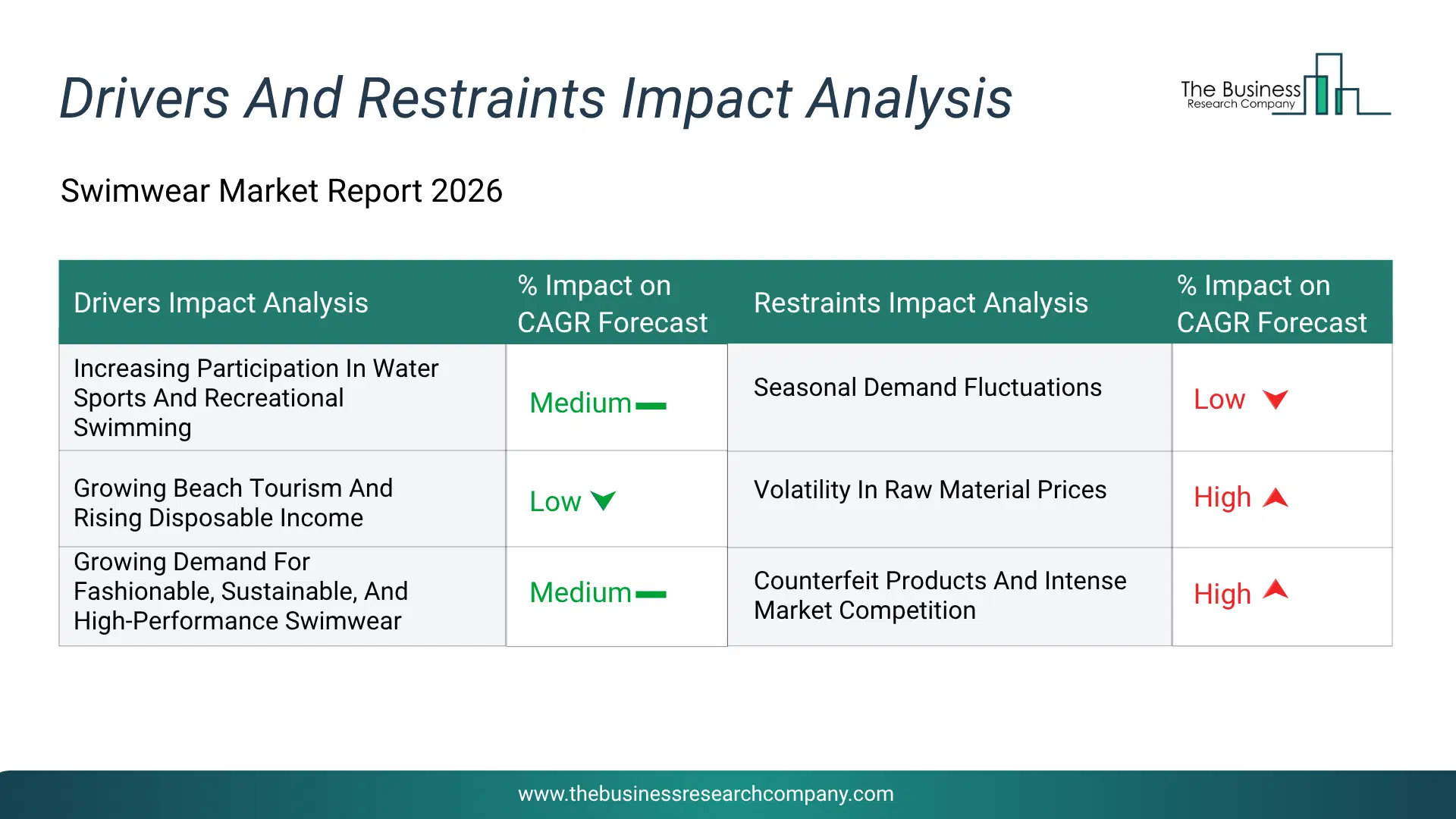
Infographic Chart Showing Key Market Drivers Analysis And Restraints For Swimwear Market
The chart presents an impact analysis of key drivers and restraints, quantifying their relative influence on the market's growth rate and helping assess the balance between growth enablers and limiting factors. This chart offers a high-level perspective; the full report contains more detailed insights.
How Will The Drivers Impact Growth In The Global Swimwear Market?
• Increasing Participation In Water Sports And Recreational Swimming (Medium) – During the forecast period, the increasing participation in water sports and recreational swimming is expected to emerge as a major factor driving the expansion of the swimwear market by 2030. the rising popularity of activities such as surfing, snorkeling, paddleboarding, swimming, scuba diving, and water fitness programs is creating sustained demand for performance-oriented swimwear that delivers comfort, flexibility, and durability. investments in aquatic sports infrastructure, swimming education initiatives, and recreational water facilities are further encouraging participation across all age groups. • Growing Beach Tourism And Rising Disposable Income (Low) – During the forecast period, the growing beach tourism and rising disposable income are expected to emerge as a major factor driving the expansion of the swimwear market by 2030. increasing domestic and international travel to beaches, coastal destinations, resorts, cruise vacations, and water parks is encouraging consumers to purchase new swimwear for leisure and holiday activities. higher disposable incomes and greater spending on premium travel experiences are also supporting demand for branded and designer swimwear collections. • Growing Demand For Fashionable, Sustainable, And High-Performance Swimwear (Medium) – During the forecast period, the growing demand for fashionable, sustainable, and high-performance swimwear is expected to act as a key growth catalyst for the swimwear market by 2030. manufacturers are introducing products made from recycled materials and advanced performance fabrics featuring UV protection, quick-drying properties, chlorine resistance, and enhanced stretchability to meet evolving consumer preferences. at the same time, inclusive product designs, changing fashion trends, and strong influence from digital media are encouraging more frequent purchases and supporting premium product demand.How Will The Restraints Impact Growth In The Global Swimwear Market?
• Seasonal Demand Fluctuations (Medium) – During the forecast period, seasonal Demand Fluctuations continue to restrict the growth of the swimwear market because product demand is highly dependent on climate conditions and vacation seasons. Sales typically experience a sharp increase during the summer months, beach holidays, and festive travel periods, while demand declines significantly during colder seasons, particularly in North America and Europe. This uneven demand pattern creates operational challenges for manufacturers and retailers, including excess inventory, production planning difficulties, and the need for frequent promotional discounts to clear unsold stock. Seasonal sales dependence also limits production efficiency and cash flow stability, especially for smaller brands that rely heavily on peak-season revenue. Although indoor swimming facilities provide some year-round demand, they are insufficient to fully offset seasonal fluctuations in many regions. • Volatility In Raw Material Prices (Low) – During the forecast period, volatility In Raw Material Prices poses a significant challenge for swimwear manufacturers because the industry relies extensively on petroleum-based synthetic fibers such as nylon, polyester, elastane (spandex), and Lycra. Prices of these materials fluctuate due to changes in crude oil prices, geopolitical uncertainties, transportation costs, supply chain disruptions, and inflationary pressures. Rising material costs increase manufacturing expenses and reduce profit margins, particularly for companies operating in highly competitive markets. Manufacturers often face the difficult choice of absorbing higher costs or passing them on to consumers through price increases, which may reduce demand in price-sensitive regions. In addition, fluctuations in the availability of sustainable raw materials can further increase procurement complexity and production costs. • Counterfeit Products And Intense Market Competition (Medium) – During the forecast period, counterfeit Products And Intense Market Competition significantly limit market growth by creating pricing pressure and reducing the market share of established brands. The widespread availability of counterfeit and low-cost imitation swimwear through online marketplaces and unorganized retail channels attracts price-sensitive consumers, reducing demand for genuine branded products. Counterfeit products often imitate premium designs while compromising on quality, negatively affecting consumer trust and brand reputation. Furthermore, the presence of numerous international, regional, and local manufacturers has intensified competition, forcing companies to invest heavily in research and development, product innovation, advertising, influencer marketing, and promotional campaigns to maintain market visibility. These rising operational and marketing costs can reduce profitability, particularly for small and medium-sized manufacturers competing against global brands.Key Players In The Global Swimwear Market
Major companies operating in the swimwear market are PVH Corp, Pentland Group, Wacoal, Perry Ellis International, Quiksilver Inc., Speedo International Limited, Arena S.p.A, Arena Italia S.p.A, La Perla Group, PARA S.p.A., Hosa Industrial Co Ltd., TYR Sport Inc., Seafolly, Jantzen Inc., Gottex Swimwear, Moeva Swimwear, Diana Sport, Eveden Group, Dolfin Swimwear, Calzedonia Group, Zoke, Seaspray Swimwear, NOZONE, LIVIN' SWIMWEAR, ND Swimwear, Derong Group, David Mare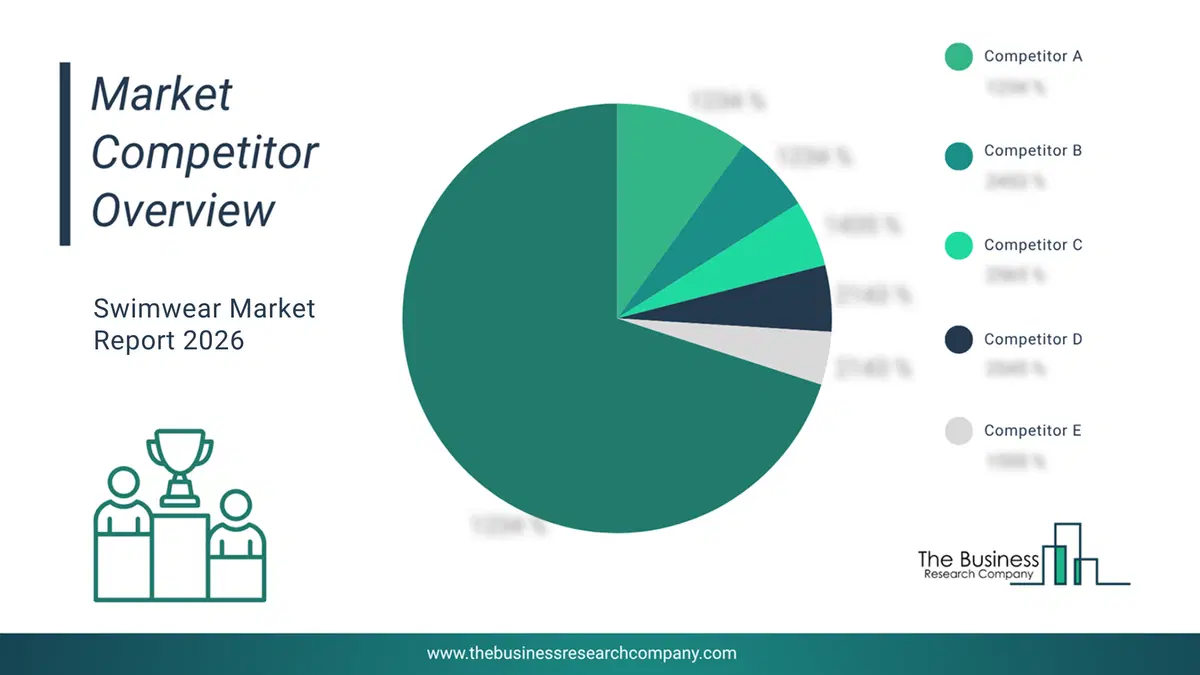
This chart is for illustrative purposes; the full report includes a detailed competitor analysis and comprehensive overview of the top 10 companies in the market.
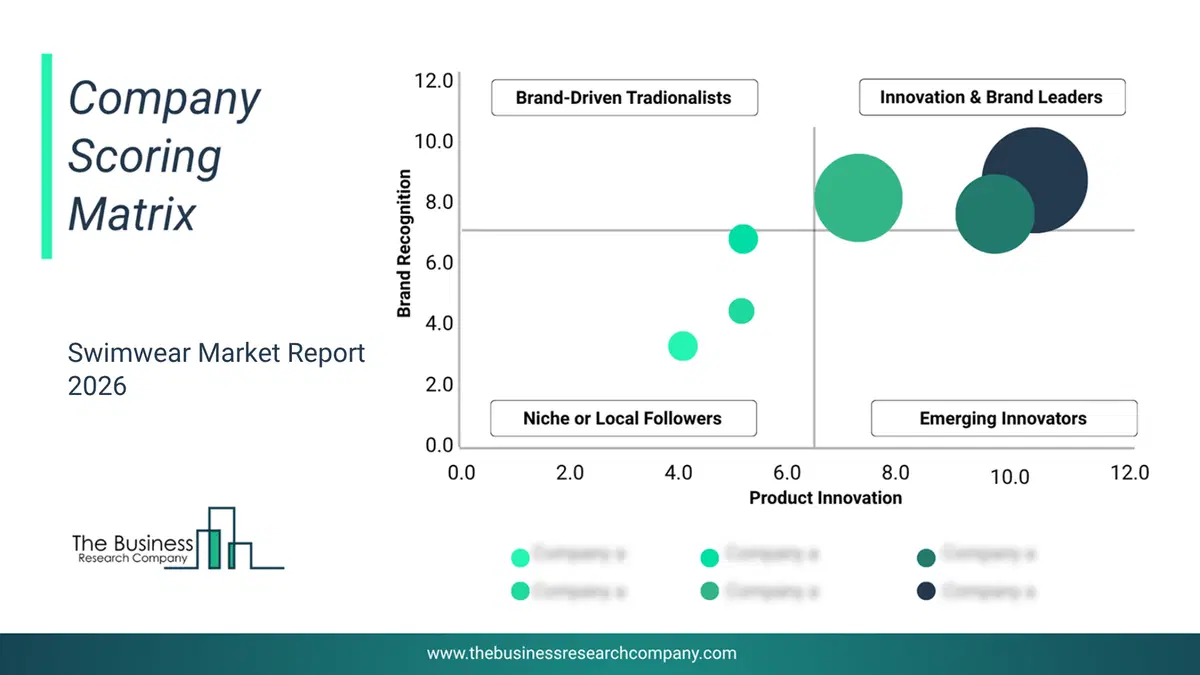
This chart maps companies by product innovation and brand strength, with bubble size indicating relative revenue, helping identify market leaders, challengers, and niche players. This is an illustrative chart; the full report provides a complete and accurate competitive analysis.
Global Swimwear Market Trends and Insights
Major companies operating in the swimwear market report are developing eco-conscious materials in swimwear such as recycled fabrics to meet customer-centric demands and increase comfort. Recycled fabrics in swimwear, such as those made from repurposed fishing nets and plastics, provide eco-friendly alternatives that offer the durability and comfort of traditional materials while promoting environmental conservation. For instance, in January 2024, Vitamin A, a US-based manufacturer of stylish and sustainable swimwear, launched the ReLux collection, a line of swimwear made from recycled materials, specifically an innovative fabric that combines 80% recycled ghost fishing nets and 20% recycled spandex. This collection aims to address the environmental issue of ghost nets, which are abandoned or lost fishing nets that pose a significant threat to marine life. The ReLux swimwear includes bikinis and one-piece suits, priced between $200 and $240. The material is designed to be stretchy and soft, comparable to traditional swimwear fabrics, while actively contributing to ocean conservation.What Are Latest Mergers And Acquisitions In The Swimwear Market?
In August 2025, American Exchange Group, a US-based apparel and fashion accessories company, acquired VENUS Fashion Inc. for an undisclosed amount. With this acquisition, American Exchange Group aimed to expand its women’s fashion portfolio and strengthen its direct-to-consumer presence by adding a well-established digitally driven brand with strong customer loyalty. VENUS Fashion Inc. is a US-based women’s apparel and swimwear company that specializes in designing and selling swimwear, lingerie, dresses, and fashion apparel primarily through its direct-to-consumer e-commerce platform.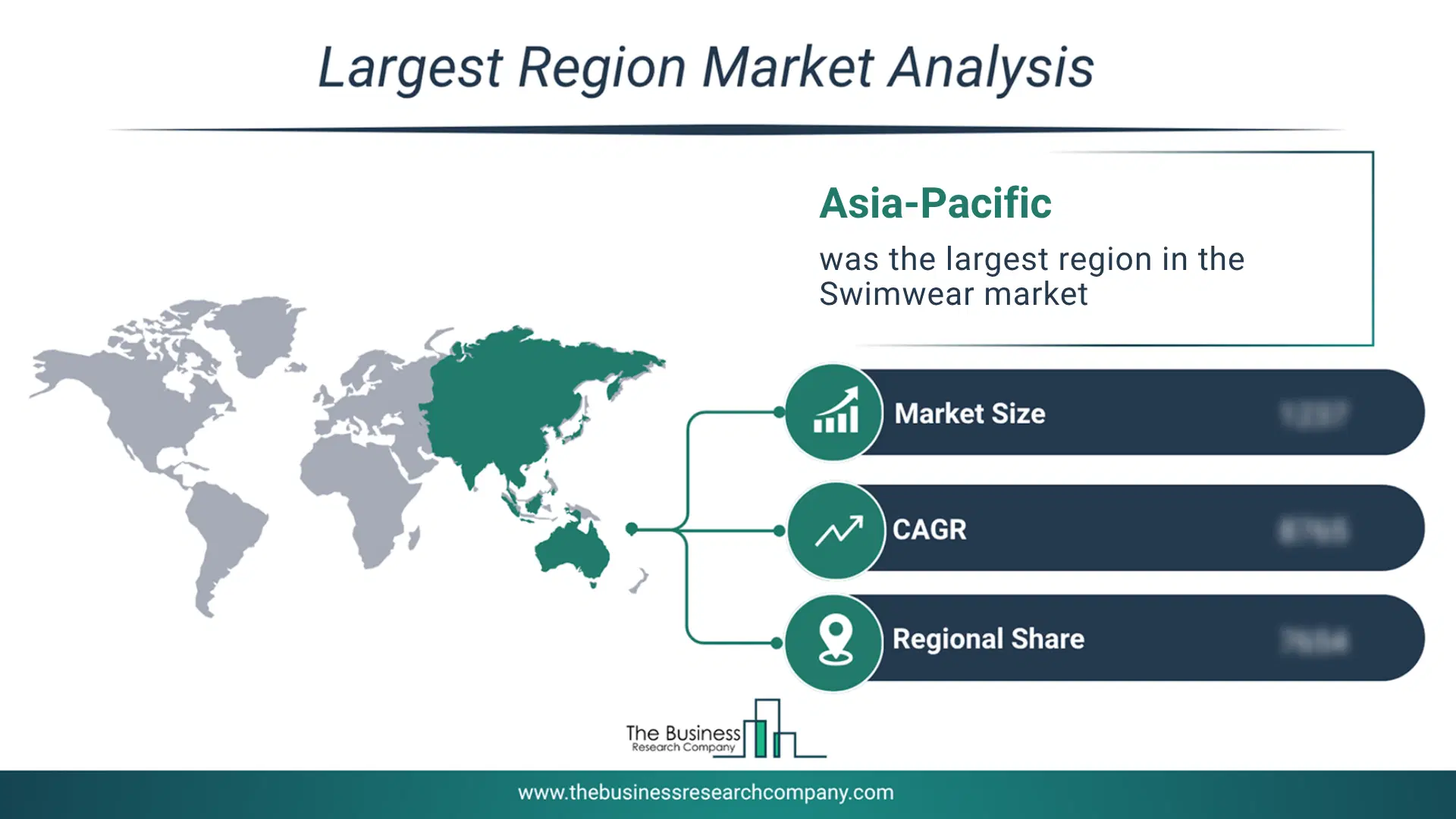
Regional Outlook
Asia-Pacific was the largest region in the swimwear market in 2025. The regions covered in this market report are Asia-Pacific, South East Asia, Western Europe, Eastern Europe, North America, South America, Middle East and Africa. The countries covered in this market report are Australia; Brazil; China; France; Germany; India; Indonesia; Japan; Taiwan; Russia; South Korea; UK; USA; Canada; Italy; Spain.What Defines the Swimwear Market?
The swimwear market consists of sales of boardshorts, jammers, swim trunks, briefs, thongs, G-strings, one-piece, and bikinis. Values in this market are ‘factory gate’ values, that is the value of goods sold by the manufacturers or creators of the goods, whether to other entities (including downstream manufacturers, wholesalers, distributors and retailers) or directly to end customers. The value of goods in this market includes related services sold by the creators of the goods.How is Market Value Defined and Measured?
The market value is defined as the revenues that enterprises gain from the sale of goods and/or services within the specified market and geography through sales, grants, or donations in terms of the currency (in USD unless otherwise specified). The revenues for a specified geography are consumption values that are revenues generated by organizations in the specified geography within the market, irrespective of where they are produced. It does not include revenues from resales along the supply chain, either further along the supply chain or as part of other products.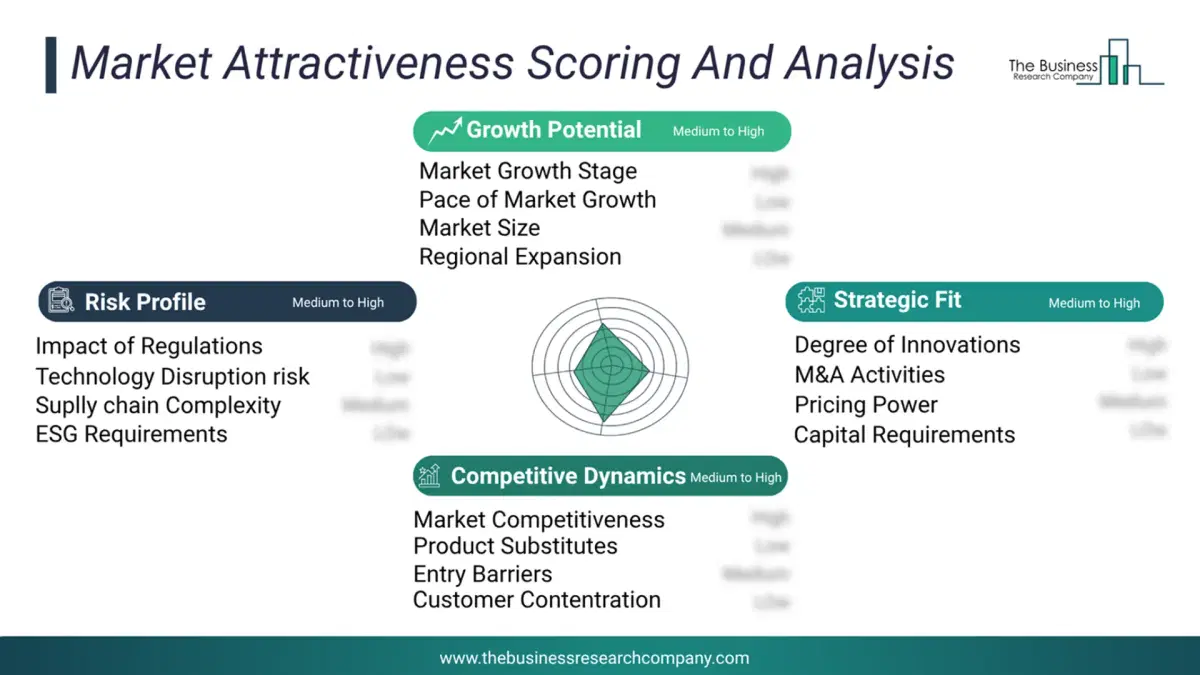
This chart presents market attractiveness based on a quantitative evaluation of growth, competition, strategic alignment, and risk, offering a clear view of opportunity areas for decision-making. This chart is for illustrative purposes; the full report contains the complete analysis.
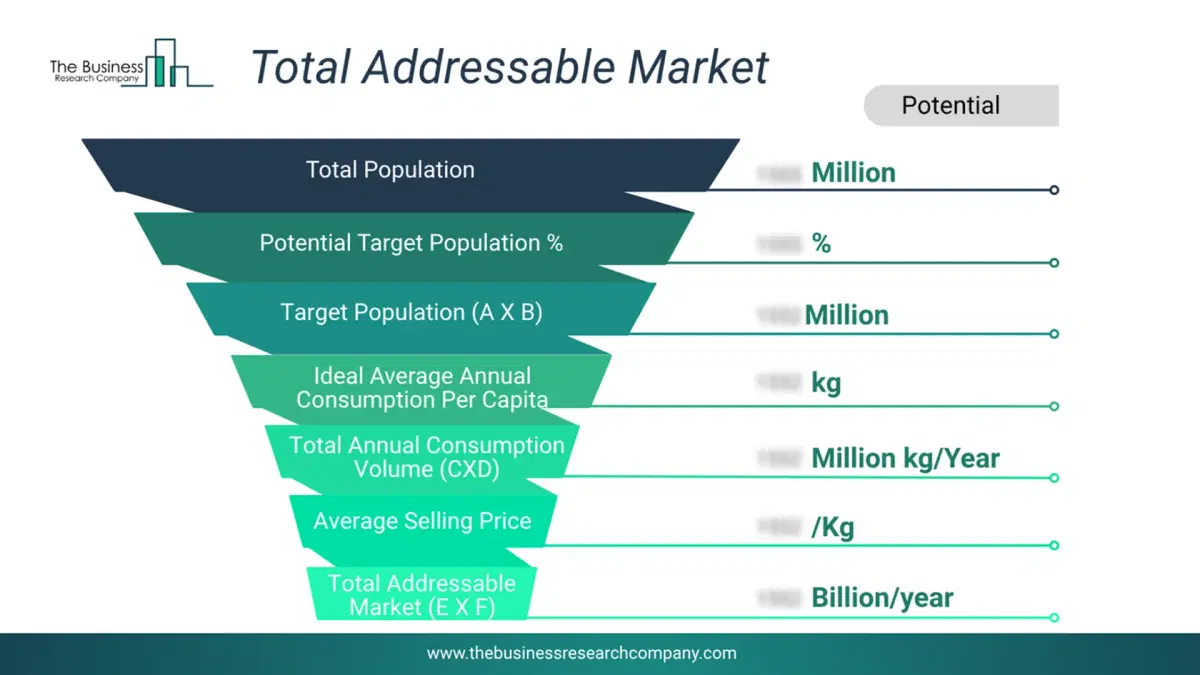
This chart highlights the Total Addressable Market (TAM) by estimating the maximum revenue opportunity using an assumption-driven approach, supporting strategic planning and opportunity sizing across markets. The chart is illustrative; the full report provides a more comprehensive analysis.
What Key Data and Analysis Are Included in the Swimwear Market Report 2026?
The swimwear market research report is one of a series of new reports from The Business Research Company that provides market statistics, including industry global market size, regional shares, competitors with the market share, detailed market segments, market trends and opportunities, and any further data you may need to thrive in the swimwear industry. The market research report delivers a complete perspective of everything you need, with an in-depth analysis of the current and future state of the industry.Swimwear Market Report Forecast Analysis
| Report Attribute | Details |
|---|---|
| Market Size Value In 2026 | $27.67 billion |
| Revenue Forecast In 2030 | $36.19 billion |
| Growth Rate | CAGR of 6.9% from 2026 to 2030 |
| Base Year For Estimation | 2025 |
| Actual Estimates/Historical Data | 2020-2025 |
| Forecast Period | 2026 - 2030 |
| Market Representation | Revenue in USD Billion and CAGR from 2026 to 2030 |
| Segments Covered | Type, Fabric Type, Distribution Channel, End-User |
| Regional Scope | Asia-Pacific, Western Europe, Eastern Europe, North America, South America, Middle East, Africa |
| Country Scope | The countries covered in the report are Australia, Brazil, China, France, Germany, India, Indonesia, Japan, Taiwan, Russia, South Korea, UK, USA, Canada, Italy, Spain. |
| Key Companies Profiled | PVH Corp, Pentland Group, Wacoal, Perry Ellis International, Quiksilver Inc., Speedo International Limited, Arena S.p.A, Arena Italia S.p.A, La Perla Group, PARA S.p.A., Hosa Industrial Co Ltd., TYR Sport Inc., Seafolly, Jantzen Inc., Gottex Swimwear, Moeva Swimwear, Diana Sport, Eveden Group, Dolfin Swimwear, Calzedonia Group, Zoke, Seaspray Swimwear, NOZONE, LIVIN' SWIMWEAR, ND Swimwear, Derong Group, David Mare |
| Customization Scope | Request for Customization |
| Pricing And Purchase Options | Explore Purchase Options |