

Tax Management Software Market Report 2026
Global Outlook – By Component (Software, Professional Services), By Tax Type (Direct Taxes, Indirect Taxes), By Deployment Mode (On-Premises, Cloud) – Market Size, Trends, Strategies, and Forecast to 2030
Tax Management Software Market Overview
• Tax Management Software market size has reached to $23.86 billion in 2025 • Expected to grow to $44.42 billion in 2030 at a compound annual growth rate (CAGR) of 13.2% • Growth Driver: Rising Digitization And Automation To Drive Market Growth • Market Trend: Cloud-Based Automation Solutions Transform Tax Workpaper Processes • North America was the largest region in 2025 and Asia-Pacific is the fastest growing region.Market Gains By 2030 – Top Opportunities By Segment
Market Gain identifies the most promising market opportunities by highlighting the segments or products expected to generate the highest incremental revenue growth over the next five years.
What Is Covered Under Tax Management Software Market?
The tax management software is a computer program that enables centralized tax configuration, management, and reporting for enterprises. It is used in conjunction with other financial modules that aggregate tax information from all financial documents into a single repository and generate tax-related reports. It also interacts with financial management modules, allowing it to appropriately calculate taxes on every transaction. The tax management software is used to assist in the control and mitigation of tax-related transactions. The main components of tax management software are software and professional services. Tax management software refers to a set of instructions, data, or programs used to operate computers and perform specific tasks. It is the inverse of hardware, which describes the physical aspects of a computer. Software is a broad term that refers to applications, scripts, and programs that run on a device. The different tax types include direct and indirect taxes. They are deployed on-premises and in the cloud in various enterprises, including large enterprises and small-medium enterprises. The various verticals in which they are used include BFSI, healthcare, retail, manufacturing, energy and utilities, and others.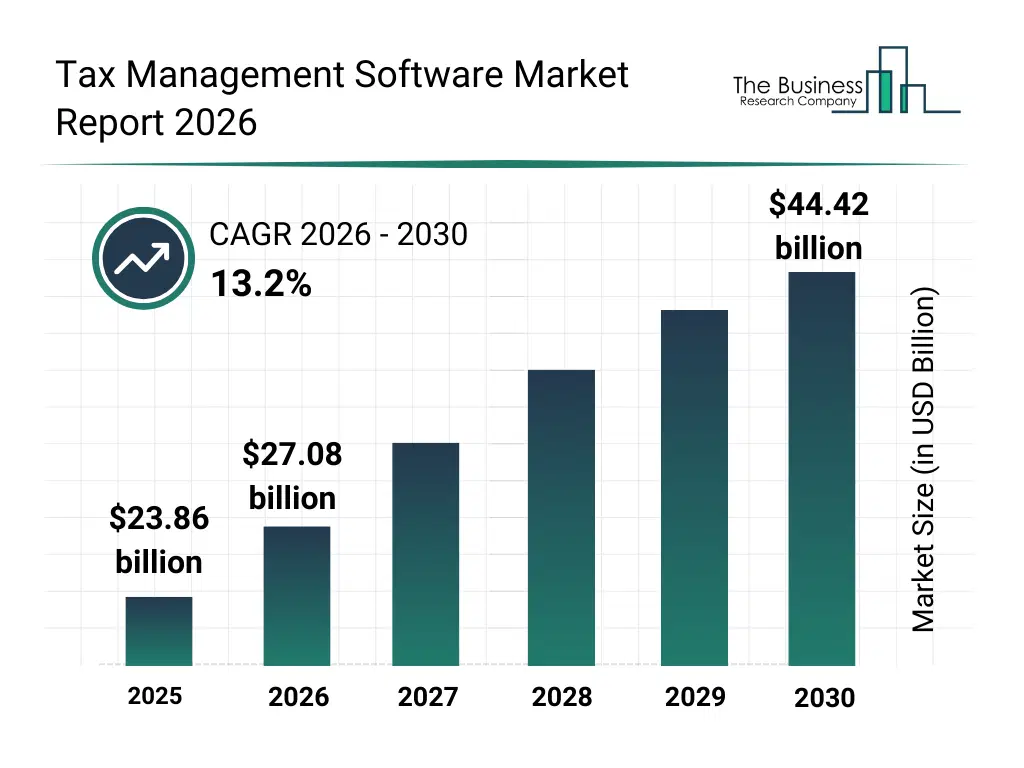
What Is The Tax Management Software Market Size and Share 2026?
The tax management software market size has grown rapidly in recent years. It will grow from $23.86 billion in 2025 to $27.08 billion in 2026 at a compound annual growth rate (CAGR) of 13.5%. The growth in the historic period can be attributed to increasing complexity of global tax regulations, growth of multinational business operations, rising volume of digital financial transactions, adoption of enterprise resource planning systems, need for centralized tax reporting.What Is The Tax Management Software Market Growth Forecast?
The tax management software market size is expected to see rapid growth in the next few years. It will grow to $44.42 billion in 2030 at a compound annual growth rate (CAGR) of 13.2%. The growth in the forecast period can be attributed to increasing demand for AI-enabled tax analytics, rising focus on indirect tax automation, expansion of cloud deployment across enterprises, growing emphasis on audit readiness, increasing adoption of real-time tax reporting frameworks. Major trends in the forecast period include increasing adoption of automated tax compliance solutions, rising demand for real-time tax calculation engines, growing integration with enterprise financial systems, expansion of cloud-based tax management platforms, enhanced focus on regulatory compliance automation.
Global Tax Management Software Market Segmentation
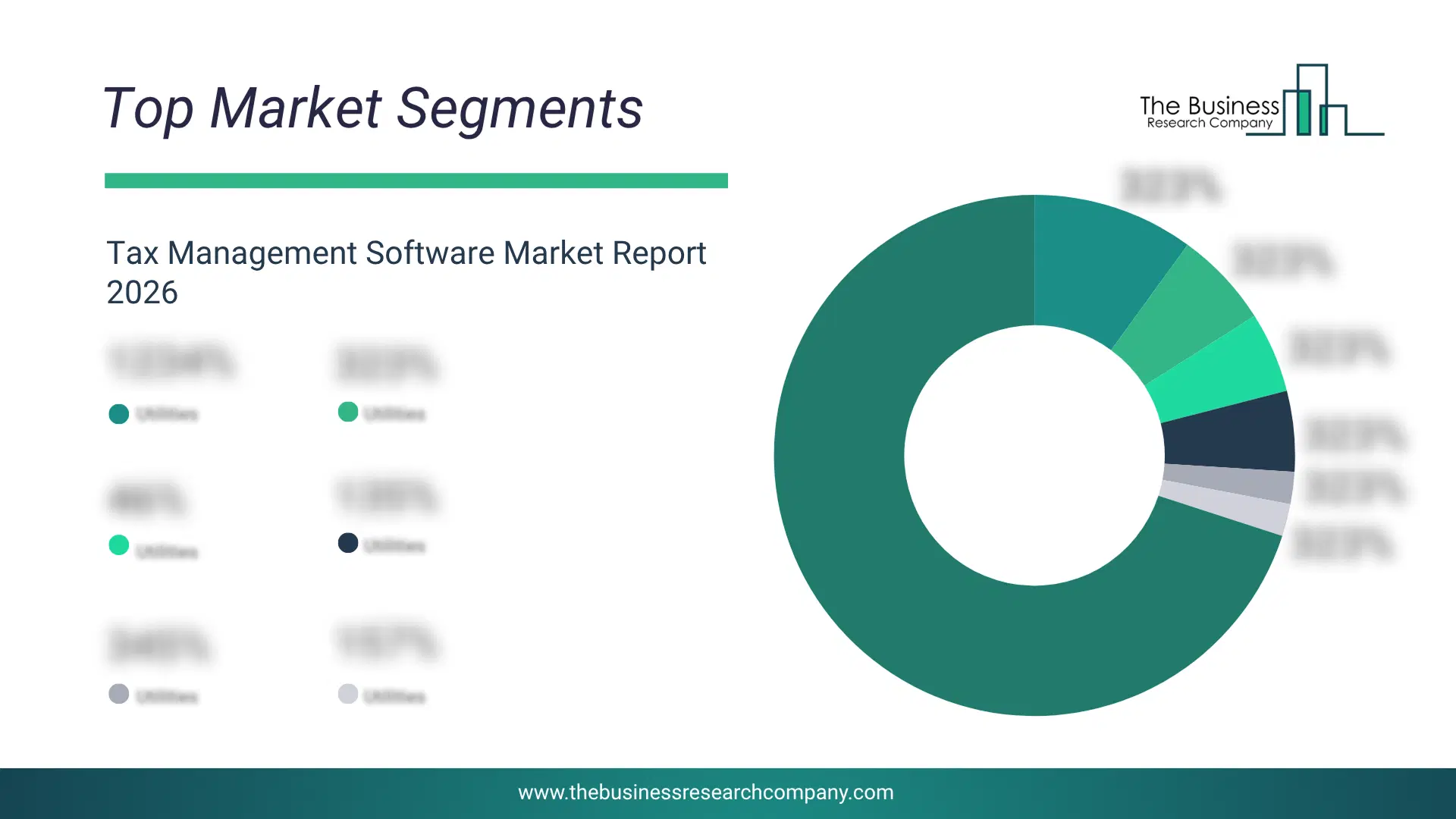
1) By Component: Software, Professional Services 2) By Tax Type: Direct Taxes, Indirect Taxes 3) By Deployment Mode: On-Premises, Cloud Subsegments: 1) By Software: Tax Compliance Software, Tax Planning Software, Tax Preparation Software, E-filing Software 2) By Professional Services: Consulting Services, Implementation Services, Support And Maintenance Services The top segments in the tax management software market will be: • Software will reach $32 Billion by 2030. • Professional Services will reach $12 Billion by 2030.What Is The Driver Of The Tax Management Software Market?
The increase in automation and digitization in tax processing is expected to propel the growth of tax management software going forward. Automation streamlines tax-related processes, enhancing accuracy and efficiency. It saves time and resources, leading to cost reductions. Real-time updates ensure compliance with changing tax regulations, while data analytics empower businesses with insights to optimize tax strategies, identify credits, and maximize deductions. Integration with other financial systems streamlines data sharing, simplifying tax filing and report generation. For instance, in December 2023, according to the Press Information Bureau, an India-based nodal agency, reported that over 3.43 crore ($0.41 million) Income Tax Returns (ITRs) were processed within 7 days in 2023, showcasing a significant improvement in processing times compared to 2022. Therefore, the increase in automation and digitization in tax processing is driving the growth of tax management software industry.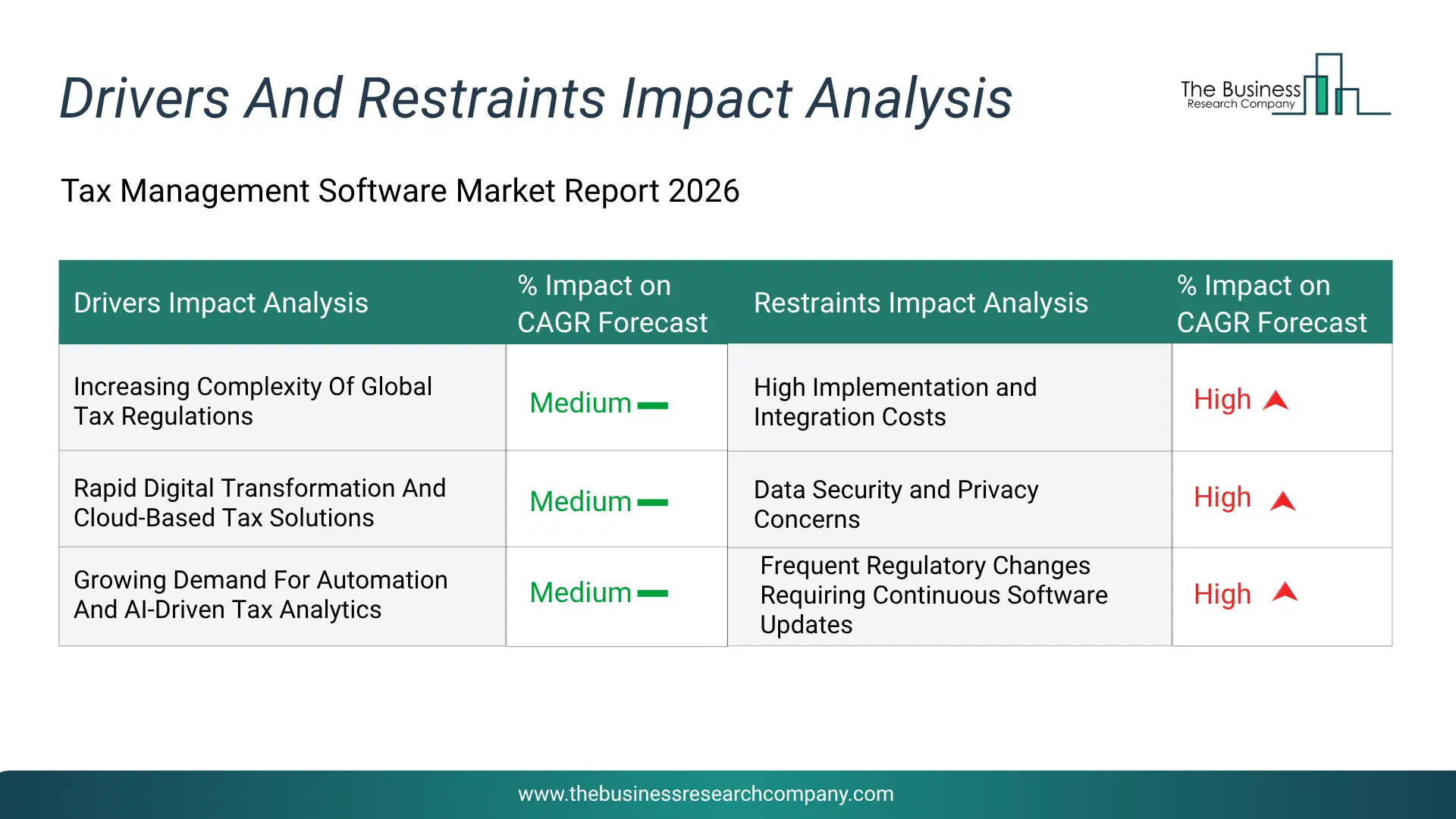
Infographic Chart Showing Key Market Drivers Analysis And Restraints For Tax Management Software Market
The chart presents an impact analysis of key drivers and restraints, quantifying their relative influence on the market's growth rate and helping assess the balance between growth enablers and limiting factors. This chart offers a high-level perspective; the full report contains more detailed insights.
How Will The Drivers Impact Growth In The Global Tax Management Software Market?
• Increasing Complexity Of Global Tax Regulations (Medium) – During the forecast period, the increasing complexity of global tax regulations is expected to emerge as a major factor driving the expansion of the tax management software market by 2030. businesses operating across multiple jurisdictions are facing frequent legislative changes, evolving tax policies, and cross-border compliance requirements that increase administrative complexity. tax management software automates tax calculations, filing, reporting, and compliance processes while reducing manual errors and the risk of regulatory penalties. • Rapid Digital Transformation And Cloud-Based Tax Solutions (Medium) – During the forecast period, the rapid digital transformation and cloud-based tax solutions are expected to emerge as a major factor driving the expansion of the tax management software market by 2030. organizations are replacing traditional tax processes with cloud-enabled platforms that provide real-time regulatory updates, remote accessibility, seamless integration with financial systems, and scalable deployment. these capabilities improve collaboration, operational efficiency, and tax process standardization across enterprise finance functions. • Growing Demand For Automation And AI-Driven Tax Analytics (Medium) – During the forecast period, the growing demand for automation and AI-driven tax analytics is expected to act as a key growth catalyst for the tax management software market by 2030. artificial intelligence, machine learning, and robotic process automation are enabling organizations to automate tax reconciliation, compliance monitoring, data processing, and risk assessment while supporting predictive tax planning and financial forecasting. these intelligent capabilities improve decision-making, enhance productivity, and reduce operational costs.How Will The Restraints Impact Growth In The Global Tax Management Software Market?
• High Implementation and Integration Costs (Medium) – During the forecast period, deploying tax management software often requires significant upfront investment in software licensing, customization, system integration, and employee training. Large enterprises may also incur additional costs when integrating tax platforms with ERP and accounting systems. These expenses can discourage adoption among small and medium-sized businesses. Cost concerns remain a key barrier to market expansion. • Data Security and Privacy Concerns (Medium) – During the forecast period, tax management software processes highly sensitive financial and taxpayer information, making it a target for cyberattacks and data breaches. Organizations must invest in strong encryption, access controls, and regulatory compliance to protect confidential data. Concerns over cloud security and privacy regulations can delay software adoption. Maintaining secure tax data environments remains a major challenge for vendors and users alike. • Frequent Regulatory Changes Requiring Continuous Software Updates (Medium) – During the forecast period, tax laws and reporting requirements change regularly across countries and regions, requiring vendors to continuously update their software. Delays in implementing regulatory changes can expose businesses to compliance risks and financial penalties. Organizations must also invest time and resources to test and validate updates before deployment. This ongoing maintenance increases operational complexity for both software providers and end users.Key Players In The Global Tax Management Software Market
Major companies operating in the tax management software market are Avalara Inc.; Shoeboxed Inc.; SAXTAX Inc.; H&R Block Inc.; CrowdReason LLC; Drake Software; TaxSlayer LLC; Wolters Kluwer N. V.; Intuit Inc.; Sovos Compliance LLC; Sailotech Private Limited; Vertex Inc.; Paychex Inc.; TPS Unlimited Inc.; Thomson Reuters Holdings Inc.; Automatic Data Processing Inc.; AccurateTax Inc.; Corptax Inc.; Taxware Systems Inc.; Xero Limited; The Sage Group plc.; TaxCloud LLC.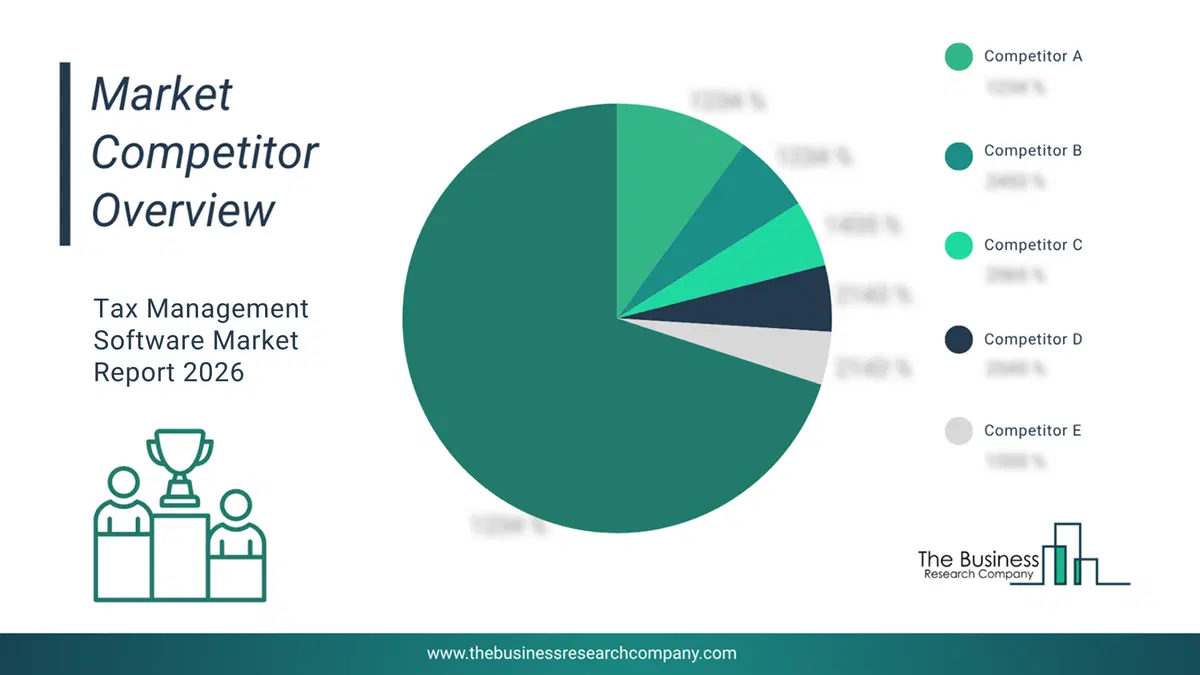
This chart is for illustrative purposes; the full report includes a detailed competitor analysis and comprehensive overview of the top 10 companies in the market.
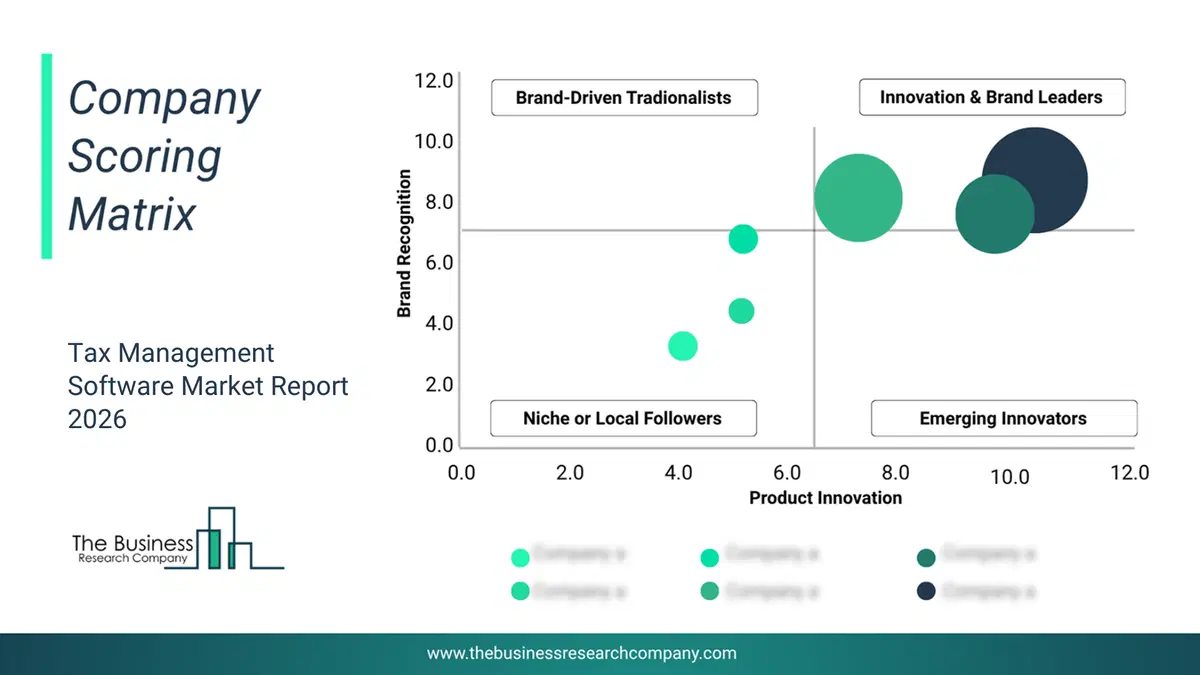
This chart maps companies by product innovation and brand strength, with bubble size indicating relative revenue, helping identify market leaders, challengers, and niche players. This is an illustrative chart; the full report provides a complete and accurate competitive analysis.
Global Tax Management Software Market Trends and Insights
Major companies operating in the tax management software market are focusing on developing technologically advanced solutions, such as cloud-based automation solutions to streamline tax workpapers, enhance accuracy, and improve workflow efficiency. A cloud-based automation solution is a software system hosted online that automates business processes, allowing users to access, manage, and execute tasks from anywhere without manual intervention. For instance, in March 2024, Bloomberg Industry Group, a US-based business and legal information company, launched a cloud-based automation solution called Bloomberg Tax Workpapers to streamline the tax workpaper process. This solution replaces manual Excel tasks with customizable templates tailored for tax-specific functions. It provides automated roll forwards, integrates smoothly with ERP systems, and incorporates up-to-date tax law information to improve accuracy and compliance. Additionally, it features robust audit-ready controls, including change tracking and workflow sign-offs, enhancing collaboration and reducing risk for tax professionals.What Are Latest Mergers And Acquisitions In The Tax Management Software Market?
In January 2023, Thomson Reuters, a US-based multinational media and information services company, acquired SurePrep LLC for $500 million. The aim of Thomson Reuters acquisition of SurePrep is to enhance its offerings in the tax automation space by integrating SurePrep's advanced software and services, which help accounting firms improve productivity and efficiency. SurePrep LLC is a US-based company software company specializing in tax automation solutions for accounting firms.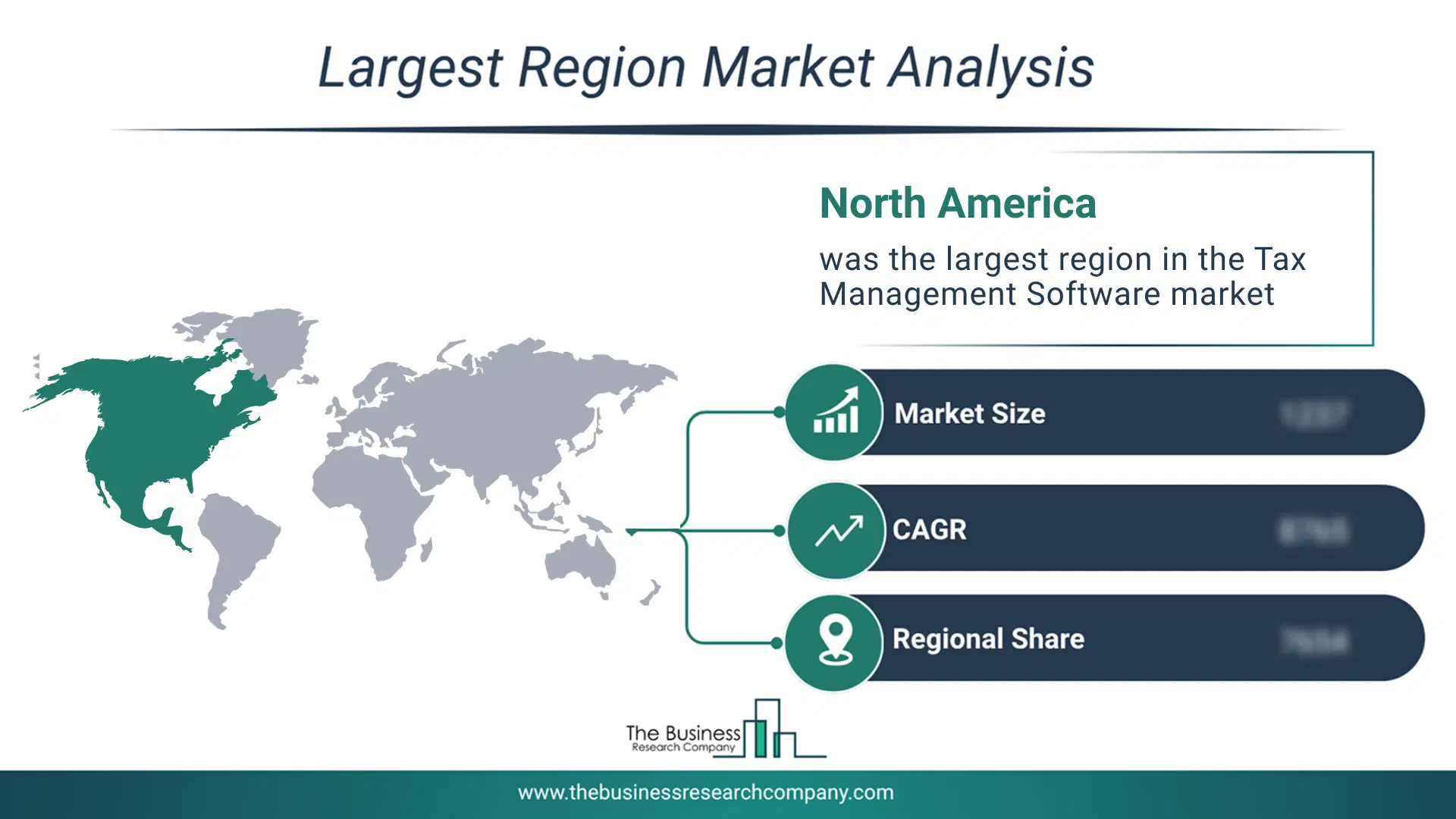
Regional Insights
North America was the largest region in the tax management software market in 2025. Asia-Pacific is expected to be the fastest-growing region in the forecast period. The regions covered in this market report are Asia-Pacific, South East Asia, Western Europe, Eastern Europe, North America, South America, Middle East, Africa. The countries covered in this market report are Australia, Brazil, China, France, Germany, India, Indonesia, Japan, Taiwan, Russia, South Korea, UK, USA, Canada, Italy, SpainWhat Defines the Tax Management Software Market?
The tax management software market consists of revenues earned by entities by providing tax management software for direct tax and indirect tax. Values in this market are ‘factory gate’ values, that is the value of goods sold by the manufacturers or creators of the goods, whether to other entities (including downstream manufacturers, wholesalers, distributors, and retailers) or directly to end customers. The value of goods in this market includes related services sold by the creators of the goods.How is Market Value Defined and Measured?
The market value is defined as the revenues that enterprises gain from the sale of goods and/or services within the specified market and geography through sales, grants, or donations in terms of the currency (in USD unless otherwise specified). The revenues for a specified geography are consumption values that are revenues generated by organizations in the specified geography within the market, irrespective of where they are produced. It does not include revenues from resales along the supply chain, either further along the supply chain or as part of other products.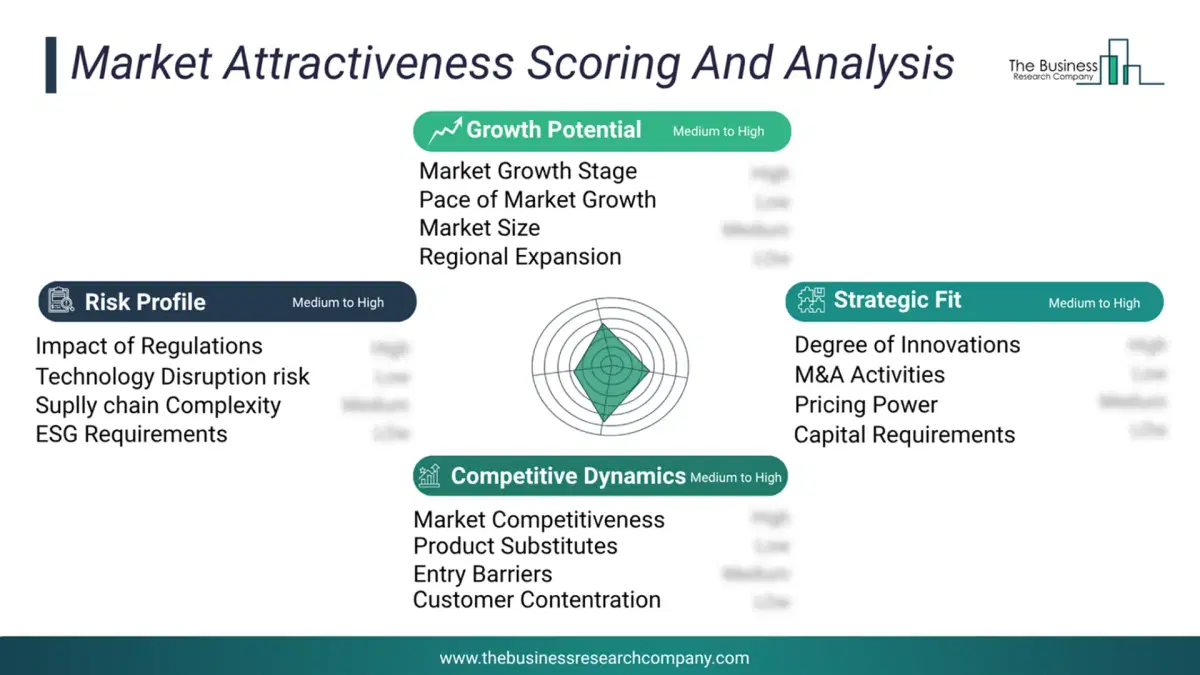
This chart presents market attractiveness based on a quantitative evaluation of growth, competition, strategic alignment, and risk, offering a clear view of opportunity areas for decision-making. This chart is for illustrative purposes; the full report contains the complete analysis.
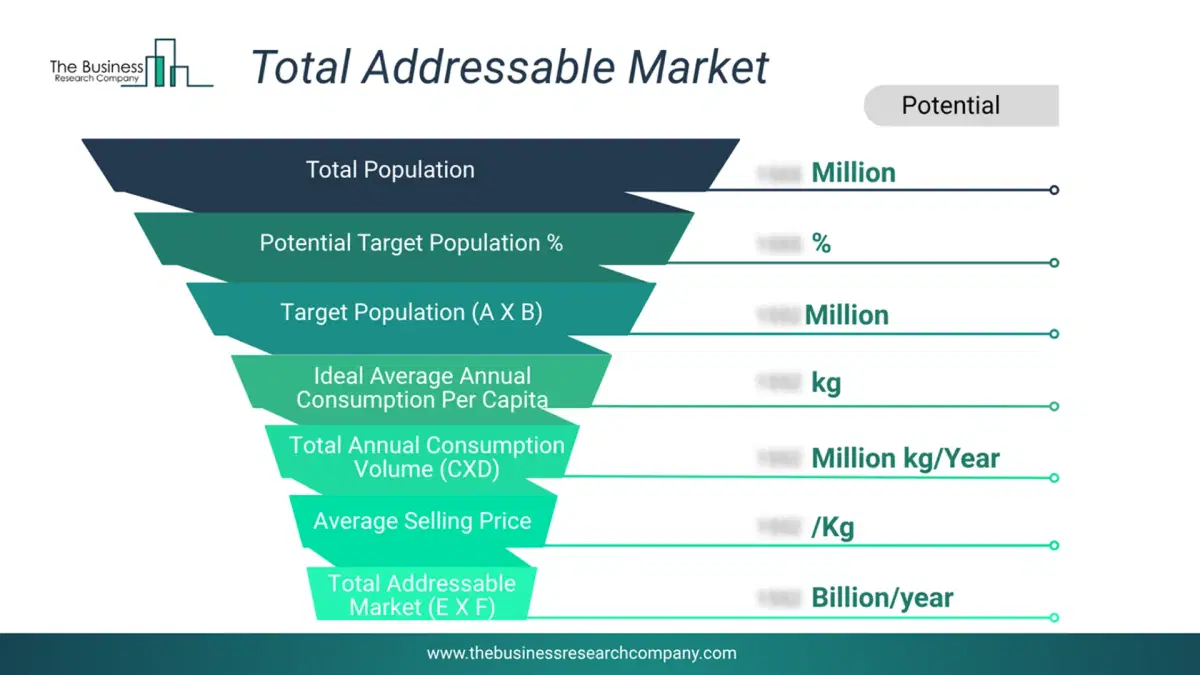
This chart highlights the Total Addressable Market (TAM) by estimating the maximum revenue opportunity using an assumption-driven approach, supporting strategic planning and opportunity sizing across markets. The chart is illustrative; the full report provides a more comprehensive analysis.
What Key Data and Analysis Are Included in the Tax Management Software Market Report 2026?
The tax management software market research report is one of a series of new reports from The Business Research Company that provides market statistics, including industry global market size, regional shares, competitors with the market share, detailed market segments, market trends and opportunities, and any further data you may need to thrive in the tax management software industry. The market research report delivers a complete perspective of everything you need, with an in-depth analysis of the current and future state of the industry.Tax Management Software Market Report Forecast Analysis
| Report Attribute | Details |
|---|---|
| Market Size Value In 2026 | $27.08 billion |
| Revenue Forecast In 2030 | $44.42 billion |
| Growth Rate | CAGR of 13.2% from 2026 to 2030 |
| Base Year For Estimation | 2025 |
| Actual Estimates/Historical Data | 2020-2025 |
| Forecast Period | 2026 - 2030 |
| Market Representation | Revenue in USD Billion and CAGR from 2026 to 2030 |
| Segments Covered | Component, Tax Type, Deployment Mode |
| Regional Scope | Asia-Pacific, Western Europe, Eastern Europe, North America, South America, Middle East, Africa |
| Country Scope | The countries covered in the report are Australia, Brazil, China, France, Germany, India, Indonesia, Japan, Taiwan, Russia, South Korea, UK, USA, Canada, Italy, Spain. |
| Key Companies Profiled | Avalara Inc.; Shoeboxed Inc.; SAXTAX Inc.; H&R Block Inc.; CrowdReason LLC; Drake Software; TaxSlayer LLC; Wolters Kluwer N. V.; Intuit Inc.; Sovos Compliance LLC; Sailotech Private Limited; Vertex Inc.; Paychex Inc.; TPS Unlimited Inc.; Thomson Reuters Holdings Inc.; Automatic Data Processing Inc.; AccurateTax Inc.; Corptax Inc.; Taxware Systems Inc.; Xero Limited; The Sage Group plc.; TaxCloud LLC. |
| Customization Scope | Request for Customization |
| Pricing And Purchase Options | Explore Purchase Options |