
Transplant Diagnostics Market Report 2026
Global Outlook – By Type (Reagent And Consumables, Instrument, Software And Services), By Transplant Type (Solid Organ, Stem Cell), By Organ (Kidney, Liver, Heart, Lung, Pancreas), By Technology (Non Molecular Assay, Molecular Assay), By End User (Hospitals And Transplant Centers, Research Laboratories AndTransplant Centers, Commercial Service Providers) – Market Size, Trends, Strategies, and Forecast to 2030
Transplant Diagnostics Market Overview
• Transplant Diagnostics market size has reached to $2.07 billion in 2025 • Expected to grow to $2.96 billion in 2030 at a compound annual growth rate (CAGR) of 7.1% • Growth Driver: Increasing Incidence Of Chronic Diseases Boosts The Transplant Diagnostics Market • Market Trend: Companies In The Transplant Diagnostics Market Focus On Advanced Services To Enhance Profits • North America was the largest region in 2025 and Western Europe is the fastest growing region.What Is Covered Under Transplant Diagnostics Market?
Transplant diagnostics are the tests conducted before relocation/ transplantation of the donor organ to the recipient patient. Histocompatibility and immunogenetics are the main topics of transplantation diagnostics in the context of organ transplantation and hematopoietic stem cell transplantation. The main types of transplant diagnostics market are reagents and consumables, instruments, and software and services. The transplant diagnostics instruments are products that are designed to speed up and improve the quality of transplant diagnostics. The technologies used in transplant diagnostics are non-molecular assay, and molecular assay to transplant various organs such as kidney, liver, heart, lung, and pancreas. The transplant types included are solid organ and stem cells that are used by end-users such as hospitals and transplant centers, research laboratories and transplant centers, and commercial service providers.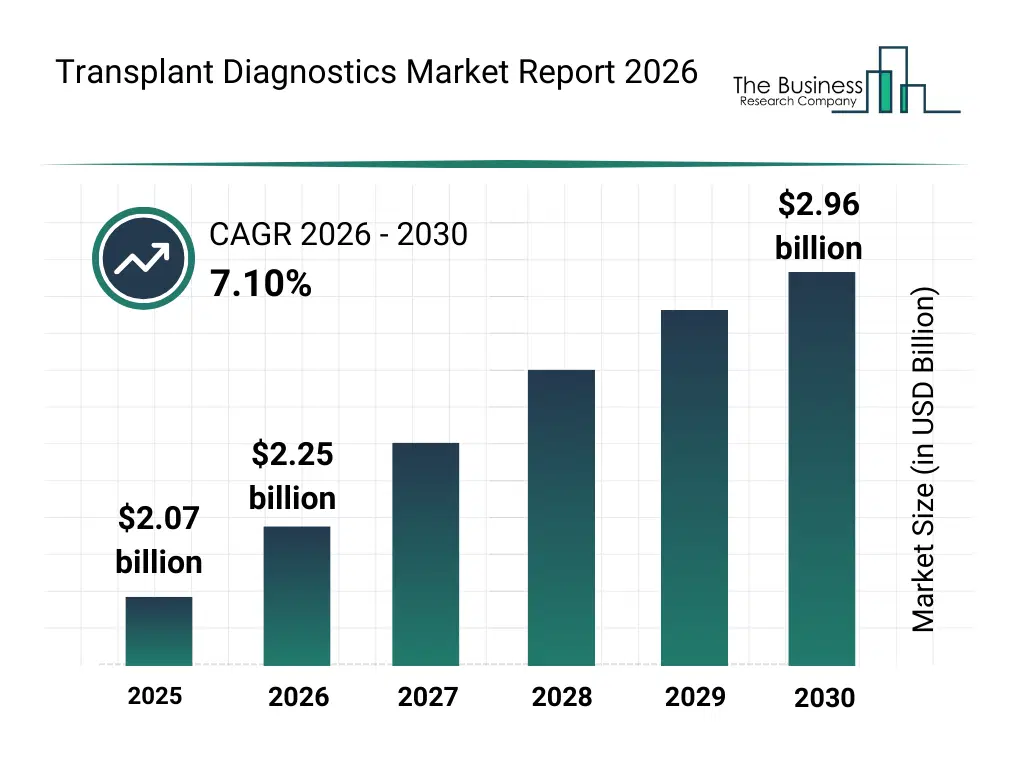
What Is The Transplant Diagnostics Market Size and Share 2026?
The transplant diagnostics market size has grown strongly in recent years. It will grow from $2.07 billion in 2025 to $2.25 billion in 2026 at a compound annual growth rate (CAGR) of 8.5%. The growth in the historic period can be attributed to rising organ transplantation procedures, advancements in histocompatibility testing, increasing prevalence of immunogenetic disorders, expansion of transplant centers, government funding for organ donation programs.What Is The Transplant Diagnostics Market Growth Forecast?
The transplant diagnostics market size is expected to see strong growth in the next few years. It will grow to $2.96 billion in 2030 at a compound annual growth rate (CAGR) of 7.1%. The growth in the forecast period can be attributed to integration of ai and machine learning in testing, adoption of next-generation sequencing (NGS), expansion of personalized immunotherapy, growth of cloud-based diagnostics platforms, increased global organ donation awareness. Major trends in the forecast period include rapid histocompatibility testing, ai-powered donor-recipient matching, molecular diagnostics integration, high-throughput screening techniques, cloud-based transplant data management.
Global Transplant Diagnostics Market Segmentation
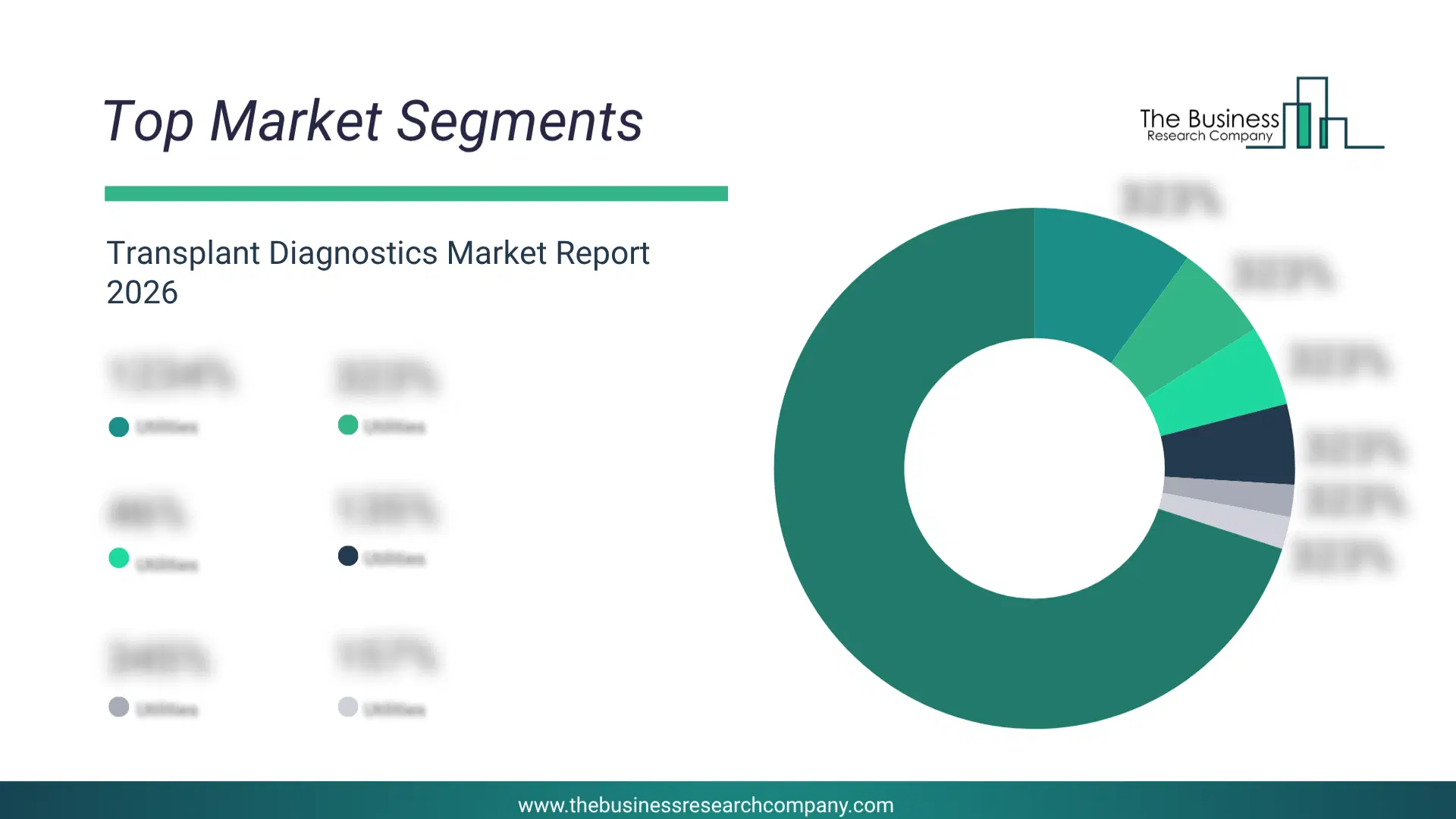
1) By Type: Reagent And Consumables, Instrument, Software And Services 2) By Transplant Type: Solid Organ, Stem Cell 3) By Organ: Kidney, Liver, Heart, Lung, Pancreas 4) By Technology: Non Molecular Assay, Molecular Assay 5) By End User: Hospitals And Transplant Centers, Research Laboratories AndTransplant Centers, Commercial Service Providers Subsegments: 1) By Reagent And Consumables: PCR Reagents, Antibodies And Antigens, Sample Collection Kits, Control Materials 2) By Instrument: Flow Cytometers, PCR Machines, Sequencers, Luminometers 3) By Software And Services: Data Analysis Software, Laboratory Information Management Systems (LIMS), Consulting Services, Technical Support And Maintenance ServicesWhat Is The Driver Of The Transplant Diagnostics Market?
The increasing prevalence of chronic diseases is expected to propel the growth of the transplant diagnostics market going forward. Chronic diseases are long-lasting health conditions that usually progress slowly over time, such as diabetes, heart disease, and arthritis, and often require ongoing medical attention and lifestyle management to control symptoms and prevent complications. Chronic diseases are increasing largely due to unhealthy lifestyles, including poor diet, physical inactivity, and smoking, which raise the risk of conditions such as diabetes, heart disease, and obesity. Transplant diagnostics aid in chronic disease management by enabling precise monitoring of organ health and early detection of transplant-related complications. They improve patient outcomes by guiding timely interventions, supporting personalized treatment plans, and enhancing long-term organ survival and overall healthcare management. For instance, in June 2024, according to the National Health Service, a UK-based government department, 3,615,330 individuals registered with a general practitioner (GP) were diagnosed with non-diabetic hyperglycemia or pre-diabetes (a condition with elevated blood sugar levels, not high enough to be classified as diabetes) in 2023, marking an 18% increase from 3,065,825 cases in 2022. Therefore, the increasing prevalence of chronic diseases is driving the growth of the transplant diagnostics industry.Key Players In The Global Transplant Diagnostics Market
Major companies operating in the transplant diagnostics market are F. Hoffmann La-Roche AG, Thermo Fisher Scientific Inc., Abbott Laboratories Inc., Becton-Dickinson and Company, Hologic Inc., Illumina Inc., BioMerieus S.A, Biomérieux SA, Grafton Companies, Bio-rad Laboratories Inc., Sigma-Aldrich Corporation, Qiagen N.V., Immucor Transplant Diagnostics Inc., Immucor Inc., Luminex Corporation, Affymetrix Inc., CareDx Company, One Lambda Inc., Eurobio Scientific Group, Gendx BV, Olerup SSp AB, Genome Diagnostics B.V., Transplant Genomics Inc., Omixon Ltd., BAG Healthcare GmbH, Histogenetics Inc., Linkage Biosciences lnc., Gendrive plc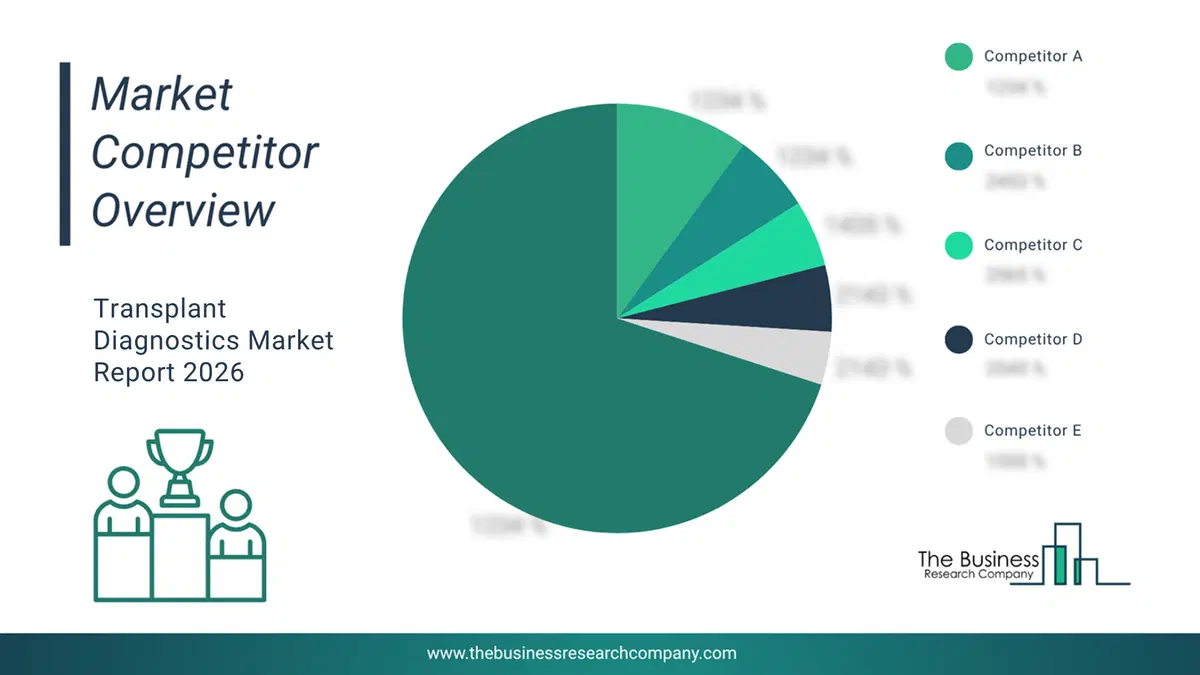
This chart is for illustrative purposes; the full report includes a detailed competitor analysis and comprehensive overview of the top 10 companies in the market.
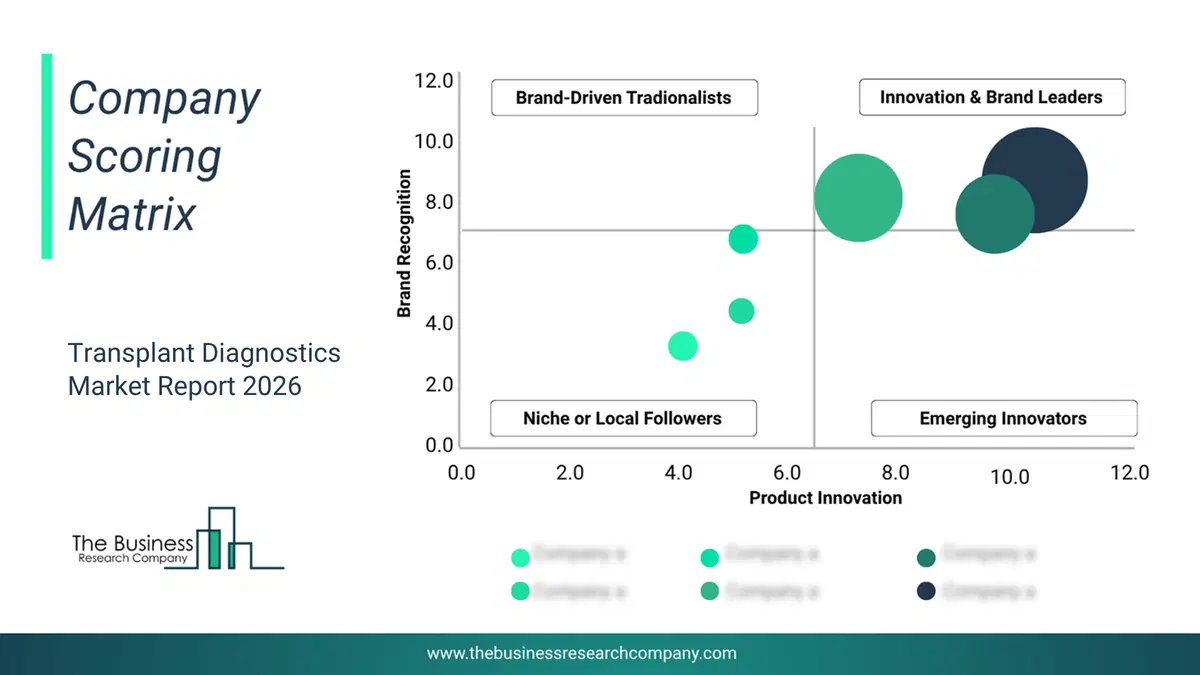
This chart maps companies by product innovation and brand strength, with bubble size indicating relative revenue, helping identify market leaders, challengers, and niche players. This is an illustrative chart; the full report provides a complete and accurate competitive analysis.
Global Transplant Diagnostics Market Trends and Insights
Major companies operating in the transplant diagnostics market are focused on introducing advanced transplant diagnostics services to maximize their profits in the market. Advanced transplant diagnostic services refer to the use of novel and advanced diagnostic tools and technologies to improve the accuracy and efficiency of pre-transplant and post-transplant testing. For instance, in March 2023, Quest Diagnostics, a US-based medical laboratory company, launched Quest Advanced Specialized Transplant Services, an extensive collection of innovative diagnostics and support services created to increase access to lab tests for solid organ, human cell, and tissue transplants. It features a thorough selection of more than 170 specialized transplant and infectious disease tests, longitudinal trend analysis of test results in the doctor's electronic medical record (EMR), and round-the-clock support services, including medical consultation to ensure appropriate test selection and result interpretation affecting care. The new services build on Quest's previous offering in transplant testing with new capabilities. These capabilities include new patient-customized information packets to help educate patients on the process and help Quest's phlebotomists fast-track testing for patients visiting one of Quest's 2,100 patient service centers. Results for some tests can be obtained within 8–24 hours.What Are Latest Mergers And Acquisitions In The Transplant Diagnostics Market?
In October 2024, Werfen, S.A., a Spain-based provider of specialized diagnostic instruments and reagents, acquired Omixon Biocomputing Ltd. for approximately $25 million. With this acquisition, Werfen aims to expand and strengthen its transplant diagnostics portfolio in hospitals and clinical laboratories by integrating Omixon’s advanced NGS and bioinformatics capabilities. Omixon Biocomputing Ltd is a Hungary-based molecular diagnostics company specializing in transplant diagnostics solutions.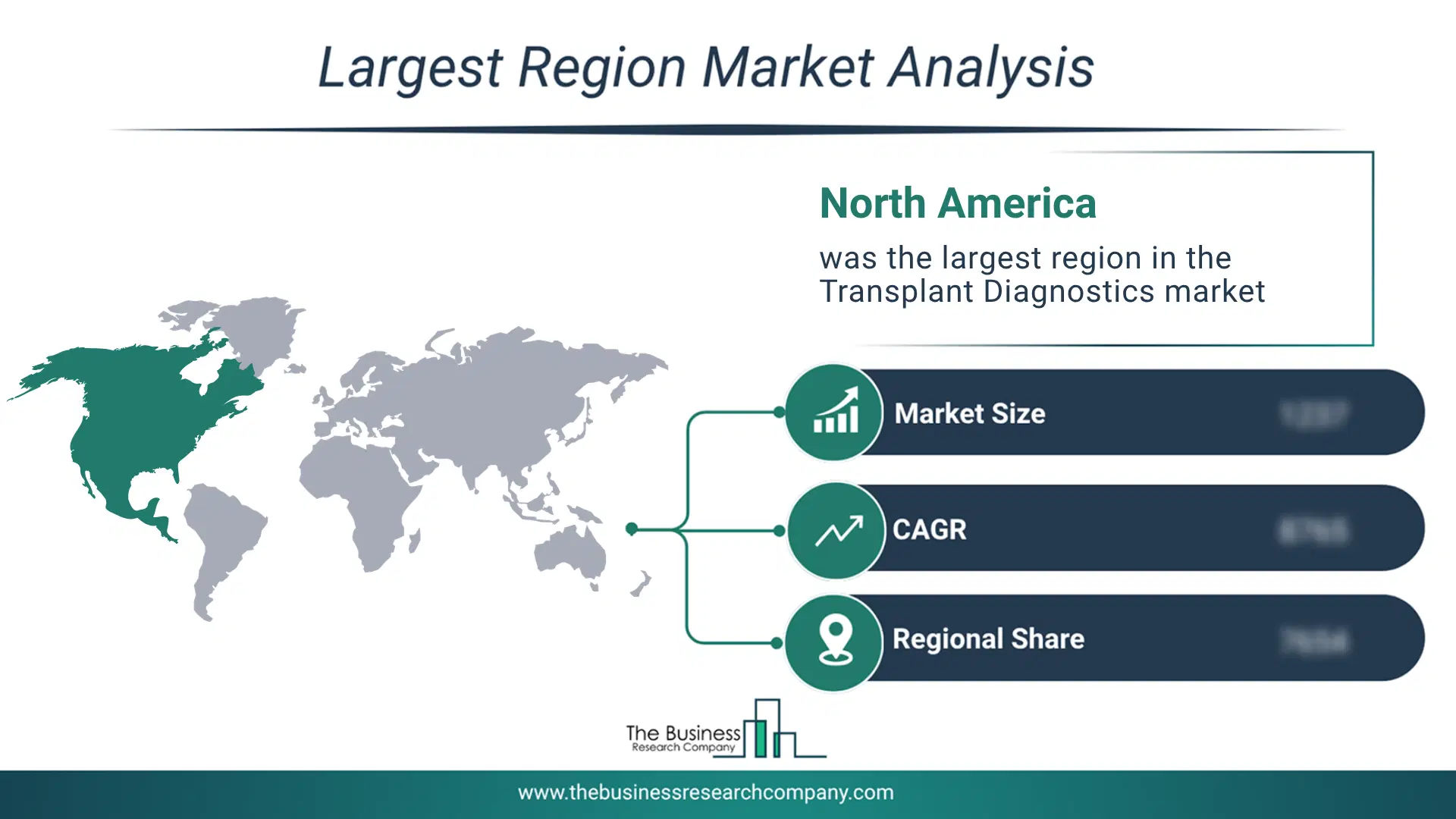
Regional Outlook
North America was the largest region in the transplant diagnostics market in 2025. Western Europe was the second largest region in the transplant diagnostics market report. The regions covered in this market report are Asia-Pacific, South East Asia, Western Europe, Eastern Europe, North America, South America, Middle East, Africa. The countries covered in this market report are Australia, Brazil, China, France, Germany, India, Indonesia, Japan, Taiwan, Russia, South Korea, UK, USA, Canada, Italy, SpainWhat Defines the Transplant Diagnostics Market?
The transplant diagnostics market includes revenues earned by entities by PCR-based molecular assays, sequencing-based molecular assays, and non-molecular assay technologies. The market value includes the value of related goods sold by the service provider or included within the service offering. Only goods and services traded between entities or sold to end consumers are included.How is Market Value Defined and Measured?
The market value is defined as the revenues that enterprises gain from the sale of goods and/or services within the specified market and geography through sales, grants, or donations in terms of the currency (in USD unless otherwise specified). The revenues for a specified geography are consumption values that are revenues generated by organizations in the specified geography within the market, irrespective of where they are produced. It does not include revenues from resales along the supply chain, either further along the supply chain or as part of other products.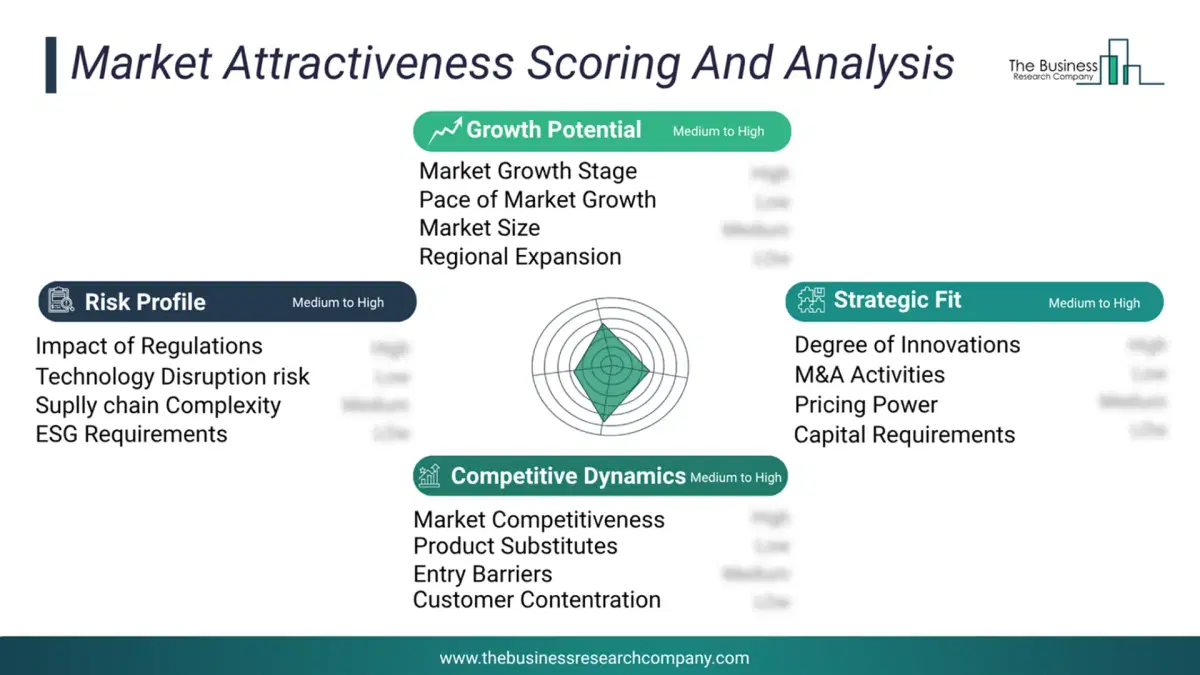
This chart presents market attractiveness based on a quantitative evaluation of growth, competition, strategic alignment, and risk, offering a clear view of opportunity areas for decision-making. This chart is for illustrative purposes; the full report contains the complete analysis.
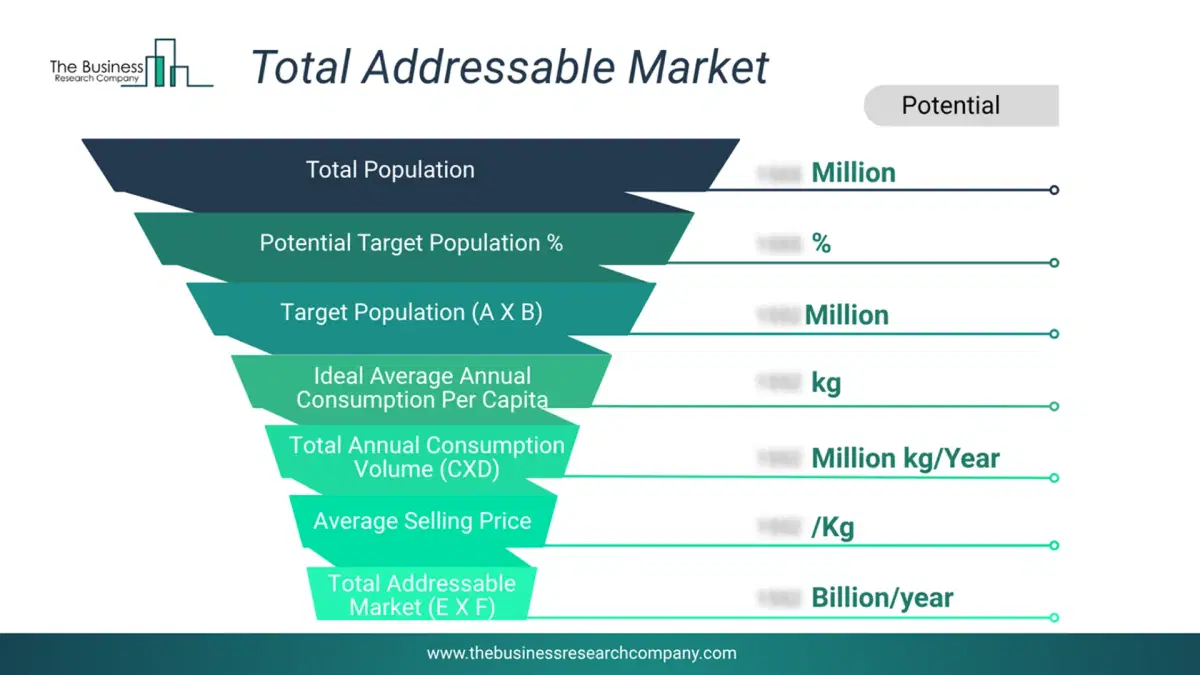
This chart highlights the Total Addressable Market (TAM) by estimating the maximum revenue opportunity using an assumption-driven approach, supporting strategic planning and opportunity sizing across markets. The chart is illustrative; the full report provides a more comprehensive analysis.
What Key Data and Analysis Are Included in the Transplant Diagnostics Market Report 2026?
The transplant diagnostics market research report is one of a series of new reports from The Business Research Company that provides market statistics, including industry global market size, regional shares, competitors with the market share, detailed market segments, market trends and opportunities, and any further data you may need to thrive in the transplant diagnostics industry. The market research report delivers a complete perspective of everything you need, with an in-depth analysis of the current and future state of the industry.Transplant Diagnostics Market Report Forecast Analysis
| Report Attribute | Details |
|---|---|
| Market Size Value In 2026 | $2.25 billion |
| Revenue Forecast In 2030 | $2.96 billion |
| Growth Rate | CAGR of 7.1% from 2026 to 2030 |
| Base Year For Estimation | 2025 |
| Actual Estimates/Historical Data | 2020-2025 |
| Forecast Period | 2026 - 2030 |
| Market Representation | Revenue in USD Billion and CAGR from 2026 to 2030 |
| Segments Covered | Type, Transplant Type, Organ, Technology, End User |
| Regional Scope | Asia-Pacific, Western Europe, Eastern Europe, North America, South America, Middle East, Africa |
| Country Scope | The countries covered in the report are Australia, Brazil, China, France, Germany, India, Indonesia, Japan, Taiwan, Russia, South Korea, UK, USA, Canada, Italy, Spain. |
| Key Companies Profiled | F. Hoffmann La-Roche AG, Thermo Fisher Scientific Inc., Abbott Laboratories Inc., Becton-Dickinson and Company, Hologic Inc., Illumina Inc., BioMerieus S.A, Biomérieux SA, Grafton Companies, Bio-rad Laboratories Inc., Sigma-Aldrich Corporation, Qiagen N.V., Immucor Transplant Diagnostics Inc., Immucor Inc., Luminex Corporation, Affymetrix Inc., CareDx Company, One Lambda Inc., Eurobio Scientific Group, Gendx BV, Olerup SSp AB, Genome Diagnostics B.V., Transplant Genomics Inc., Omixon Ltd., BAG Healthcare GmbH, Histogenetics Inc., Linkage Biosciences lnc., Gendrive plc |
| Customization Scope | Request for Customization |
| Pricing And Purchase Options | Explore Purchase Options |