
Urea Market Report 2026
Global Outlook – By Grade (Fertilizer Grade, Feed Grade, Technical Grade), By Technology (Stamicarbon Technology, SnamProgetti Or Saipem Technology, Conventional Technologies, Other Technologies), By Application (Fertilizer, Urea Formaldehyde (UF) and Melamine Resins, Melamine (Cyanurates), Animal Feed, Other Applications), By End-User (Agriculture, Chemical, Automotive, Medical, Other End-Users) – Market Size, Trends, Strategies, and Forecast to 2030
Urea Market Overview
• Urea market size has reached to $48.95 billion in 2025 • Expected to grow to $59.19 billion in 2030 at a compound annual growth rate (CAGR) of 3.9% • Growth Driver: Growing Agriculture Sector's Impact On Urea Market • Market Trend: Strategic Partnerships For Higher Farm Production • Asia-Pacific was the largest region in 2025 and South America is the fastest growing region.Market Gains By 2030 – Top Opportunities By Segment
Market Gain identifies the most promising market opportunities by highlighting the segments or products expected to generate the highest incremental revenue growth over the next five years.
What Is Covered Under Urea Market?
Urea refers to a safe, practical substance with a long history. It is a naturally occurring chemical formed by the metabolism of proteins and is widely distributed in mammalian urine. The various grades of urea include fertilizer grade, feed grade and technical grade. Technical grade urea is urea that is produced and utilized for industrial applications other than fertilizer. The technologies involved include stamicarbon technology, snamprgetti or saipen technology and conventional technologies for use in applications such as fertilizer, urea-formaldehyde (UF) and melamine resins, melamine (cyanurates), animal feed and other applications in end-user industries including agriculture, chemical, automotive, medical and other end-user industries.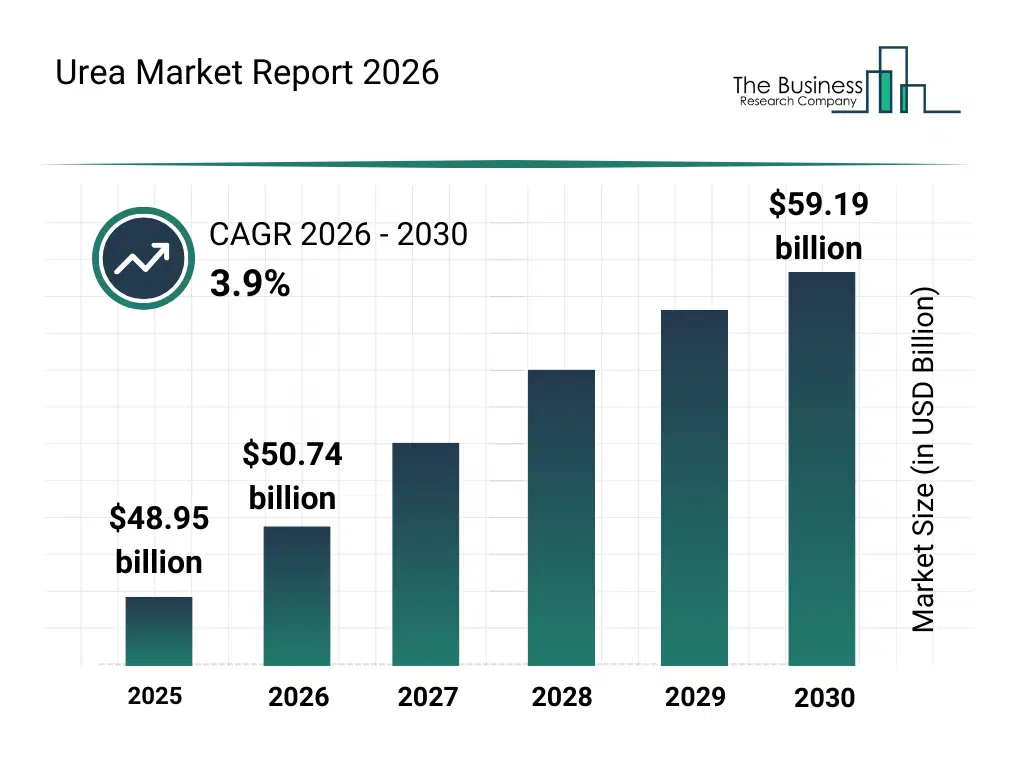
What Is The Urea Market Size and Share 2026?
The urea market size has grown steadily in recent years. It will grow from $48.95 billion in 2025 to $50.74 billion in 2026 at a compound annual growth rate (CAGR) of 3.7%. The growth in the historic period can be attributed to expansion of fertilizer consumption, growth of agricultural productivity initiatives, increasing use of urea in chemical manufacturing, availability of large-scale production facilities, rising global nitrogen demand.What Is The Urea Market Growth Forecast?
The urea market size is expected to see steady growth in the next few years. It will grow to $59.19 billion in 2030 at a compound annual growth rate (CAGR) of 3.9%. The growth in the forecast period can be attributed to increasing demand for sustainable fertilizers, rising adoption of urea-based emission reduction solutions, expansion of industrial chemical applications, growing investments in efficient production technologies, increasing focus on controlled-release fertilizers. Major trends in the forecast period include increasing demand for high-purity urea products, rising adoption in industrial applications, growing use in emission control systems, expansion of granular and liquid urea forms, enhanced production efficiency optimization.
Global Urea Market Segmentation
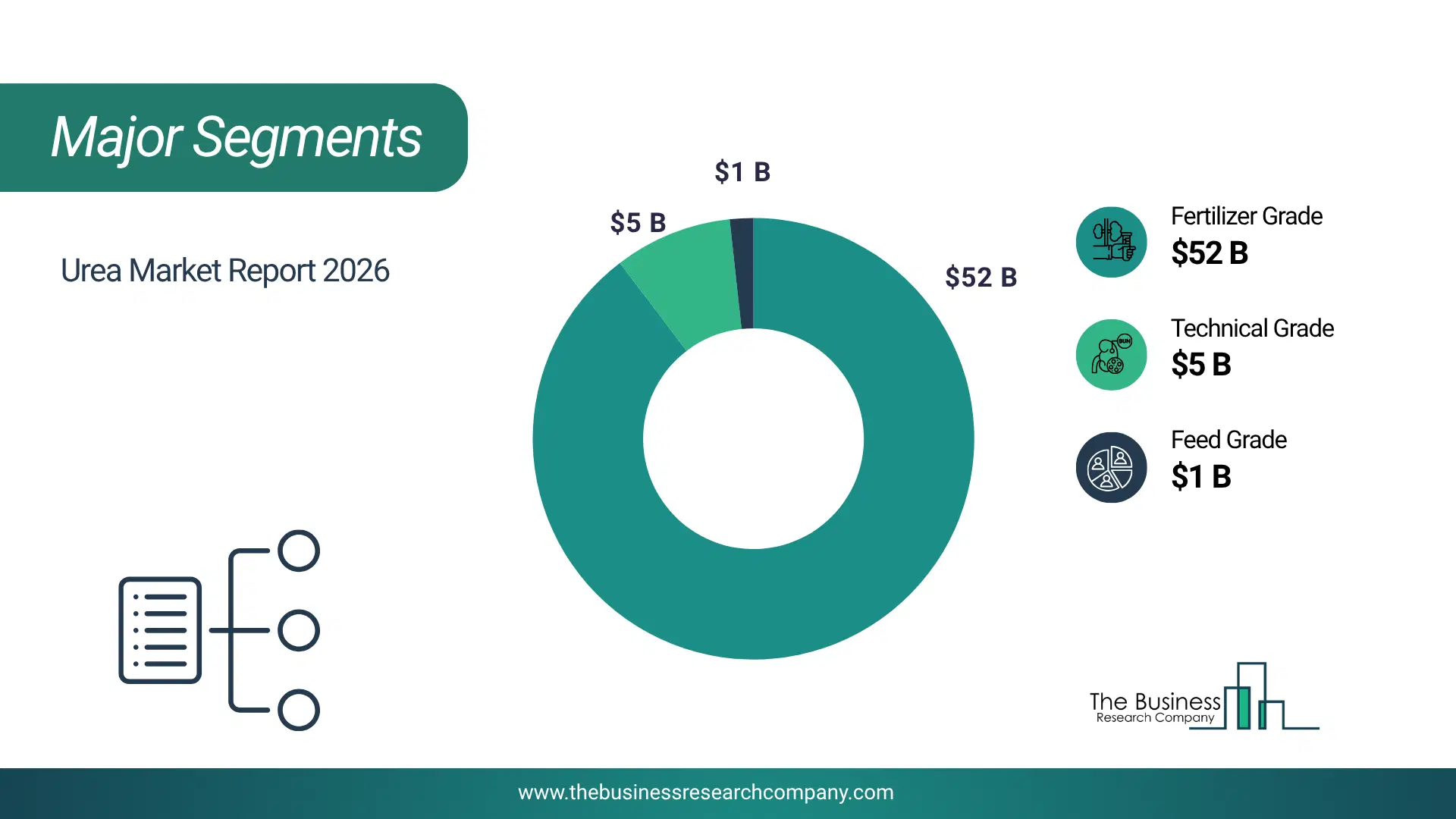
1) By Grade: Fertilizer Grade, Feed Grade, Technical Grade 2) By Technology: Stamicarbon Technology, SnamProgetti Or Saipem Technology, Conventional Technologies, Other Technologies 3) By Application: Fertilizer, Urea Formaldehyde (UF) and Melamine Resins, Melamine (Cyanurates), Animal Feed, Other Applications 4) By End-User: Agriculture, Chemical, Automotive, Medical, Other End-Users Subsegments: 1) By Fertilizer Grade: Granular Urea, Prilled Urea, Liquid Urea 2) By Feed Grade: Urea For Ruminants, Urea For Non-Ruminants 3) By Technical Grade: Industrial Urea, Pharmaceutical Urea The top segments in the urea market will be: • Fertilizer Grade will reach $52 Billion by 2030. • Technical Grade will reach $5 Billion by 2030. • Feed Grade will reach $1 Billion by 2030.What Is The Driver Of The Urea Market?
The growing agriculture sector is expected to propel the growth of the urea market going forward. Agriculture refers to the art and science of soil cultivation, crop production, and livestock. Urea is an important type of agricultural fertilizer in the agriculture industry that is used to enhance plant growth and increase crop yields. Urea can aid in promoting growth and raising crop yields by giving plants an easily accessible source of nitrogen. For instance, in January 2025, according the United States Department of Agriculture, a US-based government organization, reported that Sorghum grain production in 2024 is estimated at 344 million bushels, representing an 8% increase compared to 2023. Therefore, the growing agriculture sector is driving the growth of the urea industry.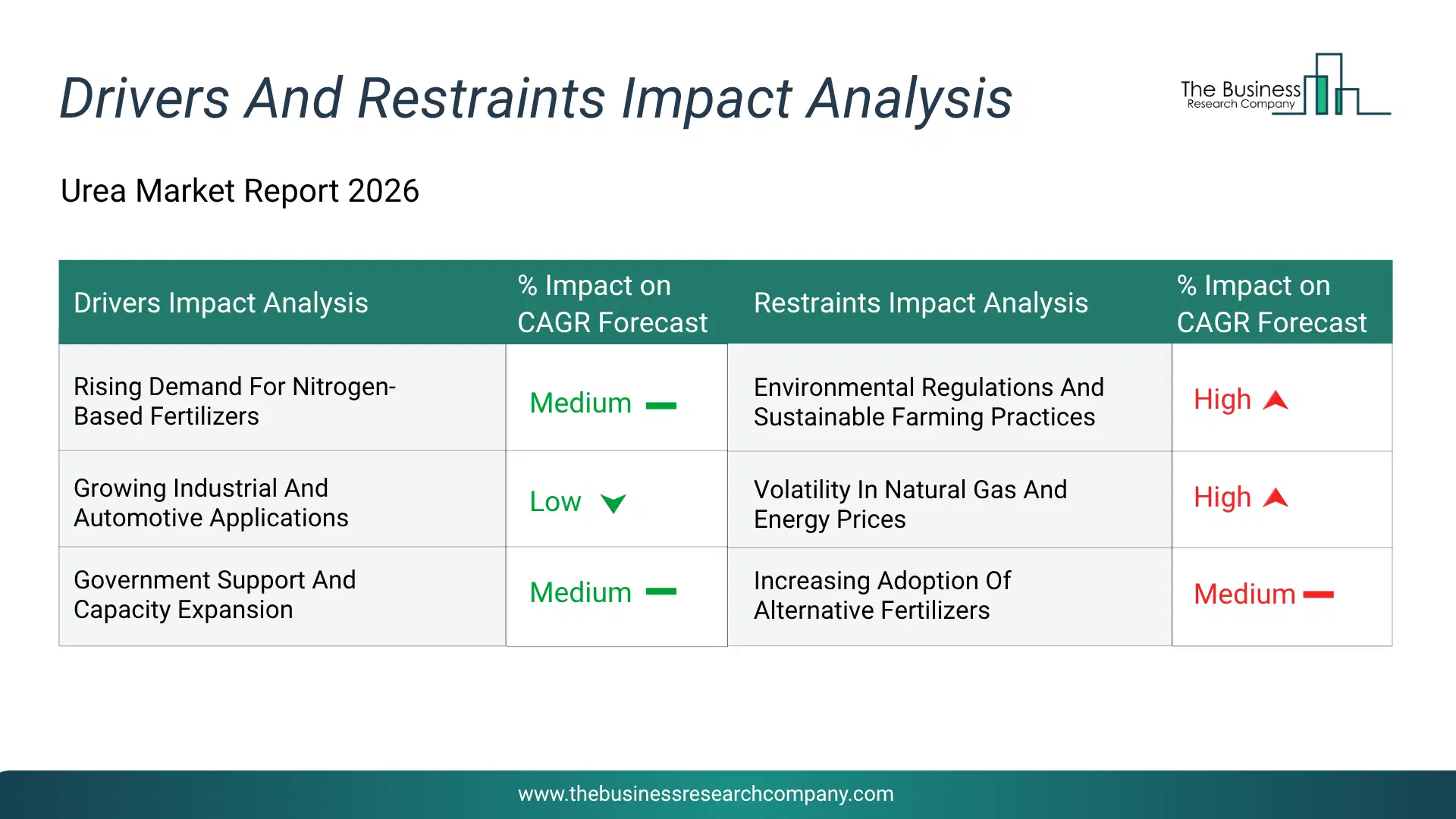
Infographic Chart Showing Key Market Drivers Analysis And Restraints For Urea Market
The chart presents an impact analysis of key drivers and restraints, quantifying their relative influence on the market's growth rate and helping assess the balance between growth enablers and limiting factors. This chart offers a high-level perspective; the full report contains more detailed insights.
How Will The Drivers Impact Growth In The Global Urea Market?
• Rising Demand For Nitrogen-Based Fertilizers (Medium) – During the forecast period, the rising demand for nitrogen-based fertilizers is expected to emerge as a major factor driving the expansion of the urea market by 2030. growing global food requirements, limited arable land, and the need to improve agricultural productivity are encouraging farmers to increase the use of high-efficiency nitrogen fertilizers. urea remains the preferred fertilizer due to its high nitrogen content, cost-effectiveness, and ability to improve crop yields across cereals, fruits, vegetables, oilseeds, and commercial crops. government fertilizer subsidy programs and food security initiatives are further supporting widespread adoption in major agricultural economies. • Growing Industrial And Automotive Applications (Low) – During the forecast period, the growing industrial and automotive applications are expected to emerge as a major factor driving the expansion of the urea market by 2030. technical-grade urea is increasingly used in the production of resins, adhesives, laminates, specialty chemicals, pharmaceuticals, and cosmetics, while demand for diesel exhaust fluid (DEF) continues to rise as commercial vehicles adopt selective catalytic reduction systems to meet stricter emission standards. expansion of the manufacturing, construction, automotive, and chemical industries is further increasing consumption across non-agricultural applications. • Government Support And Capacity Expansion (Medium) – During the forecast period, the government support and capacity expansion are expected to act as a key growth catalyst for the urea market by 2030. fertilizer subsidy programs, investments in domestic ammonia and urea production facilities, and initiatives aimed at improving fertilizer self-sufficiency are strengthening supply availability and affordability. at the same time, manufacturers are adopting advanced production technologies to improve energy efficiency, enhance output, and reduce operating costs, supporting long-term market development.How Will The Restraints Impact Growth In The Global Urea Market?
• Environmental Regulations And Sustainable Farming Practices (Medium) – During the forecast period, environmental Regulations And Sustainable Farming Practices are becoming increasingly significant restraints on the urea market as governments and environmental organizations seek to reduce the ecological impact of nitrogen fertilizers. Excessive application of urea contributes to greenhouse gas emissions, ammonia volatilization, nitrate leaching, groundwater contamination, and eutrophication of water bodies. To address these issues, regulatory authorities are implementing stricter fertilizer application standards, emission reduction policies, and nutrient management programs. At the same time, farmers are increasingly adopting precision agriculture technologies, controlled nutrient application methods, enhanced-efficiency fertilizers, and sustainable farming practices that reduce dependence on conventional urea. The growing emphasis on environmental sustainability is expected to moderate long-term growth in traditional urea consumption despite continued agricultural demand. • Volatility In Natural Gas And Energy Prices (Low) – During the forecast period, volatility In Natural Gas And Energy Prices poses a major challenge to urea manufacturers because natural gas is both the primary feedstock for ammonia production and the largest source of energy consumed during urea manufacturing. Fluctuating natural gas prices caused by geopolitical conflicts, supply chain disruptions, energy shortages, inflationary pressures, and changing global trade conditions significantly affect production economics. Rising energy costs increase manufacturing expenses, compress producer profit margins, and often lead to higher fertilizer prices for farmers. In regions highly dependent on imported natural gas, these price fluctuations create uncertainty in production planning and investment decisions while reducing the competitiveness of domestic manufacturers in international markets. • Increasing Adoption Of Alternative Fertilizers (Medium) – During the forecast period, increasing Adoption Of Alternative Fertilizers is gradually reducing the long-term growth potential of conventional urea products as agricultural practices shift toward higher nutrient-use efficiency and environmental sustainability. Farmers are increasingly adopting nano urea, biofertilizers, organic fertilizers, controlled-release fertilizers, slow-release nitrogen products, and customized nutrient blends that minimize nitrogen losses while improving crop performance. These alternatives reduce greenhouse gas emissions, decrease nutrient runoff, and support sustainable farming objectives promoted by governments and international organizations. Continuous technological advancements in specialty fertilizers and increasing investments in environmentally friendly agricultural inputs are expected to intensify competition for conventional urea products, particularly in developed markets where environmental regulations are more stringent.Key Players In The Global Urea Market
Major companies operating in the urea market are Yara International ASA, CF Industries Holdings, Inc., Nutrien Ltd., Koch Fertilizer, LLC, EuroChem Group AG, Haifa Chemicals Ltd., ICL Group Ltd., OCI N.V., Coromandel International Ltd., Mitsubishi Chemical Corporation, Urea India Ltd., Saudi Basic Industries Corporation (SABIC), Shandong Xinhua Chemical Co., Ltd., Shanxi Lanhua Sci-Tech Co., Ltd., Jiangsu Guotai International Group Co., Ltd., Fertilizer Corporation of India Ltd., Thai Agro Chemicals Co., Ltd., Rashtriya Chemicals and Fertilizers Ltd., Chambal Fertilisers and Chemicals Ltd., PT Pupuk Indonesia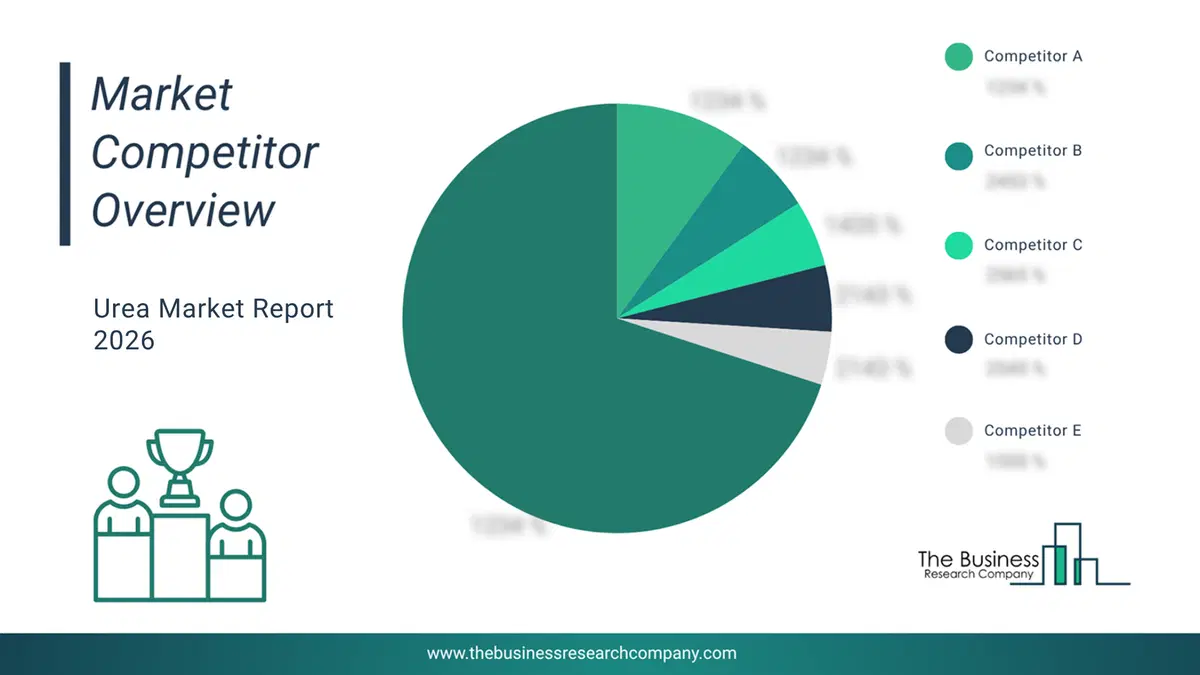
This chart is for illustrative purposes; the full report includes a detailed competitor analysis and comprehensive overview of the top 10 companies in the market.
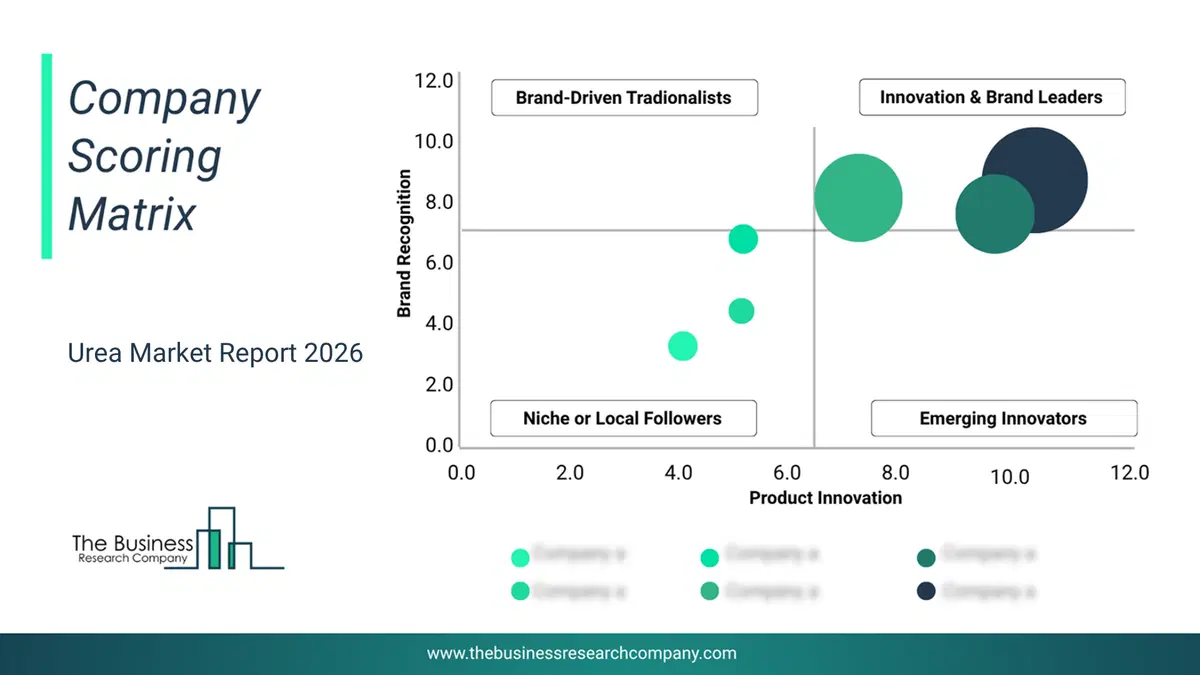
This chart maps companies by product innovation and brand strength, with bubble size indicating relative revenue, helping identify market leaders, challengers, and niche players. This is an illustrative chart; the full report provides a complete and accurate competitive analysis.
Global Urea Market Trends and Insights
Major companies operating in the urea market are adopting a strategic partnership approach to help farmers achieve higher production in a sustainable and cost-effective manner. Strategic partnerships refer to a process in which companies leverage each other's strengths and resources to achieve mutual benefits and success. For instance, in September 2023, SABIC Agri-Nutrients Company, a Saudi Arabia-based fertilizer company partnered with ADM, a US-based food processing and commodities trading corporation, and BiOWiSH Technologies, a US-based company that develops and manufactures products for environmental management, agribusiness, and consumer products. With this partnership, they introduced biologically enhanced urea fertilizer with lower greenhouse gas emissions, powered by BiOWiSH technology, thereby promoting sustainability in agriculture. The 50,000-acre pilot project in the midwestern United States for the 2023 growing season aims to collect data on emission reductions, supporting SABIC AN's commitment to carbon neutrality by 2050 and contributing to the advancement of environmentally friendly practices in the urea market.What Are Latest Mergers And Acquisitions In The Urea Market?
In September 2025, Adecoagro S.A., a Luxembourg-based agribusiness company, acquired a 50% stake in Profertil S.A. for approximately $600 million. With this acquisition, Adecoagro intends to solidify and expand its footprint in the global urea and nitrogen-fertilizer market by integrating one of South America’s most cost-efficient nitrogen producers into its portfolio, thereby strengthening its supply-chain control and production capacity. Profertil S.A. is an Argentina-based producer of granular urea and ammonia supplying around 60% of the country’s urea consumption.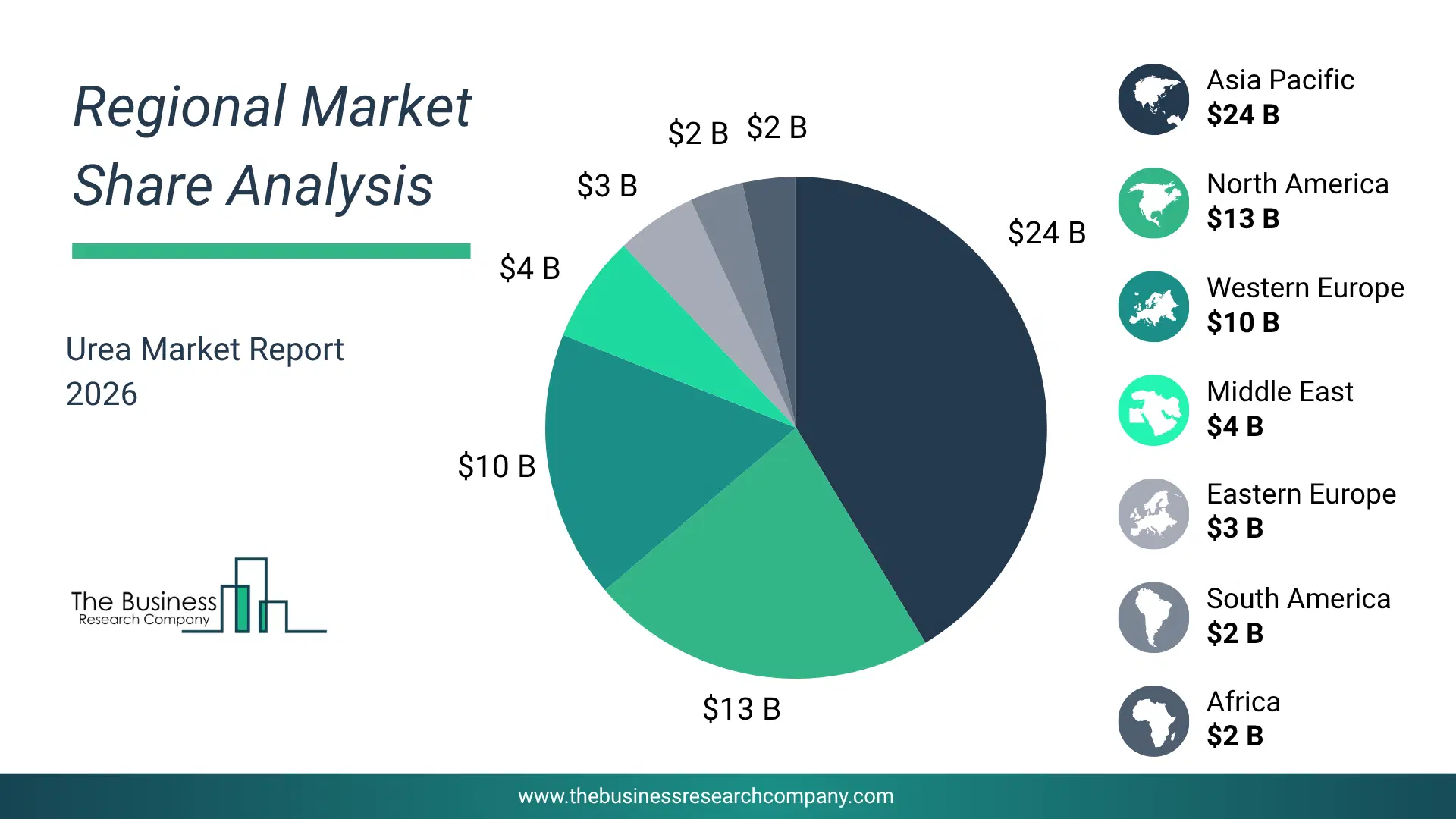
Regional Insights
Asia-Pacific was the largest region in the urea market in 2025.South America is expected to be the fastest-growing region in the global urea market report during the forecast period. The regions covered in this market report are Asia-Pacific, South East Asia, Western Europe, Eastern Europe, North America, South America, Middle East, Africa The countries covered in this market report are Australia, Brazil, China, France, Germany, India, Indonesia, Japan, Taiwan, Russia, South Korea, UK, USA, Canada, Italy, SpainWhat Defines the Urea Market?
The urea market consists of sales of urea in the form of granules, prills and pellets. Values in this market are ‘factory gate’ values, that is the value of goods sold by the manufacturers or creators of the goods, whether to other entities (including downstream manufacturers, wholesalers, distributors and retailers) or directly to end customers. The value of goods in this market includes related services sold by the creators of the goods.How is Market Value Defined and Measured?
The market value is defined as the revenues that enterprises gain from the sale of goods and/or services within the specified market and geography through sales, grants, or donations in terms of the currency (in USD unless otherwise specified). The revenues for a specified geography are consumption values that are revenues generated by organizations in the specified geography within the market, irrespective of where they are produced. It does not include revenues from resales along the supply chain, either further along the supply chain or as part of other products.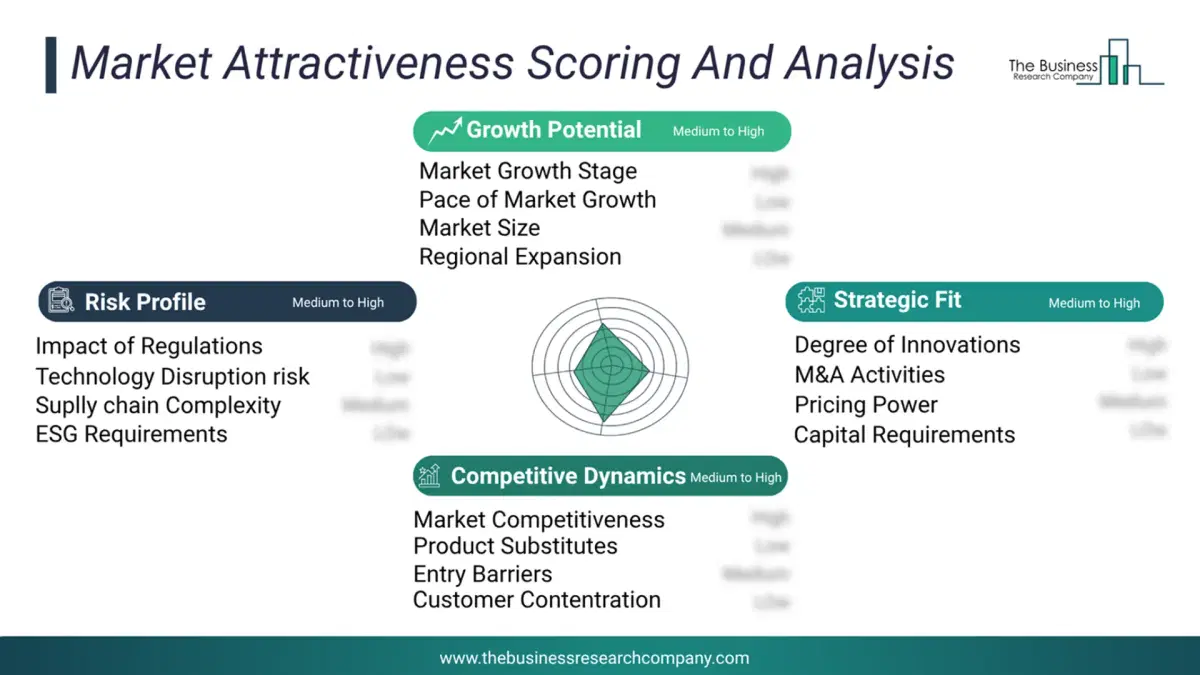
This chart presents market attractiveness based on a quantitative evaluation of growth, competition, strategic alignment, and risk, offering a clear view of opportunity areas for decision-making. This chart is for illustrative purposes; the full report contains the complete analysis.
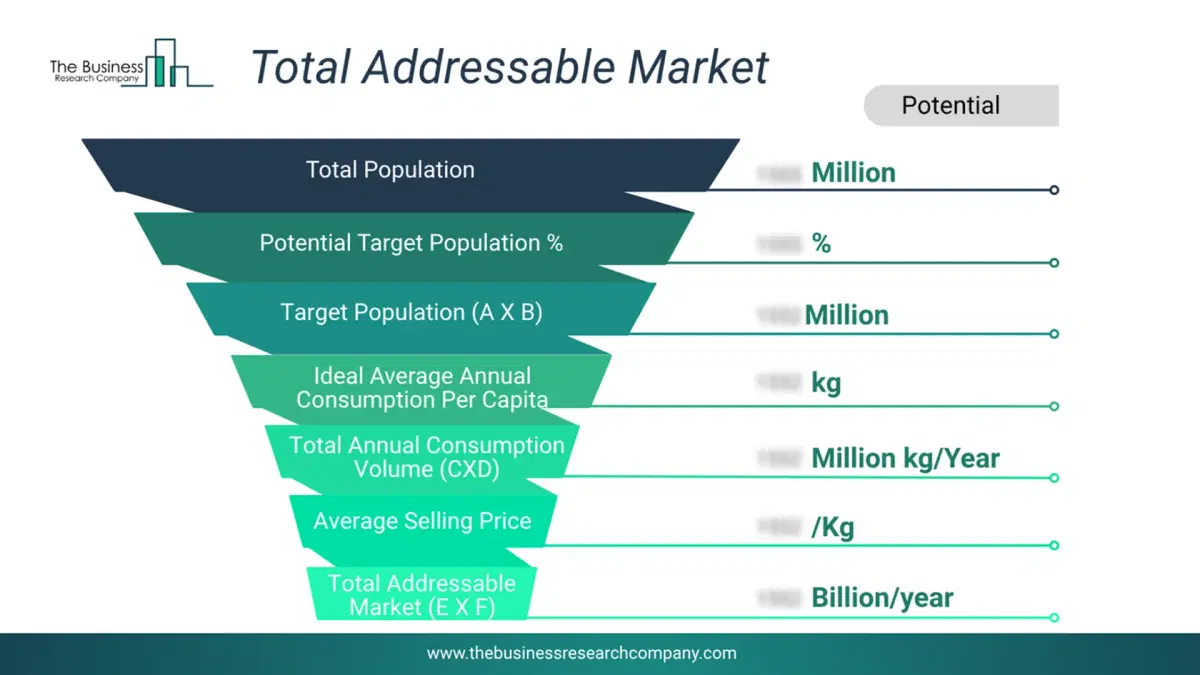
This chart highlights the Total Addressable Market (TAM) by estimating the maximum revenue opportunity using an assumption-driven approach, supporting strategic planning and opportunity sizing across markets. The chart is illustrative; the full report provides a more comprehensive analysis.
What Key Data and Analysis Are Included in the Urea Market Report 2026?
The urea market research report is one of a series of new reports from The Business Research Company that provides market statistics, including industry global market size, regional shares, competitors with the market share, detailed market segments, market trends and opportunities, and any further data you may need to thrive in the urea industry. The market research report delivers a complete perspective of everything you need, with an in-depth analysis of the current and future state of the industry.Urea Market Report Forecast Analysis
| Report Attribute | Details |
|---|---|
| Market Size Value In 2026 | $50.74 billion |
| Revenue Forecast In 2030 | $59.19 billion |
| Growth Rate | CAGR of 3.9% from 2026 to 2030 |
| Base Year For Estimation | 2025 |
| Actual Estimates/Historical Data | 2020-2025 |
| Forecast Period | 2026 - 2030 |
| Market Representation | Revenue in USD Billion and CAGR from 2026 to 2030 |
| Segments Covered | Grade, Technology, Application, End-User |
| Regional Scope | Asia-Pacific, Western Europe, Eastern Europe, North America, South America, Middle East, Africa |
| Country Scope | The countries covered in the report are Australia, Brazil, China, France, Germany, India, Indonesia, Japan, Taiwan, Russia, South Korea, UK, USA, Canada, Italy, Spain. |
| Key Companies Profiled | Yara International ASA, CF Industries Holdings, Inc., Nutrien Ltd., Koch Fertilizer, LLC, EuroChem Group AG, Haifa Chemicals Ltd., ICL Group Ltd., OCI N.V., Coromandel International Ltd., Mitsubishi Chemical Corporation, Urea India Ltd., Saudi Basic Industries Corporation (SABIC), Shandong Xinhua Chemical Co., Ltd., Shanxi Lanhua Sci-Tech Co., Ltd., Jiangsu Guotai International Group Co., Ltd., Fertilizer Corporation of India Ltd., Thai Agro Chemicals Co., Ltd., Rashtriya Chemicals and Fertilizers Ltd., Chambal Fertilisers and Chemicals Ltd., PT Pupuk Indonesia |
| Customization Scope | Request for Customization |
| Pricing And Purchase Options | Explore Purchase Options |