

Urinary Incontinence & Pelvic Organ Prolapse Devices And Equipment Market Report 2026
Global Outlook – By Type (Urinary Incontinence Devices, Pelvic Organ Prolapse Devices), By Urinary Incontinence Devices (Artificial Urinary Sphincters, Electrical Stimulation Devices, Urethral Slings, Catheters), By Pelvic Organ Prolapse Devices (Vaginal Mesh, Vaginal Pessary), By Incontinence Type (Stress Incontinence, Urge Incontinence, Overflow Incontinence, Functional Incontinence), By End User (Hospitals, Clinics, Ambulatory Surgical Centers, Home Use) – Market Size, Trends, Strategies, and Forecast to 2030
Urinary Incontinence & Pelvic Organ Prolapse Devices And Equipment Market Overview
• Urinary Incontinence & Pelvic Organ Prolapse Devices And Equipment market size has reached to $4.06 billion in 2025 • Expected to grow to $5.39 billion in 2030 at a compound annual growth rate (CAGR) of 6% • Growth Driver: The Growing Geriatric Population • Market Trend: Cosm’s 3D-Printed “Gynethotics” Mark a Breakthrough in Personalized Pelvic Organ Prolapse Care • North America was the largest region in 2025 and Western Europe is the fastest growing region.What Is Covered Under Urinary Incontinence & Pelvic Organ Prolapse Devices And Equipment Market?
Urinary incontinence & pelvic organ prolapse devices and equipment are used in the treatment of pelvic organ prolapse and urinary incontinence. Urinary incontinence (UI), also known as involuntary urination, is defined as uncontrolled leakage of urine caused by an overactive bladder. Pelvic organ prolapse (POP) is caused by defects in the supporting structures of the vagina. The main types in urinary incontinence & pelvic organ prolapse devices and equipment market are urinary incontinence devices and pelvic organ prolapse devices. The devices used to treat urinary incontinence are known as urinary incontinence devices. Artificial urinary sphincters, electrical stimulation devices, urethral slings, and catheters are examples of urinary incontinence devices. Vaginal mesh and vaginal pessaries are pelvic organ prolapse devices. The incontinence types are stress incontinence, urge incontinence, overflow incontinence, and functional incontinence. The various end-user involved are hospitals, clinics, ambulatory surgical centers, and home use.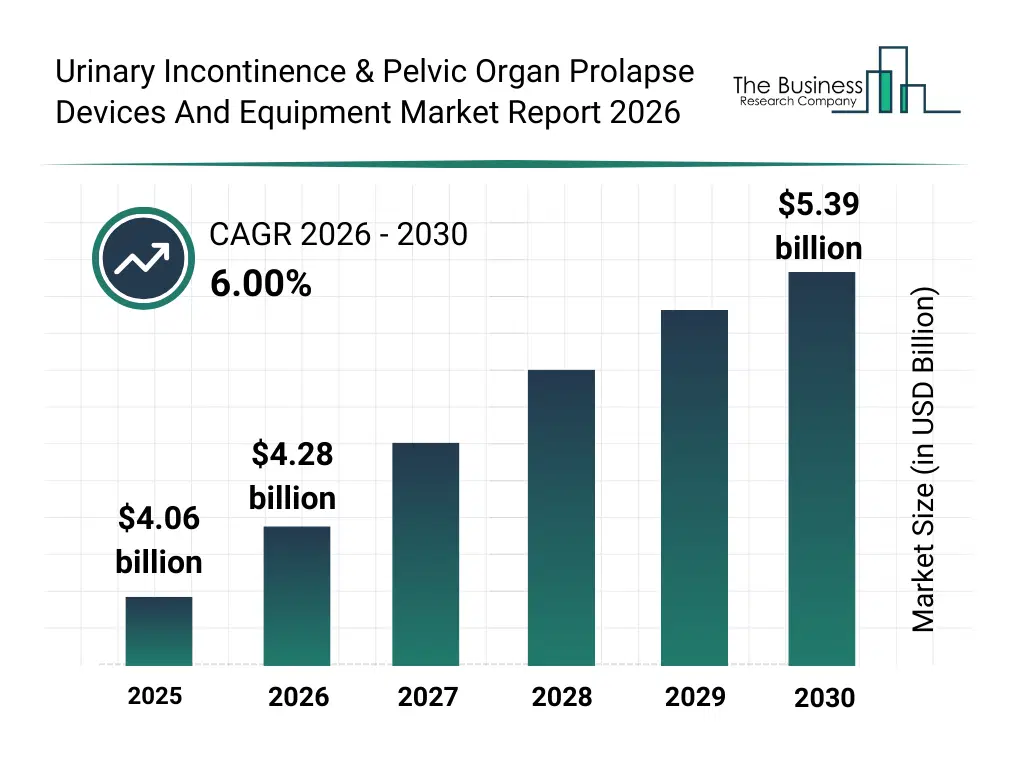
What Is The Urinary Incontinence & Pelvic Organ Prolapse Devices And Equipment Market Size and Share 2026?
The urinary incontinence & pelvic organ prolapse devices and equipment market size has grown strongly in recent years. It will grow from $4.06 billion in 2025 to $4.28 billion in 2026 at a compound annual growth rate (CAGR) of 5.4%. The growth in the historic period can be attributed to rising incidence of urinary incontinence disorders, growing awareness of pelvic health conditions, increased availability of clinical treatment options, wider acceptance of medical devices for ui management, expansion of gynecological care services.What Is The Urinary Incontinence & Pelvic Organ Prolapse Devices And Equipment Market Growth Forecast?
The urinary incontinence & pelvic organ prolapse devices and equipment market size is expected to see strong growth in the next few years. It will grow to $5.39 billion in 2030 at a compound annual growth rate (CAGR) of 6.0%. The growth in the forecast period can be attributed to increasing aging population globally, rising preference for non-invasive therapies, expansion of home healthcare adoption, growing investments in women’s health technologies, increasing demand for advanced pelvic floor rehabilitation devices. Major trends in the forecast period include increasing adoption of minimally invasive treatment devices, rising demand for non-surgical management solutions, growing use of electrical stimulation therapies, expansion of patient-centric home-use devices, enhanced focus on comfort and biocompatibility.
Global Urinary Incontinence & Pelvic Organ Prolapse Devices And Equipment Market Segmentation
1) By Type: Urinary Incontinence Devices, Pelvic Organ Prolapse Devices 2) By Urinary Incontinence Devices: Artificial Urinary Sphincters, Electrical Stimulation Devices, Urethral Slings, Catheters 3) By Pelvic Organ Prolapse Devices: Vaginal Mesh, Vaginal Pessary 4) By Incontinence Type: Stress Incontinence, Urge Incontinence, Overflow Incontinence, Functional Incontinence 5) By End User: Hospitals, Clinics, Ambulatory Surgical Centers, Home Use Subsegments: 1) By Urinary Incontinence Devices: Catheters (Intermittent, Indwelling, External), Absorbent Products (Pads, Adult Diapers), External Urinary Collection Devices, Electrical Stimulation Devices, Urethral Inserts, Artificial Urinary Sphincter 2) By Pelvic Organ Prolapse Devices: Vaginal Pessaries, Pelvic Floor Stimulation Devices, Surgical Implants, Prolapse Support DevicesWhat Is The Driver Of The Urinary Incontinence & Pelvic Organ Prolapse Devices And Equipment Market?
The growing geriatric population is expected to propel the growth of the urinary incontinence & pelvic organ prolapse devices and equipment market going forward. The geriatric population refers to the segment of the population that consists of older individuals, typically those aged 65 and older. The rise in the geriatric population is driven by longer life expectancy, as improvements in healthcare and living standards enable people to live healthier lives for a greater number of years.Urinary incontinence and pelvic organ prolapse are common health issues in the geriatric population, and various devices and equipment are used to manage these conditions. For instance, in October 2023, according to HelpAge International, a non-governmental organization, a network focused on promoting the rights of older people, it is projected that by 2050, 80% of the world’s older population will reside in low- and middle-income countries. This growing elderly population is fueling demand in markets such as urinary incontinence and pelvic organ prolapse devices.Key Players In The Global Urinary Incontinence & Pelvic Organ Prolapse Devices And Equipment Market
Major companies operating in the urinary incontinence & pelvic organ prolapse devices and equipment market are Boston Scientific Corporation, Coloplast A/S, Ethicon US, Becton Dickinson and Company, Johnson & Johnson, Teleflex Incorporated, Medtronic plc, COVIDien, Cook Medical, Neomedic International, CooperSurgical, MedGyn, Personal Medical Corp, Integra LifeSciences, Panpac Medical, Medesign, Smiths Medical Inc., Thomas Medical, Kangge Medical, Dr. Arabin GmbH & Co. KG, American Medical Systems Inc., Caldera Medical Inc., Intuitive Surgical, InControl Medical LLC, Atlantic Therapeutics Ltd., Axonics Modulation Technologies, Convatec Group plc, Laborie, NUVO Group, Pelvalon, pfm medical, Promedon, Prosurg Inc., UROMED Kurt Drews KG, Verathon Inc., Vitality Medical, Women's Choice Pharmaceuticals, Zimmer Biomet Holdings Inc.
This chart is for illustrative purposes; the full report includes a detailed competitor analysis and comprehensive overview of the top 10 companies in the market.
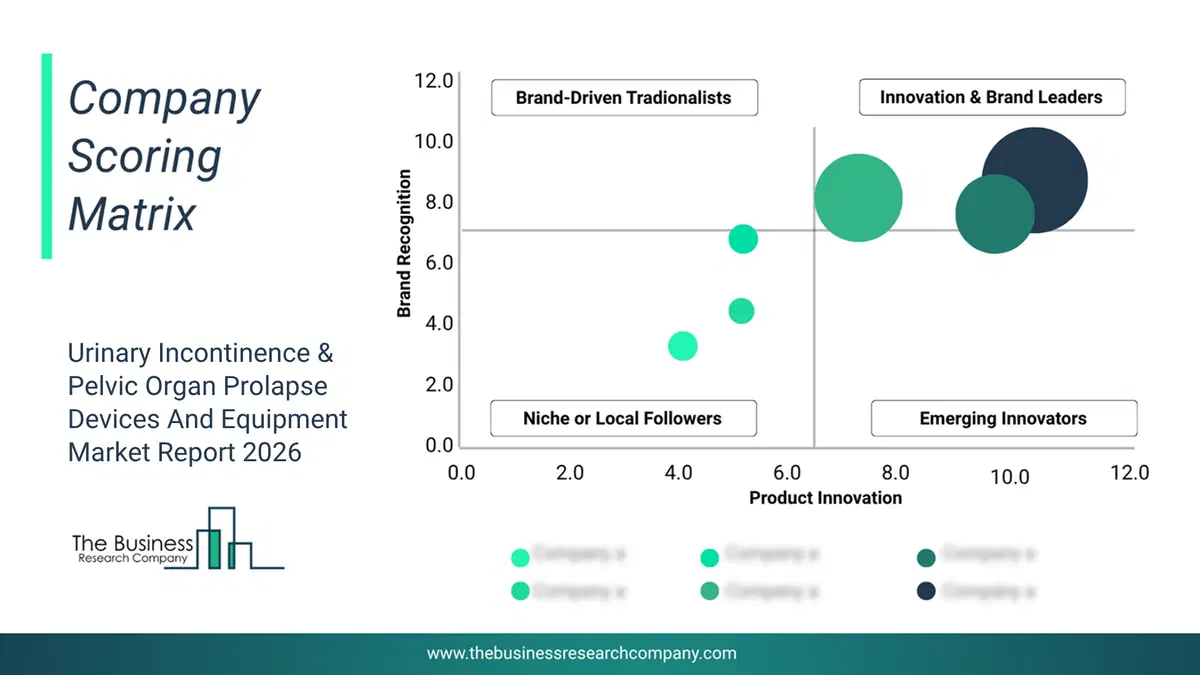
This chart maps companies by product innovation and brand strength, with bubble size indicating relative revenue, helping identify market leaders, challengers, and niche players. This is an illustrative chart; the full report provides a complete and accurate competitive analysis.
Global Urinary Incontinence & Pelvic Organ Prolapse Devices And Equipment Market Trends and Insights
Major companies operating in the urinary incontinence and pelvic organ prolapse devices and equipment market are focusing on technological innovation, such as patient-specific device customization, precision anatomical modeling, advanced 3D printing, and non-invasive therapeutic support solutions, to enhance comfort, treatment efficacy, and long-term pelvic floor outcomes. Patient-specific device customization enables healthcare providers to deliver pessaries and support devices that match the exact anatomical needs of each individual, improving fit, reducing complications, and minimizing the need for trial-and-error fittings. For instance, in March 2024, Cosm Medical Canada-based company women’s health technology company, introduced an advanced 3D-printed pessary solution known as Gynethotics, designed to transform pelvic organ prolapse management. Using detailed digital measurements of the patient’s pelvic anatomy, Gynethotics delivers custom-fitted support devices that offer improved comfort, stability, and therapeutic effectiveness compared to traditional pessaries. As highlighted by Dr. Bilal Iftikhar Chughtai, the personalized approach has the potential to significantly improve patient satisfaction, streamline the fitting process, and reduce the need for invasive surgical interventions—marking a major advancement in non-surgical pelvic floor treatment.What Are Latest Mergers And Acquisitions In The Urinary Incontinence & Pelvic Organ Prolapse Devices And Equipment Market?
In September 2023, Caldera Medical, Inc., a U.S.-based women’s health medical device company acquired Atlantic Therapeutics for an undisclosed amount. With this acquisition, Caldera Medical aims to expand its women’s health portfolio by integrating Atlantic Therapeutics’ non-invasive, FDA-cleared Innovo pelvic-floor strengthening technology to enhance its offering of first-line therapies for stress urinary incontinence. Atlantic Therapeutics is an Ireland-based provider of non-invasive pelvic floor strengthening and neuromuscular stimulation solutions for women.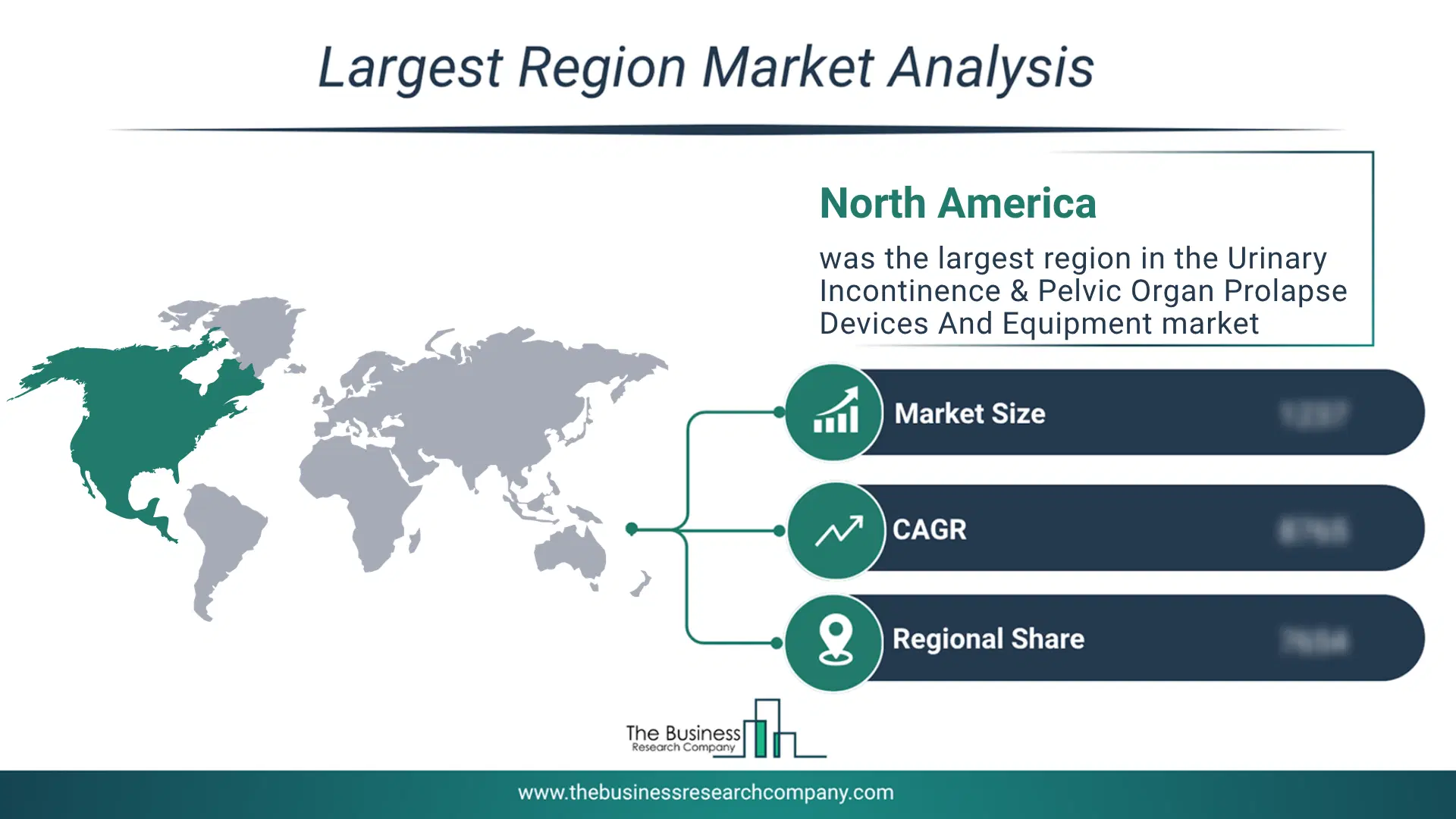
Regional Outlook
North America was the largest region in the urinary incontinence & pelvic organ prolapse devices and equipment market in 2025. Western Europe was the second-largest region in the urinary incontinence & pelvic organ prolapse devices and equipment market report. The regions covered in this market report are Asia-Pacific, South East Asia, Western Europe, Eastern Europe, North America, South America, Middle East, Africa. The countries covered in this market report are China, India, Japan, Australia, Indonesia, South Korea, Bangladesh, Thailand, Vietnam, Malaysia, Singapore, Philippines, Hong Kong, Taiwan, New Zealand, UK, Germany, France, Italy, Spain, Austria, Belgium, Denmark, Finland, Ireland, Netherlands, Norway, Portugal, Sweden, Switzerland, Russia, Czech Republic, Poland, Romania, Ukraine, USA, Canada, Mexico, Brazil, Chile, Argentina, Colombia, Peru, Saudi Arabia, Israel, Iran, Turkey, UAE, Egypt, Nigeria, South Africa.What Defines the Urinary Incontinence & Pelvic Organ Prolapse Devices And Equipment Market?
The urinary incontinence & pelvic organ prolapse devices and equipment market consist of sales of artificial urinary sphincters, electrical stimulation devices, urethral slings, and catheters that are used for the treatment of pelvic organ prolapse and urinary incontinence. Values in this market are factory gate values, that is the value of goods sold by the manufacturers or creators of the goods, whether to other entities (including downstream manufacturers, wholesalers, distributors and retailers) or directly to end customers. The value of goods in this market includes related services sold by the creators of the goods.How is Market Value Defined and Measured?
The market value is defined as the revenues that enterprises gain from the sale of goods and/or services within the specified market and geography through sales, grants, or donations in terms of the currency (in USD unless otherwise specified). The revenues for a specified geography are consumption values that are revenues generated by organizations in the specified geography within the market, irrespective of where they are produced. It does not include revenues from resales along the supply chain, either further along the supply chain or as part of other products.
This chart presents market attractiveness based on a quantitative evaluation of growth, competition, strategic alignment, and risk, offering a clear view of opportunity areas for decision-making. This chart is for illustrative purposes; the full report contains the complete analysis.
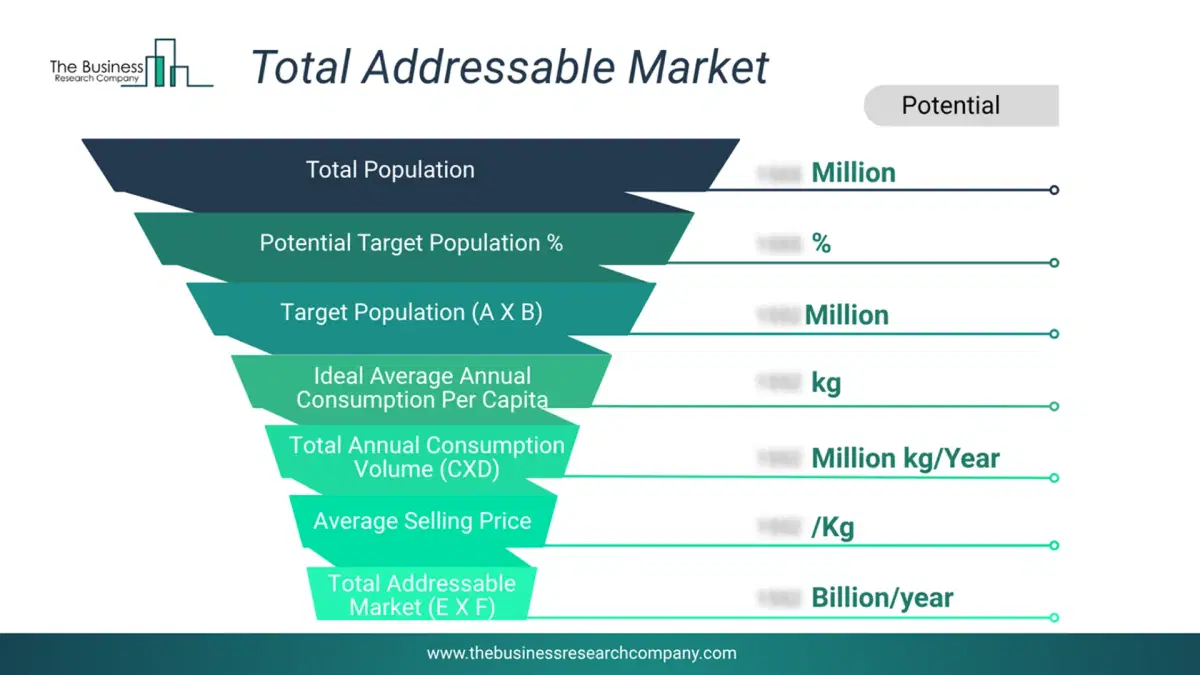
This chart highlights the Total Addressable Market (TAM) by estimating the maximum revenue opportunity using an assumption-driven approach, supporting strategic planning and opportunity sizing across markets. The chart is illustrative; the full report provides a more comprehensive analysis.
What Key Data and Analysis Are Included in the Urinary Incontinence & Pelvic Organ Prolapse Devices And Equipment Market Report 2026?
The urinary incontinence & pelvic organ prolapse devices and equipment market research report is one of a series of new reports from The Business Research Company that provides market statistics, including industry global market size, regional shares, competitors with the market share, detailed market segments, market trends and opportunities, and any further data you may need to thrive in the urinary incontinence & pelvic organ prolapse devices and equipment industry. The market research report delivers a complete perspective of everything you need, with an in-depth analysis of the current and future state of the industry.Urinary Incontinence & Pelvic Organ Prolapse Devices And Equipment Market Report Forecast Analysis
| Report Attribute | Details |
|---|---|
| Market Size Value In 2026 | $4.28 billion |
| Revenue Forecast In 2030 | $5.39 billion |
| Growth Rate | CAGR of 6% from 2026 to 2030 |
| Base Year For Estimation | 2025 |
| Actual Estimates/Historical Data | 2020-2025 |
| Forecast Period | 2026 - 2030 |
| Market Representation | Revenue in USD Billion and CAGR from 2026 to 2030 |
| Segments Covered | Type, Urinary Incontinence Devices, Pelvic Organ Prolapse Devices, Incontinence Type, End User |
| Regional Scope | Asia-Pacific, Western Europe, Eastern Europe, North America, South America, Middle East, Africa |
| Country Scope | The countries covered in the report are Australia, Brazil, China, France, Germany, India, Indonesia, Japan, Taiwan, Russia, South Korea, UK, USA, Canada, Italy, Spain. |
| Key Companies Profiled | Boston Scientific Corporation, Coloplast A/S, Ethicon US, Becton Dickinson and Company, Johnson & Johnson, Teleflex Incorporated, Medtronic plc, COVIDien, Cook Medical, Neomedic International, CooperSurgical, MedGyn, Personal Medical Corp, Integra LifeSciences, Panpac Medical, Medesign, Smiths Medical Inc., Thomas Medical, Kangge Medical, Dr. Arabin GmbH & Co. KG, American Medical Systems Inc., Caldera Medical Inc., Intuitive Surgical, InControl Medical LLC, Atlantic Therapeutics Ltd., Axonics Modulation Technologies, Convatec Group plc, Laborie, NUVO Group, Pelvalon, pfm medical, Promedon, Prosurg Inc., UROMED Kurt Drews KG, Verathon Inc., Vitality Medical, Women's Choice Pharmaceuticals, Zimmer Biomet Holdings Inc. |
| Customization Scope | Request for Customization |
| Pricing And Purchase Options | Explore Purchase Options |