

UV Disinfection Equipment Market Report 2026
Global Outlook – By Component (UV Lamp, Controller Unit, Quartz Sleeve, Reactor Chamber, Other Components ), By Power Rating (Low, Medium, High ), By Application (Water Treatment, Waste Water Treatment, Air Treatment, Food And Beverage Disinfection, Surface Disinfection ), By End User (Residential, Commercial, Industrial, Municipal ) – Market Size, Trends, Strategies, and Forecast to 2030
UV Disinfection Equipment Market Overview
• UV Disinfection Equipment market size has reached to $5.98 billion in 2025 • Expected to grow to $12.5 billion in 2030 at a compound annual growth rate (CAGR) of 15.9% • Growth Driver: Water Pollution Crisis Fuels Surge In Uv Disinfection Equipment Market • Market Trend: Innovative Robotic System To Provide Smart Disinfection Solutions • Asia-Pacific was the largest region and fastest growing region.Market Gains By 2030 – Top Opportunities By Segment
Market Gain identifies the most promising market opportunities by highlighting the segments or products expected to generate the highest incremental revenue growth over the next five years.
What Is Covered Under UV Disinfection Equipment Market?
UV disinfection equipment refers to a device that is equipped with a mercury arc lamp that emits electromagnetic energy or ultraviolet radiation to destroy or inactivate bacteria and diseases by altering the genetic material of an organism. The main components of UV disinfection equipment are a UV lamp, controller unit, quartz sleeve, reactor chamber, and others. UV lamp refers to a device for producing electromagnetic radiation in the wavelengths between those of visible light and X-rays. The power ratings are low, medium, and high, which are involved in water treatment, wastewater treatment, air treatment, food and beverage disinfection, and surface disinfection. The various end users included residential, commercial, industrial, and municipal.
What Is The UV Disinfection Equipment Market Size and Share 2026?
The uv disinfection equipment market size has grown rapidly in recent years. It will grow from $5.98 billion in 2025 to $6.92 billion in 2026 at a compound annual growth rate (CAGR) of 15.7%. The growth in the historic period can be attributed to increasing concerns over waterborne diseases, expansion of municipal water treatment infrastructure, rising industrial wastewater treatment needs, adoption of UV technology in food safety, growth in commercial hygiene standards.What Is The UV Disinfection Equipment Market Growth Forecast?
The uv disinfection equipment market size is expected to see rapid growth in the next few years. It will grow to $12.5 billion in 2030 at a compound annual growth rate (CAGR) of 15.9%. The growth in the forecast period can be attributed to stringent water quality regulations, rising adoption of UV-C LED technology, growing demand for air disinfection solutions, expansion of smart water infrastructure, increasing focus on sustainable disinfection technologies. Major trends in the forecast period include growing adoption of UV disinfection in water treatment, rising demand for chemical free disinfection methods, expansion of UV systems in air and surface disinfection, increasing use of automated UV control systems, rising deployment in food and beverage processing.

Global UV Disinfection Equipment Market Segmentation
1) By Component: UV Lamp, Controller Unit, Quartz Sleeve, Reactor Chamber, Other Components 2) By Power Rating: Low, Medium, High 3) By Application: Water Treatment, Waste Water Treatment, Air Treatment, Food And Beverage Disinfection, Surface Disinfection 4) By End User: Residential, Commercial, Industrial, Municipal Subsegments: 1) By UV Lamp: Low-pressure Mercury Vapor Lamps, Medium-pressure Mercury Vapor Lamps, UV-C LEDs 2) By Controller Unit: Manual Controllers, Automated Controllers 3) By Quartz Sleeve: Standard Quartz Sleeves, Enhanced Performance Quartz Sleeves 4) By Reactor Chamber: Open Reactor Chambers, Closed Reactor Chambers 5) By Other Components: Ballasts, Sensors, Connectors And Fittings The top segments in the uv disinfection equipment market will be: • UV Lamp will reach $6 Billion by 2030. • Reactor Chamber will reach $2 Billion by 2030. • Quartz Sleeve will reach $2 Billion by 2030. • Controller Unit will reach $2 Billion by 2030. • Other Components will reach $0.54 Billion by 2030.What Is The Driver Of The UV Disinfection Equipment Market?
The rise in water pollution and deteriorating quality of water is expected to propel the growth of the UV disinfection equipment market going forward. Water pollution refers to the release of substances into subsurface groundwater or into lakes, streams, rivers, estuaries, and oceans to the point where the substances interfere with the beneficial use of the water. Ultraviolet light of wavelength 253.7 nanometers has been used for disinfection of bacteria, viruses, molds, algae, and other microorganisms, which multiply and grow. For instance, in March 2023, according to the data published by the Environment Agency, a UK-based non-departmental public body, the number of sewage spills rose by 54%, from 301,091 in 2022 to 464,056 in 2023, with the average spills per overflow increasing from 23 to 33. Additionally, the total duration of monitored spills in 2023 reached 3,606,170 hours, marking a 105% increase from 1,754,921 hours in 2022, while the percentage of storm overflows that spilled fewer than 10 times decreased from 48% to 40%, and those that did not spill at all fell from 18% to 13.9%. Therefore, the rise in water pollution and deteriorating quality of water is driving the growth of the UV disinfection equipment industry.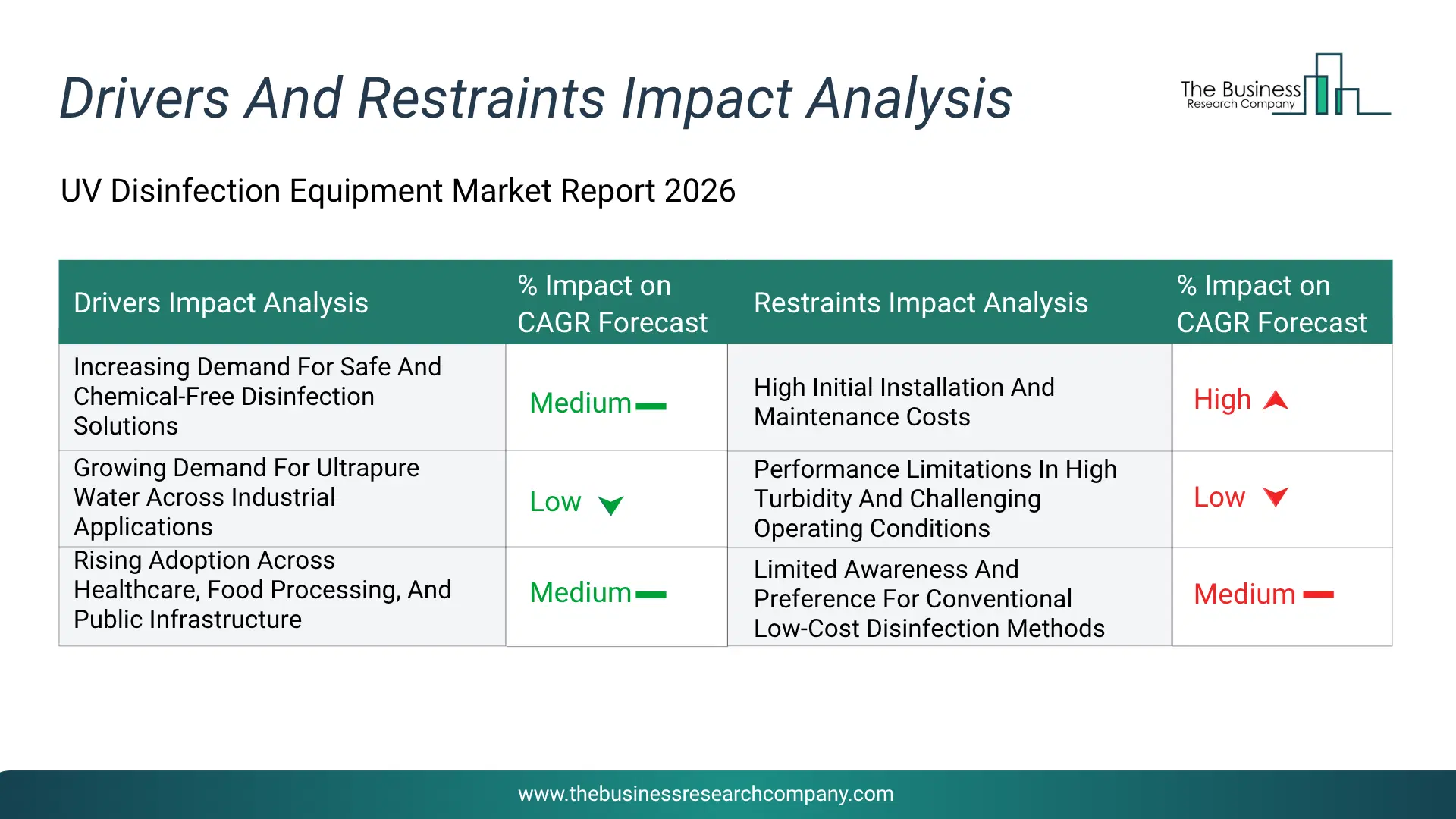
Infographic Chart Showing Key Market Drivers Analysis And Restraints For Uv Disinfection Equipment Market
The chart presents an impact analysis of key drivers and restraints, quantifying their relative influence on the market's growth rate and helping assess the balance between growth enablers and limiting factors. This chart offers a high-level perspective; the full report contains more detailed insights.
How Will The Drivers Impact Growth In The Global UV Disinfection Equipment Market?
• Increasing Demand For Safe And Chemical-Free Disinfection Solutions (Medium) – During the forecast period, the increasing demand for safe and chemical-free disinfection solutions is expected to emerge as a major factor driving the expansion of the UV disinfection equipment market by 2030. organizations are increasingly replacing conventional chemical disinfectants with UV-based systems that effectively neutralize bacteria, viruses, fungi, and other microorganisms without generating harmful by-products or affecting water and air quality. growing environmental concerns, stricter regulations on chemical usage, and rising emphasis on sustainable sanitation practices are further accelerating the deployment of UV disinfection technologies across municipal, commercial, industrial, and residential applications. • Growing Demand For Ultrapure Water Across Industrial Applications (Low) – During the forecast period, the growing demand for ultrapure water across industrial applications is expected to emerge as a major factor driving the expansion of the UV disinfection equipment market by 2030. industries including pharmaceuticals, biotechnology, semiconductor manufacturing, electronics, and food and beverage processing increasingly depend on high-purity water to maintain production quality and comply with rigorous operational standards. uV disinfection systems provide reliable microbial control without introducing residual chemicals, making them well suited for sensitive manufacturing environments while supporting stricter industrial water quality requirements. • Rising Adoption Across Healthcare, Food Processing, And Public Infrastructure (Medium) – During the forecast period, the rising adoption across healthcare, food processing, and public infrastructure is expected to act as a key growth catalyst for the UV disinfection equipment market by 2030. hospitals, food manufacturing facilities, transportation hubs, educational institutions, hotels, and public buildings are increasingly deploying UV systems to disinfect air, water, surfaces, and equipment while improving hygiene standards and reducing pathogen transmission. continued investments in public health infrastructure and infection prevention measures are further supporting widespread implementation of UV disinfection technologies.How Will The Restraints Impact Growth In The Global UV Disinfection Equipment Market?
• High Initial Installation And Maintenance Costs (Medium) – During the forecast period, high Initial Installation And Maintenance Costs remain one of the most significant restraints limiting the widespread adoption of UV disinfection equipment. High-performance UV systems require advanced reactors, UV lamps, quartz sleeves, electronic control units, monitoring sensors, and automated cleaning mechanisms, resulting in considerable upfront investment. In addition to installation expenses, operators must periodically replace UV lamps as their intensity declines over time, clean quartz sleeves to prevent scaling and fouling, calibrate monitoring equipment, and perform regular maintenance to ensure optimal performance. These recurring operational costs increase the total cost of ownership throughout the equipment lifecycle. Small and medium-sized enterprises, municipal authorities with budget constraints, and organizations in developing countries often find these investments difficult to justify compared to lower-cost conventional chemical disinfection methods, slowing market penetration despite the technology's long-term benefits. • Performance Limitations In High Turbidity And Challenging Operating Conditions (Low) – During the forecast period, performance Limitations In High Turbidity And Challenging Operating Conditions continue to restrict the application of UV disinfection technology in certain environments. UV radiation is most effective when it can directly penetrate water or air and reach microorganisms. However, high levels of suspended solids, turbidity, dissolved organic matter, scaling, or particulate contamination can reduce UV light transmission, preventing adequate microbial exposure and lowering disinfection efficiency. In wastewater treatment plants and industrial processes with variable water quality, additional pretreatment systems such as filtration or sedimentation are often required before UV treatment can be effectively applied. These additional treatment stages increase system complexity, installation costs, energy consumption, and maintenance requirements. Consequently, some organizations choose alternative or combined disinfection methods, limiting the adoption of standalone UV systems in challenging operating environments. • Limited Awareness And Preference For Conventional Low-Cost Disinfection Methods (Medium) – During the forecast period, limited Awareness And Preference For Conventional Low-Cost Disinfection Methods continue to restrain market growth, particularly across developing and price-sensitive regions. Many municipal authorities, industrial facilities, and commercial organizations remain more familiar with traditional chemical disinfectants such as chlorine because these methods have been used for decades, require lower initial investment, and are supported by established operating procedures. In addition, limited technical expertise, lack of trained personnel, and insufficient awareness regarding the long-term environmental, operational, and health benefits of UV technology often discourage organizations from switching to UV-based systems. Concerns regarding system maintenance, electricity requirements, and the inability of UV systems to provide residual disinfection further contribute to slower adoption. As a result, despite increasing global recognition of UV technology's effectiveness and sustainability, market expansion is restrained in regions where purchasing decisions are driven primarily by short-term cost considerations rather than lifecycle performance and environmental benefits.Key Players In The Global UV Disinfection Equipment Market
Major companies operating in the uv disinfection equipment market are American Ultraviolet Company, Atlantic Ultraviolet Corporation, Xenex Disinfection Services LLC, Trojan Technologies, Evoqua Water Technologies LLC, Advanced UV Inc., Atlantium Technologies Ltd., Dr. Hönle AG, Enaqua LLC, Australian Ultra Violet Services Pty. Ltd., Koninklijke Philips N.V., Lumalier Corporation, S.I.T.A. Srl, Hitech Ultraviolet Pvt. Ltd., Aquionics International Sdn Bhd, Halma plc, Danaher Corporation, Germitec S.A.S., Aquafine Corporation, UV Pure Technologies Inc., UV-Technik Speziallampen GmbH, UVO3 Ltd., UV-Guard Australia Pty Ltd, UV-C Solutions LLC, Sanuvox Technologies Inc.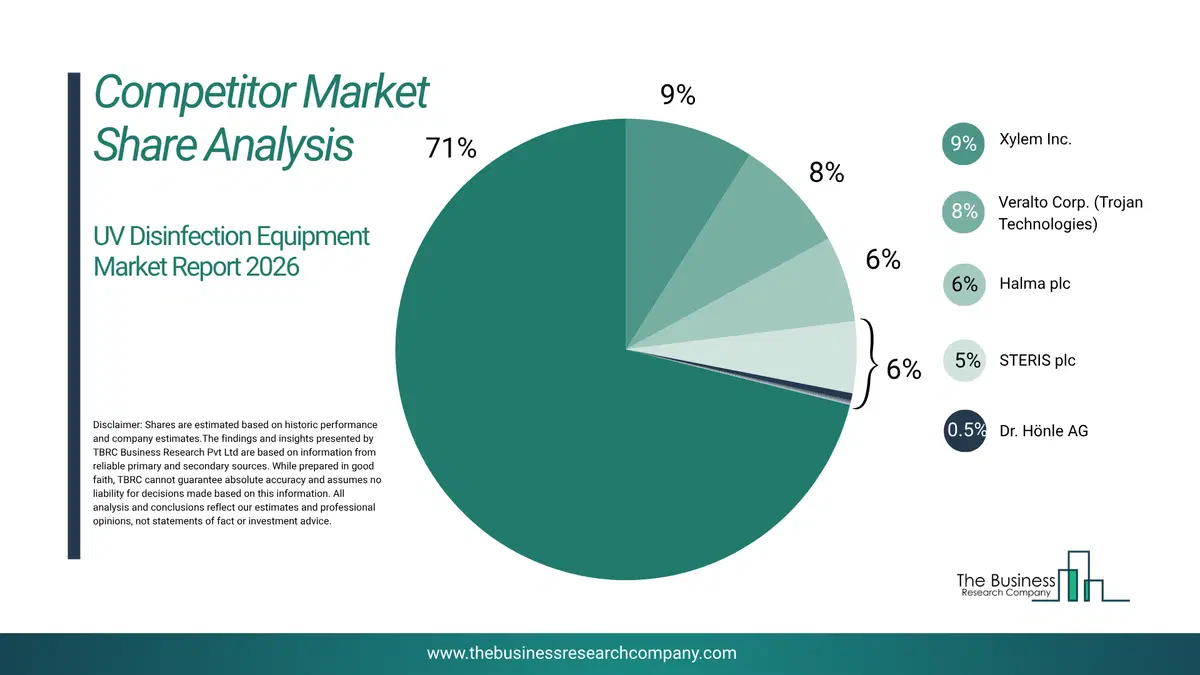
This chart is for illustrative purposes; the full report includes a detailed competitor analysis and comprehensive overview of the top 10 companies in the market.
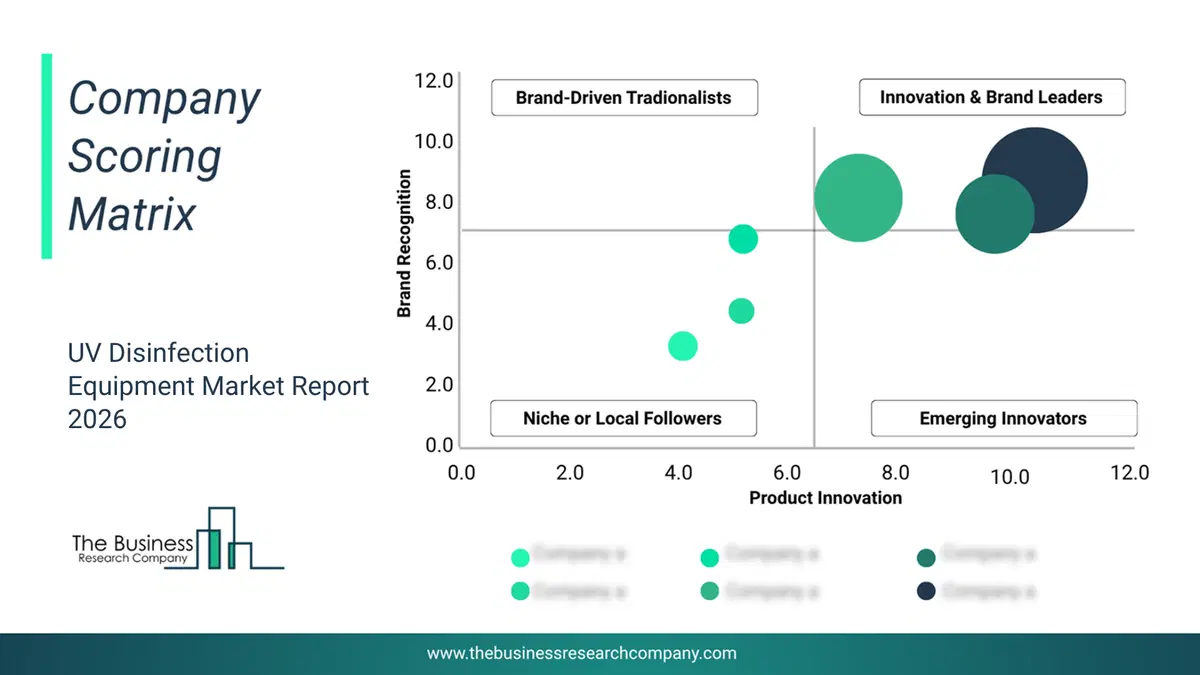
This chart maps companies by product innovation and brand strength, with bubble size indicating relative revenue, helping identify market leaders, challengers, and niche players. This is an illustrative chart; the full report provides a complete and accurate competitive analysis.
Global UV Disinfection Equipment Market Trends and Insights
Major companies operating in the UV disinfection equipment market are launching innovative robotic systems, such as robotic disinfection systems, to provide smart disinfection solutions. A robotic disinfection system refers to an automated technology designed for the purpose of disinfecting and sanitizing surfaces in various environments. For instance, in March 2023, Tru-D SmartUVC, a US-based PDI Healthcare environment company, launched Tru-D iQ system, a revolutionary robotic disinfection system. The Tru-D iQ system stands out with its adaptive connected products, including the Tower, Scout, and Controller, catering to various room sizes for precise UVC disinfection. Utilizing Sensor360 technology, it uniquely measures reflected UVC energy, ensuring a precise dose for effective disinfection of hard surfaces. Engineered to combat diverse microorganisms, the system, including advanced features like Dynamic Dosing and Flux Acceleration, and an auto-deployed bulb array, contributing to improved cycle times and enhanced performance.What Are Latest Mergers And Acquisitions In The UV Disinfection Equipment Market?
In January 2024, Excelitas Technologies Corp. a US-based photonics technology company, acquired Noblelight for an undisclosed amount. This aims to enhance Excelitas's position in the global specialty lighting markets by integrating Noblelight's expertise and technology portfolio, thereby offering a broader range of innovative photonic solutions across various applications. Noblelight is a Germany-based manufacturer of UV lamps for water disinfection, UV-water treatment and UV-water disinfection.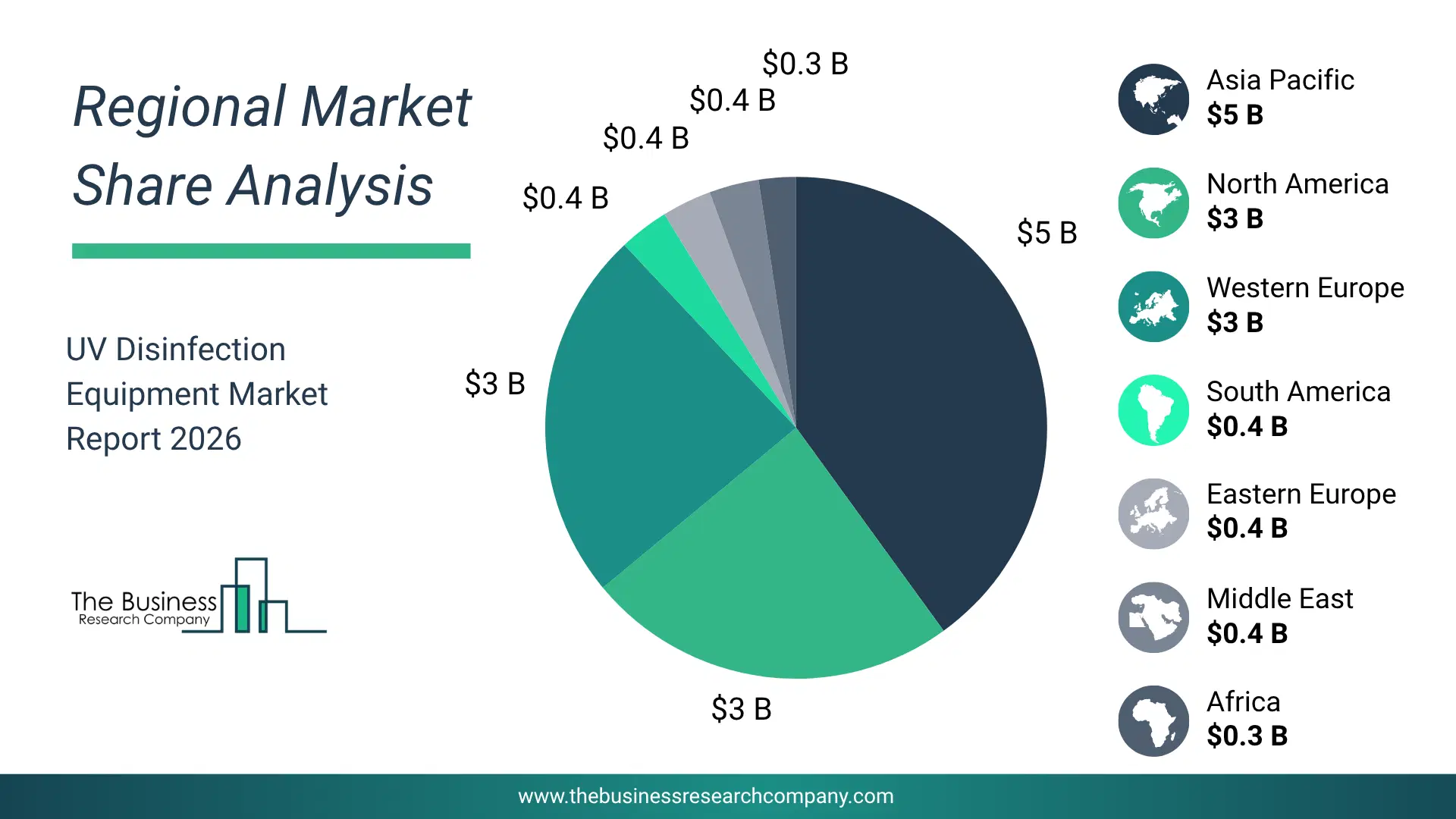
Regional Outlook
Asia-Pacific was the largest region in the UV disinfection equipment market share in 2025. Asia-Pacific is expected to be the fastest-growing region in the forecast period. The regions covered in this market report are Asia-Pacific, South East Asia, Western Europe, Eastern Europe, North America, South America, Middle East, Africa The countries covered in this market report are Australia, Brazil, China, France, Germany, India, Indonesia, Japan, Taiwan, Russia, South Korea, UK, USA, Canada, Italy, Spain.What Defines the UV Disinfection Equipment Market?
The UV disinfection equipment market consists of sales of handheld sanitization devices, area UV disinfection systems, paper disinfectors, currency sanitizing devices, and language disinfectors. Values in this market are ‘factory gate’ values, that is the value of goods sold by the manufacturers or creators of the goods, whether to other entities (including downstream manufacturers, wholesalers, distributors, and retailers) or directly to end customers. The value of goods in this market includes related services sold by the creators of the goods.How is Market Value Defined and Measured?
The market value is defined as the revenues that enterprises gain from the sale of goods and/or services within the specified market and geography through sales, grants, or donations in terms of the currency (in USD unless otherwise specified). The revenues for a specified geography are consumption values that are revenues generated by organizations in the specified geography within the market, irrespective of where they are produced. It does not include revenues from resales along the supply chain, either further along the supply chain or as part of other products.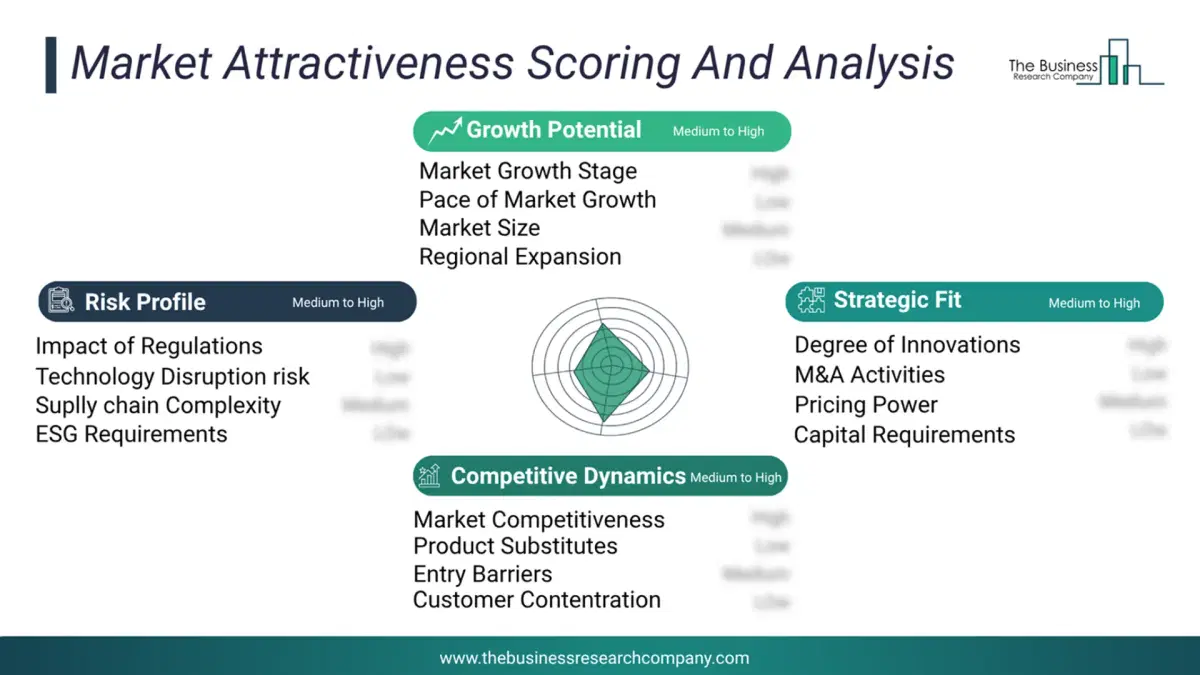
This chart presents market attractiveness based on a quantitative evaluation of growth, competition, strategic alignment, and risk, offering a clear view of opportunity areas for decision-making. This chart is for illustrative purposes; the full report contains the complete analysis.
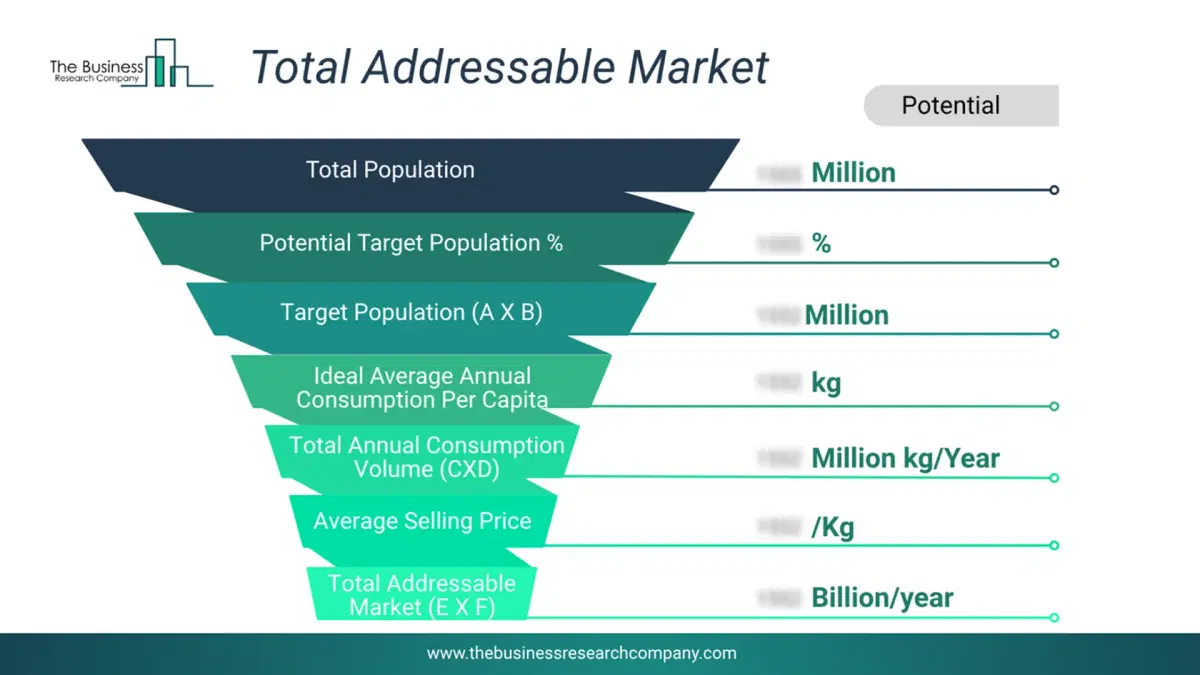
This chart highlights the Total Addressable Market (TAM) by estimating the maximum revenue opportunity using an assumption-driven approach, supporting strategic planning and opportunity sizing across markets. The chart is illustrative; the full report provides a more comprehensive analysis.
What Key Data and Analysis Are Included in the UV Disinfection Equipment Market Report 2026?
The uv disinfection equipment market research report is one of a series of new reports from The Business Research Company that provides market statistics, including industry global market size, regional shares, competitors with the market share, detailed market segments, market trends and opportunities, and any further data you may need to thrive in the uv disinfection equipment industry. The market research report delivers a complete perspective of everything you need, with an in-depth analysis of the current and future state of the industry.UV Disinfection Equipment Market Report Forecast Analysis
| Report Attribute | Details |
|---|---|
| Market Size Value In 2026 | $6.92 billion |
| Revenue Forecast In 2030 | $12.5 billion |
| Growth Rate | CAGR of 15.9% from 2026 to 2030 |
| Base Year For Estimation | 2025 |
| Actual Estimates/Historical Data | 2020-2025 |
| Forecast Period | 2026 - 2030 |
| Market Representation | Revenue in USD Billion and CAGR from 2026 to 2030 |
| Segments Covered | Component, Power Rating, Application, End User |
| Regional Scope | Asia-Pacific, Western Europe, Eastern Europe, North America, South America, Middle East, Africa |
| Country Scope | The countries covered in the report are Australia, Brazil, China, France, Germany, India, Indonesia, Japan, Taiwan, Russia, South Korea, UK, USA, Canada, Italy, Spain. |
| Key Companies Profiled | American Ultraviolet Company, Atlantic Ultraviolet Corporation, Xenex Disinfection Services LLC, Trojan Technologies, Evoqua Water Technologies LLC, Advanced UV Inc., Atlantium Technologies Ltd., Dr. Hönle AG, Enaqua LLC, Australian Ultra Violet Services Pty. Ltd., Koninklijke Philips N.V., Lumalier Corporation, S.I.T.A. Srl, Hitech Ultraviolet Pvt. Ltd., Aquionics International Sdn Bhd, Halma plc, Danaher Corporation, Germitec S.A.S., Aquafine Corporation, UV Pure Technologies Inc., UV-Technik Speziallampen GmbH, UVO3 Ltd., UV-Guard Australia Pty Ltd, UV-C Solutions LLC, Sanuvox Technologies Inc. |
| Customization Scope | Request for Customization |
| Pricing And Purchase Options | Explore Purchase Options |