
Vascular Endothelial Growth Factor (VEGF) Inhibitor Market Report 2026
Global Outlook – By Drugs Type (Avastin, Tecentriq, Lucentis, Cometriq, Eylea, Other Drug Types), By Route Of Administration (Oral, Intravenous, Intravitreal), By Application (Oncology, Ophthalmology, Other Applications) – Market Size, Trends, Strategies, and Forecast to 2030
Vascular Endothelial Growth Factor (VEGF) Inhibitor Market Overview
• Vascular Endothelial Growth Factor (VEGF) Inhibitor market size has reached to $11.3 billion in 2025 • Expected to grow to $16.23 billion in 2030 at a compound annual growth rate (CAGR) of 7.6% • Growth Driver: The Increasing Prevalence Of Cancer And Macular Degeneration Diseases Drives The VEGF Inhibitor Market Growth • Market Trend: Collaborations Drive Product Portfolio Expansion • North America was the largest region in 2025 and Middle East is the fastest growing region.What Is Covered Under Vascular Endothelial Growth Factor (VEGF) Inhibitor Market?
A VEGF inhibitor is an inhibitor that prevents planned cell death by acting as an anti-apoptotic factor for hematopoietic cells. VEGF increases vascular permeability, which may make it easier for tumors to spread via the bloodstream and receive more oxygen and nutrients. The main types of vascular endothelial growth factor (VEGF) inhibitors are Avastin, Tecentriq, Cometriq, Eylea, and others. Avastin is a medication that helps people with wet age-related macular degeneration (AMD). It can also be employed to treat diabetic eye problems and other retinal issues. It's administered into the eye to help delay the loss of eyesight caused by certain disorders. The different routes of administration include oral, and intravenous and are used in oncology, ophthalmology, and others.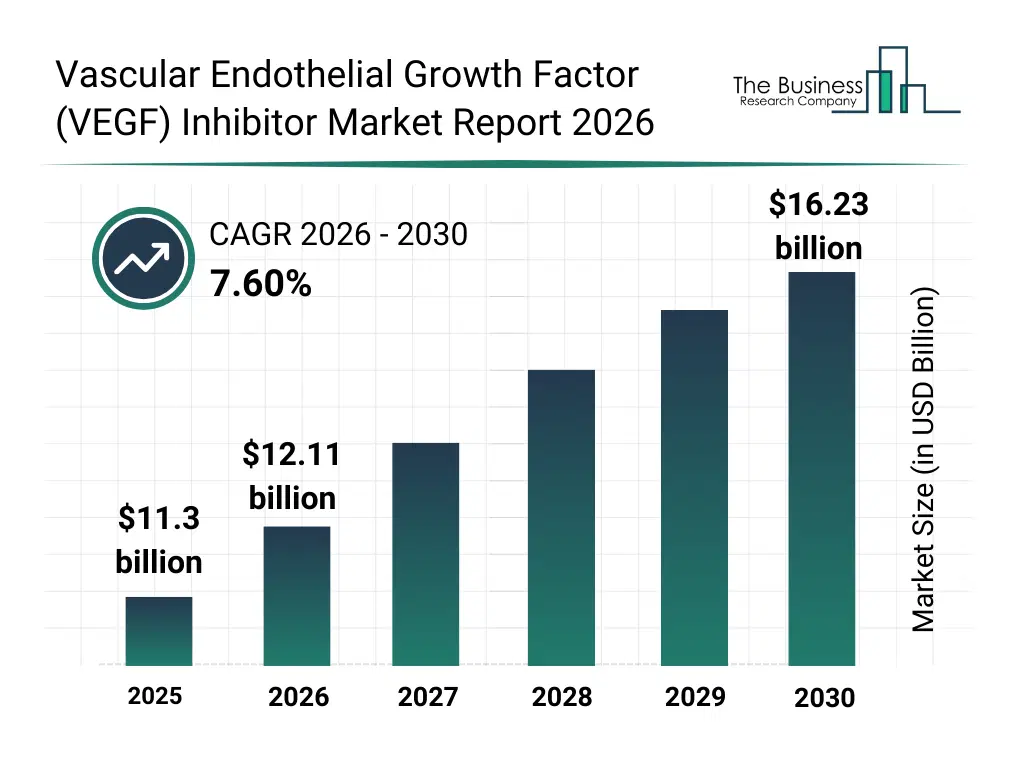
What Is The Vascular Endothelial Growth Factor (VEGF) Inhibitor Market Size and Share 2026?
The vascular endothelial growth factor (vegf) inhibitor market size has grown strongly in recent years. It will grow from $11.3 billion in 2025 to $12.11 billion in 2026 at a compound annual growth rate (CAGR) of 7.2%. The growth in the historic period can be attributed to rising incidence of cancer and retinal disorders, limited treatment options before monoclonal antibodies, growing awareness of anti-angiogenic therapy benefits, increasing physician adoption of targeted therapies, regulatory approvals of first-generation vegf inhibitors.What Is The Vascular Endothelial Growth Factor (VEGF) Inhibitor Market Growth Forecast?
The vascular endothelial growth factor (vegf) inhibitor market size is expected to see strong growth in the next few years. It will grow to $16.23 billion in 2030 at a compound annual growth rate (CAGR) of 7.6%. The growth in the forecast period can be attributed to development of next-generation vegf inhibitors, expansion in immuno-oncology combinations, increasing adoption of personalized medicine, rising investments in ophthalmic drug development, integration of digital monitoring and AI-based treatment assessment. Major trends in the forecast period include rising adoption of vegf inhibitors in oncology and ophthalmology, increasing development of monoclonal antibodies and anti-angiogenic therapies, growth in intravitreal and intravenous administration routes, expansion of personalized medicine and targeted therapy approaches, increasing clinical trials and research for novel vegf inhibitors.
Global Vascular Endothelial Growth Factor (VEGF) Inhibitor Market Segmentation
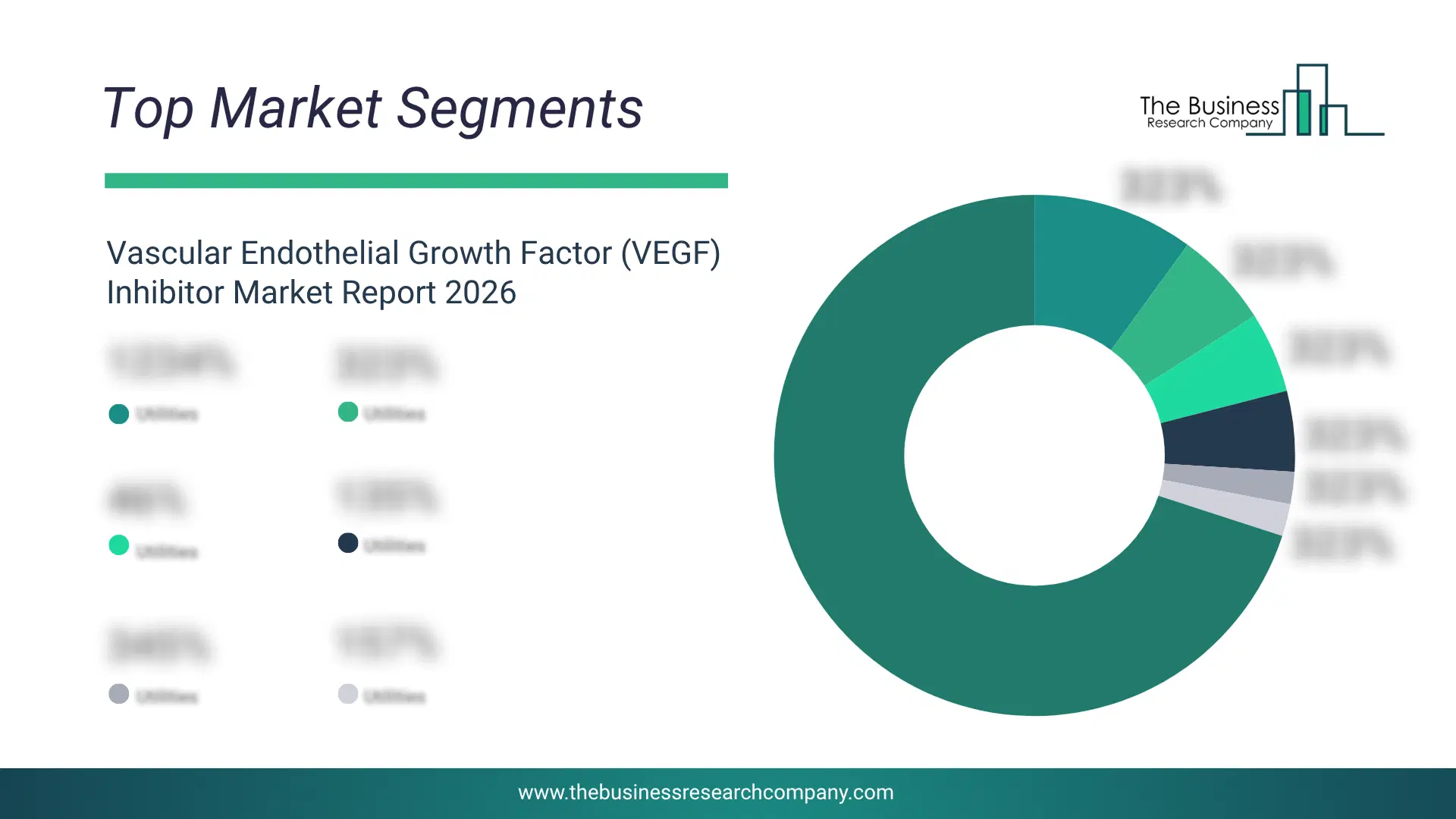
1) By Drugs Type: Avastin, Tecentriq, Lucentis, Cometriq, Eylea, Other Drug Types 2) By Route Of Administration: Oral, Intravenous, Intravitreal 3) By Application: Oncology, Ophthalmology, Other Applications Subsegments: 1) By Avastin: Oncology Applications, Ophthalmology Applications 2) By Tecentriq: Non-Small Cell Lung Cancer, Small Cell Lung Cancer, Bladder Cancer, Triple-Negative Breast Cancer 3) By Lucentis: Wet Age-Related Macular Degeneration (AMD), Diabetic Retinopathy, Retinal Vein Occlusion 4) By Cometriq: Medullary Thyroid Cancer, Renal Cell Carcinoma 5) By Eylea: Wet Age-Related Macular Degeneration (AMD), Diabetic Macular Edema (DME), Retinal Vein Occlusion (RVO) 6) By Other Drug Types: Immuno-Oncology Drugs, Anti-Angiogenic Agents, Other Monoclonal AntibodiesWhat Is The Driver Of The Vascular Endothelial Growth Factor (VEGF) Inhibitor Market?
The growing prevalence of cancer and macular degeneration is expected to propel the growth of the VEGF inhibitor market going forward. Cancer is a disease in which abnormal cells grow uncontrollably, potentially spreading to other parts of the body, while macular degeneration is a medical condition that leads to deterioration of the central portion of the retina, affecting vision. The rise in prevalence of these conditions is fueled by factors such as an aging population and lifestyle-related risks, leading to increased demand for effective treatments and healthcare solutions. Vascular endothelial growth factor (VEGF) Inhibitors help combat cancer by blocking the formation of new blood vessels that tumors need to grow and spread, thereby restricting tumor growth and metastasis. For instance, February 2024, according to the World Health Organization, a Switzerland-based international organization specializing in global health policy and public health initiatives, over 35 million new cancer cases are predicted in 2050, a 77% increase from the estimated 20 million cases in 2022. Therefore, the growing prevalence of cancer and macular degeneration is driving the growth of the VEGF inhibitor market.Key Players In The Global Vascular Endothelial Growth Factor (VEGF) Inhibitor Market
Major companies operating in the vascular endothelial growth factor (vegf) inhibitor market are F. Hoffmann-La Roche AG, Bayer AG, Regeneron Pharmaceuticals Inc., AstraZeneca Plc., Novartis AG, Pfizer Inc., Eli Lilly and Company, Exelixis Inc., Amgen Inc., Sanofi S.A., Cipla Limited, Biocon, Dr. Reddy's Laboratories, Innovent Biologics, Daiichi Sankyo, Chugai Pharmaceutical Co. Ltd, Boehringer Ingelheim International GmbH, GlaxoSmithKline plc, Ipsen, Oxurion, Pharmstandard Group, Zentiva, Coherus BioSciences Inc., AVEO pharmaceuticals, Eisai Co. Ltd.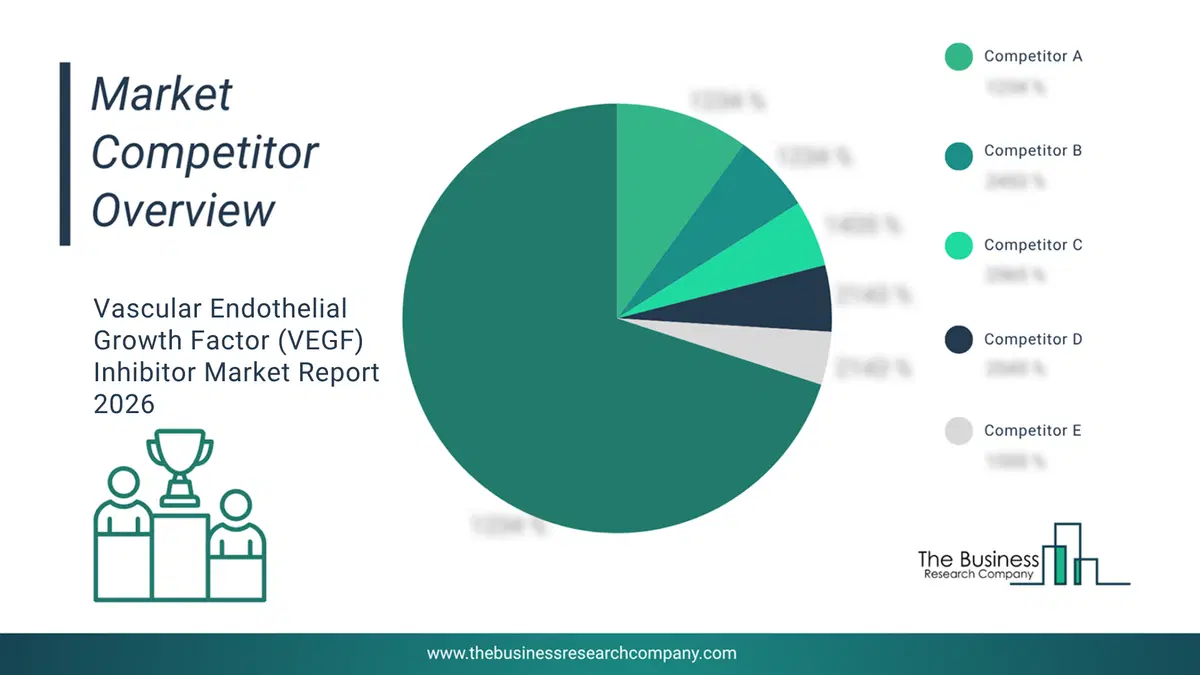
This chart is for illustrative purposes; the full report includes a detailed competitor analysis and comprehensive overview of the top 10 companies in the market.
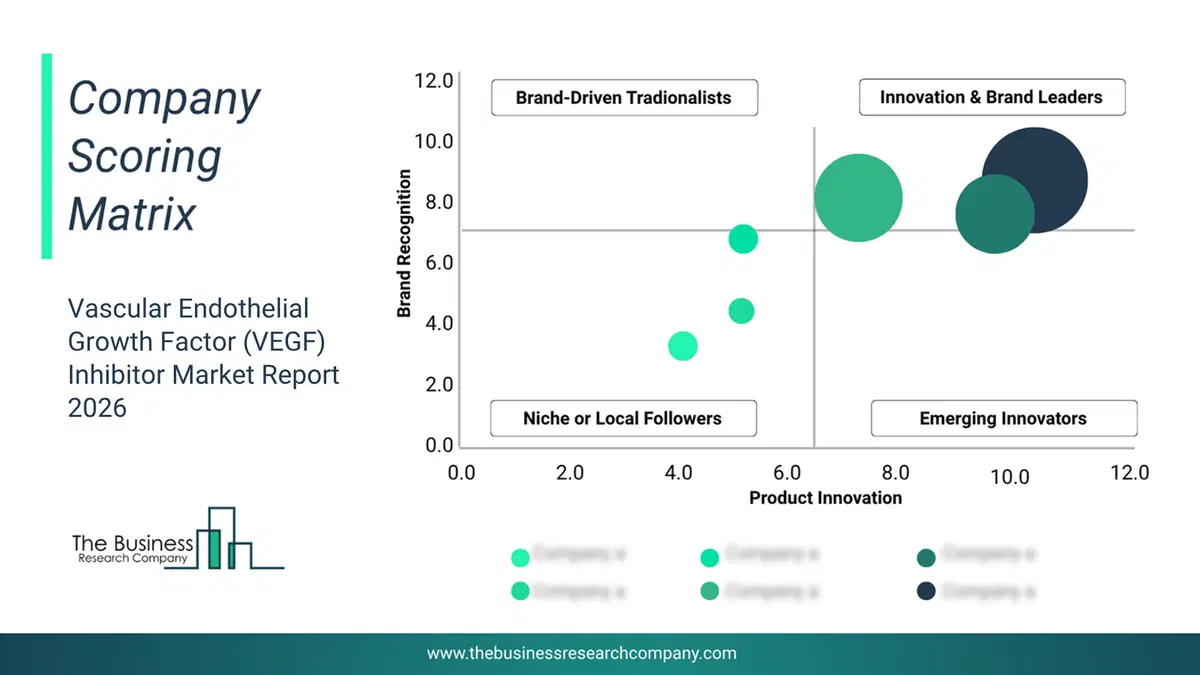
This chart maps companies by product innovation and brand strength, with bubble size indicating relative revenue, helping identify market leaders, challengers, and niche players. This is an illustrative chart; the full report provides a complete and accurate competitive analysis.
Global Vascular Endothelial Growth Factor (VEGF) Inhibitor Market Trends and Insights
Major companies operating in the VEGF inhibitor market are focusing on developing innovative ophthalmic treatments, such as higher-concentration intravitreal injection solutions to extend dosing intervals and reduce treatment burden for patients. Higher-concentration intravitreal injection solutions are eye medications with an increased amount of active drug per dose, helping reduce the frequency of injections while maintaining effectiveness and easing the treatment burden for patients. For instance, in April 2024, Santen Pharmaceutical Co. Ltd., a Japan-based pharmaceutical company, in a partnership with Bayer Yakuhin, a Japan-based pharmaceutical and life sciences company, launched the Ophthalmic VEGF Inhibitor Eylea 8mg Solution for Intravitreal Injection 114.3 mg/mL. These are standard treatments for conditions such as age-related macular degeneration (nAMD) and diabetic macular edema (DME), which can lead to blindness. Eylea 8mg, with a higher concentration than its predecessor, offers an extended dosing interval of up to 16 weeks, reducing the frequency of intravitreal injections while maintaining efficacy and safety. This advancement aims to lessen the treatment burden on patients and set a new standard of care. It is a strategic partnership aimed at expanding the reach and availability of this innovative ophthalmic treatment.What Are Latest Mergers And Acquisitions In The Vascular Endothelial Growth Factor (VEGF) Inhibitor Market?
In January 2023, Takeda Pharmaceutical Company Limited, a Japan-based pharmaceutical company, acquired the worldwide license of Fruquintinib, a highly selective oral VEGFR1/2/3 tyrosine kinase inhibitor, from HUTCHMED Limited for an undisclosed amount. In accordance with the terms of the agreement, Takeda will be granted a sole global license to create and market fruquintinib for all indications and regions outside of mainland China, Hong Kong, and Macau. HUTCHMED Limited is a China-based pharmaceutical company that develops vascular endothelial growth factor receptor (VEGFR) 1/2/3.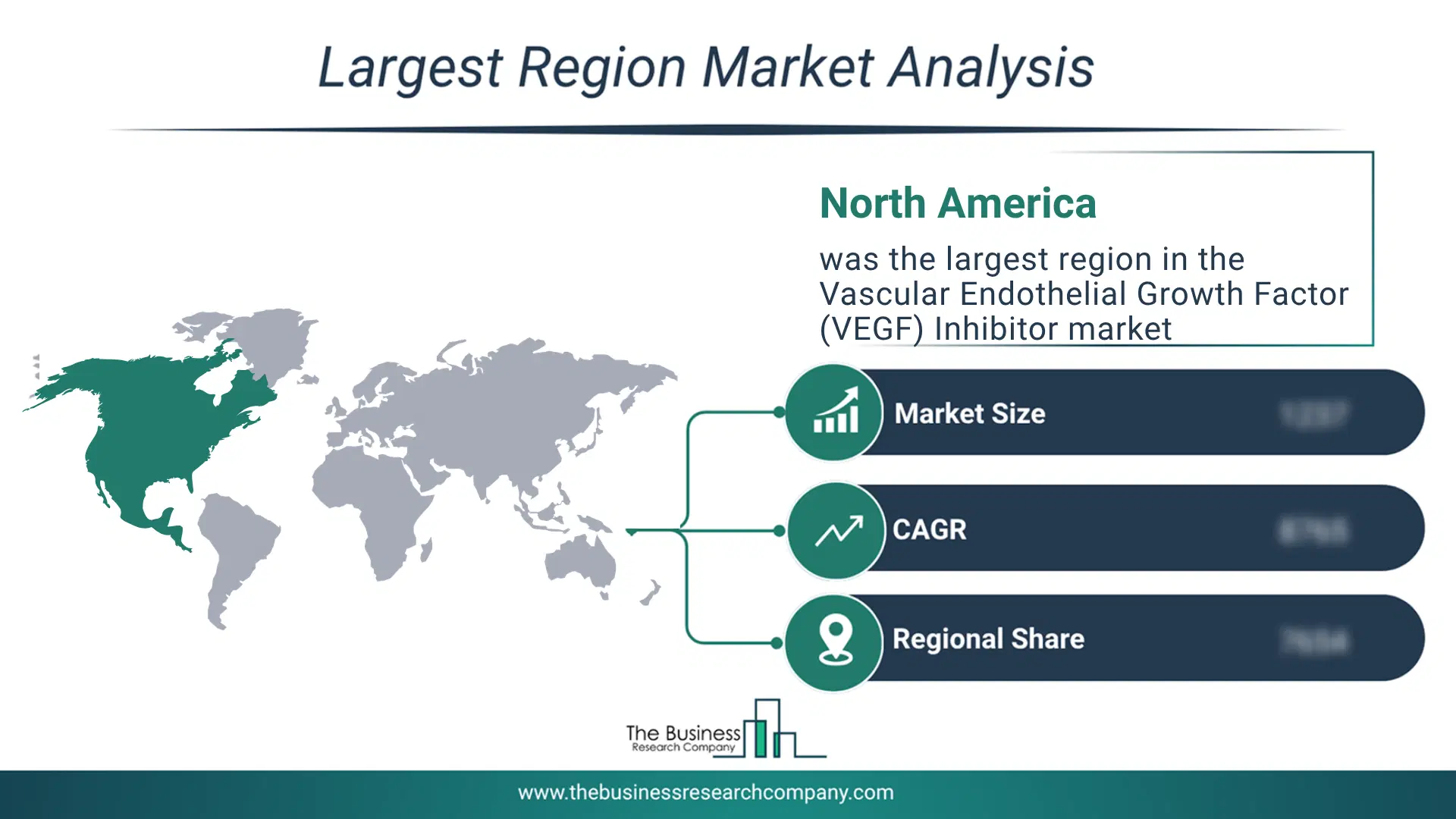
Regional Insights
North America was the largest region in the vascular endothelial growth factor (VEGF) inhibitor market in 2025. Middle East is expected to be the fastest-growing region in the vascular endothelial growth factor (VEGF) inhibitor market share during the forecast period. The regions covered in this market report are Asia-Pacific, South East Asia, Western Europe, Eastern Europe, North America, South America, Middle East, Africa. The countries covered in this market report are Australia, Brazil, China, France, Germany, India, Indonesia, Japan, Taiwan, Russia, South Korea, UK, USA, Canada, Italy, Spain.What Defines the Vascular Endothelial Growth Factor (VEGF) Inhibitor Market?
The vascular endothelial growth factor (VEGF) inhibitor market consists of sales of nexavar, sunitinib, nilotinib, pazopanib, and dasatinib. Values in this market are factory gate values, that is the value of goods sold by the manufacturers or creators of the goods, whether to other entities (including downstream manufacturers, wholesalers, distributors and retailers) or directly to end customers. The value of goods in this market includes related services sold by the creators of the goods.How is Market Value Defined and Measured?
The market value is defined as the revenues that enterprises gain from the sale of goods and/or services within the specified market and geography through sales, grants, or donations in terms of the currency (in USD unless otherwise specified). The revenues for a specified geography are consumption values that are revenues generated by organizations in the specified geography within the market, irrespective of where they are produced. It does not include revenues from resales along the supply chain, either further along the supply chain or as part of other products.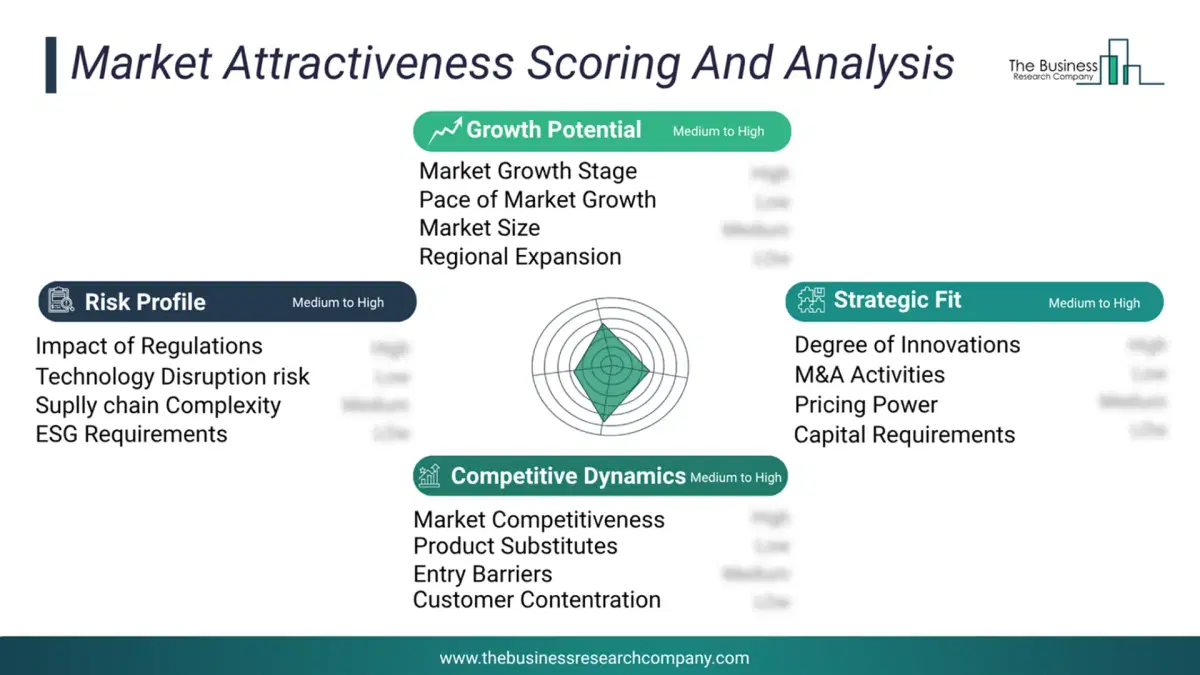
This chart presents market attractiveness based on a quantitative evaluation of growth, competition, strategic alignment, and risk, offering a clear view of opportunity areas for decision-making. This chart is for illustrative purposes; the full report contains the complete analysis.
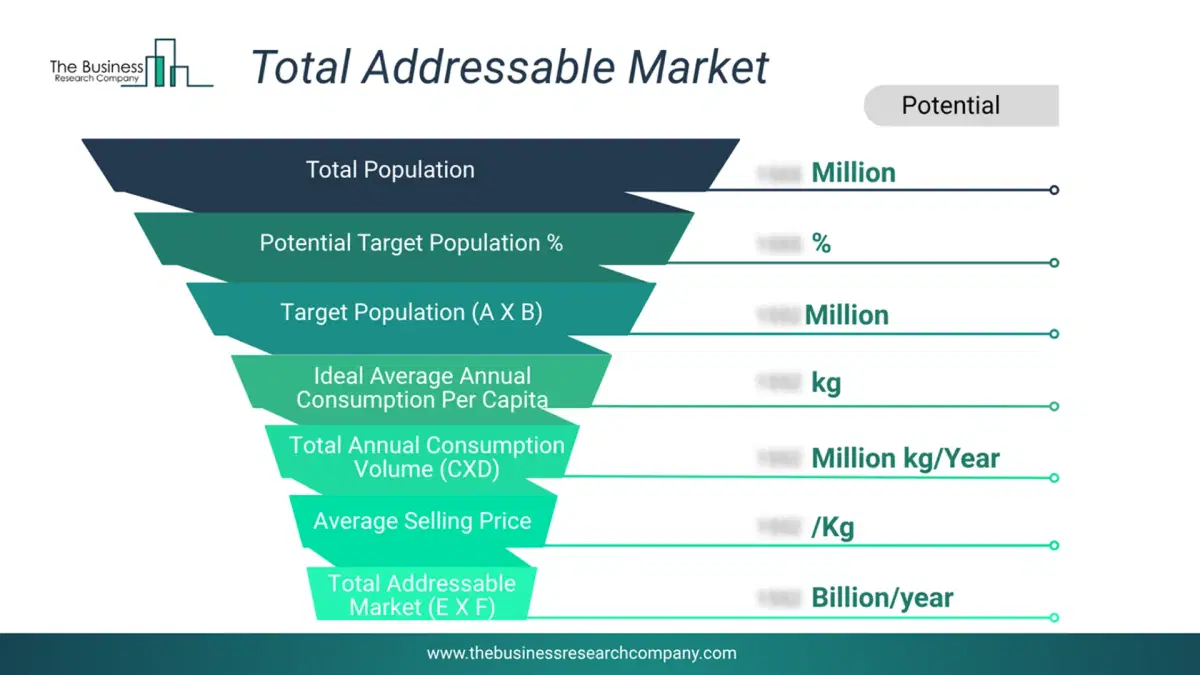
This chart highlights the Total Addressable Market (TAM) by estimating the maximum revenue opportunity using an assumption-driven approach, supporting strategic planning and opportunity sizing across markets. The chart is illustrative; the full report provides a more comprehensive analysis.
What Key Data and Analysis Are Included in the Vascular Endothelial Growth Factor (VEGF) Inhibitor Market Report 2026?
The vascular endothelial growth factor (vegf) inhibitor market research report is one of a series of new reports from The Business Research Company that provides market statistics, including industry global market size, regional shares, competitors with the market share, detailed market segments, market trends and opportunities, and any further data you may need to thrive in the vascular endothelial growth factor (vegf) inhibitor industry. The market research report delivers a complete perspective of everything you need, with an in-depth analysis of the current and future state of the industry.Vascular Endothelial Growth Factor (VEGF) Inhibitor Market Report Forecast Analysis
| Report Attribute | Details |
|---|---|
| Market Size Value In 2026 | $12.11 billion |
| Revenue Forecast In 2030 | $16.23 billion |
| Growth Rate | CAGR of 7.2% from 2026 to 2030 |
| Base Year For Estimation | 2025 |
| Actual Estimates/Historical Data | 2020-2025 |
| Forecast Period | 2026 - 2030 |
| Market Representation | Revenue in USD Billion and CAGR from 2026 to 2030 |
| Segments Covered | Drugs Type, Route Of Administration, Application |
| Regional Scope | Asia-Pacific, Western Europe, Eastern Europe, North America, South America, Middle East, Africa |
| Country Scope | The countries covered in the report are Australia, Brazil, China, France, Germany, India, Indonesia, Japan, Taiwan, Russia, South Korea, UK, USA, Canada, Italy, Spain. |
| Key Companies Profiled | F. Hoffmann-La Roche AG, Bayer AG, Regeneron Pharmaceuticals Inc., AstraZeneca Plc., Novartis AG, Pfizer Inc., Eli Lilly and Company, Exelixis Inc., Amgen Inc., Sanofi S.A., Cipla Limited, Biocon, Dr. Reddy's Laboratories, Innovent Biologics, Daiichi Sankyo, Chugai Pharmaceutical Co. Ltd, Boehringer Ingelheim International GmbH, GlaxoSmithKline plc, Ipsen, Oxurion, Pharmstandard Group, Zentiva, Coherus BioSciences Inc., AVEO pharmaceuticals, Eisai Co. Ltd. |
| Customization Scope | Request for Customization |
| Pricing And Purchase Options | Explore Purchase Options |