

Vertical Farming Market Report 2026
Global Outlook – By Component (Irrigation Component, Lighting, Sensor, Climate Control, Building Material, Other Components), By Structure (Shipping Container, Building-Based), By Type (Hydroponics, Aeroponics, Aquaponics), By Crop Type (Leafy Green, Pollinated Plants, Nutraceutical Plant), By Application (Indoor, Outdoor) – Market Size, Trends, Strategies, and Forecast to 2030
Vertical Farming Market Overview
• Vertical Farming market size has reached to $9.55 billion in 2025 • Expected to grow to $24.52 billion in 2030 at a compound annual growth rate (CAGR) of 20.5% • Growth Driver: The Increasing Demand For Organic Food Is Driving The Market Due To Rising Health And Sustainability Awareness • Market Trend: Technological Advancements And Sustainable Practices In Vertical Farming • North America was the largest region in 2025 and Europe is the fastest growing region.Market Gains By 2030 – Top Opportunities By Segment
Market Gain identifies the most promising market opportunities by highlighting the segments or products expected to generate the highest incremental revenue growth over the next five years.
What Is Covered Under Vertical Farming Market?
A vertical farming refers the process of producing vegetables in layers that are piled vertically. The technique may employ hydroponic, aeroponic, or soil growing techniques. In tough circumstances, such as those where arable land is few or unavailable, vertical farms try to generate food. It is a technique for growing food in water without soil using mineral nutrition solutions. The main benefits of this approach are that it lessens soil-related cultivation issues such soil-borne pests, illnesses, and insects. The main types of vertical farming are hydroponics, aeroponics, and aquaponics. Hydroponics vertical farming refers to the cultivation of plants without using soil. Hydroponic flowers, herbs, and vegetables are planted in inert growing media into vertical farming techniques and are supplied with nutrient-rich solutions, oxygen, and water. The components of vertical farming are irrigation component, lighting, sensor, climate control, building material, and others. These have different structures such as shipping container and building-based. The various crop types are leafy green, pollinated plants, and nutraceutical plant. Vertical farming has several applications such in indoor and outdoor farming.
What Is The Vertical Farming Market Size and Share 2026?
The vertical farming market size has grown exponentially in recent years. It will grow from $9.55 billion in 2025 to $11.63 billion in 2026 at a compound annual growth rate (CAGR) of 21.8%. The growth in the historic period can be attributed to limited availability of arable land, rising urban population density, early adoption of hydroponic systems, demand for pesticide-free produce, growth in indoor farming practices.What Is The Vertical Farming Market Growth Forecast?
The vertical farming market size is expected to see exponential growth in the next few years. It will grow to $24.52 billion in 2030 at a compound annual growth rate (CAGR) of 20.5%. The growth in the forecast period can be attributed to increasing focus on food security, expansion of climate-resilient farming, rising demand for high-yield vertical farms, adoption of resource-efficient cultivation methods, growth in urban commercial farming projects. Major trends in the forecast period include increasing adoption of layer-based crop production, rising use of hydroponic and aeroponic systems, growing focus on soil-free cultivation techniques, expansion of controlled environment farming, rising demand for pollution-free urban cultivation.
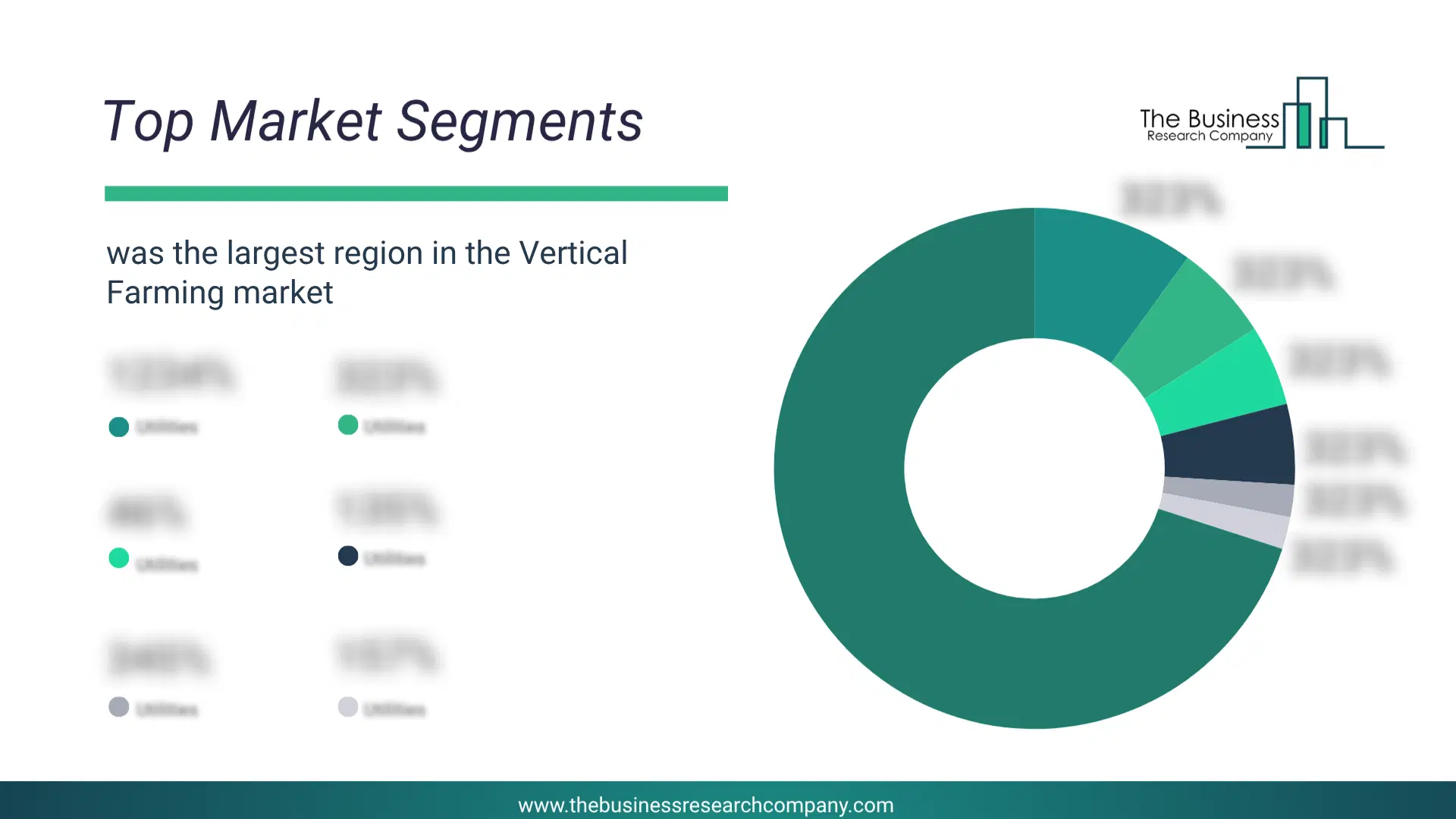
Global Vertical Farming Market Segmentation
1) By Component: Irrigation Component, Lighting, Sensor, Climate Control, Building Material, Other Components 2) By Structure: Shipping Container, Building-Based 3) By Type: Hydroponics, Aeroponics, Aquaponics 4) By Crop Type: Leafy Green, Pollinated Plants, Nutraceutical Plant 5) By Application: Indoor, Outdoor Subsegments: 1) By Irrigation Component: Drip Irrigation Systems, Hydroponic Systems, Nutrient Delivery Systems 2) By Lighting: Led Grow Lights, High-Intensity Discharge (Hid) Lights, Fluorescent Lights 3) By Sensor: Soil Moisture Sensors, Temperature And Humidity Sensors, Light Sensors 4) By Climate Control: Hvac Systems, Dehumidifiers, Fans And Ventilation Systems 5) By Building Material: Racks And Shelving, Containers And Growing Media, Enclosures And Walls 6) By Other Components: Automation Systems, Monitoring And Control Software, Energy Management Systems The top segments in the vertical farming market will be: • Irrigation Component will reach $6 Billion by 2030. • Lighting will reach $5 Billion by 2030. • Sensor will reach $5 Billion by 2030. • Building Material will reach $4 Billion by 2030. • Climate Control will reach $3 Billion by 2030.What Is Driver Of The Vertical Farming Market?
The increasing demand for organic food is expected to propel the growth of the vertical farming market going forward. Organic food refers to agricultural products that are cultivated and processed without the use of synthetic fertilizers, chemical pesticides, genetically modified organisms, or artificial additives, adhering instead to practices that promote ecological balance and conserve biodiversity. The increasing demand for organic food is primarily driven by growing consumer awareness of health and environmental sustainability, as individuals increasingly associate organic products with safer consumption, superior nutritional value, and responsible production methods that minimize ecological harm. Vertical farming supports this growing demand by enabling the efficient, pesticide-free cultivation of organic produce in controlled environments, thereby ensuring consistent quality, reduced resource usage, and a sustainable year-round supply. For instance, in August 2024, according to the United States Department of Agriculture, a US-based government agency, in 2023, consumer demand for organic products in the U.S. exceeded $69 billion, representing approximately 4% of the overall food sales in the country. Therefore, the increasing demand for organic food is driving the growth of the vertical farming industry.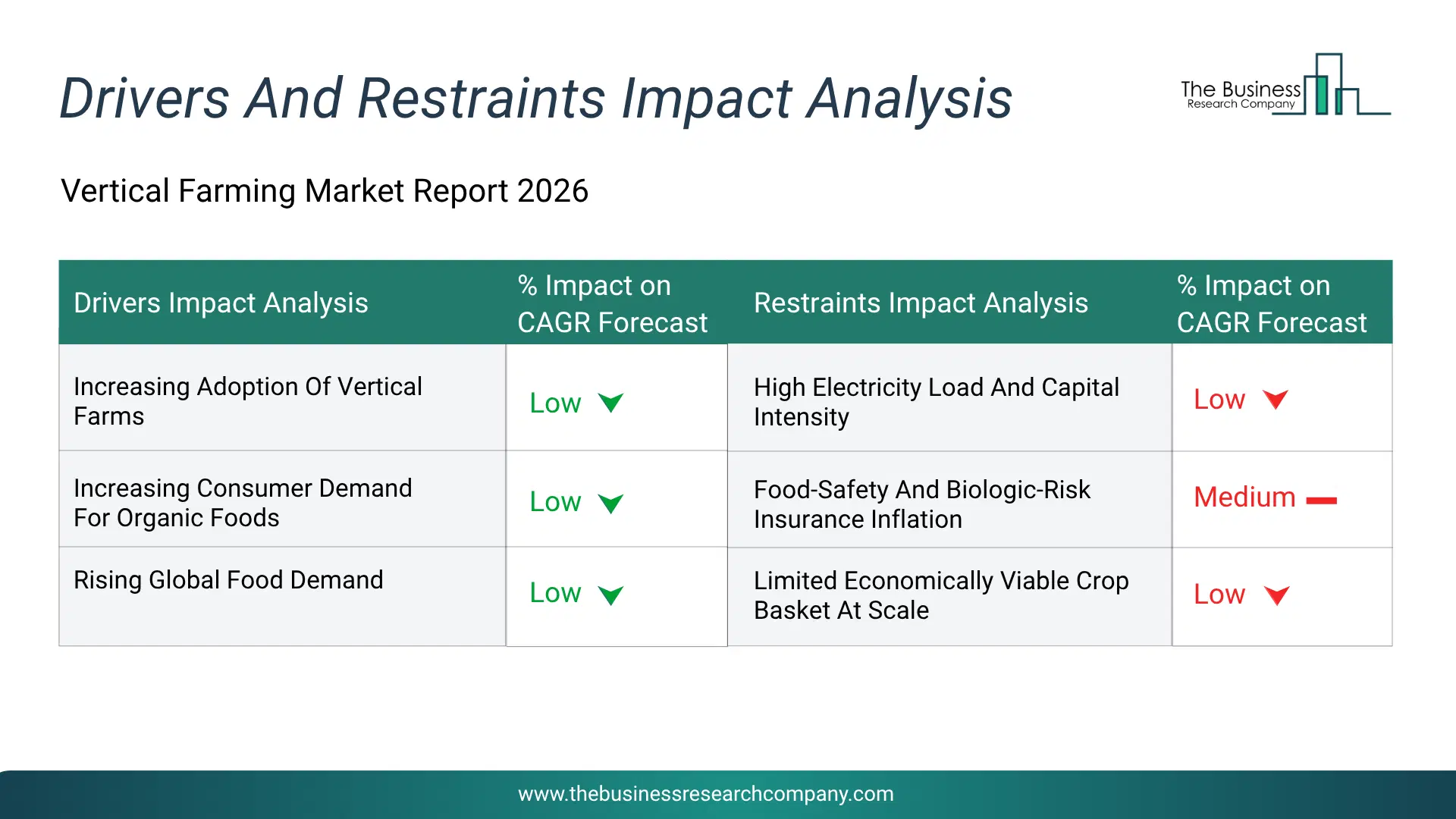
Infographic Chart Showing Key Market Drivers Analysis And Restraints For Vertical Farming Market
The chart presents an impact analysis of key drivers and restraints, quantifying their relative influence on the market's growth rate and helping assess the balance between growth enablers and limiting factors. This chart offers a high-level perspective; the full report contains more detailed insights.
How Will The Drivers Impact Growth In The Global Vertical Farming Market?
• Increasing Adoption Of Vertical Farms (Low) – During the forecast period, the increasing adoption of vertical farms is expected to become a key growth driver for the vertical farming market by 2030. Increasing adoption of vertical farms is a major driver of the vertical farming market because businesses and governments are investing in controlled-environment agriculture to improve food production efficiency. Vertical farms maximize crop output from limited land by using stacked growing systems, making them ideal for urban locations. They reduce dependence on seasonal weather and enable year-round cultivation with consistent yields. Technological advancements in LED lighting, automation, and hydroponics have improved operational efficiency and productivity. Retailers and food companies are also partnering with vertical farms to secure fresh, locally produced vegetables. Growing investments and supportive policies further encourage the establishment of new facilities. • Increasing Consumer Demand For Organic Foods (Low) – During the forecast period, the increasing consumer demand for organic foods is expected to emerge as a major factor driving the expansion of the vertical farming market by 2030. Increasing consumer demand for organic foods is accelerating the growth of the vertical farming market as consumers increasingly seek fresh, chemical-free, and sustainably produced fruits and vegetables. Vertical farming enables controlled cultivation with minimal pesticide use while maintaining high-quality crop standards. The ability to grow produce close to consumers also improves freshness and reduces transportation time. Rising health awareness has encouraged households and restaurants to prefer premium organic produce throughout the year. Retail chains are expanding their organic product offerings, creating greater opportunities for vertically farmed crops. Producers benefit from consistent production and higher-value sales in the organic segment. • Rising Global Food Demand (Low) – During the forecast period, the rising global food demand is expected to act as a key growth catalyst for the vertical farming market by 2030. Rising global food demand is a significant driver of the vertical farming market because increasing population growth is placing greater pressure on conventional agricultural systems. Limited arable land and changing climate conditions have made efficient food production more important than ever. Vertical farming offers higher crop yields per square meter while using substantially less water and land than traditional farming methods. It supports continuous production regardless of weather conditions, helping stabilize food supply. Urban farming facilities also reduce supply chain disruptions by producing food closer to consumption centers. Governments and private investors are supporting innovative farming solutions to enhance food security.How Will The Restraints Impact Growth In The Global Vertical Farming Market?
• High Electricity Load And Capital Intensity (Low) – During the forecast period, the high electricity load and capital intensity is a major restraint on the vertical farming market because indoor farms rely heavily on artificial lighting, climate control, and automation systems that consume significant amounts of electricity. High energy costs increase operating expenses and reduce profit margins, particularly in regions with expensive power tariffs. In addition, establishing a vertical farm requires substantial upfront investment in infrastructure, equipment, and advanced technologies. These high initial costs create barriers for small and medium-sized enterprises entering the market. Long payback periods may discourage investors despite growing demand for controlled-environment agriculture. Rising financing and maintenance expenses further increase the overall cost of operations. As a result, the combination of high energy consumption and capital requirements slows the widespread adoption of vertical farming. • Food-Safety And Biologic-Risk Insurance Inflation (Low) – During the forecast period, the food-safety and biologic-risk insurance inflation restrains the vertical farming market by increasing the cost of protecting businesses against contamination, disease outbreaks, and product liability risks. Although vertical farms operate in controlled environments, strict food safety standards require continuous monitoring and compliance with regulatory requirements. Insurance premiums have increased due to growing concerns about biological risks and supply chain liabilities. Higher insurance costs add to operational expenses and reduce profitability for farm operators. Companies must also invest in advanced monitoring systems and quality assurance measures to minimize potential risks. Smaller operators often face greater financial pressure because of these additional insurance burdens. These rising costs can limit expansion plans and discourage new investments in the market. • Limited Economically Viable Crop Basket At Scale (Low) – During the forecast period, the limited economically viable crop basket at scale is a significant restraint because vertical farming is currently most profitable for leafy greens, herbs, and a limited range of high-value crops. Many staple crops, such as wheat, rice, and maize, remain economically impractical to grow indoors due to high production costs and lower financial returns. This restricts the diversity of products that vertical farms can commercially produce at large scale. Businesses therefore depend on a relatively narrow crop portfolio, increasing market risk and limiting revenue opportunities. Expanding into additional crop categories often requires new technologies and higher investments. Consumer demand for a broader variety of produce cannot always be met through existing vertical farming systems. Consequently, the limited range of economically viable crops constrains long-term market expansion and scalability.Key Players In The Global Vertical Farming Market
Major companies operating in the vertical farming market are Philips Lighting N.V., Osram AG, Everlight Electronics Co Ltd., Infarms Indoor Forming GmbH, Spread Group GmbH, Bowery Farming Inc., Plenty Unlimited Inc., BrightFarms Inc., Mirai Co Ltd., Intelligent Growth Solutions Ltd., Freight Farms Inc., AeroFarms, General Hydroponics Inc., Agricool Group, CropOne Holdings Inc., CropOne Holdings Inc, AppHarvest Inc., Vertical Future Ltd., Valoya Inc., Kalera Public Limited Company, Agrilution Systems GmbH, American Hydroponics Inc., Square Mile Farms Ltd., Swegreen AB, Green Sense Farms Holdings Inc., Hort Americas LLC, Urban Crop Solutions, Eden Green Technology, Illumitex Inc., Heliospectra AB, Future Crops Vertical Farming B.V., Sky Urban Solutions Holding Pte Ltd.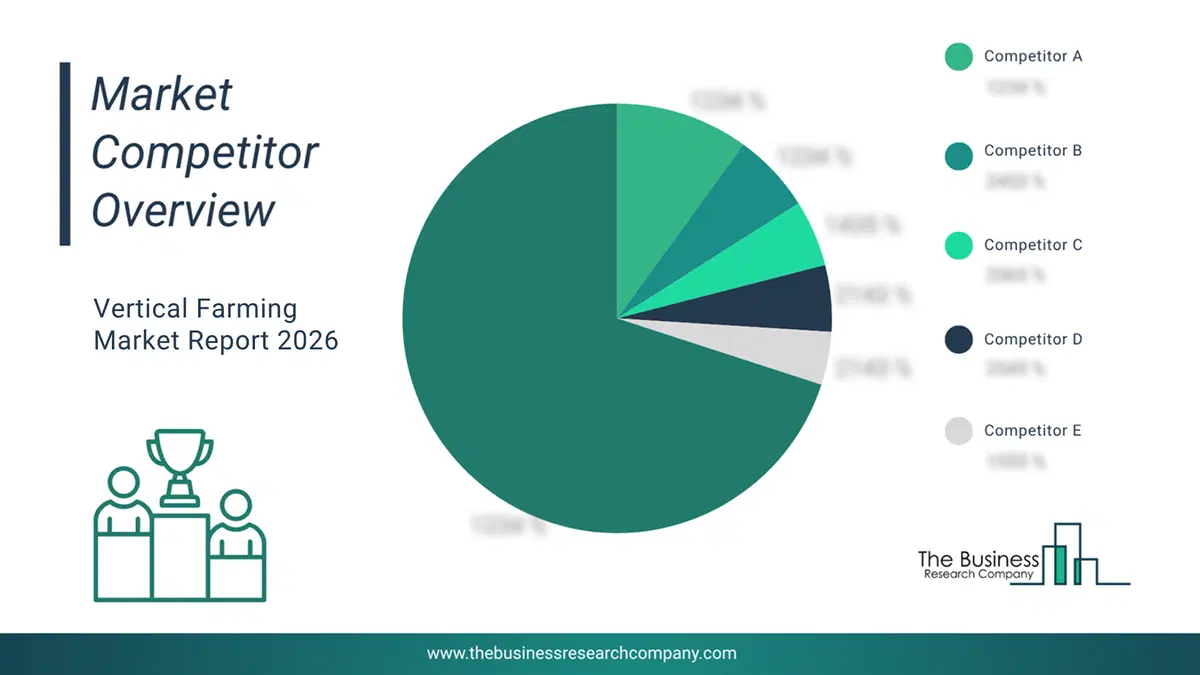
This chart is for illustrative purposes; the full report includes a detailed competitor analysis and comprehensive overview of the top 10 companies in the market.
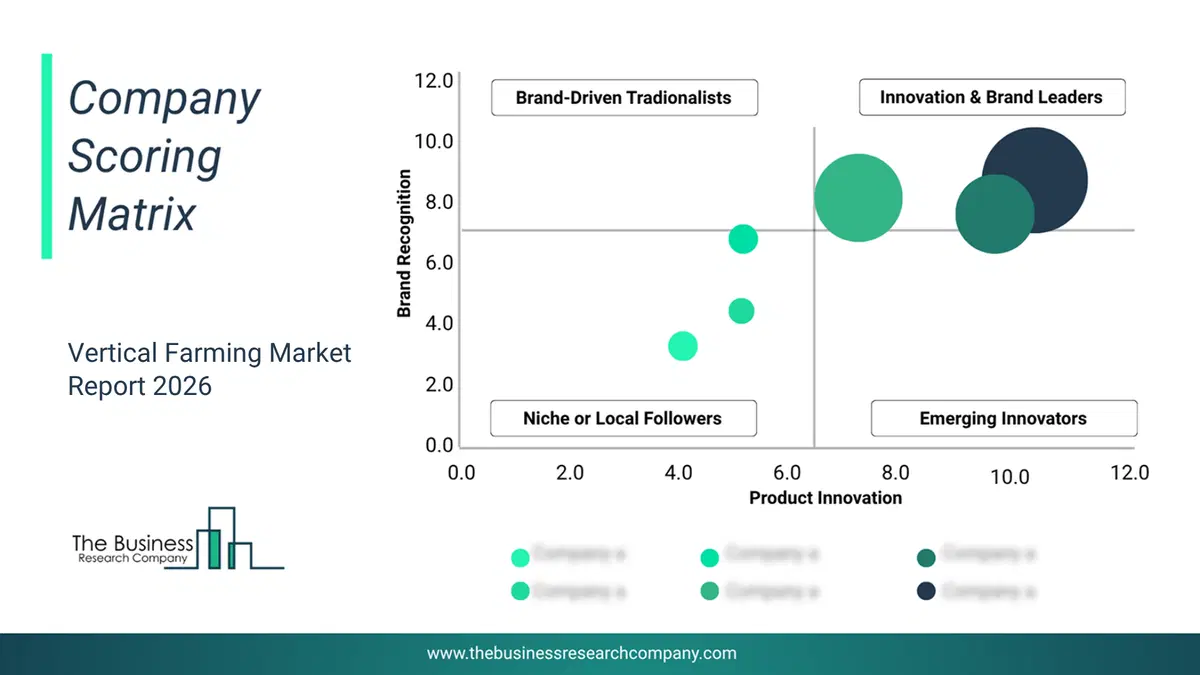
This chart maps companies by product innovation and brand strength, with bubble size indicating relative revenue, helping identify market leaders, challengers, and niche players. This is an illustrative chart; the full report provides a complete and accurate competitive analysis.
Global Vertical Farming Market Trends and Insights
Major companies operating in the vertical farming market are focused on developing technological advancement such as vertical farming solution that operates within modular containers, designed to optimize space and resources for efficient crop production. Vertical farming is the practice of growing crops in stacked layers within controlled environments, using methods like hydroponics to optimize space and promote sustainability. For instance, in October 2024, Growtainers, a U.S-based company Vertical farm which operates on 30-60% lower CapEx than other farms, specializes in modular farming solutions, focusing on efficient and sustainable agricultural practices. The vertical farm operates on 30-60% lower capital expenditure than traditional farms and features a modular design, energy efficiency through LED lighting, hydroponic systems for soil-less growing, automated monitoring, sustainability practices, year-round production capabilities, and scalability to meet increasing demand.What Are Latest Mergers And Acquisitions In The Vertical Farming Market? Kalera Assets Acquired By Lactuca Holdings
In October 2023, Kalera, a U.S-based known for its vertical farming solutions, provides fresh, locally grown produce using advanced agricultural technology to ensure sustainable and efficient farming practices acquired Lactuca Holdings for an undisclosed amount. The aim of Lactuca Holdings' acquisition of Kalera's assets is to enhance production capabilities, strengthen market position, leverage technology, diversify offerings, and achieve operational synergies. Lactuca Holdings, a U.S-based focuses on innovative solutions in vertical farming and sustainable food production.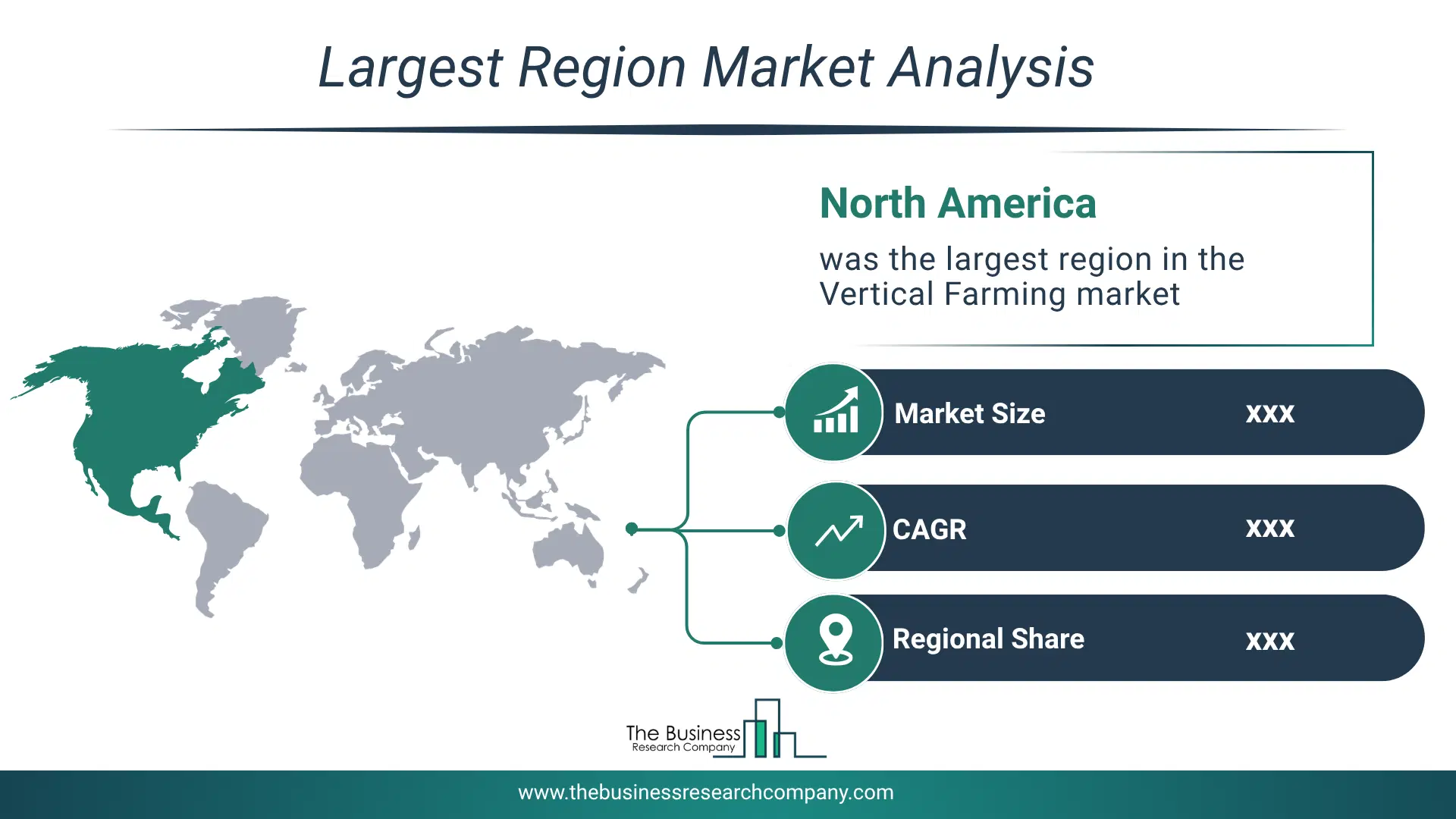
Regional Outlook
North America was the largest region in the vertical farming market in 2025. Europe is expected to be the fastest-growing region in the forecast period. The regions covered in this market report are Asia-Pacific, South East Asia, Western Europe, Eastern Europe, North America, South America, Middle East, Africa. The countries covered in this market report are Australia, Brazil, China, France, Germany, India, Indonesia, Japan, Taiwan, Russia, South Korea, UK, USA, Canada, Italy, SpainWhat Defines the Vertical Farming Market?
The vertical farming market includes revenues earned by entities by precision farming, and sustainable agriculture. The market value includes the value of related goods sold by the service provider or included within the service offering. Only goods and services traded between entities or sold to end consumers are included.How is Market Value Defined and Measured?
The market value is defined as the revenues that enterprises gain from the sale of goods and/or services within the specified market and geography through sales, grants, or donations in terms of the currency (in USD unless otherwise specified). The revenues for a specified geography are consumption values that are revenues generated by organizations in the specified geography within the market, irrespective of where they are produced. It does not include revenues from resales along the supply chain, either further along the supply chain or as part of other products.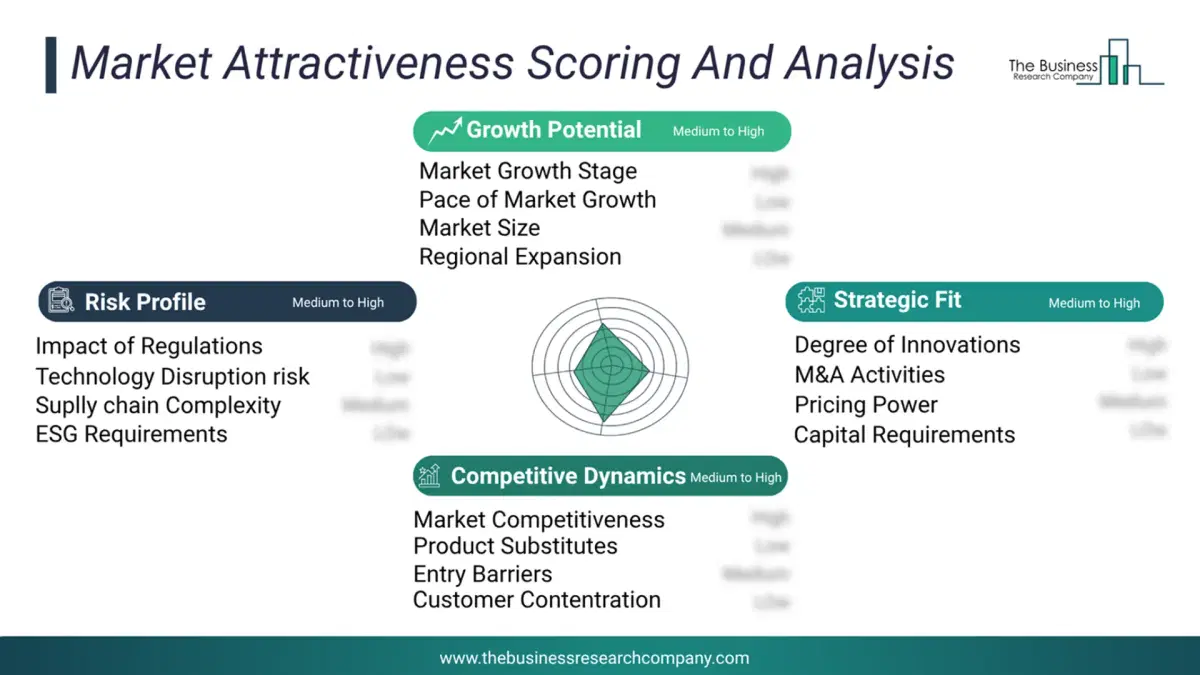
This chart presents market attractiveness based on a quantitative evaluation of growth, competition, strategic alignment, and risk, offering a clear view of opportunity areas for decision-making. This chart is for illustrative purposes; the full report contains the complete analysis.
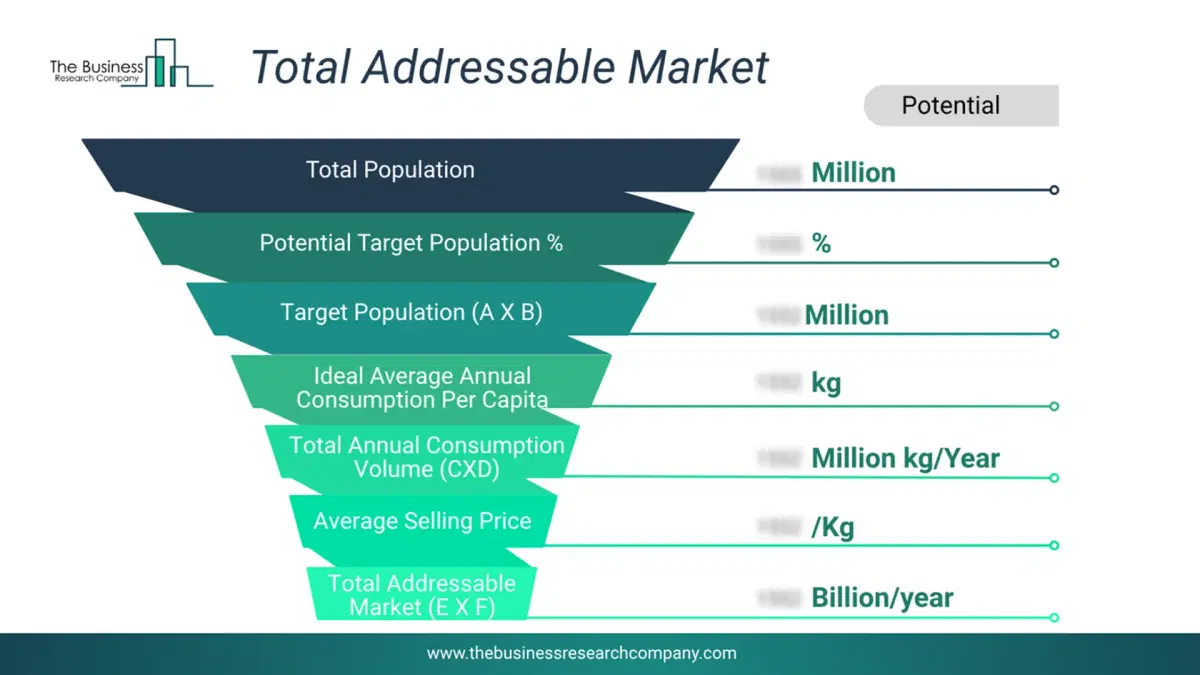
This chart highlights the Total Addressable Market (TAM) by estimating the maximum revenue opportunity using an assumption-driven approach, supporting strategic planning and opportunity sizing across markets. The chart is illustrative; the full report provides a more comprehensive analysis.
What Key Data and Analysis Are Included in the Vertical Farming Market Report 2026?
The vertical farming market research report is one of a series of new reports from The Business Research Company that provides market statistics, including industry global market size, regional shares, competitors with the market share, detailed market segments, market trends and opportunities, and any further data you may need to thrive in the vertical farming industry. The market research report delivers a complete perspective of everything you need, with an in-depth analysis of the current and future state of the industry.Vertical Farming Market Report Forecast Analysis
| Report Attribute | Details |
|---|---|
| Market Size Value In 2026 | $11.63 billion |
| Revenue Forecast In 2030 | $5.72 billion |
| Growth Rate | CAGR of 20.5% from 2026 to 2030 |
| Base Year For Estimation | 2025 |
| Actual Estimates/Historical Data | 2020-2025 |
| Forecast Period | 2026 - 2030 |
| Market Representation | Revenue in USD Billion and CAGR from 2026 to 2030 |
| Segments Covered | Component, Structure, Type, Crop Type, Application |
| Regional Scope | Asia-Pacific, Western Europe, Eastern Europe, North America, South America, Middle East, Africa |
| Country Scope | The countries covered in the report are Australia, Brazil, China, France, Germany, India, Indonesia, Japan, Taiwan, Russia, South Korea, UK, USA, Canada, Italy, Spain. |
| Key Companies Profiled | Philips Lighting N.V., Osram AG, Everlight Electronics Co Ltd., Infarms Indoor Forming GmbH, Spread Group GmbH, Bowery Farming Inc., Plenty Unlimited Inc., BrightFarms Inc., Mirai Co Ltd., Intelligent Growth Solutions Ltd., Freight Farms Inc., AeroFarms, General Hydroponics Inc., Agricool Group, CropOne Holdings Inc., CropOne Holdings Inc, AppHarvest Inc., Vertical Future Ltd., Valoya Inc., Kalera Public Limited Company, Agrilution Systems GmbH, American Hydroponics Inc., Square Mile Farms Ltd., Swegreen AB, Green Sense Farms Holdings Inc., Hort Americas LLC, Urban Crop Solutions, Eden Green Technology, Illumitex Inc., Heliospectra AB, Future Crops Vertical Farming B.V., Sky Urban Solutions Holding Pte Ltd. |
| Customization Scope | Request for Customization |
| Pricing And Purchase Options | Explore Purchase Options |