
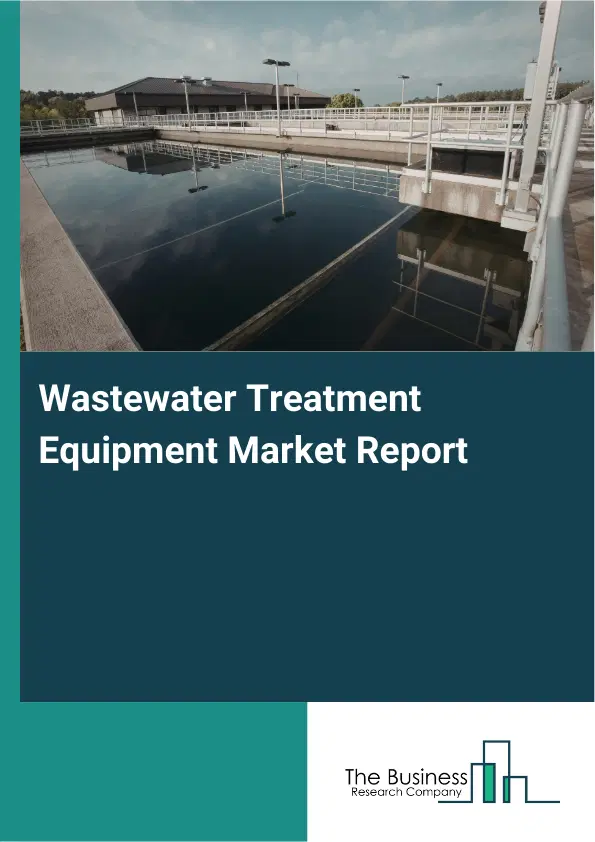
Wastewater Treatment Equipment Market Report 2026
Global Outlook – By Equipment (Filtration Equipment, Membrane Equipment, Thermal Distillation Equipment And Evaporators, Disinfection Equipment ), By Process (Primary, Secondary, Tertiary ), By Application (Municipal, Industrial ) – Market Size, Trends, Strategies, and Forecast to 2030
Wastewater Treatment Equipment Market Overview
• Wastewater Treatment Equipment market size has reached to $34.69 billion in 2025 • Expected to grow to $44.59 billion in 2030 at a compound annual growth rate (CAGR) of 5.2% • Growth Driver: Water Scarcity Fuels The Future Growth Of Wastewater Treatment Equipment • Market Trend: Advanced Multi-Stage Filtration Innovations Enhancing Efficiency And Contaminant Removal In Industrial Water Treatment • Asia-Pacific was the largest region in 2025 and Western Europe is the fastest growing region.Market Gains By 2030 – Top Opportunities By Segment
Market Gain identifies the most promising market opportunities by highlighting the segments or products expected to generate the highest incremental revenue growth over the next five years.
What Is Covered Under Wastewater Treatment Equipment Market?
Wastewater treatment equipment is a device that removes all the impurities from the wastewater before discharging back into natural bodies. They are used to purify the wastewater. The main equipment in wastewater treatment equipment is filtration equipment, membrane equipment, thermal distillation equipment and evaporators, and disinfection equipment. Membrane equipment is a barrier in water treatment that allows water to pass through while preventing undesired substances from passing through as well. The application areas of wastewater treatment equipment include municipal, and industrial with primary, secondary, and tertiary processes that are smooth and textured.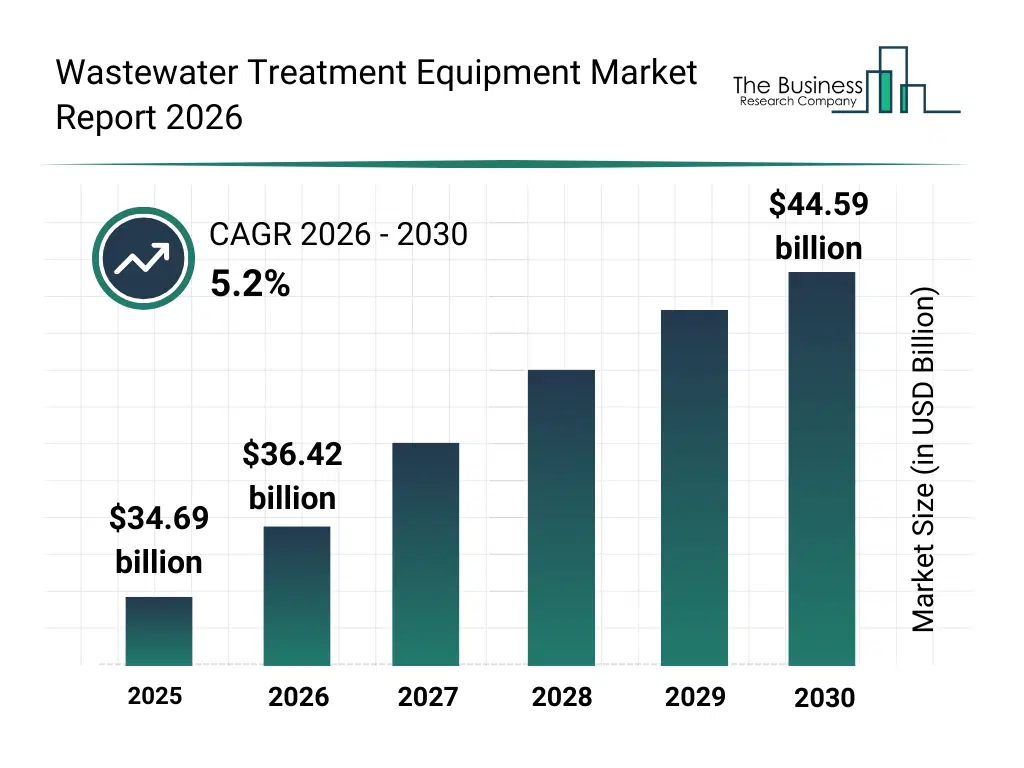
What Is The Wastewater Treatment Equipment Market Size and Share 2026?
The wastewater treatment equipment market size has grown steadily in recent years. It will grow from $34.69 billion in 2025 to $36.42 billion in 2026 at a compound annual growth rate (CAGR) of 5.0%. The growth in the historic period can be attributed to urban population growth, expansion of municipal sewage systems, industrial water pollution control, environmental compliance needs, infrastructure modernization.What Is The Wastewater Treatment Equipment Market Growth Forecast?
The wastewater treatment equipment market size is expected to see strong growth in the next few years. It will grow to $44.59 billion in 2030 at a compound annual growth rate (CAGR) of 5.2%. The growth in the forecast period can be attributed to water scarcity concerns, stricter discharge regulations, growth in industrial manufacturing, investment in smart water infrastructure, expansion of zero liquid discharge systems. Major trends in the forecast period include rising adoption of advanced membrane technologies, growth in industrial wastewater treatment solutions, expansion of tertiary treatment processes, increasing focus on water reuse and recycling, integration of smart monitoring systems.
Global Wastewater Treatment Equipment Market Segmentation
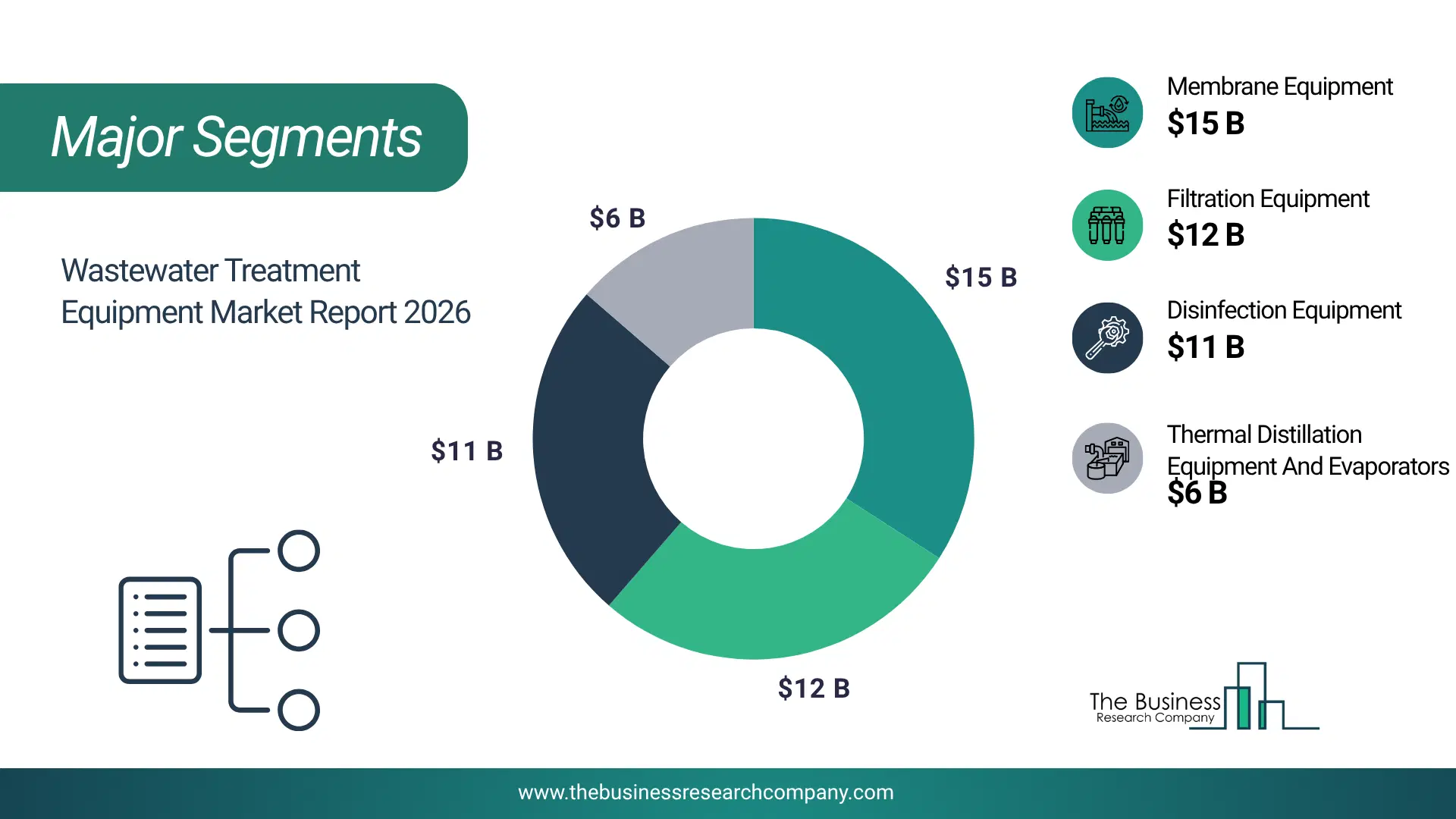
1) By Equipment: Filtration Equipment, Membrane Equipment, Thermal Distillation Equipment And Evaporators, Disinfection Equipment 2) By Process: Primary, Secondary, Tertiary 3) By Application: Municipal, Industrial Subsegments: 1) By Filtration Equipment: Media Filters, Cartridge Filters, Sand Filters, Disc Filters, Pressure Filters 2) By Membrane Equipment: Reverse Osmosis (RO) Membranes, Ultrafiltration (UF) Membranes, Microfiltration (MF) Membranes, Nanofiltration (NF) Membranes 3) By Thermal Distillation Equipment And Evaporators: Multi-Effect Distillation (MED) Systems, Vapor Compression Distillation (VCD) Systems, Mechanical Vapor Recompression (MVR) Evaporators, Falling Film Evaporators 4) By Disinfection Equipment: Chlorination Systems, UV Disinfection Systems, Ozone Disinfection Systems, Electrochemical Disinfection Systems The top segments in the wastewater treatment equipment market will be: • Membrane Equipment will reach $15 Billion by 2030. • Filtration Equipment will reach $12 Billion by 2030. • Disinfection Equipment will reach $11 Billion by 2030. • Thermal Distillation Equipment And Evaporators will reach $6 Billion by 2030.What Is The Driver Of The Wastewater Treatment Equipment Market?
Increasing water scarcity is expected to drive the growth of the wastewater treatment equipment going forward. Increasing water scarcity, driven by factors such as population growth and climate change, threatens the availability of clean water for drinking, agriculture, and industry, necessitating urgent water conservation and innovative solutions to address this pressing global challenge. Rising water scarcity heightens the importance of efficient wastewater treatment equipment, as it promotes water reuse and conservation, emphasizing the need for advanced solutions to address the diminishing water supply. For instance, in June 2025, according to the GOV.UK, a UK-based government organization, reported that England could face a daily shortfall of 5 billion liters in its public water supply by 2055 unless immediate steps are taken to secure and strengthen water resources. Therefore, increasing water scarcity will continue to contribute to the growth of the wastewater treatment equipment industry in the forecast period.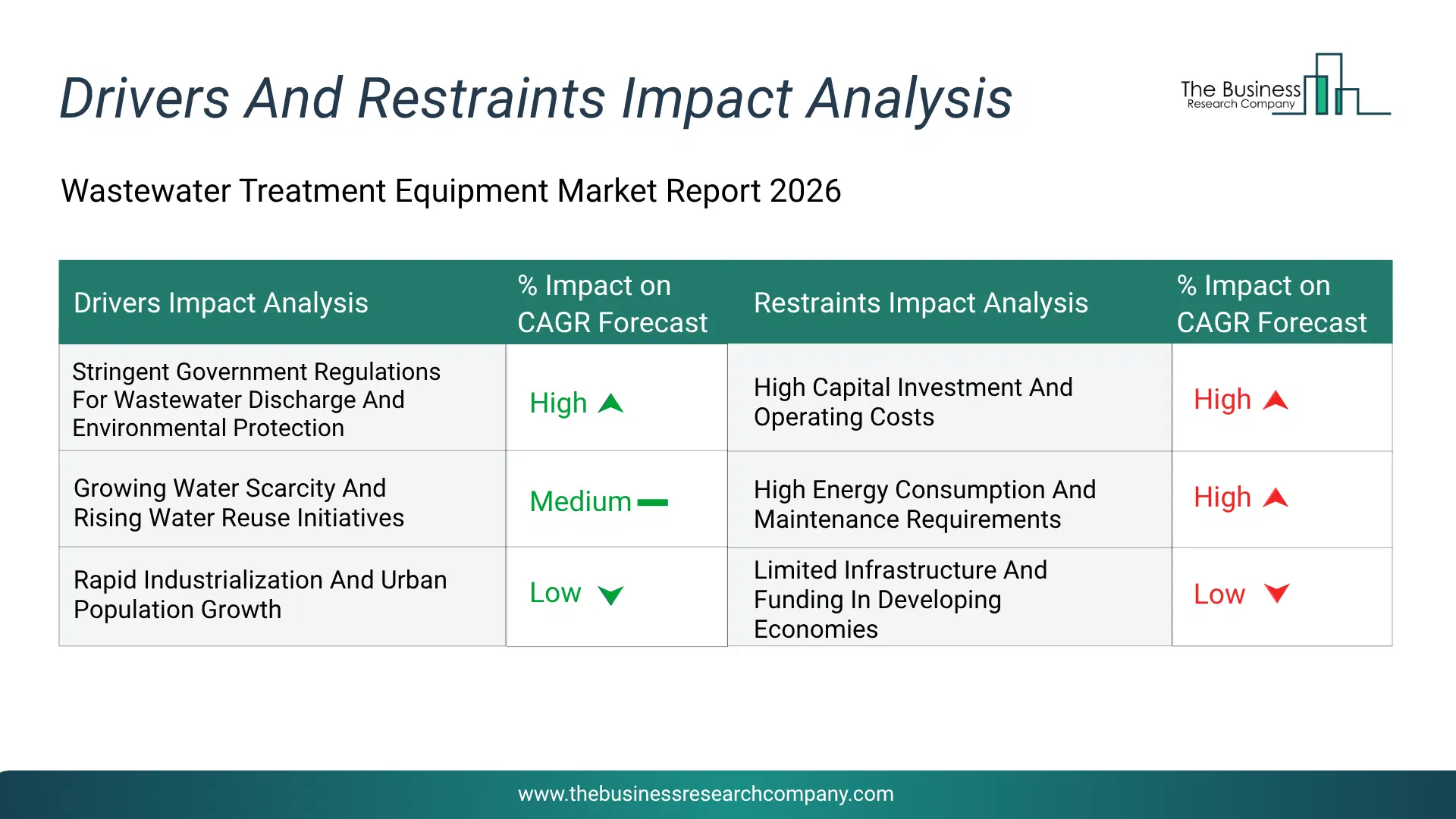
Infographic Chart Showing Key Market Drivers Analysis And Restraints For Wastewater Treatment Equipment Market
The chart presents an impact analysis of key drivers and restraints, quantifying their relative influence on the market's growth rate and helping assess the balance between growth enablers and limiting factors. This chart offers a high-level perspective; the full report contains more detailed insights.
How Will The Drivers Impact Growth In The Global Wastewater Treatment Equipment Market?
• Stringent Government Regulations For Wastewater Discharge And Environmental Protection (High) – During the forecast period, the stringent government regulations for wastewater discharge and environmental protection are expected to emerge as a major factor driving the expansion of the wastewater treatment equipment market by 2030. governments are tightening discharge standards for industrial and municipal wastewater, compelling facilities to install advanced treatment technologies capable of removing hazardous contaminants and meeting environmental compliance requirements. ongoing investments in upgrading aging treatment infrastructure and implementing sustainability programs are further strengthening demand for modern wastewater treatment equipment. • Growing Water Scarcity And Rising Water Reuse Initiatives (Medium) – During the forecast period, the growing water scarcity and rising water reuse initiatives are expected to emerge as a major factor driving the expansion of the wastewater treatment equipment market by 2030. increasing pressure on freshwater resources is encouraging governments and industries to adopt water recycling strategies for industrial operations, agriculture, landscaping, groundwater recharge, and other non-conventional applications. this shift is driving investments in advanced treatment technologies that produce high-quality reclaimed water while supporting sustainable water resource management. • Rapid Industrialization And Urban Population Growth (Low) – During the forecast period, the rapid industrialization and urban population growth are expected to act as a key growth catalyst for the wastewater treatment equipment market by 2030. expanding manufacturing activities and rising municipal wastewater generation are increasing the need for new treatment plants, industrial effluent management systems, and upgraded sanitation infrastructure. the continued development of industrial zones, smart cities, and public utility projects is further accelerating demand for efficient wastewater treatment equipment across global markets.How Will The Restraints Impact Growth In The Global Wastewater Treatment Equipment Market?
• High Capital Investment And Operating Costs (High) – During the forecast period, high Capital Investment And Operating Costs remain one of the most significant barriers to the adoption of wastewater treatment equipment, particularly among small and medium-sized enterprises and financially constrained municipalities. Establishing a wastewater treatment facility involves substantial expenditure on treatment equipment, civil construction, engineering design, automation systems, instrumentation, installation, and commissioning. Beyond the initial investment, facilities incur continuous operational expenses related to electricity consumption, treatment chemicals, membrane replacement, sludge handling, maintenance, laboratory testing, and skilled workforce requirements. Advanced treatment technologies such as membrane bioreactors and reverse osmosis systems further increase lifecycle costs due to their sophisticated operating requirements. These high capital and recurring expenses often delay investment decisions, especially in developing countries where financial resources are limited. As a result, many organizations continue using outdated treatment systems or postpone modernization projects, thereby restricting overall market growth. • High Energy Consumption And Maintenance Requirements (Medium) – During the forecast period, high Energy Consumption And Maintenance Requirements significantly limit the adoption of advanced wastewater treatment equipment, particularly in regions facing high electricity costs and limited technical expertise. Many wastewater treatment processes—including aeration, membrane filtration, reverse osmosis, ultraviolet disinfection, and sludge dewatering—require continuous energy-intensive operation to maintain treatment efficiency. Additionally, treatment equipment demands regular inspection, cleaning, calibration, membrane replacement, pump servicing, chemical dosing adjustments, and process optimization to ensure reliable performance. These maintenance activities require skilled operators and specialized technical knowledge, increasing operational complexity and long-term ownership costs. Unexpected equipment failures or inadequate maintenance can also reduce treatment efficiency and result in regulatory non-compliance. Consequently, many organizations are hesitant to adopt sophisticated treatment technologies despite their environmental benefits, thereby slowing overall market expansion. • Limited Infrastructure And Funding In Developing Economies (Low) – During the forecast period, limited Infrastructure And Funding In Developing Economies continue to restrain the growth of the Wastewater Treatment Equipment market despite increasing wastewater generation and rising environmental concerns. Many developing countries lack comprehensive sewer networks, modern wastewater treatment plants, reliable electricity infrastructure, and sufficient public investment required to establish efficient treatment systems. Municipal governments often face budget limitations that delay infrastructure development, while private industries may postpone wastewater treatment projects due to limited access to financing and uncertain returns on investment. In addition, weak regulatory enforcement, shortage of trained professionals, and limited public awareness regarding wastewater management further slow the implementation of advanced treatment technologies. Although the demand for wastewater treatment is increasing rapidly in these regions, inadequate infrastructure development and financial constraints continue to limit the widespread deployment of advanced wastewater treatment equipment, thereby restraining overall market growth.Key Players In The Global Wastewater Treatment Equipment Market
Major companies operating in the wastewater treatment equipment market are Suez SA, General Electric Company, Culligan International Company, Dow Water & Process Solutions, Pentair plc, Aquatech International LLC, Danaher Corporation, Calgon Carbon Corporation, Toray Industries Inc., Thermax Limited, Degrémont SA, Hitachi Ltd., Siemens AG, Evoqua Water Technologies Corp., BWT AG, Veolia Environnement SA, Xylem Inc., Doosan Heavy Industries & Construction Co. Ltd., Kurita Water Industries Ltd., Ion Exchange (India) Ltd., Pall Corporation, Ecolab Inc., Ovivo Inc., 3M Company, Chembond Chemicals Limited, Accepta Ltd., Ashland Global Holdings Inc., Kemira Oyj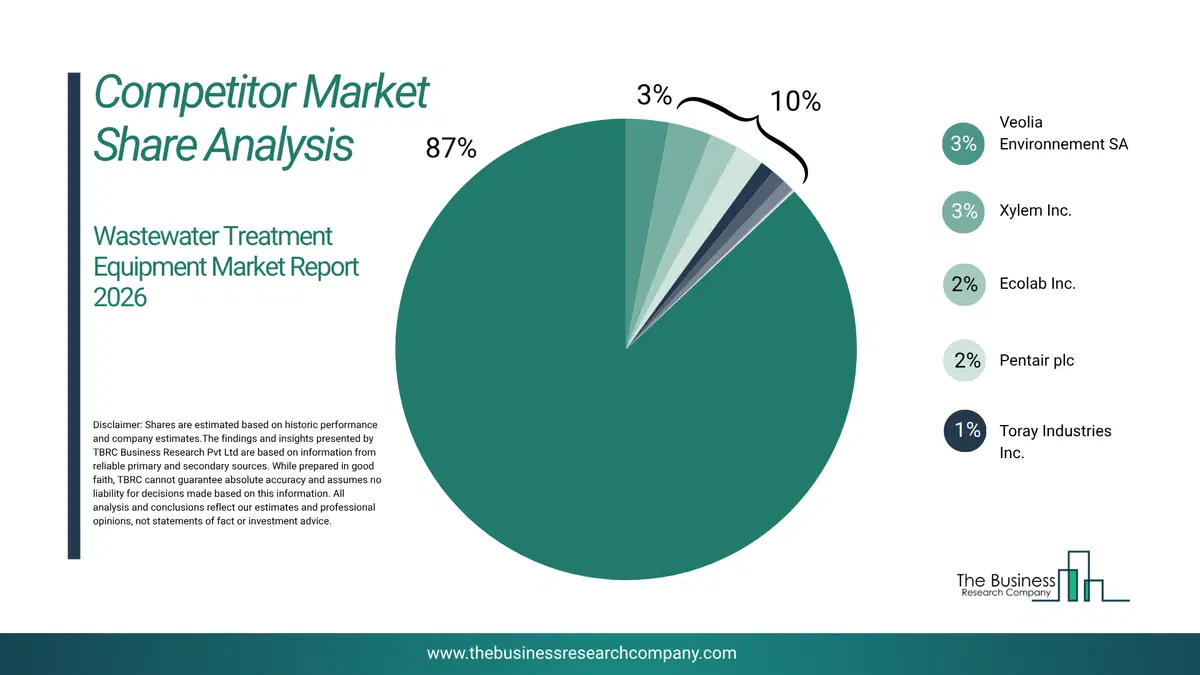
This chart is for illustrative purposes; the full report includes a detailed competitor analysis and comprehensive overview of the top 10 companies in the market.
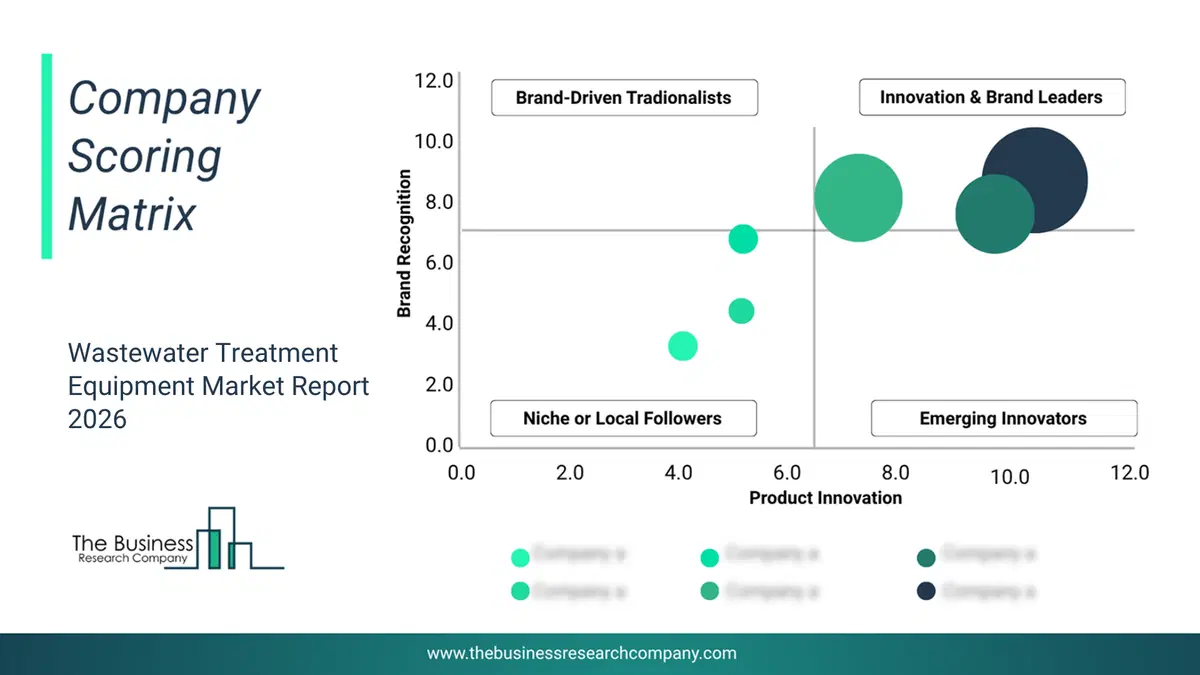
This chart maps companies by product innovation and brand strength, with bubble size indicating relative revenue, helping identify market leaders, challengers, and niche players. This is an illustrative chart; the full report provides a complete and accurate competitive analysis.
Global Wastewater Treatment Equipment Market Trends and Insights
Major companies operating in the wastewater treatment equipment market are focusing on developing advanced, multi-stage filtration systems that enhance contaminant removal, improve operational efficiency, and provide compact, durable solutions tailored to the needs of specialized industries. For instance, in May 2024, Everfilt, a US-based water treatment company, has introduced the X-Series, a specialized three-stage water filtration system designed for breweries and distilleries, offering high performance in a compact footprint. The system begins with a multi-media vessel that filters particles down to 5 microns, followed by a second stage using Greensand Plus™ or DMI-65® to treat iron, manganese, and arsenic. The final GAC stage removes chlorine, enhancing taste and odor. Built for efficiency, it features an independent backwash system, isolation valves, and customizable configurations. Constructed with durable materials including 304SS underdrains and NSF61-approved interior coatings, the X-Series delivers long-lasting, high-quality filtration for space-constrained, process-sensitive operations.What Are Latest Mergers And Acquisitions In The Wastewater Treatment Equipment Market?
In September 2024, Grundfos, a Denmark-based pump manufacturing company, acquired the Commercial and Industrial (C&I) business of Culligan International for an undisclosed amount. This acquisition boosts its industrial water treatment capabilities in Europe, expanding its solution portfolio and advancing its mission to promote efficient water use and quality across sectors. Culligan International is a US-based water treatment company that specializes in commercial and industrial water purification.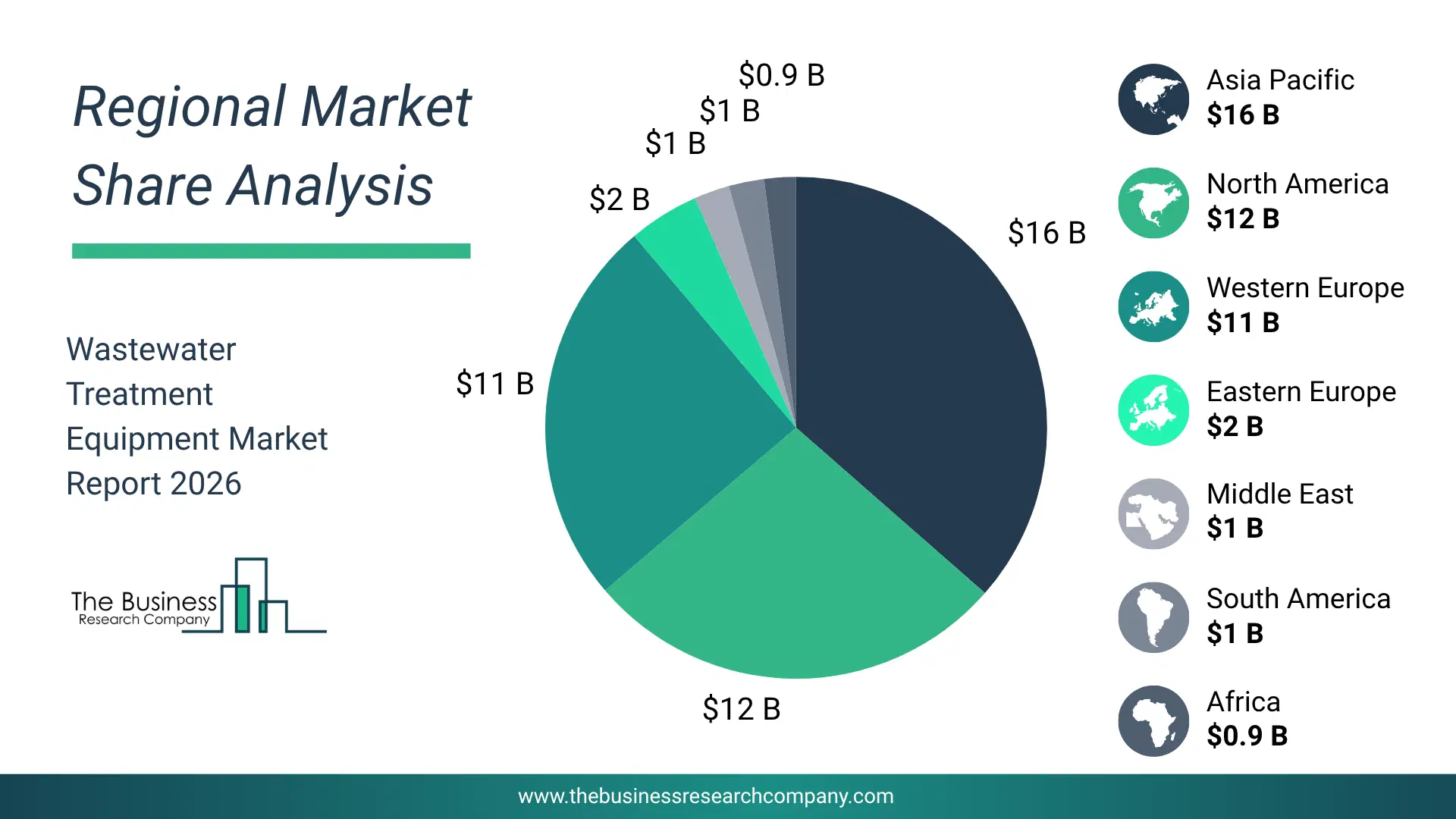
Regional Outlook
Asia-Pacific was the largest region in the wastewater treatment equipment market in 2025. Western Europe was the second largest region in the wastewater treatment equipment market. The regions covered in this market report are Asia-Pacific, South East Asia, Western Europe, Eastern Europe, North America, South America, Middle East, Africa The countries covered in this market report are Australia, Brazil, China, France, Germany, India, Indonesia, Japan, Taiwan, Russia, South Korea, UK, USA, Canada, Italy, Spain.What Defines the Wastewater Treatment Equipment Market?
The wastewater treatment equipment market consists of sales of trickling filter, clarifier, aerated lagoon, and activated sludge. Values in this market are factory gate values, that is the value of goods sold by the manufacturers or creators of the goods, whether to other entities (including downstream manufacturers, wholesalers, distributors and retailers) or directly to end customers. The value of goods in this market includes related services sold by the creators of the goods.How is Market Value Defined and Measured?
The market value is defined as the revenues that enterprises gain from the sale of goods and/or services within the specified market and geography through sales, grants, or donations in terms of the currency (in USD unless otherwise specified). The revenues for a specified geography are consumption values that are revenues generated by organizations in the specified geography within the market, irrespective of where they are produced. It does not include revenues from resales along the supply chain, either further along the supply chain or as part of other products.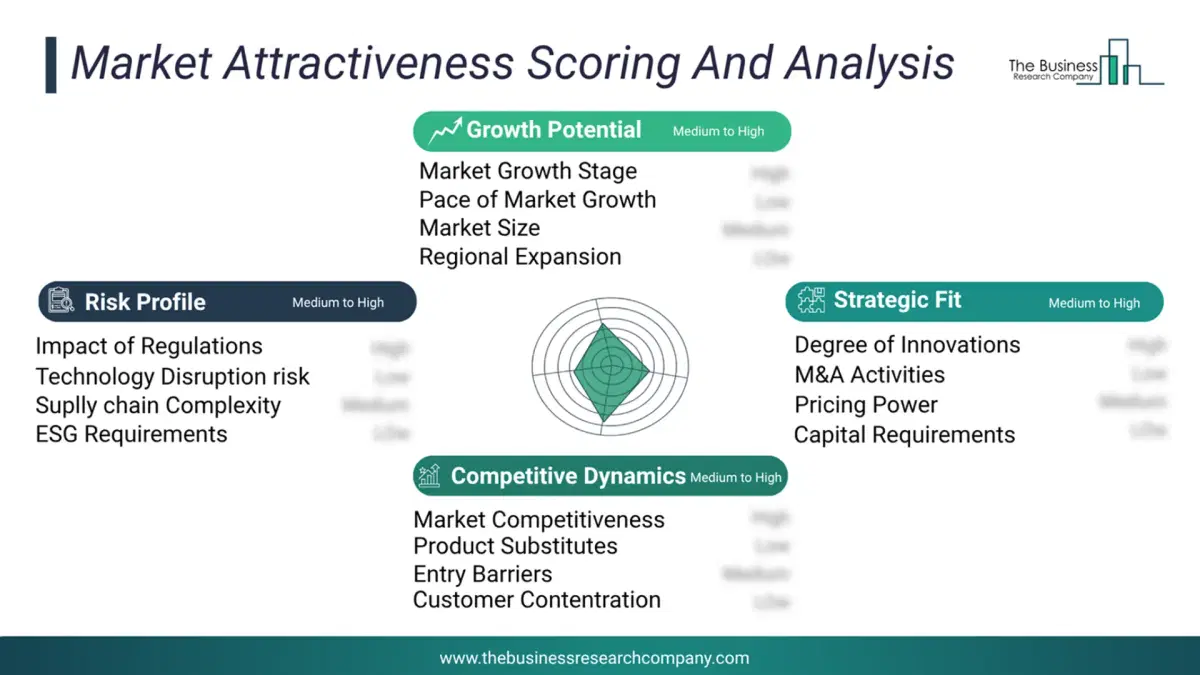
This chart presents market attractiveness based on a quantitative evaluation of growth, competition, strategic alignment, and risk, offering a clear view of opportunity areas for decision-making. This chart is for illustrative purposes; the full report contains the complete analysis.
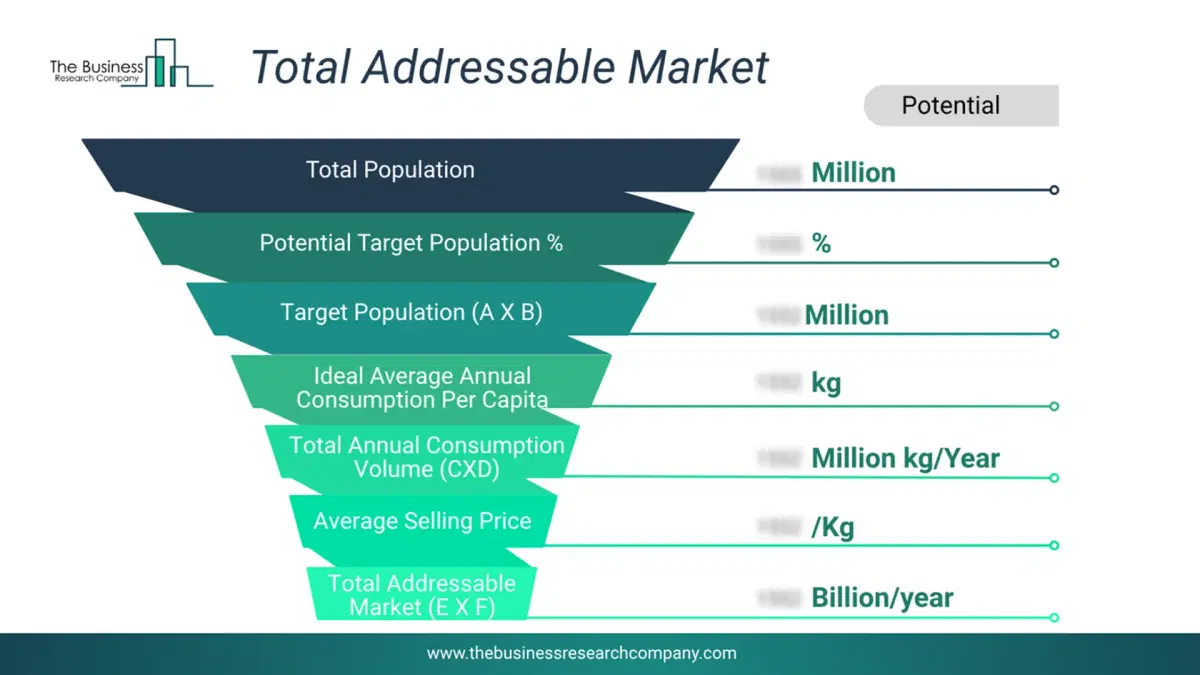
This chart highlights the Total Addressable Market (TAM) by estimating the maximum revenue opportunity using an assumption-driven approach, supporting strategic planning and opportunity sizing across markets. The chart is illustrative; the full report provides a more comprehensive analysis.
What Key Data and Analysis Are Included in the Wastewater Treatment Equipment Market Report 2026?
The wastewater treatment equipment market research report is one of a series of new reports from The Business Research Company that provides market statistics, including industry global market size, regional shares, competitors with the market share, detailed market segments, market trends and opportunities, and any further data you may need to thrive in the wastewater treatment equipment industry. The market research report delivers a complete perspective of everything you need, with an in-depth analysis of the current and future state of the industry.Wastewater Treatment Equipment Market Report Forecast Analysis
| Report Attribute | Details |
|---|---|
| Market Size Value In 2026 | $36.42 billion |
| Revenue Forecast In 2030 | $44.59 billion |
| Growth Rate | CAGR of 5.2% from 2026 to 2030 |
| Base Year For Estimation | 2025 |
| Actual Estimates/Historical Data | 2020-2025 |
| Forecast Period | 2026 - 2030 |
| Market Representation | Revenue in USD Billion and CAGR from 2026 to 2030 |
| Segments Covered | Equipment, Process, Application |
| Regional Scope | Asia-Pacific, Western Europe, Eastern Europe, North America, South America, Middle East, Africa |
| Country Scope | The countries covered in the report are Australia, Brazil, China, France, Germany, India, Indonesia, Japan, Taiwan, Russia, South Korea, UK, USA, Canada, Italy, Spain. |
| Key Companies Profiled | Suez SA, General Electric Company, Culligan International Company, Dow Water & Process Solutions, Pentair plc, Aquatech International LLC, Danaher Corporation, Calgon Carbon Corporation, Toray Industries Inc., Thermax Limited, Degrémont SA, Hitachi Ltd., Siemens AG, Evoqua Water Technologies Corp., BWT AG, Veolia Environnement SA, Xylem Inc., Doosan Heavy Industries & Construction Co. Ltd., Kurita Water Industries Ltd., Ion Exchange (India) Ltd., Pall Corporation, Ecolab Inc., Ovivo Inc., 3M Company, Chembond Chemicals Limited, Accepta Ltd., Ashland Global Holdings Inc., Kemira Oyj |
| Customization Scope | Request for Customization |
| Pricing And Purchase Options | Explore Purchase Options |