
Water Storage Systems Market Report 2026
Global Outlook – By Material (Steel, Fiberglass, Concrete, Plastic, Other Materials), By Location (Underground, Indoor, Outdoor), By Application (Onsite Water And Wastewater Collection, Potable Water Storage Systems, Fire Suppression Reserve And Storage, Rainwater Harvesting And Storage, Other Applications), By End-User (Residential, Commercial, Municipal, Industrial) – Market Size, Trends, Strategies, and Forecast to 2030
Water Storage Systems Market Overview
• Water Storage Systems market size has reached to $19.85 billion in 2025 • Expected to grow to $28.23 billion in 2030 at a compound annual growth rate (CAGR) of 7.4% • Growth Driver: Driving Forces Behind Water Storage Systems Market Growth • Market Trend: Innovation In Durable And Sustainable Water Storage Solutions Driven By Rising Conservation And Infrastructure Needs • Asia-Pacific was the largest region and fastest growing region.Market Gains By 2030 – Top Opportunities By Segment
Market Gain identifies the most promising market opportunities by highlighting the segments or products expected to generate the highest incremental revenue growth over the next five years.
What Is Covered Under Water Storage Systems Market?
Water storage systems refer to a structure or area where water is kept for future use. Tanks are utilized in a wide range of applications where water must be stored for easy access. Water storage tanks are used in household water storage, commercial food and beverage preparation, agriculture and irrigation, fire suppression, and industrial manufacturing to streamline water distribution. The main water storage systems material types are steel, fiberglass, concrete, plastic, and others. Steel refers to an iron and carbon alloy that, when compared to other kinds of iron, has higher strength and fracture resistance. The water storage systems are kept at various locations such as underground, indoor, and outdoor. These are used for hydraulic fracture storage and collection, onsite water and wastewater collection, potable water storage systems, fire suppression reserve and storage, rainwater harvesting and storage, and others by various end-users such as residential, commercial, municipal, and industrial.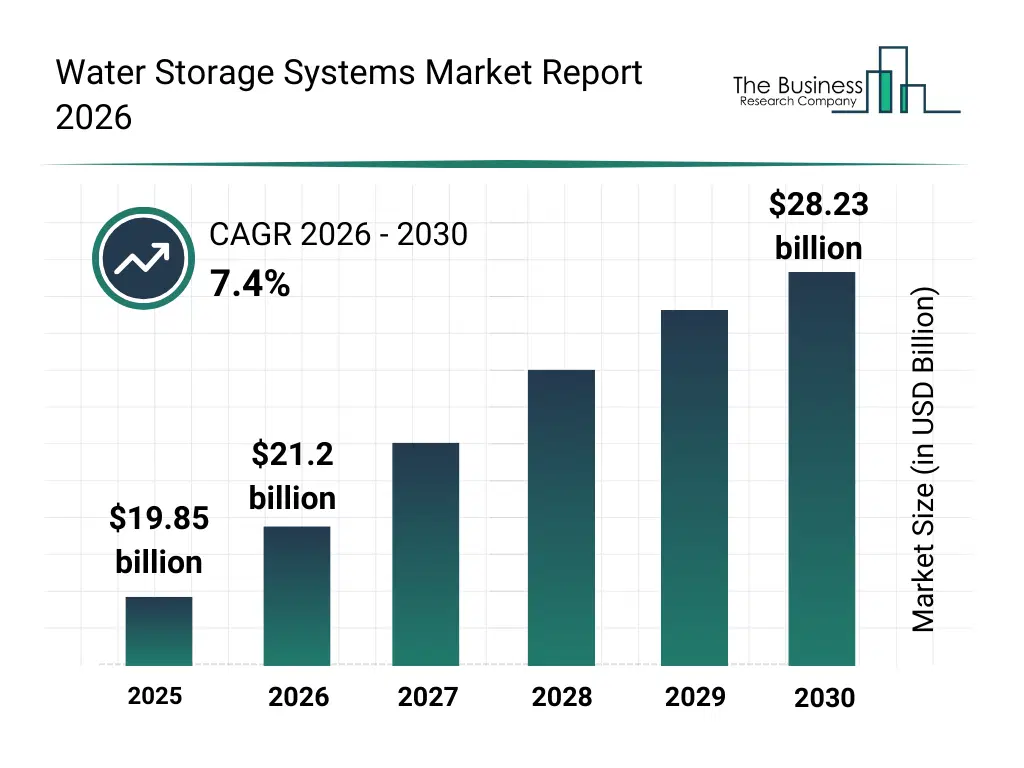
What Is The Water Storage Systems Market Size and Share 2026?
The water storage systems market size has grown strongly in recent years. It will grow from $19.85 billion in 2025 to $21.2 billion in 2026 at a compound annual growth rate (CAGR) of 6.8%. The growth in the historic period can be attributed to expansion of municipal water storage facilities, increasing residential water storage needs, adoption of concrete and steel tanks, growth in industrial water usage, rising fire safety storage requirements.What Is The Water Storage Systems Market Growth Forecast?
The water storage systems market size is expected to see strong growth in the next few years. It will grow to $28.23 billion in 2030 at a compound annual growth rate (CAGR) of 7.4%. The growth in the forecast period can be attributed to increasing investments in climate-resilient water infrastructure, rising adoption of smart monitoring sensors, expansion of decentralized water storage, growing focus on sustainable construction materials, increasing demand for emergency water reserves. Major trends in the forecast period include increasing adoption of modular water storage solutions, rising demand for large-capacity storage tanks, growing use of corrosion-resistant materials, expansion of rainwater harvesting infrastructure, enhanced focus on smart tank monitoring.
Global Water Storage Systems Market Segmentation
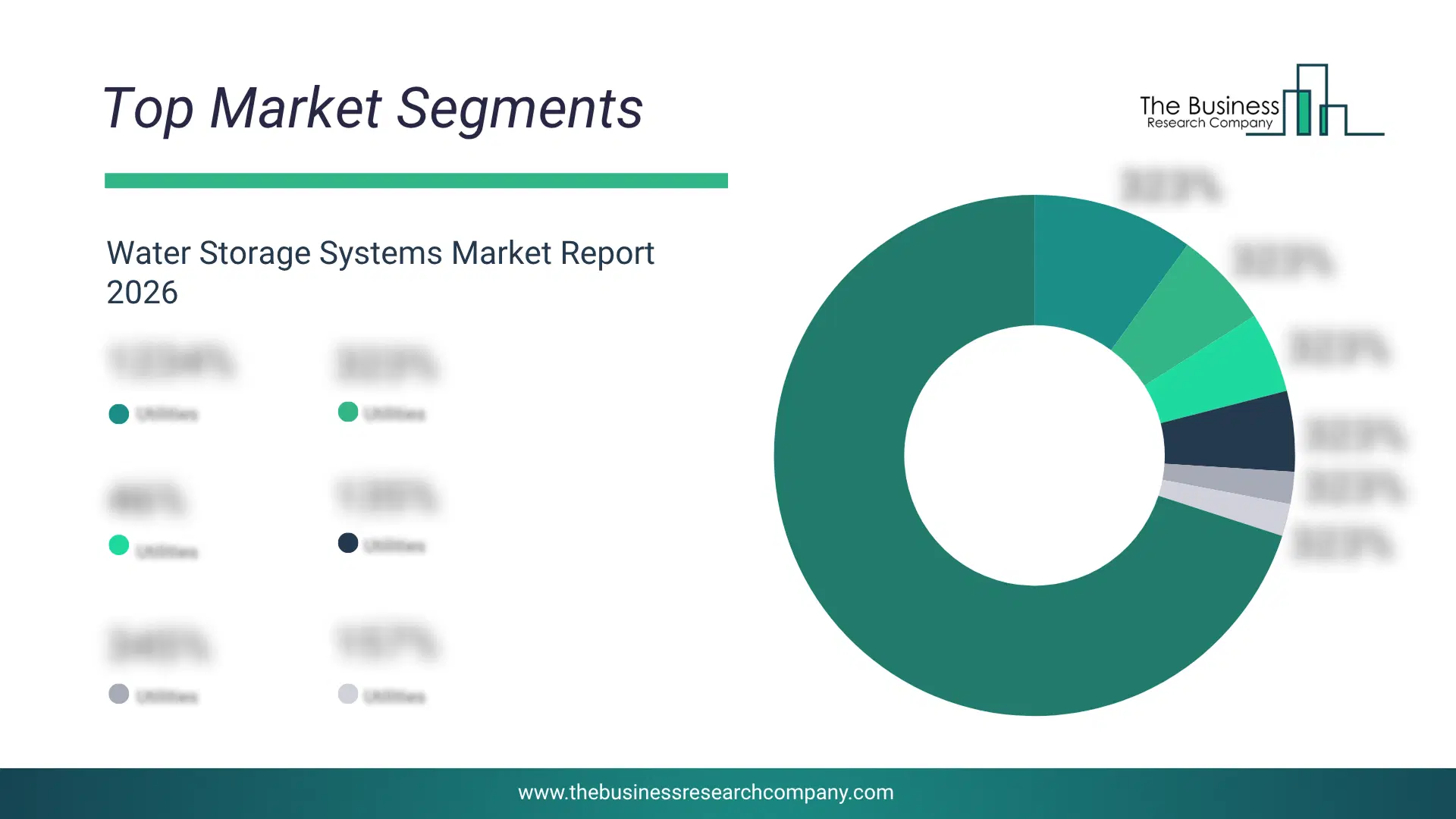
1) By Material: Steel, Fiberglass, Concrete, Plastic, Other Materials 2) By Location: Underground, Indoor, Outdoor 3) By Application: Onsite Water And Wastewater Collection, Potable Water Storage Systems, Fire Suppression Reserve And Storage, Rainwater Harvesting And Storage, Other Applications 4) By End-User: Residential, Commercial, Municipal, Industrial Subsegments: 1) By Steel: Stainless Steel, Carbon Steel, Galvanized Steel 2) By Fiberglass: Reinforced Fiberglass, Non-Reinforced Fiberglass 3) By Concrete: Precast Concrete, Cast-In-Place Concrete 4) By Plastic: Polyethylene, Polypropylene 5) By Other Materials: Wood, Composite Materials The top segments in the water storage systems market will be: • Plastic will reach $11 Billion by 2030. • Concrete will reach $8 Billion by 2030. • Steel will reach $5 Billion by 2030. • Fiberglass will reach $3 Billion by 2030. • Other Materials will reach $1 Billion by 2030.What Is The Driver Of The Water Storage Systems Market?
A rise in demand for freshwater is expected to propel the growth of the water storage systems market going forward. Freshwater refers to naturally occurring water with low concentrations of dissolved salts, typically found in rivers, lakes, streams, glaciers, and groundwater, and suitable for human consumption, agriculture, and ecosystems. The rise in demand for freshwater is primarily due to urbanization, as growing cities require larger volumes of water for household use, sanitation, industries, and infrastructure development. Water storage systems help freshwater resources by capturing, storing, and regulating water availability during periods of excess supply, ensuring a reliable and sustainable supply for domestic, agricultural, and industrial use during times of scarcity. For instance, in March 2023, according to the World Economic Forum, a Switzerland-based non-profit organization, projected that global freshwater demand would surpass supply by 40% by 2030. Therefore, the rise in demand for freshwater is driving the growth of the water storage systems industry going forward.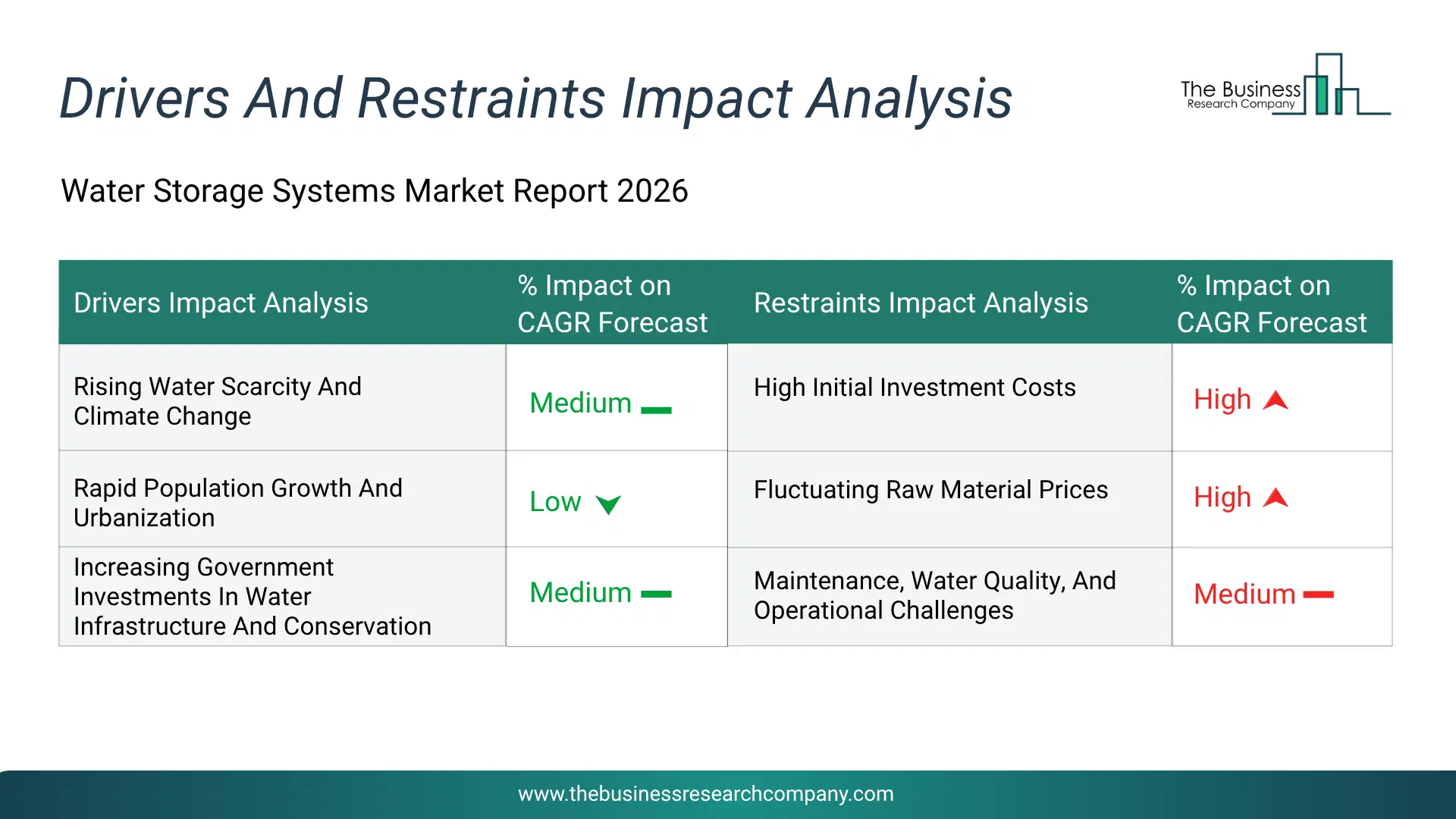
Infographic Chart Showing Key Market Drivers Analysis And Restraints For Water Storage Systems Market
The chart presents an impact analysis of key drivers and restraints, quantifying their relative influence on the market's growth rate and helping assess the balance between growth enablers and limiting factors. This chart offers a high-level perspective; the full report contains more detailed insights.
How Will The Drivers Impact Growth In The Global Water Storage Systems Market?
• Rising Water Scarcity And Climate Change (Medium) – During the forecast period, the rising water scarcity and climate change are expected to emerge as a major factor driving the expansion of the water storage systems market by 2030. increasingly unpredictable rainfall patterns, prolonged droughts, declining groundwater reserves, and higher temperatures are encouraging governments, industries, agricultural operators, and households to invest in water storage solutions that ensure reliable supply during periods of scarcity. climate resilience strategies and growing emphasis on rainwater harvesting and water conservation are further accelerating the deployment of advanced storage infrastructure. • Rapid Population Growth And Urbanization (Low) – During the forecast period, the rapid population growth and urbanization are expected to emerge as a major factor driving the expansion of the water storage systems market by 2030. expanding urban populations are increasing demand for dependable water storage across residential developments, commercial buildings, industrial facilities, healthcare institutions, and public infrastructure. ongoing smart city projects and modernization of urban water distribution networks are also creating significant opportunities for large-capacity storage systems that improve resource management and supply reliability. • Increasing Government Investments In Water Infrastructure And Conservation (Medium) – During the forecast period, the increasing government investments in water infrastructure and conservation are expected to act as a key growth catalyst for the water storage systems market by 2030. public funding for drinking water projects, irrigation modernization, wastewater management, and climate-resilient infrastructure is encouraging widespread installation of modern storage tanks and reservoirs. supportive policies, financial incentives, and stricter regulations promoting sustainable water management are further strengthening long-term demand for advanced water storage technologies.How Will The Restraints Impact Growth In The Global Water Storage Systems Market?
• High Initial Investment Costs (Medium) – During the forecast period, high Initial Investment Costs remain one of the most significant barriers limiting the widespread adoption of Water Storage Systems. Large-capacity storage tanks, underground reservoirs, reinforced concrete structures, pumping equipment, monitoring systems, and associated civil engineering works require considerable upfront capital investment. In addition to equipment costs, expenses related to site preparation, excavation, transportation, installation, permits, engineering design, and skilled labor substantially increase the total project cost. These financial requirements can be particularly challenging for small municipalities, agricultural users, rural communities, and small industries with limited budgets. Although water storage systems generate long-term operational savings and improve water security, the lengthy return on investment often discourages immediate adoption. Budget constraints and limited access to financing continue to delay infrastructure projects, especially in developing economies, thereby restraining overall market growth. • Fluctuating Raw Material Prices (Low) – During the forecast period, fluctuating Raw Material Prices significantly affect the profitability of manufacturers and the affordability of Water Storage Systems. The production of storage tanks and reservoirs depends heavily on materials such as steel, reinforced concrete, fiberglass, polyethylene, and composite plastics, whose prices are highly sensitive to changes in global commodity markets, energy costs, transportation expenses, and supply chain disruptions. Price volatility makes it difficult for manufacturers to accurately estimate production costs and maintain competitive pricing over long-term contracts. Rising material costs often lead to increased product prices, causing project developers and end users to postpone or reduce planned investments. Additionally, manufacturers may experience shrinking profit margins when they are unable to transfer higher material costs to customers. These uncertainties create financial risks throughout the supply chain and act as a major restraint on sustained market expansion. • Maintenance, Water Quality, And Operational Challenges (Medium) – During the forecast period, maintenance, Water Quality, And Operational Challenges continue to limit the adoption of Water Storage Systems, particularly in regions with inadequate technical resources and maintenance infrastructure. Water storage tanks require routine inspection, cleaning, leak detection, corrosion prevention, structural repairs, and water quality monitoring to maintain safe and efficient operation. Poor maintenance can result in contamination, bacterial growth, algae formation, sediment accumulation, unpleasant odors, and deterioration of stored water quality, particularly for potable water applications. Industrial and municipal storage facilities also require sophisticated monitoring systems and trained personnel to ensure regulatory compliance and operational efficiency. These ongoing maintenance activities increase lifecycle costs and require continuous operational expenditure throughout the system's lifespan. For many organizations and local authorities, these additional maintenance responsibilities represent a significant operational burden, slowing investment decisions and limiting market penetration despite the long-term benefits of water storage infrastructure.Key Players In The Global Water Storage Systems Market
Major companies operating in the water storage systems market are CST Industries Inc, DN Tanks Inc, Caldwell Tanks Inc, Balmoral Tanks Ltd, Maguire Iron Inc, Tank Connection LLC, Superior Tanks Co Inc, BH Tank Inc, National Storage Tank Inc, Containment Solutions Inc, Norwesco Industries Inc, Enduraplas Inc, Pioneer Water Tanks America Inc, Premier Tech Aqua, JoJo Tanks Ltd, Polymaster Group, Bushman Tanks, Water Storage Australia Pty Ltd, Aquamate LLC, Paul Mueller Company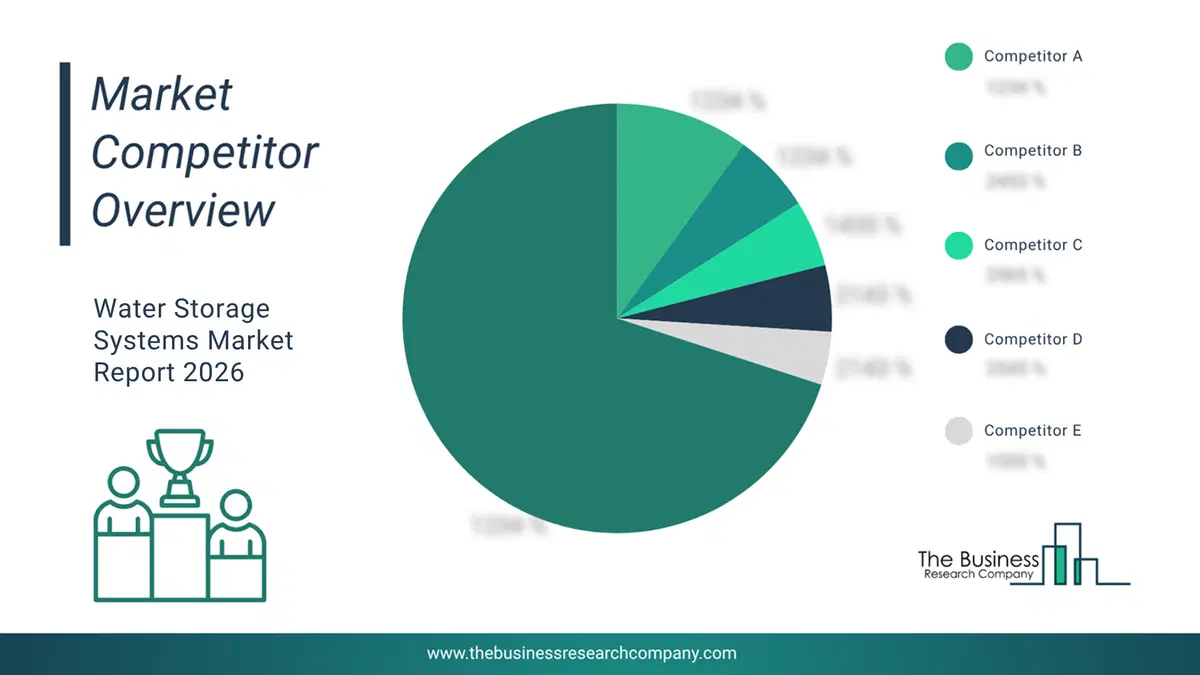
This chart is for illustrative purposes; the full report includes a detailed competitor analysis and comprehensive overview of the top 10 companies in the market.
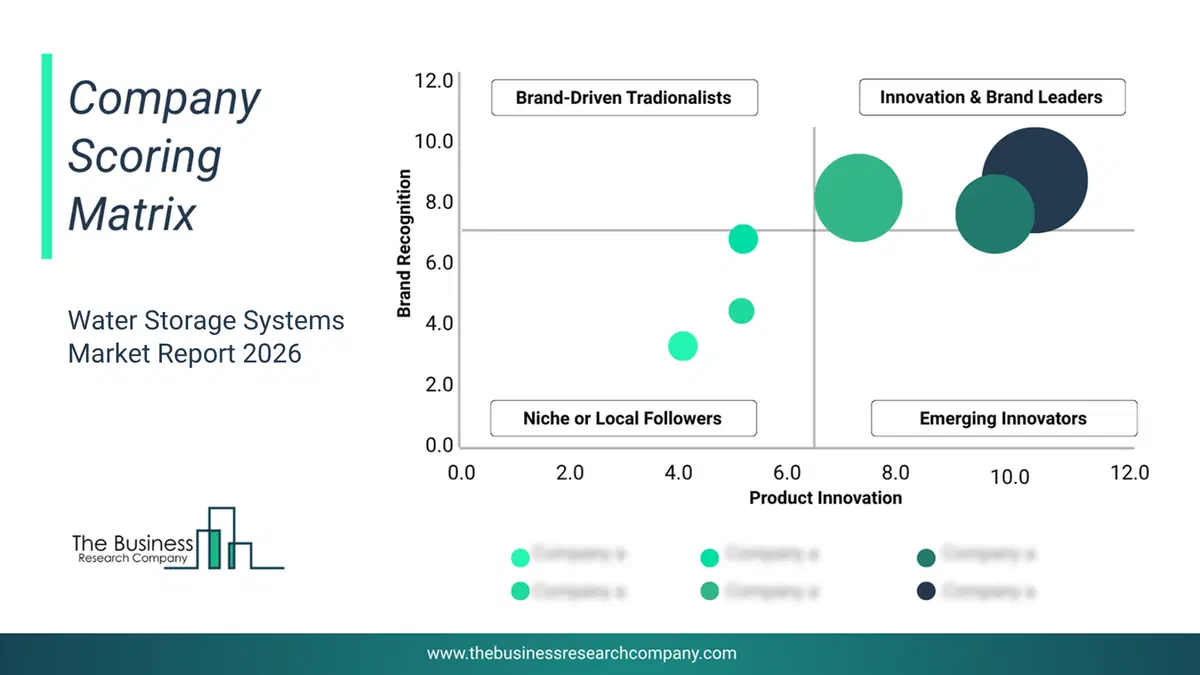
This chart maps companies by product innovation and brand strength, with bubble size indicating relative revenue, helping identify market leaders, challengers, and niche players. This is an illustrative chart; the full report provides a complete and accurate competitive analysis.
Global Water Storage Systems Market Trends and Insights
Major companies operating in the water storage systems market are focusing on developing innovative solutions, such as smart and durable storage technologies, to improve water efficiency, ensure supply reliability, and support sustainable water management. Smart and durable storage technologies refer to water storage systems that integrate sensors, monitoring, and automation with long-lasting, resilient materials to ensure efficient, reliable, and sustainable water storage over time. For instance, in May 2025, Elkhart Plastics Inc., a U.S.-based rotational molding manufacturer and subsidiary of Myers Industries, launched its Vertical Water Storage Tanks, a new product line aimed at expanding its portfolio and addressing diverse water storage needs in both commercial and residential markets. The tanks are made from UV-resistant, FDA-approved high-density polyethylene and feature multiple connection points, dual manway lids for flexible piping and secure access, and integrated air bleeds to enable efficient filling. They are backed by a 10-year limited warranty and are available in a wide range of capacities, making them suitable for applications such as irrigation, livestock watering, rainwater harvesting, fire suppression, and well water storage.What Are Latest Mergers And Acquisitions In The Water Storage Systems Market?
In March 2023, Welspun, an India-based provider of textiles, Infrastructure, steel, and line pipes, acquired Sintex-BAPL Ltd. for an undisclosed amount. This acquisition is expected to strengthen and expand Welspun's high-end-consumer reach in the domestic market and B2C business prospects. Sintex-BAPL Ltd. is an India-based manufacturer of water tanks and other plastic products.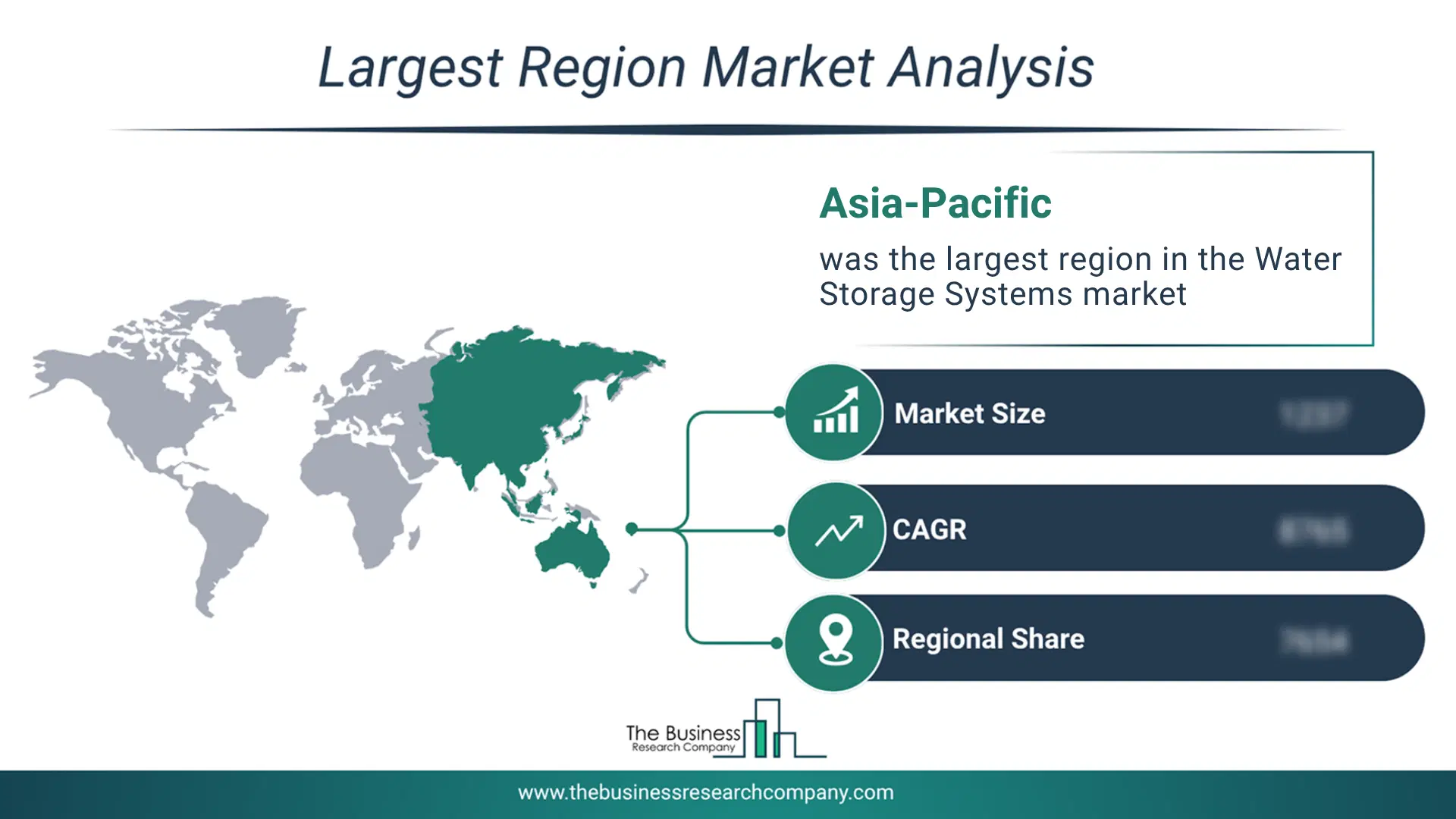
Regional Outlook
Asia-Pacific was the largest region in the water storage systems market in 2025.Asia-Pacific is expected to be the fastest-growing region in the global water storage systems market report during the forecast period. The regions covered in this market report are Asia-Pacific, South East Asia, Western Europe, Eastern Europe, North America, South America, Middle East, Africa. The countries covered in this market report are Australia, Brazil, China, France, Germany, India, Indonesia, Japan, Taiwan, Russia, South Korea, UK, USA, Canada, Italy, SpainWhat Defines the Water Storage Systems Market?
The water storage systems market consists of sales of water tanks, water barrels, and easy-clean tanks. Values in this market are ‘factory gate’ values, that is the value of goods sold by the manufacturers or creators of the goods, whether to other entities (including downstream manufacturers, wholesalers, distributors, and retailers) or directly to end customers. The value of goods in this market includes related services sold by the creators of the goods.How is Market Value Defined and Measured?
The market value is defined as the revenues that enterprises gain from the sale of goods and/or services within the specified market and geography through sales, grants, or donations in terms of the currency (in USD unless otherwise specified). The revenues for a specified geography are consumption values that are revenues generated by organizations in the specified geography within the market, irrespective of where they are produced. It does not include revenues from resales along the supply chain, either further along the supply chain or as part of other products.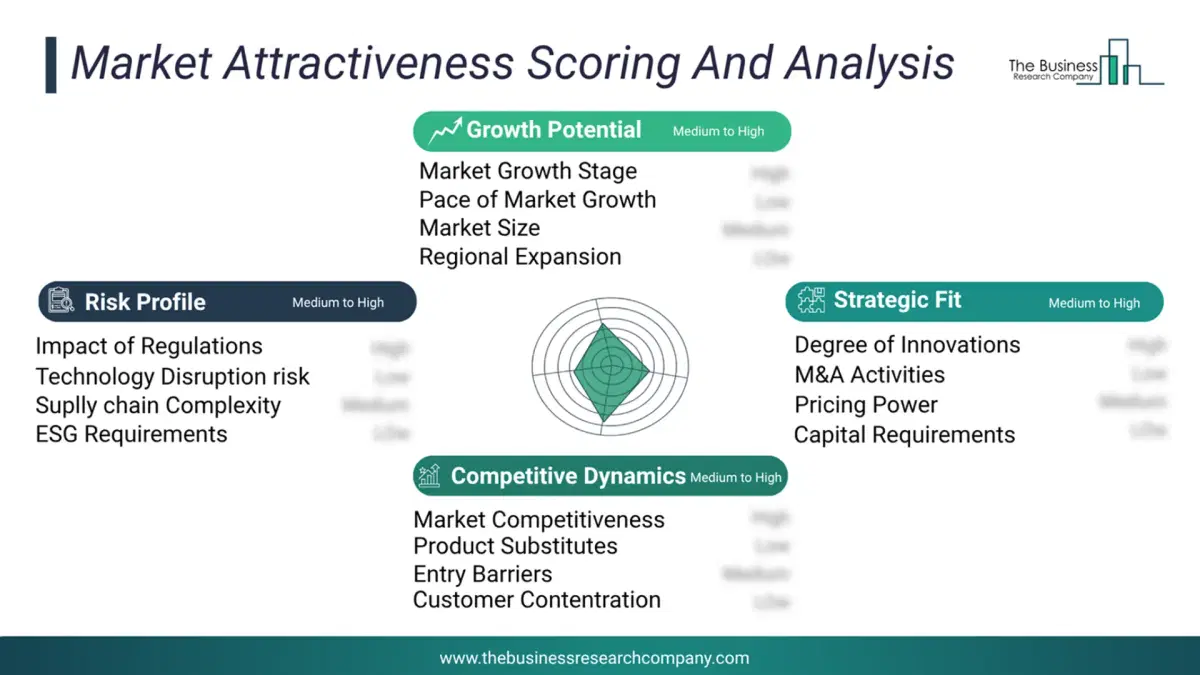
This chart presents market attractiveness based on a quantitative evaluation of growth, competition, strategic alignment, and risk, offering a clear view of opportunity areas for decision-making. This chart is for illustrative purposes; the full report contains the complete analysis.
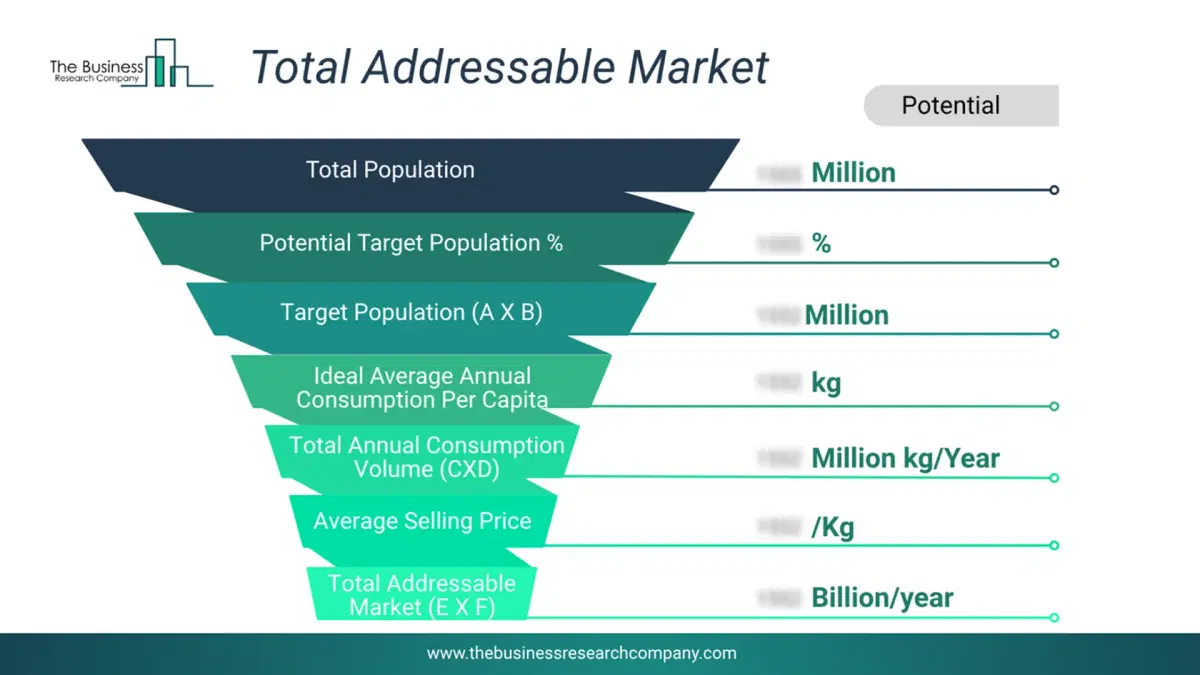
This chart highlights the Total Addressable Market (TAM) by estimating the maximum revenue opportunity using an assumption-driven approach, supporting strategic planning and opportunity sizing across markets. The chart is illustrative; the full report provides a more comprehensive analysis.
What Key Data and Analysis Are Included in the Water Storage Systems Market Report 2026?
The water storage systems market research report is one of a series of new reports from The Business Research Company that provides market statistics, including Market Report 2026?global market size, regional shares, competitors with the market share, detailed market segments, market trends and opportunities, and any further data you may need to thrive in the water storage systems Market Report 2026? The market research report delivers a complete perspective of everything you need, with an in-depth analysis of the current and future state of the Market Report 2026?Water Storage Systems Market Report Forecast Analysis
| Report Attribute | Details |
|---|---|
| Market Size Value In 2026 | $21.2 billion |
| Revenue Forecast In 2030 | $28.23 billion |
| Growth Rate | CAGR of 7.4% from 2026 to 2030 |
| Base Year For Estimation | 2025 |
| Actual Estimates/Historical Data | 2020-2025 |
| Forecast Period | 2026 - 2030 |
| Market Representation | Revenue in USD Billion and CAGR from 2026 to 2030 |
| Segments Covered | Material, Location, Application, End-User |
| Regional Scope | Asia-Pacific, Western Europe, Eastern Europe, North America, South America, Middle East, Africa |
| Country Scope | The countries covered in the report are Australia, Brazil, China, France, Germany, India, Indonesia, Japan, Taiwan, Russia, South Korea, UK, USA, Canada, Italy, Spain. |
| Key Companies Profiled | CST Industries Inc, DN Tanks Inc, Caldwell Tanks Inc, Balmoral Tanks Ltd, Maguire Iron Inc, Tank Connection LLC, Superior Tanks Co Inc, BH Tank Inc, National Storage Tank Inc, Containment Solutions Inc, Norwesco Industries Inc, Enduraplas Inc, Pioneer Water Tanks America Inc, Premier Tech Aqua, JoJo Tanks Ltd, Polymaster Group, Bushman Tanks, Water Storage Australia Pty Ltd, Aquamate LLC, Paul Mueller Company |
| Customization Scope | Request for Customization |
| Pricing And Purchase Options | Explore Purchase Options |