

Artificial Intelligence (AI) In Chip Design Market Report 2026
Global Outlook – By Type (Hardware, Software), By Technology (Central Processing Units, Graphics Processing Units, Field Programmable Gate Arrays), By Application (Data Centers, Automotive, Consumer Electronics, Healthcare, Industrial Automation, Other Applications) – Market Size, Trends, Strategies, and Forecast to 2030
Artificial Intelligence (AI) In Chip Design Market Overview
• Artificial Intelligence (AI) In Chip Design market size has reached to $3.46 billion in 2025 • Expected to grow to $15.34 billion in 2030 at a compound annual growth rate (CAGR) of 34.6% • Growth Driver: Rising Consumer Electronics Demand Fuels Growth In AI-Driven Chip Design Market • Market Trend: Advancements In Artificial Intelligence Chips With Major Players And Their Contributions To Enhanced Processing Power And Efficiency • North America was the largest region in 2025.Market Gains By 2030 – Top Opportunities By Segment
Market Gain identifies the most promising market opportunities by highlighting the segments or products expected to generate the highest incremental revenue growth over the next five years.
What Is Covered Under Artificial Intelligence (AI) In Chip Design Market?
Artificial intelligence in chip design refers to applying Artificial Intelligence (AI) techniques and methodologies to the design, development, and optimize semiconductor chips. This methodology aims to enhance design efficiency, accuracy, and performance while reducing the time and cost associated with developing advanced semiconductor devices. The main types of artificial intelligence (AI) in chip design are hardware and software. Hardware refers to the physical components and devices specifically designed or optimized to support artificial intelligence operations. The various technologies include central processing units, graphics processing units, and field programmable gate arrays. These are used in various applications such as data centers, automotive, consumer electronics, healthcare, industrial automation, and others.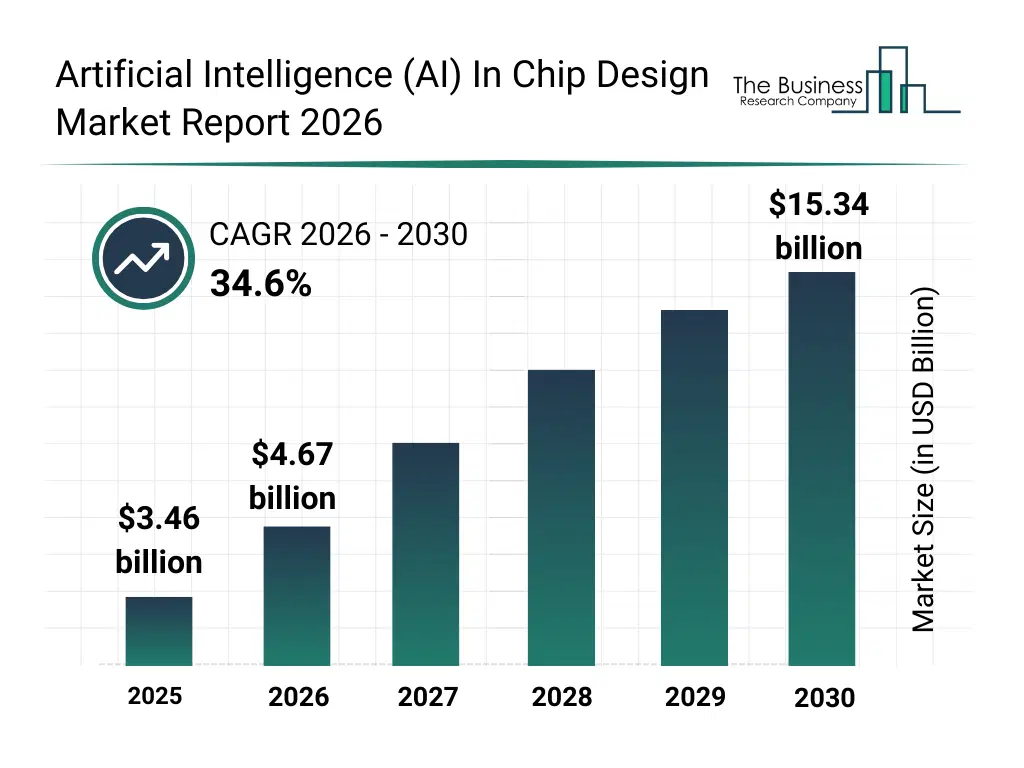
What Is The Artificial Intelligence (AI) In Chip Design Market Size and Share 2026?
The artificial intelligence (AI) in chip design market size has grown exponentially in recent years. It will grow from $3.46 billion in 2025 to $4.67 billion in 2026 at a compound annual growth rate (CAGR) of 34.9%. The growth in the historic period can be attributed to increasing chip design complexity, rising semiconductor R&D costs, early adoption of EDA tools, demand for higher chip performance, miniaturization of semiconductor nodes.What Is The Artificial Intelligence (AI) In Chip Design Market Growth Forecast?
The artificial intelligence (AI) in chip design market size is expected to see exponential growth in the next few years. It will grow to $15.34 billion in 2030 at a compound annual growth rate (CAGR) of 34.6%. The growth in the forecast period can be attributed to growth of advanced node technologies, demand for AI optimized hardware, expansion of automotive and data center chips, need for faster design cycles, adoption of AI native semiconductor workflows. Major trends in the forecast period include AI driven electronic design automation, automated chip layout optimization, machine learning based performance prediction, design space exploration automation, yield optimization through AI.
Global Artificial Intelligence (AI) In Chip Design Market Segmentation
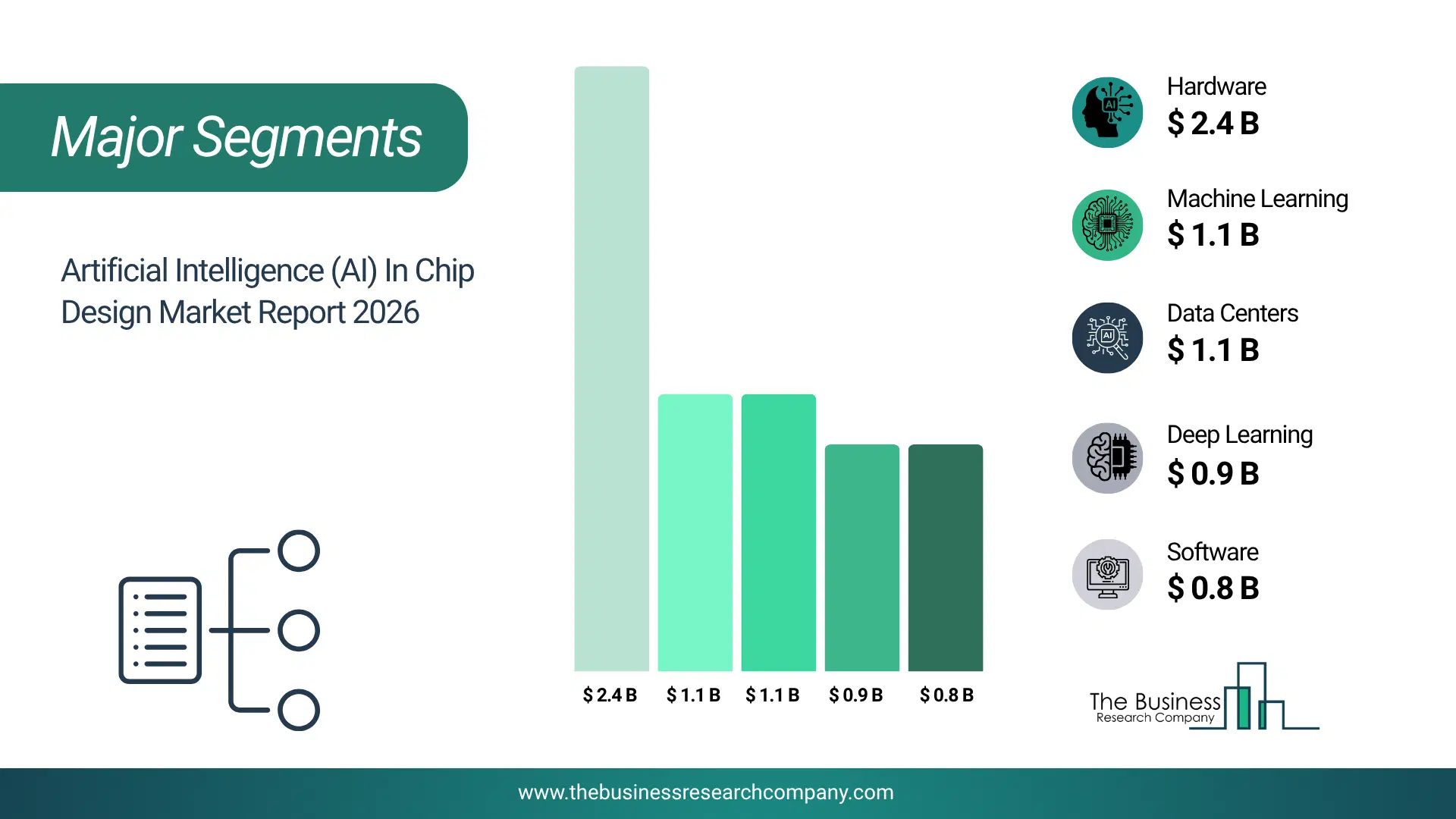
1) By Type: Hardware, Software 2) By Technology: Central Processing Units, Graphics Processing Units, Field Programmable Gate Arrays 3) By Application: Data Centers, Automotive, Consumer Electronics, Healthcare, Industrial Automation, Other Applications Subsegments: 1) By Hardware: AI-Powered Chipsets, Graphics Processing Units (GPUs) For AI, Application-Specific Integrated Circuits (ASICs) for AI, Field-Programmable Gate Arrays (FPGAs) for AI, Tensor Processing Units (TPUs), AI-Optimized Server Hardware 2) By Software: AI Design Automation Tools (EDA Software), AI-Based Simulation and Testing Software, Machine Learning Algorithms for Chip Design, Hardware Description Language (HDL) with AI Integration, AI-Driven Chip Layout and Optimization Software, AI-Enabled Software for Performance Prediction and Analysis The top segments in the artificial intelligence (ai) in chip design market will be: • Hardware will reach $2409.33 Million by 2025. • Machine Learning will reach $1173.59 Million by 2025. • Data Centers will reach $1137.15 Million by 2025. • Deep Learning will reach $984.52 Million by 2025. • Software will reach $831.58 Million by 2025.What Is The Driver Of The Artificial Intelligence (AI) In Chip Design Market?
The increasing demand for consumer electronics is expected to propel the growth of artificial intelligence in the chip design market going forward. Consumer electronics refers to electronic devices intended for everyday use by individuals, including smartphones, televisions, laptops, cameras, and home appliances. The demand for consumer electronics is due to continuous innovation, growing reliance on digital devices for communication, work, entertainment, and education, and the proliferation of the internet and the expansion of wireless networks. Artificial intelligence-based chip design enhances the performance and efficiency of consumer electronics by optimizing hardware for artificial intelligence applications, leading to faster, more intelligent devices. For instance, in May 2023, according to the Japan Electronics and Information Technology Industries Association, a Japan-based trade association, Japan’s electronic equipment output in May 2023 amounted to 771,457 units, with consumer electronics production reaching 32,099 units, marking an increase from 25,268 units in May 2022. Therefore, the increasing adoption of artificial intelligence chips in consumer electronics has driven the growth of artificial intelligence in the chip design market.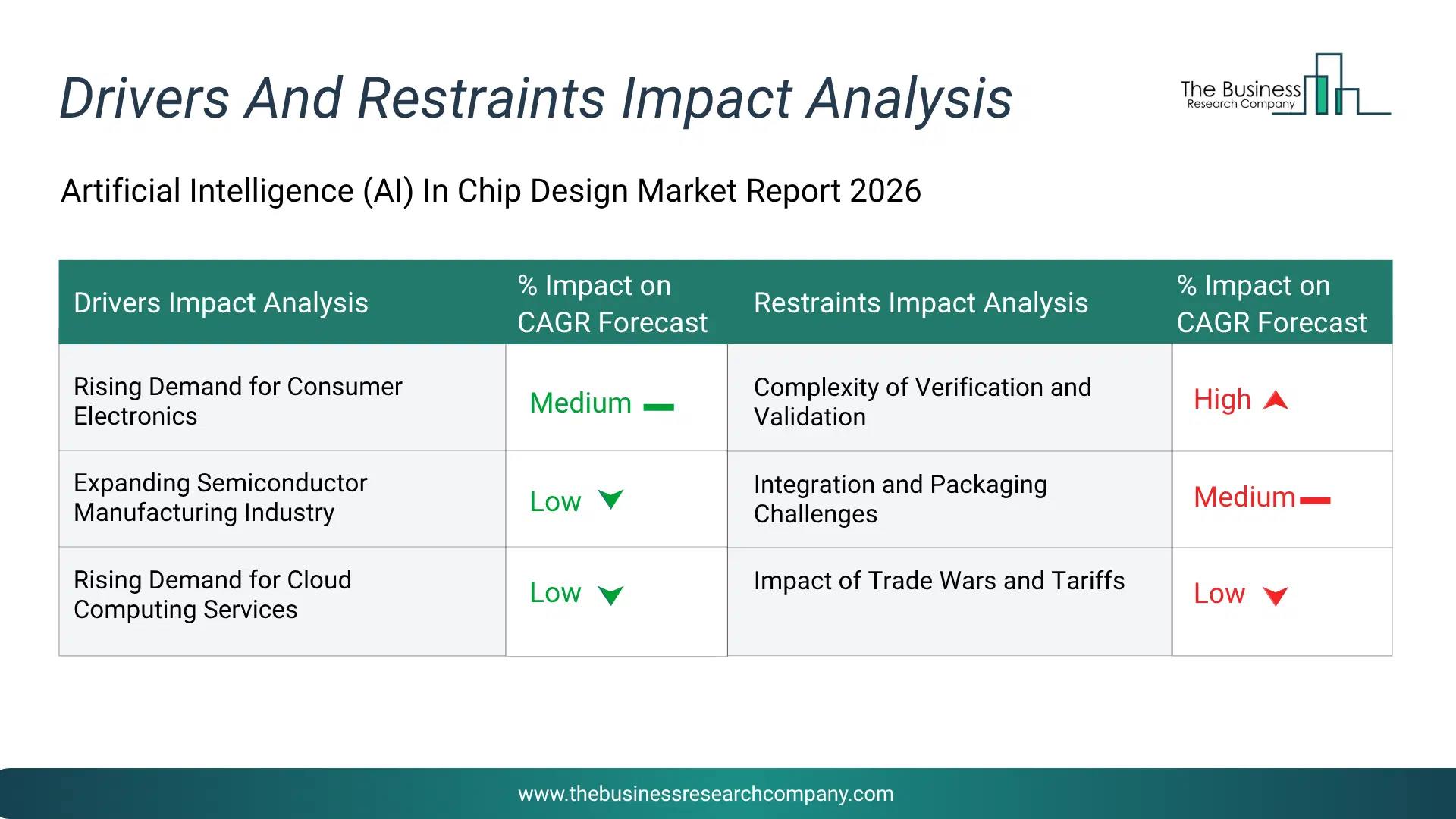
Infographic Chart Showing Key Market Drivers Analysis And Restraints For Artificial Intelligence (Ai) In Chip Design Market
The chart presents an impact analysis of key drivers and restraints, quantifying their relative influence on the market's growth rate and helping assess the balance between growth enablers and limiting factors. This chart offers a high-level perspective; the full report contains more detailed insights.
How Will The Drivers Impact Growth In The Global Artificial Intelligence (AI) In Chip Design Market?
• Rising Demand for Consumer Electronics (Medium) – The rising demand for consumer electronics will become a key driver of growth in the artificial intelligence (AI) in chip design market by 2030. Consumer electronics are devices intended for personal or home use that utilize electronic technology, including items like smartphones, TVs, and audio systems. The demand for consumer electronics is rising due to increasing digitalization, as more people adopt smart devices to enhance convenience, connectivity, and access to information in daily life. Consumer electronics necessitate the demand for AI in chip design as advanced devices require smarter, faster and more energy-efficient processing to handle AI-driven features like voice recognition, image processing, and real-time personalization. As a result, the rising demand for consumer electronics is anticipated to contributing to a 1.0% annual growth in the market. • Expanding Semiconductor Manufacturing Industry (Low) – The expanding semiconductor manufacturing industry will emerge as a major factor driving the expansion of the artificial intelligence (AI) in chip design market by 2030. The semiconductor manufacturing industry produces microchips and integrated circuits that serve as the core components for electronic devices and systems. The semiconductor manufacturing industry is expanding due to the growing demand for advanced electronics in sectors like AI, 5G and electric vehicles, which require more powerful and efficient chips. The expansion of the semiconductor manufacturing industry drives the demand for AI in chip design as producing more advanced and efficient chips requires AI-driven design tools to optimize performance, reduce development time and manage increasing complexity. Consequently, the expanding semiconductor manufacturing industry is projected to contributing to a 0.7% annual growth in the market. • Rising Demand for Cloud Computing Services (Low) – The rising demand for cloud computing services as a major factor driving the expansion of the artificial intelligence (AI) in chip design market by 2030. Cloud computing services offer internet-based access to computing resources like storage, processing power and applications as needed. Cloud computing services are rising due to the increasing need for scalable and flexible IT solutions that allow businesses to efficiently manage data and applications without heavy investment in physical infrastructure. AI in chip design benefits cloud computing services by creating high-performance, energy-efficient processors that enable faster data processing and seamless scalability for handling large volumes of cloud-based workloads. Consequently, rising demand for cloud computing services is projected to contributing to a 0.5% annual growth in the market. • Growing Trend Towards Autonomous Vehicles (Low) – The growing trend towards autonomous vehicles will emerge as a major factor driving the expansion of the artificial intelligence (AI) in chip design market by 2030. Autonomous vehicles are driverless systems that rely on AI, sensors, and software to control navigation and operation without human input. Autonomous vehicles are rising due to advancements in artificial intelligence and sensor technologies, which enhance safety, efficiency, and convenience in transportation. AI in chip design is beneficial for autonomous vehicles as it enables the development of specialized processors that can handle complex real-time data processing for navigation, obstacle detection and decision-making with high speed and accuracy. Consequently, the growing trend towards autonomous vehicles are projected to contributing to a 0.2% annual growth in the market.How Will The Restraints Impact Growth In The Global Artificial Intelligence (AI) In Chip Design Market?
• Complexity of Verification and Validation (Low) – Complexity of Verification and Validation will restrict the growth of the Artificial Intelligence (AI) In Chip Design market during the forecast period. AI chip design verification and validation involves complex processes to ensure functionality, performance, and reliability. Verification challenges can lead to design errors, production delays, and increased development costs. The complexity of testing and validating AI chips affects time-to-market and limits innovation. • Integration and Packaging Challenges (Low) – Integration and Packaging Challenges will restrict the growth of the Artificial Intelligence (AI) In Chip Design market during the forecast period. AI chip design faces challenges in integrating diverse IP blocks and packaging technologies. Integration complexity affects chip performance, power efficiency, and manufacturing yield. Packaging challenges can limit the performance of AI chips and affect their competitiveness in the market. • Impact of Trade Wars and Tariffs (Low) – Impact of Trade Wars and Tariffs will restrict the growth of the Artificial Intelligence (AI) In Chip Design market during the forecast period. Trade tensions and tariffs on semiconductors and electronics affect AI chip design and manufacturing. Tariffs can increase production costs and affect the competitiveness of chip manufacturers. Trade barriers may also impact technology transfer and international collaboration in chip design.Key Players In The Global Artificial Intelligence (AI) In Chip Design Market
Major companies operating in the artificial intelligence (AI) in chip design market are Amazon Inc., Apple Inc., Alphabet Inc., Intel Corporation, IBM Corporation, Qualcomm Inc., NVIDIA Corporation, Advanced Micro Devices Inc. (AMD), Microchip Technology Inc., Synopsys Inc., Cadence Design Systems Inc., Xilinx Inc., Arm Holdings PLC, SambaNova Systems Inc., Cerebras Systems Inc., Groq Inc., Mythic Inc., Rebellions Inc., Siemens EDA (Siemens Digital Industries Software), Graphcore Ltd.
This chart is for illustrative purposes; the full report includes a detailed competitor analysis and comprehensive overview of the top 10 companies in the market.
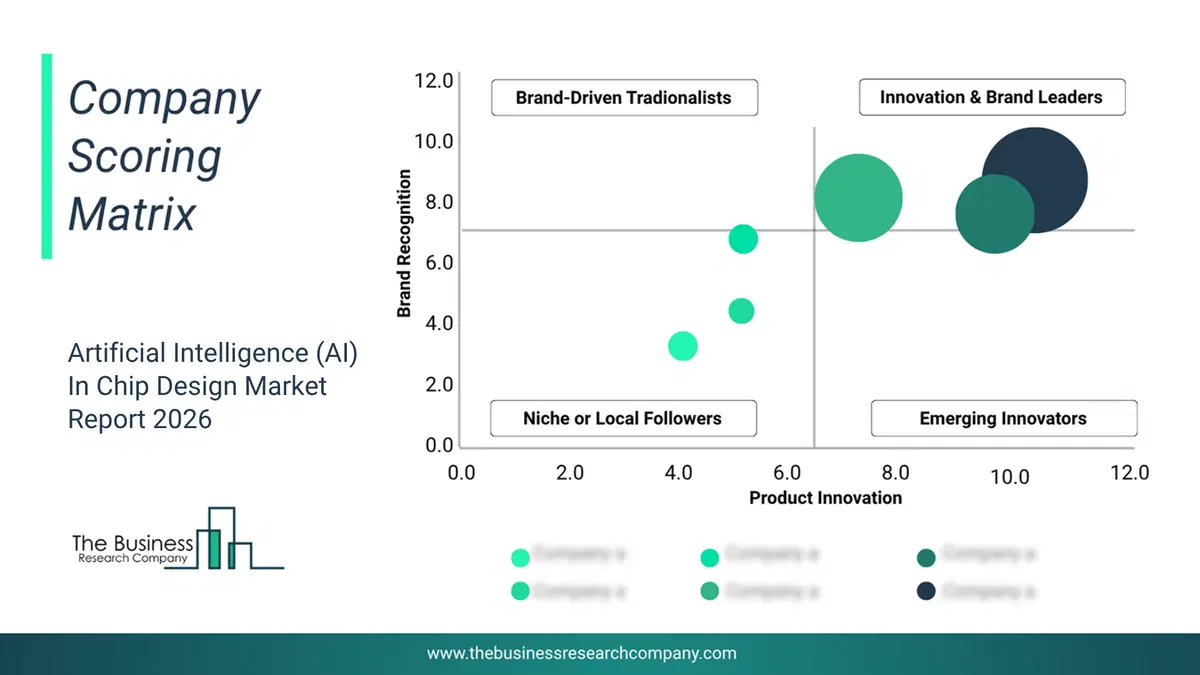
This chart maps companies by product innovation and brand strength, with bubble size indicating relative revenue, helping identify market leaders, challengers, and niche players. This is an illustrative chart; the full report provides a complete and accurate competitive analysis.
Global Artificial Intelligence (AI) In Chip Design Market Trends and Insights
Major companies operating in the artificial intelligence (AI) in chip design market are focusing on advanced solutions such as, AI chips to compete and dominance in the AI semiconductor market. AI chips, or artificial intelligence chips, are specialized processors designed to accelerate AI-related tasks, such as machine learning, neural network processing, and deep learning. For instance, in June 2024, Advanced Micro Devices Inc., a US-based company that manufactures semiconductors, launched MI325X accelerator, an AI chip. The MI325X is designed to meet the increasing demand for sophisticated chips that support complex AI applications in data centers. This new chip is designed to significantly enhance performance in AI applications, with expectations to outperform the existing MI300 series by 35 times in inference tasks, which is crucial for generative AI applications. The new processors feature advanced architectures optimized for AI and machine learning tasks, focusing on high throughput and parallel processing capabilities.What Are Latest Mergers And Acquisitions In The Artificial Intelligence (AI) In Chip Design Market?
In April 2025, NXP Semiconductors N.V., a Netherlands-based semiconductor company, acquired Kinara, Inc. for an undisclosed amount. With this acquisition, NXP aims to enhance its intelligent edge portfolio by integrating high-performance, energy-efficient discrete neural processing units (NPUs) and AI software to strengthen its capabilities in industrial and automotive edge AI applications. Kinara, Inc. is a US-based company specializing in programmable NPUs and AI software for edge computing.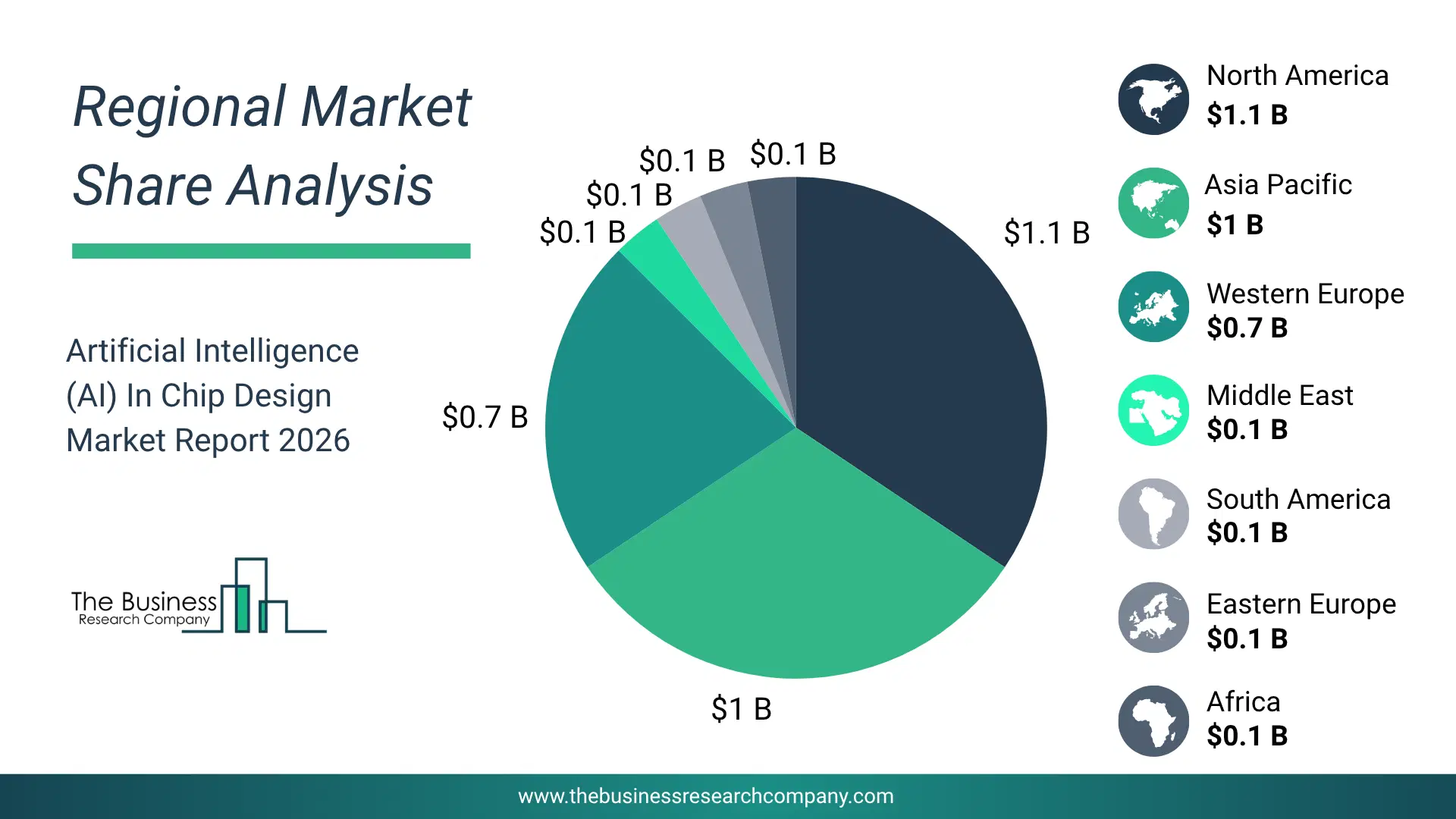
Regional Insights
North America was the largest region in the artificial intelligence (AI) in chip design market in 2025. The regions covered in this market report are Asia-Pacific, South East Asia, Western Europe, Eastern Europe, North America, South America, Middle East, Africa. The countries covered in this market report are Australia, Brazil, China, France, Germany, India, Indonesia, Japan, Taiwan, Russia, South Korea, UK, USA, Canada, Italy, Spain.What Defines the Artificial Intelligence (AI) In Chip Design Market?
The artificial intelligence (AI) in chip design market consists of revenues earned by entities by providing machine learning (ML), natural language processing (NLP), and optimization algorithms. The market value includes the value of related goods sold by the service provider or included within the service offering. The artificial intelligence in chip design market also includes sales of design automation tools and semiconductor tools. Values in this market are ‘factory gate’ values, that is the value of goods sold by the manufacturers or creators of the goods, whether to other entities (including downstream manufacturers, wholesalers, distributors and retailers) or directly to end customers. The value of goods in this market includes related services sold by the creators of the goods.How is Market Value Defined and Measured?
The market value is defined as the revenues that enterprises gain from the sale of goods and/or services within the specified market and geography through sales, grants, or donations in terms of the currency (in USD unless otherwise specified). The revenues for a specified geography are consumption values that are revenues generated by organizations in the specified geography within the market, irrespective of where they are produced. It does not include revenues from resales along the supply chain, either further along the supply chain or as part of other products.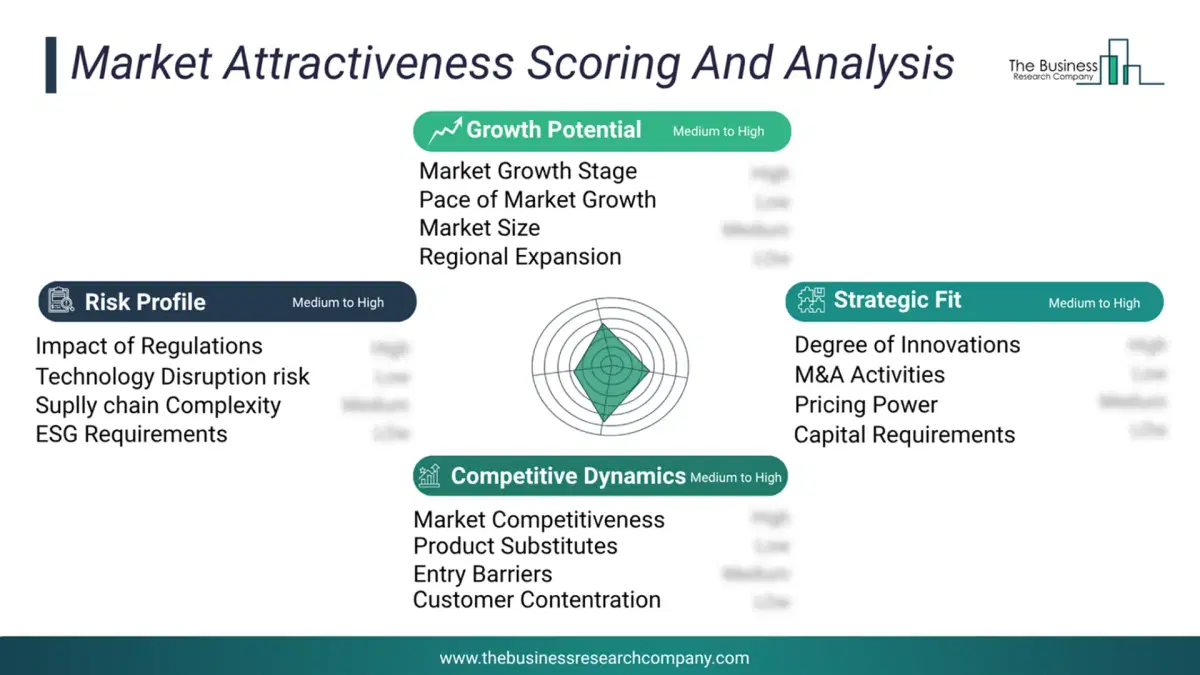
This chart presents market attractiveness based on a quantitative evaluation of growth, competition, strategic alignment, and risk, offering a clear view of opportunity areas for decision-making. This chart is for illustrative purposes; the full report contains the complete analysis.
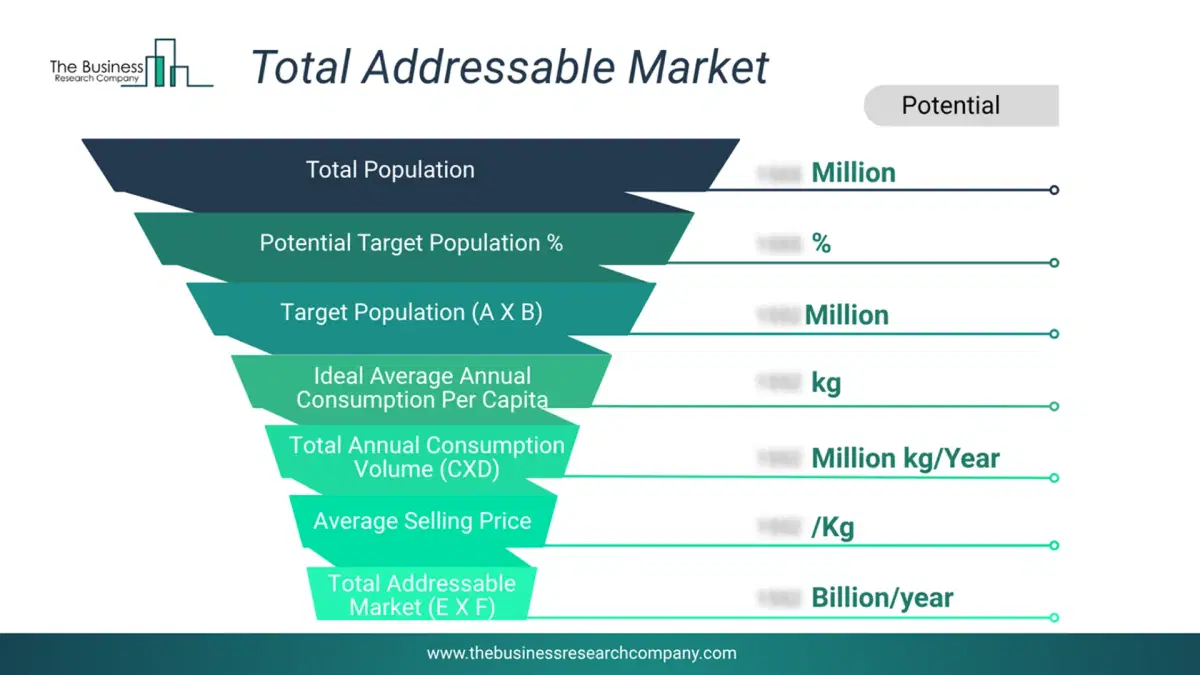
This chart highlights the Total Addressable Market (TAM) by estimating the maximum revenue opportunity using an assumption-driven approach, supporting strategic planning and opportunity sizing across markets. The chart is illustrative; the full report provides a more comprehensive analysis.
What Key Data and Analysis Are Included in the Artificial Intelligence (AI) In Chip Design Market Report 2026?
The artificial intelligence (ai) in chip design market research report is one of a series of new reports from The Business Research Company that provides market statistics, including industry global market size, regional shares, competitors with the market share, detailed market segments, market trends and opportunities, and any further data you may need to thrive in the artificial intelligence (ai) in chip design industry. The market research report delivers a complete perspective of everything you need, with an in-depth analysis of the current and future state of the industry.Artificial Intelligence (AI) In Chip Design Market Report Forecast Analysis
| Report Attribute | Details |
|---|---|
| Market Size Value In 2026 | $4.67 billion |
| Revenue Forecast In 2030 | $15.34 billion |
| Growth Rate | CAGR of 34.9% from 2026 to 2030 |
| Base Year For Estimation | 2025 |
| Actual Estimates/Historical Data | 2020-2025 |
| Forecast Period | 2026 - 2030 |
| Market Representation | Revenue in USD Billion and CAGR from 2026 to 2030 |
| Segments Covered | Type, Technology, Application |
| Regional Scope | Asia-Pacific, Western Europe, Eastern Europe, North America, South America, Middle East, Africa |
| Country Scope | The countries covered in the report are Australia, Brazil, China, France, Germany, India, Indonesia, Japan, Taiwan, Russia, South Korea, UK, USA, Canada, Italy, Spain. |
| Key Companies Profiled | Amazon Inc., Apple Inc., Alphabet Inc., Intel Corporation, IBM Corporation, Qualcomm Inc., NVIDIA Corporation, Advanced Micro Devices Inc. (AMD), Microchip Technology Inc., Synopsys Inc., Cadence Design Systems Inc., Xilinx Inc., Arm Holdings PLC, SambaNova Systems Inc., Cerebras Systems Inc., Groq Inc., Mythic Inc., Rebellions Inc., Siemens EDA (Siemens Digital Industries Software), Graphcore Ltd. |
| Customization Scope | Request for Customization |
| Pricing And Purchase Options | Explore Purchase Options |