
Artificial Intelligence in Healthcare Market Report 2026
Global Outlook – By Offering (Hardware, Software, Services), By Algorithm (Deep Learning, Querying Method, Natural Language Processing, Context Aware Processing), By Application (Robot-Assisted Surgery, Virtual Nursing Assistant, Administrative Workflow Assistance, Fraud Detection, Dosage Error Reduction, Clinical Trial Participant Identifier, Preliminary Diagnosis), By End-User (Hospitals and Diagnostic Centers, Pharmaceutical and Biopharmaceutical Companies, Healthcare Payers, Patients) – Market Size, Trends, Strategies, and Forecast to 2030
Artificial Intelligence in Healthcare Market Overview
• Artificial Intelligence in Healthcare market size has reached to $24.1 billion in 2025 • Expected to grow to $91.85 billion in 2030 at a compound annual growth rate (CAGR) of 30.2% • Growth Driver: Government Initiatives Propel The Growth Of Artificial Intelligence In Healthcare Market • Market Trend: Advancements In AI-Driven Healthcare Solutions • North America was the largest region in 2025 and Asia-Pacific is the fastest growing region.Market Gains By 2030 – Top Opportunities By Segment
Market Gain identifies the most promising market opportunities by highlighting the segments or products expected to generate the highest incremental revenue growth over the next five years.
What Is Covered Under Artificial Intelligence in Healthcare Market?
AI in healthcare refers to the use of machine learning and cognitive algorithms for treatment techniques and patient outcomes. AI is applied in various healthcare practices, such as medical diagnostics, drug discovery, clinical trials, pain management, and improving patient outcomes. The main types of AI in healthcare offerings include hardware and software. By algorithms, types of AI in healthcare products include deep learning, querying methods, natural language processing, and context-aware processing. Medical device manufacturers use AI-based technologies to innovate hardware products to better assist healthcare providers and improve treatment. Technology companies develop AI algorithms for healthcare-related solutions. Robot-assisted surgery, virtual nursing assistants, administrative workflow assistance, fraud detection, dosage error reduction, clinical trial participant identifiers, and preliminary diagnosis are the major applications of AI in healthcare. Major end users of AI in healthcare are hospitals and diagnostic centers, pharmaceutical and biopharmaceutical companies, healthcare payers, and patients.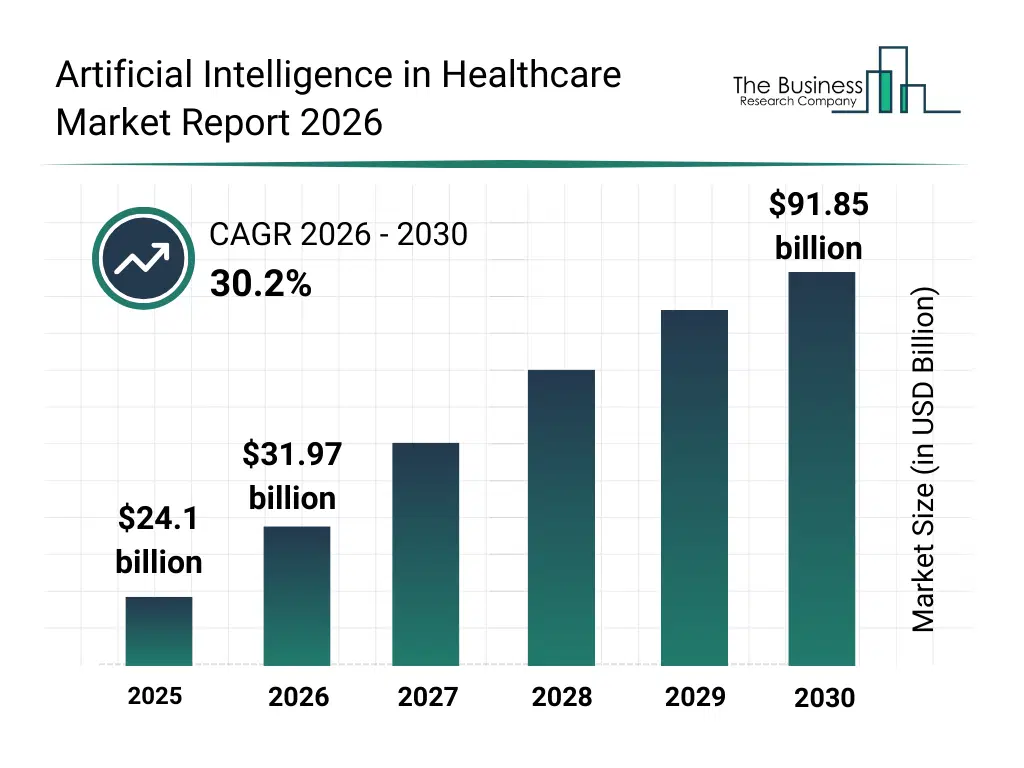
What Is The Artificial Intelligence in Healthcare Market Size and Share 2026?
The artificial intelligence in healthcare market size has grown exponentially in recent years. It will grow from $24.1 billion in 2025 to $31.97 billion in 2026 at a compound annual growth rate (CAGR) of 32.6%. The growth in the historic period can be attributed to rising healthcare data volumes, shortage of skilled healthcare professionals, adoption of electronic health records, growing need for early disease detection, advancements in medical imaging technologies.What Is The Artificial Intelligence in Healthcare Market Growth Forecast?
The artificial intelligence in healthcare market size is expected to see exponential growth in the next few years. It will grow to $91.85 billion in 2030 at a compound annual growth rate (CAGR) of 30.2%. The growth in the forecast period can be attributed to growth of precision medicine initiatives, increasing adoption of AI in diagnostics, demand for personalized treatment plans, expansion of remote patient monitoring, rising healthcare cost optimization efforts. Major trends in the forecast period include AI powered medical imaging, predictive analytics for patient outcomes, virtual health assistants, AI driven drug discovery, clinical decision support systems.
Global Artificial Intelligence in Healthcare Market Segmentation
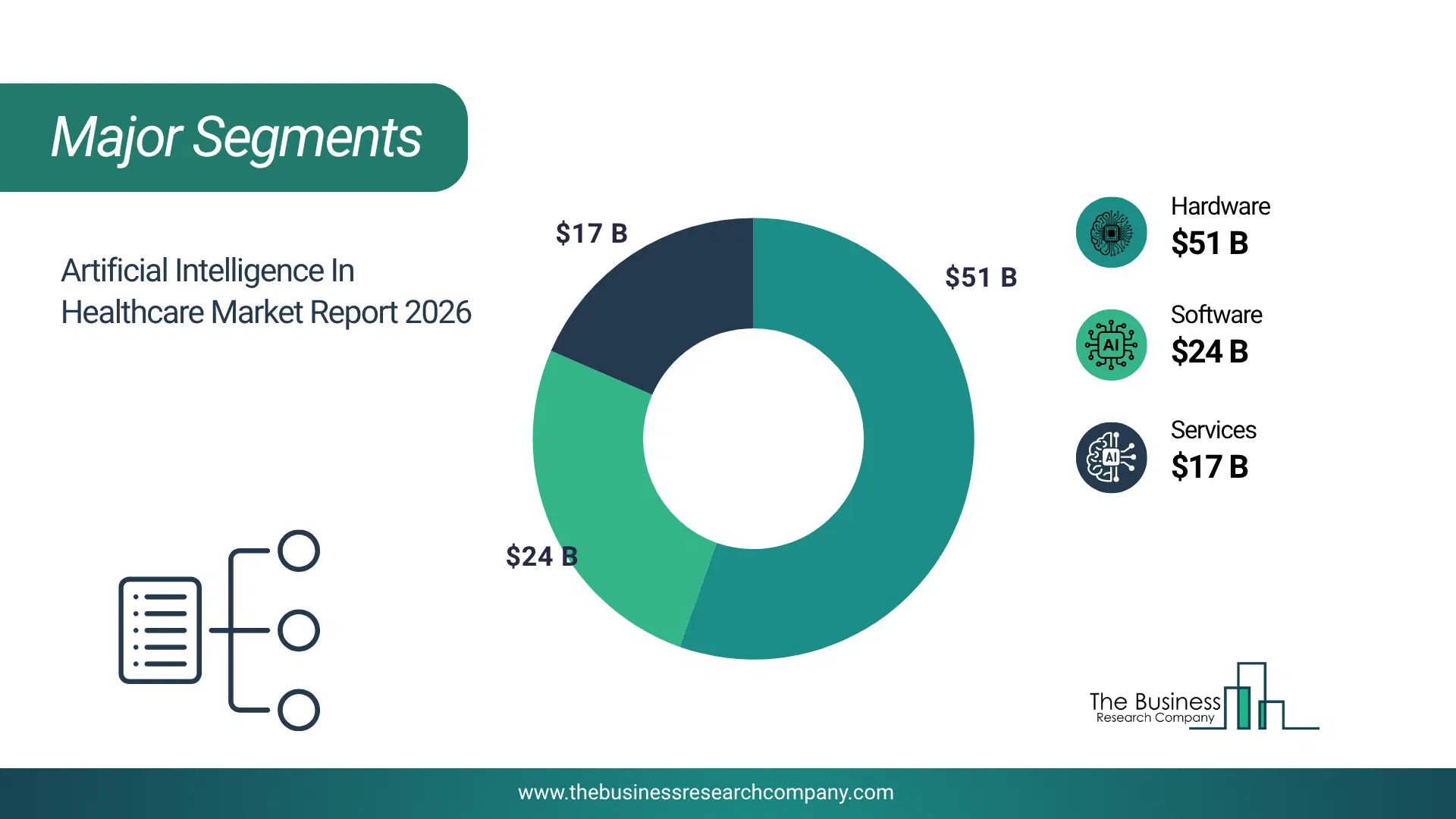
1) By Offering: Hardware, Software, Services 2) By Algorithm: Deep Learning, Querying Method, Natural Language Processing, Context Aware Processing 3) By Application: Robot-Assisted Surgery, Virtual Nursing Assistant, Administrative Workflow Assistance, Fraud Detection, Dosage Error Reduction, Clinical Trial Participant Identifier, Preliminary Diagnosis 4) By End-User: Hospitals and Diagnostic Centers, Pharmaceutical and Biopharmaceutical Companies, Healthcare Payers, Patients Subsegments: 1) By Hardware: AI-Powered Imaging Devices, Wearable Health Monitoring Devices, Robotics And Surgical Devices 2) By Software: Diagnostic Software, Predictive Analytics Software, Natural Language Processing (NLP) Software 3) By Services: Consulting Services, Implementation Services, Maintenance And Support Services The top segments in the artificial intelligence in healthcare market will be: • Hardware will reach $50.8 Billion by 2030. • Software will reach $23.8 Billion by 2030. • Services will reach $16.88 Billion by 2030.What Is The Driver Of The Artificial Intelligence in Healthcare Market?
Increasing government initiatives for supporting artificial intelligence in healthcare are expected to contribute to the growth of artificial intelligence in the healthcare market. Government initiatives are targeted programs or actions launched by public authorities to address specific national needs, drive development, or support strategic priorities. Government initiatives are increasing as rapid technological, economic, and social changes require proactive public intervention to ensure stable growth and address emerging challenges. Government initiatives help advance AI in healthcare by offering essential funding and clear policy guidance, enabling faster development and wider adoption of AI technologies that enhance diagnosis, treatment, and overall patient care. For instance, in June 2024, according to the Department of Health and Aged Care, Australia-Based government agency, the Albanese Government is committing nearly $30 million to research aimed at exploring innovative applications of artificial intelligence (AI) to enhance access to healthcare services and maintain a world-class health system. Therefore, increasing government initiatives for supporting artificial intelligence in healthcare will promote the growth of the market.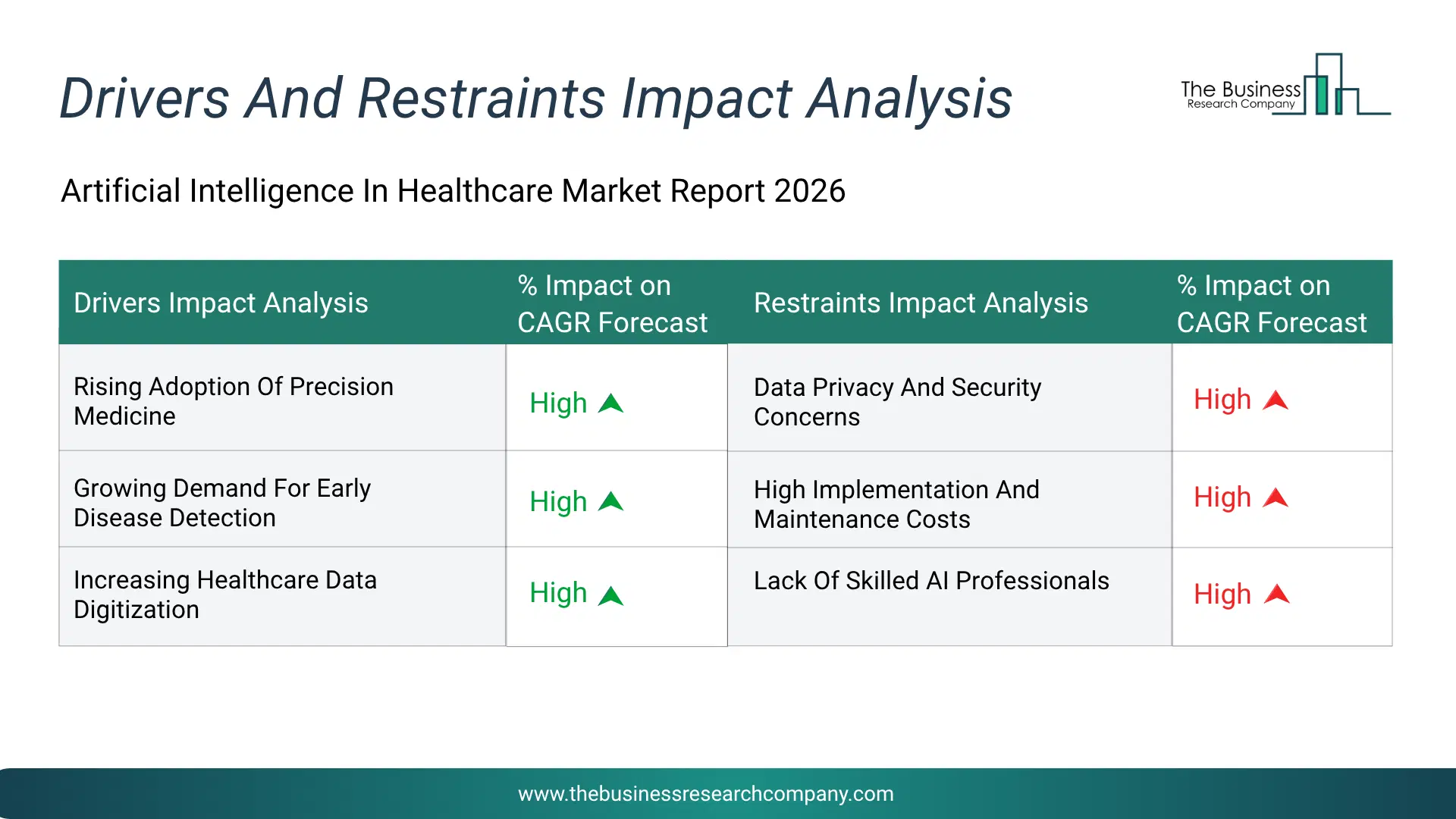
Infographic Chart Showing Key Market Drivers Analysis And Restraints For Artificial Intelligence In Healthcare Market
The chart presents an impact analysis of key drivers and restraints, quantifying their relative influence on the market's growth rate and helping assess the balance between growth enablers and limiting factors. This chart offers a high-level perspective; the full report contains more detailed insights.
How Will The Drivers Impact Growth In The Global Artificial Intelligence In Healthcare Market?
• Rising Adoption Of Precision Medicine (High) – During the forecast period, the rising adoption of precision medicine is expected to become a key growth driver for the artificial intelligence in healthcare market by 2030. Rising adoption of precision medicine increases the use of AI algorithms to analyze large and complex datasets, including genetic profiles, clinical histories, lifestyle information, and real-time patient monitoring data, to enable highly personalized treatment planning. This growing adoption is transforming traditional one-size-fits-all healthcare approaches into more targeted and effective therapies. AI-driven tools help identify disease risk patterns, predict treatment responses, and recommend optimized drug combinations, thereby improving overall patient outcomes, reducing adverse drug reactions, and supporting more efficient clinical decision-making across healthcare systems. • Growing Demand For Early Disease Detection (High) – During the forecast period, the growing demand for early disease detection is expected to emerge as a major factor driving the expansion of the artificial intelligence in healthcare market by 2030. Growing demand for early disease detection boosts the deployment of AI technologies in medical imaging, pathology, and diagnostic workflows for faster and more accurate identification of diseases such as cancer, cardiovascular disorders, and neurological conditions. AI-powered imaging systems can detect subtle abnormalities that may be missed by the human eye, enabling earlier intervention and significantly improving survival rates. Additionally, integration of AI in screening programs and point-of-care diagnostics is enhancing diagnostic speed, reducing healthcare burdens, and supporting preventive healthcare strategies through timely and precise disease identification. • Increasing Healthcare Data Digitization (High) – During the forecast period, the increasing healthcare data digitization is expected to act as a key growth catalyst for the artificial intelligence in healthcare market by 2030. Increasing healthcare data digitization supports the widespread adoption of AI through the expansion of electronic health records (EHRs), cloud computing platforms, and big data analytics systems that streamline healthcare operations. As hospitals and healthcare providers generate vast volumes of structured and unstructured data, AI helps organize, interpret, and extract actionable insights to improve clinical decision-making and operational efficiency. This digital transformation enables better patient tracking, predictive analytics for disease progression, resource optimization in hospitals, and improved coordination among healthcare professionals, ultimately strengthening the overall healthcare delivery ecosystem.How Will The Restraints Impact Growth In The Global Artificial Intelligence In Healthcare Market?
• Data Privacy And Security Concerns (High) – During the forecast period, the data Privacy And Security Concerns limit AI adoption due to risks of patient data breaches, cyberattacks, and regulatory compliance challenges in healthcare systems. • High Implementation And Maintenance Costs (High) – During the forecast period, the high Implementation And Maintenance Costs restrict market growth because AI systems require expensive infrastructure, software integration, and skilled professionals. • Lack Of Skilled AI Professionals (High) – During the forecast period, the lack Of Skilled AI Professionals slows deployment as healthcare organizations face shortages of experts capable of developing, operating, and managing AI-based healthcare solutions.Key Players In The Global Artificial Intelligence in Healthcare Market
Major companies operating in the artificial intelligence in healthcare market are IBM Watson Health; Nuance Communications, Inc; Alphabet Inc; Concreto HealthAI; Nvidia Corporation; PathAI; XtalPi; Benevolent AI; Exscientia; OWKIN; LiveHealth; ChironX; Consure Medical; Predible Health; Lybrate; Artelus; OncoStem Qure.ai; Jiaxing Taimei Medical Technology; Ping An Health Medical Technology; YITU; iCarbonX; Insilico; Skin Analytics; Babylon Health; Cambridge Cognition; Renalytix AI; Iktos; Novartis; Gero; Ardigen; Botkin; Webiomed; Care Mentor AI; Diagnocat; Atomwise Inc; Cloud Pharmaceuticals; Bioage; NuMedii; Envisagenics; Aria Pharmaceuticals; Verge Genomics; Berg LLC; Deep Genomics; Cyclica; IQVIA; Roche; Pfizer; PRA Healthscience; Gesto; Intensicare; Didoc; Betterfly; Deenty; Examedi; Dentalink; Cero; MedPass; Pixeon; Hi Technologies; Conexa Saude; Wuru; Yerbo; BioScience; Caecus; Epitrack; GE Healthcare; Oncora Medical; Recursion Pharmaceuticals Inc; Nucleai; Pepticom; AstraZeneca; Rology; HearX Group; DilenyTech; iNNOHEALTH Technology Solutions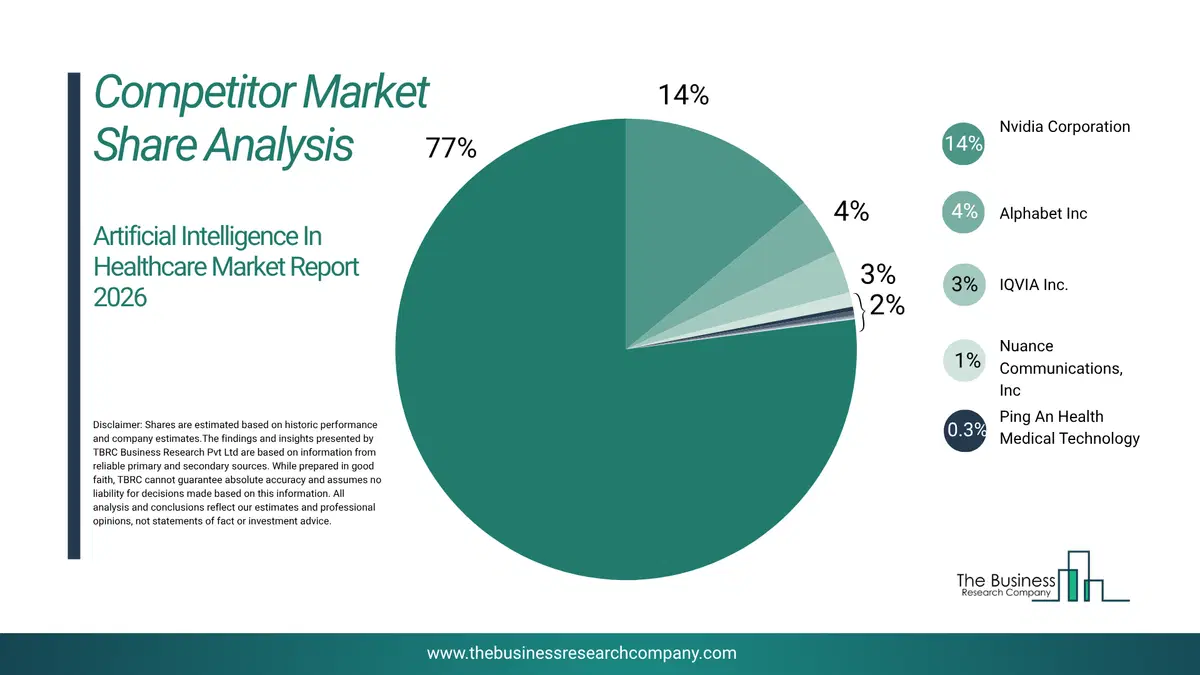
This chart is for illustrative purposes; the full report includes a detailed competitor analysis and comprehensive overview of the top 10 companies in the market.
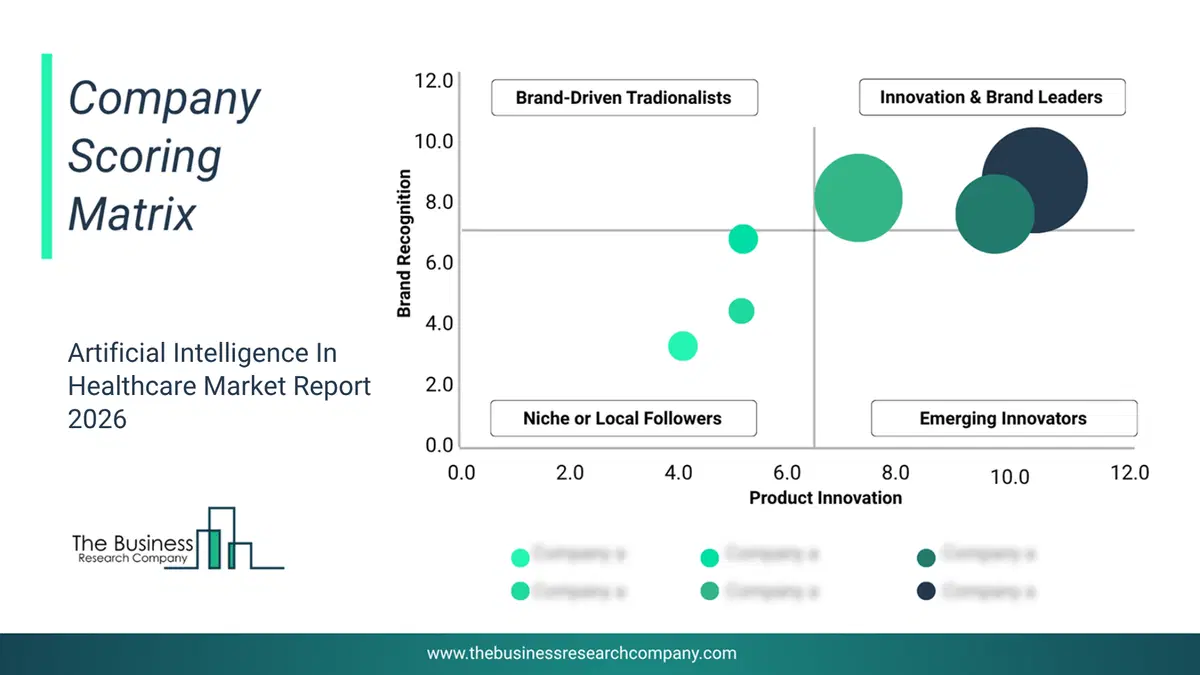
This chart maps companies by product innovation and brand strength, with bubble size indicating relative revenue, helping identify market leaders, challengers, and niche players. This is an illustrative chart; the full report provides a complete and accurate competitive analysis.
Global Artificial Intelligence in Healthcare Market Trends and Insights
Major companies operating in the artificial intelligence in healthcare market are focusing on developing innovative solutions, such as AI-powered electronic health records (EHRs), to enhance clinical decision-making, streamline administrative workflows, improve patient outcomes, and enable more personalized and efficient healthcare delivery. AI-powered electronic health records (EHRs) are digital health record systems that integrate artificial intelligence (AI) technologies to enhance the management, analysis, and utilization of patient health data. For instance, in August 2025, Oracle, a US-based technology corporation, launched its next-generation AI-powered EHR system, designed to optimize healthcare delivery by combining machine learning algorithms with a user-friendly interface. The platform leverages AI to automate administrative tasks, predict patient risks, recommend personalized treatments, and facilitate real-time clinical decision-making, thereby reducing clinician burnout and enhancing operational efficiency. This innovative solution is particularly applicable across hospitals, clinics, and telehealth platforms seeking to integrate advanced AI capabilities into patient care management.What Are Latest Mergers And Acquisitions In The Artificial Intelligence in Healthcare Market?
In September 2024, Stryker Corporation, a US-based medical technologies corporation, acquired care.AI for an undisclosed amount. The acquisition aims to bolster Stryker Corporation’s digital healthcare strategy by integrating advanced AI-assisted virtual care solutions into its portfolio. By enhancing its capabilities in smart room technology and ambient intelligence, Stryker aims to improve real-time decision-making tools that support healthcare providers and elevate patient care outcomes. care.AI is a US-based company specializing in artificial intelligence-driven healthcare solutions.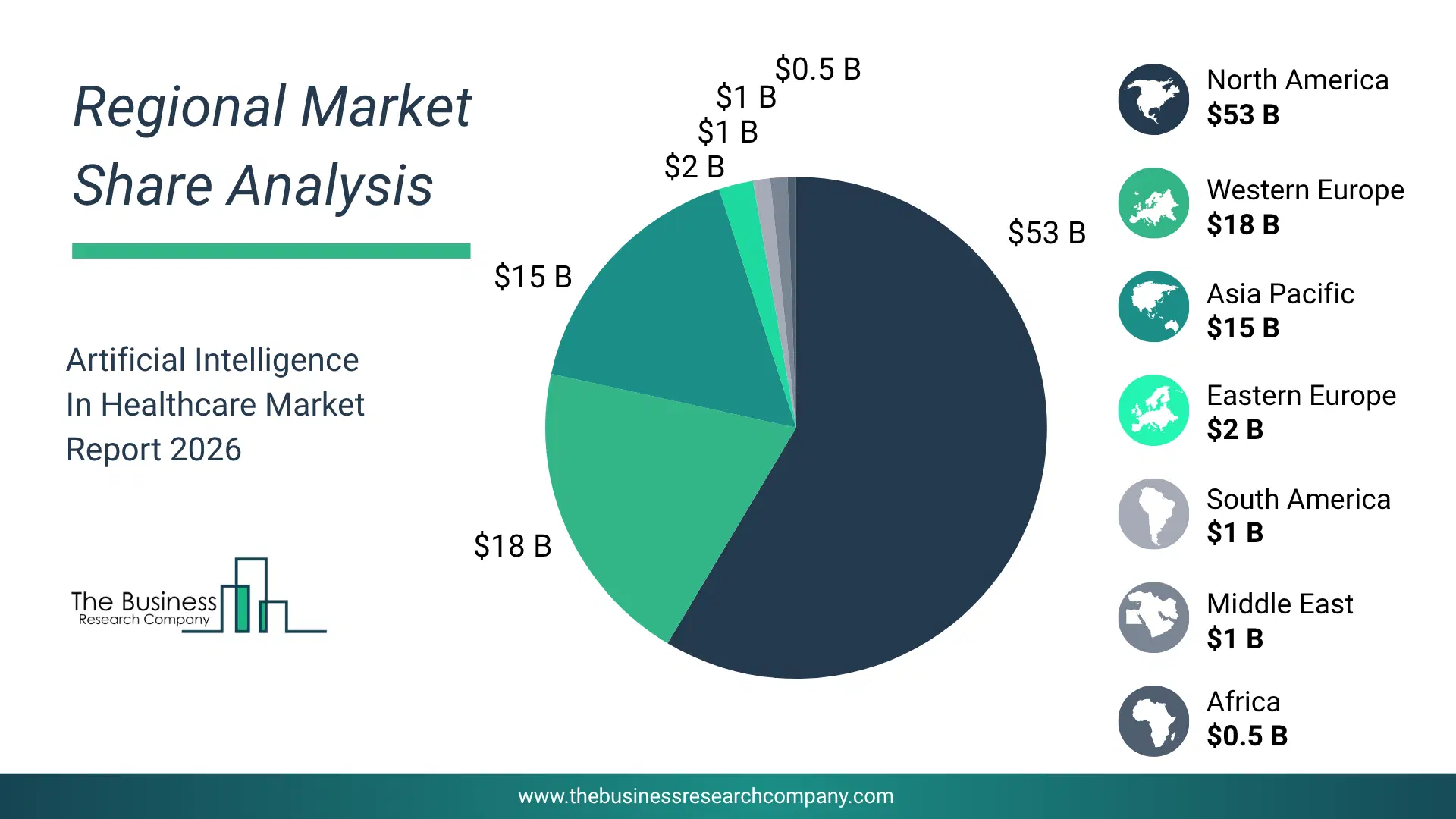
Regional Insights
North America was the largest region in the Artificial Intelligence in the Healthcare market in 2025. Asia-Pacific is expected to be the fastest-growing region in the forecast period. The regions covered in this market report are Asia-Pacific, South East Asia, Western Europe, Eastern Europe, North America, South America, Middle East, Africa. The countries covered in this market report are Australia, Brazil, China, France, Germany, India, Indonesia, Japan, Taiwan, Russia, South Korea, UK, USA, Canada, Italy, SpainWhat Defines the Artificial Intelligence in Healthcare Market?
The AI in healthcare market includes revenues earned by entities by discovering links between genetic codes, powering surgical robots and maximizing hospital efficiency. The market value includes the value of related goods sold by the service provider or included within the service offering. Only goods and services traded between entities or sold to end consumers are included.How is Market Value Defined and Measured?
The market value is defined as the revenues that enterprises gain from the sale of goods and/or services within the specified market and geography through sales, grants, or donations in terms of the currency (in USD unless otherwise specified). The revenues for a specified geography are consumption values that are revenues generated by organizations in the specified geography within the market, irrespective of where they are produced. It does not include revenues from resales along the supply chain, either further along the supply chain or as part of other products.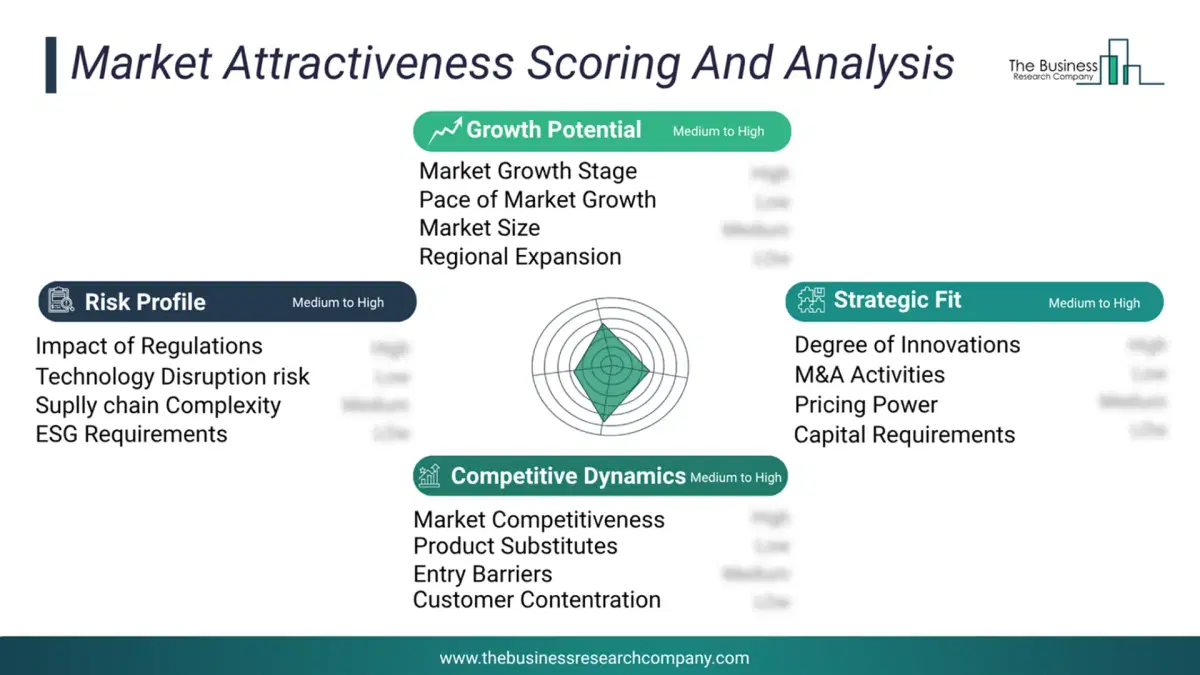
This chart presents market attractiveness based on a quantitative evaluation of growth, competition, strategic alignment, and risk, offering a clear view of opportunity areas for decision-making. This chart is for illustrative purposes; the full report contains the complete analysis.
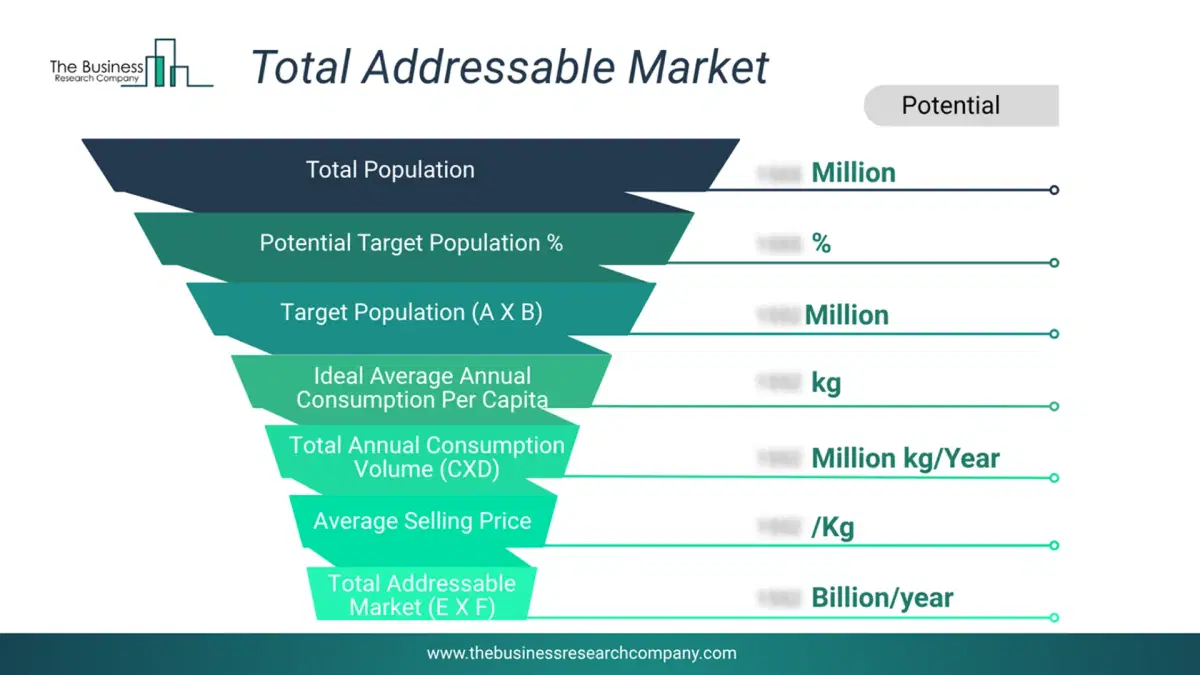
This chart highlights the Total Addressable Market (TAM) by estimating the maximum revenue opportunity using an assumption-driven approach, supporting strategic planning and opportunity sizing across markets. The chart is illustrative; the full report provides a more comprehensive analysis.
What Key Data and Analysis Are Included in the Artificial Intelligence in Healthcare Market Report 2026?
The artificial intelligence in healthcare market research report is one of a series of new reports from The Business Research Company that provides market statistics, including industry global market size, regional shares, competitors with the market share, detailed market segments, market trends and opportunities, and any further data you may need to thrive in the artificial intelligence in healthcare industry. The market research report delivers a complete perspective of everything you need, with an in-depth analysis of the current and future state of the industry.Artificial Intelligence in Healthcare Market Report Forecast Analysis
| Report Attribute | Details |
|---|---|
| Market Size Value In 2026 | $31.97 billion |
| Revenue Forecast In 2030 | $91.85 billion |
| Growth Rate | CAGR of 32.6% from 2026 to 2030 |
| Base Year For Estimation | 2025 |
| Actual Estimates/Historical Data | 2020-2025 |
| Forecast Period | 2026 - 2030 |
| Market Representation | Revenue in USD Billion and CAGR from 2026 to 2030 |
| Segments Covered | Offering, Algorithm, Application, End-User |
| Regional Scope | Asia-Pacific, Western Europe, Eastern Europe, North America, South America, Middle East, Africa |
| Country Scope | The countries covered in the report are Australia, Brazil, China, France, Germany, India, Indonesia, Japan, Taiwan, Russia, South Korea, UK, USA, Canada, Italy, Spain. |
| Key Companies Profiled | IBM Watson Health; Nuance Communications, Inc; Alphabet Inc; Concreto HealthAI; Nvidia Corporation; PathAI; XtalPi; Benevolent AI; Exscientia; OWKIN; LiveHealth; ChironX; Consure Medical; Predible Health; Lybrate; Artelus; OncoStem Qure.ai; Jiaxing Taimei Medical Technology; Ping An Health Medical Technology; YITU; iCarbonX; Insilico; Skin Analytics; Babylon Health; Cambridge Cognition; Renalytix AI; Iktos; Novartis; Gero; Ardigen; Botkin; Webiomed; Care Mentor AI; Diagnocat; Atomwise Inc; Cloud Pharmaceuticals; Bioage; NuMedii; Envisagenics; Aria Pharmaceuticals; Verge Genomics; Berg LLC; Deep Genomics; Cyclica; IQVIA; Roche; Pfizer; PRA Healthscience; Gesto; Intensicare; Didoc; Betterfly; Deenty; Examedi; Dentalink; Cero; MedPass; Pixeon; Hi Technologies; Conexa Saude; Wuru; Yerbo; BioScience; Caecus; Epitrack; GE Healthcare; Oncora Medical; Recursion Pharmaceuticals Inc; Nucleai; Pepticom; AstraZeneca; Rology; HearX Group; DilenyTech; iNNOHEALTH Technology Solutions |
| Customization Scope | Request for Customization |
| Pricing And Purchase Options | Explore Purchase Options |