

Automobile Remanufacturing Market Report 2026
Global Outlook – By Type (Engine; Transmission; Starter; Generator; Other Types), By Manufacturer (Original Equipment Manufacturer (OEM) Remanufacturers; Independent Remanufacturers; Subcontracted Remanufacturers), By Application (Passenger Vehicles; Commercial Vehicles) – Market Size, Trends, Strategies, and Forecast to 2030
Automobile Remanufacturing Market Overview
• Automobile Remanufacturing market size has reached to $73.49 billion in 2025 • Expected to grow to $118.11 billion in 2030 at a compound annual growth rate (CAGR) of 10% • Growth Driver: Circular Economy Practices Fuel Growth In Automobile Remanufacturing Market • Market Trend: Advancements In EV Battery Testing And Disassembly Lines For Enhanced Sustainability And Efficiency • North America was the largest region in 2025 and Asia-Pacific is the fastest growing region.Market Gains By 2030 – Top Opportunities By Segment
Market Gain identifies the most promising market opportunities by highlighting the segments or products expected to generate the highest incremental revenue growth over the next five years.
What Is Covered Under Automobile Remanufacturing Market?
Automobile remanufacturing refers to restoring an automobile product to at least its original condition and with a warranty equal to or better than that of the freshly built vehicle product. Automobile remanufacturing improves raw material circularity, resource efficiency, and environmental impact reduction. The main types of automobile remanufacturing are engine, transmission, starter, generator, and others. Engine refers to a machine that generates motion using steam or liquid fuel. Several types of manufacturers are involved, such as original equipment manufacturer (OEM) remanufacturers, independent remanufacturers, and subcontracted remanufacturers. These are used for various applications, including passenger vehicles and commercial vehicles.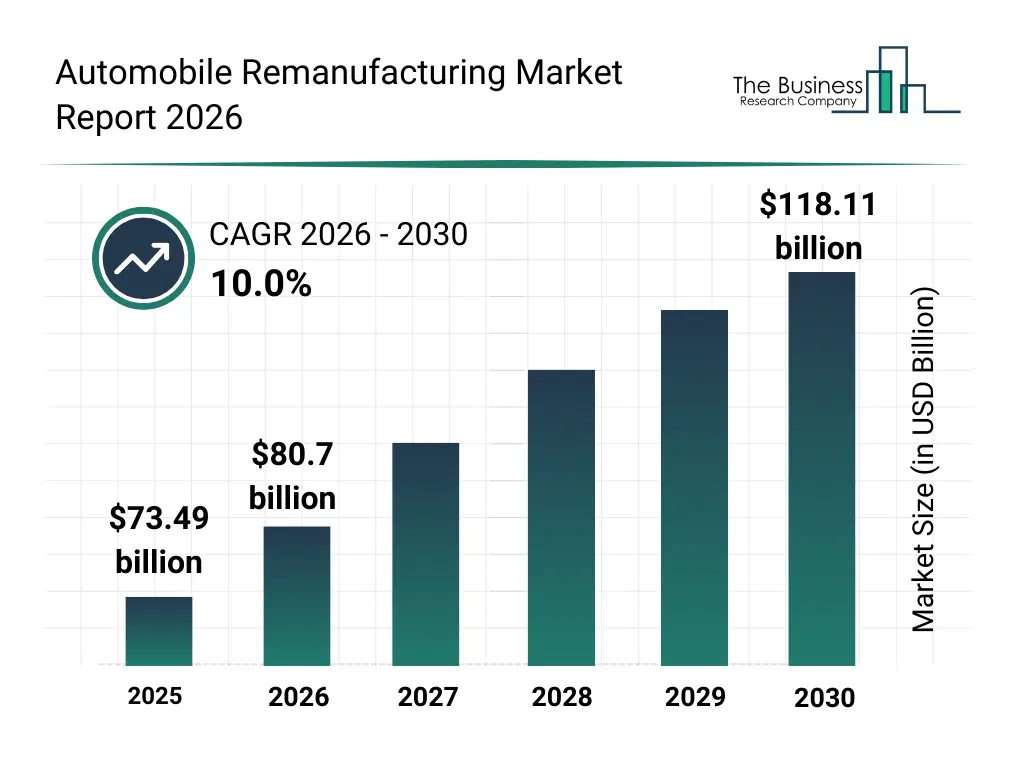
What Is The Automobile Remanufacturing Market Size and Share 2026?
The automobile remanufacturing market size has grown strongly in recent years. It will grow from $73.49 billion in 2025 to $80.7 billion in 2026 at a compound annual growth rate (CAGR) of 9.8%. The growth in the historic period can be attributed to rising vehicle parc aging, availability of reusable automotive cores, growth of aftermarket automotive services, increasing cost of new vehicle components, expansion of remanufacturing facilities.What Is The Automobile Remanufacturing Market Growth Forecast?
The automobile remanufacturing market size is expected to see strong growth in the next few years. It will grow to $118.11 billion in 2030 at a compound annual growth rate (CAGR) of 10.0%. The growth in the forecast period can be attributed to increasing demand for cost-effective vehicle components, rising emphasis on sustainability in automotive manufacturing, expansion of electric and hybrid vehicle remanufacturing, growing adoption of digital remanufacturing platforms, increasing regulatory support for circular economy practices. Major trends in the forecast period include increasing adoption of remanufactured powertrain components, rising integration of digital quality inspection systems, growing focus on circular automotive supply chains, expansion of certified remanufacturing programs, enhanced use of advanced testing technologies.
Global Automobile Remanufacturing Market Segmentation
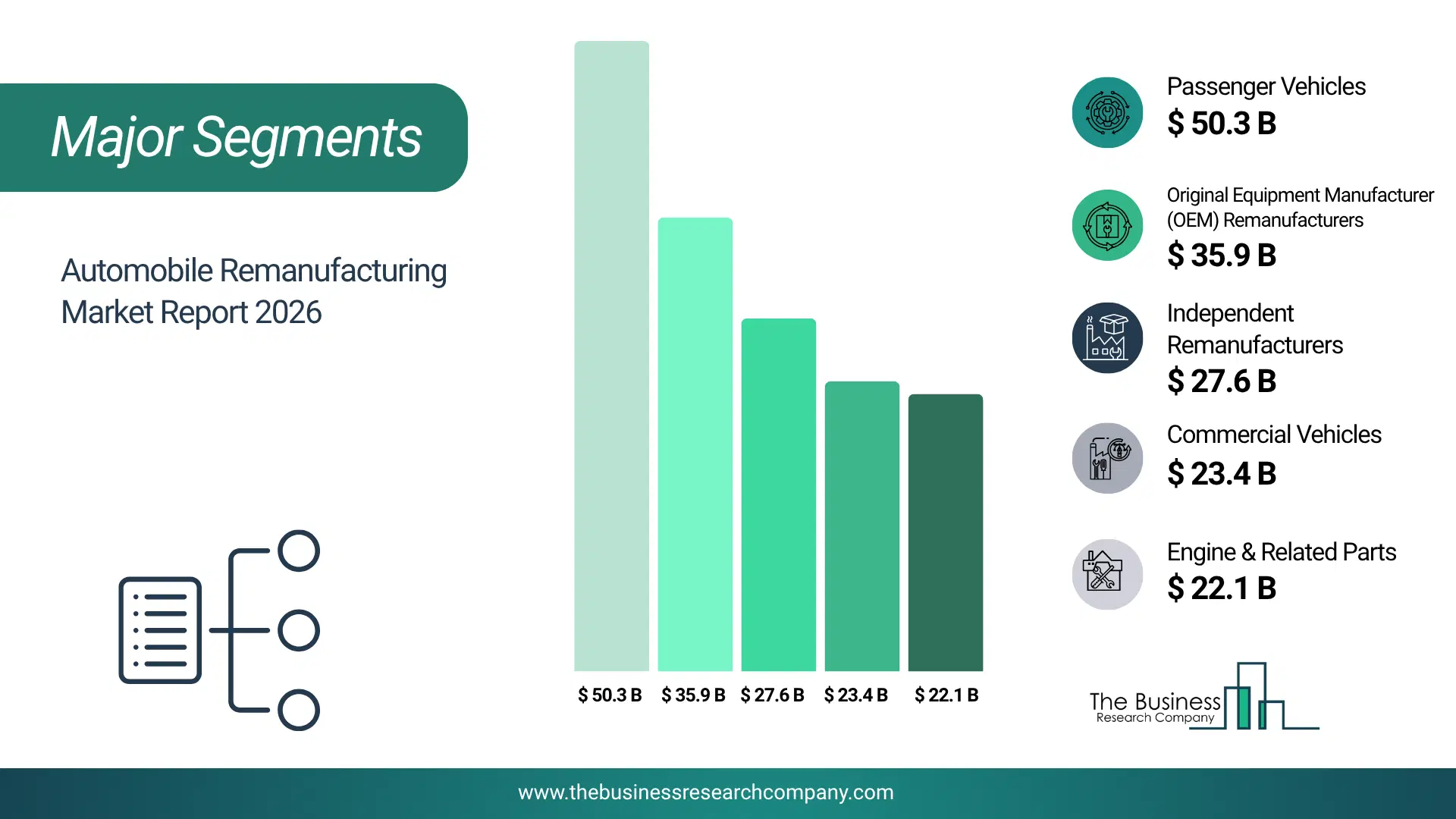
1) By Type: Engine, Transmission, Starter, Generator, Other Types 2) By Manufacturer: Original Equipment Manufacturer (OEM) Remanufacturers, Independent Remanufacturers, Subcontracted Remanufacturers 3) By Application: Passenger Vehicles, Commercial Vehicles Subsegments: 1) By Engine: Gasoline Engine, Diesel Engine, Hybrid Engine 2) By Transmission: Manual Transmission, Automatic Transmission, Continuously Variable Transmission (CVT) 3) By Starter: Electric Starter, Hydraulic Starter 4) By Generator: Alternator, Starter Generator 5) By Other Types: Fuel Injectors, Turbochargers, Power Steering Pumps, Brake Calipers The top segments in the automobile remanufacturing market will be: • Passenger Vehicles will reach $50399.9 Million by 2025. • Original Equipment Manufacturer (OEM) Remanufacturers will reach $35992.88 Million by 2025. • Independent Remanufacturers will reach $27609.38 Million by 2025. • Commercial Vehicles will reach $23487.98 Million by 2025. • Engine & Related Parts will reach $22113.7 Million by 2025.What Is The Driver Of The Automobile Remanufacturing Market?
The adoption of circular economy practices is expected to propel the growth of the automobile remanufacturing market. The circular economy refers to an economic system that prioritizes sustainability by promoting the continuous use, recycling, and repurposing of resources, materials, and products. The adoption of circular economy practices, including remanufacturing, contributes to a more sustainable, resource-efficient, and environmentally friendly automotive industry by addressing environmental concerns, offering cost-effective solutions, and aligning with evolving consumer preferences. For instance, in April 2024, according to the World Economic Forum, a Switzerland-based non-governmental organization, by 2050, adopting a circular economy approach could reduce the global volume of municipal solid waste from over 4.5 billion tonnes annually to under 2 billion tonnes. Additionally, it would decrease waste dumped or burned in open fires and lower landfill waste by more than 40%, reaching approximately 630,000 tonnes. Therefore, the adoption of circular economy practices will drive the automobile remanufacturing industry going forward.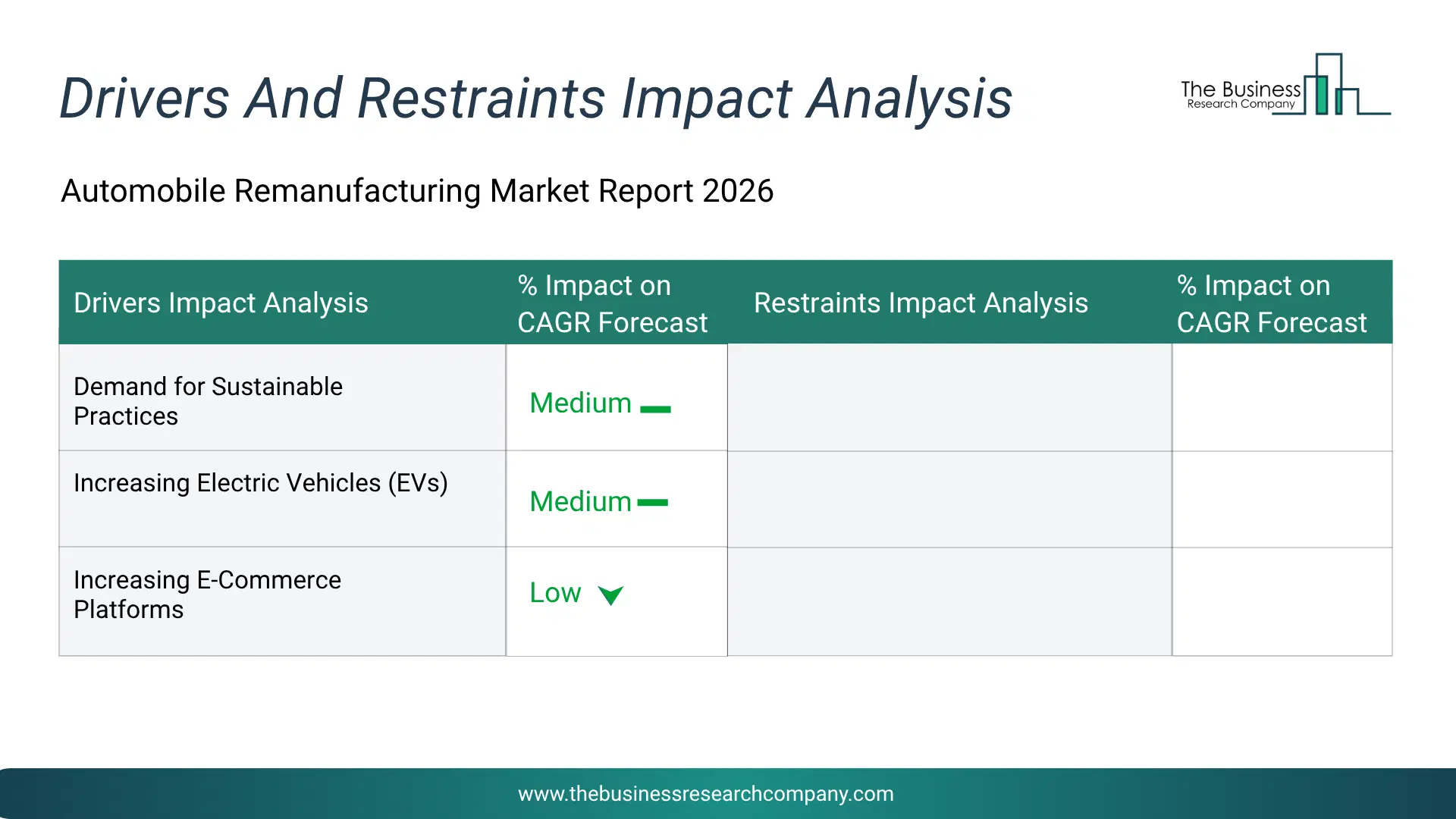
Infographic Chart Showing Key Market Drivers Analysis And Restraints For Automobile Remanufacturing Market
The chart presents an impact analysis of key drivers and restraints, quantifying their relative influence on the market's growth rate and helping assess the balance between growth enablers and limiting factors. This chart offers a high-level perspective; the full report contains more detailed insights.
How Will The Drivers Impact Growth In The Global Automobile Remanufacturing Market?
• Demand for Sustainable Practices (Medium) – The demand for sustainable practices will emerge as a major factor driving the expansion of the automobile remanufacturing market by 2030. Remanufacturing reduces waste, conserves raw materials and lowers carbon emissions by refurbishing and reusing vehicle components instead of manufacturing new ones. This aligns with circular economy principles and regulatory measures promoting reduced industrial waste and energy consumption. Additionally, cost savings associated with remanufactured parts appeal to consumers and businesses seeking affordable yet high-quality alternatives. Consequently, the demand for sustainable practices is projected to contributing to a 1.5% annual growth in the market. • Increasing Electric Vehicles (EVs) (Medium) – The increasing electric vehicles solutions as a major factor driving the expansion of the automobile remanufacturing market by 2030. EVs have complex and high-value parts, such as batteries, electric motors and power electronics, which are expensive to replace with new ones. Remanufacturing these components helps reduce costs for EV owners and fleet operators while supporting sustainability goals by minimizing electronic waste and resource consumption. Additionally, as EV adoption increases, so does the need for efficient recycling and refurbishment of lithium-ion batteries, creating opportunities for specialized remanufacturing processes. Consequently, increasing electric vehicles solutions is projected to contributing to a 1.2% annual growth in the market. • Increasing E-Commerce Platforms (Low) – The increasing e-commerce platforms support will emerge as a major factor driving the expansion of the automobile remanufacturing market by 2030. Online platforms enable consumers and businesses to easily compare prices, read reviews and access a wider range of remanufactured components, making them a more attractive alternative to new parts. E-commerce reduces supply chain inefficiencies by connecting remanufacturers directly with end-users, cutting out intermediaries and lowering costs. Consequently, the increasing e-commerce platforms is projected to contributing to a 1.0% annual growth in the market. • Increasing Urbanization (Medium) – The increasing urbanization will become a key driver of growth in the automobile remanufacturing market by 2030. As urban populations expand, the demand for cost-effective and eco-friendly vehicle maintenance solutions grows, encouraging consumers and businesses to opt for remanufactured components such as engines, transmissions, and starters. Stricter environmental regulations in cities promote circular economy practices, making remanufacturing an attractive option to reduce waste and emissions. As a result, the increasing urbanization is anticipated to contributing to annual growth in the market.How Will The Restraints Impact Growth In The Global Automobile Remanufacturing Market?
• Supply Chain Disruptions (Medium) – Supply Chain Disruptions will restrict the growth of the Automobile Remanufacturing market during the forecast period. Automobile remanufacturing depends on the availability of core components and replacement parts, which can be affected by supply chain disruptions. The collection and processing of used parts requires efficient logistics networks that can be disrupted by various factors. Supply chain vulnerabilities impact the availability of remanufacturing inputs and can affect production capacity and costs, limiting market growth. • Labor Shortages (Medium) – Labor Shortages will restrict the growth of the Automobile Remanufacturing market during the forecast period. The remanufacturing industry requires skilled workers with specialized knowledge in disassembly, cleaning, inspection, and reassembly processes. The shortage of qualified technicians with remanufacturing expertise affects production capacity and quality control. Labor shortages can lead to production delays and increased costs, limiting market growth.Key Players In The Global Automobile Remanufacturing Market
Major companies operating in the automobile remanufacturing market are Toyota Motor Corporation, Robert Bosch GmbH, Caterpillar Inc., Denso Corporation, ZF Friedrichshafen AG, Continental AG, Volvo Car Corporation, Cummins Inc., Valeo SA, Eaton Corporation plc., Tenneco Inc., Schaeffler Group, TRW Automotive Holdings Corp., BorgWarner Inc., LKQ Corporation, Marelli Europe S.p.A, Knorr-Bremse AG, Navistar Inc., GKN Automotive Limited, Garrett Motion Inc., Standard Motor Products Inc., Remy International Inc., BBB Industries, Jasper Engines and Transmissions, Cardone Industries Inc., Detroit Diesel Corporation, BORG Automotive AS, Maval Industries LLC., AMS Automotive LLC., WABCO Holdings Inc.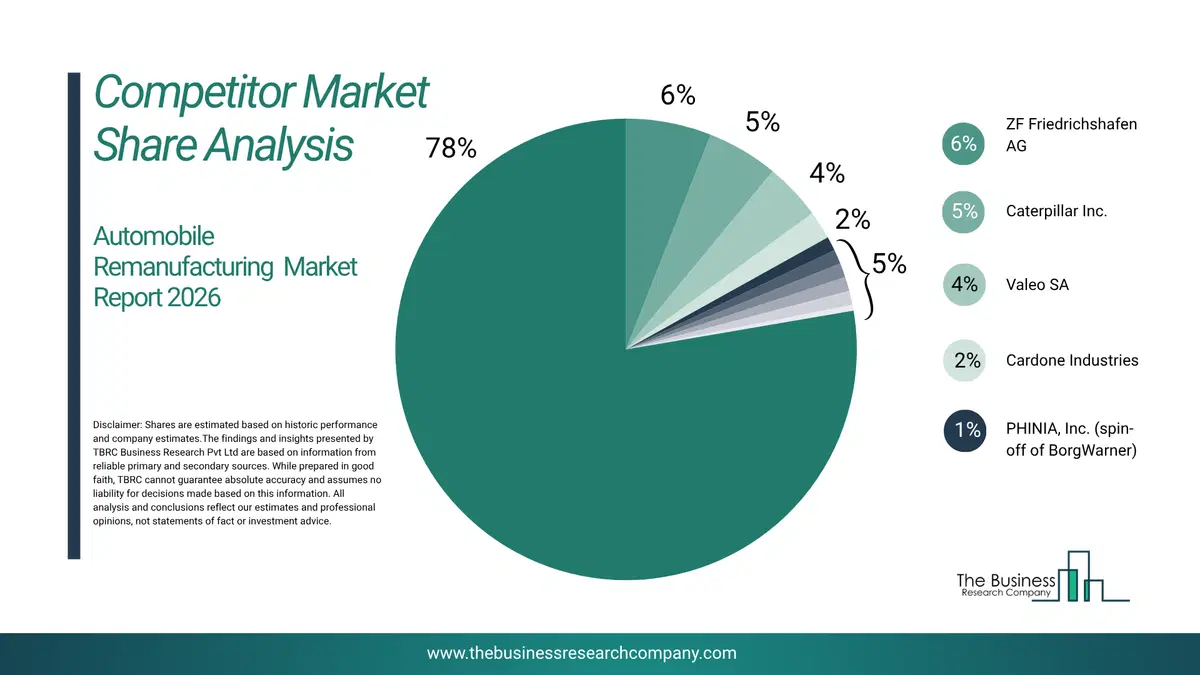
This chart is for illustrative purposes; the full report includes a detailed competitor analysis and comprehensive overview of the top 10 companies in the market.

This chart maps companies by product innovation and brand strength, with bubble size indicating relative revenue, helping identify market leaders, challengers, and niche players. This is an illustrative chart; the full report provides a complete and accurate competitive analysis.
Global Automobile Remanufacturing Market Trends and Insights
Major companies operating in the automobile remanufacturing market are focusing on developing innovative initiatives, such as electric vehicle (EV) battery testing and disassembly lines, to enhance efficiency and sustainability through technology integration and material recovery. An electric vehicle (EV) battery testing and disassembly line refers to a specialized facility or production line designed for testing, inspecting, and dismantling EV batteries. For instance, in October 2023, the Agency for Science, Technology, and Research, a Singapore-based statutory board company, launched an EV Battery Testing and Disassembly Line that enhances sustainable management of retired batteries through automated, efficient processes that prioritize safety and resource recovery. This facility incorporates Industry 4.0 technologies, including automation and robotics, to safely and efficiently disassemble EV battery packs. It features three operational stations focused on inspection, discharging, and rapid cell grade, significantly reducing assessment times. By addressing the environmental risks associated with retired EV batteries.What Are Latest Mergers And Acquisitions In The Automobile Remanufacturing Market?
In February 2023, LKQ Europe GmbH, a Switzerland-based automotive aftermarket component provider, acquired Rhenoy Group for an undisclosed amount. This acquisition strengthens LKQ's continuous dedication to providing cost-effective and sustainable mobility solutions throughout our European markets. As a key element of its European strategic plan, the company aims to leverage this expertise in conjunction with remanufacturing capabilities. Rhenoy Group is a Netherlands-based automotive remanufacturing company specializing in remanufactured engines.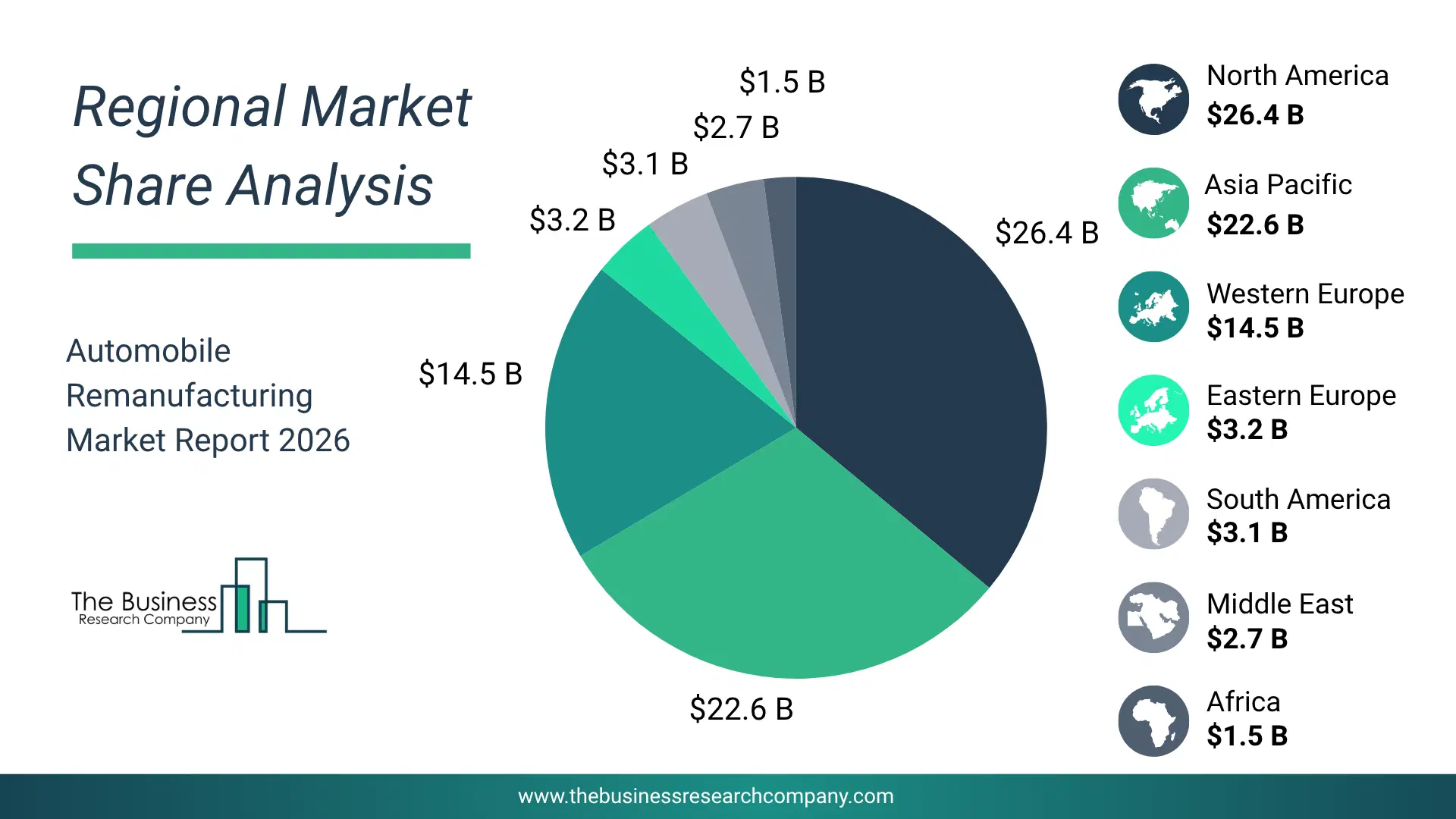
Regional Outlook
North America was the largest region in the automobile remanufacturing market in 2025. Asia-Pacific is expected to be the fastest-growing region in the automobile remanufacturing market report during the forecast period. The regions covered in this market report are Asia-Pacific, South East Asia, Western Europe, Eastern Europe, North America, South America, Middle East, Africa. The countries covered in this market report are Australia; Brazil; China; France; Germany; India; Indonesia; Japan; Taiwan; Russia; South Korea; UK; USA; Canada; Italy; Spain.What Defines the Automobile Remanufacturing Market?
The automobile remanufacturing market consists of sales of turbochargers, brake caliper, steering racks, steering pumps, and alternators. Values in this market are ‘factory gate’ values, that is the value of goods sold by the manufacturers or creators of the goods, whether to other entities (including downstream manufacturers, wholesalers, distributors and retailers) or directly to end customers. The value of goods in this market includes related services sold by the creators of the goods.How is Market Value Defined and Measured?
The market value is defined as the revenues that enterprises gain from the sale of goods and/or services within the specified market and geography through sales, grants, or donations in terms of the currency (in USD unless otherwise specified). The revenues for a specified geography are consumption values that are revenues generated by organizations in the specified geography within the market, irrespective of where they are produced. It does not include revenues from resales along the supply chain, either further along the supply chain or as part of other products.
This chart presents market attractiveness based on a quantitative evaluation of growth, competition, strategic alignment, and risk, offering a clear view of opportunity areas for decision-making. This chart is for illustrative purposes; the full report contains the complete analysis.
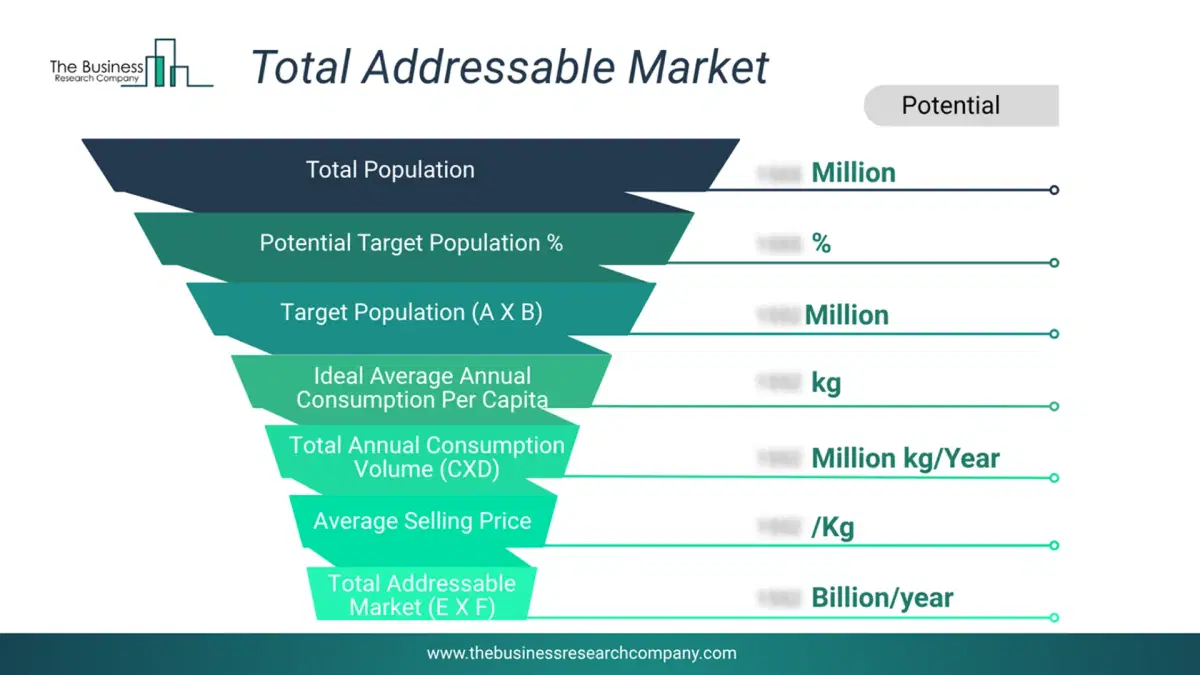
This chart highlights the Total Addressable Market (TAM) by estimating the maximum revenue opportunity using an assumption-driven approach, supporting strategic planning and opportunity sizing across markets. The chart is illustrative; the full report provides a more comprehensive analysis.
What Key Data and Analysis Are Included in the Automobile Remanufacturing Market Report 2026?
The automobile remanufacturing market research report is one of a series of new reports from The Business Research Company that provides market statistics, including Market Report 2026?global market size, regional shares, competitors with the market share, detailed market segments, market trends and opportunities, and any further data you may need to thrive in the automobile remanufacturing Market Report 2026? The market research report delivers a complete perspective of everything you need, with an in-depth analysis of the current and future state of the Market Report 2026?Automobile Remanufacturing Market Report Forecast Analysis
| Report Attribute | Details |
|---|---|
| Market Size Value In 2026 | $80.7 billion |
| Revenue Forecast In 2030 | $118.11 billion |
| Growth Rate | CAGR of 9.8% from 2026 to 2030 |
| Base Year For Estimation | 2025 |
| Actual Estimates/Historical Data | 2020-2025 |
| Forecast Period | 2026 - 2030 |
| Market Representation | Revenue in USD Billion and CAGR from 2026 to 2030 |
| Segments Covered | Type, Manufacturer, Application |
| Regional Scope | Asia-Pacific, Western Europe, Eastern Europe, North America, South America, Middle East, Africa |
| Country Scope | The countries covered in the report are Australia, Brazil, China, France, Germany, India, Indonesia, Japan, Taiwan, Russia, South Korea, UK, USA, Canada, Italy, Spain. |
| Key Companies Profiled | Toyota Motor Corporation, Robert Bosch GmbH, Caterpillar Inc., Denso Corporation, ZF Friedrichshafen AG, Continental AG, Volvo Car Corporation, Cummins Inc., Valeo SA, Eaton Corporation plc., Tenneco Inc., Schaeffler Group, TRW Automotive Holdings Corp., BorgWarner Inc., LKQ Corporation, Marelli Europe S.p.A, Knorr-Bremse AG, Navistar Inc., GKN Automotive Limited, Garrett Motion Inc., Standard Motor Products Inc., Remy International Inc., BBB Industries, Jasper Engines and Transmissions, Cardone Industries Inc., Detroit Diesel Corporation, BORG Automotive AS, Maval Industries LLC., AMS Automotive LLC., WABCO Holdings Inc. |
| Customization Scope | Request for Customization |
| Pricing And Purchase Options | Explore Purchase Options |