

Automotive Finance Market Report 2026
Global Outlook – By Provider Type (Banks, Original Equipment Manufacturers (OEMs)), By Finance Type (Direct Finance, Indirect Finance), By Vehicle Type (Passenger Vehicles, Commercial Vehicles, Other Vehicle Types) – Market Size, Trends, Strategies, and Forecast to 2030
Automotive Finance Market Overview
• Automotive Finance market size has reached to $312.45 billion in 2025 • Expected to grow to $473.59 billion in 2030 at a compound annual growth rate (CAGR) of 8.7% • Growth Driver: Rising Vehicle Prices Fueling Growth In The Automotive Finance Market • Market Trend: Innovative Trends In Automotive Finance Market • Europe was the largest region in 2025 and Asia-Pacific is the fastest growing region.Market Gains By 2030 – Top Opportunities By Segment
Market Gain identifies the most promising market opportunities by highlighting the segments or products expected to generate the highest incremental revenue growth over the next five years.
What Is Covered Under Automotive Finance Market?
Automotive finance refers to the financial support received to buy a car with a small down payment from pocket. The lender's loan can be repaid over a certain length of time in equal monthly installments with an agreed-upon interest rate. The main provider types of automotive finance are banks, OEMs, and other provider types. Banks are used to receiving the funds in one go, then paying them back over time, along with interest. A bank refers to an institution that is authorized to lend money and take deposits from checking and savings accounts. The finance types are direct finance and indirect finance. The vehicle types include passenger vehicles, commercial vehicles, and other vehicle types.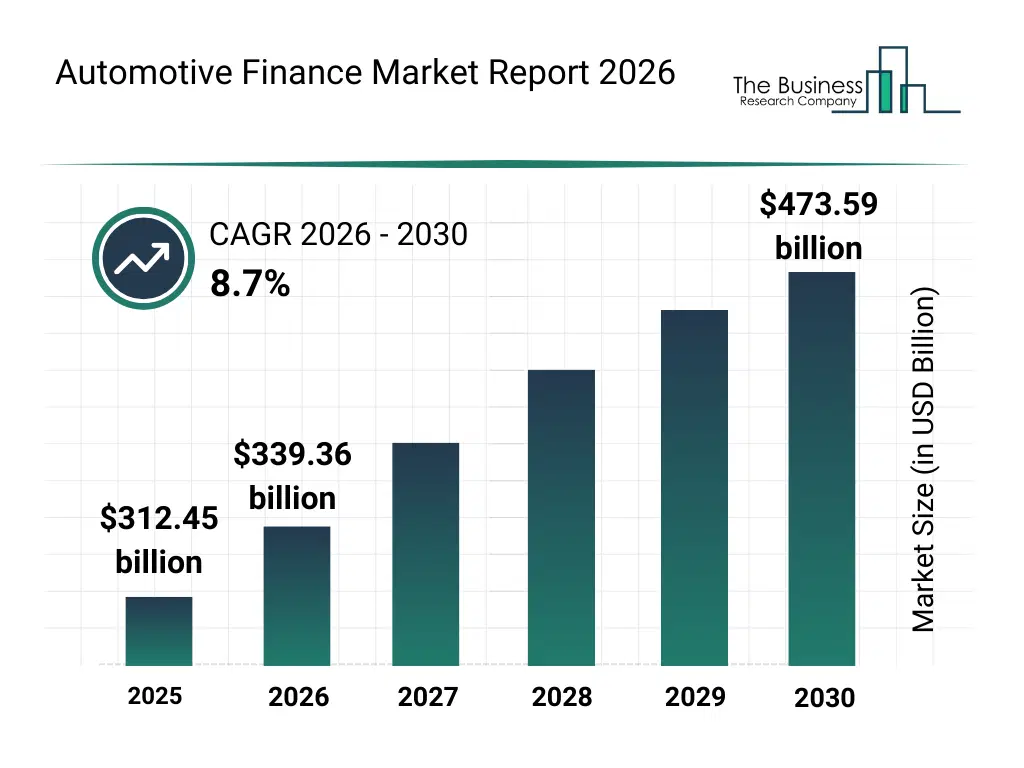
What Is The Automotive Finance Market Size and Share 2026?
The automotive finance market size has grown strongly in recent years. It will grow from $312.45 billion in 2025 to $339.36 billion in 2026 at a compound annual growth rate (CAGR) of 8.6%. The growth in the historic period can be attributed to expansion of vehicle ownership financing, growth of bank-led auto lending programs, rising consumer credit availability, development of dealer-based financing networks, adoption of installment-based repayment models.What Is The Automotive Finance Market Growth Forecast?
The automotive finance market size is expected to see strong growth in the next few years. It will grow to $473.59 billion in 2030 at a compound annual growth rate (CAGR) of 8.7%. The growth in the forecast period can be attributed to increasing demand for ev and mobility financing, rising use of alternative credit assessment models, expansion of embedded finance in auto sales, growing adoption of digital loan origination platforms, increased focus on instant credit approvals. Major trends in the forecast period include increasing adoption of digital auto loan platforms, rising demand for flexible financing options, growing integration of AI-based credit scoring, expansion of oem-captive financing models, enhanced focus on seamless online loan processing.
Global Automotive Finance Market Segmentation
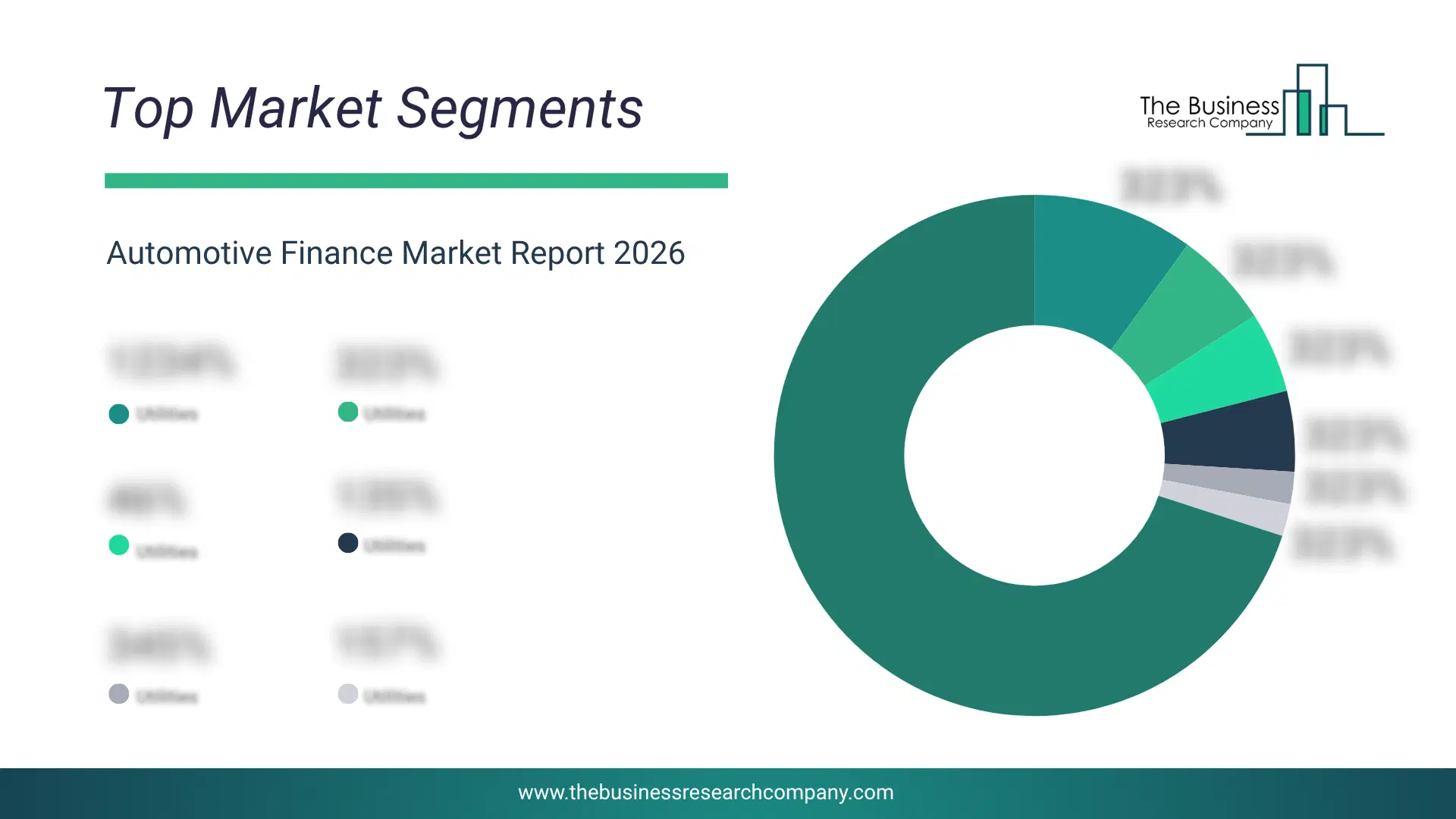
1) By Provider Type: Banks, Original Equipment Manufacturers (OEMs) 2) By Finance Type: Direct Finance, Indirect Finance 3) By Vehicle Type: Passenger Vehicles, Commercial Vehicles, Other Vehicle Types Subsegments: 1) By Banks: Traditional Banks, Credit Unions, Online Banks 2) By Original Equipment Manufacturers (OEMs): Manufacturer Financing Services, Captive Finance Companies The top segments in the automotive finance market will be: • Banks will reach $289 Billion by 2030. • Original Equipment Manufacturers (OEMs) will reach $183 Billion by 2030.What Is The Driver Of The Automotive Finance Market?
Increasing vehicle prices are expected to propel the growth of the automotive finance market going forward. Vehicle prices refer to the amount a car manufacturer is willing to demand for creating, producing, and putting a vehicle on the market. Automotive financing refers to purchasing a car, often a more expensive one than would otherwise be feasible. For instance, in July 2025, according to the Kelley Blue Book Co. Inc a US-based vehicle valuation and information source company owned by Cox Automotive, the average transaction price (ATP) for a new vehicle in the United States reached US?$48,907 a 1.2% increase year?over?year, marking the largest annual gain in 2025. Therefore, increasing vehicle prices are driving the growth of the automotive finance industry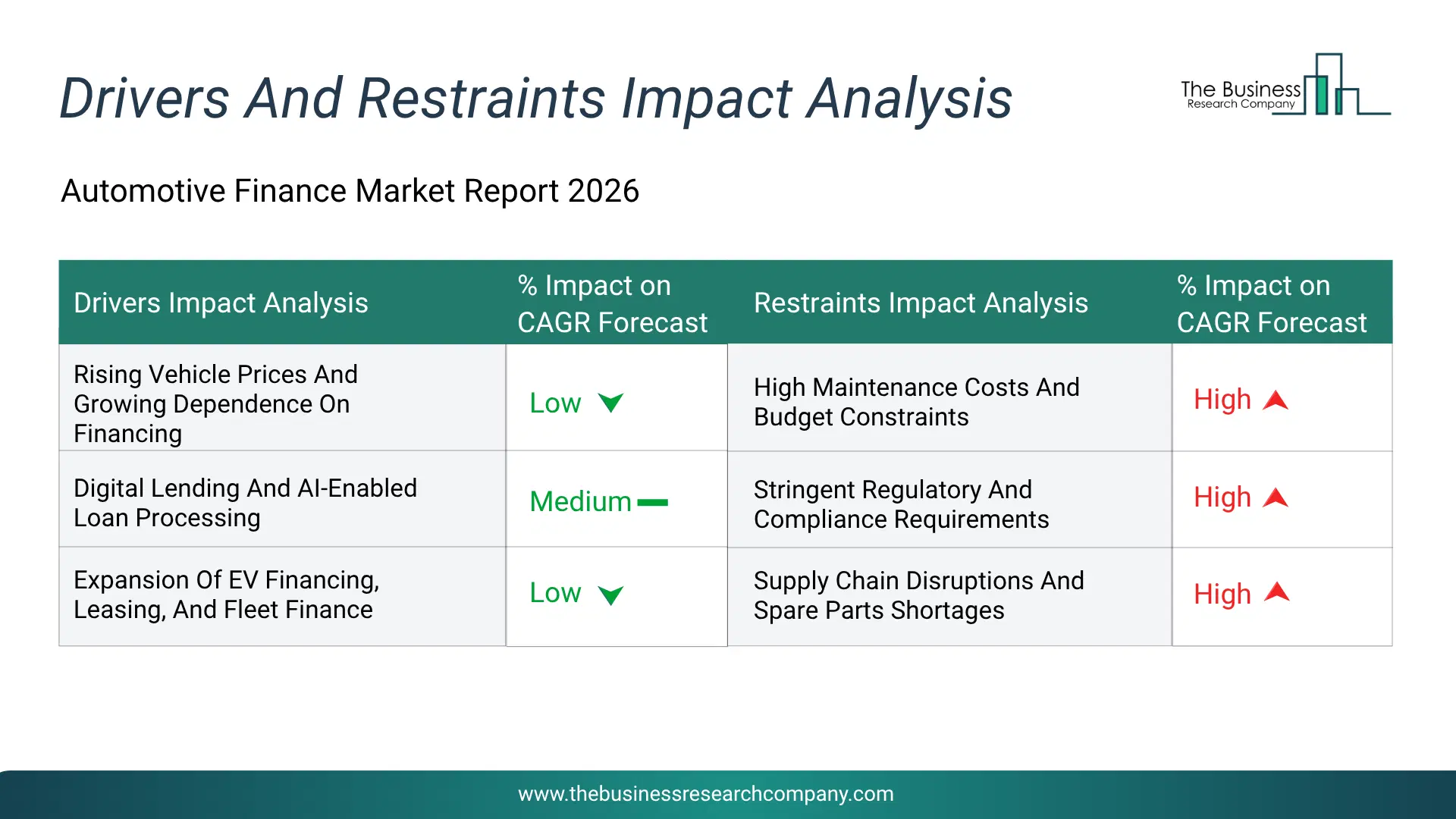
Infographic Chart Showing Key Market Drivers Analysis And Restraints For Automotive Finance Market
The chart presents an impact analysis of key drivers and restraints, quantifying their relative influence on the market's growth rate and helping assess the balance between growth enablers and limiting factors. This chart offers a high-level perspective; the full report contains more detailed insights.
How Will The Drivers Impact Growth In The Global Automotive Finance Market?
• Rising Vehicle Prices And Growing Dependence On Financing (Low) – During the forecast period, the rising vehicle prices and growing dependence on financing are expected to emerge as a major factor driving the expansion of the automotive finance market by 2030. higher purchase costs for passenger and commercial vehicles are encouraging consumers and businesses to choose flexible financing options that improve affordability and reduce upfront financial burdens. loan products offering extended repayment tenures, lower down payments, and customized financing structures are making vehicle ownership more accessible across developed and emerging markets. • Digital Lending And AI-Enabled Loan Processing (Medium) – During the forecast period, the digital lending and AI-enabled loan processing are expected to emerge as a major factor driving the expansion of the automotive finance market by 2030. financial institutions and captive finance providers are leveraging artificial intelligence, machine learning, automated underwriting, and digital identity verification to simplify application processes and accelerate loan approvals. online financing platforms also enable customers to compare products, submit applications digitally, and receive faster credit decisions, significantly improving customer convenience and expanding access to vehicle financing. • Expansion Of EV Financing, Leasing, And Fleet Finance (Low) – During the forecast period, the expansion of EV financing, leasing, and fleet finance is expected to act as a key growth catalyst for the automotive finance market by 2030. growing adoption of electric vehicles, commercial fleet modernization, and mobility services is increasing demand for specialized financial products tailored to evolving transportation needs. banks and OEM finance companies are introducing dedicated EV loans, leasing programs, subscription-based ownership models, and fleet financing solutions that support both individual consumers and business operators.How Will The Restraints Impact Growth In The Global Automotive Finance Market?
• High Maintenance Costs And Budget Constraints (Low) – During the forecast period, high Maintenance Costs And Budget Constraints acts as a significant restraint for the air-based defense equipment MRO services market by increasing the financial burden on defense organizations. Military aircraft such as fighter jets and helicopters require frequent, complex, and costly maintenance procedures to ensure operational readiness. These costs are further amplified by the need for skilled labor, advanced diagnostic tools, and certified spare parts. Many governments, especially in developing regions, face budgetary limitations that restrict spending on MRO services. This leads to delayed maintenance cycles and reduced service contracts. Consequently, market growth is hindered as defense agencies prioritize cost optimization over extensive MRO investments. • Stringent Regulatory And Compliance Requirements (Medium) – During the forecast period, stringent Regulatory And Compliance Requirements acts as a significant restraint for the air-based defense equipment MRO services market by complicating service operations and increasing compliance costs. MRO providers must adhere to strict aviation safety standards, military certifications, and government regulations across different countries. These regulations often vary by region, making cross-border operations complex and time-consuming. Compliance requires continuous upgrades, documentation, and audits, adding operational overhead. Smaller MRO providers may struggle to meet these requirements, limiting market participation. As a result, regulatory complexities slow down service expansion and market scalability. • Supply Chain Disruptions And Spare Parts Shortages (Low) – During the forecast period, supply Chain Disruptions And Spare Parts Shortages acts as a significant restraint for the air-based defense equipment MRO services market by delaying maintenance schedules and increasing downtime. The availability of critical aircraft components and spare parts is essential for timely repair and overhaul activities. However, global supply chain disruptions, geopolitical tensions, and dependency on limited suppliers often lead to shortages. Delays in procurement can ground aircraft for extended periods, affecting operational readiness. Additionally, rising costs of raw materials and logistics further strain the supply chain. This uncertainty negatively impacts service efficiency and slows overall market growth.Key Players In The Global Automotive Finance Market
Major companies operating in the automotive finance market are Ally Financial Inc., Bank of America Corporation, Capital One Financial Corporation, Chase Auto Finance, Daimler Financial Services India Private Limited, Ford Motor Credit Company, General Motors Financial Company Inc., Hitachi Capital Corporation, Toyota Financial Services, Volkswagen Financial Services, BNP Paribas, HDFC Bank Limited, Standard Bank Group Ltd., Banco Bradesco SA, Wells Fargo & Co., HSBC Holdings PLC, Oodle Car Finance Services Limited, Lendbuzz Inc., OTO Capital, Bajaj Finance Limited, Moneybarn Limited, Yixin Group Limited, Caribou Financial Inc., Nissan Infiniti Finance, Honda Motor Co. Ltd.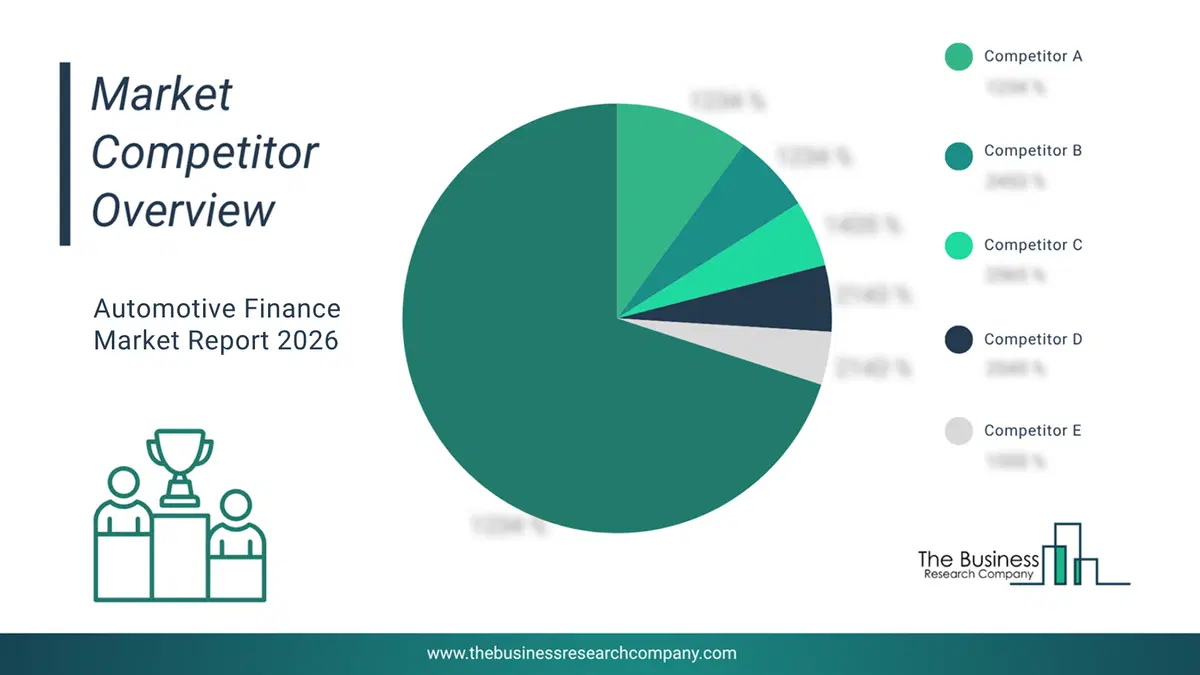
This chart is for illustrative purposes; the full report includes a detailed competitor analysis and comprehensive overview of the top 10 companies in the market.
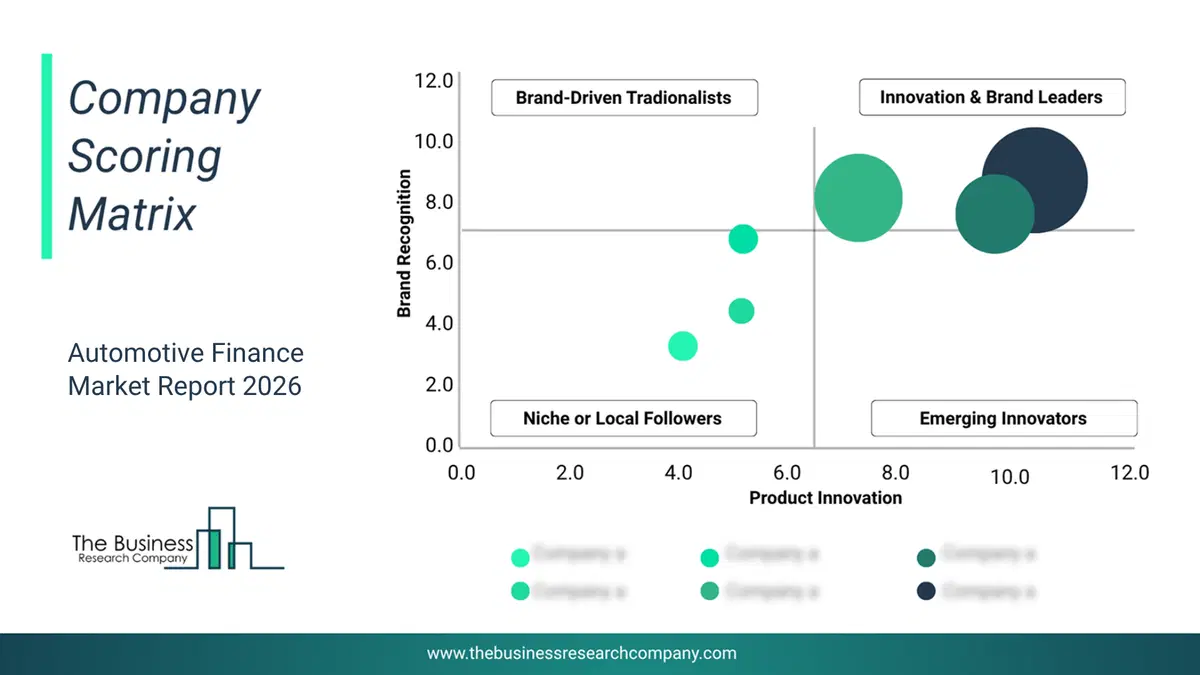
This chart maps companies by product innovation and brand strength, with bubble size indicating relative revenue, helping identify market leaders, challengers, and niche players. This is an illustrative chart; the full report provides a complete and accurate competitive analysis.
Global Automotive Finance Market Trends and Insights
Major companies operating in the automotive finance market are developing innovative products leveraging cutting-edge technologies, such as RateSetter Technology, to meet larger customer bases, more sales, and increase their revenues in the market. Ratesetter offers simple personal loans tailored to customers, with an instant online personalized rate that doesn't impact their credit score. For instance, in January 2023, Metro Bank Plc., a UK-based retail banking company, launched a digital car loan product under the RateSetter brand. The distinctive aspect of these digital loans is their nature as hire purchase loans designed for used cars, presently accessible through motor brokers utilizing cutting-edge RateSetter technology. The unique feature lies in RateSetter's technology, which tailors a personalized loan quote for each customer through an automated and real-time decision-making process. This innovative approach ensures a paperless application process, allowing eligible customers to receive instant approvals and drive their purchased vehicle off the forecourt on the same day. Consequently, the entire journey, inclusive of the invoicing process, unfolds as a seamlessly efficient end-to-end digital experience for both the borrower and the broker.What Are Latest Mergers And Acquisitions In The Automotive Finance Market?
In June 2025, Arra Finance, LLC, a US‑based subprime auto‑finance company, acquired the auto‑finance division of Crescent Bank for an undisclosed amount. With this acquisition, Arra aimed to significantly expand its auto‑loan origination capacity and dealer network, while integrating Crescent’s servicing infrastructure and technology stack to accelerate credit‑application decisions. Crescent Bank was a US‑based FDIC‑insured bank that provided indirect auto financing nationwide through dealer-originated loans and servicing.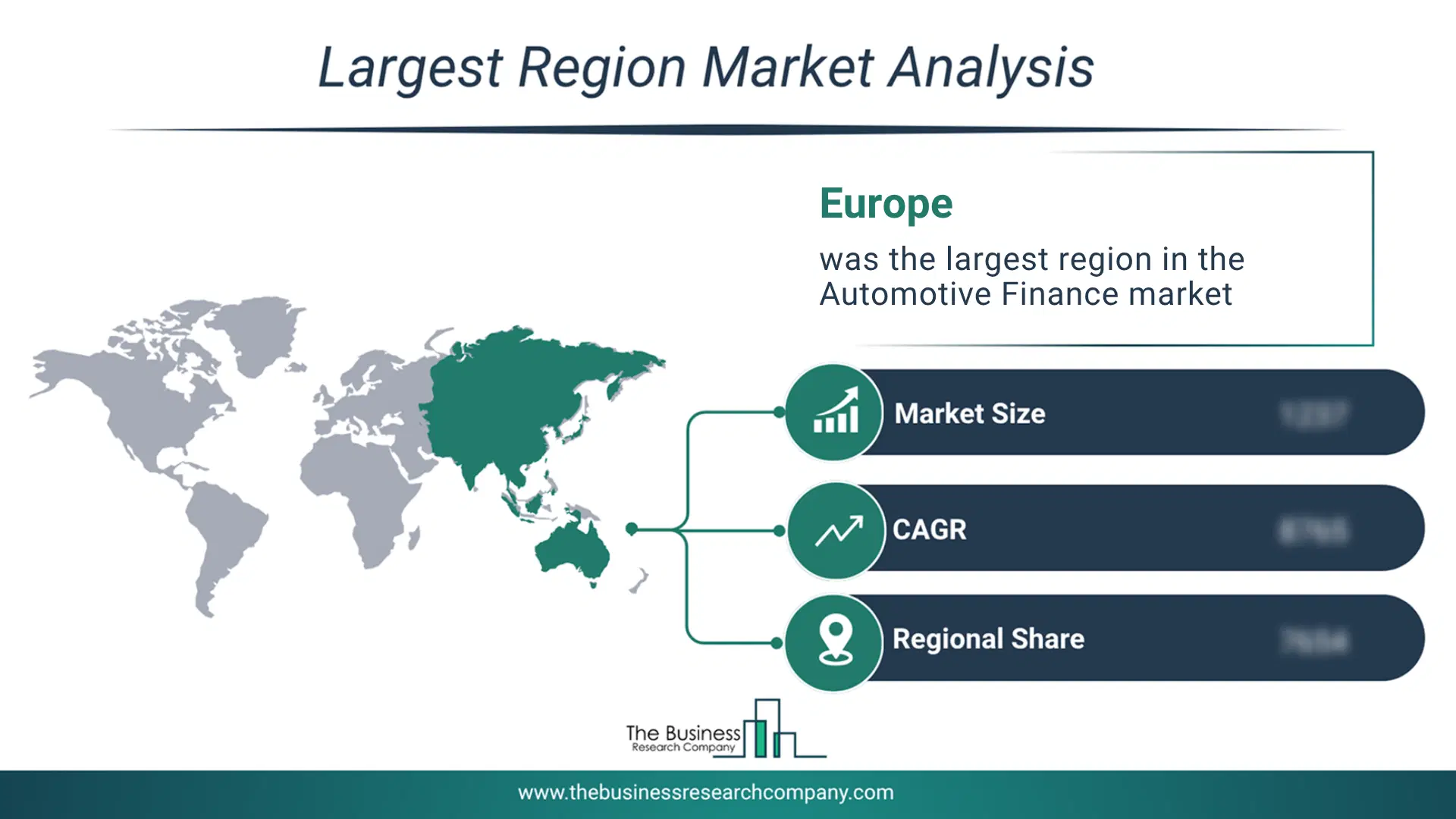
Regional Outlook
Europe was the largest region in the automotive finance market in 2025. Asia-Pacific is expected to be the fastest-growing region in the forecast period. The regions covered in this market report are Asia-Pacific, South East Asia, Western Europe, Eastern Europe, North America, South America, Middle East, Africa. The countries covered in this market report are Australia, Brazil, China, France, Germany, India, Indonesia, Japan, Taiwan, Russia, South Korea, UK, USA, Canada, Italy, Spain.What Defines the Automotive Finance Market?
The automotive finance market includes revenues earned by entities by providing financial services that are used in purchasing a vehicle, often one of higher value than would otherwise be possible. The market value includes the value of related goods sold by the service provider or included within the service offering. Only goods and services traded between entities or sold to end consumers are included.How is Market Value Defined and Measured?
The market value is defined as the revenues that enterprises gain from the sale of goods and/or services within the specified market and geography through sales, grants, or donations in terms of the currency (in USD unless otherwise specified). The revenues for a specified geography are consumption values that are revenues generated by organizations in the specified geography within the market, irrespective of where they are produced. It does not include revenues from resales along the supply chain, either further along the supply chain or as part of other products.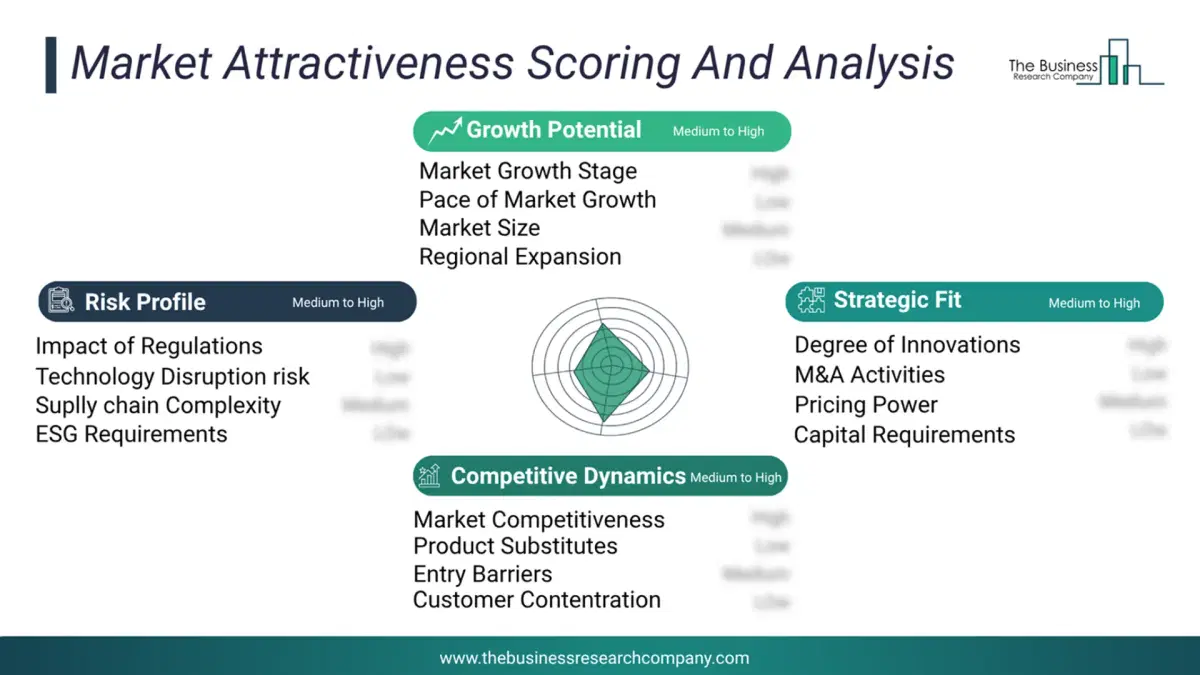
This chart presents market attractiveness based on a quantitative evaluation of growth, competition, strategic alignment, and risk, offering a clear view of opportunity areas for decision-making. This chart is for illustrative purposes; the full report contains the complete analysis.
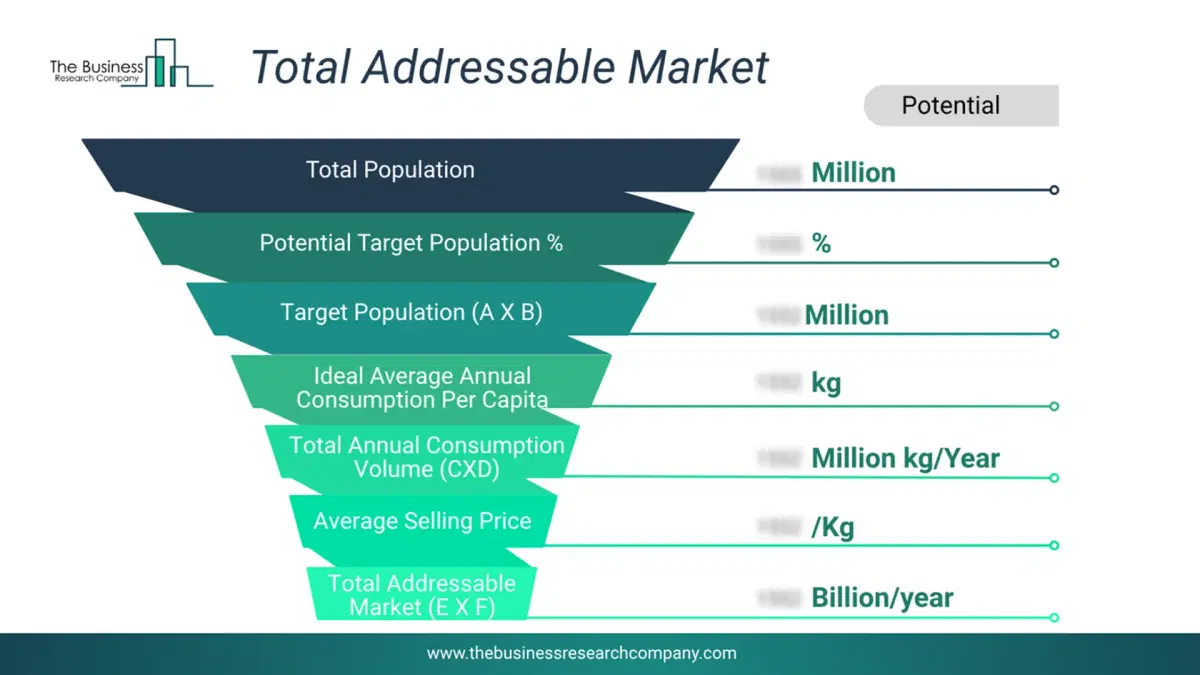
This chart highlights the Total Addressable Market (TAM) by estimating the maximum revenue opportunity using an assumption-driven approach, supporting strategic planning and opportunity sizing across markets. The chart is illustrative; the full report provides a more comprehensive analysis.
What Key Data and Analysis Are Included in the Automotive Finance Market Report 2026?
The automotive finance market research report is one of a series of new reports from The Business Research Company that provides market statistics, including Market Report 2026?global market size, regional shares, competitors with the market share, detailed market segments, market trends and opportunities, and any further data you may need to thrive in the automotive finance Market Report 2026? The market research report delivers a complete perspective of everything you need, with an in-depth analysis of the current and future state of the Market Report 2026?Automotive Finance Market Report Forecast Analysis
| Report Attribute | Details |
|---|---|
| Market Size Value In 2026 | $339.36 billion |
| Revenue Forecast In 2030 | $473.59 billion |
| Growth Rate | CAGR of 8.7% from 2026 to 2030 |
| Base Year For Estimation | 2025 |
| Actual Estimates/Historical Data | 2020-2025 |
| Forecast Period | 2026 - 2030 |
| Market Representation | Revenue in USD Billion and CAGR from 2026 to 2030 |
| Segments Covered | Provider Type, Finance Type, Vehicle Type |
| Regional Scope | Asia-Pacific, Western Europe, Eastern Europe, North America, South America, Middle East, Africa |
| Country Scope | The countries covered in the report are Australia, Brazil, China, France, Germany, India, Indonesia, Japan, Taiwan, Russia, South Korea, UK, USA, Canada, Italy, Spain. |
| Key Companies Profiled | Ally Financial Inc., Bank of America Corporation, Capital One Financial Corporation, Chase Auto Finance, Daimler Financial Services India Private Limited, Ford Motor Credit Company, General Motors Financial Company Inc., Hitachi Capital Corporation, Toyota Financial Services, Volkswagen Financial Services, BNP Paribas, HDFC Bank Limited, Standard Bank Group Ltd., Banco Bradesco SA, Wells Fargo & Co., HSBC Holdings PLC, Oodle Car Finance Services Limited, Lendbuzz Inc., OTO Capital, Bajaj Finance Limited, Moneybarn Limited, Yixin Group Limited, Caribou Financial Inc., Nissan Infiniti Finance, Honda Motor Co. Ltd. |
| Customization Scope | Request for Customization |
| Pricing And Purchase Options | Explore Purchase Options |