

Automotive Glass Market Report 2026
Global Outlook – By Product (Tempered Glass, Laminated Glass, Other Products), By Vehicles Type (Passenger Vehicles, Light Commercial Vehicles, Heavy Commercial Vehicles, Electric Vehicles), By Application (Windshield, Sidelite, Sunroof, Backlite), By End-Use (Original Equipment Manufacturer (OEM), Aftermarket) – Market Size, Trends, Strategies, and Forecast to 2030
Automotive Glass Market Overview
• Automotive Glass market size has reached to $22.74 billion in 2025 • Expected to grow to $31.13 billion in 2030 at a compound annual growth rate (CAGR) of 6.5% • Growth Driver: Driving Forces Behind the Growth of the Automotive Glass Market • Market Trend: Enhancing Vehicle Privacy, Glare Reduction, And Energy Efficiency • Asia-Pacific was the largest region in 2025.Market Gains By 2030 – Top Opportunities By Segment
Market Gain identifies the most promising market opportunities by highlighting the segments or products expected to generate the highest incremental revenue growth over the next five years.
What Is Covered Under Automotive Glass Market?
Automotive glass generally encompasses all the glass components used in vehicles for both functional and aesthetic purposes. It includes specialized glass used for panoramic roofs and rearview mirrors. These components enhance the vehicle's design and contribute to safety, visibility, and overall comfort for passengers. The main products of automotive glass are tempered glass, laminated glass, and others. Tempered glass refers to safety glass that has been heat-treated to increase its strength and shatter into small, less dangerous pieces upon impact. It is used in various vehicles, including passenger vehicles, light commercial vehicles, heavy commercial vehicles, and electric vehicles, for applications such as windshields, sidelites, sunroofs, and backlites. It serves end uses such as original equipment manufacturers (OEM) and aftermarket.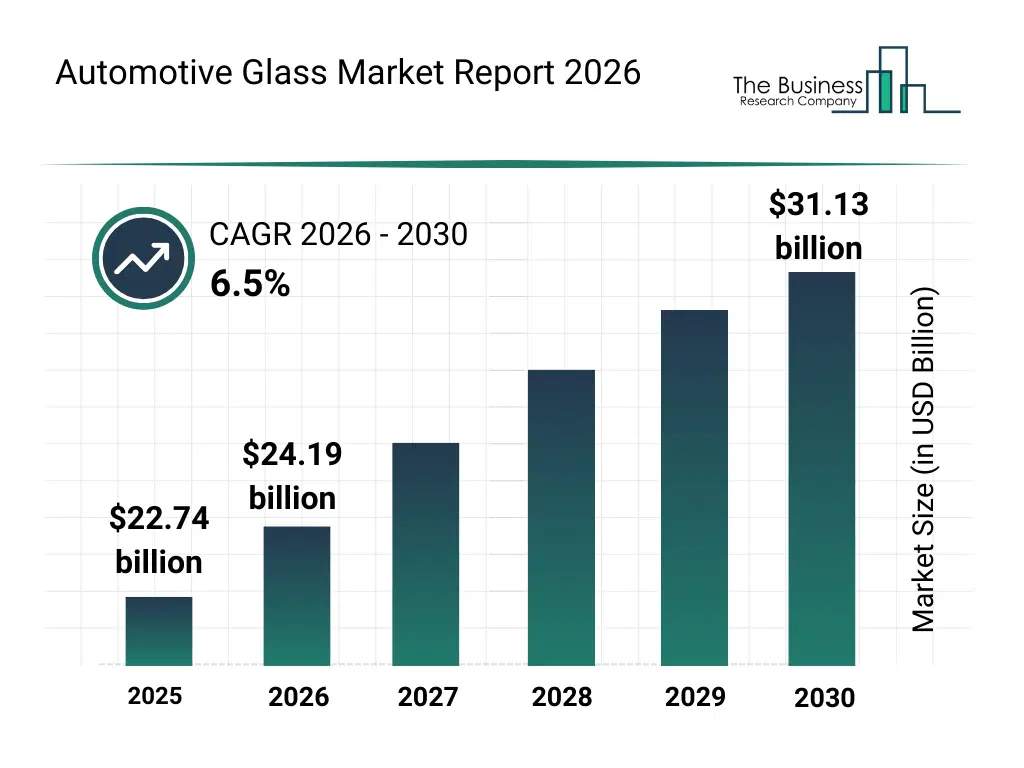
What Is The Automotive Glass Market Size and Share 2026?
The automotive glass market size has grown strongly in recent years. It will grow from $22.74 billion in 2025 to $24.19 billion in 2026 at a compound annual growth rate (CAGR) of 6.4%. The growth in the historic period can be attributed to growth in passenger and commercial vehicle production, rising replacement demand in aftermarket, increasing adoption of laminated and tempered glass, advancements in automotive safety regulations, expansion of luxury and electric vehicle segments.What Is The Automotive Glass Market Growth Forecast?
The automotive glass market size is expected to see strong growth in the next few years. It will grow to $31.13 billion in 2030 at a compound annual growth rate (CAGR) of 6.5%. The growth in the forecast period can be attributed to shift towards electric and autonomous vehicles, rising demand for smart and electrochromic glass, increasing focus on acoustic and uv-protective laminated glass, adoption of lightweight and durable glass solutions, expansion of automotive production in asia-pacific. Major trends in the forecast period include rising adoption of laminated and tempered glass in vehicles, growing demand for panoramic roof and sunroof glass, increasing use of smart and electrochromic glass, expansion of bulletproof and privacy glass applications, rising focus on uv-protective and heated laminated glass.
Global Automotive Glass Market Segmentation
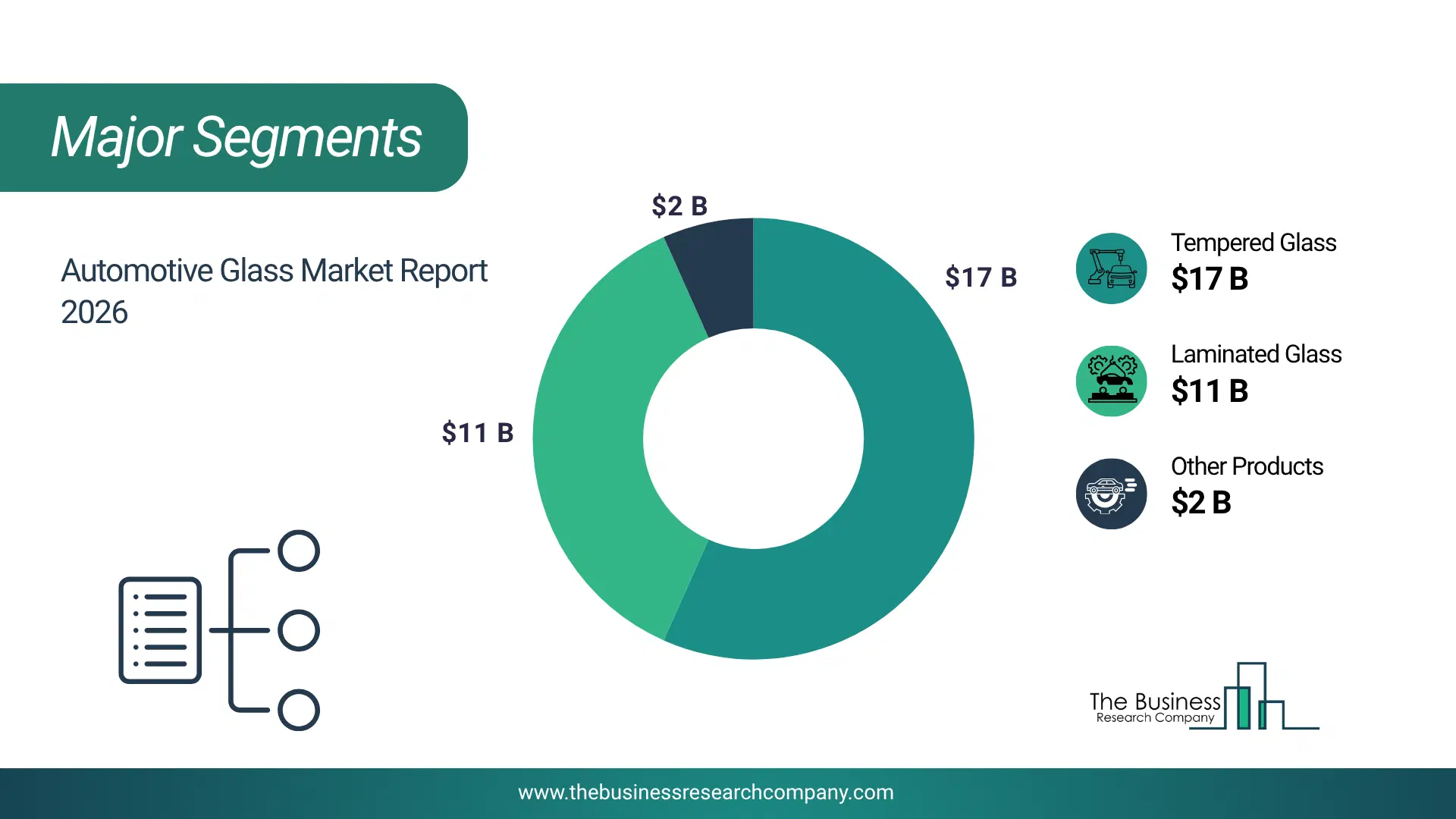
1) By Product: Tempered Glass, Laminated Glass, Other Products 2) By Vehicles Type: Passenger Vehicles, Light Commercial Vehicles, Heavy Commercial Vehicles, Electric Vehicles 3) By Application: Windshield, Sidelite, Sunroof, Backlite 4) By End-Use: Original Equipment Manufacturer (OEM), Aftermarket Subsegments: 1) By Tempered Glass: Side Windows Glass, Rear Windows Glass, Door Glass, Sunroofs And Roof Panels, Quarter Windows Glass 2) By Laminated Glass: Windshields (Front And Rear), Acoustic Laminated Glass, UV-Protective Laminated Glass, Heated Laminated Glass 3) By Other Products: Plastic Automotive Glazing (Polycarbonate, Acrylic), Smart Glass (Electrochromic Glass), Head-Up Display (HUD) Glass The top segments in the automotive glass market will be: • Tempered Glass will reach $17.36 Billion by 2030. • Laminated Glass will reach $11.49 Billion by 2030. • Other Products will reach $2 Billion by 2030.What Is The Driver Of The Automotive Glass Market?
The increasing demand for passenger and commercial vehicles is expected to propel the growth of the automotive glass market going forward. Passenger vehicles refer to cars and other vehicles designed primarily for transporting passengers, while commercial vehicles include vans, trucks, and buses used for business and transportation purposes. The demand for passenger and commercial vehicles is rising due to economic growth, increasing urbanization, and improved consumer confidence, driving transportation needs. Automotive glass is used in passenger and commercial vehicles primarily for providing visibility, protection from external elements, and structural support. For instance, in February 2023, according to the International Energy Agency, a France-based intergovernmental organization for energy policies, the sale of electric passenger cars in emerging and advanced economies rose from 1.3 million and 2.2 million to 1.5 million and 3.8 million, respectively. Additionally, in April 2024, according to the European Automobile Manufacturers' Association (ACEA), a Belgium-based lobby of Europe's 15 major car, truck, van, and bus makers, new commercial vehicle registrations saw notable growth in 2023, with vans increasing by 14.6%, trucks by 16.3%, and buses by 19.4%. Therefore, the increasing demand for passenger and commercial vehicles will drive the automotive glass industry.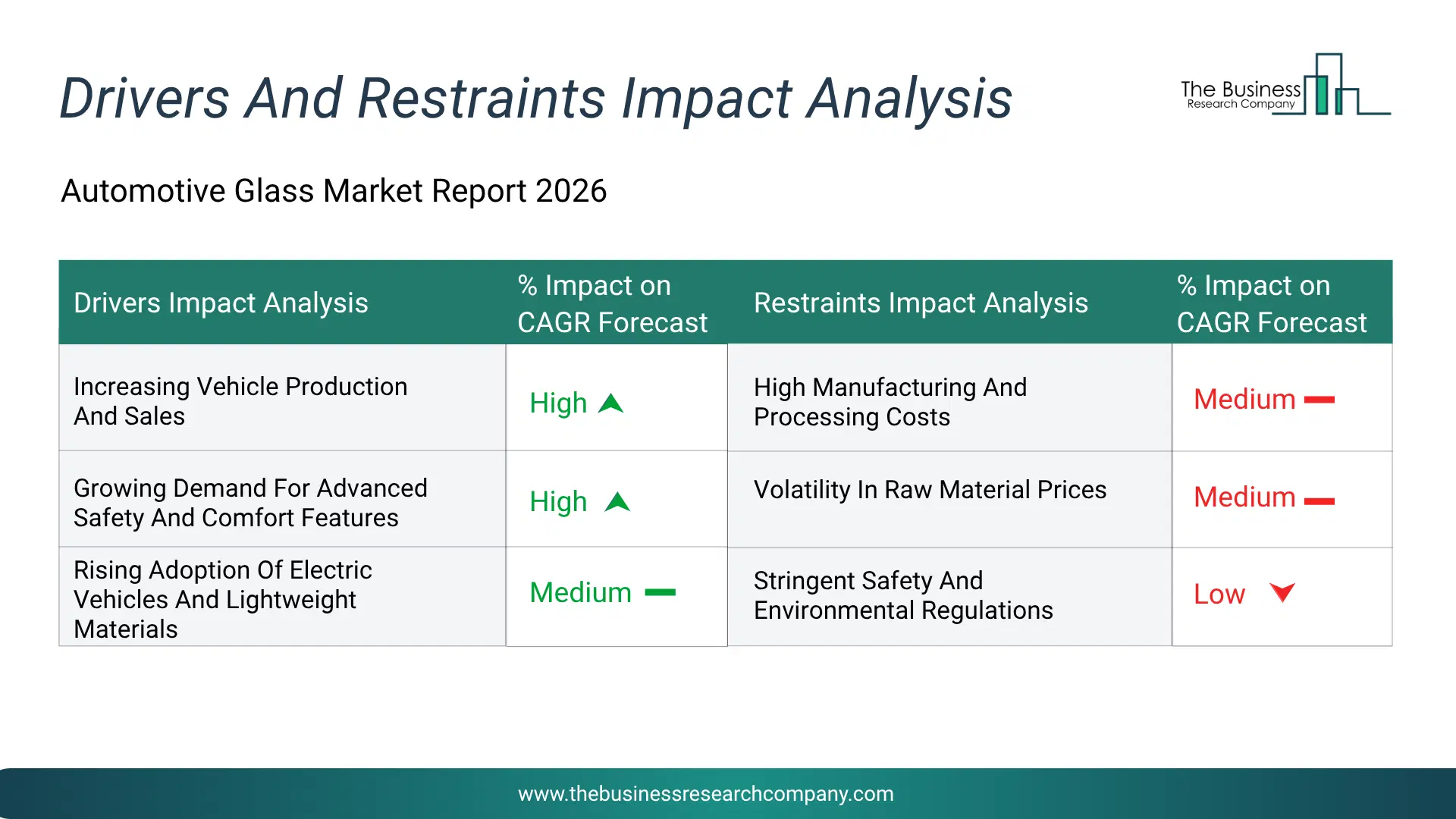
Infographic Chart Showing Key Market Drivers Analysis And Restraints For Automotive Glass Market
The chart presents an impact analysis of key drivers and restraints, quantifying their relative influence on the market's growth rate and helping assess the balance between growth enablers and limiting factors. This chart offers a high-level perspective; the full report contains more detailed insights.
How Will The Drivers Impact Growth In The Global Automotive Glass Market?
• Increasing Vehicle Production And Sales (High) – During the forecast period, the increasing vehicle production and sales are expected to become a key growth driver for the automotive glass market by 2030. Rising demand for passenger cars, commercial vehicles, and electric vehicles is generating higher requirements for windshields, sidelites, backlites, and sunroof glass across global manufacturing facilities. Expanding automotive production volumes in emerging and developed markets are creating sustained demand for high-quality glazing solutions that meet performance and durability standards. Automotive manufacturers are also increasing sourcing of advanced glass products to support evolving vehicle designs and production targets. • Growing Demand For Advanced Safety And Comfort Features (High) – During the forecast period, the growing demand for advanced safety and comfort features is expected to emerge as a major factor driving the expansion of the automotive glass market by 2030. Consumers are increasingly seeking vehicles equipped with acoustic glass, UV-protective glazing, heated windshields, and enhanced visibility solutions that improve driving experience and occupant protection. Modern automotive glass technologies are playing a critical role in reducing cabin noise, improving thermal insulation, and supporting integrated driver-assistance functions. Vehicle manufacturers are therefore expanding the adoption of premium glazing systems across multiple vehicle segments. • Rising Adoption Of Electric Vehicles And Lightweight Materials (Medium) – During the forecast period, the rising adoption of electric vehicles and lightweight materials is expected to act as a key growth catalyst for the automotive glass market by 2030. Automotive manufacturers are increasingly incorporating lightweight glazing solutions to enhance vehicle efficiency and optimize battery performance in electric vehicles. Advanced glass technologies are enabling improved structural performance while supporting modern vehicle styling requirements and aerodynamic efficiency. The transition toward electrified mobility is also accelerating demand for innovative glazing applications such as panoramic roofs and energy-efficient glass systems.How Will The Restraints Impact Growth In The Global Automotive Glass Market?
• High Manufacturing And Processing Costs (High) – During the forecast period, the high manufacturing and processing costs act as a major restraint in the automotive glass market by increasing the overall production expenses for advanced glass types such as acoustic, HUD, and solar control glass. These specialized products require sophisticated technologies, multi-layer lamination, and precision engineering, which elevate factory gate prices. As a result, vehicle manufacturers face higher procurement costs, which may limit adoption, especially in mid-range and economy vehicles. This cost pressure can reduce profit margins for suppliers and slow down large-scale integration across vehicle segments. Consequently, market growth is constrained as price-sensitive regions and customers opt for conventional alternatives. • Volatility In Raw Material Prices (High) – During the forecast period, the volatility in raw material prices restrains the automotive glass market by creating uncertainty in production costs and pricing strategies. Key inputs such as silica sand, soda ash, and energy resources are subject to frequent price fluctuations due to supply chain disruptions and geopolitical factors. This instability directly impacts manufacturers’ ability to maintain consistent factory gate pricing and profit margins. It also complicates long-term contracts with OEMs, as sudden cost increases may not always be passed on to buyers. As a result, fluctuating input costs hinder stable market expansion and investment planning. • Stringent Safety And Environmental Regulations (Medium) – During the forecast period, the stringent safety and environmental regulations act as a restraint by imposing strict compliance requirements on automotive glass manufacturers. Regulations related to vehicle safety standards, recyclability, and emissions increase the complexity of product design and manufacturing processes. Companies must invest heavily in R&D and testing to meet evolving global standards, raising operational costs. Additionally, delays in regulatory approvals can slow down product launches and innovation cycles. This regulatory burden can particularly impact smaller manufacturers, limiting their ability to compete and thereby restricting overall market growth.Key Players In The Global Automotive Glass Market
Major companies operating in the automotive glass market report are Saint-Gobain S.A., Asahi Glass Co Ltd, Nippon Sheet Glass Co. Ltd, Fuyao Glass Industry Group Co. Ltd., Xinyi Glass Holdings Limited, Guardian Industries Corp, Vitro S.A.B. de C.V., Türkiye Şişe ve Cam Fabrikaları, Taiwan Glass Ind Corp., Central Glass Co. Ltd., AGC Automotive, Corning Incorporated, Shenzhen Benson Automobile Glass Co. Ltd., CSG Holding Co. Ltd., SYP Glass Group, Cardinal Glass Industries, PGW Auto Glass, Trakya Cam Sanayii A.S., Sunglass Industry Co. Ltd., Kibing Group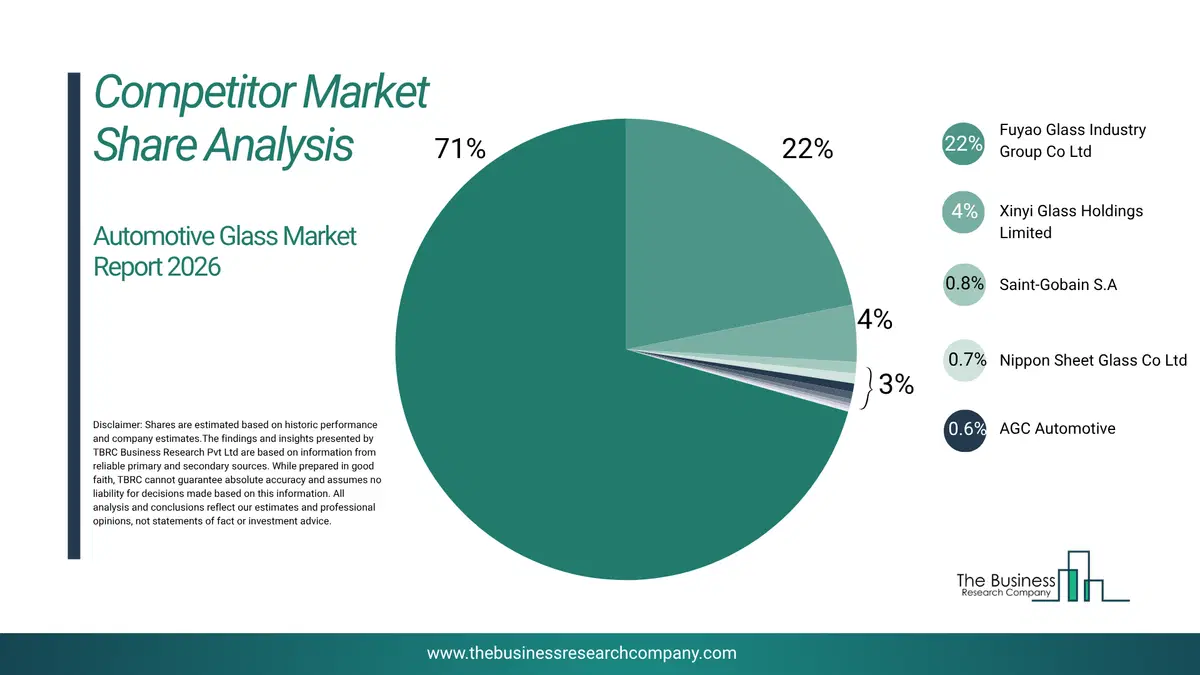
This chart is for illustrative purposes; the full report includes a detailed competitor analysis and comprehensive overview of the top 10 companies in the market.
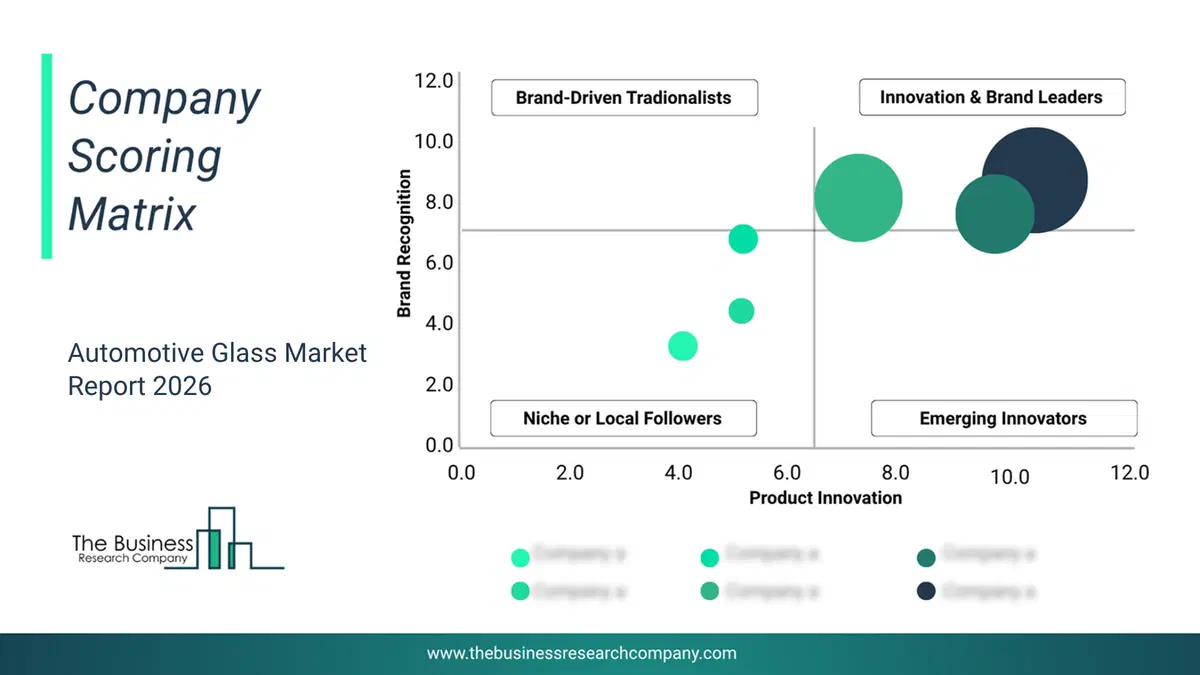
This chart maps companies by product innovation and brand strength, with bubble size indicating relative revenue, helping identify market leaders, challengers, and niche players. This is an illustrative chart; the full report provides a complete and accurate competitive analysis.
Global Automotive Glass Market Trends and Insights
Major companies operating in the automotive glass market are focusing on technology advancements such as smart glass technologies to gain competitive edge. Smart glass technologies are materials that can change transparency, tint, or opacity on demand using methods like electrochromic and photochromic processes, and are used in windows and automotive glass to enhance privacy, reduce glare, and improve energy efficiency. For instance, January 2023, Magna International, Inc., a Canada-based glass manufacturing company, launched the ClearView vision technology on Ram 2500 and 3500 Heavy Duty trucks. This advanced system combines real-time video with traditional mirrors, offering a wider field of view and improving safety in challenging driving conditions. ClearView is designed to make heavy-duty vehicles smarter and safer, aiding in complex maneuvers and enhancing situational awareness.What Are Latest Mergers And Acquisitions In The Automotive Glass Market?
In June 2025, PGW Auto Glass LCC, a US-based distributor of automotive replacement glass and related supplies, acquired Dakotaland Autoglass for an undisclosed amount. Through this acquisition, PGW Auto Glass aims to expand its geographic presence and operational capabilities in the Upper Midwest, strengthen its distribution and installation network, and enhance customer offerings via integrated technology platforms such as Everything Autoglass. Dakotaland Autoglass is a US-based company that provides automotive glass replacement products and services.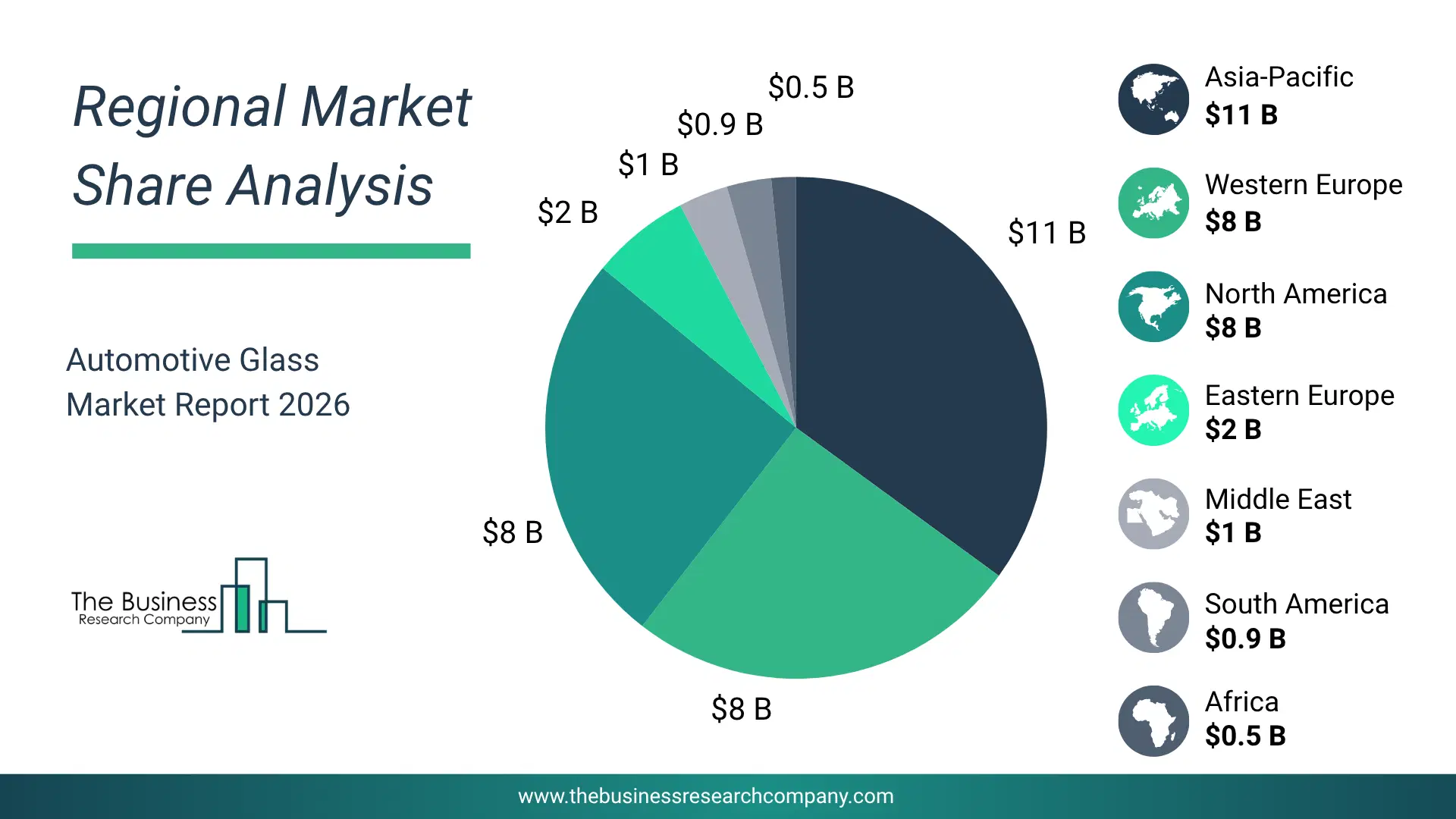
Regional Outlook
Asia-Pacific was the largest region in the automotive glass market in 2025. The regions covered in the automotive glass market are Asia-Pacific, South East Asia, Western Europe, Eastern Europe, North America, South America, Middle East, Africa. The countries covered in the automotive glass market are Australia, Brazil, China, France, Germany, India, Indonesia, Japan, Taiwan, Russia, South Korea, UK, USA, Canada, Italy, Spain.What Defines the Automotive Glass Market?
The automotive glass market consists of sales of acoustic glass, solar control glass, privacy glass, heated glass, HUD (head-up display) glass, and polycarbonate glazing. Values in this market are ‘factory gate’ values, that is the value of goods sold by the manufacturers or creators of the goods, whether to other entities (including downstream manufacturers, wholesalers, distributors, and retailers) or directly to end customers. The value of goods in this market includes related services sold by the creators of the goods.How is Market Value Defined and Measured?
The market value is defined as the revenues that enterprises gain from the sale of goods and/or services within the specified market and geography through sales, grants, or donations in terms of the currency (in USD unless otherwise specified). The revenues for a specified geography are consumption values that are revenues generated by organizations in the specified geography within the market, irrespective of where they are produced. It does not include revenues from resales along the supply chain, either further along the supply chain or as part of other products.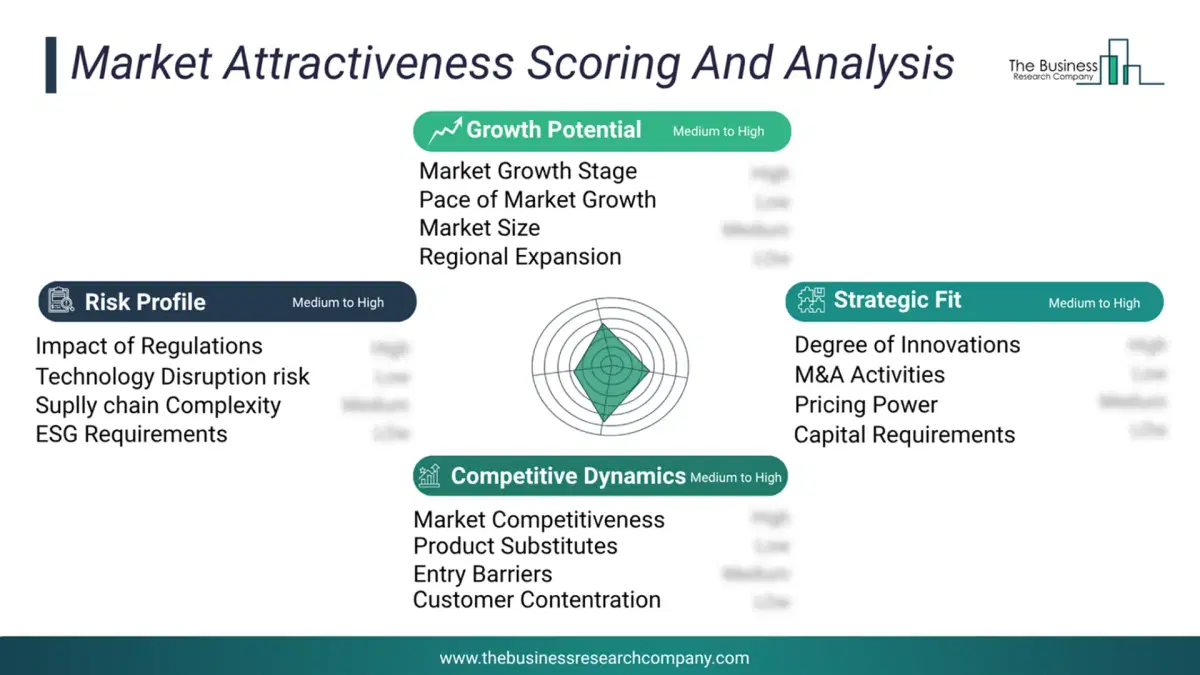
This chart presents market attractiveness based on a quantitative evaluation of growth, competition, strategic alignment, and risk, offering a clear view of opportunity areas for decision-making. This chart is for illustrative purposes; the full report contains the complete analysis.
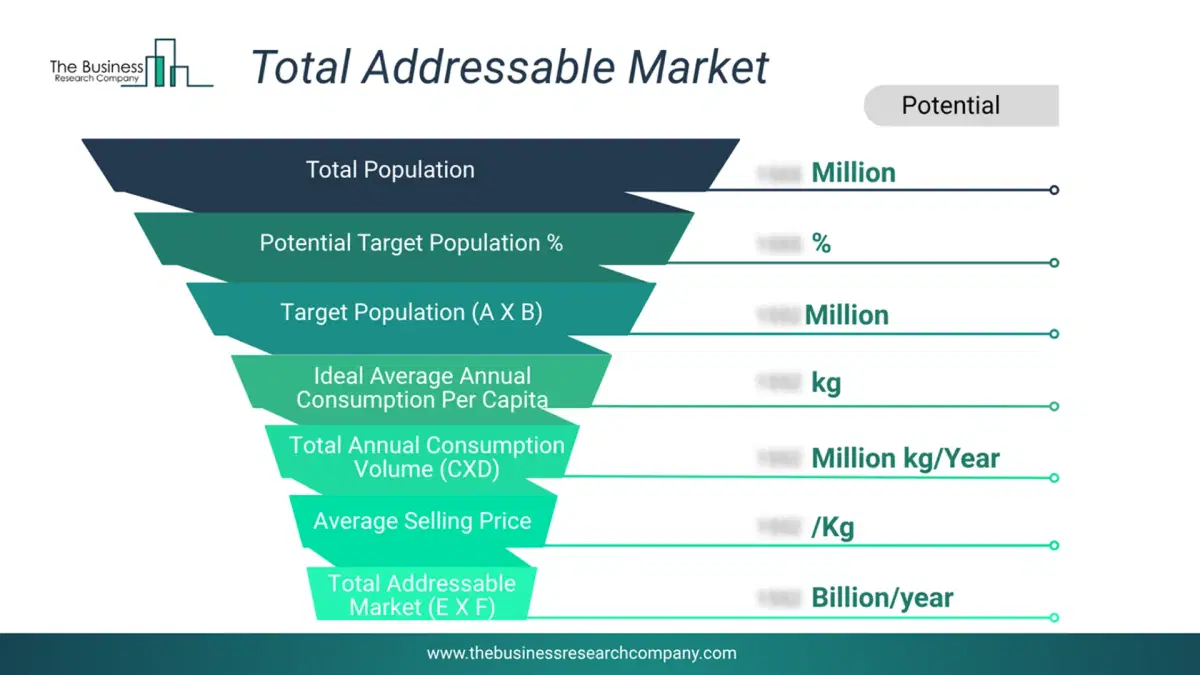
This chart highlights the Total Addressable Market (TAM) by estimating the maximum revenue opportunity using an assumption-driven approach, supporting strategic planning and opportunity sizing across markets. The chart is illustrative; the full report provides a more comprehensive analysis.
What Key Data and Analysis Are Included in the Automotive Glass Market Report 2026?
The automotive glass market research report is one of a series of new reports from The Business Research Company that provides market statistics, including Market Report 2026?global market size, regional shares, competitors with the market share, detailed market segments, market trends and opportunities, and any further data you may need to thrive in the automotive glass Market Report 2026? The market research report delivers a complete perspective of everything you need, with an in-depth analysis of the current and future state of the Market Report 2026?Automotive Glass Market Report Forecast Analysis
| Report Attribute | Details |
|---|---|
| Market Size Value In 2026 | $24.19 billion |
| Revenue Forecast In 2030 | $31.13 billion |
| Growth Rate | CAGR of 6.4% from 2026 to 2030 |
| Base Year For Estimation | 2025 |
| Actual Estimates/Historical Data | 2020-2025 |
| Forecast Period | 2026 - 2030 |
| Market Representation | Revenue in USD Billion and CAGR from 2026 to 2030 |
| Segments Covered | Product, Vehicles Type, Application, End-Use |
| Regional Scope | Asia-Pacific, Western Europe, Eastern Europe, North America, South America, Middle East, Africa |
| Country Scope | The countries covered in the report are Australia, Brazil, China, France, Germany, India, Indonesia, Japan, Taiwan, Russia, South Korea, UK, USA, Canada, Italy, Spain. |
| Key Companies Profiled | Saint-Gobain S.A., Asahi Glass Co Ltd, Nippon Sheet Glass Co. Ltd, Fuyao Glass Industry Group Co. Ltd., Xinyi Glass Holdings Limited, Guardian Industries Corp, Vitro S.A.B. de C.V., Türkiye Şişe ve Cam Fabrikaları, Taiwan Glass Ind Corp., Central Glass Co. Ltd., AGC Automotive, Corning Incorporated, Shenzhen Benson Automobile Glass Co. Ltd., CSG Holding Co. Ltd., SYP Glass Group, Cardinal Glass Industries, PGW Auto Glass, Trakya Cam Sanayii A.S., Sunglass Industry Co. Ltd., Kibing Group |
| Customization Scope | Request for Customization |
| Pricing And Purchase Options | Explore Purchase Options |