
Automotive Suspension Systems Market Report 2026
Global Outlook – By Type (Passive Suspensions Systems, Semi-Active Suspensions Systems, Active Suspensions Systems), By Component (Coil Spring, Leaf Spring, Air Spring, Shock Absorbers, Other Components), By Application (Passenger Vehicles, Commercial Vehicles) – Market Size, Trends, Strategies, and Forecast to 2030
Automotive Suspension Systems Market Overview
• Automotive Suspension Systems market size has reached to $66.83 billion in 2025 • Expected to grow to $82.98 billion in 2030 at a compound annual growth rate (CAGR) of 4.5% • Growth Driver: Increasing Demand For Motor Vehicles • Market Trend: Advancements In Automotive Suspension Systems • Asia-Pacific was the largest region in 2025.Market Gains By 2030 – Top Opportunities By Segment
Market Gain identifies the most promising market opportunities by highlighting the segments or products expected to generate the highest incremental revenue growth over the next five years.
What Is Covered Under Automotive Suspension Systems Market?
The automotive suspension systems are responsible for smoothening the vehicles ride and keeping them in control. The suspension system maximizes the friction between the tires and road for a softer movement of vehicles. The suspension system consists of tires, tire air, springs, shock absorbers and linkages that connects a vehicle to its wheels supporting road handling and ride quality of the vehicle. The main types of automotive suspension systems include passive suspension systems, semi-active suspensions systems and active suspensions systems. Passive suspensions systems respond to changes in the road using simple springs and shock absorbers, in order to prevent unwanted excess motion in the vehicle. The different components of automotive suspension systems include coil springs, leaf springs, air springs, shock absorbers, and other components, which are used for applications in passenger vehicles, and commercial vehicles.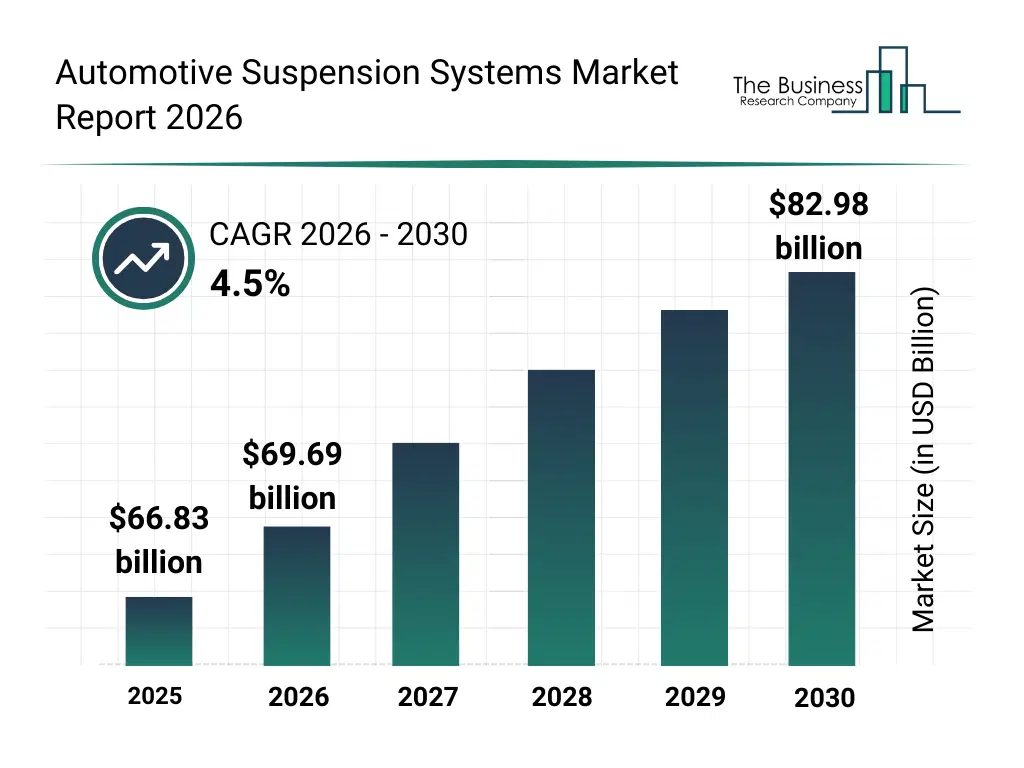
What Is The Automotive Suspension Systems Market Size and Share 2026?
The automotive suspension systems market size has grown steadily in recent years. It will grow from $66.83 billion in 2025 to $69.69 billion in 2026 at a compound annual growth rate (CAGR) of 4.3%. The growth in the historic period can be attributed to automotive production growth, suspension standardization, demand for ride comfort, expansion of commercial vehicles, chassis system evolution.What Is The Automotive Suspension Systems Market Growth Forecast?
The automotive suspension systems market size is expected to see steady growth in the next few years. It will grow to $82.98 billion in 2030 at a compound annual growth rate (CAGR) of 4.5%. The growth in the forecast period can be attributed to electric vehicle weight management, autonomous vehicle stability needs, smart suspension adoption, premium vehicle growth, advanced materials usage. Major trends in the forecast period include shift toward active and semi-active suspensions, adoption of lightweight suspension components, integration of electronic damping systems, demand for ride comfort optimization, growth in electric vehicle platforms.
Global Automotive Suspension Systems Market Segmentation
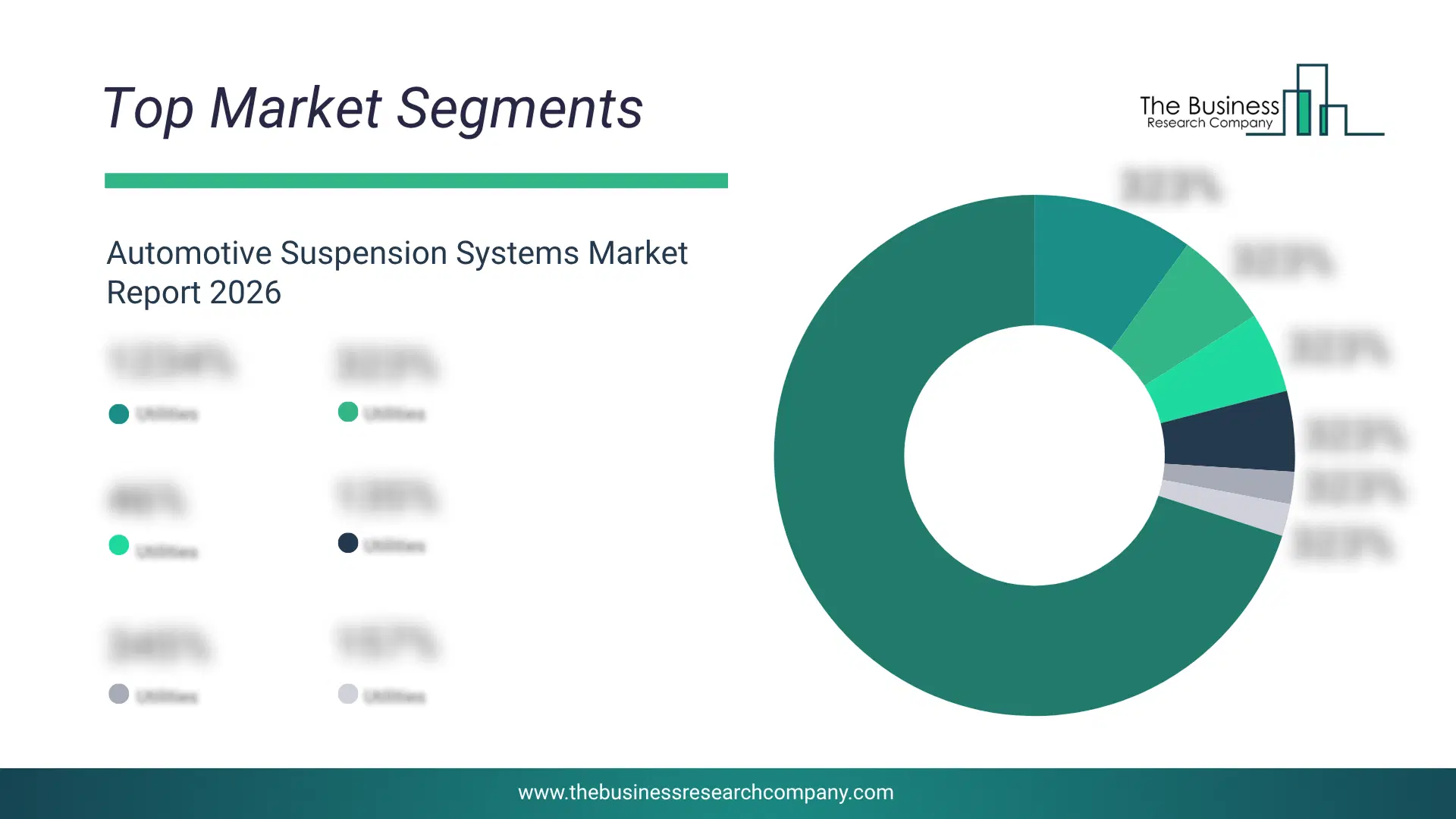
1) By Type: Passive Suspensions Systems, Semi-Active Suspensions Systems, Active Suspensions Systems 2) By Component: Coil Spring, Leaf Spring, Air Spring, Shock Absorbers, Other Components 3) By Application: Passenger Vehicles, Commercial Vehicles Subsegments: 1) By Passive Suspension Systems: Leaf Spring Suspension, Coil Spring Suspension, Torsion Bar Suspension, Shock Absorber Systems 2) By Semi-Active Suspension Systems: Magnetorheological (MR) Suspension, Electronically Controlled Damping Systems, Variable Damping Systems 3) By Active Suspension Systems: Fully Active Suspension Systems, Pneumatic Suspension Systems, Hydraulic Suspension Systems The top segments in the automotive suspension systems market will be: • Passive Suspensions Systems will reach $43 Billion by 2030. • Semi-Active Suspensions Systems will reach $21 Billion by 2030. • Active Suspensions Systems will reach $18 Billion by 2030.What Is The Driver Of The Automotive Suspension Systems Market?
The increasing demand for motor vehicles is expected to propel the growth of the automotive suspension systems market going forward. Automotive suspension systems are mechanical assemblies that support vehicle weight, absorb shocks from uneven roads, and improve ride comfort, handling, and stability. The demand for motor vehicles is rising as consumers increasingly prefer vehicles that offer smooth rides, enhanced safety, and superior driving performance. Automotive suspension systems enhance vehicle efficiency by reducing wear on tires and other components while improving passenger comfort and driving control. For instance, in August 2024, according to the European Automobile Manufacturers' Association, a Belgium-based organization, Seven months into 2024, new car registrations rose by 3.9%, exceeding 6.5 million units. The largest markets in the bloc demonstrated positive yet modest growth, with Spain (+5.6%), Italy (+5.2%), Germany (+4.3%), and France (+2.2%) all reporting increases. Therefore, the increasing demand for vehicles around the world is expected to drive the automotive suspension systems industry.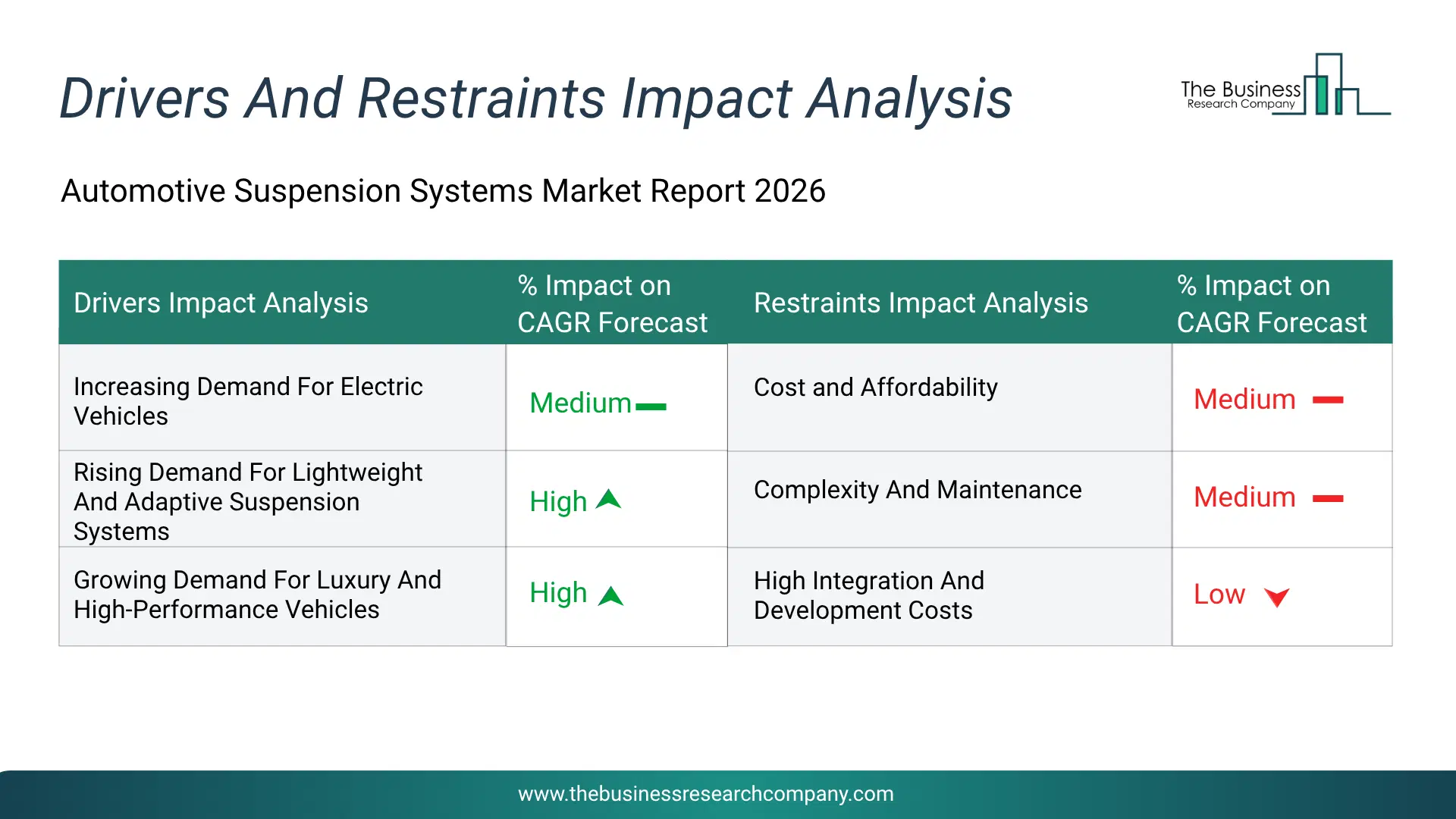
Infographic Chart Showing Key Market Drivers Analysis And Restraints For Automotive Suspension Systems Market
The chart presents an impact analysis of key drivers and restraints, quantifying their relative influence on the market's growth rate and helping assess the balance between growth enablers and limiting factors. This chart offers a high-level perspective; the full report contains more detailed insights.
How Will The Drivers Impact Growth In The Global Automotive Suspension Systems Market?
• Increasing Demand For Electric Vehicles (Medium) – During the forecast period, the increasing demand for electric vehicles is expected to become a key growth driver for the automotive suspension systems market by 2030. The increasing demand for electric vehicles is fuelling the automotive suspension systems market by creating a need for advanced suspension technologies that can support heavier battery systems and unique vehicle architectures. EVs require improved ride stability and comfort due to their different weight distribution compared to traditional vehicles. This drives manufacturers to develop suspension systems that enhance energy efficiency by reducing road resistance and improving handling. Automakers are increasingly integrating adaptive and electronically controlled suspension systems to meet performance expectations in EV platforms. The shift toward electrification is also encouraging innovation in lightweight suspension components. • Rising Demand For Lightweight And Adaptive Suspension Systems (High) – During the forecast period, the rising demand for lightweight and adaptive suspension systems is expected to emerge as a major factor driving the expansion of the automotive suspension systems market by 2030. The rising demand for lightweight and adaptive suspension systems is driving market growth by encouraging the development of more efficient and performance-oriented vehicle architectures. Lightweight suspension components help reduce overall vehicle weight, improving fuel efficiency and extending electric vehicle range. Adaptive systems enhance driving comfort by automatically adjusting damping levels based on road conditions and driving behaviour. This demand is pushing automotive manufacturers to adopt advanced materials such as aluminium and composites in suspension design. It also promotes the integration of electronic control units for real-time suspension adjustments. • Growing Demand For Luxury And High-Performance Vehicles (High) – During the forecast period, the growing demand for luxury and high-performance vehicles is expected to act as a key growth catalyst for the automotive suspension systems market by 2030. The growing demand for luxury and high-performance vehicles is significantly propelling the automotive suspension systems market by increasing the need for superior ride quality and advanced handling capabilities. Luxury vehicles are increasingly equipped with semi-active and active suspension systems to deliver smooth and comfortable driving experiences. High-performance vehicles require precise suspension control to maintain stability at high speeds and during aggressive maneuvers. This demand encourages manufacturers to develop technologically advanced and highly responsive suspension solutions. Consumers in this segment are willing to invest in enhanced comfort, safety, and driving dynamics.How Will The Restraints Impact Growth In The Global Automotive Suspension Systems Market?
• Cost and Affordability (Medium) – During the forecast period, the cost and affordability constraint restrains the automotive suspension systems market as advanced suspension technologies such as semi-active and active systems involve high production and integration costs. These systems require sophisticated sensors, electronic control units, and precision engineering, making them significantly more expensive than traditional passive systems. This limits their adoption primarily to premium and luxury vehicle segments. Price-sensitive markets, especially in developing regions, continue to rely on conventional suspension systems due to budget constraints. Additionally, OEMs face pressure to balance performance improvements with cost efficiency. As a result, high system costs slow down the widespread penetration of advanced suspension technologies. • Complexity And Maintenance (High) – During the forecast period, the complexity and maintenance issue acts as a restraint in the automotive suspension systems market because advanced suspension systems involve intricate electronic and mechanical components. These systems require specialized knowledge for installation, calibration, and servicing, increasing dependency on skilled technicians. Higher complexity also leads to increased chances of system failure or malfunction if not properly maintained. Maintenance costs are significantly higher compared to traditional suspension systems, discouraging adoption in cost-sensitive segments. Additionally, repair turnaround times are longer due to diagnostic requirements and component sophistication. Therefore, system complexity limits large-scale deployment across all vehicle categories. • High Integration And Development Costs (High) – During the forecast period, the high integration and development costs restraint affects the automotive suspension systems market by increasing the overall investment required for designing and implementing advanced suspension technologies. Developing systems like active suspension requires extensive R&D, advanced software integration, and rigorous testing, which raises upfront costs for manufacturers. Integration with vehicle electronics and control systems further adds to engineering complexity and expense. These high costs are often passed on to consumers, reducing affordability and slowing market penetration. Smaller automotive manufacturers may also struggle to invest in such technologies due to budget limitations. Consequently, high development costs restrict widespread adoption of advanced suspension systems.Key Players In The Global Automotive Suspension Systems Market
Major companies operating in the automotive suspension systems market report include Continental AG, ZF Friedrichshafen AG, Tenneco Inc., KYB Corporation, Hitachi Astemo Americas Inc., Mando Corporation, BeijingWest Industries International Limited, Multimatic Inc., Sogefi SpA, Eibach GmbH, KW automotive GmbH, Koni BV, Öhlins Racing AB, TEIN Inc., Gabriel India Limited, thyssenkrupp Automotive Technology, Hyundai Mobis Co. Ltd., LORD Corporation, Magneti Marelli SpA, Hendrickson USA LLC, Muhr und Bender KG (Mubea), Benteler Automotive, Fox Factory Holding Corp.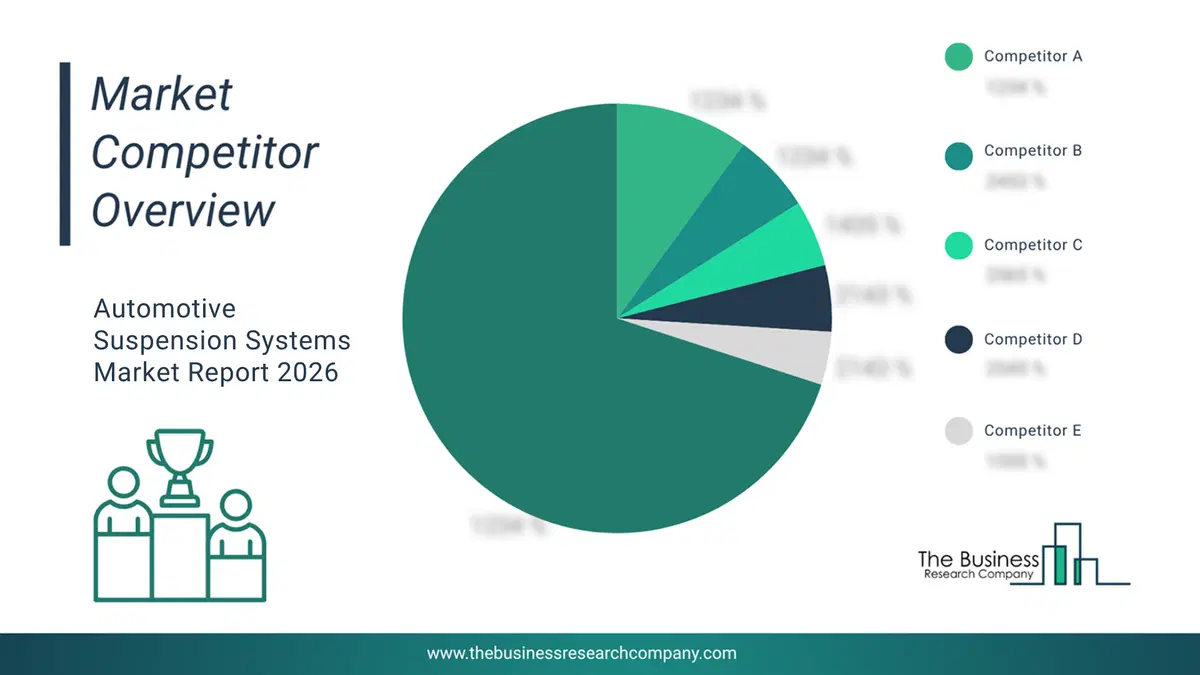
This chart is for illustrative purposes; the full report includes a detailed competitor analysis and comprehensive overview of the top 10 companies in the market.
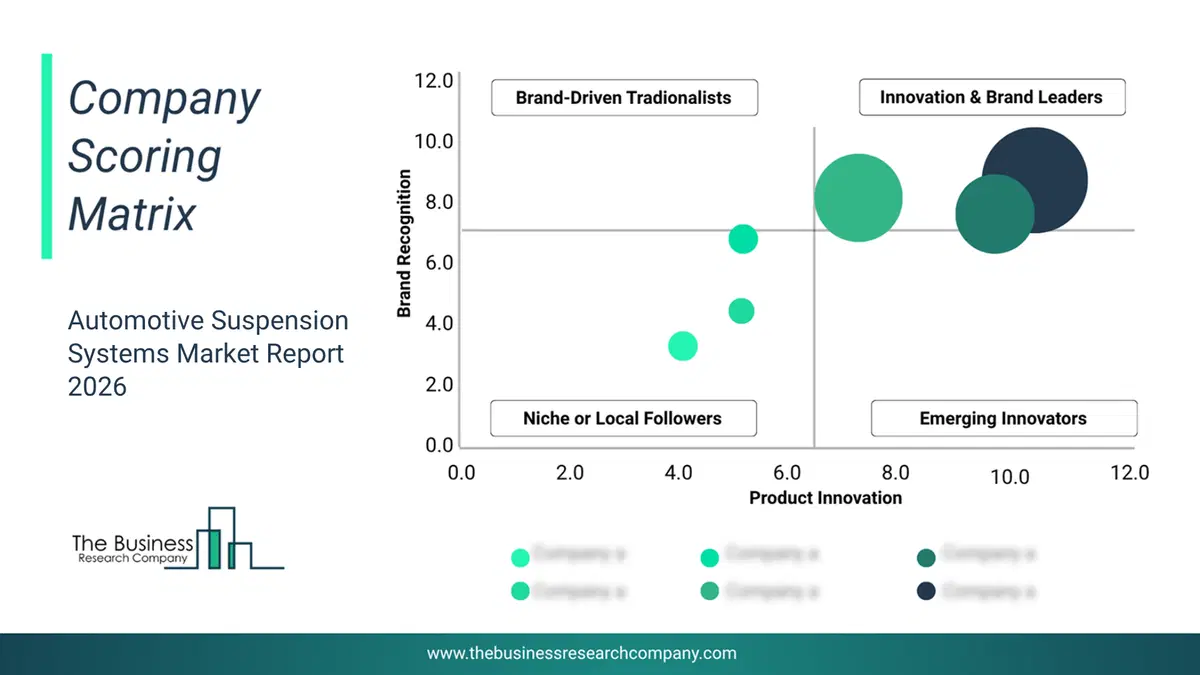
This chart maps companies by product innovation and brand strength, with bubble size indicating relative revenue, helping identify market leaders, challengers, and niche players. This is an illustrative chart; the full report provides a complete and accurate competitive analysis.
Global Automotive Suspension Systems Market Trends and Insights
Major companies operating in the automotive suspension systems market are focusing on the development of technologically advanced products, such as mechanical suspensions to improve ride comfort and enhance vehicle stability. Mechanical suspensions are systems in vehicles that use mechanical components, such as springs and shock absorbers, to support the vehicle's weight, absorb road shocks, and enhance ride comfort and stability. For instance, in July 2023, Hendrickson, a US-based suspension manufacturer, launched the TA 14 heavy-duty air suspension and MS 16 heavy-duty mechanical suspension. The TA 14 heavy-duty air suspension is specifically engineered for Indian conditions, featuring Top and Low Mount variants that provide customers with multiple options tailored to their application needs. In contrast, the MS 16 heavy-duty mechanical suspension, rated for a 16T capacity, is designed for both on-road and off-road applications, offering enhanced load-carrying capabilities and performance. It is available in tandem and tridem configurations and incorporates a robust leaf spring assembly, utilizing locally manufactured, high-quality components such as thicker side plates for equalisers and durable polyurethane bushes in the torque arm, ensuring low maintenance costs, reduced downtime, and improved operational efficiency.What Are Latest Mergers And Acquisitions In The Automotive Suspension Systems Market?
In January 2023, RENK Group, a Germany-based drive solutions provider, acquired General Kinetics for an undisclosed amount. As a result of the acquisition, the new company enhances its mobility solutions and leverages RENK's extensive presence in the US, Europe, and globally to offer a comprehensive range of suspension and vibration mitigation products. General Kinetics is a USA-based manufacturer of automotive suspension systems.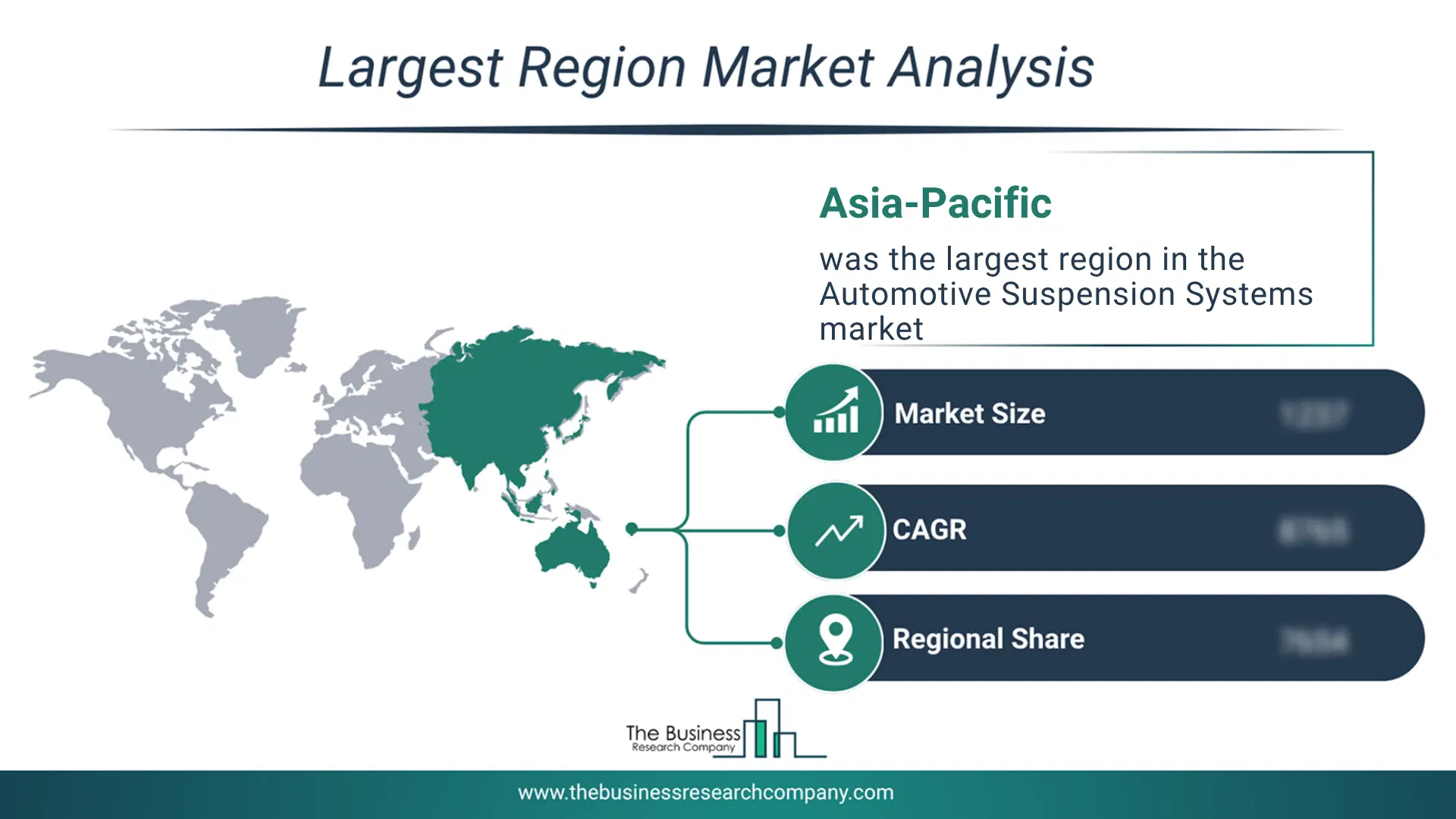
Regional Outlook
Asia-Pacific was the largest region in the automotive suspension systems market in 2025. The regions covered in this market report include Asia-Pacific, South East Asia, Western Europe, Eastern Europe, North America, South America, Middle East, Africa. The countries covered in this market report include Australia, Brazil, China, France, Germany, India, Indonesia, Japan, Taiwan, Russia, South Korea, UK, USA, Canada, Italy, SpainWhat Defines the Automotive Suspension Systems Market?
The automotive suspension systems market consists of sales of multi-link suspension, rigid axle suspension, independent suspension, and rigid suspension. Values in this market are ‘factory gate’ values, that is the value of goods sold by the manufacturers or creators of the goods, whether to other entities (including downstream manufacturers, wholesalers, distributors and retailers) or directly to end customers. The value of goods in this market includes related services sold by the creators of the goods.How is Market Value Defined and Measured?
The market value is defined as the revenues that enterprises gain from the sale of goods and/or services within the specified market and geography through sales, grants, or donations in terms of the currency (in USD unless otherwise specified). The revenues for a specified geography are consumption values that are revenues generated by organizations in the specified geography within the market, irrespective of where they are produced. It does not include revenues from resales along the supply chain, either further along the supply chain or as part of other products.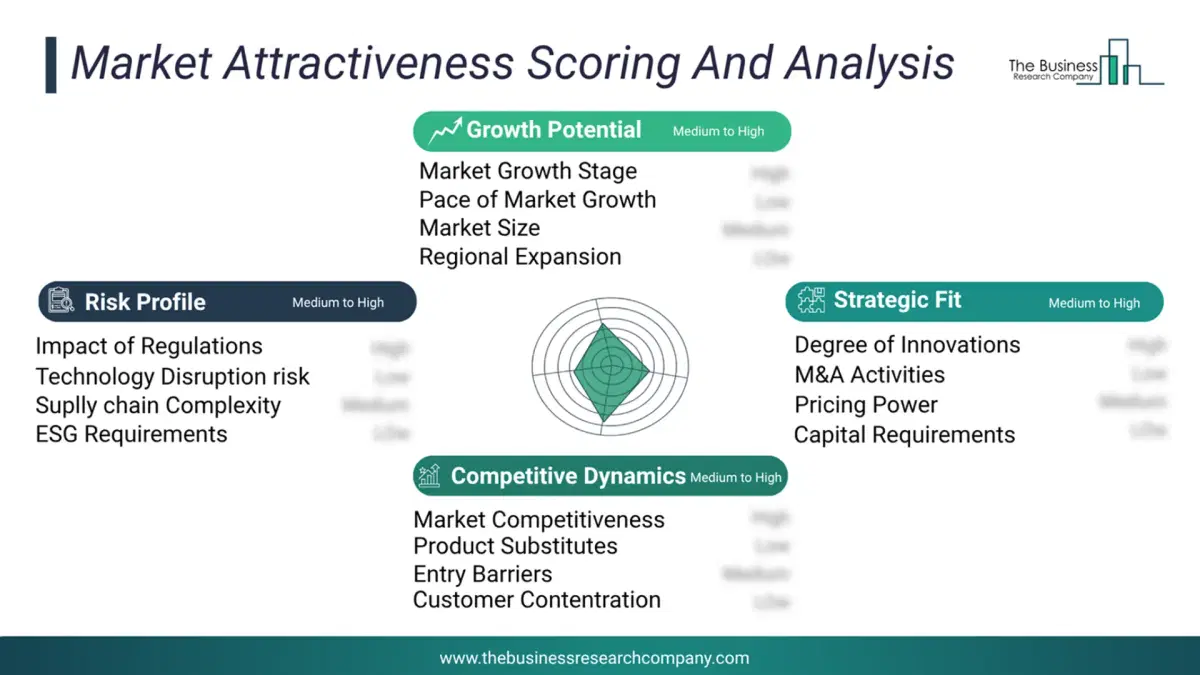
This chart presents market attractiveness based on a quantitative evaluation of growth, competition, strategic alignment, and risk, offering a clear view of opportunity areas for decision-making. This chart is for illustrative purposes; the full report contains the complete analysis.
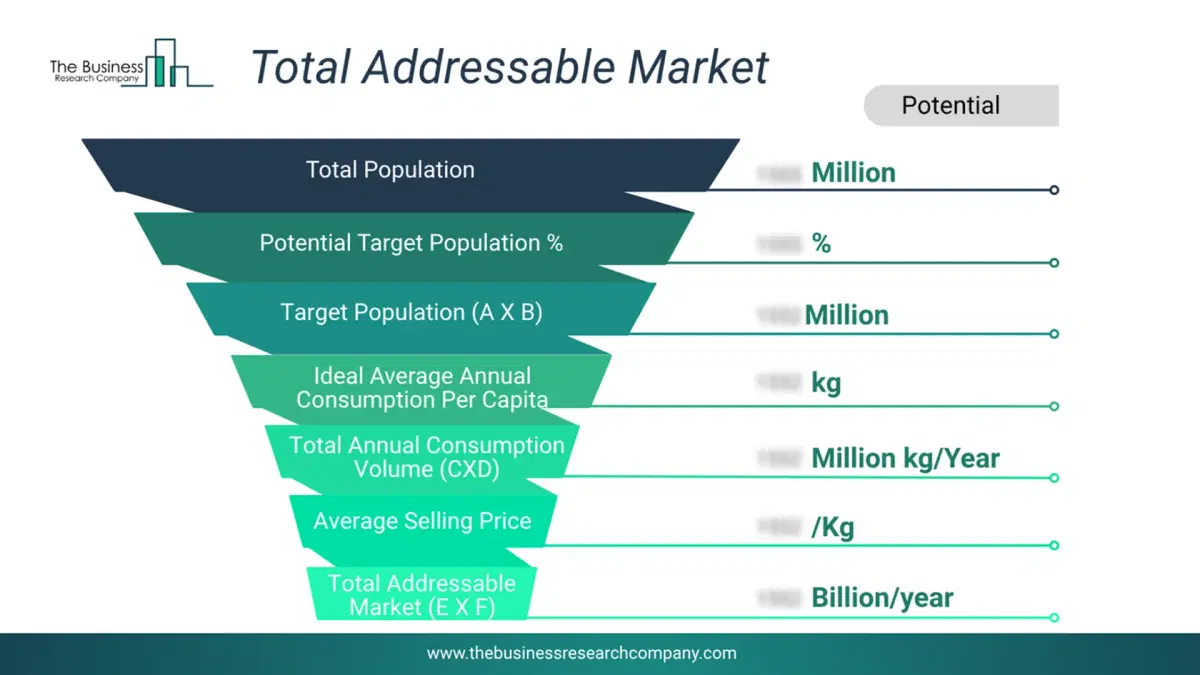
This chart highlights the Total Addressable Market (TAM) by estimating the maximum revenue opportunity using an assumption-driven approach, supporting strategic planning and opportunity sizing across markets. The chart is illustrative; the full report provides a more comprehensive analysis.
What Key Data and Analysis Are Included in the Automotive Suspension Systems Market Report 2026?
The automotive suspension systems market research report is one of a series of new reports from The Business Research Company that provides market statistics, including industry global market size, regional shares, competitors with the market share, detailed market segments, market trends and opportunities, and any further data you may need to thrive in the automotive suspension systems industry. The market research report delivers a complete perspective of everything you need, with an in-depth analysis of the current and future state of the industry.Automotive Suspension Systems Market Report Forecast Analysis
| Report Attribute | Details |
|---|---|
| Market Size Value In 2026 | $69.69 billion |
| Revenue Forecast In 2030 | $82.98 billion |
| Growth Rate | CAGR of 4.5% from 2026 to 2030 |
| Base Year For Estimation | 2025 |
| Actual Estimates/Historical Data | 2020-2025 |
| Forecast Period | 2026 - 2030 |
| Market Representation | Revenue in USD Billion and CAGR from 2026 to 2030 |
| Segments Covered | Type, Component, Application |
| Regional Scope | Asia-Pacific, Western Europe, Eastern Europe, North America, South America, Middle East, Africa |
| Country Scope | The countries covered in the report are Australia, Brazil, China, France, Germany, India, Indonesia, Japan, Taiwan, Russia, South Korea, UK, USA, Canada, Italy, Spain. |
| Key Companies Profiled | Continental AG, ZF Friedrichshafen AG, Tenneco Inc., KYB Corporation, Hitachi Astemo Americas Inc., Mando Corporation, BeijingWest Industries International Limited, Multimatic Inc., Sogefi SpA, Eibach GmbH, KW automotive GmbH, Koni BV, Öhlins Racing AB, TEIN Inc., Gabriel India Limited, thyssenkrupp Automotive Technology, Hyundai Mobis Co. Ltd., LORD Corporation, Magneti Marelli SpA, Hendrickson USA LLC, Muhr und Bender KG (Mubea), Benteler Automotive, Fox Factory Holding Corp. |
| Customization Scope | Request for Customization |
| Pricing And Purchase Options | Explore Purchase Options |