
Blood Collection Devices Market Report 2026
Global Outlook – By Type (Blood Collection Tubes, Lancet, Micro Container Tubes), By Method (Manual Blood Collection, Automatic Blood Collection), By Material (Glass, Stainless Steel, Plastic), By End User (Hospitals, Blood Donation Centers, Diagnostic Center) – Market Size, Trends, Strategies, and Forecast to 2030
Blood Collection Devices Market Overview
• Blood Collection Devices market size has reached to $8.48 billion in 2025 • Expected to grow to $12.95 billion in 2030 at a compound annual growth rate (CAGR) of 8.8% • Growth Driver: Rising Incidence Of Infectious Diseases Is Driving Growth • Market Trend: BD RightGauge Technology and the Launch of UltraTouch • North America was the largest region in 2025 and Asia-Pacific is the fastest growing region.What Is Covered Under Blood Collection Devices Market?
Blood collection devices are devices used to collect blood samples from the body. Blood collection devices are used for health and wellness testing, population studies, or research and preclinical drug studies. The main types of blood collection devices include blood collection tubes, lancets, micro container tubes, and warming devices. The blood collection tubes refer to tubes used for coagulation investigations and sodium citrate-containing blood collection. Blood collection tubes are used for various components and conduct blood into and out of a patient’s body to get tested in the laboratory. Different tests and biochemical assays require various types of sample collection tubes. The different materials used in the manufacturing of blood collection devices include glass, stainless steel, and plastic. They are used in manual and automatic blood collection by hospitals, blood collection centers, diagnostic centers, and others.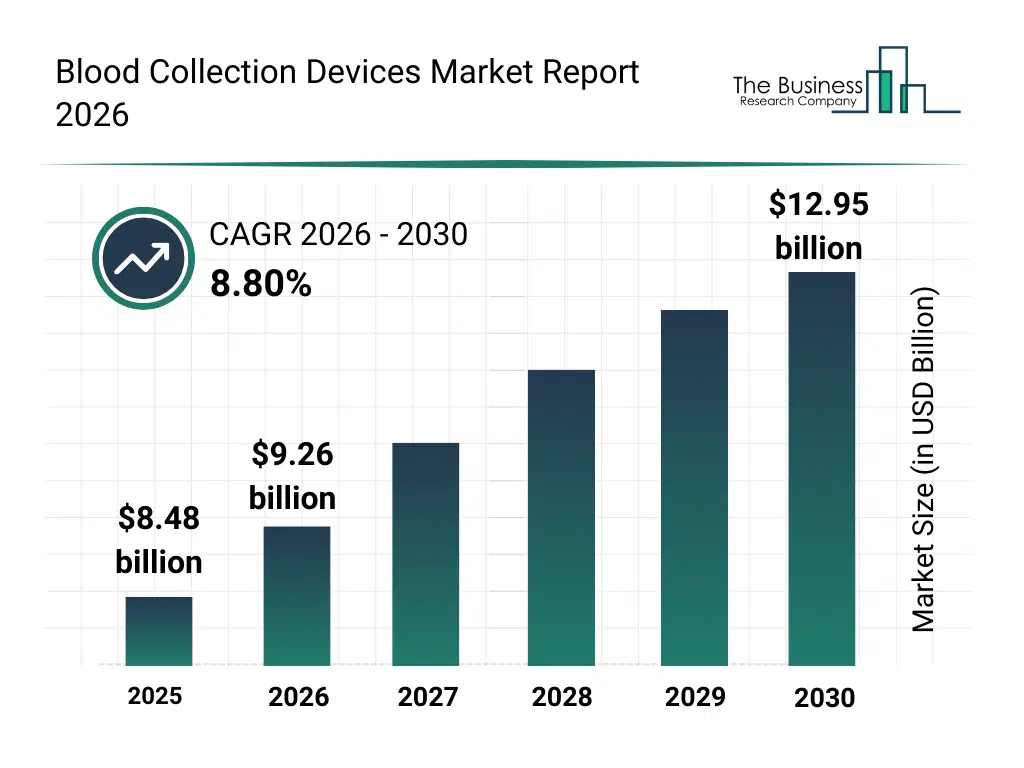
What Is The Blood Collection Devices Market Size and Share 2026?
The blood collection devices market size has grown strongly in recent years. It will grow from $8.48 billion in 2025 to $9.26 billion in 2026 at a compound annual growth rate (CAGR) of 9.1%. The growth in the historic period can be attributed to expansion of diagnostic testing volumes, rising prevalence of chronic diseases, growth in hospital and diagnostic infrastructure, increased blood donation activities, standardization of phlebotomy procedures.What Is The Blood Collection Devices Market Growth Forecast?
The blood collection devices market size is expected to see strong growth in the next few years. It will grow to $12.95 billion in 2030 at a compound annual growth rate (CAGR) of 8.8%. The growth in the forecast period can be attributed to increasing demand for minimally invasive sampling, rising adoption of automated collection devices, expansion of home-based diagnostics, growing focus on patient safety standards, technological improvements in blood collection materials. Major trends in the forecast period include increasing adoption of safety-engineered blood collection devices, rising demand for automated blood collection systems, growing use of micro-volume blood sampling tools, expansion of single-use disposable collection products, enhanced focus on infection control and patient comfort.
Global Blood Collection Devices Market Segmentation
1) By Type: Blood Collection Tubes, Lancet, Micro Container Tubes 2) By Method: Manual Blood Collection, Automatic Blood Collection 3) By Material: Glass, Stainless Steel, Plastic 4) By End User: Hospitals, Blood Donation Centers, Diagnostic Center Subsegments: 1) By Blood Collection Tubes: Vacuum Blood Collection Tubes, Serum Separator Tubes, EDTA Tubes 2) By Lancet: Safety Lancets, Manual Lancets, Automatic Lancets 3) By Micro Container Tubes: Capillary Tubes, Microtainer Tubes, Hematocrit TubesWhat Is The Driver Of The Blood Collection Devices Market?
The increase in incidence of infectious diseases is driving the growth of the blood collection devices market. Infectious diseases are infections caused by bacteria, viruses, fungi, or parasites. Infectious disorders such as hepatitis B (HBV), hepatitis C (HCV), the human immunodeficiency virus (HIV), malaria, syphilis, and brucellosis are tested through blood collection and sampling. The constant increase in incidences of infectious diseases and its diagnostics activities are expected to boost the utilization of blood collection devices. For instance, in February 2024, according to the UK Health Security Agency, a UK-based government agency, tuberculosis (a contagious bacterial infection that primarily affects the lungs) cases in England rose to 4,850 in 2023, an increase of 10.7% from 4,380 cases in 2022. Therefore, the increase in incidences of infectious diseases is expected to boost demand for blood collection devices during the forecast period.Key Players In The Global Blood Collection Devices Market
Major companies operating in the blood collection devices market are Becton Dickinson and Company, Greiner Holding AG, Kabe Labortechnik GmbH, Sarstedt AG & Company, ICU Medical Inc., Terumo BCT Inc., Fresenius Kabi AG, Grifols S.A., Haematonics, Nipro Medical Corporation, Macopharma SA, Smiths Medical International Ltd., Cardinal Health Inc., Retractable Technologies Inc., Sekisui Medical Co. Ltd., Qiagen NV, PT. Adi Buana Mandiri, Covidien Ltd., Kawasumi Laboratories Inc., F.L. Medical SRL, Ajosha Bio Teknik Pvt. Ltd., A-M Systems Ltd., Commonwealth Serum Laboratories Behring, Teleflex Medical Inc., Abbott Laboratories, Denova Sciences Pte. Ltd., VedaLab SA
This chart is for illustrative purposes; the full report includes a detailed competitor analysis and comprehensive overview of the top 10 companies in the market.
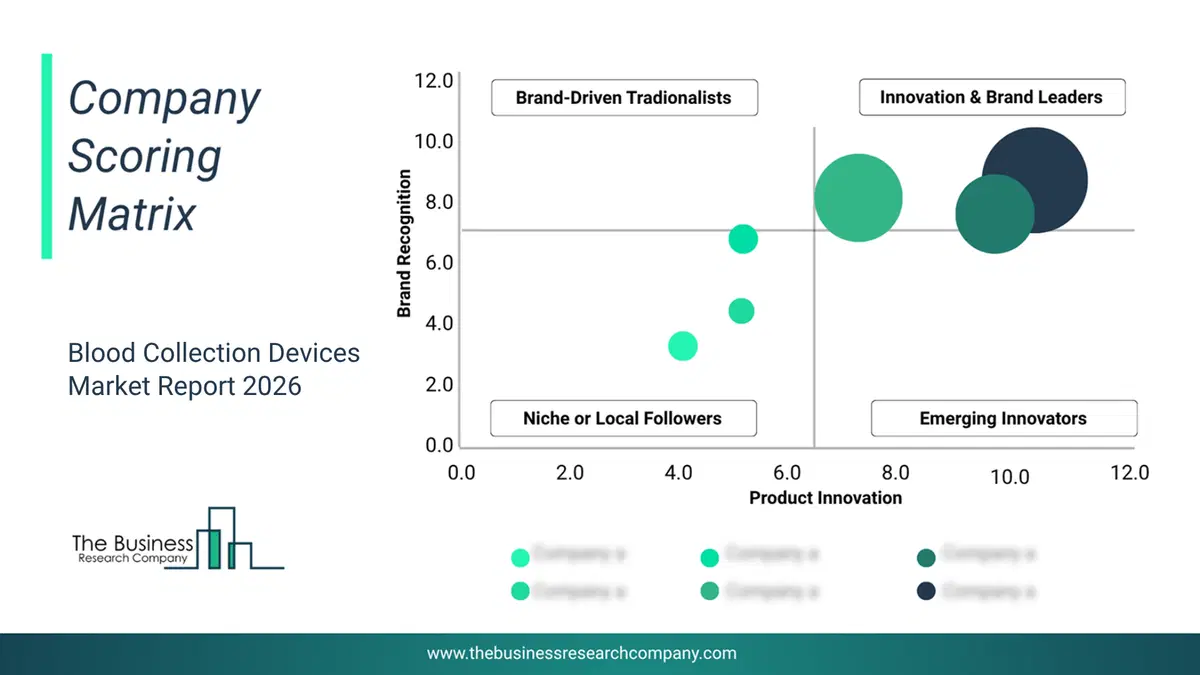
This chart maps companies by product innovation and brand strength, with bubble size indicating relative revenue, helping identify market leaders, challengers, and niche players. This is an illustrative chart; the full report provides a complete and accurate competitive analysis.
Global Blood Collection Devices Market Trends and Insights
Major companies operating in the blood collection devices market are developing technological advancements such as BD RightGauge Technology, BD PentaPoint Technology, and BD Push Button Technology to enhance patient comfort, safety, and procedural efficiency during blood collection. BD RightGauge is a technology developed by Becton, Dickinson, and Company (BD) that involves the design of thinner needles for blood collection. For instance, in April 2024, Becton Dickinson India Private Limited, an India-based manufacturing company of veterinary instruments and apparatus, launched UltraTouch. The UltraTouch utilizes BD RightGauge technology, which allows for the use of a thinner needle. This design is intended to significantly reduce insertion pain, making the blood collection process less traumatic for patients.What Are Latest Mergers And Acquisitions In The Blood Collection Devices Market?
In December 2024, GVS S.p.A., an Italy-based provider of advanced filtration solutions for healthcare and life sciences, acquired Haemonetics’ whole blood business for $44.6 million upfront (plus up to $22.5 million in contingent consideration). Through this acquisition, GVS aims to expand its blood collection devices portfolio by integrating Haemonetics’ proprietary whole blood collection, processing, and filtration solutions. Haemonetics is a US-based company that provides whole blood collection, processing, and filtration systems.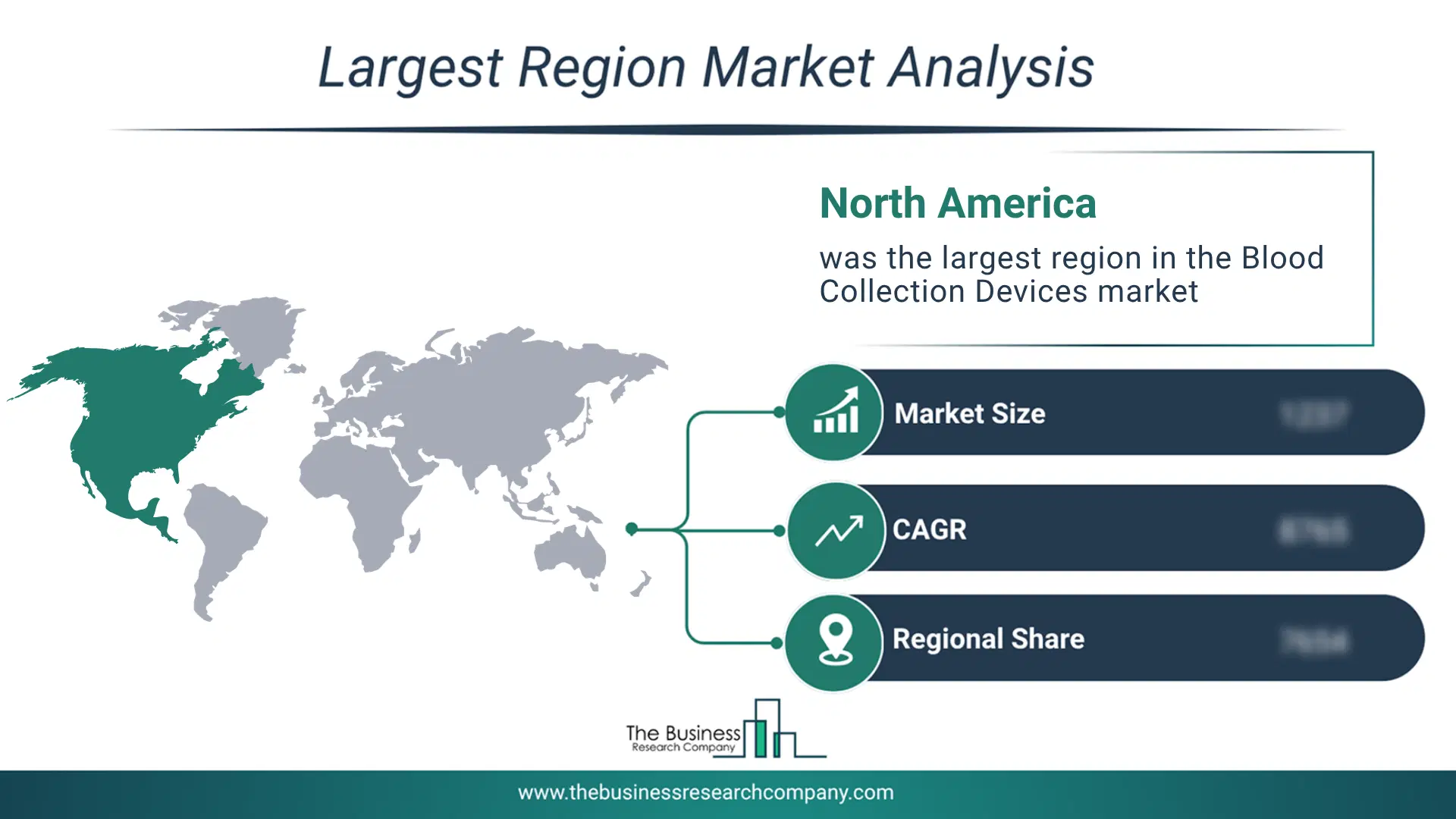
Regional Outlook
North America was the largest region in the blood collection devices market in 2025. Asia-Pacific is expected to be the fastest-growing region in the forecast period. The regions covered in this market report are Asia-Pacific, South East Asia, Western Europe, Eastern Europe, North America, South America, Middle East, Africa. The countries covered in this market report are Australia, Brazil, China, France, Germany, India, Indonesia, Japan, Taiwan, Russia, South Korea, UK, USA, Canada, Italy, SpainWhat Defines the Blood Collection Devices Market?
The blood collection devices market consists of sales of blood collection tubes, needles and syringes, blood bags, blood collection systems, and lancets. Values in this market are ‘factory gate’ values, that is the value of goods sold by the manufacturers or creators of the goods, whether to other entities (including downstream manufacturers, wholesalers, distributors and retailers) or directly to end customers. The value of goods in this market includes related services sold by the creators of the goods.How is Market Value Defined and Measured?
The market value is defined as the revenues that enterprises gain from the sale of goods and/or services within the specified market and geography through sales, grants, or donations in terms of the currency (in USD unless otherwise specified). The revenues for a specified geography are consumption values that are revenues generated by organizations in the specified geography within the market, irrespective of where they are produced. It does not include revenues from resales along the supply chain, either further along the supply chain or as part of other products.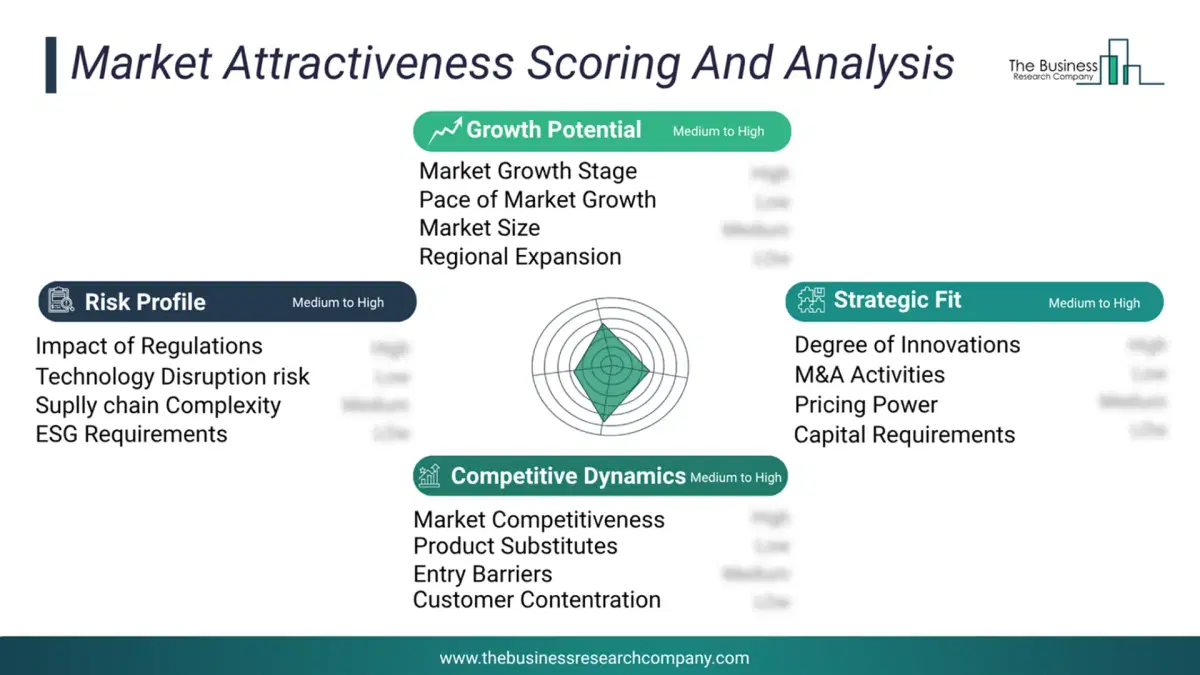
This chart presents market attractiveness based on a quantitative evaluation of growth, competition, strategic alignment, and risk, offering a clear view of opportunity areas for decision-making. This chart is for illustrative purposes; the full report contains the complete analysis.
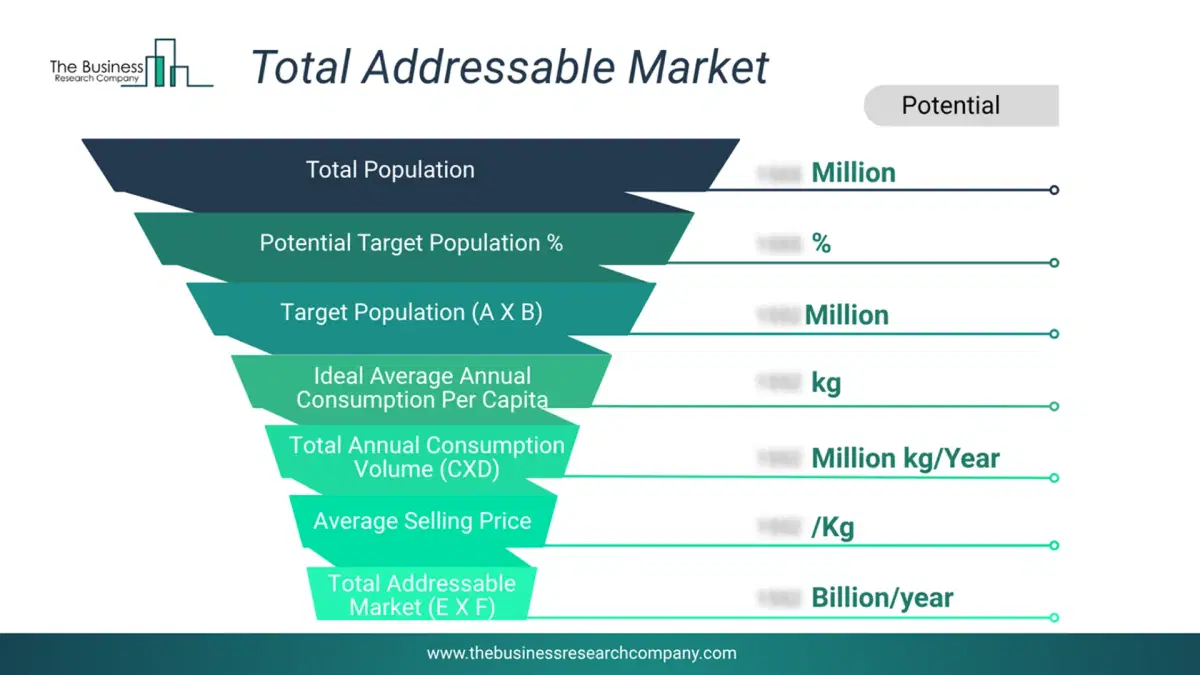
This chart highlights the Total Addressable Market (TAM) by estimating the maximum revenue opportunity using an assumption-driven approach, supporting strategic planning and opportunity sizing across markets. The chart is illustrative; the full report provides a more comprehensive analysis.
What Key Data and Analysis Are Included in the Blood Collection Devices Market Report 2026?
The blood collection devices market research report is one of a series of new reports from The Business Research Company that provides market statistics, including industry global market size, regional shares, competitors with the market share, detailed market segments, market trends and opportunities, and any further data you may need to thrive in the blood collection devices industry. The market research report delivers a complete perspective of everything you need, with an in-depth analysis of the current and future state of the industry.Blood Collection Devices Market Report Forecast Analysis
| Report Attribute | Details |
|---|---|
| Market Size Value In 2026 | $9.26 billion |
| Revenue Forecast In 2030 | $12.95 billion |
| Growth Rate | CAGR of 8.8% from 2026 to 2030 |
| Base Year For Estimation | 2025 |
| Actual Estimates/Historical Data | 2020-2025 |
| Forecast Period | 2026 - 2030 |
| Market Representation | Revenue in USD Billion and CAGR from 2026 to 2030 |
| Segments Covered | Type, Method, Material, End User |
| Regional Scope | Asia-Pacific, Western Europe, Eastern Europe, North America, South America, Middle East, Africa |
| Country Scope | The countries covered in the report are Australia, Brazil, China, France, Germany, India, Indonesia, Japan, Taiwan, Russia, South Korea, UK, USA, Canada, Italy, Spain. |
| Key Companies Profiled | Becton Dickinson and Company, Greiner Holding AG, Kabe Labortechnik GmbH, Sarstedt AG & Company, ICU Medical Inc., Terumo BCT Inc., Fresenius Kabi AG, Grifols S.A., Haematonics, Nipro Medical Corporation, Macopharma SA, Smiths Medical International Ltd., Cardinal Health Inc., Retractable Technologies Inc., Sekisui Medical Co. Ltd., Qiagen NV, PT. Adi Buana Mandiri, Covidien Ltd., Kawasumi Laboratories Inc., F.L. Medical SRL, Ajosha Bio Teknik Pvt. Ltd., A-M Systems Ltd., Commonwealth Serum Laboratories Behring, Teleflex Medical Inc., Abbott Laboratories, Denova Sciences Pte. Ltd., VedaLab SA |
| Customization Scope | Request for Customization |
| Pricing And Purchase Options | Explore Purchase Options |