

Breast Pumps Market Report 2026
Global Outlook – By Product (Open System Breast Pump, Closed System Breast Pump), By Technology (Manual Breast Pump, Battery Powered Breast Pump, Electric Breast Pump), By Application (Personal Use, Hospital Grade) – Market Size, Trends, Strategies, and Forecast to 2030
Breast Pumps Market Overview
• Breast Pumps market size has reached to $1.4 billion in 2025 • Expected to grow to $2.42 billion in 2030 at a compound annual growth rate (CAGR) of 11.4% • Growth Driver: Surge In Health Consciousness Boosts Demand For Batter And Breader Premixes • Market Trend: Innovative Electric Breast Pumps Transforming Lactation Experience For Modern Mothers • North America was the largest region in 2025 and Asia-Pacific is the fastest growing region.Market Gains By 2030 – Top Opportunities By Segment
Market Gain identifies the most promising market opportunities by highlighting the segments or products expected to generate the highest incremental revenue growth over the next five years.
What Is Covered Under Breast Pumps Market?
A breast pump is a medical device used for extracting milk from the breast of lactating mothers. These devices are mostly used by employed women to continue breastfeeding their babies while still at work. The main types of breast pumps are open system breast pumps and closed system breast pumps. A breast pump with a milk barrier is known as a closed system, which prevents the milk from overflowing and leaking into the pump mechanism. An open system breast pump doesn’t have a milk barrier. The main technologies in breast pumps include manual breast pumps, battery-powered breast pumps, and electric breast pumps. Breast pumps find their applications in personal use and hospitals.
What Is The Breast Pumps Market Size and Share 2026?
The breast pumps market size has grown rapidly in recent years. It will grow from $1.4 billion in 2025 to $1.57 billion in 2026 at a compound annual growth rate (CAGR) of 12.0%. The growth in the historic period can be attributed to increasing female workforce participation, rising breastfeeding awareness programs, expansion of maternity healthcare services, availability of hospital-grade breast pumps, growth in maternal health spending.What Is The Breast Pumps Market Growth Forecast?
The breast pumps market size is expected to see rapid growth in the next few years. It will grow to $2.42 billion in 2030 at a compound annual growth rate (CAGR) of 11.4%. The growth in the forecast period can be attributed to increasing adoption of smart connected breast pumps, rising demand for hands-free pumping solutions, expansion of e-commerce distribution channels, growing focus on sustainable pump materials, technological improvements in compact pump motors. Major trends in the forecast period include increasing demand for portable and wearable breast pumps, rising adoption of closed-system breast pumps, growing preference for silent and discreet pump designs, expansion of rechargeable and battery-powered pumps, enhanced focus on user comfort and hygiene.

Global Breast Pumps Market Segmentation
1) By Product: Open System Breast Pump, Closed System Breast Pump 2) By Technology: Manual Breast Pump, Battery Powered Breast Pump, Electric Breast Pump 3) By Application: Personal Use, Hospital Grade Subsegments: 1) By Open System Breast Pump: Manual Open System Pumps, Electric Open System Pumps 2) By Closed System Breast Pump: Manual Closed System Pumps, Electric Closed System Pumps The top segments in the breast pumps market will be: • Closed System Breast Pump will reach $2 Billion by 2030. • Open System Breast Pump will reach $0.77 Billion by 2030.What Is The Driver Of The Breast Pumps Market?
Increased health consciousness is expected to propel the growth of the batter and breader premixes market in the coming future. Health consciousness refers to an individual's awareness, mindfulness, and concern regarding their own health and well-being. Batter and breader premixes are food coatings used in the preparation of fried or baked foods as these premixes can enhance the flavor and texture of certain dishes. For instance, in January 2025, according to the Agriculture and Horticulture Development Board, a UK-based British levy board, survey findings show that 90% of consumers viewed diet and 86% viewed fitness as important to overall health in December 2024, with 48% exercising at least three times weekly and 64% routinely maintaining a well-balanced diet. Therefore, the increased health consciousness is driving the growth of the breast pumps industry.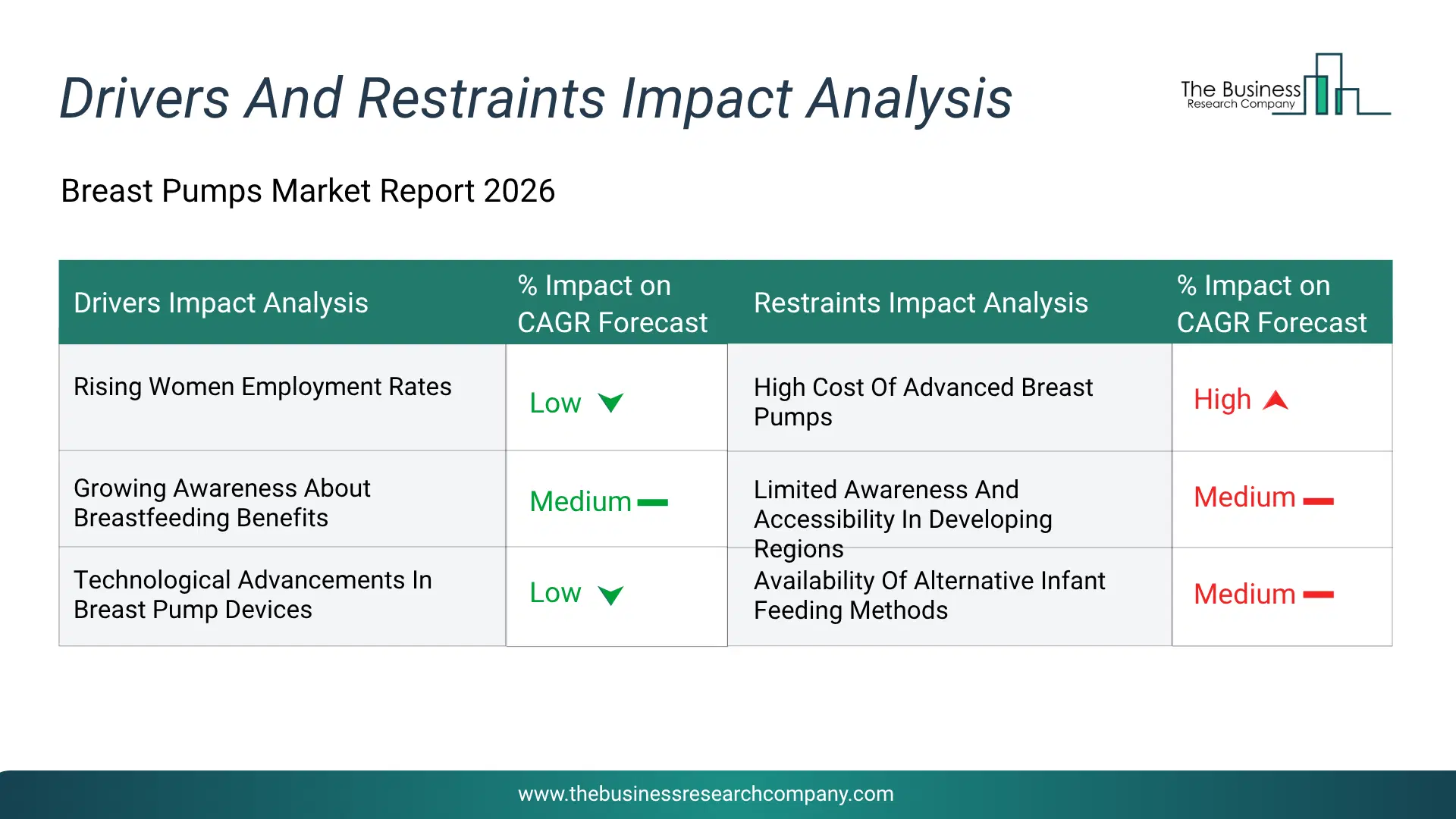
Infographic Chart Showing Key Market Drivers Analysis And Restraints For Breast Pumps Market
The chart presents an impact analysis of key drivers and restraints, quantifying their relative influence on the market's growth rate and helping assess the balance between growth enablers and limiting factors. This chart offers a high-level perspective; the full report contains more detailed insights.
How Will The Drivers Impact Growth In The Global Breast Pumps Market?
• Rising Women Employment Rates (Low) – During the forecast period, the rising women employment rates are expected to emerge as a major factor driving the expansion of the breast pumps market by 2030. an increasing number of mothers are returning to the workforce after childbirth while seeking convenient solutions to continue breastfeeding. portable and wearable breast pumps enable mothers to express and store breast milk efficiently, supporting infant nutrition without disrupting professional responsibilities. expanding workplace lactation support, growing dual-income households, and higher purchasing power are further encouraging the adoption of advanced breast pump devices. • Growing Awareness About Breastfeeding Benefits (Medium) – During the forecast period, the growing awareness about breastfeeding benefits is expected to emerge as a major factor driving the expansion of the breast pumps market by 2030. public health campaigns, healthcare providers, and maternity care organizations continue to promote exclusive breastfeeding by highlighting its nutritional and developmental advantages for infants, along with health benefits for mothers. breast pumps help maintain consistent milk supply when direct breastfeeding is not feasible, making them an increasingly recommended solution for new mothers. • Technological Advancements In Breast Pump Devices (Low) – During the forecast period, the technological advancements in breast pump devices are expected to act as a key growth catalyst for the breast pumps market by 2030. continuous product innovation has resulted in quieter motors, wearable and cordless designs, rechargeable batteries, customizable suction settings, anti-backflow systems, and smartphone-enabled monitoring features that improve convenience, comfort, and pumping efficiency. these advancements are enhancing the overall user experience while encouraging wider adoption and replacement purchases.How Will The Restraints Impact Growth In The Global Breast Pumps Market?
• High Cost Of Advanced Breast Pumps (Low) – During the forecast period, high Cost Of Advanced Breast Pumps continues to restrain market growth because premium electric, hospital-grade, and wearable breast pumps require a considerable financial investment, making them inaccessible for many families, particularly in low- and middle-income countries. Beyond the initial purchase price, mothers often incur recurring costs for replacement accessories such as breast shields, tubing, valves, membranes, storage bottles, milk bags, and batteries. In several countries, limited insurance reimbursement and inadequate healthcare coverage increase out-of-pocket expenses, discouraging widespread adoption. Price-sensitive consumers frequently choose manual pumps or traditional breastfeeding methods instead of investing in advanced electric devices. Consequently, despite continuous technological innovation and growing awareness of breastfeeding benefits, affordability remains a major challenge limiting market penetration, especially in developing economies. • Limited Awareness And Accessibility In Developing Regions (Medium) – During the forecast period, limited Awareness And Accessibility In Developing Regions significantly limits the growth of the Breast Pumps Market because many mothers are still unfamiliar with the proper use, advantages, and availability of breast pumping technology. Rural communities often have limited access to lactation consultants, maternal healthcare services, and educational programs that promote breast pump usage. Distribution networks for advanced breast pumps are also less developed, reducing product availability through hospitals, pharmacies, and retail outlets. In addition, inadequate healthcare infrastructure, lower disposable incomes, and cultural preferences for direct breastfeeding discourage adoption of breast pumps. The lack of trained healthcare professionals to educate mothers about milk expression and storage further slows market expansion, preventing manufacturers from fully capitalizing on the growing maternal healthcare market in emerging economies. • Availability Of Alternative Infant Feeding Methods (Low) – During the forecast period, availability Of Alternative Infant Feeding Methods acts as a restraint because breast pumps are not the only solution available for infant nutrition and breastfeeding management. Mothers may choose direct breastfeeding, manual milk expression, infant formula, donor human milk, or milk banks depending on their lifestyle, medical conditions, financial situation, and cultural preferences. In many households, especially where mothers remain at home during the breastfeeding period, direct breastfeeding is often viewed as more convenient and economical than purchasing a breast pump. Likewise, infant formula products are widely available and heavily marketed in many countries, providing an alternative feeding option for families unable to breastfeed. The presence of these substitutes reduces dependence on breast pump devices and limits market growth by decreasing the overall number of potential customers, particularly in regions where breastfeeding support services and awareness remain limited.Key Players In The Global Breast Pumps Market
Major companies operating in the breast pumps market are Medela AG, Koninklijke Philips N.V., Pigeon Corporation, Lansinoh Laboratories Inc., Ameda Inc., Ardo Medical AG, Spectra Baby USA Inc., Evenflo Feeding Inc., Chiaro Technology Limited (Elvie), Momcozy, Motif Medical, BabyBuddha Products LLC, Cimilre Co Ltd, Haakaa, Unimom (MC Healthcare), Mamivac (Keller Medical GmbH), Freemie (Dao Health), Hygeia Health, Hegen Pte Ltd, Canpol Sp z o o
This chart is for illustrative purposes; the full report includes a detailed competitor analysis and comprehensive overview of the top 10 companies in the market.

This chart maps companies by product innovation and brand strength, with bubble size indicating relative revenue, helping identify market leaders, challengers, and niche players. This is an illustrative chart; the full report provides a complete and accurate competitive analysis.
Global Breast Pumps Market Trends and Insights
Major companies operating in the breast pumps market are focused on developing innovative solutions such as electric breast pumps. Electric breast pumps are devices designed to assist lactating individuals in expressing and collecting breast milk. For instance, in August 2024, Medela, a Switzerland-based breast pump technology and breastfeeding solutions company, launched Swing Maxi Hands-free. This smart double electric breast pump allows mothers to pump hands-free, providing mobility and convenience. Mimics a baby’s natural sucking rhythm, promoting comfortable and efficient milk expression. Fits in the palm of a hand, with a pump motor that can be easily attached to clothing or carried in a pocket. Offers up to six pumping sessions on a single charge, enhancing flexibility for users. Designed for comfort and ease of use, these cups are dishwasher-safe and allow mothers to see their milk flow. It features a pumping belt for secure placement and a rechargeable battery, this ensures that moms aren't tethered to an outlet and can move freely during pumping sessions.What Are Latest Mergers And Acquisitions In The Breast Pumps Market?
In March 2024, Momcozy, a China-based maker of wearable breast pump company, announced partnership with Boots to enhance the availability and accessibility of breastfeeding products in the UK market. Through the collaboration focuses on providing comprehensive support for breastfeeding mothers by offering innovative products that cater to their needs, thereby promoting breastfeeding as a viable option for new parents. Boots is a UK-based health and beauty retailer company.
Regional Outlook
North America was the largest region in the breast pumps market in 2025. Asia-Pacific region is anticipated to record the fastest growth over the forecast period. The regions covered in this market report are Asia-Pacific, South East Asia, Western Europe, Eastern Europe, North America, South America, Middle East, Africa. The countries covered in this market report are Australia, Brazil, China, France, Germany, India, Indonesia, Japan, Taiwan, Russia, South Korea, UK, USA, Canada, Italy, SpainWhat Defines the Breast Pumps Market?
The breast pumps market consists of sales of manual pumps, battery-powered pumps, and electric pumps. Values in this market are ‘factory gate’ values, that is the value of goods sold by the manufacturers or creators of the goods, whether to other entities (including downstream manufacturers, wholesalers, distributors and retailers) or directly to end customers. The value of goods in this market includes related services sold by the creators of the goods.How is Market Value Defined and Measured?
The market value is defined as the revenues that enterprises gain from the sale of goods and/or services within the specified market and geography through sales, grants, or donations in terms of the currency (in USD unless otherwise specified). The revenues for a specified geography are consumption values that are revenues generated by organizations in the specified geography within the market, irrespective of where they are produced. It does not include revenues from resales along the supply chain, either further along the supply chain or as part of other products.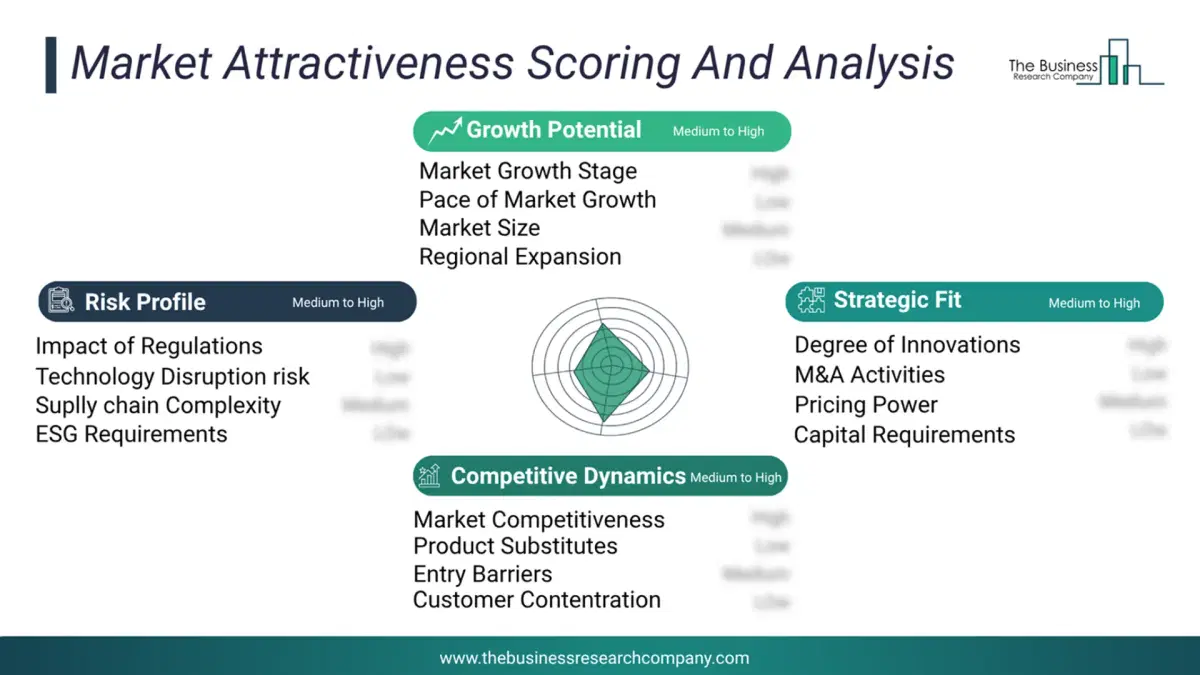
This chart presents market attractiveness based on a quantitative evaluation of growth, competition, strategic alignment, and risk, offering a clear view of opportunity areas for decision-making. This chart is for illustrative purposes; the full report contains the complete analysis.
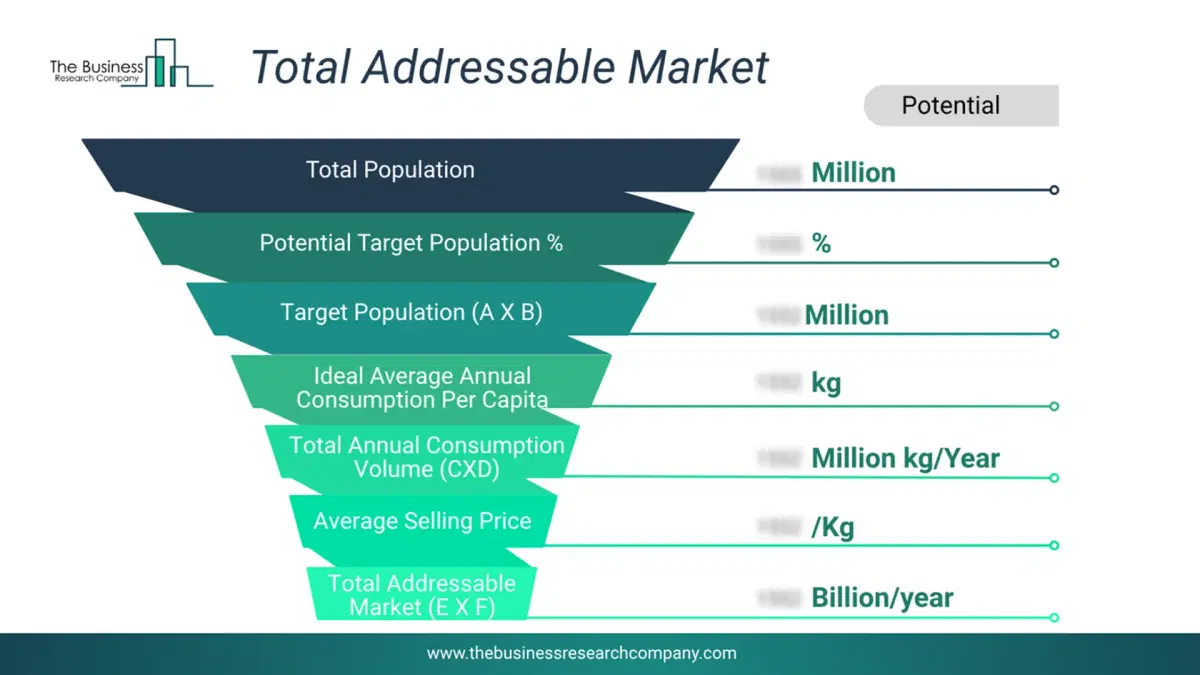
This chart highlights the Total Addressable Market (TAM) by estimating the maximum revenue opportunity using an assumption-driven approach, supporting strategic planning and opportunity sizing across markets. The chart is illustrative; the full report provides a more comprehensive analysis.
What Key Data and Analysis Are Included in the Breast Pumps Market Report 2026?
The breast pumps market research report is one of a series of new reports from The Business Research Company that provides market statistics, including industry global market size, regional shares, competitors with the market share, detailed market segments, market trends and opportunities, and any further data you may need to thrive in the breast pumps industry. The market research report delivers a complete perspective of everything you need, with an in-depth analysis of the current and future state of the industry.Breast Pumps Market Report Forecast Analysis
| Report Attribute | Details |
|---|---|
| Market Size Value In 2026 | $1.57 billion |
| Revenue Forecast In 2030 | $2.42 billion |
| Growth Rate | CAGR of 11.4% from 2026 to 2030 |
| Base Year For Estimation | 2025 |
| Actual Estimates/Historical Data | 2020-2025 |
| Forecast Period | 2026 - 2030 |
| Market Representation | Revenue in USD Billion and CAGR from 2026 to 2030 |
| Segments Covered | Product, Technology, Application |
| Regional Scope | Asia-Pacific, Western Europe, Eastern Europe, North America, South America, Middle East, Africa |
| Country Scope | The countries covered in the report are Australia, Brazil, China, France, Germany, India, Indonesia, Japan, Taiwan, Russia, South Korea, UK, USA, Canada, Italy, Spain. |
| Key Companies Profiled | Medela AG, Koninklijke Philips N.V., Pigeon Corporation, Lansinoh Laboratories Inc., Ameda Inc., Ardo Medical AG, Spectra Baby USA Inc., Evenflo Feeding Inc., Chiaro Technology Limited (Elvie), Momcozy, Motif Medical, BabyBuddha Products LLC, Cimilre Co Ltd, Haakaa, Unimom (MC Healthcare), Mamivac (Keller Medical GmbH), Freemie (Dao Health), Hygeia Health, Hegen Pte Ltd, Canpol Sp z o o |
| Customization Scope | Request for Customization |
| Pricing And Purchase Options | Explore Purchase Options |